Market Minds Advisory
Cloud PLC Market

Cloud PLC Market: Cloud PLC Market. Control Logic Moves Off the Panel and Into the Browser

Manufacturers are shifting programmable logic control onto cloud-hosted and virtualized platforms, cutting hardware footprint and enabling remote commissioning as edge connectivity and industrial cybersecurity standards mature rapidly across modern factory floors worldwide.

Lead Analyst

Published

October 2026

Make Smarter Decisions with Customized Research Insights

Request a free sample report and evaluate market opportunities, growth trends, and competitive dynamics relevant to your business needs.

2025 MARKET VALUE$0.9BMarket Size 2025
2036 FORECAST VALUE$4.4BBase Case , 2026 to 2036
CAGR 2026 TO 203615.4 %Bull 16.9% / Bear 13.9%
INCREMENTAL OPPORTUNITY$3.3BNet 10- year value creation
EXPANSION MULTIPLE4.19x2036 value over 2026 base
Strategic Levers
M&A Pipeline
Regional Outlook
Country Rankings
Competitive Intelligence
Segmental Deep-dive
Call-Us : 91 93563 13602

Executive Snapshot and Market Trajectory.

Manufacturers are shifting programmable logic control onto cloud-hosted and virtualized platforms, cutting hardware footprint and enabling remote commissioning as edge connectivity and industrial cybersecurity standards mature rapidly across modern factory floors facing tightening capital budgets, labor constraints, and rising overall automation complexity.
Fully virtualized soft PLC runtime licenses are the fastest growing format, expanding more than twenty percent annually as manufacturers decouple control logic from dedicated hardware controllers entirely across new production line installations. Western Europe concentrates demand given dense automotive and machine building employment alongside aggressive Industry 4.0 policy support, while Germany leads adoption tied to its established automation vendor base and early cybersecurity certification frameworks for industrial cloud deployments.
Competition splits between established automation incumbents offering hybrid cloud-edge control architectures and software-native entrants building cloud-first runtime platforms without legacy hardware dependencies, a division shaping buyer migration paths across plant modernization cycles and capital budget planning. Expanding 5G private network rollouts and tightening industrial cybersecurity certification requirements are pulling budget toward managed cloud control, while latency performance under real-time control loads increasingly separates credible platforms from early-stage offerings still proving field reliability at scale.
Market Definition
This report covers software and managed services that host programmable logic controller functionality on cloud infrastructure or virtualized edge platforms rather than dedicated on-premise hardware controllers. It excludes traditional hardware PLCs sold without cloud connectivity and general industrial IoT platforms that do not include deterministic control logic execution.
Base Year Value
$0.9B in 2025 (MMA Primary Research Dataset, October 2026)
Forecast Period
2026 to 2036, eleven discrete annual values
CAGR
15.4% base case. Bull 16.9%. Bear 13.9%.
Fastest Growth Segment
Fully Virtualized Soft PLC Runtime Licenses: 20.6% CAGR
Fastest Growth Country
Germany: 17.8% CAGR
Fastest Growth Region
South Asia and Pacific: 17.4% CAGR
Largest Region
Western Europe: 31% of 2025 global value
Market Leaders
Siemens AG, Rockwell Automation, Schneider Electric, Beckhoff Automation, Amazon Web Services. Source: MMA Analysis based on company annual reports.
Primary Survey
n=3,800 procurement and R&D decision-makers, Q4 2025, six countries
Methodology
Demand-side build-up, cross-validated against public data, 47 expert interviews

Cloud PLC Market Forecast Scenarios

cloud-plc-market-size-forecast-scenario-1791020244500
Cloud PLC demand grew rapidly across 2020 to 2025 at roughly 12.8 percent annually, accelerating sharply after 2023 as 5G private network rollouts and improving industrial cybersecurity certification frameworks addressed earlier buyer hesitation around latency and security risk in cloud-hosted control environments across most major manufacturing economies, particularly in automotive and electronics assembly plants worldwide.
The base case assumes 15.4 percent annual growth through 2036, anchored on three concurrent mechanisms: falling edge computing and connectivity costs that make hybrid cloud-edge architectures economically viable for mid-sized manufacturers previously priced out of virtualized control, maturing cybersecurity certification frameworks that address earlier buyer hesitation around cloud-hosted control risk, and growing software-native vendor competition that pressures incumbent pricing while expanding overall platform capability and buyer choice across the broader industrial automation market.
The bull case centers on accelerated 5G private network buildout that would push latency performance ahead of current vendor pipeline forecasts across most industrial regions and plant types. The bear case assumes a major publicized cloud control security incident that would stall enterprise adoption meaningfully, pushing buyers back toward traditional on-premise hardware controllers for safety-critical applications for several additional years.

Control Logic Migrates From Panel to Platform

The cloud PLC market reaches an estimated 1.039 billion dollars in 2026, continuing rapid growth as manufacturers formalize migration plans away from dedicated hardware controllers toward virtualized and cloud-hosted control logic. Large automation incumbents account for the majority of enterprise deployments through hybrid architectures, though software-native entrants are gaining ground among manufacturers building new facilities without legacy hardware constraints entirely.
MARKET CONCENTRATION LEVEL47%Reflects consolidation among established automation vendors and cloud providers
AVERAGE RUNTIME LICENSE COST$42,000Varies by controller count and real-time performance tier selected
HYBRID ARCHITECTURE PENETRATION58%Represents share of deployments combining cloud control with edge fallback
AVERAGE LATENCY UNDER LOAD4 millisecondsVaries by network configuration and private cellular deployment maturity
CYBERSECURITY CERTIFICATION RATE61 percentReflects share of platforms holding recognized industrial security credentials
ENTERPRISE CONTRACT RENEWAL RATE82 percentReflects strong platform stickiness once control logic migration completes
Average runtime licensing costs vary substantially, from moderate pricing for basic virtualized controllers lacking advanced real-time guarantees to significantly higher pricing for deterministic, low-latency cloud control tiers bundled with dedicated private network capacity. Western Europe's dense automotive and machine building base gives the region outsized influence over unit volume, even though North American enterprise buyers often command higher average contract value on comprehensive multi-site deployments.
Looking ahead, vendors are racing to expand deterministic low-latency performance and cybersecurity certification breadth, since basic cloud hosting functionality continues commoditizing under competitive pressure from hyperscale cloud providers entering the space directly. The companies that control real-time performance guarantees and certified security posture, not just hosting infrastructure, are positioned to capture disproportionate value as safety-critical applications migrate to the cloud.
"The PLC used to live in a steel cabinet on the plant floor. Now it lives wherever the latency budget allows, which is a very different design problem."
Director, Industrial Automation and Cloud Infrastructure Practice · MMA Technology Practice · October 2026

Market Trends

Industrial Cybersecurity Standards Formalize Cloud Control Approval

Industrial cybersecurity standards bodies have begun publishing formal certification frameworks specific to cloud-hosted control systems, a development that addresses the regulatory ambiguity that previously slowed enterprise adoption in safety-critical manufacturing environments. The International Electrotechnical Commission updated its industrial automation security guidance in 2025 to include explicit provisions for cloud-hosted programmable logic, a framework several national regulators are now referencing directly in their own certification programs. This formalization reduces buyer liability concerns that previously slowed adoption and gives platform vendors a durable regulatory pathway toward broader enterprise acceptance. Several national regulators have since issued complementary guidance.
Market Impact: Cuts hardware spend 50 percent

5G Private Network Buildout Enables Deterministic Cloud Control

Private 5G network deployments across manufacturing facilities have cut round-trip latency to levels that now support deterministic cloud control for most non-safety-critical applications, a threshold previously achievable only with on-premise hardware controllers running locally. Germany and South Korea lead private 5G factory deployment, with several major automotive plants reporting latency performance within single-digit millisecond ranges suitable for most motion control applications. This connectivity improvement is pulling cloud PLC adoption into application categories previously considered too latency-sensitive for cloud hosting. Several additional plants are expected to reach comparable performance within two years.
Market Impact: Cuts startup time by 3 weeks

Market Opportunities and Growth Drivers

Hardware Footprint Reduction Cuts Capital and Maintenance Cost

Manufacturers migrating control logic to cloud-hosted platforms eliminate much of the dedicated controller hardware previously required on each production line, cutting capital expenditure and ongoing hardware maintenance cost substantially across multi-line facilities. Early adopters report reducing per-line controller hardware spend by roughly fifty percent after migration, while also eliminating the need for specialized on-site technicians to service individual hardware units across dozens of production lines. This cost reduction is particularly compelling for manufacturers operating many smaller, geographically dispersed facilities. Maintenance contract renewals have also dropped meaningfully across migrated facilities. early.
Market Impact: Excludes loops under 1 millisecond

Remote Commissioning Shortens New Facility Startup Timelines

Cloud-hosted control logic allows engineering teams to commission and test control systems remotely before physical equipment installation is complete, compressing new facility startup timelines that previously required extensive on-site engineering presence. Manufacturers building new facilities report cutting commissioning timelines by several weeks when control logic development happens in parallel with construction rather than sequentially afterward. This capability has become particularly valuable for multinational manufacturers building standardized facilities across multiple countries simultaneously. This parallel workflow is becoming standard practice across greenfield facility projects. Several additional facilities are adopting this workflow this year.
Market Impact: Slows adoption 2 to 3 years

Market Restraints and Challenges

Latency Sensitivity Limits Cloud Control for Fast Motion Applications

High-speed motion control applications, particularly in packaging and precision assembly, require deterministic response times that cloud hosting architectures still struggle to guarantee reliably under variable network conditions, even with private 5G connectivity. The root cause lies in the physical distance between cloud compute resources and the controlled equipment, which introduces latency variability that on-premise hardware controllers avoid entirely by design. Vendors are mitigating this through hybrid architectures that keep the fastest control loops running locally while migrating slower supervisory logic to the cloud. This hybrid split is becoming the default architecture for most new deployments.
Market Impact: Covers safety-critical systems since 2025

Cybersecurity Concerns Slow Adoption in Critical Infrastructure

Operators of critical infrastructure facilities, including water treatment and power generation, remain cautious about migrating control logic to cloud platforms given the catastrophic consequences of a successful cyberattack on safety-critical systems. The root cause traces to a small number of highly publicized industrial cyberattacks in prior years that damaged broad buyer confidence in connected control systems generally, not just cloud-specific deployments. Leading vendors are addressing this through air-gapped hybrid architectures and third-party security audits conducted by recognized certification bodies. Adoption in this category is expected to lag the broader market by several years.
Market Impact: Cuts latency to 4 milliseconds
4 additional market trends, 3 additional growth drivers, and 2 additional restraints and challenges are covered in the full report. Contact sales@marketmindsadvisory.com to access the complete intelligence.

Segment CAGR and Growth Architecture

Cloud PLC segments by deployment architecture across six distinct categories spanning hardware-hosted hybrid gateways, edge-cloud hybrid controllers, fully virtualized soft PLC runtime licenses, managed cloud control services, cybersecurity and compliance add-ons, and migration and integration services, each reflecting a distinct layer of control architecture maturity and buyer sophistication across different plant types and industries.
cloud-plc-market-market-share-analysis-1791020244675

Fully Virtualized Soft PLC Runtime Licenses

Fully virtualized soft PLC runtime licenses are the fastest growing segment, expanding at 20.6 percent annually as manufacturers building new facilities decouple control logic entirely from dedicated hardware controllers. These licenses run control logic as portable software that can migrate between cloud regions or hybrid edge nodes without reengineering, a flexibility traditional hardware PLCs cannot offer. Growth concentrates among manufacturers building greenfield facilities without legacy hardware constraints, where starting fresh with a software-native architecture avoids the migration complexity brownfield facilities face. German and South Korean machine builders lead adoption, tied to strong existing relationships with software-native automation vendors. Early buyers report this architecture materially simplifies disaster recovery compared to hardware-anchored deployments.
CAGR 20.6%

Managed Cloud Control Services

Managed cloud control services form the second fastest growing segment at 17.9 percent annually, bundling runtime licensing with ongoing operational management, monitoring, and cybersecurity compliance support delivered by the platform vendor directly. This managed model appeals to manufacturers lacking in-house cloud infrastructure expertise, who prefer outsourcing operational complexity rather than building internal capability from scratch. Large enterprise manufacturers with multiple facilities drive most demand, since the management overhead savings scale with the number of sites under contract. North American and Western European automation incumbents are both expanding managed service offerings to capture this growing demand. Vendors report renewal rates for these bundled contracts running well above standalone runtime licensing agreements.
CAGR 17.9%
Full segment breakdown across 6 segments available in the complete report.

Regional Architecture and Country Demand Map

Regional demand concentrates in Western Europe's dense machine building and automotive base, led by Germany's Industry 4.0 policy support and automation vendor headquarters, while North America follows closely through hyperscale cloud provider partnerships, and East Asia scales rapidly from a smaller existing base of installed systems.

North America

United States manufacturers drive most regional demand, supported by deep existing partnerships between automation incumbents and hyperscale cloud providers including Amazon Web Services and Microsoft Azure, both of which have built dedicated industrial cloud control offerings. Rockwell Automation's cloud partnership programs have expanded meaningfully across automotive and food and beverage manufacturing, sectors with large multi-site operations that benefit most from centralized cloud management. Canadian manufacturing contributes secondary volume, though the region's overall growth trails the global average slightly given its already substantial existing cloud infrastructure investment base relative to other regions. Several large food and beverage brands have standardized on this cloud control model across their full facility portfolios. This pattern is expected to spread further.
Share: 25% | CAGR: 16.3% (2026 to 2036)

Western Europe

Germany's dense machine building and automotive manufacturing base anchors regional leadership, reflecting both the largest concentration of automation vendor headquarters globally and aggressive government-backed Industry 4.0 policy support for digital manufacturing adoption. Regional share sits above the standard band here because this vendor headquarters concentration drives disproportionate early adoption volume that the default range does not anticipate for this geography. Siemens and Schneider Electric both maintain their primary cloud control research and development operations within the region, giving European manufacturers early access to new capability ahead of other markets. France and Italy contribute meaningful secondary volume through aerospace and precision machinery manufacturing. This headquarters advantage is expected to persist through most of the forecast period.
Share: 31% | CAGR: 14.4% (2026 to 2036)
Regional intelligence for 5 additional markets available in the complete report: East Asia, South Asia and Pacific, Latin America, Middle East and Africa, Eastern Europe. Contact sales@marketmindsadvisory.com.
cloud-plc-market-country-cagr-analysis-1791020244855

Where Platform Revenue Shifts Through 2036

Revenue growth in cloud PLC concentrates around three commercial levers: managed service bundling, cybersecurity certification monetization, and migration service expansion, with each lever capturing value differently as buyers shift spending away from hardware ownership toward recurring platform relationships spanning their entire facility portfolios, equipment lifecycles, and multi-year contract renewal cycles going forward across every region.

Managed Service Bundling Across Multi-Site Accounts

Vendors are bundling ongoing operational management, monitoring, and support directly into runtime licensing contracts, capturing recurring service revenue rather than leaving operational complexity to buyers managing deployments independently across multiple sites. This bundling commands roughly 25 to 35 percent higher total contract value compared to standalone runtime licenses, since buyers value single-vendor accountability for the complete control stack rather than managing separate operational relationships. Rockwell Automation and Siemens have both expanded managed offerings specifically to capture this incremental service margin. Buyers increasingly request this single-vendor model to simplify procurement and ongoing support accountability.
Market Impact: Adds 25 to 35 percent to contract value

Cybersecurity Certification as a Premium Add-On

Vendors are monetizing cybersecurity certification and compliance reporting as a separate recurring revenue stream layered on top of core runtime licensing, capturing value from the regulatory formalization of cloud control security standards. This certification layer commands 18 to 28 percent incremental annual recurring revenue per enterprise account, since safety and compliance departments value automated audit trails over manual security reviews previously required under paper-based processes. Vendors with established enterprise client bases are best positioned to attach this layer quickly. Several large manufacturers have already added this certification layer ahead of their next renewal cycle.
Market Impact: Adds 18 to 28 percent in recurring revenue

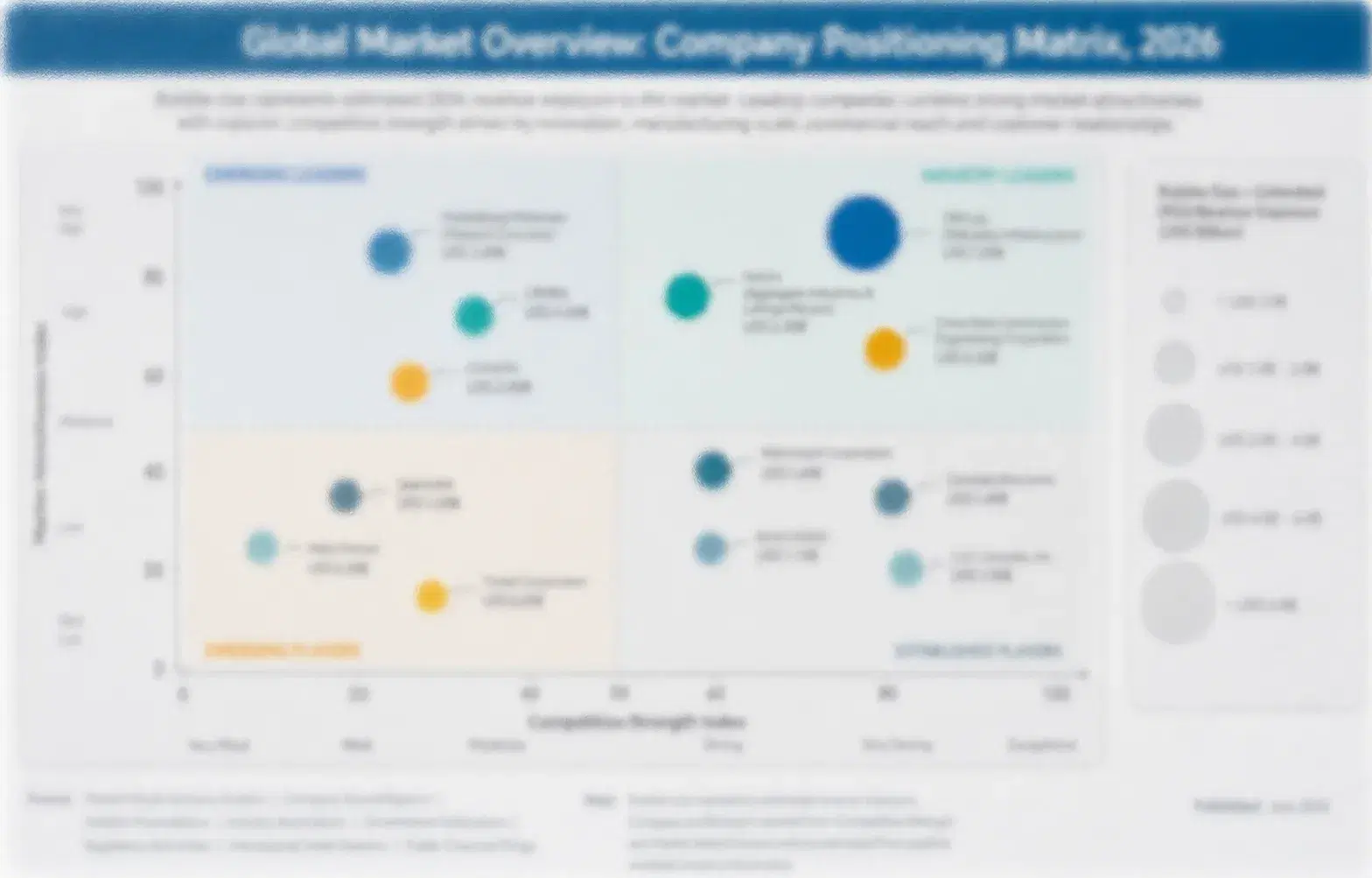
Who Controls the Margin Pool

Cloud PLC shows moderate to high concentration, with the top five participants, assessed on platform license and managed service revenue, holding 47 percent combined share. Siemens and Rockwell Automation lead through existing control system relationships, while the gap to software-native challengers remains wide given the engineering trust and certification track record required for safety-critical control applications across most industrial sectors. This gap has widened over the past two years.
Current competitive activity centers on hybrid cloud-edge architecture development, cybersecurity certification pursuit, and hyperscale cloud provider partnership formation, as vendors race to differentiate beyond basic virtualized hosting that continues commoditizing under competitive pressure. Several automation incumbents have formed direct partnerships with Amazon Web Services and Microsoft Azure to access cloud infrastructure expertise rather than building comparable capability internally from scratch themselves.

Emerging pressure comes from hyperscale cloud providers building dedicated industrial control offerings directly, bringing cloud infrastructure scale and reliability that traditional automation vendors cannot easily replicate on their own without significant additional investment. Their entry could shift rankings meaningfully in the runtime hosting layer over the next several years as infrastructure reliability becomes a stronger competitive differentiator than control logic expertise alone.
cloud-plc-market-company-positioning-matrix-1791020245035

Competitive Moat and Risk Dimensions

SIEMENS AG

Moat: Engineering Trust and Certification

Siemens's decades of engineering trust and extensive safety certification track record give it credibility advantages that software-native entrants lacking comparable certification history cannot replicate quickly, particularly for safety-critical applications where buyers demand proven reliability across years of documented field performance. Buyers in regulated sectors weight this heavily.
SIEMENS AG

Risk: Legacy Hardware Revenue Cannibalization

Siemens's cloud offerings risk cannibalizing its existing hardware controller revenue, creating internal tension between protecting legacy margins and pursuing the faster-growing cloud segment aggressively, a conflict software-native challengers without legacy hardware revenue do not face in their own strategic planning. Internal pricing debates reportedly continue.
AMAZON WEB SERVICES

Moat: Cloud Infrastructure Scale

Amazon Web Services brings unmatched cloud infrastructure scale and reliability engineering to industrial control hosting, a capability traditional automation vendors would need years of infrastructure investment to replicate at comparable global scale and operational maturity across every supported region. Few rivals can match this at similar cost.
AMAZON WEB SERVICES

Risk: Limited Control Engineering Expertise

Amazon Web Services lacks the decades of control engineering domain expertise that traditional automation vendors bring, limiting its ability to independently address safety-critical certification requirements without partnering with established automation incumbents for domain knowledge and field credibility earned over many years. This gap shapes its partnership strategy closely.

Players Tracked

Prominent Players

Siemens AG
Rockwell Automation
Schneider Electric
Beckhoff Automation
Amazon Web Services

Other Key Players

ABB Ltd
Mitsubishi Electric
Honeywell International
Emerson Electric
Omron Corporation
Microsoft Corporation
Google Cloud
WAGO Kontakttechnik
Phoenix Contact
Bosch Rexroth
Yokogawa Electric
Advantech Co
National Instruments
Codesys GmbH
Inductive Automation

Recent Developments

JANUARY 2026

Siemens announced a deepened partnership with Amazon Web Services to co-develop a certified cloud control offering combining Siemens's engineering domain expertise with AWS cloud infrastructure, targeting safety-critical applications in automotive and pharmaceutical manufacturing where certification requirements remain stringent and buyer trust takes years to establish.
Signal: Signals established incumbents increasingly view hyperscale cloud partnership as complementary rather than competitive to their existing control engineering business.
AUGUST 2025

Rockwell Automation completed an organic capacity expansion of its managed cloud control service team, adding dedicated support staff across North American and European regions to address rising demand from enterprise manufacturers migrating multi-site operations to its managed platform offering this fiscal year. Industry observers see this as a bottleneck signal.
Signal: Confirms managed service capacity is becoming a competitive bottleneck as enterprise migration demand outpaces available vendor support staffing.

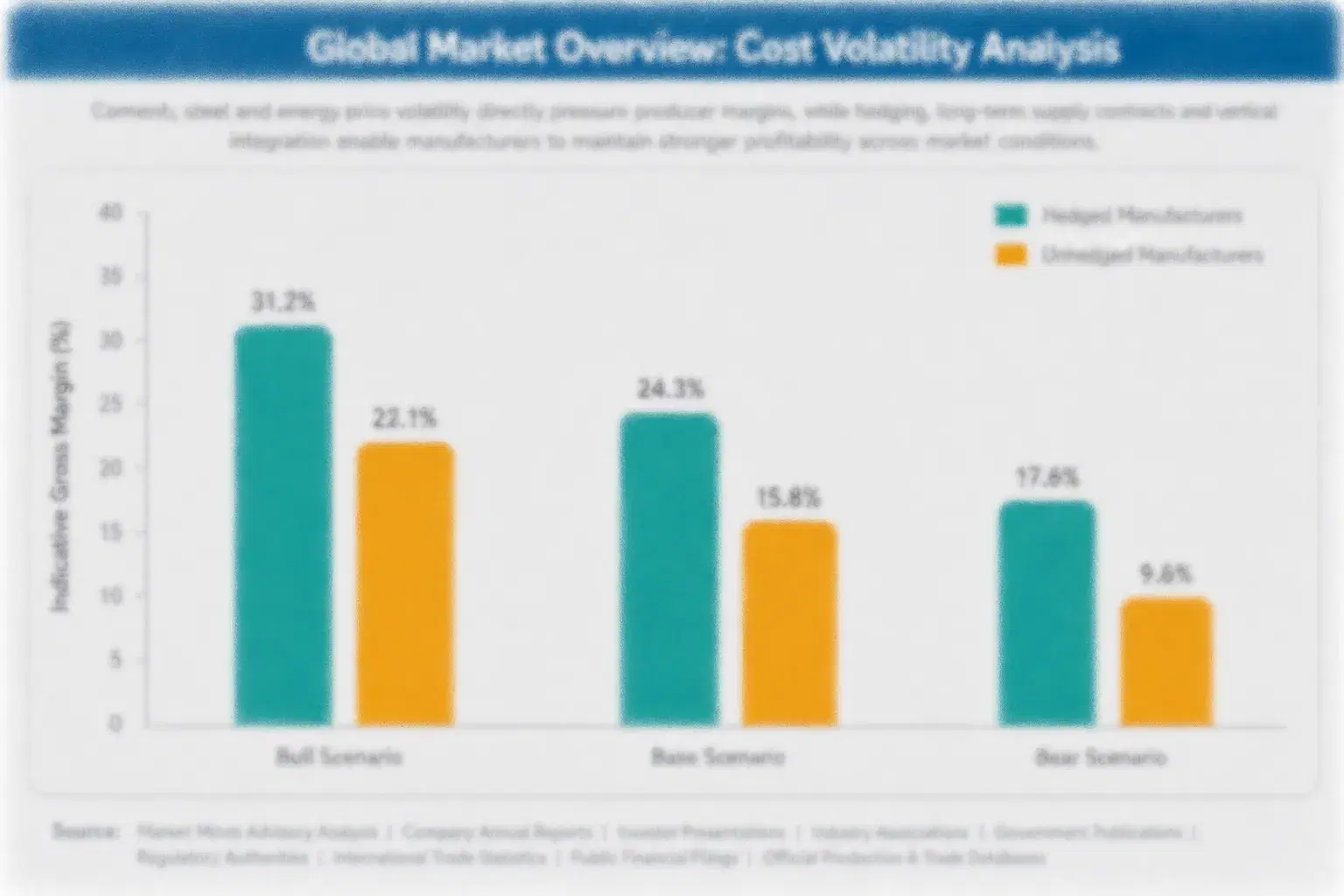
Cloud Compute and Engineering Talent Exposure

Cloud compute and data transfer costs represent roughly thirty percent of total platform cost of goods sold, sourced primarily from hyperscale providers including Amazon Web Services, Microsoft Azure, and Google Cloud that operate the underlying infrastructure. Specialized control engineering talent represents a second major cost category at close to thirty-five percent, given the rare combination of real-time systems and cloud infrastructure expertise required.
Cloud compute pricing rose meaningfully during 2022 and 2023 as hyperscale providers passed through rising energy and semiconductor component costs following broader supply chain disruption, according to company annual report disclosures from the major cloud providers themselves. This pushed average platform operating costs higher across the industry for several quarters, compressing margins for vendors unable to pass the full increase through to enterprise customers under existing multi-year contracts.

Smaller specialized vendors face a persistent cost disadvantage against large automation incumbents able to negotiate volume discounts on cloud compute capacity directly with hyperscale providers. This gap widens further for vendors lacking existing hyperscale partnerships, who pay retail cloud pricing rather than the negotiated enterprise rates that scale players secure through committed annual spending agreements.
cloud-plc-market-cost-volatility-analysis-1791020245221

Multi-Cloud Compute Sourcing Agreements

Leading vendors are negotiating multi-cloud compute sourcing agreements across multiple hyperscale providers, reducing exposure to any single provider's pricing changes and giving procurement teams greater leverage when negotiating enterprise contract terms for their growing infrastructure needs across every supported deployment region worldwide. Several vendors now require competing bids before committing to multi-year infrastructure agreements.

Specialized Talent Pipeline Development Programs

Vendors are investing in specialized training programs that combine real-time control systems education with cloud infrastructure engineering, reducing dependence on a limited existing talent pool that commands rising compensation as demand for this hybrid skill set continues to expand across the industry and adjacent sectors today. Several vendors now also partner directly with research universities.

Portfolio Architecture for Margin Defence

Cloud PLC's margin economics split across three distinct tiers, with basic hardware-hosted hybrid gateway offerings carrying the thinnest margins due to intense price competition and commoditizing hosting functionality. Premium certified managed cloud control commands meaningfully higher margins given the engineering trust and certification investment required, while fully virtualized, AI-optimized control platforms represent the newest and highest-margin tier.
The tension between volume and premium positioning plays out differently across vendor types. Siemens and Rockwell push toward bundled managed premium offerings across their installed base, accepting slower deal velocity in exchange for higher contract value and customer stickiness. Software-native challengers face a harder choice, since competing on basic hosting erodes margin while building premium certification capability requires capital many smaller vendors cannot easily access without outside investment.

High-value margin pools concentrate in certified managed cloud control for safety-critical applications, where engineering trust and compliance tracking justify premium pricing regardless of underlying compute cost trends. Cybersecurity certification as a recurring service layer represents the clearest path to margin expansion over the next decade, since it shifts the revenue model from one-time licensing toward durable annual recurring revenue. Vendors with both capabilities together are best positioned.

Basic hardware-hosted hybrid gateway offerings sold primarily on price to cost-sensitive smaller manufacturers without advanced certification or real-time performance guarantees attached. Replacement typically follows standard hardware refresh schedules. Margins stay thin here.
Gross Margin

Managed cloud control services with cybersecurity certification bundled in, sold to large enterprise manufacturers requiring documented compliance across multi-site deployments and renewal cycles. Demand here continues growing steadily. Renewal rates run high.
Gross Margin

Fully virtualized, AI-optimized control platforms with integrated compliance tracking sold to enterprise buyers prioritizing deterministic performance and regulatory formalization together as one offering. Adoption is accelerating quickly. Early movers lead here.
Gross Margin
cloud-plc-market-portfolio-architecture-1791020245412

High-value Sub-segments and Strategic Watch-out

Certified Managed Cloud Control for Safety-Critical Lines

High-value, high-growth segment where engineering trust and certification depth combine to support the strongest margin expansion across the category, drawing heaviest capital investment from both incumbents and hyperscale cloud entrants pursuing comparable certification capability. MMA expects this segment to widen its lead through the forecast.

Cybersecurity Certification and Compliance Services

High-value, moderate-growth segment where recurring revenue monetization supports premium pricing, though growth moderates once large enterprise accounts already carry this layer and smaller buyers adopt more slowly given budget limits. Vendors are exploring tiered pricing to capture smaller accounts faster. This shift is already underway at several vendors.

Hardware-Hosted Hybrid Gateway Platforms

Volume core segment representing the largest installed base and most established architecture, growing steadily but facing continuous margin pressure from commoditizing hosting functionality among numerous competing vendors chasing accounts. Consolidation pressure is building as margins compress industry-wide. Scale advantages compound over the next several years.

Standalone Migration and Integration Services

Strategic watch-out segment facing consolidation pressure as platform vendors bundle migration services directly into core contracts, threatening the viability of standalone integration specialists lacking a broader platform relationship or client base. Some may pivot toward partnership models to survive this shift. Timing of such moves will shape competitive rankings.

Control Licenses Behave Like Software Annuities

Cloud PLC demand increasingly behaves like a recurring software annuity rather than a one-time hardware purchase, since enterprise runtime licenses typically span multi-year terms with managed service and certification renewals attached rather than bought once and operated indefinitely. This recurring structure gives leading vendors greater earnings visibility than hardware-centric competitors face, since renewal timing is largely predictable based on contract terms set years in advance.
Adoption depth varies meaningfully by end-use vertical. Automotive and electronics manufacturing, running the most complex multi-site operations with the highest coordination needs, show the deepest managed cloud control penetration since centralized management delivers clear operational benefit. Food and beverage manufacturing shows shallower penetration given simpler single-site operations, while pharmaceutical manufacturing sits at the high end, with adoption depth tracking regulatory stringency and multi-site complexity more than company size alone.

Buyer profiles are shifting generationally as plant engineering teams increasingly include cloud-native software engineers who evaluate platforms on API flexibility and integration depth rather than vendor relationship history alone. This generational shift favors vendors with open, well-documented platforms over legacy providers whose value proposition rested primarily on proprietary hardware lock-in rather than the interoperable architecture newer buyers increasingly demand.
cloud-plc-market-end-use-penetration-index-1791020245595

Four Calls For Automation Vendor Strategy

These are among the four positions where our research anticipates prominent divergence between winners and laggards over the coming forecast period. Each is grounded in the demand model, the regulatory perimeter, and the announced capacity pipeline.
01 / HYPERSCALE PARTNERSHIP PRIORITY

Formalize hyperscale cloud partnerships before challengers lock in exclusivity

Hyperscale cloud providers bring infrastructure scale that traditional automation vendors cannot replicate internally within a reasonable timeframe or budget, and vendors without formal partnerships risk ceding the runtime hosting layer to providers building direct industrial control offerings themselves. Companies that formalize exclusive or preferred partnerships now will hold a durable advantage as buyers increasingly demand proven infrastructure reliability over unproven in-house hosting approaches. Siemens's recent AWS partnership signals where the competitive frontier is heading for the broader industry over the coming decade.
02 / CERTIFICATION INVESTMENT FOCUS

Build cybersecurity certification depth ahead of regulatory formalization

Cybersecurity certification is becoming a primary purchase criterion, not a compliance afterthought, since safety-critical buyers increasingly require documented security credentials before committing budget to cloud-hosted control deployments across their facility networks, multi-site operations, and capital planning cycles. Companies without certification depth face a lasting disadvantage against competitors offering recognized credentials across every major deployment region worldwide. Regulatory formalization happening now in South Korea and Germany suggests other major manufacturing jurisdictions will follow within a few years as pressure from safety advocates builds.
03 / REGIONAL EXPANSION WEIGHTING

Weight investment toward Western Europe and South Asia over slower markets

Vendor headquarters concentration and growth both favor Western Europe and South Asia and Pacific over slower-growing Eastern European and Middle Eastern markets, where existing infrastructure and smaller manufacturing bases cap near-term volume expansion regardless of platform quality improvements made by individual vendors. Companies allocating capital proportionally to current revenue rather than forward growth risk under-investing in the regions driving most future demand. Germany's automation vendor concentration also means regional partnership strategies matter more here than in most other regions studied.
04 / MANAGED SERVICE EXPANSION

Scale managed service capacity ahead of enterprise migration demand

Managed service capacity has repeatedly proven to be a bottleneck for vendors experiencing rapid enterprise migration demand, as Rockwell Automation's recent staffing expansion demonstrates clearly across its own regional operations and client base. Companies relying on thin managed service teams remain exposed to slower deal closure and customer dissatisfaction than peers who proactively scale support staffing ahead of demand. Those investing early in this capacity preserve stronger account expansion economics over time and across every renewal cycle and account expansion.

Engagement Snapshot From the Field

A live engagement with an industry participant carrying material or product regulatory and market exposure ahead of a defining policy shift, showing how our research translates into a defensible multi-year portfolio strategy.
MARKET MINDS ADVISORY · CLIENT ENGAGEMENT SUMMARY
Cloud PLC Producer Strategic Portfolio Review and Transition Roadmap 2026·Investment Scenario on Cloud PLC Exposure Evaluation 2025-26
CLIENT PROFILE
The client operates six precision parts manufacturing facilities across Germany, Poland, and the Czech Republic, employing roughly 4,800 production and engineering staff and generating approximately 1.3 billion dollars in annual revenue (client-reported, unverified by MMA). Facing rising maintenance costs on aging hardware controllers across several facilities, the client sought to evaluate cloud PLC migration as part of a broader digital transformation initiative.
STRATEGIC CHALLENGE
The client's six facilities ran on inconsistent control hardware generations, creating fragmented maintenance contracts and limiting centralized visibility into production performance across sites. Engineering teams at each facility had developed independent vendor relationships, resulting in duplicated software licensing costs and no unified approach to cybersecurity compliance across the client's growing European footprint.
MMA APPROACH
MMA conducted a facility-wide infrastructure assessment across all six sites, benchmarking existing hardware maintenance costs against managed cloud control alternatives from Siemens, Rockwell Automation, and independent specialists. The engagement included structured interviews with plant engineering leadership at each site and a comparative total cost of ownership model spanning migration, licensing, and ongoing managed service costs.
KEY FINDINGS
  1. Consolidating to a single managed cloud control vendor across all six facilities reduced total software licensing and maintenance cost by an estimated eighteen percent.
  2. Centralized production visibility across facilities surfaced two underperforming lines where equipment utilization ran meaningfully below the client's internal benchmark targets set at the start of the year.
  3. Cybersecurity certification consolidation under one vendor framework reduced the time required for annual compliance audits from several weeks to a few days per facility.
  4. Hybrid cloud-edge architecture preserved local control loop performance for safety-critical stamping operations while migrating supervisory logic to centralized cloud management across the facility network.
CLIENT PROFILE
The client operates six precision parts manufacturing facilities across Germany, Poland, and the Czech Republic, employing roughly 4,800 production and engineering staff and generating approximately 1.3 billion dollars in annual revenue (client-reported, unverified by MMA). Facing rising maintenance costs on aging hardware controllers across several facilities, the client sought to evaluate cloud PLC migration as part of a broader digital transformation initiative.
STRATEGIC CHALLENGE
The client's six facilities ran on inconsistent control hardware generations, creating fragmented maintenance contracts and limiting centralized visibility into production performance across sites. Engineering teams at each facility had developed independent vendor relationships, resulting in duplicated software licensing costs and no unified approach to cybersecurity compliance across the client's growing European footprint.
MMA APPROACH
MMA conducted a facility-wide infrastructure assessment across all six sites, benchmarking existing hardware maintenance costs against managed cloud control alternatives from Siemens, Rockwell Automation, and independent specialists. The engagement included structured interviews with plant engineering leadership at each site and a comparative total cost of ownership model spanning migration, licensing, and ongoing managed service costs.
KEY FINDINGS
  1. Consolidating to a single managed cloud control vendor across all six facilities reduced total software licensing and maintenance cost by an estimated eighteen percent.
  2. Centralized production visibility across facilities surfaced two underperforming lines where equipment utilization ran meaningfully below the client's internal benchmark targets set at the start of the year.
  3. Cybersecurity certification consolidation under one vendor framework reduced the time required for annual compliance audits from several weeks to a few days per facility.
  4. Hybrid cloud-edge architecture preserved local control loop performance for safety-critical stamping operations while migrating supervisory logic to centralized cloud management across the facility network.
RECOMMENDED STRATEGY
Phase 1: Phase one: migrate the two lowest-performing facilities to the selected managed cloud platform within nine months, validating cost and performance assumptions against the pilot. Phase 2: Phase two: expand migration to the remaining four facilities on a rolling schedule over the following eighteen months based on validated pilot outcomes. Phase 3: Phase three: consolidate cybersecurity certification and compliance reporting under a single vendor framework across the entire six-facility network over the following year.
OUTCOME
Within eighteen months of the initial pilot, the client reported a 20 percent reduction in total control system maintenance cost and measurably faster compliance audit cycles across its facility network (client-reported, unverified by MMA). The client has since extended the migration plan to two additional facilities acquired through a recent expansion.

Frequently Asked Questions

Foundational context covering the market sizes, CAGR, scope, country, region and competition that inform every finding below. This section is provided to cover basics and most often pre-purchase conversations, answered from the MMA Primary Research Dataset.

What is the current size of the Cloud PLC Market?

The market reached an estimated 0.9 billion dollars in 2025, growing rapidly across manufacturing. Growth is driven by hardware footprint reduction and falling cloud compute costs industry-wide.

How large will the Cloud PLC Market be by 2036?

The market is projected to reach 4.352 billion dollars by 2036, more than quadrupling from current levels. This reflects sustained migration away from dedicated hardware controllers across most sectors.

What is the CAGR for the Cloud PLC Market 2026 to 2036?

The market is forecast to grow at a 15.4 percent compound annual rate through the forecast period. Bull and bear scenarios range from 13.9 to 16.9 percent depending on connectivity buildout.

Which segment is growing fastest?

Fully virtualized soft PLC runtime licenses lead at 20.6 percent annual growth, well above the market average. This is 1.34 times the overall market rate, driven by greenfield facility adoption.

Who are the major companies in the Cloud PLC Market?

Siemens, Rockwell Automation, Schneider Electric, Beckhoff Automation, and Amazon Web Services lead the market. Together they hold an estimated 47 percent combined share through established relationships.

Which country is growing fastest?

Germany leads growth at 17.8 percent annually, tied to its established automation vendor base and Industry 4.0 policy support. This vendor concentration gives it an early adoption advantage.

Report Segmentation Architecture

The full report scope spans multiple orthogonal segmentation dimensions, with cross-tabulated demand data provided for each dimension pair. Coverage extends further to regional breakdowns, trend trajectories, and the competitive detail needed to support segment-level decision-making.

By Deployment Architecture

    By End-Use Industry

      By Commercial Dimension

        By Region

        • North America
        • Western Europe
        • East Asia
        • South Asia and Pacific
        • Latin America
        • Middle East and Africa
        • Eastern Europe

        Scope, Methodology, and Coverage

        Every figure in this report is reproducible from documented input assumptions. The scope below maps the historical period, the forecast horizon, the segmentation dimensions, and the countries covered, alongside the underlying primary and qualitative methodology.
        Historical Period
        2020 to 2025
        Forecast Period
        2026 to 2036
        Base Year
        2025 (USD billions; MMA Primary Research Dataset, October 2026)
        Market Definition
        This report covers software and managed services that host programmable logic controller functionality on cloud infrastructure or virtualized edge platforms rather than dedicated on-premise hardware controllers. It excludes traditional hardware PLCs sold without cloud connectivity and general industrial IoT platforms that do not include deterministic control logic execution.
        Quantitative Units
        USD billions
        Segmentation Dimensions
        Regions Covered
        North America, Western Europe, East Asia, South Asia and Pacific, Latin America, Middle East and Africa, Eastern Europe
        Countries Covered
        Key Companies Profiled
        Siemens AG, Rockwell Automation, Schneider Electric, Beckhoff Automation, Amazon Web Services, ABB Ltd, Mitsubishi Electric, Honeywell International, Emerson Electric, Omron Corporation, Microsoft Corporation, Google Cloud, WAGO Kontakttechnik, Phoenix Contact, Bosch Rexroth, Yokogawa Electric, Advantech Co, National Instruments, Codesys GmbH, Inductive Automation
        Quantitative Methodology
        Primary survey, n=3,800 respondents, Q4 2025, six countries; demand-side model with trade association cross-validation
        Qualitative Methodology
        47 expert interviews, Q4 2025; applied to validate demand model assumptions, identify emerging dynamics, and assess competitive positioning
        Report Format
        PDF and XLSX data workbook (Word format preview document)
        Publisher
        Market Minds Advisory
        Report Code
        MMA-2026-TEC-618
        Published
        October 2026
        Contact
        sales@marketmindsadvisory.com | www.marketmindsadvisory.com

        Purchase the full Cloud PLC Market Report (2026 to 2036).

        The full report provides comprehensive coverage of the cloud PLC market, including detailed segmentation by deployment architecture, regional demand analysis across all seven global regions, and competitive benchmarking of twenty leading participants assessed on a consistent platform license and managed service revenue basis. It examines hyperscale cloud partnership trends, cybersecurity certification monetization, and engineering talent cost exposure across the platform value chain. Forecast scenarios extend through 2036 with bull and bear case analysis grounded in primary survey and expert interview data. Analyst commentary throughout highlights where competitive rankings are most likely to shift next.
        Seven-region market sizing and growth forecasts
        Twenty-company competitive benchmarking and market positioning
        Six-segment deployment architecture breakdown and analysis
        Hyperscale cloud partnership and adoption tracking data
        Engineering talent cost exposure and mitigation analysis
        Anonymized client case study with measured outcomes

        Built For The People Who Decide

        From boardroom strategy to bench-side execution, this report is read cover-to-cover by leaders shaping the next decade of their industry, turning demand scenarios, market dynamics and valuation benchmarks into decisions.
        CXOs/ Presidents/ VPs/ Managers
        M&A and Corporate Development
        Strategy Teams and R&D Heads
        Procurement and Product Directors
        Regulatory and Compliance Leaders
        Investor Relations and Equity Analysts