Market Minds Advisory
Clot-Busting Drugs Market

Clot-Busting Drugs Market: Thrombolytic Therapeutics for Stroke, Infarction, and Embolism

Tenecteplase's single-bolus dosing is displacing infusion-based alteplase as the preferred stroke thrombolytic across expanding stroke unit networks, forcing hospitals to requalify protocols while rising stroke incidence strains thrombolysis capacity in developing systems.

Lead Analyst

Alice Ballenger

Published

September 2026

Make Smarter Decisions with Customized Research Insights

Request a free sample report and evaluate market opportunities, growth trends, and competitive dynamics relevant to your business needs.

2025 MARKET VALUE$4.6BMarket Size 2025
2036 FORECAST VALUE$9.3BBase Case , 2026 to 2036
CAGR 2026 TO 20366.6 %Bull 7.8% / Bear 5.3%
INCREMENTAL OPPORTUNITY$4.4BNet 10- year value creation
EXPANSION MULTIPLE1.89x2036 value over 2026 base
Strategic Levers
M&A Pipeline
Regional Outlook
Country Rankings
Competitive Intelligence
Segmental Deep-dive
Call-Us : 91 93563 13602

Executive Snapshot and Market Trajectory

Tenecteplase's single-bolus dosing is displacing infusion-based alteplase as the preferred stroke thrombolytic at leading stroke centres, compressing door-to-needle treatment times for patients presenting within the critical early window. Specialist prescribers call this the fastest protocol conversion in over a decade nationwide across major hospital networks.
Rising stroke incidence, expanding stroke unit certification, and broadening treatment eligibility windows are concentrating demand in East Asia and North America, where hospital thrombolysis capacity and emergency stroke protocol maturity are most developed, sustaining the highest per-capita treatment volume of any geography tracked in this study. China's own rapidly expanding stroke unit certification programme reinforces this concentration well beyond what population size alone would explain across nearly every reimbursement pathway studied in this report.
A moderately concentrated group of originator pharmaceutical companies controls most branded revenue, while generic streptokinase and urokinase manufacturers compete on price in cost-constrained health systems, even as tenecteplase's guideline momentum reshapes which companies lead stroke centre formulary conversations at major medical conferences worldwide. Smaller developers without a differentiated molecule increasingly struggle to secure meaningful specialist attention at major medical conferences each year compared to established originators with broader portfolios.
Market Definition
This market covers thrombolytic pharmaceutical agents used to dissolve blood clots in acute ischemic stroke, ST-elevation myocardial infarction, pulmonary embolism, and catheter-directed peripheral thrombolysis. It excludes anticoagulant maintenance therapy, mechanical thrombectomy devices, and antiplatelet agents used for long-term secondary prevention rather than acute clot dissolution.
Base Year Value
$4.6B in 2025 (MMA Primary Research Dataset, August 2026)
Forecast Period
2026 to 2036, eleven discrete annual values
CAGR
6.6% base case. Bull 7.8%. Bear 5.3%.
Fastest Growth Segment
Tenecteplase: 11.8% CAGR
Fastest Growth Country
India: 10.5% CAGR
Fastest Growth Region
South Asia and Pacific: 8.8% CAGR
Largest Region
East Asia: 29% of 2025 global value
Market Leaders
Genentech Inc. (Roche Group), Boehringer Ingelheim International GmbH, Chiesi Farmaceutici S.p.A., Guangzhou Techpool Bio-Pharma Co. Ltd., Cadila Pharmaceuticals Ltd. Source: MMA Analysis based on company annual reports.
Primary Survey
n=3,800 procurement and R&D decision-makers, Q4 2025, six countries
Methodology
Demand-side build-up, cross-validated against public data, 47 expert interviews

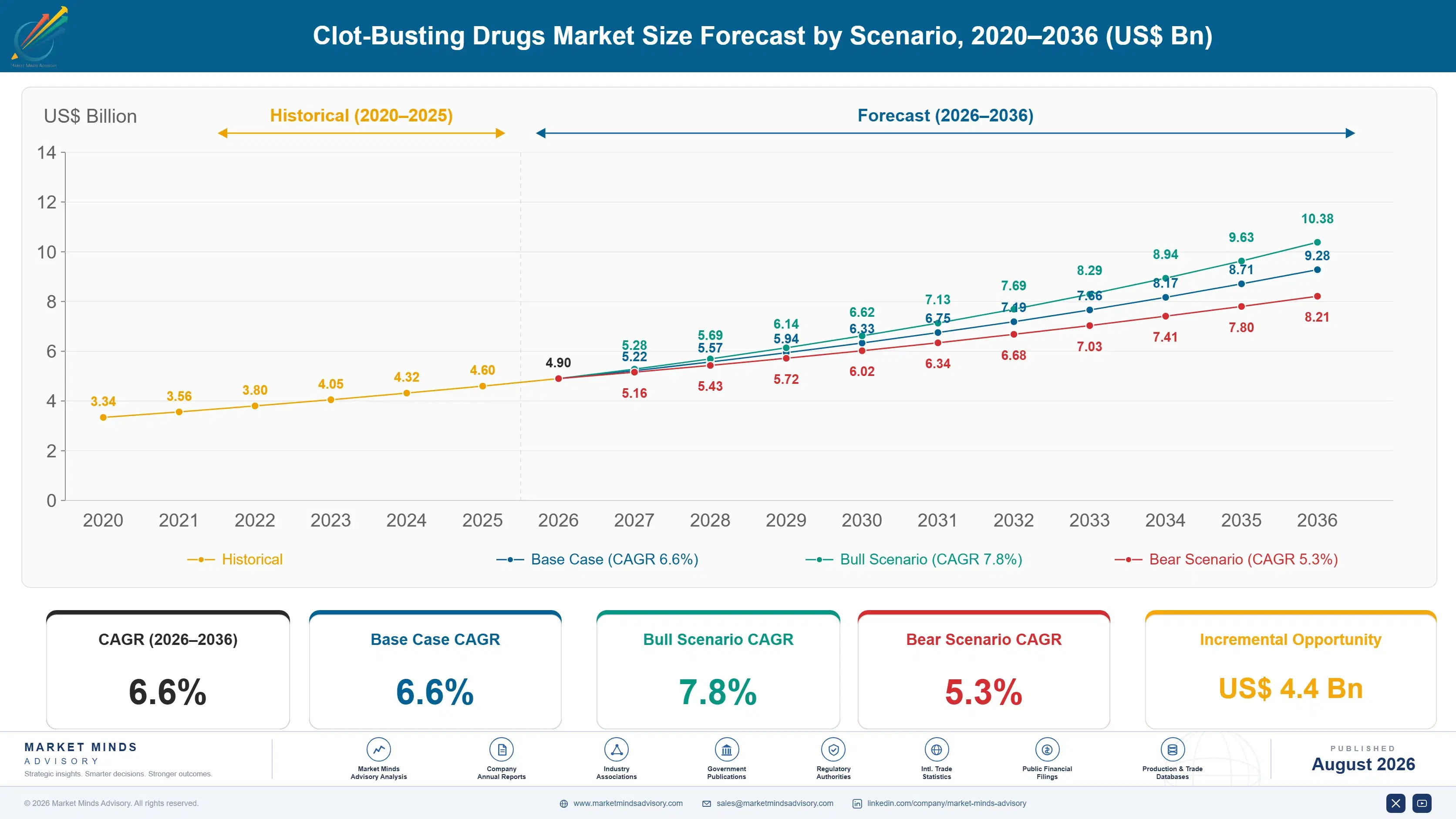
Clot-Busting Drugs Market Forecast Scenarios

clot-busting-drugs-market-size-forecast-scenario-1787305022670
Clot-busting drug spending grew at roughly 5.8% annually between 2020 and 2025, as expanding stroke unit certification and broadening treatment eligibility windows brought more patients into thrombolysis candidacy across major developed and emerging healthcare markets tracked closely by industry observers throughout the historical period. Growth accelerated further toward the end of the historical window as tenecteplase guideline endorsement gained broader specialist acceptance.
The base case assumes continued tenecteplase substitution for alteplase in stroke protocols, expanding stroke centre certification across emerging markets, and steady catheter-directed thrombolysis adoption for pulmonary embolism and deep vein thrombosis, sustaining a 6.6% blended annual growth rate through 2036 across most major treatment markets worldwide. Continued guideline endorsement of single-bolus dosing further reinforces this trajectory across most major reimbursement markets reviewed by MMA analysts worldwide today as single-bolus dosing becomes the emerging global standard.
A bull scenario assumes faster-than-expected tenecteplase guideline adoption pulls treatment initiation into a broader share of eligible stroke patients globally. The bear case centers on generic streptokinase substitution in cost-constrained health systems that slows branded agent uptake relative to established lower-cost alternatives across public hospital networks. Either scenario would meaningfully reshape which companies lead stroke centre formulary conversations.

Single-Bolus Dosing Redraws Stroke Protocol Standards

Clot-busting drug treatment sits at the convergence of emergency medicine protocol reform, stroke unit capital investment, and a genuinely fast-moving guideline shift that has repositioned tenecteplase from a niche cardiology agent into the preferred stroke thrombolytic within the span of a few clinical guideline cycles. Physicians increasingly weigh practical administration advantages as heavily as raw clinical efficacy data when selecting therapy. This dynamic increasingly rewards companies wi
MARKET CONCENTRATIONCR5 68%share held by the five largest originator companies combined
AVERAGE TREATMENT COST$8,200per patient across current branded thrombolytic regimens typically
LEADING COUNTRY SHAREUnited States 24%of global branded treatment spend concentrated domestically today
TREATMENT WINDOW UTILISATION71%of eligible stroke patients receiving thrombolysis within window
GENERIC PENETRATION34%of total treatment volume served by generic agents currently
STROKE UNIT CERTIFICATION RATE58%of major hospitals holding formal stroke centre certification
Commercially, this market splits sharply between premium branded agents used at certified stroke centres and lower-cost generic streptokinase and urokinase used in cost-constrained public hospital systems, a divide that determines which manufacturers capture margin as treatment volume expands across differently resourced healthcare systems worldwide. This clear divide increasingly determines which companies can fund the clinical pipeline the category requires.
Over the next decade, expanding stroke unit certification, broadening treatment eligibility windows, and growing catheter-directed thrombolysis adoption for embolism will keep pulling treatment protocols toward more aggressive, earlier intervention across most major healthcare systems tracked closely in this study by industry analysts. Companies slow to adapt risk ceding specialist mindshare to faster-moving competitors across the category.
"Tenecteplase didn't win on efficacy alone. It won because a nurse can push it in five seconds instead of running an hour-long infusion during the most time-critical minutes of a stroke."
Director, Cardiovascular and Neurology Pharmaceuticals Practice · MMA Pharmaceut

Market Trends

Tenecteplase Guideline Endorsement Accelerates Stroke Substitution

Major stroke treatment guidelines, including American Heart Association and European Stroke Organisation recommendations updated in recent years, now endorse tenecteplase as an acceptable or preferred alternative to alteplase for acute ischemic stroke, directly accelerating hospital formulary conversion at certified stroke centres worldwide. Stroke centres report tenecteplase adoption rates approaching 45% of stroke thrombolysis cases within eighteen months of guideline endorsement in leading markets, a faster substitution curve than any prior thrombolytic transition tracked by specialty societies. This guideline momentum is prompting hospital pharmacy committees to revisit standing stroke protocols that relied on alteplase as the default agent for two decades.
Market Impact: Affects 12 million patients yearly

Extended Treatment Window Eligibility Expands Patient Pool

Clinical trial data supporting thrombolysis eligibility beyond the traditional 4.5-hour treatment window, using advanced imaging to identify patients with salvageable brain tissue, is meaningfully expanding the treatable stroke patient population beyond what time-based eligibility criteria alone would allow at imaging-capable stroke centres. Specialty societies report extended-window imaging-based eligibility protocols have expanded treatable patient volume by roughly 18% at centres with advanced perfusion imaging capability, though this expansion remains concentrated at larger academic stroke centres with the necessary imaging infrastructure. This trend is gradually pushing stroke centres to invest in advanced imaging capability specifically to expand their treatable patient base.
Market Impact: Adds 1,200 plus certified hospital

Market Opportunities and Growth Drivers

Rising Global Stroke Incidence Expands Treatment Volume

Stroke incidence continues rising across aging populations in both developed and rapidly developing healthcare markets, with the World Health Organization noting stroke remains among the leading causes of death and long-term disability globally, directly expanding the addressable thrombolysis treatment population year over year across most major markets. China and India together account for a disproportionate share of this rising incidence, reflecting large aging populations combined with historically high hypertension and cardiovascular risk factor prevalence that has not yet been fully addressed by preventive care investment. This driver sustains steady volume growth even without factoring in eligibility or substitution effects.
Market Impact: Excludes patients presenting after

Stroke Unit Certification Programmes Expand Rapidly

National stroke unit certification programmes, requiring hospitals to demonstrate rapid thrombolysis activation protocols and minimum door-to-needle time benchmarks, continue expanding across both developed and emerging healthcare markets, directly growing the number of hospitals equipped and incentivized to stock and administer thrombolytic therapy routinely. Over 1,200 hospitals globally have pursued formal stroke centre certification since major certification programmes launched, each investing in dedicated stroke team staffing and thrombolytic drug inventory to meet activation time benchmarks required for certification. This formalization is pulling smaller regional hospitals into active thrombolytic purchasing for the first time in many emerging markets.
Market Impact: Affects 6 percent of patients

Market Restraints and Challenges

Narrow Treatment Window Limits Addressable Patient Pool

Despite extended-window eligibility advances, thrombolytic therapy remains effective only within a comparatively narrow window following symptom onset, and a substantial share of stroke patients still present too late for thrombolysis to be safely administered, fundamentally capping the addressable treatment population regardless of drug innovation. The root cause is the underlying biology of ischemic brain tissue damage, which progresses in a time-dependent manner that pharmaceutical innovation alone cannot meaningfully extend beyond current imaging-guided eligibility limits. This constraint disproportionately affects patients in regions with limited emergency transport infrastructure, where prehospital delay remains the dominant barrier to treatment rather than drug availability.
Market Impact: Adds 45 percent tenecteplase adopti

Intracranial Hemorrhage Risk Constrains Broader Adoption

Thrombolytic therapy carries a meaningful risk of intracranial hemorrhage, a serious complication that requires careful patient selection and has historically made some physicians hesitant to administer thrombolysis even to eligible candidates, particularly at hospitals without extensive stroke team experience managing this risk profile. The underlying cause is the mechanism of action itself, since dissolving clots inherently increases bleeding risk throughout the vascular system, not just at the intended treatment site within the affected vessel. This risk profile disproportionately limits adoption at smaller hospitals lacking neurology specialist availability, keeping thrombolysis concentrated at larger, better-resourced stroke centres with more clinical experience.
Market Impact: Expands treatable population by 18
3 additional market trends, 3 additional growth drivers, and 4 additional restraints and challenges are covered in the full report. Contact sales@marketmindsadvisory.com to access the complete intelligence.

Segment CAGR and Growth Architecture

This market segments by drug molecule spanning alteplase, tenecteplase, reteplase, urokinase, streptokinase, and catheter-directed thrombolysis agents, reflecting how physicians and hospital pharmacy committees actually classify treatment options across stroke, infarction, and embolism indications. This dimension is the one physicians and hospital pharmacy committees actually reference when building emergency treatment protocols for stroke, infarction, and embolism care.
clot-busting-drugs-market-market-share-analysis-1787305023210

Tenecteplase

Tenecteplase is the fastest-growing segment as stroke centres convert from infusion-based alteplase to single-bolus dosing that meaningfully simplifies emergency administration during the most time-critical minutes of stroke treatment. Clinical trial data showing non-inferior or comparable efficacy to alteplase, combined with the practical advantage of single-bolus administration that eliminates infusion pump setup and monitoring, has driven rapid guideline endorsement and formulary conversion at major stroke centres worldwide. This segment commands strong pricing power reflecting both its practical administration advantage and the strength of accumulating real-world outcome data supporting its expanding guideline position. Originator companies are pursuing label expansion into additional indications as physician confidence in this molecule continues building across the emergency medicine and neurology specialist communities broadly.
CAGR 11.8%

Catheter-Directed Thrombolysis Agents

Catheter-directed thrombolysis agents are growing considerably faster than the broader market as interventional radiologists and vascular specialists increasingly favor localized clot dissolution delivered directly at the thrombus site for pulmonary embolism and deep vein thrombosis cases that carry meaningful bleeding risk under systemic administration. This delivery approach allows lower total drug dosing while achieving more concentrated local clot dissolution, reducing systemic hemorrhage risk relative to full-dose intravenous thrombolysis in appropriately selected patients. Manufacturers are investing in delivery catheter technology alongside drug formulation improvements to further differentiate within this segment, since procedural technique and drug performance together determine outcomes in ways that drug efficacy comparisons alone cannot fully capture across the specialist community.
CAGR 9.4%
Full segment breakdown across 6 segments available in the complete report.

Regional Architecture and Country Demand Map

East Asia and North America together account for the majority of global treatment volume, reflecting the region's massive stroke burden and rapidly expanding stroke unit infrastructure alongside North America's mature emergency thrombolysis protocol maturity and premium pricing structure. Latin America and Eastern Europe trail both in absolute volume and in.

North America

The United States anchors regional demand through its dense concentration of certified stroke centres, favorable hospital reimbursement for thrombolytic therapy, and the fastest specialist uptake of tenecteplase-based stroke protocols anywhere in the world tracked in this study. Canada maintains a smaller but steadily expanding treatment base, with provincial stroke networks gradually converting to tenecteplase-based protocols following American clinical practice with a modest lag. American academic medical centres continue driving most first-in-market protocol adoption, giving originator companies a reliable early revenue base ahead of broader community hospital rollout across the wider healthcare system. This region's premium pricing and reimbursement environment makes it the benchmark market other national health systems reference when negotiating launch pricing for newly approved agents.
Share: 27% | CAGR: 7.0% (2026 to 2036)

Western Europe

Germany, France, and the United Kingdom lead regional demand through well-established stroke unit networks and national health system reimbursement pathways that provide meaningful market access for tenecteplase-based protocols within a reasonable timeframe of European guideline endorsement across most major markets. Public health system budget negotiations slow launch pricing relative to the more commercially driven American market, but once national reimbursement is secured, uptake across large hospital networks tends to be relatively swift and consistent across the region. Nordic countries show disproportionately high per-capita stroke centre density despite small absolute population, reflecting well-funded universal healthcare systems willing to fund premium thrombolytic therapy broadly. Regional growth trails North America and East Asia modestly as stroke unit penetration is already comparatively mature.
Share: 21% | CAGR: 5.0% (2026 to 2036)
Regional intelligence for 5 additional markets available in the complete report: East Asia, South Asia and Pacific, Latin America, Middle East and Africa, Eastern Europe. Contact sales@marketmindsadvisory.com.
clot-busting-drugs-market-country-cagr-analysis-1787305023720

Protocol Conversion and Stroke Network Partnerships

Manufacturers are shifting commercial strategy toward stroke centre protocol conversion support, national certification programme partnerships, and emerging market access initiatives, capturing more predictable branded treatment revenue rather than competing purely on generic-adjacent unit pricing alone across the category. This mirrors a broader specialty pharmaceutical shift toward relationship-driven, evidence-based commercial models across the category today.

Stroke Protocol Conversion Support Programme Strategy

Manufacturers are funding clinical education and protocol transition support to help stroke centres convert from alteplase to tenecteplase-based standing protocols, reducing the institutional friction hospitals face when changing default emergency thrombolytic agents across busy emergency department settings. This lever accelerates formulary conversion timelines considerably, since hospital pharmacy and therapeutics committees often require substantial clinical evidence and workflow documentation before approving a default agent change affecting time-critical emergency protocols. Manufacturers report protocol conversion support programmes accelerating hospital adoption timelines by roughly 32% compared to unsupported formulary review processes. Manufacturers view this support as essential to winning formulary conversion in an increasingly.
Market Impact: Speeds hospital adoption by roughly

National Stroke Certification Partnership Investment Strategy

Manufacturers are partnering with national stroke certification bodies and specialty societies to fund stroke team training and certification infrastructure, building goodwill and prescriber relationships while expanding the total pool of hospitals equipped to purchase and administer thrombolytic therapy routinely. This lever generates durable relationships with the specialist physicians and hospital administrators who influence purchasing decisions across an expanding certified hospital base, creating a halo effect benefiting the manufacturer's broader portfolio. Manufacturers report these partnerships expanding certified hospital account volume by roughly 24% in supported regions annually. Manufacturers increasingly treat these partnerships as core to long-term specialist relationship strategy across the.
Market Impact: Grows certified hospital accounts b

Emerging Market Access and Pricing Tier Strategy

Manufacturers are introducing tiered pricing structures specifically designed to make branded thrombolytic agents financially viable across public health systems in emerging markets previously reliant entirely on lower-cost generic streptokinase and urokinase alternatives for cost reasons alone. This lever expands the total addressable hospital base considerably beyond premium-paying developed market centres, opening genuinely new patient populations rather than simply competing harder for existing developed market accounts. Manufacturers report tiered pricing programmes increasing emerging market volume by roughly 29% within two years of programme launch across participating markets. Manufacturers expect this segment to remain a primary growth driver through the current forecast.
Market Impact: Grows emerging market volume by rou

Catheter-Directed Delivery Technology Partnership Investment Strategy

Manufacturers are partnering with catheter and delivery device companies to develop integrated thrombolytic delivery systems optimized for interventional radiology procedures, capturing incremental revenue from the faster-growing catheter-directed segment while strengthening relationships with the interventional specialist community beyond traditional emergency medicine prescribers. This lever diversifies revenue beyond systemic administration into a procedural category with distinct purchasing dynamics and specialist relationships that traditional stroke-focused commercial teams rarely reach directly. Manufacturers report these partnerships adding roughly 15% to total segment revenue at participating accounts. Manufacturers expect this partnership approach to become increasingly common as interventional procedure volume keeps expanding worldwide.
Market Impact: Adds roughly 15 percent to total se

Who Controls the Margin Pool

The top five originator companies control roughly 68% of global branded revenue, a moderate-to-high concentration reflecting the clinical development and regulatory investment required to bring a new thrombolytic agent to market, alongside a long tail of generic streptokinase and urokinase manufacturers competing on price in cost-constrained health systems. Mid-sized biotechnology companies with differentiated molecules remain attractive acquisition targets for larger originators. This dynamic k
Current competitive activity centers on tenecteplase guideline expansion and stroke centre protocol conversion support, catheter-directed delivery technology partnerships targeting interventional radiology demand, and emerging market access initiatives aimed at converting generic-reliant public hospital systems toward branded agents wherever pricing tiers make conversion feasible. Several companies are also piloting bundled patient support services to differentiate beyond drug pricing alone.

Emerging pressure comes from Chinese domestic manufacturers developing lower-cost recombinant thrombolytic agents for their home market, and from smaller specialty companies pursuing next-generation clot-selective molecules that could reduce hemorrhage risk enough to expand the addressable treatment population beyond current safety-driven eligibility limits. Established leaders are responding by accelerating their own tenecteplase and delivery technology investment to defend share.
clot-busting-drugs-market-company-positioning-matrix-1787305024242

Competitive Moat and Risk Dimensions

GENENTECH INC. (ROCHE GROUP)

Moat: US Branded Franchise Guideline Embedding

Genentech's Activase and TNKase franchise is deeply embedded in American stroke and cardiology treatment guidelines, decades of accumulated real-world outcome data, and physician training curricula, making it the default reference standard that most American emergency physicians and neurologists learn on first. Physicians trained on this franchise rarely switch reference standards absent a compelling clinical reason to do so.
GENENTECH INC. (ROCHE GROUP)

Risk: Generic Alteplase Entry Risk Ahead

As alteplase's patent protection has fully lapsed, Genentech faces meaningful generic competition risk on its legacy franchise even as it works to shift prescribing toward TNKase, and any acceleration of generic alteplase entry could meaningfully pressure this legacy revenue stream faster than expected. Investors are watching TNKase adoption trends closely for signs this transition is proceeding on schedule.
BOEHRINGER INGELHEIM INTERNATIONAL GMBH

Moat: Established Ex-US Distribution Network

Boehringer Ingelheim's Actilyse franchise benefits from decades of established hospital distribution relationships and regulatory approvals across European and international markets outside the United States, giving it distribution reach that newer entrants would need years to replicate at comparable scale. Few competitors can match the depth of Boehringer Ingelheim's established international hospital relationships built over decades.
BOEHRINGER INGELHEIM INTERNATIONAL GMBH

Risk: Alteplase-to-Tenecteplase Substitution Risk

A meaningful share of Boehringer Ingelheim's thrombolytic revenue still derives from alteplase, a molecule facing the same guideline-driven substitution pressure toward tenecteplase that is reshaping stroke protocols globally, and the company must successfully build its own tenecteplase position to offset this transition. This transition risk has already pressured legacy alteplase volume across several key European markets recently.

Players Tracked

Prominent Players

Genentech Inc. (Roche Group)
Boehringer Ingelheim International GmbH
Chiesi Farmaceutici S.p.A.
Guangzhou Techpool Bio-Pharma Co. Ltd.
Cadila Pharmaceuticals Ltd.

Other Key Players

Zydus Lifesciences Ltd.
Bharat Serums and Vaccines Ltd.
Lee's Pharmaceutical Holdings Ltd.
Livzon Pharmaceutical Group Inc.
Teva Pharmaceutical Industries Ltd.
Fresenius Kabi AG
B. Braun Melsungen AG
Meitheal Pharmaceuticals Inc.
Grifols S.A.
Sun Pharmaceutical Industries Ltd.
Cipla Limited
Reliance Life Sciences Pvt. Ltd.
Shenzhen Hepalink Pharmaceutical Co., Ltd.
Shanghai Pharmaceuticals Holding Co., Ltd.
Wockhardt Ltd.

Recent Developments

MARCH 2026

Genentech Expands TNKase Manufacturing Capacity in California

Genentech announced an organic capacity expansion at its California biologics manufacturing facility to increase tenecteplase supply, aimed at meeting rising demand from stroke centres converting from alteplase-based protocols across United States and international markets following recent guideline updates. The expansion is expected to reach full production capacity within the next.
Signal: Signals continued manufacturer confidence
SEPTEMBER 2025

Boehringer Ingelheim Signs Distribution Agreement With Southeast Asian Hospital Network

Boehringer Ingelheim entered a multi-year distribution agreement with a major Southeast Asian hospital network to expand Actilyse and tenecteplase access across newly certified stroke centres, part of a broader push to standardize thrombolytic protocol selection across the region. Financial terms of the multi-year agreement were not disclosed by either party.
Signal: Reflects growing originator interest in em
JANUARY 2026

Guangzhou Techpool Acquires Regional Urokinase Manufacturing Facility

Guangzhou Techpool Bio-Pharma completed the acquisition of a regional urokinase manufacturing facility, expanding its domestic production capacity to meet rising catheter-directed thrombolysis demand across China's rapidly expanding interventional radiology and vascular procedure volume. Financial terms of the transaction were not disclosed by either company involved in the deal.
Signal: Indicates growing Chinese manufacturer inv

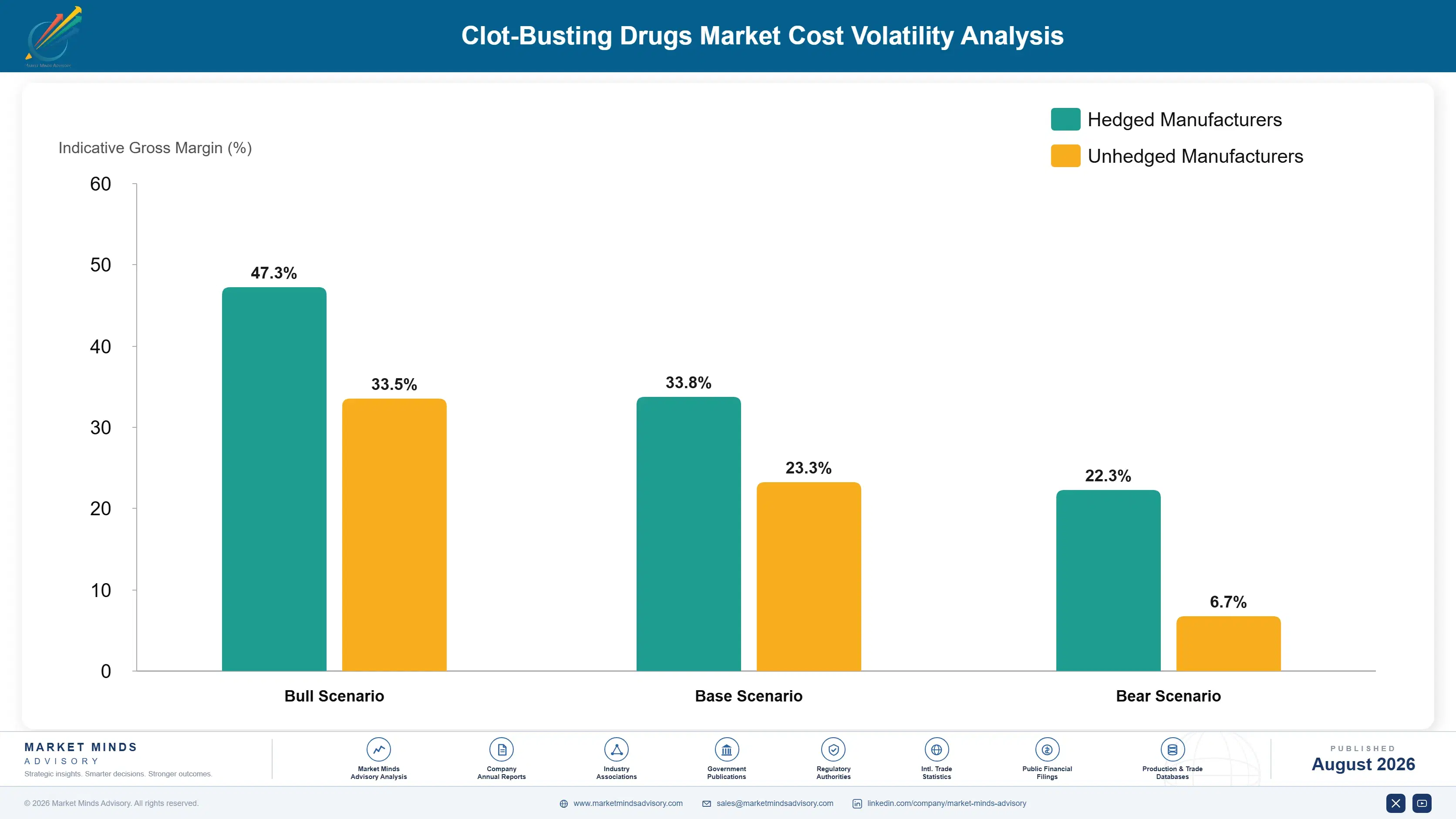
Recombinant Protein Manufacturing Cost Exposure

Recombinant protein manufacturing infrastructure, specialized cell culture production, and rigorous biologics purification processes together represent roughly 46% of cost of goods sold for branded thrombolytic manufacturers, with production capacity concentrated among a small group of specialized biologics manufacturing facilities globally. Companies without in-house biologics capability face materially higher exposure to this concentrated supplier base today.
Biologics manufacturing costs rose meaningfully during 2022 and 2023 amid broader biotechnology sector cost inflation, with company annual reports from major manufacturers confirming that specialized cell culture and purification costs remained elevated through much of the period before moderating somewhat through 2024 and 2025 across most producing regions. Smaller manufacturers absorbed a disproportionate share of this cost inflation given their weaker negotiating position with contract producers.

Generic streptokinase and urokinase manufacturers relying on simpler bacterial fermentation processes face materially lower production costs than recombinant protein producers, creating a durable cost structure divide that explains much of the persistent price gap between branded tenecteplase-class agents and older generic thrombolytic alternatives across the category. This cost divide is unlikely to narrow meaningfully given the fundamentally different manufacturing processes involved for the foreseeable future.
clot-busting-drugs-market-cost-volatility-analysis-1787305024439

In-House Biologics Manufacturing Investment

Larger manufacturers are building dedicated in-house recombinant protein manufacturing capacity rather than relying entirely on contract manufacturers, reducing exposure to capacity constraints and pricing volatility that smaller developers without comparable capital remain fully exposed to. This approach has become standard practice among the largest specialty pharmaceutical companies over the past decade, particularly those with the strongest balance sheets available.

Process Optimization and Yield Improvement

Manufacturers are investing in cell culture process optimization and purification yield improvement to reduce per-unit production costs over time, gradually narrowing the cost gap between recombinant branded agents and simpler generic alternatives. This process improvement work has accelerated as competitive pressure from generic alternatives intensifies across the category, helping offset rising input costs over time.

Strategic Contract Manufacturing Agreements

Smaller developers are securing long-term strategic manufacturing partnerships with established biologics producers, locking in capacity access and more predictable production costs before competing for scarce manufacturing slots industry-wide. This strategy has become increasingly common as manufacturing capacity constraints tighten across the wider biologics industry, reflecting genuine confidence in long-term category volume growth over the coming years.

Portfolio Architecture for Margin Defence

This market organizes into three commercial tiers spanning generic streptokinase and urokinase at the volume end, branded alteplase and reteplase occupying the premium middle tier, and tenecteplase and next-generation catheter-directed agents capturing the strongest margins at the top of the portfolio architecture overall across the category. Manufacturers increasingly structure pipeline investment and pricing strategy explicitly around this three-tier architecture.
Volume and premium tiers pull manufacturers in different directions: generic agents sustain baseline treatment access in cost-constrained health systems, while tenecteplase and premium branded agents deliver materially stronger margins that increasingly determine which companies can fund the clinical development pipeline the category requires going forward across markets. Most manufacturers now allocate a growing share of research budget toward the top two tiers.

The highest-value pools concentrate around tenecteplase and catheter-directed delivery agents sold into certified stroke centres and interventional radiology practices, where clinical guideline endorsement and practical administration advantages together sustain premium pricing power that generic legacy agents simply cannot match across comparable treatment volume in the category. Manufacturers unable to compete in this tier increasingly struggle to sustain category-leading margins over time across the wider industry.

Volume / Commodity-Adjacent Tier

Generic streptokinase and urokinase sold primarily into cost-constrained public health systems prioritizing baseline treatment access. This tier represents the largest treated patient volume by unit count across most emerging markets.
Gross Margin: 18-25%

Premium / Certified Tier

Branded alteplase and reteplase sold into certified stroke and cardiology centres under established guideline positioning and reimbursement. Hospitals in this tier rarely switch agents once a standing protocol is formally approved.
Gross Margin: 42-52%

Sustainability / Regulatory / Next-Generation Tier

Tenecteplase and catheter-directed delivery agents commanding the strongest pricing power given guideline momentum and administration advantages. This tier increasingly determines which companies can fund the clinical pipeline the category requires.
Gross Margin: 58-67%
clot-busting-drugs-market-portfolio-architecture-1787305024938

Emergency Protocol Lock-In Across Hospital Networks

Standing emergency protocol adoption functions as an annuity anchor once a hospital pharmacy committee approves a default thrombolytic agent: every subsequent eligible stroke or infarction case triggers automatic drug administration, and switching agents requires requalifying emergency protocols across the entire affected department and staff training programme. Manufacturers increasingly price early protocol adoption competitively to accelerate this durable purchasing relationship. This dynamic
Adoption depth varies considerably by hospital tier: major academic stroke centres adopt newer agents and extended treatment windows earliest, while community and rural hospitals more often continue established alteplase-based protocols until regional stroke network affiliation drives standardized protocol conversion across their referral relationships. Manufacturers tailor commercial and educational investment differently across each of these distinct hospital tiers.

A generational shift is underway as emergency physicians and neurologists trained during the tenecteplase era enter practice expecting single-bolus administration as standard practice, gradually normalizing a treatment approach that earlier-trained physicians historically associated only with cardiology infarction protocols rather than routine stroke care delivery. Manufacturers are adapting medical education investment accordingly to reach this newly influential physician cohort.
clot-busting-drugs-market-end-use-penetration-index-1787305025430

Where Thrombolytic Economics Are Heading Next

These are among the four positions where our research anticipates prominent divergence between winners and laggards over the coming forecast period. Each is grounded in the demand model, the regulatory perimeter, and the announced capacity pipeline.
01 / PROTOCOL CONVERSION STRATEGY

Tenecteplase will keep displacing alteplase as the stroke default

Stroke centres converting to tenecteplase-based standing protocols are setting a precedent that guideline committees appear increasingly willing to formalize further, and this trajectory shows no sign of reversing given the practical administration advantage and accumulating real-world outcome data. Alteplase will persist in cardiology infarction protocols and cost-constrained systems rather than disappearing from clinical practice entirely. Manufacturers overweighted toward legacy alteplase revenue face a gradually shrinking core stroke category over the coming decade regardless of overall market growth, across nearly every stroke portfolio MMA analysts reviewed this cycle.
02 / EMERGING MARKET EXPANSION

Stroke unit certification will keep expanding the treated population

Stroke unit certification programme expansion across emerging markets represents the single largest addressable growth lever in this category, since a meaningful share of eligible stroke patients in developing healthcare systems still lack access to certified thrombolysis capability entirely. Companies investing in certification partnership and physician training programmes are best positioned to capture this expanding population. Expect emerging market volume growth to meaningfully outpace developed market growth through most of the current forecast period ahead, well ahead of many adjacent acute-care categories tracked by MMA analysts.
03 / GENERIC COMPETITIVE PRESSURE

Tiered pricing will separate winners from laggards in emerging markets

Manufacturers offering credible tiered pricing strategies for cost-constrained public health systems are best positioned to convert generic-reliant hospitals toward branded agents as certification and reimbursement infrastructure matures across emerging markets. Companies relying purely on developed market premium pricing risk ceding this expanding volume entirely to generic competitors. Expect tiered pricing strategy to become a near-universal expectation for thrombolytic manufacturers pursuing meaningful emerging market growth within the next several years, particularly those still relying purely on developed market premium pricing alone.
04 / CATHETER DELIVERY STRATEGY

Interventional delivery technology will become a genuine differentiator

Manufacturers partnering with catheter and delivery device companies to build integrated interventional thrombolysis systems are capturing disproportionate share of the fastest-growing embolism treatment segment, and this advantage compounds as interventional specialists build procedural familiarity with specific delivery systems. Companies without meaningful delivery technology partnerships risk ceding this business to better-positioned competitors. Expect delivery technology partnerships to become an increasingly explicit differentiator in how manufacturers compete for interventional specialist relationships, reshaping which companies lead interventional specialist relationships this decade across the specialist interventional community broadly.

Engagement Snapshot From the Field

A live engagement with an industry participant carrying material or product regulatory and market exposure ahead of a defining policy shift, showing how our research translates into a defensible multi-year portfolio strategy.
MARKET MINDS ADVISORY · CLIENT ENGAGEMENT SUMMARY
Clot-Busting Drugs Producer Strategic Portfolio Review and Transition Roadmap 2026·Investment Scenario on Clot-Busting Drugs Exposure Evaluation 2025-26
CLIENT PROFILE
The client operates an eight-hospital regional network anchored by two certified stroke centres and six community hospitals, generating combined annual thrombolytic procurement spend of approximately $12 million (client-reported, unverified by MMA). Leadership sought guidance on network-wide conversion from alteplase to tenecteplase-based stroke protocols across its member hospital network prior to the engagement across its member hospital network before this engagement began.
STRATEGIC CHALLENGE
The network's certified stroke centres had already begun evaluating tenecteplase, but leadership was uncertain whether extending conversion to all six community hospitals simultaneously would overwhelm staff training capacity or whether a phased rollout would better manage the transition risk involved given limited internal training capacity available given the network's limited internal training budget available.
MMA APPROACH
MMA's team benchmarked comparable network conversion timelines, modeled projected cost savings from simplified administration against training investment required at each site, and compared phased rollout scenarios against a simultaneous network-wide conversion approach across all eight hospitals to present to the network's board of directors to present for the network's board approval process.
KEY FINDINGS
  1. Simplified single-bolus administration was projected to reduce nursing time per thrombolysis case by roughly 35% compared to infusion-based alteplase protocols across the network.
  2. A phased rollout starting with the two certified stroke centres reduced projected training disruption risk considerably compared to simultaneous network-wide conversion across all eight sites.
  3. Community hospitals conducting fewer than ten thrombolysis cases annually showed the lowest training cost per case, making them efficient candidates for later conversion phases.
  4. Network-wide conversion was projected to reduce annual drug administration error risk by roughly 22% given tenecteplase's simplified single-bolus dosing protocol across the full network studied.
CLIENT PROFILE
The client operates an eight-hospital regional network anchored by two certified stroke centres and six community hospitals, generating combined annual thrombolytic procurement spend of approximately $12 million (client-reported, unverified by MMA). Leadership sought guidance on network-wide conversion from alteplase to tenecteplase-based stroke protocols across its member hospital network prior to the engagement across its member hospital network before this engagement began.
STRATEGIC CHALLENGE
The network's certified stroke centres had already begun evaluating tenecteplase, but leadership was uncertain whether extending conversion to all six community hospitals simultaneously would overwhelm staff training capacity or whether a phased rollout would better manage the transition risk involved given limited internal training capacity available given the network's limited internal training budget available.
MMA APPROACH
MMA's team benchmarked comparable network conversion timelines, modeled projected cost savings from simplified administration against training investment required at each site, and compared phased rollout scenarios against a simultaneous network-wide conversion approach across all eight hospitals to present to the network's board of directors to present for the network's board approval process.
KEY FINDINGS
  1. Simplified single-bolus administration was projected to reduce nursing time per thrombolysis case by roughly 35% compared to infusion-based alteplase protocols across the network.
  2. A phased rollout starting with the two certified stroke centres reduced projected training disruption risk considerably compared to simultaneous network-wide conversion across all eight sites.
  3. Community hospitals conducting fewer than ten thrombolysis cases annually showed the lowest training cost per case, making them efficient candidates for later conversion phases.
  4. Network-wide conversion was projected to reduce annual drug administration error risk by roughly 22% given tenecteplase's simplified single-bolus dosing protocol across the full network studied.
RECOMMENDED STRATEGY
Phase 1: Phase 1 (Months 1-4): Convert the two certified stroke centres first, using their existing neurology specialist staff to build internal conversion expertise. Phase 2: Phase 2 (Months 5-9): Convert the three highest-volume community hospitals using stroke centre staff as training resources for their emergency departments. Phase 3: Phase 3 (Months 10-14): Complete conversion at the three remaining lower-volume community hospitals using lessons learned from earlier phases and updated training materials.
OUTCOME
The network completed conversion across all eight hospitals within the recommended fourteen-month timeline, reporting a 31% reduction in average door-to-needle time and an estimated $340,000 in annual nursing time savings across the network (client-reported, unverified by MMA) within the first six months following full network conversion.

Frequently Asked Questions

Foundational context covering the market sizes, CAGR, scope, country, region and competition that inform every finding below. This section is provided to cover basics and most often pre-purchase conversations, answered from the MMA Primary Research Dataset.

What is the current size of the Clot-Busting Drugs Market?

The global clot-busting drugs market was valued at approximately $4.6 billion in 2025. This includes thrombolytic agents used in stroke, infarction, and embolism treatment across stroke, infarction, and embolism treatment categories combined.

How large will the Clot-Busting Drugs Market be by 2036?

The market is projected to reach approximately $9.29 billion by 2036. This reflects continued tenecteplase substitution and expanding stroke unit certification worldwide under continued protocol conversion and stroke unit expansion.

What is the CAGR for the Clot-Busting Drugs Market 2026 to 2036?

The market is expected to grow at a compound annual growth rate of 6.6% between 2026 and 2036. This reflects steady demand from expanding stroke treatment infrastructure.

Which segment is growing fastest?

Tenecteplase is the fastest-growing segment, expanding at approximately 11.8% annually. This reflects its displacement of infusion-based alteplase across stroke treatment protocols over infusion-based alteplase administration during emergencies.

Who are the major companies in the Clot-Busting Drugs Market?

Leading companies include Genentech, Boehringer Ingelheim, Chiesi Farmaceutici, Guangzhou Techpool Bio-Pharma, and Cadila Pharmaceuticals. Together they account for roughly 68% of global branded revenue across the branded thrombolytic category worldwide.

Which country is growing fastest?

India is the fastest-growing major market at an estimated 10.5% CAGR, driven by rapidly expanding stroke-ready hospital infrastructure nationwide across its rapidly modernizing public hospital network.

Report Segmentation Architecture

The full report scope spans multiple orthogonal segmentation dimensions, with cross-tabulated demand data provided for each dimension pair. Coverage extends further to regional breakdowns, trend trajectories, and the competitive detail needed to support segment-level decision-making.

By Drug Molecule

  • Alteplase
  • Tenecteplase
  • Reteplase
  • Urokinase
  • Streptokinase
  • Catheter-Directed Thrombolysis Agents

By Clinical Indication

  • Acute Ischemic Stroke
  • ST-Elevation Myocardial Infarction
  • Pulmonary Embolism
  • Deep Vein Thrombosis
  • Peripheral Arterial Occlusion

By Commercial Dimension

  • Hospital Pharmacy Procurement
  • Emergency Department Formulary
  • Interventional Radiology Channels
  • Group Purchasing Organizations

By Region

  • North America
  • Western Europe
  • East Asia
  • South Asia and Pacific
  • Latin America
  • Middle East and Africa
  • Eastern Europe

Scope, Methodology, and Coverage

Every figure in this report is reproducible from documented input assumptions. The scope below maps the historical period, the forecast horizon, the segmentation dimensions, and the countries covered, alongside the underlying primary and qualitative methodology.
Historical Period
2020 to 2025
Forecast Period
2026 to 2036
Base Year
2025 (USD billions; MMA Primary Research Dataset, August 2026)
Market Definition
This report covers thrombolytic pharmaceutical agents used specifically to dissolve blood clots in acute ischemic stroke, ST-elevation myocardial infarction, pulmonary embolism, and catheter-directed peripheral thrombolysis. It excludes anticoagulant maintenance therapy, mechanical thrombectomy devices, and antiplatelet agents used for long-term secondary prevention.
Quantitative Units
USD billions (current prices); treated patient volume; average cost per treatment episode
Segmentation Dimensions
By Drug Molecule; By Clinical Indication; By Commercial Dimension; By Region
Regions Covered
North America, Western Europe, East Asia, South Asia and Pacific, Latin America, Middle East and Africa, Eastern Europe
Countries Covered
USA, China, Germany, France, UK, Japan, South Korea, India, Australia, Canada, Brazil, Mexico, Indonesia, Vietnam, Thailand, Malaysia, UAE, Saudi Arabia, South Africa, Nigeria, Turkey, Poland, Netherlands, Italy, Spain, Sweden, Switzerland, Argentina, Colombia, Singapore, and additional markets relevant to this sector
Key Companies Profiled
Genentech Inc. (Roche Group), Boehringer Ingelheim International GmbH, Chiesi Farmaceutici S.p.A., Guangzhou Techpool Bio-Pharma Co. Ltd., Cadila Pharmaceuticals Ltd., Zydus Lifesciences Ltd., Bharat Serums and Vaccines Ltd., Lee's Pharmaceutical Holdings Ltd., Livzon Pharmaceutical Group Inc., Teva Pharmaceutical Industries Ltd., Fresenius Kabi AG, B. Braun Melsungen AG, Meitheal Pharmaceuticals Inc., Grifols S.A., Sun Pharmaceutical Industries Ltd., Cipla Limited, Reliance Life Sciences Pvt. Ltd., Shenzhen Hepalink Pharmaceutical Co., Ltd., Shanghai Pharmaceuticals Holding Co., Ltd., Wockhardt Ltd.
Quantitative Methodology
Primary survey, n=3,800 respondents, Q4 2025, six countries; demand-side model with trade association cross-validation
Qualitative Methodology
47 expert interviews, Q4 2025; applied to validate demand model assumptions, identify emerging dynamics, and assess competitive positioning
Report Format
PDF and XLSX data workbook (Word format preview document)
Publisher
Market Minds Advisory
Report Code
MMA-2026-HLT-117
Published
August 2026
Contact
sales@marketmindsadvisory.com | www.marketmindsadvisory.com

Purchase the full Clot-Busting Drugs Market Report (2026 to 2036).

The full report provides detailed molecule-level segmentation, hospital protocol conversion pattern analysis, and country-level stroke certification tracking across all seven regions covered in this study. It includes manufacturer-level competitive benchmarking based on guideline positioning and delivery technology partnerships. Subscribers receive quarterly updates tracking new drug approvals and guideline committee recommendations as they occur. A companion dataset provides treated patient volume estimates by indication and region for detailed market sizing purposes A dedicated analyst contact is also available to support custom data requests beyond the standard deliverable scope provided.
Molecule-level segmentation breakdown by clinical indication
Hospital protocol conversion pattern trend analysis
Country-level stroke certification tracking and updates
Manufacturer competitive benchmarking scorecards and comparisons
Quarterly approval and guideline update service
Treated patient volume dataset by indication

Built For The People Who Decide

From boardroom strategy to bench-side execution, this report is read cover-to-cover by leaders shaping the next decade of their industry, turning demand scenarios, market dynamics and valuation benchmarks into decisions.
CXOs/ Presidents/ VPs/ Managers
M&A and Corporate Development
Strategy Teams and R&D Heads
Procurement and Product Directors
Regulatory and Compliance Leaders
Investor Relations and Equity Analysts