Market Minds Advisory
Chronic Pulmonary Hypertension Treatment Market

Chronic Pulmonary Hypertension Treatment Market: Targeted Vasodilator and Activin Pathway Therapeutics

A first-in-class activin signaling inhibitor is reshaping pulmonary arterial hypertension treatment protocols once anchored entirely around endothelin, phosphodiesterase, and prostacyclin pathway drugs, forcing payers and specialty pulmonary hypertension centres to rethink combination therapy sequencing nationwide.

Lead Analyst

Alice Ballenger

Published

September 2026

Make Smarter Decisions with Customized Research Insights

Request a free sample report and evaluate market opportunities, growth trends, and competitive dynamics relevant to your business needs.

2025 MARKET VALUE$7.4BMarket Size 2025
2036 FORECAST VALUE$18.7BBase Case , 2026 to 2036
CAGR 2026 TO 20368.8 %Bull 10.1% / Bear 7.4%
INCREMENTAL OPPORTUNITY$10.7BNet 10- year value creation
EXPANSION MULTIPLE2.32x2036 value over 2026 base
Strategic Levers
M&A Pipeline
Regional Outlook
Country Rankings
Competitive Intelligence
Segmental Deep-dive
Call-Us : 91 93563 13602

Executive Snapshot and Market Trajectory

A first-in-class activin signaling inhibitor is displacing older three-pathway combination regimens as the preferred add-on therapy at leading pulmonary hypertension centres, compressing prescribing timelines for patients with progressive decline. Specialist prescribers call this the biggest sequencing shift in over a decade across leading specialty treatment networks.
Specialty pulmonary hypertension centres, expanding right heart catheterization-confirmed diagnosis rates, and broadening combination therapy reimbursement are concentrating demand in North America and Western Europe, where specialist referral networks are most developed and orphan drug pricing sustains the highest per-patient treatment spend of any region tracked in this study. Payers in these two regions have also moved fastest to establish formal coverage pathways for the newest mechanism class available overall today.
A tightly concentrated group of originator pharmaceutical companies controls most branded revenue, while generic erosion on older endothelin and phosphodiesterase assets pressures legacy portfolios even as newer activin pathway and oral prostacyclin agonist launches reshape which companies lead functional class outcome data at major medical conferences. Smaller biotechnology developers without a differentiated mechanism increasingly struggle to secure meaningful specialist attention each year compared to established originators at major industry conferences each cycle consistently now.
Market Definition
This market covers pharmacological therapies used in the chronic treatment of pulmonary arterial hypertension, including endothelin receptor antagonists, phosphodiesterase-5 inhibitors, prostacyclin pathway agents, soluble guanylate cyclase stimulators, and activin signaling inhibitors. It excludes lung transplantation, acute vasodilator testing agents, and general heart failure pharmacotherapy unrelated to pulmonary arterial hypertension specifically.
Base Year Value
$7.4B in 2025 (MMA Primary Research Dataset, August 2026)
Forecast Period
2026 to 2036, eleven discrete annual values
CAGR
8.8% base case. Bull 10.1%. Bear 7.4%.
Fastest Growth Segment
Activin Signaling Inhibitors: 19.5% CAGR
Fastest Growth Country
China: 13.5% CAGR
Fastest Growth Region
South Asia and Pacific: 10.7% CAGR
Largest Region
North America: 30% of 2025 global value
Market Leaders
Johnson & Johnson, Merck & Co. Inc., United Therapeutics Corporation, Bayer AG, Gossamer Bio Inc. Source: MMA Analysis based on company annual reports.
Primary Survey
n=3,800 procurement and R&D decision-makers, Q4 2025, six countries
Methodology
Demand-side build-up, cross-validated against public data, 47 expert interviews

Chronic Pulmonary Hypertension Treatment Market Forecast Scenarios

chronic-pulmonary-hypertension-treatment-market-size-forecast-scenario-1787305016048
Pulmonary arterial hypertension treatment spending grew at roughly 7.8% annually between 2020 and 2025, as combination therapy protocols became standard of care and expanding specialist diagnosis capacity brought more patients into treatment earlier in their disease progression across major developed healthcare markets tracked closely by industry observers. Growth accelerated further toward the end of the historical window as newer combination protocols gained broader specialist acceptance.
The base case assumes continued activin pathway drug uptake among functional class III and IV patients, expanding combination therapy reimbursement across national payers, and steady specialist referral network growth in emerging pulmonary hypertension centres, sustaining an 8.8% blended annual growth rate through 2036 across most major treatment markets worldwide. Continued guideline endorsement of upfront combination therapy further reinforces this trajectory across most major reimbursement markets reviewed by MMA analysts worldwide.
A bull scenario assumes faster-than-expected activin pathway adoption pulls treatment initiation earlier in the disease course across a broader patient population. The bear case centers on payer pushback against premium combination pricing that slows uptake of newer agents relative to established generic-eligible older pathway therapies across cost-constrained health systems. Either scenario would meaningfully reshape which companies lead functional class outcome data by decade's end.

Activin Pathway Innovation Redraws Combination Therapy

Pulmonary arterial hypertension treatment sits at the convergence of specialty diagnostic capacity, orphan drug pricing economics, and a genuinely fast-moving pipeline that has added an entirely new drug mechanism to standard combination therapy within the past two years alone. Physicians increasingly weigh mechanism novelty as heavily as established efficacy data when selecting therapy. This dynamic increasingly rewards companies with genuinely differentiated science over incremental formulatio
MARKET CONCENTRATIONCR5 82%share held by the five largest originator companies combined
AVERAGE ANNUAL TREATMENT COST$185,000per patient across current combination therapy regimens typically
LEADING COUNTRY SHAREUnited States 38%of global branded treatment spend concentrated domestically today
DIAGNOSIS RATE62%of estimated prevalent cases currently under specialist treatment
COMBINATION THERAPY UPTAKE58%of treated patients receiving two or more drug classes
PATENT EXPOSURE SHARE31%of branded revenue facing generic competition within five years
Commercially, this market behaves like a premium specialty pharmaceutical category: treatment is lifelong once initiated, combination regimens routinely stack two or three drug classes simultaneously, and per-patient spend rivals or exceeds many oncology categories despite pulmonary arterial hypertension's comparatively small diagnosed population worldwide. This economics profile increasingly attracts specialty investors seeking durable, lifelong recurring revenue streams. Few other chronic disease categories combine this small patient population with comparably high per-patient spend.
Over the next decade, activin pathway expansion, earlier diagnosis through improved right heart catheterization access, and growing payer acceptance of upfront combination therapy will keep pulling treatment protocols toward more aggressive, higher-cost regimens across most major healthcare systems tracked in this study. Companies slow to adapt risk ceding specialist mindshare to faster-moving competitors across the category.
"Sotatercept didn't just add a fourth pathway. It reset what physicians think a good response looks like, and that resets what payers are willing to approve upfront."
Director, Specialty Pharmaceuticals Practice · MMA Pharmaceuticals Practice

Market Trends

Activin Pathway Drugs Enter Standard Combination Protocols

Sotatercept, the first approved activin signaling inhibitor for pulmonary arterial hypertension, is being incorporated into combination regimens at major specialty centres following clinical trial data showing meaningful improvement in exercise capacity and functional class among patients already on background triple therapy. Specialty pulmonary hypertension centres report activin pathway add-on rates approaching 40% among functional class III patients within the first eighteen months of availability, a faster uptake curve than any prior pulmonary arterial hypertension drug launch tracked. This adoption pace is prompting payers and treatment guideline committees to revisit sequencing recommendations that previously reserved fourth-pathway therapy for the most refractory.
Market Impact: Covers 70 percent of new patients
Right Heart Catheterization Access Expands Diagnosis

Expanding availability of right heart catheterization, the diagnostic gold standard for confirming pulmonary arterial hypertension, at regional referral hospitals beyond major academic medical centres is meaningfully shortening the historically long diagnostic delay that has long characterized this disease category. Specialty societies report average time from symptom onset to confirmed diagnosis has fallen by roughly two years over the past decade as awareness campaigns and improved echocardiographic screening protocols route more suspected cases toward catheterization-capable centres earlier in the diagnostic pathway. Earlier diagnosis is expanding the treated patient population meaningfully beyond what disease prevalence alone would suggest.
Market Impact: Protects revenue up to 10 years

Market Opportunities and Growth Drivers

Upfront Combination Therapy Guideline Adoption Rises

Major pulmonary hypertension treatment guidelines now recommend upfront combination therapy at diagnosis for most functional class II and III patients rather than the sequential single-agent escalation approach that dominated clinical practice a decade ago, directly expanding average per-patient drug spend from the point of diagnosis onward. European Society of Cardiology and European Respiratory Society joint guidelines updated in recent years explicitly favor combination initiation, and US specialty societies have followed a similar direction in their own published recommendations. This guideline shift alone has meaningfully expanded addressable combination therapy revenue across the newly diagnosed patient population each year.
Market Impact: Erodes legacy revenue by 31 percent

Orphan Drug Pricing and Exclusivity Protection

Pulmonary arterial hypertension therapies benefit from orphan drug designation in major markets, providing extended market exclusivity periods and premium pricing that sustains high per-patient revenue despite a comparatively small diagnosed population relative to more common chronic disease categories. Orphan exclusivity periods of seven years in the United States and ten years in the European Union protect newly launched agents like sotatercept from generic competition well into the next decade, giving originator companies a long runway to establish combination therapy standard of care before facing pricing pressure. This protection is a primary reason per-patient spend in this category rivals leading oncology.
Market Impact: Costs exceed 150,000 dollars annual

Market Restraints and Challenges

Generic Erosion on Legacy Endothelin and PDE5 Assets

Several older endothelin receptor antagonist and phosphodiesterase-5 inhibitor branded products have already lost patent exclusivity or face imminent generic entry, eroding revenue on legacy portfolio components that originator companies once relied on for stable base business supporting newer pipeline investment. The root cause is simply patent expiry timing colliding with drugs that were first approved fifteen to twenty years ago, well before the current wave of newer-mechanism agents reached the market. This erosion disproportionately affects companies without a strong newer-generation pipeline to offset lost legacy revenue, squeezing overall portfolio growth even as unit volume for these older agents remains stable.
Market Impact: Adds 40 percent class III uptake

Premium Combination Pricing Strains Payer Budgets

Annual combination therapy costs exceeding $150,000 per patient are drawing increasing payer scrutiny, particularly for triple and quadruple combination regimens that stack multiple premium-priced branded agents simultaneously across a lifelong treatment course with no cure endpoint in sight. The underlying cause is that pulmonary arterial hypertension remains a small enough patient population that originator companies have limited incentive to compete on price, unlike larger chronic disease categories where payer negotiating leverage is considerably stronger. This creates genuine access friction, where prior authorization and step therapy protocols slow uptake. Manufacturers are exploring outcomes-based contracting to ease this friction.
Market Impact: Cuts delay by 2 years
3 additional market trends, 3 additional growth drivers, and 4 additional restraints and challenges are covered in the full report. Contact sales@marketmindsadvisory.com to access the complete intelligence.

Segment CAGR and Growth Architecture

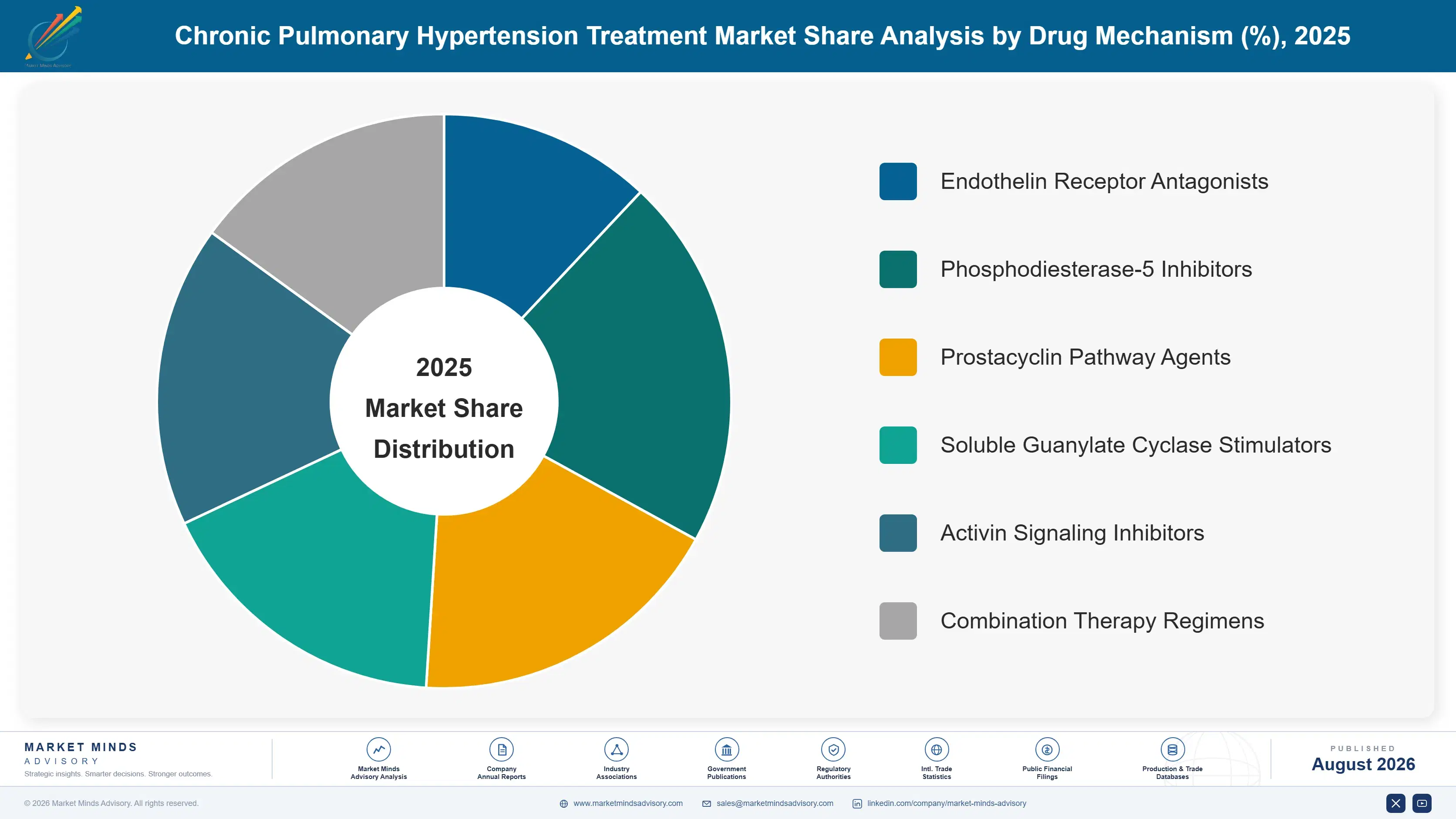
This market segments by drug mechanism spanning endothelin receptor antagonists, phosphodiesterase-5 inhibitors, prostacyclin pathway agents, soluble guanylate cyclase stimulators, activin signaling inhibitors, and combination therapy regimens, reflecting how physicians and payers actually classify treatment options for this disease. This dimension is the one physicians and payers actually reference when discussing treatment escalation and sequencing decisions.
chronic-pulmonary-hypertension-treatment-market-market-share-analysis-1787305016584

Activin Signaling Inhibitors

Activin signaling inhibitors are the fastest-growing segment following the recent approval of the first drug in this entirely new mechanistic class, which targets the underlying vascular remodeling process driving pulmonary arterial hypertension rather than simply dilating existing narrowed vessels like older pathway therapies. Clinical trial data showing meaningful functional class and exercise capacity improvement even among patients already on maximal background therapy has driven rapid specialist adoption at major pulmonary hypertension centres worldwide. This segment commands premium pricing reflecting both its novel mechanism and the strength of its clinical evidence base relative to older, more established pathway therapies. Originator companies are racing to expand manufacturing capacity and pursue label expansion into earlier disease stages as physician confidence in this mechanism.
CAGR 19.5%

Prostacyclin Pathway Agents and IP Receptor Agonists

Prostacyclin pathway agents, including newer oral IP receptor agonists that avoid the infusion pump delivery required by older prostacyclin analogs, are growing considerably faster than the broader market as physicians increasingly favor oral formulations for patients who previously required continuous intravenous or subcutaneous infusion therapy. This shift meaningfully improves patient quality of life and treatment adherence while reducing the infection and site-reaction complications historically associated with infused prostacyclin delivery systems. Originator companies are investing in extended-release formulations to further differentiate within this segment, since oral convenience has become a genuine competitive battleground beyond raw clinical efficacy comparisons alone across the physician and patient communities. This convenience advantage is becoming a genuine competitive battleground within the segment overall.
CAGR 10.8%
Full segment breakdown across 6 segments available in the complete report.

Regional Architecture and Country Demand Map

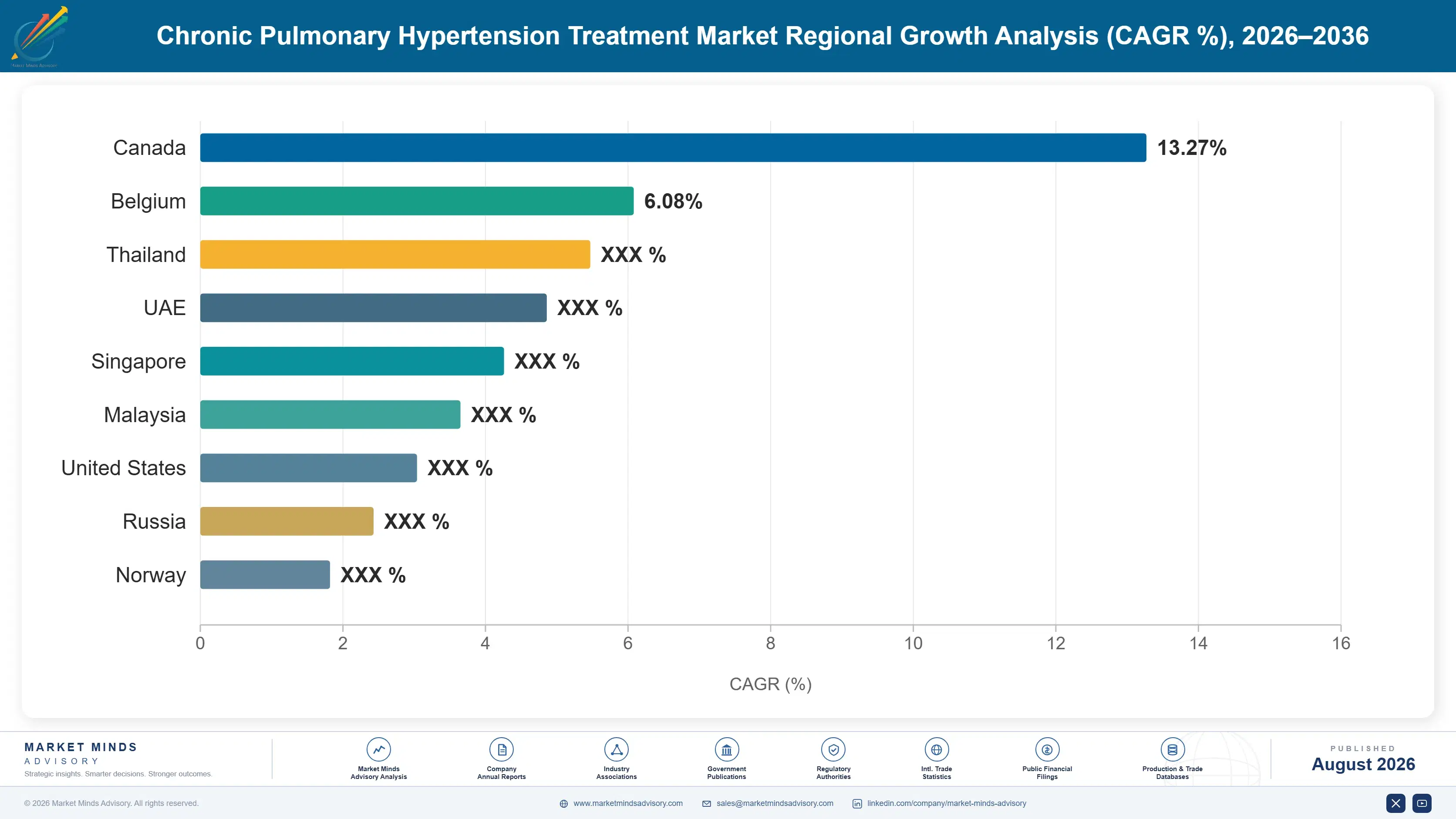
North America and Western Europe together account for the majority of global branded treatment spend, reflecting concentrated specialist referral networks, orphan drug pricing structures, and the most developed reimbursement pathways for premium combination therapy worldwide. East Asia and South Asia are closing the gap fastest as diagnostic and reimbursement infrastructure.

North America

The United States dominates this region through its dense concentration of specialty pulmonary hypertension centres, favorable orphan drug pricing structures, and the fastest specialist uptake of newly approved activin pathway therapy anywhere in the world. Canada maintains a smaller but steadily expanding treatment base, with provincial formularies gradually adding combination therapy coverage that lags US commercial payer adoption timelines by roughly a year on average. American academic medical centres continue driving most first-in-market drug adoption, giving originator companies a reliable early revenue base ahead of broader community specialist rollout. This region's pricing and reimbursement environment makes it the benchmark market other national health systems reference when negotiating launch pricing for newly approved agents.
Share: 30% | CAGR: 9.4% (2026 to 2036)

Western Europe

Germany, France, and the United Kingdom lead regional demand through well-established specialist referral networks and national health system reimbursement pathways that, while slower than the United States, still provide meaningful market access for combination therapy within one to two years of European approval. Public health system budget negotiations slow launch pricing relative to the more commercially driven American market, but once national reimbursement is secured, uptake across large hospital networks tends to be relatively swift and consistent. Nordic countries show disproportionately high per-capita specialist referral rates despite small absolute population, reflecting well-funded universal healthcare systems willing to fund premium combination therapy. Regional growth trails North America modestly as combination therapy penetration among diagnosed patients is already comparatively mature.
Share: 24% | CAGR: 7.3% (2026 to 2036)
Regional intelligence for 5 additional markets available in the complete report: East Asia, South Asia and Pacific, Latin America, Middle East and Africa, Eastern Europe. Contact sales@marketmindsadvisory.com.
chronic-pulmonary-hypertension-treatment-market-country-cagr-analysis-1787305017110

Combination Sequencing and Outcomes-Based Contracting

Manufacturers are shifting commercial strategy toward upfront combination therapy positioning, outcomes-based payer contracting, and specialist centre partnership programmes, capturing more predictable lifelong treatment revenue rather than competing purely on single-agent list pricing alone across the category. This mirrors a broader specialty pharmaceutical shift toward evidence-based, relationship-driven commercial models across the category today across the category currently.

Upfront Combination Therapy Positioning Commercial Strategy

Manufacturers are positioning newer agents for upfront combination use at diagnosis rather than reserved add-on therapy for treatment failures, capturing revenue earlier in the patient treatment lifecycle and establishing the drug as standard of care before generic competition erodes pricing power on older pathway agents in the same regimen. This lever requires substantial clinical evidence investment to support guideline committee recommendations, but successfully achieving guideline-endorsed upfront positioning creates durable prescribing habits that persist for years after initial launch. Manufacturers report upfront positioning strategies adding roughly 26% to lifetime patient revenue compared to add-on-only positioning approaches used previously.
Market Impact: Adds roughly 26 percent to total li

Outcomes-Based Payer Contracting Strategy Programme Overall

Manufacturers are negotiating outcomes-based contracts tying a portion of drug payment to demonstrated functional class improvement or exercise capacity outcomes, easing payer budget concerns about premium combination pricing while preserving list price integrity across other markets that reference US and European pricing benchmarks. This lever helps secure faster formulary access in cost-constrained health systems that would otherwise impose lengthy prior authorization delays or step therapy requirements before approving newer, more expensive combination regimens. Manufacturers report outcomes-based contracts accelerating formulary access timelines by roughly 35% compared to standard negotiation processes. Manufacturers view this contracting approach as increasingly essential for securing timely.
Market Impact: Speeds formulary access by roughly

Specialty Centre Clinical Partnership Investment Programme

Manufacturers are funding clinical partnership programmes with leading pulmonary hypertension specialty centres, supporting patient identification, diagnostic pathway improvement, and physician education initiatives that expand the diagnosed and treated patient population beyond what organic referral patterns alone would generate. This lever builds durable relationships with the specialist physicians who influence prescribing patterns across the wider referral network, creating a halo effect that benefits the manufacturer's full portfolio rather than a single product alone. Manufacturers report these partnerships expanding referral volume by roughly 18% at participating specialty centres annually. Manufacturers increasingly treat these partnerships as a core part of long-term specialist relationship.
Market Impact: Grows referral volume by roughly 18

Patient Support and Adherence Service Bundling

Manufacturers are bundling comprehensive patient support services, including infusion training, adherence monitoring, and financial assistance navigation, directly with drug therapy to improve treatment persistence in a category where poor adherence can quickly lead to clinical deterioration and hospitalization. This lever reduces costly treatment discontinuation while strengthening prescriber loyalty, since physicians increasingly value manufacturers whose support infrastructure meaningfully improves patient outcomes beyond the molecule itself. Manufacturers report bundled support services improving treatment persistence by roughly 21% compared to unsupported prescriptions across their patient populations. Manufacturers expect this bundled support approach to become a standard expectation across the category over time.
Market Impact: Improves treatment persistence by r

Who Controls the Margin Pool

The top five originator companies control roughly 82% of global branded revenue, an unusually high concentration reflecting the orphan disease scale of this category and the substantial clinical development investment required to bring a new pulmonary arterial hypertension therapy to market, leaving little room for smaller entrants without differentiated mechanisms. Mid-sized biotechnology companies with differentiated pipelines remain attractive acquisition targets for larger originators. This
Current competitive activity centers on activin pathway label expansion into earlier disease stages, combination sequencing clinical trials designed to establish new standard-of-care positioning, and outcomes-based contracting negotiations aimed at securing faster payer access for premium-priced newer agents across major reimbursement markets. Several companies are also piloting patient support bundling to differentiate beyond clinical data alone.

Emerging pressure comes from smaller biotechnology companies developing next-generation oral prostacyclin and novel mechanism candidates, and from generic manufacturers accelerating entry into off-patent endothelin and phosphodiesterase-5 inhibitor categories that could pressure legacy portfolio revenue faster than originator companies can offset with newer pipeline launches. Established leaders are responding by accelerating their own next-generation pipeline investment to defend share.
chronic-pulmonary-hypertension-treatment-market-company-positioning-matrix-1787305017636

Competitive Moat and Risk Dimensions

JOHNSON & JOHNSON

Moat: Multi-Mechanism Portfolio Breadth Advantage

Johnson & Johnson's Actelion franchise spans endothelin, prostacyclin, and combination products, giving physicians a single-company source for building multi-pathway regimens and giving the company cross-selling advantages that narrower single-mechanism competitors cannot replicate across comparable patient volume. Physicians managing complex regimens increasingly prefer this single-source convenience over multi-vendor prescribing arrangements.
JOHNSON & JOHNSON

Risk: Legacy Asset Generic Erosion Exposure

A meaningful share of the company's pulmonary arterial hypertension revenue still derives from older endothelin and phosphodiesterase-5 inhibitor products facing imminent or ongoing generic competition, and this legacy revenue decline could outpace growth from newer pipeline assets if launch timing does not align favorably. Investors are watching newer pipeline launch timing closely for signs this transition is on track.
MERCK & CO. INC.

Moat: First-in-Class Activin Pathway Exclusivity

Merck holds the only approved activin signaling inhibitor for pulmonary arterial hypertension following its Acceleron acquisition, giving it first-mover advantage in an entirely new mechanistic class with strong clinical outcome data that competitors cannot match until their own pipeline candidates complete development. This first-mover position gives Merck meaningful pricing power while exclusivity protection remains in place.
MERCK & CO. INC.

Risk: Single Product Launch Execution Risk

Merck's near-term pulmonary arterial hypertension growth depends heavily on continued successful commercialization of one recently launched product, and any manufacturing constraint, safety signal, or slower-than-expected physician adoption could materially affect the segment's growth trajectory relative to current expectations. Merck is investing heavily in label expansion trials to reduce this single-product concentration risk over time.

Players Tracked

Prominent Players

Johnson & Johnson
Merck & Co. Inc.
United Therapeutics Corporation
Bayer AG
Gossamer Bio Inc.

Other Key Players

GlaxoSmithKline plc
Chiesi Farmaceutici S.p.A.
Liquidia Corporation
Insmed Incorporated
Ferrer Internacional S.A.
Keros Therapeutics Inc.
Tenax Therapeutics Inc.
Corsair Pharma Inc.
Pfizer Inc.
Teva Pharmaceutical Industries Ltd.
Cipla Limited
Sun Pharmaceutical Industries Ltd.
Viatris Inc.
Zydus Lifesciences Ltd.
Lupin Limited

Recent Developments

APRIL 2026

Merck Expands Winrevair Manufacturing Capacity in North Carolina

Merck announced an organic capacity expansion at its North Carolina biologics manufacturing facility to increase supply of its activin signaling inhibitor, aimed at meeting rising specialist demand across United States and European markets following recent label expansion approval. The expansion is expected to reach full production capacity within the next.
Signal: Signals continued manufacturer confidence
NOVEMBER 2025

United Therapeutics Acquires Early-Stage Prostacyclin Delivery Startup

United Therapeutics completed the acquisition of an early-stage company developing a novel implantable prostacyclin delivery device, expanding its pipeline beyond oral and infused therapies into next-generation delivery technology for treatment-resistant patients. Financial terms of the acquisition were not disclosed by either company involved in the transaction.
Signal: Indicates growing originator interest in d
JANUARY 2026

Johnson & Johnson Signs Combination Trial Collaboration With Academic Consortium

Johnson & Johnson entered a multi-year research collaboration agreement with an academic pulmonary hypertension consortium to study optimal combination sequencing incorporating its existing endothelin and prostacyclin portfolio alongside newer mechanism agents. Financial terms of the collaboration agreement were not disclosed by either party involved in it.
Signal: Reflects industry-wide focus on combinatio

Biologics Manufacturing and Clinical Development Cost Exposure

Biologics manufacturing infrastructure, specialized cell line development, and extensive late-stage clinical trial costs together represent roughly 44% of total commercialization cost for newer pulmonary arterial hypertension therapies, with biologics-grade manufacturing capacity concentrated among a small group of specialized contract and in-house production facilities. Companies without in-house biologics capability face materially higher exposure to this concentrated supplier base.
Clinical trial costs for pulmonary arterial hypertension therapies rose meaningfully during 2022 and 2023 amid broader biotechnology sector cost inflation, with company annual reports from major manufacturers confirming that late-stage trial costs for orphan disease indications remained elevated through much of the period before moderating somewhat through 2024 and 2025. Smaller developers absorbed a disproportionate share of this cost inflation given their weaker negotiating position with contract manufacturers.

Smaller biotechnology companies without established manufacturing infrastructure face materially higher production cost exposure than large pharmaceutical companies who can negotiate favorable contract manufacturing terms given their broader production scale. This creates a durable cost disadvantage for smaller developers competing for the specialized biologics manufacturing capacity that larger competitors can secure more reliably and affordably. Geography also matters, since companies closer to specialized manufacturing hubs face smaller logistics and coordination costs.
chronic-pulmonary-hypertension-treatment-market-cost-volatility-analysis-1787305017831

In-House Biologics Manufacturing Investment

Larger manufacturers are building dedicated in-house biologics manufacturing capacity rather than relying entirely on contract manufacturers, reducing exposure to capacity constraints and pricing volatility that smaller developers without comparable capital remain fully exposed to across each production cycle. This approach has become standard practice among the largest specialty pharmaceutical companies over the past decade.

Adaptive Clinical Trial Design Adoption

Companies are adopting adaptive clinical trial designs that reduce required patient enrollment and trial duration for orphan disease indications, lowering overall development costs while maintaining the statistical rigor regulators require for approval in this specialized category. Regulators have grown more receptive to these designs given the practical challenges of orphan disease trial enrollment and lower overall development costs.

Strategic Manufacturing Partnership Agreements

Smaller developers are securing long-term strategic manufacturing partnerships with established biologics producers ahead of anticipated approval, locking in capacity access and more predictable production costs before competing for scarce manufacturing slots at launch. This strategy has become increasingly common as manufacturing capacity constraints tighten across the wider biologics industry and secure more predictable long-term production costs before launch.

Portfolio Architecture for Margin Defence

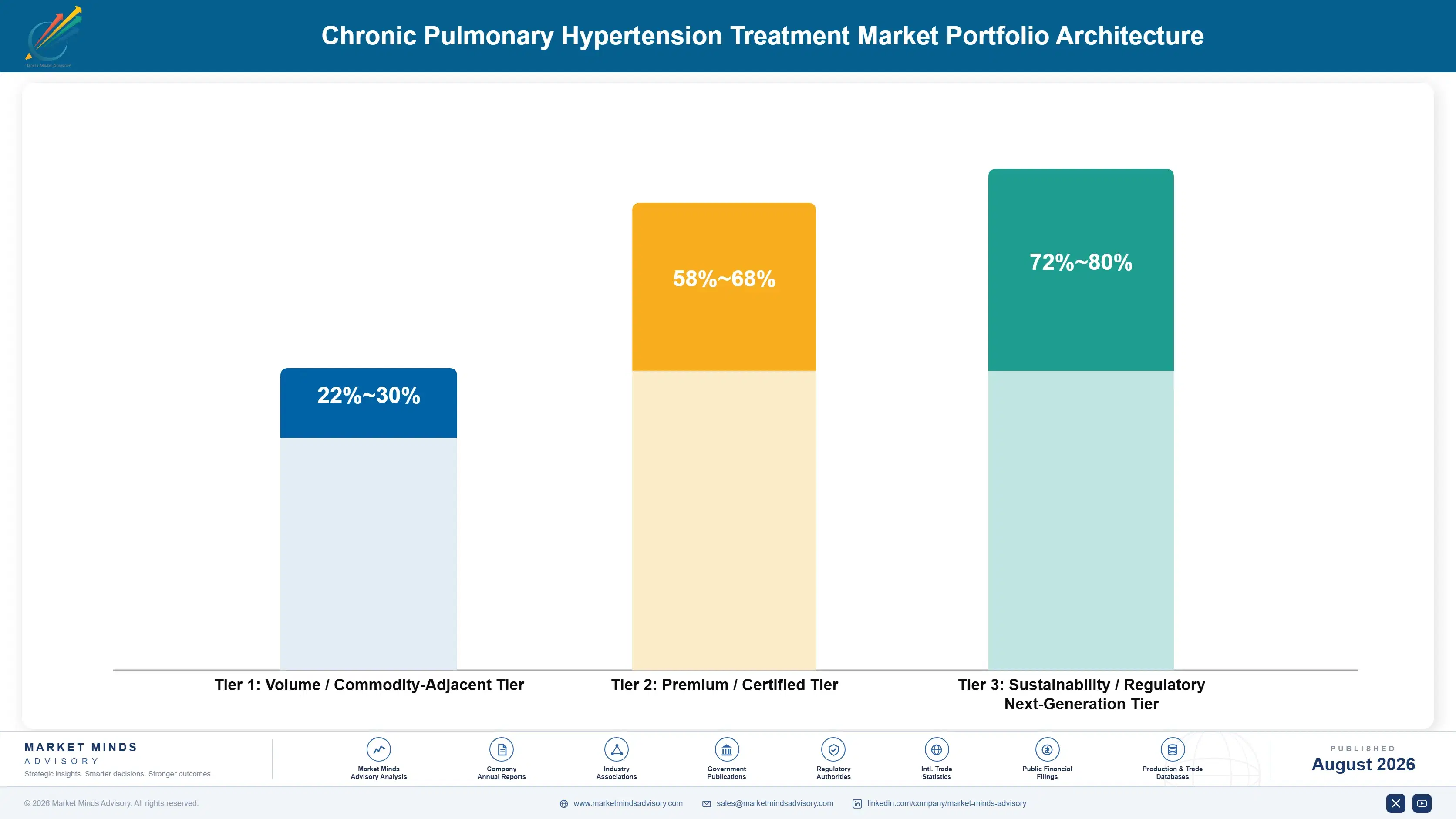
This market organizes into three commercial tiers spanning generic-eligible legacy endothelin and phosphodiesterase agents at the volume end, branded combination therapy occupying the premium middle tier, and activin pathway and novel mechanism agents capturing the strongest margins at the top of the portfolio architecture overall. Manufacturers increasingly structure pipeline investment and pricing strategy explicitly around this three-tier architecture. This explicit structuring helps allocate
Volume and premium tiers pull manufacturers in different directions: legacy generic-eligible agents sustain baseline treatment access and prescriber familiarity, while newer combination and activin pathway therapies deliver materially stronger margins that increasingly determine which companies can fund the clinical development pipeline the category requires going forward. Most manufacturers now allocate a growing share of research budget toward the top two tiers.

The highest-value pools concentrate around activin pathway and next-generation combination regimens sold under orphan drug pricing protection, where clinical differentiation and guideline endorsement together sustain premium pricing power that generic-eligible legacy agents simply cannot match across comparable patient volume in the category today. Manufacturers unable to compete in this tier increasingly struggle to sustain category-leading margins over time.

Volume / Commodity-Adjacent Tier

Generic-eligible legacy endothelin and phosphodiesterase-5 inhibitor agents sustaining baseline treatment access across cost-constrained health systems broadly. This tier represents the largest treated patient volume by prescription count across most major markets.
Gross Margin: 22-30%

Premium / Certified Tier

Branded combination therapy regimens and oral prostacyclin pathway agents sold under continuing orphan exclusivity protection across major markets. Patients in this tier rarely switch regimens once a stable combination therapy response is established.
Gross Margin: 58-68%

Sustainability / Regulatory / Next-Generation Tier

Activin pathway and novel mechanism agents commanding the strongest pricing power given clinical differentiation and guideline endorsement. This tier increasingly determines which companies can fund the clinical pipeline the category requires.
Gross Margin: 72-80%
chronic-pulmonary-hypertension-treatment-market-portfolio-architecture-1787305018331

Lifelong Combination Therapy Revenue Streams

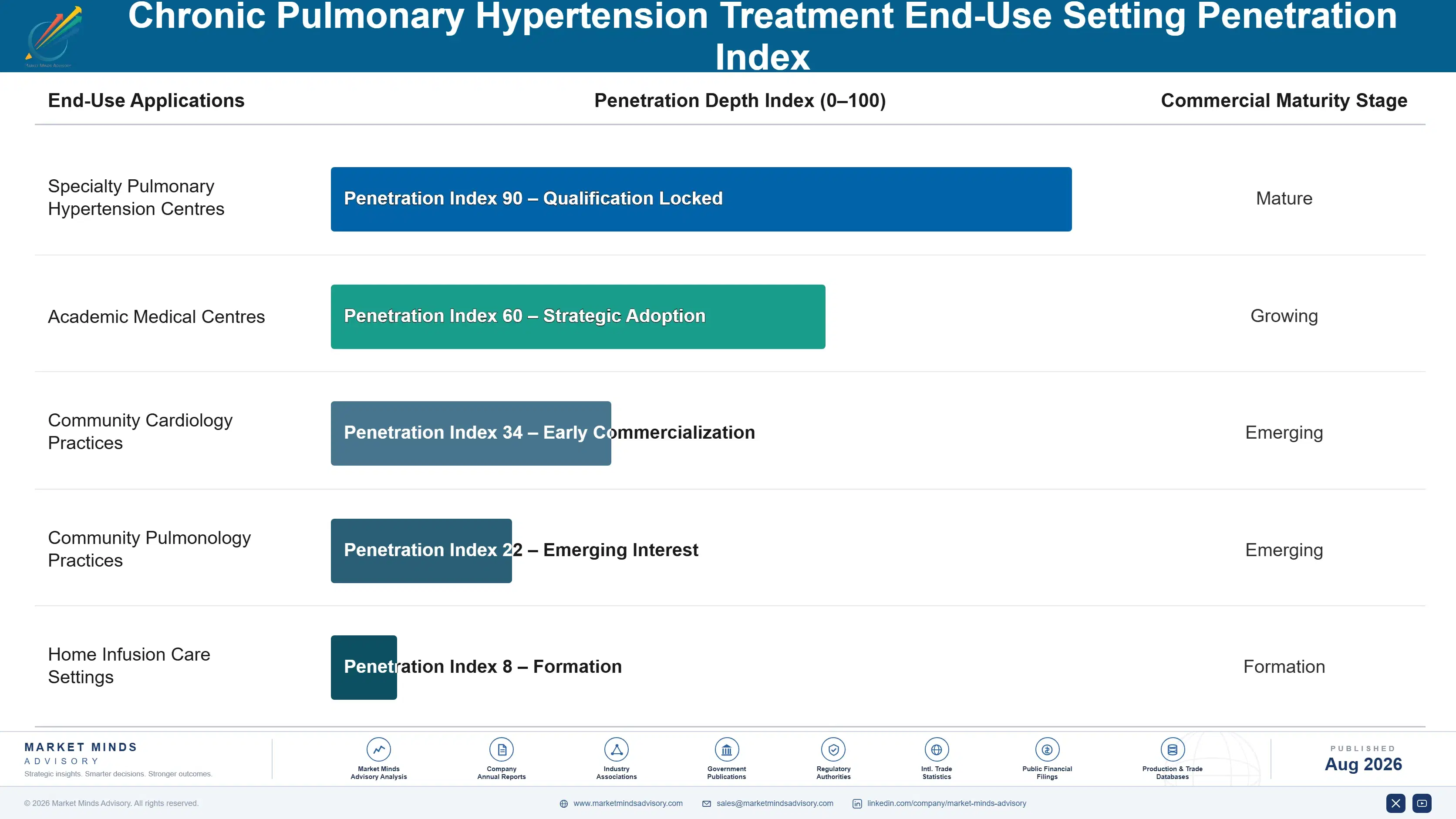
Treatment initiation functions as an annuity anchor in this category: pulmonary arterial hypertension has no cure, so every diagnosed patient generates recurring lifelong drug revenue across an expanding combination regimen that typically grows more complex, not simpler, as disease severity progresses over time. Manufacturers increasingly price early combination access competitively to accelerate this lifelong purchasing relationship. This dynamic increasingly shapes how manufacturers structure
Adoption depth varies considerably by treatment centre type: major academic pulmonary hypertension centres adopt newer agents and complex combination regimens earliest, while community cardiology and pulmonology practices more often continue established single or dual-agent therapy until patients are referred to specialist centres for treatment escalation decisions. Manufacturers tailor commercial and educational investment differently across each of these distinct treatment settings.

A generational shift is underway as pulmonologists and cardiologists trained during the activin pathway era enter practice expecting aggressive upfront combination therapy as standard practice, gradually normalizing a treatment approach that earlier-trained physicians historically reserved for only the most severe refractory cases encountered in specialist referral settings. Manufacturers are adapting medical education investment accordingly to reach this newly influential physician cohort.
chronic-pulmonary-hypertension-treatment-market-end-use-penetration-index-1787305018821

Where Pulmonary Hypertension Economics Are Heading

These are among the four positions where our research anticipates prominent divergence between winners and laggards over the coming forecast period. Each is grounded in the demand model, the regulatory perimeter, and the announced capacity pipeline.
01 / COMBINATION THERAPY STRATEGY

Activin pathway therapy will keep expanding into earlier disease stages

Specialty centres adopting activin pathway therapy as upfront combination treatment are setting a precedent that guideline committees appear increasingly willing to formalize, and this trajectory shows no sign of reversing given the strength of the underlying clinical outcome data. Older single and dual-pathway regimens will persist as a starting point for milder cases rather than disappearing from clinical practice entirely. Manufacturers overweighted toward legacy generic-eligible portfolio revenue face a gradually shrinking core category over the coming decade regardless of overall market growth.
02 / DIAGNOSIS RATE EXPANSION

Expanding diagnostic access will keep growing the treated population

Right heart catheterization capacity expansion beyond major academic centres represents the single largest addressable growth lever in this market, since a meaningful share of prevalent cases likely remain undiagnosed or misclassified under other cardiopulmonary conditions entirely. Companies investing in physician education and referral pathway development are best positioned to capture this expanding diagnosed population as access improves. Expect diagnosis rate growth to meaningfully outpace population growth through most of the current forecast period ahead, well ahead of many adjacent orphan disease categories tracked by MMA analysts this cycle.
03 / PAYER CONTRACTING EVOLUTION

Outcomes-based contracting will become standard for premium launches

Manufacturers launching future premium-priced agents without a credible outcomes-based contracting strategy risk facing meaningfully slower formulary access than competitors willing to tie payment to demonstrated functional outcomes across their treated patient populations. This shift rewards companies with strong real-world evidence generation capability over those relying purely on pivotal trial data alone. Expect outcomes-based contracting to become a near-universal expectation for new orphan drug launches within the next several years across major reimbursement markets, particularly those still relying primarily on pivotal trial data alone for launch positioning.
04 / GENERIC EROSION MANAGEMENT

Legacy portfolio erosion will accelerate industry consolidation pressure

Companies overly dependent on aging endothelin and phosphodiesterase-5 inhibitor revenue without a strong newer-mechanism pipeline face a genuinely difficult multi-year transition as generic competition intensifies across their most mature product lines simultaneously. Smaller originators lacking acquisition capital or partnership options are the most exposed to this transition risk within the category. Expect further acquisition activity as larger companies seek to acquire promising newer-mechanism pipeline assets to offset their own legacy revenue decline, reshaping which companies remain independent through the remainder of this decade.

Engagement Snapshot From the Field

A live engagement with an industry participant carrying material or product regulatory and market exposure ahead of a defining policy shift, showing how our research translates into a defensible multi-year portfolio strategy.
MARKET MINDS ADVISORY · CLIENT ENGAGEMENT SUMMARY
Chronic Pulmonary Hypertension Treatment Producer Strategic Portfolio Review and Transition Roadmap 2026·Investment Scenario on Chronic Pulmonary Hypertension Treatment Exposure Evaluation 2025-26
CLIENT PROFILE
The client is a mid-sized specialty pharmaceutical company preparing to launch an oral prostacyclin pathway agent, generating projected first-year pulmonary arterial hypertension revenue of approximately $95 million (client-reported, unverified by MMA). Leadership sought guidance on positioning strategy relative to established combination therapy standards of care ahead of its planned regulatory approval and commercial launch across its target specialist markets.
STRATEGIC CHALLENGE
The client's new agent showed strong clinical differentiation versus infused prostacyclin therapy but faced an increasingly crowded combination therapy landscape, and leadership was uncertain whether to position for upfront combination use or reserved add-on therapy given limited specialist launch marketing budget available for the initial twelve months following approval given competing internal priorities.
MMA APPROACH
MMA's team benchmarked recent comparable launches, modeled payer formulary access timelines under both upfront and add-on positioning scenarios, and assessed specialist physician receptivity to oral prostacyclin substitution for existing infused therapy patients across the client's target prescriber base to inform the client's final launch strategy decision ahead of the board's final launch review.
KEY FINDINGS
  1. Upfront combination positioning would require substantially more clinical evidence investment but offered meaningfully higher long-term revenue potential than add-on-only positioning strategies over a multi-year horizon.
  2. Physicians managing patients on infused prostacyclin therapy showed strong receptivity to oral substitution, representing a faster near-term revenue opportunity than upfront combination positioning alone.
  3. Payer formulary access for add-on positioning was projected to be roughly 40% faster than upfront combination positioning given lower initial budget impact per patient.
  4. A phased positioning strategy could capture near-term substitution revenue while building the evidence base needed for eventual upfront combination positioning within several years.
CLIENT PROFILE
The client is a mid-sized specialty pharmaceutical company preparing to launch an oral prostacyclin pathway agent, generating projected first-year pulmonary arterial hypertension revenue of approximately $95 million (client-reported, unverified by MMA). Leadership sought guidance on positioning strategy relative to established combination therapy standards of care ahead of its planned regulatory approval and commercial launch across its target specialist markets.
STRATEGIC CHALLENGE
The client's new agent showed strong clinical differentiation versus infused prostacyclin therapy but faced an increasingly crowded combination therapy landscape, and leadership was uncertain whether to position for upfront combination use or reserved add-on therapy given limited specialist launch marketing budget available for the initial twelve months following approval given competing internal priorities.
MMA APPROACH
MMA's team benchmarked recent comparable launches, modeled payer formulary access timelines under both upfront and add-on positioning scenarios, and assessed specialist physician receptivity to oral prostacyclin substitution for existing infused therapy patients across the client's target prescriber base to inform the client's final launch strategy decision ahead of the board's final launch review.
KEY FINDINGS
  1. Upfront combination positioning would require substantially more clinical evidence investment but offered meaningfully higher long-term revenue potential than add-on-only positioning strategies over a multi-year horizon.
  2. Physicians managing patients on infused prostacyclin therapy showed strong receptivity to oral substitution, representing a faster near-term revenue opportunity than upfront combination positioning alone.
  3. Payer formulary access for add-on positioning was projected to be roughly 40% faster than upfront combination positioning given lower initial budget impact per patient.
  4. A phased positioning strategy could capture near-term substitution revenue while building the evidence base needed for eventual upfront combination positioning within several years.
RECOMMENDED STRATEGY
Phase 1: Phase 1 (Months 1-9): Launch with add-on and substitution positioning targeting patients currently on infused prostacyclin therapy across key specialist accounts. Phase 2: Phase 2 (Months 10-20): Generate real-world evidence supporting broader combination use while pursuing selective formulary expansion negotiations with major payers. Phase 3: Phase 3 (Months 21-36): Pursue upfront combination positioning backed by accumulated real-world evidence and expanded payer formulary access secured during earlier phases.
OUTCOME
The client launched with the recommended phased positioning strategy, reporting first-year revenue of $102 million, exceeding initial projections by 7%, alongside faster than expected specialist adoption among infused therapy substitution candidates (client-reported, unverified by MMA) within the first two quarters after launch across all target specialist accounts reached.

Frequently Asked Questions

Foundational context covering the market sizes, CAGR, scope, country, region and competition that inform every finding below. This section is provided to cover basics and most often pre-purchase conversations, answered from the MMA Primary Research Dataset.

What is the current size of the Chronic Pulmonary Hypertension Treatment Market?

The global chronic pulmonary hypertension treatment market was valued at approximately $7.4 billion in 2025. This includes all major drug classes used in pulmonary arterial hypertension combination therapy.

How large will the Chronic Pulmonary Hypertension Treatment Market be by 2036?

The market is projected to reach approximately $18.71 billion by 2036. This reflects continued activin pathway adoption and expanding diagnosed patient populations worldwide and rising diagnosis rates across major treatment markets worldwide.

What is the CAGR for the Chronic Pulmonary Hypertension Treatment Market 2026 to 2036?

The market is expected to grow at a compound annual growth rate of 8.8% between 2026 and 2036. This reflects strong uptake of newer combination therapy mechanisms.

Which segment is growing fastest?

Activin signaling inhibitors are the fastest-growing segment, expanding at approximately 19.5% annually. This reflects rapid specialist adoption following the recent first-in-class approval following its recent regulatory approval in major markets.

Who are the major companies in the Chronic Pulmonary Hypertension Treatment Market?

Leading companies include Johnson & Johnson, Merck, United Therapeutics Corporation, Bayer AG, and Gossamer Bio. Together they account for roughly 82% of global branded revenue.

Which country is growing fastest?

China is the fastest-growing major market at an estimated 13.5% CAGR, driven by expanding specialist diagnostic capacity and broadening national reimbursement access across its rapidly modernizing specialist hospital network.

Report Segmentation Architecture

The full report scope spans multiple orthogonal segmentation dimensions, with cross-tabulated demand data provided for each dimension pair. Coverage extends further to regional breakdowns, trend trajectories, and the competitive detail needed to support segment-level decision-making.

By Drug Mechanism

  • Endothelin Receptor Antagonists
  • Phosphodiesterase-5 Inhibitors
  • Prostacyclin Pathway Agents
  • Soluble Guanylate Cyclase Stimulators
  • Activin Signaling Inhibitors
  • Combination Therapy Regimens

By End-Use Setting

  • Specialty Pulmonary Hypertension Centres
  • Academic Medical Centres
  • Community Cardiology Practices
  • Community Pulmonology Practices
  • Home Infusion Care Settings

By Commercial Dimension

  • Specialty Pharmacy Distribution
  • Hospital Outpatient Infusion Channels
  • Payer Formulary Contracting
  • Patient Support Programme Enrollment

By Region

  • North America
  • Western Europe
  • East Asia
  • South Asia and Pacific
  • Latin America
  • Middle East and Africa
  • Eastern Europe

Scope, Methodology, and Coverage

Every figure in this report is reproducible from documented input assumptions. The scope below maps the historical period, the forecast horizon, the segmentation dimensions, and the countries covered, alongside the underlying primary and qualitative methodology.
Historical Period
2020 to 2025
Forecast Period
2026 to 2036
Base Year
2025 (USD billions; MMA Primary Research Dataset, August 2026)
Market Definition
This report covers pharmacological therapies used specifically in the chronic treatment of pulmonary arterial hypertension, including endothelin receptor antagonists, phosphodiesterase-5 inhibitors, prostacyclin pathway agents, soluble guanylate cyclase stimulators, and activin signaling inhibitors. It excludes lung transplantation, acute vasodilator testing agents, and pharmacotherapy for other forms of pulmonary hypertension outside the arterial classification.
Quantitative Units
USD billions (current prices); treated patient volume; average annual cost per patient
Segmentation Dimensions
By Drug Mechanism; By End-Use Setting; By Commercial Dimension; By Region
Regions Covered
North America, Western Europe, East Asia, South Asia and Pacific, Latin America, Middle East and Africa, Eastern Europe
Countries Covered
USA, China, Germany, France, UK, Japan, South Korea, India, Australia, Canada, Brazil, Mexico, Indonesia, Vietnam, Thailand, Malaysia, UAE, Saudi Arabia, South Africa, Nigeria, Turkey, Poland, Netherlands, Italy, Spain, Sweden, Switzerland, Argentina, Colombia, Singapore, and additional markets relevant to this sector
Key Companies Profiled
Johnson & Johnson, Merck & Co. Inc., United Therapeutics Corporation, Bayer AG, Gossamer Bio Inc., GlaxoSmithKline plc, Chiesi Farmaceutici S.p.A., Liquidia Corporation, Insmed Incorporated, Ferrer Internacional S.A., Keros Therapeutics Inc., Tenax Therapeutics Inc., Corsair Pharma Inc., Pfizer Inc., Teva Pharmaceutical Industries Ltd., Cipla Limited, Sun Pharmaceutical Industries Ltd., Viatris Inc., Zydus Lifesciences Ltd., Lupin Limited
Quantitative Methodology
Primary survey, n=3,800 respondents, Q4 2025, six countries; demand-side model with trade association cross-validation
Qualitative Methodology
47 expert interviews, Q4 2025; applied to validate demand model assumptions, identify emerging dynamics, and assess competitive positioning
Report Format
PDF and XLSX data workbook (Word format preview document)
Publisher
Market Minds Advisory
Report Code
MMA-2026-HLT-116
Published
August 2026
Contact
sales@marketmindsadvisory.com | www.marketmindsadvisory.com

Purchase the full Chronic Pulmonary Hypertension Treatment Market Report (2026 to 2036).

The full report provides detailed mechanism-level segmentation, combination therapy sequencing analysis, and country-level reimbursement pathway tracking across all seven regions covered in this study. It includes manufacturer-level competitive benchmarking based on pipeline breadth and clinical evidence strength. Subscribers receive quarterly updates tracking new drug approvals and guideline committee recommendations as they occur. A companion dataset provides diagnosed patient volume estimates by region and treatment centre type for detailed market sizing purposes A dedicated analyst contact is also available to support custom data requests beyond the standard deliverable scope.
Mechanism-level segmentation breakdown by indication type
Combination therapy sequencing trend analysis service
Country-level reimbursement pathway tracking service updates
Manufacturer competitive benchmarking scorecards overview report
Quarterly drug approval and guideline updates
Diagnosed patient volume dataset by region

Built For The People Who Decide

From boardroom strategy to bench-side execution, this report is read cover-to-cover by leaders shaping the next decade of their industry, turning demand scenarios, market dynamics and valuation benchmarks into decisions.
CXOs/ Presidents/ VPs/ Managers
M&A and Corporate Development
Strategy Teams and R&D Heads
Procurement and Product Directors
Regulatory and Compliance Leaders
Investor Relations and Equity Analysts