Market Minds Advisory
Chronic Obstructive Pulmonary Disease (COPD) Therapeutics Market

Chronic Obstructive Pulmonary Disease (COPD) Therapeutics Market: Biologics Enter a Bronchodilator-Dominated Category

COPD therapeutics manufacturers now face biologic monoclonal antibodies entering a category long dominated by inhaled bronchodilators, patent expirations pressuring branded triple combination pricing, and diagnostic underdetection limiting treatment initiation across most global markets.

Lead Analyst

Alice Ballenger

Published

September 2026

Make Smarter Decisions with Customized Research Insights

Request a free sample report and evaluate market opportunities, growth trends, and competitive dynamics relevant to your business needs.

2025 MARKET VALUE$18.5BMarket Size 2025
2036 FORECAST VALUE$38.1BBase Case , 2026 to 2036
CAGR 2026 TO 20366.8 %Bull 8.0% / Bear 5.5%
INCREMENTAL OPPORTUNITY$18.4BNet 10- year value creation
EXPANSION MULTIPLE1.93x2036 value over 2026 base
Strategic Levers
M&A Pipeline
Regional Outlook
Country Rankings
Competitive Intelligence
Segmental Deep-dive
Call-Us : 91 93563 13602

Executive Snapshot and Market Trajectory

Pulmonologists are prescribing biologic monoclonal antibodies for eosinophilic COPD phenotypes faster than payers in several major markets can consistently authorize coverage, creating access friction even as clinical trial evidence for exacerbation reduction continues accumulating favorably. Companies unprepared for this shift risk losing prescriber share.
Biologics and triple combination inhaled therapies are pulling category growth well ahead of legacy single-agent bronchodilators, as pulmonologists increasingly target eosinophilic inflammation and reserve monotherapy for milder disease stages. North America commands the largest and fastest-growing revenue base given its dense biologics adoption and favorable reimbursement infrastructure, while Western Europe follows closely on comparable clinical guideline adoption. Japan and South Korea contribute additional revenue tied to their own biologic programs.
Competitive structure remains fairly concentrated among established respiratory pharmaceutical companies, with the top five holding a dominant combined share on a revenue basis. Patent expirations across several branded triple combination products are compounding generic competition pressure, pushing originator companies toward biologic pipeline investment rather than relying on legacy inhaled combination revenue alone. Emerging biologic developers are increasingly entering from adjacent immunology specialties. Emerging specialists are increasingly entering from adjacent respiratory immunology research backgrounds. today.
Market Definition
The COPD therapeutics market covers pharmaceutical treatments for chronic obstructive pulmonary disease, including short-acting and long-acting bronchodilators, inhaled corticosteroid combinations, triple combination therapies, and biologic monoclonal antibodies. It excludes non-pharmacological interventions such as pulmonary rehabilitation and oxygen therapy and excludes therapeutics indicated solely for asthma or other unrelated respiratory conditions.
Base Year Value
$18.5B in 2025 (MMA Primary Research Dataset, August 2026)
Forecast Period
2026 to 2036, eleven discrete annual values
CAGR
6.8% base case. Bull 8.0%. Bear 5.5%.
Fastest Growth Segment
Biologics: 16.0% CAGR
Fastest Growth Country
United States: 9.5% CAGR
Fastest Growth Region
South Asia and Pacific: 8.8% CAGR
Largest Region
North America: 34% of 2025 global value
Market Leaders
GlaxoSmithKline, AstraZeneca, Boehringer Ingelheim, Novartis, and Sanofi. Source: MMA Analysis based on company annual reports.
Primary Survey
n=3,800 procurement and R&D decision-makers, Q4 2025, six countries
Methodology
Demand-side build-up, cross-validated against public data, 47 expert interviews

Chronic Obstructive Pulmonary Disease (COPD) Therapeutics Market Forecast Scenarios

chronic-obstructive-pulmonary-disease-market-2-size-forecast-scenario-1787465803878
Between 2020 and 2025 the market grew at a historical pace of roughly 5.9 percent annually, as triple combination therapy adoption provided steady baseline growth while biologic monoclonal antibody adoption accelerated meaningfully only in the final two years of the period following expanded regulatory approvals for eosinophilic COPD indications across major markets. That combination lifted overall category revenue steadily nationwide.
The base case assumes growth near 6.8 percent annually through 2036, anchored in three commercial mechanisms: expanding biologic monoclonal antibody adoption among patients with eosinophilic inflammation and frequent exacerbations, continued triple combination therapy penetration replacing older dual bronchodilator regimens, and gradual diagnostic rate improvement identifying previously undertreated patients across primary care settings worldwide. Diagnostic screening investment is expanding steadily to support this broader growth trajectory. nationwide. across most major markets.
A bull scenario builds on faster biologic label expansion covering broader COPD patient populations beyond the current eosinophilic-predominant indication, while a bear scenario centers on continued generic erosion of branded triple combination pricing compressing originator margins across the category faster than biologic revenue can offset the decline. Most analysts view the base case as the more probable outcome overall.

Biologics Enter a Genericizing Category

Three forces are converging on the category at once: pulmonologists are increasingly targeting eosinophilic inflammation with biologic monoclonal antibodies rather than escalating inhaled combination dosing, generic manufacturers are eroding branded triple combination pricing faster than originators can offset through volume, and diagnostic programs are gradually identifying previously undertreated patients across primary care settings that were historically managed without formal COPD diagnosis. Payer procurement rigor is increasingly common even in traditional bronchodilator purchasing decisions.
MARKET CONCENTRATIONCR5 62%top five companies hold a dominant combined share
BIOLOGICS PENETRATION8%share of treated patients receiving biologic monoclonal antibodies
LEADING TREATING COUNTRYUnited Statesestimated share of cases remaining clinically undiagnosed today
DIAGNOSTIC UNDERDETECTION RATE62%typical share of patients maintaining consistent regimen adherence
TRIPLE THERAPY ADHERENCE RATE58%typical share of patients maintaining consistent regimen use
GENERIC SUBSTITUTION RATE44%share of eligible prescriptions filled with generic alternatives
Commercially the category increasingly behaves like two distinct businesses layered together, since a company's ability to defend margin now depends as much on biologic pipeline depth and phenotype-specific clinical evidence as on inhaled device manufacturing scale alone, a shift that is rewarding companies with genuine biologic research capability over inhaler device specialists. This shift is gradually reshaping how companies structure their commercial and clinical development organizations.
Over the next decade, companies most likely to capture disproportionate value are those investing in phenotype-specific biologic development ahead of broader label expansion, since building this clinical evidence base after competitors have already established it takes considerably longer than building it in from initial trial design. Early movers in biologic development are already visible among the category's fastest growing companies today.
"COPD used to mean an inhaler and hoping the patient used it correctly. Now a growing share of patients get a biologic injection every few weeks instead, and that shift is rewriting which companies own the category's growth."
Director, Respiratory and Chronic Disease Therapeutics Practice · MMA Respiratory Pharmaceuticals / Chronic Disease Therapeutics Practice · August 2026

Market Trends

Biologic Monoclonal Antibodies Entering Eosinophilic COPD Treatment

Pulmonologists are increasingly prescribing biologic monoclonal antibodies for COPD patients with elevated blood eosinophil counts and frequent exacerbations despite maximal inhaled triple combination therapy, moving beyond the asthma indication where these biologics were first established into a genuinely new COPD-specific treatment pathway. This shift follows several years of accumulating clinical trial evidence demonstrating meaningful exacerbation reduction in this specific phenotype relative to inhaled therapy alone. Multiple companies have expanded regulatory submissions covering broader eosinophilic COPD populations within the past two years, extending eligibility considerably beyond the initial narrow trial enrollment criteria first studied.
Market Impact: Lifts diagnosed patient volume by 11%
Generic Erosion Accelerating Across Branded Triple Combination Products

Generic manufacturers are increasingly launching substitutable versions of branded triple combination inhaled therapies following patent expiration in several major markets, eroding originator pricing power considerably faster than typical small molecule generic erosion patterns given the device-plus-drug combination nature of these products. This erosion is broadening affordable access to previously expensive triple combination therapy for a wider patient population, even as it compresses originator revenue considerably. Several originator companies have responded by accelerating biologic pipeline investment to offset anticipated long-term revenue decline in their legacy inhaled combination portfolios. Regulators in several markets have signaled openness to expedited generic review pathways.
Market Impact: Adds 9% to diagnosed patient population

Market Opportunities and Growth Drivers

Expanding Global Diagnostic Screening and Spirometry Access

Healthcare systems in several major markets are expanding spirometry screening access within primary care settings, directly increasing formal COPD diagnosis rates among patients previously managed symptomatically without confirmed diagnosis or appropriate guideline-based treatment. This expanded screening is broadening the diagnosed and treated patient population considerably beyond historically severe, hospitalized presentations alone, creating a larger addressable base for both inhaled and biologic therapy across a wider range of disease severity. Several national health systems have launched dedicated primary care spirometry training initiatives to support this expansion nationwide. Insurance coverage increasingly extends to this screening.
Market Impact: Caps addressable treatment volume by 18%

Aging Population and Rising Global Smoking-Attributable Disease Burden

Global population aging combined with cumulative smoking-attributable lung damage accrued over decades continues expanding the diagnosed COPD patient population across both developed and developing markets, directly increasing addressable demand for pharmaceutical treatment across all severity stages. This demographic driver provides demand visibility that differs from purely treatment-innovation-driven adoption, giving companies more predictable long-term volume planning than categories dependent entirely on discretionary prescribing pattern shifts alone. This demographic trend is expected to continue steadily across most major consuming markets for the foreseeable future. Companies increasingly build commercial capacity anticipating this durable demographic tailwind.
Market Impact: Cuts real-world efficacy by 21%

Market Restraints and Challenges

Persistent Diagnostic Underdetection Limits Treatment Initiation

A substantial share of COPD cases remain clinically undiagnosed across most global markets, a gap rooted in symptom overlap with normal aging and smoking-related breathlessness that patients and even some primary care providers frequently attribute to age rather than seeking spirometry-confirmed diagnosis. The commercial impact is that a considerable share of the addressable patient population never enters the treatment pathway at all, limiting overall category revenue considerably below what true disease prevalence would otherwise support. Several health systems are piloting community-based spirometry screening programs as a mitigation path to close this diagnostic gap over time.
Market Impact: Lifts biologic treatment share by 13%

Inhaler Technique Errors Undermine Real-World Treatment Effectiveness

A significant share of patients prescribed inhaled therapies use their devices incorrectly, a problem rooted in the technical complexity of coordinating inhaler actuation with inhalation timing that varies across different device types and requires ongoing reinforcement that busy primary care visits frequently do not accommodate adequately. The commercial impact is that real-world treatment effectiveness often falls meaningfully short of clinical trial results, undermining both patient outcomes and prescriber confidence in continued therapy. Several companies are investing in smart inhaler technology and structured patient education programs as a mitigation path to improve real-world technique and adherence.
Market Impact: Cuts triple therapy revenue by 15%
4 additional market trends, 3 additional growth drivers, and 3 additional restraints and challenges are covered in the full report. Contact sales@marketmindsadvisory.com to access the complete intelligence.

Segment CAGR and Growth Architecture

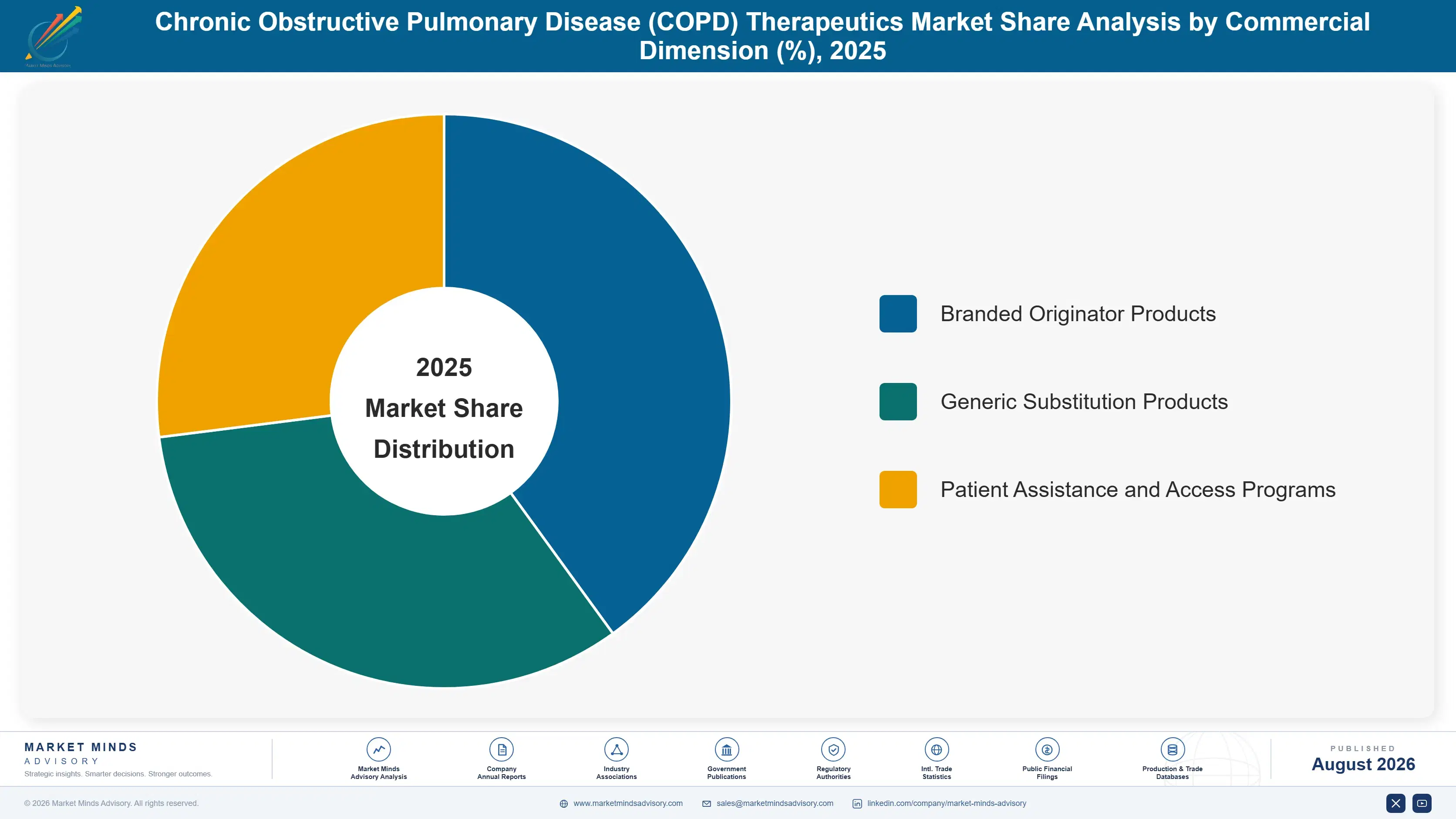
Segmentation follows therapeutic drug class, since short-acting bronchodilators, long-acting bronchodilators, inhaled corticosteroid combinations, triple combination therapies, and biologic monoclonal antibodies each carry distinct clinical positioning, pricing structures, and prescribing pathways despite treating the same underlying respiratory disease. These distinctions shape prescribing behavior and payer authorization decisions across the entire treatment pathway. today. and beyond.
chronic-obstructive-pulmonary-disease-market-2-market-share-analysis-1787465804794

Biologics

Biologic monoclonal antibodies are growing fastest as pulmonologists increasingly target eosinophilic inflammation in patients with frequent exacerbations despite maximal inhaled triple combination therapy, opening a genuinely new treatment pathway beyond conventional bronchodilator escalation. This segment requires specialized phenotype identification through blood eosinophil testing and carries substantially higher per-patient cost than inhaled therapy, limiting current adoption to patients with confirmed eosinophilic phenotype and persistent symptoms. Companies with early regulatory approval and established respiratory biologic franchises from asthma are capturing disproportionate share as label expansion continues broadening eligible COPD patient populations across additional severity categories. Continued clinical trial expansion into broader eosinophil thresholds could widen this segment's addressable population considerably over the coming several years.
CAGR 16.0%

Triple Combination Therapies

Triple combination therapies combining a long-acting muscarinic antagonist, long-acting beta-agonist, and inhaled corticosteroid are the second fastest growing segment, increasingly replacing older dual bronchodilator regimens as guideline recommendations expand triple therapy eligibility criteria. This segment benefits from single-inhaler convenience improving patient adherence relative to multiple separate device regimens, though patent expirations across several branded products are increasingly exposing this segment to accelerating generic competition. Originator companies are increasingly defending share through device innovation and combination formulation improvements rather than relying on patent protection alone. Continued refinement of combination formulations and device design is further supporting broader prescriber confidence in triple therapy as a mainstream treatment option. Payers increasingly favor this device differentiation.
CAGR 9.0%
Full segment breakdown across 6 segments available in the complete report.

Regional Architecture and Country Demand Map

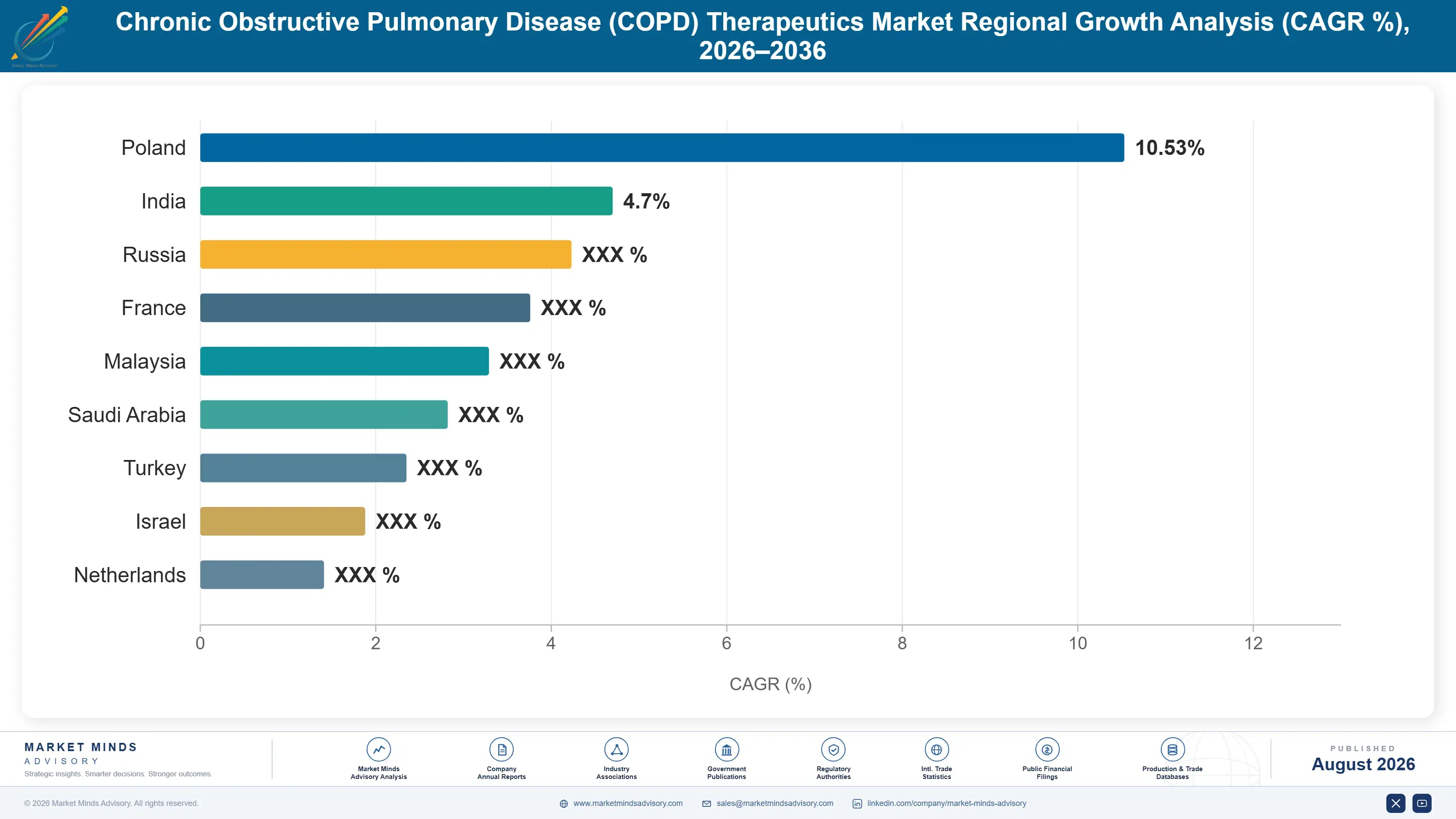
North America commands the largest revenue share given its dense biologics adoption and favorable reimbursement infrastructure, while East Asia's substantial COPD disease burden translates into comparatively smaller revenue share given lower per-patient therapeutic spending. South Asia and Pacific posts the fastest regional growth as diagnostic screening expands rapidly.

North America

The United States anchors regional demand and exceeds the typical share band applied to comparable respiratory therapeutics categories, reflecting its uniquely favorable biologic reimbursement infrastructure, the highest per-patient therapeutic spending of any major market, and pulmonologist practice patterns that adopt phenotype-specific biologic therapy considerably faster than most other national health systems worldwide. Medicare Part D coverage expansion has increasingly supported biologic access among the older patient population that represents the bulk of diagnosed COPD cases. Canada follows similar clinical adoption patterns at smaller scale, relying on a shared physician training pipeline with its southern neighbor. Private insurance formulary decisions continue shaping which biologics achieve broad commercial access each year. Specialty pharmacy networks continue expanding biologic access across additional metropolitan markets.
Share: 34% | CAGR: 7.5% (2026 to 2036)

Western Europe

Germany, France, and the United Kingdom anchor regional demand, supported by national health system coverage for triple combination and increasingly biologic therapy, though biologic reimbursement criteria remain considerably more restrictive than in the United States across most member states. Germany's early health technology assessment approval pathway gives it outsized influence on regional biologic adoption timing relative to its population alone. The United Kingdom's National Health Service has gradually expanded biologic funding as cost-effectiveness evidence for exacerbation reduction has continued accumulating favorably across multiple published outcome studies. Spain and Italy are gradually expanding biologic access, though adoption still trails the region's northern member states considerably. Biologic access continues expanding steadily nationwide.
Share: 24% | CAGR: 5.3% (2026 to 2036)
Regional intelligence for 5 additional markets available in the complete report: East Asia, South Asia and Pacific, Latin America, Middle East and Africa, Eastern Europe. Contact sales@marketmindsadvisory.com.
chronic-obstructive-pulmonary-disease-market-2-country-cagr-analysis-1787465805649

Phenotype Targeting and Access Expansion Levers

Companies are pulling four commercial levers at once: phenotype-specific biologic development, diagnostic screening partnership investment, device innovation for triple combination defense, and emerging market generic access expansion, each addressing a distinct margin opportunity created by the category's split between biologic growth and generic erosion. This combination is reshaping which companies win long-term prescriber relationships.

Phenotype-Specific Biologic Development and Label Expansion

Investing in phenotype-specific clinical trial programs targeting eosinophilic and other identifiable COPD subtypes positions companies to capture the premium pricing and payer authorization that biologic therapy increasingly requires. This investment requires substantial research capital and specialized respiratory immunology expertise but positions early movers to capture disproportionate share as broader label expansion continues, with companies pursuing this strategy reporting biologic prescription growth roughly 26 percent higher than competitors relying on legacy inhaled portfolios alone. Larger competitors are increasingly matching this approach to defend prescriber share. Payers increasingly weight this evidence during formulary review discussions.
Market Impact: Lifts biologic prescription growth by roughly 26 percent

Diagnostic Screening Partnership Investment With Health Systems

Partnering directly with health systems and primary care networks to expand spirometry screening access addresses the diagnostic underdetection constraining overall category revenue growth, while simultaneously building brand awareness among newly diagnosed patients entering the treatment pathway. This partnership requires sustained investment in screening infrastructure and physician education but has enabled companies pursuing this strategy to capture new patient starts meaningfully faster, lifting new prescription volume by roughly 17 percent relative to companies without comparable screening partnerships. Health systems increasingly favor companies demonstrating this depth of clinical commitment. Health systems value this depth of partnership.
Market Impact: Lifts new prescription volume by roughly 17 percent

Device Innovation Defending Triple Combination Franchise Value

Developing next-generation inhaler devices with improved technique feedback and adherence tracking capability allows originator companies to defend triple combination franchise value even as core molecule patents expire and generic competition intensifies. This approach requires sustained device engineering investment but has demonstrably supported premium pricing for device-differentiated products, with companies pursuing this strategy reporting revenue retention roughly 20 percent higher than competitors competing on molecule alone. Payers increasingly favor device-differentiated products when authorizing formulary placement decisions. These devices increasingly incorporate connected sensors that track actual patient inhalation technique in real time, giving prescribers objective adherence data previously unavailable.
Market Impact: Lifts revenue retention by roughly 20 percent overall

Emerging Market Generic Access Expansion Programs

Expanding affordable generic triple combination access across emerging markets with high disease burden but limited therapeutic spending addresses a considerable underserved patient population while building long-term brand presence ahead of eventual biologic market entry in these regions. This approach requires accepting lower per-unit margins but has enabled companies pursuing this strategy to expand treated patient volume by roughly 23 percent relative to companies focused exclusively on premium markets. Emerging market prescribers increasingly favor companies demonstrating sustained local commitment. These programs also build valuable brand loyalty that supports future biologic launches in these same markets.
Market Impact: Expands treated patient volume by roughly 23 percent

Who Controls the Margin Pool

Concentration remains fairly high, with the top five companies holding a combined 62 percent share on a revenue basis, reflecting a market where established respiratory pharmaceutical franchises with broad inhaled and emerging biologic portfolios compete alongside a smaller number of specialized biologic developers. The gap between the leading company and mid-tier challengers remains considerable, reflecting durable prescriber relationships and biologic pipeline depth built over many years. Smaller regional generic manufacturers continue to compete mainly on price within specific national markets rather than globally.
Current competitive activity centers on three dimensions: phenotype-specific biologic development to capture premium pricing among severe patients, diagnostic screening partnership investment to expand the treated patient population, and device innovation to defend triple combination franchise value against accelerating generic competition. Prescriber relationships built over decades continue to matter considerably in this competitive dynamic.

Emerging pressure comes from specialized biologic developers entering the category with next-generation respiratory immunology platforms, and from generic manufacturers expanding affordable triple combination access across emerging markets, threatening to redistribute share away from established originators reliant primarily on legacy inhaled combination revenue over the coming decade. Consolidation among mid-tier generic manufacturers appears increasingly likely over the next several years.
chronic-obstructive-pulmonary-disease-market-2-company-positioning-matrix-1787465806604

Competitive Moat and Risk Dimensions

GLAXOSMITHKLINE

Moat: Broadest Respiratory Portfolio Depth

GlaxoSmithKline maintains one of the broadest respiratory portfolios spanning inhaled bronchodilators, triple combination therapy, and emerging biologic candidates, giving it prescriber relationships and cross-selling opportunities that narrower competitors focused on a single treatment modality cannot easily replicate across comparable account depth worldwide. Few standalone competitors can match this integrated commercial reach.
GLAXOSMITHKLINE

Risk: Legacy Portfolio Generic Exposure

GlaxoSmithKline's revenue remains meaningfully tied to legacy inhaled combination products now facing accelerating generic competition, meaning continued erosion could pressure overall respiratory franchise revenue faster than emerging biologic candidates can offset the decline in the near term. Competitors with more diversified therapeutic portfolios face comparatively less exposure to this concentration.
ASTRAZENECA

Moat: Established Biologic Development Platform

AstraZeneca's established respiratory biologic development platform, built initially for severe asthma indications, gives it a considerable head start extending phenotype-specific biologic therapy into COPD relative to competitors without comparable existing clinical and regulatory infrastructure. Few competitors can match this depth of specialized regulatory experience. today.
ASTRAZENECA

Risk: Narrow Eligible Patient Population

AstraZeneca's biologic COPD indication currently covers only a narrow eosinophilic-predominant patient subset, meaning revenue growth depends heavily on successful label expansion that is not guaranteed and could leave the franchise smaller than initially anticipated if broader trials do not succeed. Companies with broader indications face considerably less exposure to this single population risk.

Players Tracked

Prominent Players

GlaxoSmithKline
AstraZeneca
Boehringer Ingelheim
Novartis
Sanofi

Other Key Players

Teva Pharmaceutical Industries
Chiesi Farmaceutici
Viatris
Cipla
Sun Pharmaceutical Industries
Circassia Pharmaceuticals
Verona Pharma
Theravance Biopharma
Mereo BioPharma
Kamada Ltd
Insmed Incorporated
Vectura Group
Trevena Inc
Aerogen Ltd
Kindeva Drug Delivery

Recent Developments

MARCH 2026

AstraZeneca Expands Biologic COPD Regulatory Submissions

AstraZeneca submitted expanded regulatory applications for its biologic monoclonal antibody covering a broader eosinophilic COPD patient population, seeking to extend eligibility beyond the initial narrow trial enrollment criteria first studied in its pivotal clinical program. The expanded submission is expected to meaningfully increase the addressable biologic-eligible patient population.
Signal: Signals continued label expansion broadening the addressable biologic-eligible COPD patient population across the broader respiratory therapeutics landscape
OCTOBER 2025

GlaxoSmithKline Launches Smart Inhaler Technique Program

GlaxoSmithKline launched an expanded smart inhaler technology and patient education program aimed at improving real-world inhaler technique and adherence, addressing the effectiveness gap between clinical trial results and typical real-world outcomes. Company executives described the initiative as central to its long-term prescriber engagement strategy. nationwide.
Signal: Confirms device innovation becoming a standard defensive strategy against generic erosion as competitors race to build comparable programs
JUNE 2025

Viatris Launches Generic Triple Combination Therapy

Viatris launched a generic version of a leading branded triple combination inhaled therapy following patent expiration, expanding affordable access to this treatment class across price-sensitive patient populations in several major markets. Analysts expect additional generic entrants to follow across other branded triple combination products. broadly.
Signal: Demonstrates continued generic entry accelerating price erosion across branded triple combinations within the broader generic respiratory therapeutics landscape

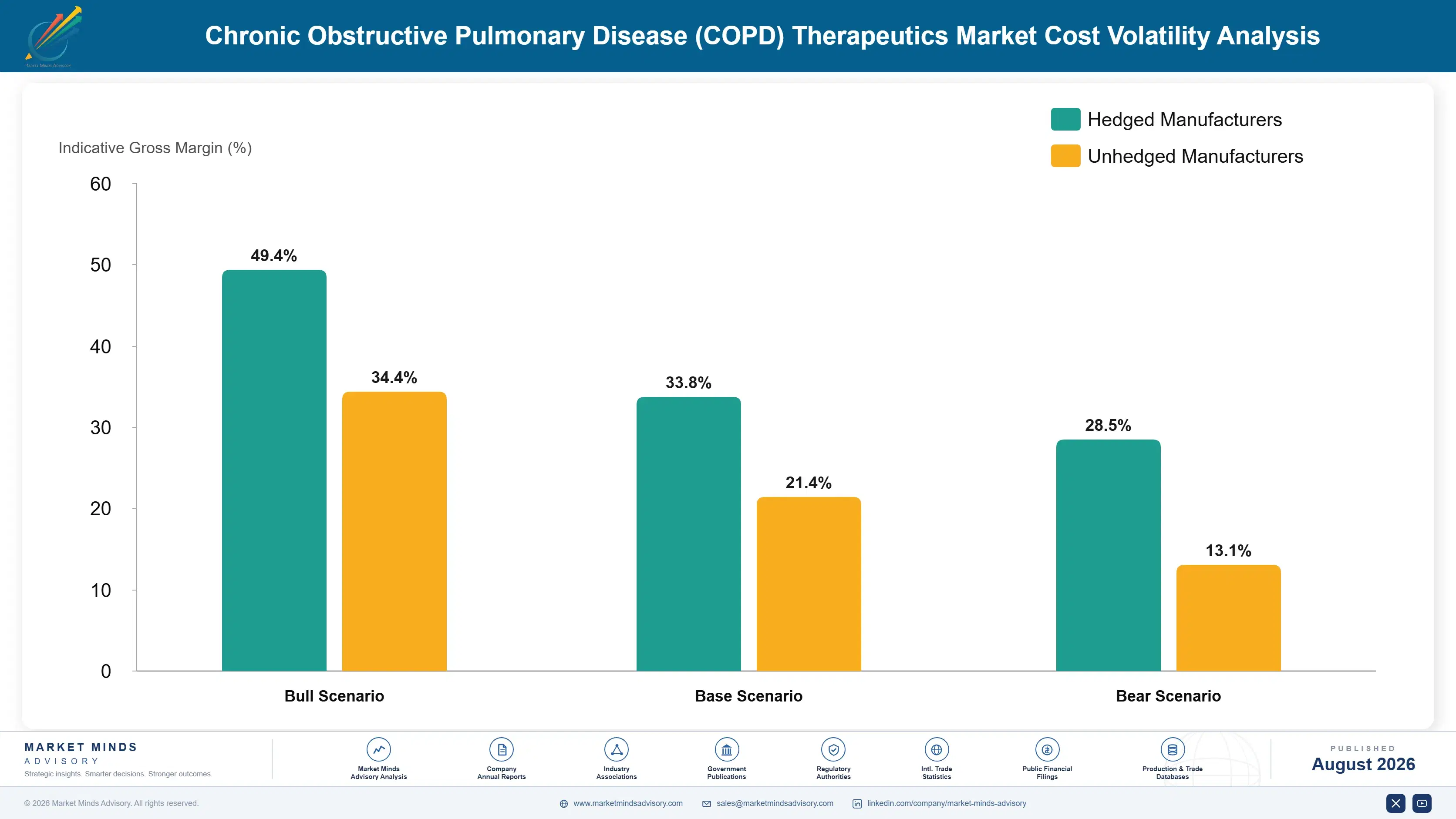
Active Ingredient and Device Manufacturing Exposure

Active pharmaceutical ingredients and precision inhaler device components together represent roughly 29 percent of cost of goods sold for COPD therapeutics production, sourced primarily from specialized pharmaceutical manufacturing facilities in the United States, Western Europe, and India, with device components sourced from precision plastics manufacturers globally. Currency fluctuations further affect landed cost for internationally sourced device components.
Active pharmaceutical ingredient supply tightened considerably in 2021 and 2022 following broader pharmaceutical manufacturing disruption, a volatility event documented in company annual report disclosures across the sector, delaying several planned generic product launches and forcing manufacturers to qualify additional ingredient suppliers to protect production continuity. Several manufacturers report supply lead times have only partially normalized since the disruption began. Contract manufacturers have since added redundant production lines to reduce future exposure.

Exposure varies considerably by player type: large originator companies with direct manufacturing relationships and vertical integration have absorbed volatility more easily than smaller generic manufacturers reliant on contract manufacturing, a disadvantage that is accelerating consolidation of smaller generic producers into larger diversified pharmaceutical company operations. Smaller generic manufacturers increasingly pursue partnership or acquisition to gain comparable purchasing scale.
chronic-obstructive-pulmonary-disease-market-2-cost-volatility-analysis-1787465806916

Direct Active Ingredient Supplier Agreements

Larger companies are securing direct multi-year supply agreements with active pharmaceutical ingredient manufacturers, protecting production continuity during volatility events, though this approach requires accurate long-term demand forecasting that smaller generic manufacturers with thinner margins often find difficult to commit to confidently. Larger companies with stronger balance sheets absorb this forecasting risk more comfortably than smaller rivals.

Vertical Integration of Device Component Manufacturing

Some larger companies are bringing precision inhaler device component manufacturing in-house rather than relying entirely on external contract manufacturers, reducing exposure to third-party capacity constraints, though this requires substantial capital investment that smaller generic manufacturers typically cannot justify given current production volume. Companies pursuing this path typically require several years to reach meaningful production scale internally.

Multi-Source Ingredient Qualification Across Manufacturers

Qualifying active pharmaceutical ingredients from multiple manufacturers reduces exposure to any single supplier's capacity constraints or quality issues, though it requires significant regulatory validation investment across each additional source given the stringent quality requirements applicable to inhaled pharmaceutical products. Most large companies now maintain at least two qualified ingredient sources per product line. overall

Portfolio Architecture for Margin Defence

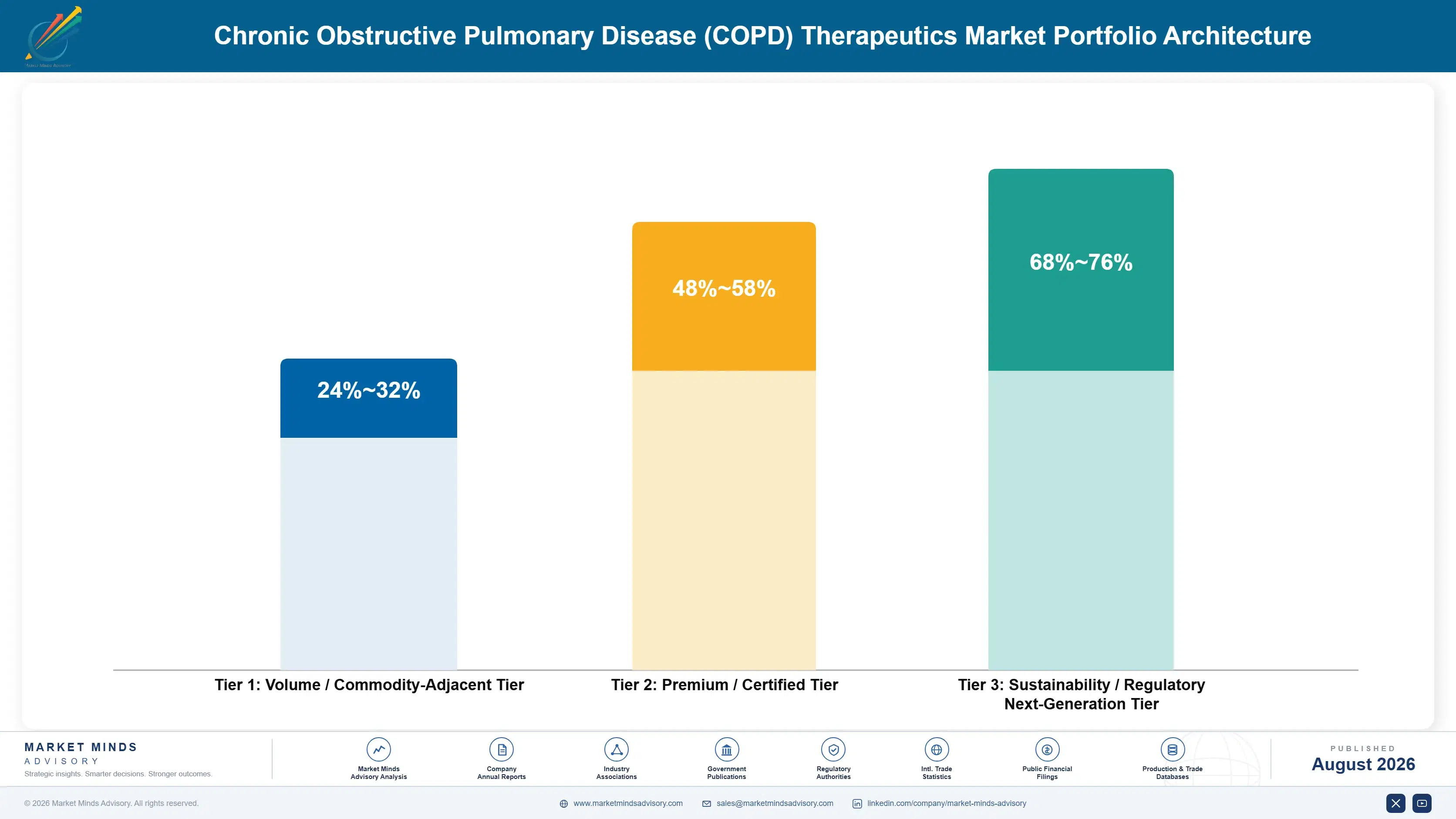
Portfolio economics split across three tiers: generic bronchodilators and older single-agent therapies competing largely on price and volume, mid-tier branded triple combination products commanding meaningful premium pricing tied to device differentiation, and premium biologic monoclonal antibodies capturing the highest margin as payers and patients pay for both phenotype-specific efficacy and specialized administration support. Payers increasingly negotiate bundled contracts spanning multiple tiers simultaneously to secure better overall terms.
The tension between generic volume and premium biologic positioning is sharpest as patent expirations increasingly commoditize triple combination pricing regardless of clinical differentiation, compressing originator margins even as biologic products command substantial price premiums tied to clinical trial investment and phenotype identification infrastructure rather than manufacturing cost alone. Companies without a credible biologic offering increasingly struggle to defend even their traditional triple combination accounts.

High value margin pools concentrate in biologic products sold with dedicated phenotype identification support and patient assistance programs, where clinical evidence depth and payer authorization relationships limit meaningful competition to companies with established respiratory immunology research capability. New entrants without established clinical evidence infrastructure find this tier especially difficult to penetrate meaningfully. nationwide. today.

Volume / Commodity-Adjacent Tier

Generic bronchodilators and older single-agent therapies competing primarily on price and volume across mainstream prescribing. Purchasing decisions here favor lowest delivered cost per unit dispensed. across mainstream prescribing channels nationwide.
Gross Margin: 24-32%

Premium / Certified Tier

Branded triple combination products commanding premium pricing tied to device differentiation and single-inhaler convenience. Payers value proven device differentiation over marginal cost savings alone. across most respiratory specialist accounts. nationwide.
Gross Margin: 48-58%

Sustainability / Regulatory / Next-Generation Tier

Biologic monoclonal antibodies serving phenotype-specific severe disease, commanding the strongest margins given clinical evidence requirements. Payers here view clinical evidence depth as essential to authorization decisions. throughout the authorization and renewal process.
Gross Margin: 68-76%
chronic-obstructive-pulmonary-disease-market-2-portfolio-architecture-1787465807773

High-value Sub-segments and Strategic Watch-out

Biologic Monoclonal Antibodies

Scaling as phenotype identification and label expansion continue, this segment commands the highest margins but remains constrained by eosinophilic patient identification requirements limiting eligible population size today. Payer authorization criteria remain the key variable determining pace of adoption here. across major consuming markets worldwide today.
Gross Margin: 68-76%

Triple Combination Therapies

Continued guideline expansion supports durable volume growth, though accelerating patent expirations increasingly expose this segment to generic price erosion across most major consuming markets worldwide. Prescribers increasingly request these formulations specifically during treatment planning discussions. Device design cycles here run roughly every three to five years across leading manufacturers.
Gross Margin: 40-52%

Long-Acting Bronchodilator Monotherapies

The largest volume segment by prescription count, competing primarily on price across mainstream milder disease presentations, and gradually losing share to triple combination as guidelines expand eligibility criteria. Pricing pressure here remains considerably more intense than in premium biologic segments, limiting margin expansion for most manufacturers.
Gross Margin: 26-34%

Short-Acting Rescue Bronchodilators

Facing persistent commoditization as nearly universal generic availability limits pricing power considerably, this segment requires continued volume scale or faces ongoing margin compression across most consuming regions. Manufacturers here increasingly diversify into adjacent respiratory technologies. Manufacturers increasingly redirect research investment toward these adjacent device-focused platforms instead.
Gross Margin: 18-24%

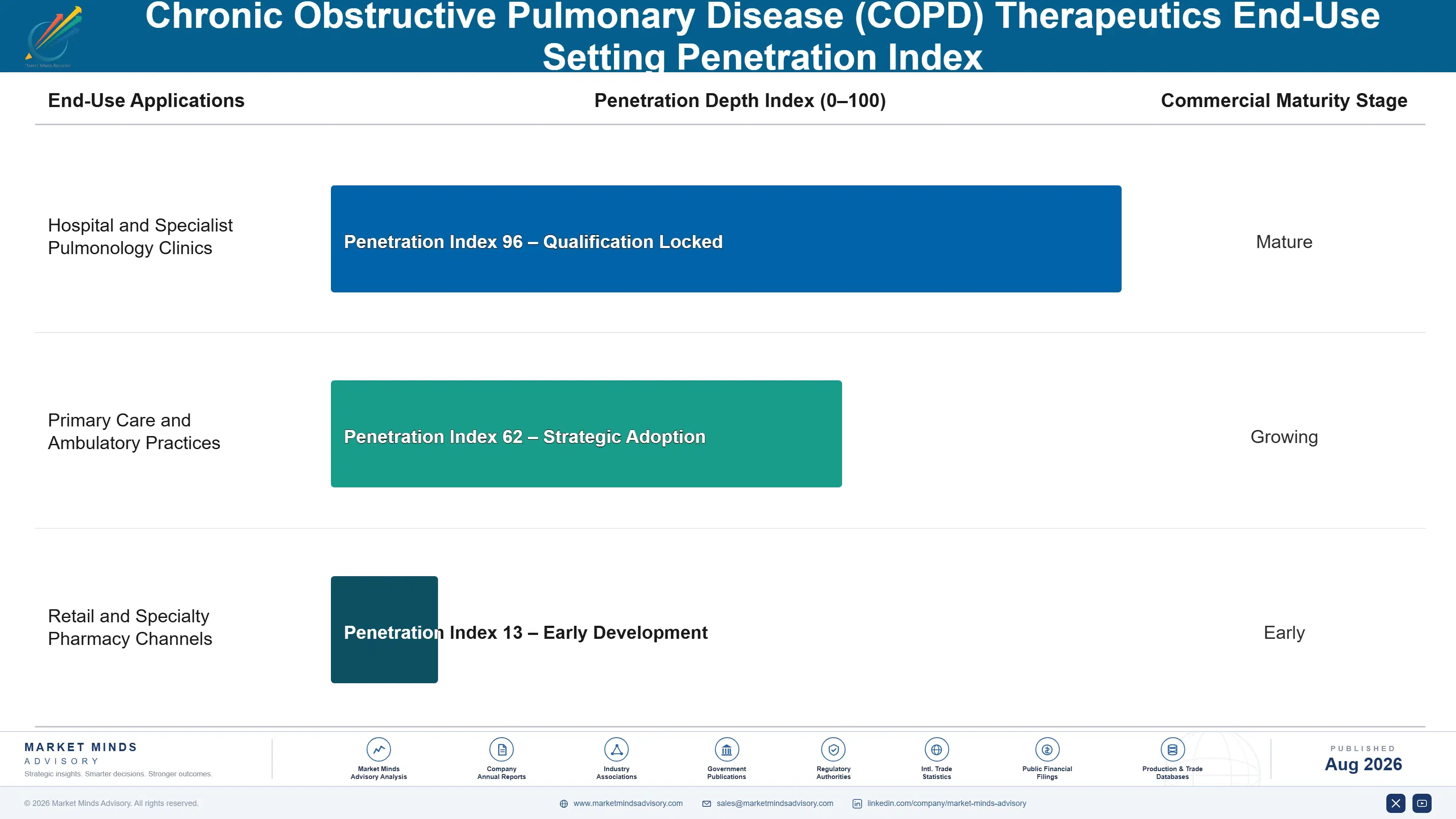
Chronic Disease Lifetime Treatment Economics

Demand in this category increasingly resembles a lifetime chronic disease management relationship rather than an episodic treatment event, since COPD patients typically require years of escalating pharmaceutical therapy following diagnosis, creating durable annuity-like revenue for companies embedded early in a patient's treatment pathway before disease progression necessitates biologic escalation. This dynamic increasingly resembles subscription-style economics more common in specialty biologics than in traditional generic pharmaceuticals.
Adoption depth varies considerably by end use vertical: academic pulmonology specialist practices show the deepest and most consistent adoption of biologic and advanced triple combination therapy, primary care practices show moderate but accelerating adoption tied to expanding diagnostic screening programs, and rural and underserved healthcare settings remain the shallowest adopters, still relying primarily on generic short-acting bronchodilators given limited specialist access. Insurance status and specialist access increasingly determine where along this adoption curve a given patient population falls.

Younger pulmonologists and primary care physicians entering practice increasingly treat phenotype-specific biologic evaluation as a baseline consideration for severe patients rather than a last-resort option, a generational shift that is gradually normalizing biologic adoption across a broader range of practice settings beyond the historically dominant academic medical centers.
chronic-obstructive-pulmonary-disease-market-2-end-use-penetration-index-1787465808635

Where Company Investment Should Concentrate

These are among the four positions where our research anticipates prominent divergence between winners and laggards over the coming forecast period. Each is grounded in the demand model, the regulatory perimeter, and the announced capacity pipeline.
01 / PHENOTYPE-SPECIFIC BIOLOGIC DEVELOPMENT

Build biologic evidence before eosinophilic COPD competition intensifies

Diagnosed eosinophilic COPD patients are becoming eligible for biologic therapy faster than most companies currently plan for within their clinical development timelines and research budgets across comparable respiratory portfolios. Companies with established biologic programs already report meaningfully higher prescription growth than competitors relying on legacy inhaled portfolios alone across their existing prescriber base. This advantage compounds as label expansion continues, widening considerably as legacy inhaled revenue faces accelerating generic pressure, a gap unlikely to close soon without deliberate and sustained investment now.
02 / DIAGNOSTIC SCREENING PARTNERSHIP

Invest in screening infrastructure before diagnostic gaps close elsewhere

Diagnostic underdetection remains the single largest constraint on category revenue growth, and companies without screening partnership investment remain persistently exposed to a smaller addressable patient population than true disease prevalence would otherwise support. Companies with established screening partnerships already report capturing new patient starts at meaningfully higher rates than companies without comparable infrastructure investment. Building this capability now, ahead of competitors, costs considerably less than attempting to build equivalent screening reach later, since payers increasingly expect this evidence before renewing formulary placement.
03 / DEVICE INNOVATION INVESTMENT

Defend triple combination value before generic erosion accelerates further

Patent expirations are converting triple combination therapy from a defensible branded franchise into a genericizing commodity faster than companies relying on molecule protection alone can efficiently manage within typical revenue planning cycles. Companies pursuing device innovation already report meaningfully higher revenue retention than competitors competing on molecule alone across comparable patient populations. Companies delaying this investment risk losing pricing power permanently to generic competitors offering comparable clinical efficacy at meaningfully lower cost, since buyers reward differentiation with continued prescriber loyalty.
04 / EMERGING MARKET ACCESS EXPANSION

Expand generic access before disease burden outpaces treatment penetration further

Emerging markets carry a disproportionate share of global COPD disease burden relative to their current share of category revenue, a gap that companies focused exclusively on premium markets are not positioned to capture as affordability improves over time. Companies pursuing emerging market generic access expansion already report meaningfully higher treated patient volume growth than companies focused exclusively on premium markets alone. This advantage compounds further as biologic market entry eventually extends into these regions, and this gap continues widening across most emerging markets in the meantime.

Engagement Snapshot From the Field

A live engagement with an industry participant carrying material or product regulatory and market exposure ahead of a defining policy shift, showing how our research translates into a defensible multi-year portfolio strategy.
MARKET MINDS ADVISORY · CLIENT ENGAGEMENT SUMMARY
Chronic Obstructive Pulmonary Disease (COPD) Therapeutics Producer Strategic Portfolio Review and Transition Roadmap 2026·Investment Scenario on Chronic Obstructive Pulmonary Disease (COPD) Therapeutics Exposure Evaluation 2025-26
CLIENT PROFILE
The client is a mid-sized respiratory generics manufacturer generating approximately 240 million dollars in annual revenue (client-reported, unverified by MMA), historically focused on short-acting bronchodilator and older dual combination products without a triple combination or biologic pipeline of its own, facing intensifying pressure from larger originator companies. Its competitors were rapidly securing triple combination approvals.
STRATEGIC CHALLENGE
Facing commoditization of its core bronchodilator portfolio as newer triple combination therapies captured a growing share of prescriptions, the client needed to determine whether to invest in generic triple combination development following upcoming patent expirations or pursue a narrower defensive strategy within its existing commodity product range. Leadership disagreed internally on the right path forward.
MMA APPROACH
MMA conducted a portfolio strategy assessment incorporating prescriber interviews, patent expiration timeline analysis, and financial modeling of generic triple combination development scenarios, then developed a phased market entry roadmap sequenced to the client's available capital and existing regulatory affairs capability across target markets. Interviews focused specifically on device equivalence expectations.
KEY FINDINGS
  1. Two upcoming patent expirations offered near-term generic triple combination entry opportunities within the client's existing regulatory affairs capability and manufacturing footprint. and market entry
  2. Prescribers expressed willingness to switch patients to generic triple combination products once available, contingent on demonstrated device equivalence and reliable supply. and reliable ongoing supply commitments
  3. Existing manufacturing infrastructure required moderate capital investment to meet device component quality requirements for triple combination products specifically. rather than requiring an entirely new facility
  4. Emerging market generic access represented a meaningfully larger long-term opportunity than the client's traditional developed market focus alone. despite the client's traditional developed market focus
CLIENT PROFILE
The client is a mid-sized respiratory generics manufacturer generating approximately 240 million dollars in annual revenue (client-reported, unverified by MMA), historically focused on short-acting bronchodilator and older dual combination products without a triple combination or biologic pipeline of its own, facing intensifying pressure from larger originator companies. Its competitors were rapidly securing triple combination approvals.
STRATEGIC CHALLENGE
Facing commoditization of its core bronchodilator portfolio as newer triple combination therapies captured a growing share of prescriptions, the client needed to determine whether to invest in generic triple combination development following upcoming patent expirations or pursue a narrower defensive strategy within its existing commodity product range. Leadership disagreed internally on the right path forward.
MMA APPROACH
MMA conducted a portfolio strategy assessment incorporating prescriber interviews, patent expiration timeline analysis, and financial modeling of generic triple combination development scenarios, then developed a phased market entry roadmap sequenced to the client's available capital and existing regulatory affairs capability across target markets. Interviews focused specifically on device equivalence expectations.
KEY FINDINGS
  1. Two upcoming patent expirations offered near-term generic triple combination entry opportunities within the client's existing regulatory affairs capability and manufacturing footprint. and market entry
  2. Prescribers expressed willingness to switch patients to generic triple combination products once available, contingent on demonstrated device equivalence and reliable supply. and reliable ongoing supply commitments
  3. Existing manufacturing infrastructure required moderate capital investment to meet device component quality requirements for triple combination products specifically. rather than requiring an entirely new facility
  4. Emerging market generic access represented a meaningfully larger long-term opportunity than the client's traditional developed market focus alone. despite the client's traditional developed market focus
RECOMMENDED STRATEGY
Phase 1: Phase 1 (Months 1 to 9): Complete device equivalence development and regulatory submission preparation. across priority target markets identified nationwide Phase 2: Phase 2 (Months 10 to 18): Secure regulatory approval and establish prescriber engagement programs. ahead of planned commercial launch timeline Phase 3: Phase 3 (Months 19 to 24): Launch generic triple combination products across priority target markets. across its expanding prescriber network
OUTCOME
Within twenty-four months of implementation, the client reported launching two generic triple combination products representing roughly 19 percent of projected future revenue and establishing a durable growth pathway beyond its historical bronchodilator-only business (client-reported, unverified by MMA). Leadership described the shift as validating its strategic pivot decision.

Frequently Asked Questions

Foundational context covering the market sizes, CAGR, scope, country, region and competition that inform every finding below. This section is provided to cover basics and most often pre-purchase conversations, answered from the MMA Primary Research Dataset.

What is the current size of the Chronic Obstructive Pulmonary Disease (COPD) Therapeutics Market?

The COPD Therapeutics Market is valued at approximately 18.5 billion dollars in 2025, spanning bronchodilator, triple combination, and biologic monoclonal antibody treatment categories. This spans bronchodilator, combination, and biologic treatment categories worldwide.

How large will the Chronic Obstructive Pulmonary Disease (COPD) Therapeutics Market be by 2036?

The market is projected to reach roughly 38.15 billion dollars by 2036, driven by expanding biologic adoption and gradual diagnostic rate improvement worldwide. That reflects steady biologic and diagnostic-driven growth momentum.

What is the CAGR for the Chronic Obstructive Pulmonary Disease (COPD) Therapeutics Market 2026 to 2036?

The market is expected to grow at a compound annual growth rate of approximately 6.8 percent between 2026 and 2036, reflecting steady chronic disease demand.

Which segment is growing fastest?

Biologic monoclonal antibodies are the fastest growing segment, expanding at roughly 2.4 times the overall market rate as pulmonologists target eosinophilic inflammation phenotypes. across their existing prescriber base and eosinophilic patient identification programs

Who are the major companies in the Chronic Obstructive Pulmonary Disease (COPD) Therapeutics Market?

Leading companies include GlaxoSmithKline, AstraZeneca, Boehringer Ingelheim, Novartis, and Sanofi, each investing in biologic pipeline development and device innovation. across their biologic pipelines and device innovation programs worldwide

Which country is growing fastest?

The United States is the fastest growing single country, supported by its favorable biologic reimbursement infrastructure and rapid phenotype-specific prescribing adoption. and rapid phenotype-specific prescribing adoption nationwide

Report Segmentation Architecture

The full report scope spans multiple orthogonal segmentation dimensions, with cross-tabulated demand data provided for each dimension pair. Coverage extends further to regional breakdowns, trend trajectories, and the competitive detail needed to support segment-level decision-making.

By Therapeutic Drug Class

  • Short-Acting Bronchodilators
  • Long-Acting Bronchodilators
  • Inhaled Corticosteroid Combinations
  • Triple Combination Therapies
  • Biologics

By End-Use Setting

  • Hospital and Specialist Pulmonology Clinics
  • Primary Care and Ambulatory Practices
  • Retail and Specialty Pharmacy Channels

By Commercial Dimension

  • Branded Originator Products
  • Generic Substitution Products
  • Patient Assistance and Access Programs

By Region

  • North America
  • Western Europe
  • East Asia
  • South Asia and Pacific
  • Latin America
  • Middle East and Africa
  • Eastern Europe

Scope, Methodology, and Coverage

Every figure in this report is reproducible from documented input assumptions. The scope below maps the historical period, the forecast horizon, the segmentation dimensions, and the countries covered, alongside the underlying primary and qualitative methodology.
Historical Period
2020 to 2025
Forecast Period
2026 to 2036
Base Year
2025 (USD billions; MMA Primary Research Dataset, August 2026)
Market Definition
The COPD therapeutics market covers pharmaceutical treatments for chronic obstructive pulmonary disease, including short-acting and long-acting bronchodilators, inhaled corticosteroid combinations, triple combination therapies, and biologic monoclonal antibodies. It excludes non-pharmacological interventions such as pulmonary rehabilitation and oxygen therapy and excludes therapeutics indicated solely for asthma or other unrelated respiratory conditions.
Quantitative Units
USD billions (current prices); prescription volumes for select operating metrics
Segmentation Dimensions
By Therapeutic Drug Class; By End-Use Setting; By Commercial Dimension; By Region
Regions Covered
North America, Western Europe, East Asia, South Asia and Pacific, Latin America, Middle East and Africa, Eastern Europe
Countries Covered
USA, Canada, Germany, France, UK, Italy, Spain, China, Japan, South Korea, India, Australia, Thailand, Indonesia, Brazil, Mexico, Argentina, UAE, Saudi Arabia, South Africa, Poland, Czech Republic, Russia, and additional markets relevant to this sector
Key Companies Profiled
GlaxoSmithKline, AstraZeneca, Boehringer Ingelheim, Novartis, Sanofi, Teva Pharmaceutical Industries, Chiesi Farmaceutici, Viatris, Cipla, Sun Pharmaceutical Industries, Circassia Pharmaceuticals, Verona Pharma, Theravance Biopharma, Mereo BioPharma, Kamada Ltd, Insmed Incorporated, Vectura Group, Trevena Inc, Aerogen Ltd, Kindeva Drug Delivery
Quantitative Methodology
Primary survey, n=3,800 respondents, Q4 2025, six countries; demand-side model with trade association cross-validation
Qualitative Methodology
47 expert interviews, Q4 2025; applied to validate demand model assumptions, identify emerging dynamics, and assess competitive positioning
Report Format
PDF and XLSX data workbook (Word format preview document)
Publisher
Market Minds Advisory
Report Code
MMA-2026-HLT-309
Published
August 2026
Contact
sales@marketmindsadvisory.com | www.marketmindsadvisory.com

Purchase the full Chronic Obstructive Pulmonary Disease (COPD) Therapeutics Market Report (2026 to 2036).

The full report delivers a complete quantitative and qualitative assessment of the COPD therapeutics market, including detailed segment level forecasts through 2036, regional analyses across all seven covered geographies, and profiles of twenty leading companies. It incorporates primary survey data from 3,800 respondents and 47 expert interviews conducted in the fourth quarter of 2025. Buyers receive editable data tables, a customizable Excel forecast model, and access to MMA analysts for follow up questions during a defined post purchase support window. The report also includes a detailed biologic pipeline landscape assessment calibrated to current regulatory submission benchmarks.
Detailed segment-level market forecasts through 2036
All seven regional market analyses included
Twenty profiled leading respiratory pharmaceutical companies
Editable Excel based forecast data model
Primary survey and expert interview data
Extended post-purchase analyst support access window

Built For The People Who Decide

From boardroom strategy to bench-side execution, this report is read cover-to-cover by leaders shaping the next decade of their industry, turning demand scenarios, market dynamics and valuation benchmarks into decisions.
CXOs/ Presidents/ VPs/ Managers
M&A and Corporate Development
Strategy Teams and R&D Heads
Procurement and Product Directors
Regulatory and Compliance Leaders
Investor Relations and Equity Analysts