Market Minds Advisory
China Online Insurance Market

China Online Insurance Market: Digital Platform Distribution and AI Underwriting Adoption

Super-app distribution scale, AI-driven instant underwriting, and rising micro-insurance penetration through embedded payment platforms are jointly reshaping how online insurance reaches Chinese and global digital-first policyholders across every major market.

Lead Analyst

Published

September 2026

Make Smarter Decisions with Customized Research Insights

Request a free sample report and evaluate market opportunities, growth trends, and competitive dynamics relevant to your business needs.

2025 MARKET VALUE$185.0BMarket Size 2025
2036 FORECAST VALUE$594.7BBase Case , 2026 to 2036
CAGR 2026 TO 203611.2 %Bull 12.5% / Bear 9.9%
INCREMENTAL OPPORTUNITY$389.0BNet 10- year value creation
EXPANSION MULTIPLE2.89x2036 value over 2026 base
Strategic Levers
M&A Pipeline
Regional Outlook
Country Rankings
Competitive Intelligence
Segmental Deep-dive
Call-Us : 91 93563 13602

Executive Snapshot and Market Trajectory

Online insurance distribution is scaling fastest where super-app platforms embed coverage directly into payment and lifestyle flows, and China's Alipay, WeChat, and Ant-affiliated channels anchor the category's deepest digital distribution infrastructure anywhere in the world, well ahead of comparable platforms elsewhere. This shift accelerates yearly.
East Asian digital insurance premium volume, led overwhelmingly by China's platform network, still generates the largest share globally, but growth has accelerated fastest in South Asia as India's digital-first insurers and payment platforms pull hundreds of millions of previously uninsured consumers into formal coverage for the first time. AI-driven underwriting is compressing policy issuance time from days to seconds across nearly every major platform. Zhong An continues expanding proprietary underwriting.
Competition remains intense among platform-native insurers and traditional insurers building digital distribution arms, with claims automation speed and platform integration depth increasingly separating leaders from laggards across nearly every major digital market. Regulatory scrutiny of platform-embedded insurance sales practices is rising across major markets, raising compliance costs that smaller platform-dependent insurers increasingly struggle to absorb without partnership support from larger technology providers. Insurers without dedicated compliance capability increasingly fall well behind on overall volume growth.
Market Definition
This report covers insurance premium originated and serviced through digital platforms, including super-app embedded distribution, direct-to-consumer digital insurers, and AI-driven underwriting and claims platforms. It excludes traditional agent-sold policies merely digitized for payment processing, and non-insurance financial products distributed through the same platforms.
Base Year Value
$185.0B in 2025 (MMA Primary Research Dataset, August 2026)
Forecast Period
2026 to 2036, eleven discrete annual values
CAGR
11.2% base case. Bull 12.5%. Bear 9.9%.
Fastest Growth Segment
AI-Driven Instant Underwriting and Claims Platforms: 19.4% CAGR
Fastest Growth Country
India: 17.6% CAGR
Fastest Growth Region
South Asia and Pacific: 13.5% CAGR
Largest Region
East Asia: 30% of 2025 global value
Market Leaders
Zhong An Online, Ping An Insurance, Ant Group Insurance Services, WeSure, PICC Property and Casualty. Source: MMA Analysis based on company annual reports.
Primary Survey
n=3,800 procurement and R&D decision-makers, Q4 2025, six countries
Methodology
Demand-side build-up, cross-validated against public data, 47 expert interviews

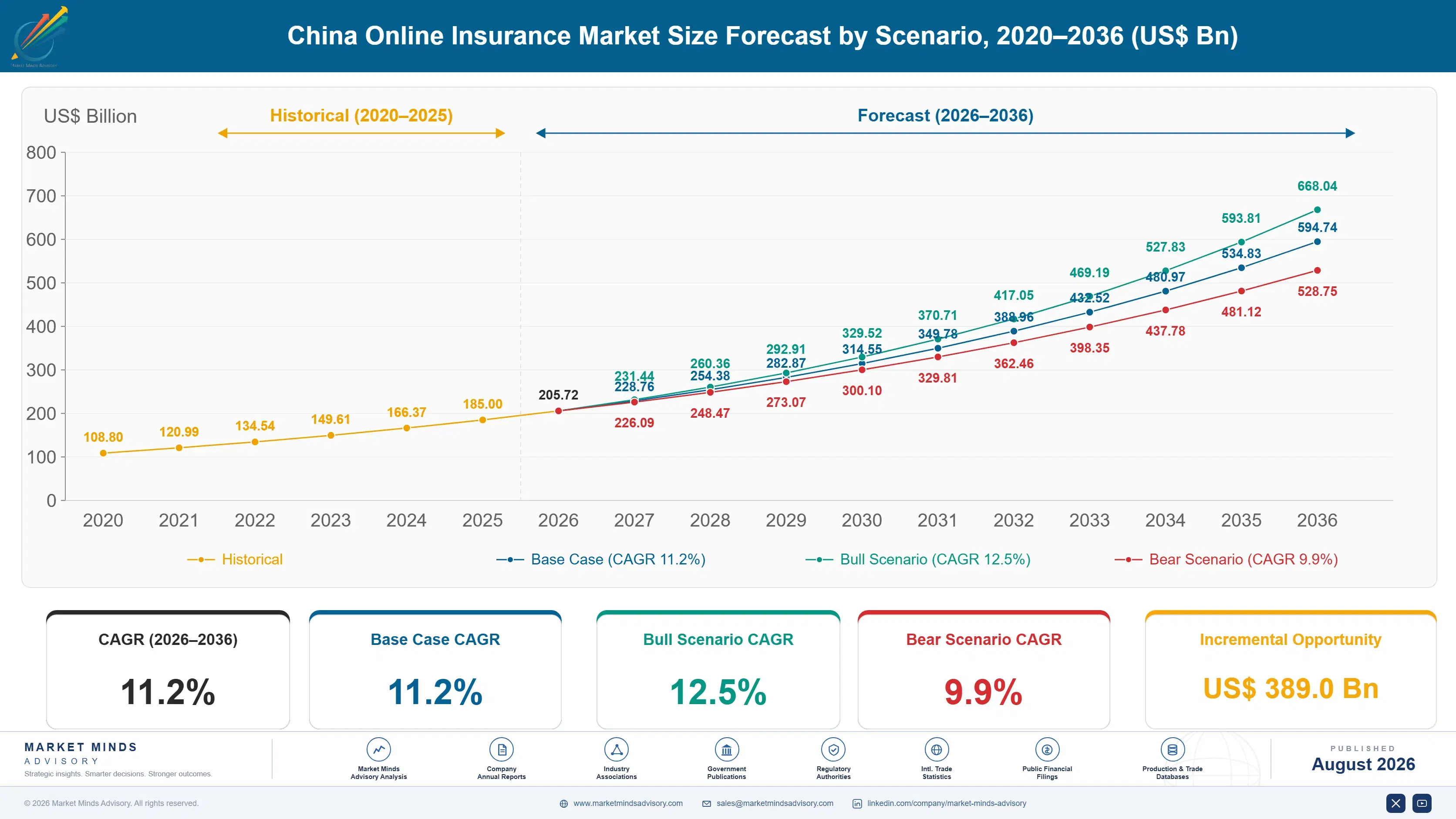
China Online Insurance Market Forecast Scenarios

china-online-insurance-market-size-forecast-scenario-1787915432546
Between 2020 and 2025 the market grew at an estimated 10.2% annually, accelerating sharply as pandemic-era digital adoption pulled millions of first-time buyers into online insurance channels that later proved sticky well beyond the initial disruption period across most major markets covered here. Growth stayed concentrated in property and health micro-insurance through most of the period, with life products digitizing more slowly.
The base case carries the market to 11.2% CAGR through 2036 on three mechanisms. China's super-app network keeps expanding embedded insurance into new payment and lifestyle contexts beyond its current base. India's digital-first insurers and payment platforms keep pulling hundreds of millions of previously uninsured consumers into formal coverage. AI-driven underwriting keeps compressing policy issuance cost, widening margin for platform-native insurers over traditional distribution. Regulatory acceptance of embedded distribution keeps broadening across additional platform categories.
The bull case rests on faster regulatory approval of embedded insurance products across additional platform categories, accelerating adoption beyond current projections. The bear risk centers on tightening data privacy and platform regulation that could raise compliance cost and slow new product rollout across major digital insurance markets simultaneously. Insurers with strong compliance infrastructure already built are better positioned to weather this bear scenario.

Super-App Distribution Reshapes Underwriting Economics

Online insurance economics increasingly hinge on platform integration depth rather than traditional agent networks, since super-apps and payment platforms now originate the majority of new policies at the point of an unrelated transaction rather than a dedicated insurance purchase decision. This shift is reshaping where insurers invest, moving budget toward technical integration and platform partnership development.
TOP 5 CONCENTRATION24%Combined share held by leading online insurance platforms
AVERAGE PREMIUM PER POLICY$38Blended premium across micro and standard digital policies
PLATFORM EMBEDDED DISTRIBUTION SHARE61%Premium sold through embedded checkout and app integration
CLAIMS AUTOMATION RATE47%Claims processed without any human adjuster intervention currently
POLICY ISSUANCE TIME90 secondsAverage time from application to policy issuance today
DIGITAL DISTRIBUTION GROWTH RATE22%Annual growth in policies sold through digital channels
AI-driven underwriting has compressed policy issuance from days to under two minutes for standard micro-insurance products, fundamentally changing unit economics for insurers capable of processing high policy volume at minimal marginal cost. Claims automation is following a similar trajectory, though complex claims still require human adjuster review across most major product categories. Insurers investing early in claims automation infrastructure are seeing meaningfully lower processing costs than competitors still relying primarily on manual adjuster workflows.
Platform concentration creates both opportunity and risk for insurers, since a handful of dominant super-apps now control access to hundreds of millions of potential policyholders. Insurers without direct platform relationships increasingly depend on smaller distribution partners, facing meaningfully higher acquisition costs and slower volume growth than platform-integrated competitors. Regulatory scrutiny of platform bargaining power is rising, though enforcement so far has done little to shift distribution dynamics.
"The insurers winning this category are not the best underwriters anymore. They are the ones who get the API integration right on the first try."
Practice Lead, Financial Services and Insurance Intelligence · MMA Financial Services and Insurance Practice · August 2026

Market Trends

AI Underwriting Compresses Issuance To Seconds

AI-driven underwriting models now issue standard micro-insurance policies in under two minutes, drawing on payment history, device data, and behavioral signals platforms already collect for unrelated purposes. Zhong An and Ant Group Insurance Services have both expanded proprietary underwriting engines that process millions of applications daily with minimal human review required. This shift reflects a genuine change in how insurers view underwriting: no longer a bottleneck requiring manual review, but an automated process that scales with platform transaction volume directly, opening entirely new product categories. Insurers without comparable AI infrastructure struggle to match this speed, ceding volume to instant-issuance platforms.
Market Impact: Reaches over 1 billion users
Embedded Micro-Insurance Expands Into New Transaction Contexts

Platforms increasingly embed small, contextual insurance products, such as delivery protection or device coverage, directly into unrelated purchase flows, converting passive transaction moments into new insurance touchpoints at essentially zero incremental acquisition cost. WeSure and Ping An have both expanded embedded product catalogs covering dozens of specific use cases beyond traditional life and property categories. This distribution model reaches consumers who would never actively seek out standalone insurance products through any traditional channel. Insurers building broad embedded product catalogs early are capturing distribution relationships that later entrants attempting similar expansion will find considerably harder to replicate across comparable transaction volume.
Market Impact: Adds 300 million newly insurable consumers

Market Opportunities and Growth Drivers

Super-App Payment Volume Drives Cross-Sell Reach

Alipay and WeChat Pay together process transactions for over a billion active users, and every one of those transactions represents a potential insurance cross-sell moment that platforms increasingly capture through embedded product placement. This transaction volume gives platform-affiliated insurers a distribution reach that traditional agent networks, built over decades, simply cannot match at comparable cost or speed. New product categories launch and scale within weeks rather than the years traditional distribution expansion historically required across comparable insurer networks. Insurers building early integration with these payment platforms secure a distribution advantage later entrants will find considerably harder to replicate.
Market Impact: Raises commission costs 8 points

India Digital Payment Growth Expands Insurable Population

India's digital payment infrastructure, anchored by UPI transaction volume, has expanded rapidly enough to bring hundreds of millions of previously unbanked and uninsured consumers into formal financial services for the first time in their lives. Digital-first insurers including Acko and Digit are building distribution directly on top of this payment infrastructure, reaching consumers traditional insurance agents never economically served given low individual premium size and high acquisition cost relative to policy value. This underserved population represents genuine incremental market growth rather than share shifted from existing insurers, since most of these new policyholders had no formal coverage relationship previously.
Market Impact: Adds compliance cost across 15 markets

Market Restraints and Challenges

Platform Concentration Risk Compresses Insurer Margin

A small number of dominant super-app platforms now control access to the majority of digital insurance distribution volume, giving them substantial commission negotiation leverage over the insurers whose products they carry. The root cause is genuine market structure: platform network effects concentrate transaction volume among a handful of winners, leaving insurers with few alternative distribution channels of comparable scale. This has pushed distribution commission rates meaningfully higher for insurers dependent on the largest platforms. Insurers are responding by building proprietary direct channels alongside platform distribution to reduce this dependency going forward.
Market Impact: Cuts issuance time to 90 seconds

Data Privacy Regulation Raises Compliance Complexity

Tightening data privacy rules across major digital insurance markets restrict the behavioral and transaction data insurers can use for underwriting, complicating the risk models that platform-based insurers built their competitive advantage around originally. The root cause is genuine regulatory response to consumer data concerns following several high-profile data misuse incidents across the broader technology sector. This has forced insurers to rebuild underwriting models using more limited data inputs, raising compliance and model redevelopment costs meaningfully. Insurers are responding by investing in privacy-preserving underwriting techniques that maintain model accuracy within tighter data constraints.
Market Impact: Adds 40+ embedded product categories
3 additional market trends, 4 additional growth drivers, and 3 additional restraints and challenges are covered in the full report. Contact sales@marketmindsadvisory.com to access the complete intelligence.

Segment CAGR and Growth Architecture

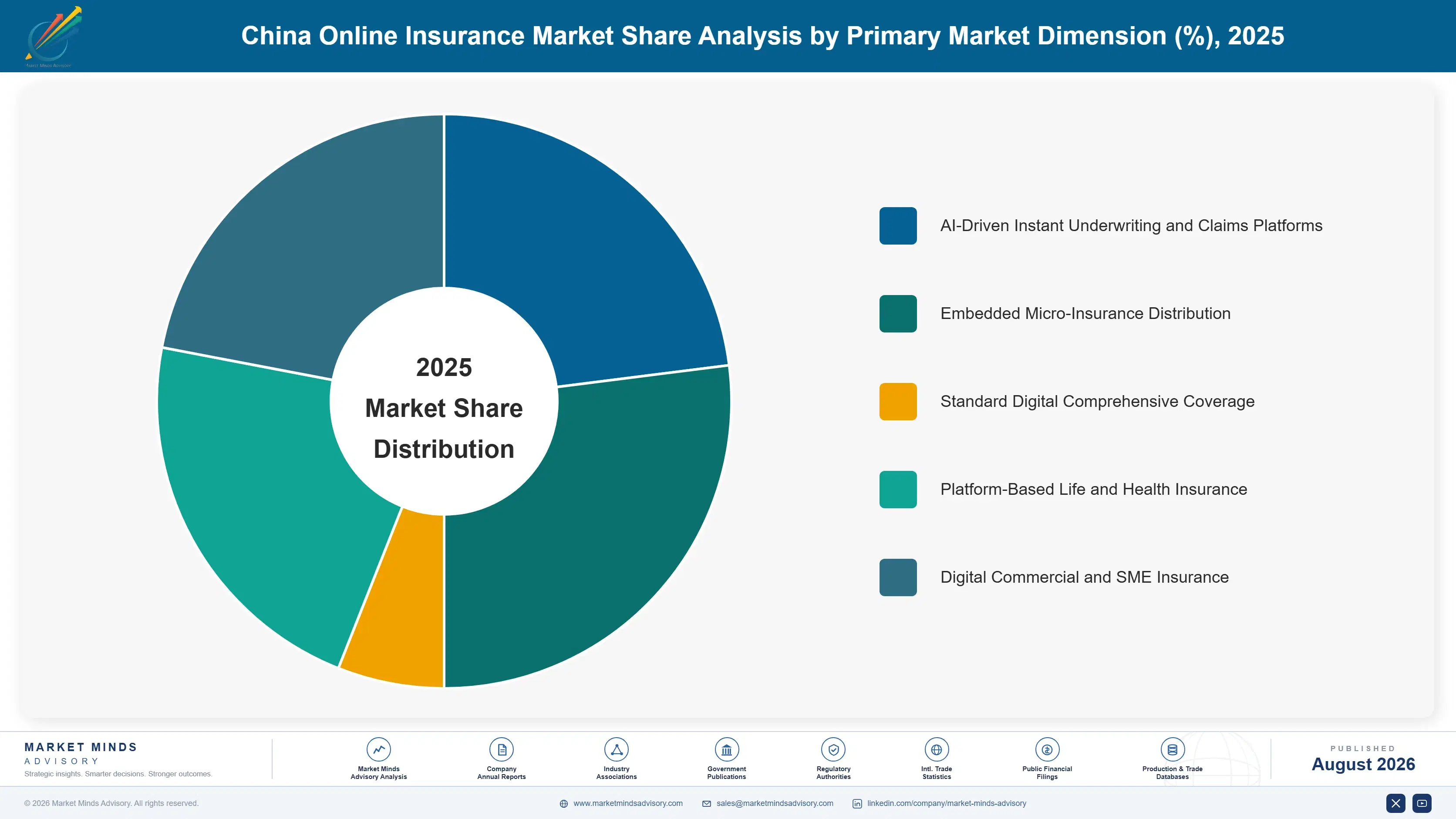
Online insurance splits into six categories defined by product type and distribution model. AI-driven underwriting and embedded micro-insurance lead current growth as platforms convert transaction moments into insurance touchpoints across an expanding range of everyday consumer activities. Standard digital coverage and agent-digitized policies sit alongside these, growing steadily as platform penetration expands across underserved segments.
china-online-insurance-market-market-share-analysis-1787915433081

AI-Driven Instant Underwriting and Claims Platforms

AI-driven instant underwriting and claims platforms grow fastest at 19.4% annually, nearly 1.73 times the overall market rate, as insurers replace manual review processes with automated models drawing on payment history and behavioral data platforms already collect. These platforms compress issuance from days to under two minutes for standard products while cutting claims processing cost meaningfully compared to traditional adjuster-based workflows. Zhong An and Ant Group Insurance Services both hold leading positions given years of proprietary model development and access to platform transaction data at genuine scale. Insurers investing early in proprietary model development are capturing an accuracy and cost advantage that later entrants attempting to catch up will find considerably difficult to close within a comparable timeframe.
CAGR 19.4%

Embedded Micro-Insurance Distribution

Embedded micro-insurance distribution grows second-fastest at 15.8%, driven by platforms increasingly bundling small, contextual coverage directly into unrelated transactions rather than requiring a separate purchase decision from consumers. These products typically carry low individual premium but generate substantial aggregate volume given the transaction scale of the platforms distributing them. WeSure and Ping An both compete for this business through proprietary platform relationships that smaller insurers without comparable technology infrastructure cannot easily replicate at similar cost or speed. This distribution model reaches consumers who would never actively seek standalone insurance, converting passive platform engagement into genuine incremental premium volume that traditional distribution channels never economically accessed before. Insurers without comparable relationships struggle to reach this volume at similar cost.
CAGR 15.8%
Full segment breakdown across 7 segments available in the complete report.

Regional Architecture and Country Demand Map

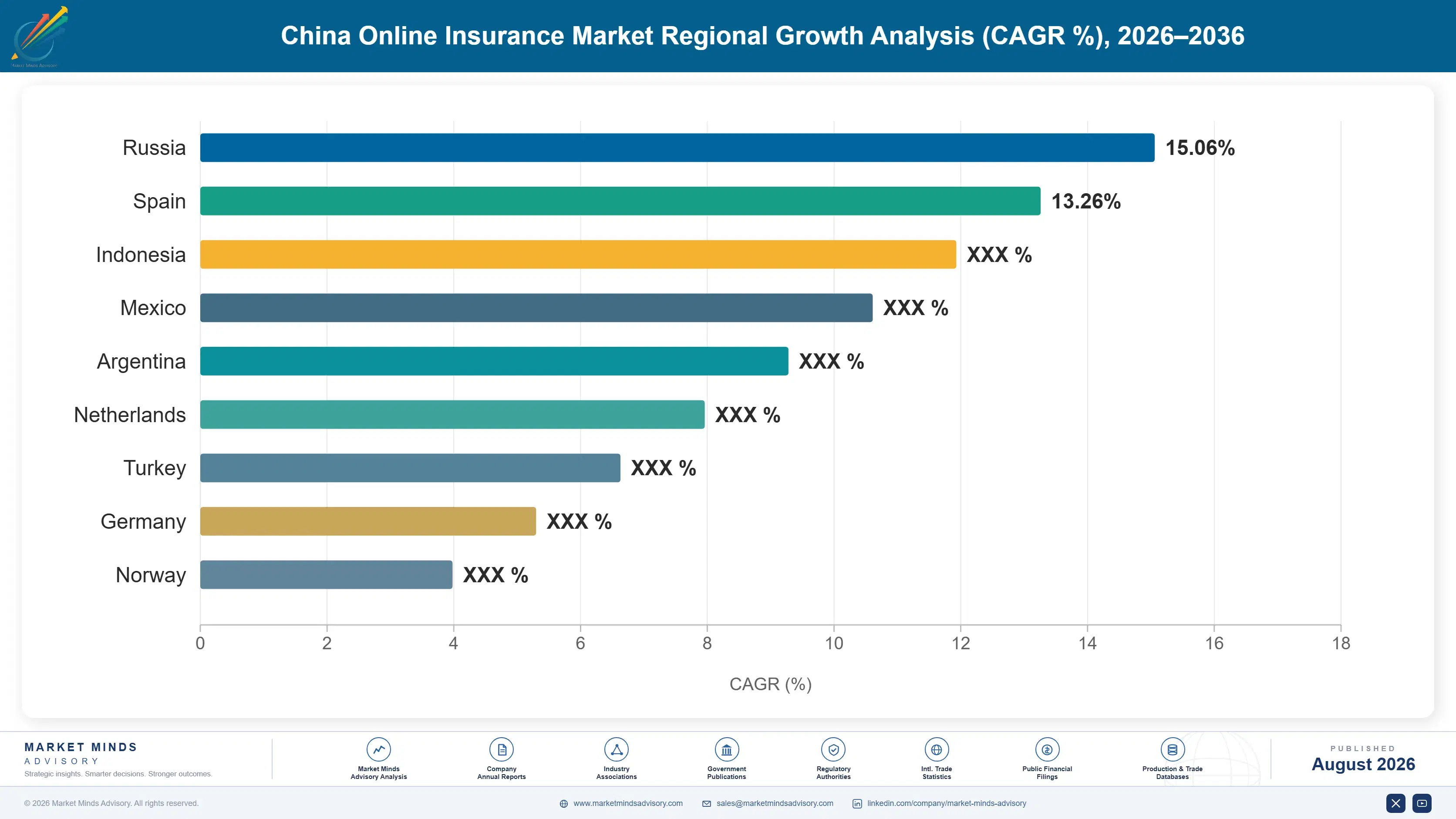
Online insurance demand concentrates around platform distribution scale and digital payment infrastructure maturity. East Asia leads on premium volume through China's dominant super-app network, while South Asia compounds fastest as India's digital-first insurers expand rapidly across a large underserved population. Both rely on payment platform integration over traditional agent networks.

North America

US insurtech platforms, including Lemonade and Root, anchor this region's digital insurance growth through direct-to-consumer distribution and AI-driven underwriting models built specifically for standalone digital sale rather than platform embedding. Canadian digital insurers follow a similar model at smaller scale, tied closely to the region's broader fintech infrastructure development. Bank-embedded insurance distribution through major US and Canadian financial platforms adds a growing secondary channel. Growth of 12.2% reflects steady digital adoption rather than the platform-driven acceleration seen in East Asia specifically. Insurers here compete primarily on underwriting model sophistication rather than transaction volume access. Insurers with strong direct-to-consumer brand recognition hold an advantage over newer entrants still building comparable trust and distribution reach across this market.
Share: 24% | CAGR: 12.2% (2026 to 2036)

Western Europe

European digital insurers, particularly in the UK and Germany, anchor this region's 19% share through mature insurtech networks and strong regulatory frameworks that give consumers confidence in digital-only insurance providers. Open banking regulation across the EU has enabled deeper embedded insurance integration with financial platforms than in most other developed markets globally. France and the Nordics follow with smaller but steadily growing digital insurance penetration. Growth of 9.6% trails the global average as digital insurance penetration is already comparatively high across most major European markets, leaving less incremental volume growth available than in less penetrated regions. Insurers with strong open banking API integration capture disproportionate share of the incremental growth still available across these otherwise mature markets.
Share: 19% | CAGR: 9.6% (2026 to 2036)
Regional intelligence for 5 additional markets available in the complete report: East Asia, South Asia and Pacific, Latin America, Middle East and Africa, Eastern Europe. Contact sales@marketmindsadvisory.com.
china-online-insurance-market-country-cagr-analysis-1787915433596

Where Digital Insurers Should Focus Investment

Revenue growth concentrates around platform integration depth and AI underwriting capability rather than traditional product differentiation. Insurers embedded within dominant payment and lifestyle platforms capture volume that standalone marketing simply cannot reach at comparable acquisition cost across most digital insurance markets. Insurers combining both approaches capture volume competitors relying on a single channel cannot match at comparable cost.

Deepen Super-App And Payment Platform Integration

Insurers embedding coverage directly into super-app payment and lifestyle flows capture attach rates well above standalone digital marketing channels, since consumers encounter insurance offers during transactions they were already completing for unrelated purposes. Early movers on platform integration reportedly see policy volume running 30 to 50 percentage points above insurers relying on traditional digital marketing, since the passive discovery effect meaningfully outperforms active customer acquisition campaigns at comparable cost. Insurers without comparable integration capability increasingly cede volume to platform-embedded competitors that reach consumers at the exact moment of purchase transaction time.
Market Impact: Raises policy volume by 30 to 50 points

Build Proprietary AI Underwriting Infrastructure Now

Insurers building proprietary AI underwriting models that draw on platform transaction and behavioral data capture pricing accuracy and issuance speed advantages that competitors relying on traditional actuarial models cannot match. Zhong An and Ant Group Insurance Services reportedly achieve underwriting cost running 25 to 35 percentage points below insurers using conventional manual review processes, since automated models process applications at a fraction of the marginal cost per policy. This capability requires sustained data science investment that smaller regional insurers often lack relative to platform-affiliated competitors operating at far greater scale.
Market Impact: Cuts underwriting cost by 25 to 35 points

Expand Embedded Micro-Insurance Product Catalogs Broadly

Insurers developing broad embedded micro-insurance catalogs, covering everything from delivery protection to device coverage, capture incremental premium volume from consumers who would never actively seek standalone insurance products through any traditional channel or distribution method. Platforms with expansive embedded catalogs reportedly generate premium volume running 15 to 25 percentage points above platforms offering only core insurance products, since broader catalog coverage captures more transaction moments across the consumer's overall platform usage. This expansion requires meaningful product development investment but carries minimal incremental distribution cost once the platform integration already exists.
Market Impact: Adds 15 to 25 points of incremental volume

License Underwriting Models To Regional Insurers

Insurers with proprietary AI underwriting models can license that technology to smaller regional insurers lacking comparable data science infrastructure, generating fee revenue without directly bearing the underlying insurance risk themselves. This model reportedly generates licensing fee revenue running 3 to 6 percent of the licensee's premium volume at minimal marginal cost to the technology owner, since the underlying model already exists and continues serving the licensor's own core underwriting business regardless of licensing activity. Demand for this licensing is rising as smaller insurers seek AI capability without full infrastructure investment.
Market Impact: Generates 3 to 6 percent annual licensing revenue

Who Controls the Margin Pool

Platform-affiliated insurers hold a combined 24% share among the top five, leaving substantial room for regional digital specialists competing on underwriting sophistication rather than raw platform access alone. Zhong An leads the field, with a gap to Ping An and Ant Group Insurance Services narrow enough that rankings shift with each major product launch. Insurers without comparable platform integration increasingly compete on price alone within a shrinking pool of consumers. This dynamic rewards platform integration speed.
Competitive activity currently centers on AI underwriting model development, with insurers racing to expand proprietary data science capability before competitors close the accuracy and speed gap separating leaders from followers. Embedded product catalog expansion represents a second front, where platforms compete on breadth of transaction contexts covered. Regulatory compliance investment adds a third front, rewarding insurers with early privacy-preserving underwriting capability.

Emerging pressure comes from independent insurtech platforms building underwriting-as-a-service models that smaller insurers can license rather than build internally, potentially commoditizing the technology advantage current leaders hold. Rankings could shift meaningfully if a well-capitalized challenger combines licensed underwriting technology with aggressive platform partnership acquisition, a combination no major player has fully executed yet.
china-online-insurance-market-company-positioning-matrix-1787915434118

Competitive Moat and Risk Dimensions

ZHONG AN ONLINE

Moat: Proprietary AI Underwriting Scale

Zhong An's years of proprietary underwriting model development, trained on billions of platform transactions, give it pricing accuracy and issuance speed that competitors building comparable models from scratch cannot replicate quickly regardless of available capital investment. This data advantage compounds as transaction volume continues growing, widening the gap with competitors starting model development later.
ZHONG AN ONLINE

Risk: Regulatory Scrutiny Concentration Risk

Zhong An's heavy reliance on platform transaction data for underwriting makes it particularly exposed to tightening data privacy regulation, which could force costly underwriting model redevelopment using more limited data inputs than currently available. Closing this exposure requires diversifying data sources beyond platform transactions, a shift still underway across the organization.
PING AN INSURANCE

Moat: Integrated Distribution And Underwriting

Ping An's combination of traditional insurance scale and digital distribution capability through WeSure gives it a hybrid advantage that pure digital-native competitors and traditional insurers without comparable technology investment both struggle to match simultaneously across the full product range. This dual capability positions Ping An well against both pure digital challengers and traditional insurers lacking comparable technology investment.
PING AN INSURANCE

Risk: Legacy Technology Integration Complexity

Ping An's scale across traditional and digital channels creates technology integration complexity that smaller, purely digital-native competitors avoid entirely, slowing new product rollout speed relative to more focused challengers building on modern infrastructure from the start. Addressing this complexity requires sustained technology modernization investment that competes internally against other capital priorities.

Players Tracked

Prominent Players

Zhong An Online
Ping An Insurance
Ant Group Insurance Services
WeSure
PICC Property and Casualty

Other Key Players

China Life Insurance
Taikang Insurance Group
Sunshine Insurance Group
China Pacific Insurance
Acko General Insurance
Digit Insurance
PolicyBazaar
Lemonade
Root Insurance
Hippo Insurance
Bought By Many
Wefox
Getsafe
Alan
Bima

Recent Developments

FEBRUARY 2024

Zhong An expanded its AI underwriting engine to cover additional embedded product categories, including delivery and logistics protection products distributed through third-party platform partnerships. The expansion was an organic technology development, not an acquisition or joint venture of any kind. The expansion covers several new logistics-focused product lines this quarter.
Signal: Signals leading platform insurers are prioritizing underwriting model breadth over depth within existing product categories. over narrower category depth.
JULY 2024

Ant Group Insurance Services signed a distribution partnership with a major regional payment platform to embed micro-insurance products directly into its transaction flow across several new markets. The agreement was a commercial distribution partnership, not an acquisition or equity investment, expanding Ant's reach into new geographic markets.
Signal: Signals platform insurers are prioritizing distribution partnership expansion over organic platform development. into new geographic markets.
NOVEMBER 2024

Ping An acquired a minority equity stake in a regional insurtech platform specializing in underwriting-as-a-service technology, gaining early access to licensing infrastructure relevant to broader digital distribution strategy. The transaction was an equity stake, not a full acquisition or merger of the target technology company.
Signal: Signals established insurers are moving early to secure underwriting technology licensing capability rather than build it fully internally.

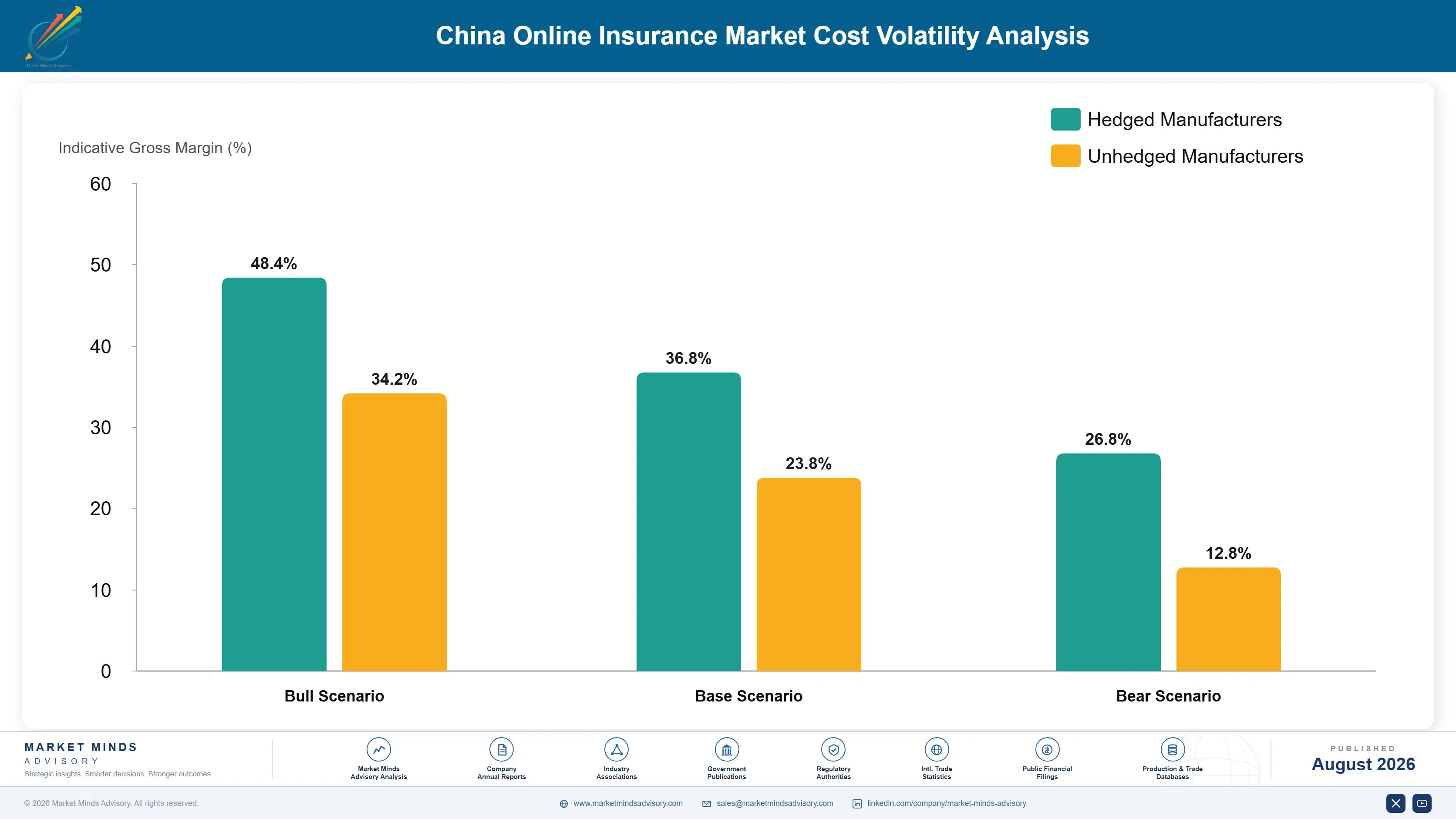
Claims And Platform Distribution Cost Exposure

Claims payouts and platform distribution commissions together account for roughly 76% of gross premium collected, with claims alone typically running 48% to 56% of premium given the smaller average policy size across most digital and micro-insurance products. Platform commissions, concentrated among a handful of dominant super-apps and payment platforms, add another 18% to 24%, while underwriting and claims administration overhead account for the remaining share of collected premium.
Platform commission rates rose meaningfully through 2023 as dominant super-apps consolidated bargaining power over the insurers distributing through their channels. Ant Group's 2023 investor disclosures indicated rising distribution cost pressure across affiliated insurance partners during the period. Data infrastructure and AI model development costs have also risen as insurers race to build proprietary underwriting capability, though these costs have moderated somewhat as cloud computing costs have declined industrywide.

Insurers without proprietary platform relationships absorb distribution commission cost more directly, while Zhong An and Ant Group negotiate preferred integration terms and AI-driven underwriting that smooth cost volatility across larger operating scale. Insurers relying heavily on third-party platform distribution carry additional exposure since commission structures compress underwriting economics regardless of claims performance. Insurers without proprietary technology trail on cost resilience during renegotiation.
china-online-insurance-market-cost-volatility-analysis-1787915434313

Build Direct And Diversified Distribution Channels

Insurers relying purely on third-party platform commission-based distribution face compressed margin regardless of underwriting quality. Building direct-to-consumer and proprietary app channels, even at higher upfront investment, secures margin stability independent of platform commission structures that keep rising as distribution concentration increases. This shift secures durable margin control that platform-dependent competitors cannot easily replicate over the following renewal cycles.

Negotiate Multi-Year Platform Integration Agreements

Securing multi-year platform integration agreements with favorable commission terms ahead of renewal negotiations, rather than renegotiating annually from a weaker position, is what let larger insurers limit the worst of the 2023 commission spike while smaller competitors absorbed the full increase directly. The premium paid for negotiating leverage is real, but cheaper than uncontrolled commission inflation industrywide over time.

Invest In Proprietary AI Underwriting Capability

Third-party underwriting technology licensing leaves insurers dependent on vendor pricing and roadmap decisions, and insurers investing in proprietary AI models can control cost and development pace more directly than competitors relying on external technology providers. Early investment compounds into a durable underwriting advantage. Competitors delaying this investment risk falling behind on cost control and pricing precision.

Portfolio Architecture for Margin Defence

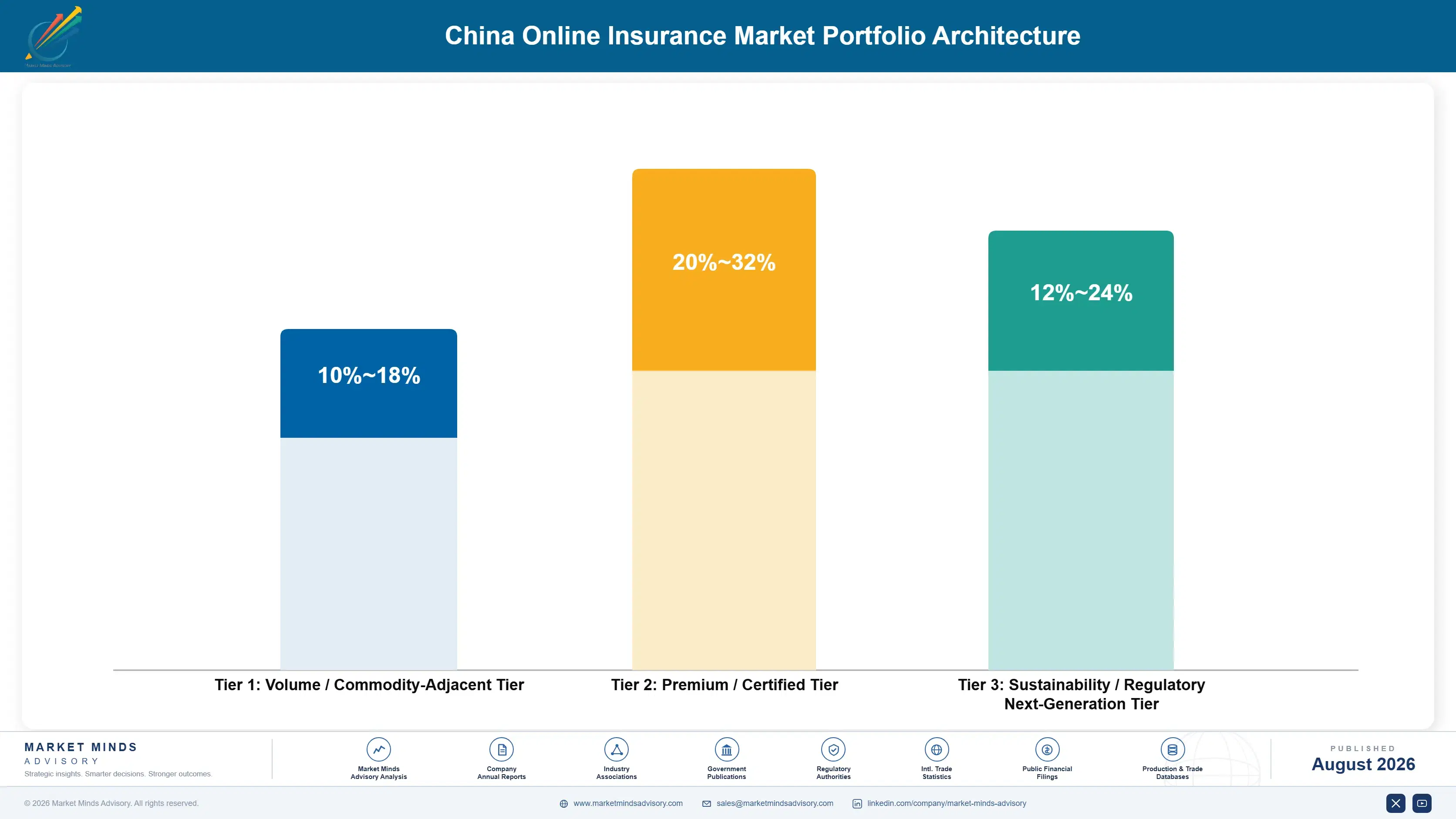
The portfolio splits into three tiers with meaningfully different margin economics. Volume standard digital comprehensive coverage, sold through commodity platform distribution, competes on price and integration terms, earning modestly. AI-driven underwriting and embedded micro-insurance earn substantially more because proprietary technology and platform relationships insulate margin from open competition. Emerging privacy-preserving underwriting sits in a third tier carrying strong margins as early regulatory positioning drives durable competitive advantage against slower-moving competitors.
The tension runs between volume and technology sophistication. Standard digital coverage generates the policy volume that keeps platform partnerships attractive, but margin stays thin since commission structures compress underwriting economics regardless of claims performance. AI-driven and embedded products carry the opposite constraint: strong margins but requiring sustained data science and integration investment that smaller insurers often cannot sustain.

High-value margin pools concentrate wherever proprietary technology meets platform distribution scale, which is precisely why AI-native insurers have historically outearned standard digital competitors despite serving overlapping customer populations. Embedded micro-insurance carries the most immediate upside right now, driven by genuine transaction volume growth rather than organic insurance demand alone. Insurers without comparable AI infrastructure increasingly struggle to defend margin as competitors capture the technology-driven upside first.

Volume / Commodity-Adjacent Tier

Standard digital comprehensive coverage sold through commodity platform distribution partnerships, competing primarily on integration terms and commission rates against a crowded field of digital-native and traditional insurers. The range reflects varying commission structures across different platform distribution partners.
Gross Margin: 10-18%

Premium / Certified Tier

AI-driven underwriting and embedded micro-insurance products requiring proprietary data science and platform integration, sold through direct technology relationships where sophistication insulates margin from open competition entirely. The wide range reflects technology maturity differences between established and newly developing AI underwriting programs.
Gross Margin: 20-32%

Sustainability / Regulatory / Next-Generation Tier

Privacy-preserving underwriting and next-generation compliance infrastructure still working through regulatory approval and technology maturation before consistent, predictable returns become fully achievable across major markets. The wide range reflects regulatory approval timing variance across markets rather than a single technology weakness.
Gross Margin: 12-24%
china-online-insurance-market-portfolio-architecture-1787915434812

High-value Sub-segments and Strategic Watch-out

AI-Driven Instant Underwriting and Claims Platforms

The fastest-growing and highest-value segment, driven directly by proprietary technology adoption beyond traditional underwriting. Zhong An and Ant Group both draw early advantage from model depth, and margin expansion continues as data infrastructure costs amortize across growing policy volume. Insurers entering later face steeper technology barriers.
Gross Margin: 20-32%

Embedded Micro-Insurance Distribution

Strong margins on transaction-context integration, growing steadily as platform partnerships expand globally. Growth trails AI underwriting because embedded product expansion moves more gradually than the acute technology transformation forcing faster movement elsewhere in the portfolio. Platform partnership depth increasingly determines who captures this incremental volume growth.
Gross Margin: 18-28%

Standard Digital Comprehensive Coverage

The volume core of the category, generating the bulk of policy count at stable, moderate margins. Zhong An, Ping An, and PICC compete intensely here on distribution reach, and while policy growth stays healthy, margin expansion is limited. Distribution partnership breadth increasingly determines who wins volume in this segment.
Gross Margin: 10-18%

Platform-Commission-Dependent Commodity Business

The strategic watch-out. Distribution commission inflation and platform consolidation threaten margin sustainability for insurers without differentiated technology or direct channel capability, facing rising acquisition cost and margin compression as platform bargaining power increases across the category. Insurers without technology differentiation face the steepest margin erosion in this tier.
Gross Margin: 0-16%

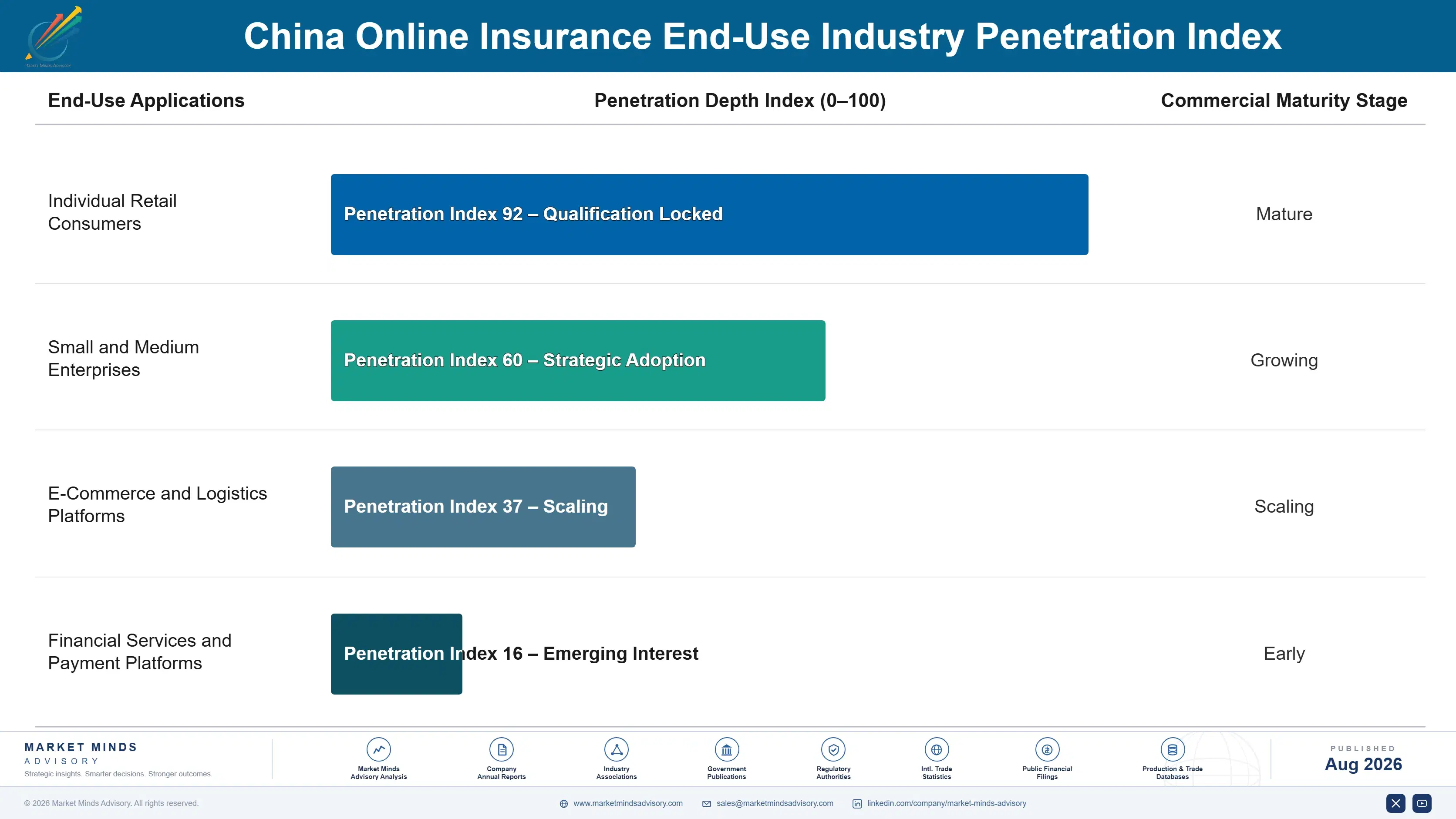
Transaction-Triggered Demand And Platform Loyalty

Online insurance increasingly runs on transaction-triggered rather than active-search demand, which makes platform placement at the moment of an unrelated purchase the single biggest lever on volume. A policy embedded into checkout captures far more purchases than one requiring active research, since most consumers never seek standalone digital insurance unless a specific need arises. China's super-app network converts routine payment activity into a recurring insurance touchpoint that operates independently of any single purchase decision.
Stickiness varies by product type and platform relationship. AI underwriting customers show meaningful engagement once onboarded, since personalized pricing and instant claims processing create switching friction beyond price alone. Embedded micro-insurance customers show almost no loyalty at all, since the checkout default rather than genuine preference drives most purchases. Standard digital comprehensive customers fall between these extremes, showing moderate loyalty tied to claims experience quality.

Younger consumers now expect insurance offered automatically during digital transactions rather than as a separate purchase decision, a meaningful shift from buyer expectations even a decade ago. This generational shift favors insurers with mature platform integration already built, while insurers still relying on traditional distribution face a widening gap with each new cohort of digitally native consumers entering the market.
china-online-insurance-market-end-use-penetration-index-1787915435299

How Digital Insurers Should Compete Next

These are among the four positions where our research anticipates prominent divergence between winners and laggards over the coming forecast period. Each is grounded in the demand model, the regulatory perimeter, and the announced capacity pipeline.
01 / PLATFORM INTEGRATION DEPTH

Secure exclusive super-app checkout placement before competitors

Embedded platform placement is proving to be the single most powerful acquisition channel digital insurance has ever had, converting passive transaction moments into active policy attach at a rate no standalone marketing campaign can approach. Insurers securing exclusive or preferred placement with dominant super-apps now will lock in volume advantages that later entrants attempting to negotiate similar arrangements will find considerably harder to replicate. Waiting for competitive pressure to force the move means starting from a materially weaker negotiating position.
02 / AI UNDERWRITING INVESTMENT

Build proprietary underwriting models before technology gaps compound further

AI-driven underwriting has already proven its considerable value well beyond initial pilot programs alone, and insurers still relying on traditional manual review are leaving both accuracy and cost gains on the table for faster-moving competitors to capture instead. The insurers that build proprietary model capability first will price risk and process claims faster than competitors relying on legacy underwriting infrastructure. That precision advantage compounds every additional data cycle it goes unmatched, widening the gap between leaders and laggards even further from here.
03 / COMPLIANCE POSITIONING STRATEGY

Treat data privacy compliance as a genuine competitive differentiator

Tightening data privacy rules are forcing every insurer to rebuild underwriting models eventually, but insurers moving early on privacy-preserving techniques can turn compliance into a genuine trust signal rather than treating it purely as a cost center. Transparent data practices build consumer trust that less-prepared competitors struggle to replicate through marketing alone, since trust compounds across repeated platform interactions in ways price competition cannot. Insurers treating compliance as pure cost rather than positioning opportunity will miss a meaningful differentiation window.
04 / EMBEDDED PRODUCT EXPANSION

Expand micro-insurance catalogs into new transaction contexts continuously

Embedded micro-insurance products capture genuinely incremental premium volume from consumers who would never actively seek standalone coverage otherwise, and insurers still limiting catalog breadth are leaving meaningful volume on the table for platforms willing to expand into new transaction contexts. Insurers building broad embedded catalogs now will capture distribution relationships that later entrants attempting similar expansion will find considerably harder to replicate. This expansion requires meaningful product development investment but carries minimal incremental distribution cost once platform integration already exists.

Engagement Snapshot From the Field

A live engagement with an industry participant carrying material or product regulatory and market exposure ahead of a defining policy shift, showing how our research translates into a defensible multi-year portfolio strategy.
MARKET MINDS ADVISORY · CLIENT ENGAGEMENT SUMMARY
China Online Insurance Producer Strategic Portfolio Review and Transition Roadmap 2026·Investment Scenario on China Online Insurance Exposure Evaluation 2025-26
CLIENT PROFILE
A mid-sized Southeast Asian insurer with an established traditional agent network but minimal digital or platform-embedded distribution presence. The client had observed regional competitors capturing significant volume through payment platform partnerships and wanted an independent assessment of digital transformation feasibility. Leadership sought clarity before committing meaningful capital to this transformation effort. The client operated primarily through traditional broker and agent channels across its home market.
STRATEGIC CHALLENGE
The client needed to determine whether investing in platform integration and AI underwriting capability was commercially justified given the multi-year infrastructure investment required, or whether partnership with an already-digital insurer offered a faster, lower-risk path to capturing this fast-growing distribution channel. Timing mattered given how quickly established regional competitors were expanding their own platform partnerships.
MMA APPROACH
MMA benchmarked platform integration timelines and investment against comparable regional insurers, modeled margin economics under direct build versus partnership scenarios, and assessed competitive positioning against leading digital-native insurers over a multi-week engagement involving stakeholder interviews and financial modeling. Findings were presented directly to the client's executive leadership team for a final go-forward decision.
KEY FINDINGS
  1. Direct platform integration timelines averaged 14 to 20 months from initial development to full operational capability across comparable regional insurers (client-reported, unverified by MMA).
  2. Partnership arrangements with already-integrated technology providers reportedly captured 55% of direct-build margin at roughly one-quarter the upfront investment (client-reported, unverified by MMA).
  3. AI underwriting model gaps represented the most significant capability barrier identified during the assessment, requiring specialized data science talent (client-reported, unverified by MMA).
  4. Modeling indicated partnership entry could reach positive contribution margin within 6 to 9 months versus 24 months or more for direct platform build (client-reported, unverified by MMA).
CLIENT PROFILE
A mid-sized Southeast Asian insurer with an established traditional agent network but minimal digital or platform-embedded distribution presence. The client had observed regional competitors capturing significant volume through payment platform partnerships and wanted an independent assessment of digital transformation feasibility. Leadership sought clarity before committing meaningful capital to this transformation effort. The client operated primarily through traditional broker and agent channels across its home market.
STRATEGIC CHALLENGE
The client needed to determine whether investing in platform integration and AI underwriting capability was commercially justified given the multi-year infrastructure investment required, or whether partnership with an already-digital insurer offered a faster, lower-risk path to capturing this fast-growing distribution channel. Timing mattered given how quickly established regional competitors were expanding their own platform partnerships.
MMA APPROACH
MMA benchmarked platform integration timelines and investment against comparable regional insurers, modeled margin economics under direct build versus partnership scenarios, and assessed competitive positioning against leading digital-native insurers over a multi-week engagement involving stakeholder interviews and financial modeling. Findings were presented directly to the client's executive leadership team for a final go-forward decision.
KEY FINDINGS
  1. Direct platform integration timelines averaged 14 to 20 months from initial development to full operational capability across comparable regional insurers (client-reported, unverified by MMA).
  2. Partnership arrangements with already-integrated technology providers reportedly captured 55% of direct-build margin at roughly one-quarter the upfront investment (client-reported, unverified by MMA).
  3. AI underwriting model gaps represented the most significant capability barrier identified during the assessment, requiring specialized data science talent (client-reported, unverified by MMA).
  4. Modeling indicated partnership entry could reach positive contribution margin within 6 to 9 months versus 24 months or more for direct platform build (client-reported, unverified by MMA).
RECOMMENDED STRATEGY
Phase 1: Phase one: pursue a technology partnership arrangement to capture near-term platform distribution volume with minimal upfront investment. This captures volume while longer-term capability decisions remain under evaluation. Phase 2: Phase two: build proprietary AI underwriting capability gradually, prioritizing the product categories showing strongest early partnership volume performance. This phased approach limits capital exposure while building genuine internal technology expertise. Phase 3: Phase three: evaluate direct platform integration once partnership volume and margin data justify the larger infrastructure investment required for full independence.
OUTCOME
The client proceeded with a technology partnership arrangement rather than pursuing direct platform build immediately. Early volume through the partnership channel reportedly exceeded initial projections within the first two quarters, and the client has since begun preliminary evaluation of proprietary AI underwriting investment (client-reported, unverified by MMA).

Frequently Asked Questions

Foundational context covering the market sizes, CAGR, scope, country, region and competition that inform every finding below. This section is provided to cover basics and most often pre-purchase conversations, answered from the MMA Primary Research Dataset.

What is the current size of the China Online Insurance Market?

The China Online Insurance Market reached an estimated $185.0 billion globally in 2025. This figure reflects total premium across AI-underwritten, embedded, and standard digital insurance channels.

How large will the China Online Insurance Market be by 2036?

MMA projects the market will reach approximately $594.7 billion by 2036, an expansion of roughly 2.89 times its 2026 base level over the decade-long forecast window.

What is the CAGR for the China Online Insurance Market 2026 to 2036?

The base case CAGR is 11.2% annually, with a bull scenario near 12.5% and a bear scenario near 9.9% depending on platform regulation and adoption trends.

Which segment is growing fastest?

AI-Driven Instant Underwriting and Claims Platforms lead at a 19.4% CAGR, roughly 1.73 times the overall market rate, driven by proprietary technology adoption across leading platforms.

Who are the major companies in the China Online Insurance Market?

Leading participants include Zhong An Online, Ping An Insurance, Ant Group Insurance Services, WeSure, and PICC Property and Casualty. Combined concentration among the top five sits at roughly 24%.

Which country is growing fastest?

India leads country-level growth at a 17.6% CAGR, reflecting rapid digital payment infrastructure expansion pulling hundreds of millions of previously uninsured consumers into formal coverage.

Report Segmentation Architecture

The full report scope spans multiple orthogonal segmentation dimensions, with cross-tabulated demand data provided for each dimension pair. Coverage extends further to regional breakdowns, trend trajectories, and the competitive detail needed to support segment-level decision-making.

By Primary Market Dimension

  • AI-Driven Instant Underwriting and Claims Platforms
  • Embedded Micro-Insurance Distribution
  • Standard Digital Comprehensive Coverage
  • Platform-Based Life and Health Insurance
  • Digital Commercial and SME Insurance

By End-Use Industry

  • Individual Retail Consumers
  • Small and Medium Enterprises
  • E-Commerce and Logistics Platforms
  • Financial Services and Payment Platforms

By Commercial Dimension

  • Super-App Embedded Distribution
  • Direct-to-Consumer Digital Distribution
  • Broker and Agent Digital Channels
  • Underwriting Technology Licensing

By Region

  • North America
  • Western Europe
  • East Asia
  • South Asia and Pacific
  • Latin America
  • Middle East and Africa
  • Eastern Europe

Scope, Methodology, and Coverage

Every figure in this report is reproducible from documented input assumptions. The scope below maps the historical period, the forecast horizon, the segmentation dimensions, and the countries covered, alongside the underlying primary and qualitative methodology.
Historical Period
2020 to 2025
Forecast Period
2026 to 2036
Base Year
2025 (USD billions; MMA Primary Research Dataset, August 2026)
Market Definition
This report covers insurance premium originated and serviced through digital platforms, including super-app embedded distribution, direct-to-consumer digital insurers, and AI-driven underwriting and claims platforms. It excludes traditional agent-sold policies merely digitized for payment processing, and non-insurance financial products distributed through the same platforms.
Quantitative Units
USD billions
Segmentation Dimensions
Regions Covered
North America, Western Europe, East Asia, South Asia and Pacific, Latin America, Middle East and Africa, Eastern Europe
Countries Covered
Key Companies Profiled
Zhong An Online, Ping An Insurance, Ant Group Insurance Services, WeSure, PICC Property and Casualty, China Life Insurance, Taikang Insurance Group, Sunshine Insurance Group, China Pacific Insurance, Acko General Insurance, Digit Insurance, PolicyBazaar, Lemonade, Root Insurance, Hippo Insurance, Bought By Many, Wefox, Getsafe, Alan, Bima
Quantitative Methodology
Primary survey, n=3,800 respondents, Q4 2025, six countries; demand-side model with trade association cross-validation
Qualitative Methodology
47 expert interviews, Q4 2025; applied to validate demand model assumptions, identify emerging dynamics, and assess competitive positioning
Report Format
PDF and XLSX data workbook (Word format preview document)
Publisher
Market Minds Advisory
Report Code
MMA-2026-TEC-208
Published
August 2026
Contact
sales@marketmindsadvisory.com | www.marketmindsadvisory.com

Purchase the full China Online Insurance Market Report (2026 to 2036).

This report delivers a complete assessment of the China Online Insurance Market, covering market sizing, segmentation, regional dynamics, and competitive positioning through 2036. It examines how super-app distribution scale and AI-driven underwriting adoption are reshaping acquisition and underwriting economics across the category. The analysis draws on primary survey data, expert interviews, and company disclosures to quantify segment-level growth and margin dynamics. Readers gain a data-grounded view of where competitive advantage is shifting and which strategic moves matter most over the coming decade. It also assesses how India's rapid digital payment growth is reshaping global competitive dynamics.
Ten-year market sizing and CAGR forecast
Segment-level growth and margin economics analysis
Regional demand mechanism and driver breakdown
Competitive landscape and moat durability assessment
Claims and platform distribution cost review
Strategic verdict and revenue lever guidance

Built For The People Who Decide

From boardroom strategy to bench-side execution, this report is read cover-to-cover by leaders shaping the next decade of their industry, turning demand scenarios, market dynamics and valuation benchmarks into decisions.
CXOs/ Presidents/ VPs/ Managers
M&A and Corporate Development
Strategy Teams and R&D Heads
Procurement and Product Directors
Regulatory and Compliance Leaders
Investor Relations and Equity Analysts