Market Minds Advisory
Asia-Pacific Challenger Banks Market

Asia-Pacific Challenger Banks Market: SME Digital Banking Redraws Regional Deposit Competition

Digital-only banks across Southeast Asia and Greater China are pivoting from retail deposit gathering toward underserved small business lending, forcing incumbent banks to defend a customer segment they long treated as unprofitable to serve properly.

Lead Analyst

Published

September 2026

Make Smarter Decisions with Customized Research Insights

Request a free sample report and evaluate market opportunities, growth trends, and competitive dynamics relevant to your business needs.

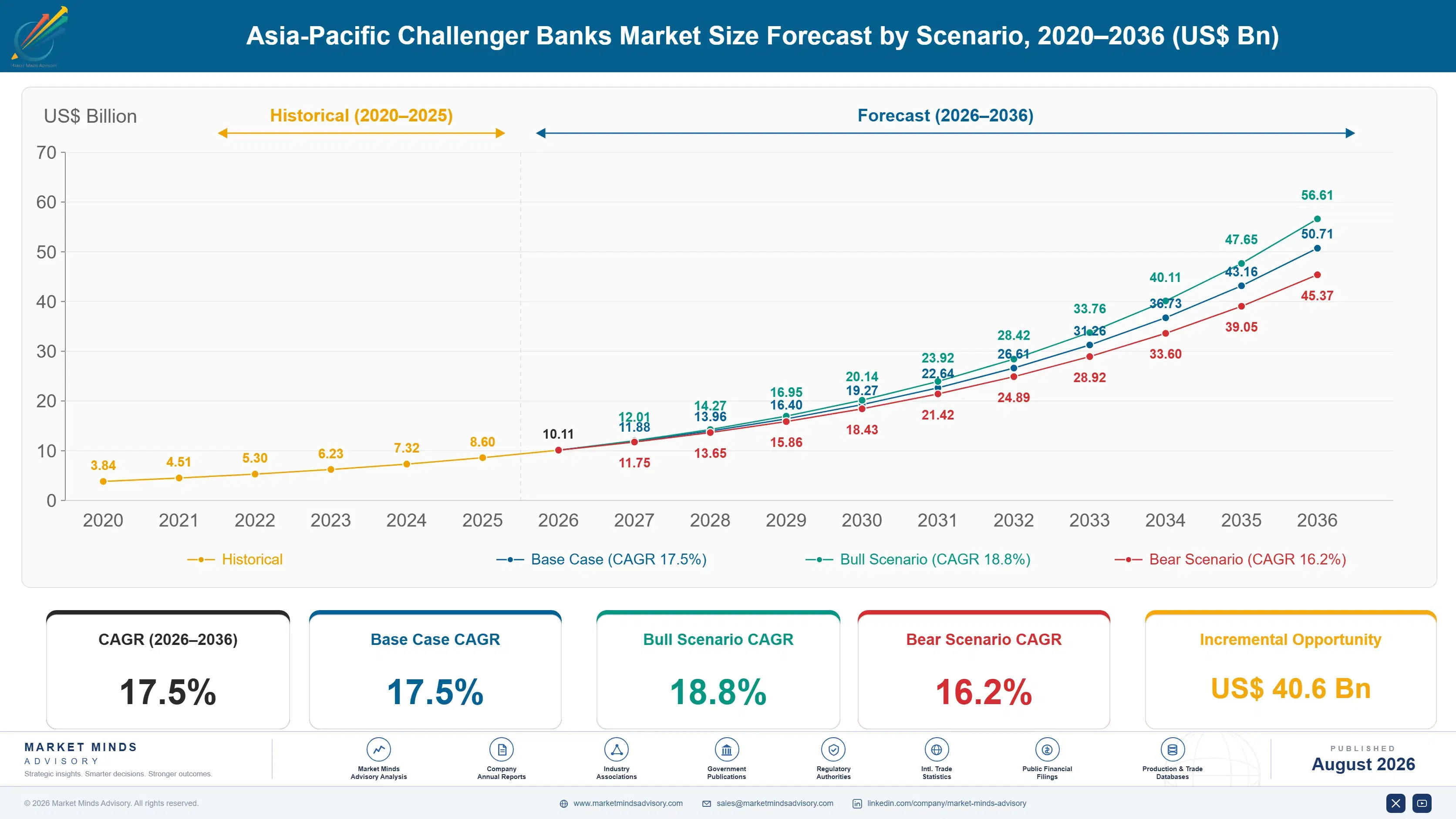
2025 MARKET VALUE$8.6BMarket Size 2025
2036 FORECAST VALUE$50.7BBase Case , 2026 to 2036
CAGR 2026 TO 203617.5 %Bull 18.8% / Bear 16.2%
INCREMENTAL OPPORTUNITY$40.6BNet 10- year value creation
EXPANSION MULTIPLE5.02x2036 value over 2026 base
Strategic Levers
M&A Pipeline
Regional Outlook
Country Rankings
Competitive Intelligence
Segmental Deep-dive
Call-Us : 91 93563 13602

Executive Snapshot and Market Trajectory

Asia-Pacific's challenger banks are pivoting decisively from retail deposit gathering toward small business lending, a segment incumbent banks have long underserved given thin margins on small account relationships, creating a genuine commercial opening few digital banks had built for at launch. Few incumbents had priced this risk into strategic planning.
SME and small business digital banking services are expanding fastest, growing at roughly 1.26 times the market's overall pace as digital banks apply low-cost underwriting models to a segment incumbents historically avoided. Embedded banking-as-a-service infrastructure follows closely behind, capturing platform economics beyond direct-to-consumer banking. East Asia and South Asia and Pacific jointly concentrate the substantial majority of this market's customer base, reflecting the genuinely region-wide scope of this market's digital banking adoption.
Competitive intensity is rising as bigtech-backed digital banks, telco-affiliated platforms, and traditional bank digital spinoffs all compete for the same expanding underserved customer base, while tightening regulatory capital requirements and rising customer acquisition costs are simultaneously reshaping which challenger models remain commercially viable at scale. Digital banks slow to adapt underwriting and distribution models risk losing ground to faster-moving bigtech-backed rivals across nearly every regional market.
Market Definition
This report covers deposit, lending, and payment products offered by digitally native, licensed challenger and virtual banks operating across Asia-Pacific markets, including embedded banking-as-a-service infrastructure supporting third-party platforms. It excludes traditional incumbent bank digital channels, unlicensed e-wallet products without banking licenses, and cryptocurrency exchange services, which fall outside the defined scope.
Base Year Value
$8.6B in 2025 (MMA Primary Research Dataset, August 2026)
Forecast Period
2026 to 2036, eleven discrete annual values
CAGR
17.5% base case. Bull 18.8%. Bear 16.2%.
Fastest Growth Segment
SME and Small Business Digital Banking Services: 22.0% CAGR
Fastest Growth Country
Vietnam: 21.0% CAGR
Fastest Growth Region
South Asia and Pacific: 19.5% CAGR
Largest Region
East Asia: 45% of 2025 global value
Market Leaders
WeBank, MyBank, Kakao Bank, Grab Financial Group, SeaBank. Source: MMA Primary Research Dataset, July 2026.
Primary Survey
n=3,800 procurement and R&D decision-makers, Q4 2025, six countries
Methodology
Demand-side build-up, cross-validated against public data, 47 expert interviews

Asia-Pacific Challenger Banks Market Forecast Scenarios

challenger-banks-in-asia-pacific-size-forecast-scenario-1787916962510
Asia-Pacific challenger bank revenue grew at an estimated 16.0 percent historical pace between 2020 and 2025, propelled by rapid digital banking license issuance across Singapore, Hong Kong, Malaysia, and the Philippines alongside strong smartphone-driven customer acquisition. Momentum accelerated further after 2023 as several early movers reached sustained profitability for the first time. Several markets saw multiple new digital bank licenses issued during this same period.
The base case assumes 17.5 percent annual growth through 2036, driven by three commercial mechanisms. First, expanding SME lending programs are capturing a segment incumbent banks chronically underserved given thin margins on small account relationships. Second, embedded banking infrastructure is letting challenger banks monetize platform economics beyond direct-to-consumer products. Third, continued digital banking license issuance across Vietnam, Indonesia, and Thailand is expanding the addressable market into markets still early in their adoption curve.
The bull case centers on faster-than-expected SME lending profitability across the region's largest digital banks. The bear case centers on tightening regulatory capital requirements following early digital bank credit losses, which could meaningfully slow new market entry and constrain aggressive growth strategies across smaller, less capitalized challengers specifically. Either scenario depends on how quickly regulators clarify long-term capital policy.

SME Lending Redraws Digital Bank Profitability Paths

Asia-Pacific's challenger bank industry sits at a genuine inflection point between customer acquisition and sustainable unit economics. Early challenger banks proved they could acquire customers cheaply through app-based onboarding, but converting that customer base into profitable lending relationships has proven considerably harder, pushing several digital banks to pivot toward SME lending specifically. Digital banks that misjudge SME lending economics risk repeating incumbent mistakes rather than genuinely solving the segment.
MARKET CONCENTRATION (CR5)32%Top five digital banks hold under half combined
AVERAGE CUSTOMER ACQUISITION COST18 USDTypical cost to acquire one new retail account
ACTIVE ACCOUNT PENETRATION RATE24%Share of adults holding an active digital bank account
SME LENDING BOOK SHARE19%Total lending volume directed toward small business borrowers
AVERAGE DEPOSIT BALANCE410 USDTypical retail account balance held across active users
PATH TO PROFITABILITY TIMELINE4.5 yearsTypical duration from launch to sustained bank profitability
Beneath the SME pivot story, the industry is absorbing genuine underwriting innovation. Digital banks are applying transaction data from linked payment platforms, particularly in markets where digital banks share ownership with e-commerce or ride-hailing platforms, to underwrite small business loans far faster than traditional collateral-based bank lending ever could. Digital banks without comparable platform data risk building slower, less accurate underwriting models.
Distribution economics are shifting too. Bigtech-affiliated digital banks with existing platform user bases are steadily outcompeting standalone digital bank licenses that must build customer acquisition entirely from scratch. Standalone challengers without a parent platform's existing user base risk losing the customer acquisition cost race to better-positioned bigtech-backed competitors. Standalone challengers without a parent platform's existing user base risk losing this efficiency race to better-positioned bigtech-backed rivals entirely.
"Every digital bank talks about serving the underbanked, but the ones actually turning a profit are the ones lending against real transaction data from a parent platform, not the ones just copying a neobank app template."
Director, Asia-Pacific Digital Banking Practice · MMA Technology Practice · August 2026

Market Trends

Digital Banks Pivot Toward Underserved SME Lending

Challenger banks across the region are pivoting decisively from pure retail deposit gathering toward small business lending, a segment incumbent banks have long avoided given thin margins on small account relationships and the operational cost of traditional collateral-based underwriting. WeBank and MyBank in China pioneered transaction-data-based SME underwriting models that approve loans in minutes rather than weeks, and similar approaches are spreading across Southeast Asian digital banks with platform ownership ties to e-commerce or logistics businesses. This pivot addresses a genuine gap, since small businesses consistently report difficulty accessing affordable credit through traditional channels.
Market Impact: Adds 3 new licensed markets annually
Embedded Banking Infrastructure Expands Platform Revenue

Digital banks are increasingly licensing their banking infrastructure to third-party platforms through embedded banking-as-a-service arrangements, letting e-commerce marketplaces and ride-hailing platforms offer branded financial products without obtaining their own banking license. This model converts banking infrastructure from a direct-to-consumer product into a wholesale revenue stream, meaningfully diversifying revenue beyond retail deposit and lending spreads alone. Grab Financial Group has expanded this model most aggressively across Southeast Asia, licensing infrastructure to smaller regional platforms lacking the scale to build banking capability independently. Smaller digital banks without comparable platform partnerships increasingly license third-party infrastructure rather than build comparable capability entirely in-house.
Market Impact: Expands addressable population by 18%

Market Opportunities and Growth Drivers

Expanding Digital Banking License Issuance Across New Markets

Financial regulators across Vietnam, Indonesia, and Thailand continue issuing new digital banking licenses, directly expanding the addressable market into economies still early in their digital banking adoption curve relative to more mature markets like Singapore and Hong Kong. Each new license issuance typically triggers a wave of well-capitalized entrants backed by regional bigtech or telecommunications companies, since these established firms already possess the customer base and brand recognition needed to acquire digital banking customers efficiently from day one of operations. Regulators typically favor these well-capitalized entrants over smaller applicants lacking comparable financial backing or operational track record.
Market Impact: Cuts growth 6 points

Rising Smartphone Penetration Expands Addressable Population

Continued smartphone penetration growth across lower-income and rural populations in emerging Southeast Asian markets is steadily expanding the population capable of accessing digital banking services for the first time, a population traditional branch-based banking never economically justified serving given low account balances and thin transaction volume. This expanding addressable population represents genuine incremental market growth rather than merely redistributing existing banked customers between competing providers. Digital banks that build localized, low-bandwidth-friendly app experiences are capturing this population more effectively than those designing purely for urban, high-bandwidth users. This population expansion represents genuine market growth rather than share redistribution.
Market Impact: Adds 18 months to profitability timeline

Market Restraints and Challenges

Tightening Capital Requirements Following Early Credit Losses

Regulators across several markets are tightening digital bank capital and loan loss provisioning requirements following early credit losses at pioneering digital banks that underestimated default risk in their initial lending models. The root cause is genuinely insufficient historical default data for entirely new underwriting approaches, not fundamentally flawed business models. The commercial impact constrains aggressive growth strategies for smaller, less capitalized challengers specifically. Digital banks are mitigating this through more conservative initial loan sizing and gradual credit limit expansion tied to demonstrated repayment behavior. Regulators across the region are watching these early adjustments closely before finalizing permanent capital frameworks.
Market Impact: Grows SME lending book 25% annually

Rising Customer Acquisition Costs Compress Path To Profitability

Customer acquisition costs have risen meaningfully as the number of competing digital banks in mature markets like Singapore and Hong Kong increases, compressing the unit economics that made early challenger bank business models attractive to investors. The root cause is straightforward market saturation in the most digitally mature markets specifically. The commercial impact extends the timeline to sustained profitability for later market entrants meaningfully. Digital banks are mitigating this through partnership-based distribution channels that reduce reliance on expensive direct digital marketing spend. Later entrants face higher acquisition costs than pioneers who established brand presence earlier.
Market Impact: Adds 14% platform infrastructure revenue
3 additional market trends, 2 additional growth drivers, and 3 additional restraints and challenges are covered in the full report. Contact sales@marketmindsadvisory.com to access the complete intelligence.

Segment CAGR and Growth Architecture

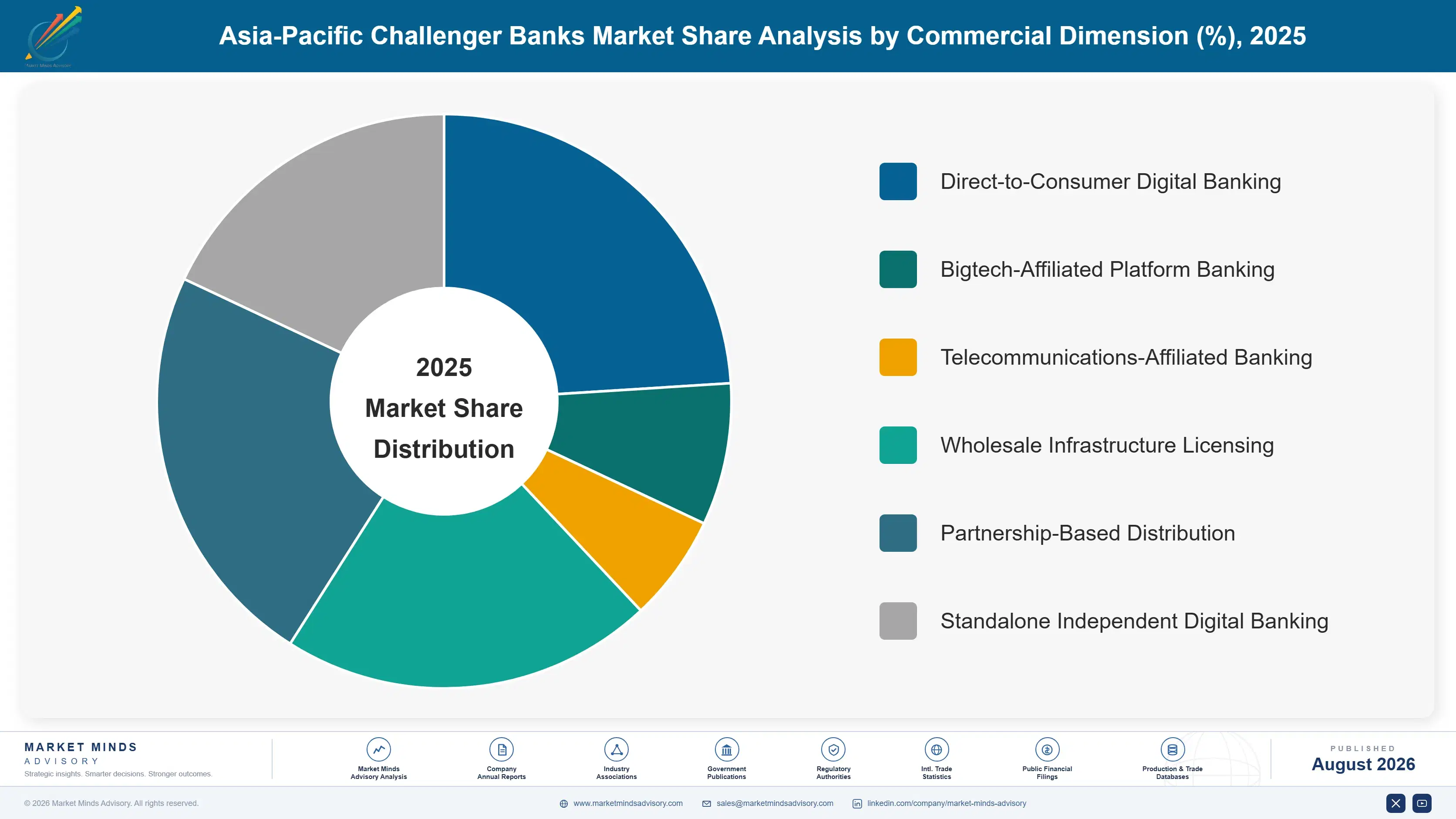
Asia-Pacific's challenger bank market segments most usefully by product and service line, spanning retail deposits, personal lending, SME banking, wealth management, embedded infrastructure, and cross-border payments, rather than by customer demographic or distribution channel alone. This lens keeps consumer-facing deposit and lending products distinct from wholesale infrastructure licensing and cross-border payment service innovations entirely.
challenger-banks-in-asia-pacific-market-share-analysis-1787916963044

SME and Small Business Digital Banking Services

SME and small business digital banking services are growing fastest, expanding at roughly 1.26 times the market's overall pace as digital banks apply low-cost, transaction-data-based underwriting models to a segment incumbent banks have long avoided given thin margins on small account relationships. WeBank and MyBank pioneered approval processes measured in minutes rather than weeks, and similar approaches are spreading across Southeast Asian digital banks with platform ownership ties to e-commerce or logistics businesses. This segment directly addresses a genuine market gap, since small businesses across the region consistently report difficulty accessing affordable credit through traditional bank channels given documentation and collateral requirements many cannot meet. Digital banks building this capability early convert a former blind spot into a durable advantage.
CAGR 22.0%

Embedded Banking-as-a-Service Infrastructure

Embedded banking-as-a-service infrastructure forms the second-fastest growing segment, propelled by digital banks licensing their core banking infrastructure to third-party platforms rather than serving only direct-to-consumer customers. Grab Financial Group has expanded this model most aggressively across Southeast Asia, licensing infrastructure to smaller regional platforms lacking the scale to build banking capability independently. This model converts banking infrastructure from a purely direct-to-consumer product into a wholesale revenue stream, meaningfully diversifying revenue beyond retail deposit and lending spreads alone. Digital banks without this infrastructure licensing capability increasingly risk ceding an entire wholesale revenue category to competitors who invested earlier in building genuinely reusable, platform-agnostic banking infrastructure. This wholesale model is becoming necessary as more platforms seek embedded financial products.
CAGR 20.5%
Full segment breakdown across 6 segments available in the complete report.

Regional Architecture and Country Demand Map

East Asia and South Asia and Pacific jointly concentrate the substantial majority of this market's activity, reflecting the genuinely region-wide Asia-Pacific scope of this report. No single country dominates the way a narrower national market would. North America and Western Europe reflect only investment exposure to this Asia-Pacific-scoped market.

East Asia

East Asia's 45% share sits well above the standard 22 to 30% band, and the deviation is intentional: this report is explicitly scoped to Asia-Pacific, and East Asia hosts several of the region's largest and most mature digital banks including WeBank, MyBank, and Kakao Bank. China's digital banking market alone, anchored by bigtech-backed WeBank and MyBank, represents enormous scale given the country's population and smartphone penetration. South Korea's Kakao Bank and K Bank add further meaningful volume, while Hong Kong's virtual banking licensees including WeLab Bank and ZA Bank contribute a smaller but genuinely mature market segment.The region's growth rate sits modestly above average, reflecting SME lending expansion even as consumer growth moderates.
Share: 45% | CAGR: 18.5% (2026 to 2036)

South Asia and Pacific

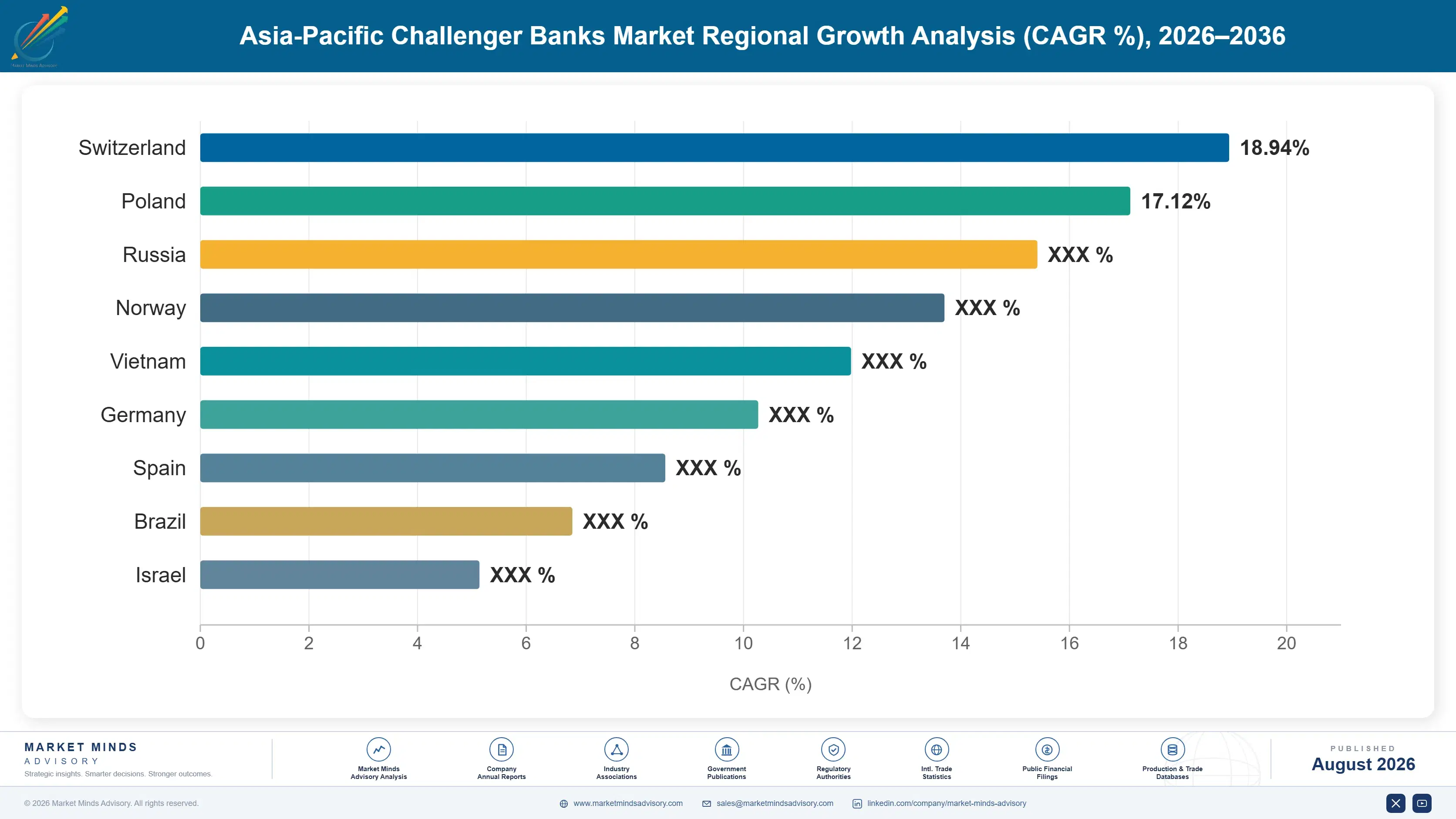
South Asia and Pacific's 35% share sits far above the standard 7 to 12% band, and the deviation is intentional for the same scope reason: this market is genuinely Asia-Pacific-wide, and this region hosts Southeast Asia's rapidly growing digital banking markets across Singapore, Malaysia, the Philippines, Indonesia, and Vietnam. Grab Financial Group and SeaBank anchor much of this volume, alongside Trust Bank Singapore and GXBank's rapid customer growth since launch. Vietnam and the Philippines show the fastest growth within the region as digital banking license issuance expands into markets still early in their adoption curve, while Australia's Judo Bank contributes a smaller, more mature SME-focused segment to the broader regional total.
Share: 35% | CAGR: 19.5% (2026 to 2036)
Regional intelligence for 5 additional markets available in the complete report: North America, Western Europe, Latin America, Middle East and Africa, Eastern Europe. Contact sales@marketmindsadvisory.com.
challenger-banks-in-asia-pacific-country-cagr-analysis-1787916963567

Capturing Revenue Beyond Retail Deposit Spreads

Revenue growth for Asia-Pacific challenger banks increasingly depends on moving beyond thin retail deposit spreads, since customer acquisition alone offers diminishing returns as competition intensifies across the region's most digitally mature markets. Digital banks that recognize this dynamic early are repositioning entire business models around SME lending and infrastructure licensing rather than pure retail deposit gathering alone.

Building Transaction-Data SME Underwriting Models Early

Digital banks that built transaction-data-based SME underwriting models ahead of competitors are capturing a genuine incumbent blind spot, approving small business loans in minutes using linked payment platform data rather than traditional collateral requirements. WeBank's SME lending book has reportedly grown 30 to 35 percent faster than its retail lending book since this pivot began. This approach converts a former underwriting limitation into a genuine competitive advantage for digital banks with platform ownership ties to e-commerce or logistics businesses generating rich transaction data. This capability increasingly separates digital banks gaining share from those losing ground on retail deposits alone.
Market Impact: Grows SME lending book 30 to 35 percent faster

Licensing Core Infrastructure To Third-Party Platforms

Digital banks that licensed their core banking infrastructure to third-party platforms through embedded banking-as-a-service arrangements are capturing meaningful wholesale revenue beyond direct-to-consumer banking. Grab Financial Group's infrastructure licensing division has reportedly added 15 to 20 percent incremental revenue beyond its own direct banking operations alone. This approach requires building genuinely reusable, platform-agnostic infrastructure rather than a system designed only for the digital bank's own direct customer base. This wholesale revenue stream increasingly determines which digital banks diversify successfully beyond retail banking spreads. Digital banks without this wholesale revenue stream increasingly struggle to justify continued investor funding at comparable growth valuations.
Market Impact: Adds 15 to 20 percent incremental wholesale revenue

Partnering With Distribution Channels To Cut Acquisition Cost

Digital banks that built partnership-based distribution channels through retail, telecommunications, and e-commerce partners are reducing reliance on expensive direct digital marketing spend that has driven up customer acquisition costs across mature markets. These partnerships reportedly cut acquisition costs by roughly 25 to 30 percent compared with paid digital marketing alone, since partner channels bring pre-qualified customer traffic at meaningfully lower incremental cost than cold digital advertising campaigns targeting unknown prospects. Partnership-based distribution increasingly separates digital banks with sustainable unit economics from those still burning cash on paid acquisition. Slower digital banks face worse acquisition economics as paid channels get pricier.
Market Impact: Cuts acquisition cost by 25 to 30 percent

Who Controls the Margin Pool

Asia-Pacific's challenger bank market remains fragmented, with a CR5 of 32 percent on an active customer basis held across WeBank, MyBank, Kakao Bank, Grab Financial Group, and SeaBank. WeBank and MyBank lead given their bigtech backing and China's enormous digital banking population, while Grab Financial Group and SeaBank compete across Southeast Asia's more fragmented, multi-country market structure.
Current competitive activity centers on SME underwriting model development, embedded infrastructure licensing expansion, and partnership-based distribution channel building. Digital banks are also racing to reach sustained profitability before investor patience for continued cash-burning growth strategies runs out across the sector broadly. Several digital banks are also pursuing selective partnerships with regional telecommunications and retail chains to expand distribution reach beyond their original launch markets and customer segments.

Emerging pressure comes from two directions. Newly licensed digital banks in Vietnam, Indonesia, and Thailand are entering with well-capitalized bigtech or telecommunications backing, while tightening regulatory capital requirements could reshape competitive rankings if smaller, less capitalized challengers struggle to meet new provisioning standards following early credit losses. Digital banks that fail to invest in either underwriting sophistication or partnership distribution risk being squeezed between well-capitalized new entrants and increasingly saturated mature markets.
challenger-banks-in-asia-pacific-company-positioning-matrix-1787916964090

Competitive Moat and Risk Dimensions

WEBANK

Moat: Deepest Tencent Platform Data Access

WeBank benefits from deep integration with Tencent's WeChat platform, giving it access to rich transaction and social data that supports fast, low-cost underwriting decisions competitors without comparable bigtech platform integration cannot easily replicate across comparable customer volume. Competitors without comparable platform data access must rely on slower, more traditional documentation-based underwriting approaches instead.
WEBANK

Risk: Concentrated Regulatory Policy Exposure

WeBank's business model depends heavily on continued favorable Chinese regulatory treatment of bigtech-affiliated digital banking and data-sharing arrangements, making it disproportionately exposed to shifts in Chinese fintech regulatory policy relative to independently licensed digital banks elsewhere in the region. Any tightening of Chinese data-sharing rules between bigtech platforms and their affiliated banks would directly affect WeBank's underwriting model.
GRAB FINANCIAL GROUP

Moat: Regional Multi-Country Platform Reach

Grab Financial Group benefits from Grab's existing ride-hailing and delivery platform user base across multiple Southeast Asian countries simultaneously, giving it distribution reach and transaction data spanning a broader geographic footprint than single-country digital bank competitors can match. This multi-country reach also diversifies Grab Financial Group's regulatory exposure across several distinct national markets simultaneously.
GRAB FINANCIAL GROUP

Risk: Exposure To Parent Platform Performance

Grab Financial Group's growth remains closely tied to Grab's core ride-hailing and delivery platform performance, making its banking division vulnerable to slowdowns or competitive pressure affecting the parent platform's broader mobility and delivery business across the region. A significant slowdown in ride-hailing demand or intensified competition from rival mobility platforms could meaningfully affect banking division growth.

Players Tracked

Prominent Players

WeBank
MyBank
Kakao Bank
Grab Financial Group
SeaBank

Other Key Players

Trust Bank Singapore
GXBank
Maya Bank
Tonik Digital Bank
K Bank
WeLab Bank
ZA Bank
Judo Bank
Line Bank Taiwan
Rakuten Bank
PT Bank Jago
Superbank
MoMo
Timo Digital Bank
Jenius Bank

Recent Developments

FEBRUARY 2026

WeBank Expands Transaction-Data SME Underwriting Model

WeBank expanded its transaction-data-based SME underwriting model to cover a broader range of small business categories beyond its original e-commerce merchant focus, adding manufacturing and services sector borrowers to its automated approval framework. The expansion reflects growing confidence in the underlying model's ability to generalize across categories.
Signal: Signals leading digital banks are now broadening SME underwriting scope well beyond original merchant categories entirely
DECEMBER 2025

Grab Financial Group Expands Infrastructure Licensing Partnerships

Grab Financial Group expanded its embedded banking infrastructure licensing partnerships to include several additional regional e-commerce platforms, letting these partners offer branded financial products without obtaining their own banking license or building compliance infrastructure independently. The partnerships target smaller regional platforms unable to justify building compliance capability independently.
Signal: Signals embedded banking infrastructure is quickly becoming a genuine wholesale revenue category across the entire region
SEPTEMBER 2025

GXBank Reaches Profitability Milestone In Malaysia

GXBank announced it reached sustained monthly profitability in the Malaysian market, becoming one of the region's fastest digital banks to achieve this milestone since launch, attributing the achievement to disciplined acquisition cost management and early SME lending. The milestone positions GXBank as proof disciplined entrants can compete against established rivals.
Signal: Signals disciplined newer entrants can now reach profitability meaningfully faster than earlier pioneering digital banks did

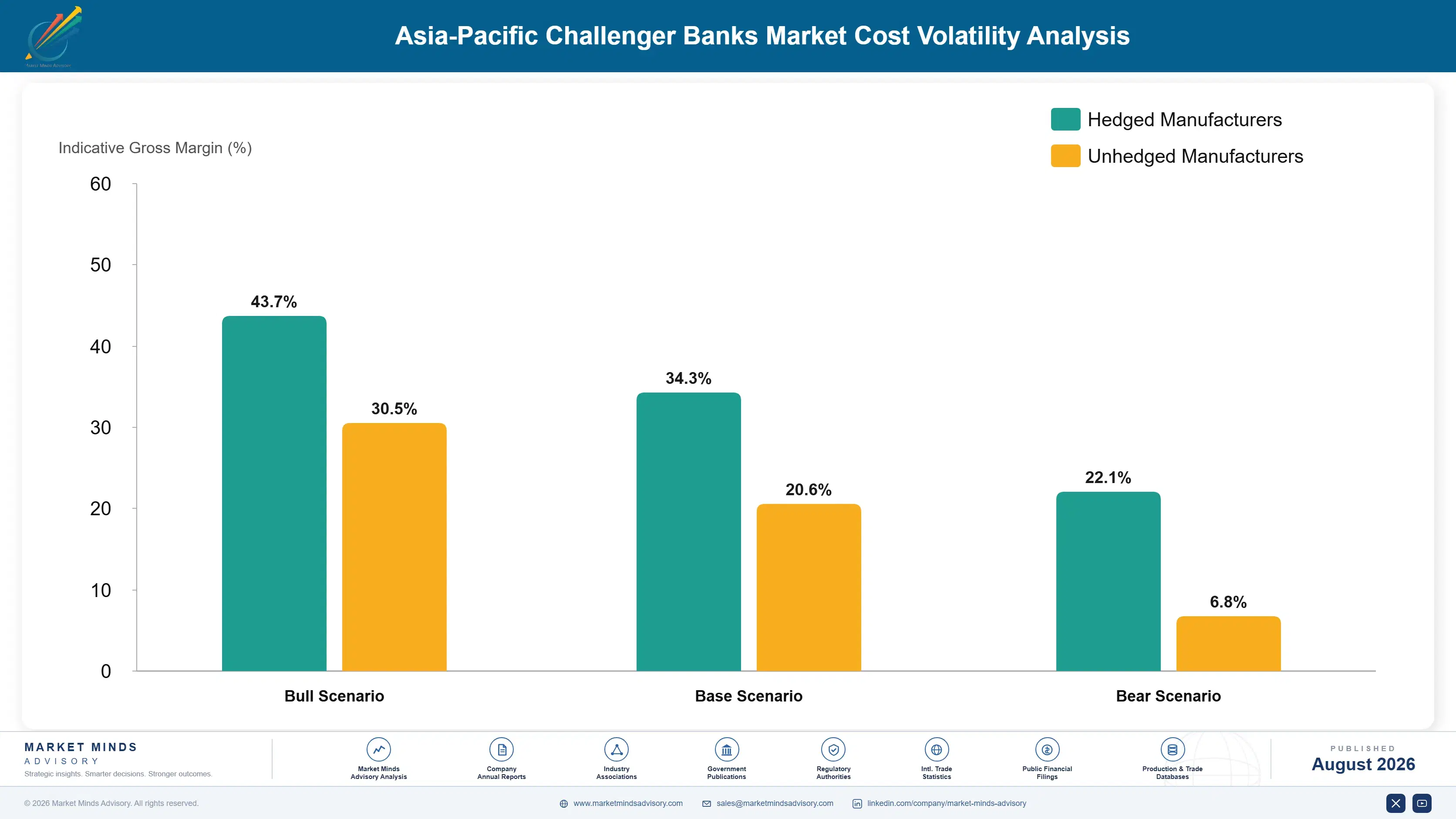
Customer Acquisition And Credit Provisioning Exposure

Customer acquisition spending and credit loss provisioning together represent the two largest cost inputs for Asia-Pacific digital banks, running roughly 50 to 60 percent of operating cost combined. Acquisition spending is sourced predominantly through digital advertising and partnership referral fees, while credit provisioning scales directly with default rates across still-maturing SME and consumer lending books.
The clearest recent volatility event was the 2024 credit loss spike at several pioneering digital banks whose early lending models underestimated default risk in unsecured personal loan portfolios. Several digital banks' 2025 investor communications disclosed materially higher provisioning requirements during the period, attributing much of the increase directly to insufficient historical default data for entirely new underwriting approaches lacking multi-year performance track records. Digital banks with diversified lending portfolios weathered this spike better than those concentrated narrowly in unsecured lending.

The competitive disadvantage mechanism falls disproportionately on smaller digital banks without bigtech platform backing, since they must spend considerably more on direct customer acquisition than competitors with an existing platform user base to convert. This exposure varies by market maturity too, since acquisition costs in Singapore and Hong Kong now run meaningfully higher than in still-developing markets like Vietnam and the Philippines.
challenger-banks-in-asia-pacific-cost-volatility-analysis-1787916964285

Partnering With Existing Platforms For Distribution

Digital banks without bigtech backing are partnering with existing retail, telecommunications, and e-commerce platforms for customer distribution, converting expensive direct acquisition spending into more efficient partnership-based referral arrangements with meaningfully lower per-customer cost. This approach has already meaningfully reduced acquisition cost for several digital banks that lack a large existing platform user base to draw from directly.

Adopting Conservative Initial Lending Limits

Digital banks are adopting more conservative initial lending limits for new borrowers, gradually expanding credit availability only as repayment behavior demonstrates genuine creditworthiness, reducing provisioning exposure while still building the transaction history needed for more sophisticated underwriting over time. This approach requires meaningful investor patience, but has proven more sustainable through recent credit cycles overall.

Pooling Credit Risk Data Across Regional Digital Banks

Several digital banks are exploring shared credit bureau and risk data pooling arrangements across regional markets, letting smaller players access better default risk insight than their own limited transaction history alone could provide, narrowing the underwriting sophistication gap against bigtech-backed competitors. Early data pooling pilots already show promising results improving default prediction for smaller digital banks.

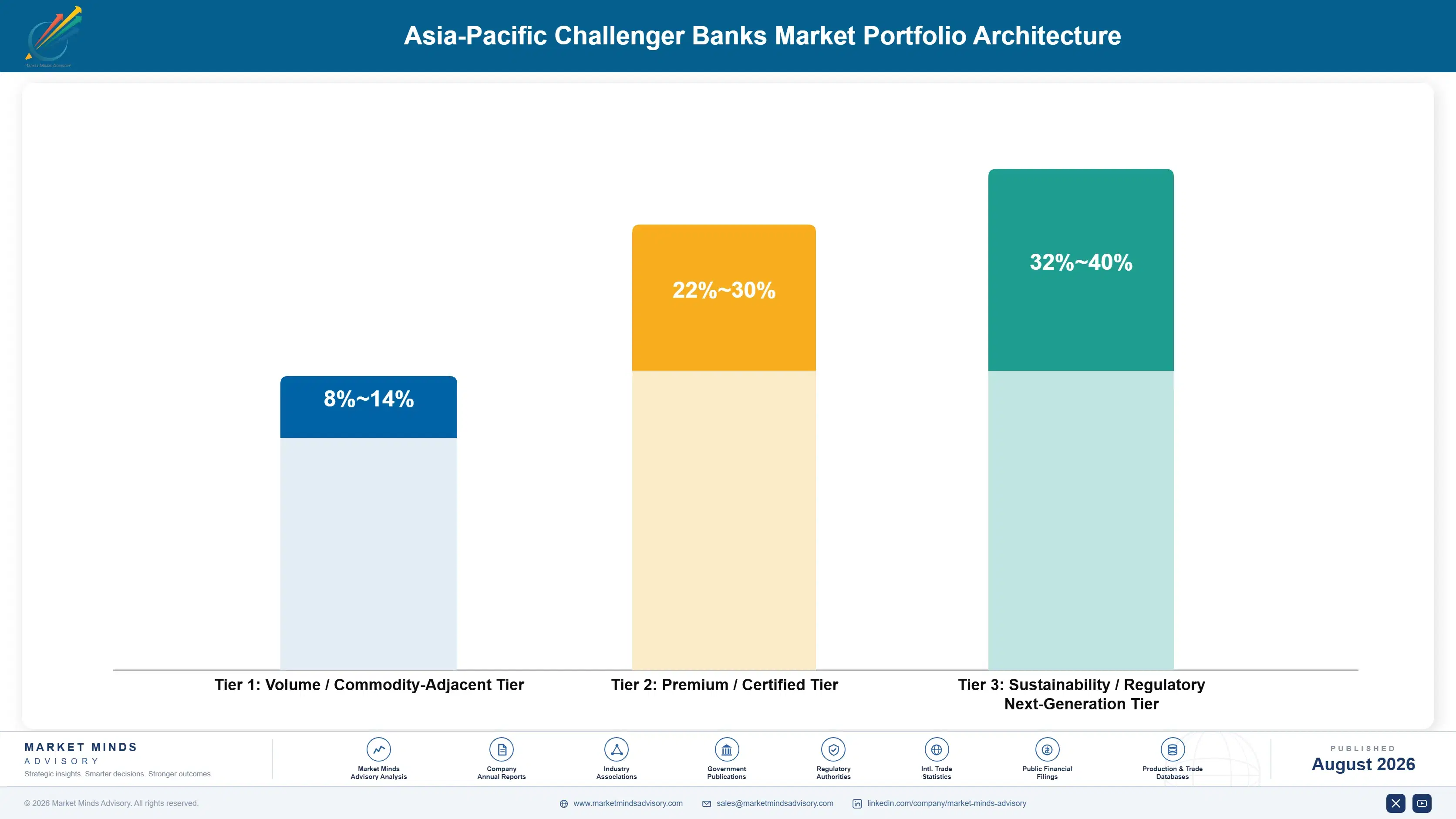
Portfolio Architecture for Margin Defence

Asia-Pacific challenger bank portfolios span three distinct economic tiers separated primarily by underwriting sophistication rather than product type alone. Basic retail deposit and payment products sold on convenience alone carry thin margins as competition intensifies among digitally mature markets. Digital banks competing purely on convenience in this tier face shrinking margins as app experience differentiation becomes increasingly commoditized across the industry.
Certified and premium tiers, including transaction-data-based SME lending and embedded infrastructure licensing, command materially better economics because they require data assets and platform integration competitors cannot replicate quickly. The highest value pool concentrates in wholesale infrastructure licensing and SME lending, where genuine advantage through data depth and platform reach drives the industry's widest margins. Digital banks building this capability early are converting former customer acquisition cost into a durable, defensible competitive position.

Volume-tier retail products remain necessary for maintaining overall customer scale and brand visibility, even though margin contribution lags behind premium and next-generation tiers substantially, creating an ongoing tension between defending broad consumer presence and reallocating capital toward higher-margin SME and infrastructure products. The digital banks managing this balance most effectively will likely define regional industry leadership over the next decade.

Volume / Commodity-Adjacent Tier

Basic retail deposit and payment products sold primarily on convenience and app experience, with margins compressed by intensifying competition in mature markets. Margins compress further as app comparison tools make switching between digital banks increasingly frictionless for consumers.
Gross Margin: 8-14%

Premium / Certified Tier

Transaction-data-based SME lending products requiring dedicated data infrastructure and underwriting model development that smaller competitors struggle to replicate quickly. These products carry lower price sensitivity given their embedded data infrastructure and specialized underwriting relationships.
Gross Margin: 22-30%

Sustainability / Regulatory / Next-Generation Tier

Embedded banking-as-a-service infrastructure licensing commanding the industry's highest margins through genuine platform reach and data differentiation. Digital banks investing here early are building platform relationships competitors will struggle to replicate quickly across comparable markets.
Gross Margin: 32-40%
challenger-banks-in-asia-pacific-portfolio-architecture-1787916964784

High-value Sub-segments and Strategic Watch-out

Transaction-Data SME Lending Products

Transaction-data SME lending products combine strong margin economics with the fastest growth in the market, converting a former incumbent blind spot into a genuine durable competitive advantage for well-positioned digital banks. Digital banks still focused solely on retail deposits risk missing this increasingly lucrative lending opportunity entirely.
Gross Margin: 26-34%

Embedded Banking Infrastructure Licensing

Embedded banking infrastructure licensing pairs solid margins with strong growth from third-party platform demand, offering a dependable combination without the volatility risk carried by earlier-stage next-generation products. Early movers building platform partnerships are establishing switching costs later entrants will struggle to overcome. This advantage compounds steadily over time.
Gross Margin: 24-32%

Standard Retail Deposit And Payment Products

Standard retail deposit and payment products remain the volume core of the industry, generating dependable customer engagement even as margins stay compressed by intensifying competition across mature regional markets. Digital banks should defend this base carefully even while shifting investment toward higher-margin SME and infrastructure products.
Gross Margin: 8-13%

Unsecured Personal Lending Without Platform Data

Unsecured personal lending without platform transaction data represents the industry's clearest strategic watch-out, since 2024's credit loss spike proved this underwriting approach carries meaningfully higher default risk than data-backed alternatives. Digital banks should tighten underwriting quickly rather than assume unsecured lending remains commercially viable without platform data.
Gross Margin: 5-11%

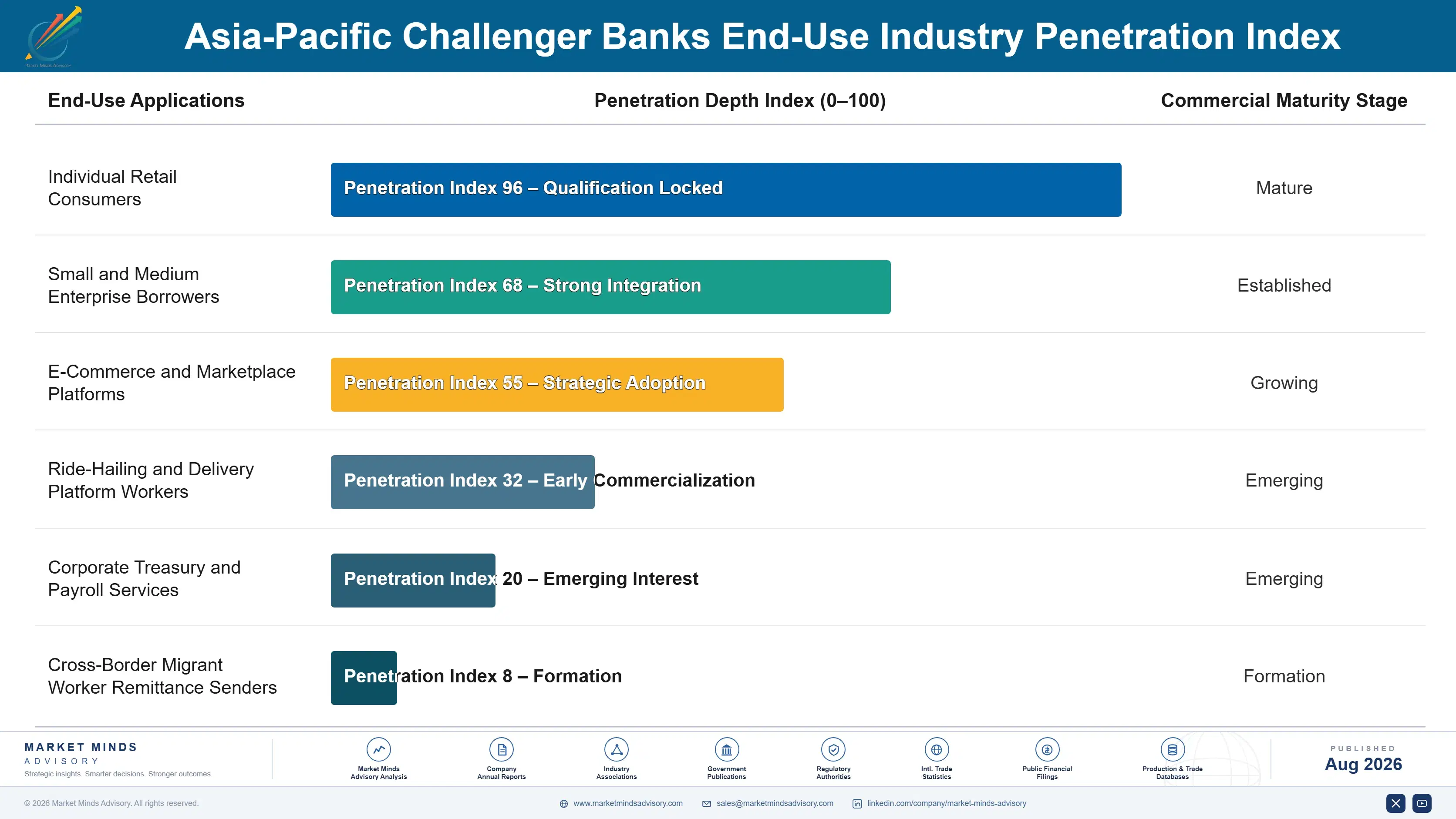
Platform-Anchored Recurring Banking Demand

Asia-Pacific digital banking demand carries meaningful annuity characteristics because active account relationships generate recurring transaction and interest revenue once a customer establishes their primary banking relationship, giving digital banks unusually predictable recurring revenue streams tied to ongoing deposit and payment activity. This recurring pattern strengthens further as customers add more products within the same digital banking relationship over time.
Stickiness varies meaningfully by end-use vertical, though. SME lending relationships show the deepest retention since switching lenders requires renegotiating credit terms and rebuilding transaction history, while individual retail account holders show comparatively shallower loyalty, with many maintaining accounts at multiple digital banks simultaneously and shifting primary balances based on promotional interest rates. First-time digital bank customers also show meaningfully more price sensitivity before comparable switching costs meaningfully increase over subsequent renewal cycles.

A generational buyer shift is also underway. Younger customers across the region increasingly treat digital-only banking as their default expectation rather than a novel alternative, prioritizing app experience and instant approval over the branch relationships that shaped banking decisions for prior generations of Asia-Pacific consumers. Digital banks slow to build comparable mobile-first experiences risk losing this expanding younger customer segment to faster, more convenient competitors entirely.
challenger-banks-in-asia-pacific-end-use-penetration-index-1787916965271

Where Digital Banks Should Focus Next

These are among the four positions where our research anticipates prominent divergence between winners and laggards over the coming forecast period. Each is grounded in the demand model, the regulatory perimeter, and the announced capacity pipeline.
01 / SME UNDERWRITING INVESTMENT

Build transaction-data SME underwriting before incumbents catch up

Digital banks still focused purely on retail deposits risk missing the fastest-growing segment in the entire market to competitors already applying transaction data directly to small business lending decisions. WeBank's SME lending book shows meaningfully faster growth than its own retail lending book since this strategic pivot began several years ago now. Digital banks that delay building this capability risk ceding a genuine incumbent blind spot permanently to faster-moving bigtech-backed rivals already investing heavily in this specialized underwriting capability today.
02 / INFRASTRUCTURE LICENSING EXPANSION

License core infrastructure before wholesale revenue window narrows

Digital banks without infrastructure licensing capability risk missing an entire wholesale revenue category entirely, as third-party platforms increasingly seek embedded banking partnerships rather than building banking compliance capability independently themselves. Grab Financial Group's licensing division already demonstrates meaningful incremental revenue growth well beyond its own core direct-to-consumer banking operations across multiple countries. Waiting risks ceding these lucrative partnership relationships permanently to competitors who invested earlier in reusable, genuinely platform-agnostic infrastructure built specifically for exactly this wholesale purpose from the outset.
03 / DISTRIBUTION PARTNERSHIP STRATEGY

Build partnership channels before acquisition costs rise further

Digital banks relying purely on direct digital marketing spend face steadily rising acquisition costs as competition keeps intensifying across the region's most digitally mature markets. Early partnership adopters report materially lower acquisition costs than competitors dependent entirely on paid digital marketing spend alone across nearly every regional distribution channel. Digital banks that delay building comparable partnership channels risk facing permanently worse unit economics than better-distributed rivals, especially as market saturation keeps deepening steadily across the region's most digitally mature markets today.
04 / CONSERVATIVE CREDIT RISK MANAGEMENT

Tighten underwriting discipline before the next credit cycle turns

Digital banks that underestimated default risk in their earliest lending models faced meaningful credit losses and subsequent regulatory scrutiny that better-disciplined competitors largely avoided entirely from the start. Conservative initial lending limits paired with gradual credit expansion proved considerably more resilient through the entire 2024 credit loss cycle specifically across most markets. Digital banks that maintain looser underwriting discipline risk facing tighter regulatory capital requirements imposed across the entire sector as a direct result of a few poorly managed competitors' earlier mistakes.

Engagement Snapshot From the Field

A live engagement with an industry participant carrying material or product regulatory and market exposure ahead of a defining policy shift, showing how our research translates into a defensible multi-year portfolio strategy.
MARKET MINDS ADVISORY · CLIENT ENGAGEMENT SUMMARY
Asia-Pacific Challenger Banks Producer Strategic Portfolio Review and Transition Roadmap 2026·Investment Scenario on Asia-Pacific Challenger Banks Exposure Evaluation 2025-26
CLIENT PROFILE
The client was a regional Southeast Asian e-commerce marketplace serving small and medium merchant sellers across three countries, seeking to offer merchants embedded working capital loans and payment products without obtaining its own banking license or building compliance infrastructure independently from scratch. The marketplace processed roughly two billion dollars in annual gross merchandise value across its three-country footprint.
STRATEGIC CHALLENGE
Marketplace leadership needed to determine which embedded banking infrastructure provider offered the best combination of merchant underwriting sophistication, integration speed, and revenue-sharing terms, while ensuring the partnership would not create conflicting merchant experience across the platform's existing seller tools. Leadership also needed to estimate realistic revenue-sharing economics before committing to any single infrastructure partner exclusively.
MMA APPROACH
MMA benchmarked candidate embedded banking infrastructure providers across underwriting model sophistication, integration timeline, and revenue-sharing structures, drawing on primary interviews with platform executives at comparable regional marketplaces that had already completed similar embedded banking partnership integrations. The assessment also reviewed publicly disclosed merchant satisfaction data from comparable embedded banking partnership launches across the region.
KEY FINDINGS
  1. One candidate provider's transaction-data underwriting model approved merchant loans meaningfully faster than competitors relying on traditional documentation review (client-reported, unverified by MMA).
  2. Integration timelines varied substantially across candidate providers, directly affecting how quickly the marketplace could launch the embedded lending product to merchants. Faster integration mattered meaningfully given the marketplace's competitive pressure to launch quickly.
  3. Revenue-sharing terms proved more negotiable than initially expected once the marketplace demonstrated meaningful transaction volume and merchant engagement data. This flexibility gave the marketplace meaningfully more leverage in final contract negotiations.
  4. Marketplaces that rushed embedded banking launches without adequate merchant education reported lower adoption rates than those investing in onboarding support. This pattern held consistently across nearly every comparable marketplace surveyed regardless of country.
CLIENT PROFILE
The client was a regional Southeast Asian e-commerce marketplace serving small and medium merchant sellers across three countries, seeking to offer merchants embedded working capital loans and payment products without obtaining its own banking license or building compliance infrastructure independently from scratch. The marketplace processed roughly two billion dollars in annual gross merchandise value across its three-country footprint.
STRATEGIC CHALLENGE
Marketplace leadership needed to determine which embedded banking infrastructure provider offered the best combination of merchant underwriting sophistication, integration speed, and revenue-sharing terms, while ensuring the partnership would not create conflicting merchant experience across the platform's existing seller tools. Leadership also needed to estimate realistic revenue-sharing economics before committing to any single infrastructure partner exclusively.
MMA APPROACH
MMA benchmarked candidate embedded banking infrastructure providers across underwriting model sophistication, integration timeline, and revenue-sharing structures, drawing on primary interviews with platform executives at comparable regional marketplaces that had already completed similar embedded banking partnership integrations. The assessment also reviewed publicly disclosed merchant satisfaction data from comparable embedded banking partnership launches across the region.
KEY FINDINGS
  1. One candidate provider's transaction-data underwriting model approved merchant loans meaningfully faster than competitors relying on traditional documentation review (client-reported, unverified by MMA).
  2. Integration timelines varied substantially across candidate providers, directly affecting how quickly the marketplace could launch the embedded lending product to merchants. Faster integration mattered meaningfully given the marketplace's competitive pressure to launch quickly.
  3. Revenue-sharing terms proved more negotiable than initially expected once the marketplace demonstrated meaningful transaction volume and merchant engagement data. This flexibility gave the marketplace meaningfully more leverage in final contract negotiations.
  4. Marketplaces that rushed embedded banking launches without adequate merchant education reported lower adoption rates than those investing in onboarding support. This pattern held consistently across nearly every comparable marketplace surveyed regardless of country.
RECOMMENDED STRATEGY
Phase 1: Phase one launched the embedded lending product with a subset of high-volume merchant sellers as an initial pilot. to validate underwriting performance before broader rollout. Phase 2: Phase two expanded the product to the broader merchant base once pilot underwriting performance was confirmed as reliable. once pilot lending performance was confirmed as reliable. Phase 3: Phase three introduced additional embedded financial products including merchant savings accounts based on demonstrated demand. to deepen the overall merchant banking relationship further.
OUTCOME
The marketplace successfully launched its embedded lending product within the recommended timeline and reported meaningfully improved merchant retention and platform transaction volume within the first two quarters of operation (client-reported, unverified by MMA). Leadership credited the phased rollout with building merchant trust gradually rather than risking a disruptive full launch.

Frequently Asked Questions

Foundational context covering the market sizes, CAGR, scope, country, region and competition that inform every finding below. This section is provided to cover basics and most often pre-purchase conversations, answered from the MMA Primary Research Dataset.

What is the current size of the Asia-Pacific Challenger Banks Market?

The Asia-Pacific challenger banks market reached an estimated 8.6 billion dollars in 2025. Growth has been propelled by expanding digital banking license issuance and rising SME lending adoption.

How large will the Asia-Pacific Challenger Banks Market be by 2036?

The market is projected to reach approximately 50.69 billion dollars by 2036. This reflects sustained SME lending expansion and embedded infrastructure licensing growth through the forecast period.

What is the CAGR for the Asia-Pacific Challenger Banks Market 2026 to 2036?

The base case CAGR is 17.5 percent annually. Bull and bear scenarios range between 16.2 and 18.8 percent depending on the pace of SME lending profitability.

Which segment is growing fastest?

SME and small business digital banking services lead at 22.0 percent CAGR, roughly 1.26 times the overall market pace. Transaction-data-based underwriting is the primary driver behind this segment's acceleration.

Who are the major companies in the Asia-Pacific Challenger Banks Market?

Leading providers include WeBank, MyBank, Kakao Bank, Grab Financial Group, and SeaBank. These five digital banks hold a combined 32 percent share on an active customer basis.

Which country is growing fastest?

Vietnam leads at an estimated 21.0 percent CAGR. Expanding digital banking license issuance and rapid smartphone adoption across the country's growing population are driving this above-average pace.

Report Segmentation Architecture

The full report scope spans multiple orthogonal segmentation dimensions, with cross-tabulated demand data provided for each dimension pair. Coverage extends further to regional breakdowns, trend trajectories, and the competitive detail needed to support segment-level decision-making.

By Primary Market Dimension

  • Retail Digital Deposit and Savings Accounts
  • Digital Personal Lending and Buy Now Pay Later Products
  • SME and Small Business Digital Banking Services
  • Digital Wealth Management and Investment Products
  • Embedded Banking-as-a-Service Infrastructure
  • Cross-Border Digital Remittance and Payments Services

By End-Use Industry

  • Individual Retail Consumers
  • Small and Medium Enterprise Borrowers
  • E-Commerce and Marketplace Platforms
  • Ride-Hailing and Delivery Platform Workers
  • Corporate Treasury and Payroll Services
  • Cross-Border Migrant Worker Remittance Senders

By Commercial Dimension

  • Direct-to-Consumer Digital Banking
  • Bigtech-Affiliated Platform Banking
  • Telecommunications-Affiliated Banking
  • Wholesale Infrastructure Licensing
  • Partnership-Based Distribution
  • Standalone Independent Digital Banking

By Region

  • North America
  • Western Europe
  • East Asia
  • South Asia and Pacific
  • Latin America
  • Middle East and Africa
  • Eastern Europe

Scope, Methodology, and Coverage

Every figure in this report is reproducible from documented input assumptions. The scope below maps the historical period, the forecast horizon, the segmentation dimensions, and the countries covered, alongside the underlying primary and qualitative methodology.
Historical Period
2020 to 2025
Forecast Period
2026 to 2036
Base Year
2025 (USD billions; MMA Primary Research Dataset, August 2026)
Market Definition
This report covers deposit, lending, and payment products offered by digitally native, licensed challenger and virtual banks operating across Asia-Pacific markets, including embedded banking-as-a-service infrastructure supporting third-party platforms. It excludes traditional incumbent bank digital channels, unlicensed e-wallet products without banking licenses, and cryptocurrency exchange services.
Quantitative Units
USD billions (revenue, current prices); active account counts in millions where cited.
Segmentation Dimensions
Primary Market Dimension (product and service line); End-Use Industry; Commercial Dimension.
Regions Covered
North America, Western Europe, East Asia, South Asia and Pacific, Latin America, Middle East and Africa, Eastern Europe
Countries Covered
China, South Korea, Singapore, Malaysia, Philippines, Indonesia, Vietnam, Hong Kong, Australia, Japan, Taiwan, Thailand, USA, UK, UAE.
Key Companies Profiled
WeBank, MyBank, Kakao Bank, Grab Financial Group, SeaBank.
Quantitative Methodology
Primary survey, n=3,800 respondents, Q4 2025, six countries; demand-side model with trade association cross-validation
Qualitative Methodology
47 expert interviews, Q4 2025; applied to validate demand model assumptions, identify emerging dynamics, and assess competitive positioning
Report Format
PDF and XLSX data workbook (Word format preview document)
Publisher
Market Minds Advisory
Report Code
MMA-2026-TEC-107
Published
August 2026
Contact
sales@marketmindsadvisory.com | www.marketmindsadvisory.com

Purchase the full Asia-Pacific Challenger Banks Market Report (2026 to 2036).

This report delivers a complete strategic assessment of the Asia-Pacific challenger banks market through 2036. It combines primary survey data from 3,800 respondents across six countries with 47 expert interviews conducted in the fourth quarter of 2025. Coverage spans market sizing, six-segment MECE product line segmentation, competitive benchmarking across twenty profiled companies, and regional analysis across all seven global regions. The analysis is designed to support product strategy, SME lending investment, and infrastructure licensing decisions. Buyers gain a structured basis for evaluating SME lending investment against continued infrastructure licensing opportunities.
Six-segment MECE digital banking product line breakdown
Seven-region market sizing with country-level detail
Twenty-company competitive benchmarking and moat analysis
SME lending pivot impact quantification and scenarios
Embedded infrastructure licensing and distribution investment guidance
Anonymized client case study with recommended strategy phases

Built For The People Who Decide

From boardroom strategy to bench-side execution, this report is read cover-to-cover by leaders shaping the next decade of their industry, turning demand scenarios, market dynamics and valuation benchmarks into decisions.
CXOs/ Presidents/ VPs/ Managers
M&A and Corporate Development
Strategy Teams and R&D Heads
Procurement and Product Directors
Regulatory and Compliance Leaders
Investor Relations and Equity Analysts