Market Minds Advisory
Catheter-Associated Urinary Tract Infections (CAUTI) Treatment Market

Catheter-Associated Urinary Tract Infections (CAUTI) Treatment Market: The Drugs That Matter Most Sell The Least

Stewardship programmes exist to restrict the newest gram-negative agents, and they work. Two companies holding approved antibiotics went bankrupt anyway, which tells you everything about how this market rewards the products it most needs.

Lead Analyst

Alice Ballenger

Published

September 2026

Make Smarter Decisions with Customized Research Insights

Request a free sample report and evaluate market opportunities, growth trends, and competitive dynamics relevant to your business needs.

2025 MARKET VALUE$1.7BMarket Size 2025
2036 FORECAST VALUE$3.4BBase Case , 2026 to 2036
CAGR 2026 TO 20366.4 %Bull 7.7% / Bear 5.1%
INCREMENTAL OPPORTUNITY$1.6BNet 10- year value creation
EXPANSION MULTIPLE1.86x2036 value over 2026 base
Strategic Levers
M&A Pipeline
Regional Outlook
Country Rankings
Competitive Intelligence
Segmental Deep-dive
Call-Us : 91 93563 13602

Executive Snapshot and Market Trajectory

This market punishes the products it needs most. A novel gram-negative agent costs well over a billion dollars to develop properly and is then deliberately withheld by the same hospitals that spent twenty years asking for it, because antimicrobial stewardship exists precisely to preserve whatever still works.
The market reaches USD 1.7 billion in 2025 and compounds at 6.4% to USD 3.36 billion by 2036, an expansion multiple of 1.86 times. Beta-lactam and beta-lactamase inhibitor combinations grow fastest at 9.6%, exactly 1.50 times the market rate, as carbapenem resistance widens across gram-negative isolates. East Asia holds 29% of value on Chinese hospital antibiotic consumption and resistance rates among the highest recorded anywhere in the world.
Concentration sits at 41% across the top five, splitting a handful of novel agent owners against a very large generic field, which is where most of the actual treatment happens. Reimbursement penalties tied to reported infection rates have quietly changed how hospitals define, code, and count these cases at all. Recorded incidence has therefore fallen a good deal faster than the underlying biology of this disease can plausibly explain on its own.
Market Definition
The catheter-associated urinary tract infections treatment market covers antibacterial pharmacotherapy used to treat urinary tract infection arising in patients with an indwelling, intermittent, or suprapubic urinary catheter, spanning beta-lactam and beta-lactamase inhibitor combinations, siderophore and novel cephalosporins, carbapenems, extended-spectrum cephalosporins, aminoglycosides and polymyxins, and fluoroquinolones and oral legacy agents. Antimicrobial and hydrophilic catheters, prevention bundles, urine culture and diagnostic testing, catheter insertion products, and community-acquired urinary tract infection are excluded.
Base Year Value
$1.7B in 2025 (MMA Primary Research Dataset, August 2026)
Forecast Period
2026 to 2036, eleven discrete annual values
CAGR
6.4% base case. Bull 7.7%. Bear 5.1%.
Fastest Growth Segment
Beta-Lactam And Beta-Lactamase Inhibitor Combinations: 9.6% CAGR
Fastest Growth Country
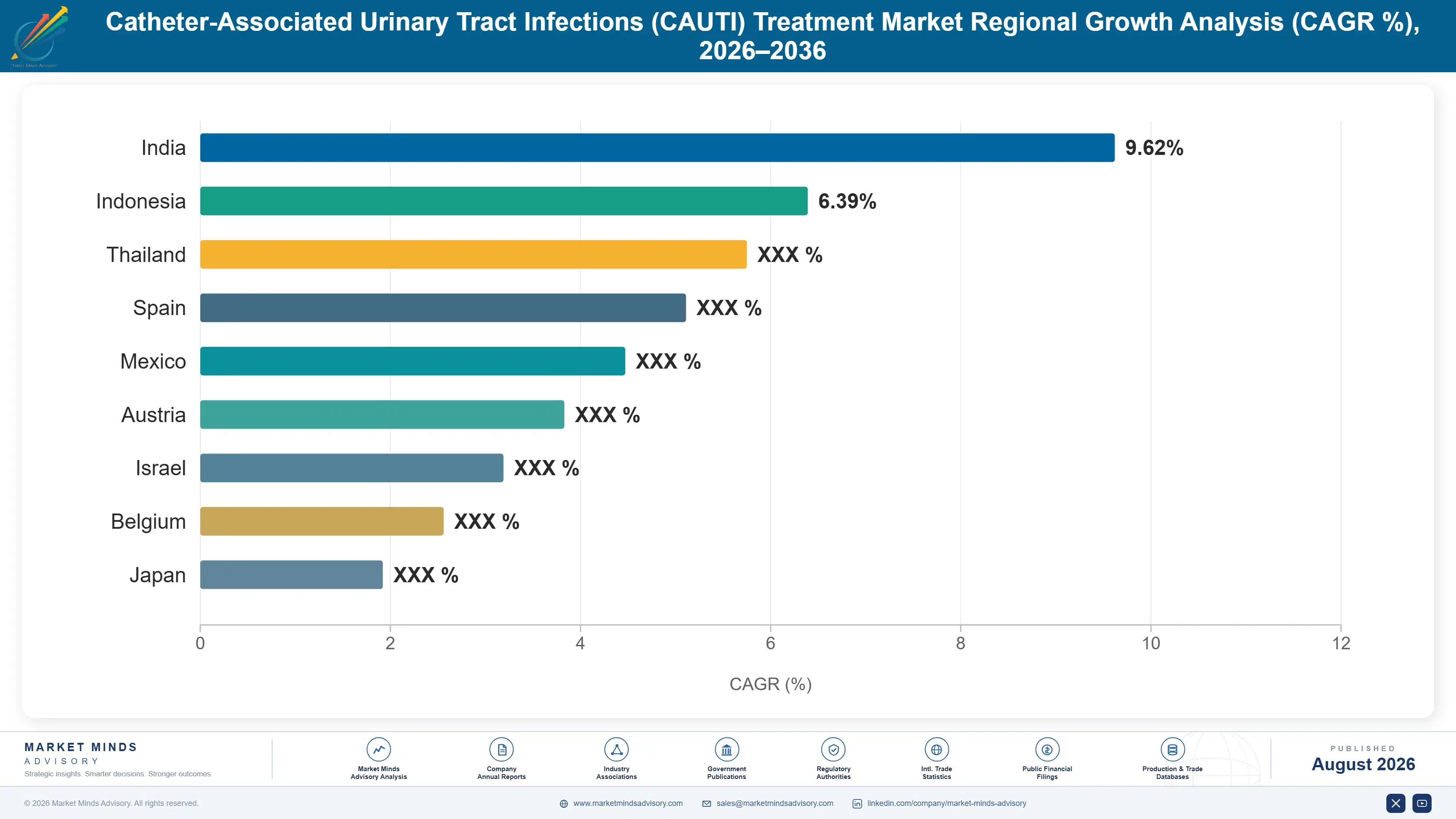
India: 9.8% CAGR
Fastest Growth Region
South Asia and Pacific: 8.6% CAGR
Largest Region
East Asia: 29% of 2025 global value
Market Leaders
Pfizer, Merck and Co, Shionogi, Menarini Group, Melinta Therapeutics. Source: MMA Primary Research Dataset, July 2026.
Primary Survey
n=3,800 procurement and R&D decision-makers, Q4 2025, six countries
Methodology
Demand-side build-up, cross-validated against public data, 47 expert interviews

Catheter-Associated Urinary Tract Infections (CAUTI) Treatment Market Forecast Scenarios

catheter-associated-urinary-tract-infections-cauti-size-forecast-scenario-1787298169334
The 2020 to 2025 period distorted both sides of this market. Intensive care occupancy rose sharply through the pandemic and catheter days with it, pushing infection volume up, while elective surgery collapsed and removed a large block of routine catheterisation. Novel agents launched into hospitals with no capacity to evaluate them. A 5.2% historical CAGR conceals a volume shock in both directions and steady resistance progression underneath.
Three mechanisms carry the 6.4% base case. Resistance progression is the largest, since roughly 34% of causative organisms now resist first-line therapy and each step up the treatment ladder costs an order of magnitude more. Surgical volume recovery is the second, restoring the routine catheterisation that generates most of the cases. And Asian novel agent access is the third, as domestic manufacturers bring newer combinations within reach of provincial hospital formularies.
The 7.7% bull case rests on pull incentives such as subscription payment models spreading beyond the United Kingdom and Japan, which would decouple novel agent revenue from restricted unit volume and change the entire development calculation. The 5.1% bear case is prevention succeeding, since catheter reduction programmes genuinely work and each avoided catheter day removes infection risk permanently rather than deferring it.

Restricted By Design, Priced By Hope

The commercial logic of antibacterial development inverts everything that works in the rest of pharmaceuticals. A novel gram-negative agent costs comparable money to develop, wins approval on the strength of activity against resistant organisms, and is then locked behind an infectious diseases approval requirement at roughly 76% of hospitals. That restriction is correct clinical practice. It is also why Achaogen and Melinta both entered bankruptcy owning approved antibiotics.
TOP FIVE CONCENTRATION41%Novel agent owners against a very large generic field
CATHETER UTILISATION RATE18%Share of hospital inpatients carrying an indwelling urinary catheter
INFECTIONS PER THOUSAND DAYS3.1Cases arising per thousand days of catheter placement
RESISTANT ISOLATE SHARE34%Portion of causative organisms resistant to first-line therapy
NOVEL AGENT COSTUSD 4,200Price of a full course using a newer gram-negative agent
STEWARDSHIP RESTRICTION RATE76%Share of hospitals requiring approval before newer agents are used
Most treatment never touches those products. Around two thirds of catheter-associated infections respond to generic agents costing a few dollars a course, and the resistant third is where the entire novel agent market lives. A single course of a newer combination runs near USD 4,200 against a few dollars for a fluoroquinolone. That price gap is why resistance progression, not case volume, drives market value.
Reporting requirements have quietly reshaped the data everyone models from. Where reimbursement penalties attach to reported infection rates, hospitals responded by tightening culture ordering, revising catheter documentation, and applying surveillance definitions more strictly. Recorded incidence fell. Antibiotic consumption for suspected urinary infection in catheterised patients did not fall nearly as much, which is the tell.
"Hospitals asked the industry for new gram-negative agents for twenty years. The industry delivered several, and hospitals then built approval committees specifically to stop anybody using them. Both sides were entirely right, and two companies went bankrupt in between."
Director, Anti-Infectives And Hospital Therapeutics Practice · MMA Healthcare Pr

Market Trends

Subscription Payment Models Decouple Revenue From Volume

The United Kingdom and Japan have both implemented payment arrangements that reward antibacterial availability rather than units dispensed, paying a fixed annual sum for access to an agent whether hospitals use it or not. That directly addresses the contradiction at the centre of this market, where the correct clinical behaviour is to use as little of a product as possible. Several other health systems are evaluating comparable schemes. For developers, a subscription converts an unbankable revenue line into something a board can actually plan against, which changes whether the next agent gets funded at all.
Market Impact: Resistance reaches 34% of isolates
Reporting Penalties Reshape How Infections Get Counted

Where reimbursement penalties attach to reported catheter-associated infection rates, hospitals have responded by tightening urine culture ordering criteria, revising catheter documentation practice, and applying surveillance definitions with considerably more care. Recorded incidence fell substantially across every one of those systems. Antibiotic consumption for suspected urinary infection in catheterised patients fell far less, which suggests measurement rather than biology moved. Anybody sizing this market from reported infection statistics alone will underestimate real treatment volume by a meaningful margin. The gap between recorded cases and antibacterial consumption has widened steadily wherever penalties apply.
Market Impact: 3.1 cases per thousand days

Market Opportunities and Growth Drivers

Carbapenem Resistance Forces Escalation To Costlier Agents

Carbapenem-resistant Enterobacterales and resistant Pseudomonas now account for a substantial and rising share of catheter-associated isolates, particularly across South and East Asian intensive care units. Each step up the treatment ladder multiplies cost by roughly an order of magnitude, from a few dollars for a fluoroquinolone to around USD 4,200 for a newer combination course. Roughly 34% of causative organisms already resist first-line therapy, and the proportion has climbed every year. Market value therefore grows through clinical escalation rather than through any increase in the number of patients being treated.
Market Impact: Restriction applies at 76% hospitals

Surgical Volume Recovery Restores Routine Catheter Days

Most urinary catheters are placed for surgery, critical care monitoring, or urinary retention rather than for anything related to infection, and catheter days are what actually generate cases. Elective surgical backlogs accumulated during the pandemic are now being worked through across most developed systems, restoring the routine catheterisation volume that had disappeared. Around 18% of all hospital inpatients carry a urinary catheter at any given moment. Infection volume follows that utilisation closely, at roughly 3.1 cases per thousand catheter days, and the relationship holds across health systems with very different practice patterns.
Market Impact: Catheter days cut 30 percent

Market Restraints and Challenges

Stewardship Programmes Restrict The Products Worth Selling

Roughly 76% of hospitals require infectious diseases approval before a newer gram-negative agent can be dispensed, which caps unit volume on precisely the products carrying commercial value. The root cause is that antibacterial effectiveness is a shared resource depleted by use, so restraint is genuinely correct practice rather than any procurement tactic. Commercially it has bankrupted companies holding approved products. Participants are mitigating through subscription and availability-based payment arrangements, through hospital outcome data supporting earlier appropriate use, and through rapid diagnostics that identify resistant organisms within hours rather than days.
Market Impact: Schemes pay USD 20 million yearly

Prevention Programmes Remove Cases Rather Than Deferring Them

Catheter avoidance protocols, daily necessity reviews, and nurse-led removal programmes genuinely reduce catheter days, and each avoided day removes infection risk permanently rather than postponing it. The root cause is simply that most catheters remain in place considerably longer than clinical need requires. Commercially this shrinks the addressable population in precisely those health systems paying the highest treatment prices. Mitigation runs toward resistant infection where prevention cannot help, toward long-term care and outpatient settings where catheter use has proved far harder to reduce, and toward emerging markets with rising resistance.
Market Impact: Reported incidence fell 25 percent
3 additional market trends, 4 additional growth drivers, and 2 additional restraints and challenges are covered in the full report. Contact sales@marketmindsadvisory.com to access the complete intelligence.

Segment CAGR and Growth Architecture

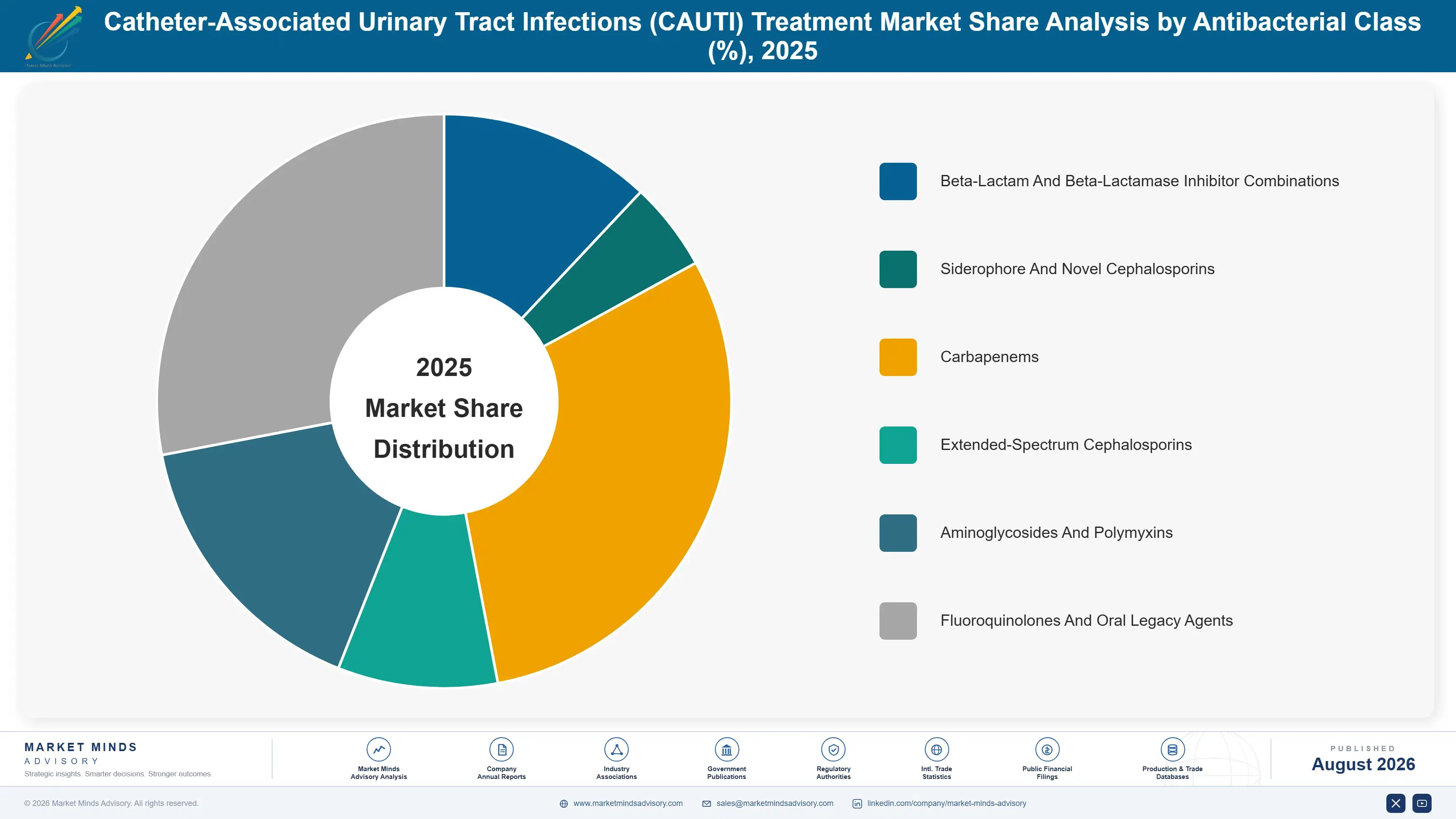
Segmentation follows antibacterial class, because class determines the resistance mechanisms an agent defeats, the stewardship restriction it attracts, the price a hospital pays, and whether the supplier is an innovator or a generic manufacturer. Care setting, organism type, and route of administration are handled in the framework and in commentary rather than being treated as segments here.
catheter-associated-urinary-tract-infections-cauti-market-share-analysis-1787298169874

Beta-Lactam And Beta-Lactamase Inhibitor Combinations

These combinations grow fastest at 9.6%, exactly 1.50 times the market rate, pairing an established beta-lactam with an inhibitor that disables the enzymes conferring resistance. Ceftazidime with avibactam, ceftolozane with tazobactam, meropenem with vaborbactam, and cefepime with enmetazobactam all sit here, and each addresses a somewhat different resistance profile rather than competing directly head to head. Course pricing near USD 4,200 makes this the commercial centre of the market despite modest unit volume. Stewardship restriction bites hardest on exactly these agents, which is the whole commercial problem of this market stated in a single sentence. Chinese and Indian manufacturers have begun supplying comparable combinations at a fraction of originator pricing.
CAGR 9.6%

Siderophore And Novel Cephalosporins

Siderophore cephalosporins grow at 8.7%, using bacterial iron transport systems to carry the antibiotic across the outer membrane, which defeats the porin loss and efflux mechanisms that block conventional agents. Cefiderocol is the established example and it holds activity against organisms where almost nothing else works, including carbapenem-resistant Acinetobacter. That positioning makes it a genuine last-line agent, which in turn means the most restricted use of any product in this whole market. Volume stays small deliberately. Where a hospital genuinely has no alternative, price sensitivity effectively disappears, which is what supports the economics of this segment. Availability payment arrangements suit last-line agents better than any other part of the market.
CAGR 8.7%
Full segment breakdown across 6 segments available in the complete report.

Regional Architecture and Country Demand Map

Regional value here is set by two things pulling against each other: how many catheter days a health system generates, and what its hospitals pay when first-line therapy fails. Asia contributes both the case volume and the resistance burden, while Western health systems contribute most of the pricing.

East Asia

East Asia holds 29% of value, the largest share of any region, and Chinese hospital antibiotic consumption explains most of it. Bed volume is enormous, intensive care catheter utilisation runs high, and carbapenem-resistant Klebsiella rates in Chinese hospitals are among the highest recorded anywhere in the world. Domestic manufacturers including Qilu, CSPC, and Hengrui now supply newer combinations at prices that put them within reach of provincial hospital formularies. Japanese and Korean practice is far more conservative, with tighter stewardship and lower consumption per bed. Prevention programmes are considerably less developed than in North America. Growth at 7.4% exceeds the global rate on resistance escalation rather than on any rise in case volume.
Share: 29% | CAGR: 7.4% (2026 to 2036)

South Asia and Pacific

Fastest growth in this forecast sits in South Asia and Pacific at 8.6%, and its 13% share exceeds the 12% ceiling this framework applies because Indian resistance rates and hospital catheter practice together generate demand no other region matches per bed. Carbapenem resistance in Indian intensive care units is widespread enough that colistin and polymyxin use became routine years before it did elsewhere. Domestic manufacturers supply almost everything used here, which keeps course costs low even as treated volumes climb. Australian practice follows conservative Western stewardship convention. Southeast Asian hospitals sit somewhere between those two extremes on both practice and pricing. Growth at 8.6% is the fastest in this forecast.
Share: 13% | CAGR: 8.6% (2026 to 2036)
Regional intelligence for 5 additional markets available in the complete report: North America, Western Europe, Latin America, Middle East and Africa, Eastern Europe. Contact sales@marketmindsadvisory.com.
catheter-associated-urinary-tract-infections-cauti-country-cagr-analysis-1787298170398

Earning From Drugs Nobody Should Overuse

The central problem is that correct clinical practice and commercial success point in opposite directions here, so every workable lever separates revenue from unit volume or moves value to where restriction does not apply. Payment reform, diagnostic pairing, geographic weighting, and outpatient positioning each do that. Four follow, and none of them involves persuading a stewardship committee to relax.

Pursue Availability-Based Payment Rather Than Unit Pricing

Subscription arrangements in the United Kingdom and Japan pay a fixed annual sum for guaranteed access to an antibacterial regardless of how many courses a hospital dispenses, which removes the exact contradiction that has already bankrupted two companies holding approved products. Annual payments in the existing schemes run between USD 3 million and USD 20 million per agent in each participating country. Securing a scheme early establishes the reference terms other health systems then negotiate against, which matters considerably more over time than the value of that first contract does.
Market Impact: Pays USD 3 to 20 million per year

Pair Novel Agents With Rapid Resistance Diagnostics

Stewardship restriction exists because clinicians cannot tell early enough which patients genuinely need a newer agent, so they withhold it from everybody until cultures return two or three days later. Rapid molecular resistance testing collapses that window to a few hours and converts empirical caution into targeted appropriate use. Sponsoring diagnostic access at hospital partners costs roughly USD 90 per test and can raise appropriate early use by a third without any stewardship committee needing to change its written policy. Clinicians consistently name diagnostic speed rather than price as the restriction driver.
Market Impact: Testing costs roughly USD 90 per patient tested

Weight Investment Toward Asian Resistance Burden

Roughly 42% of global catheter-associated infection volume arises in East Asia and South Asia combined, and resistance rates there exceed anything recorded in Western hospitals. Commercial organisations built around North American and European pricing consistently underinvest in exactly those markets, year after year. Partnering with domestic manufacturers on local production converts an unaffordable Western price into a viable regional one, and it captures share in exactly the geographies where escalation demand is growing fastest by a very wide margin. Domestic manufacturers are already taking those positions where originators have not moved.
Market Impact: Covers 42% of global infection case volume worldwide

Position Oral Step-Down For Long-Term Care Settings

Acute hospitals have cut catheter days substantially over a decade, while long-term care, rehabilitation, and home settings have not moved at all, and those patients need oral treatment options rather than intravenous courses that require a hospital bed. An oral agent with useful gram-negative activity avoids admission costs of roughly USD 9,000 per episode, which is an argument any payer understands immediately. This is also the one part of the market where stewardship restriction operates loosely, because no infectious diseases committee anywhere reviews a nursing home prescription before it is dispensed.
Market Impact: Avoids roughly USD 9,000 per avoided hospital admission

Who Controls the Margin Pool

Concentration at 41% across the top five overstates how much of this market the leaders actually control, because most treatment happens with generics they do not sell. All participants here are compared on measured global revenue from antibacterial products used in catheter-associated urinary infection, which requires apportioning broad-spectrum agents across indications and is the only basis placing an innovator and a generic injectable supplier on comparable terms.
Competition among novel agents is unusual in that the products barely compete. Ceftazidime with avibactam, ceftolozane with tazobactam, meropenem with vaborbactam, and cefiderocol each cover somewhat different resistance mechanisms, so a hospital formulary carries several rather than choosing one. Pfizer and Merck hold the broadest positions. Shionogi occupies the last-line position with cefiderocol. Menarini and Melinta compete in narrower niches with correspondingly narrower commercial bases.

Pressure is arriving from domestic Asian manufacturers rather than from Western competitors. Qilu, CSPC, and Hengrui have brought newer combinations to Chinese hospitals at prices that make provincial formulary listing possible, and Indian producers are following. Rankings will shift on whichever companies secure subscription payment arrangements across multiple health systems, since that determines who can fund the next generation of agents at all.
catheter-associated-urinary-tract-infections-cauti-company-positioning-matrix-1787298170957

Competitive Moat and Risk Dimensions

PFIZER

Moat: Breadth Across Resistance Mechanism Coverage

Pfizer holds several agents covering different gram-negative resistance mechanisms, which lets it supply a hospital formulary across the escalation ladder rather than competing for one slot on it. Hospitals building empirical protocols prefer suppliers who can cover multiple scenarios with consistent support. That breadth also spreads the commercial risk that restriction places on any single product.
PFIZER

Risk: Restricted Volume Undermines Portfolio Returns

Every product in this portfolio faces deliberate restriction at roughly three quarters of hospitals, which caps volume regardless of clinical merit or promotional effort. Anti-infectives compete for internal capital against oncology and vaccines with far better volume economics. Sustaining investment in a category the company's own customers work to use sparingly is a difficult argument to keep winning internally.
MERCK AND CO

Moat: Established Hospital Anti-Infective Relationships

Decades of hospital anti-infective supply have built formulary relationships, microbiology engagement, and stewardship committee credibility that a newer entrant cannot assemble quickly. In a market where products reach patients through committee approval rather than prescriber choice, that institutional access is the distribution channel. Surveillance programmes the company funds also shape how resistance data reaches those committees.
MERCK AND CO

Risk: Asian Domestic Manufacturer Displacement

Chinese and Indian manufacturers now supply newer combinations at prices that make hospital formulary listing viable across the regions where resistance burden and case volume are both growing fastest. Western pricing cannot follow them there. The company's position is strongest in exactly the mature markets where prevention programmes are shrinking the treated population year by year.

Players Tracked

Prominent Players

Pfizer
Merck and Co
Shionogi
Menarini Group
Melinta Therapeutics

Other Key Players

GSK
AbbVie
Cipla
Sun Pharmaceutical Industries
Aurobindo Pharma
Hikma Pharmaceuticals
Fresenius Kabi
Sandoz
Teva Pharmaceutical Industries
Qilu Pharmaceutical
CSPC Pharmaceutical Group
Hengrui Pharmaceuticals
Wockhardt
Venatorx Pharmaceuticals
Basilea Pharmaceutica

Recent Developments

JANUARY 2025

Japanese Authorities Extend Antimicrobial Availability Payment Scheme

Japan extended its availability-based payment arrangement to additional antibacterial agents, paying suppliers a fixed sum for guaranteed access rather than for units dispensed. The scheme is a reimbursement mechanism rather than any partnership or procurement contract, and it covers agents active against carbapenem-resistant gram-negative organisms.
Signal: Payment reform is now the only mechanism that makes restricted-use antibacterials commercially survivable for their developers
APRIL 2025

Chinese Manufacturer Launches Domestic Beta-Lactamase Inhibitor Combination

A Chinese pharmaceutical manufacturer launched a domestically produced beta-lactam and beta-lactamase inhibitor combination into provincial hospital formularies at pricing well below imported equivalents. The launch followed domestic regulatory approval and was an organic commercial expansion rather than any licensing arrangement with an originator company holding the class.
Signal: Local production makes clinical escalation affordable in exactly those markets now carrying the heaviest resistance burden
AUGUST 2025

United States Hospitals Report Continued Catheter Day Reductions

National surveillance data showed further reductions in urinary catheter utilisation across United States acute care hospitals, continuing a decade-long trend driven by reimbursement penalties tied to reported infection rates. Long-term care and rehabilitation settings showed no comparable reduction at all over the same reporting period.
Signal: Prevention removes acute hospital cases permanently, while post-acute catheter use stays essentially unchanged year after year

Sterile Injectables And Their Ingredients

Active pharmaceutical ingredient accounts for roughly 8% to 14% of branded novel agent revenue and 40% to 55% of generic injectable price, with beta-lactam synthesis concentrated in China and India across a comparatively small number of qualified sites. Sterile fill and finish adds 18% to 26% on the generic tier. Dedicated beta-lactam containment requirements raise manufacturing cost meaningfully above ordinary injectables for every producer.
Generic injectable antibacterial supply has been repeatedly disrupted by manufacturing quality failures rather than by input pricing, and several first-line agents appeared on national shortage lists through 2023 and 2024. The United States Food and Drug Administration documented sustained sterile injectable shortages across that period. Beta-lactam production requires segregated facilities to prevent cross-contamination, which means capacity cannot be transferred between lines when a site goes down.

Exposure separates by tier rather than by company size. A novel agent priced near USD 4,200 per course is essentially indifferent to input cost, and its commercial risk sits entirely with stewardship committees and payers. A generic cefazolin supplier operates on margins where one containment failure removes a year of product profit. Asian manufacturers hold both the ingredient supply and the lowest conversion cost.
catheter-associated-urinary-tract-infections-cauti-cost-volatility-analysis-1787298171152

Qualify Beta-Lactam Ingredient Supply Across Two Countries

Beta-lactam intermediate synthesis concentrates heavily in China and India, and single-country sourcing adds trade and regulatory exposure entirely unrelated to chemistry. Qualifying a second country source requires registration variations and stability programmes taking twelve to eighteen months, and it removes a dependency that becomes impossible to fix at precisely the moment it starts to matter.

Maintain Segregated Beta-Lactam Manufacturing Redundancy

Cross-contamination rules mean beta-lactam production cannot simply shift to another line when a facility is taken down for remediation, so a single site failure stops supply outright. Holding qualified capacity at a second segregated facility carries real fixed cost and is the only genuine protection against the shortages that recur across this category every few years.

Contract Sterile Fill Capacity On Multi-Year Committed Volume

Sterile fill and finish capacity is contested by every injectable product category, and biologics manufacturers bid well above antibacterial economics for the same slots. Multi-year committed volume agreements secure both slot availability and pricing that spot arrangements never come close to matching, and antibacterial course demand is predictable enough that the volume commitment risk stays genuinely modest.

Portfolio Architecture for Margin Defence

Margin architecture here diverges more sharply than in almost any therapeutic area. Generic first-line injectables and oral agents earn 6% to 18% and periodically go negative when a segregated facility needs remediation. Novel gram-negative combinations earn 74% to 86% per course sold, which sounds excellent until you account for how few courses a stewardship committee permits and what the development programme cost to run.
The tension is that the high-margin tier cannot generate enough volume to repay its own development. Achaogen and Melinta both entered bankruptcy owning approved antibacterials with strong clinical profiles, which is not a commercial failure so much as a market design failure. Correct clinical behaviour restricts exactly the products that need volume. No amount of commercial skill resolves that contradiction from inside a company.

High-value pools concentrate in availability-based payment arrangements, rapid resistance diagnostics paired with therapy, and oral step-down agents for post-acute settings. All three either separate revenue from unit volume or move value to where stewardship restriction does not reach. Novel combinations carry the widest margin range, because a subscription contract and a restricted hospital formulary produce entirely different economics from the same molecule.

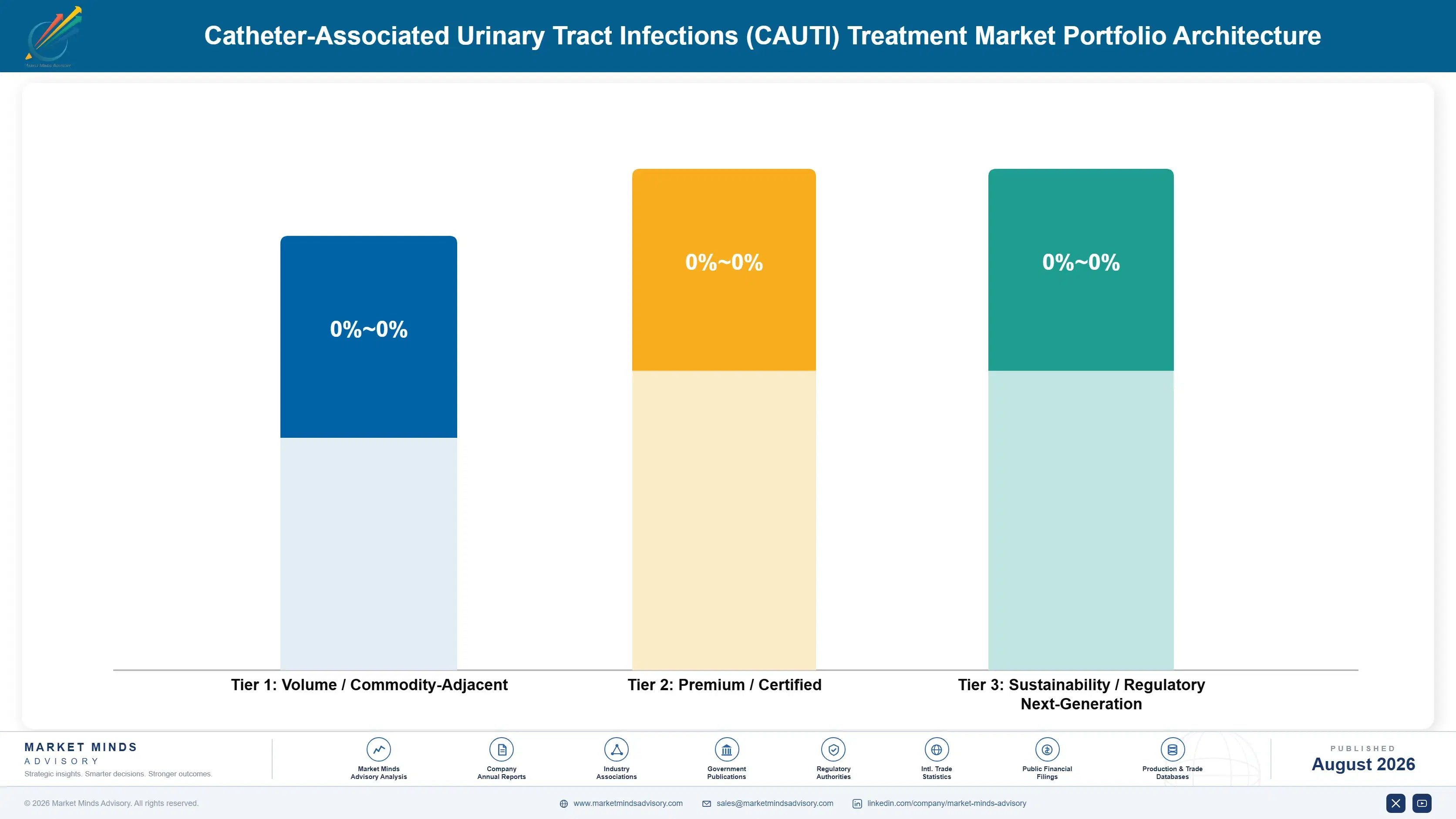
Volume / Commodity-Adjacent

Generic fluoroquinolones, cephalosporins, carbapenems, and aminoglycosides supplied on hospital tender, carrying most treatment volume at minimal margin. The twelve-point range separates manufacturers with reliable segregated capacity from those absorbing remediation costs across their networks.
Gross Margin: 6% to 18%

Premium / Certified

Novel beta-lactam and beta-lactamase inhibitor combinations and siderophore cephalosporins sold at hospital list pricing near USD 4,200 per course. The twelve-point range reflects negotiated formulary discounting, which varies considerably between national systems and individual hospital groups.
Gross Margin: 74% to 86%

Sustainability / Regulatory / Next-Generation

Subscription payment arrangements, diagnostic-paired therapy programmes, and oral gram-negative agents for post-acute settings. The forty-point range reflects genuine divergence: an availability payment produces guaranteed revenue while a diagnostic partnership carries service economics.
Gross Margin: 52% to 92%
catheter-associated-urinary-tract-infections-cauti-portfolio-architecture-1787298171658

High-value Sub-segments and Strategic Watch-out

Availability Payment Arrangements

Highest value and strongest growth, paying a fixed annual sum for guaranteed access regardless of courses dispensed. Existing schemes run between three and twenty million dollars per agent per country. This is the only commercial structure that makes restricted-use antibacterials survivable for their developers at all.
Gross Margin: 78% to 92%

Novel Combination Hospital Supply

High margin per course with moderate growth, constrained by the stewardship restriction operating at roughly three quarters of hospitals. Resistance escalation drives whatever volume does occur across these accounts. Asian domestic manufacturers now compete directly on price across the fastest growing geographies in this market.
Gross Margin: 74% to 86%

Generic First-Line Injectables

The volume core of this market, treating roughly two thirds of cases at a few dollars a course on hospital tender pricing. Shortage risk rather than margin erosion is the real commercial exposure across this tier, and segregated beta-lactam capacity requirements make it very hard to solve.
Gross Margin: 6% to 18%

Polymyxin And Colistin Rescue Therapy

Strategic watch-out. Older toxic agents remain heavily used across Asia and Latin America where newer combinations are unaffordable, which is a symptom of access failure rather than a commercial opportunity. Volume should fall steadily as domestic manufacturers make better tolerated options affordable across those regions.
Gross Margin: 14% to 26%

What Actually Generates Cases

The recurring driver here is the catheter day rather than the patient. Around 18% of hospital inpatients carry a urinary catheter at any moment, infections arise at roughly 3.1 per thousand catheter days, and that arithmetic holds with remarkable consistency across health systems. Treatment demand therefore tracks surgical volume, intensive care occupancy, and how disciplined a hospital is about removing catheters, not disease prevalence in any conventional sense.
Depth varies sharply by care setting. Intensive care is the deepest, since catheters are clinically necessary, patients are immunosuppressed, and resistant organisms circulate. Long-term care and rehabilitation are nearly as durable because catheter reduction programmes have barely reached them and reimbursement penalties do not apply. General acute wards are shallowest, where necessity reviews and nurse-led removal have cut catheter days substantially over a decade of sustained effort.

Buyer profiles have shifted decisively. Antibacterial selection moved from the treating physician to stewardship committees and microbiology teams who explicitly aim to minimise use of the products worth selling. Group purchasing organisations handle generic tendering. Both changes reward suppliers who engage with surveillance programmes and diagnostic pathways over those running any conventional promotional model, which no longer functions in this category.
catheter-associated-urinary-tract-infections-cauti-end-use-penetration-index-1787298172152

Where We Come Out

These are among the four positions where our research anticipates prominent divergence between winners and laggards over the coming forecast period. Each is grounded in the demand model, the regulatory perimeter, and the announced capacity pipeline.
01 / PAYMENT MODEL REFORM

Availability payment is the only survivable commercial structure

Two companies entered bankruptcy holding approved antibacterials with genuinely strong clinical profiles, which is a market design failure rather than a commercial one. Subscription arrangements in the United Kingdom and Japan pay a fixed annual sum for guaranteed access regardless of courses dispensed, and they remove the contradiction between correct stewardship and supplier survival. Securing early schemes sets the reference terms other health systems negotiate against, which matters considerably more over time than the value of any single individual contract does.
02 / DIAGNOSTIC PATHWAY PAIRING

Restriction exists because clinicians cannot identify resistance fast

Stewardship committees withhold newer agents from everybody because cultures take two or three days and nobody can identify early which patients genuinely need them. Rapid molecular resistance testing collapses that window to a few hours and converts blanket empirical caution into targeted appropriate use without any committee having to change its written policy. Sponsoring diagnostic access costs around ninety dollars per test against a course price near four thousand two hundred, and clinicians consistently name diagnostic speed rather than price as the restriction driver.
03 / ASIAN MARKET WEIGHTING

The resistance burden and the commercial focus point apart

Roughly forty-two percent of catheter-associated infection volume arises across East and South Asia, where resistance rates exceed anything recorded in Western hospitals and escalation demand is growing fastest. Commercial organisations built around North American and European pricing consistently underinvest there, because Western manufactured cost simply cannot reach those price points at any commercial discount. Licensed local production converts an unreachable market into a viable one, and domestic manufacturers are already taking those positions wherever the originators have so far declined to move.
04 / POST-ACUTE SETTING POSITIONING

Catheter days left acute hospitals and went somewhere else

Reimbursement penalties drove genuine catheter reduction across acute care, and those cases are gone permanently rather than merely deferred to somewhere else. Long-term care, rehabilitation, and home settings saw no comparable reduction at all, and their patients need oral options rather than intravenous courses requiring a hospital admission. An oral gram-negative agent that avoids roughly nine thousand dollars of admission cost is an argument payers grasp immediately, and no stewardship committee anywhere reviews a nursing home prescription before it is dispensed.

Engagement Snapshot From the Field

A live engagement with an industry participant carrying material or product regulatory and market exposure ahead of a defining policy shift, showing how our research translates into a defensible multi-year portfolio strategy.
MARKET MINDS ADVISORY · CLIENT ENGAGEMENT SUMMARY
Catheter-Associated Urinary Tract Infections (CAUTI) Treatment Producer Strategic Portfolio Review and Transition Roadmap 2026·Investment Scenario on Catheter-Associated Urinary Tract Infections (CAUTI) Treatment Exposure Evaluation 2025-26
CLIENT PROFILE
A specialty anti-infectives company holding one approved novel gram-negative combination and one late-stage candidate, with roughly USD 62 million in annual product revenue (client-reported, unverified by MMA) across eleven markets. The approved product had launched three years earlier to strong clinical reception, and actual course volumes were running at around a third of the internal forecast the launch investment had been sized against.
STRATEGIC CHALLENGE
Stewardship restriction at roughly three quarters of target hospitals had capped uptake in a way the commercial model had never anticipated, and the board faced a decision on whether to fund the second candidate through registration. Cash reserves supported roughly two more years at current burn, and two comparable companies had entered bankruptcy holding approved products within recent memory.
MMA APPROACH
MMA modelled achievable course volume against stewardship policy at 140 target hospitals, assessed availability payment scheme design and eligibility across seven health systems, and interviewed thirty-eight stewardship pharmacists and infectious diseases physicians on what would change their restriction thresholds. Post-acute setting demand and diagnostic pairing economics were modelled separately as alternative routes to volume.
KEY FINDINGS
  1. Stewardship restriction removed roughly 68% of theoretically eligible patients from access, and no promotional or pricing action modelled changed that materially at any hospital.
  2. Thirty-one of the thirty-eight clinicians interviewed said rapid resistance diagnostics would let them authorise earlier use, and only nine cited price as a restriction driver at all.
  3. Availability payment eligibility existed in four of the seven health systems reviewed, with annual values between USD 3 million and USD 20 million per agent and per country.
  4. Post-acute and long-term care settings carried 22% of catheter days with no stewardship review at all, and the client had no commercial presence in that channel.
CLIENT PROFILE
A specialty anti-infectives company holding one approved novel gram-negative combination and one late-stage candidate, with roughly USD 62 million in annual product revenue (client-reported, unverified by MMA) across eleven markets. The approved product had launched three years earlier to strong clinical reception, and actual course volumes were running at around a third of the internal forecast the launch investment had been sized against.
STRATEGIC CHALLENGE
Stewardship restriction at roughly three quarters of target hospitals had capped uptake in a way the commercial model had never anticipated, and the board faced a decision on whether to fund the second candidate through registration. Cash reserves supported roughly two more years at current burn, and two comparable companies had entered bankruptcy holding approved products within recent memory.
MMA APPROACH
MMA modelled achievable course volume against stewardship policy at 140 target hospitals, assessed availability payment scheme design and eligibility across seven health systems, and interviewed thirty-eight stewardship pharmacists and infectious diseases physicians on what would change their restriction thresholds. Post-acute setting demand and diagnostic pairing economics were modelled separately as alternative routes to volume.
KEY FINDINGS
  1. Stewardship restriction removed roughly 68% of theoretically eligible patients from access, and no promotional or pricing action modelled changed that materially at any hospital.
  2. Thirty-one of the thirty-eight clinicians interviewed said rapid resistance diagnostics would let them authorise earlier use, and only nine cited price as a restriction driver at all.
  3. Availability payment eligibility existed in four of the seven health systems reviewed, with annual values between USD 3 million and USD 20 million per agent and per country.
  4. Post-acute and long-term care settings carried 22% of catheter days with no stewardship review at all, and the client had no commercial presence in that channel.
RECOMMENDED STRATEGY
Phase 1: Phase one: apply for availability-based payment in all four eligible health systems, and structure the second candidate's development around subscription eligibility criteria. Phase 2: Phase two: fund rapid resistance diagnostic access at the forty highest-volume hospital accounts, measured on earlier appropriate use rather than on total courses. Phase 3: Phase three: build a post-acute channel presence and prioritise oral formulation development for the second candidate over additional intravenous indications.
OUTCOME
The client secured availability payment in two health systems within four quarters and launched diagnostic support across twenty-six accounts. Revenue grew 34% with course volume up only 11%, and the board approved second candidate registration funding on the revised commercial model (client-reported, unverified by MMA).

Frequently Asked Questions

Foundational context covering the market sizes, CAGR, scope, country, region and competition that inform every finding below. This section is provided to cover basics and most often pre-purchase conversations, answered from the MMA Primary Research Dataset.

What is the current size of the Catheter-Associated Urinary Tract Infections (CAUTI) Treatment Market?

The global CAUTI treatment market reached USD 1.7 billion in 2025, covering antibacterial pharmacotherapy for urinary infection in catheterised patients. That spans novel combinations, cephalosporins, carbapenems, aminoglycosides, and legacy oral agents.

How large will the Catheter-Associated Urinary Tract Infections (CAUTI) Treatment Market be by 2036?

MMA forecasts USD 3.36 billion by 2036, up from USD 1.81 billion in 2026, an increase of USD 1.55 billion. That represents an expansion multiple of 1.86 times across the forecast period.

What is the CAGR for the Catheter-Associated Urinary Tract Infections (CAUTI) Treatment Market 2026 to 2036?

The base case CAGR is 6.4%, with a bull case of 7.7% and a bear case of 5.1%. Historical growth between 2020 and 2025 ran at 5.2%, concealing large swings in catheter days during the pandemic period.

Which segment is growing fastest?

Beta-lactam and beta-lactamase inhibitor combinations grow fastest at 9.6%, exactly 1.50 times the market rate, as carbapenem resistance widens. Siderophore and novel cephalosporins follow at 8.7% in last-line use.

Who are the major companies in the Catheter-Associated Urinary Tract Infections (CAUTI) Treatment Market?

Pfizer, Merck and Co, Shionogi, Menarini Group, and Melinta Therapeutics lead, together holding 41% of the market. Most treatment volume still runs on generics none of them supply.

Which country is growing fastest?

India grows fastest at 9.8%, driven by carbapenem resistance rates among the highest recorded and by domestic manufacture bringing newer combinations within reach. Volume growth exceeds value growth substantially.

Report Segmentation Architecture

The full report scope spans multiple orthogonal segmentation dimensions, with cross-tabulated demand data provided for each dimension pair. Coverage extends further to regional breakdowns, trend trajectories, and the competitive detail needed to support segment-level decision-making.

By Antibacterial Class

  • Beta-Lactam And Beta-Lactamase Inhibitor Combinations
  • Siderophore And Novel Cephalosporins
  • Carbapenems
  • Extended-Spectrum Cephalosporins
  • Aminoglycosides And Polymyxins
  • Fluoroquinolones And Oral Legacy Agents

By End-Use Industry

  • Intensive Care Units
  • General Acute Hospital Wards
  • Long-Term Care And Rehabilitation
  • Surgical And Perioperative Services
  • Home And Community Catheter Care

By Commercial Dimension

  • Hospital Formulary Direct Supply
  • Group Purchasing Tender Contracts
  • Availability-Based Payment Arrangements
  • Licensed Regional Manufacture
  • Retail And Outpatient Dispensing

By Region

  • East Asia
  • South Asia and Pacific
  • North America
  • Western Europe
  • Latin America
  • Middle East and Africa
  • Eastern Europe

Scope, Methodology, and Coverage

Every figure in this report is reproducible from documented input assumptions. The scope below maps the historical period, the forecast horizon, the segmentation dimensions, and the countries covered, alongside the underlying primary and qualitative methodology.
Historical Period
2020 to 2025
Forecast Period
2026 to 2036
Base Year
2025 (USD billions; MMA Primary Research Dataset, August 2026)
Market Definition
The catheter-associated urinary tract infections treatment market covers antibacterial pharmacotherapy used to treat symptomatic urinary tract infection arising in patients with an indwelling, intermittent, or suprapubic urinary catheter, across hospital, long-term care, and community settings. Scope spans beta-lactam and beta-lactamase inhibitor combinations, siderophore and novel cephalosporins, carbapenems, extended-spectrum cephalosporins, aminoglycosides and polymyxins, and fluoroquinolones and oral legacy agents. Antimicrobial and hydrophilic catheters, prevention bundles, urine culture and diagnostic testing, catheter products, and community-acquired urinary infection are excluded.
Quantitative Units
USD billions at manufacturer revenue level; treatment courses annually; cost per course by class.
Segmentation Dimensions
By antibacterial class; by end-use industry; by commercial dimension; by region.
Regions Covered
East Asia, South Asia and Pacific, North America, Western Europe, Latin America, Middle East and Africa, Eastern Europe
Countries Covered
United States, Canada, United Kingdom, Germany, France, Italy, Spain, Netherlands, Poland, Romania, China, Japan, South Korea, India, Thailand, Australia, Brazil, Mexico, Saudi Arabia, South Africa.
Key Companies Profiled
Pfizer, Merck and Co, Shionogi, Menarini Group, Melinta Therapeutics, GSK, AbbVie, Cipla, Sun Pharmaceutical Industries, Aurobindo Pharma, Hikma Pharmaceuticals, Fresenius Kabi, Sandoz, Teva Pharmaceutical Industries, Qilu Pharmaceutical, CSPC Pharmaceutical Group, Hengrui Pharmaceuticals, Wockhardt, Venatorx Pharmaceuticals, Basilea Pharmaceutica.
Quantitative Methodology
Primary survey, n=3,800 respondents, Q4 2025, six countries; demand-side model with trade association cross-validation
Qualitative Methodology
47 expert interviews, Q4 2025; applied to validate demand model assumptions, identify emerging dynamics, and assess competitive positioning
Report Format
PDF and XLSX data workbook (Word format preview document)
Publisher
Market Minds Advisory
Report Code
MMA-2026-HLT-806
Published
August 2026
Contact
sales@marketmindsadvisory.com | www.marketmindsadvisory.com

Purchase the full Catheter-Associated Urinary Tract Infections (CAUTI) Treatment Market Report (2026 to 2036).

The full MMA report on catheter-associated urinary tract infection treatment covers antibacterial class, regional, and competitive analysis in detail, with separate treatment of the stewardship economics that cap volume on the only commercially valuable products. It includes availability-based payment scheme design and eligibility across health systems, catheter day and infection rate modelling by care setting, resistance progression tracking by organism and region, and post-acute channel sizing. Regional chapters cover twenty countries with resistance burden and formulary access assessed individually. Competitive profiling spans twenty companies on a consistent revenue basis throughout.
Twenty country resistance burden and access chapters
Availability payment scheme design and eligibility analysis
Catheter day modelling across every care setting
Resistance progression tracking by organism and region
Twenty company competitive profiles compared consistently
Post-acute and long-term care channel sizing

Built For The People Who Decide

From boardroom strategy to bench-side execution, this report is read cover-to-cover by leaders shaping the next decade of their industry, turning demand scenarios, market dynamics and valuation benchmarks into decisions.
CXOs/ Presidents/ VPs/ Managers
M&A and Corporate Development
Strategy Teams and R&D Heads
Procurement and Product Directors
Regulatory and Compliance Leaders
Investor Relations and Equity Analysts