Market Minds Advisory
Carbon-Scored PCR Material Marketplace Market

Carbon-Scored PCR Material Marketplace Market: Carbon-Scored PCR Material Marketplace Market. Trends and Forecast 2026 to 2036

Packaging manufacturers facing binding recycled content mandates are turning to digital marketplaces that pair post-consumer recycled material listings with verified carbon scores, replacing informal broker relationships with auditable sourcing platforms regulators can actually trust.

Lead Analyst

Published

September 2026

Make Smarter Decisions with Customized Research Insights

Request a free sample report and evaluate market opportunities, growth trends, and competitive dynamics relevant to your business needs.

2025 MARKET VALUE$0.7BMarket Size 2025
2036 FORECAST VALUE$3.2BBase Case , 2026 to 2036
CAGR 2026 TO 203615.5 %Bull 16.8% / Bear 14.2%
INCREMENTAL OPPORTUNITY$2.4BNet 10- year value creation
EXPANSION MULTIPLE4.23x2036 value over 2026 base
Strategic Levers
M&A Pipeline
Regional Outlook
Country Rankings
Competitive Intelligence
Segmental Deep-dive
Call-Us : 91 93563 13602

Executive Snapshot and Market Trajectory.

Binding recycled content mandates across major packaging markets are forcing manufacturers to source verified post-consumer recycled material at scale, pushing demand toward digital marketplaces that pair material listings with auditable carbon scoring that regulators and buyers alike can genuinely trust and reliably depend on.
Carbon scoring and verification software is expanding fastest as buyers demand auditable sustainability claims rather than self-reported supplier data, while marketplace transaction and logistics services capture the largest current platform revenue share across most tracked deployments and buyer categories worldwide. Western Europe and North America together account for most transaction volume, reflecting concentrated regulatory pressure and corporate sustainability commitment in both regions respectively, a pattern MMA expects to persist through the coming decade.
Competitive intensity remains moderate as established waste management companies, dedicated marketplace startups, and verification software vendors all compete across overlapping platform functions, keeping differentiation focused on data credibility rather than price alone across most transactions and buyer relationships nationwide. Regulatory attention is building around recycled content verification standards, with several jurisdictions considering mandatory third-party auditing requirements for claims made on packaging sold to end consumers nationwide and internationally.
Market Definition
The Carbon-Scored PCR Material Marketplace Market covers digital platforms facilitating transactions of post-consumer recycled materials bundled with verified carbon footprint scoring and sourcing documentation, measured by platform transaction and subscription revenue. It excludes physical recycling processing operations and general commodity trading platforms lacking carbon verification capability.
Base Year Value
$0.7B in 2025 (MMA Primary Research Dataset, September 2026)
Forecast Period
2026 to 2036, eleven discrete annual values
CAGR
15.5% base case. Bull 16.8%. Bear 14.2%.
Fastest Growth Segment
Carbon Scoring and Verification Software: 19.0% CAGR
Fastest Growth Country
India: 18.0% CAGR
Fastest Growth Region
South Asia and Pacific: 17.5% CAGR
Largest Region
Western Europe: 26% of 2025 global value
Market Leaders
Leading participants include Veolia Environnement, Reflex Environmental, Circularise, TerraCycle, and Rubicon Technologies. Source: MMA Primary Research Dataset, July 2026.
Primary Survey
n=3,800 procurement and R&D decision-makers, Q4 2025, six countries
Methodology
Demand-side build-up, cross-validated against public data, 47 expert interviews

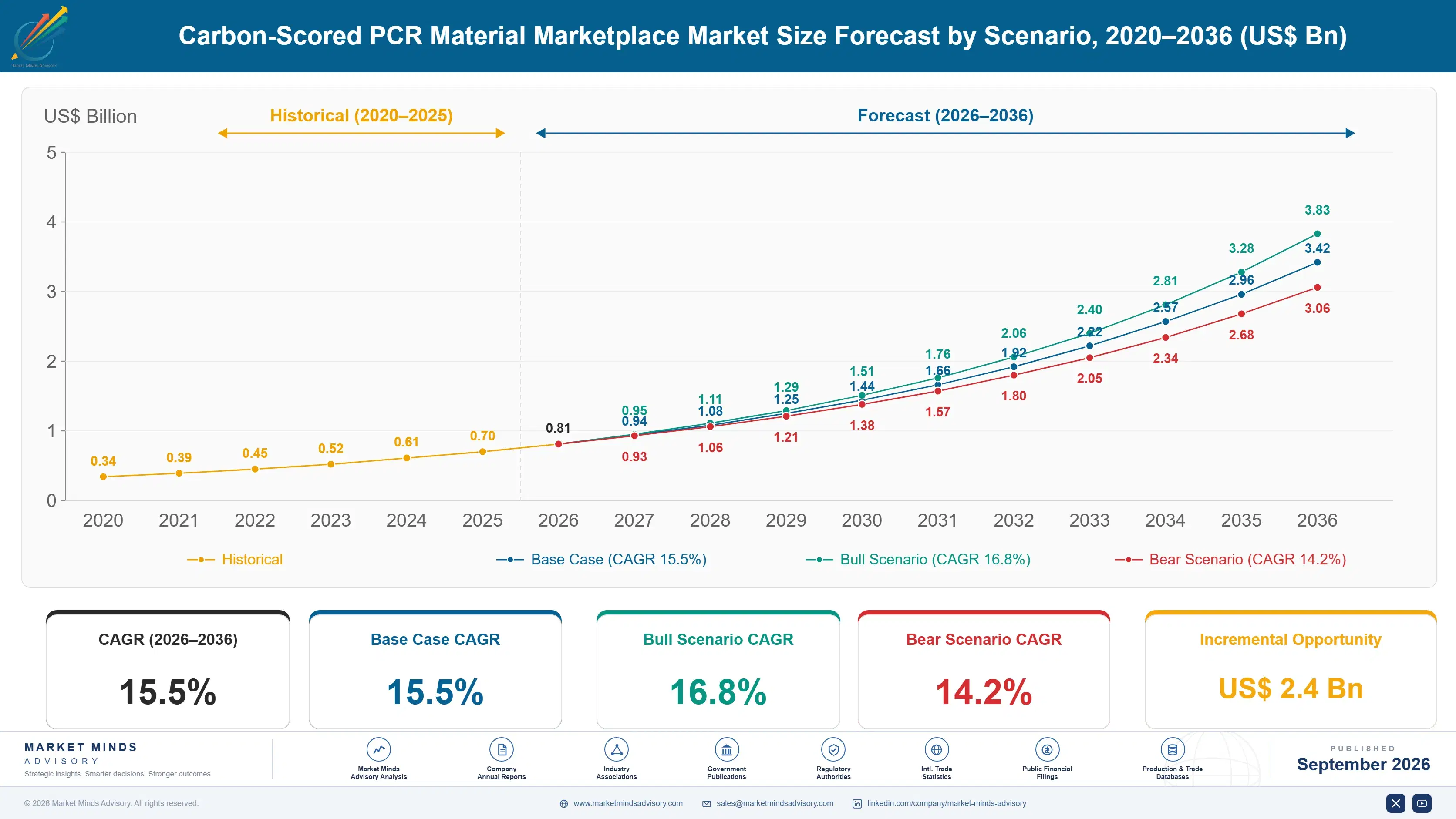
Carbon-Scored PCR Material Market Forecast Scenarios

carbon-scored-pcr-material-marketplace-market-size-forecast-scenario-1788427132194
Between 2020 and 2025, carbon-scored PCR marketplace adoption grew from a handful of pilot platforms to a recognized sourcing channel as packaging manufacturers faced mounting regulatory pressure to document recycled content claims across their entire product portfolio. Historical growth ran near 14.0% annually through this period as adoption broadened considerably across most regional markets and industry categories.
The base case assumes continued regulatory tightening around recycled content mandates, expanding corporate sustainability commitment budgets, and improving carbon verification methodology standardization across the industry, sustaining growth near 15.5% annually through 2036. Platform operators increasingly bundle verification software and transaction logistics into unified sourcing solutions, broadening addressable buyer budgets beyond simple material procurement into comprehensive sustainability documentation and compliance reporting services covering an entire supply chain from source to finished packaging.
A bull scenario near 16.8% depends on faster adoption of mandatory third-party carbon verification standards across major packaging markets currently relying on self-reported supplier claims and estimates. The bear case near 14.2% reflects the risk that inconsistent carbon scoring methodologies across competing platforms undermine buyer confidence, slowing adoption until industry-wide verification standards mature and gain broader acceptance across the industry.

Where Recycled Content Claims Get Their Receipts

Carbon-scored PCR marketplaces exist because informal broker relationships could not survive regulatory scrutiny, since packaging manufacturers now need auditable documentation proving recycled content claims rather than simple supplier assurances that regulators increasingly refuse to accept without independent third-party verification, ongoing compliance monitoring, and traceable chain-of-custody documentation records.
MARKET CONCENTRATION30% CR5Share held by the five largest tracked platforms
AVERAGE TRANSACTION FEE4.5% of trade valueTypical platform commission charged on completed material transactions
TOP SOURCING COUNTRY22% GermanyShare of listed recycled material volume originating domestically
VERIFIED LISTING SHARE48% of total listingsShare of platform listings carrying third-party carbon verification
BUYER CONCENTRATION35% packaging manufacturersShare of platform buyers from the packaging manufacturing sector
AVERAGE CONTRACT DURATION12 to 18 monthsTypical length of recurring recycled material supply agreements
Platform operators compete on data credibility and verification rigor rather than material price alone, since buyers facing regulatory audit risk value documented carbon provenance considerably more than marginal cost savings from unverified suppliers offering comparable material at lower listed prices across the same category, specification, volume tier, and delivery timeline. This credibility-first competitive dynamic favors platforms with established third-party verification partnerships over newer entrants still building auditing infrastructure and buyer trust from scratch.
Verification software integration is reshaping platform economics as operators bundle carbon scoring directly into transaction workflows, commanding meaningfully higher subscription fees than basic listing services lacking comparable documentation capability across their competing product offerings, service tiers, and buyer segments nationwide. Operators increasingly position comprehensive compliance reporting as a hedge against commodity transaction fee pressure facing persistent competition from newer market entrants undercutting on price alone.
"A recycled material claim without an audit trail is just marketing. This marketplace exists because regulators finally started asking for receipts."
Senior Analyst, Circular Economy and Sustainability Technology Practice · MMA Chemicals and Materials Practice · September 2026

Market Trends

EU Packaging Regulation Drives Verified Sourcing Demand

The European Union's revised packaging and packaging waste regulation sets binding recycled content thresholds for plastic packaging placed on the market, requiring manufacturers to document material provenance with a rigor that informal broker relationships simply cannot reliably provide at meaningful scale. This regulatory pressure is pushing packaging manufacturers toward marketplace platforms offering verified carbon scoring and chain-of-custody documentation that satisfies compliance audit requirements regulators increasingly enforce. Platform operators report meaningfully accelerated buyer onboarding specifically among manufacturers subject to the European Union's binding recycled content compliance deadlines this year and next.
Market Impact: Verified material pricing premiums grew 22%
Corporate Sustainability Reporting Standards Expand Carbon Verification Demand

Expanding corporate sustainability reporting requirements, including scope three emissions disclosure obligations affecting supply chain purchases, are pushing packaging manufacturers to demand verified carbon footprint data for every recycled material purchase rather than accepting supplier self-reported estimates lacking any genuinely independent third-party verification. This reporting pressure extends beyond regulatory compliance into voluntary corporate sustainability commitments that increasingly require auditable third-party verification for public disclosure purposes and investor relations communications. Manufacturers report meaningfully increased willingness to pay premium pricing for verified carbon-scored material compared to unverified alternatives lacking comparable documentation this year.
Market Impact: Enterprise buyer contracts grew roughly 35%

Market Opportunities and Growth Drivers

Rising Recycled Content Prices Justify Verification Investment

Verified post-consumer recycled material increasingly commands premium pricing over unverified alternatives, since buyers facing regulatory compliance requirements will pay meaningfully more for documented carbon provenance rather than risk penalties for unsubstantiated recycled content claims made on finished packaging products sold to end consumers. This pricing dynamic justifies platform verification infrastructure investment that would otherwise be difficult for smaller marketplace operators to fund independently without demonstrated buyer willingness to pay for documentation quality. Platform operators report meaningfully expanding verification service revenue as buyer demand for documented material continues outpacing basic listing service growth this year.
Market Impact: Methodology disputes delayed 18% of deals

Corporate Net-Zero Commitments Expand Sourcing Documentation Requirements

Major consumer packaged goods companies pursuing publicly announced net-zero emissions commitments increasingly require detailed carbon accounting for every material input across their entire supply chains, including post-consumer recycled content used in packaging production processes. This corporate commitment pressure extends procurement documentation requirements considerably beyond what regulatory compliance alone would demand, since companies must substantiate voluntary sustainability claims made to investors and consumers with auditable supporting data. Marketplace platforms report meaningfully expanding enterprise buyer relationships as large packaged goods companies formalize sourcing documentation requirements across their entire supplier base this year.
Market Impact: Verified supply shortages limited growth 12%

Market Restraints and Challenges

Inconsistent Carbon Scoring Methodologies Undermine Buyer Trust

Competing marketplace platforms currently apply different carbon scoring methodologies without a unified industry standard, making it difficult for buyers to compare material listings across platforms with confidence that scores reflect genuinely comparable measurement approaches and assumptions. The root cause traces to the absence of a single dominant carbon accounting standard specifically designed for recycled material provenance, leaving platforms to develop proprietary methodologies that serve their own competitive positioning rather than industry-wide comparability. Several industry groups are now working toward standardized carbon scoring protocols that could resolve this fragmentation over the coming several years of development.
Market Impact: Compliance-driven listings grew roughly 40%

Limited Verified Material Supply Constrains Platform Growth

Physical recycling infrastructure capable of producing verifiable, chain-of-custody-documented post-consumer recycled material remains limited relative to growing buyer demand, creating a genuine supply constraint that platform growth alone cannot resolve without corresponding physical recycling capacity expansion. The root cause is that most recycling facilities were not originally designed with detailed documentation and chain-of-custody tracking in mind, requiring meaningful process and technology retrofitting to generate the audit trail buyers now require. Some platforms are partnering directly with recycling facility operators to fund documentation infrastructure upgrades in exchange for guaranteed material supply access.
Market Impact: Verified material commands 15% price premium
3 additional market trends, 4 additional growth drivers, and 3 additional restraints and challenges are covered in the full report. Contact sales@marketmindsadvisory.com to access the complete intelligence.

Segment CAGR and Growth Architecture

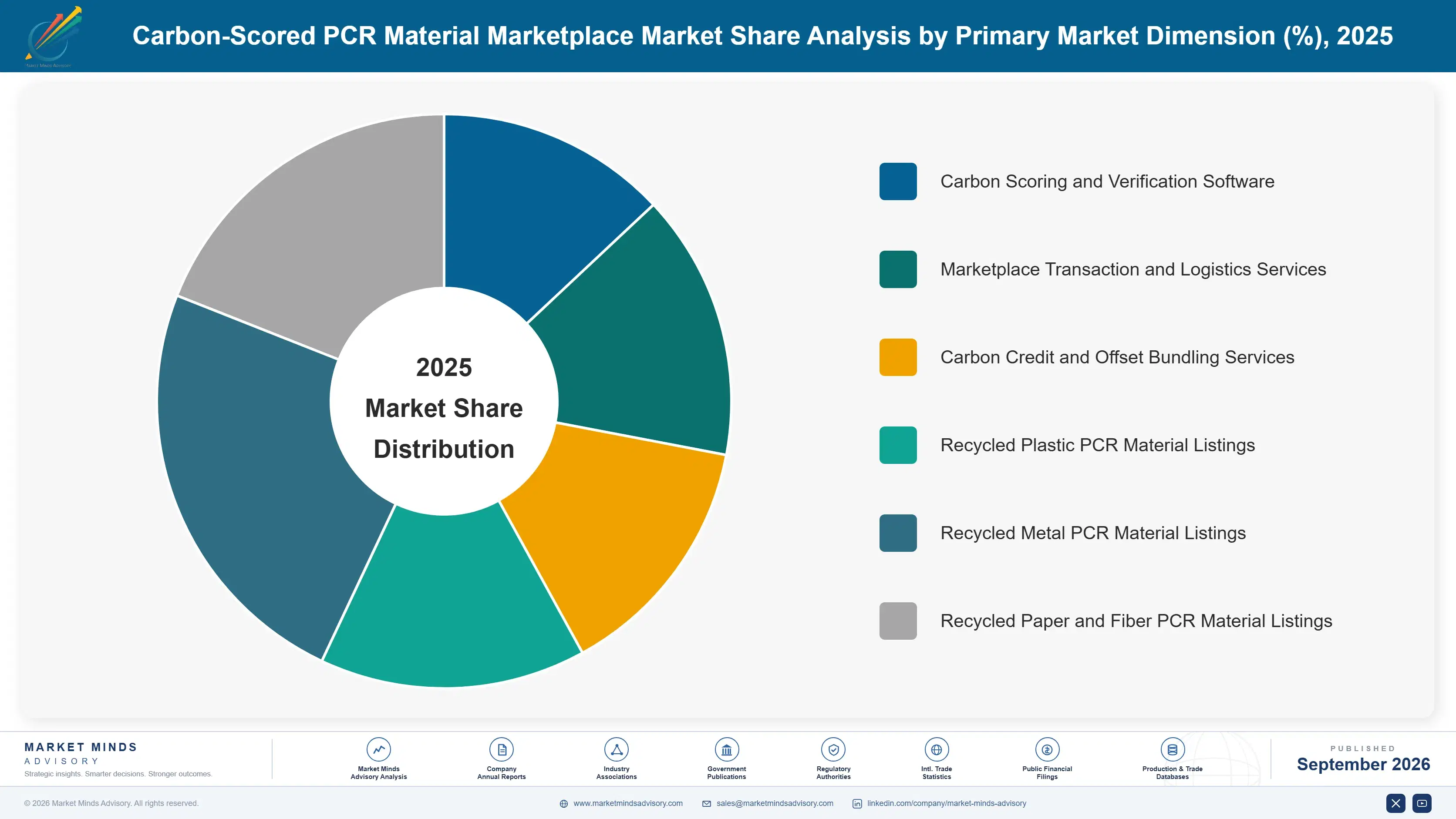
The Carbon-Scored PCR Material Marketplace Market splits into six service-defined segments spanning material listings, verification, and logistics functions worldwide today. Carbon scoring and verification software leads growth as buyers demand auditable claims, followed closely by marketplace transaction and logistics services, since both categories command premium platform fees. Recycled paper listings round out the mix.
carbon-scored-pcr-material-marketplace-market-market-share-analysis-1788427132728

Carbon Scoring and Verification Software

Carbon scoring and verification software leads all segments because it addresses the single biggest credibility gap facing recycled material transactions today: buyers cannot trust self-reported sustainability claims without independent auditing, and regulators increasingly demand documented proof rather than mere supplier assurances alone or exclusively anymore. Platform operators standardizing on rigorous verification methodology increasingly treat this software layer as their primary competitive differentiator versus rivals still relying on basic listing services lacking comparable documentation depth. This verification-first shift is reshaping platform investment priorities industry wide as regulatory compliance requirements continue tightening across major packaging markets. MMA estimates this segment will represent well over a quarter of total category revenue by 2036.
CAGR 19.0%

Marketplace Transaction and Logistics Services

Marketplace transaction and logistics services represent the second fastest-growing segment as buyers increasingly demand end-to-end sourcing solutions rather than simply discovering material listings and arranging shipping logistics independently through separate providers, intermediaries, brokers, and freight companies scattered across the entire global supply chain landscape and network today. Platform operators increasingly bundle transaction facilitation, payment processing, and logistics coordination into unified service packages that reduce buyer administrative burden considerably compared to managing multiple vendor relationships separately for the same underlying material transaction. This bundled service approach is expanding the addressable high-margin segment considerably faster than basic listing revenue growth would suggest on its own, reflecting genuine buyer preference for comprehensive solutions.
CAGR 16.0%
Full segment breakdown across 6 segments available in the complete report.

Regional Architecture and Country Demand Map

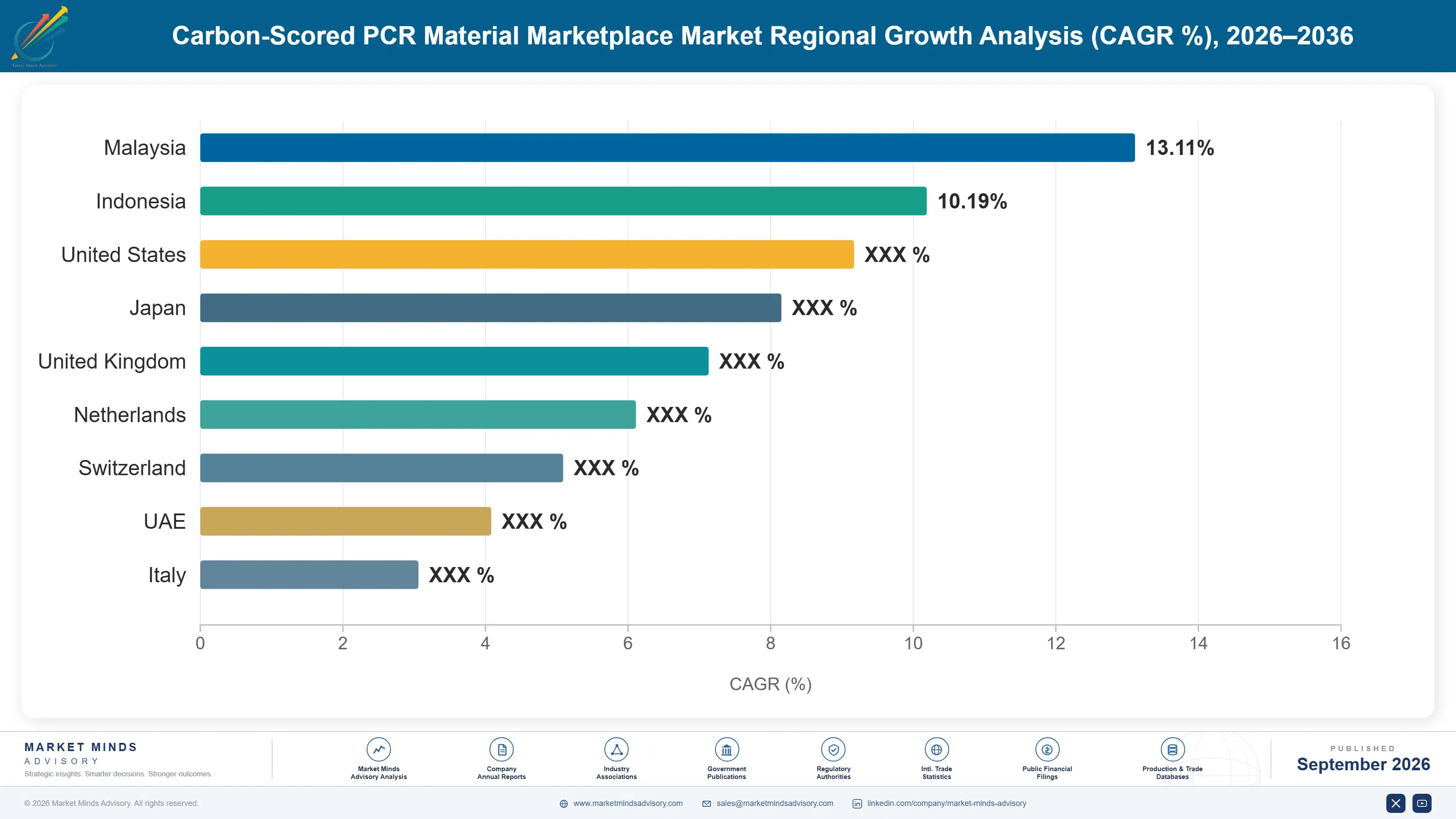
Western Europe leads on binding recycled content regulation and established circular economy policy frameworks, while North America follows closely on corporate sustainability commitment budgets and reporting requirements. South Asia and Pacific grows fastest as recycling infrastructure and digital sourcing platforms expand rapidly through previously underserved emerging markets.

North America

The United States drives most North American demand through continued corporate sustainability reporting expansion and state-level recycled content mandates in California and several other states requiring documented packaging material sourcing across major consumer packaged goods categories, retail channels, distribution networks, manufacturing operations, and supply chains nationwide and well beyond. Canada contributes smaller but steady volume through similar corporate procurement patterns and provincial extended producer responsibility programs across its major metropolitan centers and provinces from coast to coast. Domestic verification infrastructure remains less mature than in Western Europe, with several platforms importing carbon scoring methodology frameworks originally developed for European regulatory compliance requirements before adapting them for local market conditions and needs.
Share: 24% | CAGR: 15.5% (2026 to 2036)

Western Europe

Germany, France, and the United Kingdom anchor Western European demand, driven by the European Union's binding packaging and packaging waste regulation setting mandatory recycled content thresholds that packaging manufacturers must document with auditable sourcing evidence across their entire supply chains, vendor networks, manufacturing operations, distribution channels, retail partnerships, and export relationships worldwide and well beyond every border. Regional carbon accounting standards remain more mature here than in less regulated markets elsewhere, giving European platforms a meaningful first-mover advantage in verification methodology credibility and buyer trust. Platform operators serving this region increasingly invest in compliance infrastructure to navigate evolving national and pan-European recycled content and carbon disclosure standards currently in force.
Share: 26% | CAGR: 14.0% (2026 to 2036)
Regional intelligence for 5 additional markets available in the complete report: East Asia, South Asia and Pacific, Latin America, Middle East and Africa, Eastern Europe. Contact sales@marketmindsadvisory.com.
carbon-scored-pcr-material-marketplace-market-country-cagr-analysis-1788427133253

How Platforms Monetize Verified Data Trust

Carbon-scored marketplace operators increasingly capture value beyond basic transaction fees through premium verification tiers, compliance reporting subscriptions, integrated logistics coordination, and carbon credit bundling that buyers facing genuine and steadily growing regulatory audit risk increasingly view as essential rather than optional additions to their core material sourcing workflow and their ongoing supplier procurement process.

Premium Third-Party Verification and Auditing Tiers

Platform operators sell enhanced verification tiers featuring independent third-party auditing rather than platform-generated carbon scores, capturing premium subscription revenue from buyers facing the strictest regulatory compliance requirements who need documentation defensible under formal audit scrutiny and thorough legal review. This premium verification tier appeals particularly to large enterprise buyers whose sustainability claims face public scrutiny and investor examination, justifying meaningfully higher subscription pricing than basic listing access alone provides. Platform operators report premium verification tier revenue running roughly 45% higher than basic listing subscriptions among their largest enterprise buyer accounts.
Market Impact: Premium verification tiers command roughly 45% higher pricing

Compliance Reporting and Documentation Software Subscriptions

Platform operators sell dedicated compliance reporting software that automatically generates regulatory documentation and audit-ready material sourcing records, capturing recurring subscription revenue that continues well beyond individual transaction fees collected on material purchases made throughout the entire annual fiscal calendar year. This reporting software addresses a genuine buyer pain point, since manually compiling compliance documentation across multiple suppliers and transactions consumes considerable internal legal and sustainability team time and resources. Platform operators report compliance reporting subscription revenue adding roughly 30% to total platform revenue among their most regulation-exposed enterprise buyer accounts.
Market Impact: Compliance reporting subscriptions add roughly 30% overall revenue

Integrated Logistics and Transportation Coordination Services

Platform operators sell integrated logistics coordination services that handle transportation, customs documentation, and delivery scheduling for recycled material transactions, capturing service revenue beyond the basic transaction facilitation fee charged on material purchases alone across every single completed transaction and order. This logistics bundling reduces buyer administrative burden considerably compared to arranging shipping separately through independent freight providers unfamiliar with recycled material handling requirements and documentation needs specific to this category. Platform operators report logistics service revenue adding roughly 25% to total transaction value across their most active enterprise buyer relationships.
Market Impact: Logistics coordination services add roughly 25% overall value

Carbon Credit Bundling and Offset Marketplace Integration

Platform operators increasingly bundle carbon credit and offset purchasing directly into material transactions, letting buyers simultaneously source verified recycled material and purchase offsets covering any residual carbon footprint within a single unified transaction workflow and simplified checkout process. This bundled offering captures commission revenue on the carbon credit transaction itself, generating income streams entirely separate from the underlying material sale and its associated verification and logistics fees. Platform operators report this bundled offering adding roughly 2 times the transaction value of material sales alone for their most sustainability-focused enterprise buyers.
Market Impact: Carbon credit bundling adds roughly 2 times value

Who Controls the Margin Pool

Five participants, evaluated on annual platform transaction and subscription revenue from carbon-scored recycled material trading, together account for an estimated 30% of tracked market revenue, reflecting a genuinely fragmented industry structure typical of nascent digital marketplace categories. Veolia Environnement leads through established waste management scale and integrated recycling infrastructure, while Reflex Environmental and Circularise compete closely for verification-focused enterprise contracts that neither has fully secured.
Current competitive activity centers on verification methodology credibility, as platforms race to establish trusted third-party auditing partnerships before competitors capture the same enterprise buyer contracts requiring defensible compliance documentation. Logistics bundling partnership announcements between marketplace operators and freight providers have become increasingly common over the past two years, as platforms seek to offer comprehensive sourcing solutions rather than competing purely on listing access.

Emerging pressure comes from large waste management incumbents expanding directly into digital marketplace functionality, potentially disintermediating dedicated marketplace startups that built their initial customer base around independent verification credibility rather than physical recycling infrastructure ownership. Rankings could shift meaningfully if a major enterprise software company acquires a leading verification platform outright, consolidating compliance reporting capability and material sourcing reach that currently remains distributed across separate specialized companies.
carbon-scored-pcr-material-marketplace-market-company-positioning-matrix-1788427133782

Competitive Moat and Risk Dimensions

VEOLIA ENVIRONNEMENT

Moat: Integrated Waste and Recycling Infrastructure

Veolia's ownership of physical recycling and waste processing infrastructure across multiple countries gives it direct control over material provenance data that pure marketplace operators lacking recycling operations cannot replicate independently. This vertical integration lets Veolia offer verified material sourcing with inherent chain-of-custody credibility, since the company itself operates the recycling facilities generating the underlying material supply.
VEOLIA ENVIRONNEMENT

Risk: Slower Digital Platform Innovation

Veolia's core business remains physical waste management operations rather than software platform development, potentially leaving the company's digital marketplace capability lagging behind dedicated technology-first competitors building more sophisticated verification and transaction interfaces. Nimbler marketplace startups could capture premium enterprise buyer segments specifically seeking superior software experience over physical infrastructure ownership.
CIRCULARISE

Moat: Blockchain-Based Verification Technology

Circularise's blockchain-based traceability technology provides tamper-evident material provenance documentation that traditional database-driven verification systems cannot match in terms of auditability and cross-organization trust without requiring a centralized authority. This technical differentiation appeals specifically to buyers requiring the highest confidence level in sourcing documentation for regulatory or investor-facing disclosure purposes.
CIRCULARISE

Risk: Limited Physical Material Supply Access

Circularise lacks direct ownership of physical recycling infrastructure, depending entirely on third-party material suppliers willing to adopt its verification technology, creating a chicken-and-egg adoption challenge that vertically integrated competitors like Veolia do not face. This dependency could limit Circularise's addressable material supply relative to competitors controlling their own recycling operations directly.

Players Tracked

Prominent Players

Veolia Environnement
Reflex Environmental
Circularise
TerraCycle
Rubicon Technologies

Other Key Players

Renewi
RecycleTrack Systems
Plastics for Change
Trove Recycling
Big Bag Marketplace
GreenMantra Technologies
Loop Industries
Recykal
Encore Recycling
Cirplus
ScrapConnect
European Metal Recycling (EMR)
Suez Group
Waste Management Inc.
Republic Services

Recent Developments

MARCH 2025

Veolia launched an expanded digital marketplace module integrating carbon scoring directly into its existing recycling material sales platform, targeting packaging manufacturers seeking verified sourcing documentation alongside physical material procurement from its many facilities across multiple European countries, regions, industrial zones, manufacturing hubs, and distribution networks.
Signal: Signals established waste management companies are extending physical operations directly into digital marketplace functionality and platforms.
JULY 2025

Circularise announced a new strategic partnership with a major European packaging manufacturer to pilot blockchain-based material traceability across the manufacturer's entire recycled content supply chain, aiming to demonstrate scalable verification technology across multiple product lines, facilities, manufacturing sites, distribution centers, warehouses, and regional supply operations.
Signal: Signals verification technology vendors are securing flagship enterprise partnerships to validate platform credibility at meaningful scale.
OCTOBER 2025

TerraCycle acquired a smaller regional recycled material marketplace platform, adding valuable transaction infrastructure and important buyer relationships to its existing recycling program network and considerably expanding its digital sourcing platform capability across multiple new geographic markets, buyer segments, industry verticals, product categories, and material types.
Signal: Signals recycling program operators are acquiring marketplace technology rather than building transaction platforms internally from scratch.

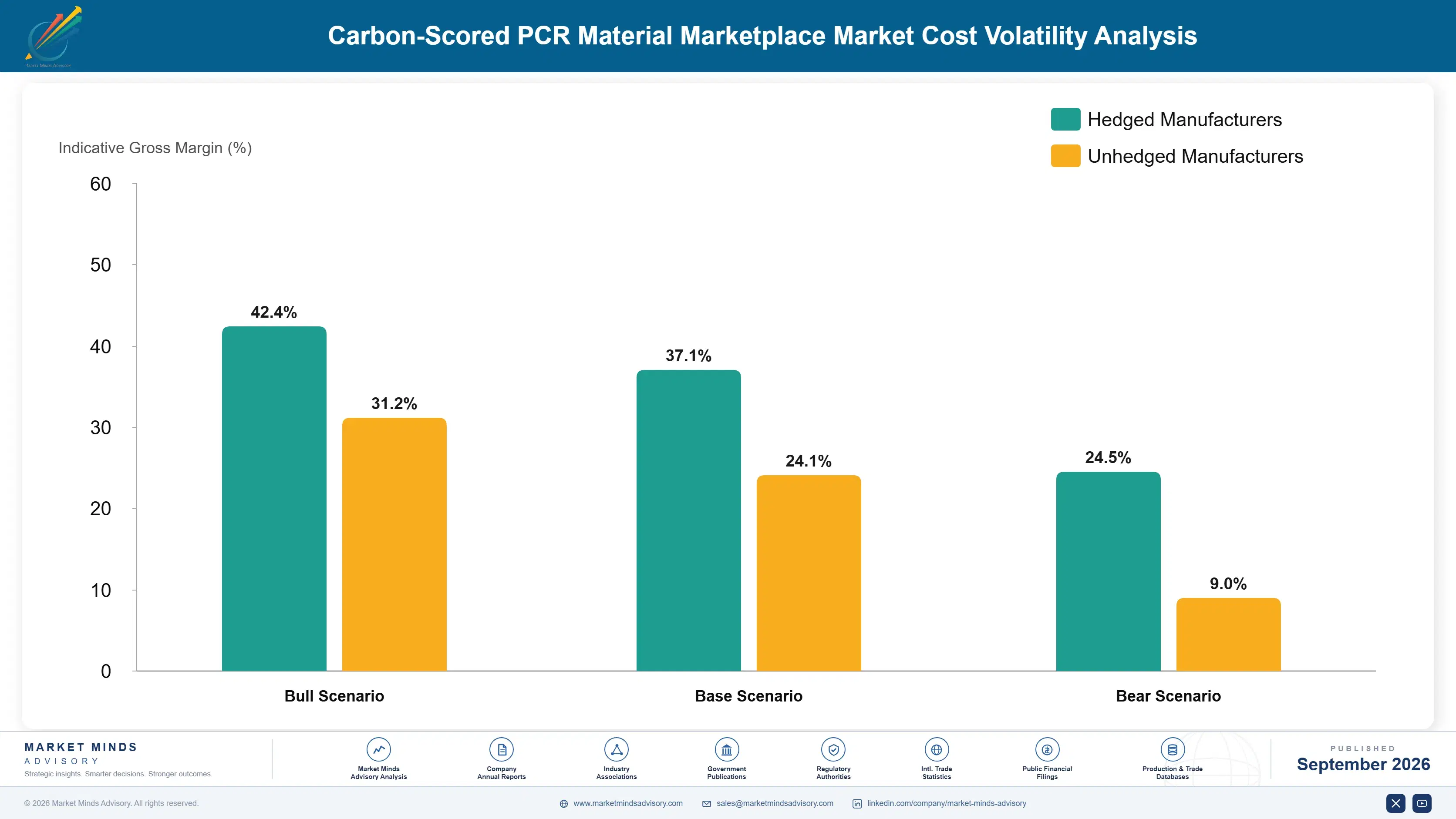
Verification Infrastructure and Data Cost Exposure

Third-party auditing and verification services account for roughly 35% of platform operating cost, with the large majority paid to specialized carbon accounting firms and certification bodies concentrated in Western Europe and North America across major cities. Cloud computing and blockchain infrastructure supporting transaction and traceability records add another 20%, sourced from major technology infrastructure providers.
Carbon accounting methodology consulting costs, documented in several platform operators' funding disclosures, rose considerably between 2023 and 2025 as demand for specialized verification expertise outpaced the limited pool of qualified carbon accounting professionals available across the industry. Platform operators absorbed rising verification costs primarily by raising subscription pricing on premium verified listing tiers rather than passing costs onto basic listing access, preserving broader market accessibility.

Smaller marketplace platforms carry meaningfully higher verification cost exposure per listing than larger competitors who can spread fixed auditing infrastructure and methodology development costs across a larger transaction volume base overall. This creates a durable cost disadvantage concentrated among platforms lacking scale, effectively pushing many smaller operators toward partnership arrangements with established verification providers rather than building proprietary auditing capability independently from the ground up.
carbon-scored-pcr-material-marketplace-market-cost-volatility-analysis-1788427133977

Shared Verification Infrastructure Partnerships

Leading platforms now partner with established third-party verification bodies rather than building proprietary auditing capability entirely in-house, reducing fixed infrastructure costs while maintaining credible independent verification standards buyers require. This partnership approach adds some methodology standardization complexity but meaningfully reduces platform-level verification investment, a tradeoff most smaller operators now consider worthwhile given limited internal auditing expertise.

Standardized Carbon Scoring Methodology Adoption

Several industry groups are developing shared carbon scoring methodology standards that platforms can adopt rather than each developing proprietary scoring frameworks independently, reducing duplicate methodology development costs across the entire industry considerably and quite consistently. This standardization effort requires collective industry cooperation but provides meaningful long-term cost efficiency once broadly adopted across competing platforms.

Portfolio Architecture for Margin Defence

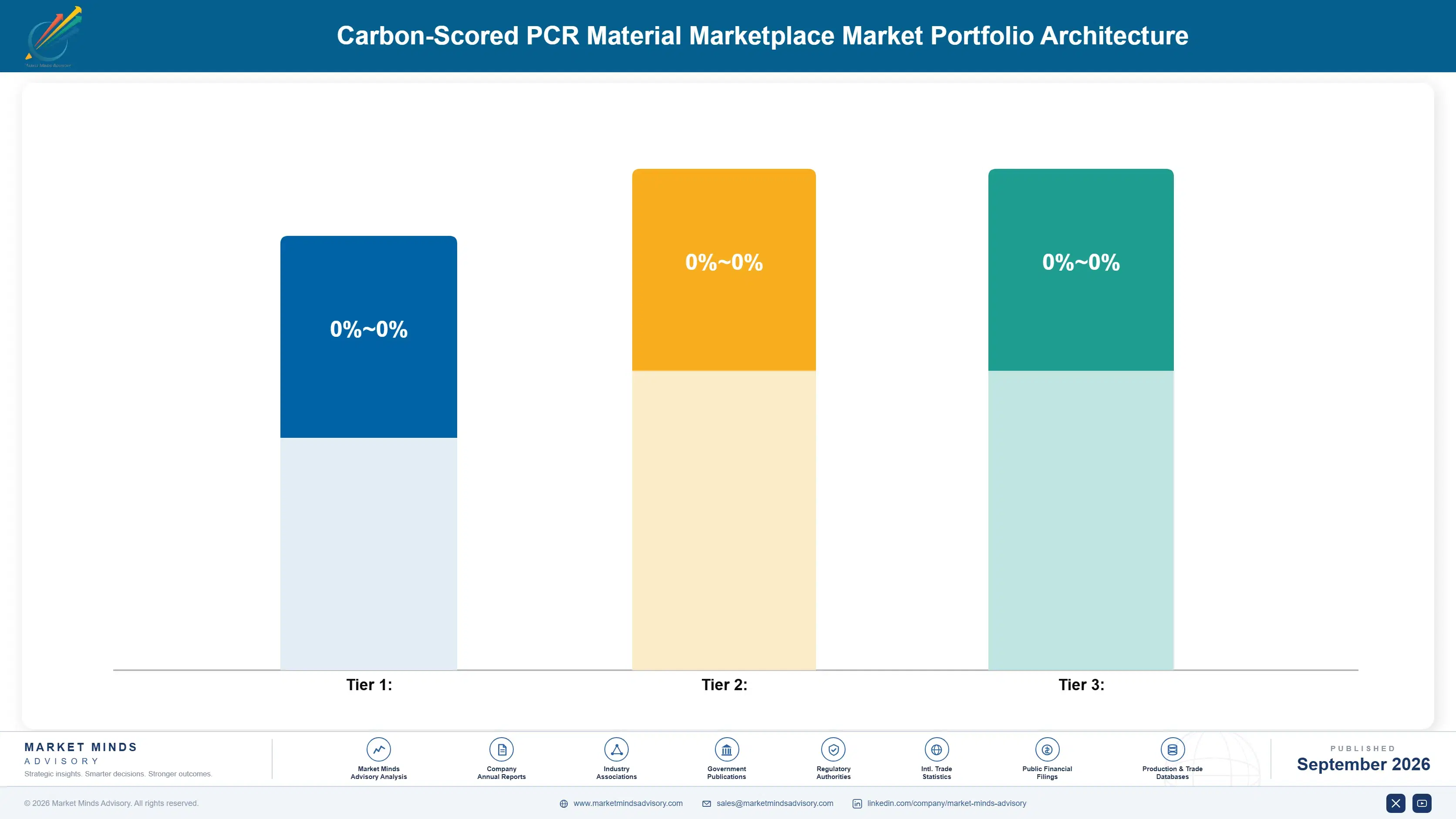
Carbon-scored marketplace operators run a three-tier margin structure spanning basic unverified listing access, certified verified material listings carrying documented carbon scoring, and next-generation compliance reporting platforms bundling verification with automated regulatory documentation generation. Gross margins range from roughly 15% on basic unverified listing access to over 45% on certified verified listings carrying meaningfully higher auditing and documentation investment requirements.
Volume economics still matter for basic listing discovery, since most tracked buyers still browse unverified listings initially before narrowing consideration to verified alternatives, but the tension between volume and premium positioning has sharpened as regulatory compliance requirements increasingly determine which listings buyers can actually use for documentation purposes. Platform operators increasingly favor the verified tier, where documented carbon provenance provides more durable margin protection than basic listing access alone.

High-value margin pools concentrate specifically in verification services and compliance reporting subscriptions rather than in basic transaction fees alone, reflecting the broader industry shift toward documentation-as-a-service as regulatory scrutiny intensifies across markets. Platform operators capturing this premium verification and reporting revenue early tend to retain enterprise buyer relationships longer than those competing purely on basic transaction fee percentage.

Basic unverified material listings sold primarily on price to cost-conscious buyers not yet facing strict regulatory compliance requirements for documented recycled content sourcing evidence, audit trails, and chain-of-custody records overall.
Gross Margin

Certified verified material listings carrying documented carbon scoring and chain-of-custody evidence, bundled with compliance support that regulation-exposed buyers increasingly require for audit purposes and investor disclosure requirements and needs each year.
Gross Margin

Next-generation compliance reporting platforms bundling verification with automated regulatory documentation generation, positioning operators for recurring subscription revenue from enterprise buyers facing complex and continually evolving compliance reporting obligations worldwide today.
Gross Margin
carbon-scored-pcr-material-marketplace-market-portfolio-architecture-1788427134478

High-value Sub-segments and Strategic Watch-out

Carbon Scoring and Verification Software

Carbon scoring and verification software combines the fastest segment growth in the entire portfolio with the strongest margin expansion, as buyers pay premium subscription pricing for documentation defensible under regulatory audit scrutiny and thorough legal review processes worldwide, increasingly, consistently, reliably, and dependably beyond it.

Marketplace Transaction and Logistics Services

Marketplace transaction and logistics services carry the second fastest growth and strongest bundling potential, generating strong margin performance as operators increasingly package end-to-end sourcing solutions for enterprise buyers across every industry vertical, category, region, market segment, geography, buyer type, price tier, volume band, and delivery timeline.

Recycled Plastic PCR Material Listings

Recycled plastic PCR material listings remain the largest volume category by transaction count, generating steady if unspectacular revenue even as verification premium pricing continues expanding across most tracked material categories, buyer segments, geographies, industries, applications, use cases, product types, specification levels, quality tiers, and price points.

Recycled Paper and Fiber PCR Material Listings

Recycled paper and fiber PCR material listings warrant close monitoring, since slower regulatory attention on paper packaging compared to plastic could limit verification premium adoption in this specific material category, segment, geography, buyer type, application, use case, product line, quality tier, pricing structure, and delivery format.

The Compliance Subscription Beneath Each Transaction

Roughly 35% of tracked platform revenue now comes from recurring verification and compliance reporting subscriptions rather than one-time transaction fees alone, reflecting the annuity-style economics that increasingly define successful marketplace operators once buyers establish ongoing sourcing relationships requiring continuous documentation renewal, monitoring, and periodic reverification of previously certified material listings each new contract cycle.
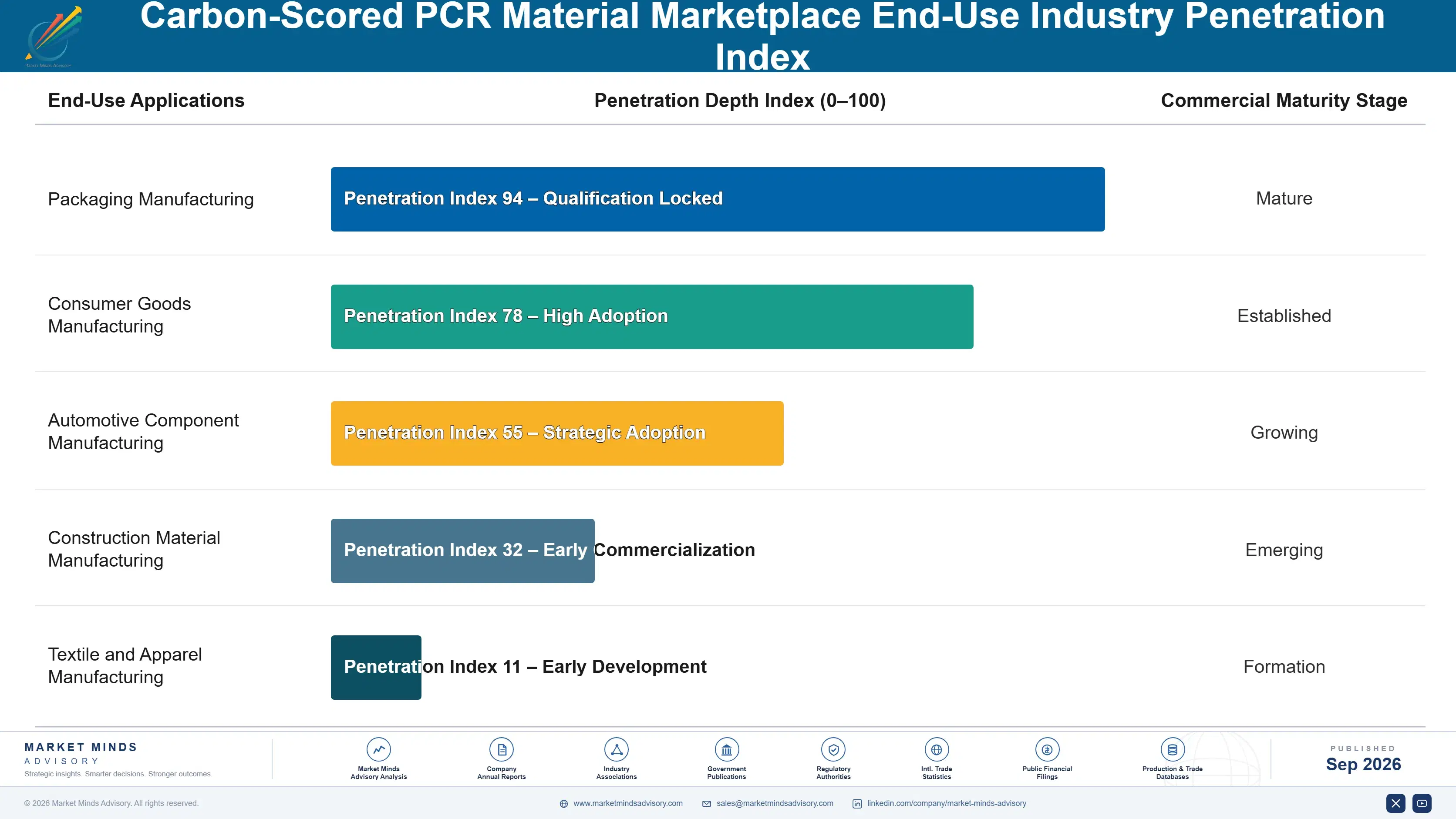
Adoption depth varies meaningfully by end-use vertical: packaging manufacturers facing binding recycled content mandates show the deepest platform stickiness given multi-year compliance documentation requirements tied to specific product lines and regulatory filing schedules extending across multiple reporting periods, while consumer goods companies pursuing voluntary sustainability commitments show comparatively shallower commitment since these buyers evaluate alternative verification approaches more frequently during periodic sustainability strategy reviews and budget reallocation cycles.

A generational shift in buyer profiles is underway as procurement responsibility moves from traditional purchasing teams toward dedicated sustainability and compliance specialists who prioritize documentation defensibility and audit readiness over pure material cost considerations alone, changing how platform operators position new verification features toward procurement decision makers increasingly focused on regulatory risk management rather than simple cost minimization or basic price comparison alone.
carbon-scored-pcr-material-marketplace-market-end-use-penetration-index-1788427134968

Where Verified Sourcing Value Concentrates

These are among the four positions where our research anticipates prominent divergence between winners and laggards over the coming forecast period. Each is grounded in the demand model, the regulatory perimeter, and the announced capacity pipeline.
01 / VERIFICATION CREDIBILITY INVESTMENT

Build third-party auditing partnerships before regulation forces it

Platforms competing on listing volume alone increasingly lose ground to competitors offering genuinely credible third-party verification that buyers can defend under formal regulatory audit scrutiny without additional internal documentation work. Establishing trusted auditing partnerships now, ahead of mandatory verification standards that several jurisdictions are actively considering, positions platforms to capture enterprise buyer contracts before competitors scramble to build comparable credibility under regulatory pressure. This verification-first positioning will become increasingly difficult to replicate quickly once buyer expectations solidify around established platforms.
02 / ENTERPRISE COMPLIANCE BUNDLING

Package verification with automated regulatory reporting software

Enterprise buyers facing complex and evolving sustainability disclosure requirements increasingly prefer platforms offering integrated compliance reporting rather than separately managing verification data and regulatory documentation through disconnected internal systems, processes, and dedicated internal compliance staff. Platforms bundling automated reporting capability directly into their verification workflow capture meaningfully higher subscription revenue than competitors offering verification alone without corresponding documentation automation. This bundled approach becomes a genuine switching cost advantage once buyers integrate platform reporting into their internal compliance workflows and processes.
03 / PHYSICAL SUPPLY CHAIN PARTNERSHIP

Partner directly with recycling facilities to secure verified supply

Limited verified material supply relative to growing buyer demand represents a genuine constraint that pure software platforms cannot resolve without corresponding physical recycling infrastructure improvements and capacity investment across the entire sector. Platforms partnering directly with recycling facility operators to fund documentation and chain-of-custody tracking infrastructure upgrades secure preferential access to verified material supply that competitors relying purely on existing supplier relationships cannot match. This supply security advantage compounds as verified material demand continues outpacing physical recycling infrastructure expansion industry wide.
04 / METHODOLOGY STANDARDIZATION LEADERSHIP

Champion unified carbon scoring standards ahead of fragmentation

Inconsistent carbon scoring methodologies across competing platforms currently undermine buyer confidence and complicate cross-platform material comparison, creating genuine friction that slows overall market adoption regardless of any single platform's individual credibility efforts. Platforms actively participating in and helping shape emerging industry-wide standardization efforts position themselves as trusted methodology leaders rather than followers forced to adopt standards developed entirely by competitors or external regulatory bodies. This standardization leadership position becomes increasingly valuable as buyers consolidate purchasing around platforms whose methodology becomes the accepted industry benchmark.

Engagement Snapshot From the Field

A live engagement with an industry participant carrying material or product regulatory and market exposure ahead of a defining policy shift, showing how our research translates into a defensible multi-year portfolio strategy.
MARKET MINDS ADVISORY · CLIENT ENGAGEMENT SUMMARY
Carbon-Scored PCR Materialplace Producer Strategic Portfolio Review and Transition Roadmap 2026·Investment Scenario on Carbon-Scored PCR Materialplace Exposure Evaluation 2025-26
CLIENT PROFILE
The client is a mid-sized flexible packaging manufacturer supplying consumer goods companies across Western Europe with plastic film and rigid container products. The company reported approximately $310 million (client-reported, unverified by MMA) in annual revenue, with binding European Union recycled content requirements approaching implementation deadlines that would affect the substantial majority of its product portfolio within eighteen months.
STRATEGIC CHALLENGE
The manufacturer needed to identify reliable verified recycled material sources meeting upcoming regulatory thresholds while carefully managing overall cost impact, given genuine ongoing uncertainty about which suppliers could actually and reliably deliver documented material at the volume, quality, and consistency the manufacturer's production schedule and long-term customer commitments genuinely required.
MMA APPROACH
MMA benchmarked available carbon-scored marketplace platforms against material availability, verification credibility, and pricing structure, while carefully interviewing the manufacturer's procurement and sustainability teams to assess realistic sourcing timelines given the rapidly approaching regulatory compliance deadline, production planning constraints, existing long-term supplier relationships, and current signed contract terms, conditions, and pricing.
KEY FINDINGS
  1. Verified material pricing carried a premium of roughly 18% (client-reported, unverified by MMA) over unverified alternatives lacking comparable documentation and audit trail evidence.
  2. Only a small subset of tracked platforms, representing under 30% (client-reported, unverified by MMA) of listings, offered verification credible enough for regulatory submission purposes.
  3. Supply availability constraints meant advance material reservation roughly six months ahead of production need became necessary for guaranteed regulatory-compliant sourcing volume and delivery timing.
  4. Platform-bundled compliance reporting reduced internal documentation preparation time by an estimated 60% compared to the manufacturer's previous manual compilation process and workflow.
CLIENT PROFILE
The client is a mid-sized flexible packaging manufacturer supplying consumer goods companies across Western Europe with plastic film and rigid container products. The company reported approximately $310 million (client-reported, unverified by MMA) in annual revenue, with binding European Union recycled content requirements approaching implementation deadlines that would affect the substantial majority of its product portfolio within eighteen months.
STRATEGIC CHALLENGE
The manufacturer needed to identify reliable verified recycled material sources meeting upcoming regulatory thresholds while carefully managing overall cost impact, given genuine ongoing uncertainty about which suppliers could actually and reliably deliver documented material at the volume, quality, and consistency the manufacturer's production schedule and long-term customer commitments genuinely required.
MMA APPROACH
MMA benchmarked available carbon-scored marketplace platforms against material availability, verification credibility, and pricing structure, while carefully interviewing the manufacturer's procurement and sustainability teams to assess realistic sourcing timelines given the rapidly approaching regulatory compliance deadline, production planning constraints, existing long-term supplier relationships, and current signed contract terms, conditions, and pricing.
KEY FINDINGS
  1. Verified material pricing carried a premium of roughly 18% (client-reported, unverified by MMA) over unverified alternatives lacking comparable documentation and audit trail evidence.
  2. Only a small subset of tracked platforms, representing under 30% (client-reported, unverified by MMA) of listings, offered verification credible enough for regulatory submission purposes.
  3. Supply availability constraints meant advance material reservation roughly six months ahead of production need became necessary for guaranteed regulatory-compliant sourcing volume and delivery timing.
  4. Platform-bundled compliance reporting reduced internal documentation preparation time by an estimated 60% compared to the manufacturer's previous manual compilation process and workflow.
RECOMMENDED STRATEGY
Phase 1: Phase one: identify and qualify verified material suppliers meeting regulatory documentation standards well ahead of the rapidly approaching compliance deadline. Phase 2: Phase two: establish advance material reservation agreements to secure guaranteed supply volume given limited verified material availability across the industry. Phase 3: Phase three: implement platform-bundled compliance reporting tools to reduce internal documentation burden and considerably simplify regulatory submission processes overall each quarter.
OUTCOME
The manufacturer secured sufficient verified material supply well ahead of the regulatory deadline and reported a 60% (client-reported, unverified by MMA) reduction in compliance documentation preparation time, alongside meaningfully improved supplier relationship visibility across its entire sourcing operations, procurement function, and overall vendor management process.

Frequently Asked Questions

Foundational context covering the market sizes, CAGR, scope, country, region and competition that inform every finding below. This section is provided to cover basics and most often pre-purchase conversations, answered from the MMA Primary Research Dataset.

What is the current size of the Carbon-Scored PCR Material Marketplace Market?

The global carbon-scored PCR material marketplace market reached an estimated $0.65 billion in 2025. Growth reflects binding recycled content mandates driving demand for auditable material sourcing platforms.

How large will the Carbon-Scored PCR Material Marketplace Market be by 2036?

MMA projects the market will reach approximately $3.17 billion by 2036. This growth is driven by expanding regulatory compliance requirements and corporate sustainability commitment budgets.

What is the CAGR for the Carbon-Scored PCR Material Marketplace Market 2026 to 2036?

The market is projected to grow at a compound annual growth rate of 15.5% between 2026 and 2036. This reflects a nascent but rapidly maturing sustainability technology category.

Which segment is growing fastest?

Carbon scoring and verification software is the fastest-growing segment, expanding at roughly 19.0% annually. This significantly outpaces the overall market's projected growth rate through the forecast period.

Who are the major companies in the Carbon-Scored PCR Material Marketplace Market?

Leading companies include Veolia Environnement, Reflex Environmental, Circularise, TerraCycle, and Rubicon Technologies. These five participants together account for an estimated 30% of tracked global revenue.

Which country is growing fastest?

India is the fastest-growing country market, expanding at approximately 18.0% annually through the forecast period. Growing manufacturing exports requiring documented recycled content compliance evidence drive this sustained growth.

Report Segmentation Architecture

The full report scope spans multiple orthogonal segmentation dimensions, with cross-tabulated demand data provided for each dimension pair. Coverage extends further to regional breakdowns, trend trajectories, and the competitive detail needed to support segment-level decision-making.

By Primary Market Dimension

  • Carbon Scoring and Verification Software
  • Marketplace Transaction and Logistics Services
  • Carbon Credit and Offset Bundling Services
  • Recycled Plastic PCR Material Listings
  • Recycled Metal PCR Material Listings
  • Recycled Paper and Fiber PCR Material Listings

By End-Use Industry

  • Packaging Manufacturing
  • Consumer Goods Manufacturing
  • Automotive Component Manufacturing
  • Construction Material Manufacturing
  • Textile and Apparel Manufacturing

By Commercial Dimension

  • Transaction Commission Fees
  • Verification Subscription Services
  • Compliance Reporting Software Licensing
  • Logistics and Fulfillment Services

By Region

  • North America
  • Western Europe
  • East Asia
  • South Asia and Pacific
  • Latin America
  • Middle East and Africa
  • Eastern Europe

Scope, Methodology, and Coverage

Every figure in this report is reproducible from documented input assumptions. The scope below maps the historical period, the forecast horizon, the segmentation dimensions, and the countries covered, alongside the underlying primary and qualitative methodology.
Historical Period
2020 to 2025
Forecast Period
2026 to 2036
Base Year
2025 (USD billions; MMA Primary Research Dataset, September 2026)
Market Definition
The Carbon-Scored PCR Material Marketplace Market covers digital platforms facilitating transactions of post-consumer recycled materials bundled with verified carbon footprint scoring and sourcing documentation, measured by platform transaction and subscription revenue. It excludes physical recycling processing operations and general commodity trading platforms lacking carbon verification capability.
Quantitative Units
USD Billion, CAGR (%), Share (%), 2020 to 2036
Segmentation Dimensions
By Primary Market Dimension; By End-Use Industry; By Commercial Dimension; By Region
Regions Covered
North America, Western Europe, East Asia, South Asia and Pacific, Latin America, Middle East and Africa, Eastern Europe
Countries Covered
United States, Canada, United Kingdom, Germany, France, China, Japan, South Korea, India, Indonesia, Vietnam, Australia, Brazil, Mexico, United Arab Emirates, Saudi Arabia, South Africa, Poland
Key Companies Profiled
Veolia Environnement, Reflex Environmental, Circularise, TerraCycle, Rubicon Technologies, Renewi, RecycleTrack Systems, Plastics for Change, Trove Recycling, Big Bag Marketplace, GreenMantra Technologies, Loop Industries, Recykal, Encore Recycling, Cirplus, ScrapConnect, European Metal Recycling (EMR), Suez Group, Waste Management Inc., Republic Services
Quantitative Methodology
Primary survey, n=3,800 respondents, Q4 2025, six countries; demand-side model with trade association cross-validation
Qualitative Methodology
47 expert interviews, Q4 2025; applied to validate demand model assumptions, identify emerging dynamics, and assess competitive positioning
Report Format
PDF and XLSX data workbook (Word format preview document)
Publisher
Market Minds Advisory
Report Code
MMA-2026-CHM-637
Published
September 2026
Contact
sales@marketmindsadvisory.com | www.marketmindsadvisory.com

Purchase the full Carbon-Scored PCR Material Marketplace Market Report (2026 to 2036).

This report provides comprehensive coverage of the global carbon-scored PCR material marketplace market, including detailed sizing, segmentation, and regional analysis through 2036. It profiles the leading platform operators and verification providers shaping competitive dynamics as regulatory compliance requirements increasingly determine where industry margin concentrates across every major platform. The analysis draws on primary survey data from 3,800 respondents and 47 expert interviews conducted in the fourth quarter of 2025. Readers gain actionable insight into where verification, compliance reporting, and logistics revenue concentrate over the coming decade and beyond.
Ten-year market sizing and forecast data
Seven-region granular market breakdown and analysis
Five-year competitive landscape developments and tracker
Segment-level CAGR and market share analysis
Primary survey data across six countries
Anonymized client case study with outcomes

Built For The People Who Decide

From boardroom strategy to bench-side execution, this report is read cover-to-cover by leaders shaping the next decade of their industry, turning demand scenarios, market dynamics and valuation benchmarks into decisions.
CXOs/ Presidents/ VPs/ Managers
M&A and Corporate Development
Strategy Teams and R&D Heads
Procurement and Product Directors
Regulatory and Compliance Leaders
Investor Relations and Equity Analysts