Carbon Fiber Composites Market
Carbon Fiber Composites Market Outlook from 2026 to 2033
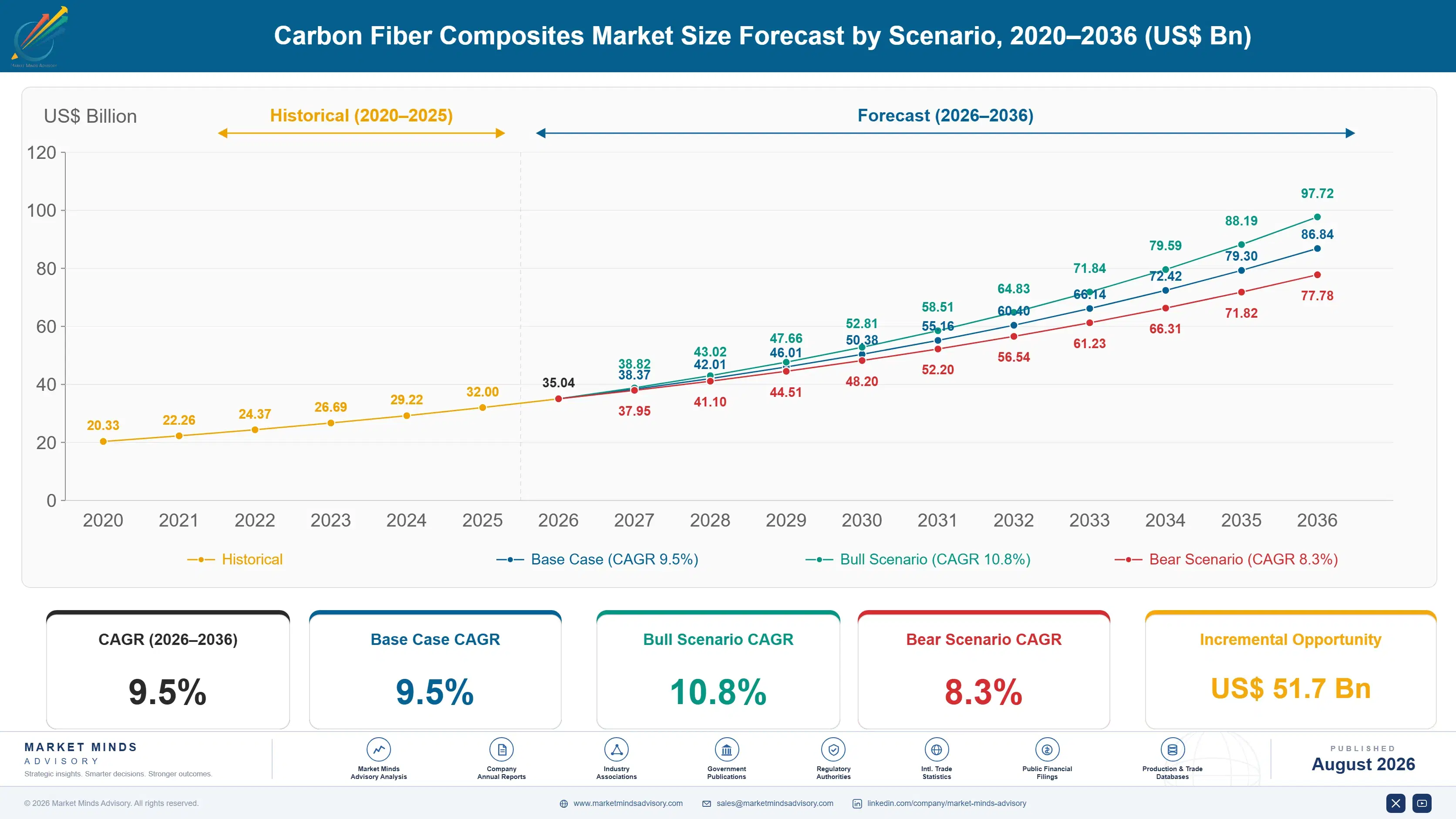
The global carbon fiber composites market is poised for robust growth, driven by increasing demand across aerospace, automotive, wind energy, and sporting goods sectors. In 2026, the market is estimated to be valued at USD 25.2 billion, and it is projected to reach USD 48.7 billion by 2033, reflecting a compound annual growth rate (CAGR) of 9.7% during the forecast period. This growth is underpinned by the superior mechanical properties of carbon fiber composites, such as high strength-to-weight ratio, corrosion resistance, and design flexibility, which are increasingly sought after in high-performance applications.
The market’s expansion is further supported by advancements in manufacturing technologies, cost reduction initiatives, and the growing emphasis on sustainability and fuel efficiency. As industries seek to reduce carbon emissions and improve operational efficiency, carbon fiber composites are becoming integral to next-generation product development. The market landscape is characterized by strategic collaborations, capacity expansions, and a focus on recycling technologies, positioning carbon fiber composites as a cornerstone material in the transition to lightweight, sustainable solutions.

Carbon Fiber Composites Market Scenario & Strategic Insights
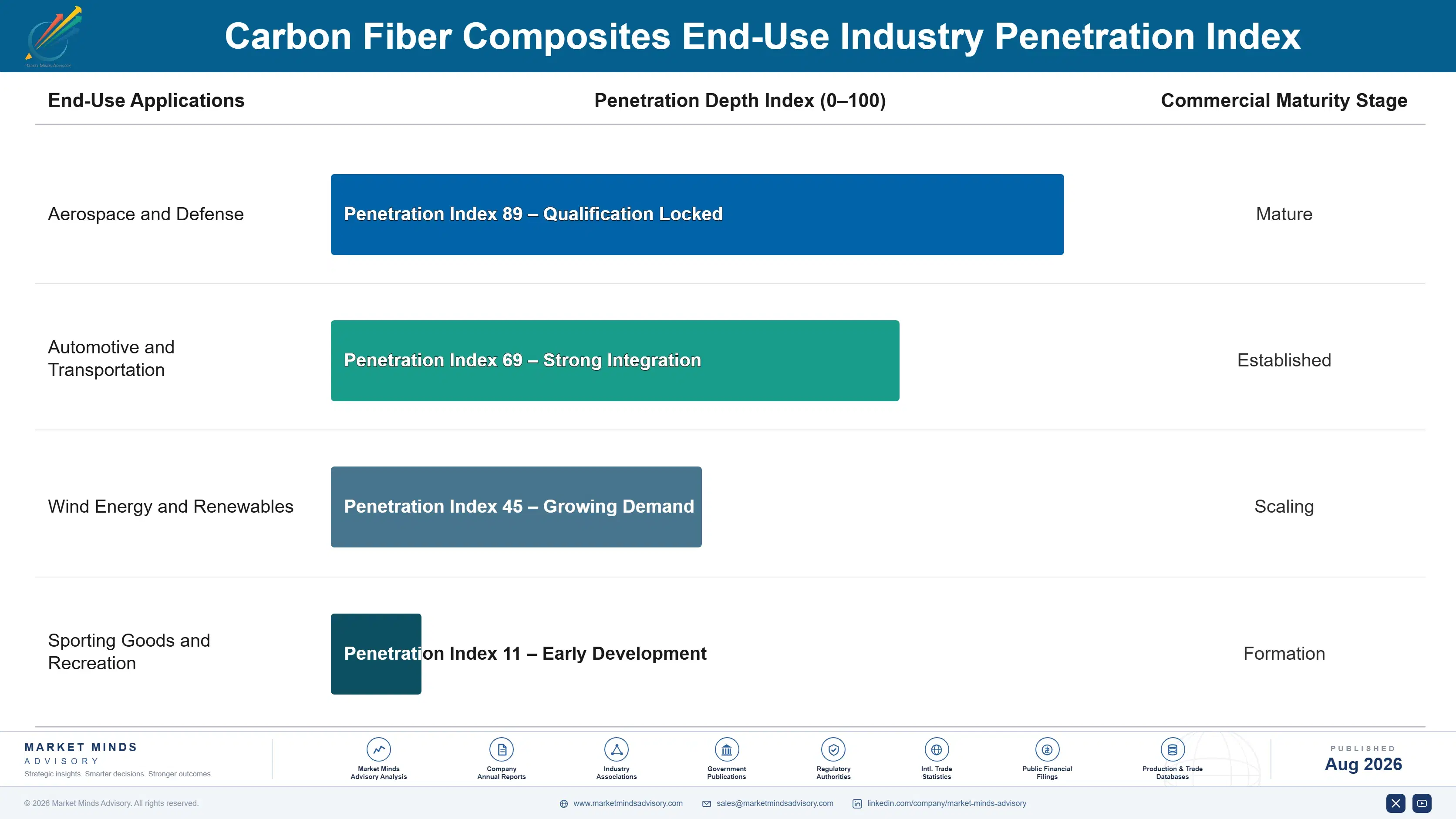
The carbon fiber composites market is experiencing a paradigm shift as end-use industries increasingly prioritize lightweight materials to enhance performance and reduce environmental impact. Aerospace and defense remain the largest consumers, leveraging carbon fiber composites for structural components that offer significant weight savings and improved fuel efficiency. The automotive sector is rapidly adopting these materials to meet stringent emission regulations and consumer demand for high-performance vehicles. Additionally, the wind energy sector is utilizing carbon fiber composites in turbine blades to achieve greater efficiency and durability.
Strategically, market participants are investing in research and development to innovate new resin systems and manufacturing processes that lower production costs and improve scalability. Partnerships between raw material suppliers, composite manufacturers, and end-users are fostering integrated supply chains and accelerating the commercialization of advanced composite solutions. The emergence of recycling technologies is also gaining traction, addressing environmental concerns and supporting circular economy initiatives. As the market matures, companies are focusing on expanding their global footprint, particularly in emerging economies where industrialization and infrastructure development are driving demand for advanced materials.
| Attribute | 2026 (USD Billion) | 2033 (USD Billion) | CAGR (2026 – 2033) |
| Market Size | 25.2 | 48.7 | 9.7% |
Carbon Fiber Composites Market Trends
- Rising Adoption in Electric Vehicles and Sustainable Mobility
The transition towards electric vehicles (EVs) and sustainable transportation is significantly influencing the carbon fiber composites market. Automakers are increasingly incorporating carbon fiber composites in vehicle structures, battery enclosures, and interior components to reduce weight and extend driving range. This trend is further amplified by regulatory mandates for lower emissions and improved fuel efficiency. The lightweight nature of carbon fiber composites enables manufacturers to offset the weight of heavy battery systems, thereby enhancing overall vehicle performance. As EV adoption accelerates globally, the demand for carbon fiber composites is expected to surge, driving innovation in cost-effective manufacturing and recycling processes.
- Technological Advancements in Manufacturing Processes
Innovations in manufacturing technologies, such as automated fiber placement (AFP), resin transfer molding (RTM), and 3D printing, are transforming the carbon fiber composites landscape. These advancements are enabling higher production rates, improved material consistency, and reduced labor costs. Automated processes are particularly beneficial for high-volume applications in automotive and aerospace industries, where precision and repeatability are critical. The integration of digital manufacturing and Industry 4.0 principles is further optimizing production workflows, minimizing waste, and enhancing quality control. These technological strides are making carbon fiber composites more accessible and economically viable for a broader range of applications.
- Expansion of Recycling and Circular Economy Initiatives
Environmental sustainability is becoming a central focus in the carbon fiber composites market. The development of efficient recycling technologies for end-of-life composite products is gaining momentum, driven by regulatory pressures and corporate sustainability goals. Mechanical and chemical recycling methods are being refined to recover high-quality carbon fibers from composite waste, enabling their reuse in secondary applications. These initiatives are not only reducing landfill waste but also lowering the overall carbon footprint of composite manufacturing. The integration of recycled carbon fibers into new products is expected to create new market opportunities and support the transition towards a circular economy in advanced materials.
Segment & Category Analysis for Carbon Fiber Composites Market
By Raw Material
- Polyacrylonitrile (PAN)-based
- Pitch-based
- Rayon-based
The raw material segment is dominated by PAN-based carbon fibers, which account for the majority of the market share due to their superior mechanical properties and widespread availability. PAN-based fibers are preferred in high-performance applications such as aerospace, automotive, and wind energy, where strength and durability are paramount. Pitch-based carbon fibers, while offering higher thermal conductivity, are primarily used in niche applications such as electronics and specialized industrial components. Rayon-based carbon fibers, though less common, are utilized in specific defense and aerospace applications. The choice of raw material significantly influences the cost, performance, and end-use suitability of carbon fiber composites.

By Resin Type
- Thermoset
- Thermoplastic
Thermoset resins, including epoxy, polyester, and vinyl ester, are the most widely used matrix materials in carbon fiber composites, offering excellent mechanical strength, chemical resistance, and dimensional stability. These resins are favored in aerospace, wind energy, and sporting goods due to their ability to form strong, durable bonds with carbon fibers. Thermoplastic resins, such as polyether ether ketone (PEEK) and polyamide, are gaining traction for their recyclability, impact resistance, and faster processing times. The growing emphasis on sustainability and rapid manufacturing is driving the adoption of thermoplastic-based carbon fiber composites, particularly in automotive and consumer electronics sectors.
By Application
- Aerospace & Defense
- Automotive
- Wind Energy
- Sporting Goods
- Construction
- Marine
- Electrical & Electronics
Aerospace and defense represent the largest application segment, leveraging carbon fiber composites for aircraft structures, interiors, and satellite components. The automotive sector is rapidly expanding its use of composites to achieve lightweighting and meet emission standards. Wind energy applications, particularly in turbine blades, are driving significant demand due to the need for high strength and fatigue resistance. Sporting goods, including bicycles, golf clubs, and racquets, benefit from the lightweight and high-performance characteristics of carbon fiber composites. Other applications in construction, marine, and electronics are also witnessing steady growth as the material’s versatility becomes more recognized.
By End-Use Industry
- Commercial Aerospace
- Military & Defense
- Automotive OEMs
- Renewable Energy
- Consumer Goods
- Industrial Equipment
The commercial aerospace industry is the primary end-user of carbon fiber composites, driven by the need for fuel-efficient aircraft and stringent safety standards. Military and defense applications focus on lightweight armor, unmanned aerial vehicles (UAVs), and missile components. Automotive OEMs are increasingly integrating carbon fiber composites into vehicle platforms to enhance performance and comply with regulatory requirements. The renewable energy sector, particularly wind energy, relies on composites for large-scale turbine blades. Consumer goods and industrial equipment manufacturers are also adopting carbon fiber composites to improve product durability and reduce maintenance costs.
By Manufacturing Process
- Lay-up
- Filament Winding Injection Molding Pultrusion Compression Molding Resin Transfer Molding (RTM)
- Automated Fiber Placement (AFP)
The choice of manufacturing process is critical in determining the cost, quality, and scalability of carbon fiber composite products. Lay-up and filament winding are traditional methods used for low to medium volume production, offering flexibility in design and customization. Injection molding and compression molding are preferred for high-volume applications, enabling rapid production cycles and consistent quality. Pultrusion is commonly used for producing continuous profiles such as beams and rods. Resin transfer molding (RTM) and automated fiber placement (AFP) are advanced processes that support complex geometries and high-performance requirements, particularly in aerospace and automotive sectors.

Growth Drivers and Opportunities in Carbon Fiber Composites Market
- Increasing Demand from Aerospace and Automotive Industries
The aerospace and automotive industries are major growth drivers for the carbon fiber composites market. In aerospace, the need for lightweight materials to improve fuel efficiency and reduce emissions is leading to increased adoption of carbon fiber composites in aircraft structures, interiors, and engine components. The automotive sector is similarly leveraging these materials to achieve weight reduction, enhance safety, and meet stringent regulatory standards. The shift towards electric vehicles is further accelerating demand, as manufacturers seek to offset the weight of batteries and improve vehicle range. These trends are expected to sustain robust market growth over the forecast period.
- Advancements in Manufacturing Technologies and Cost Reduction Initiatives
Technological advancements in manufacturing processes, such as automated fiber placement, resin transfer molding, and 3D printing, are making carbon fiber composites more accessible and cost-effective. These innovations are enabling higher production volumes, improved material consistency, and reduced labor costs, thereby expanding the market’s addressable applications. Cost reduction initiatives, including the development of low-cost precursors and efficient recycling methods, are further supporting market growth. As production costs decline and scalability improves, carbon fiber composites are expected to penetrate new markets and applications, creating significant growth opportunities for industry participants.
Emerging Opportunities for Carbon Fiber Composites Market
- Expansion into Renewable Energy and Infrastructure Applications
The growing focus on renewable energy, particularly wind power, is creating new opportunities for carbon fiber composites. Wind turbine manufacturers are increasingly adopting carbon fiber composites for blade production, leveraging their high strength-to-weight ratio and fatigue resistance to improve efficiency and reduce maintenance costs. Additionally, the use of carbon fiber composites in infrastructure projects, such as bridge reinforcement and seismic retrofitting, is gaining traction due to their durability and corrosion resistance. These emerging applications are expected to drive incremental demand and diversify the market’s growth avenues.
- Development of Recycled Carbon Fiber and Circular Economy Solutions
The development of recycled carbon fiber technologies presents a significant opportunity for market expansion and sustainability. As environmental regulations tighten and end-users seek greener solutions, the ability to recycle and reuse carbon fiber composites is becoming increasingly important. Advances in mechanical and chemical recycling processes are enabling the recovery of high-quality fibers from end-of-life products, supporting the creation of circular economy models. The integration of recycled carbon fibers into new products not only reduces waste but also lowers material costs, opening up new market segments and enhancing the industry’s environmental credentials.
Growth Restrain factors and Challanges in Carbon Fiber Composites Market
- High Production Costs and Limited Scalability
Despite the numerous advantages of carbon fiber composites, high production costs remain a significant barrier to widespread adoption. The cost of raw materials, particularly PAN-based precursors, and the energy-intensive manufacturing processes contribute to elevated prices compared to traditional materials such as steel and aluminum. This cost differential limits the use of carbon fiber composites in price-sensitive applications and restricts market penetration in developing regions. Efforts to develop low-cost precursors and streamline production processes are ongoing, but achieving cost parity with conventional materials remains a challenge. Additionally, scalability issues related to manufacturing capacity and supply chain integration further constrain market growth, particularly for high-volume applications.
The limited availability of skilled labor and technical expertise in composite manufacturing also poses challenges for market expansion. The complexity of processing carbon fiber composites requires specialized knowledge and training, which can be a barrier for new entrants and smaller manufacturers. Addressing these challenges will require continued investment in workforce development, education, and technology transfer initiatives to build the necessary capabilities for large-scale production and application.
- Recycling and End-of-Life Management Challenges
The management of end-of-life carbon fiber composite products presents a significant challenge for the industry. Unlike metals, which can be easily recycled, carbon fiber composites are more difficult to process due to their complex structure and the presence of resin matrices. Current recycling technologies are still in the early stages of commercialization and often result in lower-quality fibers that are suitable only for secondary applications. The lack of standardized recycling processes and infrastructure further complicates end-of-life management, leading to increased landfill waste and environmental concerns.
Regulatory pressures and sustainability goals are driving the development of new recycling methods, but widespread adoption will require significant investment and collaboration across the value chain. The establishment of industry standards and the creation of closed-loop recycling systems are essential for addressing these challenges and supporting the long-term sustainability of the carbon fiber composites market.
Vehicle Market Regional Analysis
| Region | Market Share (2025) | Key Market Highlight |
| Asia-Pacific | 38% | Rapid industrialization and automotive sector expansion |
| North America | 27% | Strong aerospace and defense demand, innovation leadership |
| Europe | 22% | Focus on automotive lightweighting and sustainability |
| South America | 7% | Growing wind energy and infrastructure investments |
| Middle East & Africa | 6% | Emerging aerospace and construction applications |
Regional Analysis for Carbon Fiber Composites Market
Asia-Pacific leads the carbon fiber composites market, accounting for the largest share due to rapid industrialization, expanding automotive manufacturing, and significant investments in wind energy infrastructure. Countries such as China, Japan, and South Korea are at the forefront of composite adoption, driven by government initiatives and robust export-oriented industries. The region’s growing aerospace sector and increasing focus on renewable energy are expected to sustain high demand for carbon fiber composites over the forecast period.
North America is a key market, characterized by strong demand from the aerospace and defense sectors, as well as a growing emphasis on lightweight materials in automotive manufacturing. The presence of leading composite manufacturers and ongoing investments in research and development are supporting market growth. Europe follows closely, with a focus on automotive lightweighting, sustainability, and stringent emission regulations driving the adoption of carbon fiber composites. The region’s advanced manufacturing capabilities and commitment to circular economy principles are fostering innovation and market expansion.
South America and the Middle East & Africa are emerging markets, with growth driven by investments in wind energy, infrastructure development, and the gradual adoption of advanced materials in construction and transportation. While these regions currently account for a smaller share of the global market, increasing industrialization and supportive government policies are expected to create new opportunities for carbon fiber composites in the coming years.

Competition Landscape in Carbon Fiber Composites Market
The carbon fiber composites market is highly competitive, with a mix of established players and emerging entrants vying for market share. Major companies are focusing on capacity expansions, strategic collaborations, and technological innovation to strengthen their positions. The market is characterized by vertical integration, with several players controlling the entire value chain from raw material production to composite manufacturing. Recent years have seen increased investment in recycling technologies and the development of sustainable composite solutions, reflecting the industry’s commitment to environmental stewardship. As the market evolves, competition is expected to intensify, particularly in high-growth regions and emerging application areas.
Major Players in Carbon Fiber Composites Market
- Toray Industries, Inc.
- SGL Carbon SE
- Hexcel Corporation
- Mitsubishi Chemical Holdings Corporation
- Teijin Limited
- Solvay S.A.
- Owens Corning
- Hyosung Advanced Materials
- Zoltek Companies, Inc. (Toray Group)
- Formosa Plastics Corporation
- Gurit Holding AG
- Cytec Industries Inc. (Solvay)
- Nippon Graphite Fiber Corporation
- Plasan Carbon Composites
- TPI Composites, Inc.
- Park Aerospace Corp.
- Jiangsu Hengshen Co., Ltd.
- DowAksa Advanced Composites Holdings BV
- Rock West Composites, Inc.
- Saertex GmbH & Co. KG
Recent Developments in Carbon Fiber Composites Market
- In March 2024, Toray Industries announced the expansion of its carbon fiber production facility in Japan to meet growing global demand.
- In January 2024, Hexcel Corporation launched a new range of high-performance thermoplastic carbon fiber prepregs for automotive applications.
- In November 2023, SGL Carbon SE partnered with a leading wind turbine manufacturer to develop next-generation composite blades.
- In September 2023, Teijin Limited introduced a new recycling technology for carbon fiber composites, enabling closed-loop manufacturing.
- In July 2023, Solvay S.A. announced a strategic collaboration with an aerospace OEM to supply advanced composite materials for next-generation aircraft.
- In May 2023, Mitsubishi Chemical Holdings Corporation invested in a new R&D center focused on sustainable composite solutions.
FAQ for Carbon Fiber Composites Market
- What is the projected market size of the carbon fiber composites market by 2033?
The carbon fiber composites market is projected to reach USD 48.7 billion by 2033, growing from an estimated USD 25.2 billion in 2026, at a CAGR of 9.7% during the forecast period.
- Which industries are the primary drivers of demand for carbon fiber composites?
The primary drivers of demand are the aerospace and defense, automotive, wind energy, and sporting goods industries, all of which seek lightweight, high-strength materials to enhance performance and sustainability.
- What are the main challenges facing the carbon fiber composites market?
Key challenges include high production costs, limited scalability, and difficulties in recycling and end-of-life management of composite products, which can hinder broader market adoption.
- How are technological advancements impacting the carbon fiber composites market?
Technological advancements in manufacturing processes, such as automated fiber placement and resin transfer molding, are improving production efficiency, reducing costs, and enabling the development of new applications for carbon fiber composites.
- Which regions are expected to witness the fastest growth in the carbon fiber composites market?
Asia-Pacific is expected to witness the fastest growth, driven by rapid industrialization, expanding automotive and aerospace sectors, and significant investments in renewable energy infrastructure. North America and Europe are also key markets due to their advanced manufacturing capabilities and focus on sustainability.
Contact us today to access the full report and propel your business forward with in-depth insights into the carbon fiber composites market.