Market Minds Advisory
Canada Cyber (Liability) Insurance Market

Canada Cyber (Liability) Insurance Market: One Province Changed The Arithmetic

A statutory damages floor of 1,000 dollars per person turns a breach affecting a hundred thousand Quebec residents into nine figures of exposure before anybody proves a dollar of actual harm.

Lead Analyst

Published

September 2026

Make Smarter Decisions with Customized Research Insights

Request a free sample report and evaluate market opportunities, growth trends, and competitive dynamics relevant to your business needs.

2025 MARKET VALUE$0.5BMarket Size 2025
2036 FORECAST VALUE$2.2BBase Case , 2026 to 2036
CAGR 2026 TO 203614.4 %Bull 15.6% / Bear 13.2%
INCREMENTAL OPPORTUNITY$1.6BNet 10- year value creation
EXPANSION MULTIPLE3.84x2036 value over 2026 base
Strategic Levers
M&A Pipeline
Regional Outlook
Country Rankings
Competitive Intelligence
Segmental Deep-dive
Call-Us : 91 93563 13602

Executive Snapshot and Market Trajectory

One province rewrote the liability shape for the whole country. A statutory damages floor of 1,000 dollars per affected person means a Quebec breach produces an enormous number before anybody has demonstrated a single dollar of actual harm. Nothing else here works that way.
Domestic activity carries 85% of value, far above the usual regional band, because this is a single-country market with only trace outward exposure attached. Privacy liability and regulatory defence grows at 21.6%, half again the market rate of 14.4%, since defence cost and statutory exposure now drive the loss picture rather than anything about the attack itself. Buyers run that arithmetic themselves and reach a limit number in about a single minute flat.
Concentration reaches 52% while roughly 68% of premium is ceded outside the country, which leaves capacity decided in London and Bermuda rather than here. Municipalities, school boards and health bodies produce around 31% of claims, and almost none of them were funded to defend anything. Response capability in French decides more placements here than any pricing decision, and carriers from outside the country consistently discover that far too late.
Market Definition
The market covers cyber insurance gross written premium in Canada, spanning privacy liability and regulatory defence, first-party incident response, business interruption and system failure, cyber crime and social engineering cover, technology errors and omissions, and public sector and municipal programmes. Cyber security products and services, professional indemnity written without any cyber extension, commercial crime policies unconnected to electronic compromise, and reinsurance ceded between carriers are excluded.
Base Year Value
$0.5B in 2025 (MMA Primary Research Dataset, August 2026)
Forecast Period
2026 to 2036, eleven discrete annual values
CAGR
14.4% base case. Bull 15.6%. Bear 13.2%.
Fastest Growth Segment
Privacy Liability and Regulatory Defence: 21.6% CAGR
Fastest Growth Country
India: 16.4% CAGR
Fastest Growth Region
South Asia and Pacific: 16.6% CAGR
Largest Region
North America: 85% of 2025 global value
Market Leaders
Chubb, Beazley, Intact Insurance, Aviva Canada, AIG. Source: MMA Analysis based on disclosed cyber and specialty lines gross written premium in Canada, company annual reports 2025.
Primary Survey
n=3,800 procurement and R&D decision-makers, Q4 2025, six countries
Methodology
Demand-side build-up, cross-validated against public data, 47 expert interviews

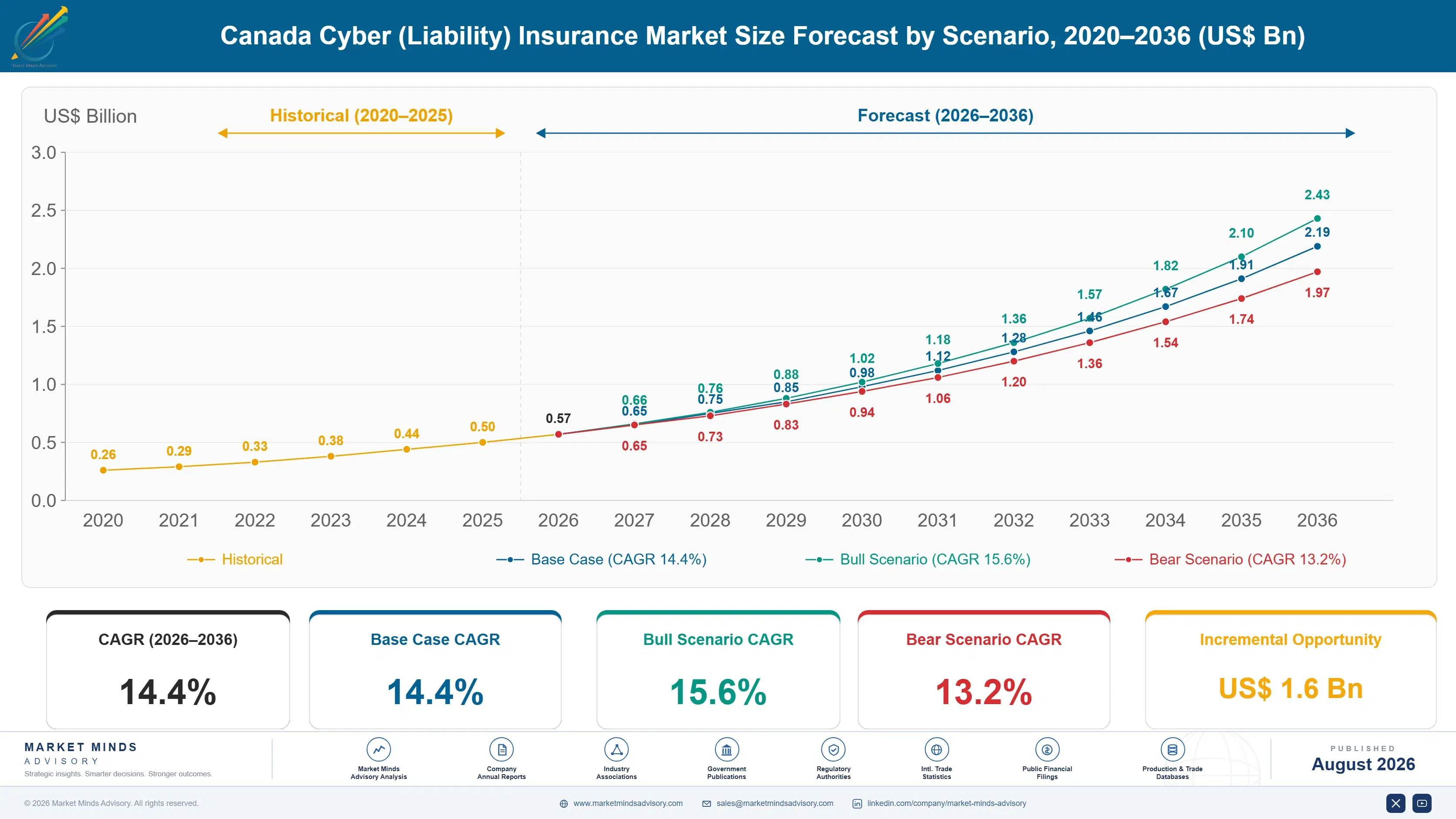
Canada Cyber (Liability) Insurance Market Forecast Scenarios

canada-cyber-insurance-market-size-forecast-scenario-1787916002600
Growth from 2020 to 2025 ran at 13.2% and law rather than attacks shaped most of it. Federal breach notification obligations had already made incidents visible and imposed a 24 month record-keeping duty covering every breach regardless of severity. Then Quebec phased in penalties and a private right of action carrying statutory damages, and an Ontario appellate ruling closed off one class action theory while the province opened another.
The 14.4% base case rests on three mechanisms. Statutory damages exposure keeps driving privacy liability limits upward as buyers work out what a large Quebec exposure actually costs. Public sector programmes keep expanding after a run of municipal and health sector incidents nobody had budgeted for. And Canadian companies keep extending cover to offshore delivery operations that were previously left outside the policy entirely. None of the three depends on attack volumes rising.
The bull case at 15.6% assumes other provinces adopt comparable statutory damages provisions and buyers respond by buying materially higher limits. The bear case at 13.2% is capacity returning from London and Bermuda faster than loss experience justifies, which this class has done repeatedly, alongside courts declining to award statutory minimums at the scale plaintiffs have been claiming.

Statutory Damages Change Everything

Quebec did something no other North American jurisdiction has done. Its privacy regime carries administrative penalties reaching into the tens of millions and, more importantly, a private right of action with statutory damages of at least 1,000 dollars per person. A breach affecting a hundred thousand residents therefore produces nine figures of exposure before any plaintiff demonstrates any loss. Nothing else on this continent works that way.
FIVE-FIRM CONCENTRATION52%Share of premium written by the largest carriers here
STATUTORY DAMAGES FLOOR1,000Minimum per person award in the strictest province
BREACH RECORD RETENTION24 monthsPeriod all incidents must be documented regardless of severity
MUNICIPAL CLAIM SHARE31%Claims arising from local government and school bodies
FRENCH RESPONSE REQUIREMENT100%Quebec notifications requiring service in the official language
REINSURANCE CESSION RATE68%Premium passed to carriers outside the domestic market
The practical constraint on response is language, which carriers outside the country consistently underestimate. Quebec notification must be delivered in French, and so must the call centre, the credit monitoring portal, the legal advice and the regulator correspondence. A carrier whose panel cannot supply all of that at two in the morning is not offering a usable product here.
Public bodies produce a disproportionate share of the damage. Municipalities, school boards and health authorities account for roughly 31% of claims, and almost none of them were funded to maintain the security or the response capability that would have prevented or contained anything. They are also the buyers least able to absorb a premium increase, which is why several provinces have moved toward pooled programmes rather than leaving each body to buy alone.
"Underwriters here spend their time on ransomware controls and their money on privacy defence. The attack that costs you is the one where nothing much was stolen and forty thousand people in Quebec each have a statutory claim worth a thousand dollars."
Director, Canadian Specialty Practice · MMA Cyber Liability and Specialty Insurance Practice · August 2026

Market Trends

Statutory Damages Rewrote The Limit Conversation

A private right of action carrying a floor of 1,000 dollars per affected person converts headcount into liability directly, without any plaintiff demonstrating loss, which is a calculation buyers can perform themselves on a spreadsheet in about a minute. That segment grows at 21.6%. Limits that looked adequate in 2021 look careless now, and brokers report the limit conversation has changed more in three years than in the previous fifteen combined. Nobody needs an underwriter to explain a number that they can calculate themselves on their own record headcount instead.
Market Impact: Requires 100% French capability
Public Bodies Pool Because They Cannot Buy Alone

Municipalities, school boards and health authorities generate roughly 31% of claims while operating security budgets that were never sized for the exposure, and they cannot absorb the premium increases that experience justifies. Pooled provincial programmes are the response. That segment grows at 12.0%. Pooling spreads cost and produces a buyer sophisticated enough to demand controls, which individual small municipalities never had the capacity to do on their own. A single municipality could never specify or enforce controls, and a provincial pool with fifty members can insist on them without any argument at all.
Market Impact: Grows Indian exposure at 16.4%

Market Opportunities and Growth Drivers

Bilingual Response Capability Decides Placements Here

Quebec notification, call centres, credit monitoring, legal advice and regulator correspondence must all be delivered in French, which means a panel without genuine French capability cannot service an incident in the country's second largest market at all. Carriers from outside consistently underestimate this. Buyers who have been through a Quebec notification evaluate panels on exactly this point and rarely mention price at any stage of the conversation afterwards. A wording that reads beautifully in an underwriting submission is worth nothing if nobody on the panel can answer a Quebec regulator in French.
Market Impact: Cedes 68% of written premium

Offshore Delivery Operations Enter Policy Scope

Canadian financial and technology firms run substantial delivery operations in India and elsewhere that historically sat outside domestic cyber policies, and buyers have begun extending cover after incidents demonstrated that a breach there produces Canadian notification obligations regardless. India grows fastest at 16.4%. Underwriting those locations requires controls assessment that most Canadian carriers do not perform and generally subcontract to somebody who does. Most buyers assume those locations are covered and very few have ever confirmed it with anybody, which is a conversation that only happens after something has already gone wrong.
Market Impact: Closed 1 major liability theory

Market Restraints and Challenges

Capacity Is Decided Somewhere Else Entirely

Roughly 68% of premium is ceded to carriers in London, Bermuda and the United States, which means the limits available to Canadian buyers depend on appetite formed by underwriters who have never seen a Quebec notification. Root cause is a domestic market too small to retain the exposure. Commercial impact is capacity that contracts on global conditions. Mitigation involves retention increases and domestic pooling, neither of which has reached meaningful scale yet. Nobody underwriting from Bermuda has ever handled a French language notification at any point in their entire career.
Market Impact: Multiplies exposure by 1,000 dollars

One Court Closed A Theory And Another Opened One

An Ontario appellate ruling in 2022 held that a defendant whose database was hacked cannot be liable for intrusion upon seclusion, closing a class action theory plaintiffs had used widely. Root cause is that the tort requires the defendant to have done the intruding. Commercial impact reduced one exposure while Quebec statutory damages created a larger one. Mitigation is limit adequacy assessed province by province rather than nationally. Buyers and carriers alike now assess exposure province by province, which nobody in this market was doing five years ago at all.
Market Impact: Covers 31% of claim volume
3 additional market trends, 4 additional growth drivers, and 2 additional restraints and challenges are covered in the full report. Contact sales@marketmindsadvisory.com to access the complete intelligence.

Segment CAGR and Growth Architecture

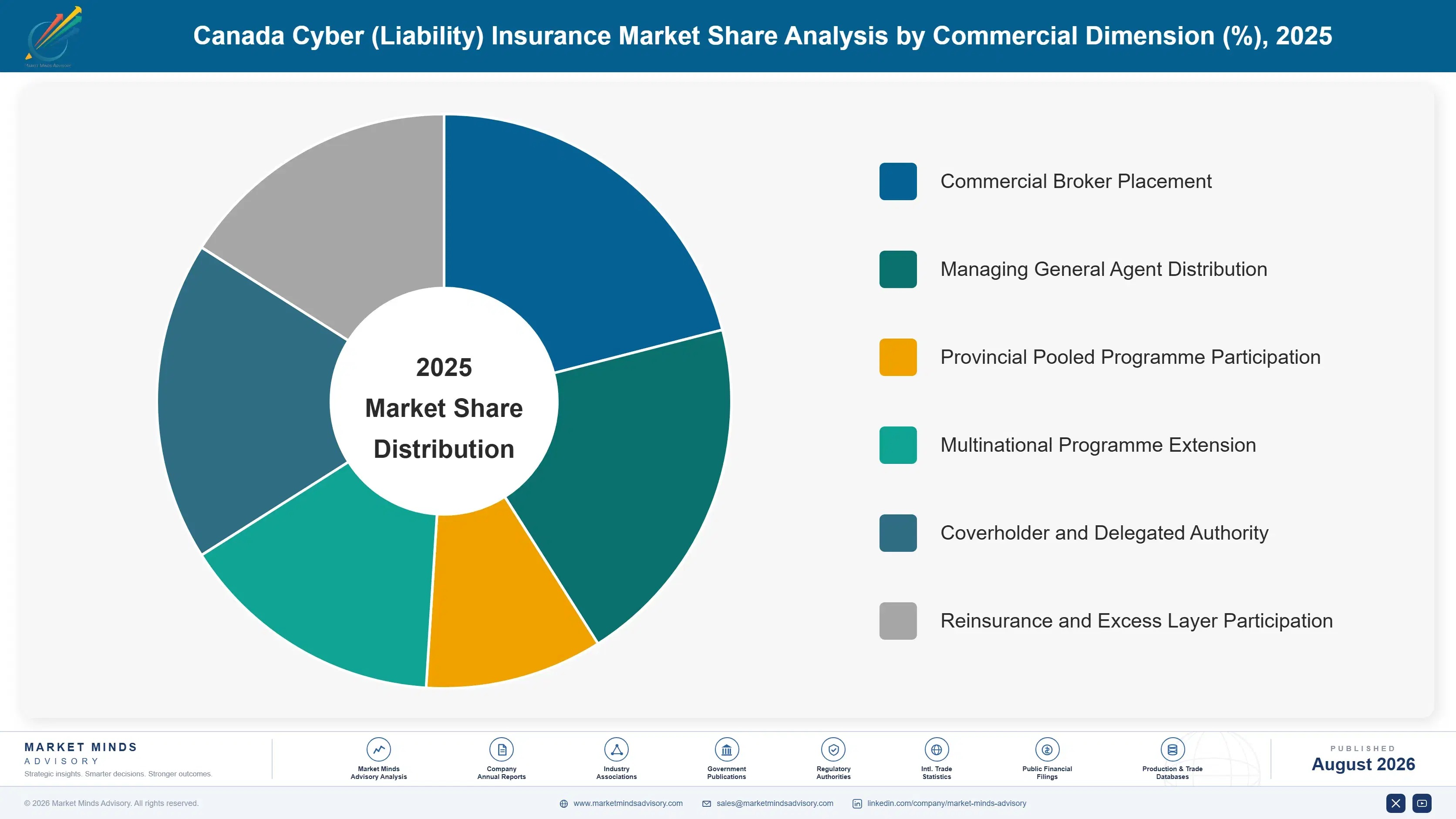
Segmentation follows cover type, since loss driver, defence requirement and buyer profile all differ by cover rather than by insured industry or size. Six categories cover the market without overlap. Insured sector, organisation size and placement route are treated as separate commercial dimensions throughout this report rather than as segmentation logic in their own right.
canada-cyber-insurance-market-market-share-analysis-1787916003217

Privacy Liability and Regulatory Defence

Privacy liability grows at 21.6%, half again the market rate of 14.4%, because a statutory damages floor of 1,000 dollars per affected person converts record count directly into exposure without any plaintiff demonstrating actual loss anywhere. Buyers can calculate that themselves in a minute. Defence cost drives most of the remainder, since regulators investigate considerably more often than claimants litigate successfully, and a carrier without genuine privacy counsel on panel is offering an incomplete product to anybody buying it. No large award has yet established what a court will actually do with a claim constructed on statutory minimums alone, which means carriers pricing this are underwriting a legal question rather than a technical one.
CAGR 21.6%

First-Party Incident Response

Incident response grows at 18.0% as buyers work out that the first day determines both the regulatory outcome and most of the eventual cost, and that a panel unable to operate in French cannot service the country's second largest market at any hour. Federal record-keeping obligations covering every breach for 24 months regardless of severity add a documentation requirement most organisations discover only when a regulator asks to see the register they were supposed to be maintaining. Carriers whose panels cannot operate in both languages simultaneously are offering an incomplete product in the country's second largest market, and brokers there have become considerably rather less polite about saying so lately.
CAGR 18.0%
Full segment breakdown across 6 segments available in the complete report.

Regional Architecture and Country Demand Map

This is a single-country market and the distribution reflects where insured exposures actually sit, with modest outward exposure through offshore delivery operations and multinational programme participation. Provincial differences matter considerably more in this market than any single national figure ever manages to convey at all.

North America

Share sits at 85%, far above the standard regional band, because this is a single-country market and essentially all insured exposure sits here. That justification is definitional rather than analytical. The domestic picture divides sharply by province: Quebec statutory damages create a liability shape existing nowhere else on the continent, Ontario appellate rulings closed one class action theory in 2022, and western provinces operate under federal rules with considerably less private litigation attached to them. Cross-border programmes covering both Canadian and American operations frequently apply limits set for the larger market without any adjustment for a statutory damages regime that exists on only one side of the border at all.
Share: 85% | CAGR: 13.2% (2026 to 2036)

Western Europe

Share sits at 6%, far below the standard regional band, for the definitional reason applying across every non-domestic region here. What matters far more than the outward share is that London carriers and Lloyd's syndicates supply a substantial part of the capacity available domestically, which means limits offered to Canadian buyers depend on appetite formed by underwriters who have never handled a French language notification in their working lives. European privacy practice also shaped how provincial legislation was drafted, since the statutory damages provision and the administrative penalty structure both draw quite recognisably on European precedent rather than on anything developed anywhere across North America beforehand at all. Precedent travelled.
Share: 6% | CAGR: 12.8% (2026 to 2036)
Regional intelligence for 5 additional markets available in the complete report: East Asia, South Asia and Pacific, Latin America, Middle East and Africa, Eastern Europe. Contact sales@marketmindsadvisory.com.
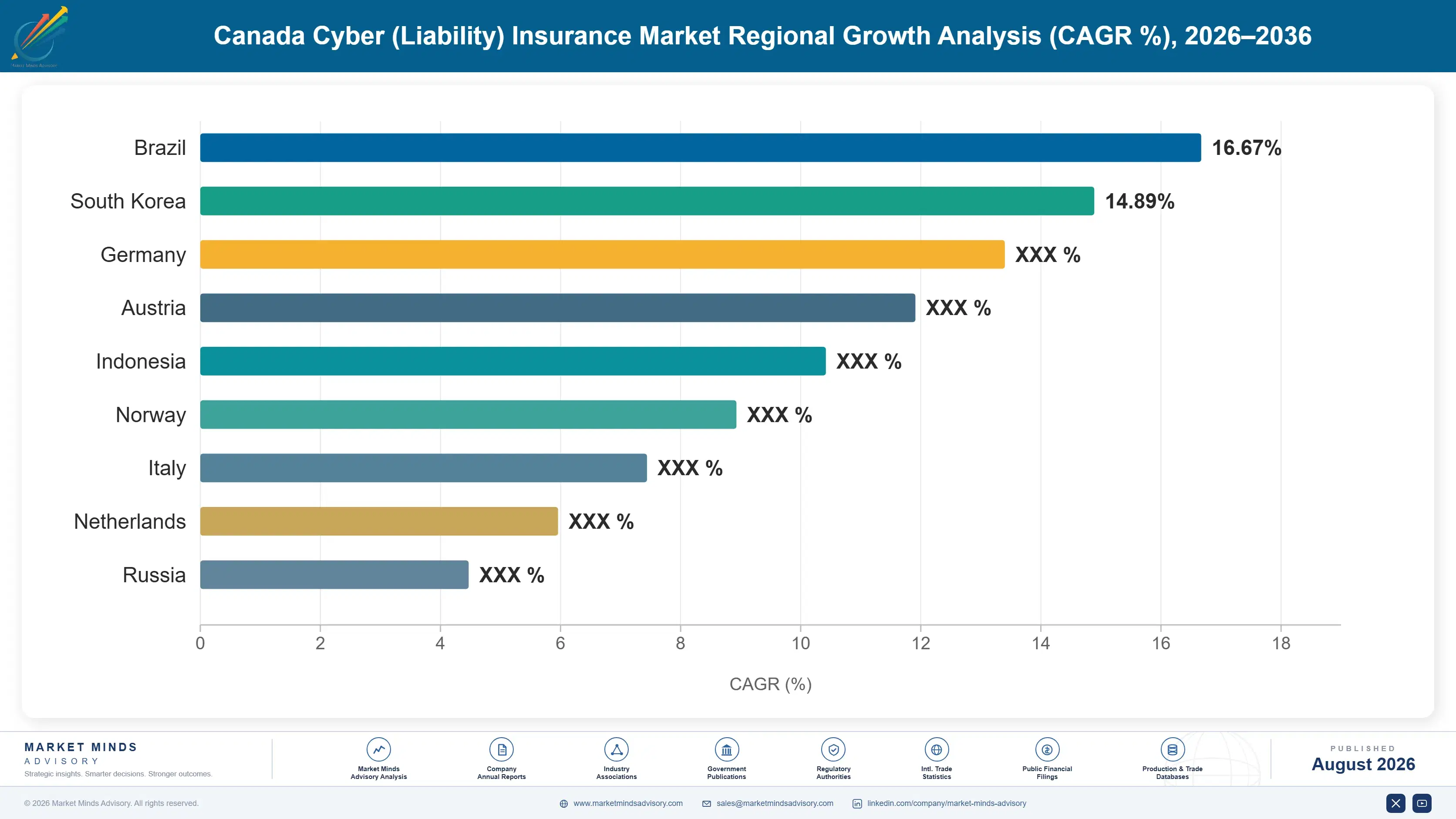
canada-cyber-insurance-market-country-cagr-analysis-1787916003756

Underwrite The Province, Not The Country

Statutory damages start at 1,000 dollars per person, public bodies generate 31% of claims, French response is required on 100% of Quebec notifications and 68% of premium leaves the country. Four levers work on limit adequacy, bilingual panels, pooled buying and retention rather than on rate, which almost nobody in this market decides anything on.

Model Limits By Province Rather Than Nationally

A statutory damages floor of 1,000 dollars per affected person applies in one province and nowhere else, which means an identical organisation carries entirely different exposure depending on where its record subjects live. Limits set nationally are wrong in both directions simultaneously. Carriers modelling record counts by province price the actual exposure, and buyers can verify the arithmetic themselves in a minute, which makes the conversation unusually easy to have. Two otherwise identical organisations carry entirely different liability depending on where each of their record subjects happens to live here.
Market Impact: Prices against a 1,000 dollar per record floor

Retain A French Response Panel Permanently

Quebec notification, call centres, credit monitoring, legal advice and regulator correspondence must all operate in French, and a panel assembled after an incident begins cannot deliver any of that at two in the morning. Retaining capability costs money whether incidents occur or not. It is also what buyers who have been through a Quebec notification evaluate first, and price rarely enters that conversation at all afterwards. Around 100% of Quebec notifications require French service across every function, and a carrier delivering that reliably is offering something several competitors simply cannot.
Market Impact: Delivers a full 100% French language incident response

Serve Public Bodies Through Pooled Programmes

Municipalities, school boards and health authorities generate roughly 31% of claims and cannot individually absorb premium at levels experience justifies, which makes them unattractive one at a time and workable in aggregate. Pooled provincial programmes spread cost and create a buyer capable of demanding controls that no small municipality could ever specify alone. Carriers structuring those pools reach volume competitors decline for entirely understandable reasons. Around 31% of claims arrive from these bodies, and a pool that can specify minimum controls reduces that frequency in a way no individual purchase ever managed.
Market Impact: Reaches into the 31% of total claim volume

Increase Retention To Influence Available Terms

Ceding roughly 68% of premium leaves domestic buyers with limits decided by underwriters in London and Bermuda who have never handled a French language notification. Retaining more requires capital and genuine nerve given statutory damages exposure nobody has yet seen tested at scale. It also earns underwriting result rather than commission and gives a carrier standing in treaty negotiations that no purely ceding participant ever holds. Around 68% of premium currently leaves the country, and a carrier retaining more of it stops relaying somebody else's terms to its own brokers.
Market Impact: Retains part of that 68% ceded premium base

Who Controls the Margin Pool

Measured on disclosed cyber and specialty lines gross written premium in Canada, the five largest carriers hold a CR5 of 52%, reflecting a market where international carriers writing through branches compete alongside domestic insurers with genuinely different capabilities. Chubb and Beazley carry the deepest specialist cyber positions, Intact Insurance and Aviva Canada hold substantial domestic distribution and commercial relationships, and AIG retains meaningful large corporate placements. Nobody outside that group combines specialist cyber underwriting with genuinely native bilingual operation across the whole country.
Three contests define activity. Large corporate placements compete on capacity and privacy defence capability. Mid-market competes on wording clarity and response speed. Public sector pools compete on programme structure entirely. Each of those three rewards a completely different capability, and hardly any carrier here competes convincingly across more than one.

Pressure builds from buyers assessing limits province by province once they have run the statutory damages arithmetic themselves. Rankings shift toward whoever holds genuine French response capability rather than the largest line size. Line size is easy to buy and a French speaking breach counsel available overnight is not, which decides more of this market than anybody outside it appreciates.
canada-cyber-insurance-market-company-positioning-matrix-1787916004298

Competitive Moat and Risk Dimensions

CHUBB

Moat: Bilingual Panel And Claims Depth

Established French and English forensic, legal and notification panels across the country give the carrier a response capability that matters enormously when a Quebec notification clock is running and nobody has time to assemble anything. Buyers who have experienced an incident value that above almost everything else. Building comparable bilingual panels takes years of relationship work.
CHUBB

Risk: Statutory Damages Limit Adequacy

Writing substantial Quebec exposure means carrying a liability shape that statutory damages can multiply well beyond what historical loss experience suggests, and no large award has yet tested the ceiling. Limits sold before the regime took full effect may prove inadequate. Scale magnifies the consequence of having priced that wrong across a whole book.
INTACT INSURANCE

Moat: Domestic Distribution And Broker Reach

The deepest commercial broker relationships in the country reach mid-market and public sector buyers that international carriers approach only through intermediaries who already place elsewhere. That distribution is genuinely difficult to replicate and it matters most in exactly the segments where cyber take-up is still growing. Bilingual operation is native rather than assembled.
INTACT INSURANCE

Risk: Specialist Cyber Capability Gap

Broad commercial distribution does not confer specialist cyber underwriting or claims capability, and privacy liability is becoming the dominant loss driver rather than anything a general commercial team assesses well. Buying or building that expertise competes for attention with every other line. Distribution reach without technical depth wins mid-market placements and loses complex ones.

Players Tracked

Prominent Players

Chubb
Beazley
Intact Insurance
Aviva Canada
AIG

Other Key Players

Sompo
Zurich Canada
Travelers Canada
Northbridge Insurance
Definity Financial
Wawanesa
The Co-operators
Coalition
CFC Underwriting
Markel
Liberty Mutual Canada
Berkley Canada
Trisura
Munich Re
Swiss Re

Recent Developments

MARCH 2025

Provincial pooled programme launched for municipal cyber cover

A provincial arrangement established a pooled cyber programme covering municipalities and school boards that had struggled to buy individually at sustainable premiums. This was a public sector purchasing decision rather than any carrier initiative, and participation required members to meet specified minimum security controls beforehand.
Signal: Pooling creates a buyer capable of demanding the controls that individual bodies never once could specify.
JULY 2025

Class action filed relying on provincial statutory damages provision

A privacy class action was filed relying on the provincial statutory damages provision rather than on proof of individual harm, seeking the minimum award across a large affected group. This was a litigation development rather than any judgment, and defendants and carriers alike watched the certification stage closely.
Signal: The statutory floor turns headcount directly into a claim without anybody proving any actual harm whatsoever.
OCTOBER 2025

Carrier extends retained response panel into further French language capability

A cyber carrier extended its retained forensic, legal and notification panel arrangements to provide full French language capability across all response functions. This was a capability investment rather than any product change, and it addressed a gap brokers had raised repeatedly during placement discussions beforehand.
Signal: Response capability in both languages decides placements far more reliably than any pricing decision ever does.

Cessions, Response, Defence

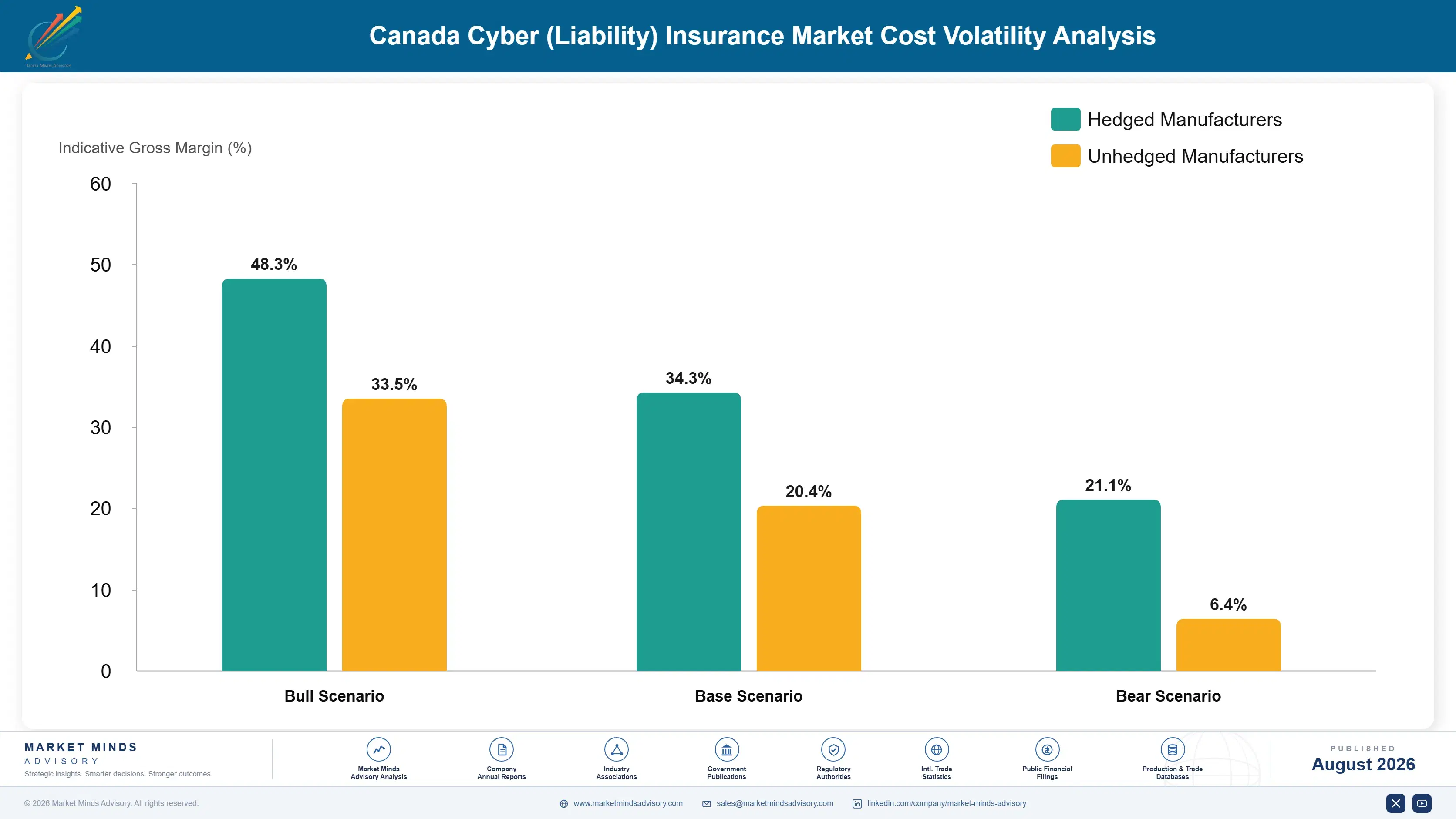
Three costs consume premium here. Reinsurance ceded outside the country, incurred claims covering forensic response notification and legal defence, and broker commission with underwriting operations together account for 79 to 91% of gross written premium at a typical carrier. Cessions dominate because roughly 68% of premium leaves, which means the domestic carrier frequently earns ceding commission on exposure that somebody in another country has actually priced.
Two legal developments moved the cost base in opposite directions. Provincial privacy legislation phased in penalties and a private right of action carrying statutory damages, which Office of the Privacy Commissioner of Canada reporting and provincial regulator publications document across the period. An Ontario appellate ruling then closed one class action theory in 2022. Beazley Annual Report 2024 and Intact Financial Annual Report 2024 disclosures describe the resulting claims environment.

Exposure divides by response infrastructure and language capability rather than by underwriting skill. Carriers with retained bilingual panels handle incidents at predictable cost and known quality. Those assembling French capability after an incident starts pay premium rates for urgency and deliver slower notification, which shows up directly in regulatory outcomes and eventual claim severity. That gap compounds quietly and appears all at once.
canada-cyber-insurance-market-cost-volatility-analysis-1787916004512

Retain bilingual panels rather than appointing during incidents

Quebec notification, call centres and legal advice must operate in French, and capability appointed while a notification clock runs costs premium rates and delivers slower outcomes. Retaining that capability across both languages costs money continuously whether incidents occur or not. It converts an unpredictable severity driver into a managed and reasonably known cost across the whole book.

Model record counts by province rather than nationally

Statutory damages of 1,000 dollars per person apply in one province only, so identical organisations carry entirely different exposures depending on where their record subjects actually live. Collecting that breakdown requires asking buyers questions most proposal forms never included. It prices exposure that nationally set limits get wrong in both directions all at once.

Increase retention to earn standing in treaty negotiation

Ceding roughly 68% of premium leaves a carrier relaying terms decided by underwriters who have never handled a French notification anywhere. Retaining more requires capital and nerve given statutory exposure nobody has yet seen tested at scale. It earns underwriting result rather than commission and changes every subsequent renewal conversation quite considerably indeed afterwards.

Portfolio Architecture for Margin Defence

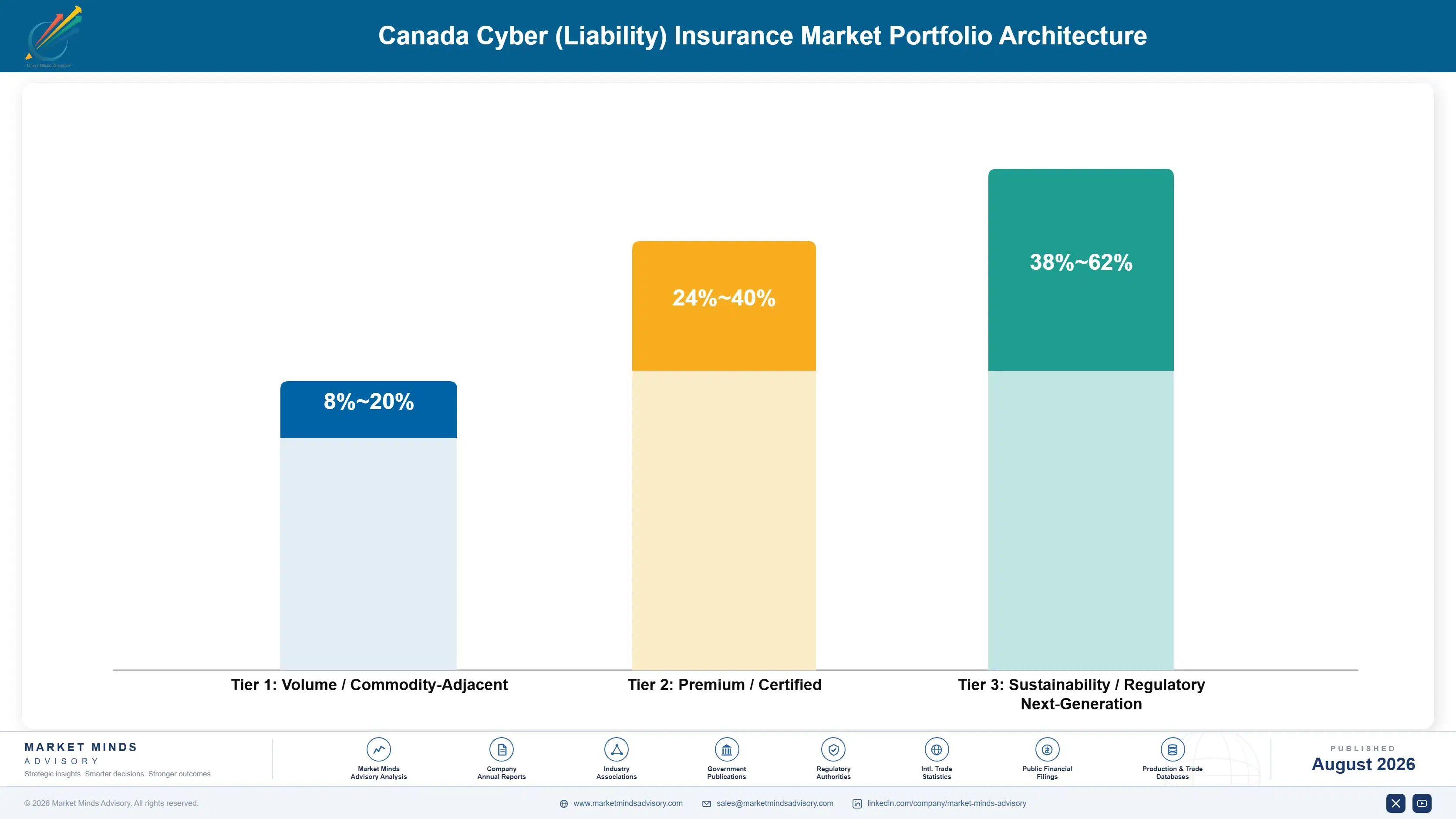
Margin follows capability scarcity rather than premium volume. Public sector programmes earn thinly on buyers who cannot pay more. Technology errors and omissions earn modestly against specialist competition. Cyber crime cover earns reasonably where payment controls are enforced. Business interruption earns well on system dependency assessment. First-party incident response earns better on bilingual panel capability. Privacy liability and regulatory defence earn best, on statutory exposure that only a few carriers price properly.
The tension is that the fastest growing cover carries an exposure nobody has yet seen tested. Privacy liability grows at 21.6% on statutory damages that convert headcount into liability arithmetically, and no large award has established what a court will actually do with a claim of that construction. Carriers pricing it are underwriting a legal question, and the answer arrives from a judge rather than any loss model.

High-value pools sit in three places. Bilingual response panels, which decide placements and take years to assemble properly. Province-level limit modelling, which prices an exposure nationally set limits get wrong in both directions. And pooled public sector programmes, which reach 31% of claims through a buyer sophisticated enough to actually demand the controls that reduce them.

Volume / Commodity-Adjacent

Public sector programmes and smaller commercial cover written for buyers with limited ability to absorb rate. The 12-point range separates carriers operating pooled structures with control requirements from those writing individual bodies at inadequate premium.
Gross Margin: 8-20%

Premium / Certified

Technology errors and omissions, cyber crime and business interruption cover requiring specialist assessment and enforced controls. The 16-point spread reflects how differently crime exposure and system dependency perform where controls are or are not verified.
Gross Margin: 24-40%

Sustainability / Regulatory / Next-Generation

Privacy liability and first-party incident response requiring bilingual panels and province-level exposure modelling. The 24-point range is wide because statutory damages exposure and response capability are held very unevenly across carriers writing here.
Gross Margin: 38-62%
canada-cyber-insurance-market-portfolio-architecture-1787916005036

High-value Sub-segments and Strategic Watch-out

Bilingual Response Capability

Highest margin and fast growth at 18.0%, protected by panel arrangements in two languages that take years of relationship work rather than capital to assemble properly. The risk is that buyers only value it once they have been through an incident themselves. Nobody values it beforehand.
Gross Margin: 48-62%

Province-Level Limit Modelling

Strong economics growing at 21.6% from pricing statutory exposure that nationally set limits get wrong in both directions simultaneously. The risk is that no large award has yet tested what courts will actually do with claims constructed this way. That answer arrives from a judge.
Gross Margin: 40-54%

Mid-Market Commercial Cover

The volume core, funding the panels and underwriting capability that everything else depends upon across the country. Carriers hold it for flow and broker standing, not because rate adequacy in that segment is remotely attractive. Broker standing is really what it actually buys them here.
Gross Margin: 22-34%

Ceded Capacity Dependence

The strategic watch-out. Roughly 68% of premium leaves and limits are decided by underwriters who have never seen a French notification. The risk is capacity contracting on global conditions with nothing local to offset it. And nothing local at all offsets a global capacity withdrawal here.
Gross Margin: 6-16%

Bought After The Law Changed

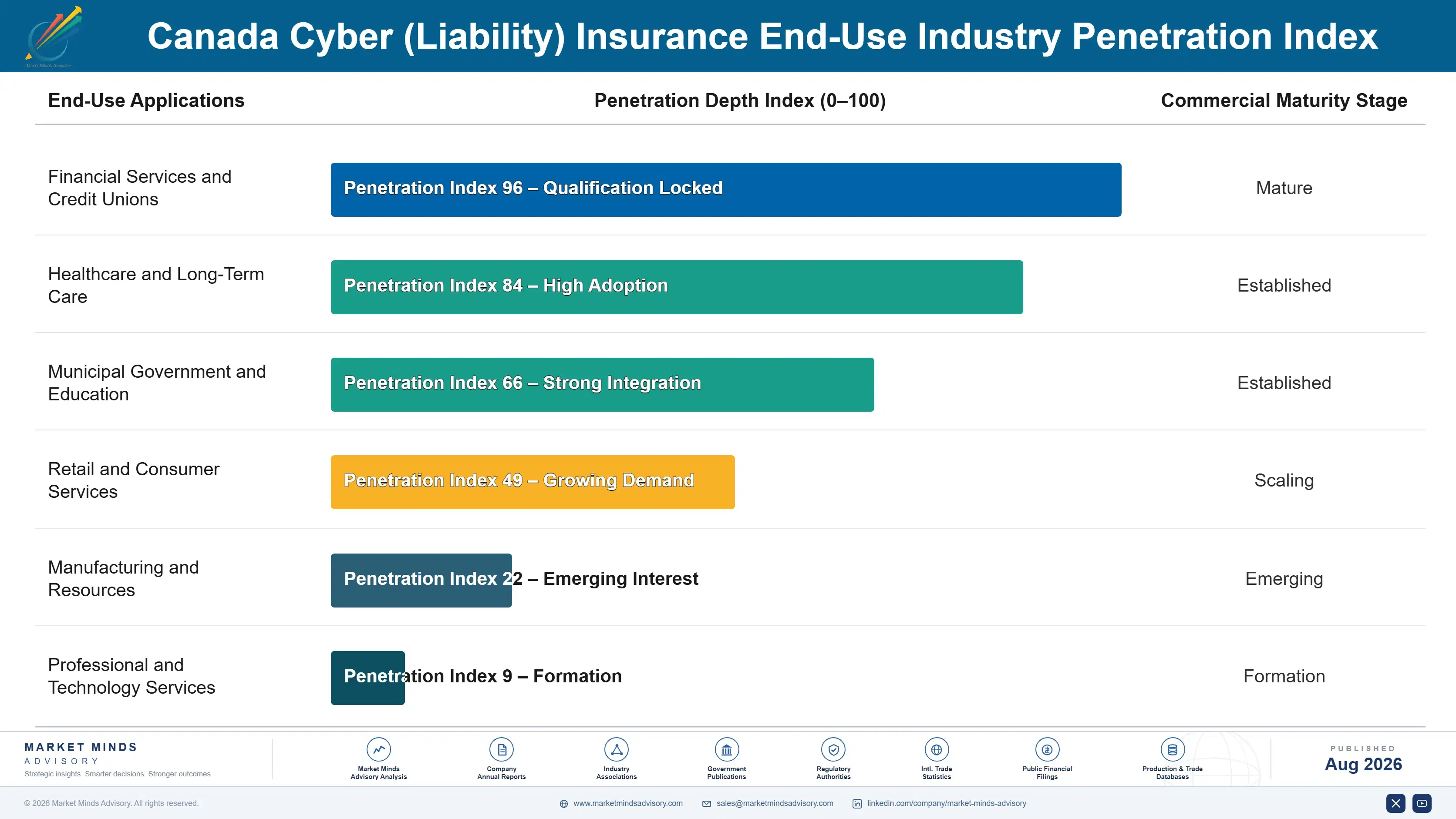
Annuity characteristics here are strong once cover exists and weak before it does. A policy renews annually with high retention, because an organisation that has bought cyber cover rarely drops it and one that has claimed never does. What changed the first purchase was legislation rather than any attack. Statutory damages gave boards a number they could calculate, and calculable exposure moves budgets in a way fear never managed.
Stickiness depends almost entirely on whether an incident has occurred. A buyer who has been through a bilingual notification, a regulator engagement and a class action threat will not move carrier for price. A buyer who has never claimed treats the cover as a commodity and shops it annually. Averaging those two populations misleads badly on retention.

The buyer has moved from technology toward legal and finance over five years. Chief information security officers once owned this conversation. Statutory damages pulled general counsel in directly, since the exposure is a legal construction rather than a technical one. Finance joined once the arithmetic became calculable at all, and public sector buyers arrived through provincial pooling arrangements rather than through any individual purchasing decision at all.
canada-cyber-insurance-market-end-use-penetration-index-1787916005547

One Province Sets The Price

These are among the four positions where our research anticipates prominent divergence between winners and laggards over the coming forecast period. Each is grounded in the demand model, the regulatory perimeter, and the announced capacity pipeline.
01 / PROVINCIAL LIMIT MODELLING

Identical companies carry entirely different exposures

A statutory damages floor set at 1,000 dollars per affected person applies in just one province and nowhere else on this continent, which means that two otherwise identical organisations carry completely different liability depending entirely on where their record subjects happen to live. Limits set on any national basis are wrong in both directions at the same time. Carriers who model record counts by province price the actual exposure, and buyers verify that arithmetic for themselves in about a minute.
02 / BILINGUAL PANEL RETENTION

Nobody assembles French counsel at two in the morning

Quebec notification, the call centres, credit monitoring, legal advice and regulator correspondence must all operate in French, and a panel assembled after an incident has already started cannot possibly deliver any of that anywhere near quickly enough to matter to anybody. Retaining all that capability continuously costs real money whether any incidents occur or not. It is also the first thing that buyers who have been through a Quebec notification evaluate, and price rarely enters that conversation at all afterwards.
03 / PUBLIC SECTOR POOLING

Thirty-one percent of claims cannot buy alone

Municipalities, school boards and health authorities together generate roughly 31% of all claims while running security budgets that were never once sized for the exposure and cannot absorb any premium at the levels that experience genuinely justifies. Taken one by one they are unattractive risks and taken collectively they become workable ones instead. Pooled provincial programmes spread all of that cost and create a buyer capable of demanding controls which no small municipality could ever have specified entirely on its own.
04 / RETENTION RECOVERY DISCIPLINE

Sixty-eight percent ceded leaves nothing to negotiate

Ceding roughly 68% of the premium abroad leaves domestic buyers holding limits decided by underwriters in London and Bermuda who have never once handled a French language notification anywhere in their working lives. Retaining rather more of it requires capital and considerable nerve given a statutory exposure that no court anywhere has yet tested at any scale. It also earns an actual underwriting result rather than commission and it confers treaty standing that a purely ceding carrier never holds anywhere.

Engagement Snapshot From the Field

A live engagement with an industry participant carrying material or product regulatory and market exposure ahead of a defining policy shift, showing how our research translates into a defensible multi-year portfolio strategy.
MARKET MINDS ADVISORY · CLIENT ENGAGEMENT SUMMARY
Canada Cyber (Liability) Insurance Producer Strategic Portfolio Review and Transition Roadmap 2026·Investment Scenario on Canada Cyber (Liability) Insurance Exposure Evaluation 2025-26
CLIENT PROFILE
A domestic specialty carrier writing cyber cover for mid-market commercial and public sector buyers, with reported cyber gross written premium of 38 million dollars (client-reported, unverified by MMA). Roughly 68% of premium was ceded and limits were set on a national basis with no provincial record count analysis performed anywhere. French response capability existed for legal advice only.
STRATEGIC CHALLENGE
Privacy liability notifications had risen sharply following provincial legislation while limits sold before the regime took effect looked increasingly inadequate against statutory damages arithmetic. Management proposed reducing line sizes across the book. That shrank the account without addressing either the limit modelling gap or the response capability that was costing severity on every incident the carrier actually handled.
MMA APPROACH
MMA analysed claims by cause and by response arrangement, separating incidents handled through retained panels from those where capability was appointed afterwards. Twenty-three expert interviews with brokers, privacy counsel, forensic providers and municipal risk managers established what buyers actually evaluate now. The analysis treated provincial limit modelling and bilingual panel retention as the routes available forward.
KEY FINDINGS
  1. Incidents requiring French language notification cost materially more to resolve than English equivalents, and the carrier had never separated the two in any claims report.
  2. Limits across the mid-market book had been set nationally, and roughly a quarter of insureds carried Quebec record counts producing statutory exposure above their purchased limit.
  3. Brokers interviewed said bilingual response capability now decides mid-market placements, and the carrier had never presented its panel arrangements in any submission.
  4. Line size reduction would have removed the larger accounts performing adequately while retaining the smaller ones producing most of the claim frequency.
CLIENT PROFILE
A domestic specialty carrier writing cyber cover for mid-market commercial and public sector buyers, with reported cyber gross written premium of 38 million dollars (client-reported, unverified by MMA). Roughly 68% of premium was ceded and limits were set on a national basis with no provincial record count analysis performed anywhere. French response capability existed for legal advice only.
STRATEGIC CHALLENGE
Privacy liability notifications had risen sharply following provincial legislation while limits sold before the regime took effect looked increasingly inadequate against statutory damages arithmetic. Management proposed reducing line sizes across the book. That shrank the account without addressing either the limit modelling gap or the response capability that was costing severity on every incident the carrier actually handled.
MMA APPROACH
MMA analysed claims by cause and by response arrangement, separating incidents handled through retained panels from those where capability was appointed afterwards. Twenty-three expert interviews with brokers, privacy counsel, forensic providers and municipal risk managers established what buyers actually evaluate now. The analysis treated provincial limit modelling and bilingual panel retention as the routes available forward.
KEY FINDINGS
  1. Incidents requiring French language notification cost materially more to resolve than English equivalents, and the carrier had never separated the two in any claims report.
  2. Limits across the mid-market book had been set nationally, and roughly a quarter of insureds carried Quebec record counts producing statutory exposure above their purchased limit.
  3. Brokers interviewed said bilingual response capability now decides mid-market placements, and the carrier had never presented its panel arrangements in any submission.
  4. Line size reduction would have removed the larger accounts performing adequately while retaining the smaller ones producing most of the claim frequency.
RECOMMENDED STRATEGY
Phase 1: Phase one: collect provincial record counts at proposal stage and reset limits accordingly, since national limits are wrong in both directions. Phase 2: Phase two: retain full French language forensic and notification capability rather than appointing providers after an incident has already begun. Phase 3: Phase three: present response capability in every submission, since brokers report it now decides placements more often than price does.
OUTCOME
Provincial record count collection began at proposal and limits were reset across a third of the book (client-reported, unverified by MMA). Full French response capability was retained and severity on handled incidents improved. Response capability was added to submissions and renewal win rates rose. The line size reduction was abandoned, having proposed shrinking exactly the part that was performing.

Frequently Asked Questions

Foundational context covering the market sizes, CAGR, scope, country, region and competition that inform every finding below. This section is provided to cover basics and most often pre-purchase conversations, answered from the MMA Primary Research Dataset.

What is the current size of the Canada Cyber (Liability) Insurance Market?

The market was worth 0.5 billion dollars in gross written premium in 2025, covering privacy liability, incident response, business interruption, crime and public sector programmes. It reaches 0.57 billion dollars in 2026.

How large will the Canada Cyber (Liability) Insurance Market be by 2036?

MMA forecasts 2.19 billion dollars by 2036, an increase of 1.62 billion dollars over the 2026 base. That represents an expansion multiple of 3.84 times across the forecast period.

What is the CAGR for the Canada Cyber (Liability) Insurance Market 2026 to 2036?

The base case compounds at 14.4% annually. The bull case reaches 15.6% if other provinces adopt comparable statutory damages, while the bear case sits at 13.2% on returning capacity.

Which segment is growing fastest?

Privacy liability and regulatory defence, at 21.6%, half again the market rate of 14.4%. Statutory damages convert affected record counts directly into a calculable liability figure.

Who are the major companies in the Canada Cyber (Liability) Insurance Market?

Chubb, Beazley, Intact Insurance, Aviva Canada and AIG lead on disclosed cyber premium written here. Coalition and CFC Underwriting hold notable specialist positions in the mid-market.

Which country is growing fastest?

India at 16.4%, reflecting delivery operations that Canadian financial and technology firms run there and which historically sat outside domestic cyber policies altogether until recently.

Report Segmentation Architecture

The full report scope spans multiple orthogonal segmentation dimensions, with cross-tabulated demand data provided for each dimension pair. Coverage extends further to regional breakdowns, trend trajectories, and the competitive detail needed to support segment-level decision-making.

By Cover Type

  • Privacy Liability and Regulatory Defence
  • First-Party Incident Response
  • Business Interruption and System Failure
  • Cyber Crime and Social Engineering
  • Technology Errors and Omissions
  • Public Sector and Municipal Programmes

By End-Use Industry

  • Financial Services and Credit Unions
  • Healthcare and Long-Term Care
  • Municipal Government and Education
  • Retail and Consumer Services
  • Manufacturing and Resources
  • Professional and Technology Services

By Commercial Dimension

  • Commercial Broker Placement
  • Managing General Agent Distribution
  • Provincial Pooled Programme Participation
  • Multinational Programme Extension
  • Coverholder and Delegated Authority
  • Reinsurance and Excess Layer Participation

By Region

  • North America
  • Western Europe
  • East Asia
  • South Asia and Pacific
  • Latin America
  • Middle East and Africa
  • Eastern Europe

Scope, Methodology, and Coverage

Every figure in this report is reproducible from documented input assumptions. The scope below maps the historical period, the forecast horizon, the segmentation dimensions, and the countries covered, alongside the underlying primary and qualitative methodology.
Historical Period
2020 to 2025
Forecast Period
2026 to 2036
Base Year
2025 (USD billions; MMA Primary Research Dataset, August 2026)
Market Definition
Scope covers cyber insurance gross written premium in Canada, spanning privacy liability and regulatory defence cover including statutory damages exposure, first-party incident response covering forensic notification and credit monitoring, business interruption and system failure cover, cyber crime and social engineering cover, technology errors and omissions cover, and public sector and municipal programmes including pooled provincial arrangements. Cyber security software hardware and managed services, professional indemnity written without any cyber extension, commercial crime policies unconnected to electronic compromise, kidnap and ransom cover, reinsurance ceded between carriers, and cyber cover placed for Canadian risks directly in other markets without domestic participation are excluded from the market size and all derived figures.
Quantitative Units
USD billions of gross written premium (current prices); policies in force; statutory damages floor in CAD per person; record retention period in months; reinsurance cession rate as percentage
Segmentation Dimensions
By Cover Type; By End-Use Industry; By Commercial Dimension; By Region
Regions Covered
North America, Western Europe, East Asia, South Asia and Pacific, Latin America, Middle East and Africa, Eastern Europe
Countries Covered
Canada, with exposure analysis across USA, UK, India, Bermuda, Ireland, Australia, Japan, China, Mexico, Brazil, Poland, Philippines, France, Germany, Chile
Key Companies Profiled
Chubb, Beazley, Intact Insurance, Aviva Canada, AIG, Sompo, Zurich Canada, Travelers Canada, Northbridge Insurance, Definity Financial, Wawanesa, The Co-operators, Coalition, CFC Underwriting, Markel, Liberty Mutual Canada, Berkley Canada, Trisura, Munich Re, Swiss Re
Quantitative Methodology
Primary survey, n=3,800 respondents, Q4 2025, six countries; demand-side model with trade association cross-validation
Qualitative Methodology
47 expert interviews, Q4 2025; applied to validate demand model assumptions, identify emerging dynamics, and assess competitive positioning
Report Format
PDF and XLSX data workbook (Word format preview document)
Publisher
Market Minds Advisory
Report Code
MMA-2026-TEC-291
Published
August 2026
Contact
sales@marketmindsadvisory.com | www.marketmindsadvisory.com

Purchase the full Canada Cyber (Liability) Insurance Market Report (2026 to 2036).

The full report runs to 155 pages and covers all six cover types, seven exposure regions and 20 profiled carriers in detail. It includes the complete segment CAGR set, provincial analysis of statutory damages exposure against national limit setting, and claim severity compared across incidents handled through retained bilingual panels. Company profiles carry evaluation on disclosed cyber and specialty lines premium written in Canada, with moat and risk assessment for the top five carriers. The competitive section extends to 13 tracked legal, regulatory and capability developments across 2024 and 2025. Primary research inputs include a quantitative survey of 3,800 respondents and 47 expert interviews conducted in Q4 2025.
Six cover types with individual CAGR forecasts
Seven exposure regions covering domestic and offshore operations
Twenty carrier profiles on consistent premium evaluation basis
Thirteen tracked legal and regulatory developments with commercial interpretation
Statutory damages exposure modelled by province against purchased limits
Claim severity compared across retained and appointed response panels

Built For The People Who Decide

From boardroom strategy to bench-side execution, this report is read cover-to-cover by leaders shaping the next decade of their industry, turning demand scenarios, market dynamics and valuation benchmarks into decisions.
CXOs/ Presidents/ VPs/ Managers
M&A and Corporate Development
Strategy Teams and R&D Heads
Procurement and Product Directors
Regulatory and Compliance Leaders
Investor Relations and Equity Analysts