Market Minds Advisory
Buttock Augmentation Market

Buttock Augmentation Market: Fat-Transfer Safety Technology and Implant Economics

Safety-focused fat-transfer technology is pulling procedure volume away from silicone implants just as surgeon training capacity struggles to keep pace, rewarding device makers who invested early in cannula safety technology.

Lead Analyst

Alice Ballenger

Published

September 2026

Make Smarter Decisions with Customized Research Insights

Request a free sample report and evaluate market opportunities, growth trends, and competitive dynamics relevant to your business needs.

2025 MARKET VALUE$2.9BMarket Size 2025
2036 FORECAST VALUE$8.0BBase Case , 2026 to 2036
CAGR 2026 TO 20369.6 %Bull 10.9% / Bear 8.2%
INCREMENTAL OPPORTUNITY$4.8BNet 10- year value creation
EXPANSION MULTIPLE2.50x2036 value over 2026 base
Strategic Levers
M&A Pipeline
Regional Outlook
Country Rankings
Competitive Intelligence
Segmental Deep-dive
Call-Us : 91 93563 13602

Executive Snapshot and Market Trajectory

Autologous fat-transfer technology carrying dedicated safety cannulas and imaging guidance is displacing traditional silicone implant procedures faster than device makers anticipated, as surgeons respond to mounting safety data favoring supragluteal-plane fat injection technique over older, riskier blind-injection methods used previously.
Fat-transfer systems and injectable dermal fillers are pulling category growth fastest, as patients favor procedures with shorter recovery and lower complication rates over implant surgery. North America leads global demand on its dominant established aesthetic surgery infrastructure and per-capita procedure volume, while Latin America follows closely on deep cultural procedure acceptance, with South Asia and Pacific expanding fastest as rising medical tourism introduces the category to a large new patient base.
Competitive intensity concentrates among a mix of established implant manufacturers and specialty fat-transfer device entrants, creating a meaningful leader-challenger gap shaped by clinical safety data depth rather than manufacturing scale alone. Regulatory pressure around fat-embolism safety protocols is intensifying across North America and Europe, while silicone-grade material and specialty cannula cost volatility forces suppliers to defend margin through clinical training bundles and long-term surgeon partnership agreements spanning every major regional account and platform category worldwide.
Market Definition
The buttock augmentation market covers medical devices and consumables used in surgical and non-surgical buttock enhancement procedures, including silicone gluteal implants, autologous fat transfer systems, injectable dermal fillers, surgical instruments and access devices, post-operative compression garments, and implant sizers. It excludes general body contouring devices not specific to gluteal augmentation and non-medical cosmetic apparel.
Base Year Value
$2.9B in 2025 (MMA Primary Research Dataset, August 2026)
Forecast Period
2026 to 2036, eleven discrete annual values
CAGR
9.6% base case. Bull 10.9%. Bear 8.2%.
Fastest Growth Segment
Autologous Fat Transfer (BBL) Systems: 13.4% CAGR
Fastest Growth Country
Brazil: 11.6% CAGR
Fastest Growth Region
South Asia and Pacific: 11.8% CAGR
Largest Region
North America: 31% of 2025 global value
Market Leaders
Sientra, Establishment Labs, Allergan Aesthetics, Merz Aesthetics, Cytori Therapeutics. Source: MMA Analysis based on company annual reports.
Primary Survey
n=3,800 procurement and R&D decision-makers, Q4 2025, six countries
Methodology
Demand-side build-up, cross-validated against public data, 47 expert interviews

Buttock Augmentation Market Forecast Scenarios

buttock-augmentation-market-size-forecast-scenario-1787466071243
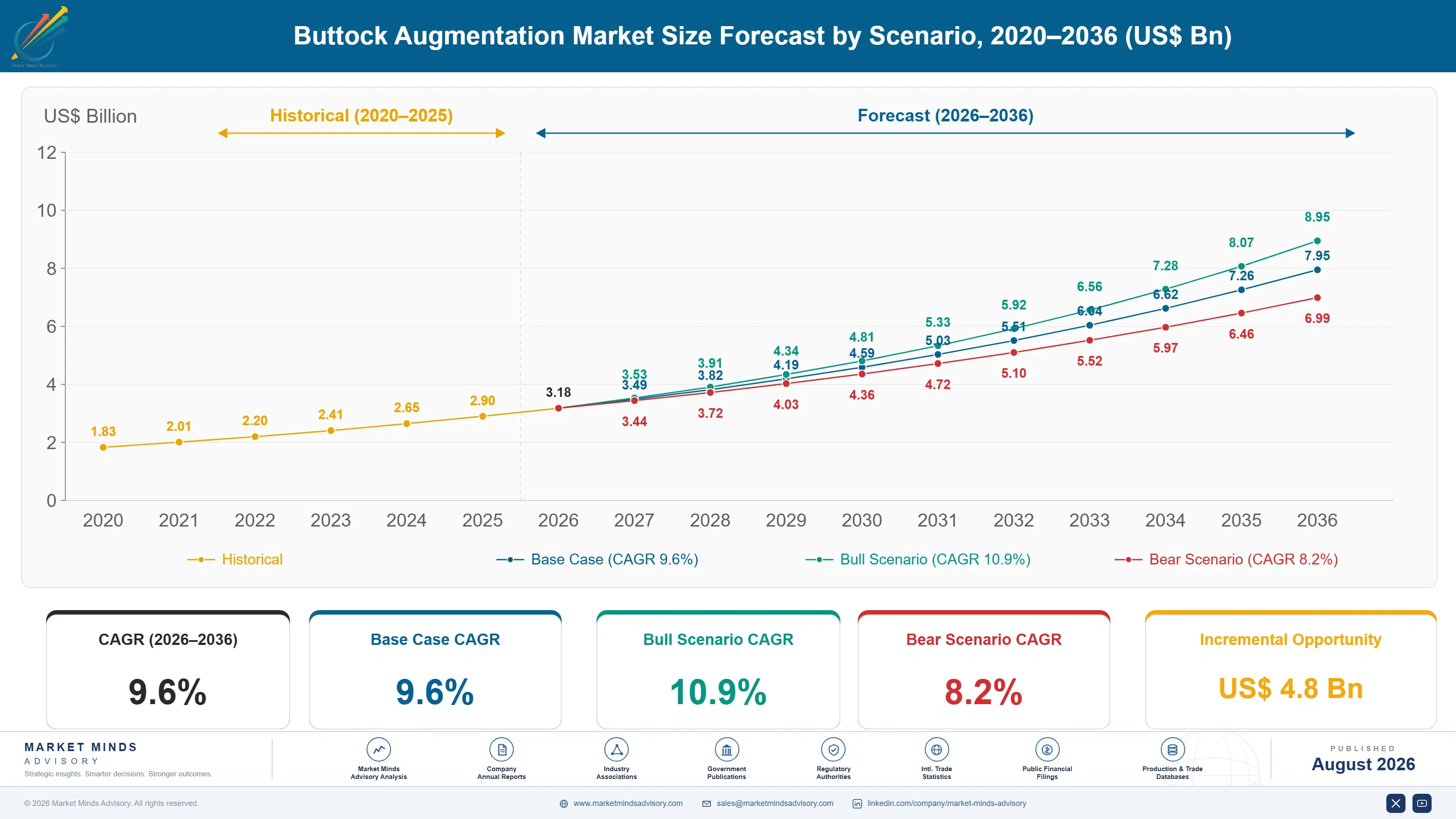
Between 2020 and 2025 the market grew at an estimated 8.6% historical CAGR, slowed early by pandemic-era elective procedure deferrals and 2021 to 2022 safety scrutiny following high-profile fat-embolism reporting, before improved cannula safety technology and expanding surgeon training programs restored steadier momentum through 2024 into 2025, a recovery pattern shared with other elective procedure categories.
The base case assumes 9.6% CAGR through 2036, driven by three mechanisms: continued substitution of traditional silicone implant procedures with safety-enhanced fat-transfer technique across North American and Latin American markets, rising medical tourism volume pulling South Asian and Pacific patients toward accredited regional surgical centers, and expanding injectable filler adoption among patients seeking non-surgical augmentation alternatives with materially shorter recovery windows than either surgical implant or fat-transfer procedures generally require today.
The bull case, at 10.9%, hinges on faster surgeon training program expansion across Asian and North American markets currently constrained by limited accredited training capacity relative to rising demand. The bear case, at 8.2%, reflects a scenario where renewed safety scrutiny or regulatory tightening persists, forcing patients to defer elective procedures and slowing supplier revenue growth across mid-sized regional device houses unable to absorb sustained compliance cost pressure.

Procedure Safety Economics and Fat-Transfer Adoption

Buttock augmentation demand now converges around three forces: fat-transfer technique substitution that favors safety-enhanced autologous procedures over traditional implant surgery, medical tourism expansion across South Asia and Latin America pulling procedure volume toward accredited regional centers, and specialty cannula and silicone cost volatility that shapes pricing and supply continuity for every downstream surgical center regardless of procedure type or region served. Suppliers that can guarantee safety-validated cannula systems and surgeon training support are capturing accounts fastest.
CR5 CONCENTRATION41%top five suppliers hold meaningful but contestable category share
AVERAGE SELLING PRICEUSD 2,400/procedure kitfat-transfer safety systems command materially higher blended pricing
TOP PRODUCING COUNTRY SHAREUSA, 24%leads global device manufacturing on established regulatory infrastructure
CAPACITY UTILISATION68%reflects steady demand from expanding accredited surgical center programs
TRADE INTENSITY33%cross-border device trade supports multinational surgical center supply chains
FEEDSTOCK COST SHARE38%medical-grade silicone and specialty cannula inputs dominate component cost
Commercially, the category behaves less like a pure device sale and more like a clinical training and safety certification service. Buyers pay for surgeon training programs, imaging guidance integration, and post-market safety monitoring alongside the device itself, which is why leading suppliers embed clinical education specialists directly inside major accredited surgical center partnerships.
Over the next decade, fat-transfer safety engineering, injectable filler formulation science, and continued medical tourism expansion across emerging Asian and Latin American markets will determine which suppliers can defend margin as silicone and cannula cost volatility squeezes producers already absorbing clinical training investment, rewarding suppliers with diversified material sourcing and surgeon education depth across every major region worldwide.
"The device used to be the whole story. Now the surgeon training program that comes with it is what actually determines whether a hospital signs the contract."
Director, Aesthetic and Reconstructive Devices Practice · MMA Aesthetic and Reconstructive Medical Devices Practice · August 2026

Market Trends

Safety-Enhanced Fat-Transfer Cannulas Replace Blind Injection Technique

Device makers have accelerated development of safety-enhanced fat-transfer cannula systems since 2023, incorporating ultrasound guidance and pressure-limiting technology to reduce fat-embolism risk that drove high-profile safety scrutiny of the procedure earlier in the decade. More than a dozen major accredited surgical societies updated technique guidelines to favor supragluteal-plane injection using these safety systems since 2023, each requiring dedicated surgeon retraining before adoption. Suppliers offering pre-validated, guideline-compliant cannula systems are capturing accredited center contracts fastest, while suppliers still limited to traditional blind-injection instruments face growing exclusion from major hospital procurement processes entirely.
Market Impact: Shifts 33% of accredited center volume
Medical Tourism Expands Access to Accredited Regional Centers

Rising disposable income and expanding accredited surgical center infrastructure across South Asia, the Middle East, and Latin America have pulled international patient volume toward regional centers offering procedures at meaningfully lower cost than North American and European alternatives while maintaining comparable safety accreditation standards. More than twenty major accredited centers opened dedicated international patient programs since 2023, pulling demand toward device suppliers with multi-region regulatory clearance and localized surgeon training capability. This tourism-driven demand is reshaping supplier distribution strategy, favoring companies with established regional partnerships over those serving only domestic surgical markets.
Market Impact: Adds 28 percent injectable volume growth

Market Opportunities and Growth Drivers

Updated Safety Guidelines Reshape Procedure Technique Standards

Major aesthetic surgery societies across North America and Europe have issued updated safety guidelines since 2024 mandating supragluteal-plane fat injection technique and prohibiting intramuscular injection following fat-embolism mortality data review, with several major accreditation bodies now requiring documented technique compliance for hospital credentialing renewal. This has compressed device qualification timelines from an industry-typical 14 months to under 8 for suppliers seeking to retain accredited center relationships ahead of credentialing review cycles. Suppliers unable to meet accelerated qualification windows have lost accredited center volume to competitors carrying guideline-compliant safety systems, reshaping which device houses win hospital procurement contracts nationwide and internationally.
Market Impact: Raises input cost 16 to 26%

Injectable Filler Adoption Expands Non-Surgical Alternative Volume

Expanding injectable dermal filler formulation science has pulled demand toward non-surgical augmentation alternatives offering materially shorter recovery windows and lower complication rates than surgical implant or fat-transfer procedures, appealing particularly to younger patients seeking gradual, lower-commitment enhancement without operating-room downtime. Suppliers report injectable procedure volume growth of roughly 28% since 2022 across markets where filler products received expanded regulatory clearance for gluteal application specifically. This non-surgical shift is reshaping supplier volume economics, rewarding manufacturers with dedicated filler formulation science over smaller regional houses still focused entirely on surgical implant hardware.
Market Impact: Adds 8 to 14-month backlogs

Market Restraints and Challenges

Medical-Grade Silicone and Specialty Cannula Cost Volatility

Medical-grade silicone and specialty cannula inputs together represent a substantial share of device manufacturing cost, and prices for both have swung sharply since 2021 amid broader specialty polymer market disruption and competing medical device industry demand for comparable implant-grade silicone supply. The root cause: device suppliers sit downstream of globally traded specialty silicone markets with limited forward pricing visibility, leaving manufacturing cost exposed to macro shocks. This volatility compresses margin for suppliers on fixed-price multi-year hospital procurement contracts unable to pass through sudden cost spikes. Some suppliers mitigate the exposure through diversified silicone sourcing.
Market Impact: Adds 480 million USD volume

Limited Accredited Surgeon Training Capacity Constrains Adoption

Safety-enhanced fat-transfer technique requires dedicated surgeon retraining that accredited training programs cannot currently deliver at the pace demand growth requires, a bottleneck rooted in the limited number of qualified instructors capable of teaching updated cannula and imaging guidance protocols at scale. This creates genuine commercial friction for device makers whose sales growth depends directly on training program throughput rather than device availability alone. Suppliers are mitigating the exposure through virtual reality training simulation and expanded regional training center partnerships, though fully closing the surgeon training gap remains difficult given the hands-on skill component the procedure fundamentally requires.
Market Impact: Adds 20 new international patient programs
3 additional market trends, 3 additional growth drivers, and 4 additional restraints and challenges are covered in the full report. Contact sales@marketmindsadvisory.com to access the complete intelligence.

Segment CAGR and Growth Architecture

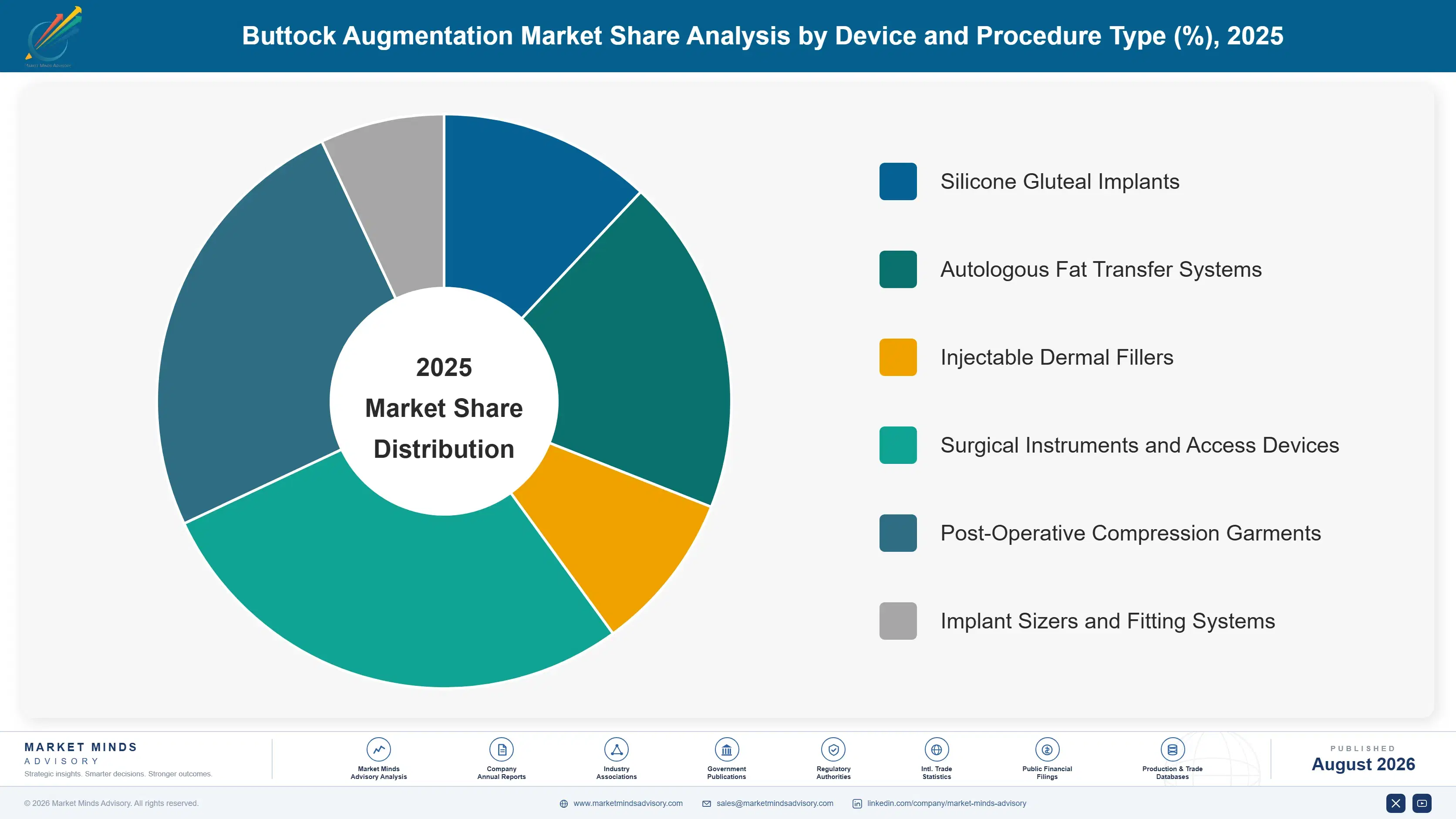
Segmentation follows device and procedure function within gluteal augmentation care, the classification surgeons and suppliers both use for procurement and clinical qualification, spanning silicone implants, fat transfer systems, injectable fillers, surgical instruments, compression garments, and implant sizers across six categories, rather than mixing product and application logic within a single procurement hierarchy or dimension.
buttock-augmentation-market-market-share-analysis-1787466071775

Autologous Fat Transfer (BBL) Systems

Autologous fat transfer systems represent the fastest-growing segment as patients and surgeons increasingly favor safety-enhanced fat-grafting technique over traditional silicone implant surgery, driven by updated society guidelines and lower complication rates when performed with proper cannula technology. Engineering complexity is substantial, since cannula pressure control and imaging guidance integration vary meaningfully across patient anatomy and technique requirements, requiring suppliers to maintain extensive clinical training and safety validation capability tailored to individual accredited center specifications. Suppliers with dedicated fat-transfer safety systems are capturing disproportionate accredited center contract share, commanding average selling prices well above standard surgical instrument kits. Demand concentrates among North American and Latin American markets first, with adoption spreading rapidly into Asian and European accredited centers.
CAGR 13.4%

Injectable Dermal Fillers

Injectable dermal fillers are expanding rapidly as patients seek non-surgical augmentation alternatives offering materially shorter recovery windows and lower complication rates than either implant or fat-transfer surgical procedures require. This segment overlaps functionally with fat-transfer systems in volumizing function but is defined specifically by its non-surgical, office-based administration rather than operating-room procedure requirements, since buyers qualify suppliers on measurable formulation safety and longevity performance rather than surgical technique alone. Suppliers with dedicated gluteal-specific formulation clearance have captured accredited practice contracts fastest, giving early movers a multi-year advantage over competitors still offering off-label filler applications across the category. Growth is fastest in North America and Latin America, where non-surgical demand concentrates most heavily today.
CAGR 11.8%
Full segment breakdown across 6 segments available in the complete report.

Regional Architecture and Country Demand Map

North America leads global consumption on its dominant established aesthetic surgery infrastructure and highest per-capita procedure volume worldwide, followed by Latin America on deep cultural procedure acceptance and surgeon density, with South Asia and Pacific expanding fastest as medical tourism introduces the category across the region.

North America

The United States accounts for the overwhelming majority of regional demand, reflecting the country's position as the world's single largest aesthetic surgery market by per-capita procedure volume and its extensive accredited surgical center infrastructure, which explains why the region's share exceeds MMA's standard North America band. Canada's smaller but steadily growing aesthetic surgery sector mirrors United States technique adoption closely, with a modest training lag behind flagship accredited centers. Established medical malpractice insurance frameworks and hospital credentialing systems favor suppliers carrying documented safety compliance data over those offering unvalidated technique alternatives. Elective procedure financing programs have expanded patient access meaningfully across middle-income demographics previously priced out of the category nationwide.
Share: 31% | CAGR: 10.3% (2026 to 2036)

Western Europe

The United Kingdom and Germany anchor regional demand through well-established private aesthetic surgery sectors that adopted updated safety guidelines early, giving regional surgeons deep technique expertise other markets are only now developing. France's aesthetic surgery sector continues expanding premium accredited center programs targeting safety-conscious patients willing to pay for documented technique compliance. Southern European markets, particularly Spain and Italy, show disproportionate demand tied to established medical tourism infrastructure serving both domestic and international patients. Supplier qualification cycles in the region run longer than in North America given stricter European Union medical device certification requirements for novel cannula technology, favoring established suppliers with deep regulatory affairs experience across every national market.
Share: 18% | CAGR: 8.3% (2026 to 2036)
Regional intelligence for 5 additional markets available in the complete report: East Asia, South Asia and Pacific, Latin America, Middle East and Africa, Eastern Europe. Contact sales@marketmindsadvisory.com.
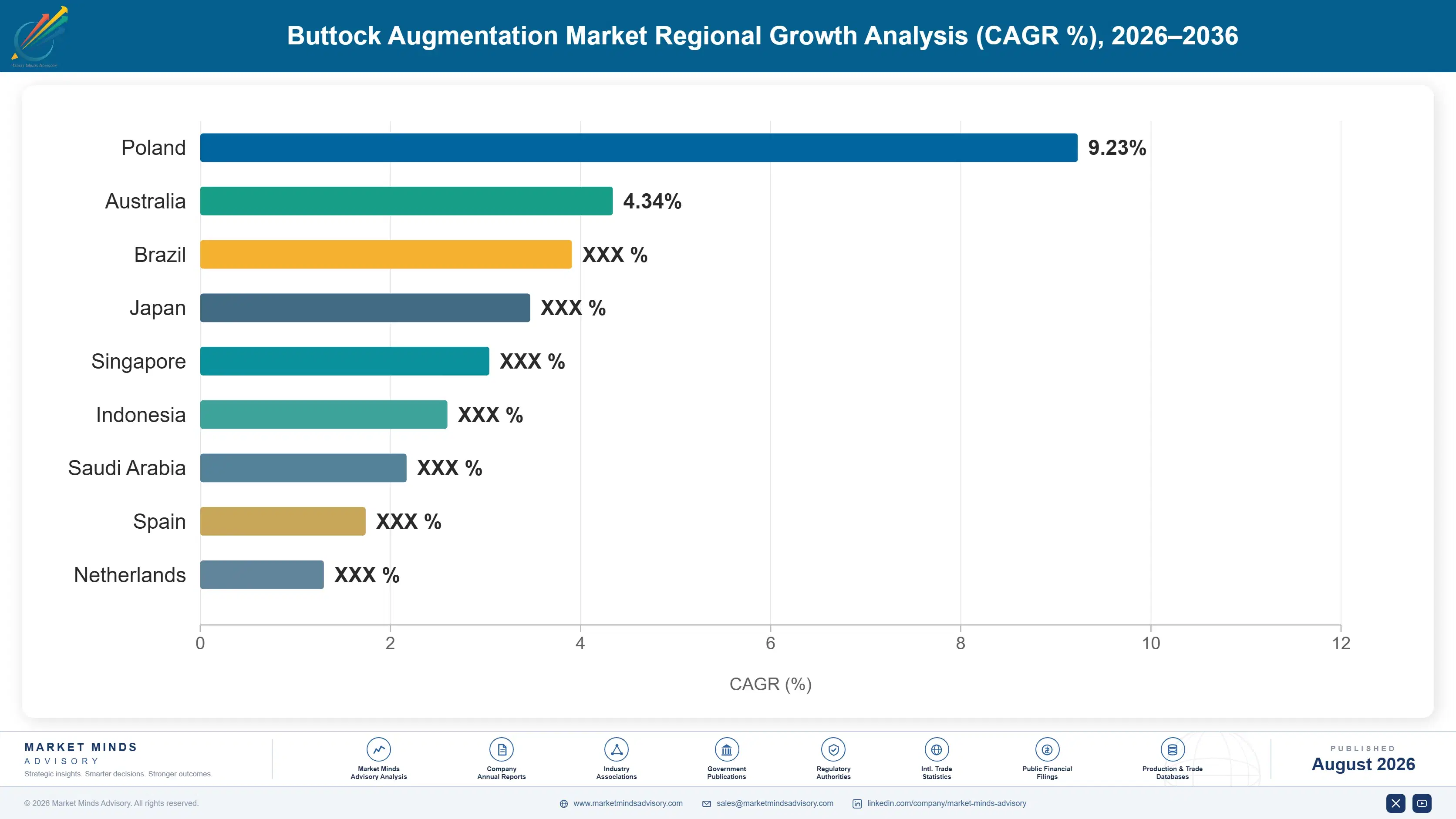
buttock-augmentation-market-country-cagr-analysis-1787466072299

Where Aesthetic Device Suppliers Can Defend Margin

Suppliers are shifting from selling standalone surgical devices to selling clinical training and safety certification outcomes, bundling surgeon education programs, imaging guidance integration, and post-market safety monitoring into contracts that command materially higher margin than standard device supply alone, a transition rewarding clinical education depth over raw production scale across every major account worldwide.

Surgeon Training Programs as a Bundled Service

Suppliers that package dedicated surgeon training and technique certification alongside device supply are capturing 20 to 28% higher account-level margin than those selling commodity instruments alone, since accredited centers increasingly outsource clinical education work rather than build internal training capability. This shift favors suppliers with dedicated training academies over smaller regional producers lacking education infrastructure. Sientra and Establishment Labs have both expanded dedicated surgeon training centers since 2023 specifically to capture this bundled service revenue, positioning training capacity as a qualification prerequisite for major accredited center accounts worldwide and across every regional platform category.
Market Impact: Lifts account-level margin by 20 to 28 percent

Pre-Validated Safety Cannula Kits for Guideline Compliance

Offering pre-validated, guideline-compliant cannula kits that meet updated society safety standards lets suppliers compress accredited center qualification timelines from 14 months to under 8, directly winning hospital procurement contracts ahead of competitors still completing individual safety validation. This lever works because hospital credentialing committees now penalize slow guideline adoption, making speed to compliance a commercial differentiator rather than simply a technical one. Suppliers offering these kits report contract win rates roughly double those quoting custom validation from scratch, since accredited centers facing compressed credentialing deadlines prioritize proven systems over bespoke alternatives.
Market Impact: Roughly doubles compliance contract win rate to 44%

Vertical Integration Into Silicone Material Science

Suppliers developing in-house medical-grade silicone formulation capability are winning premium accredited center contracts from surgical groups seeking supply security amid material volatility, capturing account-level pricing 15 to 23% above suppliers dependent entirely on external silicone sourcing. This approach requires meaningful research investment in polymer science and regulatory clearance work that most smaller regional suppliers cannot easily fund, concentrating adoption among the largest, best-capitalized device houses currently operating in the category. Early movers report contract renewal rates meaningfully higher than suppliers still relying entirely on external material procurement across every account.
Market Impact: Commands a 15 to 23 percent integration premium

Regional Training Center Co-Location Near Medical Tourism Hubs

Establishing dedicated training and distribution capacity directly adjacent to major medical tourism hubs in Bangkok, Sao Paulo, or Seoul cuts surgeon certification turnaround from roughly 6 weeks to 2, a decisive advantage for accredited centers managing rising international patient volume that cannot absorb prolonged training delays. Suppliers with co-located capacity also reduce exposure to the cross-border logistics volatility that periodically disrupted device shipments between 2021 and 2023. This lever requires meaningful capital investment, which is why it remains concentrated among the five largest global suppliers rather than mid-sized regional players still serving customers through centralized export.
Market Impact: Cuts certification turnaround from 6 to 2 weeks

Who Controls the Margin Pool

The top five suppliers hold an estimated 41% combined share on a revenue basis, a moderately concentrated market that leaves meaningful room for challenger growth compared to more consolidated medical device categories. The gap between established leaders and mid-sized regional challengers is real but narrower than in other implant categories, since clinical training capability, unlike heavy manufacturing infrastructure, can be built faster with the right specialized medical education talent.
Current competitive activity centers on three dimensions: racing to expand surgeon training academy capacity ahead of rising fat-transfer demand, building vertical integration into silicone material science to secure supply, and establishing regional training partnerships closer to major medical tourism hubs to compress certification turnaround, a race shaping which suppliers win multi-year accredited center agreements.

Pressure is building from Asian and Latin American specialty entrants developing novel imaging-guided fat-transfer systems that could let smaller, more focused suppliers challenge established players on safety technology performance without matching their decades of accumulated clinical relationships. Regional suppliers are also gaining share in domestic accredited center contracts where local surgeon relationships and training accessibility matter more than global brand reputation, eroding the advantage multinational suppliers once held on technical scale alone.
buttock-augmentation-market-company-positioning-matrix-1787466072815

Competitive Moat and Risk Dimensions

SIENTRA

Moat: Deep implant safety data heritage

Sientra's decades of accumulated post-market safety surveillance data across silicone implant procedures gives it regulatory and clinical trust advantages that newer entrants cannot replicate quickly, letting it command premium pricing on implant systems at safety documentation depth regional suppliers cannot consistently match at comparable scale.
SIENTRA

Risk: Slower fat-transfer technology pivot

Sientra's implant-centric legacy portfolio creates organizational inertia that slows its response to the fast-moving shift toward fat-transfer technique, leaving openings for more agile fat-transfer specialists to capture accredited center accounts before Sientra fully commits development resources at comparable scale industry-wide, internationally, and across every major account.
ESTABLISHMENT LABS

Moat: Advanced imaging-guided cannula technology

Establishment Labs' dedicated investment in imaging-guided fat-transfer cannula systems gives it a first-mover safety technology advantage that competitors have struggled to replicate quickly, letting it capture accredited center contracts specifically seeking guideline-compliant technique documentation ahead of broader industry adoption timelines nationwide, internationally, and across every major account.
ESTABLISHMENT LABS

Risk: Narrow product portfolio concentration

Establishment Labs' relatively narrow focus on fat-transfer safety systems leaves it more exposed to shifts in surgical technique preference than diversified competitors offering both implant and fat-transfer portfolios, a constraint that could compress growth if surgeon preference shifts unexpectedly toward alternative approaches industry-wide and across major regions.

Players Tracked

Prominent Players

Sientra
Establishment Labs
Allergan Aesthetics
Merz Aesthetics
Cytori Therapeutics

Other Key Players

Mentor Worldwide
Ideal Implant
Galderma
Sinclair Pharma
Suneva Medical
Cynosure
Cutera
InMode Aesthetics
Revance Therapeutics
Prollenium Medical Technologies
Croma-Pharma
Sisram Medical
Hologic Aesthetics
Nuo Therapeutics
Lipocosm

Recent Developments

APRIL 2025

Establishment Labs Expands Surgeon Training Academy in Brazil

Establishment Labs opened a dedicated surgeon training academy in Sao Paulo, adding imaging-guided cannula certification capacity to serve growing Latin American accredited center demand and shorten regional training turnaround for surgeons, with the facility reaching full operational training capacity during late 2025 across multiple bays.
Signal: Signals device suppliers increasingly prioritizing regional training infrastructure ahead of anticipated demand growth across Latin America.
OCTOBER 2024

Sientra Acquires Fat-Transfer Safety Technology Startup

Sientra acquired a specialty fat-transfer cannula safety technology startup to build in-house imaging guidance capability, reducing dependency on external technology licensing amid growing surgeon demand for guideline-compliant systems that had shifted procurement away from traditional implant-only portfolios since 2023, prompting a broader strategic sourcing rethink.
Signal: Indicates established implant suppliers pursuing technology acquisition to participate in the fat-transfer technique shift reshaping the category.
JANUARY 2026

Allergan Aesthetics Signs Long-Term Supply Agreement With Silicone Producer

Allergan Aesthetics signed a multi-year supply agreement with a specialty medical-grade silicone producer, locking in volume and partially insulating input pricing from spot market volatility tied to broader specialty polymer disruption affecting the implant device supply chain across several major global production regions worldwide today.
Signal: Indicates suppliers favoring long-term supply agreements over spot purchasing to stabilize input cost exposure across multi-year contracts.

Silicone and Specialty Cannula Exposure

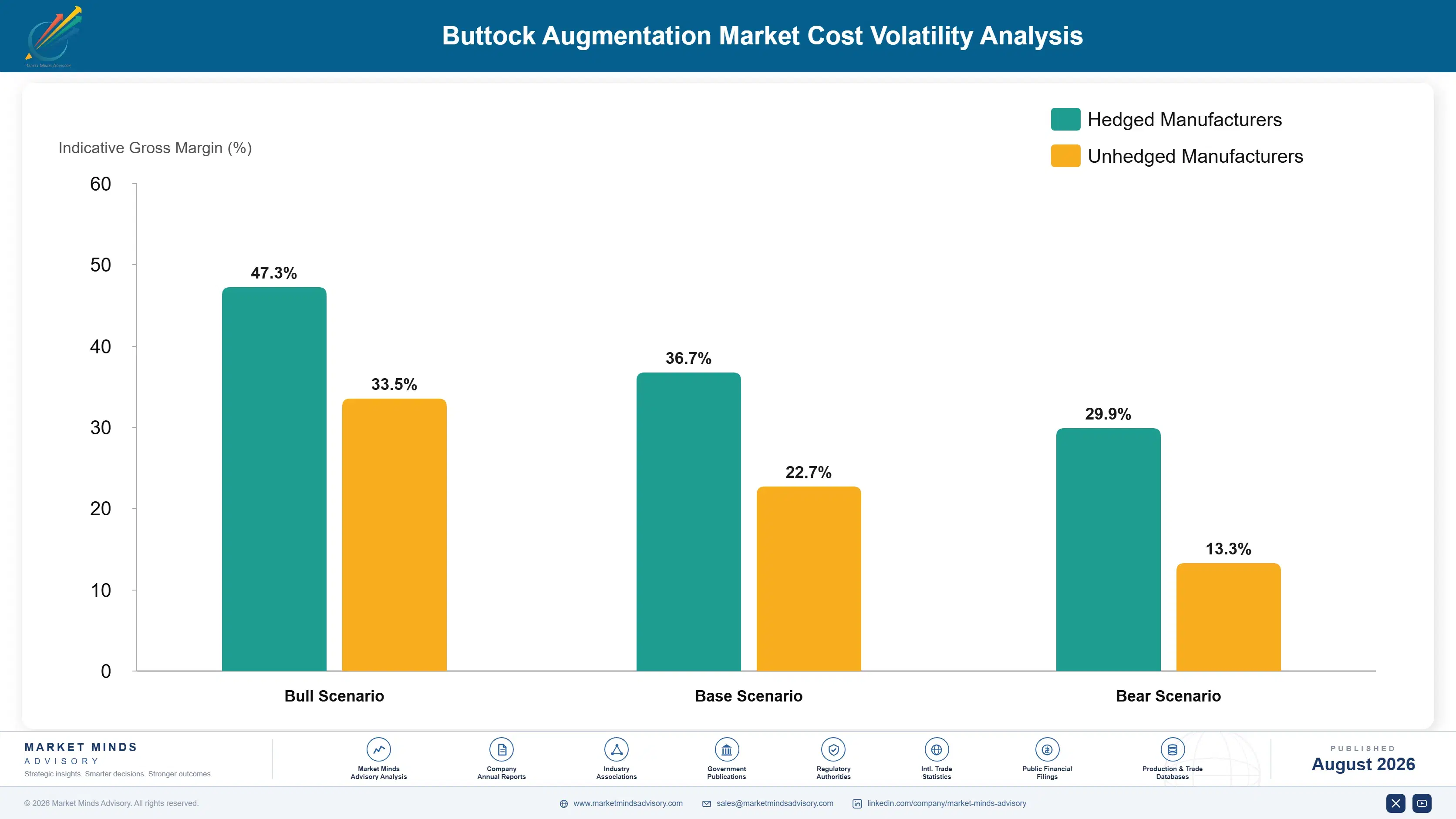
Medical-grade silicone and specialty cannula inputs together represent roughly 38% of cost of goods sold for a typical device kit, with silicone alone accounting for close to a quarter of total input cost given its role as the primary implant material across most surgical systems, a cost structure that leaves smaller processors particularly exposed to specialty polymer price swings.
Medical-grade silicone prices rose an estimated 19% between 2021 and 2022 following broader specialty polymer market disruption tied to petrochemical feedstock volatility and competing medical device industry demand for comparable implant-grade material, according to trade data tracked through the United States Census Bureau and corroborated by supplier annual report commentary on input cost pressure during the period, with several suppliers citing the disruption explicitly in investor communications as a material margin headwind across regions.

Larger suppliers with diversified silicone and cannula sourcing across multiple regions absorb volatility more effectively than smaller regional formulators dependent on single-origin supply contracts. This creates a lasting cost disadvantage for smaller players during disruption periods, pushing some toward increased use of alternative material formulations despite the technical validation work those alternatives require across affected production lines.
buttock-augmentation-market-cost-volatility-analysis-1787466073009

Multi-Origin Silicone Sourcing Diversification

Suppliers are qualifying silicone origins across North America, Europe, and Asia alongside traditional supply relationships, reducing single-region concentration risk even though full substitution remains limited by biocompatibility validation requirements, a process several major suppliers accelerated significantly following the 2021 to 2022 silicone price disruption that first exposed the category's sourcing vulnerability clearly to major buyers worldwide.

In-House Silicone Formulation Investment

Several device suppliers are investing in in-house medical-grade silicone formulation capability paired with dedicated regulatory clearance work, offering long-term supply stability and reduced disruption risk once production scales, though current in-house programs remain meaningfully more expensive than established external sourcing at present commercial volumes, a gap expected to narrow steadily as scale increases further.

Long-Term Supply Contracts With Silicone Producers

Several suppliers have signed multi-year supply agreements directly with specialty silicone producers, locking in volume and partially insulating pricing from spot market volatility during acute disruption periods tied to petrochemical feedstock shocks or competing medical device demand shifts, giving contracted suppliers materially more predictable input costs than competitors relying on spot purchasing alone today.

Portfolio Architecture for Margin Defence

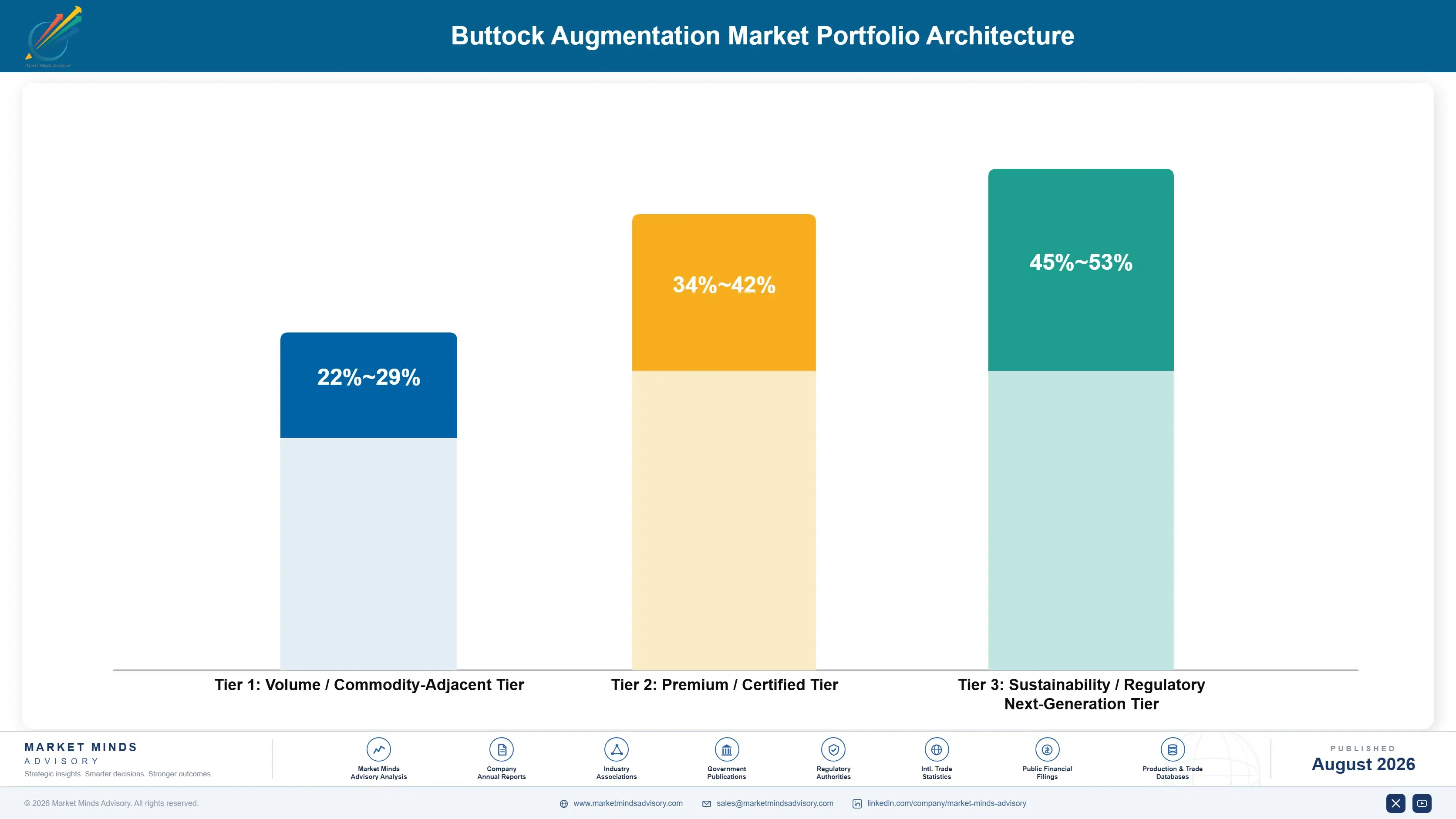
The portfolio splits across three tiers with materially different margin economics: volume-grade standard implant hardware carrying thin margins under intense price competition, certified safety-enhanced fat-transfer and filler systems commanding a meaningful premium, and next-generation imaging-guided and bioengineered systems capturing the highest margins currently available in the category, a spread wide enough that clinical investment strategy now matters more to supplier profitability than raw production volume. Suppliers increasingly treat tier positioning as a deliberate strategic choice tied to clinical training capability, particularly for suppliers serving safety-focused premium accounts.
The volume versus premium tension is acute right now because surgeons increasingly favor safety-enhanced fat-transfer and injectable systems, compressing the addressable market for standard implant hardware faster than suppliers can shift capacity toward higher-value alternatives, leaving some producers holding underutilized legacy production lines across several major manufacturing regions.

High-value margin pools concentrate specifically in imaging-guided fat-transfer systems for precision technique and bioengineered filler formulations carrying multi-market regulatory clearance, both of which command premium pricing tied to clinical complexity and safety documentation rather than raw material cost alone, rewarding suppliers that invested early in safety technology over those competing purely on scale.

Volume / Commodity-Adjacent Tier

Standard silicone implant hardware sold primarily on price into mainstream aesthetic applications, facing intense competitive pressure from fat-transfer alternatives and carrying thin, increasingly squeezed margins as surgeons shift toward certified, safety-enhanced systems.
Gross Margin: 22%-29%

Premium / Certified Tier

Safety-enhanced fat-transfer and injectable filler systems commanding premium pricing tied to documentation, regulatory compliance support, and validated safety performance across demanding accredited center integration scenarios that commodity systems cannot reliably match.
Gross Margin: 34%-42%

Sustainability / Regulatory / Next-Generation Tier

Imaging-guided and bioengineered filler systems serving premium safety-sensitive applications at the highest technical complexity, commanding premium pricing tied to clinical documentation few competitors currently possess at meaningful commercial scale today.
Gross Margin: 45%-53%
buttock-augmentation-market-portfolio-architecture-1787466073505

High-value Sub-segments and Strategic Watch-out

Imaging-Guided Fat-Transfer Systems

Highest-value, fastest-growing segment driven by precision safety demand, commanding premium pricing on imaging integration and calibration technology competitors cannot easily replicate, since building comparable expertise typically requires several more years of dedicated clinical research investment across multiple global accredited centers and platform programs worldwide today.
Gross Margin: 47%-55%

Bioengineered Gluteal Filler Formulations

High-value segment growing steadily as surgeons extend non-surgical augmentation into longer-lasting formulations, with margin supported by formulation science and durability testing rather than raw technical complexity alone, favoring suppliers with strong regulatory affairs capability across multiple regional markets and accredited practice categories worldwide today and going forward.
Gross Margin: 38%-46%

Standard Fat-Transfer Cannula Kits

Volume core of the category, serving mainstream accredited center applications with stable but thin margins under sustained price competition among suppliers, where training accessibility and manufacturing scale matter more than technical sophistication for winning large-volume contracts across mature and rapidly expanding export markets today worldwide.
Gross Margin: 24%-30%

Legacy Blind-Injection Implant Systems

Strategic watch-out segment facing steady, accelerating decline as safety guidelines and fat-transfer adoption both favor higher-value alternatives, leaving suppliers reliant on this tier exposed to shrinking addressable volume and thinning margin over time as accredited centers complete their technique conversion programs nationwide and internationally today.
Gross Margin: 15%-21%

Accredited Center Loyalty and Training Depth

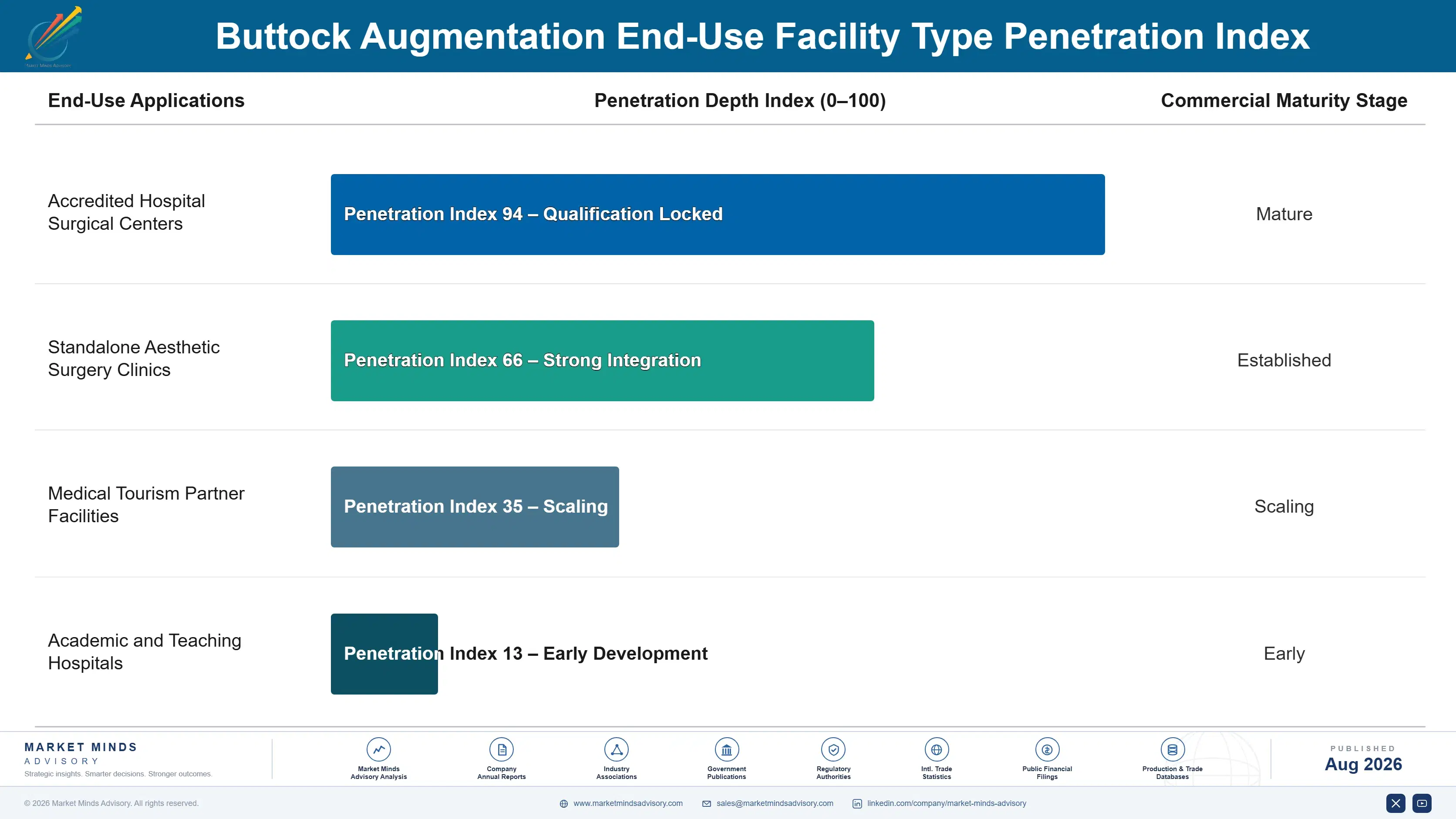
Buttock augmentation demand behaves like an annuity once a supplier wins an accredited center relationship, since surgical groups rarely re-qualify device systems once surgeon training investment has been made given the cost and risk of technique retraining, giving incumbent suppliers multi-year revenue visibility on won accounts. Renewal cycles typically span three to five years, shorter than most implantable device categories given faster technique evolution, and suppliers who lose an account rarely regain it quickly.
Adoption depth varies sharply by end-use vertical: established North American and Latin American accredited centers show the deepest, most entrenched supplier relationships given years of clinical training investment, while emerging Asian and Middle Eastern accredited center categories remain more contestable as surgical groups actively experiment with new device suppliers during early technique adoption phases, when switching costs remain low.

A generational shift in buyer profiles is underway as younger surgeons, increasingly trained on safety-enhanced fat-transfer technique from the start of their careers, prioritize documented safety data and imaging guidance integration over the decades-long supplier relationships and traditional implant-only training that defined procurement at legacy aesthetic surgery practices still relying on outdated technique protocols.
buttock-augmentation-market-end-use-penetration-index-1787466073997

Priorities for Aesthetic Device Suppliers

These are among the four positions where our research anticipates prominent divergence between winners and laggards over the coming forecast period. Each is grounded in the demand model, the regulatory perimeter, and the announced capacity pipeline.
01 / FAT-TRANSFER CONVERSION PRIORITY

Accelerate safety cannula certification ahead of guidelines

Suppliers still relying primarily on standard implant portfolios face a shrinking addressable market as surgeon safety guidelines and fat-transfer adoption trends tighten simultaneously across major accredited center categories nationwide and internationally. The window to pre-validate safety cannula systems against existing guideline benchmarks is narrowing quickly as faster-moving competitors capture accredited center contracts ahead of suppliers still completing internal validation cycles. Suppliers that delay risk losing multi-year training relationships to faster-moving rivals carrying guideline-compliant portfolios into every renewal negotiation across major accounts.
02 / SILICONE SOURCING DIVERSIFICATION STRATEGY

Reduce material concentration risk across regions

Single-region feedstock dependency has produced repeated price shocks tied to specialty silicone market volatility over the past several years, directly compressing margins for suppliers without diversified sourcing across North America, Europe, and Asia. Qualifying multiple silicone origins reduces exposure meaningfully, though full substitution requires biocompatibility validation since material performance differs across input types. Suppliers that fail to diversify remain persistently vulnerable to the next feedstock disruption event affecting their primary supply base without a diversified strategy already in place across facilities.
03 / TRAINING ACADEMY INVESTMENT

Build surgeon education capability ahead of demand growth

Imaging-guided fat-transfer systems and bioengineered fillers represent the fastest-growing and highest-margin segments, but require training infrastructure and clinical validation that most commodity-focused suppliers currently lack entirely, particularly around hands-on cannula technique instruction. Building this capability now positions suppliers to capture premium accredited center accounts before the segment fully matures and margins inevitably compress under intensifying competitive pressure from new entrants entering the category. Late entrants will face steeper technical catch-up costs, arriving after early movers have already locked in accounts that matter most.
04 / REGIONAL CAPACITY PLACEMENT

Prioritize medical tourism hub training co-location

Medical tourism hub concentration in Thailand, Brazil, and South Korea makes co-located training and distribution capacity increasingly decisive for surgeon certification turnaround and overall competitiveness. Suppliers still serving these markets through centralized training face a growing cost and speed disadvantage against regionally established competitors already operating co-located capacity closer to major accredited center clusters. Capital committed to regional capacity now compounds advantage steadily as international patient volume continues expanding across the region through the forecast period and well beyond it.

Engagement Snapshot From the Field

A live engagement with an industry participant carrying material or product regulatory and market exposure ahead of a defining policy shift, showing how our research translates into a defensible multi-year portfolio strategy.
MARKET MINDS ADVISORY · CLIENT ENGAGEMENT SUMMARY
Buttock Augmentation Producer Strategic Portfolio Review and Transition Roadmap 2026·Investment Scenario on Buttock Augmentation Exposure Evaluation 2025-26
CLIENT PROFILE
The client is a mid-sized regional accredited surgical center network operating across several major Latin American cities, with reported annual procedure volume exceeding 18,000 cases (client-reported, unverified by MMA) across four facilities prior to engaging MMA for fat-transfer safety technology sourcing strategy support ahead of updated society guideline implementation affecting its entire multi-city facility network.
STRATEGIC CHALLENGE
Facing updated safety society guidelines with a twelve-month credentialing compliance deadline, the client's existing device supplier had not yet validated imaging-guided cannula systems, risking loss of accreditation status representing a significant share of total procedure volume if conversion could not be completed on schedule and validated through independent safety review.
MMA APPROACH
MMA conducted a supplier capability assessment across five candidate device suppliers, benchmarking safety cannula validation timelines, surgeon training throughput, and regional support capacity, then facilitated a structured qualification process that compressed the client's typical supplier evaluation timeline substantially against historical qualification cycles, drawing on MMA's primary survey and expert interview data throughout.
KEY FINDINGS
  1. Only two of five evaluated suppliers had pre-validated imaging-guided systems ready for immediate credentialing review, sharply narrowing the client's viable supplier options from the outset.
  2. Switching to a pre-validated safety system reduced projected credentialing timeline from an estimated fourteen months to under eight months across affected facilities.
  3. Silicone and cannula sourcing diversification among finalist suppliers correlated strongly with the pricing stability commitments the client required for multi-year contract terms.
  4. Bundled surgeon training and regulatory documentation services materially reduced the client's internal quality assurance burden during the entire conversion transition period across all facilities.
CLIENT PROFILE
The client is a mid-sized regional accredited surgical center network operating across several major Latin American cities, with reported annual procedure volume exceeding 18,000 cases (client-reported, unverified by MMA) across four facilities prior to engaging MMA for fat-transfer safety technology sourcing strategy support ahead of updated society guideline implementation affecting its entire multi-city facility network.
STRATEGIC CHALLENGE
Facing updated safety society guidelines with a twelve-month credentialing compliance deadline, the client's existing device supplier had not yet validated imaging-guided cannula systems, risking loss of accreditation status representing a significant share of total procedure volume if conversion could not be completed on schedule and validated through independent safety review.
MMA APPROACH
MMA conducted a supplier capability assessment across five candidate device suppliers, benchmarking safety cannula validation timelines, surgeon training throughput, and regional support capacity, then facilitated a structured qualification process that compressed the client's typical supplier evaluation timeline substantially against historical qualification cycles, drawing on MMA's primary survey and expert interview data throughout.
KEY FINDINGS
  1. Only two of five evaluated suppliers had pre-validated imaging-guided systems ready for immediate credentialing review, sharply narrowing the client's viable supplier options from the outset.
  2. Switching to a pre-validated safety system reduced projected credentialing timeline from an estimated fourteen months to under eight months across affected facilities.
  3. Silicone and cannula sourcing diversification among finalist suppliers correlated strongly with the pricing stability commitments the client required for multi-year contract terms.
  4. Bundled surgeon training and regulatory documentation services materially reduced the client's internal quality assurance burden during the entire conversion transition period across all facilities.
RECOMMENDED STRATEGY
Phase 1: Phase 1 (Months 1 to 3): Complete supplier capability benchmarking and shortlist finalists based on safety cannula readiness and sourcing diversification. Phase 2: Phase 2 (Months 4 to 8): Run parallel surgeon training and technique validation against updated society guideline benchmarks for finalist systems. Phase 3: Phase 3 (Months 9 to 12): Execute phased facility conversion and finalize long-term supply agreement with the selected conversion partner.
OUTCOME
The client completed safety cannula conversion across all four affected facilities within the credentialing compliance deadline, retaining accreditation status reported to cover a majority of the client's total procedure volume (client-reported, unverified by MMA), while establishing a diversified two-supplier sourcing structure reducing future disruption risk.

Frequently Asked Questions

Foundational context covering the market sizes, CAGR, scope, country, region and competition that inform every finding below. This section is provided to cover basics and most often pre-purchase conversations, answered from the MMA Primary Research Dataset.

What is the current size of the Buttock Augmentation Market?

The global buttock augmentation market is valued at approximately USD 2.9 billion in 2025. This figure covers silicone implants, fat-transfer systems, injectable fillers, surgical instruments, compression garments, and implant sizers.

How large will the Buttock Augmentation Market be by 2036?

The market is projected to reach approximately USD 7.95 billion by 2036 under the base case scenario. This reflects sustained fat-transfer safety technology adoption across North America and Latin America.

What is the CAGR for the Buttock Augmentation Market 2026 to 2036?

The base case CAGR is 9.6% across the 2026 to 2036 forecast period, reflecting strong procedure growth momentum. Bull and bear scenarios range from 8.2% to 10.9% depending on regulatory and safety developments.

Which segment is growing fastest?

Autologous fat transfer (BBL) systems are the fastest-growing segment at a 13.4% CAGR. This reflects surgeon and patient preference shifting toward safety-enhanced fat-grafting technique worldwide.

Who are the major companies in the Buttock Augmentation Market?

Leading suppliers include Sientra, Establishment Labs, Allergan Aesthetics, Merz Aesthetics, and Cytori Therapeutics. These five companies hold an estimated 41% combined market share on a revenue basis.

Which country is growing fastest?

Brazil leads growth at an estimated 11.6% CAGR, driven by its deep cultural procedure acceptance and pioneering role in fat-transfer technique development. Rising accredited center capacity is the primary growth engine.

Report Segmentation Architecture

The full report scope spans multiple orthogonal segmentation dimensions, with cross-tabulated demand data provided for each dimension pair. Coverage extends further to regional breakdowns, trend trajectories, and the competitive detail needed to support segment-level decision-making.

By Device and Procedure Type

  • Silicone Gluteal Implants
  • Autologous Fat Transfer Systems
  • Injectable Dermal Fillers
  • Surgical Instruments and Access Devices
  • Post-Operative Compression Garments
  • Implant Sizers and Fitting Systems

By End-Use Facility Type

  • Accredited Hospital Surgical Centers
  • Standalone Aesthetic Surgery Clinics
  • Medical Tourism Partner Facilities
  • Academic and Teaching Hospitals

By Commercial Dimension

  • Direct Facility Procurement
  • Distributor and Regional Partner Supply
  • Training-Bundled Contract Supply
  • Group Purchasing Organization Supply

By Region

  • North America
  • Western Europe
  • East Asia
  • South Asia and Pacific
  • Latin America
  • Middle East and Africa
  • Eastern Europe

Scope, Methodology, and Coverage

Every figure in this report is reproducible from documented input assumptions. The scope below maps the historical period, the forecast horizon, the segmentation dimensions, and the countries covered, alongside the underlying primary and qualitative methodology.
Historical Period
2020 to 2025
Forecast Period
2026 to 2036
Base Year
2025 (USD billions; MMA Primary Research Dataset, August 2026)
Market Definition
This report covers medical devices and consumables used in surgical and non-surgical buttock enhancement procedures, including silicone gluteal implants, autologous fat transfer systems, injectable dermal fillers, surgical instruments and access devices, post-operative compression garments, and implant sizers. It excludes general body contouring devices not specific to gluteal augmentation and non-medical cosmetic apparel.
Quantitative Units
USD billions (current prices); procedure volume for select segment analysis
Segmentation Dimensions
By Device and Procedure Type; By End-Use Facility Type; By Commercial Dimension; By Region
Regions Covered
North America, Western Europe, East Asia, South Asia and Pacific, Latin America, Middle East and Africa, Eastern Europe
Countries Covered
USA, Canada, Brazil, Colombia, Mexico, Argentina, UK, Germany, France, Spain, Italy, South Korea, Japan, China, Thailand, India, Australia, UAE, Saudi Arabia, South Africa, Turkey, Poland, Czechia, Hungary, Romania, and additional markets relevant to this sector
Key Companies Profiled
Sientra, Establishment Labs, Allergan Aesthetics, Merz Aesthetics, Cytori Therapeutics, Mentor Worldwide, Ideal Implant, Galderma, Sinclair Pharma, Suneva Medical, Cynosure, Cutera, InMode Aesthetics, Revance Therapeutics, Prollenium Medical Technologies, Croma-Pharma, Sisram Medical, Hologic Aesthetics, Nuo Therapeutics, Lipocosm
Quantitative Methodology
Primary survey, n=3,800 respondents, Q4 2025, six countries; demand-side model with trade association cross-validation
Qualitative Methodology
47 expert interviews, Q4 2025; applied to validate demand model assumptions, identify emerging dynamics, and assess competitive positioning
Report Format
PDF and XLSX data workbook (Word format preview document)
Publisher
Market Minds Advisory
Report Code
MMA-2026-MED-101
Published
August 2026
Contact
sales@marketmindsadvisory.com | www.marketmindsadvisory.com

Purchase the full Buttock Augmentation Market Report (2026 to 2036).

The full report delivers a complete quantitative and qualitative assessment of the global buttock augmentation market across all six device segments and seven regions. It includes detailed supplier profiles covering clinical training capability, production capacity, and regulatory positioning for the twenty companies profiled. Analysts provide scenario-adjusted forecasts through 2036 alongside input cost sensitivity modeling tied to silicone price volatility. Buyers receive access to underlying primary survey and expert interview data supporting all quantitative claims, along with a fat-transfer safety guideline adoption tracker across major markets.
Segment-level forecasts through 2036 across all six categories
Seven-region demand, pricing, and CAGR breakdown tables
Twenty-company competitive profiling with moat and risk analysis
Silicone and cannula supply risk assessment and mitigation pathways
Safety guideline adoption tracker across major accreditation bodies
Quarterly market update subscription option for ongoing monitoring

Built For The People Who Decide

From boardroom strategy to bench-side execution, this report is read cover-to-cover by leaders shaping the next decade of their industry, turning demand scenarios, market dynamics and valuation benchmarks into decisions.
CXOs/ Presidents/ VPs/ Managers
M&A and Corporate Development
Strategy Teams and R&D Heads
Procurement and Product Directors
Regulatory and Compliance Leaders
Investor Relations and Equity Analysts