Market Minds Advisory
Busbars Market

Busbars Market: A Thermal Problem Wearing A Conductor's Clothing

An AI rack draws what a whole row used to, and cable cannot deliver it: overhead busway is the only distribution that scales to those densities and can be reconfigured without rewiring a building.

Lead Analyst

Published

September 2026

Make Smarter Decisions with Customized Research Insights

Request a free sample report and evaluate market opportunities, growth trends, and competitive dynamics relevant to your business needs.

2025 MARKET VALUE$18.6BMarket Size 2025
2036 FORECAST VALUE$43.4BBase Case , 2026 to 2036
CAGR 2026 TO 20368.0 %Bull 9.2% / Bear 6.8%
INCREMENTAL OPPORTUNITY$23.3BNet 10- year value creation
EXPANSION MULTIPLE2.16x2036 value over 2026 base
Strategic Levers
M&A Pipeline
Regional Outlook
Country Rankings
Competitive Intelligence
Segmental Deep-dive
Call-Us : 91 93563 13602

Executive Snapshot and Market Trajectory

A busbar is a thermal problem wearing a conductor's clothing. Current density is limited by how much heat leaves the assembly, not by how much copper went into it, which is why the money sits in insulation, geometry and joints rather than in metal. Metal is only the pass-through.
East Asia holds 37% of value on Chinese copper fabrication, battery manufacturing and grid construction combined. Laminated insulated busbars grow at 12.0%, half again the market rate of 8.0%, because silicon carbide switching makes stray inductance a design constraint that only a laminated assembly resolves. Data centre busway is the loudest demand change, since AI rack densities have made cable distribution physically impossible.
Concentration is moderate at 31% and the five leaders are all electrical equipment groups rather than busbar specialists, which tells you the product usually sells inside a larger system. Copper runs above 60% of cost and passes through by index, so producers are converters rather than metal traders. Aluminium substitution is the live technical argument: it costs a quarter as much and creeps at bolted joints, which is a problem nobody has fully solved.
Market Definition
The market covers rigid and flexible conductor assemblies that distribute electrical power at high current, including busbar trunking and busway systems, switchgear and panelboard busbars, laminated insulated busbars, formed and stamped busbars, substation conductors and flexible braided connectors. Cable, wire harnesses, circuit breakers, transformers and the enclosures busbars sit inside are excluded. Copper and aluminium semi-fabrication sold as mill product falls outside scope.
Base Year Value
$18.6B in 2025 (MMA Primary Research Dataset, August 2026)
Forecast Period
2026 to 2036, eleven discrete annual values
CAGR
8.0% base case. Bull 9.2%. Bear 6.8%.
Fastest Growth Segment
Laminated Insulated Busbars: 12.0% CAGR
Fastest Growth Country
India: 11.2% CAGR
Fastest Growth Region
South Asia and Pacific: 10.2% CAGR
Largest Region
East Asia: 37% of 2025 global value
Market Leaders
Schneider Electric, ABB, Siemens, Eaton, Legrand. Source: MMA Analysis based on disclosed electrical distribution and power connection revenue, company annual reports 2025.
Primary Survey
n=3,800 procurement and R&D decision-makers, Q4 2025, six countries
Methodology
Demand-side build-up, cross-validated against public data, 47 expert interviews

Busbars Market Forecast Scenarios

busbars-market-size-forecast-scenario-1787680680250
Growth from 2020 to 2025 ran at 6.6% and copper did most of the moving. Metal prices roughly doubled and then partly retraced, which swung revenue far more than volume ever did. Underneath that, two demand bases appeared almost simultaneously: electric vehicle battery packs and high density data centre distribution. Neither existed at scale in 2019 and both now shape the order book.
The 8.0% base case rests on three mechanisms. Data centre rack densities have risen past what cable distribution can physically deliver, which converts busway from an option to a requirement. Silicon carbide power electronics make stray inductance a first-order design constraint, and only laminated busbars solve it. And grid connection queues everywhere are driving substation construction that consumes utility busbar regardless of what happens to building construction. None of the three depends on copper pricing.
The bull case at 9.2% turns on aluminium joint reliability being solved convincingly, which would open volume that copper pricing currently caps. The bear case at 6.8% is data centre capital spending pausing, since that demand is concentrated in a small number of buyers whose plans can change within a quarter and frequently have. Both risks are real.

Where The Heat Goes And The Money Follows

Everybody treats a busbar as a piece of metal and prices it accordingly, which is why so few people make money on them. What limits current in a busbar is heat, not conductivity: the assembly carries whatever it can shed thermally, and that depends on insulation, spacing, surface area and the joint. Copper passes through at index. The engineering does not, and that gap is the entire business.
FIVE-FIRM CONCENTRATION31%Share of electrical distribution revenue held by leading suppliers
COPPER COST SHARE63%Conductor metal portion of finished busbar production cost
TOP PRODUCING COUNTRYChina 39%Chinese share of global busbar assembly manufacturing output
RACK POWER DENSITY132 kilowattsTypical draw of an artificial intelligence compute rack
ALUMINIUM COST ADVANTAGE74%Saving against copper for equivalent current carrying capacity
JOINT FAILURE SHARE58%Portion of busbar field failures originating at connections
Data centres changed low voltage distribution more in five years than the previous 30. An artificial intelligence rack draws well over 100 kilowatts where a conventional rack drew single digits, and cable cannot deliver that density. Overhead busway with plug-in tap-offs can, and it can be reconfigured without an electrician pulling conduit through a live facility. That last point matters more to operators than the current rating does.
Aluminium is the argument nobody has settled. It costs roughly a quarter of copper for equivalent capacity and weighs a third as much, which matters enormously in a battery pack or a long busway run. It also creeps under bolt pressure and oxidises, so joints loosen over time. Roughly 58% of field failures start at connections, and aluminium makes that worse.
"Customers ask what the copper costs. The interesting question is what happens at the joint in year eight, and almost nobody asks that until it happens."
Director, Power Distribution and Electrification Practice · MMA Energy Practice · August 2026

Market Trends

AI Rack Density Makes Busway The Only Option

A conventional server rack drew single digit kilowatts and a cable to the floor tile handled it comfortably. An artificial intelligence compute rack draws well past 100, and the copper cross-section needed to deliver that in cable becomes physically unmanageable inside a raised floor. Overhead busway carries it, distributes through plug-in tap-off units and lets an operator reconfigure a row without an electrician working in a live facility. That reconfiguration capability is what data centre operators actually value, because their tenant mix changes faster than any electrical design assumed it would.
Market Impact: Adds 34 busbars per pack

Silicon Carbide Switching Makes Laminated Busbars Mandatory

A power inverter switching a silicon carbide device does it in tens of nanoseconds, and any stray inductance between the direct current link capacitor and the switch produces a voltage spike that destroys the device. Reducing that inductance requires conductors laid flat and close with thin dielectric between them, which is precisely what a laminated busbar is. Wider bandgap devices switch faster and make the requirement stricter rather than easier. That turns laminated busbars from an engineering preference into a design constraint, which is a far stronger commercial position than the component ever had before.
Market Impact: Adds 1,900 substation projects annually

Market Opportunities and Growth Drivers

Battery Pack Interconnection Becomes A Formed Busbar Problem

Every electric vehicle battery pack connects hundreds of cells through busbars that must carry high current, tolerate vibration, accommodate thermal expansion and weigh as little as possible. Wire harnesses cannot do it at the currents involved. Formed and stamped busbars can, which turned a component nobody thought about into a designed-in part specified at platform level. Content per vehicle is substantial and locked for the platform's life once qualified. Chinese and Korean pack manufacturers set most of the current specification, because they build most of the packs and their suppliers grew alongside them.
Market Impact: Causes 58% of field failures

Grid Connection Queues Drive Substation Construction Everywhere

Connection queues for new generation and large loads run years long across most developed grids, and the response has been substation construction at a pace nobody planned for. Every substation consumes utility busbar, and the specification is conservative because a utility asset runs for 40 years without anybody wanting to visit it. That produces steady demand independent of the building construction cycle, which is unusual in electrical distribution. Utilities buy on qualification records and long-term supplier relationships rather than on price, and the qualification lists are short. Getting onto one takes years.
Market Impact: Runs 63% of production cost

Market Restraints and Challenges

Aluminium Joints Creep And Nobody Has Solved It

Aluminium costs roughly a quarter of copper for equivalent current capacity and weighs a third as much, which should have settled the argument years ago. It has not, because aluminium creeps under sustained bolt pressure and forms an insulating oxide layer, so joints loosen and heat over time. Root cause is metallurgy and no amount of installation care removes it. Roughly 58% of busbar field failures already originate at connections. Mitigation runs through Belleville washers, plated contact surfaces and welded rather than bolted joints, and each adds cost that erodes the metal saving.
Market Impact: Distributes 132 kilowatts per rack

Copper Price Volatility Swamps Every Commercial Decision

Copper at 63% of production cost means a metal move of any size overwhelms whatever margin the assembly earns. Root cause is physics rather than procurement: there is no cheaper conductor with copper's properties, and the alternative brings joint problems of its own. The commercial effect is that busbar makers are converters whose earnings depend entirely on contract terms rather than on manufacturing skill. Indexed pricing and metal pass-through clauses are the mitigation, and they are now near-universal on anything larger than a spot order. Spot orders are where losses happen.
Market Impact: Cuts stray inductance by 80%
3 additional market trends, 4 additional growth drivers, and 2 additional restraints and challenges are covered in the full report. Contact sales@marketmindsadvisory.com to access the complete intelligence.

Segment CAGR and Growth Architecture

Segmentation follows conductor assembly form: how the metal is shaped, insulated and joined, rather than which industry installs it or what voltage it carries. Six forms cover the market without overlap, from trunking systems through to flexible braided connectors. End-use industry and supply route are treated separately, because a data centre and a vehicle plant buy several of these forms.
busbars-market-market-share-analysis-1787680680521

Laminated Insulated Busbars

A laminated busbar is copper layers separated by thin dielectric film and bonded into one assembly, and it exists to minimise stray inductance between a capacitor and a switching device. Growth at 12.0%, half again the market rate of 8.0%, follows wide bandgap semiconductors rather than any change in power demand. Silicon carbide switches in tens of nanoseconds, and inductance that was tolerable with silicon destroys devices at those speeds. That makes the component a design constraint rather than a preference. Manufacturing is genuinely difficult: dielectric thickness, void-free bonding and partial discharge performance all have to hold across thousands of thermal cycles. Very few plants anywhere can hold all three.
CAGR 12.0%

Formed and Stamped Busbars

These are conductors pressed, bent and often insulation-moulded into a shape that fits one specific assembly, most commonly a battery pack or a power distribution unit. Growth at 10.6% follows electric vehicle production and stationary storage almost exactly, since neither works without high current interconnection that a wire harness cannot provide. The commercial character is unusual for a metal part: content is specified at platform level years ahead of production and never revisited, which makes a design win worth a decade of volume. Chinese and Korean suppliers grew alongside their pack customers and hold most of those positions already. Western entrants are qualifying into somebody else's architecture. Content per pack runs to dozens of parts.
CAGR 10.6%
Full segment breakdown across 6 segments available in the complete report.

Regional Architecture and Country Demand Map

Geography follows three unrelated demand bases that share a component. Data centre construction, electric vehicle manufacturing and grid investment each drive busbar consumption for different reasons. East Asia leads because it carries all three at scale, while South Asia grows fastest on grid and manufacturing investment together.

North America

American data centre construction is the single largest source of new busbar demand anywhere, and the buyers are a small number of hyperscale operators whose specifications are effectively industry standards. That concentration is both an opportunity and a risk for any supplier. Grid investment adds a second base, with interconnection queues driving substation construction across every regional transmission organisation. Electric vehicle battery plants in the Southeast and Midwest add a third, though most of them qualified Asian busbar suppliers before local capacity existed. Canadian demand follows the same pattern at smaller scale. Mexican manufacturing supplies increasing volume into North American assembly. Local content rules are pulling more of it onshore.
Share: 23% | CAGR: 8.8% (2026 to 2036)

Western Europe

European demand is grid-weighted rather than data centre-weighted, which distinguishes it from every other developed region. Transmission reinforcement, offshore wind connection and distribution network upgrades consume utility busbar steadily and predictably. German industrial demand adds power electronics and machinery applications with the most demanding laminated busbar specifications anywhere. French and Nordic data centre construction has grown on cheap low-carbon power, though from a base well below American levels. Italian and Spanish manufacturing serves both domestic and export markets in trunking systems. European busbar makers compete on engineering rather than on cost, which is the only position available to them. It happens to be a fairly defensible one for now. Cost competition would end them.
Share: 18% | CAGR: 6.4% (2026 to 2036)
Regional intelligence for 5 additional markets available in the complete report: East Asia, South Asia and Pacific, Latin America, Middle East and Africa, Eastern Europe. Contact sales@marketmindsadvisory.com.
busbars-market-country-cagr-analysis-1787680680804

Charging For Engineering, Not Metal

Copper passes through at index and everybody knows the number, which leaves the entire commercial argument to what the fabricator adds. Four levers move revenue toward that engineering content and away from the conversion fee a purchasing manager will benchmark. Each requires capability most busbar makers were never built to carry. Building it takes real time.

Qualify Laminated Capability For Wide Bandgap Applications

Laminated busbars for silicon carbide inverters require dielectric thickness control, void-free bonding and partial discharge performance holding across thousands of thermal cycles, and very few plants can do all three. Qualification with a power electronics customer takes roughly 2 years of samples, testing and design iteration before any volume arrives. What it buys is a design-in position on a platform that runs for a decade, at margins several times what a conventional busbar returns. The barrier is capital and process discipline rather than any patent, which is why more competitors have not crossed it.
Market Impact: Takes 2 years and then wins a decade

Sell Reconfiguration Rather Than Current Rating

Data centre operators compare busway on amperage because that is what the datasheet shows, and they buy it because tap-off units let them re-lay a row without an electrician working live. A tenant mix that turns over roughly 3 times a decade makes that worth considerably more than any rating difference. Quoting against a cable installation plus the rewiring it will need three times over the facility's life produces a number that ends the comparison. The requirement is understanding the operator's churn rate, which nobody in a busbar sales organisation traditionally asks about. Asking it changes the whole quotation.
Market Impact: Avoids roughly 3 rewiring cycles per facility life

Solve The Aluminium Joint And Take The Metal Saving

Aluminium costs roughly a quarter of copper for equivalent capacity and the only reason it has not taken the market is that its joints creep and oxidise. A supplier who can demonstrate joint reliability across a 40 year asset life, through plated contact surfaces, welded connections or friction stir techniques, can offer customers a metal saving nobody else can underwrite. Utilities and data centre operators will both pay attention immediately. The investment is testing over years rather than engineering over months, which is exactly why nobody has completed it. Whoever finishes first takes a great deal.
Market Impact: Captures a 74% metal saving against copper cost

Win Battery Platform Positions Before Local Capacity Exists

Formed busbar content in a battery pack is specified at platform level years before production and never revisited once qualified, which makes a single design win worth a decade of volume. Chinese and Korean suppliers hold most existing positions because they grew alongside the pack manufacturers. Western entrants competing for new platforms must qualify into architectures somebody else influenced, which is harder and still worth doing while new plants are being designed. Content per pack runs to roughly 34 separate parts, and the qualification cost amortises across all of them at once.
Market Impact: Commits 34 busbars per pack for a decade

Who Controls the Margin Pool

Measured on disclosed electrical distribution and power connection revenue, the five largest suppliers hold a CR5 of 31%. Every one of them is a broad electrical equipment group rather than a busbar specialist, which reflects how the product usually reaches a customer: inside switchgear, inside a busway system or inside somebody else's assembly. Schneider Electric and ABB lead through system position rather than through conductor manufacturing.
Three contests run and they barely intersect. Data centre busway competes on hyperscale operator qualification, where a handful of buyers set specifications the whole industry then follows. Laminated and formed busbars compete on design-in with power electronics and battery customers years ahead of production. Utility busbar competes on qualification records and relationships measured in decades. A supplier strong in one of these is usually absent from the other two entirely, and the customers never overlap.

Pressure comes from Chinese fabricators who hold battery platform positions and are now bidding data centre busway internationally. Their conductor manufacturing is genuinely competitive and their systems engineering is improving faster than most incumbents concede. Rankings shift wherever a hyperscale operator qualifies a Chinese supplier, which has already happened in Southeast Asia and will happen elsewhere.
busbars-market-company-positioning-matrix-1787680681077

Competitive Moat and Risk Dimensions

SCHNEIDER ELECTRIC

Moat: Data Centre System Position

Schneider supplies busway alongside switchgear, uninterruptible power supplies, cooling and the monitoring software that ties them together, which lets it be present when a data centre electrical architecture is being defined rather than when components are tendered. Hyperscale operators prefer fewer interfaces at that scale. That position cannot be reached by any supplier selling conductors alone, whatever the product quality.
SCHNEIDER ELECTRIC

Risk: Hyperscale Customer Concentration

A small number of hyperscale operators account for a disproportionate share of data centre busway demand, and each has the scale and engineering capability to specify around any supplier they choose. Capital plans at that level change within a quarter. Revenue concentrated there grows spectacularly and can contract just as fast.
ABB

Moat: Utility Qualification Record Depth

ABB holds qualification positions with transmission and distribution utilities built over decades, and a utility replacing a supplier on an asset expected to run 40 years does not do it casually. Those qualification lists are short. New entrants can build a better conductor and still wait years for a first order, which is what the incumbents rely on.
ABB

Risk: Slow Cycle Business Mismatch

Utility qualification rewards patience and penalises speed, which is the opposite of what data centre and battery customers require. An organisation built around 40 year asset cycles struggles to respond at the pace hyperscale construction demands. Competitors without that heritage move faster on the segments growing fastest, and ABB is competing against its own institutional habits.

Players Tracked

Prominent Players

Schneider Electric
ABB
Siemens
Eaton
Legrand

Other Key Players

Mersen
Rogers Corporation
Methode Electronics
TE Connectivity
Amphenol
Luvata
Wieland Group
Furukawa Electric
LS Cable and System
Godrej and Boyce
EAE Elektrik
Pogliano
Vertiv
nVent Electric
Hitachi Energy

Recent Developments

FEBRUARY 2025

Schneider Electric expands busway manufacturing capacity for data centre demand

Schneider Electric commissioned additional busway production capacity aimed at hyperscale data centre construction, an organic investment rather than an acquisition. The company cited rack power densities that have made cable distribution impractical and operator demand for systems that can be reconfigured without electrical work in a live facility.
Signal: Capacity is being added against a demand base concentrated in very few buyers, which is a substantial bet.
JUNE 2025

Mersen commissions laminated busbar production line for silicon carbide applications

Mersen brought a new laminated busbar production line online serving power electronics customers using wide bandgap semiconductors, an organic capacity investment. The company cited stray inductance requirements that silicon devices tolerated and silicon carbide devices do not, which has moved laminated construction from a preference to a specification requirement.
Signal: A semiconductor change has made a passive component mandatory, which is the strongest position any component can hold.
SEPTEMBER 2025

Chinese busbar supplier qualifies with Southeast Asian hyperscale data centre operator

A Chinese busway manufacturer completed qualification with a hyperscale operator for data centre projects in Southeast Asia, following technical evaluation and factory audit. This was a supplier qualification rather than any commercial transaction, and it places a Chinese producer on a list that Western suppliers had previously held alone.
Signal: Hyperscale qualification lists opening to Chinese suppliers is the single development Western incumbents should be watching.

What Sits Inside The Price

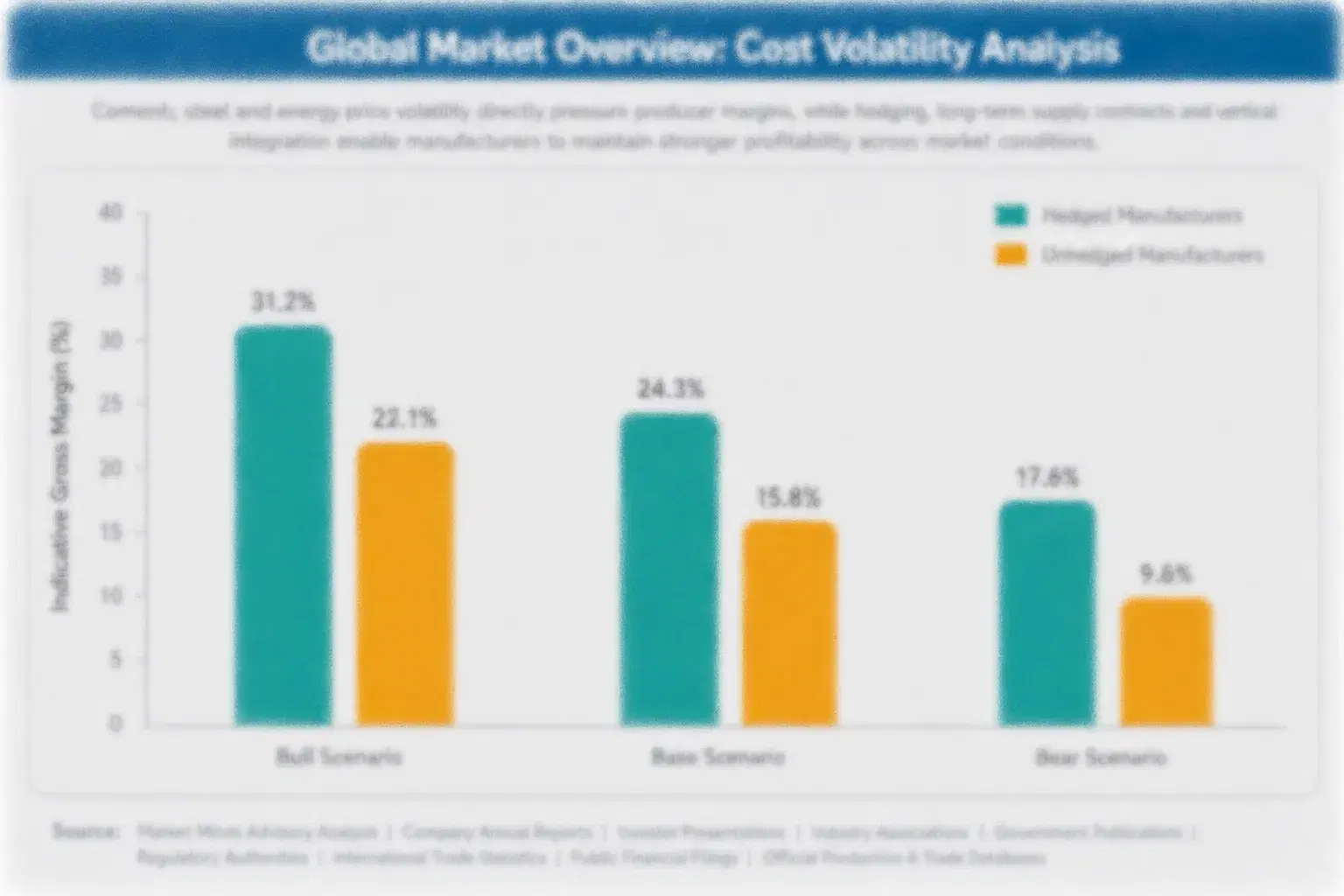
One input dominates and it is not close. Copper runs 61 to 64% of finished busbar production cost, purchased against exchange pricing that has nothing to do with electrical demand. Insulation film, epoxy and moulded polymer add roughly 12% on laminated and formed products and almost nothing on bare conductors. Fabrication energy, plating and labour make up the remainder.
Copper roughly doubled between 2020 and 2022 and then partly retraced, which moved busbar revenue violently while volume barely changed. Suppliers holding indexed contracts passed both directions through and earned a stable fabrication margin. Those quoting fixed prices on project lead times measured in months absorbed the difference. Schneider Electric and ABB annual reports for the period describe raw material cost movements and the pricing mechanisms used to recover them across long project cycles.

Exposure divides by contract length and product type. Project business carries the most risk, since a busway system quoted in January installs in October and the copper moved twice in between. Battery and power electronics programmes carry less, because pricing is renegotiated annually against index. Bare conductor supply carries almost none and earns almost nothing, which is the trade every fabricator makes somewhere in its portfolio.
busbars-market-cost-volatility-analysis-1787680681347

Index every project contract to exchange copper pricing

A busway system quoted in January and installed in October carries copper exposure across three quarters, which no fabrication margin can absorb. Indexing project pricing to exchange settlement on a defined date removes it entirely. Contractors resist because they quote fixed prices to their own clients, and the fabricators who held firm through 2021 are the ones still trading.

Qualify aluminium alternatives where joint design permits

Aluminium removes three quarters of the metal cost and brings a joint problem. Where connections can be welded rather than bolted, or where plated contact surfaces are practical, that trade is worth making and the customer keeps the saving. Qualification takes testing over years, which is why it belongs in a development programme rather than in a purchasing response.

Move mix toward products where metal is minority cost

Copper is above 60% of a bare conductor and considerably less of a laminated assembly, where dielectric, bonding and testing carry the difference. Every point of mix moved toward engineered products reduces metals sensitivity without changing purchasing at all. The barrier is process capability and customer qualification, both measured in years rather than in capital expenditure alone.

Portfolio Architecture for Margin Defence

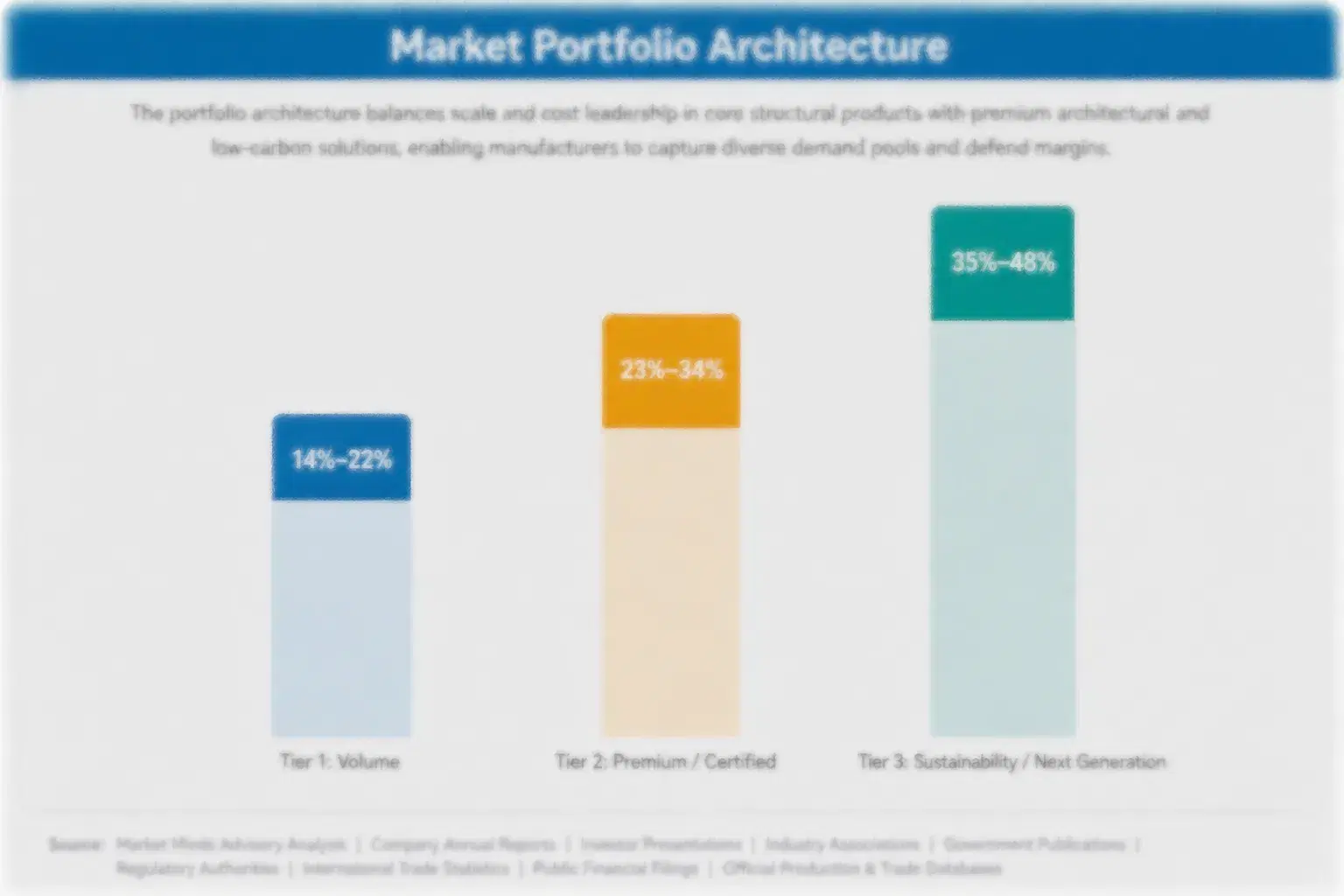
Margin follows engineering content, and engineering content is inversely related to how much of the product is metal. A bare copper conductor sold to a switchgear assembler earns a fabrication fee any competitor can match. A laminated busbar qualified into a silicon carbide inverter earns several times that, because dielectric performance and partial discharge behaviour are genuinely hard to reproduce.
The tension is that the volume business and the engineering business share a factory and a metals purchasing function. A fabricator chasing tonnage to fill a press then finds its laminated products benchmarked against a conversion fee by a customer who has seen the bare conductor quotation. Suppliers who separated the two hold pricing that combined ones cannot, at the cost of utilisation. Those who did not are running full plants at conversion margins on products that took years to qualify.

High-value pools sit in three places. Laminated busbars for wide bandgap power electronics, where process capability is scarce and the component is mandatory. Data centre busway systems, where reconfiguration value exceeds anything the conductor itself is worth. And formed battery interconnects, which commit a decade of volume from one platform decision. None of them prices on copper content.

Volume / Commodity-Adjacent

Bare copper and aluminium conductors, standard switchgear busbars and flexible braided connectors sold to assemblers and panel builders. The 7-point range separates fabricators with indexed metal contracts from those quoting fixed on project timelines. Conversion fee and delivery decide everything here.
Gross Margin: 9-16%

Premium / Certified

Busbar trunking systems, utility-qualified substation conductors and formed busbars supplied into qualified assemblies. The 7-point spread separates suppliers holding utility and platform qualifications from those competing on each project separately. Qualification records rather than product performance hold this pricing in place.
Gross Margin: 21-28%

Sustainability / Regulatory / Next-Generation

Laminated busbars for wide bandgap power electronics, high density data centre busway and aluminium systems with qualified joint designs. The 13-point range is wide because laminated products price on scarce process capability while data centre busway prices on system position.
Gross Margin: 31-44%
busbars-market-portfolio-architecture-1787680681672

High-value Sub-segments and Strategic Watch-out

Wide Bandgap Laminated Busbars

Highest value and fastest growth, mandatory rather than optional wherever silicon carbide devices are used. Process capability is scarce and qualification takes years, which keeps the supplier field narrow. The risk is that power electronics customers integrate the function into module packaging, removing the discrete component entirely.
Gross Margin: 42-45%

High Density Data Centre Busway

High value with the fastest absolute growth in the market, driven by rack densities cable cannot serve. Reconfiguration capability rather than current rating is what operators actually buy. The risk is customer concentration, since a handful of hyperscale buyers can change capital plans within a quarter and frequently do.
Gross Margin: 36-39%

Standard Switchgear And Panel Busbars

The volume core, carrying most tonnage fabricated and the thinnest margin anywhere in the market. Copper pass-through leaves a conversion fee any competitor can match, and panel builders tender annually. Most fabricators run this line to hold press utilisation rather than to earn anything from it.
Gross Margin: 10-13%

Copper-Based Project Business

The strategic watch-out. Project work quoted months before installation carries copper exposure across quarters, and a metal move of any size erases the fabrication margin entirely. The risk is order books full of fixed-price commitments taken to hold utilisation, which is exactly how fabricators failed in 2021.
Gross Margin: 14-17%

Why The Content Stays Specified

A busbar qualified into a platform or a facility ships for as long as that platform or facility exists, which for a vehicle programme is a decade and for a substation is considerably longer. Nobody revisits the decision because requalification costs more than the parts do. Revenue therefore behaves like an annuity attached to somebody else's asset life rather than to any sales activity.
Stickiness varies by application. Utility busbar never changes supplier, since qualification lists are short and an asset runs 40 years. Battery platform content is nearly as fixed, because requalifying a pack interconnect means retesting the pack. Data centre busway changes between facilities but rarely within one, since the system is proprietary once installed. Switchgear and panel busbars change every tender, and the assemblers buying them feel no loyalty.

The buyer has moved upstream and most suppliers have not followed. A decade ago a panel builder or contractor bought busbar to a drawing somebody else produced. Now a hyperscale electrical architect, a battery pack designer or a power electronics engineer decides years earlier, and the contractor executes what was specified. Suppliers organised around contractors are quoting against decisions taken long before they were contacted.
busbars-market-end-use-penetration-index-1787680681952

Where The Copper Stops Mattering

These are among the four positions where our research anticipates prominent divergence between winners and laggards over the coming forecast period. Each is grounded in the demand model, the regulatory perimeter, and the announced capacity pipeline.
01 / LAMINATED CAPABILITY INVESTMENT

Build the process nobody else can hold

Laminated busbars for silicon carbide inverters demand dielectric thickness control, void-free bonding and partial discharge performance holding across thousands of thermal cycles, and very few plants anywhere can deliver all three consistently. Qualification with a power electronics customer runs roughly 2 years of samples and design iteration before any volume appears, which is exactly why competitors have not crossed the barrier. What that investment buys is a design-in position on a platform running a decade, at margins several times what conventional busbar fabrication returns on the same copper.
02 / RECONFIGURATION VALUE SELLING

Sell the row you can move, not the amps

Data centre operators compare busway on current rating because that is what a datasheet shows, and they buy it because plug-in tap-offs let them re-lay a row without an electrician working in a live facility. A tenant mix that changes annually makes that worth far more than any amperage difference between competing systems. Quoting against a cable installation plus the roughly 3 rewiring cycles a facility will need across its life produces a number that ends the comparison entirely and immediately.
03 / ALUMINIUM JOINT PROGRAMME

Solve the joint and take the metal saving

Aluminium costs roughly a quarter of copper for equivalent current capacity and the only thing preventing it from taking the market is that its joints creep under bolt pressure and oxidise. Roughly 58% of busbar field failures already originate at connections, so nobody will accept a metal saving that makes the dominant failure mode worse. A supplier who can demonstrate joint reliability across a 40 year asset life, through welding, plating or friction stir techniques, offers customers a saving no competitor can underwrite at all.
04 / CONTRACT INDEXATION DISCIPLINE

Index the copper or stop quoting projects

Copper is 63% of production cost and a busway system quoted in January installs in October, which leaves the fabricator carrying metal exposure across three quarters that no conversion margin can absorb. Indexed pricing tied to exchange settlement on a defined date removes the exposure completely and converts the business into what it actually is, a fabrication service. Contractors resist because they quote fixed prices onward to their own clients, and the fabricators who held that line through 2021 are the ones still trading today.

Engagement Snapshot From the Field

A live engagement with an industry participant carrying material or product regulatory and market exposure ahead of a defining policy shift, showing how our research translates into a defensible multi-year portfolio strategy.
MARKET MINDS ADVISORY · CLIENT ENGAGEMENT SUMMARY
Busbars Producer Strategic Portfolio Review and Transition Roadmap 2026·Investment Scenario on Busbars Exposure Evaluation 2025-26
CLIENT PROFILE
A European busbar fabricator supplying switchgear assemblers, panel builders and industrial contractors across 19 countries, with revenue reported at 190 million euros (client-reported, unverified by MMA). Roughly 76% of revenue came from bare and formed copper conductors sold on project terms. The company had recently added laminated busbar capability and was struggling to price it above conversion rates.
STRATEGIC CHALLENGE
Margins had been negative in two of the previous four years, both times following copper moves the company had absorbed on fixed-price project contracts. Management wanted to cut fabrication cost. The laminated line was running at low utilisation and being quoted, by the same sales team, against the same conversion benchmarks as bare conductor work.
MMA APPROACH
MMA separated every contract by metal exposure and by whether the customer could benchmark the price, which the company had never done because its reporting ran by product line. Eleven expert interviews with power electronics customers established what laminated qualification is actually worth to them. The analysis treated contract terms and sales organisation, not fabrication cost, as the variables worth changing.
KEY FINDINGS
  1. Fixed-price project contracts at 61% of revenue produced both loss-making years, and no amount of fabrication cost reduction would have covered the copper movement involved.
  2. Power electronics customers valued laminated qualification at multiples of what the company was charging, and none of them had ever been asked what it was worth.
  3. The same salespeople quoted bare conductor and laminated assemblies, and their conversion-fee habits carried directly into a market where the customer had no benchmark.
  4. Indexing every project contract and separating the laminated sales team modelled positive margin in all four historical years without any cost reduction (client-reported, unverified by MMA).
CLIENT PROFILE
A European busbar fabricator supplying switchgear assemblers, panel builders and industrial contractors across 19 countries, with revenue reported at 190 million euros (client-reported, unverified by MMA). Roughly 76% of revenue came from bare and formed copper conductors sold on project terms. The company had recently added laminated busbar capability and was struggling to price it above conversion rates.
STRATEGIC CHALLENGE
Margins had been negative in two of the previous four years, both times following copper moves the company had absorbed on fixed-price project contracts. Management wanted to cut fabrication cost. The laminated line was running at low utilisation and being quoted, by the same sales team, against the same conversion benchmarks as bare conductor work.
MMA APPROACH
MMA separated every contract by metal exposure and by whether the customer could benchmark the price, which the company had never done because its reporting ran by product line. Eleven expert interviews with power electronics customers established what laminated qualification is actually worth to them. The analysis treated contract terms and sales organisation, not fabrication cost, as the variables worth changing.
KEY FINDINGS
  1. Fixed-price project contracts at 61% of revenue produced both loss-making years, and no amount of fabrication cost reduction would have covered the copper movement involved.
  2. Power electronics customers valued laminated qualification at multiples of what the company was charging, and none of them had ever been asked what it was worth.
  3. The same salespeople quoted bare conductor and laminated assemblies, and their conversion-fee habits carried directly into a market where the customer had no benchmark.
  4. Indexing every project contract and separating the laminated sales team modelled positive margin in all four historical years without any cost reduction (client-reported, unverified by MMA).
RECOMMENDED STRATEGY
Phase 1: Phase one: index every project contract to exchange copper settlement and decline any fixed-price work longer than four weeks from now. Phase 2: Phase two: create a separate laminated sales team with different targets, different incentives and no exposure to conversion-fee benchmarks at all. Phase 3: Phase three: qualify with two additional power electronics customers before the laminated line reaches utilisation that removes the incentive to try.
OUTCOME
Indexation completed within a quarter and the project business has been profitable in every period since. Laminated pricing rose 41% on new quotations without losing a single customer, which settled the internal argument (client-reported, unverified by MMA). Two additional power electronics qualifications are in progress and the laminated line now runs at commercial utilisation.

Frequently Asked Questions

Foundational context covering the market sizes, CAGR, scope, country, region and competition that inform every finding below. This section is provided to cover basics and most often pre-purchase conversations, answered from the MMA Primary Research Dataset.

What is the current size of the Busbars Market?

The market was worth 18.6 billion dollars in 2025, covering trunking systems, switchgear busbars, laminated and formed assemblies, utility conductors and flexible connectors. It reaches 20.1 billion dollars in 2026.

How large will the Busbars Market be by 2036?

MMA forecasts 43.4 billion dollars by 2036, an increase of 23.3 billion dollars over the 2026 base. That represents an expansion multiple of 2.16 times across the forecast period.

What is the CAGR for the Busbars Market 2026 to 2036?

The base case compounds at 8.0% annually. MMA's bull case reaches 9.2% if aluminium joint reliability is solved convincingly, while the bear case sits at 6.8% if data centre capital spending pauses.

Which segment is growing fastest?

Laminated insulated busbars, at 12.0%, half again the market rate of 8.0%. Silicon carbide switching makes stray inductance a design constraint that only a laminated assembly resolves.

Who are the major companies in the Busbars Market?

Schneider Electric, ABB, Siemens, Eaton and Legrand lead on disclosed electrical distribution and power connection revenue. Mersen, Rogers Corporation, Methode Electronics, Luvata and nVent Electric compete strongly in specific assembly forms.

Which country is growing fastest?

India at 11.2%, driven by grid investment, data centre construction and domestic manufacturing expanding together under national programmes. China follows on battery and grid demand.

Report Segmentation Architecture

The full report scope spans multiple orthogonal segmentation dimensions, with cross-tabulated demand data provided for each dimension pair. Coverage extends further to regional breakdowns, trend trajectories, and the competitive detail needed to support segment-level decision-making.

By Conductor Assembly Form

  • Busbar Trunking and Busway Systems
  • Switchgear and Panelboard Busbars
  • Laminated Insulated Busbars
  • Formed and Stamped Busbars
  • Substation and Utility Busbars
  • Flexible and Braided Busbars

By End-Use Industry

  • Data Centres and Colocation
  • Electric Vehicles and Battery Systems
  • Utility Transmission and Distribution
  • Commercial and Institutional Buildings
  • Industrial Plant and Machinery
  • Renewable Generation and Storage

By Commercial Dimension

  • Direct Manufacturer Supply
  • Switchgear Assembler Channel
  • Electrical Contractor Project
  • Platform Design-In Programme
  • Utility Framework Agreement
  • Distributor and Stockist

By Region

  • North America
  • Western Europe
  • East Asia
  • South Asia and Pacific
  • Latin America
  • Middle East and Africa
  • Eastern Europe

Scope, Methodology, and Coverage

Every figure in this report is reproducible from documented input assumptions. The scope below maps the historical period, the forecast horizon, the segmentation dimensions, and the countries covered, alongside the underlying primary and qualitative methodology.
Historical Period
2020 to 2025
Forecast Period
2026 to 2036
Base Year
2025 (USD billions; MMA Primary Research Dataset, August 2026)
Market Definition
Scope covers rigid and flexible conductor assemblies distributing electrical power at high current, spanning busbar trunking and busway systems, switchgear and panelboard busbars, laminated insulated busbars, formed and stamped busbars, substation and utility conductors, and flexible braided connectors. Cable, wire harnesses, circuit breakers, switchgear enclosures and transformers are excluded. Copper and aluminium semi-fabricated mill products sold as metal, and electrical installation labour, fall outside the boundary.
Quantitative Units
USD billions (current prices); tonnes fabricated; metres of busway installed; assemblies shipped; platform positions held
Segmentation Dimensions
By Conductor Assembly Form; By End-Use Industry; By Commercial Dimension; By Region
Regions Covered
North America, Western Europe, East Asia, South Asia and Pacific, Latin America, Middle East and Africa, Eastern Europe
Countries Covered
USA, China, Germany, France, UK, Japan, South Korea, India, Brazil, Mexico, Italy, Spain, Poland, Saudi Arabia, South Africa
Key Companies Profiled
Schneider Electric, ABB, Siemens, Eaton, Legrand, Mersen, Rogers Corporation, Methode Electronics, TE Connectivity, Amphenol, Luvata, Wieland Group, Furukawa Electric, LS Cable and System, Godrej and Boyce, EAE Elektrik, Pogliano, Vertiv, nVent Electric, Hitachi Energy
Quantitative Methodology
Primary survey, n=3,800 respondents, Q4 2025, six countries; demand-side model with trade association cross-validation
Qualitative Methodology
47 expert interviews, Q4 2025; applied to validate demand model assumptions, identify emerging dynamics, and assess competitive positioning
Report Format
PDF and XLSX data workbook (Word format preview document)
Publisher
Market Minds Advisory
Report Code
MMA-2026-ENE-115
Published
August 2026
Contact
sales@marketmindsadvisory.com | www.marketmindsadvisory.com

Purchase the full Busbars Market Report (2026 to 2036).

The full report runs to 205 pages and covers all six conductor assembly segments, seven regions and 20 profiled companies in detail. It includes the complete segment CAGR set, regional consumption and fabrication capacity data, and copper exposure analysis across contract types. Company profiles carry evaluation on disclosed electrical distribution and power connection revenue, with moat and risk assessment for the top five suppliers. The competitive section extends to 18 tracked corporate developments across 2024 and 2025, each with commercial interpretation. Primary research inputs include a quantitative survey of 3,800 respondents and 47 expert interviews conducted in Q4 2025.
Six conductor assembly segments with individual CAGR forecasts
Seven regional markets with consumption and capacity data
Twenty company profiles on consistent revenue evaluation basis
Eighteen tracked corporate developments with commercial interpretation notes
Copper exposure analysis across project and platform contracts
Aluminium substitution readiness assessment by application type

Built For The People Who Decide

From boardroom strategy to bench-side execution, this report is read cover-to-cover by leaders shaping the next decade of their industry, turning demand scenarios, market dynamics and valuation benchmarks into decisions.
CXOs/ Presidents/ VPs/ Managers
M&A and Corporate Development
Strategy Teams and R&D Heads
Procurement and Product Directors
Regulatory and Compliance Leaders
Investor Relations and Equity Analysts