Market Minds Advisory
Bookends Market

Bookends Market: Bookends Market: Mass Versus Decoration, Sliding Failure and A Category No Longer About Books

A bookend fails by sliding rather than tipping and only mass prevents it, yet the typical decorative pair weighs barely a kilogram and almost nobody publishes a holding capacity. Freight punishes the ones that work.

Lead Analyst

Published

September 2026

Make Smarter Decisions with Customized Research Insights

Request a free sample report and evaluate market opportunities, growth trends, and competitive dynamics relevant to your business needs.

2025 MARKET VALUE$0.5BMarket Size 2025
2036 FORECAST VALUE$0.7BBase Case , 2026 to 2036
CAGR 2026 TO 20364.0 %Bull 5.2% / Bear 2.8%
INCREMENTAL OPPORTUNITY$0.2BNet 10- year value creation
EXPANSION MULTIPLE1.40x2036 value over 2026 base
Strategic Levers
M&A Pipeline
Regional Outlook
Country Rankings
Competitive Intelligence
Segmental Deep-dive
Call-Us : 91 93563 13602

Executive Snapshot and Market Trajectory.

Household book ownership has fallen for twenty years and this category grew anyway, because the product stopped being about books. A styled shelf in a surveyed home holds around nine volumes alongside plants, frames and objects. The bookend is one of those objects rather than a tool.
Marble and stone bookends grow at 6.0%, half again the market rate of 4.0%, because they are the only construction that resolves the category's central tension: enough mass to actually work while remaining something a buyer wants visible on a shelf. Folded steel sheet follows at 5.1%. Resin and composite grows slowest at 3.2%, light enough to slide and priced accordingly. Freight is the constraint, since stone ships badly against its value.
Sliding rather than tipping is the failure mode and mass is the only thing that prevents it. About 58% of complaints describe a bookend moving under load, the typical decorative pair weighs roughly 1.1 kilograms, and around 3% of products publish how many books they will hold. The physics is not complicated and nobody discloses it. Freight is why nobody fixes it, since dense constructions ship badly.
Market Definition
This market covers bookends sold for domestic, office and institutional use, spanning cast metal, resin and composite, wooden, marble and stone, folded steel sheet, and acrylic and glass construction. Sizing is at wholesale shipment value. Shelving and bookcases, magazine files and document holders, library shelving systems, decorative objects without a book-supporting function, and shelf brackets or fixings are excluded from scope.
Base Year Value
$0.5B in 2025 (MMA Primary Research Dataset, September 2026)
Forecast Period
2026 to 2036, eleven discrete annual values
CAGR
4.0% base case. Bull 5.2%. Bear 2.8%.
Fastest Growth Segment
Marble And Stone Bookends: 6.0% CAGR
Fastest Growth Country
India: 6.6% CAGR
Fastest Growth Region
South Asia and Pacific: 5.8% CAGR
Largest Region
East Asia: 31% of 2025 global value
Market Leaders
Umbra, Yamazaki Home, IKEA, Ryohin Keikaku, Fellowes Brands. Source: MMA Primary Research Dataset, July 2026.
Primary Survey
n=3,800 procurement and R&D decision-makers, Q4 2025, six countries
Methodology
Demand-side build-up, cross-validated against public data, 47 expert interviews

Bookends Market Forecast Scenarios

bookends-market-size-forecast-scenario-1790022698578
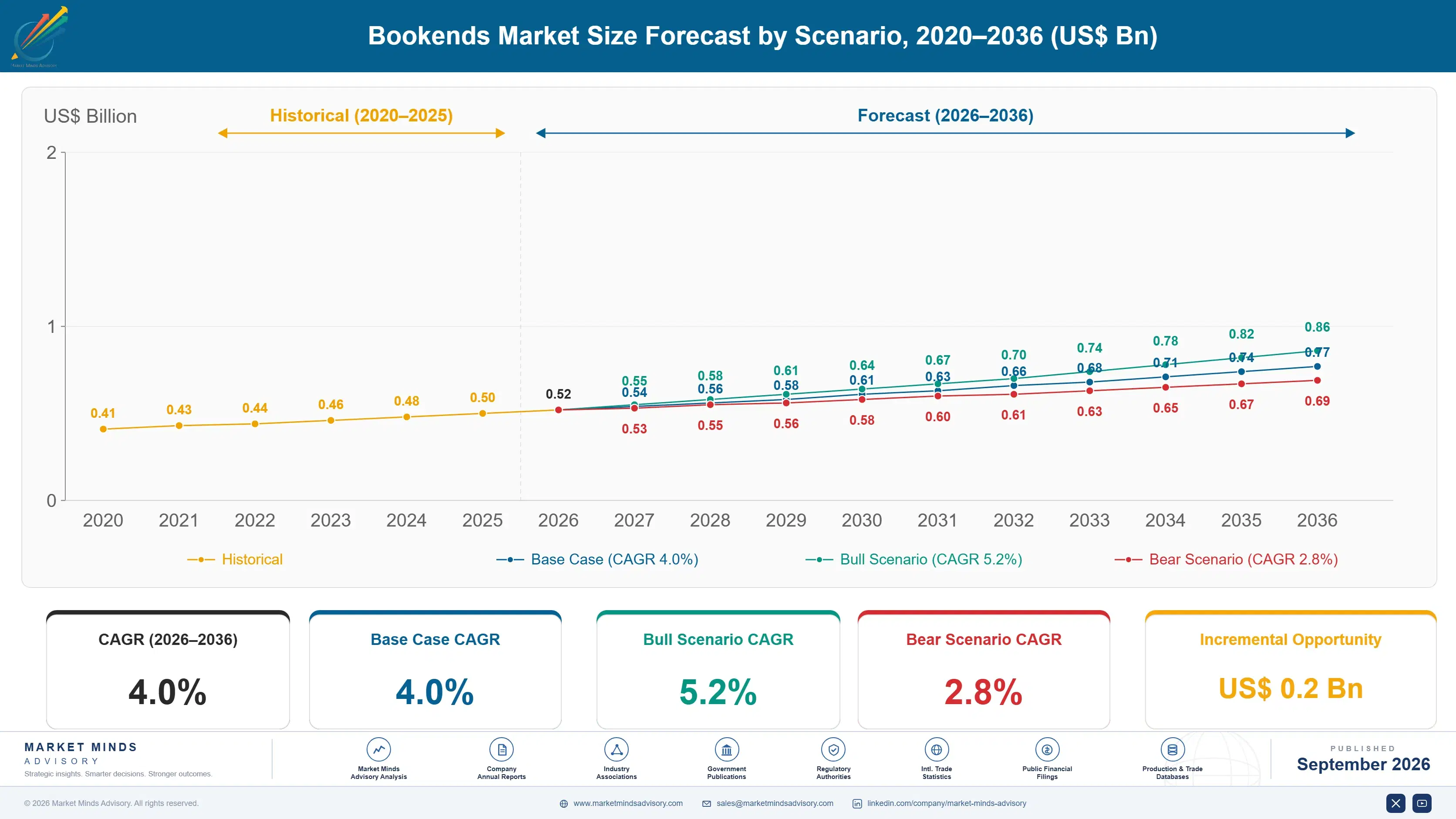
Growth of 2.9% between 2020 and 2025 came from home styling rather than from reading. Household reorganisation through 2020 and 2021 put shelves into video calls and produced decorative purchasing unrelated to holding books upright. Office and institutional demand fell across the same period as workplace occupancy dropped and library budgets tightened, and neither recovered fully.
Three mechanisms carry the base case. Home styling continues driving decorative purchase independently of book ownership, which keeps falling. Marble and stone grow at 6.0% because mass and visual appeal finally coincide in one construction. Indian and Southeast Asian home decor spending expands from low bases as urban households furnish differently, with India at 6.6%, the fastest national market covered here, on domestic stone and metalworking supply. None of the three depends on anyone buying more books.
The bull case is capacity disclosure. If any participant publishes how many books a pair will hold and at what shelf friction, the category gains a comparable specification and the products that can support one separate immediately. The bear case is freight. These are dense, heavy, low-value objects, and a repeat of 2021 container pricing makes the heavy constructions that actually work uneconomic to ship at all.

Why These Products Slide

The failure everyone experiences is sliding and the cause is mass. A row of books pushes outward, the bookend resists only through its own weight against shelf friction, and a decorative pair averaging about 1.1 kilograms cannot hold a dozen hardbacks on a varnished shelf. Roughly 58% of complaints describe exactly this, and about 3% of products state how many books they will hold. The physics is not complicated and nobody in the category discloses it.
TOP FIVE CONCENTRATION12%Combined shipment value share held by the five largest participants
HOLDING CAPACITY STATED3%Products publishing how many books they will hold
AVERAGE SELLING PRICEUSD 27Weighted global wholesale price across all construction types
SLIDING COMPLAINT SHARE58%Complaints describing a bookend moving under book load
AVERAGE PRODUCT WEIGHT1.1 kgMass of a typical decorative pair as sold
BOOKS PER HOUSEHOLD SHELF9Volumes on a styled shelf in surveyed homes
The category has quietly detached from its own name. Household book ownership has declined for two decades while bookends grew, because a styled shelf holds around nine volumes alongside plants, picture frames and objects, and the bookend is bought as one of those objects. Participants who understand that operate in home decor channels rather than in stationery, and their ranges look completely different.
Freight explains the product mix better than taste does. A heavy construction that actually works costs a great deal to ship relative to its value, which is why light resin and acrylic dominate online listings and why the effective products sit in physical retail. Marble resolves the tension only because buyers accept a higher price for it.
"The bookend that works is a folded steel plate hidden under the books, and nobody wants to buy an invisible object. The whole category is an argument between physics and a shelf that has to look good on a video call."
Director, Home Furnishings and Decorative Objects Practice · MMA Consumer and Industrial Goods Practice · September 2026

Market Trends

Shelf Styling Replaces Reading As The Purchase Occasion

Household book ownership has fallen steadily for two decades while this category grew, which only makes sense once the purchase occasion is understood correctly. A styled domestic shelf holds around nine volumes alongside plants, frames and ceramics, and the bookend is bought as a decorative object that happens to lean against them. Participants selling through home decor channels have ranges built accordingly, in sculptural forms and finishes, while those still selling through stationery channels offer functional products into a shrinking office market. Those two ranges no longer overlap in product, in buyer or in the channel that carries them.
Market Impact: India grows 2.6 points faster
Marble Resolves Mass And Appearance In One Construction

The category's central tension is that effective bookends are heavy and heavy objects are usually ugly, while attractive ones are light and slide. Marble and stone break that trade by being simultaneously dense and desirable, which is why they grow at 6.0% against a category rate of 4.0%. Indian and Chinese stone working supplies most of it at prices that make the construction accessible rather than exclusive. Freight cost is the constraint, since a pair of marble bookends weighs several kilograms and travels badly relative to its value. Rajasthan marble has moved from premium to mainstream.
Market Impact: Hybrid working holds 3 days

Market Opportunities and Growth Drivers

Indian Home Decor Spending Expands On Domestic Supply

Urban Indian households are furnishing differently as disposable income rises and apartment living becomes the norm, and decorative shelf objects have become part of that rather than an afterthought. India grows at 6.6%, the fastest national market covered here. Domestic marble and metalworking supply is genuinely advantageous, since Rajasthan stone and local brass casting reach price points imported product cannot approach and carry a provenance that resonates locally. Organised home retail expansion is putting the category in front of buyers who had not previously encountered it. Growth here comes from households entering the category rather than replacing anything.
Market Impact: Sliding drives 58% of complaints

Video Call Backgrounds Turned Shelves Into Display Surfaces

Domestic shelving became visible to colleagues and clients from 2020 onward, and a great many households restyled accordingly. That effect did not reverse when offices reopened, because hybrid working kept the home shelf in view several days a week. The purchase that follows is decorative rather than functional, which favours sculptural constructions and pushes the category further from its stationery origins. Home decor retail rather than office supply now carries the majority of volume across every developed market covered here. The shelf is judged by people who will never take a book off it.
Market Impact: Freight exceeds cost on 1 construction

Market Restraints and Challenges

Decorative Construction Lacks The Mass To Function

About 58% of complaints describe a bookend sliding under load, and the root cause is straightforward physics: resistance comes from weight against shelf friction, and a decorative pair averaging 1.1 kilograms cannot hold a dozen hardbacks on a varnished surface. Commercially this produces returns, poor reviews and a category buyers quietly distrust. Participants are adding weighted bases, rubber feet and non-slip pads, all of which cost cents, and very few publish a holding capacity that would let a buyer choose correctly before purchase. Buyers cannot choose correctly without a published figure.
Market Impact: Shelves hold about 9 books

Freight Cost Punishes The Constructions That Actually Work

Effective bookends are dense and heavy while retailing near USD 27, which gives them among the worst freight economics of any home decor product. The root cause is that value does not scale with mass, so a marble or cast iron pair costs several times a resin pair to ship the same distance. Commercially this pushes online assortment toward light constructions that slide and leaves the effective products in physical retail. Participants are responding with regional manufacture and with weighted inserts rather than solid construction. Light constructions dominate online listings for exactly this reason.
Market Impact: Grows 2 points above category
3 additional market trends, 4 additional growth drivers, and 2 additional restraints and challenges are covered in the full report. Contact sales@marketmindsadvisory.com to access the complete intelligence.

Segment CAGR and Growth Architecture

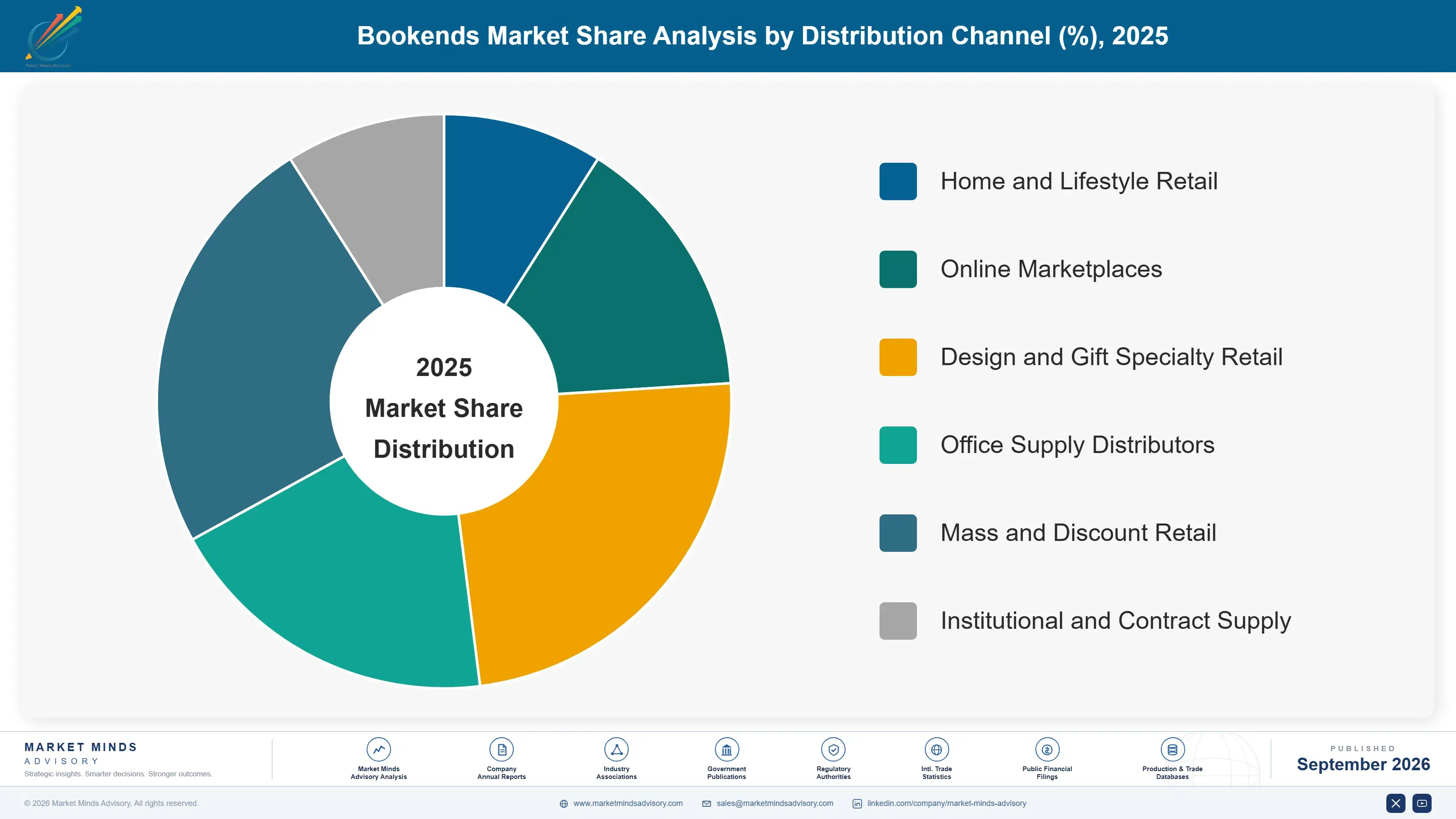
Segmentation follows construction material, the dimension on which mass, manufacturing route, freight cost and retail positioning all divide together in this category. Six constructions are assessed at wholesale shipment value. Shelving, bookcases, magazine files, library systems and decorative objects without a supporting function sit outside the defined scope. Both decorative and functional constructions are sized together here.
bookends-market-market-share-analysis-1790022699136

Marble And Stone Bookends

Marble and stone bookends grow at 6.0%, half again the market rate of 4.0%, because they resolve the tension that defines this category. Effective bookends need mass and mass usually means an object a buyer would rather hide, while attractive constructions are light and slide under load. Stone is both dense and desirable, which is a combination nothing else in the category manages. Indian and Chinese stone working supplies most of the volume at prices that make the construction accessible rather than exclusive, and Rajasthan marble in particular has moved from a premium material to a mainstream one. Freight is the binding constraint, since several kilograms travelling on a twenty-seven dollar product is difficult arithmetic.
CAGR 6.0%

Folded Steel Sheet Bookends

Folded steel sheet bookends grow at 5.1% and they are the construction that actually works, which is not the same as the construction buyers want to look at. An L-shaped plate slides under the books so their own weight anchors it, which removes the sliding failure entirely rather than mitigating it. The visible portion is a thin upright that disappears behind the row. That invisibility is exactly the objection in decorative purchasing and exactly the appeal in office, library and institutional use, where the product has to work and nobody is styling anything. Powder coating and finish quality now carry most of the differentiation within the segment. Institutional buyers specify the same reference for years.
CAGR 5.1%
Full segment breakdown across 6 segments available in the complete report.

Regional Architecture and Country Demand Map

Regional shares measure wholesale shipment value where bookends are sold rather than where they are cast or cut, which matters because Chinese and Indian production supplies most of the category. East Asia sits marginally above its band. Home styling rather than reading drives this table.

East Asia

At 31% this sits marginally above the standard band, and the region is both the manufacturing base for most of the category and its largest market. Chinese casting, resin moulding and stone working supply nearly every brand sold anywhere, and domestic home decor spending has grown quickly as urban households furnish apartments rather than inherit furniture. Japanese demand is distinctive, with Yamazaki and Ryohin Keikaku selling minimal steel constructions into homes where shelf discipline is a daily concern. Korean demand follows the Japanese pattern. Growth of 4.9% reflects domestic decor spending rather than any change in export volumes. Domestic decor spending rather than export volume is what now moves the regional number.
Share: 31% | CAGR: 4.9% (2026 to 2036)

North America

The 27% position sits inside the standard band and the channel split here is the sharpest anywhere. Home decor and lifestyle retail carries the decorative constructions while office supply channels carry functional steel, and the two ranges barely overlap in product or in buyer. Average selling prices are the highest of any region, supported by a home styling culture that treats shelves as display surfaces. Online assortment skews toward light constructions because freight on heavy product is punishing. Growth of 3.3% reflects decorative demand offsetting a long institutional decline. The decor and office ranges barely overlap in product or in buyer, which makes this effectively two markets sharing one product name across the same geography.
Share: 27% | CAGR: 3.3% (2026 to 2036)
Regional intelligence for 5 additional markets available in the complete report: Western Europe, South Asia and Pacific, Latin America, Eastern Europe, Middle East and Africa. Contact sales@marketmindsadvisory.com.
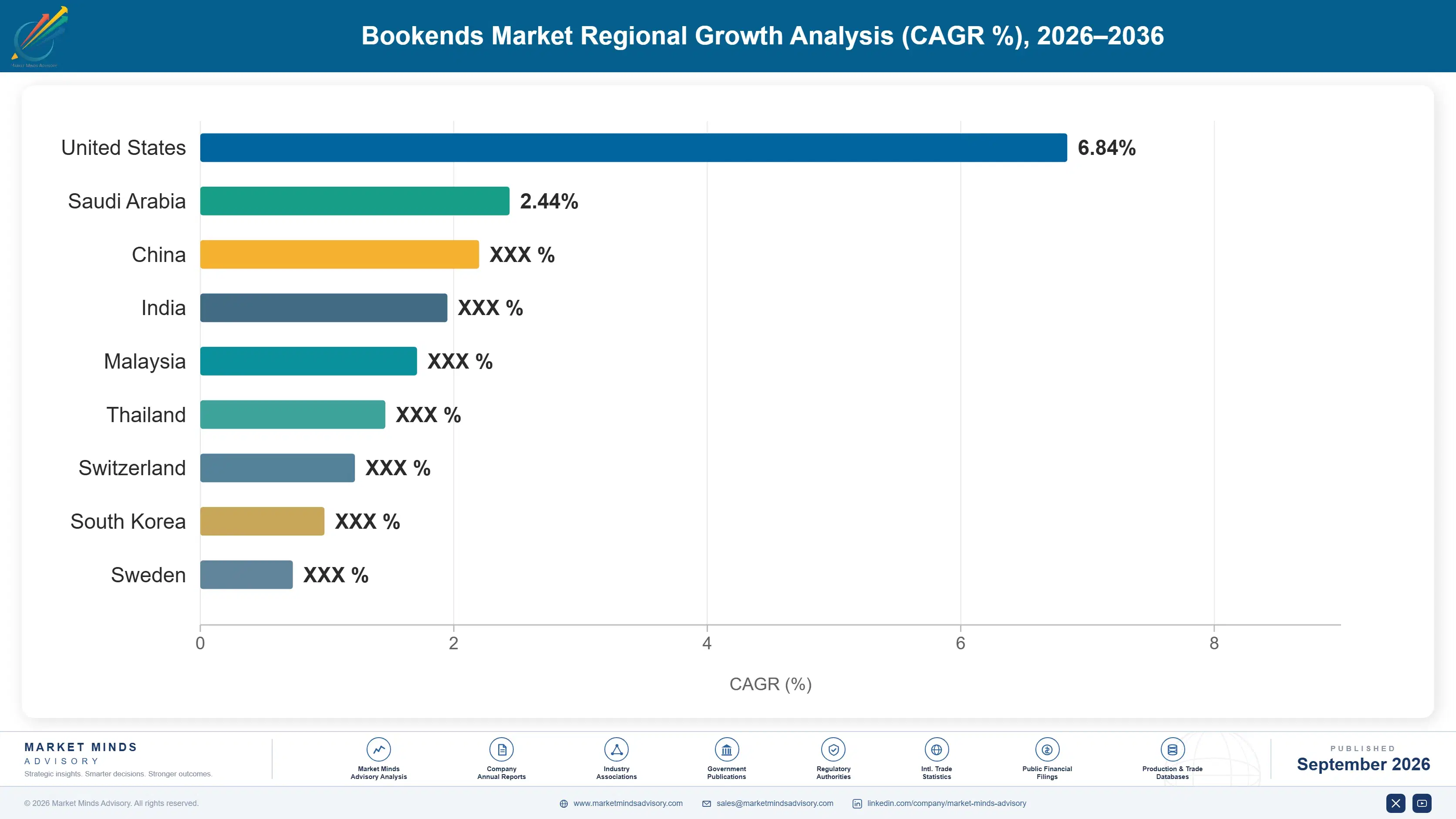
bookends-market-country-cagr-analysis-1790022699654

Four Moves Worth A Few Cents

These four address the same gap: a category that sells decorative objects into a job requiring mass, and says nothing about whether any given product can do that job. Each has been executed by at least one participant, and none requires new tooling or any change to existing manufacturing arrangements. Three of the four cost under a dollar per pair.

Publish A Tested Holding Capacity In Books

About 3% of products state how many volumes a pair will hold, and roughly 58% of complaints describe sliding, which means buyers are choosing blind on the one attribute that decides satisfaction. Testing against a stated shelf surface and publishing a book count costs a protocol and a print change. Participants who have done it report price realisation around 1.4 times comparable unrated products, because a buyer who has already owned one that slid will pay for certainty. Nobody else in the category currently offers it. A buyer who has owned one that slid will pay for certainty.
Market Impact: Lifts price realisation to roughly 1.4 times higher

Add Weighted Inserts Rather Than Solid Construction

Mass is what stops a bookend sliding and solid heavy construction is what makes freight uneconomic on a product retailing near USD 27. A cast iron or sand-filled insert inside a lighter decorative shell delivers the working weight where it matters while allowing a hollow form that ships better than solid stone or metal. The insert adds roughly USD 0.60 to a bill of materials. Participants using them report sliding complaints falling by about 52% with no meaningful change in landed cost. Hollow forms pack and ship considerably better than solid stone does.
Market Impact: Cuts reported sliding complaints by roughly 52% overall

Fit Non-Slip Feet Across The Entire Range

Shelf friction is the other half of the physics and it is the cheaper half to change. A moulded rubber or silicone foot raises the friction coefficient enough to hold several additional volumes at unchanged mass, and it costs a few cents per pair. Most decorative constructions ship with bare resin, stone or felt against a varnished shelf, which is close to the worst possible combination. Participants fitting proper feet report returns falling by around 23% on exactly the constructions that previously performed worst. Felt against varnish is close to the worst available combination.
Market Impact: Cuts product return rates by roughly 23% overall

Build Ranges For Decor Channels Not Stationery

Household book ownership keeps falling while this category grows, because the purchase is decorative and the shelf holds around nine volumes among plants and frames. Ranges built for stationery and office supply channels are serving a shrinking institutional market with products nobody wants visible. Participants who moved range development and distribution to home decor and lifestyle retail report sell-through rising by roughly 34%. The change costs a channel strategy rather than any new manufacturing capability at all. Office and library purchasing has declined for a decade with no sign of returning.
Market Impact: Lifts retail sell-through rates by roughly 34% overall

Who Controls the Margin Pool

Concentration is extremely low at 12% held by the top five, measured consistently on wholesale shipment value of bookends rather than on units. The leader to challenger gap is wide in home decor retail relationships and in design capability that produces a sculptural object people want visible, and effectively absent in manufacturing, where Chinese and Indian casting, moulding and stone working serve anyone placing an order.
Competition runs on three dimensions currently. Design distinctiveness decides whether a product earns a place on a styled shelf, which is now the dominant purchase occasion. Retail channel placement decides volume, and the split between home decor and office supply channels is sharper here than in almost any adjacent category. Landed cost decides the value tier, where freight on dense product dominates the calculation entirely.

Pressure is building on participants still serving stationery and institutional channels, and on light decorative constructions that do not work. Office and library purchasing has declined for a decade and shows no sign of returning. Meanwhile a category that quietly disappoints on its core function is vulnerable to any participant willing to publish a capacity figure and stand behind it.
bookends-market-company-positioning-matrix-1790022700181

Competitive Moat and Risk Dimensions

UMBRA

Moat: Design Language And Decor Placement

A recognisable design identity across home organisation products earns shelf placement in lifestyle and decor retail that functional manufacturers cannot secure, and the bookend range benefits from being merchandised beside frames and storage rather than beside office supplies. That adjacency matches where the purchase occasion actually sits now.
UMBRA

Risk: Light Construction Slides Under Load

Design-led ranges favour forms and materials that look right and weigh little, which is the combination that produces the sliding complaints running through most of this category. A competitor publishing a tested holding capacity would expose the gap directly, and adding mass to existing forms means retooling rather than a specification change.
YAMAZAKI HOME

Moat: Functional Steel Design Credibility

Minimal folded steel construction that works without looking like office equipment gives the company a position on both sides of the category's central tension, and Japanese home organisation design carries authority in export markets that few competitors can borrow. Products are engineered for use rather than styled for photographs.
YAMAZAKI HOME

Risk: Narrow Aesthetic Range

A consistent minimal steel vocabulary limits appeal in markets where decorative shelf styling runs toward warmer materials and sculptural forms, particularly across Southern Europe and Latin America. Broadening beyond that language risks the design coherence the brand is built on, which is a genuine constraint rather than a choice.

Players Tracked

Prominent Players

Umbra
Yamazaki Home
IKEA
Ryohin Keikaku
Fellowes Brands

Other Key Players

Design Ideas
Bey-Berk
HAY
Audo Copenhagen
Ferm Living
Broste Copenhagen
Kikkerland
SPI Home
Danya B
Mind Reader
Safco Products
ACCO Brands
Deli Group
M and G Chenguang
Nitori Holdings

Recent Developments

MARCH 2025

Umbra expands sculptural home organisation range

The company extended its decorative shelf and organisation products with new sculptural forms across several materials. This was internal product development involving no acquisition, licensing arrangement or design partnership with any external studio or manufacturer. Existing functional lines continue alongside the new forms in the same ranges.
Signal: Ranges are being built for decor merchandising rather than for office supply fixtures. The purchase occasion has moved.
NOVEMBER 2024

Yamazaki Home extends European retail distribution

The company widened distribution across European home and lifestyle retail, moving beyond the design specialist channels it had previously relied on. This was organic commercial expansion with no joint venture, acquisition or distribution partner involved in the arrangement. Design specialist accounts were retained through the expansion.
Signal: Functional Japanese construction is being tested against European decorative buying preferences. Function is being tested against decorative preference directly.
JULY 2025

ACCO Brands consolidates office accessories distribution

The company concentrated warehousing for office accessories including bookends into fewer facilities as part of a cost programme. This was an internal logistics decision taken on cost grounds, involving no acquisition, divestiture or external partner whatsoever. Product ranges and specifications were unaffected by the consolidation.
Signal: Office channel volumes no longer justify the distribution footprint that this whole category once comfortably supported.

Why Weight Costs So Much

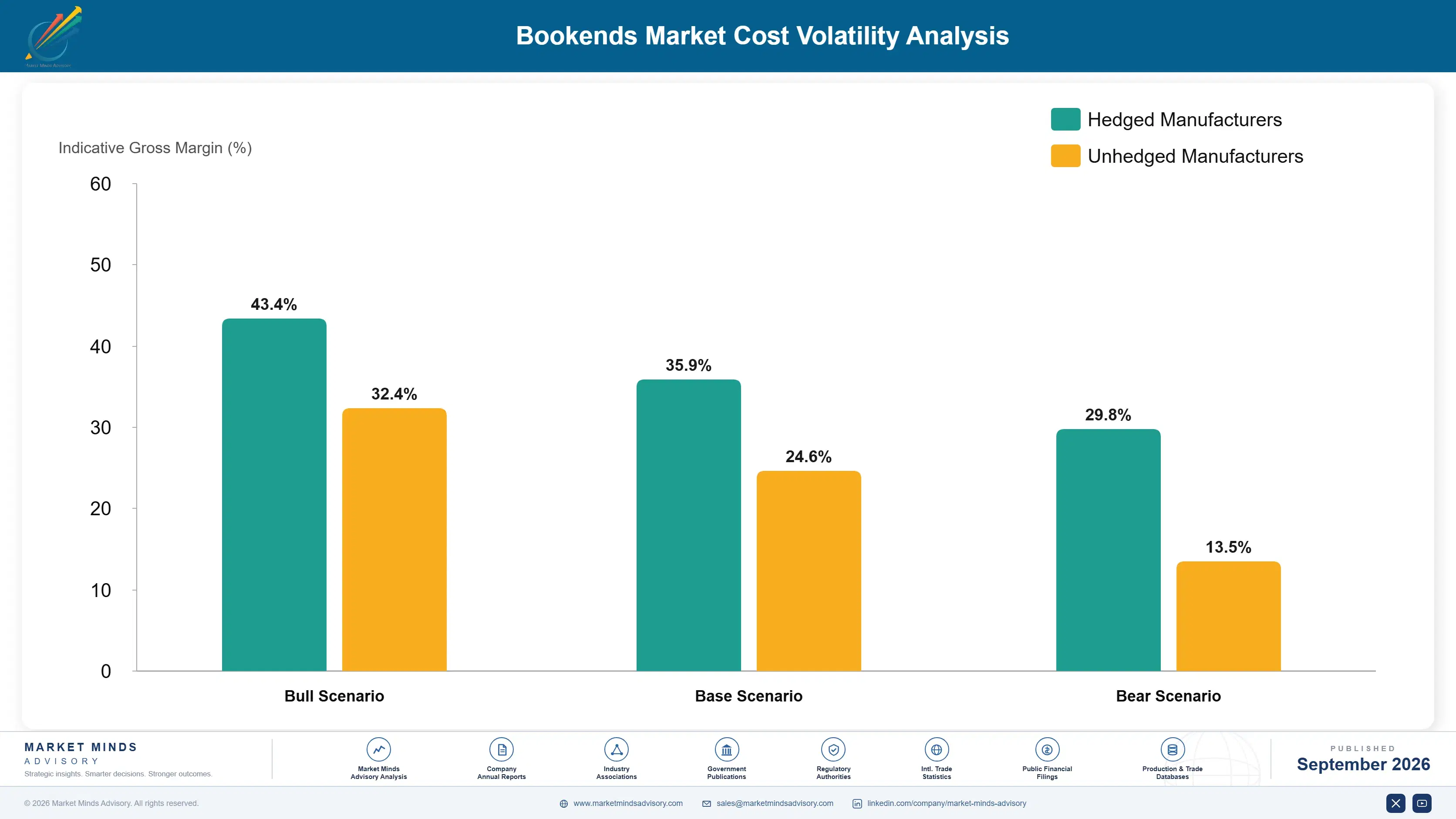
Freight is the defining cost line and sits outside the bill of materials entirely, taking a punishing share of landed cost on a dense product. Material cost varies enormously by construction: polyresin runs low, cast iron and zinc sit in the middle, and marble carries quarrying, cutting and polishing that dominate its structure. Finishing, felt bases and packaging take most of the remainder.
Container pricing in 2021 and 2022 exposed how badly this ships. Rates on Asia to Europe and Asia to North America routes multiplied several times over, and on a dense product retailing near USD 27 the freight component approached or exceeded manufactured cost on heavy constructions. ACCO Brands reporting for that period identifies inbound freight and raw material inflation across office products as requiring price action, and the heavier lines suffered most.

Exposure varies almost entirely by density and by manufacturing location. Resin and acrylic constructions ship cheaply and survive freight cycles intact. Marble, stone and cast metal carry the worst exposure and are also the constructions that actually work. Regional manufacture removes the freight layer for domestic sale, which is why local stone and metalworking hold the positions they do.
bookends-market-cost-volatility-analysis-1790022700377

Replace solid mass with a weighted insert inside a shell

Solid stone and cast metal deliver the working weight and carry freight cost across the whole object. A cast or sand-filled insert inside a lighter formed shell places the mass where it works while allowing a hollow exterior that packs and ships far better. The insert adds a modest amount to materials and removes a great deal from landed cost.

Manufacture heavy constructions regionally for regional sale

Marble and cast metal ship worst and are also where demand is growing, which makes regional manufacture more valuable in this category than in most. Indian, Brazilian and Eastern European stone and metalworking capacity is genuinely capable. The obstacle is minimum order quantity rather than capability, since none of this manufacturing is technically demanding.

Design packing density into the form at concept stage

Bookends are awkward shapes that pack badly, and a form decided on appearance alone frequently wastes a third of the carton. Considering nesting and stacking during design costs nothing and reduces both freight and damage. Almost nobody raises it during a design review, because the object is being judged on a shelf rather than in a box.

Portfolio Architecture for Margin Defence

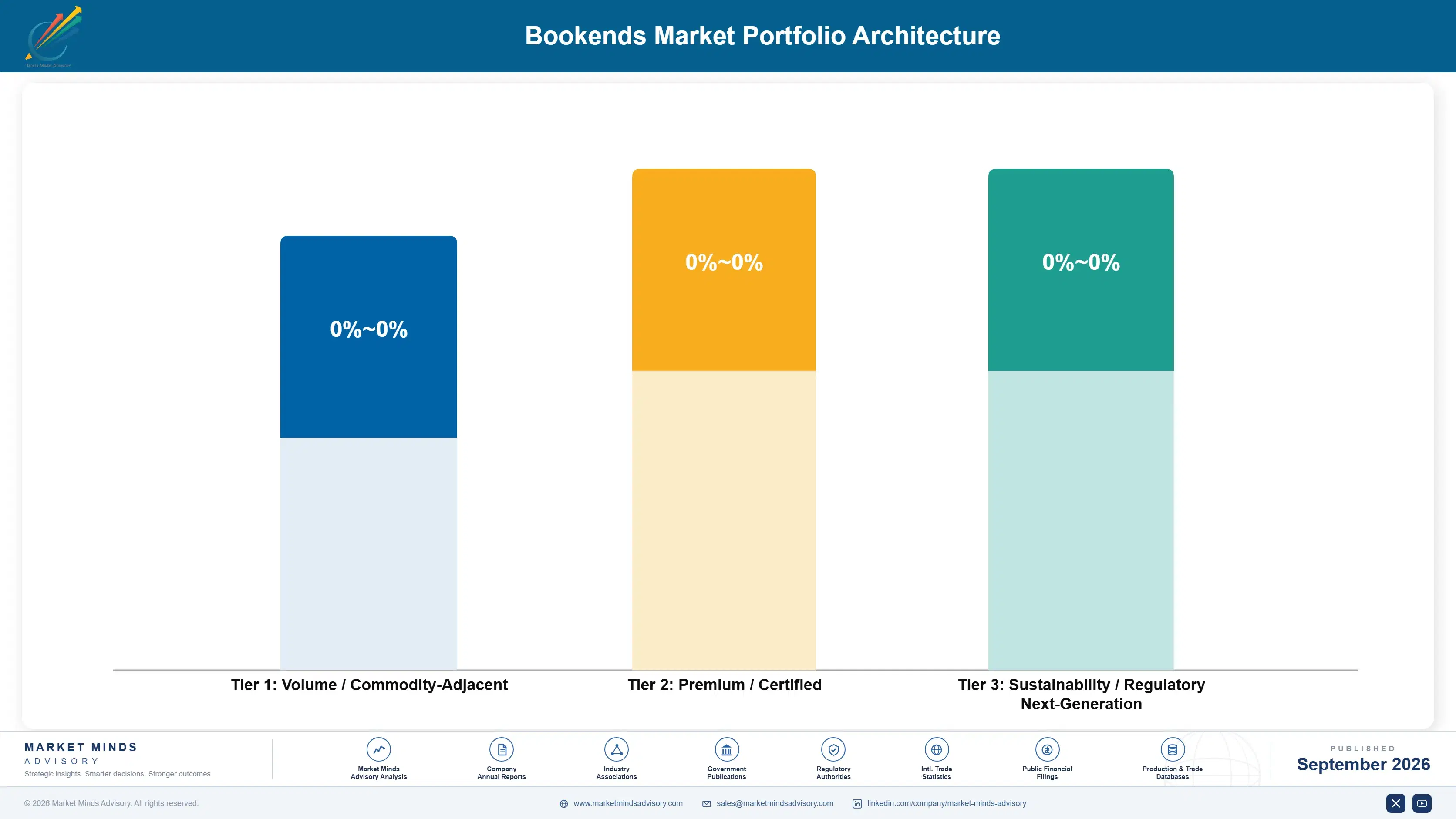
Margin architecture divides by design distinctiveness and by shipping density rather than by material cost, which a production model would not predict. Entry resin and acrylic bookends sold through online marketplaces run at gross margins in the mid twenties to low thirties, competing against visually similar products from moulders that supply anyone and offering nothing a buyer can compare. Search position rather than any attribute of the object decides which listing a buyer ever sees, and none of them states a capacity.
Design-led constructions sold through home decor and lifestyle retail hold gross margins in the low to high forties. The spread reflects design distinctiveness and channel placement rather than construction cost, since a sculptural resin form and a generic one cost almost the same to make. Decor retail also avoids the direct price comparison a marketplace search enforces.

The highest-value pool sits in marble and stone construction, at margins in the high forties to mid fifties. Buyers accept a materially higher price because the object is both effective and attractive, which nothing else in the category delivers together. Entry resin fills marketplace listings and generates volume. It also generates the sliding complaints the whole category carries.

Volume / Commodity-Adjacent

Entry resin and acrylic bookends sold through online marketplaces. Visually similar products compete on search position and price, and none offers an attribute a buyer could compare before purchase. Search position decides everything at this tier.
Gross Margin: 24 to 32%

Premium / Certified

Design-led constructions sold through home decor and lifestyle retail. The eight-point range reflects design distinctiveness and channel placement rather than construction cost, which barely differs across the tier. Decor retail avoids direct marketplace comparison entirely.
Gross Margin: 40 to 48%

Sustainability / Regulatory / Next-Generation

Marble and stone construction combining genuine working mass with an object buyers want visible. Nothing else in the category delivers both, which supports pricing that resists direct comparison at shelf.
Gross Margin: 48 to 56%
bookends-market-portfolio-architecture-1790022700885

High-value Sub-segments and Strategic Watch-out

Marble And Stone Construction

High value and high growth at 6.0%. Density and desirability coincide here and nowhere else in the category. Indian and Chinese stone working has made the construction accessible rather than exclusive, and freight is the only real constraint. Buyers accept the price because the object works.
Gross Margin: 50 to 56%

Weighted Insert Decorative Forms

High value and moderate growth. A cast or sand-filled insert adds working mass inside a lighter shell for roughly USD 0.60, and participants using them report sliding complaints falling by about 52% at unchanged landed cost. The mass goes where it works rather than everywhere.
Gross Margin: 44 to 50%

Entry Resin And Acrylic Bookends

Volume core across marketplace listings, light enough to slide and priced accordingly. It generates the complaints the whole category carries while offering no attribute any buyer can evaluate before they purchase. Visually similar products from moulders serving anyone leave no durable position for any participant at this tier.
Gross Margin: 24 to 31%

Office And Institutional Steel Ranges

Strategic watch-out. These work better than anything decorative and serve a channel that has declined for a decade. The twelve-point range reflects how differently participants have handled a shrinking institutional buyer base. Nobody wants these visible on a styled domestic shelf, which is where the growth now sits.
Gross Margin: 28 to 40%

What Prompts A Purchase

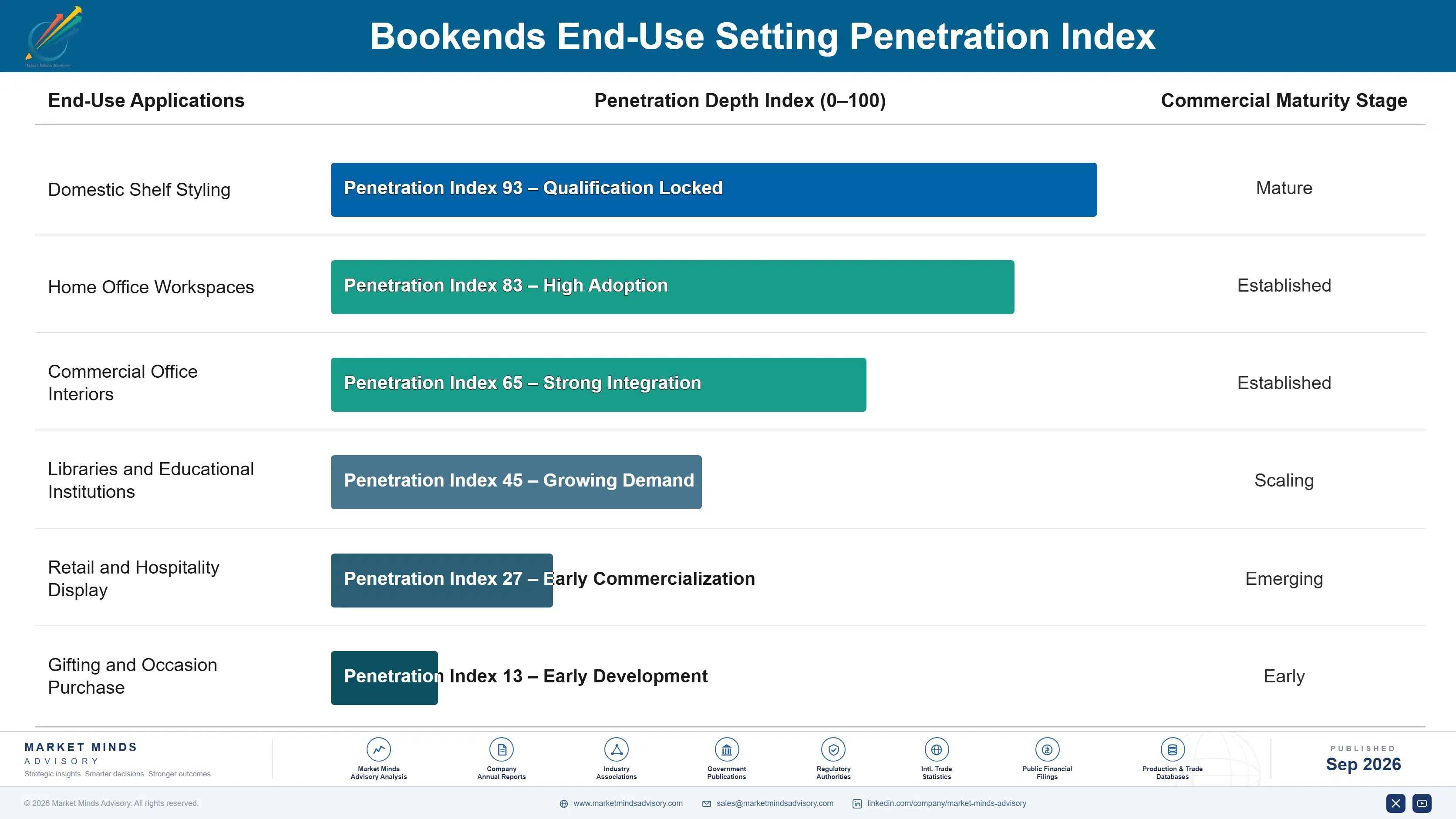
Purchase here is styling-driven rather than need-driven, and that distinction explains why a category named after books survives declining book ownership. A household buys bookends when it restyles a shelf, moves house or redecorates a room, and the trigger is a visual decision about a surface rather than a problem with falling volumes. That makes the occasion infrequent, discretionary and closely tied to home furnishing cycles.
Repeat behaviour varies sharply by what happened last time. A household whose previous pair slid under load either abandons the category entirely or buys deliberately heavier next time, and the second group is where published capacity would matter most. Buyers who bought purely decoratively and never loaded the shelf have no failure experience and repurchase on appearance alone. Institutional buyers specify on function and repurchase the same reference for years.

Purchase profiles shifted after 2020 in one visible direction. Households that restyled shelving for video calls have kept those shelves in view through hybrid working, and they buy decorative objects for a surface that other people see. That cohort evaluates bookends against picture frames and ceramics rather than against other bookends, which is a considerably harder comparison to win on function alone.
bookends-market-end-use-penetration-index-1790022701371

Where This Category Earns

These are among the four positions where our research anticipates prominent divergence between winners and laggards over the coming forecast period. Each is grounded in the demand model, the regulatory perimeter, and the announced capacity pipeline.
01 / CAPACITY DISCLOSURE DISCIPLINE

State how many books the pair will hold

Roughly 58% of complaints describe a bookend sliding under load while about 3% of products state a holding capacity, which means buyers choose blind on the one attribute that determines whether they are satisfied. Testing against a stated shelf surface and publishing a book count costs a protocol and a print change. Participants who have done it report price realisation around 1.4 times comparable unrated products, because anyone who has owned a pair that slid will pay for certainty, and nobody else currently offers a figure of any kind.
02 / WEIGHTED INSERT ENGINEERING

Put the mass inside a shell that ships

Mass is the only thing that resists sliding, and solid heavy construction is exactly what makes freight uneconomic on a product retailing near USD 27. A cast iron or sand-filled insert inside a lighter formed shell delivers working weight while allowing a hollow exterior that packs far better than solid stone or metal. The insert adds roughly USD 0.60 to materials, and participants using them report sliding complaints falling by about 52% with no meaningful landed cost change, which is the cheapest design improvement available anywhere in this product category.
03 / SHELF FRICTION SPECIFICATION

Fit feet that actually grip a varnished shelf

Friction is the other half of the physics and much the cheaper half to change, since a moulded rubber or silicone foot raises the coefficient enough to hold several additional volumes at unchanged mass. Most decorative constructions currently ship with bare resin, stone or felt against a varnished shelf, which is close to the worst available combination. Participants fitting proper feet report returns falling by around 23% on exactly the constructions that previously performed worst, and the change costs a few cents per pair with no tooling required at all.
04 / CHANNEL PLACEMENT CORRECTION

Sell where the shelf is styled, not stocked

Household book ownership keeps falling while this category grows, because the purchase is decorative and a styled shelf holds around nine volumes among plants and frames. Ranges built for stationery and office supply channels serve a shrinking institutional market with products nobody wants visible on a shelf. Participants who moved range development and distribution into home decor and lifestyle retail report sell-through rising by roughly 34%, on a channel decision rather than any manufacturing change, and office purchasing has declined for a decade with no sign of returning.

Engagement Snapshot From the Field

A live engagement with an industry participant carrying material or product regulatory and market exposure ahead of a defining policy shift, showing how our research translates into a defensible multi-year portfolio strategy.
MARKET MINDS ADVISORY · CLIENT ENGAGEMENT SUMMARY
Bookends Producer Strategic Portfolio Review and Transition Roadmap 2026·Investment Scenario on Bookends Exposure Evaluation 2025-26
CLIENT PROFILE
A supplier of decorative home accessories to European and North American retail with bookend category revenue near USD 18 million (client-reported, unverified by MMA). Resin and acrylic construction accounted for 74% of volume, and no product published a holding capacity or carried non-slip feet. Roughly 62% of volume moved through online marketplaces where returns were handled by the platform and costs sat outside category reporting.
STRATEGIC CHALLENGE
Marketplace review scores had fallen below every direct competitor over two years while sell-through held, and management attributed it to review manipulation by competing sellers. A review response programme had been approved. Nobody had read the negative reviews systematically or tested a product against the load a buyer would actually place on it.
MMA APPROACH
MMA coded 4,200 negative reviews across the range against a failure taxonomy, then load-tested every product to establish the book count each would hold on varnished, laminate and painted shelf surfaces. Landed cost was decomposed by construction and density. Channel placement was audited across 120 retail locations against competing ranges.
KEY FINDINGS
  1. Sliding accounted for 64% of coded negative reviews, above the category figure of 58%, and appeared in reviews of every product in the range without exception.
  2. Load testing showed the best-selling reference holding four hardbacks on varnished shelf against a product photograph showing eleven, and none of the range carried non-slip feet.
  3. Adding a silicone foot raised tested capacity by an average of three volumes at a materials cost under five cents per pair across every construction tested.
  4. Retail audit found the range merchandised in stationery fixtures at 71% of locations while competing ranges sat in home decor, where sell-through per facing ran considerably higher.
CLIENT PROFILE
A supplier of decorative home accessories to European and North American retail with bookend category revenue near USD 18 million (client-reported, unverified by MMA). Resin and acrylic construction accounted for 74% of volume, and no product published a holding capacity or carried non-slip feet. Roughly 62% of volume moved through online marketplaces where returns were handled by the platform and costs sat outside category reporting.
STRATEGIC CHALLENGE
Marketplace review scores had fallen below every direct competitor over two years while sell-through held, and management attributed it to review manipulation by competing sellers. A review response programme had been approved. Nobody had read the negative reviews systematically or tested a product against the load a buyer would actually place on it.
MMA APPROACH
MMA coded 4,200 negative reviews across the range against a failure taxonomy, then load-tested every product to establish the book count each would hold on varnished, laminate and painted shelf surfaces. Landed cost was decomposed by construction and density. Channel placement was audited across 120 retail locations against competing ranges.
KEY FINDINGS
  1. Sliding accounted for 64% of coded negative reviews, above the category figure of 58%, and appeared in reviews of every product in the range without exception.
  2. Load testing showed the best-selling reference holding four hardbacks on varnished shelf against a product photograph showing eleven, and none of the range carried non-slip feet.
  3. Adding a silicone foot raised tested capacity by an average of three volumes at a materials cost under five cents per pair across every construction tested.
  4. Retail audit found the range merchandised in stationery fixtures at 71% of locations while competing ranges sat in home decor, where sell-through per facing ran considerably higher.
RECOMMENDED STRATEGY
Phase 1: Phase one: fit silicone feet across the entire range and load-test every reference before the next production run. Feet cost under five cents per pair. Phase 2: Phase two: publish a tested holding capacity by shelf surface on pack and in all online listings. Photographs currently show loads the products cannot hold. Phase 3: Phase three: renegotiate merchandising into home decor fixtures and rebuild range development around that channel. Competing ranges already sit in decor fixtures.
OUTCOME
Marketplace review scores recovered above two of three named competitors within two quarters and returns fell by roughly a quarter (client-reported, unverified by MMA). The review response programme was cancelled once the complaint coding showed the reviews were accurate, and published capacity became the range's primary listing differentiator.

Frequently Asked Questions

Foundational context covering the market sizes, CAGR, scope, country, region and competition that inform every finding below. This section is provided to cover basics and most often pre-purchase conversations, answered from the MMA Primary Research Dataset.

What is the current size of the Bookends Market?

The market was valued at USD 0.5 billion in 2025, holding near USD 0.5 billion in 2026. Sizing is at wholesale shipment value across six construction types.

How large will the Bookends Market be by 2036?

MMA forecasts USD 0.7 billion by 2036, an increase of USD 0.2 billion over the 2026 base. That represents expansion of 1.40 times across the forecast period.

What is the CAGR for the Bookends Market 2026 to 2036?

The base case CAGR is 4.0%, with a bull case of 5.2% and a bear case of 2.8%. Historical growth between 2020 and 2025 ran at 2.9%.

Which segment is growing fastest?

Marble and stone bookends grow at 6.0%, half again the market rate, because stone is the only construction that is both dense enough to work and attractive enough to display.

Who are the major companies in the Bookends Market?

Umbra, Yamazaki Home, IKEA, Ryohin Keikaku and Fellowes Brands lead on shipment value, holding a combined 12%. The category is among the most fragmented in home accessories.

Which country is growing fastest?

India grows fastest at 6.6%, as urban home decor spending rises and domestic marble and brass casting reach price points imported product cannot approach. Organised home retail is expanding rapidly across metropolitan markets.

Report Segmentation Architecture

The full report scope spans multiple orthogonal segmentation dimensions, with cross-tabulated demand data provided for each dimension pair. Coverage extends further to regional breakdowns, trend trajectories, and the competitive detail needed to support segment-level decision-making.

By Construction Material

  • Cast Metal Bookends
  • Resin and Composite Bookends
  • Wooden Bookends
  • Marble and Stone Bookends
  • Folded Steel Sheet Bookends
  • Acrylic and Glass Bookends

By End-Use Setting

  • Domestic Shelf Styling
  • Home Office Workspaces
  • Commercial Office Interiors
  • Libraries and Educational Institutions
  • Retail and Hospitality Display
  • Gifting and Occasion Purchase

By Distribution Channel

  • Home and Lifestyle Retail
  • Online Marketplaces
  • Design and Gift Specialty Retail
  • Office Supply Distributors
  • Mass and Discount Retail
  • Institutional and Contract Supply

By Region

  • East Asia
  • North America
  • Western Europe
  • South Asia and Pacific
  • Latin America
  • Eastern Europe
  • Middle East and Africa

Scope, Methodology, and Coverage

Every figure in this report is reproducible from documented input assumptions. The scope below maps the historical period, the forecast horizon, the segmentation dimensions, and the countries covered, alongside the underlying primary and qualitative methodology.
Historical Period
2020 to 2025
Forecast Period
2026 to 2036
Base Year
2025 (USD billions; MMA Primary Research Dataset, September 2026)
Market Definition
This market covers bookends sold for domestic, office and institutional use, spanning cast metal, resin and composite, wooden, marble and stone, folded steel sheet, and acrylic and glass construction. Sizing is at wholesale shipment value across home and lifestyle retail, marketplace, design specialty, office supply, mass and institutional channels. Shelving and bookcases, magazine files and document holders, library shelving systems, decorative objects without a book-supporting function, and shelf brackets or fixings are excluded throughout.
Quantitative Units
USD billions at wholesale shipment value; volume in millions of pairs; holding capacity in books and mass in kilograms.
Segmentation Dimensions
Construction material, end-use setting, distribution channel, and geographic region.
Regions Covered
East Asia, North America, Western Europe, South Asia and Pacific, Latin America, Eastern Europe, Middle East and Africa
Countries Covered
China, United States, Germany, India, Japan, Brazil
Key Companies Profiled
Umbra, Yamazaki Home, IKEA, Ryohin Keikaku, Fellowes Brands, Design Ideas, Bey-Berk, HAY, Audo Copenhagen, Ferm Living, Broste Copenhagen, Kikkerland, SPI Home, Danya B, Mind Reader, Safco Products, ACCO Brands, Deli Group, M and G Chenguang, Nitori Holdings
Quantitative Methodology
Primary survey, n=3,800 respondents, Q4 2025, six countries; demand-side model with trade association cross-validation
Qualitative Methodology
47 expert interviews, Q4 2025; applied to validate demand model assumptions, identify emerging dynamics, and assess competitive positioning
Report Format
PDF and XLSX data workbook (Word format preview document)
Publisher
Market Minds Advisory
Report Code
MMA-2026-CON-782
Published
September 2026
Contact
sales@marketmindsadvisory.com | www.marketmindsadvisory.com

Purchase the full Bookends Market Report (2026 to 2036).

The full report sizes the bookends market across six construction materials, six end-use settings and six distribution channels for all seven global regions. It includes load testing establishing tested holding capacity by shelf surface across leading products and constructions. Negative reviews are coded against a failure taxonomy to separate sliding from appearance and quality complaints. Landed cost is decomposed by construction and density to isolate freight exposure, and retail merchandising placement is audited between decor and stationery fixtures. Competitive assessment covers 20 participants on a consistent wholesale shipment value basis.
Load testing establishing capacity by shelf surface
Negative reviews coded against a failure taxonomy
Landed cost decomposed by construction and density
Merchandising placement audited across retail fixtures
Six construction materials sized through 2036
Twenty participants assessed on wholesale shipment value

Built For The People Who Decide

From boardroom strategy to bench-side execution, this report is read cover-to-cover by leaders shaping the next decade of their industry, turning demand scenarios, market dynamics and valuation benchmarks into decisions.
CXOs/ Presidents/ VPs/ Managers
M&A and Corporate Development
Strategy Teams and R&D Heads
Procurement and Product Directors
Regulatory and Compliance Leaders
Investor Relations and Equity Analysts