Market Minds Advisory
Bioplastic and Biopolymer Market

Bioplastic and Biopolymer Market: Feedstock Economics Decide Which Bio-Based Chemistry Wins Each Application

Regulatory bans, brand sustainability commitments, and maturing feedstock economics are pulling bio-based polymer demand well beyond packaging into automotive, textile, and durable goods applications faster than resin capacity can reliably keep pace with converter requalification.

Lead Analyst

Bilal Shaikh

Published

August 2026

Make Smarter Decisions with Customized Research Insights

Request a free sample report and evaluate market opportunities, growth trends, and competitive dynamics relevant to your business needs.

2025 MARKET VALUE$14.5BMarket Size 2025
2036 FORECAST VALUE$37.4BBase Case , 2026 to 2036
CAGR 2026 TO 20369.0 %Bull 10.2% / Bear 7.7%
INCREMENTAL OPPORTUNITY$21.6BNet 10- year value creation
EXPANSION MULTIPLE2.37x2036 value over 2026 base
Strategic Levers
M&A Pipeline
Regional Outlook
Country Rankings
Competitive Intelligence
Segmental Deep-dive
Call-Us : 91 93563 13602

Executive Snapshot and Market Trajectory

Bio-based polymer demand is broadening well beyond its original packaging application base into automotive interior components, textile fibers, and durable consumer goods as brand owners pursue sustainability commitments that regulatory mandates alone no longer fully explain across most major markets today.
PHA resin is pulling investment fastest given its marine biodegradability advantage over PLA and starch blends in applications where end-of-life composting infrastructure remains limited. Bio-based polyamides and polyesters follow closely, driven by automotive and textile manufacturers seeking engineering-grade alternatives to petroleum-derived resins. East Asia carries the largest production base tied to China's manufacturing scale, while Latin America's bio-based polyethylene output, anchored by Brazil's sugarcane advantage, sustains a specialization other regions cannot easily replicate.
Five manufacturers hold roughly 35 percent of category revenue, leaving substantial share open to specialists who move fastest on feedstock security and technical qualification work. A technology transition toward engineering-grade biopolymers and next-generation PHA chemistry, combined with expanding brand owner sustainability commitments, is reshaping which suppliers win the largest converter and OEM contracts over the coming decade of growth.
Market Definition
The market comprises polymers derived wholly or partly from renewable biological feedstocks or engineered to biodegrade under defined conditions, including PLA, PHA, starch blends, PBAT and PBS blends, bio-based polyethylene, and bio-based polyamides and polyesters, sold as resin, pellet, or compound form to converters across packaging, automotive, textile, agriculture, and consumer goods applications. It excludes finished bioplastic products such as bags or containers, which are downstream converted goods rather than the polymer material itself.
Base Year Value
$14.5B in 2025 (MMA Primary Research Dataset, August 2026)
Forecast Period
2026 to 2036, eleven discrete annual values
CAGR
9.0% base case. Bull 10.2%. Bear 7.7%.
Fastest Growth Segment
PHA (Polyhydroxyalkanoates): 15.0% CAGR
Fastest Growth Country
Indonesia: 13.5% CAGR
Fastest Growth Region
South Asia and Pacific: 11.1% CAGR
Largest Region
East Asia: 27% of 2025 global value
Market Leaders
NatureWorks, Braskem, BASF, Novamont, Corbion. Source: MMA Analysis based on company annual reports.
Primary Survey
n=3,800 procurement and R&D decision-makers, Q4 2025, six countries
Methodology
Demand-side build-up, cross-validated against public data, 47 expert interviews

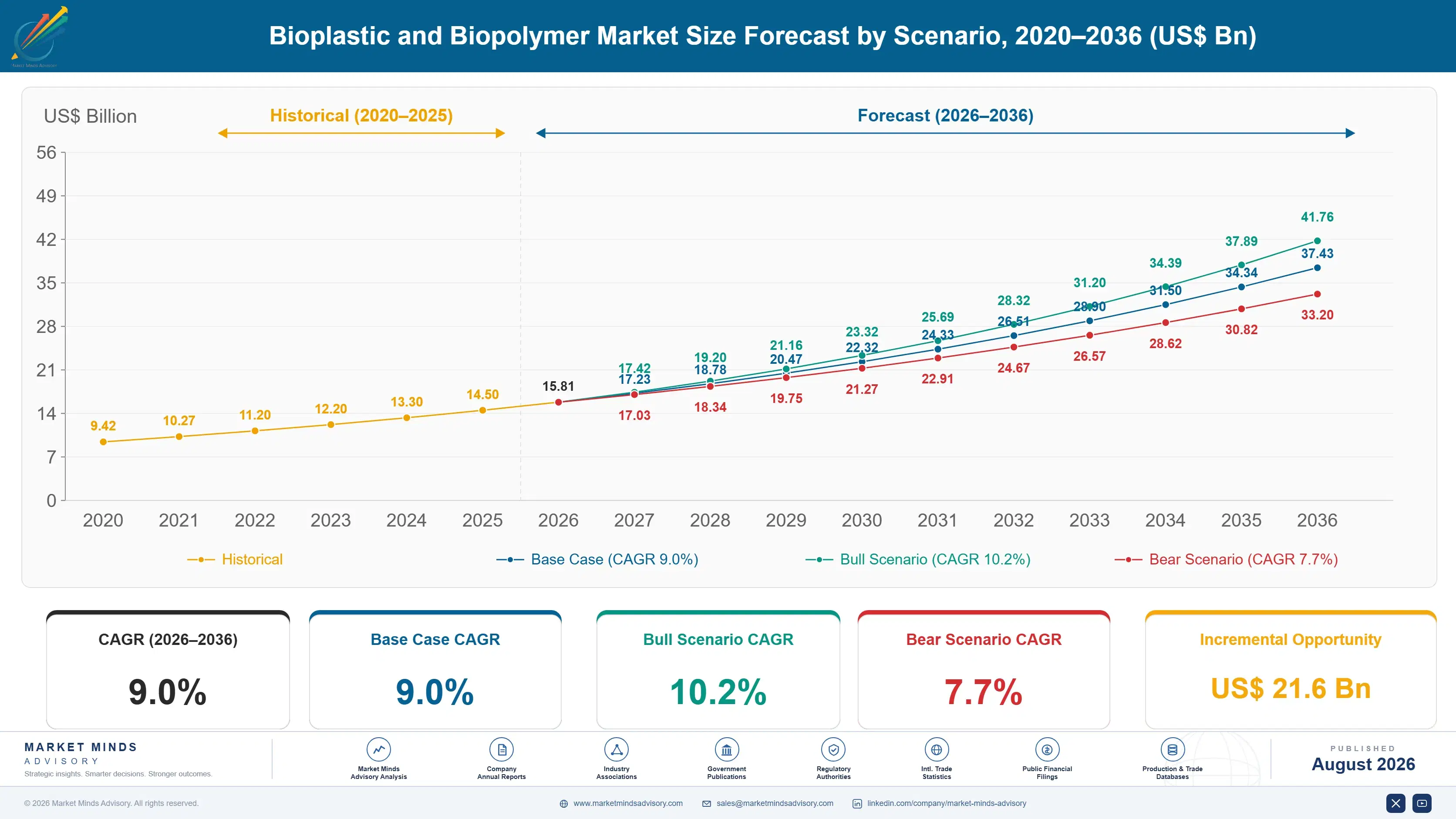
Bioplastic and Biopolymer Market Forecast Scenarios

bioplastic-and-biopolymer-market-size-forecast-scenario-1787300816940
Between 2020 and 2025 the market grew at a historical pace of 8.0 percent as regulatory bans on single-use plastics pulled early demand toward packaging-grade resins while automotive and textile manufacturers began separately piloting engineering-grade biopolymers, a dual-track growth pattern that has since converged into a broader multi-application demand base than the category's packaging-centric origins.
The base case rests on three commercial mechanisms holding together over the decade: continued expansion of single-use plastic regulation and extended producer responsibility fee structures across additional national markets worldwide, growing automotive and textile manufacturer adoption of bio-based engineering resins tied to corporate sustainability targets, and maturing PHA and next-generation PBAT capacity finally catching up with demand that has outstripped supply for several consecutive years across most producing regions tracked in this report.
A bull scenario hinges on automotive OEMs standardizing bio-based interior component specifications faster than current adoption timelines suggest is likely. The bear case centers on persistent feedstock cost premiums over petroleum-based polymers slowing broader industrial adoption faster than packaging-driven regulatory demand alone can offset the resulting revenue gap across the category.

From Packaging Substitute to Engineering Material Platform

Three forces are converging on this category at once: a maturing packaging-grade demand base that still anchors the largest unit volume, a fast-scaling engineering-grade biopolymer segment serving automotive and textile manufacturers, and a feedstock cost gap versus petroleum-based polymers that continues narrowing but has not yet closed across most resin chemistries tracked in this report.
MARKET CONCENTRATIONCR5 35%top five manufacturers hold roughly a third of total revenue
AVERAGE RESIN PRICE$2,850/tonneblended average selling price across all bio-based resin chemistries
LEADING PRODUCING REGIONEast Asia, 27% sharelargest single-region production base by resin manufacturing capacity
NON-PACKAGING DEMAND SHARE34% of revenueproportion of category revenue tied to non-packaging applications
FEEDSTOCK COST PREMIUM1.5 to 3.0xtypical bio-based resin cost multiple versus comparable petroleum polymer
FEEDSTOCK INPUT COST SHARE44% of COGSagricultural and biomass feedstock proportion of total goods sold
Commercially, the market increasingly splits along application sophistication rather than pure chemistry-class lines. Packaging converters still purchase largely on regulatory compliance certification and price relative to conventional plastic alternatives, while automotive and textile manufacturers evaluate bio-based resin suppliers on mechanical performance data and long-term supply security far more heavily than sustainability positioning alone.
Over the next decade, feedstock security will matter as much as raw polymer performance. Suppliers who lock in long-term agricultural and biomass feedstock agreements will capture a disproportionate share of the fastest-growing engineering-grade and PHA demand before the broader converter base can secure comparable feedstock access of its own.
"Packaging got this category started because regulators forced the issue. What keeps it growing now is an automotive engineer deciding a bio-based nylon actually performs well enough to spec into a real production part."
Director, Sustainable Materials and Specialty Polymers Practice · MMA Sustainabl

Market Trends

Automotive Manufacturers Specify Bio-Based Interior Resins

Automotive manufacturers are increasingly specifying bio-based polyamides and polyesters for interior trim, seating components, and under-hood applications, driven by corporate sustainability commitments and, in several major markets, regulatory pressure to reduce vehicle lifecycle carbon footprint through material substitution. Several major automakers have publicly committed to bio-based content targets across new vehicle platforms launching over the next several years, creating a durable demand pipeline distinct from the category's historical packaging concentration. Qualification testing cycles for automotive-grade bio-based resins commonly span eighteen months or longer given the rigorous performance standards required, a barrier favoring suppliers with dedicated automotive engineering support over general packaging resin producers lacking comparable experience.
Market Impact: Cuts fees over 20%
PHA Capacity Investment Accelerates Amid Persistent Shortage

PHA resin, valued for biodegrading in marine and soil environments without requiring industrial composting infrastructure, continues attracting the fastest capacity investment of any bio-based chemistry as demand from coastal markets and premium packaging applications outstrips current global production scale by a wide margin. Several major producers have announced or completed new PHA production facilities over the past two years, though total global capacity still lags PLA and starch-blend capacity considerably relative to underlying demand growth. This persistent capacity gap has kept PHA pricing well above other chemistries, a premium buyers increasingly accept given the marketing and end-of-life performance value PHA delivers relative to industrially compostable alternatives many markets still lack infrastructure for.
Market Impact: 45% now set sourcing targets

Market Opportunities and Growth Drivers

Extended Producer Responsibility Fees Reward Bio-Based Substitution

Extended producer responsibility regulations, now active across the European Union and an expanding list of additional national markets, assign packaging waste management costs directly to brand owners, creating a durable financial incentive to substitute bio-based and compostable resins that carry lower disposal fees under most current national fee schedules in effect. Several major European consumer goods companies have disclosed measurable packaging fee savings after substituting a meaningful share of their resin purchasing toward certified bio-based alternatives. This financial incentive has proven more durable than voluntary sustainability commitments alone, since it directly affects brand owner operating costs rather than relying purely on discretionary marketing budgets.
Market Impact: Costs run 1.5 to 3.0x higher

Brand Sustainability Commitments Sustain Non-Packaging Adoption

Consumer goods, textile, and automotive brands have increasingly published specific bio-based material content targets tied to broader corporate carbon reduction commitments, creating procurement demand that extends well beyond what current regulation alone requires across most jurisdictions tracked. Roughly 45 percent of major global consumer brands now maintain a published bio-based or renewable material sourcing target, according to industry sustainability disclosure tracking, up substantially from a smaller share just several years earlier. This brand-driven demand base has proven durable through periods of regulatory uncertainty, since public sustainability commitments carry reputational cost if abandoned that regulatory-only demand does not necessarily carry.
Market Impact: Ties supply to 2 major crops

Market Restraints and Challenges

Feedstock Cost Premium Slows Broader Industrial Adoption

Bio-based resins carry a persistent cost premium over comparable petroleum-derived polymers, commonly ranging from 1.5 to 3.0 times depending on chemistry, a gap that continues constraining adoption across cost-sensitive industrial applications despite years of capacity investment and process improvement across the industry. The root cause is that bio-based polymer production still operates at a fraction of conventional petrochemical polymer manufacturing scale, keeping per-unit costs persistently elevated relative to a mature, highly optimized incumbent industry. The commercial impact is that adoption concentrates fastest among premium and regulation-driven applications while broader industrial substitution remains limited. Manufacturers mitigate this through continued capacity scale-up and feedstock diversification.
Market Impact: Ties 34% of revenue

Agricultural Feedstock Competition Raises Supply Risk

Bio-based polymer feedstocks, including corn, sugarcane, and other agricultural commodities, compete directly with food, animal feed, and biofuel demand for the same underlying crop supply, creating exposure to agricultural commodity cycles and periodic food-versus-fuel policy criticism that petroleum-based polymer production does not face at all. The root cause is the category's continued reliance on food-crop-derived feedstocks for the majority of current bio-based resin production volume across most established chemistries. The commercial impact includes both direct feedstock price volatility and reputational risk when commodity prices spike broadly. Manufacturers mitigate this through growing investment in non-food feedstock alternatives, including agricultural waste and dedicated energy crops still working through commercial-scale validation testing.
Market Impact: Keeps PHA priced 2x above PLA
3 additional market trends, 3 additional growth drivers, and 4 additional restraints and challenges are covered in the full report. Contact sales@marketmindsadvisory.com to access the complete intelligence.

Segment CAGR and Growth Architecture

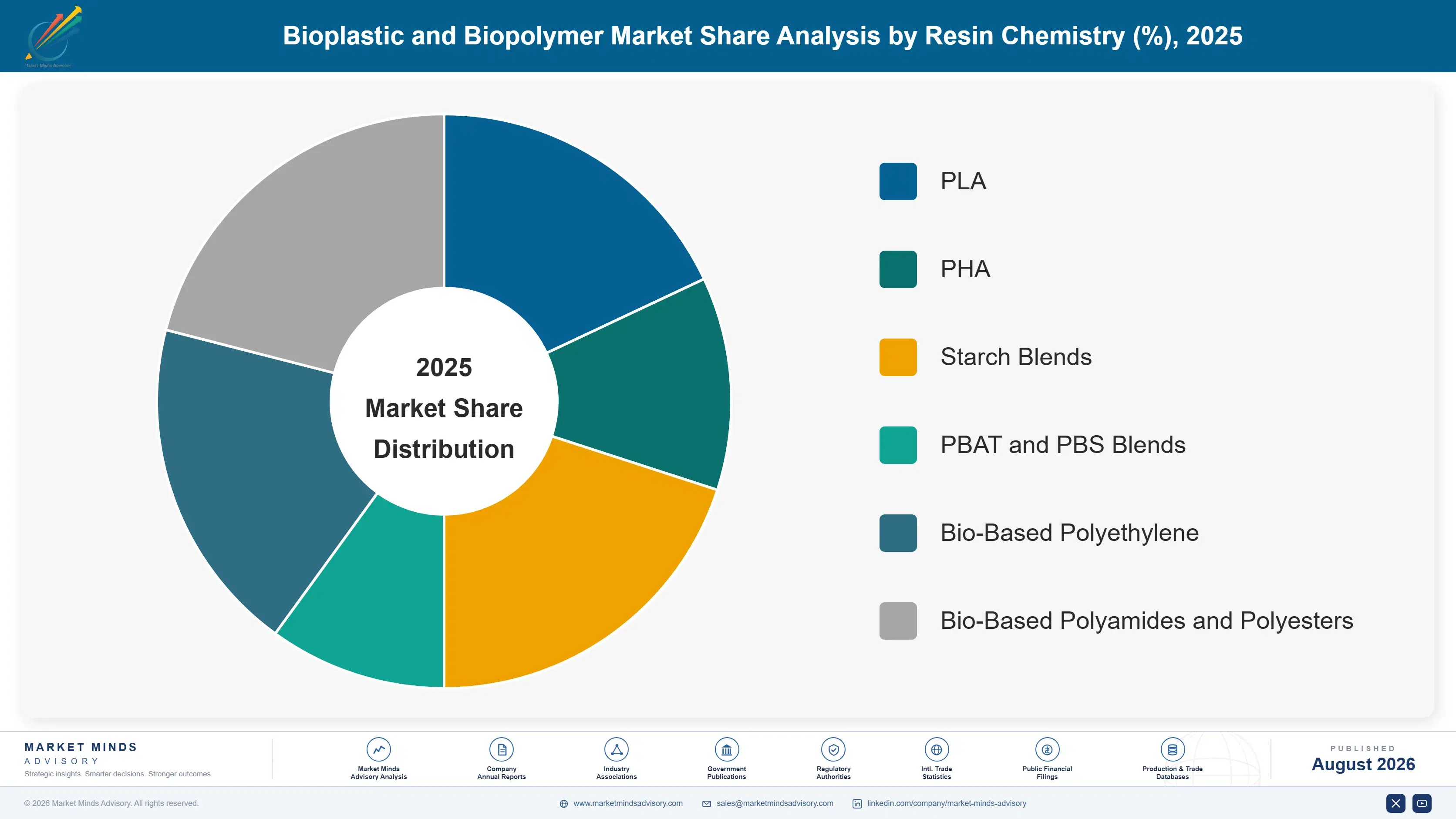
Segmentation follows resin chemistry, the dimension converters and OEMs use to select bio-based polymer for a given application's performance and end-of-life requirement across this market. Bio-based polyamides and polyesters are treated as a distinct category given their engineering-grade performance relative to packaging-oriented chemistries sold separately at market.
bioplastic-and-biopolymer-market-market-share-analysis-1787300817469

PHA (Polyhydroxyalkanoates)

PHA is the fastest-growing chemistry in the market, valued for biodegrading in marine and soil environments without requiring industrial composting infrastructure, a distinct advantage over PLA and starch blends that depend on controlled industrial conditions many markets still lack. Demand concentrates among premium packaging applications and coastal or island markets where marine biodegradability carries both regulatory and consumer marketing value other chemistries cannot match as credibly. Production capacity remains the primary constraint on growth, since PHA manufacturing still operates at a fraction of PLA's global scale despite several major capacity announcements recently. Suppliers with proven large-scale production are commanding meaningful pricing power and securing long-term supply agreements from buyers eager to lock in allocation ahead of anticipated capacity constraints.
CAGR 15.0%

Bio-Based Polyamides and Polyesters

Bio-based polyamides and polyesters, engineering-grade resins partly or wholly derived from renewable feedstocks while matching the mechanical and thermal performance of conventional nylon and polyester materials, form the second-fastest-growing category as automotive and textile manufacturers seek drop-in bio-based alternatives that do not require redesigning existing production processes. Demand concentrates among automotive interior and under-hood applications and premium textile fibers, where buyers pay a meaningful price premium for verified renewable content without sacrificing established performance specifications. Growth is constrained by lengthy automotive qualification cycles that commonly extend past a year before approval for production use. Suppliers with established automotive and textile engineering support capability hold a meaningful advantage over general bio-based resin producers lacking comparable expertise.
CAGR 12.0%
Full segment breakdown across 6 segments available in the complete report.

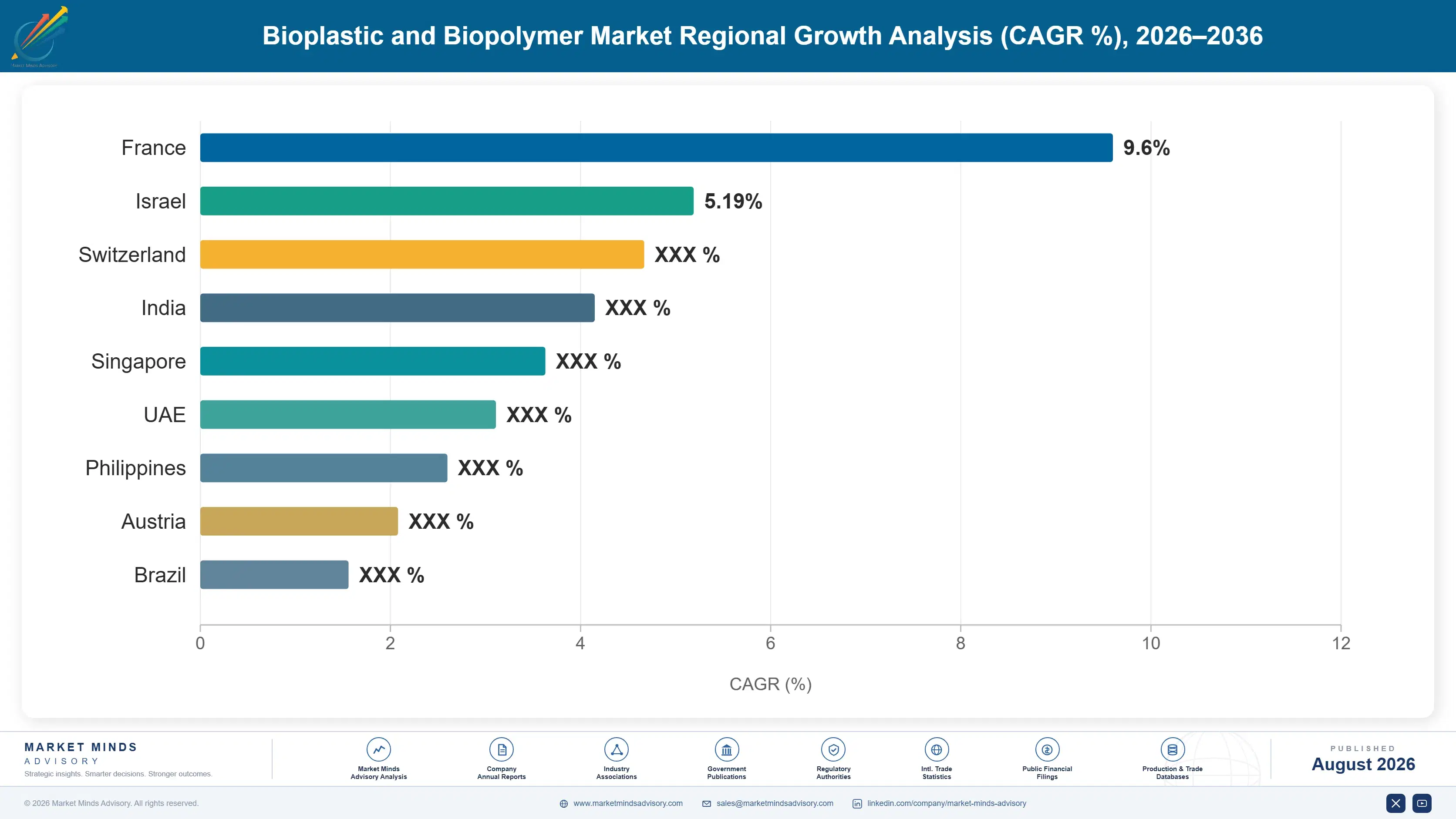
Regional Architecture and Country Demand Map

East Asia leads on resin production scale anchored by China's manufacturing base, Western Europe follows closely on the region's mature regulatory and brand sustainability commitments, and Latin America sustains a distinct bio-based polyethylene specialization tied to Brazil's sugarcane feedstock advantage overall.

North America

The United States sustains substantial demand across packaging, automotive, and agricultural film applications, supported by a growing number of state-level single-use plastic regulations alongside strong corporate sustainability commitments among major national consumer brands headquartered domestically across multiple industries. Automotive manufacturers with significant North American production footprints are increasingly specifying bio-based interior resins tied to corporate carbon reduction targets announced in recent years across their global platforms. Canada's agricultural feedstock base, particularly canola and wheat byproducts, supports a growing domestic bio-based polymer research and early-stage production sector backed by federal funding. Mexico's expanding automotive manufacturing sector is beginning to adopt bio-based resins tied to export requirements into North American vehicle platforms increasingly specifying renewable content.
Share: 22% | CAGR: 8.2% (2026 to 2036)

Western Europe

The European Union's regulatory framework, including the Single-Use Plastics Directive and extended producer responsibility fee structures, has driven the region's most mature bio-based polymer demand base across packaging and increasingly automotive applications spanning multiple industries. Germany's automotive sector leads regional adoption of bio-based engineering resins, tied to its manufacturers' aggressive sustainability commitments and substantial in-house materials research capability across major original equipment manufacturers domestically. Italy hosts one of the region's most established bio-based polymer manufacturing bases, anchored by decades of starch-blend and PLA production experience concentrated among domestic specialists. France and the Nordic countries both maintain strong textile and packaging sector demand tied to national sustainability strategies pursued consistently over the past decade across government administrations.
Share: 22% | CAGR: 7.5% (2026 to 2036)
Regional intelligence for 5 additional markets available in the complete report: East Asia, South Asia and Pacific, Latin America, Middle East and Africa, Eastern Europe. Contact sales@marketmindsadvisory.com.
bioplastic-and-biopolymer-market-country-cagr-analysis-1787300817983

Where Producers Can Defend Category Margin

As packaging-grade resin pricing compresses under new capacity investment, producers are shifting commercial strategy toward feedstock security, automotive and textile technical qualification, and long-term brand owner supply agreements to defend margin across the fastest-growing engineering applications over the coming decade.

Lock In Long-Term Agricultural Feedstock Agreements

Producers who secure multi-year fixed-volume feedstock supply agreements ahead of anticipated agricultural commodity volatility are protecting themselves from the spot-market price swings and allocation shortages that have periodically affected competitors relying on open-market feedstock purchasing across recent growing seasons and harvest cycles. Producers with locked-in feedstock agreements report input costs roughly 30 percent more stable during recent periods of agricultural commodity volatility than competitors forced to pay premium spot pricing during tight harvest windows. This lever requires meaningful upfront commitment, often including minimum-volume guarantees, but converts into a durable cost and reliability advantage that spot-market-dependent competitors cannot easily replicate.
Market Impact: Keeps costs roughly 30% more stable

Build Automotive and Textile Technical Qualification Capability

Producers who build dedicated automotive and textile application engineering teams, capable of supporting customer-specific formulation and testing work, are winning premium engineering-grade contracts that pure commodity resin suppliers cannot easily capture without comparable technical support investment behind every customer relationship formed over time. Producers with strong application engineering support report winning automotive and textile qualification programs at rates roughly 2x higher than competitors offering resin supply without dedicated technical support capability built in-house. This lever requires sustained engineering investment but converts into a durable competitive advantage across the category's highest-margin applications.
Market Impact: Wins qualifications at a 2x higher rate

Establish Long-Term Brand Owner Supply Partnerships

Producers who establish direct, multi-year supply partnerships with major consumer goods and automotive brands, rather than selling primarily through distributors on a transactional basis, are building deeper commercial relationships that guarantee volume well beyond what one-off competitive bidding ever reliably delivered for the category historically across most accounts and channels. Producers with established brand partnerships report contract values roughly 25 percent higher than comparable distributor-channel sales for similar volume commitments across accounts. This lever requires sustained relationship investment but delivers outsized revenue predictability once a partnership is successfully established and proven over time.
Market Impact: Lifts contract value roughly 25%

Expand Non-Food Feedstock Sourcing Capability Broadly

Producers who diversify feedstock sourcing toward agricultural waste and dedicated non-food energy crops are reducing exposure to food-versus-fuel policy criticism and agricultural commodity price cycles that affect food-crop-dependent competitors more directly across every growing season and harvest. Producers with proven non-food feedstock capability increasingly win preferential consideration from brand owners pursuing the strongest sustainability positioning available in the market, supporting premium pricing roughly 15 percent above comparable food-crop-derived resin in similar applications. This lever requires sustained research investment but positions producers ahead of anticipated future feedstock policy tightening across major regulatory markets.
Market Impact: Commands roughly a 15 percent premium

Who Controls the Margin Pool

The top five manufacturers hold roughly 35 percent of revenue on a company-revenue basis, a moderately fragmented structure reflecting how regional resin producers and specialty chemistry specialists still compete successfully even as the largest diversified chemical companies control an outsized share of engineering-grade and automotive-qualified contracts. The gap between NatureWorks and Braskem, two of the largest players, and the broader field remains meaningful but leaves substantial room f
Current competitive activity centers on three fronts: feedstock security races to lock in long-term agricultural supply ahead of anticipated tightening, automotive and textile technical qualification investment designed to capture premium engineering-grade contracts, and brand owner partnership strategies intended to build recurring, multi-year supply relationships beyond transactional distributor sales.

Pressure is building from Asian chemical manufacturers, particularly in China and Thailand, who are moving up the value chain from generic packaging-grade resin supply into premium engineering-grade and PHA chemistries that historically only Western specialists could reliably provide. Several have already won reference qualifications with major regional automotive and textile manufacturers, evidence that could accelerate their move into higher-margin segments faster than incumbents currently expect.
bioplastic-and-biopolymer-market-company-positioning-matrix-1787300818501

Competitive Moat and Risk Dimensions

NATUREWORKS LLC

Moat: Largest Global PLA Production Scale

NatureWorks operates the largest single PLA production facility globally under its Ingeo brand, giving it a cost and reliability advantage on standard PLA resin that smaller regional producers cannot easily match without comparable manufacturing scale investment of their own committed today.
NATUREWORKS LLC

Risk: Concentrated in a Single Chemistry

NatureWorks' business remains heavily concentrated in PLA specifically, leaving it more exposed than diversified competitors if buyer preference or performance requirements shift decisively toward PHA or engineering-grade chemistries better suited to automotive and textile applications across markets.
BRASKEM S.A.

Moat: Durable Sugarcane Feedstock Advantage

Braskem's bio-based polyethylene production benefits from an established Brazilian sugarcane ethanol feedstock advantage that gives it a cost position other regions cannot easily replicate without comparable agricultural infrastructure, sustaining a durable competitive moat across its core bio-PE product line specifically today.
BRASKEM S.A.

Risk: Concentrated Geographic Feedstock Exposure

Braskem's feedstock advantage concentrates almost entirely in Brazilian sugarcane supply, leaving the company more exposed than geographically diversified competitors to regional weather events, agricultural policy shifts, or currency volatility affecting its core production region specifically and directly.

Key Players

NatureWorks LLC
Braskem S.A.
BASF SE
Novamont S.p.A.
Corbion N.V.

Others

Total Corbion PLA
Kaneka Corporation
Danimer Scientific Inc.
FKuR Kunststoff GmbH
Biome Bioplastics Limited
Green Dot Bioplastics Inc.
TIPA Corp Ltd.
Trioworld Group
RWDC Industries Pte Ltd.
Mitsubishi Chemical Group Corporation
DuPont de Nemours Inc.
Eastman Chemical Company
Arkema S.A.
Lanxess AG
PTT MCC Biochem Company Limited

Recent Developments

FEBRUARY 2025

Braskem Expands Bio-Based Polyethylene Production Capacity in Brazil

Braskem announced an organic capacity expansion at its existing Brazilian bio-based polyethylene facility, adding new production lines to meet growing global demand for sugarcane-derived resin without relying on capacity from its other international manufacturing operations located elsewhere in the world.
Signal: Established bio-PE producers are increasingly committing dedicated regional capacity to defend their durable feedstock cost advantage.
JULY 2025

BASF Signs Multi-Year Supply Agreement With Major Consumer Goods Brand

BASF signed a multi-year supply agreement, not an acquisition or joint venture, with a major global consumer goods brand to provide certified bio-based polymer resin across the brand's packaging and personal care product lines, securing predictable long-term order volume through the decade.
Signal: Major consumer brands are increasingly securing long-term bio-based resin supply ahead of expanding sustainability commitments planned.
DECEMBER 2025

Novamont Acquires Specialty Biopolymer Additive Manufacturer

Novamont completed the acquisition of a specialty biopolymer additive manufacturer, adding proprietary formulation technology rather than continuing to license comparable performance-enhancing additive capability from third-party suppliers for its existing starch-blend product lines going forward.
Signal: Established starch-blend producers are increasingly acquiring additive technology to improve mechanical performance and expand applications.

Agricultural Feedstock and Biomass Exposure

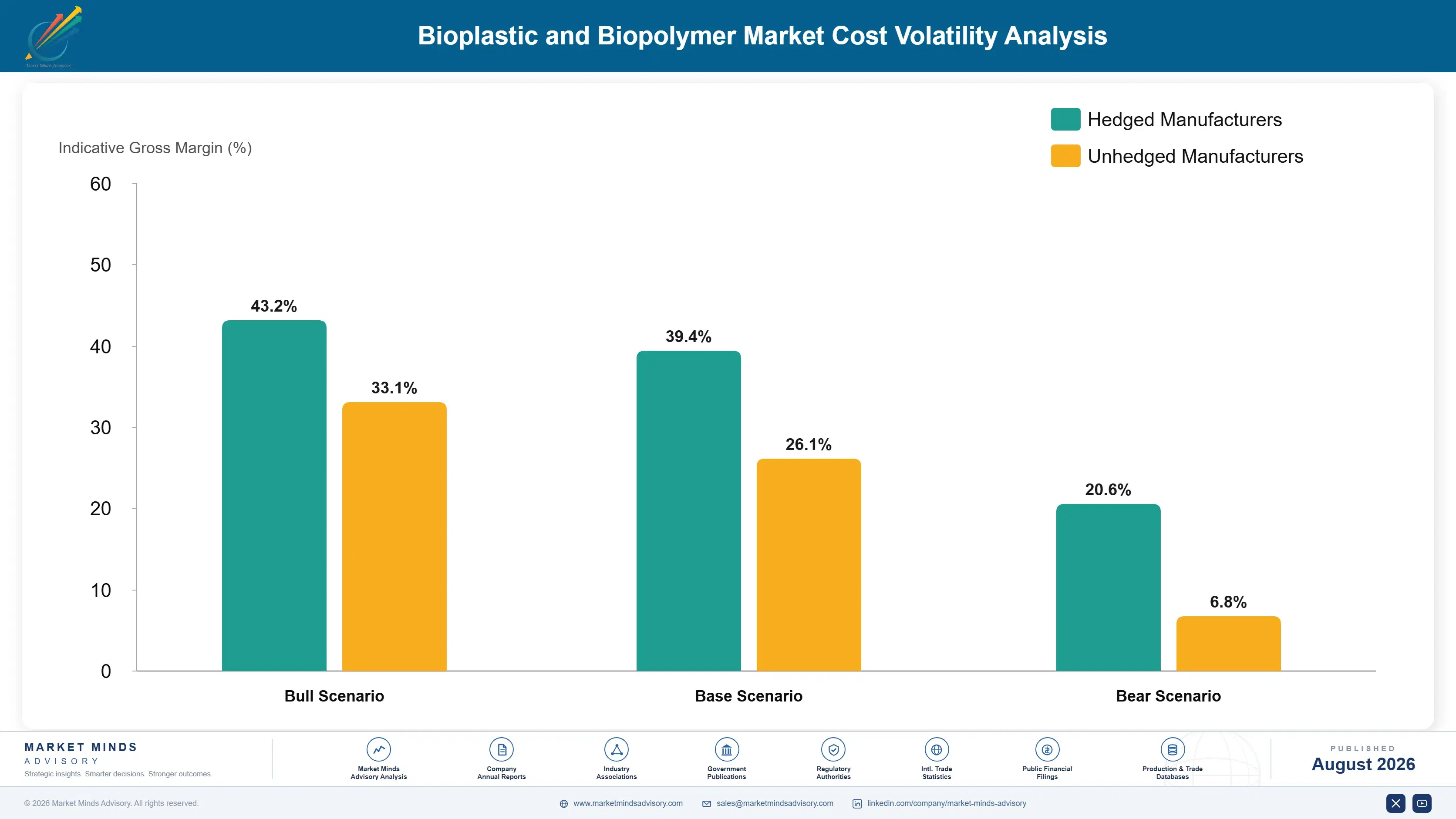
Corn, sugarcane, and other agricultural feedstocks together account for roughly 44 percent of cost of goods sold across the category, with polymerization processing, compounding, and quality validation labor making up most of the remainder of total production cost across most producing regions. Feedstock costs are directly exposed to agricultural commodity price cycles that behave differently from the petrochemical cycles affecting conventional plastic resin production.
Corn and sugarcane feedstock prices rose meaningfully during 2022 and 2023 amid weather-related crop disruptions across major agricultural producing regions, a period the United States Department of Agriculture's commodity outlook reports described as unusually volatile for the row crops underlying much of global bio-based polymer feedstock supply. Several resin producers disclosed margin compression in earnings materials directly attributable to this agricultural commodity volatility during the period affected.

Exposure varies by feedstock source and company scale. Larger producers with diversified feedstock sourcing across multiple agricultural regions absorbed the volatility with comparatively limited disruption, while smaller specialists reliant on a single regional feedstock source faced sharper cost swings that occasionally opened share for better-diversified or alternative-feedstock competitors during the tightest supply quarters of the cycle.
bioplastic-and-biopolymer-market-cost-volatility-analysis-1787300818695

Diversify Feedstock Sourcing Across Regions

Manufacturers are increasingly sourcing agricultural feedstock from multiple growing regions rather than a single geographic source, reducing exposure to weather-related crop disruptions concentrated in any one agricultural region and providing meaningfully greater supply resilience overall across growing seasons and harvest years.

Invest In Non-Food Feedstock Alternatives

Several producers are researching and piloting bio-based polymer feedstock derived from agricultural waste and non-food biomass sources, reducing both cost exposure to food commodity markets and the food-versus-fuel criticism sometimes directed at corn-based polymer production broadly across the industry.

Secure Long-Term Agricultural Supply Contracts

Leading producers are signing multi-year supply agreements directly with agricultural cooperatives and grain processors, trading some pricing flexibility for meaningfully greater feedstock supply certainty during periods of tight regional agricultural commodity markets and pricing pressure worldwide.

Portfolio Architecture for Margin Defence

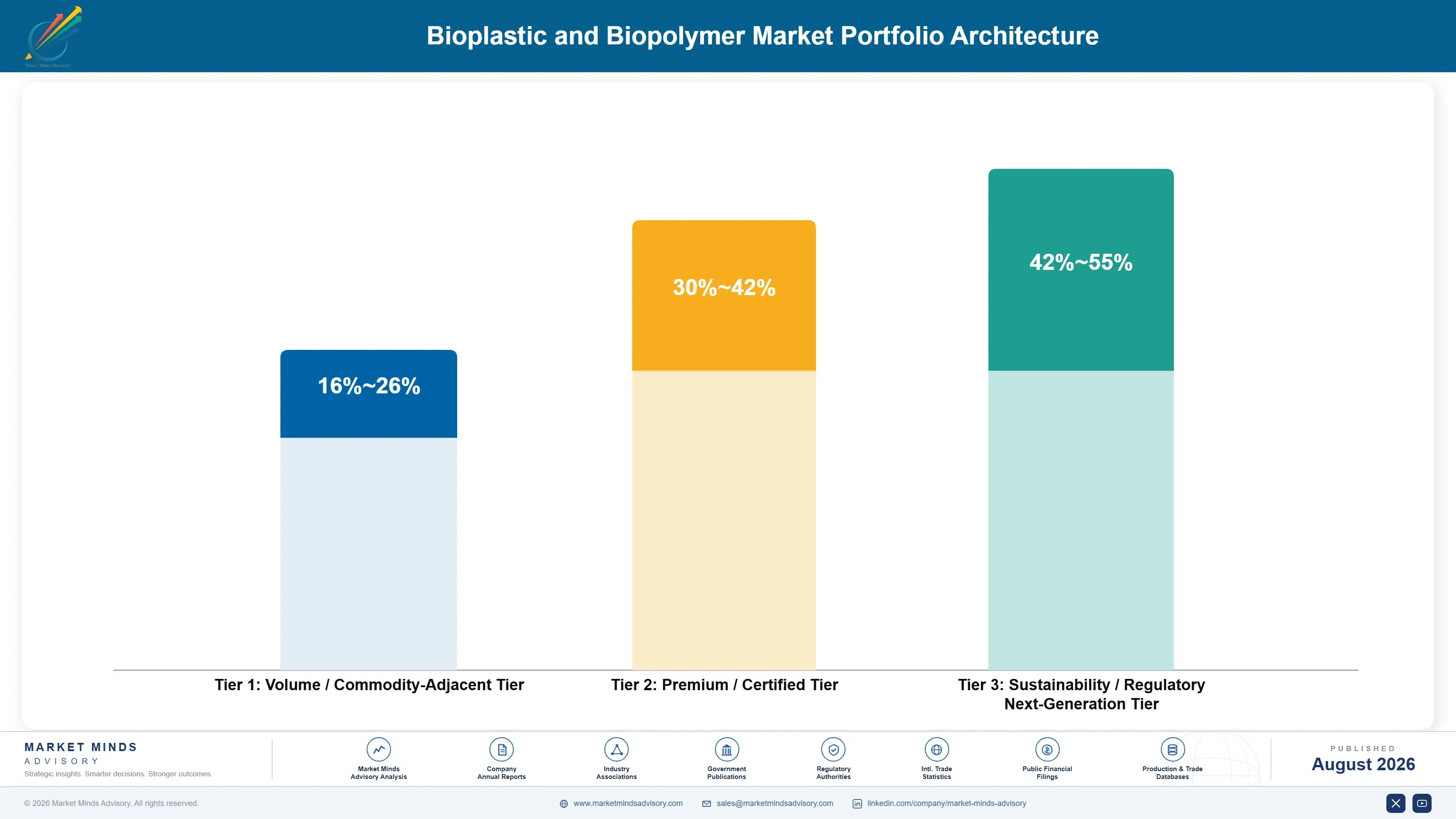
The market splits into three commercial tiers with distinct margin economics. Standard packaging-grade PLA and starch blends compete largely on price and delivery lead time, certified engineering-grade resins carry meaningfully higher margin on automotive and textile qualification depth, and PHA and next-generation specialty chemistries command the highest margin given their constrained resin supply and premium market positioning.
The tension between volume and premium positioning shapes how producers allocate feedstock and qualification investment: standard packaging-grade resin still represents the largest unit volume by a wide margin across the broadest regulatory-compliance demand base, but nearly all incremental profit growth over the forecast period concentrates in engineering-grade and PHA chemistries, where the leading producers increasingly direct capital and technical spending.

High-value margin pools concentrate specifically in PHA during its current supply-constrained window and in engineering-grade biopolymers serving automotive and textile manufacturers with completed qualification programs. Both pools reward producers who invest ahead of demand in feedstock security and technical qualification rather than those who wait for broader industrial adoption to mature before committing capital.

Volume / Commodity-Adjacent Tier

Standard packaging-grade PLA and starch blends sold largely on price and delivery lead time across broad regulatory-compliance retail and food service channels worldwide serving most jurisdictions.
Gross Margin: 16-26%

Premium / Certified Tier

Certified engineering-grade bio-based polyamides and polyesters qualified for automotive and textile applications, commanding meaningful premiums tied directly to qualification depth and demonstrated performance data.
Gross Margin: 30-42%

Sustainability / Regulatory / Next-Generation Tier

PHA and next-generation specialty chemistries with marine biodegradability performance, carrying the category's highest margins given their currently constrained global resin supply worldwide.
Gross Margin: 42-55%
bioplastic-and-biopolymer-market-portfolio-architecture-1787300819191

High-value Sub-segments and Strategic Watch-out

PHA (Polyhydroxyalkanoates)

Highest current margin and fastest volume growth in the category, constrained mainly by limited global production capacity and the small number of suppliers with proven large-scale manufacturing today across regions.
Gross Margin: 44-55%

Bio-Based Polyamides and Polyesters

Steady high-value growth tracking automotive and textile manufacturer adoption closely, increasingly favoring producers with strong application engineering support over commodity resin suppliers lacking that capability.
Gross Margin: 32-42%

Standard Packaging-Grade PLA and Starch Blends

The volume core of the market by unit count, competing primarily on price and delivery lead time rather than deep technical differentiation between competing regional producers across most markets today.
Gross Margin: 16-24%

Food-Crop-Dependent Legacy Feedstock Formulations

A strategic watch-out segment as agricultural commodity volatility and food-versus-fuel policy criticism threaten a substantial share of currently dominant food-crop-derived production formulations over the coming decade.
Gross Margin: 18-28%

Qualification Lock-In Beyond the Commodity Sale

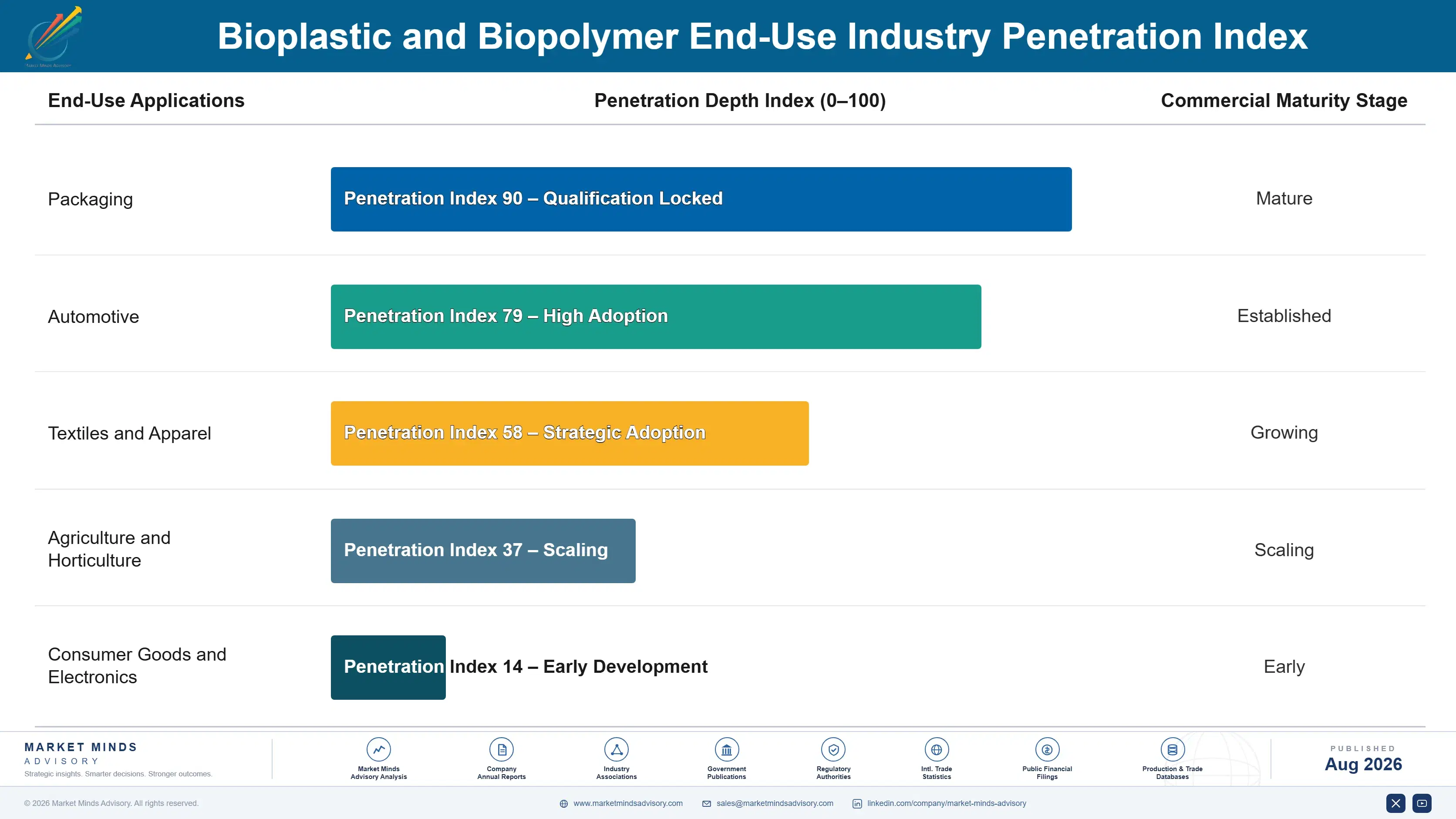
Standard packaging-grade bio-based resin has historically behaved as a transactional, price-sensitive purchase with limited switching costs, but the automotive and textile engineering-grade segments are shifting toward a far stickier model as manufacturers require lengthy qualification processes that create durable, multi-year purchasing relationships once a resin formulation is locked into an approved vehicle or product specification.
Adoption depth varies sharply by end-use vertical. Automotive and textile manufacturers show the deepest qualification lock-in given the cost and complexity of requalifying a new resin formulation mid-program, packaging converters remain more transactional and price-driven given regulatory-compliance purchasing patterns, and agricultural film buyers sit between the two, constrained by seasonal purchasing cycles but showing meaningful repeat-purchase loyalty once a formulation proves reliable in field conditions.

A generational shift in buyer profile is underway as automotive and textile material science teams increasingly include dedicated sustainability and bio-based materials specialists rather than pure cost-focused purchasing agents trained under an older sourcing model. Consumer goods procurement teams are also increasingly staffed by supply chain sustainability specialists who evaluate feedstock traceability data rather than simply comparing per-tonne resin pricing between competing suppliers.
bioplastic-and-biopolymer-market-end-use-penetration-index-1787300819677

Where This Market Goes Next

These are among the four positions where our research anticipates prominent divergence between winners and laggards over the coming forecast period. Each is grounded in the demand model, the regulatory perimeter, and the announced capacity pipeline.
01 / FEEDSTOCK SECURITY INVESTMENT

Locked-in agricultural agreements will decide who scales fastest

Feedstock supply, not polymer manufacturing capacity, is the binding constraint on growth for most producers in this market, particularly for PHA and premium engineering-grade chemistries where demand has outstripped capacity for several consecutive years running. Producers who secured long-term feedstock agreements ahead of the current tightening are protected from the agricultural commodity volatility disrupting competitors without similar coverage. This gap should widen rather than narrow as new capacity comes online slower than demand, rewarding early movers who locked in supply before the broader producer base recognized the coming constraint.
02 / AUTOMOTIVE QUALIFICATION DEPTH

Engineering support capability is becoming the real differentiator

Automotive and textile manufacturers increasingly weigh application engineering support as heavily as core resin performance when selecting bio-based polymer suppliers, rewarding producers who invest in dedicated technical qualification capability ahead of formal procurement processes. Producers with strong engineering support are winning qualification programs at meaningfully higher rates than competitors offering resin supply without comparable technical depth. Manufacturers who underinvest in application engineering risk losing deals to less differentiated but more technically supported competing producers regardless of underlying resin performance differences.
03 / BRAND PARTNERSHIP STRATEGY

Direct supply relationships are reshaping category economics

Consumer goods and automotive brands increasingly prefer direct, multi-year supply partnerships over transactional distributor purchasing, rewarding producers who invest early in the relationship infrastructure and technical support these partnerships require before formal contracts are even negotiated between the parties involved. Producers with established brand partnerships report meaningfully higher contract values and retention than competitors relying on distributor-channel sales alone across most accounts. This consolidation trend should continue as more brands seek fewer, deeper supplier relationships across their global sustainability sourcing programs.
04 / NON-FOOD FEEDSTOCK TRANSITION

Early movers on alternative feedstock will outrun policy risk

Regulatory and public scrutiny of food-crop-derived polymer feedstock is intensifying gradually across several major markets, making non-food feedstock diversification an increasingly important strategic investment rather than a purely optional research initiative for forward-looking producers. Producers with proven non-food feedstock capability are already winning preferential consideration from brand owners pursuing the strongest sustainability positioning available in the market. Manufacturers who delay this transition risk facing both policy and reputational headwinds that better-diversified competitors will have already substantially addressed by the time regulation tightens.

Engagement Snapshot From the Field

A live engagement with an industry participant carrying material or product regulatory and market exposure ahead of a defining policy shift, showing how our research translates into a defensible multi-year portfolio strategy.
MARKET MINDS ADVISORY · CLIENT ENGAGEMENT SUMMARY
Bioplastic and Biopolymer Producer Strategic Portfolio Review and Transition Roadmap 2026·Investment Scenario on Bioplastic and Biopolymer Exposure Evaluation 2025-26
CLIENT PROFILE
The client is a global tier-one automotive interior component supplier serving several major original equipment manufacturers, producing tens of millions of interior parts annually (client-reported, unverified by MMA) across its worldwide manufacturing network. Several of the client's OEM customers had announced bio-based content targets that the supplier's existing petroleum-based resin formulations could not meet without a qualified material substitution strategy.
STRATEGIC CHALLENGE
Leadership needed to identify and qualify bio-based polyamide and polyester resins capable of matching existing mechanical and thermal performance specifications, while completing qualification within the compressed timeline several OEM customers had set for new vehicle platform launches already well underway.
MMA APPROACH
MMA benchmarked candidate bio-based resin suppliers against mechanical performance data, feedstock security, and prior automotive qualification track record, modeled expected qualification timelines under three distinct sourcing scenarios, and recommended a phased material substitution strategy prioritized by OEM customer deadline urgency across the client's full product portfolio.
KEY FINDINGS
  1. Only three of nine candidate suppliers evaluated offered bio-based resin formulations meeting the client's existing mechanical performance specifications without requiring part redesign work.
  2. Phased substitution sequencing by OEM deadline urgency was modeled to avoid an estimated two missed platform launch deadlines relative to a uniform substitution timeline approach.
  3. Bio-based resin costs were modeled at roughly 1.8 times the client's existing petroleum-based formulation costs, a premium partially offset by OEM sustainability incentive programs (client-reported, unverified by MMA).
  4. Feedstock security varied meaningfully across candidate suppliers, with only two offering multi-year supply agreements sufficient to cover the client's full anticipated production volume.
CLIENT PROFILE
The client is a global tier-one automotive interior component supplier serving several major original equipment manufacturers, producing tens of millions of interior parts annually (client-reported, unverified by MMA) across its worldwide manufacturing network. Several of the client's OEM customers had announced bio-based content targets that the supplier's existing petroleum-based resin formulations could not meet without a qualified material substitution strategy.
STRATEGIC CHALLENGE
Leadership needed to identify and qualify bio-based polyamide and polyester resins capable of matching existing mechanical and thermal performance specifications, while completing qualification within the compressed timeline several OEM customers had set for new vehicle platform launches already well underway.
MMA APPROACH
MMA benchmarked candidate bio-based resin suppliers against mechanical performance data, feedstock security, and prior automotive qualification track record, modeled expected qualification timelines under three distinct sourcing scenarios, and recommended a phased material substitution strategy prioritized by OEM customer deadline urgency across the client's full product portfolio.
KEY FINDINGS
  1. Only three of nine candidate suppliers evaluated offered bio-based resin formulations meeting the client's existing mechanical performance specifications without requiring part redesign work.
  2. Phased substitution sequencing by OEM deadline urgency was modeled to avoid an estimated two missed platform launch deadlines relative to a uniform substitution timeline approach.
  3. Bio-based resin costs were modeled at roughly 1.8 times the client's existing petroleum-based formulation costs, a premium partially offset by OEM sustainability incentive programs (client-reported, unverified by MMA).
  4. Feedstock security varied meaningfully across candidate suppliers, with only two offering multi-year supply agreements sufficient to cover the client's full anticipated production volume.
RECOMMENDED STRATEGY
Phase 1: Phase 1 (Months 1-3): Complete supplier evaluation and finalize resin selection for the highest-priority OEM platform launches identified overall. Phase 2: Phase 2 (Months 4-10): Execute qualification testing and secure committed feedstock supply agreements across selected suppliers chosen carefully. Phase 3: Phase 3 (Months 11-16): Complete remaining platform substitutions and establish ongoing supply monitoring across all supplier relationships formed.
OUTCOME
Fourteen months into the engagement, the client reported successful bio-based resin qualification across all priority OEM platforms with zero missed launch deadlines (client-reported, unverified by MMA), validating MMA's phased substitution recommendation fully.

Frequently Asked Questions

Foundational context covering the market sizes, CAGR, scope, country, region and competition that inform every finding below. This section is provided to cover basics and most often pre-purchase conversations, answered from the MMA Primary Research Dataset.

What is the current size of the Bioplastic and Biopolymer Market?

The market is valued at approximately 14.5 billion dollars in 2025, expanding to roughly 15.81 billion dollars in 2026 as regulatory mandates and brand sustainability commitments continue driving adoption.

How large will the Bioplastic and Biopolymer Market be by 2036?

MMA forecasts the market reaching approximately 37.42 billion dollars by 2036, roughly 2.37 times its 2026 value, driven primarily by expanding automotive and textile engineering-grade adoption.

What is the CAGR for the Bioplastic and Biopolymer Market 2026 to 2036?

The base-case compound annual growth rate is 9.0 percent, with a bull scenario of 10.2 percent and a bear scenario of 7.7 percent depending on feedstock cost trends and automotive adoption pace.

Which segment is growing fastest?

PHA is growing fastest at a 15.0 percent CAGR, roughly 1.67 times the overall market rate, driven by marine biodegradability advantages in coastal and premium packaging applications.

Who are the major companies in the Bioplastic and Biopolymer Market?

NatureWorks, Braskem, BASF, Novamont, and Corbion lead the market, together holding roughly 35 percent of revenue on a company-revenue basis across all resin chemistries tracked.

Which country is growing fastest?

Indonesia is the fastest-growing country at a 13.5 percent CAGR, driven by severe marine plastic pollution challenges accelerating policy interest in marine-biodegradable chemistries nationwide.

Report Segmentation Architecture

The full report scope spans multiple orthogonal segmentation dimensions, with cross-tabulated demand data provided for each dimension pair. Coverage extends further to regional breakdowns, trend trajectories, and the competitive detail needed to support segment-level decision-making.

By Resin Chemistry

  • PLA
  • PHA
  • Starch Blends
  • PBAT and PBS Blends
  • Bio-Based Polyethylene
  • Bio-Based Polyamides and Polyesters

By End-Use Industry

  • Packaging
  • Automotive
  • Textiles and Apparel
  • Agriculture and Horticulture
  • Consumer Goods and Electronics

By Commercial Dimension

  • Direct OEM and Brand Supply Contracts
  • Converter and Distributor Channel
  • Long-Term Feedstock Partnership Agreements
  • Spot Market Resin Sales

By Region

  • North America
  • Western Europe
  • East Asia
  • South Asia and Pacific
  • Latin America
  • Middle East and Africa
  • Eastern Europe

Scope, Methodology, and Coverage

Every figure in this report is reproducible from documented input assumptions. The scope below maps the historical period, the forecast horizon, the segmentation dimensions, and the countries covered, alongside the underlying primary and qualitative methodology.
Historical Period
2020 to 2025
Forecast Period
2026 to 2036
Base Year
2025 (USD billions; MMA Primary Research Dataset, August 2026)
Market Definition
The market covers polymers derived wholly or partly from renewable biological feedstocks or engineered to biodegrade under defined conditions, including PLA, PHA, starch blends, PBAT and PBS blends, bio-based polyethylene, and bio-based polyamides and polyesters, sold as resin, pellet, or compound form. Finished bioplastic products such as bags or containers are excluded as downstream converted goods.
Quantitative Units
USD billions (current prices); resin volume in metric tonnes where cited
Segmentation Dimensions
By Resin Chemistry; By End-Use Industry; By Commercial Dimension; By Region
Regions Covered
North America, Western Europe, East Asia, South Asia and Pacific, Latin America, Middle East and Africa, Eastern Europe
Countries Covered
USA, China, Germany, France, UK, Japan, South Korea, India, Australia, Canada, Brazil, Mexico, Indonesia, Vietnam, Thailand, Malaysia, UAE, Saudi Arabia, South Africa, Nigeria, Turkey, Poland, Netherlands, Italy, Spain, Sweden, Switzerland, Argentina, Colombia, Singapore, and additional markets relevant to this sector
Key Companies Profiled
NatureWorks LLC, Braskem S.A., BASF SE, Novamont S.p.A., Corbion N.V., Total Corbion PLA, Kaneka Corporation, Danimer Scientific Inc., FKuR Kunststoff GmbH, Biome Bioplastics Limited, Green Dot Bioplastics Inc., TIPA Corp Ltd., Trioworld Group, RWDC Industries Pte Ltd., Mitsubishi Chemical Group Corporation, DuPont de Nemours Inc., Eastman Chemical Company, Arkema S.A., Lanxess AG, PTT MCC Biochem Company Limited
Quantitative Methodology
Primary survey, n=3,800 respondents, Q4 2025, six countries; demand-side model with trade association cross-validation
Qualitative Methodology
47 expert interviews, Q4 2025; applied to validate demand model assumptions, identify emerging dynamics, and assess competitive positioning
Report Format
PDF and XLSX data workbook (Word format preview document)
Publisher
Market Minds Advisory
Report Code
MMA-2026-CHM-333
Published
August 2026
Contact
sales@marketmindsadvisory.com | www.marketmindsadvisory.com

Purchase the full Bioplastic and Biopolymer Market Report (2026 to 2036).

The full report delivers a complete quantitative and strategic assessment of the bioplastic and biopolymer market across all seven regions and more than thirty countries covered in this study. It includes detailed segment-level forecasts through 2036, competitive benchmarking across twenty profiled manufacturers, and primary research drawn from 3,800 survey respondents and 47 expert interviews conducted in Q4 2025. Buyers receive editable data tables and full regional narrative detail beyond the two regions previewed in this summary document. A dedicated appendix covers automotive qualification standards and feedstock supply economics by country.
Fully editable Excel data tables provided
All seven full regional narratives included
Twenty-company competitive profiles included
Automotive qualification standards appendix provided
Segment-level 2026-2036 detailed forecasts
Primary survey and interview data provided

Built For The People Who Decide

From boardroom strategy to bench-side execution, this report is read cover-to-cover by leaders shaping the next decade of their industry, turning demand scenarios, market dynamics and valuation benchmarks into decisions.
CXOs/ Presidents/ VPs/ Managers
M&A and Corporate Development
Strategy Teams and R&D Heads
Procurement and Product Directors
Regulatory and Compliance Leaders
Investor Relations and Equity Analysts