Biocomposites Market
Biocomposites Market Outlook from 2026 to 2033
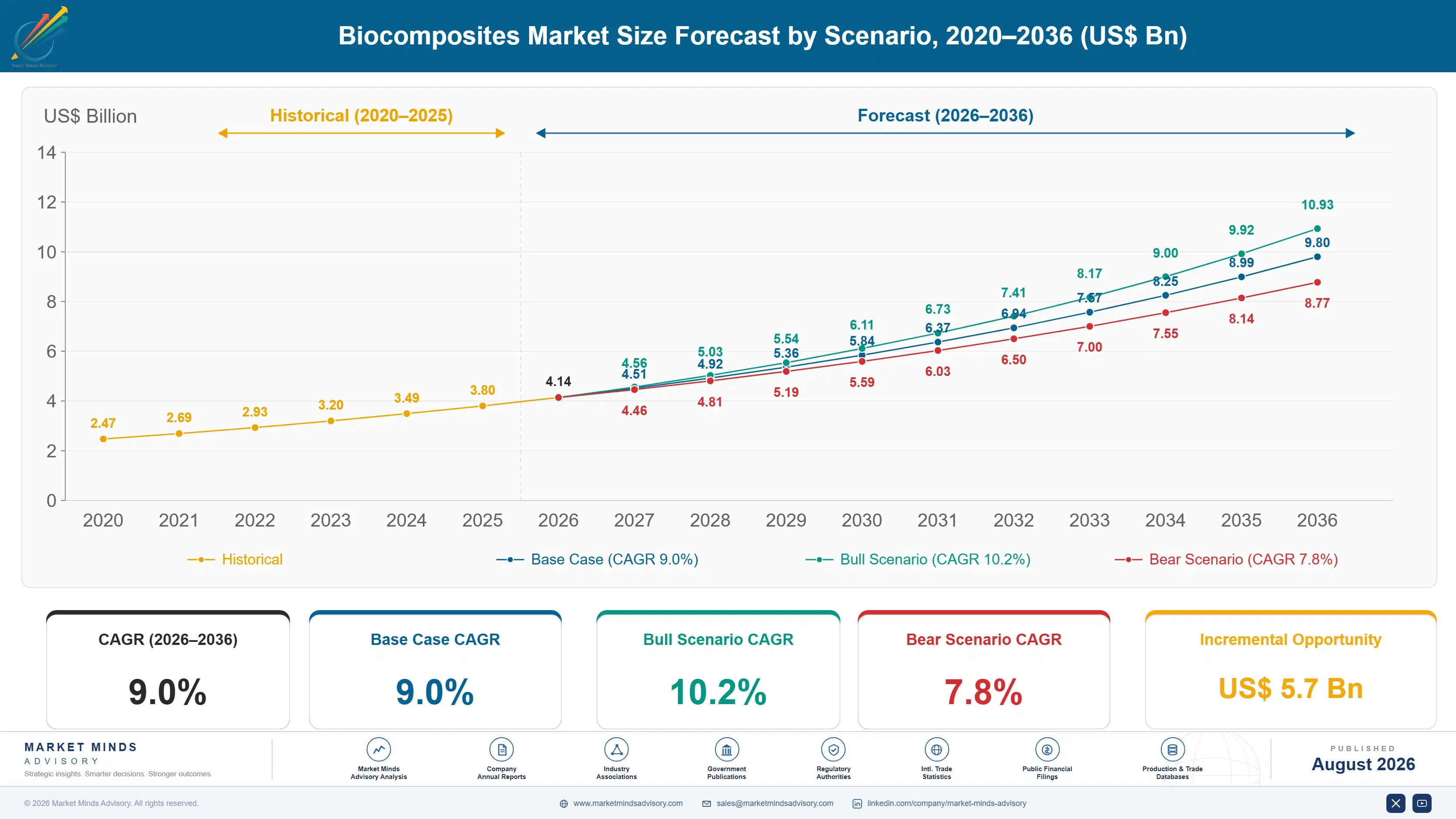
The biocomposites market is poised for significant expansion over the forecast period, driven by increasing demand for sustainable materials across various industries. In 2026, the global biocomposites market is estimated to be valued at USD 32.4 billion, with projections indicating a robust compound annual growth rate (CAGR) of 11.2% from 2026 to 2033. By 2033, the market size is expected to reach USD 68.1 billion. This growth is underpinned by heightened environmental awareness, regulatory support for eco-friendly materials, and advancements in biocomposite technologies that enhance performance and cost-effectiveness.
Biocomposites are increasingly being adopted in automotive, construction, packaging, and consumer goods sectors due to their biodegradability, lightweight properties, and reduced carbon footprint. The market is witnessing a shift from traditional petroleum-based composites to bio-based alternatives, as industries seek to align with global sustainability goals. The integration of agricultural and forestry residues as raw materials further strengthens the value proposition of biocomposites, making them a preferred choice for manufacturers and end-users alike.

Biocomposites Market Scenario & Strategic Insights
The biocomposites market is characterized by dynamic shifts in material innovation, supply chain integration, and end-user adoption. Strategic collaborations between raw material suppliers, technology providers, and manufacturers are fostering the development of high-performance biocomposites tailored for specific applications. Regulatory frameworks in North America and Europe, emphasizing circular economy principles and carbon neutrality, are accelerating the transition toward bio-based composites. Companies are investing in R&D to enhance the mechanical properties, durability, and processability of biocomposites, thereby expanding their applicability in high-value sectors such as automotive interiors, building panels, and consumer electronics.
Despite the promising outlook, the market faces challenges related to cost competitiveness, scalability, and raw material availability. However, ongoing advancements in feedstock processing, resin formulation, and fiber-matrix compatibility are mitigating these barriers. Strategic investments in biorefinery infrastructure and the development of standardized testing protocols are expected to streamline commercialization pathways. The market’s trajectory will be shaped by the interplay of policy incentives, technological breakthroughs, and evolving consumer preferences for sustainable products.
| Attribute | 2026 (USD Billion) | 2033 (USD Billion) | CAGR (2026 – 2033) |
| Market Size | 32.4 | 68.1 | 11.2% |
Biocomposites Market Trends
- Rising Adoption in Automotive and Transportation Sectors
The automotive and transportation industries are increasingly incorporating biocomposites to achieve weight reduction, improve fuel efficiency, and meet stringent emission regulations. Biocomposites offer comparable mechanical strength to conventional materials while providing significant environmental benefits. Leading automotive OEMs are integrating natural fiber-reinforced composites in interior panels, seat backs, and underbody shields. This trend is further supported by consumer demand for eco-friendly vehicles and the automotive sector’s commitment to sustainability targets. The scalability of biocomposite solutions is expected to accelerate as supply chains mature and cost structures improve.
- Advancements in Biopolymer and Natural Fiber Technologies
Technological innovations in biopolymer matrices and natural fiber processing are enhancing the performance characteristics of biocomposites. The development of high-strength, moisture-resistant, and thermally stable biopolymers has expanded the application scope of biocomposites beyond traditional uses. Innovations such as hybrid biocomposites, nanocellulose reinforcement, and functional additives are enabling the production of materials with tailored properties for construction, electronics, and medical devices. These advancements are driving market differentiation and enabling manufacturers to address specific end-user requirements.
- Circular Economy and Lifecycle Assessment Integration
The integration of circular economy principles and lifecycle assessment (LCA) methodologies is becoming a defining trend in the biocomposites market. Stakeholders are increasingly evaluating the environmental impact of materials from cradle to grave, prioritizing recyclability, biodegradability, and resource efficiency. This trend is influencing product development, procurement strategies, and marketing narratives. Companies that demonstrate transparent LCA data and circularity in their biocomposite offerings are gaining a competitive edge, particularly in markets with strong regulatory and consumer focus on sustainability.
Segment & Category Analysis for Biocomposites Market
By Fiber Type
- Natural Fiber Biocomposites
- Synthetic Fiber Biocomposites
The fiber type segment is a critical determinant of biocomposite performance and application suitability. Natural fiber biocomposites, utilizing materials such as flax, jute, hemp, and kenaf, are favored for their biodegradability and low environmental impact. Synthetic fiber biocomposites, while less sustainable, offer enhanced mechanical properties and are often used in applications requiring higher strength and durability. The market is witnessing a shift toward hybrid solutions that combine natural and synthetic fibers to optimize performance and sustainability. The choice of fiber type influences processing methods, cost structures, and end-use adoption rates.

By Polymer Matrix
- Bio-based Polymer Matrix
- Synthetic Polymer Matrix
The polymer matrix segment encompasses both bio-based and synthetic options. Bio-based matrices, derived from renewable resources such as polylactic acid (PLA), polyhydroxyalkanoates (PHA), and starch blends, are gaining traction due to their lower carbon footprint and regulatory support. Synthetic matrices, including polypropylene and polyethylene, are still prevalent in certain applications due to their established processing infrastructure and cost advantages. However, the market is gradually transitioning toward bio-based alternatives as performance gaps narrow and sustainability becomes a key purchasing criterion.
By Product Form
- Short Fiber Biocomposites
- Long Fiber Biocomposites
- Continuous Fiber Biocomposites
Product form segmentation is essential for addressing diverse application requirements. Short fiber biocomposites are widely used in injection molding and consumer goods due to their ease of processing and cost-effectiveness. Long fiber and continuous fiber biocomposites offer superior mechanical properties and are preferred in structural applications such as automotive components and building materials. The selection of product form is influenced by factors such as desired strength, weight, processing technology, and end-use environment. Manufacturers are investing in process optimization to expand the applicability of long and continuous fiber biocomposites.
By End-Use Industry
- Automotive & Transportation
- Building & Construction
- Consumer Goods
- Packaging
- Medical & Healthcare
- Electrical & Electronics
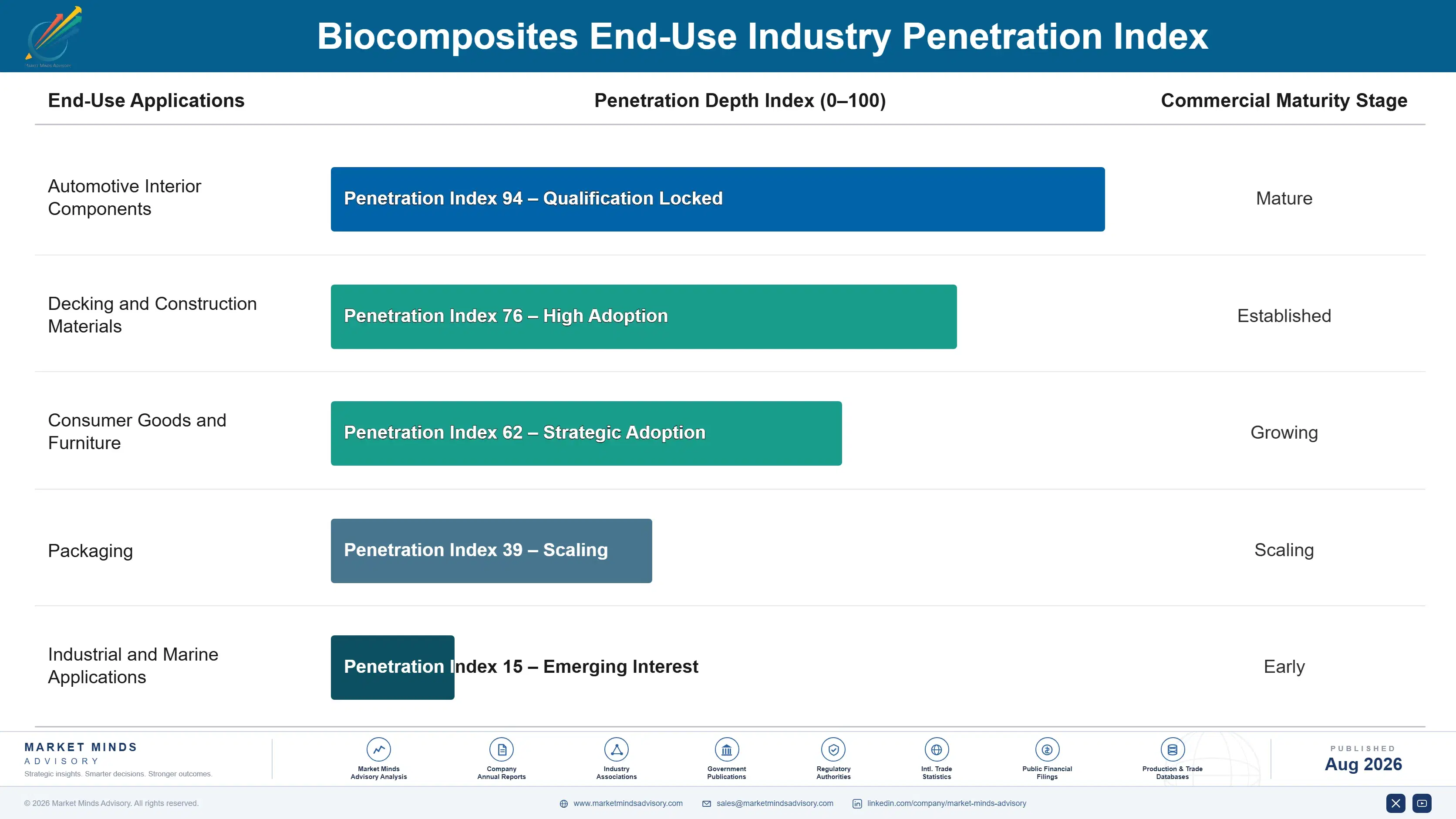
The end-use industry segment highlights the versatility of biocomposites across multiple sectors. Automotive and transportation remain the largest consumers, leveraging biocomposites for lightweighting and sustainability. Building and construction applications include decking, cladding, and insulation materials. Consumer goods and packaging sectors are adopting biocomposites for their aesthetic appeal and environmental credentials. The medical and healthcare industry is exploring biocomposites for implants and disposables, while electrical and electronics manufacturers are utilizing them for casings and components. Each industry presents unique performance and regulatory requirements, shaping material selection and innovation priorities.

By Region
- Asia-Pacific
- North America
- Europe
- South America
- Middle East & Africa
Regional segmentation reflects the varying pace of adoption, regulatory frameworks, and raw material availability across geographies. Asia-Pacific leads in production and consumption, driven by robust manufacturing infrastructure and government initiatives supporting bio-based materials. North America and Europe are characterized by strong regulatory support and high consumer awareness. South America and the Middle East & Africa are emerging markets with growing investments in sustainable materials. Regional dynamics influence supply chain strategies, pricing, and competitive positioning in the global biocomposites market.
Growth Drivers and Opportunities in Biocomposites Market
- Sustainability Mandates and Regulatory Incentives
The global push for sustainability is a primary growth driver for the biocomposites market. Governments and regulatory bodies are implementing policies that favor bio-based materials, including tax incentives, procurement mandates, and eco-labeling requirements. These measures are compelling manufacturers to adopt biocomposites in place of conventional composites. The alignment of corporate sustainability strategies with regulatory frameworks is creating new opportunities for market expansion, particularly in regions with ambitious climate targets and circular economy initiatives.
- Technological Advancements and Material Innovation
Continuous advancements in biocomposite technology are unlocking new application areas and improving cost competitiveness. Innovations in fiber treatment, resin formulation, and composite processing are enhancing the mechanical, thermal, and barrier properties of biocomposites. The development of hybrid and nanocomposite solutions is enabling manufacturers to meet stringent performance requirements in automotive, construction, and electronics sectors. These technological breakthroughs are reducing barriers to adoption and opening up high-value market segments.
Emerging Opportunities for Biocomposites Market
- Expansion into High-Performance Applications
The evolution of biocomposite materials is facilitating their entry into high-performance applications traditionally dominated by metal and synthetic composites. Sectors such as aerospace, marine, and sports equipment are exploring biocomposites for their lightweight, corrosion-resistant, and customizable properties. The ability to tailor biocomposite formulations for specific performance criteria is creating new revenue streams and differentiating market players.
- Integration with Digital Manufacturing and Circular Economy Models
The integration of biocomposites with digital manufacturing technologies, such as 3D printing and automated layup, is enhancing design flexibility and production efficiency. Additionally, the adoption of circular economy models, including closed-loop recycling and bio-based feedstock sourcing, is strengthening the sustainability credentials of biocomposites. These trends are attracting investment from both established players and new entrants seeking to capitalize on the convergence of material innovation and digital transformation.
Growth Restrain factors and Challanges in Biocomposites Market
- Cost Competitiveness and Raw Material Supply Constraints
The cost of biocomposites remains a significant challenge compared to traditional petroleum-based composites. Raw material sourcing, particularly for high-quality natural fibers and bio-based resins, can be subject to price volatility and supply chain disruptions. These factors impact the overall cost structure and limit the scalability of biocomposite solutions in price-sensitive markets. Manufacturers are investing in process optimization and vertical integration to mitigate these challenges, but achieving parity with conventional materials remains a medium-term objective.
In addition to cost concerns, the availability and consistency of raw materials pose operational risks. Agricultural and forestry residues, while abundant, can vary in quality and supply due to seasonal fluctuations and competing uses. Ensuring a reliable and standardized supply chain for biocomposite feedstocks is critical for sustained market growth. Collaborative efforts between industry stakeholders, farmers, and policymakers are necessary to address these supply chain vulnerabilities.
- Performance Limitations and Standardization Gaps
While biocomposites offer compelling sustainability benefits, they may exhibit performance limitations in terms of moisture resistance, durability, and mechanical strength compared to synthetic composites. These limitations restrict their use in demanding applications, particularly in automotive, aerospace, and construction sectors. Ongoing R&D efforts are focused on enhancing the performance attributes of biocomposites through fiber treatment, hybridization, and additive incorporation.
Another challenge is the lack of standardized testing protocols and certification frameworks for biocomposites. The absence of universally accepted standards complicates material selection, quality assurance, and regulatory compliance for manufacturers and end-users. Industry associations and standardization bodies are working to develop harmonized guidelines, but widespread adoption will require coordinated efforts across the value chain.
Biocomposites Market Regional Analysis
| Region | Market Share (2025) | Key Market Highlight |
| Asia-Pacific | 38% | Rapid industrialization, government support for bio-based materials, and large-scale manufacturing capacity. |
| North America | 27% | Strong regulatory frameworks, high consumer awareness, and significant R&D investments. |
| Europe | 22% | Stringent sustainability mandates, circular economy initiatives, and advanced material innovation. |
| South America | 7% | Emerging market with growing adoption in construction and packaging sectors. |
| Middle East & Africa | 6% | Gradual uptake driven by infrastructure development and increasing awareness of sustainable materials. |
Asia-Pacific
Asia-Pacific is the largest and fastest-growing region in the biocomposites market, accounting for 38% of global market share in 2025. The region benefits from abundant raw material availability, cost-effective manufacturing, and proactive government policies promoting bio-based industries. Countries such as China, India, and Japan are leading adopters, with significant investments in automotive, construction, and consumer goods sectors. The presence of a robust manufacturing ecosystem and rising environmental consciousness among consumers are expected to sustain regional growth.
North America
North America holds a substantial share of the biocomposites market, driven by strong regulatory support, advanced R&D capabilities, and high consumer demand for sustainable products. The United States and Canada are at the forefront of biocomposite innovation, with applications spanning automotive, packaging, and electronics industries. The region’s focus on circular economy principles and corporate sustainability commitments is fostering market expansion and attracting investment from global players.
Europe
Europe is a key market for biocomposites, characterized by stringent environmental regulations, circular economy initiatives, and a mature industrial base. The European Union’s Green Deal and bioeconomy strategies are driving the adoption of biocomposites in automotive, construction, and consumer goods sectors. Germany, France, and the Nordic countries are leading in material innovation and standardization efforts. The region’s emphasis on lifecycle assessment and recyclability is shaping product development and procurement practices.
South America
South America is an emerging market for biocomposites, with growing adoption in construction, packaging, and agriculture sectors. Brazil and Argentina are key contributors, leveraging abundant agricultural residues and government support for sustainable materials. The region faces challenges related to infrastructure and awareness but presents significant growth potential as industries seek to reduce environmental impact and comply with evolving regulations.
Middle East & Africa
The Middle East & Africa region is witnessing gradual uptake of biocomposites, primarily driven by infrastructure development and increasing awareness of sustainability. South Africa, the UAE, and Saudi Arabia are early adopters, focusing on construction and automotive applications. The region’s market growth is constrained by limited local production and supply chain challenges, but ongoing investments in sustainable development are expected to create new opportunities.

Competition Landscape in Biocomposites Market
The biocomposites market is characterized by a diverse and competitive landscape, with the presence of multinational corporations, regional players, and emerging startups. Market participants are focusing on product innovation, strategic partnerships, and capacity expansion to strengthen their market position. The competitive dynamics are influenced by factors such as technological capabilities, raw material access, pricing strategies, and regulatory compliance. Companies are investing in R&D to develop high-performance biocomposites and expand their application portfolio. Mergers, acquisitions, and collaborations are common strategies to enhance market reach and accelerate commercialization of new products.
Major Players in Biocomposites Market
- UPM-Kymmene Corporation
- Trex Company, Inc.
- FlexForm Technologies
- Fiberon LLC
- Green Dot Bioplastics
- Tecnaro GmbH
- Universal Forest Products, Inc.
- Meshlin Composites ZRT
- Nanjing Jufeng Advanced Materials Co., Ltd.
- Lingrove, Inc.
- Bcomp Ltd.
- Procotex Corporation SA
- PolyOne Corporation (Avient)
- Stora Enso Oyj
- Jelu-Werk Josef Ehrler GmbH & Co. KG
- HempFlax Group B.V.
- MCG BioComposites LLC
- GreenGran BV
- Biowert Industrie GmbH
- NatureWorks LLC
Recent Developments in Biocomposites Market
- In March 2024, UPM-Kymmene Corporation launched a new line of high-strength biocomposite materials targeting the automotive and electronics sectors.
- In January 2024, Trex Company, Inc. announced the expansion of its manufacturing facility in the United States to increase production capacity for wood-plastic composites.
- In November 2023, Bcomp Ltd. secured a strategic partnership with a leading automotive OEM to supply natural fiber composites for interior components.
- In September 2023, Green Dot Bioplastics introduced a new biodegradable biocomposite resin for packaging applications, enhancing its product portfolio.
- In July 2023, Stora Enso Oyj invested in a pilot plant for the development of lignin-based biocomposites, aiming to commercialize sustainable alternatives to conventional plastics.
- In May 2023, FlexForm Technologies collaborated with a major consumer electronics brand to develop eco-friendly casings using natural fiber biocomposites.
FAQ for Biocomposites Market
- What are biocomposites and how are they different from traditional composites?
Biocomposites are materials composed of a natural fiber or bio-based matrix, offering enhanced sustainability compared to traditional petroleum-based composites. They are biodegradable, have a lower carbon footprint, and utilize renewable resources, making them environmentally preferable for various applications.
- What is driving the growth of the biocomposites market from 2026 to 2033?
The market is driven by increasing demand for sustainable materials, regulatory mandates promoting bio-based products, technological advancements in material science, and growing adoption in automotive, construction, and packaging industries.
- Which regions are expected to lead the biocomposites market during the forecast period?
Asia-Pacific is expected to lead the market due to its robust manufacturing infrastructure and government support. North America and Europe will also play significant roles, driven by regulatory frameworks and high consumer awareness.
- What are the main challenges faced by the biocomposites market?
Key challenges include cost competitiveness with conventional materials, raw material supply constraints, performance limitations in certain applications, and the lack of standardized testing and certification protocols.
- Who are the major players in the global biocomposites market?
Major players include UPM-Kymmene Corporation, Trex Company, Inc., FlexForm Technologies, Fiberon LLC, Green Dot Bioplastics, Tecnaro GmbH, Universal Forest Products, Inc., Meshlin Composites ZRT, and others, each focusing on innovation, capacity expansion, and strategic partnerships to enhance their market presence.
Take action now! Contact us today to access the full report and propel your business forward.