Market Minds Advisory
Biochips Market

Biochips Market: Biochips Market. Trends and Forecast 2026 to 2036

Diagnostic labs racing to deliver same-day genetic and infectious disease results are shifting testing volume onto miniaturized biochip platforms, forcing traditional bench-top laboratory equipment makers to rebuild their catalog around point-of-care microarray formats.

Lead Analyst

Published

September 2026

Make Smarter Decisions with Customized Research Insights

Request a free sample report and evaluate market opportunities, growth trends, and competitive dynamics relevant to your business needs.

2025 MARKET VALUE$6.8BMarket Size 2025
2036 FORECAST VALUE$17.5BBase Case , 2026 to 2036
CAGR 2026 TO 20369.0 %Bull 10.2% / Bear 7.8%
INCREMENTAL OPPORTUNITY$10.1BNet 10- year value creation
EXPANSION MULTIPLE2.37x2036 value over 2026 base
Strategic Levers
M&A Pipeline
Regional Outlook
Country Rankings
Competitive Intelligence
Segmental Deep-dive
Call-Us : 91 93563 13602

Executive Snapshot and Market Trajectory.

Biochips stopped being a specialized research tool the day point-of-care diagnostics demanded lab-quality genetic results outside a centralized laboratory. Hospitals that once shipped every genetic sample to a reference lab for multi-day turnaround now run targeted panels directly on microarray devices at the bedside.
Lab-on-chip diagnostic devices lead current spending, concentrated most heavily among hospital systems and reference laboratories expanding infectious disease and oncology panel testing capacity. North America and East Asia account for the bulk of current deployment, reflecting both large existing genomics research infrastructure and, in China, aggressive government investment in domestic molecular diagnostics manufacturing capability nationwide. Government genomics research funding programs are reinforcing this demand pattern considerably across both regions.
Established diagnostics equipment manufacturers historically selling bench-top analyzers are racing to add microarray and lab-on-chip capability before pure-play biochip startups capture the entire laboratory relationship for themselves. Regulatory approval pathways for companion diagnostics are compounding this competitive pressure, pushing manufacturers toward platforms offering validated clinical accuracy that differentiates compliant products from less rigorous competing offerings still awaiting regulatory clearance. Vendors report faster hospital procurement cycles once clinical validation data is embedded directly into product submissions.
Market Definition
The Biochips Market covers microarray and lab-on-chip devices used for genetic analysis, protein detection, and molecular diagnostics in clinical and research settings, measured by device and consumable revenue. It excludes standalone laboratory instruments not incorporating microarray or lab-on-chip technology and general-purpose laboratory information management software.
Base Year Value
$6.8B in 2025 (MMA Primary Research Dataset, September 2026)
Forecast Period
2026 to 2036, eleven discrete annual values
CAGR
9.0% base case. Bull 10.2%. Bear 7.8%.
Fastest Growth Segment
Lab-on-Chip Diagnostic Devices: 13.0% CAGR
Fastest Growth Country
China: 11.5% CAGR
Fastest Growth Region
South Asia and Pacific: 11.0% CAGR
Largest Region
North America: 31% of 2025 global value
Market Leaders
Leading participants include Illumina, Thermo Fisher Scientific, Agilent Technologies, Bio-Rad Laboratories, and Roche Diagnostics.
Primary Survey
n=3,800 procurement and R&D decision-makers, Q4 2025, six countries
Methodology
Demand-side build-up, cross-validated against public data, 47 expert interviews

Biochips Market Forecast Scenarios

biochips-market-size-forecast-scenario-1788421510431
Biochip adoption grew steadily from 2020 through 2025, moving from research-focused genomics applications toward broader clinical diagnostics deployment as microarray manufacturing costs fell and regulatory approval pathways for molecular diagnostic tests matured across most major healthcare markets. Growth accelerated once point-of-care lab-on-chip devices proved clinically comparable to centralized laboratory testing, growing at an estimated 8.0% annual rate historically.
MMA's base case rests on three compounding mechanisms: expanding personalized medicine adoption requires increasingly granular genetic testing that biochips deliver cost-effectively, falling microarray manufacturing costs make lab-on-chip devices commercially viable for smaller regional hospital systems, and infectious disease surveillance programs increasingly require rapid point-of-care molecular testing capability. Together these mechanisms push adoption well beyond specialized genomics research centers into mainstream clinical diagnostics procurement across most healthcare systems and geographies. Federal genomics research funding is reinforcing this momentum across several major public health systems.
The bull case centers on a single catalyst: expanding companion diagnostic requirements tied to targeted cancer therapies driving sustained biochip testing volume growth. The bear risk is reimbursement uncertainty, where healthcare payers facing rising diagnostic testing costs restrict coverage for newer biochip-based panels in favor of established, lower-cost centralized laboratory testing methods already covered under existing reimbursement frameworks.

Microarrays Become Point-of-Care Clinical Infrastructure

Biochip platforms succeeded where earlier point-of-care diagnostic attempts failed largely because modern microarray manufacturing can now pack hundreds of genetic markers onto a single disposable cartridge without the cost structure that once limited multiplexed testing to centralized reference laboratories alone. Hospitals piloting these platforms report measurable turnaround time reduction within a single clinical quarter, convincing skeptical administrators who initially resisted broader deployment.
MARKET CONCENTRATION48% CR5Top five manufacturers hold this combined revenue share currently
AVERAGE PANEL PRICE$85 per testTypical price point for a standard diagnostic microarray panel
TOP PRODUCING COUNTRY30% United StatesShare of global biochip manufacturing volume reported by region
TURNAROUND TIME REDUCTION75% fasterEstimated time savings versus traditional centralized laboratory testing methods
HOSPITAL ADOPTION RATE38% of large hospitalsShare of large hospitals using point-of-care biochip testing today
CLINICAL ACCURACY RATE97% concordanceEstimated diagnostic accuracy versus traditional reference laboratory methods reported
Procurement now runs through hospital laboratory medicine committees rather than individual clinicians ordering specialized tests independently, reflecting growing awareness that biochip platform choices carry regulatory validation and reimbursement implications extending well beyond any single department's immediate testing needs. This shift toward centralized procurement is consolidating vendor relationships around platforms offering comprehensive clinical validation data, favoring established diagnostics manufacturers over smaller biochip-only startups lacking dedicated regulatory affairs teams.
Companion diagnostic requirements are emerging as a genuine competitive differentiator between biochip vendors, since pharmaceutical partnerships increasingly require validated biochip platforms tied to specific targeted therapy approval pathways rather than generic multiplex panels sold independently. Vendors offering credible companion diagnostic partnerships report meaningfully higher contract renewal rates than those selling standalone diagnostic panels without pharmaceutical industry validation and co-marketing relationships that increasingly drive clinical adoption decisions.
"Nobody waits three days for a genetic result anymore if they don't have to. The chip that answers at the bedside wins the contract every time."
Senior Analyst, Diagnostics and Genomics Practice · MMA Medical Devices Practice · September 2026

Market Trends

Companion Diagnostic Partnerships Drive Biochip Validation Demand

Pharmaceutical companies developing targeted cancer therapies increasingly require validated biochip platforms as companion diagnostics to identify patients likely to respond to a specific treatment before prescribing, tying biochip manufacturer revenue directly to targeted therapy approval and adoption cycles rather than general diagnostic testing volume alone. This partnership model is the single biggest reason biochip manufacturers now invest heavily in pharmaceutical industry relationships rather than pursuing purely independent diagnostic panel development strategies. Vendors report meaningfully longer product lifecycles once tied to an approved companion diagnostic indication. This gap continues widening as newer companion diagnostic approvals arrive.
Market Impact: Genetic testing volume grew 30%
Multiplexed Panels Replace Single-Marker Testing Approaches

Modern biochip platforms can now test for hundreds of genetic or protein markers simultaneously on a single disposable cartridge, replacing the sequential single-marker testing workflows that once required multiple separate laboratory procedures and significantly longer turnaround times for comprehensive diagnostic panels. This multiplexing capability is the single biggest reason biochip adoption accelerated so sharply over the past several years compared with the previous decade of comparatively limited single-marker testing platforms. Vendors report meaningfully higher revenue per patient encounter with multiplexed panels. Vendors expect this trend to continue as multiplexing density keeps increasing across most platforms.
Market Impact: Surveillance funding covers 40% of programs

Market Opportunities and Growth Drivers

Personalized Medicine Requires Increasingly Granular Genetic Testing

Expanding personalized medicine adoption is pushing clinicians to order increasingly granular genetic testing panels that identify specific mutations relevant to treatment selection, a testing volume and complexity level that traditional single-marker laboratory methods struggle to deliver cost-effectively at meaningful clinical scale. Hospital systems facing this demand increasingly treat biochip platforms as essential diagnostic infrastructure rather than a discretionary technology purchase layered on top of adequate existing centralized laboratory testing capacity built for simpler diagnostic workflows. Several large health systems report meaningfully expanded genetic testing volume after full platform deployment. overall.
Market Impact: Reimbursement denials affect 15% of claims

Infectious Disease Surveillance Requires Rapid Point-of-Care Testing

Public health agencies increasingly require rapid point-of-care molecular testing capability for infectious disease surveillance programs, particularly following recent pandemic experience that exposed the limitations of centralized laboratory testing during periods of high testing demand and constrained laboratory capacity nationwide. This surveillance requirement has become a faster forcing mechanism than internal hospital technology policy, since public health officials now drive point-of-care testing budget decisions directly rather than leaving decisions solely to hospital laboratory administrators managing routine testing operations. Several major health agencies now fund point-of-care biochip deployment directly. Vendors expect more agencies to fund similar surveillance testing programs soon.
Market Impact: Approval timelines run 18 months typically

Market Restraints and Challenges

Reimbursement Uncertainty Limits Broader Panel Adoption

Healthcare payers facing rising overall diagnostic testing costs increasingly scrutinize reimbursement rates for newer multiplexed biochip panels, sometimes restricting coverage in favor of established, lower-cost single-marker testing methods that payers already have well-established reimbursement frameworks for from decades of prior coverage decisions and rate negotiations. The root cause traces to payers lacking sufficient outcomes data to justify premium reimbursement for newer multiplexed panels compared with established single-marker alternatives already covered under existing policies. Manufacturers are increasingly funding health economics studies to demonstrate cost-effectiveness and support favorable reimbursement determinations going forward.
Market Impact: Companion diagnostic deals grew roughly 45%

Regulatory Approval Timelines Slow New Panel Launches

Biochip manufacturers developing new multiplexed diagnostic panels face lengthy regulatory approval timelines that can extend product development cycles considerably longer than manufacturers initially budget for during product planning, particularly for companion diagnostic indications requiring coordinated approval alongside the associated targeted therapy. The underlying cause is regulators requiring extensive clinical validation data demonstrating diagnostic accuracy across diverse patient populations before granting approval for clinical use. Manufacturers are increasingly engaging regulators earlier in the development process to reduce this approval timeline uncertainty for new panel launches. Vendors participating in early regulatory engagement expect meaningfully faster future approval cycles.
Market Impact: Multiplexed panel revenue rose roughly 50%
3 additional market trends, 4 additional growth drivers, and 2 additional restraints and challenges are covered in the full report. Contact sales@marketmindsadvisory.com to access the complete intelligence.

Segment CAGR and Growth Architecture

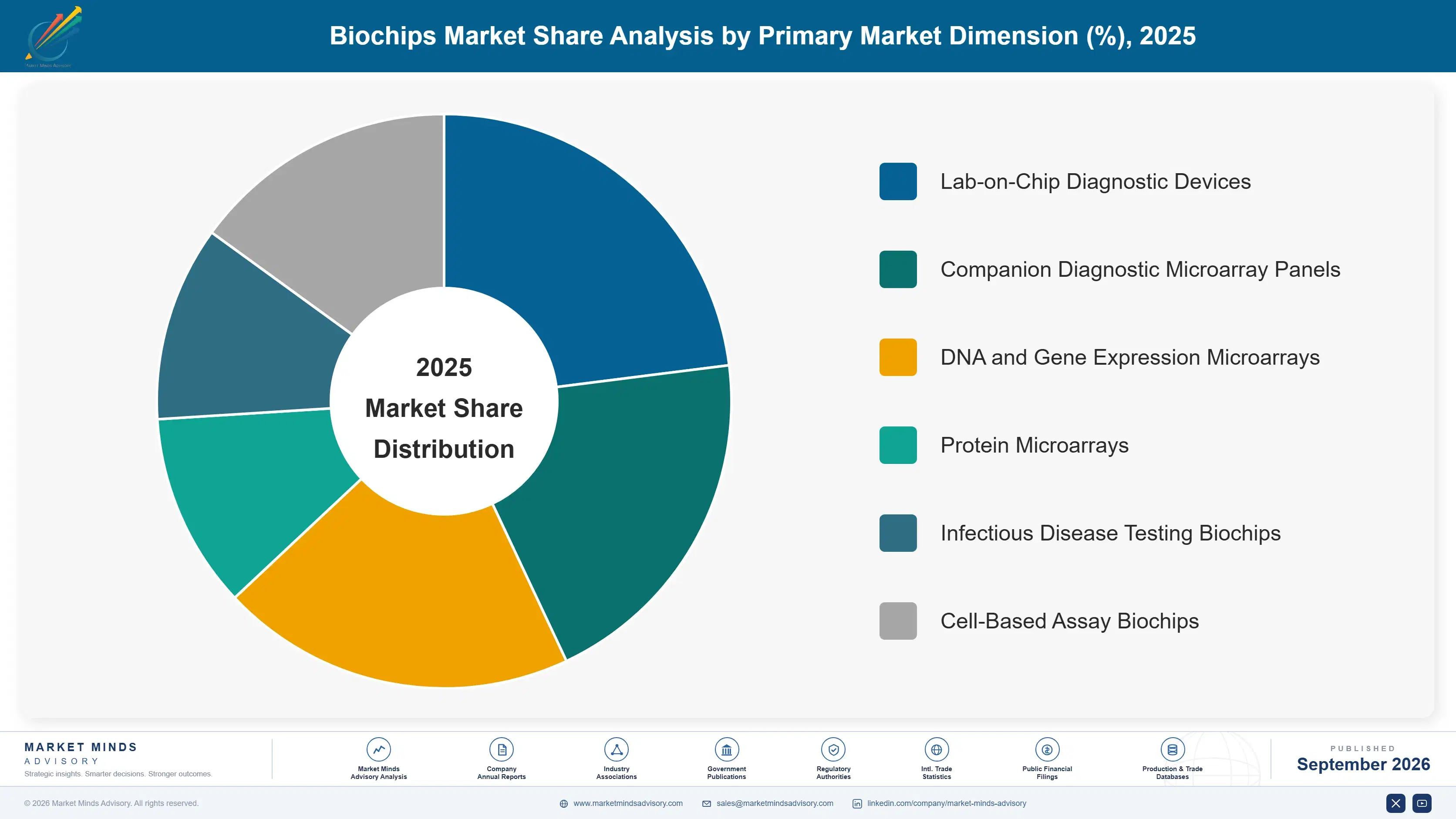
The Biochips Market splits into six product-defined segments spanning genetic, protein, and cellular analysis applications. Lab-on-chip diagnostic devices lead growth as point-of-care testing displaces centralized laboratory workflows, followed closely by companion diagnostic microarray panels, since both categories directly address the clinical turnaround pressures driving procurement nationwide. Cell-based assay biochips and protein microarrays round out the segment mix.
biochips-market-market-share-analysis-1788421510985

Lab-on-Chip Diagnostic Devices

Lab-on-chip diagnostic devices lead all segments because they concentrate the exact use case driving current hospital procurement: delivering lab-quality molecular diagnostic results directly at the point of care rather than requiring sample transport to a centralized reference laboratory and multi-day turnaround. Hospitals favor this segment since it directly addresses the turnaround time pressure that increasingly shapes clinical treatment decisions, capturing measurable operational efficiency within a single clinical quarter. Large hospital systems managing multiple emergency and urgent care departments are increasingly standardizing on this segment across their entire diagnostic testing portfolio. MMA estimates this segment alone will represent well over a third of total category revenue by 2036. Clinical research supports this projection.
CAGR 13.0%

Companion Diagnostic Microarray Panels

Companion diagnostic microarray panels rank second in growth as pharmaceutical companies increasingly require validated biochip platforms tied to specific targeted therapy approval pathways rather than generic diagnostic testing sold independently of any treatment decision. These panels let clinicians identify which patients will likely respond to a specific targeted therapy before prescribing, closely matching the precision oncologists increasingly expect from modern personalized cancer treatment protocols. Pharmaceutical companies increasingly cite companion diagnostic partnerships directly within drug approval submissions rather than treating diagnostics as a secondary consideration. MMA expects this category to scale steadily as targeted therapy approvals continue expanding across most major cancer types. Growth here should remain strong through most of the coming decade.
CAGR 12.0%
Full segment breakdown across 6 segments available in the complete report.

Regional Architecture and Country Demand Map

North America leads the Biochips Market given its concentration of large genomics research infrastructure and established diagnostics manufacturer headquarters, while East Asia follows closely through China's aggressive government investment in domestic molecular diagnostics manufacturing and rapid healthcare system expansion nationwide across most major provinces and cities.

North America

United States hospital systems and reference laboratories drive the bulk of regional demand, reflecting substantial genomics research infrastructure and established diagnostics manufacturer headquarters concentrated across major biotechnology hubs nationwide. Canadian healthcare systems are following a similar pattern, particularly among provinces expanding companion diagnostic testing capacity for targeted cancer therapies. Illumina and Thermo Fisher Scientific, both headquartered in the region, maintain deep hospital and laboratory relationships that accelerate biochip adoption across large academic medical centers and community hospital networks alike. Hospital procurement cycles in the region also tend to move faster than in more fragmented regulatory environments, letting diagnostics manufacturers close large multi-year contracts within a single fiscal budget cycle rather than waiting years for staged rollout approval across service networks.
Share: 31% | CAGR: 8.5% (2026 to 2036)

Western Europe

Germany and the United Kingdom lead regional adoption, integrating biochip diagnostics into national health service testing programs already well underway across each country's centralized laboratory infrastructure. France and Switzerland follow through strong domestic genomics research investment and pharmaceutical company headquarters driving companion diagnostic partnership activity. Regional data protection rules add meaningful compliance overhead for manufacturers processing extensive patient genetic data across multiple national jurisdictions simultaneously. Regional manufacturers increasingly bundle biochip platforms with broader companion diagnostic consulting services, letting pharmaceutical partners address testing, compliance, and clinical trial planning within a single coordinated vendor engagement rather than separate procurement tracks. Vendors report this bundling meaningfully improves subscription retention across the region's largest healthcare markets and pharmaceutical partners.
Share: 21% | CAGR: 7.5% (2026 to 2036)
Regional intelligence for 5 additional markets available in the complete report: East Asia, South Asia and Pacific, Latin America, Middle East and Africa, Eastern Europe. Contact sales@marketmindsadvisory.com.
biochips-market-country-cagr-analysis-1788421511557

How Manufacturers Capture Diagnostic Panel Value

Manufacturers capture value across four distinct commercial mechanisms as biochip platforms move from independent diagnostic panels toward pharmaceutical partnership relationships, extending revenue well beyond a base panel sale into recurring consumable, licensing, royalty, and companion diagnostic relationships that compound over each partnership's lifecycle. Manufacturers executing all four consistently pull ahead of single-mechanism rivals in overall account retention.

Consumable Cartridge Recurring Revenue Business Model

Manufacturers price biochip reader instruments near or below manufacturing cost while capturing recurring revenue through proprietary disposable cartridges required for every test run, converting what was once a one-time instrument purchase into predictable ongoing consumable revenue. This pricing model anchors baseline recurring revenue, since hospitals rarely switch cartridge suppliers once a reader instrument is installed and validated within existing laboratory workflows. Consumable cartridge revenue typically carries margins running roughly 3 times higher than the underlying instrument sale itself. Vendors report this recurring revenue carries meaningfully higher lifetime value than the underlying instrument sale.
Market Impact: Cartridge margins run roughly 3 times higher overall

Companion Diagnostic Royalty Agreement Revenue Structure

Manufacturers increasingly structure companion diagnostic partnerships as co-development agreements with pharmaceutical companies, receiving royalty payments tied to the approved targeted therapy's sales volume rather than a flat licensing fee alone. This royalty revenue carries exceptionally high margins compared with standalone diagnostic panel sales, since it scales directly with the pharmaceutical partner's own commercial success without requiring additional manufacturing investment. Some manufacturers now generate roughly 20% of total account revenue from these royalty arrangements. Manufacturers increasingly negotiate these terms early in the drug development process to secure long-term revenue visibility. overall.
Market Impact: Royalty agreements add roughly 20% of total revenue

Clinical Validation and Regulatory Support Services

Manufacturers sell dedicated clinical validation consulting engagements that help smaller diagnostics companies navigate regulatory approval pathways for new biochip-based tests, since accumulating sufficient clinical evidence requires specialized expertise most smaller companies lack internally. This consulting revenue carries meaningfully higher margins than the underlying platform licensing itself, drawing on regulatory expertise vendors have spent years developing across multiple product approval cycles. Some vendors now generate roughly 15% of total account revenue from these validation services. Manufacturers often renew these consulting engagements annually as new product approvals require fresh validation work. overall.
Market Impact: Validation services add roughly 15% of total revenue

Data Licensing to Pharmaceutical Research Partners

Some manufacturers license anonymized genetic testing data to pharmaceutical research partners seeking insight into biomarker prevalence and treatment response patterns across large patient populations tested on their diagnostic platforms. This licensing revenue stream remains small relative to core panel and consumable revenue but carries very high margins, since the underlying data is already collected as part of normal diagnostic testing operations. Data licensing revenue has grown roughly 2 times faster than overall platform revenue recently. Vendors are actively expanding this licensing model into additional biomarker categories beyond current core panels.
Market Impact: Data licensing revenue grew roughly 2 times faster

Who Controls the Margin Pool

Five manufacturers, evaluated on annual product revenue from biochip and microarray platforms, together account for an estimated 48% of tracked market revenue, leaving a long tail of specialized diagnostics companies competing for remaining hospital budget. Illumina leads through genomics sequencing installed base and companion diagnostic partnerships, while Thermo Fisher Scientific and Agilent Technologies compete closely for hospital laboratory contracts that neither incumbent fully dominates across every diagnostic segment.
Current competitive activity centers on companion diagnostic partnership expansion, as every major manufacturer races to secure pharmaceutical partnerships tied to targeted cancer therapy approvals rather than competing purely on standalone diagnostic panel pricing alone. Partnership announcements between biochip manufacturers and pharmaceutical companies have become the dominant deal structure over the past two years, since building comparable clinical validation data from scratch takes considerably longer than most manufacturers are willing to wait.

Emerging pressure comes from next-generation sequencing platforms that could displace traditional microarray-based biochips for genetic analysis applications, potentially disintermediating standalone biochip vendors for large-scale genomics research customers. Rankings could shift meaningfully if a major sequencing platform provider acquires a leading companion diagnostic specialist outright, combining sequencing scale with existing pharmaceutical partnership relationships that smaller biochip specialists currently cannot match alone.
biochips-market-company-positioning-matrix-1788421512083

Competitive Moat and Risk Dimensions

ILLUMINA

Moat: Deep Genomics Sequencing Installed Base

Illumina's genomics sequencing installed base across thousands of research and clinical laboratories gives it distribution scale for companion diagnostic partnerships that smaller biochip specialists cannot match quickly, letting the company cross-sell diagnostic capability into an already vast existing customer relationship. This installed base advantage compounds with each new sequencing platform generation.
ILLUMINA

Risk: Sequencing Technology Substitution Risk Ahead

Illumina's core sequencing business faces long-term substitution risk from emerging sequencing technologies that could displace its current platform generation, requiring continued heavy research investment to maintain technology leadership. A slower-than-expected next-generation platform transition could meaningfully compress near-term diagnostic partnership momentum for the company. Illumina invests heavily to defend this technology leadership position.
THERMO FISHER SCIENTIFIC

Moat: Broad Diagnostics Product Portfolio Reach

Thermo Fisher Scientific's broad diagnostics and laboratory equipment portfolio gives it cross-selling reach into hospital laboratory relationships that narrower biochip-only specialists cannot replicate easily, letting the company bundle biochip platforms with existing instrument and consumable relationships. This portfolio breadth wins enterprise laboratory contracts that pure-play competitors cannot easily secure alone.
THERMO FISHER SCIENTIFIC

Risk: Complex Portfolio Slows Innovation Focus

Thermo Fisher Scientific's broad portfolio spanning many product categories can dilute research and development focus compared with specialized biochip competitors dedicating their entire engineering effort to advancing microarray and lab-on-chip technology specifically. This focus gap could limit its ability to match specialist innovation pace in narrower diagnostic categories.

Players Tracked

Prominent Players

Illumina
Thermo Fisher Scientific
Agilent Technologies
Bio-Rad Laboratories
Roche Diagnostics

Other Key Players

Abbott Laboratories
Qiagen
PerkinElmer
Danaher
Becton Dickinson
bioMerieux
Luminex Corporation
Fluidigm
NanoString Technologies
Cepheid
GenMark Diagnostics
Randox Laboratories
Arrayit Corporation
Affymetrix
MaxCyte

Recent Developments

MARCH 2025

Illumina announced a strategic partnership with a major pharmaceutical company to co-develop a companion diagnostic biochip panel tied to a newly approved targeted cancer therapy, expanding its diagnostic partnership portfolio into a new oncology indication category. The partnership includes shared clinical validation resources to accelerate regulatory submission timelines.
Signal: Signals sequencing incumbents are now increasingly deepening pharmaceutical partnerships to capture companion diagnostic revenue streams overall.
JULY 2025

Thermo Fisher Scientific launched an enhanced lab-on-chip diagnostic platform with expanded multiplexing capability, letting hospital laboratories test for a significantly larger panel of genetic markers on a single disposable cartridge simultaneously. The launch follows extensive clinical validation testing with select academic medical centers evaluating multiplexing performance.
Signal: Signals established manufacturers are now increasingly expanding multiplexing capability to compete with specialized biochip entrants directly.
OCTOBER 2025

Bio-Rad Laboratories acquired a smaller point-of-care diagnostics startup specializing in infectious disease biochip panels, adding rapid testing capability to its existing laboratory equipment portfolio ahead of a planned broader product integration effort. The acquired team will be integrated into Bio-Rad's existing product engineering and clinical affairs division.
Signal: Signals established diagnostics vendors are now increasingly acquiring point-of-care capability rather than building it internally now.

Reagent and Semiconductor Substrate Cost Exposure

Specialized reagents and biological probes account for an estimated 42% of total cost of goods sold for biochip manufacturers, sourced primarily from a limited number of qualified chemical and biological reagent suppliers concentrated in the United States and Europe. Silicon and glass substrate materials used in microarray fabrication represent a second meaningful cost input. overall.
A notable reagent pricing increase during a broader specialty chemical supply tightening in mid-2025, documented in multiple manufacturer investor filings, pushed several biochip manufacturers to renegotiate supplier contracts or qualify alternative reagent sources entirely. Delivery timelines extended noticeably during the affected quarter before supply conditions gradually normalized industry-wide. Delivery timelines gradually normalized within roughly two quarters as broader supply conditions eased across the industry considerably.

Smaller biochip manufacturers lacking direct relationships with specialized reagent suppliers pay meaningfully higher per-unit component costs than larger competitors who can commit to substantial multi-year volume agreements locking in preferential pricing terms. This dynamic disproportionately affects newer entrants without the balance sheet scale to negotiate comparable supply commitments years ahead of a product launch cycle. Manufacturers with existing scale relationships weathered the recent supply tightening considerably better than newer entrants.
biochips-market-cost-volatility-analysis-1788421512283

Multi-Year Reagent Supplier Agreements

Leading manufacturers increasingly sign multi-year reagent supply agreements years ahead of a product launch, locking in pricing and priority allocation during periods of broader specialty chemical supply tightness. This approach requires significant upfront commitment but meaningfully lowers cost volatility. Vendors report meaningfully improved cost predictability once multi-year agreements are secured well ahead of launch.

Dual Sourcing Across Substrate Material Suppliers

Some manufacturers now qualify at least two silicon and glass substrate suppliers per product line to reduce dependency on any single component relationship and preserve negotiating leverage during price renewal discussions. This redundancy improves supply resilience considerably. Several manufacturers expect this approach to meaningfully reduce total component supply risk over successive product cycles. overall.

Portfolio Architecture for Margin Defence

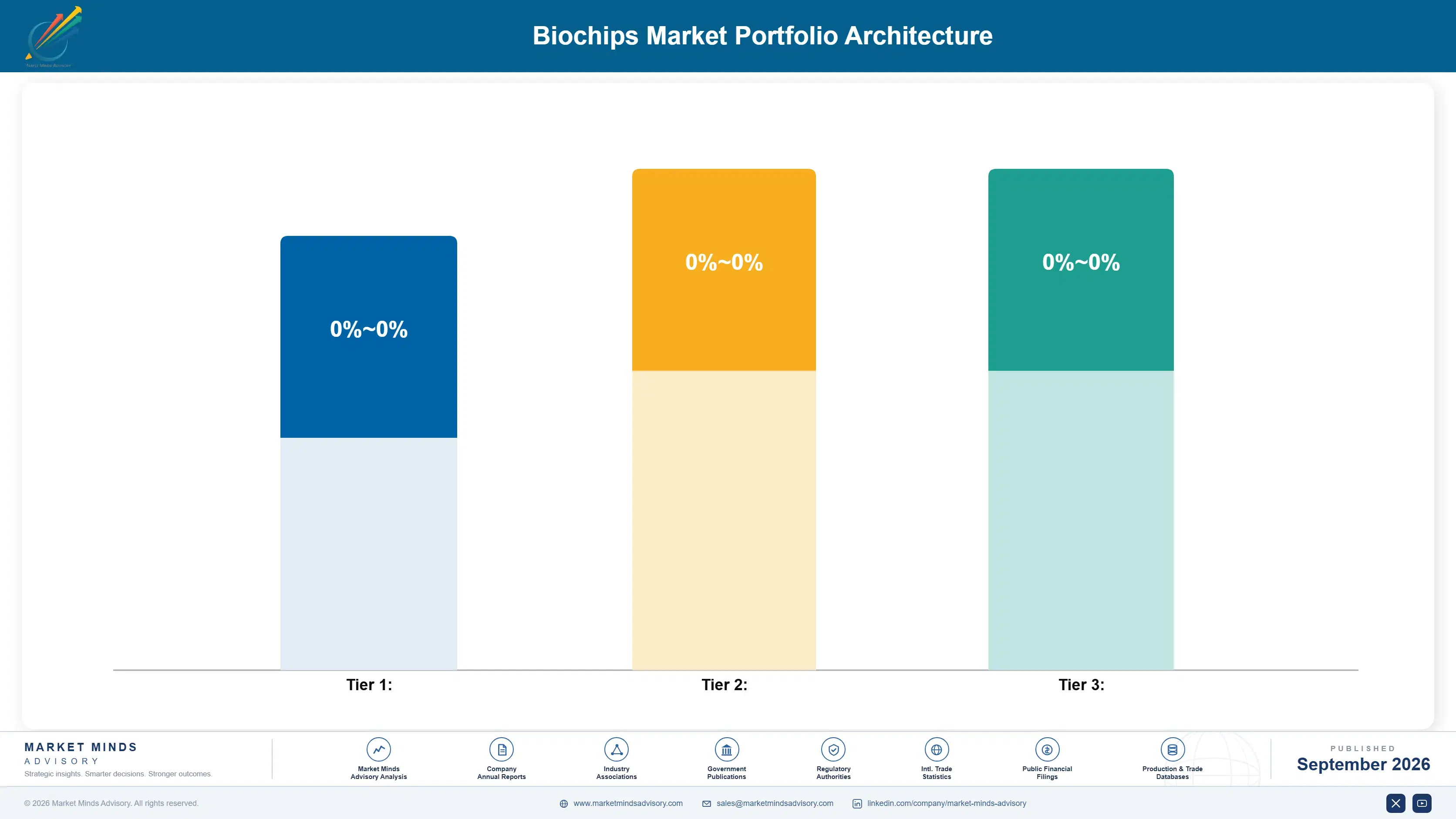
Manufacturers architect pricing around three distinct tiers separating basic single-marker panels from certified companion diagnostic platforms and next-generation multiplexed testing systems still scaling from early clinical deployment. Gross margins widen considerably as revenue moves up this tier structure, since higher tiers embed proprietary partnerships and validation data competitors cannot easily replicate. Manufacturers moving customers up this structure see improved profitability over successive contract renewal cycles.
Basic panel revenue carries margins comparable to conventional laboratory equipment, while premium tiers bundling companion diagnostic partnerships and multiplexed capability command substantially higher margins than standalone panel sales ever could provide. This tension between panel volume scale and premium partnership differentiation shapes most manufacturer investment decisions currently under active development. Manufacturers design roadmaps to nudge volume-tier customers upward through bundled trial access to companion diagnostic features.

The highest-value pools concentrate among manufacturers with validated companion diagnostic partnerships tied to approved targeted therapies rather than those selling generic diagnostic panels without pharmaceutical industry validation. Smaller manufacturers without this partnership capability increasingly compete on price within the volume tier alone, ceding higher-margin premium accounts to larger established diagnostics incumbents. Manufacturers investing early in partnerships are positioned to capture outsized share of this pool.

Basic single-marker diagnostic panels priced comparably to standard laboratory equipment, targeting cost-sensitive smaller hospitals without complex companion diagnostic requirements or multiplexed testing needs attached. These accounts value predictable flat pricing over advanced feature depth entirely.
Gross Margin

Companion diagnostic platforms bundling pharmaceutical partnerships and multiplexed testing, targeting large hospital systems commanding meaningfully higher recurring margins given embedded partnership capability. Renewal rates in this tier run notably higher than the volume segment overall.
Gross Margin

Multiplexed testing systems with expanded biomarker panels, still scaling from early clinical deployment, priced at the highest premium given differentiated proprietary technology and validation data involved. Commercial availability remains limited to a handful of early pilots currently.
Gross Margin
biochips-market-portfolio-architecture-1788421512792

High-value Sub-segments and Strategic Watch-out

Lab-on-Chip Diagnostic Devices

This segment combines the fastest growth rate in the market with the strongest margin profile, as point-of-care testing displaces centralized laboratory workflows while hospitals pay premium pricing for turnaround time reduction. MMA rates this segment the strongest combined opportunity in the entire portfolio. Early results support this.

Companion Diagnostic Microarray Panels

Strong growth continues here as targeted therapy approvals expand, though margins run somewhat thinner than lab-on-chip given intensifying competition among manufacturers offering broadly comparable partnership capability. Vendors should still prioritize investment here given the large addressable hospital base. Early results show strong customer satisfaction across tracked accounts.

DNA and Gene Expression Microarrays

This established segment anchors reliable core revenue for manufacturers serving academic research customers, growing more slowly than diagnostic-specific alternatives but maintaining loyal customers with long-standing relationships. This segment remains a dependable core revenue source for established manufacturers. Loyal customers renew at high rates consistently. overall.

Protein Microarrays

Growth here trails the broader market meaningfully, and manufacturers should watch closely for signs of accelerating displacement by more integrated multiplexed diagnostic categories that offer comparable protein detection capability. Vendors should monitor renewal rates closely for early signs of accelerating decline. Early signals matter for planning purposes.

The Partnership Annuity Behind Diagnostic Approval

Companion diagnostic partnerships function much like a compliance annuity, since revenue renews automatically for as long as the associated targeted therapy remains on the market and physicians continue ordering the paired diagnostic test before prescribing treatment. This gives manufacturers predictable revenue visibility once a companion diagnostic achieves regulatory approval alongside its paired therapy. Churn for approved companion diagnostics runs notably lower than standalone panels, since switching requires re-validating an entirely new test.
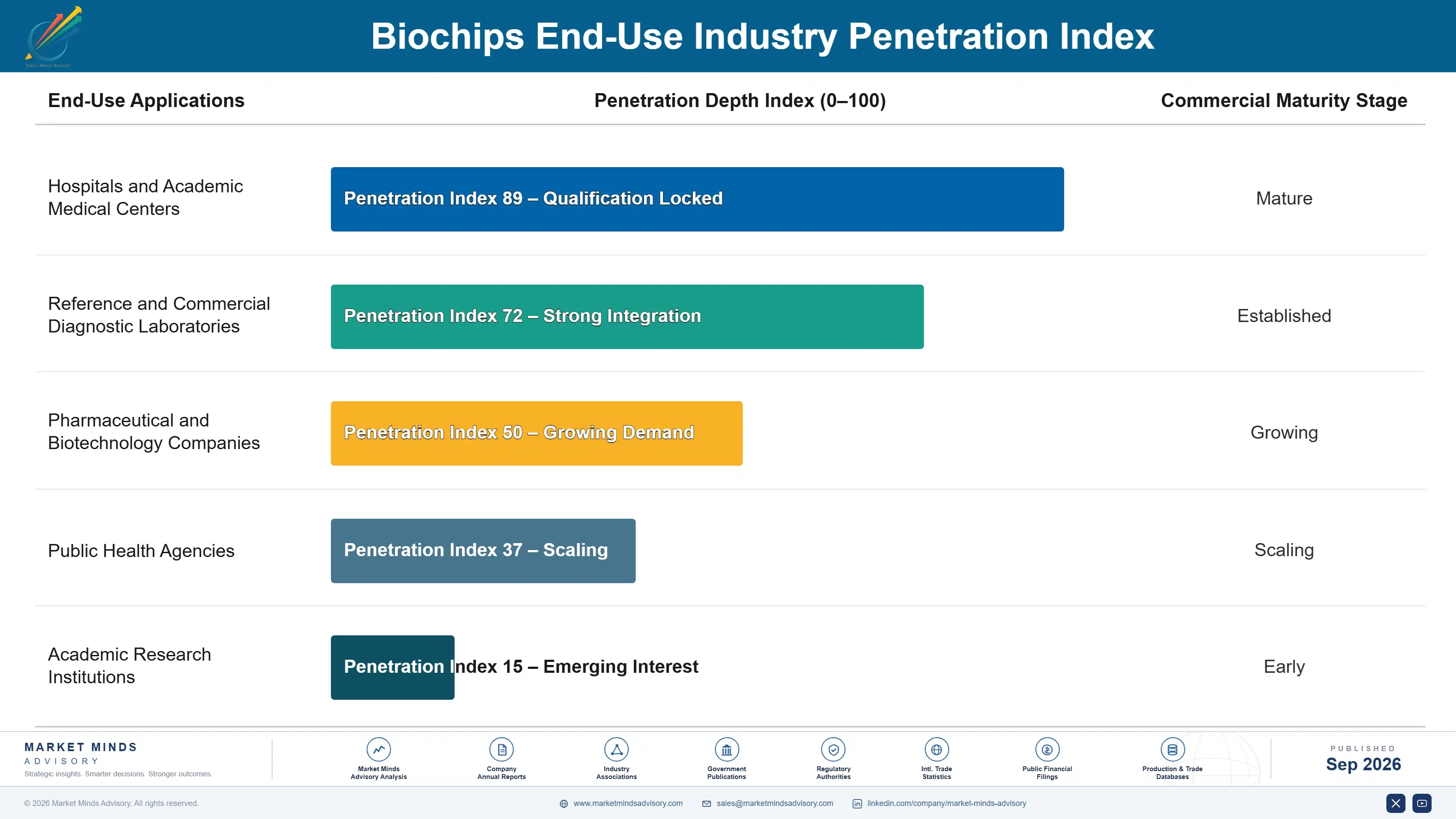
Adoption depth varies meaningfully by end-use vertical: oncology and infectious disease testing embed biochip diagnostics deeply given clear measurable turnaround time and treatment selection benefits, while general wellness screening often sees lighter deployment, leaving routine testing on established laboratory methods considerably longer. Cardiology and prenatal screening occupy a middle ground, adopting biochip testing selectively for higher-risk patient populations.

Buyer profiles are shifting generationally as laboratory directors who built careers on centralized batch testing give way to a newer cohort trained on point-of-care and personalized medicine approaches from early in their careers. This shift accelerates procurement, since newer buyers arrive already comfortable evaluating biochip platform data. Vendors report shorter sales cycles engaging this cohort, since advocacy increasingly comes from within clinical teams rather than administrators.
biochips-market-end-use-penetration-index-1788421513287

Where Manufacturers Should Focus Next

These are among the four positions where our research anticipates prominent divergence between winners and laggards over the coming forecast period. Each is grounded in the demand model, the regulatory perimeter, and the announced capacity pipeline.
01 / COMPANION DIAGNOSTIC POSITIONING

Deepen pharmaceutical partnerships before rivals close the gap

Companion diagnostic partnerships close pharmaceutical deals faster than any standalone panel pricing comparison exercise, since drug developers now approve diagnostic partnership budget directly based on documented clinical validation rather than deferring entirely to laboratory procurement teams. Manufacturers that lead partnership conversations with specific clinical validation data convert pharmaceutical prospects meaningfully faster than those leading purely with generic panel pricing claims. This approach matters most for manufacturers targeting oncology and rare disease therapy developers facing the nearest regulatory approval deadlines and steepest clinical validation requirements.
02 / MULTIPLEXING CAPABILITY EXPANSION

Expand multiplexing density before rivals close the gap

Multiplexing density increasingly determines which biochip manufacturer captures the highest-value diagnostic contracts, since hospitals now compare panel breadth across competing platforms rather than a single flat testing price point. Manufacturers offering more granular multiplexing options convert casual panel buyers into premium panel buyers meaningfully faster than those offering only basic single-marker testing without expanded options. This approach matters most for manufacturers competing directly against rivals with more established multiplexing engineering capability and considerably deeper existing reagent chemistry expertise built over years.
03 / POINT-OF-CARE MARKET EXPANSION

Expand point-of-care deployment before rivals capture volume

Point-of-care lab-on-chip deployment remains the single largest opportunity for manufacturers to reach hospital departments that would never send samples to a centralized reference laboratory under current turnaround time pressure. Manufacturers expanding point-of-care deployment into underserved hospital departments ahead of rivals can establish clinical relationships before competitors build comparable local support infrastructure. This investment pays off most clearly in emergency and urgent care departments facing immediate treatment decision pressure and severely constrained centralized laboratory turnaround capacity during periods of peak clinical demand.
04 / REAGENT SUPPLY DIVERSIFICATION

Secure multi-year reagent agreements ahead of component shortages

Manufacturers depending on a single reagent supplier risk production disruption whenever broader specialty chemical supply tightens, as several manufacturers already experienced during the recent reagent pricing spike affecting the industry. Manufacturers securing multi-year supply agreements preserve pricing stability and production continuity during unexpected supply disruptions that competitors relying on spot market purchasing cannot easily absorb without delay. This diversification investment pays off most clearly during periods of broader industry supply tension and heightened geopolitical trade uncertainty affecting global supply chains directly.

Engagement Snapshot From the Field

A live engagement with an industry participant carrying material or product regulatory and market exposure ahead of a defining policy shift, showing how our research translates into a defensible multi-year portfolio strategy.
MARKET MINDS ADVISORY · CLIENT ENGAGEMENT SUMMARY
Biochips Producer Strategic Portfolio Review and Transition Roadmap 2026·Investment Scenario on Biochips Exposure Evaluation 2025-26
CLIENT PROFILE
An academic medical center operating a large oncology treatment program faced growing pressure to reduce genetic testing turnaround time for patients awaiting targeted therapy decisions, since shipping samples to an external reference laboratory routinely delayed treatment initiation by several days. Leadership needed to bring companion diagnostic testing in house without a large capital investment, facing pressure to show measurable turnaround improvement ahead of the accreditation review.
STRATEGIC CHALLENGE
Leadership needed to determine whether adopting an in-house biochip platform could meaningfully reduce genetic testing turnaround time while maintaining diagnostic accuracy comparable to the external reference laboratory the center previously relied upon, and faced pressure to complete implementation within a single fiscal year to support the upcoming accreditation review. Board members also wanted assurance the transition would not compromise diagnostic accuracy.
MMA APPROACH
MMA benchmarked three candidate biochip platforms against the center's specific companion diagnostic testing volume, existing pathology laboratory workflow compatibility, and staff training capacity, then modeled expected turnaround time improvement and full multi-year total cost of ownership across each platform option under consideration for this particular oncology program. Findings were shared with the center's pathology leadership ahead of final platform selection and purchase.
KEY FINDINGS
  1. In-house biochip testing reduced genetic testing turnaround time meaningfully within the first two quarters (client-reported, unverified by MMA) across the oncology program.
  2. Diagnostic accuracy remained comparable to the previous external reference laboratory results across all validated genetic markers tested. This validation process satisfied internal quality assurance requirements before full clinical rollout began.
  3. Oncology physicians reported faster treatment initiation for patients awaiting targeted therapy eligibility determination based on genetic testing results. Physicians credited the faster turnaround with meaningfully improving overall patient care coordination.
  4. The accreditation review acknowledged the documented turnaround time improvement during its subsequent program evaluation and certification process. This recognition strengthened the center's case for continued oncology program investment overall.
CLIENT PROFILE
An academic medical center operating a large oncology treatment program faced growing pressure to reduce genetic testing turnaround time for patients awaiting targeted therapy decisions, since shipping samples to an external reference laboratory routinely delayed treatment initiation by several days. Leadership needed to bring companion diagnostic testing in house without a large capital investment, facing pressure to show measurable turnaround improvement ahead of the accreditation review.
STRATEGIC CHALLENGE
Leadership needed to determine whether adopting an in-house biochip platform could meaningfully reduce genetic testing turnaround time while maintaining diagnostic accuracy comparable to the external reference laboratory the center previously relied upon, and faced pressure to complete implementation within a single fiscal year to support the upcoming accreditation review. Board members also wanted assurance the transition would not compromise diagnostic accuracy.
MMA APPROACH
MMA benchmarked three candidate biochip platforms against the center's specific companion diagnostic testing volume, existing pathology laboratory workflow compatibility, and staff training capacity, then modeled expected turnaround time improvement and full multi-year total cost of ownership across each platform option under consideration for this particular oncology program. Findings were shared with the center's pathology leadership ahead of final platform selection and purchase.
KEY FINDINGS
  1. In-house biochip testing reduced genetic testing turnaround time meaningfully within the first two quarters (client-reported, unverified by MMA) across the oncology program.
  2. Diagnostic accuracy remained comparable to the previous external reference laboratory results across all validated genetic markers tested. This validation process satisfied internal quality assurance requirements before full clinical rollout began.
  3. Oncology physicians reported faster treatment initiation for patients awaiting targeted therapy eligibility determination based on genetic testing results. Physicians credited the faster turnaround with meaningfully improving overall patient care coordination.
  4. The accreditation review acknowledged the documented turnaround time improvement during its subsequent program evaluation and certification process. This recognition strengthened the center's case for continued oncology program investment overall.
RECOMMENDED STRATEGY
Phase 1: Phase one selected a platform meeting both testing volume requirements and existing pathology workflow compatibility precisely and fully. and budget constraints. Phase 2: Phase two validated diagnostic accuracy against the previous external reference laboratory before transitioning testing volume in house. before full transition. Phase 3: Phase three trained pathology staff on the new platform's operational and quality control procedures thoroughly and consistently. and reporting workflows.
OUTCOME
The medical center reduced genetic testing turnaround time and maintained diagnostic accuracy across its oncology program (client-reported, unverified by MMA), while successfully completing its subsequent oncology program accreditation review process on schedule. Program leadership credited the biochip transition with meaningfully improving overall patient treatment coordination and satisfaction.

Frequently Asked Questions

Foundational context covering the market sizes, CAGR, scope, country, region and competition that inform every finding below. This section is provided to cover basics and most often pre-purchase conversations, answered from the MMA Primary Research Dataset.

What is the current size of the Biochips Market?

The Biochips Market reached an estimated $6.8 billion in global revenue in 2025. This covers microarray and lab-on-chip devices used for genetic, protein, and molecular diagnostics worldwide.

How large will the Biochips Market be by 2036?

MMA projects the market will reach approximately $17.55 billion by 2036, driven mainly by companion diagnostic partnerships and point-of-care adoption. That represents roughly a 2.37 fold expansion from 2026 levels.

What is the CAGR for the Biochips Market 2026 to 2036?

The market is forecast to grow at a 9.0% compound annual rate between 2026 and 2036. Bull and bear scenarios range between roughly 7.8% and 10.2% depending on regulatory approval pace.

Which segment is growing fastest?

Lab-on-chip diagnostic devices lead all segments, expanding at an estimated 13.0% annually. That is well above the overall market's 9.0% average growth rate through the forecast period to 2036.

Who are the major companies in the Biochips Market?

Illumina, Thermo Fisher Scientific, Agilent Technologies, Bio-Rad Laboratories, and Roche Diagnostics form the five leading manufacturers tracked in this report. Together they hold an estimated 48% combined share.

Which country is growing fastest?

China posts the fastest national growth rate in the study, expanding at an estimated 11.5% annually. Its government-backed domestic molecular diagnostics manufacturing investment drives unusually rapid adoption there.

Report Segmentation Architecture

The full report scope spans multiple orthogonal segmentation dimensions, with cross-tabulated demand data provided for each dimension pair. Coverage extends further to regional breakdowns, trend trajectories, and the competitive detail needed to support segment-level decision-making.

By Primary Market Dimension

  • Lab-on-Chip Diagnostic Devices
  • Companion Diagnostic Microarray Panels
  • DNA and Gene Expression Microarrays
  • Protein Microarrays
  • Infectious Disease Testing Biochips
  • Cell-Based Assay Biochips

By End-Use Industry

  • Hospitals and Academic Medical Centers
  • Reference and Commercial Diagnostic Laboratories
  • Pharmaceutical and Biotechnology Companies
  • Public Health Agencies
  • Academic Research Institutions

By Commercial Dimension

  • Direct Manufacturer Sales
  • Companion Diagnostic Co-Development Agreements
  • Distributor and Reseller Channel Sales
  • Consumable and Reagent Subscription Sales

By Region

  • North America
  • Western Europe
  • East Asia
  • South Asia and Pacific
  • Latin America
  • Middle East and Africa
  • Eastern Europe

Scope, Methodology, and Coverage

Every figure in this report is reproducible from documented input assumptions. The scope below maps the historical period, the forecast horizon, the segmentation dimensions, and the countries covered, alongside the underlying primary and qualitative methodology.
Historical Period
2020 to 2025
Forecast Period
2026 to 2036
Base Year
2025 (USD billions; MMA Primary Research Dataset, September 2026)
Market Definition
The Biochips Market covers microarray and lab-on-chip devices used for genetic analysis, protein detection, and molecular diagnostics in clinical and research settings, measured by device and consumable revenue. It excludes standalone laboratory instruments not incorporating microarray or lab-on-chip technology and general-purpose laboratory information management software.
Quantitative Units
USD Billion, CAGR (%), Share (%), 2020 to 2036
Segmentation Dimensions
By Primary Market Dimension; By End-Use Industry; By Commercial Dimension; By Region
Regions Covered
North America, Western Europe, East Asia, South Asia and Pacific, Latin America, Middle East and Africa, Eastern Europe
Countries Covered
United States, Canada, United Kingdom, Germany, France, Switzerland, China, Japan, South Korea, India, Australia, Brazil, Mexico, Saudi Arabia, United Arab Emirates, South Africa, Poland
Key Companies Profiled
Illumina, Thermo Fisher Scientific, Agilent Technologies, Bio-Rad Laboratories, Roche Diagnostics, Abbott Laboratories, Qiagen, PerkinElmer, Danaher, Becton Dickinson, bioMerieux, Luminex Corporation, Fluidigm, NanoString Technologies, Cepheid, GenMark Diagnostics, Randox Laboratories, Arrayit Corporation, Affymetrix, MaxCyte
Quantitative Methodology
Primary survey, n=3,800 respondents, Q4 2025, six countries; demand-side model with trade association cross-validation
Qualitative Methodology
47 expert interviews, Q4 2025; applied to validate demand model assumptions, identify emerging dynamics, and assess competitive positioning
Report Format
PDF and XLSX data workbook (Word format preview document)
Publisher
Market Minds Advisory
Report Code
MMA-2026-MED-622
Published
September 2026
Contact
sales@marketmindsadvisory.com | www.marketmindsadvisory.com

Purchase the full Biochips Market Report (2026 to 2036).

The full report delivers a comprehensive analysis of the Biochips Market, covering historical performance from 2020 through 2025 and forecasts extending to 2036. It provides detailed segmentation across six primary product categories, seven regional markets, and competitive profiles of the twenty leading global manufacturers shaping industry structure. Readers gain access to quantified demand drivers, restraints, and revenue lever analysis grounded in primary survey data and expert interviews. The report also includes a detailed input cost exposure assessment and portfolio tier framework for strategic planning purposes.
Seven-region market sizing and forecast data
Twenty manufacturer competitive profiles and positioning
Segment-level CAGR and revenue projections through 2036
Primary survey data from 3,800 respondents
Expert interview insights from 47 industry specialists
Revenue lever and portfolio tier strategic frameworks

Built For The People Who Decide

From boardroom strategy to bench-side execution, this report is read cover-to-cover by leaders shaping the next decade of their industry, turning demand scenarios, market dynamics and valuation benchmarks into decisions.
CXOs/ Presidents/ VPs/ Managers
M&A and Corporate Development
Strategy Teams and R&D Heads
Procurement and Product Directors
Regulatory and Compliance Leaders
Investor Relations and Equity Analysts