Biobased Biodegradable Plastics Market

Biobased Biodegradable Plastics Market

Biobased Biodegradable Plastics Market Outlook from 2026 to 2033

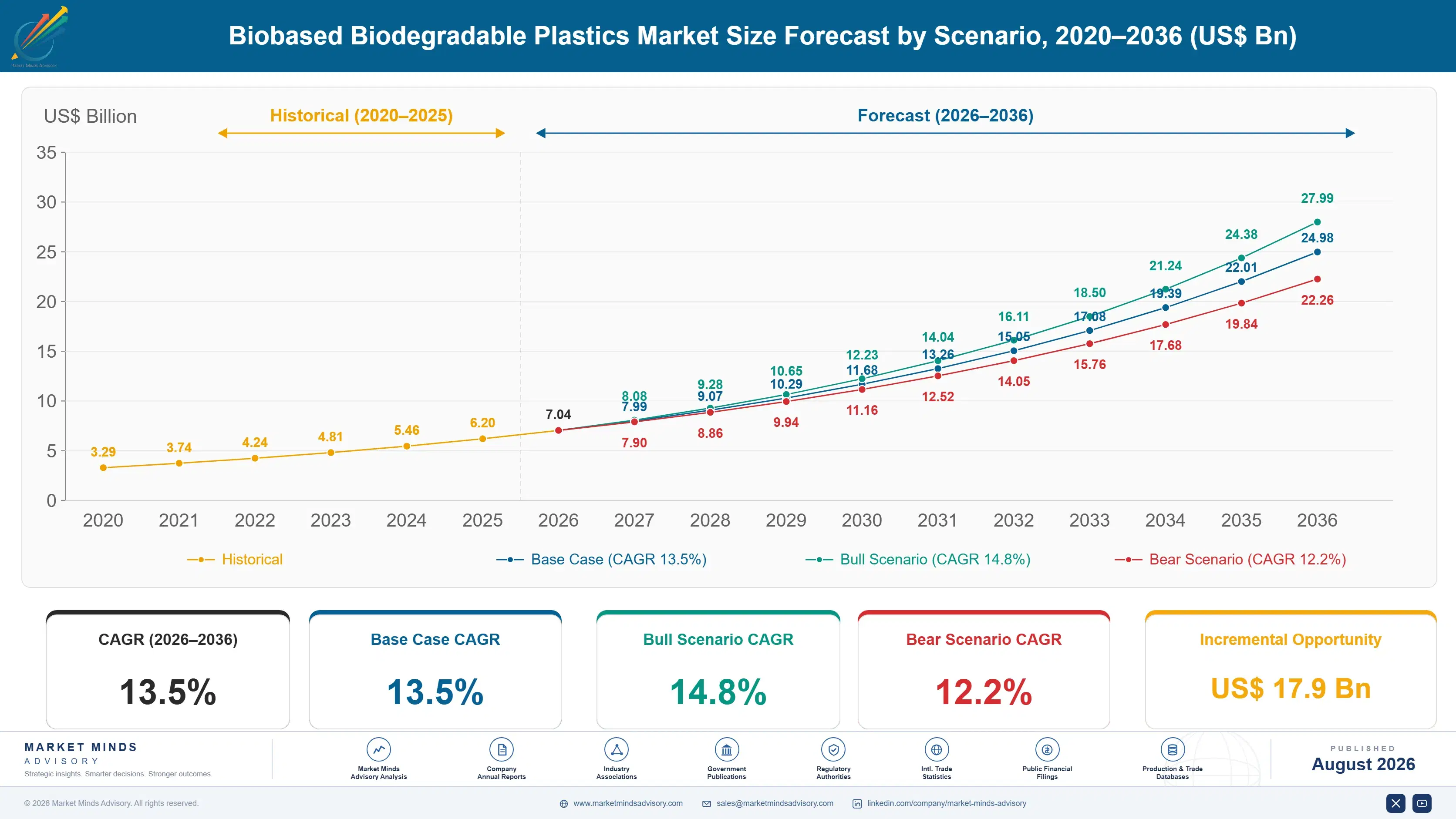
The Biobased Biodegradable Plastics Market is witnessing significant momentum as industries and consumers increasingly prioritize sustainability and environmental responsibility. In 2026, the market is projected to be valued at USD 9.2 billion, with robust growth anticipated through the forecast period. The market is expected to reach USD 23.1 billion by 2033, expanding at a CAGR of 14.1% from 2026 to 2033. This growth is driven by regulatory mandates, consumer awareness, and technological advancements in biopolymer production, positioning biobased biodegradable plastics as a viable alternative to conventional plastics.

The market’s expansion is underpinned by the proliferation of applications across packaging, agriculture, consumer goods, and textiles. Key stakeholders, including manufacturers, governments, and end-users, are collaborating to accelerate the adoption of sustainable materials. The market’s trajectory is further influenced by ongoing research and development, which is enhancing the performance, cost-effectiveness, and scalability of biobased biodegradable plastics. As a result, the sector is poised for transformative growth, reshaping the global plastics landscape.

Biobased Biodegradable Plastics Market

Biobased Biodegradable Plastics Market Scenario & Strategic Insights

The Biobased Biodegradable Plastics Market is characterized by dynamic shifts in regulatory frameworks, consumer preferences, and technological innovation. Governments worldwide are implementing stringent regulations to curb plastic waste, incentivizing the adoption of biodegradable alternatives. These policy measures, coupled with heightened environmental consciousness among consumers, are compelling manufacturers to invest in sustainable product lines. The market is also benefiting from advancements in feedstock sourcing, polymerization techniques, and end-of-life solutions, which are collectively enhancing the commercial viability of biobased biodegradable plastics.

Strategically, industry participants are focusing on vertical integration, strategic partnerships, and capacity expansions to strengthen their market position. The competitive landscape is marked by collaborations between raw material suppliers, technology providers, and end-users to accelerate product development and market penetration. Additionally, companies are investing in education and awareness campaigns to drive consumer acceptance and foster a circular economy. The interplay of these factors is expected to sustain the market’s upward trajectory, with innovation and sustainability at the core of strategic decision-making.

Attribute2026 (USD Billion)2033 (USD Billion)CAGR (2026 – 2033)
Market Size9.223.114.1%

Biobased Biodegradable Plastics Market Trends

  • Expansion of Application Scope Across End-Use Industries

The adoption of biobased biodegradable plastics is expanding beyond traditional packaging applications into sectors such as agriculture, textiles, automotive, and consumer electronics. This diversification is driven by the development of high-performance biopolymers that meet the technical requirements of various industries. For instance, biodegradable mulch films are gaining traction in agriculture, while biobased polymers are being integrated into automotive interiors and electronic casings. This trend is expected to broaden the addressable market and stimulate further innovation in material properties.

  • Technological Advancements in Biopolymer Production

Significant investments in research and development are leading to breakthroughs in biopolymer synthesis, processing, and end-of-life management. Innovations such as enzymatic polymerization, advanced fermentation techniques, and the use of novel feedstocks (e.g., algae, waste biomass) are enhancing the efficiency and sustainability of biobased biodegradable plastics production. These advancements are resulting in improved material performance, reduced production costs, and greater scalability, thereby accelerating market adoption.

  • Regulatory Support and Eco-Labeling Initiatives

Governments and regulatory bodies are introducing policies that mandate or incentivize the use of biodegradable plastics, particularly in single-use applications. Eco-labeling and certification schemes are also gaining prominence, providing consumers with transparent information about product sustainability. These initiatives are fostering consumer trust and encouraging manufacturers to comply with environmental standards, thereby driving market growth.

Segment & Category Analysis for Biobased Biodegradable Plastics Market

By Product Type

  • Polylactic Acid (PLA)
    • Polyhydroxyalkanoates (PHA)
    • Starch Blends
    • Polybutylene Succinate (PBS)
    • Polybutylene Adipate Terephthalate (PBAT)
    • Others

The product type segment is dominated by PLA and starch blends, owing to their widespread use in packaging and consumer goods. PLA offers excellent compostability and is derived from renewable resources such as corn starch and sugarcane. Starch blends are favored for their cost-effectiveness and compatibility with existing processing equipment. PHA and PBS are gaining traction due to their superior biodegradability and performance in diverse applications. The ongoing development of novel biopolymers is expected to further diversify the product landscape.

Biobased Biodegradable Plastics Market Product Type

By Application

  • Packaging
    • Agriculture Consumer Goods Textiles Automotive
    • Others

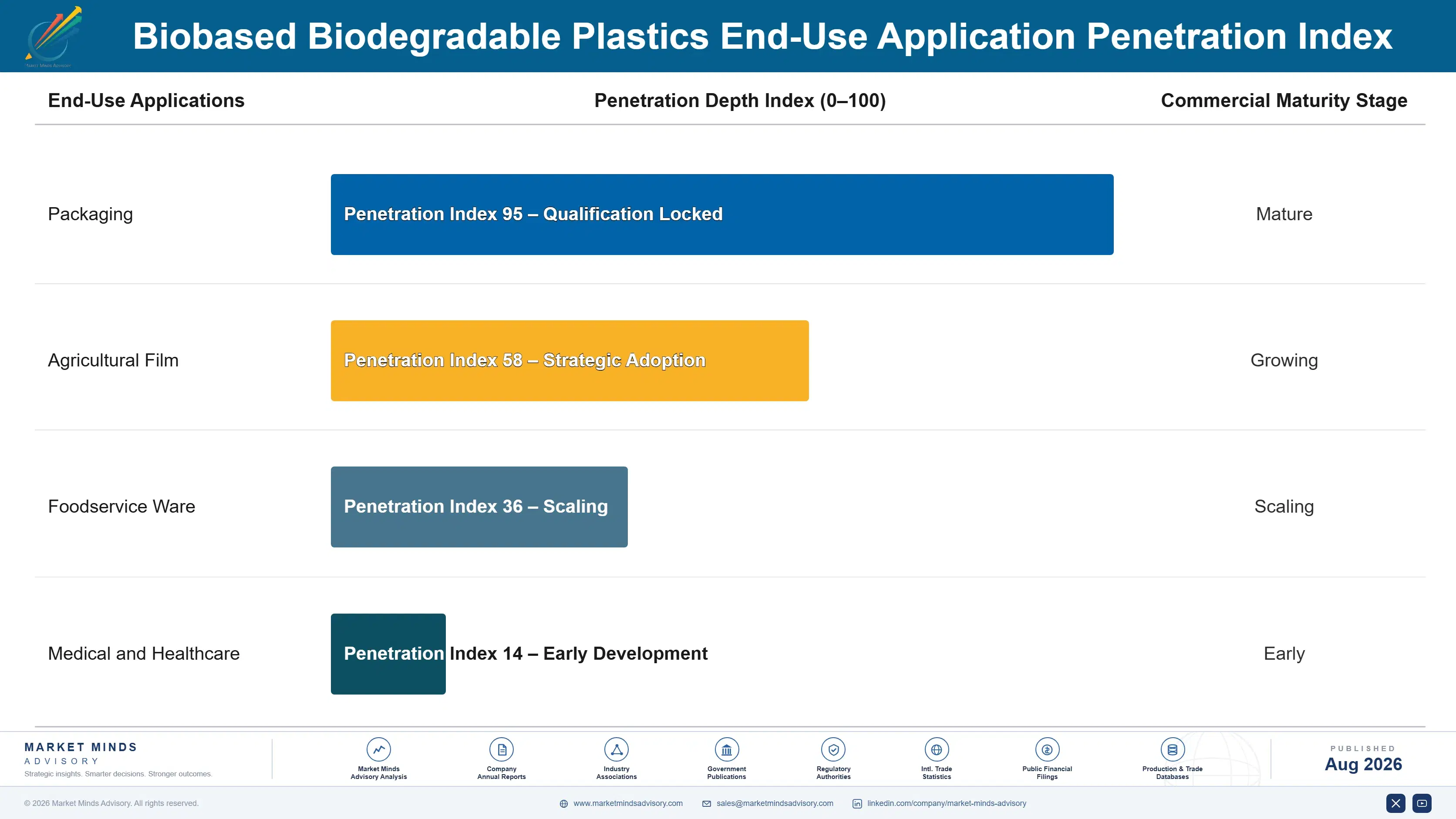
Packaging remains the largest application segment, driven by demand for sustainable alternatives in food and beverage, personal care, and e-commerce sectors. Agricultural applications, such as mulch films and plant pots, are witnessing rapid growth due to regulatory bans on conventional plastics. Consumer goods and textiles are emerging as high-potential segments, supported by innovations in fiber and fabric production. The automotive industry is also exploring biobased biodegradable plastics for interior components and lightweighting initiatives.

By Feedstock

  • Corn
    • Sugarcane Cassava Potato Algae
    • Others

Corn and sugarcane are the predominant feedstocks for biobased biodegradable plastics, offering high yields and established supply chains. Cassava and potato are gaining popularity in regions with abundant agricultural resources. Algae-based plastics represent a promising frontier, with potential for high productivity and minimal land use. The diversification of feedstock sources is enhancing supply security and reducing dependence on food crops, aligning with sustainability objectives.

By End-User

  • Food & Beverage
    • Retail Agriculture Healthcare Electronics
    • Others

The food & beverage sector is the primary end-user, leveraging biobased biodegradable plastics for packaging, utensils, and containers. Retailers are increasingly adopting sustainable packaging solutions to meet consumer expectations and regulatory requirements. The healthcare industry is exploring biobased materials for medical disposables and packaging, while electronics manufacturers are integrating biodegradable plastics into casings and components. The expanding end-user base is indicative of the market’s versatility and growth potential.

By Distribution Channel

  • Direct Sales
    • Distributors Online Retail
    • Specialty Stores

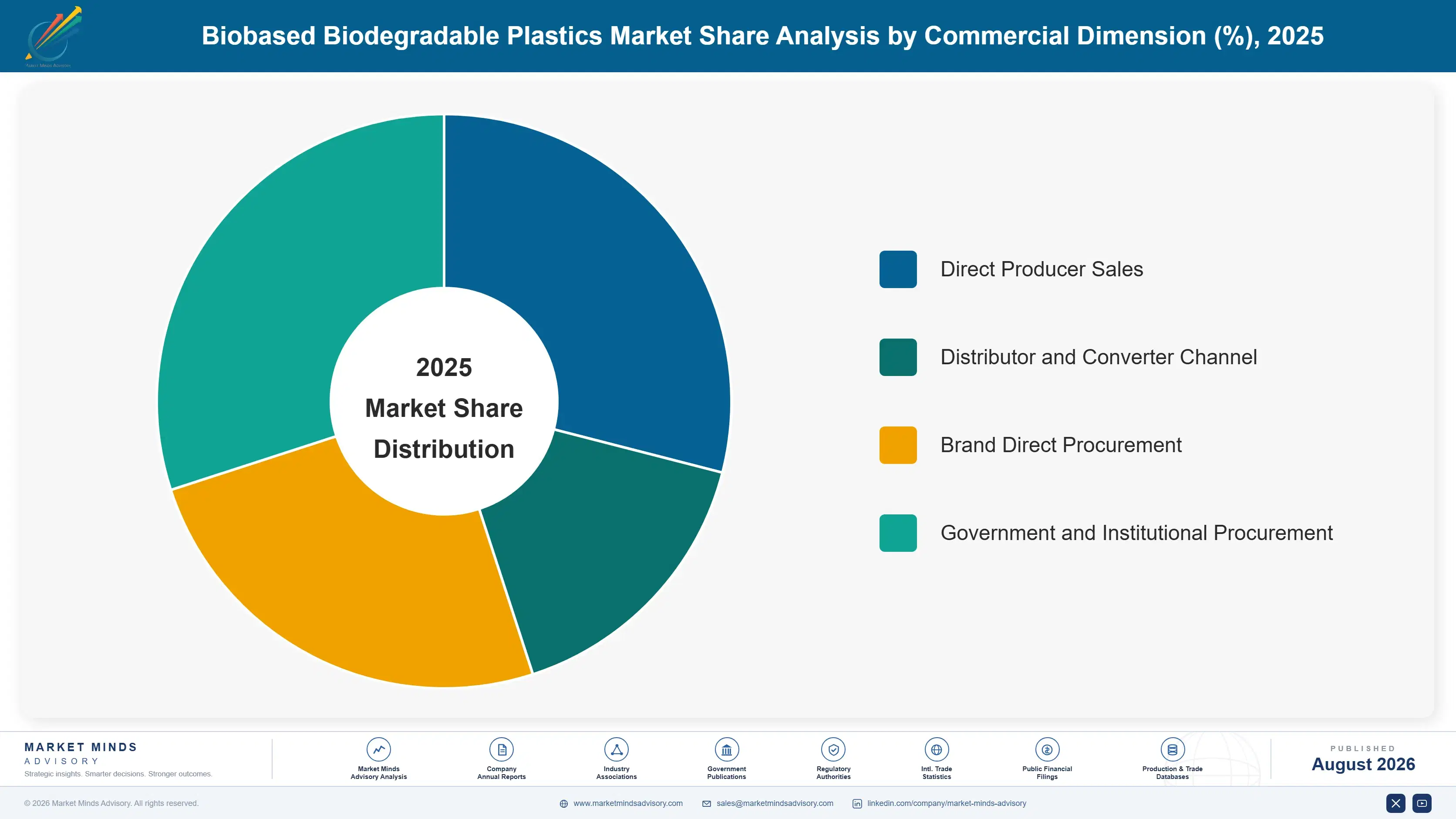
Direct sales and distributor channels dominate the market, facilitating large-scale procurement by industrial clients. Online retail is emerging as a significant channel, particularly for small and medium enterprises seeking customized solutions. Specialty stores cater to niche applications and environmentally conscious consumers. The evolution of distribution channels is enhancing market accessibility and supporting the proliferation of biobased biodegradable plastics across diverse geographies.

Biobased Biodegradable Plastics Market Distribution Channel

Growth Drivers and Opportunities in Biobased Biodegradable Plastics Market

  • Stringent Regulatory Frameworks and Environmental Policies

Governments worldwide are enacting stringent regulations to reduce plastic waste and promote the use of sustainable materials. Bans on single-use plastics, extended producer responsibility (EPR) schemes, and incentives for biodegradable alternatives are compelling manufacturers to transition towards biobased biodegradable plastics. These regulatory measures are creating a favorable environment for market growth, encouraging investment in research, production capacity, and supply chain development.

  • Rising Consumer Awareness and Corporate Sustainability Initiatives

Increasing consumer awareness of environmental issues is driving demand for eco-friendly products. Corporations are responding by integrating sustainability into their business strategies, adopting biobased biodegradable plastics in packaging, products, and operations. This shift is not only enhancing brand reputation but also aligning with global sustainability goals, such as the United Nations Sustainable Development Goals (SDGs). The convergence of consumer demand and corporate responsibility is unlocking new growth opportunities for market participants.

Emerging Opportunities for Biobased Biodegradable Plastics Market

  • Development of Advanced Biopolymers and Functional Materials

The emergence of advanced biopolymers with enhanced mechanical, thermal, and barrier properties is opening new application avenues. Functional materials, such as antimicrobial and oxygen-scavenging bioplastics, are being developed for specialized uses in food packaging and medical devices. These innovations are expected to drive differentiation and value creation, enabling manufacturers to address evolving market needs and regulatory requirements.

  • Expansion into Emerging Markets and Untapped Applications

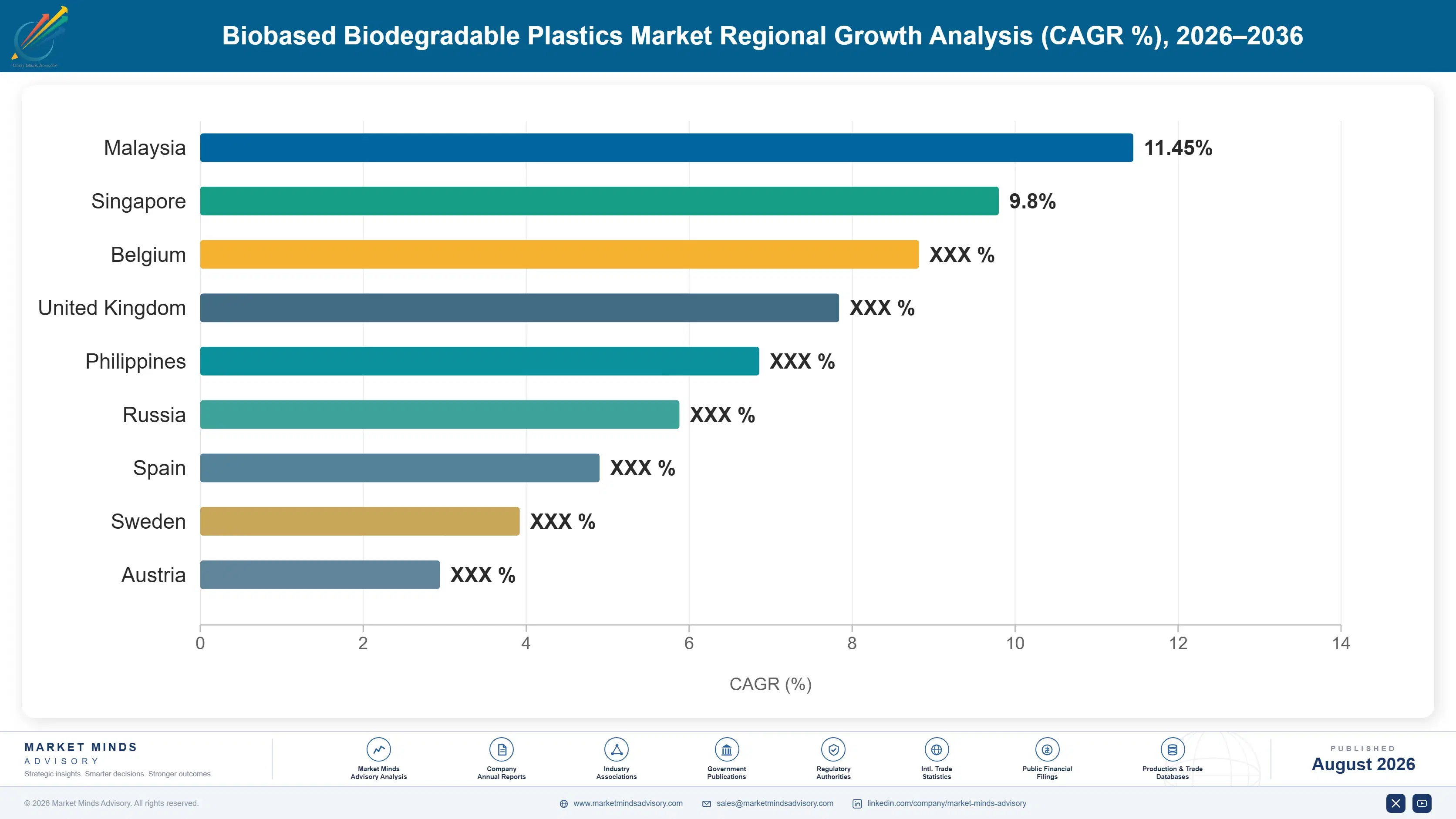
Emerging economies in Asia-Pacific, Latin America, and Africa present significant growth potential due to rising urbanization, industrialization, and environmental awareness. Market players are exploring untapped applications in agriculture, construction, and electronics, leveraging local feedstock availability and supportive policy frameworks. Strategic investments in these regions are expected to accelerate market penetration and diversify revenue streams.

Growth Restrain Factors and Challenges in Biobased Biodegradable Plastics Market

  • High Production Costs and Price Competitiveness

The production of biobased biodegradable plastics is often associated with higher costs compared to conventional plastics, primarily due to feedstock prices, processing complexities, and limited economies of scale. These cost differentials pose challenges in price-sensitive markets, where end-users may be reluctant to pay a premium for sustainable alternatives. Manufacturers are investing in process optimization, feedstock diversification, and scale-up initiatives to address cost barriers and enhance competitiveness.

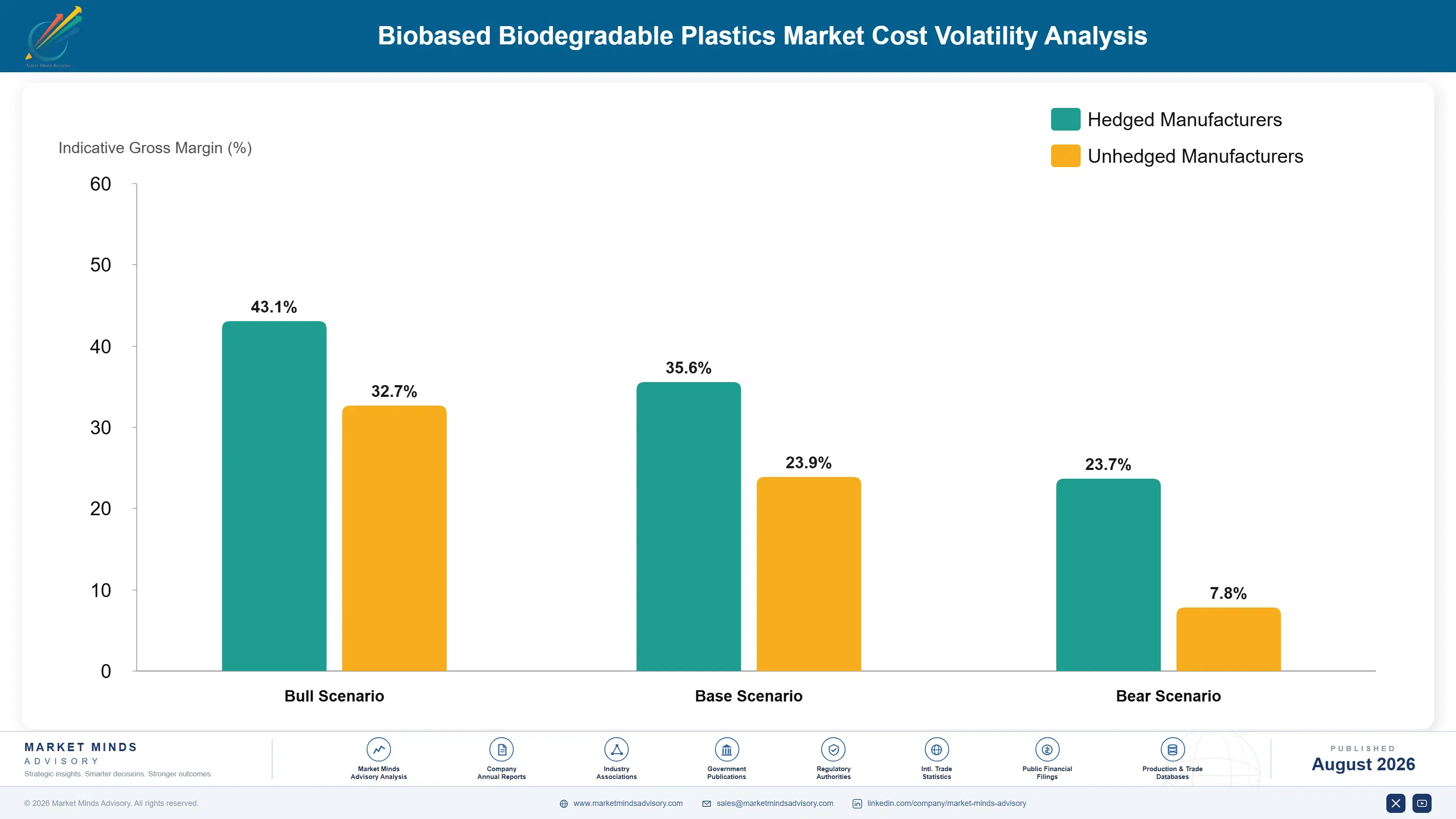
Additionally, fluctuations in raw material prices and supply chain disruptions can impact production economics. The reliance on agricultural feedstocks may also lead to competition with food production, raising concerns about food security and land use. Addressing these challenges requires coordinated efforts across the value chain, including investment in alternative feedstocks, technological innovation, and supportive policy measures.

  • Limited Infrastructure for Composting and Waste Management

The effectiveness of biobased biodegradable plastics in reducing environmental impact is contingent upon the availability of appropriate waste management infrastructure, such as industrial composting and anaerobic digestion facilities. In many regions, the lack of such infrastructure limits the end-of-life options for biodegradable plastics, leading to suboptimal disposal and environmental outcomes. This challenge is particularly pronounced in developing economies, where waste management systems are still evolving.

Furthermore, consumer confusion regarding labeling, compostability standards, and disposal practices can hinder the proper management of biodegradable plastics. Education and awareness campaigns, coupled with investments in waste management infrastructure, are essential to realize the full environmental benefits of biobased biodegradable plastics and support market growth.

Biobased Biodegradable Plastics Market Regional Analysis

RegionMarket Share (2025)Key Market Highlight
Asia-Pacific37%Rapid industrialization, government incentives, and strong demand from packaging and agriculture sectors.
North America24%Robust regulatory support, high consumer awareness, and significant R&D investments.
Europe28%Stringent environmental regulations, advanced waste management infrastructure, and strong presence of key players.
South America6%Growing adoption in packaging and agriculture, supported by local feedstock availability.
Middle East & Africa5%Emerging market with increasing focus on sustainability and investment in green technologies.

Asia-Pacific

Asia-Pacific leads the Biobased Biodegradable Plastics Market, driven by rapid industrialization, supportive government policies, and a burgeoning middle class with rising environmental consciousness. Countries such as China, Japan, and India are investing heavily in sustainable materials, with significant demand emanating from packaging, agriculture, and consumer goods sectors. The region’s abundant agricultural resources and expanding manufacturing base further enhance its competitive advantage.

North America

North America is characterized by robust regulatory frameworks, high consumer awareness, and a strong focus on innovation. The United States and Canada are at the forefront of biopolymer research and commercialization, supported by government funding and private sector investments. The region’s advanced waste management infrastructure and established supply chains facilitate the adoption of biobased biodegradable plastics across diverse applications.

Europe

Europe remains a key market, underpinned by stringent environmental regulations, such as the EU Single-Use Plastics Directive, and a well-developed circular economy ecosystem. The region boasts a strong presence of leading manufacturers and research institutions, driving continuous innovation and market expansion. Advanced waste management systems and widespread consumer acceptance further support the growth of biobased biodegradable plastics in Europe.

South America

South America is emerging as a promising market, with Brazil and Argentina leveraging their agricultural resources to produce biobased feedstocks. The adoption of biodegradable plastics is gaining momentum in packaging and agriculture, supported by government initiatives and growing environmental awareness. However, the region faces challenges related to infrastructure and market education, which are being addressed through targeted investments and partnerships.

Middle East & Africa

The Middle East & Africa region is at an early stage of market development, with increasing focus on sustainability and green technologies. Governments are introducing policies to reduce plastic waste and promote the use of biodegradable alternatives. Investments in local production and awareness campaigns are expected to drive gradual market growth, particularly in urban centers and high-consumption sectors.

Biobased Biodegradable Plastics Market Regional

Competition Landscape in Biobased Biodegradable Plastics Market

The Biobased Biodegradable Plastics Market is highly competitive, with a diverse mix of multinational corporations, regional players, and emerging startups. The competitive landscape is shaped by continuous innovation, strategic collaborations, and capacity expansions. Leading companies are investing in research and development to enhance product performance, reduce costs, and expand their application portfolio. Mergers, acquisitions, and joint ventures are common strategies to strengthen market presence and access new technologies. The market also witnesses intense competition in terms of pricing, quality, and sustainability credentials, with players vying for leadership in key end-use sectors.

Major Players:

  • BASF SE
  • NatureWorks LLC
  • Novamont S.p.A.
  • TotalEnergies Corbion
  • Mitsubishi Chemical Corporation
  • Danimer Scientific
  • FKuR Kunststoff GmbH
  • Biome Bioplastics
  • Plantic Technologies Limited
  • Green Dot Bioplastics
  • Carbiolice
  • Biotec GmbH & Co. KG
  • Synbra Technology BV
  • PTT MCC Biochem Co., Ltd.
  • Tianan Biologic Material Co., Ltd.
  • Zhejiang Hisun Biomaterials Co., Ltd.
  • Cardia Bioplastics
  • Bio-On S.p.A.
  • Trellis Earth Products, Inc.
  • Jiangsu Torise Biomaterials Co., Ltd.

Recent Developments in Biobased Biodegradable Plastics Market

  • In January 2024, NatureWorks LLC announced the expansion of its PLA production facility in Thailand, aiming to increase capacity by 30% to meet rising demand in Asia-Pacific.
  • In March 2024, BASF SE launched a new range of biodegradable mulch films targeting the agriculture sector in Europe and North America.
  • In November 2023, TotalEnergies Corbion introduced a high-heat resistant PLA grade for food packaging applications, enhancing product versatility.
  • In September 2023, Novamont S.p.A. partnered with a leading Italian retailer to roll out compostable shopping bags across 1,000 stores.
  • In May 2023, Danimer Scientific secured a multi-year supply agreement with a major global beverage company for biodegradable straws and lids.
  • In July 2023, Mitsubishi Chemical Corporation invested in a new R&D center focused on next-generation biopolymers and sustainable feedstocks.

FAQ for Biobased Biodegradable Plastics Market

  1. What is the projected market size of the Biobased Biodegradable Plastics Market by 2033?

The Biobased Biodegradable Plastics Market is expected to reach USD 23.1 billion by 2033, growing at a CAGR of 14.1% from 2026 to 2033.

  1. Which regions are expected to lead the Biobased Biodegradable Plastics Market during the forecast period?

Asia-Pacific, Europe, and North America are anticipated to be the leading regions, driven by regulatory support, consumer awareness, and significant investments in sustainable materials.

  1. What are the key growth drivers for the Biobased Biodegradable Plastics Market?

The primary growth drivers include stringent environmental regulations, rising consumer demand for sustainable products, technological advancements in biopolymer production, and increasing corporate sustainability initiatives.

  1. What challenges are faced by the Biobased Biodegradable Plastics Market?

Major challenges include high production costs, limited composting and waste management infrastructure, feedstock competition with food crops, and consumer confusion regarding disposal practices.

  1. Who are the major players in the Biobased Biodegradable Plastics Market?

Key players include BASF SE, NatureWorks LLC, Novamont S.p.A., TotalEnergies Corbion, Mitsubishi Chemical Corporation, Danimer Scientific, FKuR Kunststoff GmbH, Biome Bioplastics, and others, all of whom are actively investing in innovation and capacity expansion.

Contact us today to access the full report and propel your business forward.