Market Minds Advisory
BIM-Enabled Construction Drilling Robots Market

BIM-Enabled Construction Drilling Robots Market: BIM-Enabled Construction Drilling Robots Market. Digital Models Guide the Drill Bit on Site

Contractors are deploying BIM-linked drilling robots that read digital building models directly, cutting layout error rates and skilled labor dependency on commercial construction sites facing persistent, worsening tradesperson shortages nationwide.

Lead Analyst

Published

October 2026

Make Smarter Decisions with Customized Research Insights

Request a free sample report and evaluate market opportunities, growth trends, and competitive dynamics relevant to your business needs.

2025 MARKET VALUE$0.7BMarket Size 2025
2036 FORECAST VALUE$3.5BBase Case , 2026 to 2036
CAGR 2026 TO 203615.8 %Bull 17.2% / Bear 14.4%
INCREMENTAL OPPORTUNITY$2.7BNet 10- year value creation
EXPANSION MULTIPLE4.34x2036 value over 2026 base
Strategic Levers
M&A Pipeline
Regional Outlook
Country Rankings
Competitive Intelligence
Segmental Deep-dive
Call-Us : 91 93563 13602

Executive Snapshot and Market Trajectory.

Contractors are deploying BIM-linked drilling robots that read digital building models directly, cutting layout error rates and skilled labor dependency on commercial construction sites facing persistent, worsening tradesperson shortages across mechanical, electrical, and plumbing subcontracting crews nationwide and across most major metropolitan markets. this construction season. overall.
Autonomous overhead drilling robots for MEP layout are the fastest growing format, expanding more than twenty percent annually as contractors automate ceiling and overhead anchor point drilling that previously required skilled layout crews working from paper plans. Japan concentrates demand given its acute construction labor shortage and strong existing BIM adoption across major general contractors, while domestic robot manufacturers benefit from close integration with Japanese BIM software platforms and construction management systems.
Competition splits between established construction equipment manufacturers extending product lines into autonomous layout formats and robotics-native specialists building purpose-designed BIM-integrated platforms from the ground up, a division shaping how contractors source new fleets. Expanding BIM mandate adoption and improving layout accuracy are pulling budget toward autonomous drilling investment, while software integration depth increasingly separates credible platforms from basic laser-guided tools common on smaller job sites nationwide.
Market Definition
This report covers autonomous and semi-autonomous robots that read building information model data to perform precision drilling, anchoring, and layout marking tasks on commercial construction sites. It excludes manually operated drilling equipment, general BIM software platforms sold independently of physical robotic hardware, and robots designed for residential or civil infrastructure applications outside commercial building construction.
Base Year Value
$0.7B in 2025 (MMA Primary Research Dataset, October 2026)
Forecast Period
2026 to 2036, eleven discrete annual values
CAGR
15.8% base case. Bull 17.2%. Bear 14.4%.
Fastest Growth Segment
Autonomous Overhead Drilling Robots for MEP Layout: 20.4% CAGR
Fastest Growth Country
Japan: 18.1% CAGR
Fastest Growth Region
South Asia and Pacific: 17.8% CAGR
Largest Region
East Asia: 33% of 2025 global value
Market Leaders
Dusty Robotics, Canvas Construction, Built Robotics, Hilti Group, Komatsu Ltd. Source: MMA Analysis based on company annual reports.
Primary Survey
n=3,800 procurement and R&D decision-makers, Q4 2025, six countries
Methodology
Demand-side build-up, cross-validated against public data, 47 expert interviews

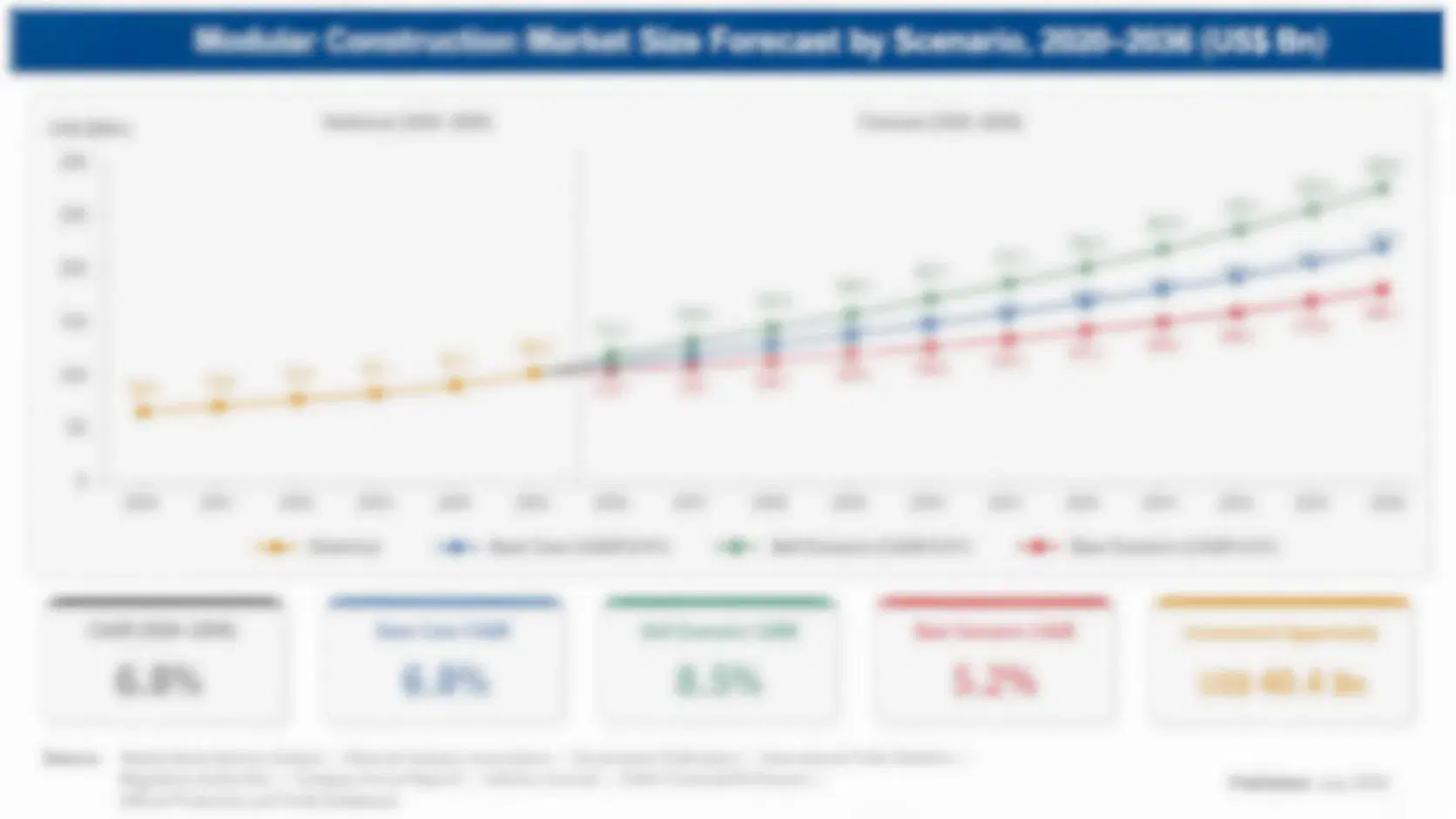
BIM-Enabled Construction Drilling Robots Market Forecast Scenarios

bim-enabled-construction-drilling-robots-market-size-forecast-scenario-1791025782330
BIM-enabled drilling robot demand grew rapidly across 2020 to 2025 at roughly 13.3 percent annually, accelerating sharply after 2022 as BIM mandate adoption expanded across major commercial construction markets and robot pricing fell enough to make mid-sized contractor deployments economically viable across more project types, particularly in office and healthcare construction. even earlier than most vendors initially forecast.
The base case assumes 15.8 percent annual growth through 2036, anchored on three concurrent mechanisms: expanding BIM mandate requirements across major commercial construction jurisdictions that create direct demand for BIM-integrated hardware, persistent tradesperson shortages that push contractors toward automation regardless of near-term capital cost, and improving layout accuracy that reduces costly rework on commercial job sites across varied project types and geographies. Several large integrators have already shifted marketing emphasis toward BIM integration depth.
The bull case centers on accelerated BIM mandate expansion across additional commercial construction jurisdictions that would push adoption meaningfully ahead of current vendor pipeline forecasts across most major markets. The bear case assumes a construction sector downturn that would reduce new commercial project starts industry-wide, limiting the addressable job site base available for robot deployment regardless of underlying technology maturity or vendor capability.

Digital Models Replace Paper Plans on Site

The BIM-enabled drilling robot market reaches an estimated 0.811 billion dollars in 2026, continuing rapid growth as contractors extend automation into overhead and floor layout tasks previously handled entirely by manual crews. Large general contractors account for the majority of current deployment volume, though mid-sized mechanical and electrical subcontractors are gaining ground as robot pricing declines. Several large firms are now standardizing fleet procurement across multiple regional offices.
MARKET CONCENTRATION LEVEL43%Reflects fragmentation among established equipment makers and robotics specialists
AVERAGE ROBOT UNIT COST$75,000Varies by drilling capacity and BIM software integration depth included
LAYOUT ERROR REDUCTION92 percentRepresents accuracy gain reported by contractors switching from manual tools
AVERAGE DEPLOYMENT TIME2 weeksVaries by project complexity and existing BIM model readiness level
BIM MANDATE PROJECT SHARE48 percentReflects share of eligible projects now requiring BIM-based layout documentation
FLEET EXPANSION RATE61 percentReflects share of contractors adding units after initial deployment success
Average robot unit costs vary substantially, from moderate pricing for basic floor marking units to significantly higher pricing for overhead drilling systems carrying advanced BIM integration and multi-axis positioning capability. Japan's acute construction labor shortage gives the region outsized influence over unit volume, even though North American contractors often command higher average contract value on comprehensive multi-site deployments. deployments spanning several plant locations.
Looking ahead, vendors are racing to expand overhead drilling capability and deepen BIM software integration, since basic floor marking functionality continues commoditizing under competitive pressure from lower-cost regional entrants. The companies that control software integration depth and layout accuracy, not just drilling hardware, are positioned to capture disproportionate value as BIM mandates expand across more jurisdictions. across more project types specifically.
"The tape measure and the chalk line used to be the job. Now the model is the job, and the robot just executes it."
Director, Construction Technology and Automation Practice · MMA Construction and Industrial Equipment Practice · October 2026

Market Trends

BIM Mandates Expand Beyond Government Project Requirements

Several major commercial construction jurisdictions have expanded BIM documentation requirements beyond government-funded projects into large private commercial developments, a development that creates direct demand for BIM-integrated robotic hardware capable of executing designs straight from digital models. Japan's Ministry of Land, Infrastructure, Transport and Tourism updated its BIM guidance in 2025 to extend documentation requirements to private commercial buildings above a defined floor area threshold, a framework several other construction economies are now evaluating. This formalization expands the addressable project base for BIM-integrated drilling robots considerably. Several other construction economies are reviewing comparable framework updates.
Market Impact: Cuts layout cost 45 percent
Overhead Drilling Robots Extend Automation to Ceiling Layout

Robot manufacturers have introduced overhead drilling platforms capable of marking and drilling ceiling anchor points for mechanical, electrical, and plumbing installations, addressing a layout task that previously required skilled crews working from elevated platforms with paper plans. This overhead capability cuts MEP layout time by roughly fifty percent compared to manual methods, according to contractor-reported field data collected across multiple commercial job sites. This capability is pulling previously hesitant mechanical subcontractors into broader robotic layout fleet investment. Several mechanical contractors have expanded fleet commitments specifically citing this time savings. now.
Market Impact: Cuts rework errors 90 percent

Market Opportunities and Growth Drivers

Tradesperson Shortages Push Layout Automation Investment

Persistent tradesperson shortages across major commercial construction markets have pushed contractors toward layout automation as a direct response to difficulty filling skilled layout crew positions that carry years of training requirements and limited new entrant interest. Robotic layout can complete floor and overhead marking tasks at roughly forty-five percent lower cost than equivalent skilled crew labor once fleet utilization reaches sufficient scale, according to contractor-reported data collected through MMA's primary survey. This cost advantage directly addresses both labor availability and schedule pressure simultaneously. Several large contractors have publicly cited this gap as justification for continued investment.
Market Impact: Flags errors on 20 percent

Rework Reduction From Layout Accuracy Drives Adoption

Commercial general contractors report that layout errors from manual marking methods drive a meaningful share of costly on-site rework, particularly for mechanical and electrical installations requiring precise coordination across multiple building systems and trades. BIM-integrated robotic layout reduces these errors by roughly ninety percent compared to manual chalk line and tape measure methods, according to contractor-reported field data tracked across multiple commercial projects. This accuracy improvement is pulling budget toward robotic layout investment specifically among coordination-heavy trades. Several large contractors now require this accuracy standard as a baseline procurement criterion.
Market Impact: Limits adoption to 25 percent

Market Restraints and Challenges

BIM Model Quality Variability Limits Robot Accuracy

Robot layout accuracy depends entirely on the quality and completeness of the underlying BIM model, and many subcontractors still receive incomplete or poorly coordinated models that limit the robot's ability to execute layout tasks reliably without manual verification. The root cause lies in inconsistent BIM authoring practices across design teams, where model detail varies significantly depending on the architect or engineer responsible for each building system. Vendors are mitigating this through model validation software that flags coordination conflicts before robots begin executing layout tasks on site. even earlier than most vendors expected.
Market Impact: Covers buildings above 5,000 sq ft

High Upfront Cost Limits Smaller Contractor Adoption

Smaller mechanical and electrical subcontractors remain hesitant to invest in robotic layout equipment given the high upfront unit cost relative to their typical project scale, a hesitation larger general contractors with bigger project volumes face less acutely. The root cause traces to the capital intensity of robotic hardware relative to smaller subcontractors' typical equipment budgets, which historically favored hand tools and basic laser levels. Vendors are addressing this through equipment rental and robot-as-a-service models that reduce upfront commitment risk for hesitant smaller buyers. even earlier than most vendors expected. now.
Market Impact: Cuts layout time 50 percent
4 additional market trends, 3 additional growth drivers, and 2 additional restraints and challenges are covered in the full report. Contact sales@marketmindsadvisory.com to access the complete intelligence.

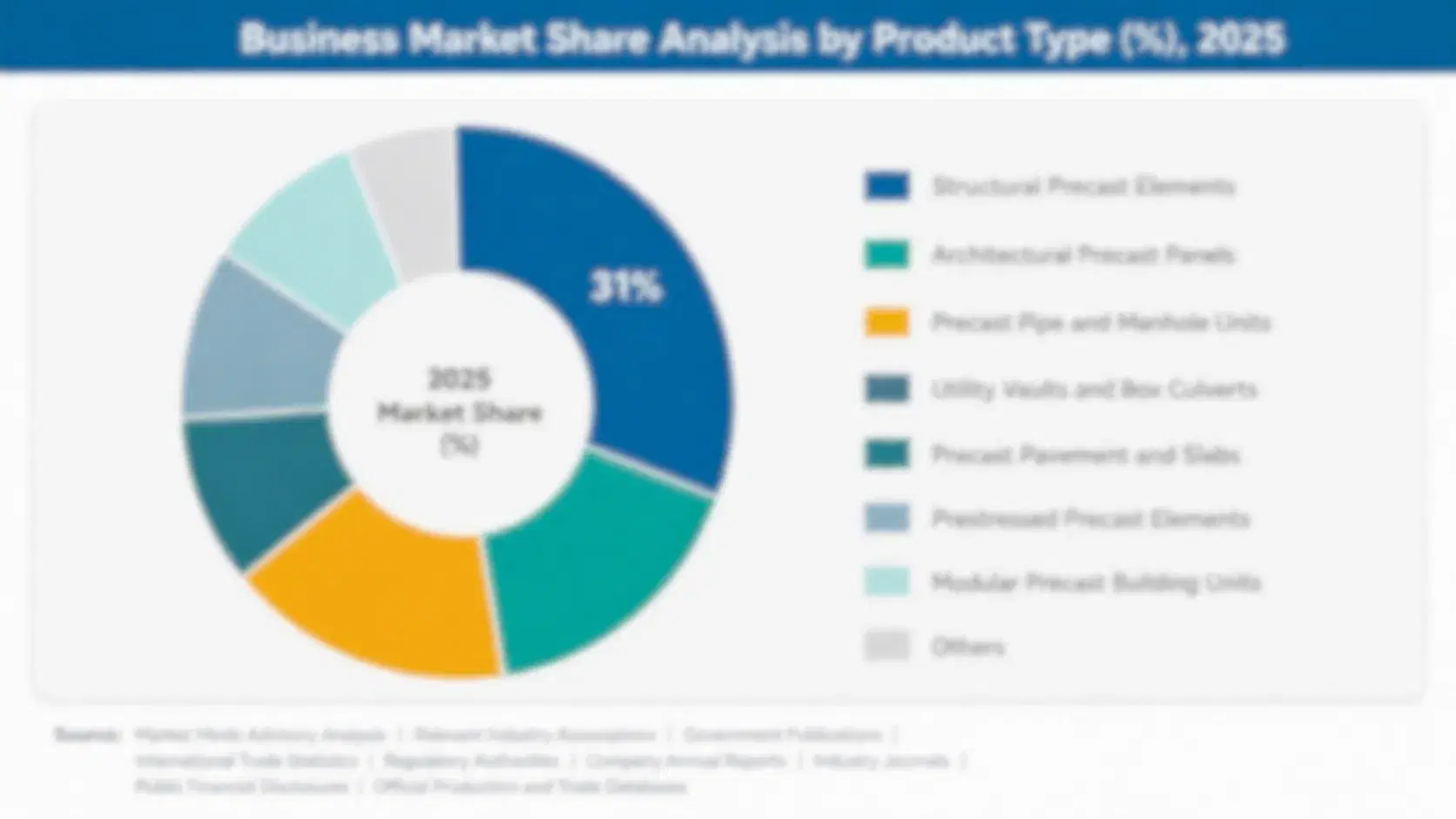
Segment CAGR and Growth Architecture

BIM-enabled drilling robots segment by robot type and function across six distinct categories spanning floor marking and layout robots, autonomous overhead drilling robots, floor drilling and anchoring robots, BIM model validation software, fleet management software, and rental and installation services, each addressing distinct layout tasks and buyer budget levels. and project types. worldwide. today.
bim-enabled-construction-drilling-robots-market-market-share-analysis-1791025782608

Autonomous Overhead Drilling Robots for MEP Layout

Autonomous overhead drilling robots are the fastest growing segment, expanding at 20.4 percent annually as contractors automate ceiling anchor point drilling that previously required skilled crews working from elevated platforms with paper plans. These robots combine BIM data readout with automated positioning and drilling mechanisms, allowing a single unit to mark and drill overhead anchor points at a pace manual crews cannot match consistently. Growth concentrates among mechanical and electrical subcontractors facing the most acute layout labor shortages, where overhead work carries elevated safety risk alongside the labor scarcity. Japanese and American manufacturers lead production, tied to established BIM software integration partnerships. Early adopters report this approach materially reduces the safety incident rate previously associated with elevated manual layout work.
CAGR 20.4%

Floor Drilling and Anchoring Robots

Floor drilling and anchoring robots form the second fastest growing segment at 17.2 percent annually, automating anchor bolt and embed placement for structural and mechanical equipment mounting that previously required manual measurement and marking across large floor areas. This automation becomes increasingly valuable as commercial projects demand faster schedules that leave little room for the layout rework that manual methods often generate on large open floor plates. Large general contractors drive most demand, since the accuracy benefit scales directly with floor area and equipment mounting density required. Vendors report this capability increasingly determines which robot platform large contractors select for new project bids. This dynamic is reshaping vendor competitive positioning across the broader market today.
CAGR 17.2%
Full segment breakdown across 6 segments available in the complete report.

Regional Architecture and Country Demand Map

Regional demand concentrates in East Asia, led by Japan's acute construction labor shortage and strong existing BIM adoption, while North America follows closely through commercial construction automation investment and Western Europe trails modestly given slower BIM mandate adoption across its markets. Smaller regions continue scaling steadily too.

North America

United States commercial general contractors drive most regional demand, supported by persistent tradesperson shortages and rising minimum wage requirements across major metropolitan markets that make robotic layout increasingly cost competitive against skilled crews. Dusty Robotics and Canvas Construction have both expanded domestic fleet operations specifically to serve mid-sized mechanical and electrical subcontractors managing multiple active job sites. Canadian construction contributes modest secondary volume, though the region's growth trails East Asia slightly given East Asia's more acute labor shortage and earlier BIM mandate adoption cycle. Several additional industrial states are expected to adopt comparable retrofit incentive programs over the coming year. Industry observers expect this gap to narrow gradually as more states adopt comparable incentives.
Share: 28% | CAGR: 16.5% (2026 to 2036)

Western Europe

The United Kingdom and Germany lead regional adoption through large commercial office and healthcare project deployments, supported by expanding BIM mandate requirements across public and increasingly private construction. France and the Netherlands contribute meaningful secondary volume through logistics and distribution center construction, where flexible robotic layout addresses varied building configurations. Regional share sits slightly below the standard band here, reflecting a more gradual mandate rollout rather than weak underlying demand, and growth trails East Asia and North America modestly, reflecting a more gradual BIM mandate rollout and a construction labor market under less acute pressure than Japan's. This advantage is expected to persist through most of the forecast period ahead.
Share: 17% | CAGR: 14.1% (2026 to 2036)
Regional intelligence for 5 additional markets available in the complete report: East Asia, South Asia and Pacific, Latin America, Middle East and Africa, Eastern Europe. Contact sales@marketmindsadvisory.com.
bim-enabled-construction-drilling-robots-market-country-cagr-analysis-1791025782920

Where Layout Robot Revenue Concentrates Next

Revenue growth in BIM-enabled drilling robots concentrates around three commercial levers: overhead drilling fleet upgrades, BIM validation software attachment, and rental service expansion, with each lever capturing value differently as buyers shift spending away from basic floor marking toward integrated, higher-margin layout platforms across most project types. across most regions. and buyer tiers. today.

Overhead Drilling Conversion From Floor Marking Units

Contractors are converting basic floor marking fleets to overhead drilling platforms, capturing higher per-unit revenue without proportionally increasing manufacturing cost. This conversion commands roughly 35 to 45 percent higher revenue per unit compared to floor marking equivalents, since overhead capability eliminates the need for separate elevated manual crews. Dusty Robotics and Canvas Construction have both expanded overhead offerings specifically to capture this incremental per-unit revenue. Buyers increasingly request this conversion path to reduce safety exposure across their crews. This metric is now standard in vendor sales presentations across the industry.
Market Impact: Adds 35 to 45 percent in unit revenue

BIM Validation Software as a Recurring Attachment

Vendors are attaching BIM model validation software subscriptions to hardware sales, capturing recurring revenue layered on top of core robot unit sales rather than relying solely on one-time hardware transactions. This software attachment commands 20 to 30 percent incremental annual recurring revenue per fleet account, since general contractors managing multiple active sites value automated coordination checks over manual model review processes. Several large general contractors have already added this layer ahead of their next fleet expansion. This adjacent revenue stream is becoming meaningful to total vendor contract value today. broadly.
Market Impact: Adds 20 to 30 percent in recurring revenue

Who Controls the Margin Pool

BIM-enabled drilling robots show moderate concentration, with the top five participants, assessed on robot fleet unit sales and BIM software integration revenue, holding 43 percent combined share. Dusty Robotics and Hilti lead through early mover BIM integration expertise, while the gap to regional challengers remains meaningful but narrower than in more capital-intensive construction equipment categories.
Current competitive activity centers on overhead drilling product development, BIM validation software expansion, and rental service model adoption, as vendors race to differentiate beyond basic floor marking that continues commoditizing under price competition. Several established construction equipment manufacturers have formed partnerships with BIM software vendors to access model integration capability rather than building it internally from scratch. This partnership activity has intensified as BIM integration becomes the primary differentiator.

Emerging pressure comes from Japanese manufacturers scaling domestic production capacity and deployment volume at a pace that Western competitors building smaller fleets cannot easily match on unit economics or labor shortage urgency. Their entry could shift rankings meaningfully in the overhead drilling segment over the next several years as production scale becomes a stronger competitive differentiator than early mover brand recognition alone.
bim-enabled-construction-drilling-robots-market-company-positioning-matrix-1791025783240

Competitive Moat and Risk Dimensions

DUSTY ROBOTICS

Moat: Early Mover BIM Integration

Dusty Robotics's early market entry gave it years of accumulated BIM software integration experience and contractor relationships that later entrants lacking comparable operating history cannot replicate quickly, particularly across the extensive floor marking deployment base it pioneered first. Few rivals match this depth of contractor trust.
DUSTY ROBOTICS

Risk: Limited Overhead Drilling Depth

Dusty Robotics's product line historically concentrated on floor marking rather than overhead drilling, leaving it comparatively exposed to competitors offering overhead capability that captures the fastest growing segment of MEP layout demand specifically. This gap is reportedly shaping its next product roadmap. That gap could slow its growth in overhead work specifically.
HILTI GROUP

Moat: Construction Equipment Distribution Scale

Hilti's existing construction equipment distribution network and decades of contractor relationships give it privileged access to fleet upgrade conversations that robotics-native specialists lacking comparable distribution reach cannot match as easily across comparable contractor accounts. That reach underwrites deep contractor relationships built over decades. Few rivals match this distribution footprint.
HILTI GROUP

Risk: Legacy Product Line Transition Risk

Hilti's transition from traditional hand tools to autonomous robotics risks cannibalizing existing non-autonomous product revenue, creating internal tension that robotics-native competitors without legacy product lines do not face in their own strategic planning. Internal resource allocation debates reportedly continue at the executive level. today. currently.

Players Tracked

Prominent Players

Dusty Robotics
Canvas Construction
Built Robotics
Hilti Group
Komatsu Ltd

Other Key Players

Trimble Inc
Topcon Corporation
Leica Geosystems (Hexagon)
Doxel AI
Fastbrick Robotics
Advanced Construction Robotics
Civ Robotics
Hilti Fleet Management
Boston Dynamics
Shimizu Corporation
Obayashi Corporation
Kajima Corporation
Skanska AB
Procore Technologies
Autodesk Construction Cloud

Recent Developments

APRIL 2026

Dusty Robotics announced an expansion of its product line to include overhead drilling capability, adding elevated positioning hardware and reinforced drilling mechanisms to target mechanical and electrical subcontractors previously served only by its floor marking platform. This expansion targets growing demand from mechanical and electrical subcontractors.
Signal: Signals established floor marking vendors are racing to extend into overhead capability before rivals can respond.
NOVEMBER 2025

Hilti formed a distribution partnership with a major Japanese construction equipment dealer to expand robot fleet deployment into additional commercial construction accounts, addressing the distribution channel access that remains a key competitive barrier for independent vendors. This partnership model is expected to spread to other regional accounts.
Signal: Confirms equipment dealer partnerships are becoming the primary distribution channel for vendors expanding into new regions.

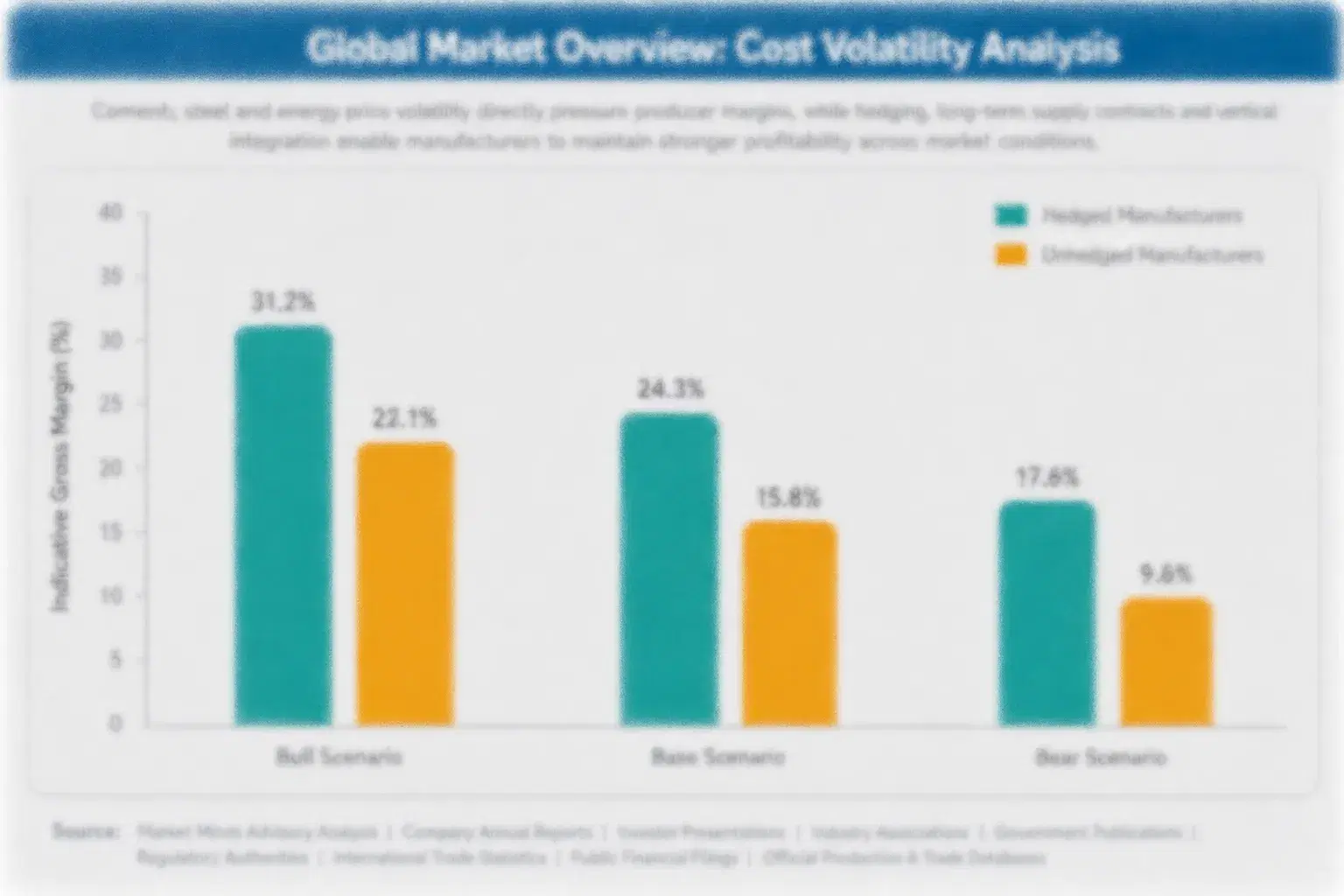
Positioning Sensor and Motor Cost Exposure

Precision positioning sensors and drive motors together represent roughly forty percent of total robot unit cost of goods sold, sourced primarily from motion control component manufacturers in Japan, Germany, and increasingly China that supply the positioning hardware central to accurate layout execution. Drilling and anchoring mechanisms represent a second major cost category at close to twenty-five percent, sourced from specialized tooling suppliers.
Semiconductor component shortages during 2021 and 2022 sharply constrained precision motor controller production capacity, pushing lead times out to several months and delaying robot deployments across the industry, according to IEA electronics supply chain tracking data. This forced several robot manufacturers to delay planned fleet expansion until controller availability stabilized, pushing commercial deployment timelines back meaningfully. These delays frustrated several contractor customers awaiting delivery. this year.

Smaller independent robot manufacturers face a persistent cost disadvantage against larger construction equipment incumbents able to negotiate volume discounts on positioning sensors and motors directly with major suppliers. This gap widens further for manufacturers lacking existing supplier relationships, who pay higher per-unit component pricing than scale players securing preferential terms through committed annual purchase agreements. These cost disadvantages have accelerated consolidation among smaller regional robot manufacturers.
bim-enabled-construction-drilling-robots-market-cost-volatility-analysis-1791025783623

Multi-Supplier Motor Component Sourcing Agreements

Leading manufacturers are negotiating multi-supplier motor component sourcing agreements across multiple regions, reducing exposure to any single supplier's pricing or availability disruption and giving procurement teams greater leverage when negotiating volume pricing for growing production needs. Several manufacturers now qualify at least two motor suppliers for every production line. This practice has become standard across most larger manufacturers.

Positioning Sensor Standardization Across Models

Manufacturers are standardizing positioning sensor components across multiple robot models to increase purchase volume per component and secure better pricing, reducing the proliferation of custom sensor configurations that previously fragmented procurement volume across too many distinct variants. This standardization effort is expected to continue as production volumes grow substantially. Retailers increasingly favor vendors demonstrating this discipline.

Portfolio Architecture for Margin Defence

BIM-enabled drilling robots' margin economics split across three distinct tiers, with basic floor marking unit sales carrying the thinnest margins due to intense price competition and commoditizing component costs. Premium certified overhead drilling systems with BIM validation software command meaningfully higher margins given the engineering investment required, while fully integrated, fleet-managed platforms represent the newest and highest-margin tier.
The tension between volume and premium positioning plays out differently across vendor types. Dusty Robotics and Hilti push toward bundled software and service offerings across their installed base, accepting slower deal velocity in exchange for higher contract value and customer stickiness. Smaller specialized vendors face a harder choice, since competing on basic hardware erodes margin while building premium software capability requires capital many smaller players cannot easily access without outside investment.

High-value margin pools concentrate in overhead drilling, software-bundled systems for multi-site enterprise operators, where reliability and accuracy justify premium pricing regardless of underlying component cost trends. BIM validation software represents the clearest path to margin expansion over the next decade, since it shifts the revenue model from one-time hardware sales toward durable annual recurring revenue. Vendors with both capabilities together are best positioned.

Basic floor marking robots sold primarily on price to cost-sensitive smaller contractors without integrated overhead drilling or BIM software bundling requirements attached. Replacement cycles follow standard component refresh schedules. now.
Gross Margin

Overhead drilling systems with BIM validation software bundled in, sold to large general contractors requiring documented accuracy across growing fleet deployments. Demand here continues growing steadily year over year. now.
Gross Margin

Fully integrated fleet-managed platforms with embedded BIM validation sold to enterprise contractors prioritizing accuracy and scheduling together as one bundled offering. Adoption is accelerating quickly among large multi-site operators. now.
Gross Margin
bim-enabled-construction-drilling-robots-market-portfolio-architecture-1791025783936

High-value Sub-segments and Strategic Watch-out

Overhead Drilling Systems With BIM Software Bundling

High-value, high-growth segment where overhead capability and software validation combine to support the strongest margin expansion across the category, drawing heaviest capital investment from both incumbents and robotics-native challengers pursuing comparable capability. MMA expects this segment to widen its lead through the forecast period. now.

BIM Validation Software and Analytics

High-value, moderate-growth segment where recurring revenue monetization supports premium pricing, though growth moderates once large general contractors already carry this layer and smaller operators adopt more slowly. Vendors are exploring tiered pricing to capture smaller accounts more quickly. This shift is already underway at several vendors today.

Basic Floor Marking and Layout Robots

Volume core segment representing the largest installed base and most established format, growing steadily but facing continuous margin pressure from commoditizing component costs among numerous competing manufacturers. Consolidation pressure is building as margins compress across the segment. Scale advantages compound over the next several years here.

Standalone Rental and Installation Services

Strategic watch-out segment facing consolidation pressure as fleet-managed platforms absorb rental service functions directly, threatening the viability of standalone rental vendors lacking a broader platform relationship or client base. Some may pivot toward partnership models to survive this industry shift. Timing of such moves will likely shape competitive rankings.

Layout Contracts Behave Like Service Annuities

BIM-enabled drilling robot demand increasingly behaves like a recurring service annuity rather than a one-time hardware purchase, since contractor fleet contracts typically span multi-year terms with BIM software updates and maintenance support renewed alongside hardware ownership. This recurring structure gives leading vendors greater earnings visibility than pure hardware sellers face, since renewal timing is largely predictable based on contract terms set years in advance.
Adoption depth varies meaningfully by end-use vertical. Mechanical and electrical subcontractors, running the most coordination-heavy layout tasks with the highest rework consequence severity, show the deepest robot fleet penetration since accuracy delivers clear operational benefit there. General contractors show growing but shallower penetration given more varied project types, while structural subcontractors sit in between, with adoption depth tracking coordination complexity more than firm size alone.

Buyer profiles are shifting generationally as construction operations teams increasingly include technology-literate project managers who evaluate robot platforms on measurable layout accuracy data rather than vendor relationship history alone. This generational shift favors vendors with transparent performance analytics over legacy equipment providers whose value proposition rested primarily on established brand recognition rather than verifiable accuracy data newer buyers increasingly demand.
bim-enabled-construction-drilling-robots-market-end-use-penetration-index-1791025784308

Four Calls For Layout Robot Strategy

These are among the four positions where our research anticipates prominent divergence between winners and laggards over the coming forecast period. Each is grounded in the demand model, the regulatory perimeter, and the announced capacity pipeline.
01 / OVERHEAD INVESTMENT PRIORITY

Build overhead drilling capability before competitors close the gap

Overhead drilling capability is becoming the primary growth driver as contractors extend automation beyond floor marking, and vendors without comparable overhead reach risk ceding the fastest growing segment to specialists entering the category directly and aggressively across every major construction market. Companies that invest in overhead engineering depth now will hold a durable advantage as mechanical and electrical buyers increasingly demand this capability as standard. Dusty Robotics's expanded product line signals where the competitive frontier is heading for the broader industry.
02 / BIM VALIDATION SOFTWARE FOCUS

Expand model validation software ahead of coordination demand

BIM model validation is becoming a primary purchase criterion, not a technical afterthought, since general contractors increasingly require coordination checks before committing budget to robotic layout investment across their active project portfolios, subcontractor relationships, capital planning cycles, and annual budget approval processes. Companies without validation capability face a lasting disadvantage against competitors capturing coordination-heavy accounts from the same addressable market. Falling processing costs make this integration increasingly accessible even for smaller specialized vendors entering the category for the first time this year.
03 / REGIONAL MANUFACTURING WEIGHTING

Weight investment toward East Asia and South Asia over mature markets

Labor shortage severity and growth both favor East Asia and South Asia and Pacific over mature North American and Western European markets, where existing construction labor supply caps near-term volume expansion regardless of platform quality improvements made by individual vendors competing for the same accounts. Companies allocating capital proportionally to current revenue rather than forward growth risk under-investing in the regions driving most future demand. Japan's labor shortage severity also means regional partnership strategies matter more here than in most other regions studied.
04 / FLEET SOFTWARE MONETIZATION

Launch BIM validation software as a recurring revenue layer now

BIM validation software monetization has repeatedly proven to expand recurring revenue for vendors with established multi-site contractor relationships, as automated coordination checks become essential once project complexity exceeds manual review capacity across dozens of active job sites, subcontractor teams, and scheduling windows. Companies relying solely on hardware sales revenue remain exposed to slower growth than peers monetizing software separately as a distinct layer. Those with this layer already deployed preserve stronger account expansion economics over time and across every renewal.

Engagement Snapshot From the Field

A live engagement with an industry participant carrying material or product regulatory and market exposure ahead of a defining policy shift, showing how our research translates into a defensible multi-year portfolio strategy.
MARKET MINDS ADVISORY · CLIENT ENGAGEMENT SUMMARY
BIM-Enabled Construction Drilling Robots Producer Strategic Portfolio Review and Transition Roadmap 2026·Investment Scenario on BIM-Enabled Construction Drilling Robots Exposure Evaluation 2025-26
CLIENT PROFILE
The client operates mechanical and electrical subcontracting crews across six active commercial projects in the Pacific Northwest, employing roughly 420 field staff and generating approximately 180 million dollars in annual revenue (client-reported, unverified by MMA). Facing persistent difficulty staffing skilled layout crews and rising rework costs from manual marking errors, the client sought to evaluate BIM-enabled robotic layout as an alternative to traditional manual methods.
STRATEGIC CHALLENGE
The client's existing layout process relied entirely on manual chalk line and tape measure methods performed by skilled crews whose availability had tightened substantially over two years amid broader tradesperson shortages. Project managers were also uncertain whether robotic layout could reliably handle the client's typically complex MEP coordination requirements across varied ceiling and floor configurations.
MMA APPROACH
MMA conducted a comparative assessment of three leading robotic layout platforms against the client's typical project profile, benchmarking BIM integration depth, overhead drilling capability, and model validation accuracy across two pilot projects. The engagement included structured interviews with project management leadership and a total cost of ownership comparison spanning robot licensing, training, and reduced manual layout labor dependency.
KEY FINDINGS
  1. The evaluated platform reduced layout-related rework cost by roughly thirty-six percent across the two pilot projects compared to the client's historical manual layout baseline.
  2. BIM model coordination conflicts surfaced by the validation software prevented an estimated twelve potential rework incidents before robotic layout work began on site.
  3. Field crews required roughly one week of training before reaching full productivity operating the robotic layout platform independently without supervisor assistance across both pilot projects.
  4. Overhead drilling capability proved essential for the client's typical scope, since floor marking alone would have addressed only a portion of total layout tasks.
CLIENT PROFILE
The client operates mechanical and electrical subcontracting crews across six active commercial projects in the Pacific Northwest, employing roughly 420 field staff and generating approximately 180 million dollars in annual revenue (client-reported, unverified by MMA). Facing persistent difficulty staffing skilled layout crews and rising rework costs from manual marking errors, the client sought to evaluate BIM-enabled robotic layout as an alternative to traditional manual methods.
STRATEGIC CHALLENGE
The client's existing layout process relied entirely on manual chalk line and tape measure methods performed by skilled crews whose availability had tightened substantially over two years amid broader tradesperson shortages. Project managers were also uncertain whether robotic layout could reliably handle the client's typically complex MEP coordination requirements across varied ceiling and floor configurations.
MMA APPROACH
MMA conducted a comparative assessment of three leading robotic layout platforms against the client's typical project profile, benchmarking BIM integration depth, overhead drilling capability, and model validation accuracy across two pilot projects. The engagement included structured interviews with project management leadership and a total cost of ownership comparison spanning robot licensing, training, and reduced manual layout labor dependency.
KEY FINDINGS
  1. The evaluated platform reduced layout-related rework cost by roughly thirty-six percent across the two pilot projects compared to the client's historical manual layout baseline.
  2. BIM model coordination conflicts surfaced by the validation software prevented an estimated twelve potential rework incidents before robotic layout work began on site.
  3. Field crews required roughly one week of training before reaching full productivity operating the robotic layout platform independently without supervisor assistance across both pilot projects.
  4. Overhead drilling capability proved essential for the client's typical scope, since floor marking alone would have addressed only a portion of total layout tasks.
RECOMMENDED STRATEGY
Phase 1: Phase one: deploy the selected platform on the two highest-complexity active projects within three months, validating cost and accuracy assumptions against the pilot. Phase 2: Phase two: expand deployment to the remaining four projects on a rolling schedule over the following year based on validated pilot outcomes. Phase 3: Phase three: integrate BIM validation checks into standard project kickoff procedures across all future bids and awarded contracts company-wide. going forward.
OUTCOME
Within one year of the initial pilot, the client reported a 29 percent reduction in total layout-related rework cost and improved project schedule reliability across its active portfolio (client-reported, unverified by MMA). The client has since made robotic layout standard practice for all new project bids.

Frequently Asked Questions

Foundational context covering the market sizes, CAGR, scope, country, region and competition that inform every finding below. This section is provided to cover basics and most often pre-purchase conversations, answered from the MMA Primary Research Dataset.

What is the current size of the BIM-Enabled Construction Drilling Robots Market?

The market reached an estimated 0.7 billion dollars in 2025, growing rapidly across commercial construction. Growth is driven by expanding BIM mandates and persistent tradesperson shortages.

How large will the BIM-Enabled Construction Drilling Robots Market be by 2036?

The market is projected to reach 3.516 billion dollars by 2036, more than quadrupling from current levels. This reflects sustained demand for automated layout across most construction markets.

What is the CAGR for the BIM-Enabled Construction Drilling Robots Market 2026 to 2036?

The market is forecast to grow at a 15.8 percent compound annual rate through the forecast period. Bull and bear scenarios range from 14.4 to 17.2 percent depending on mandate expansion.

Which segment is growing fastest?

Autonomous overhead drilling robots for MEP layout lead at 20.4 percent annual growth, well above the market average. This is 1.29 times the overall market rate, driven by safety demand.

Who are the major companies in the BIM-Enabled Construction Drilling Robots Market?

Dusty Robotics, Canvas Construction, Built Robotics, Hilti, and Komatsu lead the market. Together they hold an estimated 43 percent combined share through early mover BIM expertise.

Which country is growing fastest?

Japan leads growth at 18.1 percent annually, tied to its acute construction labor shortage and strong existing BIM adoption. This demographic pressure gives the country a durable advantage.

Report Segmentation Architecture

The full report scope spans multiple orthogonal segmentation dimensions, with cross-tabulated demand data provided for each dimension pair. Coverage extends further to regional breakdowns, trend trajectories, and the competitive detail needed to support segment-level decision-making.

By Robot Type and Function

    By End-Use Industry

      By Commercial Dimension

        By Region

        • North America
        • Western Europe
        • East Asia
        • South Asia and Pacific
        • Latin America
        • Middle East and Africa
        • Eastern Europe

        Scope, Methodology, and Coverage

        Every figure in this report is reproducible from documented input assumptions. The scope below maps the historical period, the forecast horizon, the segmentation dimensions, and the countries covered, alongside the underlying primary and qualitative methodology.
        Historical Period
        2020 to 2025
        Forecast Period
        2026 to 2036
        Base Year
        2025 (USD billions; MMA Primary Research Dataset, October 2026)
        Market Definition
        This report covers autonomous and semi-autonomous robots that read building information model data to perform precision drilling, anchoring, and layout marking tasks on commercial construction sites. It excludes manually operated drilling equipment, general BIM software platforms sold independently of physical robotic hardware, and robots designed for residential or civil infrastructure applications outside commercial building construction.
        Quantitative Units
        USD billions
        Segmentation Dimensions
        Regions Covered
        North America, Western Europe, East Asia, South Asia and Pacific, Latin America, Middle East and Africa, Eastern Europe
        Countries Covered
        Key Companies Profiled
        Dusty Robotics, Canvas Construction, Built Robotics, Hilti Group, Komatsu Ltd, Trimble Inc, Topcon Corporation, Leica Geosystems (Hexagon), Doxel AI, Fastbrick Robotics, Advanced Construction Robotics, Civ Robotics, Hilti Fleet Management, Boston Dynamics, Shimizu Corporation, Obayashi Corporation, Kajima Corporation, Skanska AB, Procore Technologies, Autodesk Construction Cloud
        Quantitative Methodology
        Primary survey, n=3,800 respondents, Q4 2025, six countries; demand-side model with trade association cross-validation
        Qualitative Methodology
        47 expert interviews, Q4 2025; applied to validate demand model assumptions, identify emerging dynamics, and assess competitive positioning
        Report Format
        PDF and XLSX data workbook (Word format preview document)
        Publisher
        Market Minds Advisory
        Report Code
        MMA-2026-CON-958
        Published
        October 2026
        Contact
        sales@marketmindsadvisory.com | www.marketmindsadvisory.com

        Purchase the full BIM-Enabled Construction Drilling Robots Market Report (2026 to 2036).

        The full report provides comprehensive coverage of the BIM-enabled drilling robot market, including detailed segmentation by robot type and function, regional demand analysis across all seven global regions, and competitive benchmarking of twenty leading participants assessed on a consistent robot fleet sales basis. It examines overhead drilling conversion trends, BIM validation software monetization, and positioning sensor cost exposure across the hardware value chain. Forecast scenarios extend through 2036 with bull and bear case analysis grounded in primary survey and expert interview data. Analyst commentary throughout highlights where competitive rankings are most likely to shift.
        Seven-region market sizing and growth forecasts
        Twenty-company competitive benchmarking and market positioning
        Six-segment robot type and function breakdown
        Overhead drilling conversion and adoption tracking data
        Positioning sensor cost exposure and mitigation analysis
        Anonymized client case study with measured outcomes

        Built For The People Who Decide

        From boardroom strategy to bench-side execution, this report is read cover-to-cover by leaders shaping the next decade of their industry, turning demand scenarios, market dynamics and valuation benchmarks into decisions.
        CXOs/ Presidents/ VPs/ Managers
        M&A and Corporate Development
        Strategy Teams and R&D Heads
        Procurement and Product Directors
        Regulatory and Compliance Leaders
        Investor Relations and Equity Analysts