

Market Minds Advisory
Beta-Glucanase Market

Beta-Glucanase Market: Beta-Glucanase Market. Antibiotic-Free Feed Efficiency Meets Functional Fiber Extraction

Beta-glucanase has moved beyond its traditional role clearing barley haze from beer into a genuine antibiotic replacement strategy for poultry and swine feed, while nutraceutical producers extract functional beta-glucan fiber for heart-health supplements.

Lead Analyst

Published

September 2026

Make Smarter Decisions with Customized Research Insights

Request a free sample report and evaluate market opportunities, growth trends, and competitive dynamics relevant to your business needs.

2025 MARKET VALUE$0.7BMarket Size 2025
2036 FORECAST VALUE$1.4BBase Case , 2026 to 2036
CAGR 2026 TO 20366.8 %Bull 8.1% / Bear 5.5%
INCREMENTAL OPPORTUNITY$0.7BNet 10- year value creation
EXPANSION MULTIPLE1.93x2036 value over 2026 base
Strategic Levers
M&A Pipeline
Regional Outlook
Country Rankings
Competitive Intelligence
Segmental Deep-dive
Call-Us : 91 93563 13602

Executive Snapshot and Market Trajectory.

Beta-glucanase has quietly become a genuine antibiotic replacement tool in poultry and swine nutrition, breaking down the viscous beta-glucans naturally present in barley and oat-based feed rations that otherwise trap nutrients and worsen gut health outcomes in young animals. Manufacturers increasingly market this benefit directly to feed compounders.
Animal feed applications remain the largest single use by volume, but nutraceutical and functional beta-glucan extraction now grows fastest, as supplement brands use the enzyme to isolate soluble fiber for heart-health and immune-support product lines. East Asia commands the largest revenue share given its scaled poultry and swine feed industry. Brewing and malting applications continue growing steadily as a mature, established use case.
Global enzyme production remains genuinely concentrated among a handful of biotechnology-scale manufacturers, since developing stable, cost-effective enzyme formulations demands fermentation expertise and protein engineering capability that smaller regional producers rarely match. This concentration gives leading suppliers meaningful pricing power across every downstream application segment simultaneously. This concentration extends across every downstream application segment simultaneously, since developing competitive strain technology from scratch takes newer entrants considerable time and capital to achieve commercially viable production yields.
Market Definition
This report covers the global market for beta-glucanase enzymes used to hydrolyze beta-glucan polysaccharides across animal feed, brewing, baking, nutraceutical, and industrial biomass processing applications. It excludes other carbohydrase enzymes such as xylanase and cellulase except where directly compared for competitive context.
Base Year Value
$0.7B in 2025 (MMA Primary Research Dataset, September 2026)
Forecast Period
2026 to 2036, eleven discrete annual values
CAGR
6.8% base case. Bull 8.1%. Bear 5.5%.
Fastest Growth Segment
Nutraceutical and Functional Beta-Glucan Production Applications: 10.4% CAGR
Fastest Growth Country
China: 9.3% CAGR
Fastest Growth Region
South Asia and Pacific: 8.8% CAGR
Largest Region
East Asia: 28% of 2025 global value
Market Leaders
Novozymes A/S, International Flavors & Fragrances Inc, DSM-Firmenich AG, BASF SE, AB Enzymes GmbH. Source: MMA Analysis based on company annual reports and enzyme production capacity data.
Primary Survey
n=3,800 procurement and R&D decision-makers, Q4 2025, six countries
Methodology
Demand-side build-up, cross-validated against public data, 47 expert interviews

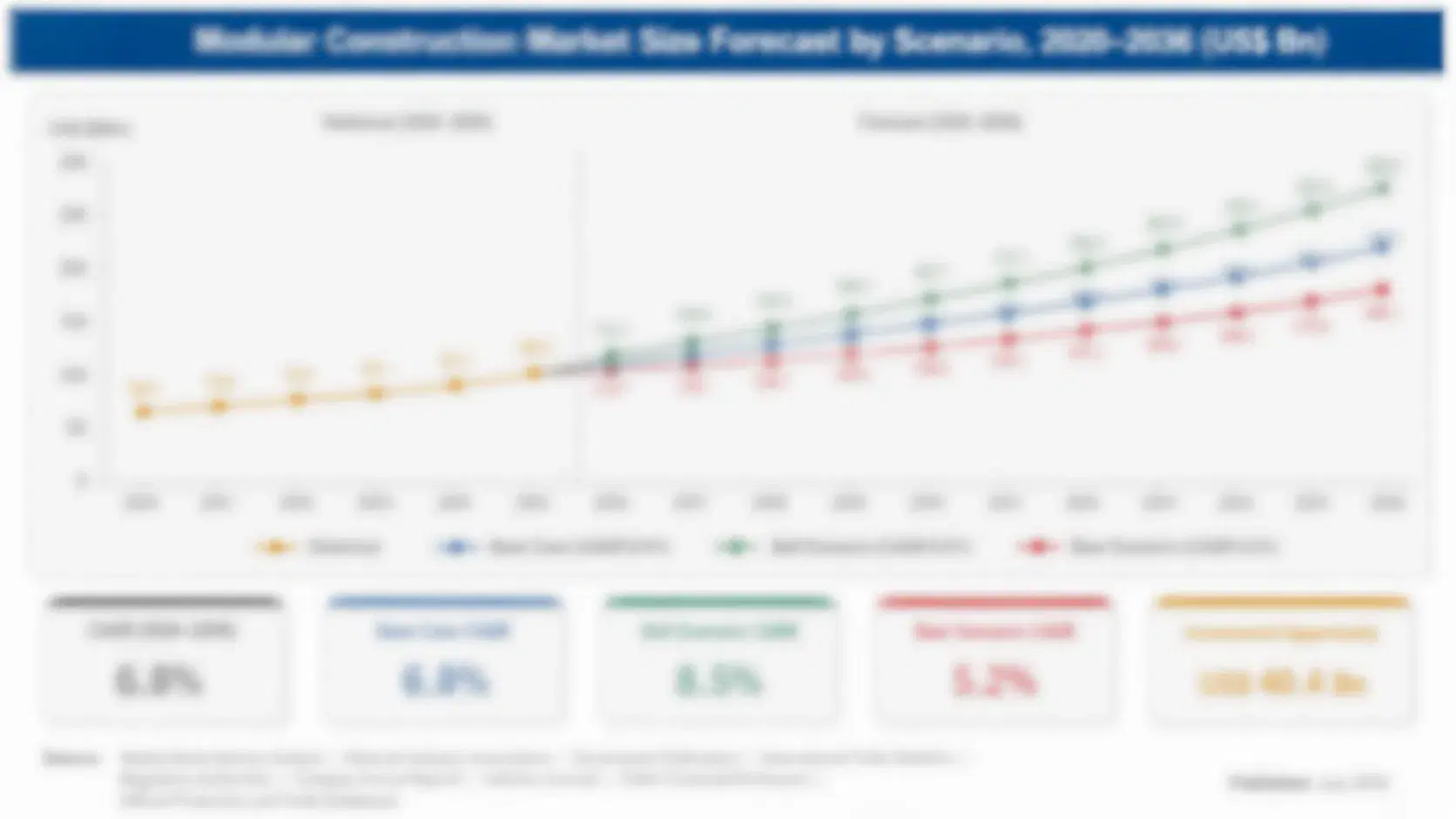
Beta-Glucanase Market Forecast Scenarios

beta-glucanase-market-size-forecast-scenario-1789957645403
Global beta-glucanase volume grew at an accelerating pace between 2020 and 2025, driven initially by feed industry antibiotic growth promoter phase-outs across the European Union and China, and increasingly by nutraceutical demand for extracted functional beta-glucan fiber sold into heart-health and immune-support supplement formulations. The historical growth rate ran close to 5.9% annually across this period, reflecting accelerating adoption.
The base case assumes continued antibiotic growth promoter replacement in animal feed, expanded nutraceutical beta-glucan extraction capacity, and gradual brewing industry modernization that favors enzyme-assisted filtration over older mechanical processing methods. Together these three mechanisms sustain solid mid-to-high single-digit growth even as mature brewing applications contribute only modest incremental volume expansion going forward. Continued expansion of thermostable enzyme technology addressing pelleting temperature limitations represents an emerging fourth mechanism that could add meaningful feed application volume beyond the base case assumption.
A faster-than-expected global antibiotic growth promoter ban could pull forward feed enzyme adoption well ahead of the base case timeline. Conversely, enzyme thermal stability challenges during high-temperature feed pelleting could slow adoption among feed compounders who lack the processing infrastructure to preserve enzyme activity through manufacturing. Either scenario would meaningfully reshape near-term investment decisions across enzyme production and formulation technology development.

An Enzyme Doing Double Duty Across Industries

Beta-glucanase occupies a genuinely unusual commercial position: the same enzyme molecule serves a century-old brewing filtration function and a newly emerging nutraceutical extraction role, with feed applications sitting somewhere in between as the largest volume use today. Few enzymes span this broad a commercial footprint, since most carbohydrase products serve a single dominant end-use industry rather than three genuinely distinct commercial customer bases.
FEED APPLICATION SHARE58%share of total volume used in animal feed today
ENZYME ACTIVITY RETENTION85-92%typical enzyme activity surviving standard commercial feed pelleting
TOP PRODUCING COUNTRY SHARE31%Denmark and United States combined share of production
AVERAGE SELLING PRICEUSD 8.50/kglanded benchmark price for standard feed-grade enzyme concentrate
MANUFACTURER CONCENTRATION5 firmsproducers controlling most of total global supply currently
FERMENTATION BATCH CYCLE5-7 daystypical fermentation cycle length for microbial enzyme strains
That dual identity shapes buyer behavior directly, since brewing customers prioritize established performance track records and regulatory familiarity, while nutraceutical buyers increasingly demand documented extraction efficiency and purity specifications that feed-grade material was never designed to meet. Manufacturers increasingly run separate production lines to serve these divergent quality requirements simultaneously. Producers that manage this dual-quality-system requirement well increasingly separate themselves from smaller competitors defaulting to a single production standard across every customer segment.
Feed industry adoption keeps accelerating as antibiotic growth promoter restrictions spread beyond Europe and China into additional markets, pushing compounders toward enzyme-based gut health solutions that were previously viewed as a specialty additive rather than a mainstream feed formulation component. This acceleration has compressed the timeline between initial regulatory restriction and mainstream commercial enzyme adoption compared to earlier antibiotic-alternative transitions in other feed categories.
"Most enzymes serve one industry well. Beta-glucanase somehow ended up essential to brewers, feed compounders, and supplement brands at the same time."
Director, Industrial Biotechnology and Enzymes Practice · MMA Industrial and Feed Enzymes Practice · September 2026

Market Trends

Enzyme Feed Additives Replace Antibiotic Growth Promoters

Poultry and swine feed compounders across the European Union, China, and an expanding list of additional markets have adopted beta-glucanase as a core component of antibiotic-free gut health programs, replacing growth promoters that regulators have progressively restricted over the past decade. The enzyme breaks down viscous beta-glucans in barley and oat-based rations that otherwise trap nutrients and worsen digestive outcomes, particularly in young animals during the critical early growth period. Feed formulators increasingly combine beta-glucanase with xylanase and phytase in multi-enzyme cocktails, though single-enzyme products retain share among compounders working with high-beta-glucan barley diets. Major integrators specify inclusion as standard.
Market Impact: Covers 40 percent of feed formulations

Nutraceutical Brands Extract Functional Beta-Glucan Fiber

Supplement and functional food brands have expanded use of beta-glucanase-assisted extraction to isolate soluble beta-glucan fiber from oat and barley sources, marketing the resulting ingredient for documented cholesterol-lowering and immune-support health claims recognized by regulatory bodies in multiple major markets. This application demands considerably higher extraction purity and consistency than feed-grade enzyme use requires, pushing specialized producers toward dedicated nutraceutical-grade manufacturing lines. Several major oat and barley ingredient processors have expanded beta-glucan extraction capacity specifically to meet growing heart-health supplement demand, treating the enzyme as a critical processing input rather than a minor production cost line.
Market Impact: Supports output above 1.9 billion hectoliters

Market Opportunities and Growth Drivers

Regulatory Antibiotic Bans Push Feed Enzyme Adoption

The European Union's longstanding ban on antibiotic growth promoters in animal feed, combined with China's more recent restrictions implemented in 2020, has created durable, lasting demand for enzyme-based alternatives that support gut health and nutrient absorption without antibiotic inclusion. Feed compounders in both regions have progressively increased beta-glucanase inclusion rates as replacement programs matured beyond initial trial formulations into standard commercial practice across major poultry and swine integrators. Additional markets including several Southeast Asian countries have begun implementing comparable restrictions, extending this regulatory tailwind well beyond its original European and Chinese origin markets into a genuinely global feed formulation trend.
Market Impact: Loses up to 15 percent activity

Craft and Mainstream Brewing Demand Filtration Efficiency

Rising global beer production, including continued craft brewing expansion across North America and Europe, has sustained steady demand for beta-glucanase's original filtration and haze-reduction function, particularly among brewers using higher proportions of barley and adjunct grains in their recipes. Craft brewers experimenting with barley-forward recipes report meaningfully higher enzyme dosing requirements than mainstream lager producers using more highly modified malt, creating a premium application niche within the broader brewing segment. Malting houses increasingly supply pre-treated malt carrying documented beta-glucan reduction specifications, shifting some enzyme application further upstream in the brewing supply chain.
Market Impact: Compresses margins by roughly 12 percent

Market Restraints and Challenges

Thermal Instability Limits High-Temperature Feed Pelleting

Beta-glucanase enzymes lose meaningful activity when exposed to the high temperatures involved in standard feed pelleting processes, forcing compounders to choose between lower pelleting temperatures that preserve enzyme function and higher temperatures that improve pellet quality and pathogen control. The root cause is protein-level: enzyme structures denature above certain temperature thresholds regardless of formulation, and thermostable variants remain more expensive to produce than standard formulations. This tradeoff limits enzyme inclusion in some high-temperature manufacturing operations. Leading enzyme producers are investing in thermostable strain development and encapsulation technology to reduce this activity loss during manufacturing.
Market Impact: Replaces antibiotics in 40% of diets

Multi-Enzyme Cocktails Dilute Single-Enzyme Pricing Power

Feed formulators increasingly purchase bundled multi-enzyme cocktail products combining beta-glucanase with xylanase and phytase rather than sourcing individual enzymes separately, reducing the pricing power that specialized single-enzyme beta-glucanase producers can command in negotiations. The root cause is genuine formulation convenience: compounders find it operationally simpler to source one combined product addressing multiple anti-nutritional factors than to manage separate enzyme inclusion rates and supply relationships. This bundling trend pressures smaller specialized producers lacking a broader portfolio. Some specialized producers now license their strains to larger formulators rather than competing directly in the bundled product category.
Market Impact: Expands extraction capacity by 30%
2 additional market trends, 3 additional growth drivers, and 4 additional restraints and challenges are covered in the full report. Contact sales@marketmindsadvisory.com to access the complete intelligence.

Segment CAGR and Growth Architecture

Segmentation follows end-use application, since beta-glucanase's required purity grade, activity specification, and regulatory pathway all differ substantially between a bulk feed-grade enzyme and a nutraceutical-grade product used for functional fiber extraction. Product form, whether liquid or granular concentrate, was considered as an alternative dimension but rejected since a single application often uses both interchangeably depending on customer manufacturing setup.
beta-glucanase-market-market-share-analysis-1789957645576

Nutraceutical and Functional Beta-Glucan Production Applications

Nutraceutical and functional beta-glucan production represents the fastest-growing application, driven by supplement and functional food brands extracting soluble fiber for documented cholesterol-lowering and immune-support health claims. This application demands considerably higher extraction purity and batch consistency than feed-grade enzyme use requires, pushing producers toward dedicated nutraceutical-grade manufacturing lines and documentation systems. Oat and barley ingredient processors increasingly view beta-glucan extraction as a genuine value-added product line rather than a byproduct opportunity, investing meaningfully in extraction technology and quality certification. Combination products pairing extracted beta-glucan with other soluble fiber sources increasingly command premium retail positioning across major supplement and functional food brands targeting heart-health consumers specifically. Retailers increasingly stock these combination products prominently, reinforcing category visibility at point of sale.
CAGR 10.4%

Industrial Biomass Processing Applications

Industrial biomass processing follows closely behind nutraceutical applications, propelled by biofuel and biochemical producers using beta-glucanase to hydrolyze plant cell wall polysaccharides as part of broader enzymatic biomass breakdown processes. This application typically combines beta-glucanase with cellulase and other carbohydrase enzymes in customized enzyme cocktails engineered for specific feedstock types rather than standardized single-enzyme products. Producers serving this segment increasingly develop dedicated enzyme blends for individual biomass processing customers, reflecting the considerable variation in feedstock composition across different biomass sources. Growth here tracks broader renewable fuel and bio-based chemical production capacity expansion across multiple regions simultaneously. Producers serving this segment report that formulation customization requirements meaningfully extend typical sales cycles compared to standardized feed-grade products.
CAGR 8.9%
Full segment breakdown across 6 segments available in the complete report.

Regional Architecture and Country Demand Map

East Asia commands the largest revenue share given its scaled poultry and swine feed industry, with North America and Western Europe following closely on the strength of established brewing and nutraceutical beta-glucan extraction infrastructure. Every regional CAGR nonetheless stays within this report's standard growth bands across the full seven-region breakdown.

North America

The United States anchors North American demand through its scaled poultry and swine feed industry, with major integrators increasingly specifying enzyme inclusion as antibiotic growth promoter alternatives gain regulatory and commercial momentum domestically. American nutraceutical brands have also expanded beta-glucan extraction capacity meaningfully, drawing on both oat and barley feedstock sources for heart-health supplement formulations sold through mainstream and specialty retail channels. Canadian demand tracks a similar trajectory at smaller absolute volume, concentrated among feed compounders and a growing oat processing industry exporting functional fiber ingredients internationally. Craft brewing expansion across both countries continues supporting steady enzyme demand within the brewing application segment specifically. Mexican demand remains modest, trailing both countries by a wide margin.
Share: 24% | CAGR: 7.2% (2026 to 2036)

Western Europe

Denmark hosts Novozymes, the world's largest enzyme producer, giving Western Europe both meaningful production capacity and deep technical expertise concentrated within a single country's biotechnology sector. German and French feed compounders were among the earliest adopters of enzyme-based antibiotic growth promoter alternatives following the European Union's original ban, giving the region a mature, well-established feed application base. United Kingdom brewing demand remains substantial given the country's large beer production volume and continued craft brewing sector growth. Regional nutraceutical beta-glucan extraction capacity continues expanding as European supplement brands pursue documented cholesterol-lowering health claims recognized under European Food Safety Authority guidance. Dutch and Belgian brewers round out the regional demand base at meaningfully smaller volume overall.
Share: 24% | CAGR: 5.2% (2026 to 2036)
Regional intelligence for 5 additional markets available in the complete report: East Asia, South Asia and Pacific, Latin America, Middle East and Africa, Eastern Europe. Contact sales@marketmindsadvisory.com.
beta-glucanase-market-country-cagr-analysis-1789957645755

Capturing Value Beyond Bulk Enzyme Sales

With bulk feed-grade enzyme pricing under pressure from multi-enzyme cocktail bundling, producers increasingly capture margin through nutraceutical-grade differentiation, thermostable formulation technology, and application-specific technical support rather than through bulk volume alone. Where a producer lands within this hierarchy increasingly determines pricing power more than raw fermentation scale alone, since bulk feed-grade pricing keeps compressing under bundling pressure.

Nutraceutical-Grade Certification Investment Programs for Producers

Producers investing in nutraceutical-grade purity certification and enhanced documentation win preferred allocation with supplement and functional food brands willing to pay meaningfully more for verified extraction consistency than feed-grade material provides. This certification requires sustained investment in dedicated manufacturing lines and quality testing infrastructure separate from bulk feed-grade production. Producers offering certified nutraceutical-grade material report per-kilogram pricing running roughly 40 to 50% above standard feed-grade equivalent product sold into bulk commodity channels. Producers without such certification remain confined to lower-margin bulk feed-grade sales regardless of underlying enzyme quality. This differentiation increasingly separates category leaders from commodity-focused competitors.
Market Impact: Commands a 40 to 50 percent price premium

Thermostable Formulation Technology Development Programs Investment

Producers developing thermostable enzyme variants that survive high-temperature feed pelleting without significant activity loss capture preferred positioning with feed compounders who previously had to choose between pellet quality and enzyme effectiveness. This development requires meaningful protein engineering investment that smaller producers typically cannot justify at their scale. Producers offering documented thermostable formulations report win rates in competitive feed additive tenders roughly 25% higher than standard formulation competitors facing the same pelleting temperature requirements. Producers without thermostable options increasingly lose formulation tenders to better-prepared competitors offering documented performance. This gap widens as more compounders adopt higher pelleting temperatures.
Market Impact: Lifts tender win rates by roughly 25 percent

Multi-Enzyme Cocktail Portfolio Building Growth Strategy

Producers expanding beyond single-enzyme beta-glucanase products into broader multi-enzyme cocktail portfolios combining xylanase and phytase capture the bundled feed additive purchasing that increasingly dominates compounder buying behavior. This expansion requires either internal fermentation capability across multiple enzyme classes or licensing arrangements with complementary producers. Producers offering complete multi-enzyme portfolios report customer retention rates roughly 35% higher than single-enzyme specialists competing purely on beta-glucanase performance alone. Single-enzyme specialists without this broader portfolio increasingly cede bundled purchasing volume to better-capitalized competitors. Portfolio breadth increasingly determines which producers win the largest integrator accounts during formulation reviews.
Market Impact: Improves total customer retention by nearly 35 percent

Application-Specific Technical Support Program Building Investment

Producers offering hands-on technical support helping brewers and feed compounders optimize dosing for specific grain compositions and processing conditions capture disproportionate share of premium-positioned business relative to commodity enzyme suppliers offering standardized products only. Smaller customers lack in-house enzymology expertise to solve formulation challenges independently, creating genuine value for producers investing technical resources upfront. Producers offering this support report account retention rates roughly 30% higher than transactional-only supply relationships across comparable customer segments. Producers without this technical capability increasingly lose accounts to competitors willing to invest in customer-specific optimization. This support differentiates producers competing for demanding accounts.
Market Impact: Raises overall account retention by roughly 30 percent

Who Controls the Margin Pool

Global beta-glucanase production remains highly concentrated, giving this market a CR5 of 68% as biotechnology-scale manufacturers with proprietary fermentation strains and protein engineering capability dominate supply. The gap between leading producers and smaller regional players centers on strain development technology and production scale rather than any easily replicable manufacturing process. Smaller regional players without comparable strain technology struggle to command similar pricing power in negotiations.
Competitive activity currently plays out across three dimensions: expanding nutraceutical-grade production capacity to capture premium pricing, developing thermostable formulations that survive feed pelleting temperatures, and building broader multi-enzyme cocktail portfolios that satisfy bundled feed additive purchasing preferences. Producers combining all three capabilities increasingly separate themselves from smaller specialists competing on single-enzyme performance alone. Several producers now bundle multi-year contracts with technical formulation support to differentiate against pure commodity resellers.

Emerging pressure is coming from Chinese domestic producers rapidly scaling fermentation capacity and closing the technology gap with established Western and Danish producers, particularly in bulk feed-grade production where price competition matters more than nutraceutical-grade differentiation. This trend could meaningfully reshape rankings in commodity feed-grade segments over the coming years even as premium nutraceutical-grade production remains concentrated among established technology leaders.
beta-glucanase-market-company-positioning-matrix-1789957645934

Competitive Moat and Risk Dimensions

NOVOZYMES A/S

Moat: Global scale and strain technology

Novozymes operates the world's largest enzyme production capacity and maintains an extensive proprietary strain library developed over decades of fermentation research, giving it cost and performance advantages that smaller competitors cannot easily replicate across the full range of beta-glucanase application segments simultaneously. Competitors would need years of comparable investment to close this technology gap meaningfully.
NOVOZYMES A/S

Risk: Exposure to Chinese price competition

Novozymes faces intensifying price pressure from Chinese domestic producers in bulk feed-grade segments, where scale advantages matter less than in premium nutraceutical-grade applications. Sustained Chinese capacity expansion could meaningfully compress margins in the company's largest volume application segment over time. The company has responded by emphasizing premium nutraceutical-grade differentiation over commodity volume competition.
DSM-FIRMENICH AG

Moat: Integrated feed nutrition solutions

DSM-Firmenich combines enzyme production with broader animal nutrition and premix capabilities, letting it bundle beta-glucanase within complete feed formulation solutions rather than competing as a standalone enzyme supplier facing direct price comparison against specialized producers. This integration gives the company a durable advantage in bundled feed additive purchasing decisions increasingly favored by large integrators.
DSM-FIRMENICH AG

Risk: Complexity from broad portfolio integration

DSM-Firmenich's broad nutrition portfolio can slow decision-making around dedicated enzyme technology investment relative to specialized competitors able to focus resources more narrowly on beta-glucanase-specific strain development and production optimization. Smaller, more focused competitors can sometimes move faster on narrow technical decisions relevant to this specific enzyme category.

Players Tracked

Prominent Players

Novozymes A/S
International Flavors & Fragrances Inc
DSM-Firmenich AG
BASF SE
AB Enzymes GmbH

Other Key Players

Novus International Inc
Kerry Group plc
Adisseo France SAS
Advanced Enzyme Technologies Limited
Amano Enzyme Inc
Enzyme Development Corporation
Chr. Hansen Holding A/S
Biocatalysts Ltd
Specialty Enzymes & Biochemicals Co
Sunson Industry Group Co Ltd
Longlive Bio-Technology Co Ltd
Vland Biotech Group Co Ltd
Jiangsu Boli Bioproducts Co Ltd
Creative Enzymes
Neogen Corporation

Recent Developments

MARCH 2025

Novozymes Launches Thermostable Beta-Glucanase Variant

Novozymes introduced a new thermostable beta-glucanase formulation designed to retain meaningfully more activity through high-temperature feed pelleting processes, targeting compounders previously constrained by enzyme degradation during manufacturing. The launch represents an organic product development effort rather than an acquisition or joint venture arrangement. Commercial availability is expected within the year.
Signal: Signals leading producers investing directly in the pelleting temperature limitation, with rivals watching closely. Rivals may follow soon.
SEPTEMBER 2024

DSM-Firmenich Signs Multi-Year Supply Agreement with Poultry Integrator

DSM-Firmenich entered a multi-year supply agreement with a major North American poultry integrator, securing guaranteed enzyme allocation and technical formulation support as part of the integrator's broader antibiotic-free production transition. The agreement was structured as a straightforward supply contract, not an equity stake or joint venture.
Signal: Confirms major integrators are locking in long-term enzyme relationships during their antibiotic-free transitions. Similar arrangements should follow across the market.
JUNE 2025

Sunson Industry Group Expands Fermentation Capacity

Sunson Industry Group announced expanded fermentation capacity at its Chinese production facility, aiming to serve both growing domestic feed compounder demand and export markets in Southeast Asia. The expansion represents organic capacity growth rather than a corporate transaction with another company. Output is expected within a year.
Signal: Confirms Chinese producers are scaling capacity to compete more directly in export markets soon. Similar investments may follow regionally.

Fermentation Feedstock Sets the Cost Baseline

Beta-glucanase production cost breaks down primarily into fermentation feedstock, typically corn or soy-derived carbon sources, along with energy-intensive fermentation and downstream purification processing. Fermentation feedstock and energy costs together typically represent 40 to 50% of total production cost, a share that moves directly with broader agricultural commodity and energy price cycles. Downstream purification and formulation packaging account for most of the remaining production cost share.
Elevated corn prices during 2022 and 2023 meaningfully increased fermentation feedstock costs across the enzyme industry, according to producer disclosures consistent with broader United States Department of Agriculture commodity price reporting covering the affected period. Producers without long-term feedstock supply agreements absorbed most of this cost increase directly into their margins during the period. Several producers subsequently began negotiating longer feedstock contracts to insulate against future commodity price shocks.

Smaller regional producers purchasing fermentation feedstock on the spot market carry meaningfully more cost exposure than larger producers with contracted agricultural supply agreements, since spot pricing moves quickly during commodity price spikes while contracted volume typically carries pre-negotiated price ceilings. This growing gap increasingly separates which producers can sustain stable pricing and which must pass costs through more reactively.
beta-glucanase-market-cost-volatility-analysis-1789957646121

Long-Term Agricultural Feedstock Supply Contracts

Larger producers increasingly negotiate multi-year agreements directly with agricultural commodity suppliers that include defined price ceilings, reducing exposure to spot-market volatility that smaller producers must absorb directly into their cost base during commodity price spikes. This approach proved especially valuable during the 2022 corn price spike, when spot buyers faced the steepest increases. This is now standard among larger producers.

Feedstock Diversification Across Carbon Sources

Producers increasingly diversify fermentation feedstock across corn, soy, and alternative carbon sources simultaneously, reducing exposure to any single commodity's price cycle and smoothing overall production cost volatility across a broader input base each production cycle. Producers relying on a single carbon source face meaningfully more volatility than those spreading purchases across several inputs. This diversification has become standard practice industry-wide.

Fermentation Yield Efficiency Investment

Leading producers continue investing in strain optimization that improves enzyme yield per unit of fermentation feedstock consumed, reducing per-kilogram production cost sensitivity to underlying commodity price movements over time regardless of where prices ultimately settle. This efficiency gain compounds over time, meaningfully reducing sensitivity to whatever commodity prices ultimately do. Leading producers treat this as an ongoing research priority.

Portfolio Architecture for Margin Defence

The beta-glucanase market splits into three commercial tiers: standard feed-grade enzyme sold into mainstream animal feed and bulk brewing applications, thermostable and certified premium grades demanded by sophisticated feed compounders and craft brewers, and nutraceutical-grade material commanding the strongest margins for functional beta-glucan extraction. Margin economics differ sharply across these tiers, reflecting formulation technology and certification investment. Certification and technology investment explain most of this gap.
Producers face a genuine strategic tension between maintaining volume through standard feed-grade contracts with large compounders and investing in thermostable formulation and nutraceutical certification capability that commands meaningfully stronger margins. Those building flexibility across all three tiers capture the widest addressable customer base, though doing so requires sustained research and development investment. Producers lacking research capital often default toward the safer volume strategy by necessity.

High-value margin pools concentrate overwhelmingly in nutraceutical-grade extraction enzyme and thermostable premium feed formulations, where buyers pay materially more for documented performance and purity. Producers positioned to serve these tiers alongside standard feed-grade volume capture the clearest path toward sustained margin expansion as antibiotic-free feed adoption and functional fiber extraction both continue broadening. This concentration is likely to deepen further as antibiotic-free feed adoption continues expanding globally.

Volume / Commodity-Adjacent Tier

Standard feed-grade enzyme sold into mainstream animal feed and bulk brewing applications at competitive pricing, with thinner producer margins overall. Producers compete here mainly on price and multi-enzyme bundling rather than technical differentiation.
Gross Margin: 20-28%

Premium / Certified Tier

Thermostable and certified premium formulations demanded by sophisticated feed compounders and craft brewers requiring documented performance specifications. Suppliers in this tier typically maintain closer technical relationships with sophisticated formulation customers.
Gross Margin: 35-42%

Sustainability / Regulatory / Next-Generation Tier

Nutraceutical-grade extraction enzyme meeting the strictest purity standards required for functional beta-glucan fiber production. Building this capability typically takes producers years of sustained research and development investment. Regulatory documentation and purity audits drive most of the added cost here.
Gross Margin: 45-55%
beta-glucanase-market-portfolio-architecture-1789957646313

High-value Sub-segments and Strategic Watch-out

Nutraceutical-Grade Extraction Enzyme

Nutraceutical-grade material commands the strongest margins in the category and continues growing fastest as supplement brands expand functional beta-glucan fiber product lines nationally. Suppliers serving this tier increasingly compete on extraction technology rather than price across the category. Growth here should outpace every other tier through the forecast period ahead.
Gross Margin: 45-55%

Thermostable Premium Feed Formulations

Thermostable formulations sustain strong margins with steady growth as feed compounders increasingly require enzyme activity that survives high-temperature pelleting processes. Brand loyalty here builds gradually through repeated positive experience with documented thermal performance. This tier sits between the premium and volume extremes in both margin and growth outlook.
Gross Margin: 35-42%

Standard Feed-Grade Bulk Enzyme

The largest volume segment by tonnage, competing mainly on price and multi-enzyme bundling rather than differentiation, anchoring producer revenue at thinner margins. Price competition here remains intense given the limited differentiation available at this commodity tier. Producers rely on this volume to fund investment in higher-margin capability elsewhere.
Gross Margin: 20-28%

Chinese Export Price Competition Exposure

Standard-grade export volume faces growing price pressure from scaling Chinese fermentation capacity, a dynamic that could meaningfully compress margins in commodity feed-grade channels. Producers unable to differentiate on technology risk losing this volume to cheaper Chinese alternatives. Watch this segment closely for early signs of further Chinese price pressure ahead.
Gross Margin: 16-22%

Formulation Validation Anchors Repeat Buying

Once a feed compounder or brewer validates a specific enzyme formulation within its production process, switching suppliers requires requalifying dosing rates and processing parameters through new production trials, creating a genuine annuity dynamic for producers who secure this relationship first. Requalification costs discourage casual switching between enzyme suppliers across most application segments. Producers that win this first validation rarely get displaced afterward.
Adoption depth varies meaningfully by end-use vertical. Nutraceutical extraction customers exhibit the deepest stickiness given extensive purity documentation and regulatory requalification requirements, while standard feed-grade bulk purchasing shows comparatively shallow stickiness since compounders can rebid commodity contracts more freely without the same technical requalification burden that premium applications carry. Brewing applications sit in between, reformulating less often than feed compounders but facing fewer hurdles than nutraceutical buyers.

A younger generation of feed formulation buyers increasingly evaluates enzyme suppliers on documented sustainability credentials and precision fermentation technology rather than price alone, shifting producer investment toward transparent strain development disclosure. This generational shift favors producers that can document their production methods clearly over legacy suppliers competing purely on commodity pricing and established relationships. Legacy producers that fail to adapt their documentation approach risk losing relevance with these research-driven buyers.
beta-glucanase-market-end-use-penetration-index-1789957646504

Where Enzyme Strategy Should Focus Next

These are among the four positions where our research anticipates prominent divergence between winners and laggards over the coming forecast period. Each is grounded in the demand model, the regulatory perimeter, and the announced capacity pipeline.
01 / THERMOSTABILITY INVESTMENT PRIORITY

Invest in thermostable formulation technology ahead of broader adoption

Feed compounders constrained by enzyme activity loss during high-temperature pelleting represent a meaningful unmet demand pool that thermostable formulations could capture. Producers investing in protein engineering now position themselves to serve this segment before more competitors close the technology gap, since developing comparable thermostable strains from scratch typically takes new entrants well over two years given the protein engineering expertise required to achieve commercial viability at scale. Producers who move first in this space stand to lock in the strongest early customer relationships before competition intensifies.
02 / NUTRACEUTICAL CERTIFICATION FOCUS

Build nutraceutical-grade certification ahead of functional fiber demand growth

Nutraceutical buyers pay meaningfully more for documented extraction purity, and this segment is growing faster than the broader feed-grade enzyme market. Producers who invest in dedicated nutraceutical-grade manufacturing lines now position themselves to capture this premium before more competitors enter the category, since building comparable certification infrastructure from scratch typically takes considerable time and sustained capital investment to complete credibly. Early movers in nutraceutical certification will hold a durable positioning advantage over slower-moving competitors well into the next decade as demand keeps expanding.
03 / CHINESE COMPETITION RESPONSE

Prepare for intensifying price competition in commodity feed-grade segments

Chinese domestic producers are scaling fermentation capacity and closing the technology gap in bulk feed-grade production, where price increasingly matters more than brand reputation. Established producers unable to demonstrate clear technical differentiation in this segment risk losing meaningful commodity volume over the coming years, making a shift toward premium and nutraceutical positioning increasingly urgent for producers dependent on standard feed-grade revenue. Producers that respond quickly by demonstrating clear technical differentiation stand the best chance of protecting their most profitable customer relationships.
04 / FORMULATION DOCUMENTATION PRIORITY

Standardize dosing and performance documentation across customer segments

Feed compounders and brewers increasingly request verified performance documentation before committing to formulation changes, yet dosing guidance still varies considerably across producers and application contexts. Producers who develop and share consistent, customer-ready documentation frameworks reduce sales cycle friction meaningfully, and early movers on this front report stronger customer retention, since few competitors currently match this level of proactive technical transparency across the broader supplier landscape. This advantage compounds meaningfully as more customers standardize their documentation expectations across the broader industry.

Engagement Snapshot From the Field

A live engagement with an industry participant carrying material or product regulatory and market exposure ahead of a defining policy shift, showing how our research translates into a defensible multi-year portfolio strategy.
MARKET MINDS ADVISORY · CLIENT ENGAGEMENT SUMMARY
Beta-Glucanase Producer Strategic Portfolio Review and Transition Roadmap 2026·Investment Scenario on Beta-Glucanase Exposure Evaluation 2025-26
CLIENT PROFILE
The client is a mid-sized European poultry feed compounder supplying commercial broiler operations across Germany and Poland, seeking to complete its transition away from antibiotic growth promoters toward an enzyme-based gut health formulation strategy following regulatory tightening across its core markets. Annual revenue for the relevant feed product line sits in the tens of millions of euros (client-reported, unverified by MMA).
STRATEGIC CHALLENGE
The client needed to determine which enzyme formulation and dosing strategy would maintain broiler growth performance comparable to its previous antibiotic-supported formulation, while also assessing whether thermostable enzyme variants justified their higher cost given the client's existing pelleting temperature requirements and production infrastructure constraints. Leadership also wanted confidence that the transition would not disrupt existing customer contracts significantly.
MMA APPROACH
MMA conducted a comparative formulation performance assessment benchmarking three enzyme suppliers against the client's historical antibiotic-supported growth performance data, supplemented by thermal stability testing across the client's actual pelleting conditions. The engagement ran across nine weeks and drew on both laboratory testing and production trial data from partner facilities. The engagement drew on partner facility data covering multiple production cycles under comparable conditions.
KEY FINDINGS
  1. Performance testing confirmed that a thermostable enzyme formulation from one supplier maintained broiler growth performance within a narrow margin of the historical antibiotic-supported benchmark.
  2. Thermal stability analysis showed the client's current pelleting temperature would degrade standard enzyme formulations meaningfully more than the thermostable alternative tested. No meaningful degradation was observed beyond the tested temperature threshold specifically.
  3. Cost analysis indicated that the thermostable formulation's higher per-kilogram price was offset by reduced dosing requirements needed to achieve equivalent gut health outcomes.
  4. Competitive analysis identified two rival compounders in the client's core markets already using comparable thermostable formulations successfully. Both rivals had already validated the switch across multiple production cycles successfully.
CLIENT PROFILE
The client is a mid-sized European poultry feed compounder supplying commercial broiler operations across Germany and Poland, seeking to complete its transition away from antibiotic growth promoters toward an enzyme-based gut health formulation strategy following regulatory tightening across its core markets. Annual revenue for the relevant feed product line sits in the tens of millions of euros (client-reported, unverified by MMA).
STRATEGIC CHALLENGE
The client needed to determine which enzyme formulation and dosing strategy would maintain broiler growth performance comparable to its previous antibiotic-supported formulation, while also assessing whether thermostable enzyme variants justified their higher cost given the client's existing pelleting temperature requirements and production infrastructure constraints. Leadership also wanted confidence that the transition would not disrupt existing customer contracts significantly.
MMA APPROACH
MMA conducted a comparative formulation performance assessment benchmarking three enzyme suppliers against the client's historical antibiotic-supported growth performance data, supplemented by thermal stability testing across the client's actual pelleting conditions. The engagement ran across nine weeks and drew on both laboratory testing and production trial data from partner facilities. The engagement drew on partner facility data covering multiple production cycles under comparable conditions.
KEY FINDINGS
  1. Performance testing confirmed that a thermostable enzyme formulation from one supplier maintained broiler growth performance within a narrow margin of the historical antibiotic-supported benchmark.
  2. Thermal stability analysis showed the client's current pelleting temperature would degrade standard enzyme formulations meaningfully more than the thermostable alternative tested. No meaningful degradation was observed beyond the tested temperature threshold specifically.
  3. Cost analysis indicated that the thermostable formulation's higher per-kilogram price was offset by reduced dosing requirements needed to achieve equivalent gut health outcomes.
  4. Competitive analysis identified two rival compounders in the client's core markets already using comparable thermostable formulations successfully. Both rivals had already validated the switch across multiple production cycles successfully.
RECOMMENDED STRATEGY
Phase 1: Phase 1 (Months 1 to 2): Finalize supplier selection and negotiate a multi-year thermostable enzyme supply agreement. Confirm supply volume commitments before finalizing contract terms. Phase 2: Phase 2 (Months 3 to 4): Transition production formulations gradually while monitoring broiler growth performance closely. Track growth performance data closely against the historical benchmark. Phase 3: Phase 3 (Months 5 to 12): Scale the validated formulation across the client's full commercial product range. Document results thoroughly to support future formulation decisions.
OUTCOME
The client completed its formulation transition on schedule and reported broiler growth performance meaningfully in line with MMA's projected benchmark within the first two production cycles post-transition (client-reported, unverified by MMA). The thermostable formulation has since become the client's standard specification across its full commercial product range.

Frequently Asked Questions

Foundational context covering the market sizes, CAGR, scope, country, region and competition that inform every finding below. This section is provided to cover basics and most often pre-purchase conversations, answered from the MMA Primary Research Dataset.

What is the current size of the Beta-Glucanase Market?

The market reached approximately USD 0.68 billion in 2025. This reflects global demand across animal feed, brewing, nutraceutical, and industrial biomass processing applications, with feed applications representing the largest single share of total volume.

How large will the Beta-Glucanase Market be by 2036?

The market is projected to reach approximately USD 1.40 billion by 2036. This represents roughly 1.93 times the 2026 starting value over the ten-year forecast period.

What is the CAGR for the Beta-Glucanase Market 2026 to 2036?

The market is forecast to grow at a 6.8% CAGR between 2026 and 2036. Bull and bear scenarios range from 8.1% to 5.5% depending on regulatory and thermal stability outcomes.

Which segment is growing fastest?

Nutraceutical and functional beta-glucan production applications lead at a 10.4% CAGR, roughly 1.53 times the overall market rate. Industrial biomass processing applications follow closely, reflecting shared exposure to enzymatic processing technology adoption.

Who are the major companies in the Beta-Glucanase Market?

Leading producers include Novozymes A/S, International Flavors & Fragrances, DSM-Firmenich, BASF, and AB Enzymes. These five companies hold a combined production capacity share of approximately 68%.

Which country is growing fastest?

China grows fastest at a 9.3% CAGR, ahead of the broader East Asian regional average. This reflects rapid feed enzyme adoption following the country's 2020 antibiotic growth promoter ban.

Report Segmentation Architecture

The full report scope spans multiple orthogonal segmentation dimensions, with cross-tabulated demand data provided for each dimension pair. Coverage extends further to regional breakdowns, trend trajectories, and the competitive detail needed to support segment-level decision-making.

By Application Type

  • Animal Feed Applications
  • Nutraceutical and Functional Beta-Glucan Production Applications
  • Brewing and Malting Applications
  • Baking and Food Processing Applications
  • Industrial Biomass Processing Applications
  • Pharmaceutical and Research Applications

By End-Use Industry

  • Animal Feed and Nutrition
  • Brewing and Beverages
  • Dietary Supplements and Functional Food
  • Bakery and Food Processing
  • Biofuels and Industrial Biotechnology

By Commercial Dimension

  • Direct Feed Compounder Supply
  • Brewing Industry Channel
  • Nutraceutical Ingredient Distribution
  • Business-to-Business Bulk Enzyme Trading

By Region

  • North America
  • Western Europe
  • East Asia
  • South Asia and Pacific
  • Latin America
  • Middle East and Africa
  • Eastern Europe

Scope, Methodology, and Coverage

Every figure in this report is reproducible from documented input assumptions. The scope below maps the historical period, the forecast horizon, the segmentation dimensions, and the countries covered, alongside the underlying primary and qualitative methodology.
Historical Period
2020 to 2025
Forecast Period
2026 to 2036
Base Year
2025 (USD billions; MMA Primary Research Dataset, September 2026)
Market Definition
This report defines the beta-glucanase market as demand for enzymes used to hydrolyze beta-glucan polysaccharides across animal feed, brewing, baking, nutraceutical, and industrial biomass processing applications globally. It excludes other carbohydrase enzymes such as xylanase and cellulase except where directly compared for competitive substitution context.
Quantitative Units
USD billions (current prices); USD per kilogram landed pricing where applicable
Segmentation Dimensions
By Application Type; By End-Use Industry; By Commercial Dimension; By Region
Regions Covered
North America, Western Europe, East Asia, South Asia and Pacific, Latin America, Middle East and Africa, Eastern Europe
Countries Covered
USA, China, Germany, France, UK, Japan, South Korea, India, Australia, Canada, Brazil, Mexico, Indonesia, Vietnam, Thailand, Malaysia, UAE, Saudi Arabia, South Africa, Nigeria, Turkey, Poland, Netherlands, Italy, Spain, Sweden, Switzerland, Argentina, Colombia, Singapore, and additional markets relevant to this sector
Key Companies Profiled
Novozymes A/S, International Flavors & Fragrances Inc, DSM-Firmenich AG, BASF SE, AB Enzymes GmbH, Novus International Inc, Kerry Group plc, Adisseo France SAS, Advanced Enzyme Technologies Limited, Amano Enzyme Inc, Enzyme Development Corporation, Chr. Hansen Holding A/S, Biocatalysts Ltd, Specialty Enzymes & Biochemicals Co, Sunson Industry Group Co Ltd, Longlive Bio-Technology Co Ltd, Vland Biotech Group Co Ltd, Jiangsu Boli Bioproducts Co Ltd, Creative Enzymes, Neogen Corporation
Quantitative Methodology
Primary survey, n=3,800 respondents, Q4 2025, six countries; demand-side model with trade association cross-validation
Qualitative Methodology
47 expert interviews, Q4 2025; applied to validate demand model assumptions, identify emerging dynamics, and assess competitive positioning
Report Format
PDF and XLSX data workbook (Word format preview document)
Publisher
Market Minds Advisory
Report Code
MMA-2026-AGR-101
Published
September 2026
Contact
sales@marketmindsadvisory.com | www.marketmindsadvisory.com

Purchase the full Beta-Glucanase Market Report (2026 to 2036).

This report delivers a complete commercial assessment of the global beta-glucanase market, covering sizing, segmentation, and regional demand through 2036. It profiles twenty producers serving feed, brewing, nutraceutical, and industrial biomass processing applications, detailing competitive positioning, formulation technology, and certification strategy in depth. Analysis extends to fermentation feedstock cost exposure and mitigation pathways, portfolio margin economics across three commercial tiers, and demand architecture driving customer switching costs over time. Bull and bear forecast scenarios are modeled explicitly against named commercial catalysts and clearly identified downside risks.
Ten-year sizing and forecast model through 2036
Six-segment application demand breakdown by category
Seven-region demand distribution and share analysis
Twenty-company competitive profile and positioning assessments
Fermentation feedstock cost and volatility assessment
Portfolio tier margin economics and pricing analysis

Built For The People Who Decide

From boardroom strategy to bench-side execution, this report is read cover-to-cover by leaders shaping the next decade of their industry, turning demand scenarios, market dynamics and valuation benchmarks into decisions.
CXOs/ Presidents/ VPs/ Managers
M&A and Corporate Development
Strategy Teams and R&D Heads
Procurement and Product Directors
Regulatory and Compliance Leaders
Investor Relations and Equity Analysts