Market Minds Advisory
Beetroot Molasses Market

Beetroot Molasses Market: Beetroot Molasses Market. Sugar Processing Byproduct Meets Fermentation Feedstock Demand

Beet sugar processing generates molasses whether or not anyone wants it, and fermentation industries are increasingly bidding this byproduct away from its traditional animal feed market toward bioethanol and citric acid production instead.

Lead Analyst

Published

September 2026

Make Smarter Decisions with Customized Research Insights

Request a free sample report and evaluate market opportunities, growth trends, and competitive dynamics relevant to your business needs.

2025 MARKET VALUE$2.8BMarket Size 2025
2036 FORECAST VALUE$4.3BBase Case , 2026 to 2036
CAGR 2026 TO 20364.0 %Bull 5.2% / Bear 2.8%
INCREMENTAL OPPORTUNITY$1.4BNet 10- year value creation
EXPANSION MULTIPLE1.48x2036 value over 2026 base
Strategic Levers
M&A Pipeline
Regional Outlook
Country Rankings
Competitive Intelligence
Segmental Deep-dive
Call-Us : 91 93563 13602

Executive Snapshot and Market Trajectory.

Beetroot molasses has quietly shifted from a low-value animal feed ingredient into a genuinely contested industrial feedstock, as fermentation producers making bioethanol, citric acid, and yeast increasingly compete with livestock feed compounders for the same byproduct volume coming off sugar beet processing lines. Buyers increasingly notice this pricing shift.
Fermentation feedstock and industrial bioethanol applications now lead demand growth, drawing on renewable fuel blending mandates across the United States and Europe that reward processors able to supply consistent, high-fermentable-sugar molasses streams. Animal feed remains the largest application by volume, but its share keeps narrowing as competing uses bid prices higher. Western Europe commands the largest revenue share given its concentrated beet processing base.
Supply is fixed by sugar beet crush volume, meaning molasses output rises and falls with sugar market economics rather than with molasses demand itself. This disconnect concentrates commercial power among the handful of vertically integrated processors able to allocate output flexibly across feed, fermentation, and food-grade buyers depending on which pays more in a given season. This dynamic gives allocation strategy and quality documentation more competitive weight than raw crushing scale alone.
Market Definition
This report covers the global market for beetroot molasses, the viscous byproduct remaining after sucrose extraction from sugar beet processing, used across animal feed, fermentation feedstock, food and beverage, and industrial applications. It excludes cane molasses except where directly compared for competitive context.
Base Year Value
$2.8B in 2025 (MMA Primary Research Dataset, September 2026)
Forecast Period
2026 to 2036, eleven discrete annual values
CAGR
4.0% base case. Bull 5.2%. Bear 2.8%.
Fastest Growth Segment
Fermentation Feedstock Applications: 6.8% CAGR
Fastest Growth Country
United States: 6.1% CAGR
Fastest Growth Region
South Asia and Pacific: 6.0% CAGR
Largest Region
Western Europe: 24% of 2025 global value
Market Leaders
Sudzucker AG, Tereos SA, Royal Cosun (Cosun Beet Company), Nordzucker AG, British Sugar plc. Source: MMA Analysis based on company annual reports and processing capacity data.
Primary Survey
n=3,800 procurement and R&D decision-makers, Q4 2025, six countries
Methodology
Demand-side build-up, cross-validated against public data, 47 expert interviews

Beetroot Molasses Market Forecast Scenarios

beetroot-molasses-market-size-forecast-scenario-1789952750908
Global beetroot molasses volume grew at a modest but steady pace between 2020 and 2025, tracking broadly stable sugar beet planting acreage across Europe and North America, while demand mix shifted meaningfully toward fermentation feedstock buyers as biofuel blending mandates expanded across both regions during the period. Sugar beet planting decisions responded more to sugar market economics than to any molasses-specific demand signal.
The base case assumes continued fermentation feedstock demand growth, expanded bioethanol blending requirements in the United States and European Union, and gradual sugar beet processing capacity modernization that improves molasses extraction yield per tonne of beet processed. Together these three mechanisms sustain steady mid-single-digit growth even as total sugar beet acreage grows only marginally across major producing countries. Continued expansion of specialty extraction technology capturing betaine from molasses streams represents an emerging fourth mechanism adding incremental value beyond raw sales.
A poor beet harvest across major European growing regions could tighten molasses supply and push prices sharply higher, squeezing feed compounders who cannot pass costs through as easily as fermentation buyers. Conversely, faster expansion of citric acid and specialty fermentation capacity in Asia could pull forward export demand well ahead of the base case timeline.

A Byproduct Increasingly Fought Over

Beetroot molasses sits in an unusual commercial position: nobody manufactures it on purpose, since it emerges automatically from sucrose extraction, yet demand for it has grown sophisticated enough that processors now actively manage which buyer segment gets priority allocation each season. This automatic-production quality gives molasses a genuinely different commercial logic than any deliberately manufactured feedstock, since supply cannot simply be increased when buyer demand rises.
FERMENTABLE SUGAR CONTENT48-52%total sugar share available for industrial fermentation processes today
FEED APPLICATION SHARE56%share of total volume still used in feed
TOP PRODUCING COUNTRY SHARE34%France and Germany combined share of production volume
AVERAGE SELLING PRICEUSD 165/tonnelanded benchmark price for standard export grade material
PROCESSOR CONCENTRATION5 firmsprocessors controlling the largest overall share of supply
EXTRACTION YIELD4.5%typical molasses output per tonne of beet processed
That allocation decision increasingly favors whichever buyer segment pays more in a given period, and fermentation producers making bioethanol, citric acid, and specialty yeast have proven willing to outbid traditional animal feed compounders during periods of tight supply, particularly when biofuel blending mandates create policy-driven demand floors that feed buyers do not enjoy. Processors that manage this allocation well increasingly separate themselves from operations still defaulting to historical buyers without testing alternative channels.
Feed compounders without long-term supply agreements increasingly find themselves squeezed during tight seasons, pushing some toward alternative binder ingredients while others lock in multi-year contracts specifically to guarantee allocation ahead of higher-paying fermentation buyers. This dynamic has compressed the margin gap between processors that actively manage allocation and those that continue treating molasses as a low-priority disposal byproduct.
"Molasses used to be the thing you sold because you had to get rid of it. Now processors treat allocation like a genuine strategic decision."
Director, Agricultural Byproducts and Feedstocks Practice · MMA Agricultural Byproducts and Feedstocks Practice · September 2026

Market Trends

Fermentation Producers Actively Compete for Molasses Allocation

Bioethanol, citric acid, and specialty yeast producers have moved from opportunistic molasses purchasing toward structured multi-year supply agreements with major beet processors, reflecting molasses's role as a genuinely preferred fermentable sugar feedstock relative to grain-based alternatives in several production processes. European bioethanol producers in particular have expanded molasses intake as regional blending mandates push renewable fuel volume requirements higher each year. This structured buying pattern increasingly displaces spot-market animal feed purchasing during tight supply seasons, since fermentation buyers can commit to firmer pricing that processors find more attractive than variable feed compounder demand.
Market Impact: Supports blending targets above 10%

Feed Compounders Diversify Binder Ingredients Under Price Pressure

Rising molasses prices driven by fermentation buyer competition have pushed several major animal feed compounders to trial alternative binder and palatability ingredients, including vegetable oil coatings and other agricultural byproducts, in an effort to reduce dependence on increasingly contested molasses supply. This diversification remains partial, since molasses retains genuine palatability and binding advantages that substitute ingredients do not fully replicate at comparable cost. Feed formulators report blending lower molasses inclusion rates into premium livestock feed formulations specifically to manage input cost volatility while preserving the ingredient's palatability benefits in lower concentrations across dairy and beef cattle rations.
Market Impact: Adds 6 percent processing capacity

Market Opportunities and Growth Drivers

Renewable Fuel Blending Mandates Expand Feedstock Demand

The United States Renewable Fuel Standard and the European Union's Renewable Energy Directive both require growing volumes of blended biofuel content, and molasses-based fermentation represents an established, lower-capital-intensity pathway to bioethanol production compared to building new grain processing capacity. Several European bioethanol producers have expanded molasses intake specifically to meet rising blending obligations without committing capital to entirely new grain-based production lines. This policy-driven demand floor gives molasses-based fermentation producers meaningfully more purchasing confidence than feed compounders, who face no equivalent regulatory demand requirement supporting their input cost tolerance. Feed compounders face no equivalent policy floor supporting their demand.
Market Impact: Swings prices 20 to 30 percent

Sugar Price Volatility Pushes Processing Capacity Expansion

Elevated global raw sugar prices in recent years have encouraged several European and North American beet processors to invest in expanded crushing capacity, generating meaningfully more molasses byproduct volume as a secondary effect of sugar-focused capital investment decisions. Processors increasingly treat this incremental molasses volume as a genuine profit center in its own right rather than a low-value disposal problem, actively marketing expanded output to fermentation buyers ahead of capacity coming online. This dynamic has meaningfully increased molasses supply growth in years following major sugar price spikes, creating a somewhat counterintuitive link between sugar market conditions and molasses feedstock availability.
Market Impact: Limits exports to 25 percent

Market Restraints and Challenges

Price Volatility Tracks Sugar Beet Crop Outcomes Directly

Molasses prices move in close correlation with sugar beet crop outcomes, since output is a fixed byproduct ratio of beet processed rather than an independently manufactured commodity that suppliers can scale up on demand. The root cause is agronomic: beet yield depends on weather and growing conditions that no processor controls, so a poor European harvest season can tighten molasses supply even when fermentation and feed demand both remain strong. Buyers without diversified sourcing across multiple growing regions absorb this volatility directly into their input costs each season. Larger buyers increasingly negotiate price ceilings specifically to blunt this crop-driven volatility.
Market Impact: Shifts 8 percentage points of volume

Cane Molasses Competition Limits Export Market Access

Beet molasses faces direct price competition from cane molasses in tropical producing regions, where lower cane processing costs typically translate into cheaper delivered molasses for fermentation and feed buyers located closer to cane-growing areas than to European or North American beet processing regions. The root cause is straightforward: cane sugar production carries genuinely lower per-tonne processing costs in tropical climates, and this advantage extends to the molasses byproduct pricing as well. This dynamic limits beet molasses's addressable export market largely to buyers specifically requiring beet-derived quality characteristics. Some processors emphasize quality consistency as a differentiator in export talks.
Market Impact: Cuts inclusion rates by 15 percent
4 additional market trends, 3 additional growth drivers, and 2 additional restraints and challenges are covered in the full report. Contact sales@marketmindsadvisory.com to access the complete intelligence.

Segment CAGR and Growth Architecture

Segmentation follows end-use application, since beetroot molasses functions quite differently as an animal feed binder than as a fermentation feedstock or a food-grade flavoring input, with each application demanding distinct quality specifications and commanding meaningfully different pricing. Co-product streams such as beet pulp were considered but rejected since they serve an entirely different feed function.
beetroot-molasses-market-market-share-analysis-1789952751165

Fermentation Feedstock Applications

Fermentation feedstock applications represent the fastest-growing segment, driven by citric acid, specialty yeast, and industrial enzyme producers who value molasses's high fermentable sugar content and established processing track record relative to grain-based alternatives. These buyers typically negotiate multi-year supply contracts with defined quality specifications, giving processors more revenue predictability than spot-market feed sales provide. Growth here increasingly outpaces overall molasses supply growth, meaning fermentation buyers are capturing share directly from traditional feed compounders during tight supply seasons. Processors serving this segment invest more heavily in consistent fermentable sugar content testing and documentation than the broader bulk feed market typically requires from suppliers. Processors serving this segment increasingly report it as their most profitable customer category by realized margin.
CAGR 6.8%

Industrial Bioethanol Production Applications

Industrial bioethanol production follows closely behind fermentation feedstock applications, propelled by renewable fuel blending mandates across the United States and European Union that create a policy-driven demand floor competing feed compounders do not enjoy. Bioethanol producers value molasses for its established fermentation profile and lower capital intensity relative to building new grain-based ethanol production lines from scratch. This application demands consistent fermentable sugar content and minimal contamination, pushing bioethanol producers toward processors who can guarantee tighter quality specifications across delivery batches. Bioethanol buyers increasingly treat supply security as more commercially important than marginal price differences when selecting a molasses supply partner for multi-year commitments. Producers report supply disruptions here carry higher cost than feed-channel equivalents.
CAGR 5.9%
Full segment breakdown across 6 segments available in the complete report.

Regional Architecture and Country Demand Map

Western Europe commands the largest revenue share given its concentrated sugar beet processing base across France and Germany, while Eastern Europe carries a deliberately concentrated share here reflecting Russia's position as one of the world's largest sugar beet producers. Every regional CAGR nonetheless stays within this report's standard growth bands.

North America

The United States anchors North American molasses supply through beet processing concentrated in Minnesota, North Dakota, Idaho, and Michigan, with American Crystal Sugar Company and Michigan Sugar Company among the largest domestic processors. Fermentation feedstock demand has grown meaningfully faster than traditional feed demand as domestic bioethanol producers expand molasses intake to meet Renewable Fuel Standard blending obligations. Canadian demand remains comparatively modest given limited domestic beet processing capacity, relying more heavily on imported molasses for both feed and industrial applications. American feed compounders increasingly compete directly with fermentation buyers for the same domestic supply pool, a dynamic that has pushed some compounders toward long-term supply contracts to guarantee allocation during tight seasons.
Share: 22% | CAGR: 4.6% (2026 to 2036)

Western Europe

France and Germany together anchor Western European molasses production, hosting some of the world's largest sugar beet processing operations through companies including Tereos, Sudzucker, and Cristal Union. Regional demand growth trails the global average since fermentation and feed markets across Germany and France already reached mature adoption levels years ago, leaving comparatively less headroom for incremental volume expansion. United Kingdom demand centers on British Sugar's domestic processing operations, serving both feed compounders and specialty food manufacturers requiring beet-derived molasses specifically. Export competitiveness against cane molasses increasingly shapes regional producer strategy, particularly for shipments destined toward price-sensitive international feed markets. Dutch and Belgian processors round out the regional production base at meaningfully smaller volume.
Share: 24% | CAGR: 2.6% (2026 to 2036)
Regional intelligence for 5 additional markets available in the complete report: East Asia, South Asia and Pacific, Latin America, Middle East and Africa, Eastern Europe. Contact sales@marketmindsadvisory.com.
beetroot-molasses-market-country-cagr-analysis-1789952751460

How Processors Capture Byproduct Value

With molasses supply fixed by sugar beet crush volume rather than manufacturing choice, processors capture margin through buyer allocation strategy, quality differentiation, and contract structure rather than through production cost leadership on a byproduct they cannot simply choose to make more of. Where a processor lands within this hierarchy increasingly shapes total realized revenue more than crushing volume alone.

Dynamic Allocation Between Feed and Fermentation Buyers

Processors increasingly run structured allocation programs that direct molasses volume toward whichever buyer segment offers the strongest combination of price and contract commitment in a given season, rather than defaulting to traditional feed compounder relationships by habit. This requires investment in demand forecasting and contract management capability that smaller processors historically did not need to maintain. Processors running sophisticated allocation programs report realized pricing roughly 12 to 18% higher than those defaulting to long-standing feed compounder relationships without actively testing fermentation buyer demand each season. Smaller processors relying on habit-based selling increasingly cede this advantage to sophisticated competitors.
Market Impact: Lifts realized pricing by 12 to 18 percent

Multi-Year Fermentation Supply Contract Programs Building

Processors negotiating multi-year supply agreements with fermentation buyers secure more predictable revenue and reduce exposure to spot-market feed pricing volatility that follows sugar beet crop outcomes each season. These contracts typically require processors to guarantee minimum fermentable sugar content specifications, but they meaningfully reduce revenue variance compared to relying primarily on spot-market feed sales. Processors with substantial contracted fermentation volume report revenue variance roughly 30% lower than those selling predominantly into the spot feed market. Processors without contracted volume remain exposed to whichever way spot feed pricing happens to move each season.
Market Impact: Cuts total revenue variance by nearly 30 percent

Quality Differentiation Against Cane Molasses Imports

Processors investing in consistent low-ash-content grading and documented fermentable sugar specifications win preferred allocation with fermentation buyers who require tighter quality consistency than typical cane molasses imports provide. This differentiation requires investment in testing infrastructure and batch documentation systems that commodity molasses traders do not maintain. Suppliers positioned in documented premium-grade beet molasses report per-tonne pricing roughly 20% higher than standard-grade material sold into undifferentiated commodity channels. Buyers increasingly specify these documented grades by name rather than accepting undifferentiated commodity molasses shipments. This gap continues widening as more fermentation buyers specify beet-derived, low-ash molasses by name.
Market Impact: Commands roughly a full 20 percent price premium

Byproduct Stream Diversification Into Specialty Extracts

Leading processors increasingly extract specialty compounds such as betaine and raffinose from molasses streams before selling the remaining material into feed or fermentation channels, capturing additional revenue from the same underlying byproduct volume. This extraction requires meaningful capital investment in separation technology that smaller processors typically cannot justify at their scale. Processors running specialty extraction report total byproduct revenue roughly 25% higher per tonne of beet processed than those selling molasses as a single undifferentiated stream. Processors without extraction capability increasingly cede this margin opportunity to better-capitalized regional competitors. Early movers in extraction capture this margin ahead of slower rivals.
Market Impact: Raises total byproduct revenue by roughly 25 percent

Who Controls the Margin Pool

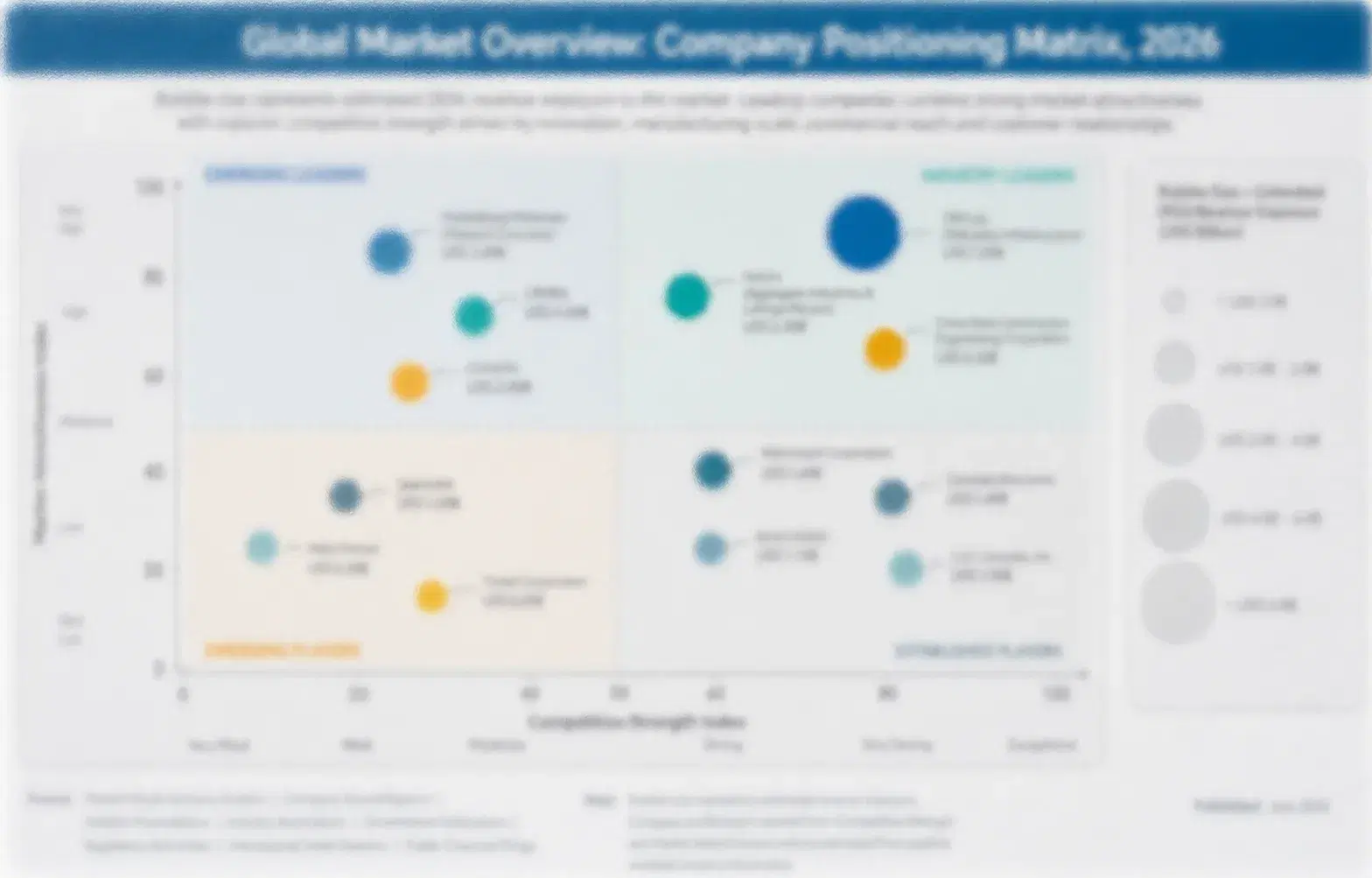
Global beetroot molasses supply remains moderately concentrated, giving this market a CR5 of 38% as vertically integrated sugar beet processors with large crushing capacity naturally control proportional molasses output. The gap between leading processors and smaller operations centers on crushing scale and buyer relationship depth rather than any proprietary production technology, since molasses characteristics depend mainly on beet quality and processing method.
Competitive activity currently plays out across three dimensions: building structured fermentation buyer relationships through multi-year contracts, investing in quality differentiation against cane molasses imports, and exploring specialty compound extraction to capture additional byproduct value. Processors combining all three capabilities increasingly separate themselves from smaller operations still selling molasses as an undifferentiated commodity stream into spot markets. Several processors now bundle contracts with technical support to differentiate against commodity resellers.

Emerging pressure is coming from fermentation buyers themselves, several of which have begun exploring direct multi-year offtake agreements that bypass traditional grain trading intermediaries entirely to secure feedstock certainty. This trend could meaningfully reshape processor rankings if fermentation buyers increasingly favor processors willing to commit dedicated production capacity to long-term agreements over flexible spot-market allocation strategies. Watch whether processors respond by acquiring extraction operations or building capability internally instead.
beetroot-molasses-market-company-positioning-matrix-1789952751754

Competitive Moat and Risk Dimensions

SUDZUCKER AG

Moat: Largest European crushing capacity

Sudzucker operates the largest sugar beet crushing capacity in Europe, giving it molasses output scale that smaller regional processors cannot match and letting it serve both large fermentation buyers and traditional feed compounders simultaneously without capacity constraints limiting either channel. This scale advantage lets it serve both fermentation and feed buyers simultaneously without capacity constraints limiting either channel meaningfully.
SUDZUCKER AG

Risk: European sugar price exposure

Sudzucker's molasses output scales directly with its sugar beet crushing volume, which itself responds to European sugar price cycles rather than molasses demand directly. A period of depressed sugar prices discouraging planting could constrain molasses supply even during strong fermentation demand. A period of depressed prices discouraging beet planting could constrain supply even during strong demand.
TEREOS SA

Moat: Integrated fermentation and bioethanol operations

Tereos operates its own bioethanol and fermentation production alongside beet processing, giving it direct internal demand for molasses output that shields a meaningful share of its volume from external market pricing pressure while still allowing it to sell surplus volume into external fermentation and feed channels opportunistically.
TEREOS SA

Risk: Complex cooperative governance structure

Tereos operates as a farmer cooperative, which can slow strategic decision-making around capital allocation toward specialty extraction or fermentation partnership investments relative to investor-owned competitors able to move more quickly on capacity or partnership decisions. This governance structure has occasionally slowed the company relative to nimbler investor-owned competitors in recent years.

Players Tracked

Prominent Players

Sudzucker AG
Tereos SA
Royal Cosun (Cosun Beet Company)
Nordzucker AG
British Sugar plc

Other Key Players

American Crystal Sugar Company
Michigan Sugar Company
Western Sugar Cooperative
AGRANA Beteiligungs AG
Pfeifer & Langen GmbH & Co KG
Cristal Union
Nordic Sugar A/S
Danisco A/S
Imperial Sugar Company
Wilmar International Limited
Louis Dreyfus Company
Cargill Incorporated
Archer-Daniels-Midland Company
Sucden (Sucres et Denrees SA)
Associated British Foods plc

Recent Developments

APRIL 2025

Tereos Expands Bioethanol Molasses Intake Capacity

Tereos announced expanded internal molasses intake capacity at its French bioethanol facilities, aiming to process a larger share of its own beet processing byproduct internally rather than selling it into external feed and fermentation markets. The expansion represents organic growth rather than an acquisition or joint venture.
Signal: Signals a leading processor prioritizing internal fermentation value capture, with rivals watching closely. They may follow with similar moves soon.
NOVEMBER 2024

Sudzucker Signs Multi-Year Fermentation Supply Agreement

Sudzucker entered a multi-year supply agreement with a major European citric acid producer, securing guaranteed molasses allocation and defined fermentable sugar content specifications for the buyer's production needs. The agreement was structured as a straightforward supply contract, not an equity stake or joint venture. Terms beyond the structure were undisclosed.
Signal: Confirms fermentation buyers are locking in supply relationships ahead of tighter seasons industry-wide. Similar deals should follow across the market.
JULY 2025

American Crystal Sugar Invests in Specialty Extraction Capability

American Crystal Sugar announced investment in betaine extraction capability at one of its Minnesota processing facilities, aiming to capture additional byproduct revenue ahead of selling remaining molasses volume into feed and fermentation channels. The investment represents organic capability expansion rather than a corporate transaction. Output is expected within a year.
Signal: Confirms specialty extraction is becoming a genuine strategic priority across major processors. Competing processors are expected to evaluate similar investments.

Beet Crop Outcomes Set the Cost Baseline

Molasses cost structure differs fundamentally from most industrial feedstocks, since it is a byproduct ratio rather than a manufactured cost buildup. The relevant cost driver is sugar beet feedstock cost itself, which typically represents 60 to 70% of a processor's allocated cost basis for molasses once co-product accounting is applied across the full beet crush. Export logistics accounts for most of the remaining share.
A weaker than usual 2023 European beet harvest tightened available molasses supply and pushed spot prices for standard export grade noticeably higher, according to processor disclosures consistent with broader European Commission agricultural market reporting covering the affected growing regions. Buyers without long-term supply contracts absorbed most of this price increase directly into their input costs. Several buyers subsequently began negotiating longer contract terms to insulate against future harvest shortfalls.

Feed compounders purchasing on the spot market carry meaningfully more cost exposure than fermentation buyers with multi-year processor agreements, since spot pricing moves quickly during a weak harvest while contracted volume typically carries pre-negotiated price ceilings. This growing gap increasingly separates which buyer segments can sustain stable production planning and which must adjust formulations reactively each season. This divide is widening as fermentation demand accelerates.
beetroot-molasses-market-cost-volatility-analysis-1789952752116

Multi-Year Supply Contracts with Price Ceilings

Larger buyers increasingly negotiate multi-year agreements directly with major processors that include defined price ceilings, reducing exposure to spot-market volatility that smaller buyers must absorb directly into their cost base during a weak beet harvest season each cycle. This approach proved especially valuable during the weaker 2023 harvest, when spot buyers faced the steepest increases.

Diversified Sourcing Across Multiple Growing Regions

Processors and large buyers increasingly diversify sourcing across France, Germany, the United States, and Russia simultaneously, reducing exposure to any single region's harvest outcome and smoothing overall supply availability across a broader geographic footprint each season. Buyers relying on a single growing region face meaningfully more volatility than those spreading purchases across several regions.

Alternative Feedstock Blending for Feed Compounders

Feed compounders increasingly blend molasses with alternative binder ingredients during periods of tight supply or elevated pricing, reducing per-unit dependence on molasses without eliminating the ingredient entirely from finished feed formulations across their product range. This flexibility has become increasingly valuable given how frequently harvest outcomes vary across producing regions each year. It also strengthens position during regional shortfalls.

Portfolio Architecture for Margin Defence

The beetroot molasses market splits into three commercial tiers: standard export grade sold into mainstream animal feed compounding, documented premium grade demanded by fermentation and specialty food buyers, and high-value extracted specialty compounds like betaine sold at meaningfully stronger margins than raw molasses itself. Margin economics differ sharply across these tiers, reflecting quality documentation and processing investment. Certification overhead explains most of this gap.
Processors face a genuine strategic tension between maintaining reliable standard-grade volume for traditional feed compounder relationships and reallocating capacity toward premium fermentation buyers or specialty extraction that commands meaningfully stronger margins. Those building flexible allocation capability across all three tiers capture the widest addressable revenue base, though doing so requires investment in quality documentation systems. Processors lacking capital reserves often default toward the safer volume strategy by necessity.

High-value margin pools concentrate overwhelmingly in specialty extracted compounds and premium fermentation-grade material, where buyers pay materially more for documented quality and consistent fermentable sugar content. Processors positioned to serve these tiers alongside standard feed volume capture the clearest path toward sustained margin expansion as fermentation demand continues broadening across bioethanol and citric acid production. This concentration is likely to deepen further as fermentation demand continues expanding globally.

Volume / Commodity-Adjacent Tier

Standard export grade molasses sold into mainstream animal feed compounding at competitive pricing, with limited quality documentation and thinner processor margins overall. Processors compete here mainly on reliable volume and landed cost rather than technical differentiation.
Gross Margin: 12-18%

Premium / Certified Tier

Documented premium grade carrying guaranteed fermentable sugar content specifications, sold to fermentation, bioethanol, and specialty food and beverage buyers. Suppliers in this tier typically maintain closer technical relationships with fermentation customers directly.
Gross Margin: 24-32%

Sustainability / Regulatory / Next-Generation Tier

Specialty extracted compounds including betaine and raffinose captured from molasses streams before remaining material enters feed or fermentation channels. Building this capability typically takes processors years of consistent capital investment.
Gross Margin: 38-46%
beetroot-molasses-market-portfolio-architecture-1789952752401

High-value Sub-segments and Strategic Watch-out

Specialty Extracted Compound Streams

Betaine and raffinose extraction from molasses commands the strongest margins in the category and continues growing fastest as processors invest in separation technology. Suppliers serving this tier increasingly compete on processing technology rather than price across the category. Growth here should outpace every other tier through the forecast period ahead.
Gross Margin: 38-46%

Documented Fermentation-Grade Molasses

Premium fermentation-grade molasses sustains strong margins with steady growth as bioethanol and citric acid producers increasingly require guaranteed quality specifications. Brand loyalty here builds gradually through repeated positive experience with documented specification consistency. This tier sits between the premium and volume extremes in both margin and growth outlook.
Gross Margin: 24-32%

Standard Animal Feed Export Grade

The largest volume segment by tonnage, competing mainly on landed price and supply reliability rather than differentiation, anchoring processor revenue at thinner margins. Price competition here remains intense given the limited differentiation available at this commodity tier. Processors rely on this volume to fund investment in higher-margin capability elsewhere.
Gross Margin: 12-18%

Cane Molasses Import Competition Exposure

Standard-grade export volume faces growing price pressure from cheaper cane molasses imports, a dynamic that could meaningfully compress margins in undifferentiated commodity channels. Processors unable to differentiate on quality risk losing this volume to cheaper cane alternatives. Watch this segment closely for signs of further cane-driven price pressure ahead.
Gross Margin: 10-16%

Contracted Allocation Anchors Repeat Buying

Once a fermentation buyer secures a multi-year supply agreement with a specific processor guaranteeing defined fermentable sugar content, switching suppliers requires requalifying an entirely new feedstock source through production trials, creating a genuine annuity dynamic for processors who secure this relationship first. Requalification costs discourage casual switching between molasses suppliers. Processors rarely get displaced once they win this first relationship.
Adoption depth varies meaningfully by end-use vertical. Fermentation and bioethanol buyers exhibit the deepest stickiness given extensive production trial and specification requalification requirements, while traditional feed compounding shows comparatively shallow stickiness since buyers can rebid standard-grade contracts more freely without the same technical requalification burden that fermentation processes carry. Specialty extraction customers sit in between, validating capability before switching but reformulating less often than feed buyers.

A younger generation of fermentation industry buyers increasingly evaluates feedstock suppliers on documented sustainability and traceability credentials rather than price alone, shifting processor investment toward quality certification and supply chain transparency. This generational shift favors processors that can document their beet sourcing and processing methods transparently over legacy suppliers competing purely on commodity pricing. Legacy processors risk losing relevance with these research-driven buyers.
beetroot-molasses-market-end-use-penetration-index-1789952752678

Where Molasses Sourcing Strategy Should Focus

These are among the four positions where our research anticipates prominent divergence between winners and laggards over the coming forecast period. Each is grounded in the demand model, the regulatory perimeter, and the announced capacity pipeline.
01 / ALLOCATION STRATEGY PRIORITY

Build structured buyer allocation programs rather than habit-based selling

Processors defaulting to traditional feed compounder relationships out of habit are leaving realized pricing on the table, since fermentation buyers have repeatedly demonstrated willingness to pay more for guaranteed allocation and quality specifications. Building structured allocation programs that actively test fermentation buyer demand each season requires modest investment in forecasting capability but delivers meaningfully stronger realized pricing than passive, relationship-based selling approaches that many smaller processors still rely on today. This gap should widen further as fermentation demand continues to outpace overall supply.
02 / CONTRACT SECURITY FOCUS

Secure multi-year fermentation contracts before the next tight harvest

Fermentation buyers without long-term supply agreements remain exposed to spot-market pricing that a poor beet harvest has already demonstrated can spike sharply. Securing multi-year contracts with defined price ceilings now, while processors still have available allocation capacity, costs less than negotiating similar terms during the next tight supply season, when processors hold considerably more negotiating leverage over pricing and allocation terms across the market. Fermentation buyers that build these relationships now will hold a durable cost advantage over slower-moving competitors well into the next decade.
03 / SPECIALTY EXTRACTION INVESTMENT

Evaluate specialty compound extraction ahead of broader industry adoption

Specialty extracted compounds like betaine command meaningfully stronger margins than raw molasses, and this segment is growing faster than the broader commodity market. Processors who invest in extraction technology now position themselves to capture this premium before more competitors enter the specialty compound category, since building comparable separation capability from scratch typically takes new entrants well over two years to complete at commercial scale. Early movers in this space stand to capture a disproportionate share of the specialty compound premium before competitors catch up.
04 / QUALITY DOCUMENTATION PRIORITY

Standardize fermentable sugar content documentation across supply contracts

Fermentation buyers increasingly require verified fermentable sugar content documentation before committing to multi-year contracts, yet no standardized testing protocol currently exists uniformly across the industry. Processors who develop and share consistent, buyer-ready documentation frameworks reduce sales cycle friction meaningfully, and early movers on this front report stronger contract renewal rates, since few competitors currently match this level of proactive quality transparency across the broader supplier landscape. This advantage compounds meaningfully as more buyers standardize their documentation expectations across the broader industry.

Engagement Snapshot From the Field

A live engagement with an industry participant carrying material or product regulatory and market exposure ahead of a defining policy shift, showing how our research translates into a defensible multi-year portfolio strategy.
MARKET MINDS ADVISORY · CLIENT ENGAGEMENT SUMMARY
Beetroot Molasses Producer Strategic Portfolio Review and Transition Roadmap 2026·Investment Scenario on Beetroot Molasses Exposure Evaluation 2025-26
CLIENT PROFILE
The client is a mid-sized European bioethanol producer operating fermentation capacity across two facilities in France and Germany, seeking to secure a long-term molasses supply agreement to reduce dependence on spot-market purchasing that had introduced meaningful input cost volatility into its production planning. Annual revenue for the relevant production segment sits in the tens of millions of euros (client-reported, unverified by MMA).
STRATEGIC CHALLENGE
The client needed to determine which of several regional processors could offer both the fermentable sugar content consistency its production process required and pricing terms that would meaningfully reduce its exposure to spot-market volatility, while also assessing whether committing to a single supplier introduced unacceptable concentration risk. Leadership also wanted assurance that any switch would not disrupt existing fermentation production schedules.
MMA APPROACH
MMA conducted a comparative supply reliability and cost assessment benchmarking four regional processors against the client's existing spot-market purchasing pattern, supplemented by fermentable sugar content testing data review and processor financial stability analysis. The engagement ran across ten weeks and drew on both processor disclosures and independent laboratory testing results.
KEY FINDINGS
  1. Fermentable sugar content testing confirmed two of the four evaluated processors could consistently meet the client's production specification requirements. No meaningful gaps were identified in either processor's documented testing history.
  2. Cost analysis showed that a three-year supply contract with defined price ceilings would reduce input cost volatility by roughly 28% relative to spot-market purchasing.
  3. Supply reliability analysis indicated that splitting volume across two processors reduced concentration risk without meaningfully increasing administrative complexity. This structure added modest administrative overhead but meaningfully reduced overall exposure.
  4. Financial stability analysis confirmed both shortlisted processors maintained sufficient beet crushing capacity to guarantee committed volumes through adverse harvest scenarios. Both processors also carried adequate financial reserves to weather a weak season.
CLIENT PROFILE
The client is a mid-sized European bioethanol producer operating fermentation capacity across two facilities in France and Germany, seeking to secure a long-term molasses supply agreement to reduce dependence on spot-market purchasing that had introduced meaningful input cost volatility into its production planning. Annual revenue for the relevant production segment sits in the tens of millions of euros (client-reported, unverified by MMA).
STRATEGIC CHALLENGE
The client needed to determine which of several regional processors could offer both the fermentable sugar content consistency its production process required and pricing terms that would meaningfully reduce its exposure to spot-market volatility, while also assessing whether committing to a single supplier introduced unacceptable concentration risk. Leadership also wanted assurance that any switch would not disrupt existing fermentation production schedules.
MMA APPROACH
MMA conducted a comparative supply reliability and cost assessment benchmarking four regional processors against the client's existing spot-market purchasing pattern, supplemented by fermentable sugar content testing data review and processor financial stability analysis. The engagement ran across ten weeks and drew on both processor disclosures and independent laboratory testing results.
KEY FINDINGS
  1. Fermentable sugar content testing confirmed two of the four evaluated processors could consistently meet the client's production specification requirements. No meaningful gaps were identified in either processor's documented testing history.
  2. Cost analysis showed that a three-year supply contract with defined price ceilings would reduce input cost volatility by roughly 28% relative to spot-market purchasing.
  3. Supply reliability analysis indicated that splitting volume across two processors reduced concentration risk without meaningfully increasing administrative complexity. This structure added modest administrative overhead but meaningfully reduced overall exposure.
  4. Financial stability analysis confirmed both shortlisted processors maintained sufficient beet crushing capacity to guarantee committed volumes through adverse harvest scenarios. Both processors also carried adequate financial reserves to weather a weak season.
RECOMMENDED STRATEGY
Phase 1: Phase 1 (Months 1 to 2): Finalize due diligence and negotiate parallel three-year contracts with two processors. Confirm both processors can meet volume requirements before signing. Phase 2: Phase 2 (Months 3 to 4): Transition production planning from spot-market purchasing to contracted volume delivery. Track realized cost savings closely against the projected estimate. Phase 3: Phase 3 (Months 5 to 12): Monitor realized cost savings and evaluate expanding contracted volume share further. Consider expanding contracted volume share if savings materialize as projected.
OUTCOME
The client completed contract negotiations with both shortlisted processors and transitioned the majority of its molasses purchasing to contracted volume, reporting input cost volatility reduction meaningfully in line with MMA's projected estimate within the first year (client-reported, unverified by MMA). The dual-supplier structure has since protected the client from a subsequent regional harvest shortfall.

Frequently Asked Questions

Foundational context covering the market sizes, CAGR, scope, country, region and competition that inform every finding below. This section is provided to cover basics and most often pre-purchase conversations, answered from the MMA Primary Research Dataset.

What is the current size of the Beetroot Molasses Market?

The market reached approximately USD 2.8 billion in 2025. This reflects global demand across animal feed, fermentation feedstock, and food and beverage applications, with fermentation demand growing meaningfully as a share of total volume in recent years.

How large will the Beetroot Molasses Market be by 2036?

The market is projected to reach approximately USD 4.31 billion by 2036. This represents roughly 1.48 times the 2026 starting value over the ten-year forecast period.

What is the CAGR for the Beetroot Molasses Market 2026 to 2036?

The market is forecast to grow at a 4.0% CAGR between 2026 and 2036. Bull and bear scenarios range from 5.2% to 2.8% depending on beet harvest outcomes.

Which segment is growing fastest?

Fermentation feedstock applications lead at a 6.8% CAGR, roughly 1.7 times the overall market rate. Industrial bioethanol production applications follow closely, reflecting shared exposure to renewable fuel blending mandates.

Who are the major companies in the Beetroot Molasses Market?

Leading processors include Sudzucker AG, Tereos SA, Royal Cosun, Nordzucker AG, and British Sugar plc. These five companies hold a combined processing capacity share of approximately 38%.

Which country is growing fastest?

The United States grows fastest at a 6.1% CAGR, ahead of the broader North American regional average. This reflects rising fermentation feedstock demand tied to domestic biofuel blending obligations.

Report Segmentation Architecture

The full report scope spans multiple orthogonal segmentation dimensions, with cross-tabulated demand data provided for each dimension pair. Coverage extends further to regional breakdowns, trend trajectories, and the competitive detail needed to support segment-level decision-making.

By Application Type

  • Fermentation Feedstock Applications
  • Industrial Bioethanol Production Applications
  • Animal Feed Applications
  • Food and Beverage Flavoring Applications
  • Natural Sweetener and Color Additive Applications
  • Pharmaceutical and Nutraceutical Applications

By End-Use Industry

  • Animal Feed Compounding
  • Bioethanol and Biofuel Production
  • Specialty Chemical Fermentation
  • Food and Beverage Manufacturing
  • Pharmaceuticals

By Commercial Dimension

  • Long-Term Supply Contract Channel
  • Spot Market Trading Channel
  • Business-to-Business Processor Direct Supply
  • Agricultural Commodity Trader Channel

By Region

  • North America
  • Western Europe
  • East Asia
  • South Asia and Pacific
  • Latin America
  • Middle East and Africa
  • Eastern Europe

Scope, Methodology, and Coverage

Every figure in this report is reproducible from documented input assumptions. The scope below maps the historical period, the forecast horizon, the segmentation dimensions, and the countries covered, alongside the underlying primary and qualitative methodology.
Historical Period
2020 to 2025
Forecast Period
2026 to 2036
Base Year
2025 (USD billions; MMA Primary Research Dataset, September 2026)
Market Definition
This report defines the beetroot molasses market as demand for the viscous byproduct remaining after sucrose extraction from sugar beet processing, used across animal feed, fermentation feedstock, food and beverage, and industrial applications globally. It excludes cane molasses except where directly compared for competitive substitution context.
Quantitative Units
USD billions (current prices); USD per tonne landed pricing where applicable
Segmentation Dimensions
By Application Type; By End-Use Industry; By Commercial Dimension; By Region
Regions Covered
North America, Western Europe, East Asia, South Asia and Pacific, Latin America, Middle East and Africa, Eastern Europe
Countries Covered
USA, China, Germany, France, UK, Japan, South Korea, India, Australia, Canada, Brazil, Mexico, Indonesia, Vietnam, Thailand, Malaysia, UAE, Saudi Arabia, South Africa, Nigeria, Turkey, Poland, Netherlands, Italy, Spain, Sweden, Switzerland, Argentina, Colombia, Singapore, and additional markets relevant to this sector
Key Companies Profiled
Sudzucker AG, Tereos SA, Royal Cosun (Cosun Beet Company), Nordzucker AG, British Sugar plc, American Crystal Sugar Company, Michigan Sugar Company, Western Sugar Cooperative, AGRANA Beteiligungs AG, Pfeifer & Langen GmbH & Co KG, Cristal Union, Nordic Sugar A/S, Danisco A/S, Imperial Sugar Company, Wilmar International Limited, Louis Dreyfus Company, Cargill Incorporated, Archer-Daniels-Midland Company, Sucden (Sucres et Denrees SA), Associated British Foods plc
Quantitative Methodology
Primary survey, n=3,800 respondents, Q4 2025, six countries; demand-side model with trade association cross-validation
Qualitative Methodology
47 expert interviews, Q4 2025; applied to validate demand model assumptions, identify emerging dynamics, and assess competitive positioning
Report Format
PDF and XLSX data workbook (Word format preview document)
Publisher
Market Minds Advisory
Report Code
MMA-2026-AGR-108
Published
September 2026
Contact
sales@marketmindsadvisory.com | www.marketmindsadvisory.com

Purchase the full Beetroot Molasses Market Report (2026 to 2036).

This report delivers a complete commercial assessment of the global beetroot molasses market, covering sizing, segmentation, and regional demand through 2036. It profiles twenty processors and commodity traders serving this byproduct-driven supply chain, detailing competitive positioning, allocation strategy, and contract structures in depth. Analysis extends to beet harvest cost exposure and mitigation pathways, portfolio margin economics across three commercial tiers, and demand architecture driving buyer switching costs over time. Bull and bear forecast scenarios are modeled explicitly against named commercial catalysts and clearly identified downside risks.
Ten-year sizing and forecast model through 2036
Six-segment application demand breakdown by category
Seven-region demand distribution and share analysis
Twenty-company competitive profile and positioning assessments
Beet harvest cost and volatility assessment
Portfolio tier margin economics and pricing analysis

Built For The People Who Decide

From boardroom strategy to bench-side execution, this report is read cover-to-cover by leaders shaping the next decade of their industry, turning demand scenarios, market dynamics and valuation benchmarks into decisions.
CXOs/ Presidents/ VPs/ Managers
M&A and Corporate Development
Strategy Teams and R&D Heads
Procurement and Product Directors
Regulatory and Compliance Leaders
Investor Relations and Equity Analysts