Market Minds Advisory
Automatic Filling Machine Market

Automatic Filling Machine Market: Aseptic Demand Redraws Line Specification

Rising aseptic packaging requirements across dairy, beverage, and biologics production are pushing manufacturers toward sterile fill technology, while precision dosing demands in pharmaceutical and cosmetics lines accelerate adoption of gravimetric filling systems worldwide.

Lead Analyst

Published

September 2026

Make Smarter Decisions with Customized Research Insights

Request a free sample report and evaluate market opportunities, growth trends, and competitive dynamics relevant to your business needs.

2025 MARKET VALUE$6.8BMarket Size 2025
2036 FORECAST VALUE$13.4BBase Case , 2026 to 2036
CAGR 2026 TO 20366.4 %Bull 7.6% / Bear 5.2%
INCREMENTAL OPPORTUNITY$6.2BNet 10- year value creation
EXPANSION MULTIPLE1.86x2036 value over 2026 base
Strategic Levers
M&A Pipeline
Regional Outlook
Country Rankings
Competitive Intelligence
Segmental Deep-dive
Call-Us : 91 93563 13602

Executive Snapshot and Market Trajectory

Aseptic packaging requirements are compressing the line replacement cycle faster than food and beverage manufacturers originally budgeted for, forcing capital planning around sterility validation timelines rather than around general output capacity alone, a genuine reversal from how filling line specification worked five years ago across most major producing markets.
Aseptic fillers are pulling ahead of every other category as dairy, beverage, and biologics manufacturers seek extended shelf life without refrigeration or preservatives that consumers increasingly reject on ingredient labels. Western Europe concentrates the largest share of commercial volume given its dense concentration of major packaging machinery engineering houses clustered around Italy and Germany, while India is growing fastest as generic pharmaceutical and FMCG manufacturing capacity expands rapidly across the country and its export corridors.
Competition splits between a handful of European engineering conglomerates with deep mechatronic heritage and numerous regional specialists defending long-standing food, beverage, and pharmaceutical customer relationships built over decades of documented validation history. Tightening sterility validation requirements, combined with rising demand for gravimetric dosing precision, are raising the engineering bar that competitors without dedicated automation budgets increasingly struggle to clear across most regulated categories.
Market Definition
The automatic filling machine market covers piston, gravity, pump, net weigh gravimetric, vacuum, and aseptic filling machines sold for dispensing liquid, powder, and semi-solid products into containers across food and beverage, pharmaceutical, cosmetics, and industrial chemical packaging applications. It excludes standalone capping and labelling equipment sold separately, manual and semi-automatic filling equipment, and filling machines integrated exclusively into beverage can or bottle manufacturing lines as original equipment.
Base Year Value
$6.8B in 2025 (MMA Primary Research Dataset, August 2026)
Forecast Period
2026 to 2036, eleven discrete annual values
CAGR
6.4% base case. Bull 7.6%. Bear 5.2%.
Fastest Growth Segment
Aseptic Fillers: 10.6% CAGR
Fastest Growth Country
India: 9.8% CAGR
Fastest Growth Region
South Asia and Pacific: 8.4% CAGR
Largest Region
Western Europe: 26% of 2025 global value
Market Leaders
Krones AG, KHS GmbH, GEA Group Aktiengesellschaft, Coesia S.p.A., IMA S.p.A. Source: MMA Analysis based on company annual reports and investor filings.
Primary Survey
n=3,800 procurement and R&D decision-makers, Q4 2025, six countries
Methodology
Demand-side build-up, cross-validated against public data, 47 expert interviews

Automatic Filling Machine Market Forecast Scenarios

automatic-filling-machine-market-size-forecast-scenario-1786463179603
Growth from 2020 to 2025 compounded near 5.5%, held back early by pandemic-era capital budget freezes that delayed food and beverage line expansion across most major markets and their supply chains for well over a year, then accelerated steadily as deferred packaging investment resumed entering the back half of the five-year historical period tracked closely throughout this analysis.
Three mechanisms carry the base case to 6.4%. First, expanding aseptic packaging adoption, which requires sterile fill technology that traditional filling lines cannot provide without substantial retrofit investment across most existing production networks. Second, tightening pharmaceutical and cosmetics dosing precision requirements, which push manufacturers toward gravimetric filling systems over volumetric alternatives that regulators increasingly view as insufficient. Third, expanding generic pharmaceutical and FMCG manufacturing capacity across South Asian markets, which drives substantial new filling line investment across the region.
The bull case at 7.6% assumes aseptic packaging adoption accelerates faster than current regulatory timelines suggest and Indian pharmaceutical manufacturing investment outpaces current national targets by a meaningful margin. The bear case at 5.2% assumes consumer packaged goods demand softens under broader economic pressure and manufacturers defer line replacement decisions across several major markets simultaneously.

Sterility Validation Becomes the Line Design Standard

Three forces converge on this market simultaneously. Aseptic packaging requirements keep expanding across dairy, beverage, and biologics production as consumers reject preservatives while still demanding extended shelf life without refrigeration. Pharmaceutical and cosmetics manufacturers keep tightening dosing precision requirements that push specification toward gravimetric filling systems over volumetric alternatives regulators increasingly view as insufficient. Generic pharmaceutical and FMC
MARKET CONCENTRATIONCR5 34%Reflects fragmentation across specialist packaging machinery manufacturers competing nationally
AVERAGE LINE PRICEUSD 85,000-3.2 millionVaries substantially by fill technology and validated throughput speed
TOP PRODUCING COUNTRY SHAREGermany 19%Reflects concentrated mechatronic engineering and precision manufacturing expertise base
CAPACITY UTILISATION71%Reflects cyclical packaging demand against expanding manufacturing production lines
TRADE INTENSITY48%Share of equipment crossing borders before reaching final production facility
INPUT COST SHARE42%Precision servo motors, stainless steel fabrication, and control electronics combined
Commercially, the market splits between European engineering conglomerates selling broad mechatronic platforms through established distributor and systems integrator networks, and regional specialists defending long-standing food, beverage, and pharmaceutical relationships built over decades of documented validation history. Engineering conglomerates capture more value through integrated line automation and validation consulting, while regional specialists compete primarily on local service responsiveness and installation cost rather than on breadth of engineering catalog.
Looking ahead, expanding aseptic adoption, tightening dosing precision requirements, and Indian manufacturing capacity expansion will shape which manufacturers capture the fastest-growing demand pools over the coming decade, rewarding those who invested early in both sterility engineering depth and regional service reach rather than those chasing volume tenders on price alone.
"Filling used to be the boring part of the line. Now it's the part that decides whether the whole batch passes sterility validation, and that's rewritten who wins the contract."
Director, Packaging Machinery and Automation Practice · MMA Packaging - Filling

Market Trends

Aseptic Packaging Adoption Accelerates Across Dairy and Beverage

Dairy, plant-based beverage, and biologics manufacturers keep expanding aseptic packaging adoption as consumers increasingly reject preservatives while still demanding extended shelf life without refrigeration throughout distribution and retail. Manufacturers previously running conventional hot-fill or preservative-based lines increasingly rewrite capital plans to prioritise aseptic conversion ahead of other packaging upgrades, since consumer preference shifts have made preservative-free positioning a genuine competitive requirement rather than a premium niche. Manufacturers with validated sterile fill platforms already proven across comparable dairy and beverage conversions are capturing line contracts that competitors still completing sterility validation testing cannot bid on.
Market Impact: Indian pharma output grew 14%

Gravimetric Dosing Precision Becomes Pharmaceutical Standard

Pharmaceutical and cosmetics regulators across major markets keep tightening dosing accuracy requirements for injectable, topical, and oral liquid formulations, pushing manufacturers toward gravimetric net weigh filling systems that measure actual product mass rather than volumetric fill level that temperature and viscosity variation can distort. This shift is reshaping which manufacturers can compete profitably for pharmaceutical contracts, since achieving validated gravimetric accuracy requires precision engineering investment that smaller regional manufacturers increasingly cannot match. Manufacturers with validated high-precision gravimetric platforms are capturing pharmaceutical design wins that competitors still relying on volumetric technology cannot match on documented accuracy.
Market Impact: Preservative-free demand grew over

Market Opportunities and Growth Drivers

Indian Pharmaceutical Manufacturing Capacity Expands Rapidly

India's generic pharmaceutical manufacturing sector continues expanding production capacity as domestic producers scale output to serve both massive internal demand and growing export markets across Africa, Latin America, and Southeast Asia simultaneously and aggressively. Each new pharmaceutical facility approved under national manufacturing policy requires substantial validated filling line investment meeting international regulatory standards rather than domestic-only specification. Indian pharmaceutical companies increasingly treat filling line validation as a critical path item in facility commissioning rather than a downstream procurement decision, pushing manufacturers further into the design conversation earlier in project development than before.
Market Impact: Servo motor costs rose over 22%

Consumer Preservative-Free Demand Reshapes Beverage Packaging

Consumer demand for preservative-free and minimally processed beverages keeps climbing across most major markets, forcing beverage manufacturers to adopt aseptic filling technology that preserves shelf life without chemical additives that health-conscious buyers increasingly scrutinise on ingredient labels. Retailers increasingly favor suppliers with documented aseptic packaging credentials in category placement and promotional decisions, pushing manufacturers to treat aseptic conversion as a commercial necessity rather than a cost centre. Manufacturers with proven aseptic conversion platforms are winning beverage manufacturer contracts that competitors relying on conventional fill technology increasingly cannot match on shelf life credentials.
Market Impact: Adds 6 to 12 weeks

Market Restraints and Challenges

Precision Component Cost Inflation Squeezes Equipment Margin

Precision servo motor and stainless steel fabrication pricing has risen considerably faster than general industrial inflation across recent years, squeezing margin on fixed-price equipment supply contracts signed before the cost increases materialised. The root cause is direct exposure to global specialty component markets that equipment manufacturers cannot meaningfully influence through their own purchasing scale alone. The commercial impact falls hardest on smaller regional manufacturers lacking purchasing volume to negotiate favorable long-term supply terms. Several manufacturers now build cost escalation clauses into customer agreements and are qualifying alternative component suppliers where performance requirements allow it.
Market Impact: Aseptic line orders rose 30%

Validation Engineer Shortage Delays Line Commissioning

A persistent shortage of qualified validation engineers capable of certifying aseptic and gravimetric filling lines is delaying commissioning projects even when equipment procurement and installation proceed on schedule without complication. The root cause traces to insufficient specialist training pipeline investment relative to the pace of aseptic and pharmaceutical line expansion across most major manufacturing markets globally. The commercial impact includes extended commissioning timelines and rising validation labor costs that erode the total project economics manufacturers originally budgeted for. Several manufacturers now offer factory-based validation support teams and remote commissioning assistance that reduce dependence on scarce specialist labor on site.
Market Impact: Dosing tolerance requirements tight
3 additional market trends, 3 additional growth drivers, and 2 additional restraints and challenges are covered in the full report. Contact sales@marketmindsadvisory.com to access the complete intelligence.

Segment CAGR and Growth Architecture

Segmentation follows fill mechanism and dosing technology rather than end-use application, since a single aseptic or gravimetric platform commonly serves food, beverage, and pharmaceutical applications simultaneously across very different production scales and geographies worldwide. This reflects how manufacturers actually organise product engineering, validation qualification, and commercial catalog structure internally across their own operating divisions and regional sales teams.
automatic-filling-machine-market-market-share-analysis-1786463179765

Aseptic Fillers

Aseptic fillers sterilise both the product and packaging container immediately before filling, most valued where dairy, beverage, and biologics manufacturers need extended shelf life without refrigeration or preservatives that consumers increasingly reject on ingredient labels. Growth outpaces every other category as manufacturers increasingly specify aseptic capability at the design stage for new production lines rather than treating it as a future upgrade path considered only later. Manufacturers with validated sterile fill platforms already proven across comparable dairy and beverage conversions are capturing contracts that competitors still completing sterility validation testing cannot match. Germany and Italy drive the bulk of current volume given their concentration of active aseptic engineering expertise and validated platform manufacturing currently online.
CAGR 10.6%

Net Weigh Gravimetric Fillers

Net weigh gravimetric fillers measure actual product mass during dispensing rather than relying on volumetric fill level that temperature and viscosity variation can distort, most valued where pharmaceutical and cosmetics regulators demand documented dosing accuracy beyond what volumetric technology can reliably provide. Growth is second-fastest across the segmentation, driven by tightening regulatory dosing tolerance requirements across major pharmaceutical markets pursuing harmonised international standards. Manufacturers with validated high-precision gravimetric platforms are winning pharmaceutical design wins that competitors still relying on volumetric technology increasingly cannot match on documented accuracy. Pricing reflects that precision, commanding meaningfully higher per-unit value than standard volumetric alternatives across comparable throughput capacity, particularly among injectable and biologics customers with the strictest documented tolerance requirements.
CAGR 9.1%
Full segment breakdown across 6 segments available in the complete report.

Regional Architecture and Country Demand Map

Western Europe holds the largest share given its dense concentration of major packaging machinery engineering houses clustered around Italy and Germany. India is growing fastest as generic pharmaceutical and FMCG manufacturing capacity expands rapidly nationwide, serving both domestic and export demand across several manufacturing hubs.

North America

The United States drives the overwhelming majority of regional demand through sustained pharmaceutical and consumer packaged goods production activity, with FDA validation requirements pushing manufacturers toward documented aseptic and gravimetric technology across most regulated production categories. Domestic beverage manufacturing, particularly plant-based and preservative-free product lines, is generating meaningful additional aseptic filling demand beyond traditional pharmaceutical categories reviewed across most manufacturing plans. Canada contributes a significant base through its own dairy and beverage processing sector, particularly operations serving both domestic and export markets across neighbouring states and provinces. Validation engineer availability remains the binding constraint on commissioning pace across much of the region, more so than equipment supply or project financing timelines.
Share: 25% | CAGR: 6.7% (2026 to 2036)

Western Europe

Italy anchors regional demand through its dense packaging machinery engineering cluster centred around Bologna, widely recognised as one of the world's most concentrated hubs for filling and packaging equipment manufacturing expertise. Germany contributes deep mechatronic and precision engineering capability through several globally significant manufacturers headquartered there, serving pharmaceutical and food customers internationally from European design and manufacturing bases spanning several decades of accumulated engineering knowledge. The region's substantial domestic pharmaceutical and food production base sustains steady replacement demand independent of export market cycles entirely. Growth trails the global average because much of the region's own industrial base already carries modern validated equipment installed during previous capital investment cycles across most major facilities.
Share: 26% | CAGR: 4.9% (2026 to 2036)
Regional intelligence for 5 additional markets available in the complete report: East Asia, South Asia and Pacific, Latin America, Middle East and Africa, Eastern Europe. Contact sales@marketmindsadvisory.com.
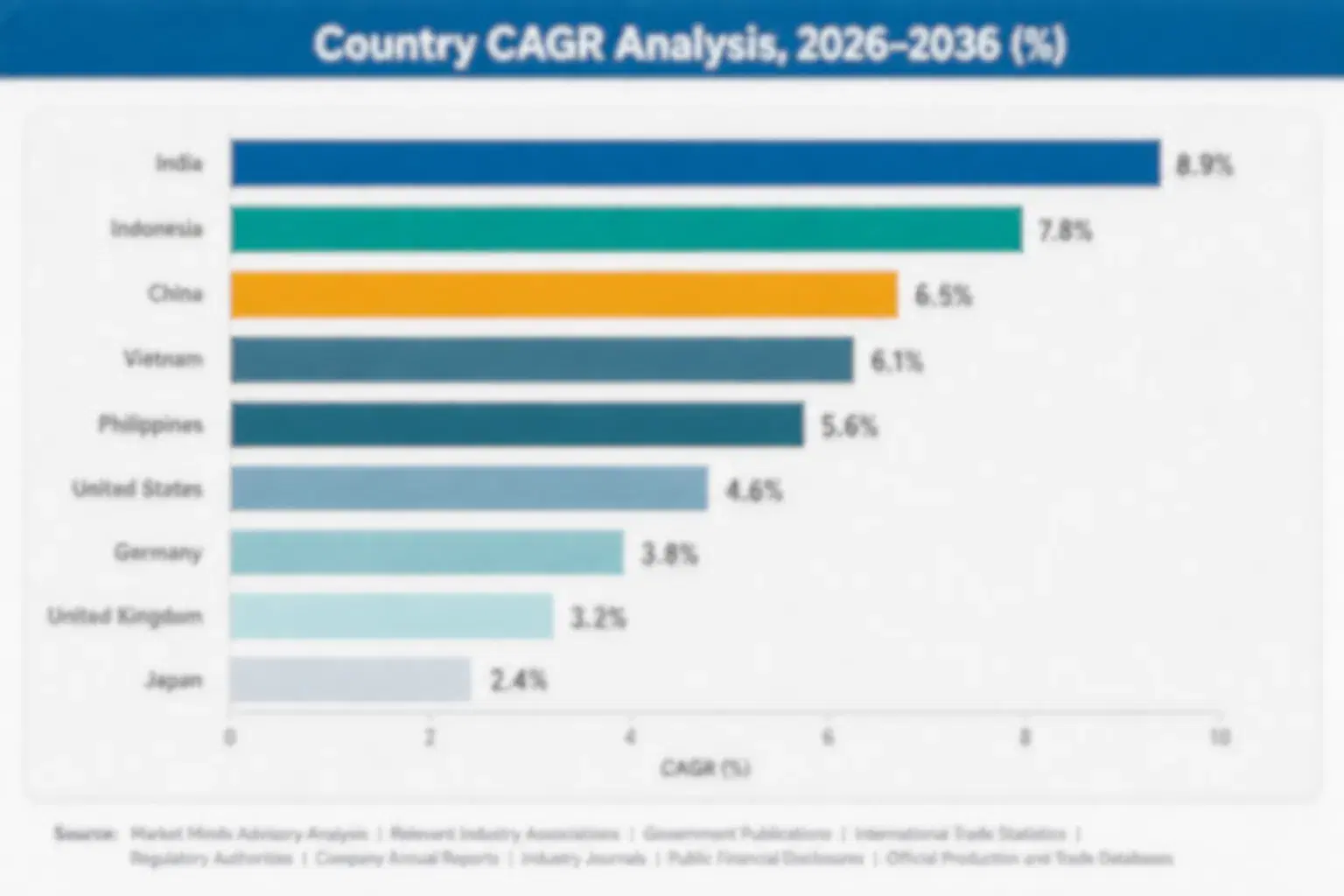
automatic-filling-machine-market-country-cagr-analysis-1786463179932

Where Manufacturers Can Capture More Value

Manufacturers sit between tightening sterility validation requirements and rising dosing precision expectations, a position that offers several distinct paths to capture more value than a standard equipment sale provides, particularly as validation consulting and service contracts gain commercial importance among food, beverage, and pharmaceutical customers. The four levers below reflect where margin is genuinely shifting across the industry today.

Bundle Sterility Validation Consulting With Equipment

Food, beverage, and pharmaceutical customers navigating increasingly demanding aseptic validation requirements increasingly prefer suppliers who bundle sterility consulting with equipment sales, since that pairing reduces the customer's own regulatory risk considerably compared with sourcing equipment and validation guidance separately from different vendors during time-sensitive commissioning windows. Krones and GEA have both expanded dedicated validation consulting practices covering projects worth well over USD 450 million combined across recent years of active engagement. That structure builds stickier customer relationships since switching suppliers mid-project would force manufacturers to restart sterility testing entirely from scratch.
Market Impact: Consulting practices now exceed USD

Expand Service Contracts Around Installed Line Base

Filling lines require regular calibration and component replacement across their 15 to 20 year operating life, and manufacturers who maintain the original installation relationship into ongoing service contracts capture recurring revenue considerably more predictable than one-time equipment sales alone ever provide across a comparable ownership period. That relationship also generates early visibility into a customer's future expansion and upgrade plans before competitors even learn a tender is coming their way at all. Building this service depth should rank above chasing every available new installation opportunity arising across the wider market.
Market Impact: Lines need calibration across 15 to

Expand Retrofit Kits for Aseptic Conversion Projects

Conventional filling lines converting to aseptic capability represent a considerably larger addressable market than new-line demand alone could ever support, since over 55% of installed filling lines currently in service predate widespread aseptic adoption entirely across most major producing regions. Manufacturers offering validated retrofit kits capture conversion contracts that new-equipment-only suppliers increasingly cannot match, generating meaningful revenue through phased line upgrades that unfold across multiple budget cycles rather than a single capital purchase decision made all at once. Building this retrofit depth should rank above chasing every available new-construction opportunity exclusively.
Market Impact: Retrofit-eligible installed base no

Expand Indian Manufacturing and Validation Support

Indian pharmaceutical and FMCG manufacturing demand is scaling quickly, growing near 10% annually, as domestic producers expand output to serve both massive internal demand and growing export markets requiring validated equipment meeting international regulatory standards. Manufacturers establishing local manufacturing, distribution, and validation support presence early are winning multi-year manufacturer contracts before competitors relying solely on imported equipment can match local pricing and commissioning turnaround speed across comparable facility scale. That early-mover position compounds considerably as India's manufacturing sector keeps climbing through the remainder of the decade ahead of most regional peers.
Market Impact: Indian demand grows near 10% each y

Who Controls the Margin Pool

Concentration sits at a moderate 34% for the top five, reflecting a market split between European engineering conglomerates with deep mechatronic heritage and numerous regional specialists defending long-standing food, beverage, and pharmaceutical relationships. The gap between leaders and challengers comes down to validation engineering depth and service network reach rather than raw manufacturing scale alone. All participants here are assessed on one basis, annual equipment manufacturing reven
Competition runs along three lines. First, sterility engineering depth, since manufacturers with validated aseptic platforms win line tenders competitors still completing validation cannot bid on. Second, gravimetric precision capability, as pharmaceutical and cosmetics customers increasingly demand documented dosing accuracy bundled into standard specifications. Third, service network reach, particularly for manufacturers pursuing fast-growing South Asian markets directly.

Pressure is building from two directions. Chinese manufacturers are narrowing the aseptic engineering gap considerably faster than expected, squeezing volume established European manufacturers previously captured on validation reputation alone. Meanwhile larger conglomerates keep acquiring specialty validation technology developers to fill capability gaps rather than build organically, consolidating the field further. Rankings should favor manufacturers combining sterility depth with genuine regional service reach.
automatic-filling-machine-market-company-positioning-matrix-1786463180096

Competitive Moat and Risk Dimensions

KRONES AG

Moat: Broad application engineering breadth

Krones' product portfolio spans beverage, dairy, and pharmaceutical applications simultaneously, letting it cross-sell across buyer categories that narrower competitors cannot reach with a single relationship. Its scale supports engineering investment in next-generation aseptic platforms that smaller specialist manufacturers typically cannot match on comparable research budgets.
KRONES AG

Risk: Beverage sector cyclical exposure

Krones' revenue remains closely tied to cyclical beverage industry capital spending, leaving it more exposed than diversified competitors to any prolonged slowdown in beverage manufacturer capital investment that delays project approvals across its core end markets. A sustained downturn in beverage capital budgets would weigh on order intake more heavily than it would for rivals with broader pharmaceutical exposure.
GEA GROUP AKTIENGESELLSCHAFT

Moat: Deep dairy engineering heritage

GEA's century-long dairy and food processing engineering heritage gives it deep aseptic credibility with food and biologics customers worldwide, supporting premium pricing that narrower regional competitors cannot command. Its integrated process and filling technology portfolio supports bundled sales that standalone filling manufacturers cannot offer, particularly across large dairy processor accounts.
GEA GROUP AKTIENGESELLSCHAFT

Risk: Complex multi-division integration

GEA manages filling technology across multiple internal business divisions with historically separate engineering teams, creating integration complexity that can slow decision-making and dilute engineering focus relative to more narrowly concentrated competitors pursuing a single unified product roadmap across a smaller, more coordinated organisation with fewer internal reporting layers to navigate.

Players Tracked

Prominent Players

Krones AG
KHS GmbH
GEA Group Aktiengesellschaft
Coesia S.p.A.
IMA S.p.A.

Other Key Players

Tetra Pak International S.A.
Sidel Group
Bausch+Ströbel Maschinenfabrik Ilshofen GmbH + Co. KG
Marchesini Group S.p.A.
Optima Packaging Group GmbH
Syntegon Technology GmbH
ProMach Inc.
Barry-Wehmiller Companies, Inc.
Accutek Packaging Equipment Companies, Inc.
Shibuya Corporation
Zhangjiagang King Machine Co., Ltd.
Shanghai NPACK Machinery Co., Ltd.
Serac Group
Cozzoli Machine Company
Federal Manufacturing Co.

Recent Developments

FEBRUARY 2025

Krones launches expanded aseptic filling platform for plant-based beverages

Krones launched an expanded aseptic filling platform specifically engineered for plant-based beverage manufacturers requiring sterile fill technology beyond what its prior generation equipment could reliably handle. This was a product launch rather than an acquisition, extending its aseptic engineering into a broader customer base worldwide.
Signal: Equipment makers are increasingly launchin
SEPTEMBER 2024

GEA acquires specialty gravimetric dosing technology developer

GEA acquired a specialty gravimetric dosing technology developer to strengthen its pharmaceutical precision filling portfolio rather than continue developing comparable technology internally for select injectable applications across its broader catalog and customer base. This was a confirmed acquisition, extending GEA's engineering capability directly and permanently across its pharmaceutical division.
Signal: Larger manufacturers are acquiring special
APRIL 2025

IMA signs multi-year supply agreement across Indian pharmaceutical programme

IMA signed a multi-year equipment supply agreement covering validated filling line deliveries across several Indian pharmaceutical manufacturing expansion projects currently under active construction across multiple states. This was a confirmed supply agreement rather than an acquisition, extending IMA's South Asian presence directly and substantially over time.
Signal: Equipment supply agreements are increasing

Precision Servo Motor and Steel Fabrication Exposure

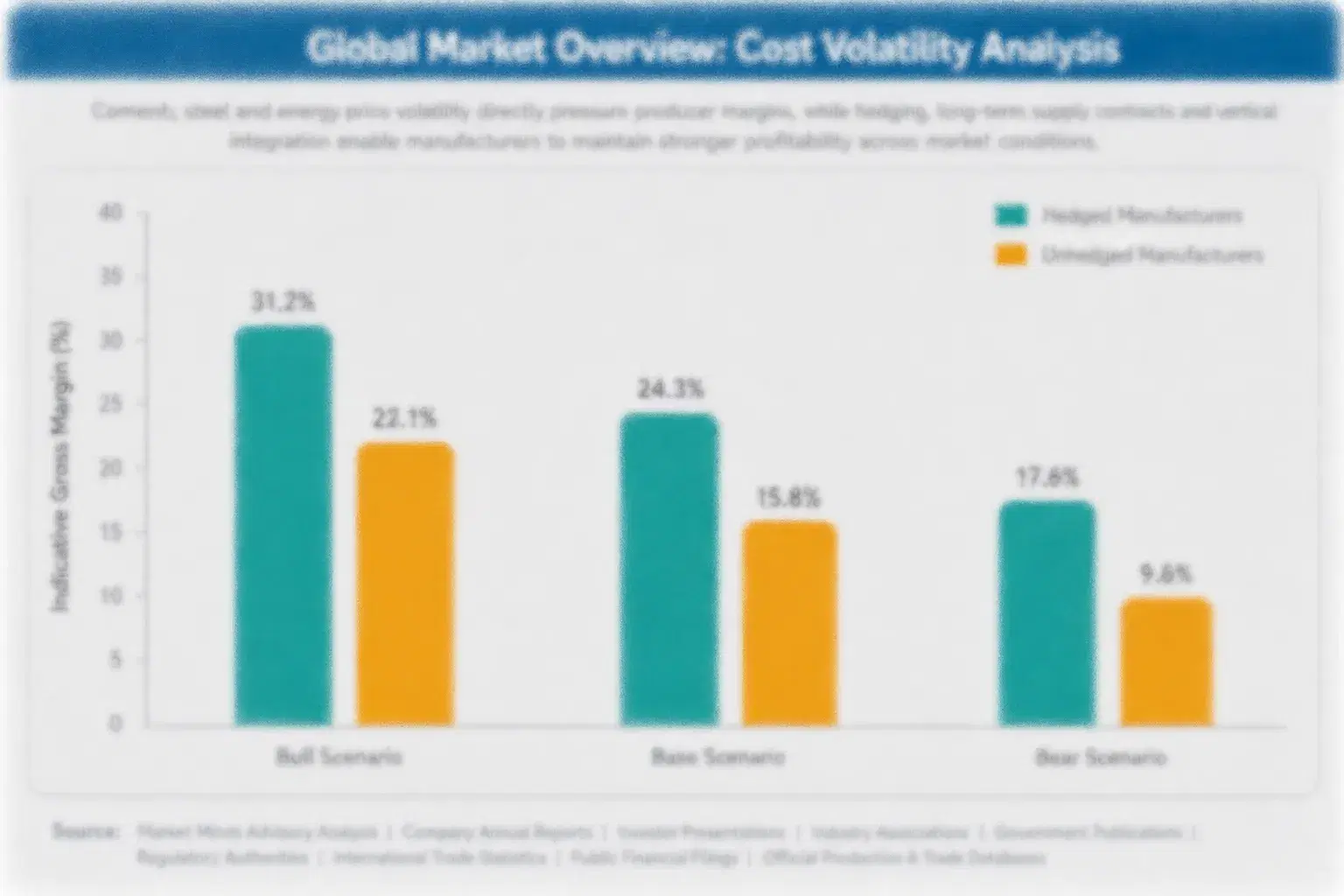
Precision servo motors, stainless steel fabrication, and control electronics together make up roughly 42% of equipment cost of goods sold, with servo motors sourced through a smaller number of qualified specialty suppliers subject to their own certification requirements, and stainless steel sourced through global commodity markets manufacturers cannot meaningfully influence on their own regardless of purchasing scale.
Stainless steel prices rose considerably through 2024, with EIA and broader commodity market data showing sustained upward pressure tied to tariff policy and global infrastructure demand competing directly with equipment manufacturers for available specialty steel supply across every major producing region. Several manufacturers absorbed a meaningful share of the cost increase rather than risk losing fixed-price customer supply agreements already under signed contract before the volatility began that year, eroding project margin more than originally budgeted.

Larger engineering conglomerates with greater purchasing scale negotiate more favorable servo motor and steel pricing than smaller regional specialists, who typically lack comparable volume leverage with upstream suppliers across most commodity markets. That gap widens further for specialists dependent on a small number of servo motor suppliers, since switching suppliers requires renewed qualification testing that can take several months to complete fully across each affected product line.
automatic-filling-machine-market-cost-volatility-analysis-1786463180273

Qualify Multiple Servo Motor Suppliers

Manufacturers qualifying two or more suppliers for critical servo motors and control components reduce single-source dependency risk considerably, though the qualification process itself requires meaningful upfront engineering investment and lead time before a second source becomes usable in volume production supporting validated line reliability requirements across every affected product family and customer contract signed under current supply terms.

Negotiate Multi-Year Steel-Indexed Supply Contracts

Manufacturers negotiating multi-year stainless steel supply contracts with indexed pricing formulas protect margin predictability better than those repricing purchases annually, a structure that requires accepting somewhat higher baseline pricing in exchange for materially reduced volatility exposure across the full contract term negotiated upfront with each supplier and renewed periodically thereafter as market conditions shift.

Build Cost Escalation Clauses Into Customer Agreements

Manufacturers building input cost escalation clauses directly into multi-year customer supply agreements pass volatility through to buyers rather than absorbing it against thin project margin, a structure that protects profitability during price spikes though it requires negotiating leverage smaller specialists often lack against larger food, beverage, and pharmaceutical buyers with considerably more purchasing scale.

Portfolio Architecture for Margin Defence

The portfolio splits into three tiers with sharply different economics. Standard piston and gravity fillers form the volume tier, competing largely on price and delivery lead time with margin set by component cost and manufacturing scale. Aseptic and gravimetric fillers earn considerably more because sterility engineering complexity and precision dosing requirements both resist the commoditisation pressure hitting standard equipment. Validation-consulting-integrated premium platforms sit differe
The tension runs between winning standard filler volume on price and delivery speed, and building aseptic or gravimetric capability that protects margin over the long run. A manufacturer chasing every standard commercial tender available eventually gets squeezed as regional competitors undercut aggressively on price, yet building sterility capability requires engineering investment thin-margin standard filler sales rarely fund adequately on their own.

High-value pools concentrate where sterility engineering, gravimetric precision, or validation consulting depth limit competition: aseptic platforms serving dairy and beverage manufacturers, gravimetric fillers serving pharmaceutical customers, and service-contract-backed relationships spanning multiple decades of installed line ownership. Standard piston fillers sit at the other end, competing almost entirely on price and delivery lead time.

Volume / Commodity-Adjacent Tier

Standard piston and gravity fillers for mainstream food and industrial applications, competing largely on price and delivery speed with thin, scale-dependent margin across most tenders and regional bids evaluated each cycle.
Gross Margin: 16-28%

Premium / Certified Tier

Aseptic and gravimetric fillers with validated sterility and precision engineering serving pharmaceutical and premium beverage customers, priced for complexity and documented accuracy built over years of validation history and testing.
Gross Margin: 30-46%

Sustainability / Regulatory / Next-Generation Tier

Validation-consulting-integrated platforms with connected line monitoring, priced on engineering and compliance value that extends well beyond raw equipment economics and standard pricing alone across most customer segments and validation programmes reviewed.
Gross Margin: 34-52%
automatic-filling-machine-market-portfolio-architecture-1786463180450

High-value Sub-segments and Strategic Watch-out

Aseptic Fillers

High value and high growth at 10.6%, the fastest category, as dairy, beverage, and biologics manufacturers seek extended shelf life without refrigeration or preservatives across nearly every major production line reviewed throughout this entire report today, spanning both established and newly built facilities across every producing region tracked closely.
Gross Margin: 30-46%

Net Weigh Gravimetric Fillers

High value with strong growth at 9.1%, driven by tightening pharmaceutical and cosmetics dosing accuracy requirements that volumetric technology cannot reliably provide across most regulated production categories tracked carefully in this report, particularly across injectable and biologics manufacturing lines under active regulatory scrutiny worldwide today.
Gross Margin: 30-46%

Piston Fillers

The volume core by installed unit count, growing near 5.6% as standard food and industrial applications remain the largest category even as growth concentrates in aseptic and gravimetric formats elsewhere across the broader portfolio and margin mix reviewed here, sustained by steady replacement demand across mature production networks.
Gross Margin: 16-28%

Vacuum Fillers

The strategic watch-out, growing slowest at roughly 4.4% and facing steady commoditisation as standard viscous product applications become a bundled feature rather than a genuinely differentiated purchase decision across most regional tenders reviewed throughout this analysis today, leaving thin margin for specialists lacking broader catalog depth.
Gross Margin: 14-24%

Recurring Revenue Through Validation Cycles

Equipment revenue increasingly behaves like an annuity layered on top of the original installation sale rather than a one-time transaction. Every revalidation cycle, component replacement, and line expansion extends the manufacturer relationship well beyond delivery day, and manufacturers with validated service networks capture repeat business with lower friction than switching to an unproven alternative provider would require of a demanding pharmaceutical or food safety buyer.
Adoption depth varies considerably by end-use vertical. Pharmaceutical customers have the deepest, most established validation service adoption given regulatory requirements that make unplanned line downtime extremely costly, while beverage manufacturers are earlier in adopting comparable predictive service models and still weighing subscription cost against demonstrated reliability improvement across comparable installed lines. Food manufacturers sit furthest behind, adopting premium service contracts more slowly as cost sensitivity remains considerably higher there than in regulated pharmaceutical categories.

A generational shift is underway in procurement teams across most major markets. Younger engineering leadership increasingly treats validation documentation and sterility certification as baseline procurement requirements rather than differentiators, a shift that is compressing the commercial advantage early-adopting manufacturers once held over peers still running largely undocumented maintenance histories.
automatic-filling-machine-market-end-use-penetration-index-1786463180620

Where Manufacturers Should Focus Next

These are among the four positions where our research anticipates prominent divergence between winners and laggards over the coming forecast period. Each is grounded in the demand model, the regulatory perimeter, and the announced capacity pipeline.
01 / STERILITY VALIDATION BUNDLING

Validation consulting increasingly separates leaders from challengers

Food, beverage, and pharmaceutical customers navigating increasingly demanding aseptic validation requirements increasingly prefer suppliers who bundle sterility consulting with equipment sales, since that pairing reduces the customer's own regulatory risk considerably compared with sourcing equipment and validation guidance separately from different vendors. That structure builds stickier customer relationships since switching suppliers mid-project would force manufacturers to restart sterility testing entirely from scratch. Manufacturers without comparable consulting practices remain exposed as customers increasingly expect integrated validation expertise rather than equipment alone.
02 / SERVICE CONTRACT EXPANSION

Recurring calibration revenue beats one-time equipment sales

Filling lines require regular calibration and component replacement across their fifteen to twenty year operating life, and manufacturers who maintain the original installation relationship into ongoing service contracts capture recurring revenue considerably more predictable than one-time equipment sales alone ever provide. That relationship also generates early visibility into a customer's future expansion plans before competitors even learn a tender is coming their way. Building this service depth should rank above chasing every available new installation opportunity arising across the wider market and its many tenders.
03 / ASEPTIC RETROFIT EXPANSION

Conversion kits warrant early expansion investment

Conventional filling lines converting to aseptic capability represent a considerably larger addressable market than new-line demand alone could ever support, since over 55% of installed lines currently in service predate widespread aseptic adoption entirely across most major production categories. Manufacturers offering validated retrofit kits capture conversion contracts that new-equipment-only suppliers increasingly cannot match, generating meaningful revenue through phased upgrades unfolding across multiple budget cycles. Building this retrofit depth should rank above chasing new-construction opportunities exclusively across every major manufacturing programme.
04 / INDIAN MARKET EXPANSION

Early presence in pharmaceutical expansion compounds over time

Indian pharmaceutical and FMCG manufacturing demand is scaling quickly as domestic producers expand output to serve both massive internal demand and growing export markets requiring validated equipment meeting international regulatory standards. Manufacturers establishing local manufacturing and validation support presence early are winning multi-year contracts before competitors relying solely on imported equipment can match local pricing and commissioning turnaround speed. That early position compounds considerably as India's manufacturing sector keeps climbing through the remainder of the decade, rewarding early movers meaningfully over slower-moving competitors.

Engagement Snapshot From the Field

A live engagement with an industry participant carrying material or product regulatory and market exposure ahead of a defining policy shift, showing how our research translates into a defensible multi-year portfolio strategy.
MARKET MINDS ADVISORY · CLIENT ENGAGEMENT SUMMARY
Automatic Filling Machine Producer Strategic Portfolio Review and Transition Roadmap 2026·Investment Scenario on Automatic Filling Machine Exposure Evaluation 2025-26
CLIENT PROFILE
A regional dairy processor operating three production facilities across the northeastern United States engaged MMA while evaluating a fleet-wide aseptic conversion programme ahead of shifting consumer preservative-free demand across its core retail accounts. The client reported an installed base of nine conventional filling lines, with no existing aseptic capability across its current production network and limited internal validation engineering staff (client-reported, unverified by MMA).
STRATEGIC CHALLENGE
Leadership needed to decide whether converting existing lines to aseptic capability would meet shifting consumer demand faster than continuing conventional production, while also weighing which manufacturers offered validation support flexible enough to sequence conversion across three facilities without disrupting ongoing production commitments or existing retail supply agreements already under contract.
MMA APPROACH
MMA benchmarked four qualified equipment manufacturers on aseptic engineering validation, retrofit compatibility, and total lifecycle cost against the client's nine-line production network in considerable detail. We modelled a phased conversion sequence prioritising the highest-volume lines first. We then assessed each manufacturer's validation support capacity given the client's aggressive conversion timeline.
KEY FINDINGS
  1. Converting the three highest-volume lines first would capture roughly 60% of projected preservative-free revenue within the programme's first year of operation alone.
  2. Two of four candidate manufacturers could not guarantee validation support meeting the client's aggressive conversion timeline across all three production facilities reliably or within budget.
  3. Aseptic conversion would reduce spoilage-related product returns by an estimated 30% once fully operational across the converted line segment and its retail channels.
  4. The leading manufacturer's bundled validation documentation would reduce the client's own regulatory reporting burden by several weeks per facility during commissioning and post-launch audits.
CLIENT PROFILE
A regional dairy processor operating three production facilities across the northeastern United States engaged MMA while evaluating a fleet-wide aseptic conversion programme ahead of shifting consumer preservative-free demand across its core retail accounts. The client reported an installed base of nine conventional filling lines, with no existing aseptic capability across its current production network and limited internal validation engineering staff (client-reported, unverified by MMA).
STRATEGIC CHALLENGE
Leadership needed to decide whether converting existing lines to aseptic capability would meet shifting consumer demand faster than continuing conventional production, while also weighing which manufacturers offered validation support flexible enough to sequence conversion across three facilities without disrupting ongoing production commitments or existing retail supply agreements already under contract.
MMA APPROACH
MMA benchmarked four qualified equipment manufacturers on aseptic engineering validation, retrofit compatibility, and total lifecycle cost against the client's nine-line production network in considerable detail. We modelled a phased conversion sequence prioritising the highest-volume lines first. We then assessed each manufacturer's validation support capacity given the client's aggressive conversion timeline.
KEY FINDINGS
  1. Converting the three highest-volume lines first would capture roughly 60% of projected preservative-free revenue within the programme's first year of operation alone.
  2. Two of four candidate manufacturers could not guarantee validation support meeting the client's aggressive conversion timeline across all three production facilities reliably or within budget.
  3. Aseptic conversion would reduce spoilage-related product returns by an estimated 30% once fully operational across the converted line segment and its retail channels.
  4. The leading manufacturer's bundled validation documentation would reduce the client's own regulatory reporting burden by several weeks per facility during commissioning and post-launch audits.
RECOMMENDED STRATEGY
Phase 1: Phase 1 (0 to 6 months): Finalise manufacturer selection and convert the three highest-volume lines identified across all facilities first. Phase 2: Phase 2 (6 to 18 months): Complete remaining line conversions sequenced around ongoing production commitments across all three facilities and retail schedules. Phase 3: Phase 3 (18 to 30 months): Complete fleet conversion and renegotiate service contract terms under the full converted production network.
OUTCOME
The processor completed priority line conversion within the targeted twelve-month window and reported preservative-free revenue capture tracking close to the modelled estimate across the converted line segment. Spoilage-related returns also declined measurably under the aseptic programme, though full thirty-month fleet-wide figures were not yet available at the time of reporting (client-reported, unverified by MMA).

Frequently Asked Questions

Foundational context covering the market sizes, CAGR, scope, country, region and competition that inform every finding below. This section is provided to cover basics and most often pre-purchase conversations, answered from the MMA Primary Research Dataset.

What is the current size of the Automatic Filling Machine Market?

The global automatic filling machine market is valued at USD 6.8 billion in 2025, covering piston, gravity, pump, net weigh gravimetric, vacuum, and aseptic filling machines across food, beverage, and pharmaceutical applications.

How large will the Automatic Filling Machine Market be by 2036?

The market is projected to reach USD 13.45 billion by 2036, roughly 1.86 times its 2026 value of USD 7.24 billion, driven by aseptic packaging adoption and pharmaceutical dosing precision requirements.

What is the CAGR for the Automatic Filling Machine Market 2026 to 2036?

The base case CAGR is 6.4%, with a bull case of 7.6% if aseptic packaging adoption accelerates faster than expected, and a bear case of 5.2% under softer consumer packaged goods demand.

Which segment is growing fastest?

Aseptic Fillers lead at a 10.6% CAGR, roughly 1.66 times the overall market rate, as dairy and beverage manufacturers seek extended shelf life without refrigeration or preservatives.

Who are the major companies in the Automatic Filling Machine Market?

Krones, KHS, GEA Group, Coesia, and IMA lead the market, together holding roughly 34% of equipment manufacturing revenue generated across food, beverage, and pharmaceutical categories.

Which country is growing fastest?

India leads at a 9.8% CAGR as generic pharmaceutical and FMCG manufacturing capacity expands rapidly nationwide to serve both domestic and growing export demand across several regions.

Report Segmentation Architecture

The full report scope spans multiple orthogonal segmentation dimensions, with cross-tabulated demand data provided for each dimension pair. Coverage extends further to regional breakdowns, trend trajectories, and the competitive detail needed to support segment-level decision-making.

By Fill Mechanism Type

  • Piston Fillers
  • Gravity Fillers
  • Pump Fillers
  • Net Weigh Gravimetric Fillers
  • Vacuum Fillers
  • Aseptic Fillers

By End-Use Industry

  • Food and Beverage
  • Pharmaceutical
  • Cosmetics and Personal Care
  • Industrial Chemicals

By Commercial Dimension

  • New Equipment Sales
  • Retrofit and Conversion Kits
  • Validation and Maintenance Contracts
  • Engineering Consulting

By Region

  • North America
  • Western Europe
  • East Asia
  • South Asia and Pacific
  • Latin America
  • Middle East and Africa
  • Eastern Europe

Scope, Methodology, and Coverage

Every figure in this report is reproducible from documented input assumptions. The scope below maps the historical period, the forecast horizon, the segmentation dimensions, and the countries covered, alongside the underlying primary and qualitative methodology.
Historical Period
2020 to 2025
Forecast Period
2026 to 2036
Base Year
2025 (USD billions; MMA Primary Research Dataset, August 2026)
Market Definition
The automatic filling machine market covers piston, gravity, pump, net weigh gravimetric, vacuum, and aseptic filling machines sold for dispensing liquid, powder, and semi-solid products into containers across food and beverage, pharmaceutical, cosmetics, and industrial chemical packaging applications. It excludes standalone capping and labelling equipment sold separately, manual and semi-automatic filling equipment, and filling machines integrated exclusively into beverage can or bottle manufacturing lines as original equipment.
Quantitative Units
USD billions (current prices); installed equipment unit volume where applicable
Segmentation Dimensions
By Fill Mechanism Type; By End-Use Industry; By Commercial Dimension; By Region
Regions Covered
North America, Western Europe, East Asia, South Asia and Pacific, Latin America, Middle East and Africa, Eastern Europe
Countries Covered
USA, China, Germany, France, UK, Japan, South Korea, India, Australia, Canada, Brazil, Mexico, Indonesia, Vietnam, Thailand, Malaysia, UAE, Saudi Arabia, South Africa, Nigeria, Turkey, Poland, Netherlands, Italy, Spain, Sweden, Switzerland, Argentina, Colombia, Singapore, and additional markets relevant to this sector
Key Companies Profiled
Krones AG, KHS GmbH, GEA Group Aktiengesellschaft, Coesia S.p.A., IMA S.p.A., Tetra Pak International S.A., Sidel Group, Bausch+Ströbel Maschinenfabrik Ilshofen GmbH + Co. KG, Marchesini Group S.p.A., Optima Packaging Group GmbH, Syntegon Technology GmbH, ProMach Inc., Barry-Wehmiller Companies, Inc., Accutek Packaging Equipment Companies, Inc., Shibuya Corporation, Zhangjiagang King Machine Co., Ltd., Shanghai NPACK Machinery Co., Ltd., Serac Group, Cozzoli Machine Company, Federal Manufacturing Co.
Quantitative Methodology
Primary survey, n=3,800 respondents, Q4 2025, six countries; demand-side model with trade association cross-validation
Qualitative Methodology
47 expert interviews, Q4 2025; applied to validate demand model assumptions, identify emerging dynamics, and assess competitive positioning
Report Format
PDF and XLSX data workbook (Word format preview document)
Publisher
Market Minds Advisory
Report Code
MMA-2026-PAC-130
Published
August 2026
Contact
sales@marketmindsadvisory.com | www.marketmindsadvisory.com

Purchase the full Automatic Filling Machine Market Report (2026 to 2036).

The full report delivers granular sizing and forecasts across all six fill mechanism segments and seven global regions through 2036. It profiles twenty companies across European engineering conglomerates and regional specialists, benchmarking sterility engineering depth, gravimetric precision, and service network reach in considerable detail. Analysts detail input cost exposure, portfolio margin tiers, and demand architecture by end-use vertical across major global markets and their evolving regulatory environments. Buyers receive both the standalone report and full access to underlying data tables supporting every figure and forecast presented throughout.
Six-segment fill mechanism sizing and full forecasts
Seven-region global market share breakdown detail
Twenty-company detailed competitive profile benchmarking analysis
Input cost exposure and supplier mitigation analysis
Portfolio margin tier benchmarking economics framework
Anonymised client engagement outcome case study

Built For The People Who Decide

From boardroom strategy to bench-side execution, this report is read cover-to-cover by leaders shaping the next decade of their industry, turning demand scenarios, market dynamics and valuation benchmarks into decisions.
CXOs/ Presidents/ VPs/ Managers
M&A and Corporate Development
Strategy Teams and R&D Heads
Procurement and Product Directors
Regulatory and Compliance Leaders
Investor Relations and Equity Analysts