Market Minds Advisory
Automated Sample Storage Systems Market

Automated Sample Storage Systems Market: The Freezer Is Not The Product

A sample nobody can locate is worth nothing regardless of how cold it was kept, which is why buyers are paying for the inventory record rather than for the refrigeration hardware around it.

Lead Analyst

Published

September 2026

Make Smarter Decisions with Customized Research Insights

Request a free sample report and evaluate market opportunities, growth trends, and competitive dynamics relevant to your business needs.

2025 MARKET VALUE$0.8BMarket Size 2025
2036 FORECAST VALUE$2.0BBase Case , 2026 to 2036
CAGR 2026 TO 20369.0 %Bull 10.2% / Bear 7.8%
INCREMENTAL OPPORTUNITY$1.2BNet 10- year value creation
EXPANSION MULTIPLE2.36x2036 value over 2026 base
Strategic Levers
M&A Pipeline
Regional Outlook
Country Rankings
Competitive Intelligence
Segmental Deep-dive
Call-Us : 91 93563 13602

Executive Snapshot and Market Trajectory

A minus eighty freezer is a commodity box and every buyer knows it. What separates an automated store from a room full of chest freezers is knowing precisely what sits inside and retrieving one tube from two million without warming anything around it. Everything commercially interesting follows from that distinction.
East Asia holds 30% of value on Chinese national biobank construction, Japanese cohort programmes and the region's cell therapy manufacturing buildout, which together install more new capacity than anywhere else. Sample management informatics grows at 13.5%, half again the market rate of 9.0%, because the record rather than the refrigeration is what buyers increasingly evaluate. Hardware differentiation has narrowed considerably across every temperature regime.
Concentration runs at 61% and displacement is rare, because a store bought today will hold irreplaceable material for two decades and buyers weigh vendor continuity above specification. Cell and gene therapy turned cryogenic automated storage from a research convenience into a regulated requirement carrying chain of identity obligations, which brought in a buyer with entirely different acceptance criteria. Research biobanks and regulated manufacturers now want quite different things from the same equipment.
Market Definition
The market covers automated systems that store, track and retrieve biological and chemical samples under controlled conditions, including ultra-low temperature automated stores, cryogenic automated stores, ambient automated stores, sample management informatics, tube handling and preparation modules, and modular retrofit and expansion units. Manual laboratory freezers without automated retrieval, cryogenic shipping containers, general laboratory information management systems and analytical instrumentation are excluded. Sample collection consumables and biobank operating services fall outside scope.
Base Year Value
$0.8B in 2025 (MMA Primary Research Dataset, August 2026)
Forecast Period
2026 to 2036, eleven discrete annual values
CAGR
9.0% base case. Bull 10.2%. Bear 7.8%.
Fastest Growth Segment
Sample Management Informatics: 13.5% CAGR
Fastest Growth Country
China: 12.2% CAGR
Fastest Growth Region
South Asia and Pacific: 11.0% CAGR
Largest Region
East Asia: 30% of 2025 global value
Market Leaders
Azenta Life Sciences, Thermo Fisher Scientific, Hamilton Storage, LiCONiC, SPT Labtech. Source: MMA Analysis based on disclosed life science instrument and sample management revenue, company annual reports 2025.
Primary Survey
n=3,800 procurement and R&D decision-makers, Q4 2025, six countries
Methodology
Demand-side build-up, cross-validated against public data, 47 expert interviews

Automated Sample Storage Systems Market Forecast Scenarios

automated-sample-storage-systems-market-size-forecast-scenario-1787683772860
Growth from 2020 to 2025 ran at 7.9% and two separate forces drove it. Pandemic sample volumes filled biobanks faster than anybody had planned for and exposed how poorly manual storage scaled. Then cell and gene therapy manufacturing arrived with cryogenic requirements and regulatory expectations that manual handling could not satisfy. Both effects were real and the first faded considerably once testing volumes returned toward normal.
The 9.0% base case rests on three mechanisms. Sample values are rising, since a longitudinal cohort specimen or a patient-specific cell therapy starting material cannot be replaced at any price, which changes how buyers weigh retrieval risk. Regulated cell therapy manufacturing requires documented chain of identity that automated systems provide and manual handling cannot. And Asian national biobank programmes are installing capacity at a scale Western institutions completed a decade ago.
The bull case at 10.2% turns on cell therapy manufacturing reaching commercial volumes across multiple approved products, which would multiply cryogenic storage requirements at every contract manufacturer. The bear case at 7.8% is academic biobank funding tightening, since these are capital purchases that grant committees defer easily when budgets contract and existing freezers still work.

Why Buyers Are Purchasing A Database

The uncomfortable finding that sells these systems is not about temperature at all. Audits of established biobanks routinely find that around 14% of banked specimens cannot be located or carry annotation that does not match the record, which means decades of electricity were spent preserving material nobody can use. Refrigeration performed perfectly throughout. The failure was inventory management, and no freezer specification addresses it.
FIVE-FIRM CONCENTRATION61%Share of sample management revenue held by leading suppliers
SYSTEM CAPITAL COST$1.4 millionTypical installed cost for a mid capacity automated store
TOP INSTALLING COUNTRYChina 21%Chinese share of new automated storage capacity installed annually
SAMPLE ANNOTATION FAILURE14%Banked specimens found unlocatable or incorrectly annotated on audit
EXPECTED SERVICE LIFE18 yearsOperating life buyers plan for when specifying a store
RETRIEVAL EXCURSION REDUCTION94%Reduction in warming events affecting neighbouring stored samples
Manual retrieval is the second problem and it compounds quietly. Opening a chest freezer to find one box warms everything around it. A sample may accumulate hundreds of those excursions across fifteen years. Automated picking at temperature removes roughly 94% of those events. That matters little for a routine plasma aliquot and enormously for a cohort specimen collected once, from a participant who has since died.
The buyer changed when cell and gene therapy manufacturing scaled. Patient-specific starting material and finished product require documented chain of identity and chain of custody under regulatory expectations that manual handling satisfies only with difficulty and considerable paperwork. That buyer specifies differently, audits the vendor rather than the datasheet, and treats software validation as the central question.
"Nobody has ever lost a sample because a compressor underperformed. They lose them because somebody wrote the wrong barcode on a rack in 2011 and the freezer kept it perfectly ever since."
Director, Laboratory Automation and Biobanking Practice · MMA Laboratory Equipment and Automation Practice · August 2026

Market Trends

Cell Therapy Manufacturing Makes Cryogenic Storage A Regulated Requirement

Patient-specific cell therapy material must be traceable from collection through manufacture to infusion, and regulators expect documented chain of identity at every handling step. Manual cryogenic storage can satisfy that with sufficient paperwork and considerable risk. Automated cryogenic stores satisfy it by design, which is why contract manufacturers building capacity now specify them from the outset rather than adding them later. The buyer evaluates software validation, audit trail integrity and vendor quality systems rather than storage density, and dismisses suppliers who cannot discuss any of that convincingly. That shift happened faster than incumbents expected.
Market Impact: Protects 14% at annotation risk

Informatics Rather Than Hardware Decides Vendor Selection

Temperature performance has converged across every credible supplier and no buyer selects a store because it holds minus eighty more reliably than a competitor. What differs is how the inventory record behaves: whether it survives a power event intact, whether it reconciles against physical contents automatically, and whether it connects to the laboratory systems already in use. Roughly 14% of banked samples fail annotation audits in manual environments, and buyers who have been through one of those audits evaluate software first and refrigeration afterward. Refrigeration has become a threshold requirement rather than a differentiator.
Market Impact: Installs 21% of annual capacity

Market Opportunities and Growth Drivers

Irreplaceable Sample Values Change How Buyers Weigh Risk

A longitudinal cohort specimen collected twenty years ago from a participant who has since died cannot be replaced at any price, and neither can a patient-specific cell therapy starting material. That changes the purchasing calculation entirely, since the relevant comparison is not capital cost against a freezer farm but capital cost against losing material that no budget can restore. Institutions that have lost samples buy automated storage immediately afterward and rarely negotiate hard on price. Those that have not tend to underestimate the exposure until an audit demonstrates it. An audit usually settles the argument.
Market Impact: Defers 1.4 million dollar purchases

Asian National Biobank Programmes Install Capacity At Scale

Chinese national genomics infrastructure, Korean cohort programmes and Japanese population studies are installing automated storage capacity at a scale Western institutions completed a decade ago, and they are specifying automated systems from the outset rather than converting manual estates. China alone accounts for roughly 21% of new capacity installed annually. Building without a manual legacy is faster and considerably cheaper, since there is no migration of poorly annotated historical material to manage. Western suppliers have found these buyers technically demanding and commercially unsentimental about incumbency. Incumbency counts for very little there.
Market Impact: Spans 18 year service life

Market Restraints and Challenges

Capital Purchase Cycles Defer Easily When Budgets Tighten

An automated store costs around 1.4 million dollars installed and replaces freezers that still work, which makes it the first item a grant committee removes when funding tightens. Root cause is that the benefit is avoided loss rather than new capability, and avoided loss never appears in a budget line anywhere. The commercial impact is demand that swings with research funding cycles rather than with sample volumes. Mitigation runs through modular expansion units that spread capital across years and through operating lease structures that several suppliers now offer. Neither approach removes the underlying problem.
Market Impact: Governs 2,400 clinical trial batches

Vendor Continuity Risk Slows Every Purchasing Decision

A store bought today holds irreplaceable material for perhaps 18 years, and a supplier exiting the business or discontinuing a platform leaves an institution with a system nobody can service. Root cause is that this is a small industry with several specialist suppliers and a history of acquisition and portfolio rationalisation. The commercial impact is buyers weighting vendor stability above technical specification, which entrenches incumbents and makes displacement genuinely difficult. Mitigation involves software escrow, open data formats and third-party service arrangements, which sophisticated buyers now demand contractually. Suppliers still resist offering them by habit.
Market Impact: Addresses 14% annotation failure
2 additional market trends, 4 additional growth drivers, and 3 additional restraints and challenges are covered in the full report. Contact sales@marketmindsadvisory.com to access the complete intelligence.

Segment CAGR and Growth Architecture

Segmentation follows system function: what each element of an automated storage installation does, rather than which discipline uses it or how it is procured. Six functions cover the market without overlap, from ultra-low temperature stores through to modular expansion units. End-use industry and commercial arrangement are treated separately, since both cut across every function here.
automated-sample-storage-systems-market-market-share-analysis-1787683773172

Sample Management Informatics

The inventory record is what buyers are actually purchasing, and it grows at 13.5%, half again the market rate of 9.0%, because hardware differentiation has narrowed to almost nothing across every temperature regime. What matters is whether the record survives a power event, reconciles automatically against physical contents and connects to laboratory systems already installed. Roughly 14% of manually stored samples fail annotation audits, and any institution that has been through one evaluates software before refrigeration. Regulated cell therapy buyers go further and audit validation documentation, audit trail integrity and change control rather than reading a specification sheet at all. Pricing that software separately is where most engineering-led suppliers still hesitate.
CAGR 13.5%

Cryogenic Automated Stores

Liquid nitrogen storage at around minus one hundred and ninety degrees is where cell and gene therapy material lives, and automated handling at that temperature is considerably harder engineering than at minus eighty. Growth at 11.4% follows regulated manufacturing rather than research demand, which makes it steadier and more specification-driven than the rest of this market. Buyers are contract manufacturers and therapy developers who need documented chain of identity from collection through to infusion. They audit the vendor's quality system rather than the datasheet, and suppliers without pharmaceutical manufacturing credentials find these conversations end quickly and politely. Credentials take years to build and shut competitors out entirely. Suppliers without pharmaceutical manufacturing credentials do not get a second meeting.
CAGR 11.4%
Full segment breakdown across 6 segments available in the complete report.

Regional Architecture and Country Demand Map

Geography follows where new capacity is being installed rather than where samples have historically accumulated, and those differ sharply. East Asia leads on national programme construction, North America holds the largest installed base, and Western Europe runs the most mature biobank networks anywhere. Installed base and new demand diverge sharply.

North America

American demand splits between pharmaceutical compound and biological sample management, academic biobanks running on federal grants, and a rapidly growing contract manufacturing sector serving cell therapy developers. The installed base is the largest anywhere and much of it is ageing, which creates replacement demand alongside expansion. Federal research funding cycles move academic purchasing noticeably, since these are capital items that defer easily. Canadian provincial biobanks and cohort studies buy steadily at smaller scale with strong data governance requirements. Mexican activity is limited and concentrated in a few national research institutes and private clinical laboratory operations. Grant cycles rather than sample volumes decide when academic purchases actually happen, which frustrates every supplier forecasting from research output.
Share: 28% | CAGR: 8.4% (2026 to 2036)

Western Europe

European biobank networks are the most organised anywhere, with cross-border sample sharing infrastructure that has been developed deliberately over two decades and imposes real interoperability requirements on any storage system. British population cohorts and Dutch and Nordic registry-linked biobanks are among the most valuable sample collections in existence. German pharmaceutical compound management drives substantial demand independently of biobanking. Data protection requirements shape informatics specifications more heavily here than in any other region. Swiss contract manufacturing has built significant cryogenic capacity for cell therapy production, which buys to pharmaceutical rather than research standards. Interoperability requirements imposed by shared network membership shape specifications more than any individual institution's preference would. Preference counts for little here.
Share: 22% | CAGR: 7.4% (2026 to 2036)
Regional intelligence for 5 additional markets available in the complete report: East Asia, South Asia and Pacific, Latin America, Middle East and Africa, Eastern Europe. Contact sales@marketmindsadvisory.com.
automated-sample-storage-systems-market-country-cagr-analysis-1787683773470

Selling The Record, Not The Cold

Temperature performance has converged and no buyer selects on it, while vendor continuity worries every purchaser holding irreplaceable material for eighteen years. Four levers work on inventory integrity, regulatory credibility and capital structure rather than on any hardware specification a competitor can match within a year. Hardware specification changes almost nothing in these evaluations now.

Audit Prospective Customers Before Selling Anything

Roughly 14% of manually stored samples fail annotation audits, and most institutions have no idea what their own figure is until somebody measures it. A supplier offering a sample reconciliation audit as a service reaches the buyer at the moment the exposure becomes undeniable rather than theoretical. Institutions that discover a problem buy immediately and negotiate very little on price. The investment is audit capability and analyst time rather than any product development, and it converts a capital decision that defers easily into one that suddenly cannot wait. Very few suppliers offer it.
Market Impact: Reveals a 14% sample annotation failure exposure rate

Build Pharmaceutical Quality Credentials For Regulated Buyers

Cell therapy manufacturers audit the vendor's quality system, validation documentation and change control rather than reading a specification sheet, and suppliers without pharmaceutical manufacturing credentials find those conversations end quickly. Building that capability is expensive and slow and it opens a buyer segment growing at 11.4% while research demand swings with grant cycles. Around 2,400 clinical trial batches now require documented chain of identity at every handling step. The credential is the product for that customer, and hardware performance barely enters the discussion at all. Research demand offers nothing comparable.
Market Impact: Reaches around 2,400 regulated clinical trial batches annually

Offer Modular Expansion Against Capital Constrained Budgets

A store costing 1.4 million dollars installed is the first item a grant committee defers, because the benefit is avoided loss rather than new capability and avoided loss never appears in any budget line. Modular units that expand an installation across several funding cycles convert one impossible decision into several manageable ones. Suppliers offering that structure win purchases that would otherwise have been postponed indefinitely. The requirement is architectural rather than commercial, since a system must be designed for incremental expansion from the beginning. Retrofitting expandability afterward is rarely possible.
Market Impact: Splits a 1.4 million dollar capital purchase decision

Guarantee Continuity Contractually Rather Than Verbally

Buyers holding irreplaceable material for 18 years weigh vendor survival above every technical specification, and this industry has enough acquisition history to make that concern entirely reasonable. Software escrow, open data export formats and documented third-party service arrangements address it directly and cost very little to provide. Sophisticated buyers already demand these contractually and suppliers resist out of habit rather than for any real reason. Offering them unprompted removes the objection that most often stalls a decision at the final approval stage. It costs almost nothing and closes deals. Buyers notice immediately when a supplier volunteers it.
Market Impact: Covers a full 18 year vendor continuity commitment

Who Controls the Margin Pool

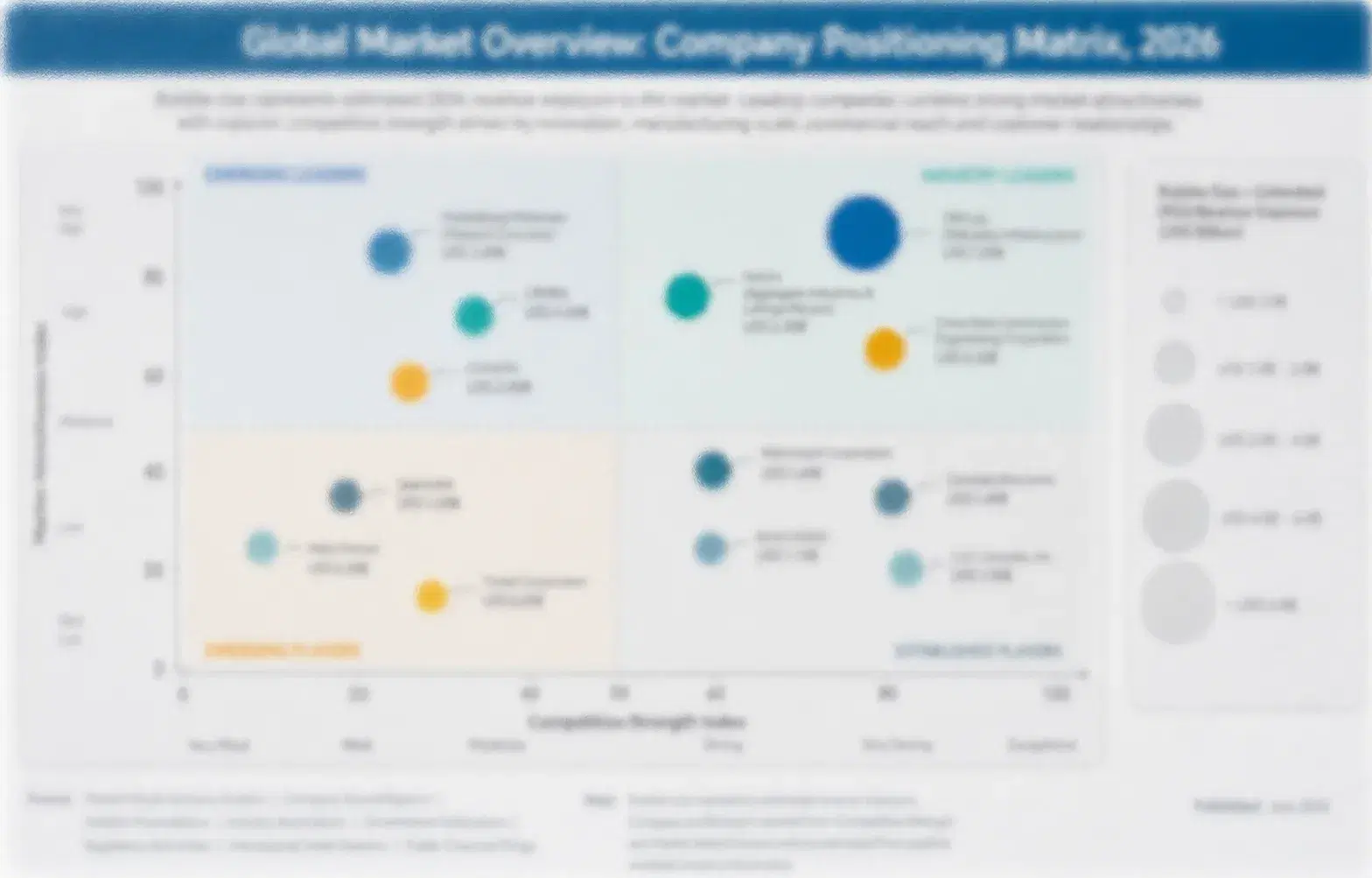
Measured on disclosed life science instrument and sample management revenue, the five leading suppliers hold a CR5 of 61%, which reflects a specialist industry rather than a concentrated one. Azenta and Thermo Fisher hold the broadest installed bases, while Hamilton Storage and LiCONiC compete on engineering depth in specific temperature regimes. Displacement is rare because buyers weight vendor continuity above specification. Specification rarely decides these purchases.
Three contests define activity. Ultra-low temperature systems compete on capacity, footprint and increasingly on price, with domestic Chinese suppliers pressing hard. Cryogenic automation competes on quality credentials and validation documentation for regulated manufacturers. Informatics competes on integration with existing laboratory systems, which is where most evaluations are actually decided and where several hardware-led suppliers are weakest. Hardware-led suppliers are weakest exactly where evaluations now concentrate.

Pressure comes from domestic Asian manufacturers who reached credible ultra-low temperature performance faster than incumbents expected and price considerably below them. Rankings shift wherever informatics rather than hardware decides the evaluation, and that is happening in more procurements each year across every region. Western engineering and service cost structures compete poorly on that ground, and shifting the evaluation toward software is the only real answer.
automated-sample-storage-systems-market-company-positioning-matrix-1787683773778

Competitive Moat and Risk Dimensions

AZENTA LIFE SCIENCES

Moat: Installed Base And Sample Continuity

Azenta holds the largest installed base in automated sample storage and those installations hold material that institutions cannot risk moving. Migrating two million tubes to a competing platform means handling every sample, validating every record and accepting risk nobody wants to own. That switching cost is the moat, and it strengthens each year the samples stay where they are.
AZENTA LIFE SCIENCES

Risk: Hardware Price Pressure Exposure

Ultra-low temperature performance has converged and domestic Asian suppliers reached credible specifications while pricing considerably below Western incumbents. A franchise carrying Western engineering and service cost structures competes poorly on that ground. Defending price requires shifting the evaluation toward informatics and validation, which works only where the buyer already cares about them.
THERMO FISHER SCIENTIFIC

Moat: Laboratory Account Breadth

Thermo Fisher reaches essentially every laboratory buying anything, which puts it in the conversation for storage automation through relationships built on entirely separate products. Bundled purchasing and existing service agreements lower the friction of adding a store considerably. A specialist competitor with better engineering still has to earn an introduction that Thermo Fisher already has.
THERMO FISHER SCIENTIFIC

Risk: Specialist Engineering Depth Gap

Cryogenic automation is difficult engineering and regulated buyers audit the specific quality system behind the specific product rather than the corporate group holding it. Specialists focused entirely on sample storage move faster on platform development and speak that language more fluently. Breadth wins introductions and does considerably less once a technical evaluation begins in earnest.

Players Tracked

Prominent Players

Azenta Life Sciences
Thermo Fisher Scientific
Hamilton Storage
LiCONiC
SPT Labtech

Other Key Players

Askion
Angelantoni Life Science
Micronic
Ziath
Chart Industries
Eppendorf
Tecan
Beckman Coulter Life Sciences
Cryoport
BioLife Solutions
PHC Holdings
Haier Biomedical
Binder
Arctiko
LabWare

Recent Developments

APRIL 2025

Contract manufacturer specifies automated cryogenic storage across new facilities

A cell therapy contract manufacturer specified automated cryogenic storage across newly built manufacturing facilities, a capital procurement rather than any partnership or acquisition. The stated reason was documented chain of identity requirements that manual cryogenic handling satisfies only with extensive paperwork and residual risk that regulators increasingly question directly.
Signal: Regulated manufacturing is now specifying automation from design stage rather than retrofitting it after inspection findings.
JULY 2025

National genomics programme awards large automated storage installation contract

A national genomics programme awarded a contract for a large automated storage installation, an award decision rather than a joint venture or acquisition of any kind. The specification weighted informatics integration and data governance heavily, with temperature performance treated as a threshold requirement rather than as a differentiating evaluation criterion.
Signal: Tenders are being scored on the inventory record while refrigeration performance has become a simple pass or fail.
NOVEMBER 2025

Storage supplier introduces software escrow and open export commitments

A sample storage supplier introduced contractual software escrow and open data export commitments across its product range, an organic policy change rather than any transaction. The company cited customer concern about vendor continuity across installations expected to operate for close to two decades holding irreplaceable material.
Signal: Continuity anxiety has become commercially material enough that suppliers now address it contractually and entirely unprompted.

What A Store Costs To Build

Mechanical and refrigeration components dominate the bill of materials. Compressors, insulation, robotics and frame fabrication together run 46 to 52% of manufacturing cost for an ultra-low temperature system, with most of that sourced from industrial suppliers outside the life science industry entirely. Cryogenic systems carry higher fabrication cost from vacuum-insulated vessels and materials rated for extreme temperature. Software development is capitalised and does not appear here at all.
The volatility that matters is industrial rather than scientific. Refrigeration compressor and stainless fabrication pricing moved sharply through 2022 as energy costs rose across European manufacturing, and IEA data documents the industrial electricity increases that drove those input prices. Suppliers with fixed-price supply agreements absorbed it. Those buying components at spot passed increases through to buyers already hesitant about capital purchases, which cost several of them orders outright.

Exposure divides by manufacturing location and integration depth. European manufacturers carry energy-intensive fabrication cost that Asian competitors do not. Suppliers assembling from purchased subsystems carry component price risk directly and hold little ability to redesign around it. Companies whose value sits mostly in software carry almost none of this, which is another reason the informatics segment behaves so differently from the hardware around it.
automated-sample-storage-systems-market-cost-volatility-analysis-1787683774068

Design around industrially standard refrigeration components

Custom compressor and thermal assemblies lock a supplier into single sources at whatever price those sources set. Designs built around industrially standard components can be resourced when pricing moves, which matters considerably in a market where buyers defer purchases over price increases. The design decision is taken once during development and determines cost flexibility for the platform's entire commercial life.

Contract fabrication capacity across multiple regions

European fabrication carries energy costs that Asian capacity does not, and a supplier manufacturing in one region alone absorbs whatever that region's industrial pricing does. Qualifying capacity across regions costs validation effort and buys cost flexibility when energy prices move. Suppliers who did this before 2022 held pricing while single-region competitors passed increases through and lost orders.

Shift value toward software that carries no material cost

Informatics carries almost no cost of goods and grows at 13.5% while hardware differentiation narrows toward nothing. Suppliers who priced software as an included extra gave away the part of the offer buyers now evaluate most carefully. Pricing the record separately from the refrigeration reflects where value actually sits and insulates margin from component cost movements entirely.

Portfolio Architecture for Margin Defence

Margin follows how easily a buyer can compare the offer. Ultra-low temperature hardware is comparable on a specification sheet and earns accordingly, with Asian suppliers compressing pricing further each year. Cryogenic systems earn more because the engineering is harder and regulated buyers audit credentials rather than compare numbers. Informatics earns most, carries almost no cost of goods and is what evaluations increasingly turn on.
The tension is that hardware carries the revenue and software carries the margin, and most suppliers here grew up as engineering companies. Organisations built around mechanical development struggle to fund software properly and tend to price it as an inclusion rather than as a product. The suppliers who separated the two commercially hold pricing that bundled competitors cannot, and they defend it in exactly the evaluations that are now becoming standard.

High-value pools sit in three places. Sample management informatics, priced separately and carrying no material cost. Regulated cryogenic storage for cell therapy manufacture, where credentials rather than specifications decide selection. And long-term service and continuity contracts, which attach to an installed base that cannot practically move anywhere else. None of the three is where most suppliers currently focus their development spending.

Volume / Commodity-Adjacent

Ultra-low temperature automated stores, ambient systems and tube handling modules sold largely on capacity, footprint and price. The 7-point range separates Western manufacturers carrying higher fabrication and service cost from Asian suppliers competing directly beneath them on identical specifications.
Gross Margin: 31-38%

Premium / Certified

Cryogenic automated stores and validated systems supplied to regulated pharmaceutical and cell therapy manufacturers. The 7-point spread separates suppliers holding pharmaceutical quality credentials from those offering comparable engineering without the documentation regulated buyers require.
Gross Margin: 44-51%

Sustainability / Regulatory / Next-Generation

Sample management informatics, validation services and long-term continuity contracts. The 18-point range is very wide because software priced as a product earns entirely different economics from software given away with hardware, and both practices remain common across this industry.
Gross Margin: 58-76%
automated-sample-storage-systems-market-portfolio-architecture-1787683774363

High-value Sub-segments and Strategic Watch-out

Separately Priced Informatics

Highest value and fastest growth, carrying almost no cost of goods while deciding an increasing share of evaluations outright. The risk is that engineering-led competitors continue bundling software free, which suppresses the price the whole category can command regardless of how good the product is.
Gross Margin: 73-76%

Regulated Cryogenic Systems

High value with steady demand from cell therapy manufacturers who audit quality systems rather than compare specifications. Credentials take years to build and shut out competitors entirely. The risk is dependence on a therapy sector whose commercial volumes remain unproven across most approved products. Volumes remain unproven.
Gross Margin: 48-51%

Ultra-Low Temperature Hardware

The volume core, comparable on a specification sheet and increasingly priced against Asian manufacturers who reached credible performance faster than incumbents expected. Suppliers hold the line because it carries the installed base that service and informatics revenue attaches to afterward. Service revenue follows the installed hardware. Nobody abandons the category.
Gross Margin: 32-35%

Bundled Software Delivery

The strategic watch-out. Suppliers including informatics free with hardware are giving away the part of the offer buyers now evaluate most carefully, and training the market to expect it. The risk is a category-wide pricing floor that nobody can raise once buyers have anchored on zero.
Gross Margin: 36-39%

Why Samples Never Move Again

Once samples enter an automated store they stay for the life of the collection, because moving two million tubes to another platform means handling every one, revalidating every record and accepting a risk nobody wants to own. The installed base is an annuity attached to material rather than to any relationship. Service contracts, consumables, expansion modules and informatics licences all follow the samples, and the samples do not go anywhere for eighteen years.
Stickiness varies by what was installed. A validated cryogenic system inside a regulated manufacturing facility is effectively permanent, since changing it means requalifying a licensed process. A research biobank store is nearly as fixed, held by the migration risk rather than by any contract. Ambient and tube handling modules move more freely, since the material they hold is usually replaceable. Informatics licences renew almost automatically once laboratory workflows depend on them.

The buyer profile has widened well beyond the academic biobank manager who defined this market for two decades. Regulated manufacturing quality leads now specify cryogenic automation, and they ask about validation and change control rather than capacity. Meanwhile national programme procurement teams run formal tenders weighted toward data governance.. Freezer sales organisations answer neither question well.
automated-sample-storage-systems-market-end-use-penetration-index-1787683774686

Where This Category Is Won

These are among the four positions where our research anticipates prominent divergence between winners and laggards over the coming forecast period. Each is grounded in the demand model, the regulatory perimeter, and the announced capacity pipeline.
01 / INVENTORY INTEGRITY SELLING

Audit the customer before quoting anything

Roughly 14% of manually stored samples fail annotation audits and most institutions have no idea what their own figure is until somebody actually measures it for them. A supplier offering sample reconciliation as a service reaches the buyer at the moment that exposure becomes undeniable rather than theoretical, and institutions discovering a problem buy quickly and negotiate very little. The investment is analyst time rather than product development, and it converts a capital decision that defers easily into one that suddenly cannot wait.
02 / REGULATED BUYER CREDENTIALS

Quality systems matter more than storage density

Cell therapy manufacturers audit the vendor's quality system, validation documentation and change control rather than reading any specification sheet, and suppliers lacking pharmaceutical credentials find those conversations end quickly and politely. Building that capability is slow and expensive and it opens a segment growing at 11.4% while research demand swings unpredictably with grant funding cycles. Around 2,400 clinical trial batches now require fully documented chain of identity at every handling step, and the credential rather than the hardware is what those customers are actually purchasing.
03 / SOFTWARE VALUE SEPARATION

Stop giving away what buyers actually evaluate

Informatics grows at 13.5%, carries almost no cost of goods and increasingly decides evaluations outright, yet engineering-led suppliers routinely include it free to make hardware pricing look competitive against Asian manufacturers. That practice trains buyers to value the inventory record at nothing, while hardware differentiation narrows steadily toward zero. Pricing the software separately is genuinely uncomfortable in the first few negotiations and it protects the only margin pool anywhere in this market that industrial component cost movements cannot reach at all.
04 / CONTINUITY COMMITMENT DESIGN

Answer the eighteen year question contractually

Buyers holding irreplaceable material for around 18 years weight vendor survival above every technical specification, and this industry carries enough acquisition history to make that concern entirely reasonable rather than paranoid. Software escrow, open data export formats and documented third-party service arrangements address that concern directly and cost almost nothing at all to provide. Suppliers resist offering these terms from habit alone, while volunteering them unprompted removes the single objection that most often stalls a decision at the final approval stage.

Engagement Snapshot From the Field

A live engagement with an industry participant carrying material or product regulatory and market exposure ahead of a defining policy shift, showing how our research translates into a defensible multi-year portfolio strategy.
MARKET MINDS ADVISORY · CLIENT ENGAGEMENT SUMMARY
Automated Sample Storage Systems Producer Strategic Portfolio Review and Transition Roadmap 2026·Investment Scenario on Automated Sample Storage Systems Exposure Evaluation 2025-26
CLIENT PROFILE
A European laboratory automation manufacturer supplying ultra-low temperature and ambient automated storage systems across 31 countries, with reported revenue of 118 million euros (client-reported, unverified by MMA). Roughly 88% came from hardware, with sample management software included at no charge to keep system pricing competitive. Its sales organisation of 44 people called almost entirely on academic and hospital biobank managers.
STRATEGIC CHALLENGE
Gross margin had compressed for three consecutive years against Asian competitors matching temperature specifications at materially lower prices. Management was pursuing manufacturing cost reduction to close the gap. Nobody had examined whether customers were selecting on temperature performance at all, or what they were actually comparing when they chose a competitor.
MMA APPROACH
MMA reviewed the client's lost tender documentation across two years, which nobody had analysed collectively, and interviewed sixteen procurement and laboratory leads at institutions that had chosen competitors. The analysis examined what the scoring criteria actually weighted rather than what the sales team believed decided each decision, and separated research from regulated buyers.
KEY FINDINGS
  1. Temperature performance was scored as a threshold requirement in 78% of reviewed tenders, meaning it could not differentiate any compliant supplier at all.
  2. Informatics and data governance carried the heaviest weighting in most scored tenders, and the client's free software was frequently judged weaker than paid alternatives.
  3. Cell therapy manufacturers had been excluded from the pipeline entirely, because the company held no pharmaceutical quality credentials and had never pursued them.
  4. Pricing software separately and investing in its development modelled materially higher gross profit within three years despite flat hardware volume (client-reported, unverified by MMA).
CLIENT PROFILE
A European laboratory automation manufacturer supplying ultra-low temperature and ambient automated storage systems across 31 countries, with reported revenue of 118 million euros (client-reported, unverified by MMA). Roughly 88% came from hardware, with sample management software included at no charge to keep system pricing competitive. Its sales organisation of 44 people called almost entirely on academic and hospital biobank managers.
STRATEGIC CHALLENGE
Gross margin had compressed for three consecutive years against Asian competitors matching temperature specifications at materially lower prices. Management was pursuing manufacturing cost reduction to close the gap. Nobody had examined whether customers were selecting on temperature performance at all, or what they were actually comparing when they chose a competitor.
MMA APPROACH
MMA reviewed the client's lost tender documentation across two years, which nobody had analysed collectively, and interviewed sixteen procurement and laboratory leads at institutions that had chosen competitors. The analysis examined what the scoring criteria actually weighted rather than what the sales team believed decided each decision, and separated research from regulated buyers.
KEY FINDINGS
  1. Temperature performance was scored as a threshold requirement in 78% of reviewed tenders, meaning it could not differentiate any compliant supplier at all.
  2. Informatics and data governance carried the heaviest weighting in most scored tenders, and the client's free software was frequently judged weaker than paid alternatives.
  3. Cell therapy manufacturers had been excluded from the pipeline entirely, because the company held no pharmaceutical quality credentials and had never pursued them.
  4. Pricing software separately and investing in its development modelled materially higher gross profit within three years despite flat hardware volume (client-reported, unverified by MMA).
RECOMMENDED STRATEGY
Phase 1: Phase one: price sample management software as a separate product line immediately, and redirect development funding toward it rather than toward hardware cost reduction. Phase 2: Phase two: build pharmaceutical quality system credentials to reach regulated cell therapy manufacturers, who currently never appear in the pipeline. Phase 3: Phase three: offer sample reconciliation audits as a paid service, reaching institutions before any capital purchase decision has been framed.
OUTCOME
Separate software pricing was introduced across new quotations and won acceptance more readily than management expected. Gross margin recovered materially within eighteen months despite continued hardware price pressure (client-reported, unverified by MMA). Quality credential work began and produced two regulated manufacturer opportunities the company could not previously pursue at all.

Frequently Asked Questions

Foundational context covering the market sizes, CAGR, scope, country, region and competition that inform every finding below. This section is provided to cover basics and most often pre-purchase conversations, answered from the MMA Primary Research Dataset.

What is the current size of the Automated Sample Storage Systems Market?

The market was worth 0.78 billion dollars in 2025, covering ultra-low temperature, cryogenic and ambient stores, informatics, handling modules and expansion units. It reaches 0.85 billion dollars in 2026.

How large will the Automated Sample Storage Systems Market be by 2036?

MMA forecasts 2.01 billion dollars by 2036, an increase of 1.16 billion dollars over the 2026 base. That represents an expansion multiple of 2.36 times across the forecast period.

What is the CAGR for the Automated Sample Storage Systems Market 2026 to 2036?

The base case compounds at 9.0% annually. MMA's bull case reaches 10.2% if cell therapy manufacturing scales commercially, while the bear case sits at 7.8% on academic funding contraction.

Which segment is growing fastest?

Sample management informatics, at 13.5%, half again the market rate of 9.0%. Hardware differentiation has narrowed, so the inventory record is what buyers now evaluate first.

Who are the major companies in the Automated Sample Storage Systems Market?

Azenta Life Sciences, Thermo Fisher Scientific, Hamilton Storage, LiCONiC and SPT Labtech lead on disclosed life science instrument and sample management revenue. Askion, Micronic, Haier Biomedical and Chart Industries compete in specific classes.

Which country is growing fastest?

China at 12.2%, driven by national genomics infrastructure installing automated capacity from the outset rather than converting manual estates. India follows on contract research expansion.

Report Segmentation Architecture

The full report scope spans multiple orthogonal segmentation dimensions, with cross-tabulated demand data provided for each dimension pair. Coverage extends further to regional breakdowns, trend trajectories, and the competitive detail needed to support segment-level decision-making.

By System Function

  • Ultra-Low Temperature Automated Stores
  • Cryogenic Automated Stores
  • Ambient Automated Stores
  • Sample Management Informatics
  • Tube Handling and Preparation Modules
  • Modular Retrofit and Expansion Units

By End-Use Industry

  • Academic and Hospital Biobanks
  • Pharmaceutical Compound Management
  • Cell and Gene Therapy Manufacturing
  • Contract Research Organisations
  • National Population Genomics Programmes
  • Clinical Diagnostic Laboratories

By Commercial Dimension

  • Capital Purchase
  • Operating Lease Arrangement
  • Modular Phased Expansion
  • Managed Service Contract
  • Public Tender Procurement
  • Sponsor Specified Installation

By Region

  • North America
  • Western Europe
  • East Asia
  • South Asia and Pacific
  • Latin America
  • Middle East and Africa
  • Eastern Europe

Scope, Methodology, and Coverage

Every figure in this report is reproducible from documented input assumptions. The scope below maps the historical period, the forecast horizon, the segmentation dimensions, and the countries covered, alongside the underlying primary and qualitative methodology.
Historical Period
2020 to 2025
Forecast Period
2026 to 2036
Base Year
2025 (USD billions; MMA Primary Research Dataset, August 2026)
Market Definition
Scope covers automated systems that store, track and retrieve biological and chemical samples under controlled conditions, spanning ultra-low temperature automated stores, cryogenic automated stores operating in liquid nitrogen regimes, ambient and controlled room temperature automated stores, sample management informatics, tube handling capping and preparation modules, and modular retrofit and expansion units. Manual laboratory freezers without automated retrieval, cryogenic shipping and logistics containers, general purpose laboratory information management systems and analytical instrumentation are excluded. Sample collection consumables, reagents and outsourced biobank operating services fall outside the boundary.
Quantitative Units
USD billions (current prices); systems installed; sample positions under automated management; informatics licences; service contracts active
Segmentation Dimensions
By System Function; By End-Use Industry; By Commercial Dimension; By Region
Regions Covered
North America, Western Europe, East Asia, South Asia and Pacific, Latin America, Middle East and Africa, Eastern Europe
Countries Covered
USA, China, Germany, UK, Japan, South Korea, France, India, Switzerland, Australia, Singapore, Brazil, Canada, Poland, Saudi Arabia
Key Companies Profiled
Azenta Life Sciences, Thermo Fisher Scientific, Hamilton Storage, LiCONiC, SPT Labtech, Askion, Angelantoni Life Science, Micronic, Ziath, Chart Industries, Eppendorf, Tecan, Beckman Coulter Life Sciences, Cryoport, BioLife Solutions, PHC Holdings, Haier Biomedical, Binder, Arctiko, LabWare
Quantitative Methodology
Primary survey, n=3,800 respondents, Q4 2025, six countries; demand-side model with trade association cross-validation
Qualitative Methodology
47 expert interviews, Q4 2025; applied to validate demand model assumptions, identify emerging dynamics, and assess competitive positioning
Report Format
PDF and XLSX data workbook (Word format preview document)
Publisher
Market Minds Advisory
Report Code
MMA-2026-CON-131
Published
August 2026
Contact
sales@marketmindsadvisory.com | www.marketmindsadvisory.com

Purchase the full Automated Sample Storage Systems Market Report (2026 to 2036).

The full report runs to 170 pages and covers all six system function segments, seven regions and 20 profiled companies in detail. It includes the complete segment CAGR set, regional installed base and new capacity data, and tender scoring analysis across fifteen national markets. Company profiles carry evaluation on disclosed life science instrument and sample management revenue, with moat and risk assessment for the top five suppliers. The competitive section extends to 14 tracked corporate developments across 2024 and 2025, each with commercial interpretation. Primary research inputs include a quantitative survey of 3,800 respondents and 47 expert interviews conducted in Q4 2025.
Six system function segments with individual CAGR forecasts
Seven regional markets with installed base and capacity data
Twenty company profiles on consistent revenue evaluation basis
Fourteen tracked corporate developments with commercial interpretation notes
Tender scoring criteria analysis across fifteen national markets
Regulated buyer credential requirements mapped by therapy modality

Built For The People Who Decide

From boardroom strategy to bench-side execution, this report is read cover-to-cover by leaders shaping the next decade of their industry, turning demand scenarios, market dynamics and valuation benchmarks into decisions.
CXOs/ Presidents/ VPs/ Managers
M&A and Corporate Development
Strategy Teams and R&D Heads
Procurement and Product Directors
Regulatory and Compliance Leaders
Investor Relations and Equity Analysts