Automated Cell Biology Systems Market

Automated Cell Biology Systems Market

Automated Cell Biology Systems Market Outlook from 2026 to 2033

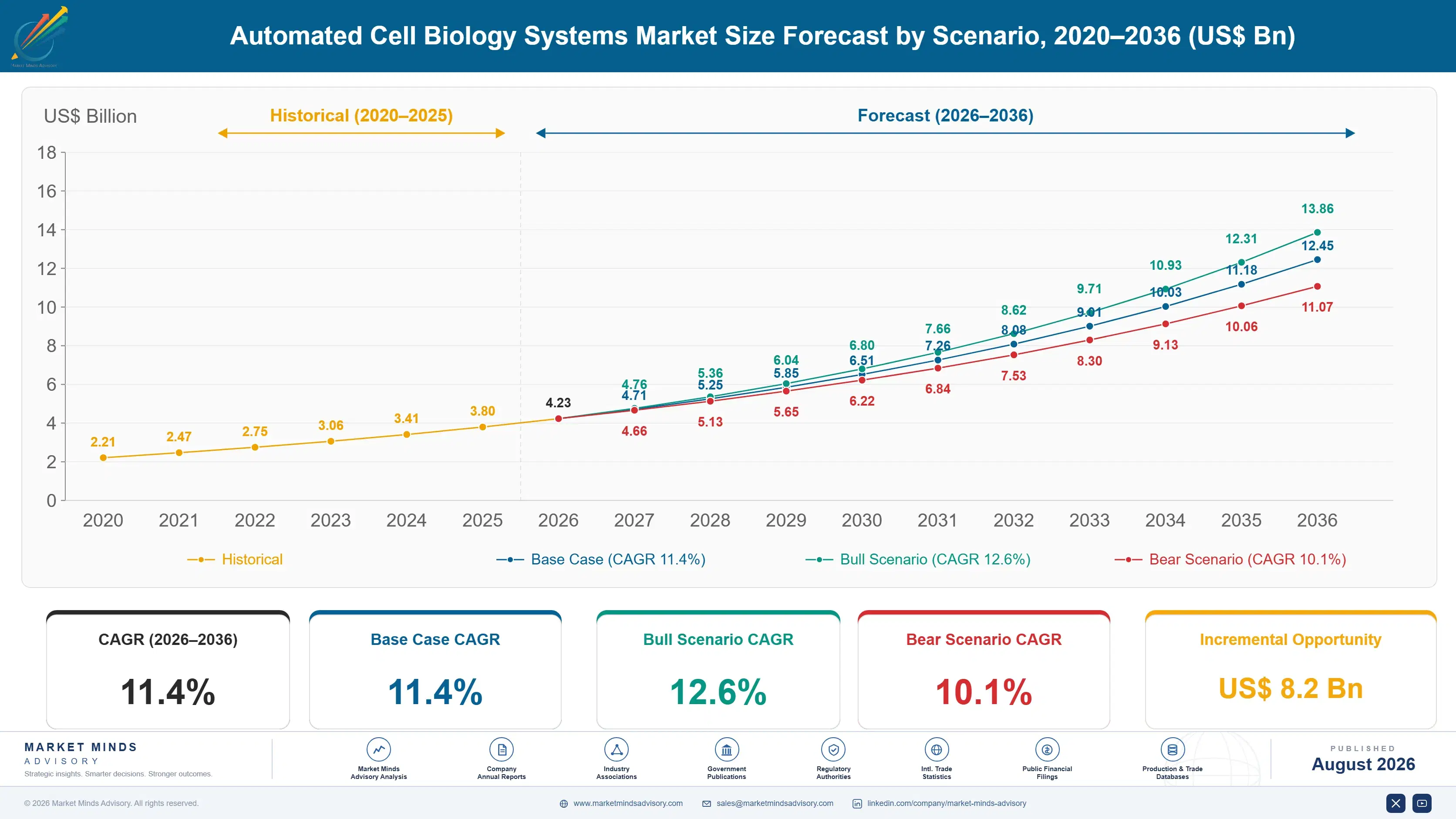
The automated cell biology systems market is poised for significant expansion, driven by the increasing adoption of automation in life sciences research and clinical diagnostics. The market is projected to grow from a base value of USD 3.2 billion in 2026 to USD 7.8 billion by 2033, registering a robust CAGR of 13.5% during the forecast period. This growth is underpinned by the rising demand for high-throughput screening, the need for reproducible results, and the ongoing advancements in laboratory automation technologies. The integration of artificial intelligence and machine learning into automated systems is further enhancing the efficiency and accuracy of cell biology workflows.

The market’s expansion is also supported by the increasing prevalence of chronic diseases, which necessitates advanced research in cell biology for drug discovery and personalized medicine. Pharmaceutical and biotechnology companies are investing heavily in automated platforms to accelerate research timelines and reduce human error. Additionally, academic and research institutions are leveraging these systems to streamline complex cell-based assays, thereby improving productivity and data quality. The convergence of automation, digitalization, and data analytics is expected to redefine the landscape of cell biology research over the next decade.

Automated Cell Biology Systems Market

Automated Cell Biology Systems Market Scenario & Strategic Insights

The automated cell biology systems market is witnessing a paradigm shift as laboratories and research organizations increasingly prioritize automation to address the challenges of manual workflows. Automation not only enhances throughput but also ensures consistency and reproducibility, which are critical for scientific research and regulatory compliance. The integration of robotics, advanced imaging, and data management solutions has enabled researchers to conduct complex experiments with minimal human intervention, thereby reducing the risk of contamination and experimental variability.

Strategically, market players are focusing on developing modular and scalable systems that can be customized to meet the specific needs of various end-users, including pharmaceutical companies, contract research organizations, and academic institutions. Collaborations and partnerships between technology providers and research organizations are becoming more prevalent, facilitating the development of innovative solutions tailored to emerging research requirements. Furthermore, the adoption of cloud-based platforms for data storage and analysis is streamlining workflow management and enabling remote monitoring of experiments.

The competitive landscape is characterized by continuous innovation, with companies investing in R&D to introduce next-generation automated platforms. Regulatory agencies are also playing a pivotal role by establishing guidelines for the validation and standardization of automated systems, ensuring their reliability and safety in clinical and research settings. As the market matures, the focus is expected to shift towards the integration of artificial intelligence and machine learning algorithms to further enhance the capabilities of automated cell biology systems.

Attribute2026 (USD Billion)2033 (USD Billion)CAGR (2026 – 2033)
Market Size3.27.813.5%

Automated Cell Biology Systems Market Trends

  • Integration of Artificial Intelligence and Machine Learning

The integration of AI and machine learning into automated cell biology systems is transforming the way data is analyzed and interpreted. These technologies enable real-time monitoring, predictive analytics, and automated decision-making, significantly improving the efficiency and accuracy of cell-based assays. AI-driven image analysis tools are capable of identifying subtle cellular changes that may be missed by human observers, leading to more precise results. As the volume of data generated by automated systems continues to grow, the adoption of advanced analytics is becoming essential for extracting meaningful insights and accelerating research outcomes.

  • Expansion of High-Throughput Screening Applications

High-throughput screening (HTS) has become a cornerstone of drug discovery and toxicology studies, and automated cell biology systems are playing a crucial role in scaling up these applications. Automated platforms can process thousands of samples simultaneously, enabling researchers to rapidly identify potential drug candidates and assess their effects on cellular functions. The demand for HTS is being driven by the need to expedite the drug development process and reduce costs. As a result, manufacturers are focusing on enhancing the throughput, flexibility, and automation capabilities of their systems to cater to the evolving needs of the pharmaceutical and biotechnology industries.

  • Adoption of Cloud-Based Data Management Solutions

The shift towards cloud-based data management is revolutionizing the way laboratories handle and store experimental data. Automated cell biology systems are increasingly being integrated with cloud platforms, allowing researchers to access, analyze, and share data remotely. This trend is particularly beneficial for collaborative research projects and multi-site studies, as it facilitates seamless data exchange and centralized workflow management. Cloud-based solutions also offer enhanced data security, scalability, and compliance with regulatory requirements, making them an attractive option for organizations seeking to modernize their laboratory infrastructure.

Segment & Category Analysis for Automated Cell Biology Systems Market

By Product Type

  • Automated Liquid Handling Systems
    • Automated Imaging Systems
    • Automated Cell Counters
    • Automated Cell Culture Systems
    • Automated Flow Cytometry Systems
    • Automated Plate Readers

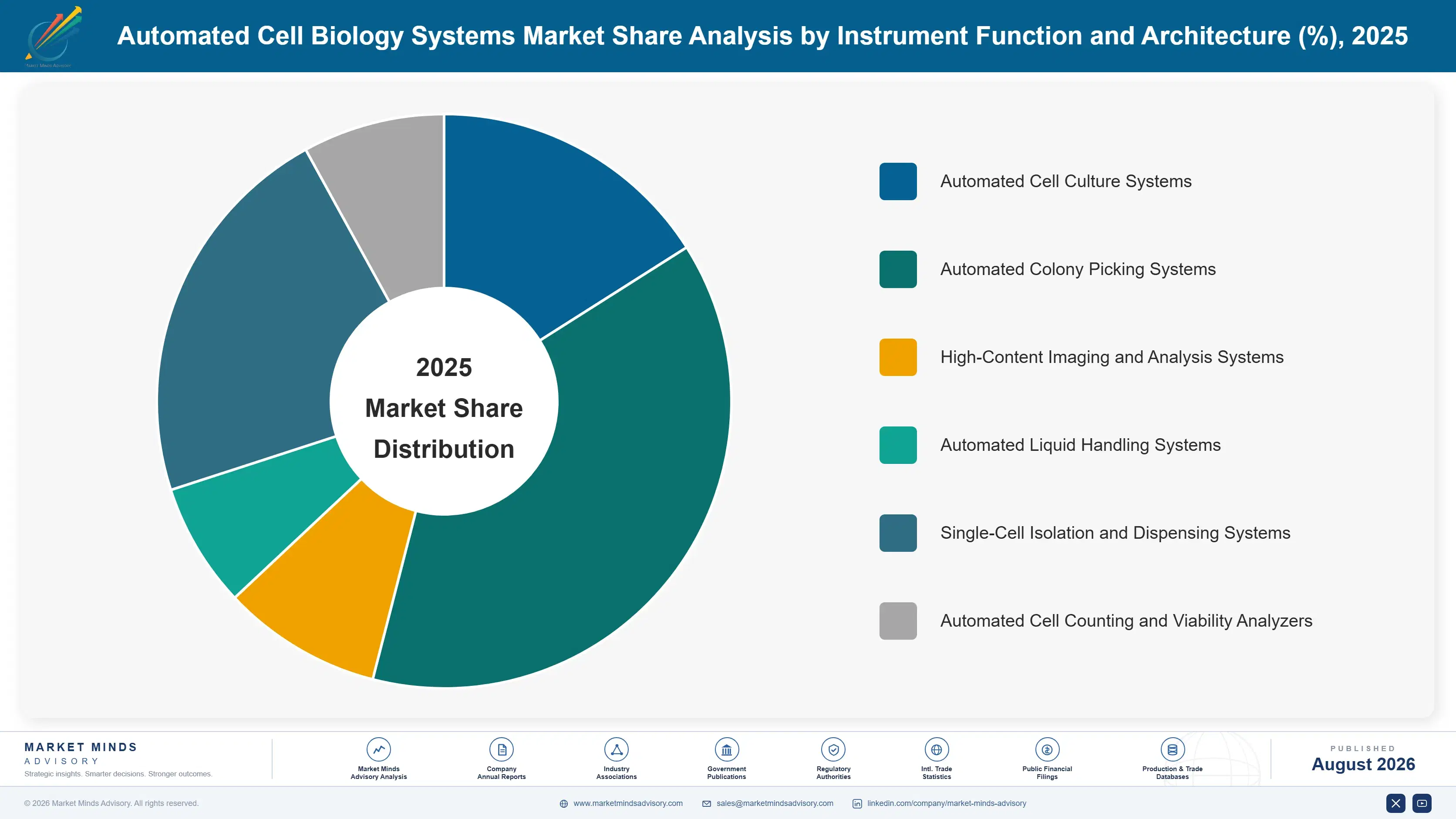
The product type segment encompasses a diverse range of automated platforms designed to streamline various aspects of cell biology research. Automated liquid handling systems are widely used for precise reagent dispensing and sample preparation, reducing manual errors and increasing throughput. Automated imaging systems enable high-resolution visualization and analysis of cellular structures, while automated cell counters provide rapid and accurate quantification of cell populations. Automated cell culture systems facilitate the maintenance and expansion of cell lines under controlled conditions, and automated flow cytometry systems offer advanced capabilities for cell sorting and analysis. Automated plate readers are essential for high-throughput screening and assay development, supporting a wide array of applications in drug discovery and diagnostics.

Automated Cell Biology Systems Market Product Type

By Application

  • Drug Discovery
    • Genomics and Proteomics

Automated cell biology systems are integral to a broad spectrum of applications, with drug discovery being one of the primary drivers of market growth. These systems enable high-throughput screening of compound libraries, accelerating the identification of potential therapeutics. In stem cell research, automation supports the cultivation, differentiation, and analysis of stem cells, facilitating advancements in regenerative medicine. Cancer research benefits from automated platforms that enable detailed analysis of tumor cell behavior and response to treatments. Toxicology studies leverage automation for rapid assessment of compound safety, while clinical diagnostics utilize automated systems for accurate and reproducible testing. Genomics and proteomics applications are also gaining traction, as automated platforms streamline sample processing and data analysis.

By End User

  • Pharmaceutical & Biotechnology Companies
    • Academic & Research Institutes Contract Research Organizations (CROs)
    • Hospitals & Diagnostic Laboratories

The end-user segment reflects the diverse adoption of automated cell biology systems across various sectors. Pharmaceutical and biotechnology companies are the largest users, leveraging automation to enhance R&D productivity and accelerate drug development. Academic and research institutes utilize automated systems to support basic and translational research, often focusing on novel assay development and mechanistic studies. Contract research organizations (CROs) are increasingly adopting automation to offer high-quality, scalable services to their clients. Hospitals and diagnostic laboratories are integrating automated platforms to improve the accuracy and efficiency of clinical testing, particularly in areas such as hematology, oncology, and infectious disease diagnostics.

By Technology

  • Robotics
    • Artificial Intelligence & Machine Learning Microfluidics High-Content Screening
    • Laboratory Information Management Systems (LIMS)

Technological advancements are at the core of the automated cell biology systems market. Robotics technology enables precise and repeatable execution of complex laboratory protocols, minimizing human intervention. Artificial intelligence and machine learning are being integrated to enhance data analysis, pattern recognition, and predictive modeling. Microfluidics technology supports miniaturization and automation of cell-based assays, reducing reagent consumption and enabling high-throughput experimentation. High-content screening combines automated imaging and data analysis to provide comprehensive insights into cellular responses. Laboratory information management systems (LIMS) facilitate efficient data management, workflow automation, and regulatory compliance, supporting the seamless operation of automated laboratories.

Automated Cell Biology Systems Market Technology

By Region

  • North America
    • Europe Asia-Pacific South America
    • Middle East & Africa

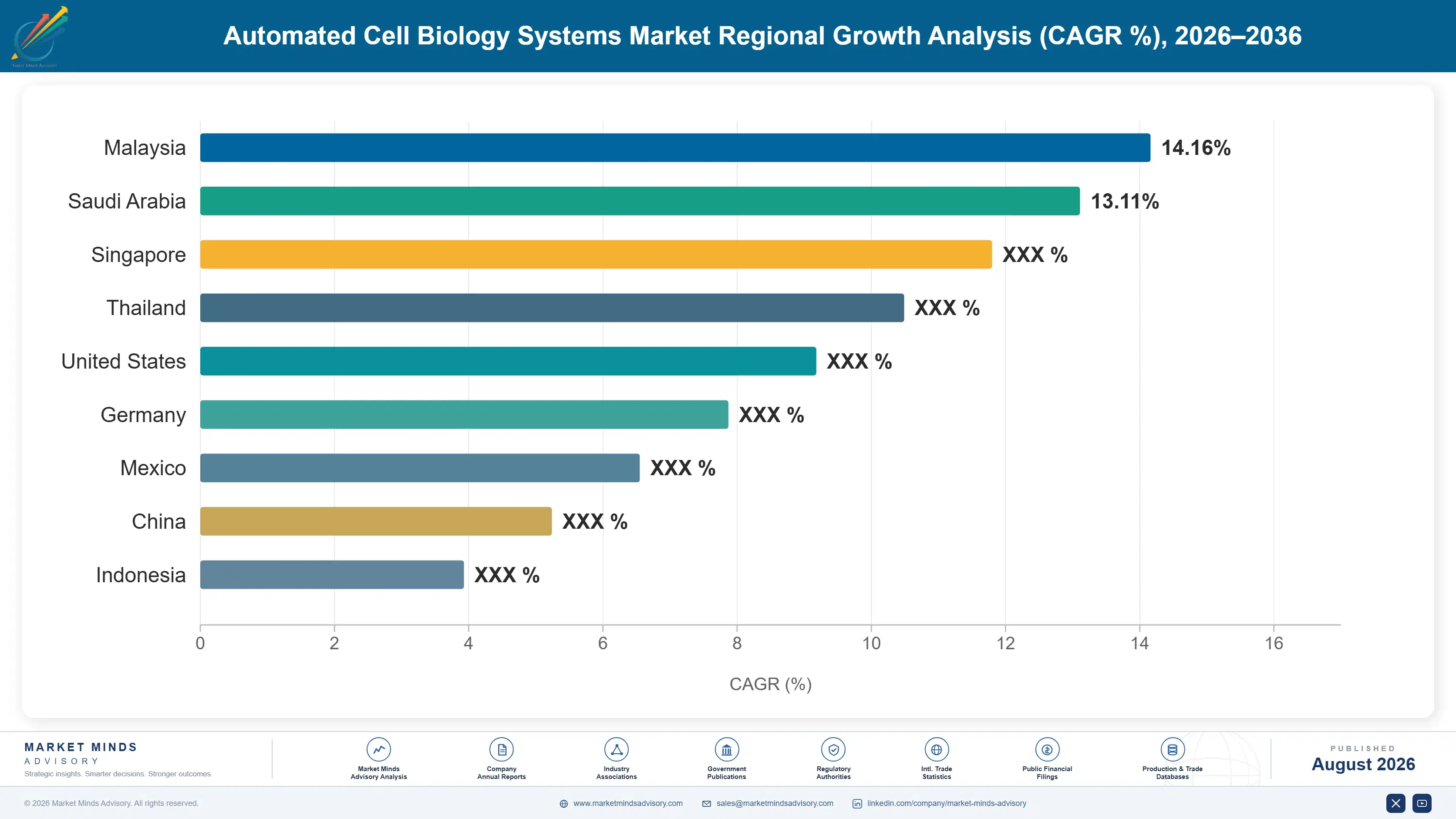
Regional segmentation highlights the global adoption of automated cell biology systems, with North America and Europe leading in terms of market share and technological innovation. Asia-Pacific is emerging as a high-growth region, driven by increasing investments in life sciences research and expanding pharmaceutical industries. South America and the Middle East & Africa are witnessing gradual adoption, supported by improving healthcare infrastructure and growing research activities. Regional variations in regulatory frameworks, funding availability, and research priorities influence the adoption and development of automated cell biology systems across different geographies.

Growth Drivers and Opportunities in Automated Cell Biology Systems Market

  • Rising Demand for High-Throughput and Reproducible Research

The increasing complexity of biological research and the need for high-throughput experimentation are driving the adoption of automated cell biology systems. Researchers are under pressure to generate large volumes of data quickly and accurately, particularly in drug discovery and genomics. Automation addresses these challenges by enabling parallel processing of samples, reducing manual errors, and ensuring reproducibility. The ability to standardize protocols and minimize variability is particularly valuable in regulated environments, such as clinical diagnostics and pharmaceutical manufacturing, where data integrity is paramount.

  • Expansion of Personalized Medicine and Cell-Based Therapies

The shift towards personalized medicine and the development of cell-based therapies are creating new opportunities for automated cell biology systems. Personalized medicine relies on the analysis of individual patient samples to tailor treatments, necessitating high-throughput and precise laboratory workflows. Automated systems facilitate the processing and analysis of patient-derived cells, supporting the development of targeted therapies and diagnostics. The growing interest in regenerative medicine and immunotherapy is also fueling demand for advanced automation solutions capable of handling complex cell culture and manipulation tasks.

Emerging Opportunities for Automated Cell Biology Systems Market

  • Integration with Digital Health and Remote Monitoring

The convergence of automated cell biology systems with digital health technologies is opening new avenues for remote experiment monitoring and data sharing. Cloud-based platforms and IoT-enabled devices allow researchers to oversee experiments from remote locations, enhancing collaboration and operational flexibility. This integration is particularly valuable for multi-site research projects and organizations with distributed teams, enabling real-time data access and centralized management of laboratory workflows.

  • Adoption in Emerging Markets and Academic Research

Emerging markets, particularly in Asia-Pacific and Latin America, present significant growth opportunities for automated cell biology systems. Governments and private sector organizations are investing in life sciences infrastructure, fostering the adoption of advanced laboratory technologies. Academic and research institutions in these regions are increasingly incorporating automation into their research programs, supported by funding initiatives and international collaborations. The expansion of research activities and the need for modern laboratory solutions are expected to drive market growth in these regions over the forecast period.

Growth Restrain Factors and Challenges in Automated Cell Biology Systems Market

  • High Initial Investment and Operational Costs

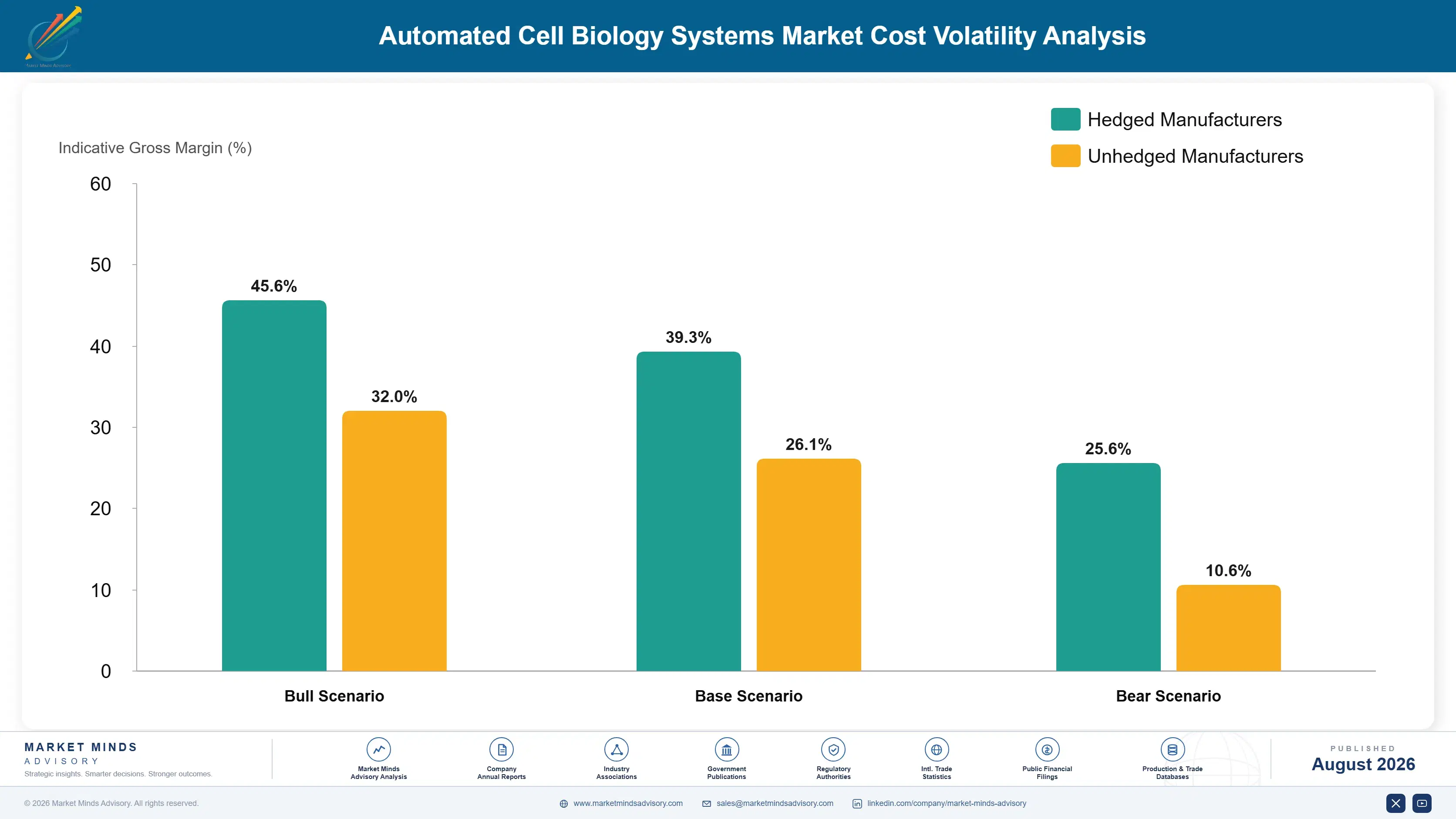
The adoption of automated cell biology systems often requires substantial upfront investment in equipment, software, and infrastructure. For many small and medium-sized laboratories, the cost of acquiring and maintaining advanced automation platforms can be prohibitive. In addition to the initial purchase price, ongoing expenses related to system maintenance, software updates, and staff training can further strain budgets. These financial barriers may limit the adoption of automation, particularly in resource-constrained settings and emerging markets.

Furthermore, the return on investment for automated systems may not be immediately apparent, especially for organizations with limited throughput requirements. Decision-makers must carefully evaluate the long-term benefits of automation, including improved productivity and data quality, against the associated costs. Vendors are responding to these challenges by offering flexible financing options, modular systems, and scalable solutions that can be tailored to the specific needs and budgets of different users.

  • Technical Complexity and Integration Challenges

The implementation of automated cell biology systems can be technically complex, requiring specialized expertise in system configuration, protocol development, and data integration. Laboratories may face challenges in integrating new automation platforms with existing equipment and information management systems, leading to workflow disruptions and inefficiencies. The customization of automated protocols to accommodate specific research requirements can also be time-consuming and resource-intensive.

Additionally, the rapid pace of technological advancement in automation and data analytics necessitates continuous staff training and skill development. Organizations must invest in workforce development to ensure that personnel are proficient in operating and maintaining automated systems. The lack of standardized protocols and interoperability between different systems can further complicate integration efforts, underscoring the need for industry-wide standards and best practices.

Vehicle Market Regional Analysis Table

RegionMarket Share (2025)Key Market Highlight
Asia-Pacific29%Rapid growth driven by expanding pharmaceutical R&D and government funding
North America34%Largest market share due to advanced infrastructure and high adoption of automation
Europe23%Strong focus on innovation, regulatory compliance, and collaborative research
South America8%Gradual adoption supported by improving research infrastructure
Middle East & Africa6%Emerging market with increasing investments in healthcare and life sciences research

Regional Analysis for Automated Cell Biology Systems Market

  • Asia-Pacific

The Asia-Pacific region is emerging as a key growth engine for the automated cell biology systems market, driven by increasing investments in pharmaceutical R&D, expanding biotechnology sectors, and supportive government initiatives. Countries such as China, Japan, South Korea, and India are witnessing rapid adoption of automation technologies in research and clinical laboratories. The region’s large population base and rising prevalence of chronic diseases are fueling demand for advanced diagnostic and therapeutic solutions. Additionally, collaborations between local and international players are fostering innovation and technology transfer, further accelerating market growth.

  • North America

North America holds the largest share of the automated cell biology systems market, supported by a well-established life sciences industry, advanced research infrastructure, and high levels of automation adoption. The presence of leading pharmaceutical and biotechnology companies, coupled with significant investments in R&D, is driving demand for automated platforms. The region is also characterized by a strong focus on regulatory compliance, data integrity, and quality assurance, which are critical for the adoption of automation in clinical and research settings. Ongoing advancements in AI, robotics, and data analytics are expected to sustain the region’s leadership in the market.

  • Europe

Europe is a major contributor to the automated cell biology systems market, with a strong emphasis on innovation, collaborative research, and regulatory compliance. The region benefits from a robust network of academic institutions, research organizations, and industry players engaged in cutting-edge life sciences research. European governments and funding agencies are actively supporting the adoption of automation technologies to enhance research productivity and competitiveness. The focus on personalized medicine, regenerative therapies, and translational research is driving the demand for advanced automated platforms across the region.

  • South America

South America is experiencing gradual adoption of automated cell biology systems, supported by improving research infrastructure and increasing investments in healthcare and life sciences. Brazil, Argentina, and Chile are among the leading markets in the region, with growing interest in automation for drug discovery, diagnostics, and academic research. Challenges related to funding, technical expertise, and regulatory frameworks persist, but ongoing efforts to modernize laboratory facilities and foster international collaborations are expected to drive market growth in the coming years.

  • Middle East & Africa

The Middle East & Africa region represents an emerging market for automated cell biology systems, characterized by increasing investments in healthcare infrastructure and life sciences research. Countries such as the United Arab Emirates, Saudi Arabia, and South Africa are making strides in adopting advanced laboratory technologies to support research and clinical diagnostics. The region faces challenges related to limited funding, technical capacity, and regulatory harmonization, but growing awareness of the benefits of automation and international partnerships are expected to create new opportunities for market expansion.

Automated Cell Biology Systems Market Regional

Competition Landscape in Automated Cell Biology Systems Market

The competitive landscape of the automated cell biology systems market is marked by the presence of established global players and innovative startups, all striving to enhance their market position through product innovation, strategic partnerships, and geographic expansion. Companies are investing heavily in R&D to develop next-generation automation platforms that integrate advanced technologies such as AI, robotics, and cloud computing. The market is also witnessing increased merger and acquisition activity, as larger players seek to expand their product portfolios and enter new markets. Strategic collaborations with academic institutions and research organizations are facilitating the development of customized solutions tailored to specific research needs. As the market evolves, competition is expected to intensify, with a focus on delivering scalable, user-friendly, and cost-effective automation solutions.

Major Players in Automated Cell Biology Systems Market

  • Thermo Fisher Scientific Inc.
  • Becton, Dickinson and Company (BD)
  • PerkinElmer Inc.
  • Agilent Technologies Inc.
  • Danaher Corporation
  • Bio-Rad Laboratories Inc.
  • Tecan Group Ltd.
  • Hamilton Company
  • Sartorius AG
  • Merck KGaA
  • Eppendorf AG
  • Beckman Coulter Life Sciences
  • Corning Incorporated
  • Olympus Corporation
  • GE Healthcare
  • Roche Diagnostics
  • Siemens Healthineers
  • Analytik Jena AG
  • Promega Corporation
  • Cytek Biosciences Inc.

Recent Developments in Automated Cell Biology Systems Market

  • In March 2024, Thermo Fisher Scientific launched a new AI-powered automated cell imaging system designed to enhance high-content screening applications.
  • In January 2024, BD announced a strategic partnership with a leading cloud computing provider to integrate cloud-based data management into its automated platforms.
  • In November 2023, PerkinElmer expanded its automated liquid handling product line with the introduction of a modular, scalable system for genomics research.
  • In September 2023, Tecan Group Ltd. acquired a robotics startup to strengthen its portfolio of laboratory automation solutions.
  • In July 2023, Hamilton Company unveiled an advanced automated cell culture platform targeting stem cell research and regenerative medicine applications.
  • In May 2023, Sartorius AG collaborated with a major academic research institute to develop customized automation solutions for cancer research.

FAQ for Automated Cell Biology Systems Market

  1. What is the projected market size of the automated cell biology systems market by 2033?

The automated cell biology systems market is expected to reach USD 7.8 billion by 2033, growing from a base of USD 3.2 billion in 2026, at a CAGR of 13.5% during the forecast period.

  1. What are the primary drivers of growth in the automated cell biology systems market?

Key growth drivers include the increasing demand for high-throughput and reproducible research, advancements in automation and AI technologies, and the expansion of personalized medicine and cell-based therapies.

  1. Which regions are expected to witness the fastest growth in the automated cell biology systems market?

Asia-Pacific is anticipated to experience the fastest growth due to expanding pharmaceutical R&D, government funding, and increasing adoption of automation technologies in research and clinical laboratories.

  1. What are the major challenges faced by the automated cell biology systems market?

Significant challenges include high initial investment and operational costs, technical complexity, integration issues with existing laboratory infrastructure, and the need for continuous staff training.

  1. Who are the leading players in the automated cell biology systems market?

Major players include Thermo Fisher Scientific, BD, PerkinElmer, Agilent Technologies, Danaher Corporation, Bio-Rad Laboratories, Tecan Group, Hamilton Company, Sartorius AG, Merck KGaA, and others. These companies are focusing on innovation, strategic partnerships, and geographic expansion to strengthen their market position.

Take action now! Contact us today to access the full report and propel your business forward with cutting-edge insights into this rapidly evolving market.