Market Minds Advisory
Atypical Hemolytic Uremic Syndrome (aHUS) Treatment Market

Atypical Hemolytic Uremic Syndrome (aHUS) Treatment Market: A Lifecycle Move Executed Perfectly, and the Oral Threat It Cannot Repeat

The biosimilars arrived exactly on schedule and found most of the patients already gone, because the originator had quietly moved them onto a longer-acting successor that no biosimilar can copy.

Lead Analyst

Alice Ballenger

Published

September 2026

Make Smarter Decisions with Customized Research Insights

Request a free sample report and evaluate market opportunities, growth trends, and competitive dynamics relevant to your business needs.

2025 MARKET VALUE$1.6BMarket Size 2025
2036 FORECAST VALUE$5.8BBase Case , 2026 to 2036
CAGR 2026 TO 203612.4 %Bull 13.6% / Bear 11.0%
INCREMENTAL OPPORTUNITY$4.0BNet 10- year value creation
EXPANSION MULTIPLE3.22x2036 value over 2026 base
Strategic Levers
M&A Pipeline
Regional Outlook
Country Rankings
Competitive Intelligence
Segmental Deep-dive
Call-Us : 91 93563 13602

Executive Snapshot and Market Trajectory

This is the cleanest lifecycle manoeuvre in rare disease. The originator converted its own patients onto a longer-acting successor years before biosimilars could enter, so when the copies of the original molecule finally arrived, most of the treated population had already moved.
Oral complement pathway inhibitors compound at 18.6%, a full 1.50x the market rate, and they threaten the infused antibody format rather than any individual product. North America holds 44% of global value against nothing like that share of patients, since prevalence is broadly uniform worldwide and price is not. Prevalence sits near five per million and no promotion changes it, so growth comes from duration, diagnosis and geography.
Concentration is extreme at 88%, among the highest anywhere in pharmaceuticals, because one company built and then defended this category almost alone. Biosimilar entry has arrived against a shrunken base. The genuine threat is oral dosing, and the same lifecycle defence cannot be run a second time against a different route of administration. Discontinuation is attempted in roughly 34% of remitted patients, which makes relapse evidence worth more commercially than any promotional activity could be.
Market Definition
This market covers therapy for atypical haemolytic uraemic syndrome, spanning long-acting C5 inhibitor antibodies, standard-interval C5 inhibitor antibodies, C5 inhibitor biosimilars, oral complement pathway inhibitors, and plasma exchange with supportive management, measured at manufacturer net revenue or service cost. Shiga toxin-associated haemolytic uraemic syndrome, thrombotic thrombocytopenic purpura, paroxysmal nocturnal haemoglobinuria, other complement-mediated indications, dialysis and transplantation services themselves, and complement genetic testing are excluded.
Base Year Value
$1.6B in 2025 (MMA Primary Research Dataset, August 2026)
Forecast Period
2026 to 2036, eleven discrete annual values
CAGR
12.4% base case. Bull 13.6%. Bear 11.0%.
Fastest Growth Segment
Oral Complement Pathway Inhibitors: 18.6% CAGR
Fastest Growth Country
China: 15.2% CAGR
Fastest Growth Region
South Asia and Pacific: 14.6% CAGR
Largest Region
North America: 44% of 2025 global value
Market Leaders
AstraZeneca, Amgen, Samsung Bioepis, Roche, and Novartis. Source: MMA Primary Research Dataset, July 2026.
Primary Survey
n=3,800 procurement and R&D decision-makers, Q4 2025, six countries
Methodology
Demand-side build-up, cross-validated against public data, 47 expert interviews

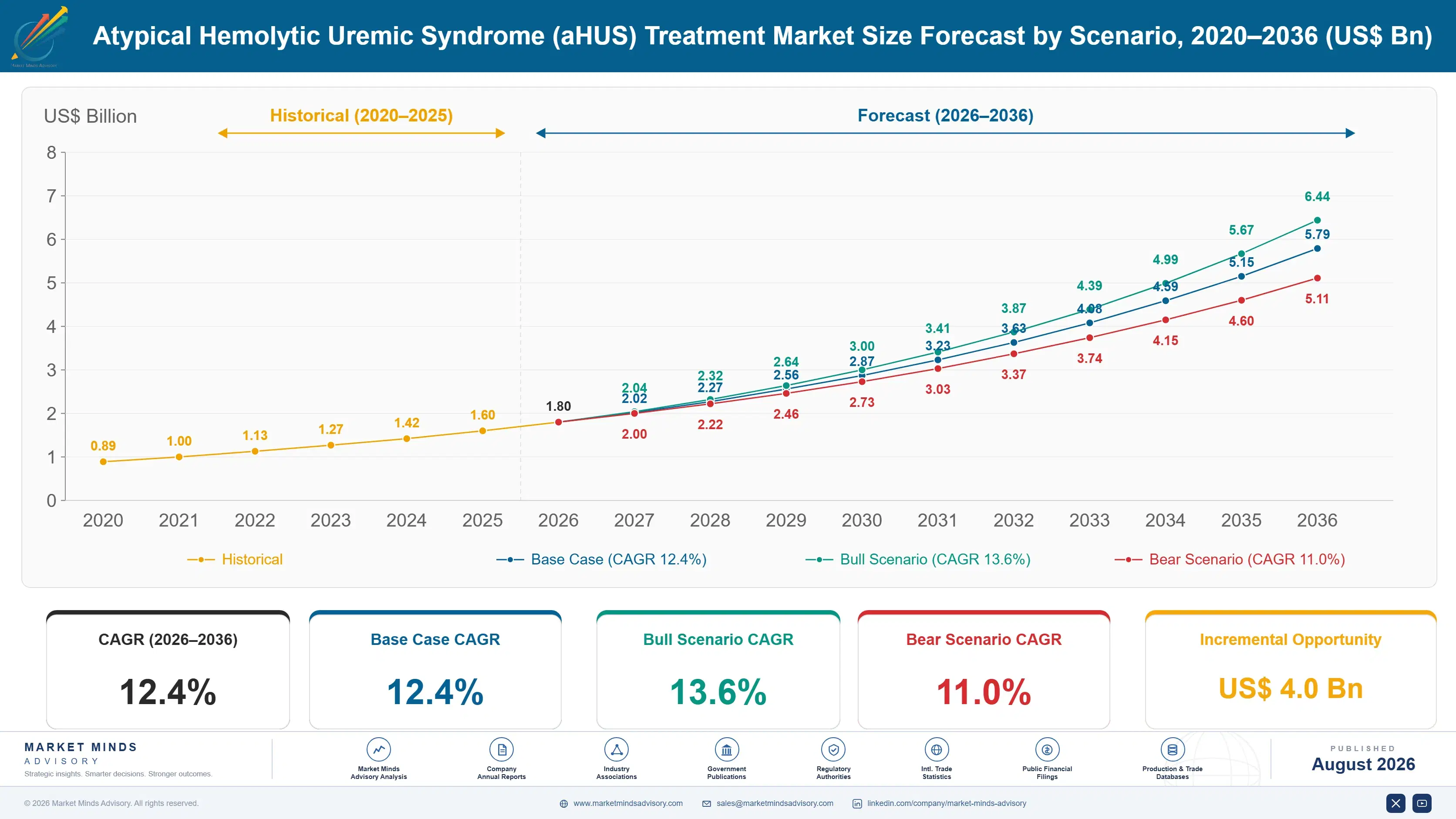
Atypical Hemolytic Uremic Syndrome (aHUS) Treatment Market Forecast Scenarios

atypical-hemolytic-uremic-syndrome-ahus-treatment--size-forecast-scenario-1787305675868
Growth ran near 11.0% from 2020 to 2025 on two forces that had nothing to do with patient numbers. Conversion from the two-week infusion schedule onto an eight-week one raised realised revenue per patient while improving the treatment burden considerably. Diagnosis rates also improved as complement testing and clinical awareness spread, which brought previously unrecognised patients into treatment across several markets.
Base case growth of 12.4% rests on three mechanisms. Diagnosis continues improving, particularly in markets where atypical presentation was previously attributed to other thrombotic microangiopathies. Transplant prophylaxis is becoming standard practice, since the disease recurs in transplanted kidneys without complement inhibition. And oral agents in development would expand treatment to patients who currently decline infused therapy or discontinue it. None of the three depends on prevalence changing, because it will not.
The bull case at 13.6% assumes oral complement inhibition reaches approval in this indication within the period and expands the treated population rather than merely substituting for infusions. The bear case at 11.0% reflects payer pressure toward supervised discontinuation in remission, which at these prices is worth enough to a health system that it will be pursued regardless of relapse risk.

Complement Inhibition: Price, Route and Duration

Roughly five people per million carry a confirmed diagnosis, therapy costs around $480,000 a year, and one company has held nearly the whole market for over a decade. Those three facts define everything commercial about this category. There is no volume lever, no pricing pressure from adjacent products and no meaningful physician choice, because until recently there was only one mechanism with an approved therapy behind it.
TOP FIVE CONCENTRATION88%Among the most concentrated positions anywhere in pharmaceuticals
ANNUAL THERAPY COST$480,000Typical yearly cost per treated patient at list price
DIAGNOSED PREVALENCE5 per millionConfirmed diagnoses per million population across covered markets
TIME TO DIAGNOSIS17 daysDays from presentation to confirmed diagnosis on average
DOSING INTERVAL8 weeksInterval between infusions on the current long-acting therapy
DISCONTINUATION ATTEMPT RATE34%Patients in remission where stopping therapy is attempted
The defence of that position deserves study. Facing eventual biosimilar entry against its original antibody, the originator developed a successor with an eight-week dosing interval instead of two, then converted its own patients onto it. When interchangeable biosimilars of the original molecule finally arrived, the population they could address had already left. Patients preferred six infusions a year to twenty-six, and clinicians agreed.
What that defence cannot address is a change of route. Oral complement inhibitors reaching approval in adjacent indications work through the alternative pathway rather than at C5, and a tablet against an infusion is not a comparison that dosing interval improvements can win. The segment compounds at 18.6%, and the threat is to the format itself rather than to any particular product within it.
"Converting your own patients to a longer-acting version before the biosimilars land is about as good as lifecycle management gets, and it worked. But you can only do it once. When somebody shows up with a tablet, the answer cannot be another dosing interval, and everyone involved knows that perfectly well."
Principal Analyst, Rare Disease and Complement Therapeutics Practice · MMA Healt

Market Trends

Dosing interval extension defended the franchise from biosimilars

Facing eventual biosimilar competition on its original antibody, the originator brought forward a successor with an eight-week interval against the two-week schedule patients had been managing, then moved its own treated population across. By the time interchangeable biosimilars reached the market, the addressable base had shrunk substantially. Patients preferred six infusions a year to twenty-six and clinicians had no reason to object. Biosimilar entrants arrived on schedule to find that most of what they were copying was no longer being prescribed. Interval extension turned a dosing schedule into the durable asset that molecule patents could not provide.
Market Impact: Therapy costing $480,000 per year
Oral complement inhibition threatens the infused format itself

Agents inhibiting the alternative complement pathway have reached approval in adjacent complement-mediated indications and are in development for this one. An oral tablet against an intravenous infusion is a comparison that no dosing interval improvement addresses, because the objection is the infusion rather than its frequency. The segment compounds at 18.6% against a market rate of 12.4%. Patients who currently decline therapy or discontinue it would be reachable, so the format shift may expand the treated population rather than simply redistributing it. Nothing in the incumbent defensive playbook addresses a change of administration route.
Market Impact: Diagnosis reached within 17 days

Market Opportunities and Growth Drivers

Transplant prophylaxis becomes standard rather than optional

The disease recurs in transplanted kidneys in a substantial share of patients without complement inhibition, and graft loss follows quickly when it does. Prophylactic therapy around transplantation has moved from case-by-case decision toward standard practice in most transplant programmes, which creates a defined treatment episode with a clear clinical rationale that payers find difficult to refuse. Each transplanted patient represents extended therapy at roughly $480,000 annually. Transplant volumes in this population are rising as outcomes improve and centres gain confidence. Volume here responds to commercial effort in a way nothing else here does.
Market Impact: Discontinuation attempted in 34% of

Diagnostic separation from related microangiopathies keeps improving

This is a diagnosis of exclusion requiring thrombotic thrombocytopenic purpura and Shiga toxin-associated disease to be ruled out first, and rapid enzyme activity testing has made that separation faster and more reliable across more centres. Median time from presentation to confirmed diagnosis now sits near 17 days, down considerably, and every day saved preserves renal function that does not return. Improved diagnosis brings previously unrecognised patients into treatment, which is the closest thing to volume growth this category has. Diagnostic infrastructure investment therefore reaches patients that no prescriber-facing activity ever would, which is unusual for a pharmaceutical category.
Market Impact: Prevalence near 5 per million peopl

Market Restraints and Challenges

Payers push supervised discontinuation at these prices

At roughly $480,000 per patient annually, the question of whether therapy can be stopped after sustained remission is worth enormous sums to any health system, and discontinuation is now attempted in around 34% of remitted patients. The root cause is straightforward economics rather than any clinical dispute. Commercial impact is direct revenue loss on patients who remain diagnosed and alive. Manufacturers respond by funding relapse registries, supporting genotype-based risk stratification that identifies patients who genuinely cannot stop, and structuring outcome-linked agreements. The evidence must exist before the conversation starts. Payers open the conversation annually now.
Market Impact: Interval extended 2 to 8 weeks

The treated population cannot be expanded by promotion

Roughly five people per million carry a confirmed diagnosis and no commercial activity changes that number, since prevalence is biological and diagnosis depends on clinicians recognising a rare presentation correctly. The root cause is that the addressable population is fixed by disease incidence rather than by awareness or access in most developed markets. Commercial impact is that growth must come from price, duration, route or geography rather than from volume. Participants respond by funding diagnostic pathway education, complement genetic testing access and registry infrastructure. Registry infrastructure serves both diagnosis and duration defence simultaneously.
Market Impact: Oral segment compounding at 18.6%
4 additional market trends, 2 additional growth drivers, and 3 additional restraints and challenges are covered in the full report. Contact sales@marketmindsadvisory.com to access the complete intelligence.

Segment CAGR and Growth Architecture

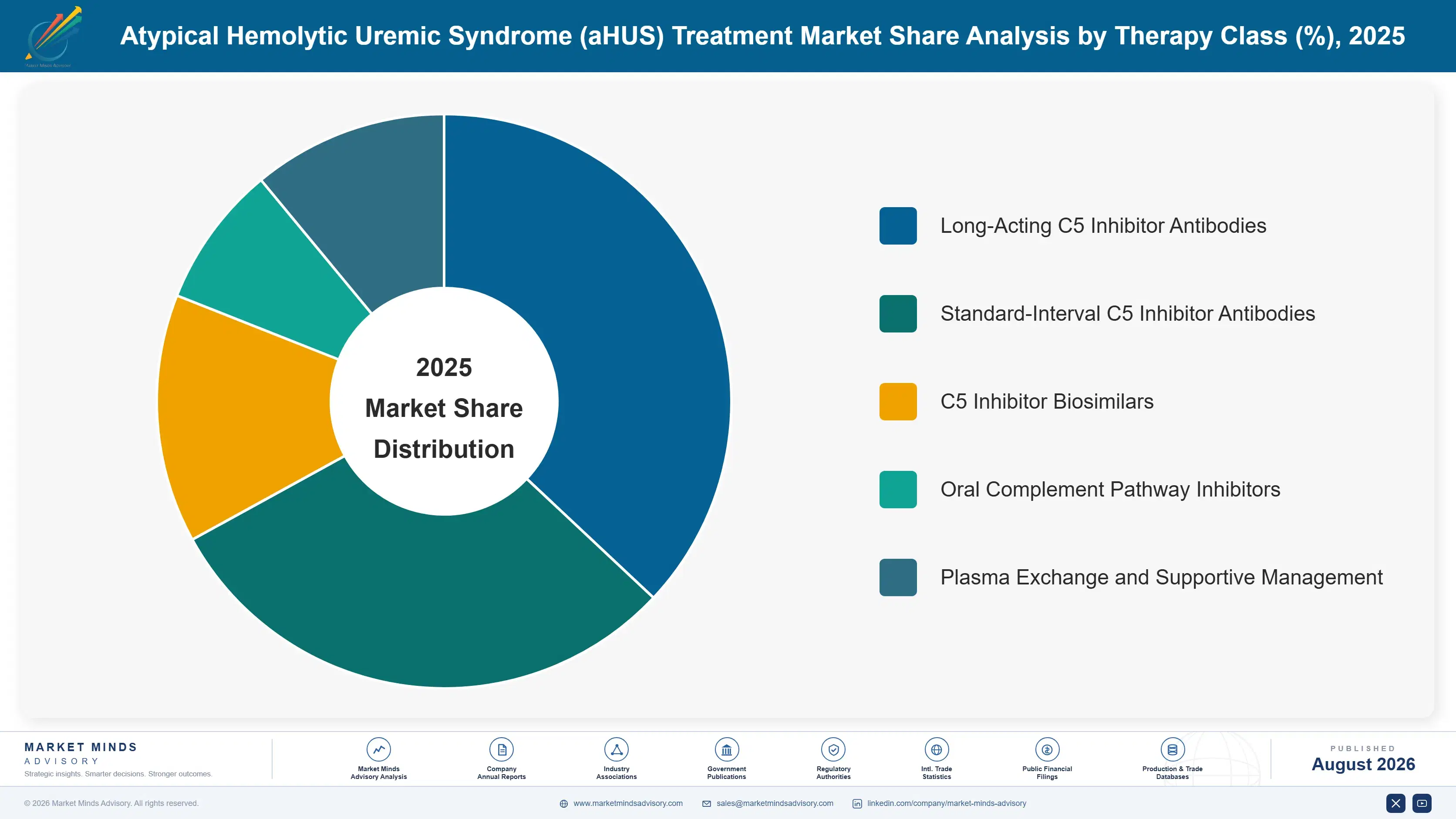
Five therapy classes divide this market by mechanism and route of administration, which together determine both price and competitive exposure. The division makes visible why biosimilar entry damaged less than expected and why an oral agent would damage considerably more, since one copies a molecule and the other replaces a format. Route matters more here than mechanism does.
atypical-hemolytic-uremic-syndrome-ahus-treatment--market-share-analysis-1787305676400

Oral Complement Pathway Inhibitors

Compounding at 18.6%, a full 1.50x the market rate, these agents inhibit the alternative complement pathway upstream of C5 and are taken as tablets rather than infused. Approval has been reached in adjacent complement-mediated indications and development continues in this one. The commercial significance is that no dosing interval improvement answers a tablet, because the objection patients hold is the infusion itself rather than its frequency. Patients who currently decline or discontinue infused therapy become reachable, which may expand the treated population rather than merely redistributing it between products. Small molecule manufacturing and the absence of infusion infrastructure also give oral developers a cost structure the antibody incumbents do not have.
CAGR 18.6%

C5 Inhibitor Biosimilars

Growing at 16.2% from a very small base, interchangeable biosimilars of the original antibody reached approval after the originator had already converted most of its treated population onto a longer-acting successor. Growth is therefore rapid in percentage terms and modest in absolute value, which is a distinction that matters when reading this segment. Payers in cost-constrained systems have driven adoption where the eight-week product is unavailable or unfunded, and manufacturing scale rather than clinical differentiation determines which biosimilar participants can price sustainably at these volumes. Nephrologists interviewed showed no clinical resistance to substitution, but almost none would move a stable patient back from eight-week to fortnightly infusions under any circumstances at all.
CAGR 16.2%
Full segment breakdown across 5 segments available in the complete report.

Regional Architecture and Country Demand Map

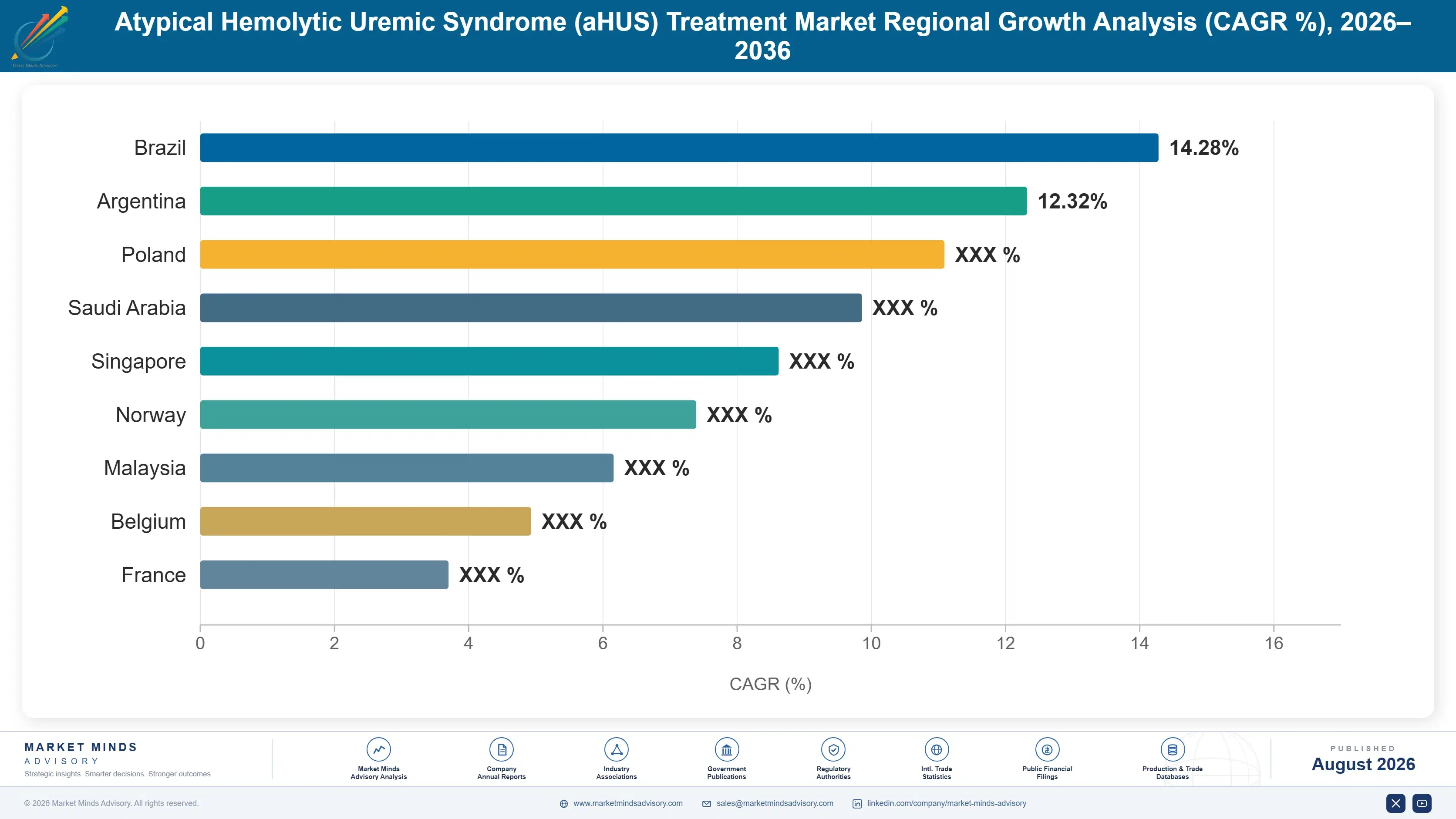
Regional distribution follows price and diagnosis rate rather than prevalence, which is broadly uniform worldwide. A patient in one health system may cost three times what an identical patient costs in another, and some patients are never diagnosed at all. Diagnosis rate and negotiated price together explain the entire map.

North America

Forty-four per cent of global value against a patient population roughly proportional to its share of world population. Note: this exceeds the 22 to 32% band because United States net prices for ultra-rare disease therapy run two to three times European levels, and diagnosis rates are among the highest anywhere. Conversion onto the eight-week product happened fastest here, so biosimilar entry met the smallest remaining base. Payer pressure toward supervised discontinuation is also strongest, since at these prices a stopped patient represents a very large annual saving to a single plan. Transplant prophylaxis is also more firmly established as protocol here than anywhere else covered. Prior authorisation and site of care requirements shape access.
Share: 44% | CAGR: 11.6% (2026 to 2036)

Western Europe

Twenty-four per cent of value, and health technology assessment shapes this market more than clinical debate does. National agencies negotiate confidential discounts against list prices that most publish nowhere, and several markets restricted therapy to defined criteria including genotype and disease severity before funding it. Germany, France, the United Kingdom, Italy and Spain account for most regional value. Biosimilar adoption is further advanced here than in North America, driven by procurement rather than by clinician preference. Discontinuation protocols in remission are also more formally established across several national systems. Genotype-based eligibility criteria appear in several national funding decisions, which makes complement genetic testing access a commercial variable rather than purely a clinical one.
Share: 24% | CAGR: 10.8% (2026 to 2036)
Regional intelligence for 5 additional markets available in the complete report: East Asia, South Asia and Pacific, Latin America, Middle East and Africa, Eastern Europe. Contact sales@marketmindsadvisory.com.
atypical-hemolytic-uremic-syndrome-ahus-treatment--country-cagr-analysis-1787305676924

Where Complement Therapy Value Holds

Volume is fixed by biology and cannot be promoted upward. Everything commercial in this category therefore comes from the three variables that remain: how long each patient stays on therapy, how much of the diagnosed population is actually reached, and whether the next format change happens to you or by you. Volume responds to almost nothing a commercial organisation does.

Defend treatment duration against supervised discontinuation

Discontinuation is attempted in roughly 34% of remitted patients, and at around $480,000 annually each stopped patient is a very large revenue loss on somebody who remains diagnosed. Genotype-based risk stratification identifies patients whose relapse risk makes stopping genuinely unsafe, which converts an economic argument into a clinical one that payers cannot easily override. Manufacturers funding relapse registries and genetic testing access hold treatment duration considerably longer. The evidence has to exist before the discontinuation conversation happens, not afterward. Producing it afterward takes years that nobody has available. Timing decides everything here.
Market Impact: Discontinuation attempted in 34% of

Fund diagnostic pathways rather than prescriber promotion

Prevalence sits near five per million and no amount of promotion changes it, but diagnosis rates vary enormously between health systems and a patient never identified is never treated. Median time to diagnosis near 17 days reflects years of investment in enzyme activity testing access and clinical pathway education. Every day saved preserves renal function that does not recover, which is a clinical argument and a commercial one simultaneously. Diagnostic infrastructure investment reaches patients that no prescriber-facing activity ever would. Testing access and pathway education are the working tools here.
Market Impact: Diagnosis time reduced to roughly 1

Own the next format change before somebody else does

The interval extension from two weeks to eight defended this franchise against biosimilars completely, and it cannot be repeated against a tablet. Participants holding an infused position without an oral programme are relying on a defence that already worked once and will not work again. Oral complement inhibition compounds at 18.6% and has reached approval in adjacent indications. Acquiring or partnering into that format costs considerably less than losing the category, and the window for doing so on favourable terms is closing. The alternative is watching a franchise transition without any position in what replaces it.
Market Impact: Oral format compounding at 18.6% ev

Secure transplant prophylaxis as standard protocol

The disease recurs in transplanted kidneys without complement inhibition, and graft loss follows quickly, which gives prophylactic therapy a clinical rationale that payers find genuinely difficult to refuse. Establishing it as standard transplant protocol rather than a case-by-case decision creates defined, defensible treatment episodes at roughly $480,000 annually per patient. Transplant centre engagement is a small, identifiable and reachable audience. This is the one part of the category where treated volume can still be expanded through commercial effort. Graft loss follows recurrence quickly enough that the clinical argument is unusually strong.
Market Impact: Treatment episodes worth $480,000 e

Who Controls the Margin Pool

The top five hold 88% of the market measured on revenue from products indicated for this disease, the basis used throughout this section. That concentration is among the highest anywhere in pharmaceuticals and it reflects a category one company created, developed and defended almost alone for more than a decade. The gap between leader and everyone else remains very wide, though biosimilar entry has narrowed it slightly at the margin.
Competitive activity runs along three lines. Biosimilar participants are competing on manufacturing cost and payer relationships in markets where the long-acting product is unfunded or unavailable. Developers of oral complement inhibitors are pursuing this indication after reaching approval in adjacent complement-mediated diseases. And the incumbent is defending treatment duration through relapse evidence and genotype stratification rather than through any product change.

Pressure comes from a direction the incumbent cannot answer with the tools that worked before. Dosing interval extension defeated biosimilar entry and does nothing against an oral agent, because the objection is the infusion rather than its frequency. Rankings will shift on which participants hold an oral programme in this indication, and that question resolves within the forecast period rather than beyond it.
atypical-hemolytic-uremic-syndrome-ahus-treatment--company-positioning-matrix-1787305677449

Competitive Moat and Risk Dimensions

ASTRAZENECA

Moat: Converted base before biosimilar entry

Developing a successor with an eight-week interval and moving its own treated patients onto it years ahead of biosimilar approval left the copies of the original molecule addressing a population that had largely departed. Patients preferred six infusions annually to twenty-six and clinicians had no reason to resist, which made the conversion unusually complete.
ASTRAZENECA

Risk: Oral route cannot be answered

The defence that worked against biosimilars addressed dosing frequency, and an oral agent changes the route entirely rather than the interval. No further interval extension answers a tablet, because the objection patients hold is the infusion itself. Without an oral programme in this indication, the franchise faces a format transition it has no established mechanism to defend against.
AMGEN

Moat: First interchangeable biosimilar position

Reaching approval first with interchangeable status gives the company automatic substitution rights in markets that permit them and a manufacturing scale that supports pricing few competitors can sustain at these volumes. Payer relationships built across a broad biosimilar portfolio also open procurement conversations that a single-product entrant would struggle to initiate at all.
AMGEN

Risk: Addressable base already shrunk

The biosimilar entered against a treated population the originator had already moved onto a longer-acting successor, so the opportunity is a fraction of what the original molecule once represented. Growth of 16.2% in the segment sounds substantial and applies to a small absolute base, and no biosimilar of the eight-week product will be possible for years.

Players Tracked

Prominent Players

AstraZeneca
Amgen
Samsung Bioepis
Roche
Novartis

Other Key Players

Apellis Pharmaceuticals
Sobi
Regeneron Pharmaceuticals
Omeros
BioCryst Pharmaceuticals
Teva Pharmaceutical Industries
Sandoz
Biocon
Dr. Reddy's Laboratories
ISU Abxis
Fresenius Kabi
Grifols
Takeda
Kissei Pharmaceutical
Zai Lab

Recent Developments

OCTOBER 2019

Long-acting complement inhibitor approved for this indication

United States regulators approved a C5 inhibitor with an eight-week dosing interval for atypical haemolytic uraemic syndrome, against the two-week schedule of the existing standard. The approval gave the originator a successor product to convert its own treated population onto, several years before biosimilars of the original molecule could enter.
Signal: A dosing interval became the defensive ass
DECEMBER 2023

First oral complement pathway inhibitor approved

An oral inhibitor of complement factor B reached approval in an adjacent complement-mediated disease, establishing that the pathway could be blocked effectively with a tablet rather than an infusion. Development in atypical haemolytic uraemic syndrome followed, and the format comparison that resulted is one no dosing schedule addresses.
Signal: Route of administration has replaced dosin
MAY 2024

First interchangeable eculizumab biosimilar approved

Regulators approved the first biosimilar of the original C5 inhibitor antibody with interchangeable designation, permitting substitution where local rules allow it. The approval arrived years after the originator had converted most of its treated population onto a longer-acting successor, leaving a much smaller addressable base.
Signal: Biosimilar entry landed on schedule and fo

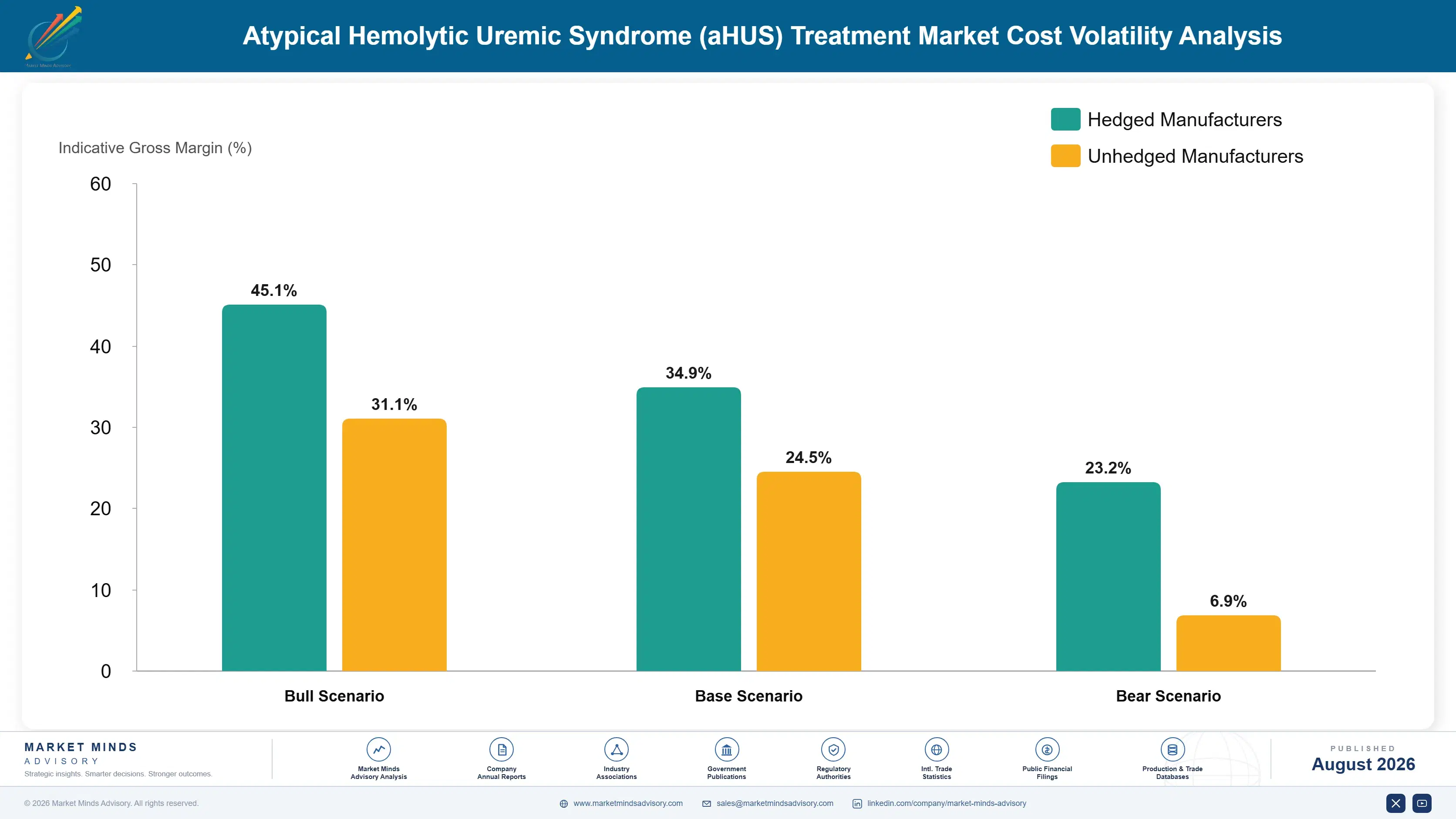
What Actually Costs Money Here

Manufacturing is almost irrelevant to the economics at these prices. Monoclonal antibody production including cell culture, purification and fill-finish accounts for roughly 4% of net revenue for the originator, with capacity in Ireland, the United States and Singapore. What genuinely costs money is patient identification, the specialist field organisation supporting a few thousand treated patients globally, and the safety programme complement inhibition requires.
Meningococcal infection risk from complement blockade requires vaccination, prescriber certification and continuous safety monitoring, and that programme carries fixed cost regardless of patient numbers. Company reporting across the complement therapeutics sector documents rare disease commercial expense running far above conventional therapeutic areas per treated patient. Biosimilar participants face the same safety programme obligations against pricing set to undercut the originator, which compresses their economics considerably.

Exposure varies by business model rather than by geography. The originator carries commercial and safety infrastructure cost against pricing that absorbs it comfortably, and manufacturing cost is a rounding item. Biosimilar participants carry comparable regulatory and safety obligation against materially lower realised prices, which makes patient volume the only route to viability. Oral developers face a different structure entirely, with small molecule manufacturing costs and no infusion infrastructure to support.
atypical-hemolytic-uremic-syndrome-ahus-treatment--cost-volatility-analysis-1787305677644

Shared safety programme infrastructure across products

Complement inhibition safety obligations including vaccination tracking and prescriber certification carry fixed cost that a single product must absorb alone. Participants running several complement therapies spread that infrastructure across a wider revenue base, which is one reason the category rewards portfolio breadth over single-asset positions more than its patient numbers would suggest. Single-asset participants carry it alone.

Registry investment ahead of discontinuation pressure

Relapse evidence after supervised withdrawal takes years to accumulate and cannot be produced once a payer has already opened the conversation. Funding registries and genotype stratification early converts a future economic dispute into a clinical one, and the participants that invested before the pressure arrived are defending duration considerably more successfully. Timing decides whether it works at all.

Regional manufacturing against biosimilar price pressure

Biosimilar economics at these volumes depend on production cost far more than originator economics ever did, since realised prices are lower and the safety obligations are identical. Manufacturing in lower-cost regions with established biologics capability is what separates biosimilar participants that can sustain the price from those that cannot. Volume is fixed, so cost is everything.

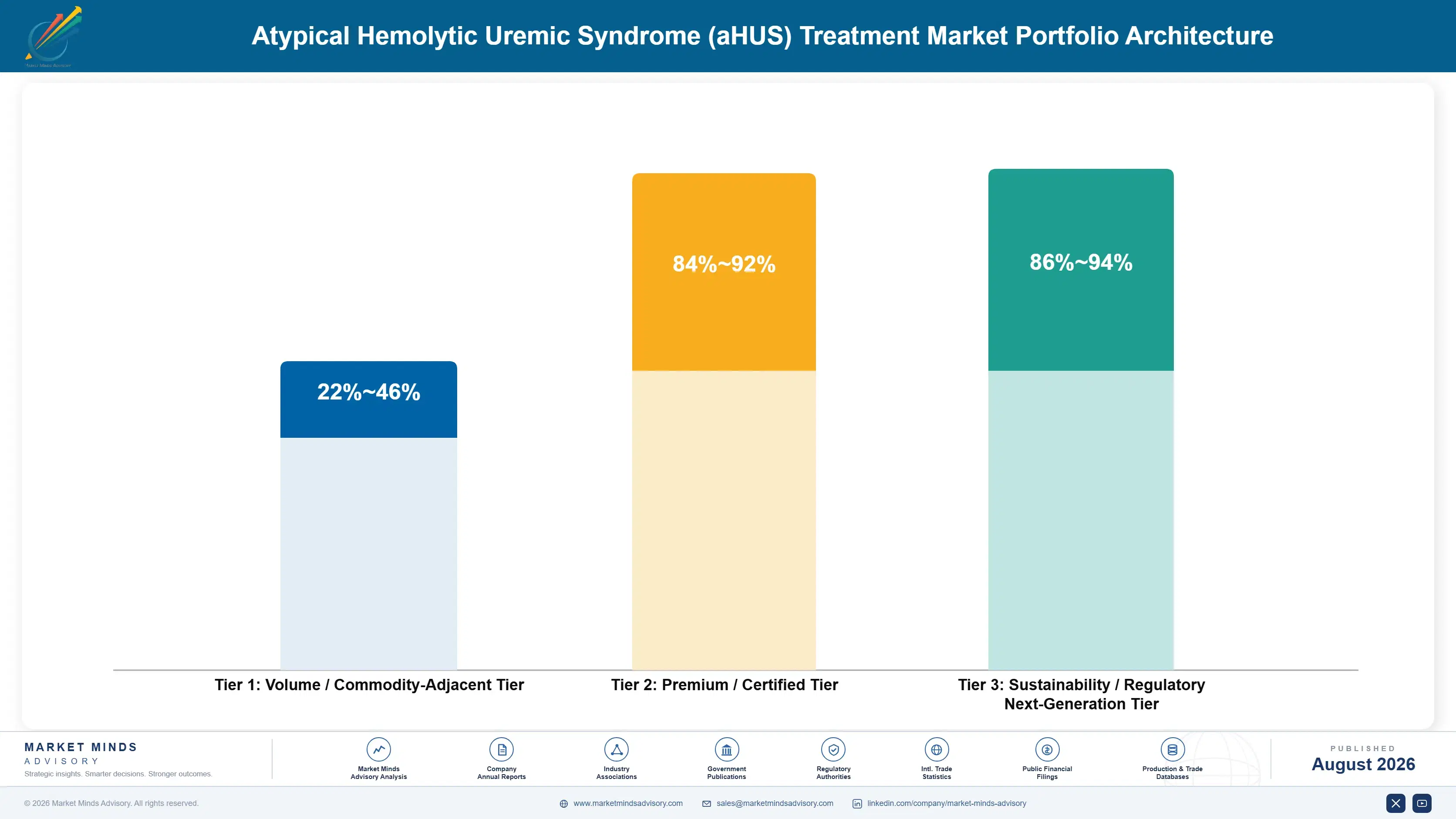
Portfolio Architecture for Margin Defence

Margin architecture here is unlike almost anything else in pharmaceuticals, because manufacturing cost is negligible against price and the real expense is finding and supporting a few thousand patients worldwide. The originator's long-acting product clears above ninety per cent gross margin. Biosimilars carry identical safety obligations against prices set to undercut, which compresses their position considerably despite comparable production costs. Plasma exchange and supportive management sit
The tension is between duration and access. Every additional year a patient stays on therapy is worth roughly $480,000, which makes duration the single most valuable variable in the category. Yet the arguments that extend duration, principally relapse risk evidence and genotype stratification, are the same arguments that identify which patients could safely stop, and manufacturers fund the research that produces both answers.

High-value pools concentrate where therapy is clinically indefensible to withdraw. Genotypes carrying high relapse risk, transplant prophylaxis and patients with prior severe presentations all sit there, because stopping is not a decision a nephrologist will make regardless of what a payer prefers. Everything treating patients in stable remission on a favourable genotype faces a discontinuation conversation every single year.

Volume / Commodity-Adjacent Tier

Plasma exchange, supportive management and biosimilar C5 inhibition purchased on cost in constrained systems, where procurement decides and clinical differentiation between the biosimilar and its reference product is not claimed.
Gross Margin: 22-46%

Premium / Certified Tier

Long-acting C5 inhibitor antibodies delivered through certified prescribers under safety programme obligations, defended by dosing convenience, established clinical experience and conversion of the treated population already completed. Biosimilars of this product will not exist for years.
Gross Margin: 84-92%

Sustainability / Regulatory / Next-Generation Tier

Oral complement pathway inhibitors and genotype-directed treatment strategies, defended by route of administration and by relapse risk evidence that determines which patients cannot safely discontinue therapy. Route of administration is the durable part of that defence.
Gross Margin: 86-94%
atypical-hemolytic-uremic-syndrome-ahus-treatment--portfolio-architecture-1787305678141

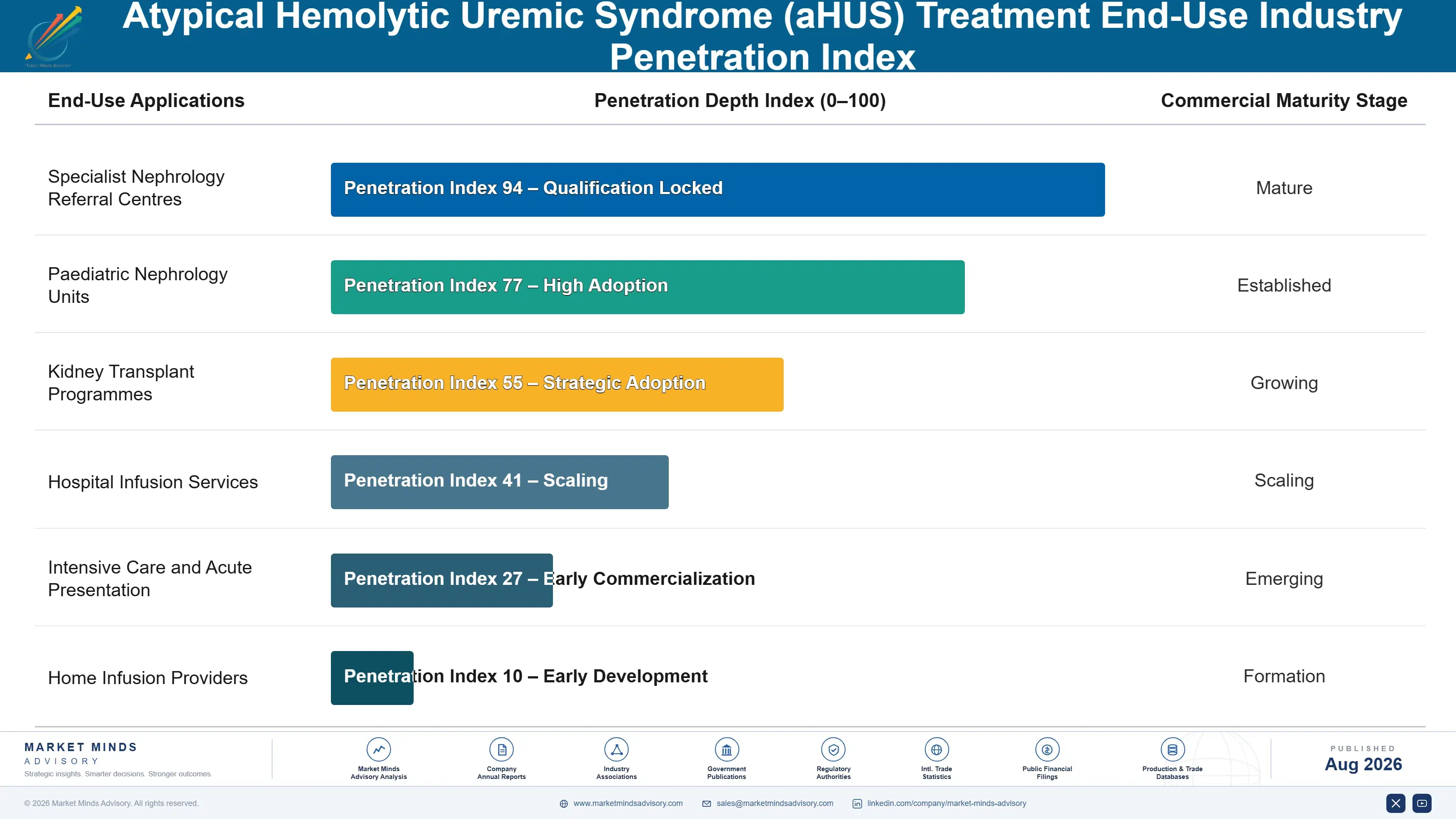
Who Prescribes and What Continues

Revenue in this category is duration multiplied by price, and price is fixed. A patient on therapy generates roughly $480,000 a year for as long as treatment continues, so the commercial question is never acquisition volume and always persistence. Discontinuation is attempted in around 34% of remitted patients, which makes relapse evidence and genotype stratification worth more to a manufacturer than any promotional activity could be.
Persistence varies almost entirely by genotype and clinical history rather than by care setting. Patients carrying high-risk complement mutations, those with prior severe presentations and transplant recipients stay on therapy indefinitely, because no nephrologist will stop treatment in the face of that relapse risk. Patients in stable remission on favourable genotypes face a discontinuation conversation annually, and increasingly a payer-initiated one.

The prescribing population is small, identifiable and unusually concentrated. Specialist nephrologists at referral centres manage the great majority of diagnosed patients, and complement certification requirements narrow it further. That makes commercial reach straightforward and commercial influence limited, since these prescribers know the evidence thoroughly and are not moved by promotional argument. What moves them is registry data and genotype evidence they can act on clinically.
atypical-hemolytic-uremic-syndrome-ahus-treatment--end-use-penetration-index-1787305678632

Where Value Actually Sits

These are among the four positions where our research anticipates prominent divergence between winners and laggards over the coming forecast period. Each is grounded in the demand model, the regulatory perimeter, and the announced capacity pipeline.
01 / TREATMENT DURATION DEFENCE

Every stopped patient costs nearly half a million

Discontinuation is now attempted in roughly 34% of all remitted patients, and at approximately $480,000 annually each one of them represents a very large revenue loss on somebody who remains both diagnosed and alive. Genotype-based relapse risk stratification converts an economic argument that payers will otherwise always win into a clinical one that they cannot easily override at all. The evidence has to exist before the discontinuation conversation begins at all, because producing it afterward takes years that nobody involved actually has.
02 / DIAGNOSTIC PATHWAY FUNDING

Patients never identified are never treated at all

Prevalence sits near five people per million and no amount of promotional activity moves that number at all, since it is fixed by biology rather than by awareness or access in developed markets. Diagnosis rates, however, vary enormously between health systems, and median time to confirmation near 17 days reflects sustained investment in testing access and clinical pathway education. Every day saved preserves renal function that does not return, which makes this simultaneously a clinical argument and a commercial one.
03 / FORMAT TRANSITION OWNERSHIP

The interval trick works exactly once

Extending the dosing interval from two weeks out to eight weeks defeated biosimilar entry almost entirely and completely, and it offers no defence whatsoever against an oral tablet eventually reaching this indication. Participants holding an infused position without any oral programme in development are relying on a defensive manoeuvre that has already been played once and simply cannot be repeated against a tablet. Oral complement inhibition compounds at 18.6% and has already reached approval in several adjacent complement-mediated diseases elsewhere.
04 / TRANSPLANT PROTOCOL POSITIONING

The only volume this category can actually grow

Recurrence in a transplanted kidney without complement inhibition leads to graft loss quickly enough that prophylaxis carries a clinical rationale which payers find genuinely difficult to refuse on cost grounds alone. Establishing it as standard transplant protocol rather than a case-by-case clinical judgement creates defined and defensible treatment episodes worth roughly $480,000 annually each. Transplant centres are a small and readily identifiable audience, and this remains the one place in the whole category where commercial effort still moves treated volume.

Engagement Snapshot From the Field

A live engagement with an industry participant carrying material or product regulatory and market exposure ahead of a defining policy shift, showing how our research translates into a defensible multi-year portfolio strategy.
MARKET MINDS ADVISORY · CLIENT ENGAGEMENT SUMMARY
Atypical Hemolytic Uremic Syndrome (aHUS) Treatment Producer Strategic Portfolio Review and Transition Roadmap 2026·Investment Scenario on Atypical Hemolytic Uremic Syndrome (aHUS) Treatment Exposure Evaluation 2025-26
CLIENT PROFILE
A biosimilar developer with annual revenue near $760 million (client-reported, unverified by MMA) across an established portfolio in oncology and immunology, holding a C5 inhibitor biosimilar candidate approaching regulatory submission. Leadership had modelled the opportunity against historical originator revenue for the reference product and needed to understand why commercial forecasts from two internal teams differed by more than a factor of three.
STRATEGIC CHALLENGE
The reference product's treated population had substantially migrated onto a longer-acting successor that no biosimilar could copy, and the company needed to know how much of the original base remained addressable, in which markets, and whether the safety programme obligations left viable economics at biosimilar pricing levels. Launch sequencing depended entirely on that answer.
MMA APPROACH
We reconstructed treated patient migration between the reference product and its successor across eleven markets using reimbursement records, prescribing data and 24 nephrologist interviews. Safety programme cost obligations were modelled against realised biosimilar pricing in comparable rare disease categories. We then assessed which markets had not funded the eight-week product at all.
KEY FINDINGS
  1. Conversion onto the long-acting successor exceeded 70% of treated patients in six of eleven markets examined, leaving a remaining base far smaller than historical reference product revenue implied.
  2. Four markets had not funded the eight-week product at all, and those retained an intact reference product population that represented the great majority of the viable opportunity.
  3. Safety programme obligations were identical for biosimilar and originator, adding fixed cost that biosimilar pricing absorbed far less comfortably at the volumes actually available.
  4. Nephrologists interviewed showed no clinical resistance to biosimilar substitution, but 19 of 24 said they would not move a stable patient back from eight-week to two-week dosing under any circumstances.
CLIENT PROFILE
A biosimilar developer with annual revenue near $760 million (client-reported, unverified by MMA) across an established portfolio in oncology and immunology, holding a C5 inhibitor biosimilar candidate approaching regulatory submission. Leadership had modelled the opportunity against historical originator revenue for the reference product and needed to understand why commercial forecasts from two internal teams differed by more than a factor of three.
STRATEGIC CHALLENGE
The reference product's treated population had substantially migrated onto a longer-acting successor that no biosimilar could copy, and the company needed to know how much of the original base remained addressable, in which markets, and whether the safety programme obligations left viable economics at biosimilar pricing levels. Launch sequencing depended entirely on that answer.
MMA APPROACH
We reconstructed treated patient migration between the reference product and its successor across eleven markets using reimbursement records, prescribing data and 24 nephrologist interviews. Safety programme cost obligations were modelled against realised biosimilar pricing in comparable rare disease categories. We then assessed which markets had not funded the eight-week product at all.
KEY FINDINGS
  1. Conversion onto the long-acting successor exceeded 70% of treated patients in six of eleven markets examined, leaving a remaining base far smaller than historical reference product revenue implied.
  2. Four markets had not funded the eight-week product at all, and those retained an intact reference product population that represented the great majority of the viable opportunity.
  3. Safety programme obligations were identical for biosimilar and originator, adding fixed cost that biosimilar pricing absorbed far less comfortably at the volumes actually available.
  4. Nephrologists interviewed showed no clinical resistance to biosimilar substitution, but 19 of 24 said they would not move a stable patient back from eight-week to two-week dosing under any circumstances.
RECOMMENDED STRATEGY
Phase 1: Phase one: prioritise regulatory submission and launch in the four markets that never funded the long-acting product, where the reference base remains intact. Phase 2: Phase two: target newly diagnosed patients rather than switching, since no clinician will move a stable patient back to fortnightly infusions. Phase 3: Phase three: pursue portfolio arrangements sharing safety programme infrastructure across complement products rather than carrying it on one asset. Single-asset economics do not support it.
OUTCOME
Launch sequencing was reordered around funding status rather than market size, and the revised forecast landed close to the lower internal estimate. First-year uptake in two priority markets exceeded that revised plan by roughly 20% (client-reported, unverified by MMA). A partnership discussion opened regarding shared safety programme infrastructure.

Frequently Asked Questions

Foundational context covering the market sizes, CAGR, scope, country, region and competition that inform every finding below. This section is provided to cover basics and most often pre-purchase conversations, answered from the MMA Primary Research Dataset.

What is the current size of the Atypical Hemolytic Uremic Syndrome (aHUS) Treatment Market?

The global market is valued at $1.6 billion in 2025, rising to $1.80 billion in 2026. North America holds 44% of that value on pricing two to three times European levels rather than on patient numbers.

How large will the Atypical Hemolytic Uremic Syndrome (aHUS) Treatment Market be by 2036?

MMA forecasts $5.79 billion by 2036, an increase of $3.99 billion over the 2026 base and an expansion multiple of 3.22x. Diagnosis improvement and transplant prophylaxis carry most of that growth.

What is the CAGR for the Atypical Hemolytic Uremic Syndrome (aHUS) Treatment Market 2026 to 2036?

The base case compound annual growth rate is 12.4%, with a bull case at 13.6% and a bear case at 11.0%. Historical growth from 2020 to 2025 ran near 11.0% on conversion and diagnosis rather than prevalence.

Which segment is growing fastest?

Oral complement pathway inhibitors compound at 18.6%, a full 1.50x the market rate. A tablet against an infusion is a comparison that no dosing interval improvement can answer.

Who are the major companies in the Atypical Hemolytic Uremic Syndrome (aHUS) Treatment Market?

AstraZeneca, Amgen, Samsung Bioepis, Roche and Novartis together hold 88% of revenue from products indicated for this disease. That concentration is among the highest anywhere in pharmaceuticals.

Which country is growing fastest?

China compounds at 15.2%, faster than any other country covered, as national reimbursement negotiations bring complement inhibition within reach of more patients. Diagnostic capability is also spreading beyond tertiary centres.

Report Segmentation Architecture

The full report scope spans multiple orthogonal segmentation dimensions, with cross-tabulated demand data provided for each dimension pair. Coverage extends further to regional breakdowns, trend trajectories, and the competitive detail needed to support segment-level decision-making.

By Therapy Class

  • Long-Acting C5 Inhibitor Antibodies
  • Standard-Interval C5 Inhibitor Antibodies
  • C5 Inhibitor Biosimilars
  • Oral Complement Pathway Inhibitors
  • Plasma Exchange and Supportive Management

By End-Use Industry

  • Specialist Nephrology Referral Centres
  • Paediatric Nephrology Units
  • Kidney Transplant Programmes
  • Hospital Infusion Services
  • Intensive Care and Acute Presentation
  • Home Infusion Providers

By Commercial Dimension

  • National Rare Disease Reimbursement
  • Hospital and Institutional Supply
  • Specialty Pharmacy Distribution
  • Managed Access and Named Patient Supply
  • Private Insurance Coverage
  • Judicial and Exceptional Funding Routes

By Region

  • East Asia
  • North America
  • Western Europe
  • South Asia and Pacific
  • Latin America
  • Middle East and Africa
  • Eastern Europe

Scope, Methodology, and Coverage

Every figure in this report is reproducible from documented input assumptions. The scope below maps the historical period, the forecast horizon, the segmentation dimensions, and the countries covered, alongside the underlying primary and qualitative methodology.
Historical Period
2020 to 2025
Forecast Period
2026 to 2036
Base Year
2025 (USD billions; MMA Primary Research Dataset, August 2026)
Market Definition
This market comprises therapy for atypical haemolytic uraemic syndrome, measured at manufacturer net revenue or delivered service cost across national rare disease reimbursement, hospital and institutional supply, specialty pharmacy distribution, managed access and named patient supply, private insurance coverage, and judicial or exceptional funding routes. Coverage spans long-acting C5 inhibitor antibodies dosed at extended intervals, standard-interval C5 inhibitor antibodies including the originator reference product, C5 inhibitor biosimilars whether interchangeable or not, oral complement pathway inhibitors acting upstream of C5 where indicated or in advanced development for this disease, and plasma exchange with supportive management including transfusion and renal replacement delivered specifically for this indication. Shiga toxin-associated haemolytic uraemic syndrome, thrombotic thrombocytopenic purpura and other thrombotic microangiopathies, paroxysmal nocturnal haemoglobinuria, generalised myasthenia gravis, neuromyelitis optica and other complement-mediated indications, dialysis and kidney transplantation services themselves, complement genetic testing and ADAMTS13 activity assays, and meningococcal vaccination fall outside scope.
Quantitative Units
USD millions (manufacturer net revenue); diagnosed patients by market; treated patients on therapy; annual therapy cost per patient; treatment duration and persistence; discontinuation attempt rate; time to confirmed diagnosis
Segmentation Dimensions
By Therapy Class; By End-Use Industry; By Commercial Dimension; By Region
Regions Covered
East Asia, North America, Western Europe, South Asia and Pacific, Latin America, Middle East and Africa, Eastern Europe
Countries Covered
United States, Canada, Germany, France, United Kingdom, Italy, Spain, Netherlands, Sweden, Denmark, Switzerland, Belgium, Japan, China, South Korea, Taiwan, Australia, India, Singapore, Thailand, Brazil, Mexico, Argentina, Chile, Colombia, Saudi Arabia, United Arab Emirates, Israel, South Africa, Poland, Czechia, Hungary, Romania, Turkey, Russia, and additional markets relevant to rare disease therapeutics analysis
Key Companies Profiled
AstraZeneca, Amgen, Samsung Bioepis, Roche, Novartis, Apellis Pharmaceuticals, Sobi, Regeneron Pharmaceuticals, Omeros, BioCryst Pharmaceuticals, Teva Pharmaceutical Industries, Sandoz, Biocon, Dr. Reddy's Laboratories, ISU Abxis, Fresenius Kabi, Grifols, Takeda, Kissei Pharmaceutical, Zai Lab
Quantitative Methodology
Primary survey, n=3,800 respondents, Q4 2025, six countries; demand-side model with trade association cross-validation
Qualitative Methodology
47 expert interviews, Q4 2025; applied to validate demand model assumptions, identify emerging dynamics, and assess competitive positioning
Report Format
PDF and XLSX data workbook (Word format preview document)
Publisher
Market Minds Advisory
Report Code
MMA-2026-HLT-493
Published
August 2026
Contact
sales@marketmindsadvisory.com | www.marketmindsadvisory.com

Purchase the full Atypical Hemolytic Uremic Syndrome (aHUS) Treatment Market Report (2026 to 2036).

The full MMA report treats this category as a lifecycle case study, tracing exactly how dosing interval extension defeated biosimilar entry and why the same defence fails against an oral agent. It sizes five therapy classes and seven regions to 2036, modelling diagnosed and treated patients, annual therapy cost, treatment persistence, discontinuation attempts and time to diagnosis separately. Competitive assessment covers twenty participants on one consistent revenue basis. Cost exposure is traced through manufacturing, safety programme obligations and field infrastructure. Four commercial levers and a strategic verdict close the report, grounded in 47 expert interviews and a 3,800-respondent survey.
Five therapy classes sized separately through 2036
Patient migration between reference and successor products quantified
Discontinuation attempt rates modelled against genotype risk stratification
Twenty participants assessed on one consistent revenue basis
Reimbursement status mapped for every covered market
Anonymised biosimilar engagement with tested launch sequencing recommendations

Built For The People Who Decide

From boardroom strategy to bench-side execution, this report is read cover-to-cover by leaders shaping the next decade of their industry, turning demand scenarios, market dynamics and valuation benchmarks into decisions.
CXOs/ Presidents/ VPs/ Managers
M&A and Corporate Development
Strategy Teams and R&D Heads
Procurement and Product Directors
Regulatory and Compliance Leaders
Investor Relations and Equity Analysts