At Home Pregnancy Testing Market
At Home Pregnancy Testing Market Outlook from 2026 to 2033
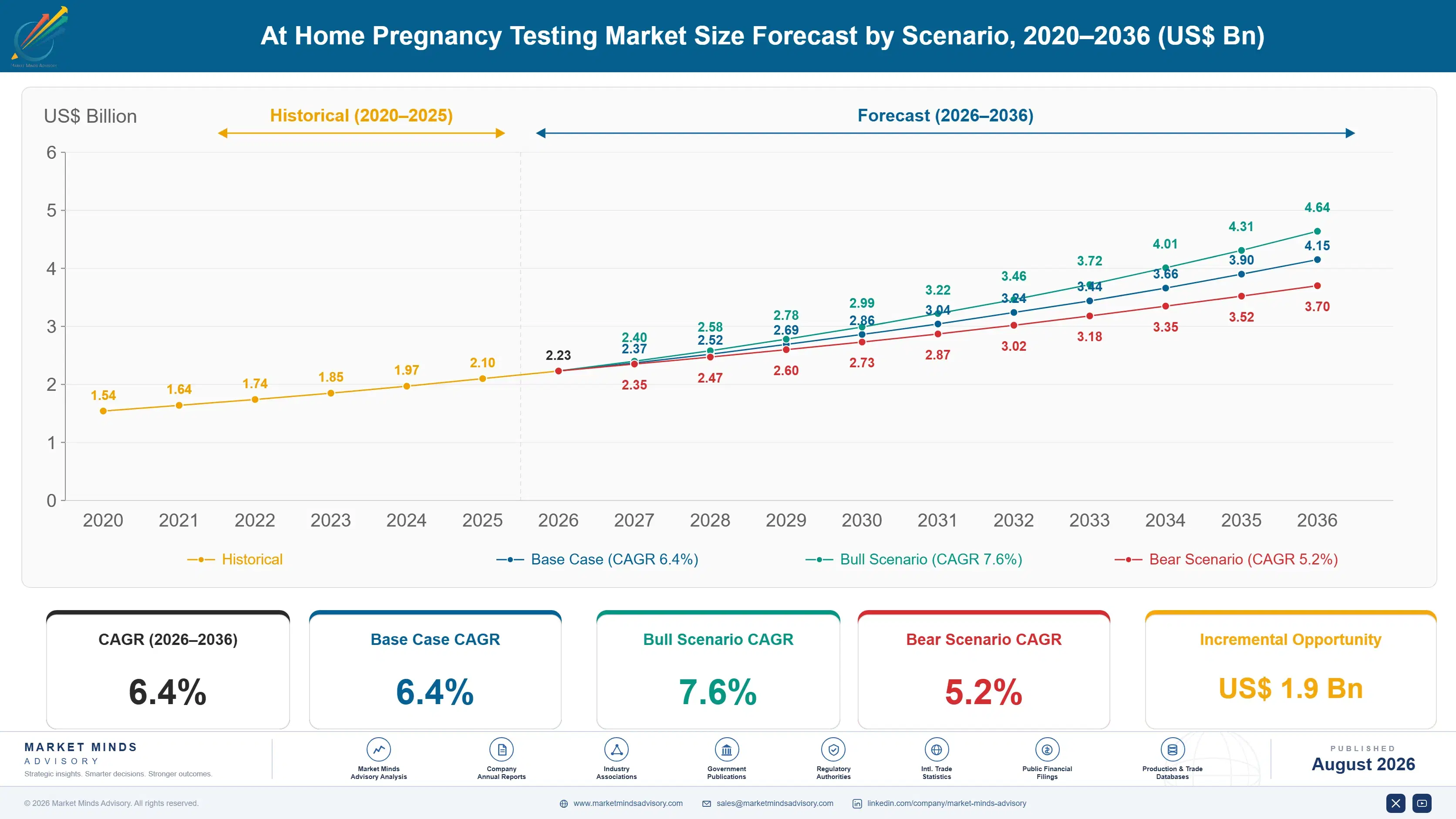
The at home pregnancy testing market is poised for significant growth over the forecast period, driven by increasing consumer demand for privacy, convenience, and rapid results in personal healthcare diagnostics. The market was valued at approximately USD 1.45 billion in 2025 and is projected to reach USD 2.36 billion by 2033, expanding at a CAGR of 6.9% from 2026 to 2033. This robust growth trajectory is underpinned by rising awareness of early pregnancy detection, technological advancements in test accuracy, and the proliferation of e-commerce platforms facilitating easy product access.
The market’s expansion is further supported by the growing prevalence of planned pregnancies, increased health consciousness among women, and the integration of digital features in testing kits. Additionally, the shift towards self-care and the rising adoption of home-based diagnostic solutions, particularly in developed regions, are expected to sustain market momentum. The competitive landscape is characterized by innovation, with key players focusing on user-friendly designs and enhanced sensitivity to meet evolving consumer preferences.

At Home Pregnancy Testing Market Scenario & Strategic Insights
The at home pregnancy testing market has witnessed a paradigm shift in consumer behavior, with a marked preference for discreet and immediate pregnancy confirmation. This shift is largely attributed to the increasing participation of women in the workforce, urbanization, and the growing acceptance of self-administered diagnostic tools. The market is also benefiting from the expansion of retail and online distribution channels, which have made pregnancy test kits more accessible to a broader demographic, including those in remote and underserved areas.
Strategically, manufacturers are investing in research and development to enhance the sensitivity and specificity of test kits, thereby reducing the likelihood of false positives or negatives. The integration of digital technologies, such as Bluetooth-enabled devices and smartphone applications, is further elevating the user experience by providing additional support and guidance. Regulatory bodies are also playing a pivotal role by ensuring product safety and efficacy, which in turn fosters consumer trust and market growth.
The competitive landscape is intensifying, with established players and new entrants vying for market share through product differentiation, strategic partnerships, and targeted marketing campaigns. As the market continues to evolve, companies are expected to focus on expanding their product portfolios, improving affordability, and addressing the unique needs of diverse consumer segments.
| Attribute | 2026 (USD Billion) | 2033 (USD Billion) | CAGR (2026 – 2033) |
| Market Size | 1.55 | 2.36 | 6.9% |
At Home Pregnancy Testing Market Trends
- Integration of Digital and Connected Technologies
The at home pregnancy testing market is experiencing a notable trend towards digitalization, with manufacturers introducing test kits equipped with digital displays and Bluetooth connectivity. These advancements enable users to receive clear, easy-to-read results and access additional information or support via companion mobile applications. The integration of digital features not only enhances user confidence in test accuracy but also provides value-added services such as cycle tracking, reminders, and direct communication with healthcare professionals. This trend is expected to drive product differentiation and increase consumer engagement, particularly among tech-savvy demographics.
- Expansion of E-commerce and Direct-to-Consumer Channels
The proliferation of e-commerce platforms has significantly transformed the distribution landscape for at home pregnancy testing kits. Online sales channels offer consumers greater privacy, convenience, and access to a wider range of products, including international brands. Direct-to-consumer models are also gaining traction, allowing manufacturers to build stronger relationships with end-users and gather valuable feedback for product improvement. This trend is particularly pronounced in regions with high internet penetration and growing acceptance of online healthcare purchases, contributing to overall market growth.
- Focus on Sustainability and Eco-Friendly Packaging
Environmental sustainability is emerging as a key consideration in the at home pregnancy testing market. Manufacturers are increasingly adopting eco-friendly materials and reducing plastic usage in packaging to appeal to environmentally conscious consumers. Biodegradable test components and recyclable packaging are being introduced to minimize environmental impact. This trend aligns with broader consumer preferences for sustainable products and is likely to influence purchasing decisions, especially among younger generations who prioritize environmental responsibility.
Segment & Category Analysis for At Home Pregnancy Testing Market
By Product Type
- Strip Tests
- Cassette Tests Midstream Tests Digital Tests
- Others
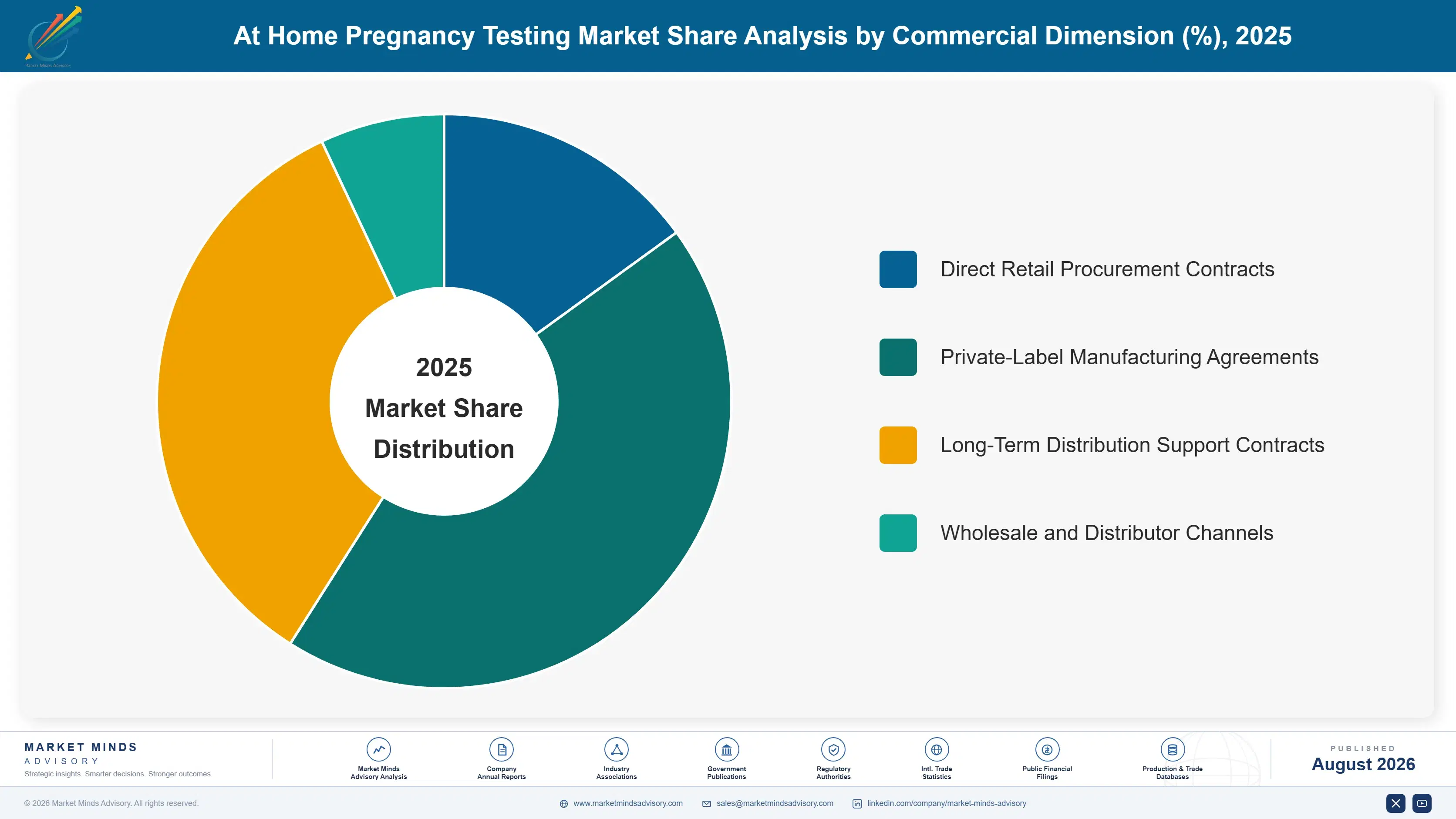
The product type segment is a critical determinant of consumer choice in the at home pregnancy testing market. Strip tests remain the most widely used due to their affordability and ease of use, particularly in emerging markets. Cassette and midstream tests offer enhanced hygiene and convenience, appealing to users seeking a more user-friendly experience. Digital tests, while priced at a premium, are gaining popularity for their clear digital readouts and additional features. The diversity in product offerings allows manufacturers to cater to varying consumer preferences and price sensitivities, thereby expanding their market reach.

By Test Sensitivity
- Low Sensitivity (≥25 mIU/mL)
- High Sensitivity (<25 mIU/mL)
Test sensitivity is a crucial factor influencing the reliability and accuracy of at home pregnancy testing kits. High sensitivity tests, capable of detecting lower levels of human chorionic gonadotropin (hCG), enable earlier detection of pregnancy, which is particularly valued by women actively planning conception. Low sensitivity tests, while less expensive, may be preferred in markets where cost is a primary consideration. The ongoing development of highly sensitive tests is expected to drive market growth by addressing the demand for early and accurate results.
By Distribution Channel
- Pharmacies & Drug Stores
- Online Retail Supermarkets & Hypermarkets
- Others
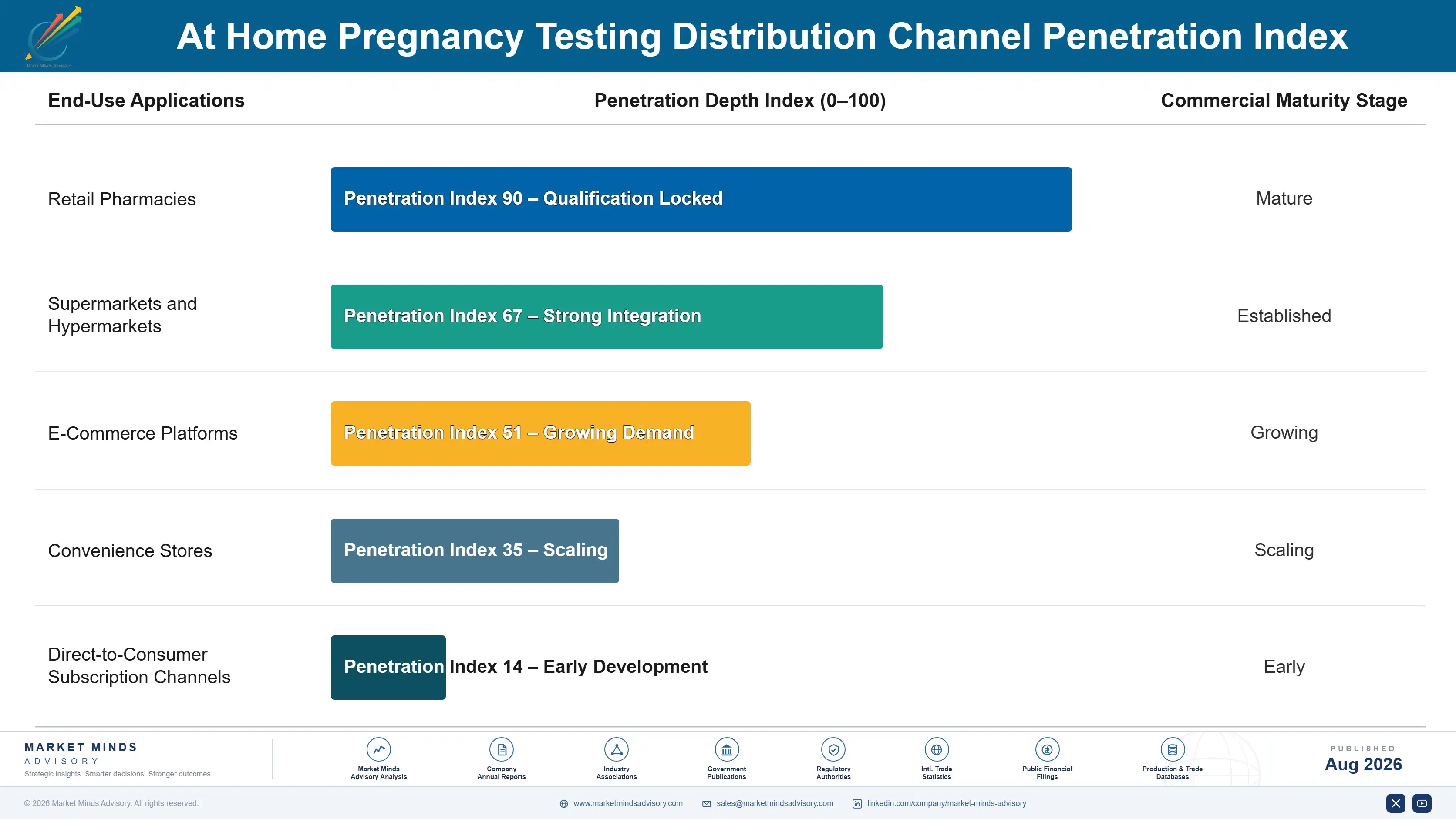
Distribution channels play a pivotal role in shaping the accessibility and availability of at home pregnancy testing kits. Pharmacies and drug stores continue to dominate sales, offering professional guidance and immediate product access. However, online retail is rapidly gaining market share, driven by the convenience of home delivery and discreet purchasing. Supermarkets and hypermarkets also contribute to market expansion by providing a one-stop shopping experience. The diversification of distribution channels ensures that products reach a wide and varied consumer base.
By End User
- Home Care Settings
- Hospitals & Clinics
- Diagnostic Laboratories
While home care settings represent the primary end user segment, hospitals, clinics, and diagnostic laboratories also utilize at home pregnancy testing kits for preliminary screening. The growing emphasis on self-care and the increasing reliability of home-based tests are driving their adoption in non-clinical settings. However, healthcare professionals continue to play a role in confirming results and providing follow-up care, particularly in cases of ambiguous or unexpected outcomes.

By Geography
- North America
- Europe
- Asia-Pacific
- South America
- Middle East & Africa
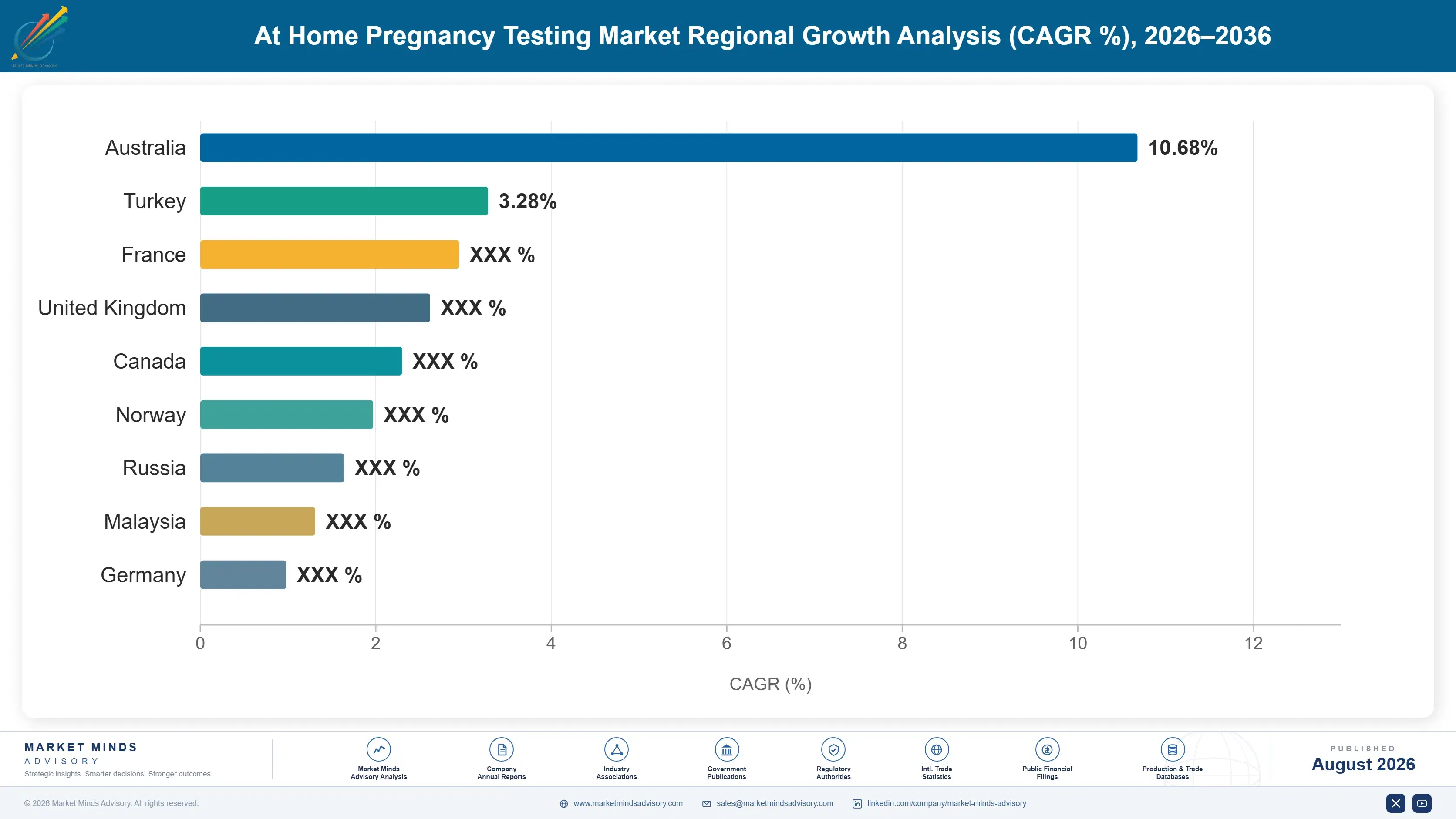
Geographical segmentation highlights regional variations in market dynamics, influenced by factors such as healthcare infrastructure, consumer awareness, and regulatory frameworks. North America and Europe are mature markets characterized by high product penetration and technological innovation. Asia-Pacific is emerging as a high-growth region, driven by rising disposable incomes and increasing health awareness. South America and the Middle East & Africa present untapped opportunities, with market growth contingent on improving access to healthcare products and education.
Growth Drivers and Opportunities in At Home Pregnancy Testing Market
- Rising Awareness and Acceptance of Self-Testing
The increasing awareness of reproductive health and the benefits of early pregnancy detection are major growth drivers for the at home pregnancy testing market. Educational campaigns by healthcare organizations and manufacturers have contributed to destigmatizing self-testing, encouraging more women to use these products. The convenience, privacy, and immediacy offered by at home tests align with modern lifestyles, further boosting market adoption. As societal attitudes continue to evolve, the market is expected to benefit from greater acceptance and normalization of self-administered diagnostics.
- Technological Advancements and Product Innovation
Continuous advancements in testing technology are creating new opportunities for market expansion. Innovations such as digital readouts, smartphone integration, and enhanced sensitivity are improving the accuracy and user experience of at home pregnancy tests. These developments not only differentiate products in a competitive market but also address unmet needs, such as early detection and user support. Companies investing in research and development are well-positioned to capitalize on emerging trends and capture a larger share of the market.
Emerging Opportunities for At Home Pregnancy Testing Market
- Expansion into Emerging Markets
The at home pregnancy testing market presents significant growth potential in emerging economies, where increasing urbanization, rising disposable incomes, and improving healthcare infrastructure are driving demand for self-care products. Manufacturers are focusing on expanding their distribution networks and tailoring products to meet the unique needs of these markets. Localization strategies, such as language customization and culturally relevant marketing, are expected to enhance product acceptance and market penetration.
- Development of Multipurpose Diagnostic Kits
The trend towards multipurpose diagnostic kits, which combine pregnancy testing with other health indicators such as ovulation or fertility status, is gaining momentum. These integrated solutions offer added value to consumers seeking comprehensive reproductive health monitoring. The development of such kits represents an opportunity for manufacturers to differentiate their offerings and address the growing demand for holistic self-care solutions.
Growth Restrain factors and Challanges in At Home Pregnancy Testing Market
- Regulatory Hurdles and Product Approval Delays
The at home pregnancy testing market is subject to stringent regulatory requirements to ensure product safety and efficacy. Obtaining regulatory approval can be a lengthy and costly process, particularly for new entrants or companies introducing innovative technologies. Delays in product approval can hinder market entry and limit the availability of advanced testing solutions. Additionally, variations in regulatory standards across regions create complexities for manufacturers seeking to expand internationally. Navigating these challenges requires significant investment in compliance and quality assurance, which may impact profitability and slow market growth.
Regulatory scrutiny is particularly intense for digital and connected devices, which must meet additional standards related to data privacy and cybersecurity. Ensuring compliance with evolving regulations is essential for maintaining consumer trust and avoiding costly recalls or legal issues. Companies that proactively engage with regulatory authorities and invest in robust quality management systems are better positioned to overcome these challenges and sustain long-term growth.
- Market Saturation and Intense Competition
The at home pregnancy testing market is characterized by a high degree of competition, with numerous established players and new entrants vying for market share. This intense competition has led to price wars, margin pressures, and the commoditization of basic test kits. In mature markets, product differentiation is increasingly challenging, as consumers have access to a wide range of similar offerings. Market saturation may limit growth opportunities for existing players, particularly those relying on traditional product formats.
To remain competitive, companies must invest in innovation, branding, and customer engagement. However, these strategies require substantial resources and may not guarantee success in a crowded marketplace. The threat of counterfeit or substandard products also poses a risk to market integrity and consumer confidence. Addressing these challenges necessitates a focus on quality, differentiation, and the development of value-added features that resonate with evolving consumer preferences.
At Home Pregnancy Testing Market Regional Analysis
| Region | Market Share (2025) | Key Market Highlight |
| Asia-Pacific | 28% | Rapid urbanization and rising health awareness |
| North America | 34% | High product penetration and technological innovation |
| Europe | 22% | Strong regulatory oversight and growing self-care trends |
| South America | 9% | Expanding retail access and increasing consumer education |
| Middle East & Africa | 7% | Improving healthcare infrastructure and market access |
Asia-Pacific
Asia-Pacific is emerging as a high-growth region in the at home pregnancy testing market, driven by rapid urbanization, increasing female workforce participation, and rising awareness of reproductive health. Countries such as China, India, and Japan are witnessing significant demand for affordable and accessible self-testing solutions. The expansion of retail and online distribution channels is further enhancing product availability, while government initiatives to improve maternal health are supporting market growth. However, challenges related to affordability and cultural perceptions may impact adoption rates in certain segments.
North America
North America remains the largest market for at home pregnancy testing, characterized by high product penetration, technological innovation, and a well-established healthcare infrastructure. The region benefits from strong consumer awareness, widespread acceptance of self-testing, and the presence of leading market players. Regulatory oversight ensures product quality and safety, fostering consumer trust. The growing trend towards digital and connected devices is particularly pronounced in this region, with manufacturers focusing on enhancing user experience and expanding product portfolios.
Europe
Europe is a mature market with a strong emphasis on regulatory compliance and consumer safety. The region is witnessing growing adoption of self-care and home-based diagnostics, supported by favorable reimbursement policies and public health initiatives. Market growth is driven by technological advancements, increasing health consciousness, and the availability of a wide range of product options. However, economic disparities and varying healthcare systems across countries may influence market dynamics and growth potential.
South America
South America presents untapped opportunities for the at home pregnancy testing market, with expanding retail access and increasing consumer education driving demand. Countries such as Brazil and Argentina are experiencing rising awareness of reproductive health and the benefits of early pregnancy detection. However, challenges related to affordability, distribution infrastructure, and regulatory frameworks may impact market growth. Manufacturers are focusing on building partnerships with local distributors and tailoring products to meet regional needs.
Middle East & Africa
The Middle East & Africa region is characterized by improving healthcare infrastructure and increasing market access for at home pregnancy testing kits. Government initiatives to enhance maternal and child health are supporting market expansion, particularly in urban centers. However, cultural factors, limited awareness, and affordability constraints may hinder adoption in certain areas. Efforts to increase education and awareness, coupled with the expansion of distribution networks, are expected to drive future growth in this region.

Competition Landscape in At Home Pregnancy Testing Market
The at home pregnancy testing market is highly competitive, with a diverse array of global and regional players vying for market share. The competitive landscape is characterized by continuous innovation, product differentiation, and strategic partnerships aimed at expanding distribution networks and enhancing brand visibility. Leading companies are investing in research and development to introduce advanced features such as digital readouts, smartphone integration, and improved sensitivity. The market also witnesses frequent product launches, mergers, and acquisitions as players seek to strengthen their market position and capitalize on emerging opportunities. Price competition is intense, particularly in mature markets, necessitating a focus on value-added features and customer engagement to maintain profitability.
Major Players in At Home Pregnancy Testing Market
- Procter & Gamble Co. (Clearblue)
- Church & Dwight Co., Inc. (First Response)
- Abbott Laboratories
- Quidel Corporation
- SPD Swiss Precision Diagnostics GmbH
- Prestige Brands Holdings, Inc.
- Piramal Enterprises Ltd.
- Geratherm Medical AG
- BioSure UK
- Mankind Pharma Ltd.
- Wondfo Biotech Co., Ltd.
- Nantong Egens Biotechnology Co., Ltd.
- Sugentech, Inc.
- BTNX Inc.
- AccuBioTech Co., Ltd.
- Cardinal Health, Inc.
- Medline Industries, LP
- Biomerica, Inc.
- ACON Laboratories, Inc.
- AdvaCare Pharma
Recent Developments in At Home Pregnancy Testing Market
- In March 2024, Procter & Gamble launched a new digital pregnancy test under the Clearblue brand, featuring Bluetooth connectivity and app integration for enhanced user support.
- In January 2024, Abbott Laboratories expanded its distribution network in Asia-Pacific, targeting emerging markets with affordable and high-sensitivity pregnancy test kits.
- In October 2023, Church & Dwight introduced an eco-friendly packaging initiative for its First Response product line, aiming to reduce plastic waste and appeal to environmentally conscious consumers.
- In July 2023, Quidel Corporation announced a partnership with a leading e-commerce platform to strengthen its direct-to-consumer sales channel in North America.
- In May 2023, SPD Swiss Precision Diagnostics received regulatory approval for a new multipurpose diagnostic kit combining pregnancy and ovulation testing.
- In February 2023, Wondfo Biotech launched a marketing campaign in South America to increase awareness and accessibility of its at home pregnancy testing products.
FAQ for At Home Pregnancy Testing Market
- What is the projected market size of the at home pregnancy testing market by 2033?
The at home pregnancy testing market is expected to reach approximately USD 2.36 billion by 2033, growing at a CAGR of 6.9% from 2026 to 2033.
- What are the key factors driving growth in the at home pregnancy testing market?
Growth is primarily driven by increasing consumer demand for privacy and convenience, rising awareness of early pregnancy detection, technological advancements, and the expansion of e-commerce and retail distribution channels.
- Which regions are expected to witness the highest growth in the at home pregnancy testing market?
Asia-Pacific is anticipated to experience the highest growth due to rapid urbanization, rising health awareness, and expanding access to self-care products. North America and Europe will continue to lead in terms of market share and innovation.
- What are the major challenges facing the at home pregnancy testing market?
Key challenges include stringent regulatory requirements, market saturation, intense competition, and the threat of counterfeit or substandard products impacting consumer trust and market integrity.
- How are manufacturers addressing sustainability concerns in the at home pregnancy testing market?
Manufacturers are increasingly adopting eco-friendly materials, reducing plastic usage, and introducing biodegradable and recyclable packaging to appeal to environmentally conscious consumers and minimize environmental impact.
Contact us today to access the full report and propel your business forward with comprehensive insights into the at home pregnancy testing market.