Market Minds Advisory
Asthma Treatment Market

Asthma Treatment Market: The End of Reliever Monotherapy, Phenotypes, and Propellant Reformulation

The blue reliever inhaler that defined asthma for fifty years is no longer recommended on its own, and the industry is still converting an installed prescribing habit to match it.

Lead Analyst

Alice Ballenger

Published

September 2026

Make Smarter Decisions with Customized Research Insights

Request a free sample report and evaluate market opportunities, growth trends, and competitive dynamics relevant to your business needs.

2025 MARKET VALUE$23.0BMarket Size 2025
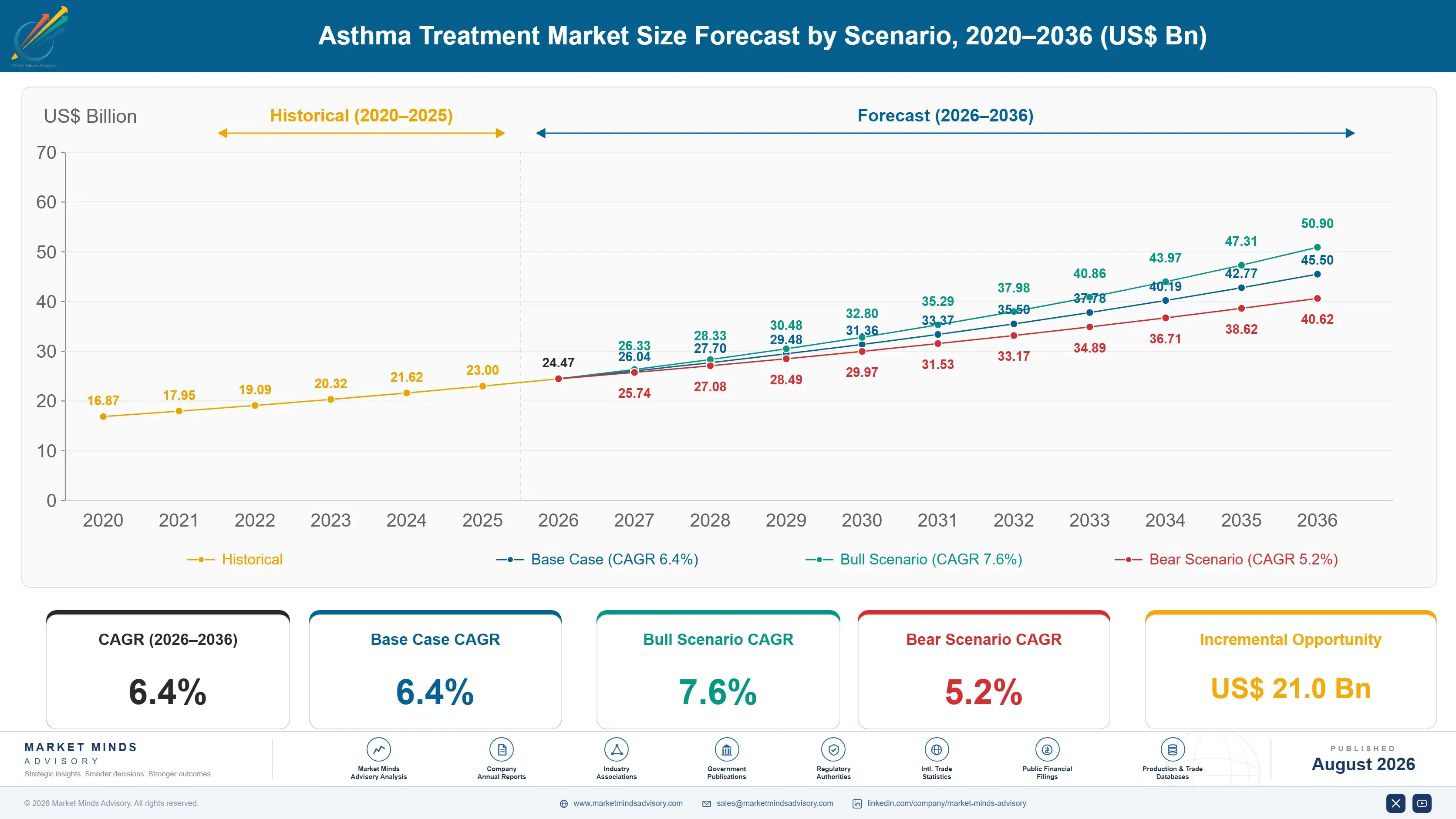
2036 FORECAST VALUE$45.5BBase Case , 2026 to 2036
CAGR 2026 TO 20366.4 %Bull 7.6% / Bear 5.2%
INCREMENTAL OPPORTUNITY$21.0BNet 10- year value creation
EXPANSION MULTIPLE1.86x2036 value over 2026 base
Strategic Levers
M&A Pipeline
Regional Outlook
Country Rankings
Competitive Intelligence
Segmental Deep-dive
Call-Us : 91 93563 13602

Executive Snapshot and Market Trajectory

Global asthma guidance withdrew short-acting reliever monotherapy as an acceptable treatment at any severity, replacing it with an inhaled corticosteroid taken as needed. That reversed fifty years of prescribing habit, and conversion is still incomplete. Habit rather than evidence is what remains to be changed here.
Biologic therapies compound at 9.6%, a full 1.50x the market rate, from roughly 4% of patients who consume a wholly disproportionate share of value at around USD 32,000 a year. North America holds 34% of value, above the standard band, because biologic pricing there runs several times ex-United States levels and biologics now carry much of the category's growth. Phenotyping rather than availability gates who reaches them.
Concentration is high at 74%, and the constraint is neither molecule nor guideline. Controller adherence sits near 38% and roughly 71% of patients use their inhaler incorrectly, which means the medicine prescribed and the medicine delivered are quite different things. Every efficacy claim in this market rests on trial conditions that ordinary use does not reproduce, and digital adherence devices addressed that directly before failing commercially because nobody would fund the hardware.
Market Definition
This market covers pharmacological treatments for asthma, spanning inhaled corticosteroid and long-acting beta agonist combinations, inhaled triple therapy combinations, short-acting beta agonist relievers, biologic therapies, leukotriene modifiers and oral controllers, and single-agent inhaled corticosteroids, measured at manufacturer revenue. Chronic obstructive pulmonary disease therapies without an asthma indication, oxygen therapy and ventilation equipment, nebuliser hardware, allergy immunotherapy, and diagnostic spirometry or biomarker testing are excluded.
Base Year Value
$23.0B in 2025 (MMA Primary Research Dataset, August 2026)
Forecast Period
2026 to 2036, eleven discrete annual values
CAGR
6.4% base case. Bull 7.6%. Bear 5.2%.
Fastest Growth Segment
Biologic Therapies: 9.6% CAGR
Fastest Growth Country
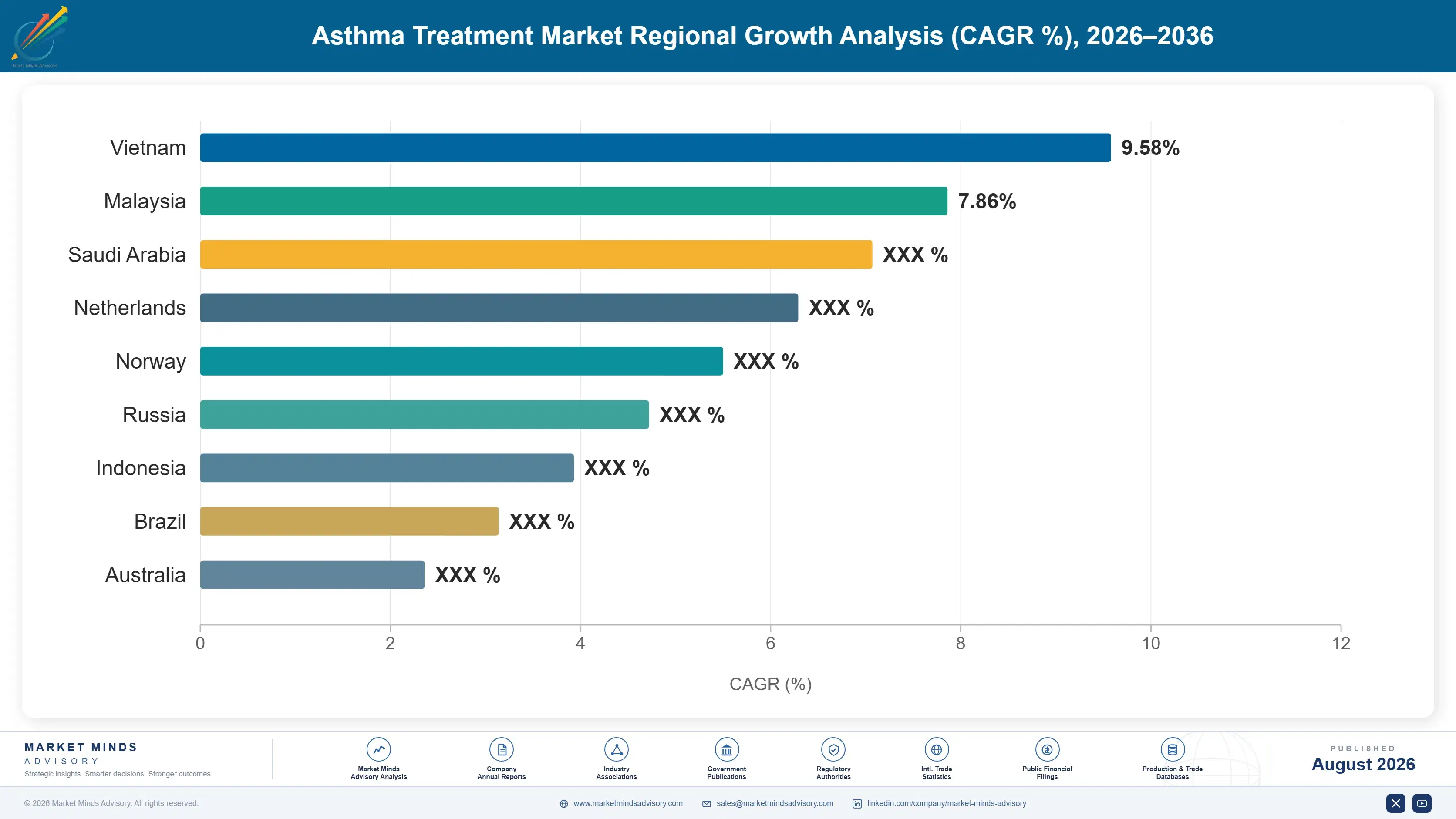
India: 11.6% CAGR
Fastest Growth Region
South Asia and Pacific: 8.4% CAGR
Largest Region
North America: 34% of 2025 global value
Market Leaders
AstraZeneca, GSK, Sanofi, Regeneron, and Boehringer Ingelheim. Source: MMA Primary Research Dataset, July 2026.
Primary Survey
n=3,800 procurement and R&D decision-makers, Q4 2025, six countries
Methodology
Demand-side build-up, cross-validated against public data, 47 expert interviews

Asthma Treatment Market Forecast Scenarios

asthma-treatment-market-size-forecast-scenario-1787305663025
Growth ran near 5.4% from 2020 to 2025 as two forces pulled against each other. Generic entry across the largest inhaled combinations eroded pricing substantially in developed markets, removing revenue from products that defined the category for two decades. Biologics meanwhile expanded across eosinophilic and allergic phenotypes, and a first agent effective in patients without type 2 inflammation extended treatment to a group that previously had nothing.
Base case growth of 6.4% rests on three mechanisms. Biologic penetration keeps rising within the severe asthma population as phenotyping improves and a broader-acting option reaches patients previously excluded. Guideline conversion moves prescribing from reliever monotherapy toward anti-inflammatory reliever regimens that cost considerably more. And access expands across South Asia and Africa, where inhaled corticosteroids remain unavailable to most people who need them. None of the three depends on the others arriving first.
The bull case at 7.6% assumes biologics move earlier in the treatment pathway toward moderate disease, which would multiply an eligible population currently limited to roughly 4% of patients. The bear case at 5.2% is pricing pressure: biosimilar entry accelerates, inhaled generics keep eroding, and payer management tightens where adherence data undermines the value argument.

Asthma Therapy: Guidelines, Phenotypes and Delivery

One guideline change reorganised this entire category. Global asthma guidance withdrew short-acting beta agonist monotherapy as an acceptable treatment at any severity, having concluded that relying on a bronchodilator without an anti-inflammatory left patients exposed to exacerbation and death. In its place came an inhaled corticosteroid combined with formoterol, taken as needed. The blue reliever inhaler that had defined asthma for half a century stopped being a treatment on its own.
TOP FIVE CONCENTRATION74%Concentrated among respiratory specialists and biologic developers with inhaler franchises
GLOBAL ASTHMA PREVALENCE262 millionPeople living with asthma worldwide across all severity levels
BIOLOGIC ELIGIBLE SHARE4%Patients with severe disease meeting criteria for biologic therapy
ANNUAL BIOLOGIC COSTUSD 32,000Typical yearly list cost of biologic therapy before rebates
CONTROLLER ADHERENCE RATE38%Patients taking maintenance therapy as prescribed over sustained periods
INHALER TECHNIQUE ERRORS71%Patients making at least one critical error using devices
That change moves revenue as well as practice. A reliever inhaler costs very little; an anti-inflammatory reliever regimen costs considerably more and is taken by a much larger population than the severe patients biologics reach. Conversion has been slow because prescribing habit runs deep and patients associate the blue inhaler with relief they feel immediately, which an inhaled corticosteroid does not produce. Habit, not evidence, is what remains to be changed.
Meanwhile the category's oldest problem persists untouched. Roughly 71% of patients make at least one critical error using their inhaler, and controller adherence sits near 38% over sustained periods. The medicine prescribed and the medicine actually delivered to an airway are therefore quite different things. Digital adherence devices addressed it and nobody would fund them.
"Two thirds of patients cannot use the device correctly and barely a third take it as prescribed, and the industry keeps launching molecules. The unexploited value in asthma is not a new mechanism, it is getting the existing medicine into the lung."
Principal Analyst, Respiratory and Inflammation Therapeutics Practice · MMA Heal

Market Trends

Anti-inflammatory reliever regimens replace bronchodilator monotherapy

Global guidance withdrew short-acting beta agonist monotherapy at every asthma severity after evidence linked heavy reliever use to exacerbation and mortality risk, replacing it with as-needed inhaled corticosteroid and formoterol. That reaches a far larger population than biologics ever will and costs considerably more than a reliever alone. Conversion has proved slow because patients associate the blue inhaler with immediate relief that an anti-inflammatory does not produce, and prescribing habit runs across generations of clinicians. The remaining work is behavioural rather than evidential, and no manufacturer has found a way to accelerate it beyond sustained clinician education.
Market Impact: India compounding at 11.6% annually

Broader-acting biologics extend treatment beyond eosinophilic disease

Biologics initially served allergic and eosinophilic phenotypes, leaving patients without type 2 inflammation with no targeted option at all despite equally severe disease. An agent acting upstream on epithelial cytokine signalling now reaches those patients, which extends biologic eligibility rather than dividing an existing pool. Roughly 4% of patients currently qualify at around USD 32,000 annually, and phenotyping capability rather than drug availability increasingly determines who actually receives treatment. Biosimilar entry has begun on the earliest franchises and will compress pricing across the segment progressively, which arrives just as eligibility is widening rather than afterwards.
Market Impact: Technique errors affecting 71%

Market Opportunities and Growth Drivers

Inhaled corticosteroid access remains absent across low-income settings

Most asthma deaths occur in low and middle income countries, and inhaled corticosteroids reach only a minority of the people who need them there, with reliever inhalers frequently the sole available treatment. India compounds at 11.6% as access improves from a very low base and domestic manufacturers supply affordable inhaled combinations. Roughly 262 million people worldwide live with asthma, and the treatment gap sits almost entirely in countries with the highest mortality and lowest availability. Affordable combination supply addresses a genuine public health failure and the fastest volume growth available anywhere simultaneously.
Market Impact: Adherence sitting near 38%

Triple therapy consolidates devices for uncontrolled patients

Combining inhaled corticosteroid, long-acting beta agonist and long-acting muscarinic antagonist in one device reduces exacerbations in patients uncontrolled on dual therapy, and it removes a second inhaler from a regimen where 71% of patients already make critical technique errors. Fewer devices means fewer opportunities to use one incorrectly, which is a genuine clinical argument rather than a packaging convenience. Adoption has advanced faster in asthma than most respiratory launches manage. The class also defends the dual combinations underneath it against generic erosion, which is a commercial argument alongside the clinical one and probably explains adoption speed better.
Market Impact: Affects roughly 50% of prescription

Market Restraints and Challenges

Delivered dose bears little relation to the prescribed one

Roughly 71% of patients make at least one critical inhaler technique error and controller adherence sits near 38% over sustained periods, which means efficacy demonstrated under trial conditions is not what ordinary use produces. The root cause is that inhalers demand coordination and sustained motivation from people who feel well between exacerbations. Commercial impact undermines outcome arguments with payers. Digital adherence monitors addressed it directly and failed commercially because nobody would pay for the hardware. Pharmacists correct technique more often than any other professional group and almost nobody supports them systematically.
Market Impact: Reaches 262 million patients worldw

Propellant reformulation obliges refiling every metered-dose product

Pressurised inhalers use propellants with high global warming potential, and conversion to lower-impact alternatives requires reformulating each product and refiling it with every regulator that approved the original. The root cause is environmental regulation rather than any clinical concern. Commercial impact is substantial development and regulatory expenditure producing no therapeutic improvement whatsoever. Manufacturers are running parallel reformulation programmes while several health systems simply promote dry powder devices instead. Several health systems simply promote dry powder devices instead, which removes the problem rather than solving it and reshapes prescribing along the way.
Market Impact: Biologics reaching 4% of patients
3 additional market trends, 4 additional growth drivers, and 2 additional restraints and challenges are covered in the full report. Contact sales@marketmindsadvisory.com to access the complete intelligence.

Segment CAGR and Growth Architecture

Segmentation follows therapeutic class, because class determines the mechanism, the patient population reached, the delivery device required and the pricing a product can sustain against generic or biosimilar competition. Six therapeutic classes cover asthma treatment supply without overlap between them. Disease severity and phenotype cut across several classes and are treated here as use attributes.
asthma-treatment-market-market-share-analysis-1787305663563

Biologic Therapies

Growing at 9.6%, a full 1.50x the market rate, biologics target specific inflammatory pathways in severe disease and carry value density unmatched anywhere else in respiratory medicine at roughly USD 32,000 annually against inhalers costing a small fraction of that. Roughly 4% of patients currently qualify. Agents acting on epithelial cytokine signalling reach patients without type 2 inflammation who previously had no targeted option at all, which extends eligibility rather than dividing an existing pool. Biosimilar entry has begun on the earliest franchises and will compress pricing across the segment progressively. Payers require documented phenotype and prior therapy failure before approving any treatment at all. Diagnostics gate the whole segment.
CAGR 9.6%

Inhaled Triple Therapy Combinations

Triple therapy grows at 8.4% by combining inhaled corticosteroid, long-acting beta agonist and long-acting muscarinic antagonist in a single device for patients uncontrolled on dual therapy. Exacerbation reduction is the clinical argument, and device consolidation is the practical one: removing a second inhaler from a regimen matters when 71% of patients already make critical technique errors with one. Adoption has advanced faster in asthma than most respiratory launches manage, and the class also defends against generic erosion of the dual combinations underneath it. Device consolidation matters clinically because removing a second inhaler from a regimen reduces the opportunities for error in a population where most patients already make at least one, which is a genuine argument rather than packaging convenience.
CAGR 8.4%
Full segment breakdown across 6 segments available in the complete report.

Regional Architecture and Country Demand Map

Regional value follows drug pricing and biologic access rather than disease prevalence, and the divergence between those is wider in asthma than in most chronic disease categories. Prevalence is distributed far more evenly than value, and mortality concentrates almost exactly where spending does not. Both facts matter here.

North America

North America holds 34% of value. Note: this sits above the standard regional band because biologic pricing runs several times ex-United States levels at roughly USD 32,000 annually, and biologics carry much of the category's growth. Specialty pharmacy distribution and prior authorisation govern access, with payers requiring documented phenotyping and prior therapy failure before approving treatment. Inhaled combination generics have eroded pricing considerably across the older franchises. Propellant reformulation programmes are running in parallel with regulatory refiling across the whole metered-dose portfolio. Prior authorisation codifies severity criteria into a hard access requirement. Payers require documented phenotyping and prior therapy failure before approving biologic treatment, which makes diagnostic capability rather than product availability the practical constraint on access.
Share: 34% | CAGR: 5.8% (2026 to 2036)

Western Europe

Twenty-three per cent of value, growing at 5.0%, the slowest of the seven regions. Health technology assessment restricts biologic access to tightly defined severe populations and negotiates prices well below North American levels, which caps the segment carrying growth elsewhere. Several health systems actively promote dry powder inhalers over pressurised devices on carbon footprint grounds, which is a prescribing driver unique to this region. Generic inhaled combinations hold substantial share, and guideline conversion toward anti-inflammatory reliever regimens has advanced further than in most markets. Carbon footprint has become a prescribing consideration in a way that exists in no other region, and it is reshaping device mix independently of any clinical argument.
Share: 23% | CAGR: 5.0% (2026 to 2036)
Regional intelligence for 5 additional markets available in the complete report: East Asia, South Asia and Pacific, Latin America, Middle East and Africa, Eastern Europe. Contact sales@marketmindsadvisory.com.
asthma-treatment-market-country-cagr-analysis-1787305664070

Where Asthma Therapy Value Concentrates

Generics have taken the inhaled franchises that defined this category, biologics reach a small fraction of patients at very high prices, and most medicine prescribed never reaches an airway. Value now depends on guideline conversion, phenotype access and delivery that actually works. Molecules are not the constraint any longer. Delivery and access are. Both are addressable.

Convert prescribing habit, not just guideline text

Global guidance withdrew reliever monotherapy at every severity years ago and prescribing has still not fully followed, because patients associate the blue inhaler with relief they feel immediately and clinicians trained across decades change slowly. An anti-inflammatory reliever regimen reaches far more of the 262 million people with asthma than biologics ever will and costs considerably more than a reliever alone. The remaining work is behavioural rather than evidential. Patient expectation is what general practitioners cite when they continue prescribing the older way. Clinician education is the only route that has worked.
Market Impact: Addresses all 262 million patients

Fund phenotyping, because it gates biologic access

Roughly 4% of patients currently qualify for biologic therapy at around USD 32,000 annually, and payers require documented phenotype and prior therapy failure before approving treatment. Eosinophil counts and other biomarkers are frequently not measured in patients who would qualify, so the constraint is diagnostic rather than therapeutic. Manufacturers supporting biomarker testing in severe asthma clinics reach eligible patients that no promotional effort identifies, and the testing costs a fraction of one treatment year. Severe asthma clinics report eligible patients going unidentified for exactly this reason. Testing costs a fraction of one treatment year.
Market Impact: Opens up the 4% currently eligible

Treat delivery as the unexploited efficacy gain

Roughly 71% of patients make at least one critical inhaler technique error and controller adherence runs near 38%, so a substantial share of prescribed medicine never reaches an airway at all. Device design requiring less coordination, dose counters and structured technique training each recover efficacy that already exists in the molecule. Digital monitors failed commercially because they were sold as hardware rather than built into the device and its price, which was a commercial rather than technical failure. Pharmacists correct technique more than anyone and receive no support. Nobody markets to them systematically at all.
Market Impact: Recovers value lost to 71% of techn

Build affordable controller supply where mortality concentrates

Most asthma deaths occur in countries where inhaled corticosteroids reach only a minority of patients and reliever inhalers are frequently the only treatment available, which is precisely the pattern global guidance now identifies as dangerous. India compounds at 11.6% as access improves from a low base. Affordable combination supply through domestic manufacturing and tiered pricing addresses both a public health failure and the fastest volume growth available anywhere in this category. Reliever inhalers are dispensed as substitutes where combinations are unavailable. Mortality concentrates precisely where controllers are absent. Tiered pricing addresses both at once.
Market Impact: Indian demand is growing 11.6% ever

Who Controls the Margin Pool

Concentration is high at 74% across the top five, measured on annual revenue from asthma-indicated pharmacological treatments, the single basis applied throughout this analysis. AstraZeneca and GSK lead through different strengths, the first holding the budesonide-formoterol combination that global guidance now recommends as an anti-inflammatory reliever, the second holding a deep eosinophilic biologic franchise alongside the largest historical inhaler prescriber base.
Competition runs on three dimensions with quite different economics. Inhaled combination competition is increasingly a generic contest in developed markets, where pricing has eroded substantially across products that defined the category for two decades. Biologic competition turns on phenotype coverage and payer access rather than head-to-head efficacy, since direct comparisons barely exist. Emerging market competition is a manufacturing cost contest that Indian producers largely win.

Pressure builds from two directions simultaneously. Biosimilar entry has begun on the earliest biologic franchises and will compress the segment carrying most of the category's growth. Separately, propellant reformulation obliges every manufacturer to refile metered-dose products without any therapeutic improvement to show for the expenditure. Rankings shift most where a manufacturer holds both a guideline-endorsed reliever regimen and biologic coverage across phenotypes rather than one alone.
asthma-treatment-market-company-positioning-matrix-1787305664591

Competitive Moat and Risk Dimensions

ASTRAZENECA

Moat: Guideline-endorsed reliever regimen

Holding the budesonide and formoterol combination that global guidance now recommends as an anti-inflammatory reliever places AstraZeneca directly in the pathway that replaced reliever monotherapy across every severity level. A biologic acting upstream on epithelial signalling reaches patients without type 2 inflammation, extending eligibility rather than competing for an existing eosinophilic pool.
ASTRAZENECA

Risk: Generic combination erosion

The inhaled combination underpinning the guideline position faces generic competition across developed markets, which compresses pricing on the product carrying that strategic advantage. Propellant reformulation obliges regulatory refiling across the metered-dose portfolio at substantial cost. Biosimilar entry will eventually reach the biologic franchise as it has reached earlier competitors.
GSK

Moat: Eosinophilic biologic franchise depth

A deep position in eosinophil-targeted biologic therapy, supported by long-running outcome data and established severe asthma clinic relationships, gives GSK the strongest hold in the patient group where biologic evidence is most mature. The historical inhaler prescriber base remains the largest in respiratory medicine and supports launch reach that newer entrants cannot assemble quickly.
GSK

Risk: Biosimilar and phenotype exposure

Biosimilar entry has begun across the earliest biologic franchises and will progressively compress pricing in the segment carrying most category growth. Patients without type 2 inflammation fall outside the eosinophilic mechanism entirely, which competitors acting upstream now reach. Inhaled combination revenue has eroded substantially under generic competition already.

Players Tracked

Prominent Players

AstraZeneca
GSK
Sanofi
Regeneron
Boehringer Ingelheim

Other Key Players

Chiesi Farmaceutici
Teva Pharmaceutical Industries
Novartis
Amgen
Genentech
Merck and Co.
Viatris
Cipla
Lupin
Sun Pharmaceutical Industries
Orion Corporation
Glenmark Pharmaceuticals
Hikma Pharmaceuticals
Zydus Lifesciences
Celltrion

Recent Developments

MARCH 2025

Anti-inflammatory reliever conversion advances but remains incomplete

Prescribing of as-needed inhaled corticosteroid and formoterol continued replacing short-acting reliever monotherapy across developed markets, an organic practice change proceeding considerably more slowly than the guideline revision that prompted it years earlier. General practitioners cited patient expectation as the principal reason for continuing. Guidance had changed years earlier.
Signal: Habit rather than any evidence at all is w
AUGUST 2025

Biosimilar entry begins across the earliest asthma biologic franchises

Biosimilar versions of established asthma biologics reached approval and launch in major markets, an organic patent expiry consequence beginning price compression in the segment that carries most of this category's growth. Eligibility was widening at the same moment pricing began compressing. Inhaled products went through the same erosion earlier.
Signal: The segment carrying all category growth i
DECEMBER 2025

Propellant reformulation programmes progress toward regulatory refiling

Manufacturers advanced reformulation of pressurised inhalers toward propellants with lower global warming potential, an environmental regulatory requirement obliging refiling of every affected product without delivering any therapeutic improvement at all. Several health systems promoted dry powder devices instead of waiting for conversion. Refiling is required in every approving market.
Signal: Substantial development spending here is p

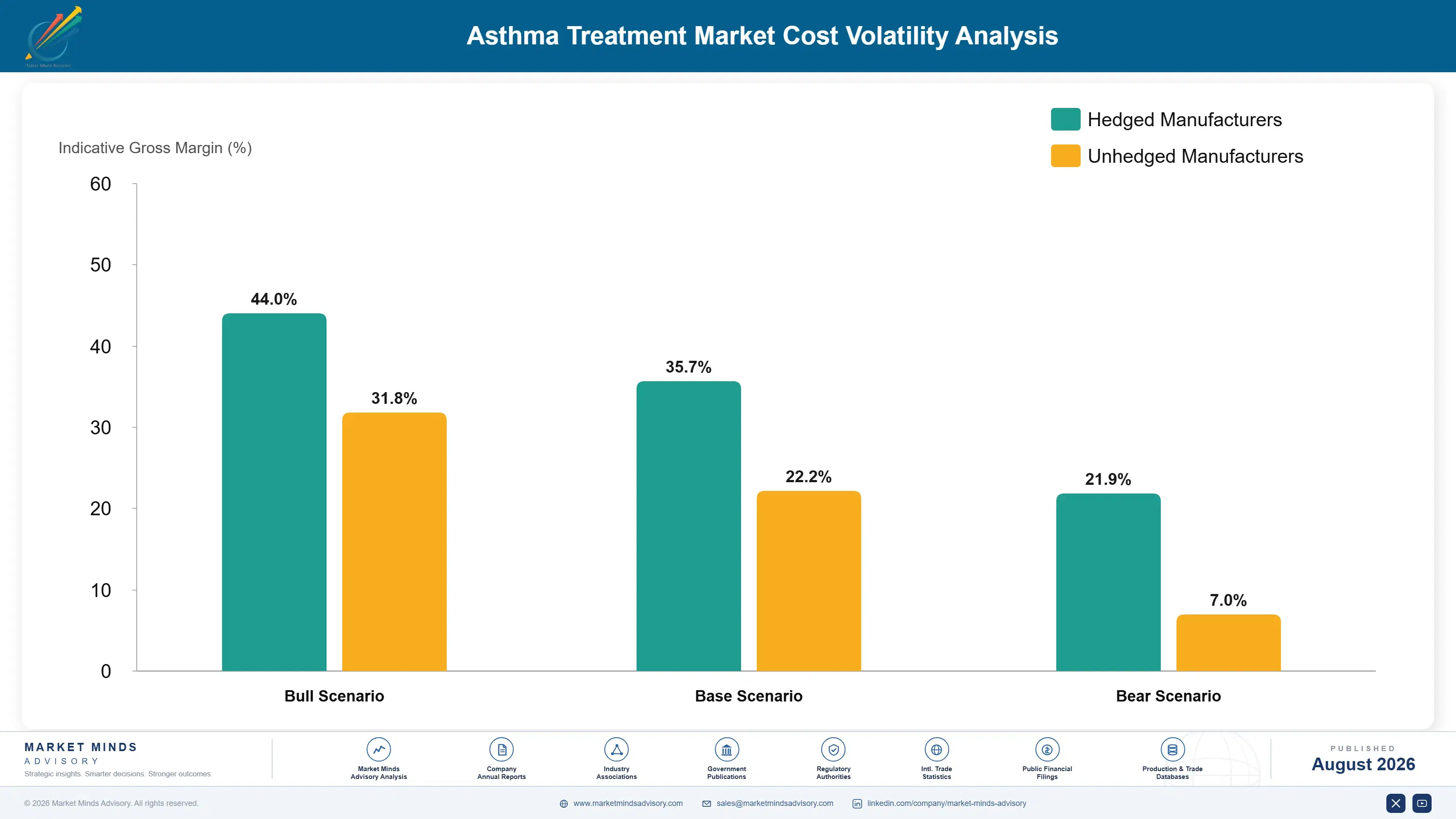
Propellant, Device and Biologic Manufacturing Costs

Cost structures diverge completely between inhaled and biologic products. Inhaler device components, valves, actuators and propellant account for roughly 44% of inhaled product cost of goods, with the active ingredient itself contributing very little. Biologics carry mammalian cell culture, purification and cold chain costs several times higher in absolute terms, though still modest against pricing near USD 32,000 annually. Regulatory refiling for propellant conversion sits outside cost of goods
Propellant conversion represents a genuine cost event rather than an accounting one. Lower global warming potential alternatives require reformulation, stability testing and regulatory submission for every affected product in every market that approved it, and manufacturer annual reports across recent years documented programme spending running into substantial sums. Device component supply also tightened through 2021 and 2022 as medical grade polymer producers withdrew, forcing requalification across inhaler valve and actuator components.

Exposure varies most by portfolio composition. Manufacturers weighted toward pressurised metered-dose inhalers carry the full propellant conversion burden, while those with dry powder portfolios avoid it and several health systems actively favour them on carbon grounds. Geography compounds it: Indian manufacturers produce inhaled combinations at costs Western producers cannot approach, which decides emerging market volume entirely.
asthma-treatment-market-cost-volatility-analysis-1787305664786

Sequence propellant reformulation against portfolio value

Conversion requires reformulating and refiling every pressurised product in every approving market, and doing that across a full portfolio simultaneously is neither affordable nor necessary. Sequencing by remaining exclusivity and market value concentrates spending where returns exist, and allows lower-value presentations to be discontinued rather than converted. Health systems promoting dry powder devices make some discontinuation decisions easier.

Qualify alternate device component polymer supply

Inhaler valves, actuators and dose counters depend on medical grade polymers from producers who have been withdrawing from medical applications on liability grounds, and device components represent the largest single input in inhaled products. Qualifying alternate grades costs validation and regulatory filing work rather than capital. The dependency is easy to overlook because the active ingredient attracts all the attention.

Build regional biologic fill-finish near reimbursed demand

Biologic cold chain distribution into markets negotiating steep price discounts erodes already reduced margins considerably, and regional fill-finish shortens that chain while supporting local supply commitments that reimbursement negotiations increasingly reference. Technology transfer takes regulatory work rather than fundamental capital investment. Several markets now weigh local supply arrangements directly in their access decisions. Access decisions increasingly reference it directly.

Portfolio Architecture for Margin Defence

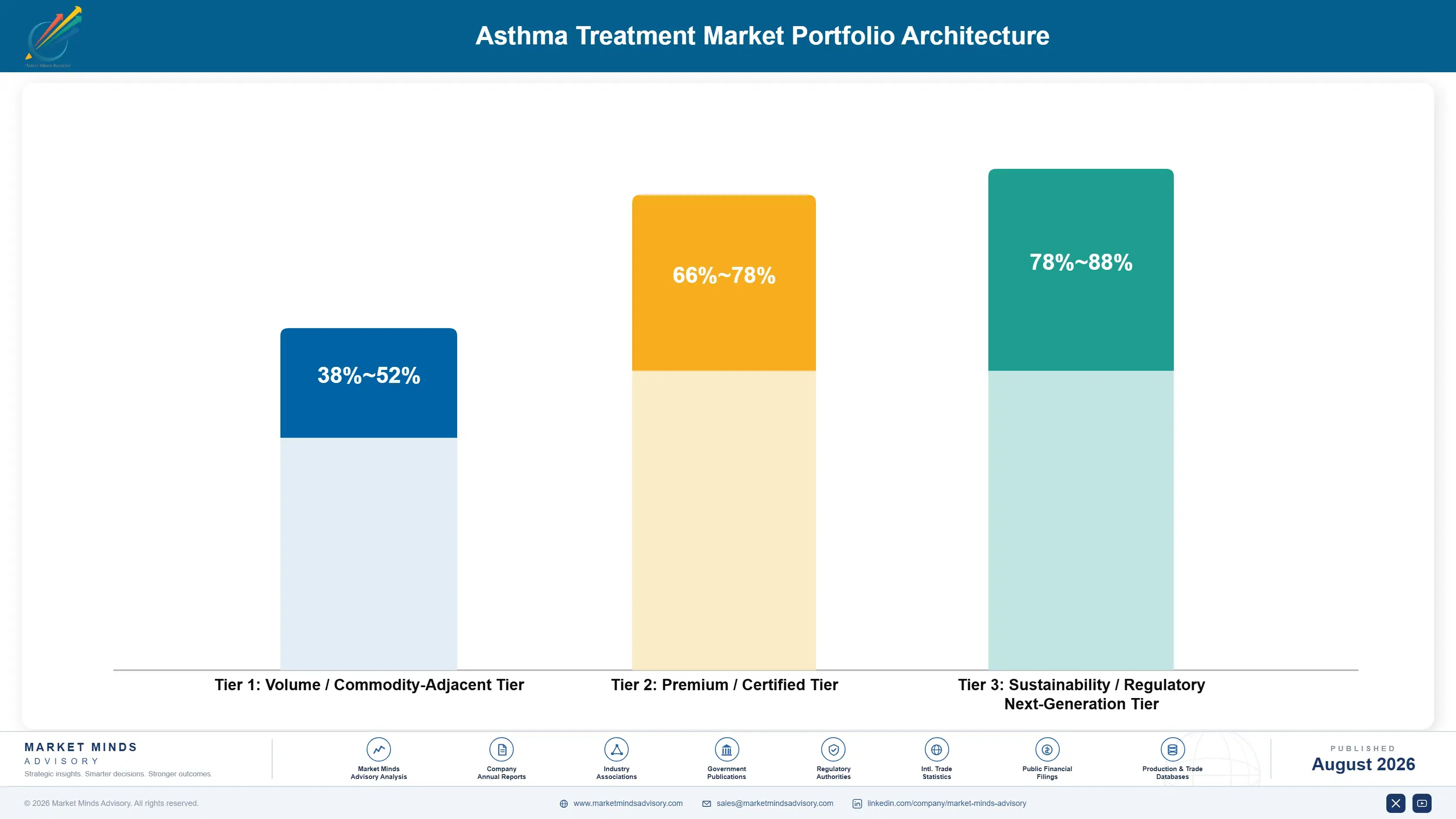
Margin architecture separates on exclusivity rather than on class. Inhaled combinations facing generic competition earn compressed margins on very large volumes, and the products that defined this category for two decades now sit largely in that position. Triple therapy and guideline-endorsed reliever regimens hold better pricing while exclusivity lasts. Biologics earn most on value density, though biosimilar entry has begun eroding the earliest franchises already.
The volume against premium tension runs between severity groups rather than geographies. Roughly 4% of patients qualify for biologics and consume a wholly disproportionate share of value, while the remaining population takes inhaled therapy at a small fraction of that cost. Neither group alone supports a respiratory business: biologics provide growth without volume, and inhaled therapy provides volume without pricing power in developed markets.

High-value pools concentrate around exclusivity and phenotype reach. Biologics covering patients without type 2 inflammation, triple therapy combinations under patent, and guideline-endorsed reliever regimens all command pricing that generic combinations cannot. Older inhaled franchises, whatever their prescriber familiarity, compete against generics in developed markets and against Indian manufacturing cost everywhere else, and both pressures continue intensifying.

Volume / Commodity-Adjacent Tier

Genericised inhaled corticosteroid and combination products together with reliever inhalers, competing on manufacturing cost against Indian producers whose delivered pricing Western manufacturers cannot approach at all. Price erosion here continues and reverses for nobody.
Gross Margin: 38-52%

Premium / Certified Tier

Triple therapy combinations and guideline-endorsed anti-inflammatory reliever regimens under exclusivity, protected by patent position and by prescribing guidance that specifies the combination rather than the class. Guidance specifies the combination rather than the class.
Gross Margin: 66-78%

Sustainability / Regulatory / Next-Generation Tier

Biologic therapies reaching severe disease phenotypes including patients without type 2 inflammation, commanding premium on value density while biosimilar entry progressively compresses the earliest franchises. Phenotype coverage rather than efficacy differentiates them.
Gross Margin: 78-88%
asthma-treatment-market-portfolio-architecture-1787305665288

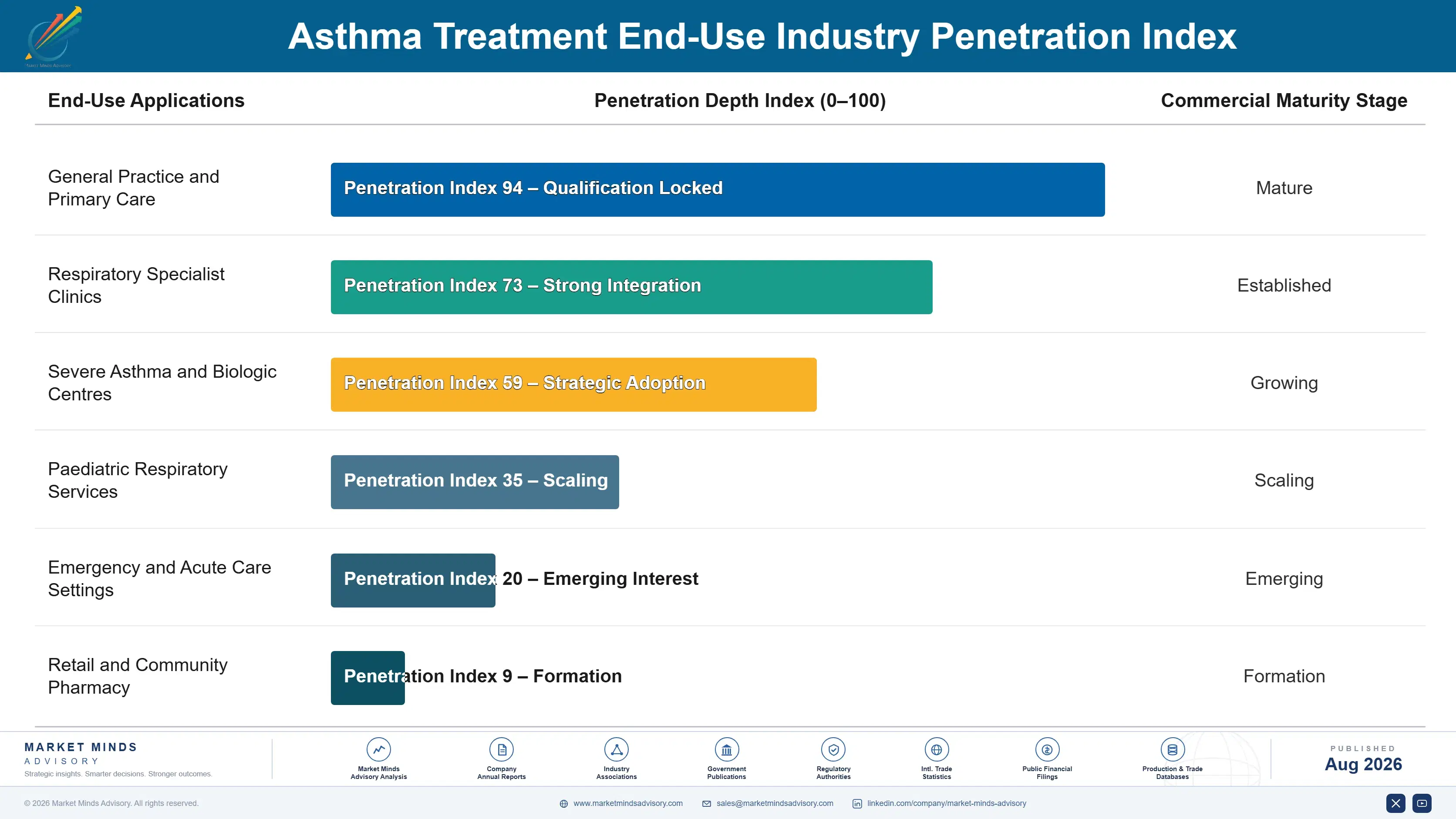
Chronic Refills and Severity Gates

Asthma therapy is a lifelong refill business for most patients and an episodic one for too many. Controller inhalers are dispensed monthly across decades, which makes the underlying demand highly predictable, but adherence near 38% means actual consumption falls well below prescribed volume. Reliever inhalers refill on symptom experience rather than schedule, and heavy refill patterns now mark poorly controlled disease rather than demand.
Depth of treatment varies enormously by severity and by access. Roughly 4% of patients reach biologic therapy and consume a disproportionate share of category value across regular injections continuing indefinitely. The large majority take inhaled therapy at a fraction of that cost. And across low income settings many people with asthma receive only a reliever inhaler, which global guidance now identifies as the pattern most associated with avoidable death.

Decision profiles differ sharply by class. General practitioners prescribe the great majority of inhaled therapy and change habit slowly, which is why guideline conversion has taken years. Respiratory specialists control biologic initiation and require documented phenotyping, and payers apply prior authorisation that codifies severity criteria. Pharmacists influence device selection and technique more than any party recognises, and almost nobody markets to them systematically.
asthma-treatment-market-end-use-penetration-index-1787305665776

Where Asthma Treatment Strategy Lands

These are among the four positions where our research anticipates prominent divergence between winners and laggards over the coming forecast period. Each is grounded in the demand model, the regulatory perimeter, and the announced capacity pipeline.
01 / HABIT CONVERSION PRIORITY

The guideline changed years ago and prescribing has not

Global asthma guidance withdrew short-acting reliever monotherapy as acceptable treatment at every severity level, yet prescribing has still not fully followed because patients associate the blue inhaler with relief they can feel within seconds. An anti-inflammatory reliever regimen reaches far more of the 262 million people living with asthma than biologics ever will, and it costs considerably more than a reliever alone does. The remaining work here is entirely behavioural rather than evidential, and no manufacturer has found a shortcut through it.
02 / PHENOTYPE ACCESS GATING

Diagnostics decide who ever reaches a biologic

Roughly 4% of all asthma patients currently qualify for biologic therapy at around USD 32,000 each year, and payers require documented phenotype alongside prior therapy failure before approving any treatment at all. Eosinophil counts and related biomarkers frequently go unmeasured in the patients who would actually qualify, which makes the binding constraint diagnostic rather than therapeutic in nature. Supporting biomarker testing within severe asthma clinics reaches eligible patients that no amount of promotional effort would ever identify on its own.
03 / DELIVERY EFFICACY RECOVERY

Most prescribed medicine never reaches an airway

Roughly 71% of patients make at least one critical error using their inhaler and controller adherence sits near 38% across sustained periods, which means the efficacy demonstrated under trial conditions is simply not what ordinary use delivers to patients. Device design requiring less coordination, integrated dose counters and structured technique training all recover efficacy already present in existing molecules. Digital adherence monitors failed commercially because they were sold as separate hardware rather than built into the device and its price.
04 / ACCESS GAP COMMITMENT

Mortality concentrates exactly where controllers are absent

Most asthma deaths occur in countries where inhaled corticosteroids reach only a small minority of patients and reliever inhalers are frequently the sole treatment available, which is precisely the treatment pattern that global guidance now identifies as most dangerous. India compounds at 11.6% as access improves from a very low base indeed. Affordable combination supply through domestic manufacturing and tiered pricing addresses both a genuine public health failure and the fastest volume growth available anywhere in this whole category simultaneously.

Engagement Snapshot From the Field

A live engagement with an industry participant carrying material or product regulatory and market exposure ahead of a defining policy shift, showing how our research translates into a defensible multi-year portfolio strategy.
MARKET MINDS ADVISORY · CLIENT ENGAGEMENT SUMMARY
Asthma Treatment Producer Strategic Portfolio Review and Transition Roadmap 2026·Investment Scenario on Asthma Treatment Exposure Evaluation 2025-26
CLIENT PROFILE
A respiratory pharmaceutical company with an inhaled corticosteroid and combination portfolio facing generic erosion, one eosinophil-targeted biologic and a large pressurised metered-dose inhaler range. Annual asthma revenue was approximately USD 2.1 billion (client-reported, unverified by MMA), weighted toward inhaled products in developed markets where generic competition had already arrived. Propellant conversion covered the entire pressurised portfolio.
STRATEGIC CHALLENGE
Generic entry had eroded the inhaled combination revenue that funded everything else, propellant reformulation obliged refiling across the entire pressurised portfolio without therapeutic benefit, and the eosinophilic biologic faced biosimilar entry alongside competitors reaching patients it could not treat. The board needed to decide where to concentrate development and commercial investment across a portfolio under pressure from three directions.
MMA APPROACH
MMA conducted 47 expert interviews spanning general practitioners, respiratory specialists, severe asthma clinic directors, pharmacists, payer medical directors, regulatory affairs specialists and emerging market distributors across six countries. A quantitative survey of 3,800 respondents established prescribing behaviour, reliever use patterns, adherence and technique. We then modelled revenue outcomes under portfolio concentration, propellant sequencing and access expansion strategies against observed generic erosion data.
KEY FINDINGS
  1. General practitioners in five of six markets still prescribed reliever monotherapy to some patients despite guidance withdrawing it years earlier, and cited patient expectation as the principal reason.
  2. Severe asthma clinics reported that eligible patients frequently went unidentified because eosinophil counts and other biomarkers were not routinely measured before referral.
  3. Pharmacists corrected inhaler technique more often than any other professional group, and none surveyed had received manufacturer support or training materials for doing so.
  4. Emerging market distributors reported controller therapy demand far exceeding affordable supply, with reliever inhalers dispensed as substitutes wherever affordable combinations were unavailable.
CLIENT PROFILE
A respiratory pharmaceutical company with an inhaled corticosteroid and combination portfolio facing generic erosion, one eosinophil-targeted biologic and a large pressurised metered-dose inhaler range. Annual asthma revenue was approximately USD 2.1 billion (client-reported, unverified by MMA), weighted toward inhaled products in developed markets where generic competition had already arrived. Propellant conversion covered the entire pressurised portfolio.
STRATEGIC CHALLENGE
Generic entry had eroded the inhaled combination revenue that funded everything else, propellant reformulation obliged refiling across the entire pressurised portfolio without therapeutic benefit, and the eosinophilic biologic faced biosimilar entry alongside competitors reaching patients it could not treat. The board needed to decide where to concentrate development and commercial investment across a portfolio under pressure from three directions.
MMA APPROACH
MMA conducted 47 expert interviews spanning general practitioners, respiratory specialists, severe asthma clinic directors, pharmacists, payer medical directors, regulatory affairs specialists and emerging market distributors across six countries. A quantitative survey of 3,800 respondents established prescribing behaviour, reliever use patterns, adherence and technique. We then modelled revenue outcomes under portfolio concentration, propellant sequencing and access expansion strategies against observed generic erosion data.
KEY FINDINGS
  1. General practitioners in five of six markets still prescribed reliever monotherapy to some patients despite guidance withdrawing it years earlier, and cited patient expectation as the principal reason.
  2. Severe asthma clinics reported that eligible patients frequently went unidentified because eosinophil counts and other biomarkers were not routinely measured before referral.
  3. Pharmacists corrected inhaler technique more often than any other professional group, and none surveyed had received manufacturer support or training materials for doing so.
  4. Emerging market distributors reported controller therapy demand far exceeding affordable supply, with reliever inhalers dispensed as substitutes wherever affordable combinations were unavailable.
RECOMMENDED STRATEGY
Phase 1: Phase one: sequence propellant reformulation by remaining exclusivity and market value, discontinuing lower-value presentations rather than converting the whole portfolio. Phase 2: Phase two: fund biomarker testing within severe asthma clinics, since phenotyping rather than product availability determines who reaches biologic therapy at all. Phase 3: Phase three: build affordable combination supply through regional manufacturing where controller access is absent and volume growth is by far the fastest.
OUTCOME
The client sequenced propellant conversion across a shortened portfolio, funded biomarker testing programmes in severe asthma clinics and established regional combination manufacturing (client-reported, unverified by MMA). Biologic initiations from supported clinics rose materially within a year, reformulation spending fell well below the original estimate, and emerging market volumes exceeded plan.

Frequently Asked Questions

Foundational context covering the market sizes, CAGR, scope, country, region and competition that inform every finding below. This section is provided to cover basics and most often pre-purchase conversations, answered from the MMA Primary Research Dataset.

What is the current size of the Asthma Treatment Market?

The global asthma treatment market was valued at USD 23.0 billion in 2025, spanning inhaled combinations, triple therapy, relievers, biologics and oral controllers. Roughly 262 million people worldwide live with asthma across all severity levels.

How large will the Asthma Treatment Market be by 2036?

MMA forecasts the market at USD 45.51 billion by 2036, expanding 1.86 times from the 2026 base of USD 24.47 billion. That represents roughly USD 21.04 billion of incremental value across the forecast decade.

What is the CAGR for the Asthma Treatment Market 2026 to 2036?

The base case compound annual growth rate is 6.4%, with a bull case of 7.6% and a bear case of 5.2%. The bull case assumes biologics move earlier in the treatment pathway toward moderate disease.

Which segment is growing fastest?

Biologic therapies grow at 9.6%, a full 1.50x the overall market rate. Roughly 4% of patients qualify at around USD 32,000 annually, and agents now reach patients without type 2 inflammation.

Who are the major companies in the Asthma Treatment Market?

AstraZeneca, GSK, Sanofi, Regeneron and Boehringer Ingelheim together hold 74% of revenue. AstraZeneca holds the guideline-endorsed reliever combination while GSK holds the deepest eosinophilic biologic franchise.

Which country is growing fastest?

India grows fastest at 11.6%, as inhaled corticosteroid access improves from a very low base and domestic manufacturers supply affordable combinations. North America remains the largest region at 34% of value on pricing.

Report Segmentation Architecture

The full report scope spans multiple orthogonal segmentation dimensions, with cross-tabulated demand data provided for each dimension pair. Coverage extends further to regional breakdowns, trend trajectories, and the competitive detail needed to support segment-level decision-making.

By Therapeutic Class

  • Inhaled Corticosteroid and Long-Acting Beta Agonist Combinations
  • Inhaled Triple Therapy Combinations
  • Short-Acting Beta Agonist Relievers
  • Biologic Therapies
  • Leukotriene Modifiers and Oral Controllers
  • Single-Agent Inhaled Corticosteroids

By End-Use Industry

  • General Practice and Primary Care
  • Respiratory Specialist Clinics
  • Severe Asthma and Biologic Centres
  • Paediatric Respiratory Services
  • Emergency and Acute Care Settings
  • Retail and Community Pharmacy

By Commercial Dimension

  • Retail Pharmacy Dispensing
  • Specialty Pharmacy Biologic Distribution
  • National Reimbursement and Formulary Listing
  • Hospital and Institutional Tender Supply
  • Public Health Programme Procurement
  • Patient Support and Access Programmes

By Region

  • North America
  • Western Europe
  • East Asia
  • South Asia and Pacific
  • Latin America
  • Middle East and Africa
  • Eastern Europe

Scope, Methodology, and Coverage

Every figure in this report is reproducible from documented input assumptions. The scope below maps the historical period, the forecast horizon, the segmentation dimensions, and the countries covered, alongside the underlying primary and qualitative methodology.
Historical Period
2020 to 2025
Forecast Period
2026 to 2036
Base Year
2025 (USD billions; MMA Primary Research Dataset, August 2026)
Market Definition
This market comprises pharmacological treatments indicated for asthma, measured at manufacturer revenue across retail pharmacy dispensing, specialty pharmacy biologic distribution, national reimbursement and formulary listing, hospital and institutional tender supply, public health programme procurement and patient access programmes. Coverage spans inhaled corticosteroid and long-acting beta agonist fixed combinations across pressurised metered-dose and dry powder devices, inhaled triple therapy combinations adding long-acting muscarinic antagonists, short-acting beta agonist reliever inhalers, biologic therapies targeting immunoglobulin E, interleukin pathways and epithelial cytokine signalling, leukotriene modifiers and other oral controller medicines, and single-agent inhaled corticosteroids. Chronic obstructive pulmonary disease therapies without an asthma indication, oxygen therapy, ventilation and airway clearance equipment, nebuliser and spacer hardware sold separately, allergen immunotherapy, diagnostic spirometry, fractional exhaled nitric oxide and biomarker testing products, and hospital admission or service revenue fall outside scope.
Quantitative Units
USD millions (current prices); treated patients by severity; prescriptions dispensed by class; annual therapy cost; biologic eligible population; adherence and technique error rates
Segmentation Dimensions
By Therapeutic Class; By End-Use Industry; By Commercial Dimension; By Region
Regions Covered
North America, Western Europe, East Asia, South Asia and Pacific, Latin America, Middle East and Africa, Eastern Europe
Countries Covered
United States, Canada, Mexico, Germany, France, United Kingdom, Italy, Spain, Netherlands, Sweden, Switzerland, China, Japan, South Korea, Taiwan, India, Australia, Indonesia, Philippines, Thailand, Vietnam, Brazil, Argentina, Colombia, Chile, Saudi Arabia, United Arab Emirates, South Africa, Nigeria, Poland, Czechia, Romania, and additional markets relevant to respiratory therapy analysis
Key Companies Profiled
AstraZeneca, GSK, Sanofi, Regeneron, Boehringer Ingelheim, Chiesi Farmaceutici, Teva Pharmaceutical Industries, Novartis, Amgen, Genentech, Merck and Co., Viatris, Cipla, Lupin, Sun Pharmaceutical Industries, Orion Corporation, Glenmark Pharmaceuticals, Hikma Pharmaceuticals, Zydus Lifesciences, Celltrion
Quantitative Methodology
Primary survey, n=3,800 respondents, Q4 2025, six countries; demand-side model with trade association cross-validation
Qualitative Methodology
47 expert interviews, Q4 2025; applied to validate demand model assumptions, identify emerging dynamics, and assess competitive positioning
Report Format
PDF and XLSX data workbook (Word format preview document)
Publisher
Market Minds Advisory
Report Code
MMA-2026-HLT-395
Published
August 2026
Contact
sales@marketmindsadvisory.com | www.marketmindsadvisory.com

Purchase the full Asthma Treatment Market Report (2026 to 2036).

The full MMA report examines a category reorganised by a guideline change that prescribing has still not fully absorbed, quantifying where value moved as relievers, combinations and biologics each shifted position. It sizes six therapeutic classes and seven regions to 2036, modelling treated patients by severity, prescriptions dispensed, therapy pricing, biologic eligibility and adherence separately. Competitive assessment covers twenty manufacturers on one consistent revenue basis. Cost exposure is traced through propellant, device and biologic manufacturing inputs. Four commercial levers and a strategic verdict close the report, grounded in 47 expert interviews and a 3,800-respondent survey.
Six therapeutic classes sized separately through 2036
Guideline conversion tracked against actual prescribing behaviour
Biologic eligibility modelled against phenotyping and payer criteria
Twenty manufacturers assessed on one consistent revenue basis
Propellant reformulation exposure quantified across metered-dose portfolios
Anonymised client engagement with tested strategic recommendations

Built For The People Who Decide

From boardroom strategy to bench-side execution, this report is read cover-to-cover by leaders shaping the next decade of their industry, turning demand scenarios, market dynamics and valuation benchmarks into decisions.
CXOs/ Presidents/ VPs/ Managers
M&A and Corporate Development
Strategy Teams and R&D Heads
Procurement and Product Directors
Regulatory and Compliance Leaders
Investor Relations and Equity Analysts