

Market Minds Advisory
Asia Pacific Savory Ingredients Market

Asia Pacific Savory Ingredients Market: Asia Pacific Savory Ingredients Market. Instant Noodle and Snack Growth Anchors Umami Demand

Instant noodle and snack manufacturers across ASEAN and India are pulling umami ingredients into flagship product lines, even as lingering MSG perception concerns push premium segments toward fermentation-derived natural flavor enhancer alternatives.

Lead Analyst

Published

September 2026

Make Smarter Decisions with Customized Research Insights

Request a free sample report and evaluate market opportunities, growth trends, and competitive dynamics relevant to your business needs.

2025 MARKET VALUE$2.4BMarket Size 2025
2036 FORECAST VALUE$4.9BBase Case , 2026 to 2036
CAGR 2026 TO 20366.8 %Bull 7.9% / Bear 5.6%
INCREMENTAL OPPORTUNITY$2.4BNet 10- year value creation
EXPANSION MULTIPLE1.93x2036 value over 2026 base
Strategic Levers
M&A Pipeline
Regional Outlook
Country Rankings
Competitive Intelligence
Segmental Deep-dive
Call-Us : 91 93563 13602

Executive Snapshot and Market Trajectory.

Savory ingredients remain a large and mature umami flavor category across Asia Pacific, yet rapid instant noodle and snack manufacturing growth across ASEAN and India is pulling demand toward genuinely higher volume than the category's stable historical trajectory alone would suggest. Manufacturers increasingly cite this shift in marketing materials.
Natural flavor enhancers now post the fastest segment growth, with yeast extracts close behind on the same clean-label umami positioning. East Asia and South Asia and Pacific together command an outsized combined regional share, reflecting this report's defined Asia Pacific scope and the sheer scale of packaged food manufacturing capacity concentrated across the region. North America follows closely on strong flavor formulation demand across mainstream categories.
Five producers hold roughly fifty-four percent of regional production capacity, a concentration built on decades of fermentation infrastructure investment across established Japanese and Chinese manufacturers that smaller regional players struggle to match. Consumer perception concerns around MSG remain the defining commercial risk shaping producer positioning this year. Few competitors can assemble a comparable combination of fermentation scale and technical depth quickly. This exposure keeps producer positioning strategy genuinely difficult to manage industry-wide currently.
Market Definition
This report defines the Asia Pacific savory ingredients market as monosodium glutamate, yeast extracts, hydrolyzed vegetable proteins, nucleotides, and related umami flavor enhancement ingredients sold across snack, instant food, sauce, and processed food applications throughout the Asia Pacific region. It excludes finished seasoning products and whole-food flavor bases sold outside this report's defined ingredient-level scope.
Base Year Value
$2.4B in 2025 (MMA Primary Research Dataset, September 2026)
Forecast Period
2026 to 2036, eleven discrete annual values
CAGR
6.8% base case. Bull 7.9%. Bear 5.6%.
Fastest Growth Segment
Natural Flavor Enhancers: 9.6% CAGR
Fastest Growth Country
India: 9.1% CAGR
Fastest Growth Region
South Asia and Pacific: 8.9% CAGR
Largest Region
East Asia: 38% of 2025 global value
Market Leaders
Ajinomoto Co Inc, Fufeng Group Company Limited, Meihua Holdings Group, Angel Yeast Co Ltd, Lesaffre et Compagnie. Source: MMA Analysis, July 2026.
Primary Survey
n=3,800 procurement and R&D decision-makers, Q4 2025, six countries
Methodology
Demand-side build-up, cross-validated against public data, 47 expert interviews

Asia Pacific Savory Ingredients Market Forecast Scenarios

asia-pacific-savory-ingredients-market-size-forecast-scenario-1789952737772
Between 2020 and 2025, savory ingredients grew steadily alongside rapid instant noodle and snack manufacturing capacity expansion across South and Southeast Asia, even as premium segments began exploring fermentation-derived natural alternatives carrying different consumer positioning across the broader region tracked closely in this report. This shift reflects a genuine bifurcation from the category's earlier uniform commodity positioning overall.
The base case assumes steady 6.8% annual expansion through 2036, anchored in three commercial mechanisms: continued packaged and convenience food manufacturing growth across South and Southeast Asian markets, rising consumer preference for bold umami flavor profiles sustaining broad-based adoption, and expanding fermentation-derived natural flavor enhancer demand across the region's growing premium manufacturing base tracked closely in this report. Each mechanism reinforces the others as manufacturer familiarity with natural positioning compounds steadily.
A bull scenario near 7.9% follows faster-than-expected packaged food category growth across major regional consumption markets. A bear scenario near 5.6% follows persistent MSG perception concerns limiting mainstream adoption, which would slow ingredient volume growth across most affected product categories industry-wide this cycle. Producers are watching both scenarios closely given the stakes for smaller regional players in the field.

Instant Noodle and Snack Growth Anchors Umami Demand

Savory ingredients occupy a foundational position within Asia Pacific's packaged food industry, supplying the umami backbone behind instant noodles, snacks, and sauces consumed at massive scale across the region. That foundational role is exactly what keeps volume growth resilient even as consumer perception debates continue swirling around specific ingredients within the category. This foundational role also protects the category from boom-bust cycles affecting more discretionary flavor ingredients.
PRODUCTION CONCENTRATION54% CR5top five producers hold over half of capacity
AVERAGE SELLING PRICEUSD 3.20/kgnatural-derived material commands a substantial and consistent premium
LEADING PRODUCING COUNTRYChina, 30% sharelarge-scale fermentation capacity anchors this country's overall leadership
CAPACITY UTILIZATION77%producers run fermentation facilities near full operating ceilings
FEEDSTOCK COST SHARE38% of COGScorn and sugar-based fermentation inputs dominate total cost
REPLACEMENT CYCLE12 to 24 monthsformulation requalification pace across manufacturer product reformulation cycles
Production concentrates among established fermentation companies with existing infrastructure built originally for broader amino acid and nucleotide production across multiple end-use categories. Newer entrants face a genuine technical barrier, since achieving consistent flavor intensity and purity at commercial scale requires fermentation expertise that takes years to develop internally rather than something easily purchased from equipment vendors or contract manufacturers. Newer entrants face a steep learning curve building comparable fermentation capability from scratch.
Pricing power currently favors producers holding both fermentation scale and natural-derived production capability simultaneously, a combination that keeps the realistic competitive set fairly narrow despite massive regional demand. Manufacturers increasingly request documented natural sourcing verification given growing formulator interest in clean-label umami positioning across markets. Manufacturers report willingness to pay a genuine premium for producers demonstrating consistent quality and transparent sourcing.
"Everyone outside the region underestimates how foundational savory ingredients are to Asia Pacific's food industry. This is not a niche flavor additive category, it is the umami backbone behind billions of servings of instant noodles and snacks consumed every single day across the region."
Senior Analyst, Food Ingredients and Nutrition Practice · MMA Agriculture and Food Practice · September 2026

Market Trends

Instant Noodle and Snack Growth Expands Umami Ingredient Demand

Instant noodle and snack manufacturers across ASEAN countries and India have expanded production capacity rapidly to meet growing consumer demand, citing savory ingredients as an essential functional input across nearly every flavor profile in their expanding product portfolios. This manufacturing growth has accelerated particularly among regional producers competing on bold, recognizable umami flavor intensity rather than premium natural positioning, since flavor intensity carries genuine consumer appeal in price-sensitive regional markets. Several major regional snack and noodle brands have expanded formulation lines over the past two years, reporting volumes exceeding initial internal projections.
Market Impact: adds 180 new manufacturing facilities annually

Fermentation-Derived Natural Alternatives Gain Ground in Premium Segments

A parallel clean-label movement among premium snack and sauce brands across urban Asia Pacific markets has favored fermentation-derived natural flavor enhancers, positioning products with recognizable natural sourcing as a genuine marketing advantage even as mainstream regional brands continue relying on standard savory ingredients for cost and performance reasons. This dual dynamic has created genuine grade differentiation within the category, with some manufacturers now maintaining separate standard and natural formulation lines depending on the specific brand positioning targeted across their broader portfolios. Premium brands pursuing this natural positioning report meaningfully stronger consumer response among younger, urban consumers across most retail channels.
Market Impact: covers 55% of new product launches

Market Opportunities and Growth Drivers

Rapid Manufacturing Growth Across South and Southeast Asia Expands Demand

Packaged and convenience food manufacturing capacity continues expanding rapidly across South and Southeast Asian consumption markets, and savory ingredients remain an essential functional input across nearly every instant food, snack, and sauce category tracked in this report. Manufacturers building new production facilities across India, Vietnam, Indonesia, and the Philippines require reliable savory ingredient supply from day one, creating steady baseline demand growth that tracks closely with broader regional manufacturing capacity expansion across these developing consumption markets currently. Regional distributors report growing requests for technical formulation support alongside raw material supply as newer manufacturers scale operations.
Market Impact: affects positioning in 4 premium categories

Rising Consumer Preference for Bold Umami Flavor Profiles

Consumer preference for bold, recognizable umami flavor profiles continues strengthening across most major Asia Pacific consumption markets, sustaining broad-based demand for savory ingredients across nearly every processed food category tracked in this report. Formulators report that products carrying stronger umami flavor intensity increasingly outperform milder alternatives in regional taste panels, giving manufacturers a clear commercial incentive to maintain or increase savory ingredient inclusion rates across their expanding product portfolios targeting flavor-forward regional consumer preferences directly. Retailers report increasingly dedicated shelf space for products carrying bold, recognizable umami flavor claims across most channels.
Market Impact: raises production cost 15% to 25%

Market Restraints and Challenges

Consumer Perception Concerns Limit Growth in Premium Segments

Lingering consumer perception concerns around monosodium glutamate, despite broad scientific consensus supporting its safety, continue limiting adoption in premium and health-focused product segments across urban Asia Pacific markets. The root cause traces to decades-old consumer misconceptions that have proven remarkably persistent despite extensive scientific research contradicting the original safety concerns raised many years ago. This dynamic disadvantages manufacturers targeting health-conscious premium consumers, forcing many to invest in alternative natural-derived umami ingredients or dedicated consumer education campaigns specifically to address these persistent perception concerns directly. Several producers now offer dedicated educational marketing materials specifically to address these persistent consumer concerns directly.
Market Impact: adds 8 new regional product launches

Feedstock Price Volatility From Fermentation Inputs Raises Costs

Savory ingredient production depends heavily on corn and sugar-based fermentation feedstock whose pricing tracks broader agricultural commodity market volatility largely unrelated to flavor ingredient demand fundamentals across the region. The root cause lies in the fermentation route's fundamental dependence on agricultural feedstock as a starting material, tying production costs directly to global grain and sugar market conditions rather than flavor ingredient demand specifically. This dynamic disadvantages producers without diversified feedstock sourcing during periods of commodity price spikes across markets. Several producers now pursue backward integration into feedstock supply specifically to reduce this exposure over time.
Market Impact: adds 5 new natural-positioned product lines
2 additional market trends, 4 additional growth drivers, and 3 additional restraints and challenges are covered in the full report. Contact sales@marketmindsadvisory.com to access the complete intelligence.

Segment CAGR and Growth Architecture

The Asia Pacific savory ingredients market splits into six product-based segments reflecting distinct fermentation and extraction routes, spanning monosodium glutamate through natural flavor enhancers entirely. Natural flavor enhancers lead current growth momentum by a meaningful margin over every other segment tracked this cycle across the broader competitive field. with real staying power across most categories tracked.
asia-pacific-savory-ingredients-market-market-share-analysis-1789952738060

Natural Flavor Enhancers

Natural flavor enhancers are growing fastest as premium snack and sauce brands across urban Asia Pacific increasingly specify fermentation-derived umami ingredients carrying recognizable natural sourcing claims. Ajinomoto and Fufeng lead formulation support here, drawing on decades of fermentation technology expertise adapted specifically for natural positioning and clean-label claim substantiation requirements. Growth concentrates among premium brands targeting health-conscious urban consumers actively seeking recognizable natural ingredients across most major retail channels tracked in this report. This segment commands meaningfully higher per-unit pricing than standard savory ingredient applications, reflecting both genuine production complexity and the premium positioning natural-derived brands increasingly command commercially. Few competing umami sources match this positioning. Few competitors can assemble comparable positioning credibility quickly across the field.
CAGR 9.6%

Yeast Extracts

Yeast extracts form the second-fastest growing segment, benefiting from manufacturers seeking genuinely natural umami sources that carry less consumer perception baggage than monosodium glutamate while delivering comparable flavor intensity across most savory applications. Specialist yeast extract producers have developed proprietary blends specifically tuned for regional snack and sauce applications, often working closely with manufacturers to optimize flavor profile for specific product formulations and consumer preferences. Growth here tracks closely with broader clean-label reformulation momentum across the region, and manufacturers report yeast extracts now rank among their most frequently requested reformulation inputs for legacy MSG-based product lines currently. Few competing umami sources match this dual natural and flavor-intensity positioning as reliably today.
CAGR 8.4%
Full segment breakdown across 6 segments available in the complete report.

Regional Architecture and Country Demand Map

East Asia and South Asia and Pacific together command an outsized combined regional share, reflecting this report's defined Asia Pacific scope and the sheer concentration of packaged food manufacturing capacity across the region relative to the rest of the world. Growth remains healthy across every region tracked in this report.

North America

United States food manufacturers continue using savory ingredients across mainstream snack and processed food lines, supported by an established flavor formulation culture even as consumer clean-label preferences gradually push some brands toward natural-derived alternatives across grocery and specialty retail channels nationwide. Major snack brands headquartered domestically have generally maintained existing formulations rather than expanding synthetic-perceived ingredient usage further, reflecting shifting consumer sentiment. Canadian manufacturers have followed a broadly similar pattern at smaller scale, concentrated mostly within snack and sauce applications supplied through established North American distribution relationships built over years. Retail demand for stable, established flavor formulations continues largely unchanged across most grocery channels tracked. Consumer trust in documented sourcing continues to shape purchasing decisions across most retail formats.
Share: 22% | CAGR: 5.8% (2026 to 2036)

Western Europe

Western Europe has seen relatively stable savory ingredient usage, with manufacturers maintaining established formulations across mainstream processed food and snack categories even as broader European clean-label sentiment gradually encourages exploration of natural alternatives. Germany and France concentrate the bulk of European demand, primarily within processed food and sauce applications where flavor consistency requirements remain difficult for natural alternatives to fully replicate at comparable cost. Demand growth here trails faster-growing Asian markets by a considerable margin, reflecting a mature category facing modest consumer sentiment headwinds rather than the manufacturing capacity expansion driving Asian growth. Several European manufacturers continue monitoring Asian regulatory and consumer trends for signals affecting their own domestic formulation strategies.
Share: 18% | CAGR: 5.2% (2026 to 2036)
Regional intelligence for 5 additional markets available in the complete report: East Asia, South Asia and Pacific, Latin America, Middle East and Africa, Eastern Europe. Contact sales@marketmindsadvisory.com.
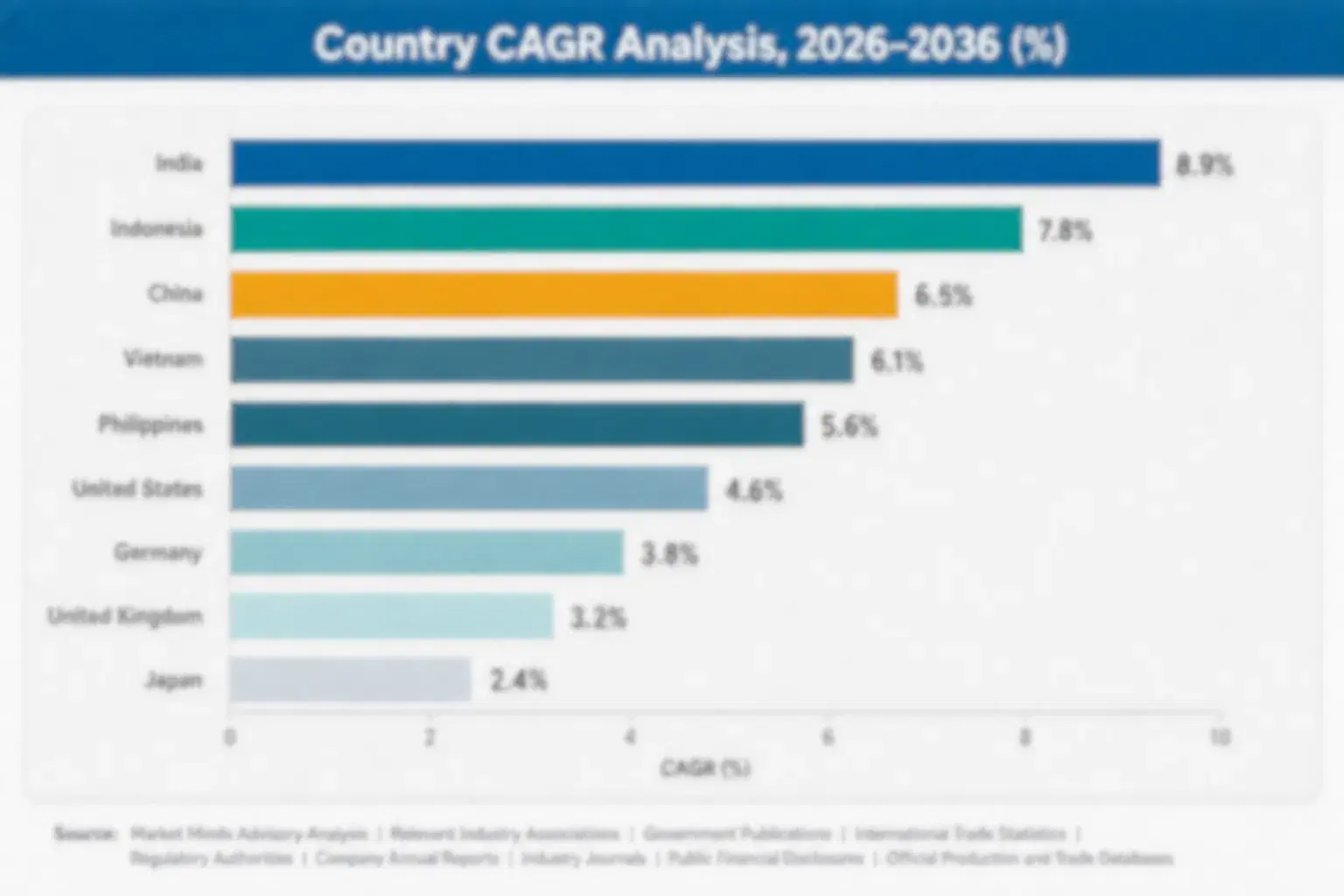
asia-pacific-savory-ingredients-market-country-cagr-analysis-1789952738331

Where Savory Ingredient Producers Can Capture More Margin

Producers who diversify beyond standard MSG-based material into natural-derived and documented traceability grades hold the clearest path to margin expansion. Three levers stand out clearly: natural-derived certification investment, documented sourcing traceability, and direct manufacturer co-development partnerships that lock in volume ahead of competitor qualification attempts. across the field for the full duration of any single cycle.

Natural-Derived Certification Investment Program Development Overall

Producers who invest in fermentation-derived natural production and documentation gain access to a premium-priced customer segment that standard MSG producers cannot currently serve, given the extended validation timelines involved. This certification typically commands a pricing premium of 35% to 55% over standard savory ingredient material, reflecting both the additional testing burden and the sticky, long-duration contracts clean-label focused manufacturers tend to sign once a supplier clears qualification successfully across their broader product portfolio and formulation requirements involved. Producers that fall behind on this investment risk ceding premium volume to faster-moving rivals across the category.
Market Impact: adds 35% to 55% pricing premium on natural grades

Documented Sourcing Traceability Verification Services Program

Manufacturers facing increasing regulatory scrutiny on ingredient sourcing claims will pay meaningfully more for producers who can document fermentation process authenticity across roughly 50% of qualified supply volume end to end, supporting the specific natural positioning claims manufacturers increasingly build entire marketing campaigns around. Producers offering this documentation as a standard service, rather than a special request, report winning preferential allocation during periods of tight regional supply currently. Manufacturers increasingly favor this documentation when selecting long-term suppliers during periods of tight regional supply. Producers that skip this documentation risk losing preferred allocation status to more forthcoming competitors.
Market Impact: adds 8% to 14% margin on documented volume

Direct Manufacturer Co-Development Partnership Program Investment

Producers who commit technical formulation support directly to manufacturer product development teams, rather than simply selling raw ingredient volume, capture a meaningfully larger share of the eventual product's value chain and typically secure multi-year exclusive supply commitments running roughly 30% above standard spot market volume as a direct result of that closer involvement. This approach requires dedicated technical staff and genuine formulation expertise, resources smaller producers often lack, but it effectively locks out competitor qualification attempts for the full duration of the partnership relationship involved. This dynamic increasingly separates category leaders from smaller, less differentiated competitors.
Market Impact: secures 3 to 5 year exclusive supply commitments

Who Controls the Margin Pool

Market concentration sits at a notably high 54% on a production capacity basis across the top five producers, reflecting the sheer scale of fermentation infrastructure required to compete credibly at regional volume. Ajinomoto and Fufeng sit a tier above the rest of the field, combining decades of fermentation technology development with diversified product portfolios few smaller competitors can match at comparable scale.
Current competitive activity centers on natural-derived certification and consumer education investment rather than commodity price competition, which has largely stabilized across established MSG grades. Several producers have announced dedicated natural flavor enhancer research programs specifically targeting premium clean-label segments, betting that innovation leadership will matter increasingly as the category continues its gradual mix shift toward natural positioning overall. Mid-sized regional producers are increasingly pursuing licensing arrangements instead of independent natural technology development.

Rankings look most likely to shift where natural-derived production capability succeeds at meaningful scale, since narrowing the perception gap would open substantial premium demand currently unaddressed by standard MSG-based material. Watch for Southeast Asian producers closing the technical gap over the coming several years as domestic fermentation investment matures into independent commercial capability across the broader competitive field.
asia-pacific-savory-ingredients-market-company-positioning-matrix-1789952738601

Competitive Moat and Risk Dimensions

AJINOMOTO CO INC

Moat: Original Umami Discovery Heritage

Ajinomoto's original discovery and commercialization of monosodium glutamate over a century ago gives it accumulated regulatory and formulation expertise that newer entrants cannot easily replicate, particularly in navigating consumer perception challenges and food safety approval processes across multiple international jurisdictions and consumer markets globally. This heritage advantage compounds with each new international regulatory approval secured.
AJINOMOTO CO INC

Risk: Legacy MSG Association Limits Positioning

Ajinomoto's brand identity remains closely tied to monosodium glutamate specifically, potentially limiting its credibility in the fastest-growing natural flavor enhancer segment relative to competitors without comparable legacy brand associations, a positioning challenge the company continues addressing through dedicated natural product line investment. This gap could narrow further if legacy brand perception continues improving over time.
FUFENG GROUP COMPANY LIMITED

Moat: Massive Chinese Production Scale

Fufeng's extensive fermentation production scale across its Chinese manufacturing base gives it cost advantages in standard savory ingredient material that smaller, more specialized competitors cannot easily replicate, letting it maintain profitability even during periods of intense regional price competition that would meaningfully squeeze less scaled producers.
FUFENG GROUP COMPANY LIMITED

Risk: Limited Natural Alternative Positioning

Fufeng's commodity-oriented production focus makes it comparatively slower to pursue natural flavor enhancer opportunities than smaller, more nimble competitors who can move faster on premium clean-label positioning, potentially ceding share in the fastest-growing premium segments if strategic focus does not shift meaningfully soon across the broader field.

Players Tracked

Prominent Players

Ajinomoto Co Inc
Fufeng Group Company Limited
Meihua Holdings Group
Angel Yeast Co Ltd
Lesaffre et Compagnie

Other Key Players

Kikkoman Corporation
Sensient Technologies Corporation
Kerry Group plc
DSM-Firmenich AG
Ohly GmbH
AB Mauri
Lonza Group AG
Wilmar International Limited
Vedan International Holdings Limited
CJ CheilJedang Corporation
Prinova Group LLC
Tate & Lyle plc
Kohjin Life Sciences Co Ltd
Nagase & Co Ltd
Tereos Group

Recent Developments

MARCH 2026

Ajinomoto Expands Natural Flavor Enhancer Capacity in Thailand

Ajinomoto Co Inc commissioned an additional fermentation line at its existing Thai facility, raising annual natural flavor enhancer output to meet growing premium manufacturer demand. The expansion represents organic capacity growth rather than a joint venture or acquisition, funded through internal capital allocation across the company's existing operational budget.
Signal: Established leaders are prioritizing organic natural-grade capacity growth over acquisition-led expansion strategies. across the broader industry going forward.
SEPTEMBER 2025

Fufeng Signs Long-Term Supply Agreement With Major Regional Snack Manufacturer

Fufeng Group Company Limited entered a multi-year supply agreement with a major regional snack manufacturer, securing dedicated savory ingredient allocation in exchange for guaranteed volume commitments extending several years forward. The arrangement is a supply agreement, not an equity stake, reflecting a sector preference for contractual commitment.
Signal: Long-term supply agreements are increasingly becoming the preferred mechanism for securing qualified regional capacity. industry-wide overall.
JANUARY 2026

Angel Yeast Acquires Regional Processing Facility in Vietnam

Angel Yeast Co Ltd completed an acquisition of a smaller regional yeast extract processing facility in Vietnam, expanding its production footprint to serve growing Southeast Asian demand. This transaction was structured as an acquisition, not a joint venture, giving Angel Yeast full operational control over the facility.
Signal: Chinese producers are consolidating regional capacity to compete more directly with established Japanese incumbents. across the domestic supplier base today.

Fermentation Feedstock Costs Shape Producer Margins

Corn and sugar-based fermentation feedstock represents roughly 38% of total cost of goods sold for savory ingredient production, sourced primarily from agricultural commodity markets subject to their own independent pricing cycles largely unrelated to flavor ingredient demand fundamentals across the region. This exposure gives producers with flexible feedstock sourcing meaningful cost advantages over those locked into single-source agricultural supply contracts during volatility.
Corn prices spiked meaningfully during the 2022 to 2023 season due to disrupted global grain trade flows, based on USDA agricultural commodity data, pushing fermentation feedstock costs up sharply within a matter of months across most producing regions. Producers without flexible feedstock sourcing arrangements faced immediate margin compression, while producers able to switch between corn and sugar-based feedstocks absorbed the shock with comparatively modest cost increases across their existing production base and contracted supply relationships currently in place across facilities.

This exposure creates a genuine competitive disadvantage for smaller producers lacking feedstock sourcing flexibility, since they must accept whatever pricing prevails in their single committed feedstock market during periods of volatility. Larger diversified producers and those with in-house agricultural sourcing expertise both weather these cycles considerably better than smaller, single-feedstock-dependent competitors operating without comparable supply chain flexibility.
asia-pacific-savory-ingredients-market-cost-volatility-analysis-1789952738976

Multi-Feedstock Fermentation Process Flexibility

Producers increasingly design fermentation processes capable of running on either corn or sugar-based feedstocks, trading some process optimization for genuine cost flexibility during periods of agricultural commodity volatility. This approach has become standard practice among the largest producers and is spreading gradually to mid-sized players seeking comparable protection against single-feedstock price exposure over the medium term horizon.

Long-Term Feedstock Supply Contracts With Agricultural Suppliers

Directly contracting with agricultural suppliers at guaranteed volumes and pre-agreed pricing reduces exposure to spot-market volatility during periods of commodity price disruption or poor harvest yields. Several producers have expanded these contracted relationships significantly over the past several years, finding that guaranteed offtake commitments also improve feedstock quality consistency as suppliers invest confidently. Investment here continues expanding.

Portfolio Architecture for Margin Defence

The market splits cleanly into three commercial tiers running from standard MSG-based material through certified premium grades and into next-generation natural-derived and traceability-documented supply. Margin economics differ sharply across these tiers, with the volume-driven standard segment competing largely on price while certified and next-generation tiers command meaningfully higher pricing across the board across all applications tracked in this report.
The tension between volume and premium positioning defines most producer strategy decisions currently. Producers chasing volume growth in standard MSG-based material accept thinner margins in exchange for predictable, high-volume offtake, while those investing in natural-derived production and traceability documentation sacrifice some near-term volume growth for meaningfully better unit economics over the medium term. Producers that misjudge this balance risk stranding capital in the wrong tier entirely across their broader operations and supply chains overall.

High-value margin pools concentrate overwhelmingly in natural-derived and documented traceability supply, where manufacturer willingness to pay reflects genuine clean-label positioning value rather than simple flavor functionality. Producers positioned to serve these tiers simultaneously capture the clearest path toward sustained margin expansion as the broader category continues its current trajectory forward into new applications and adjacent categories across the region.

Volume / Commodity-Adjacent Tier

Standard MSG-based savory ingredients sold primarily on price for mainstream regional snack and processed food applications. Margins stay moderate but volume remains dependable across established manufacturer relationships renewed on relatively short cycles annually.
Gross Margin: 16%-24%

Premium / Certified Tier

Certified natural-derived yeast extract and fermentation-based grades meeting documented sourcing standards required by clean-label focused manufacturers. This tier attracts the bulk of current producer capital investment across leading firms today specifically and consistently.
Gross Margin: 28%-38%

Sustainability / Regulatory / Next-Generation Tier

Fully traceable, documented natural flavor enhancer material meeting the most demanding manufacturer verification requirements available in the category. Volume stays comparatively small but per-contract value runs highest across the entire savory ingredients market overall.
Gross Margin: 38%-48%
asia-pacific-savory-ingredients-market-portfolio-architecture-1789952739306

High-value Sub-segments and Strategic Watch-out

Traceable Natural Flavor Enhancer Material

This segment combines the highest per-unit pricing in the entire category with genuinely strong growth as clean-label verification demands expand steadily, making it the clearest priority for producer capital allocation over the coming several years ahead across the region. Manufacturers sign long-duration contracts once a supplier clears full documentation requirements.
Gross Margin: 40%-48%

Certified Natural-Derived Yeast Extract Grade

High per-unit value paired with strong steady growth as manufacturers standardize natural-derived sourcing across core product ranges industry-wide, a pattern spreading quickly across categories tracked. This segment offers meaningfully better economics than standard MSG-based material without the extended verification timelines the top tier demands. Investment continues expanding steadily.
Gross Margin: 29%-37%

Standard MSG-Based Supply

The volume core of the market, supplying mainstream snack and processed food reformulation at commodity-adjacent pricing across most established long-running manufacturer relationships worldwide. Margins stay moderate, but this segment anchors producer capacity utilization and funds investment in the higher-margin tiers positioned above it in the portfolio.
Gross Margin: 16%-22%

Consumer Perception Investment Opportunity

A strategic watch-out for established MSG-focused producers, since successful consumer education campaigns could meaningfully narrow the perception gap versus natural alternatives, a scenario several ambitious producers are actively pursuing right now across their broader brand partnership programs targeting mainstream retail consumers directly. Watch closely for developments.
Gross Margin: 18%-28%

Formulation Lock-In Anchors Recurring Demand

Savory ingredients generate genuine multi-year demand once a manufacturer completes formulation qualification and locks in a specific producer within finished snack, instant food, or sauce products, since switching producers requires requalifying flavor intensity and sourcing documentation across an entire product line, a costly process manufacturers avoid without strong reason. This lock-in strengthens meaningfully once a producer earns preferred natural sourcing verification status from a manufacturer's own internal quality team.
Adoption depth varies sharply by end-use vertical. Premium sauce and snack manufacturers adopt deepest, forming close technical partnerships with producers offering certified, documented natural-derived flavor meeting elevated clean-label standards, while mainstream instant food manufacturers adopt more selectively, often testing multiple producers before committing to a specific formulation. Manufacturers serving both segments simultaneously often maintain dual-sourcing relationships balancing cost discipline against consistency needs across their base.

A generational shift is underway among manufacturer formulation buyers, as younger procurement and product development managers increasingly research natural-derived umami sourcing proactively for genuine clean-label differentiation, unlike prior generations who more commonly treated savory ingredients as a purely cost-driven commodity decision rather than a mainstream marketing opportunity. This shift is gradually reshaping supplier evaluation criteria across the region.
asia-pacific-savory-ingredients-market-end-use-penetration-index-1789952739628

Where Producers Should Focus Next

These are among the four positions where our research anticipates prominent divergence between winners and laggards over the coming forecast period. Each is grounded in the demand model, the regulatory perimeter, and the announced capacity pipeline.
01 / NATURAL-DERIVED INVESTMENT PRIORITY

Prioritize natural flavor enhancer research over broad capacity expansion

Producers weighing where to deploy limited capital should prioritize natural-derived flavor enhancer research ahead of simply adding undifferentiated capacity, since successful positioning commands pricing premiums few competitors can currently match given the research investment required. The multi-year development timeline creates a genuine moat once achieved, locking in manufacturer relationships that later entrants find difficult to dislodge quickly. Capacity added without this differentiation risks remaining confined to increasingly commoditized MSG production indefinitely, since few competitors currently match this level of research investment sophistication.
02 / CONSUMER EDUCATION INVESTMENT

Fund education campaigns to address persistent perception concerns

Producers dependent on standard MSG-based volume face a persistent consumer perception disadvantage that diversified competitors increasingly address through dedicated education campaigns and co-branded marketing partnerships with major food brands. Building this credibility takes real investment and time, but it meaningfully expands the addressable market beyond formulators already comfortable with the ingredient's established safety profile. Firms that move early on this investment will likely hold a durable perception advantage, since few competitors currently match this level of proactive consumer education commitment.
03 / FEEDSTOCK DIVERSIFICATION STRATEGY

Build corn and sugar feedstock flexibility to manage cost exposure

Producers dependent on a single agricultural feedstock face recurring cost shocks that diversified competitors increasingly avoid through fermentation processes capable of running on either corn or sugar-based inputs depending on relative pricing at any given time. Building this flexibility takes real engineering investment, but it meaningfully reduces exposure to the single-feedstock risk that has repeatedly compressed margins across the category in recent years, since few competitors currently match this level of flexibility. Firms that move early on this flexibility will likely hold a durable cost advantage overall.
04 / REGIONAL MANUFACTURING PARTNERSHIP

Deepen co-development ties with regional instant food manufacturers

The instant noodle and snack category's ongoing manufacturing expansion makes it the highest-priority customer segment for direct co-development partnership investment, since these manufacturers value flavor consistency highly and reward suppliers who can deliver genuine technical differentiation beyond simply selling raw ingredient volume at competitive pricing. Producers that commit dedicated technical resources to this segment early will likely secure preferred supplier status well ahead of less focused competitors in the region. Few rivals currently match this level of regional formulation depth built over time.

Engagement Snapshot From the Field

A live engagement with an industry participant carrying material or product regulatory and market exposure ahead of a defining policy shift, showing how our research translates into a defensible multi-year portfolio strategy.
MARKET MINDS ADVISORY · CLIENT ENGAGEMENT SUMMARY
Asia Pacific Savory Ingredients Producer Strategic Portfolio Review and Transition Roadmap 2026·Investment Scenario on Asia Pacific Savory Ingredients Exposure Evaluation 2025-26
CLIENT PROFILE
The client is a mid-sized Southeast Asian snack manufacturer with a portfolio of savory chips built around standard monosodium glutamate seasoning, seeking to evaluate whether transitioning to a natural-derived yeast extract formulation would strengthen its premium positioning relative to established competitors already active in this increasingly crowded better-for-you snack category. The brand competes primarily through convenience store and modern trade retail channels.
STRATEGIC CHALLENGE
The client needed to determine whether reformulating its flagship product line around natural-derived yeast extract justified the higher ingredient cost and genuine flavor matching complexity, given uncertainty about consumer reaction to any flavor change and concern about disrupting an already successful product line with an established loyal customer base across retail channels.
MMA APPROACH
MMA conducted a comparative flavor matching and consumer perception assessment benchmarking a yeast-extract-based formulation against the client's existing MSG-based recipe, supplemented by structured consumer research measuring purchase intent under different clean-label messaging scenarios across the client's core target consumer demographic segments and existing customer base. Findings were benchmarked against comparable reformulation projects industry peers had recently completed.
KEY FINDINGS
  1. Blind taste testing found the yeast-extract-based formulation could replicate roughly 85% of the original flavor intensity, with most panelists unable to reliably distinguish the reformulated product.
  2. Consumer research indicated that clearly explaining the natural-derived benefit on packaging meaningfully increased purchase intent among younger, health-conscious consumer segments tested. across multiple tested product variants.
  3. Older loyal customers showed some resistance to the subtle flavor change during initial blind testing, suggesting a phased rollout would manage brand loyalty risk better than an abrupt switch.
  4. Reformulation and ingredient cost increases were projected to be recovered within roughly eighteen months given the improved premium positioning's expected effect on customer acquisition and retention.
CLIENT PROFILE
The client is a mid-sized Southeast Asian snack manufacturer with a portfolio of savory chips built around standard monosodium glutamate seasoning, seeking to evaluate whether transitioning to a natural-derived yeast extract formulation would strengthen its premium positioning relative to established competitors already active in this increasingly crowded better-for-you snack category. The brand competes primarily through convenience store and modern trade retail channels.
STRATEGIC CHALLENGE
The client needed to determine whether reformulating its flagship product line around natural-derived yeast extract justified the higher ingredient cost and genuine flavor matching complexity, given uncertainty about consumer reaction to any flavor change and concern about disrupting an already successful product line with an established loyal customer base across retail channels.
MMA APPROACH
MMA conducted a comparative flavor matching and consumer perception assessment benchmarking a yeast-extract-based formulation against the client's existing MSG-based recipe, supplemented by structured consumer research measuring purchase intent under different clean-label messaging scenarios across the client's core target consumer demographic segments and existing customer base. Findings were benchmarked against comparable reformulation projects industry peers had recently completed.
KEY FINDINGS
  1. Blind taste testing found the yeast-extract-based formulation could replicate roughly 85% of the original flavor intensity, with most panelists unable to reliably distinguish the reformulated product.
  2. Consumer research indicated that clearly explaining the natural-derived benefit on packaging meaningfully increased purchase intent among younger, health-conscious consumer segments tested. across multiple tested product variants.
  3. Older loyal customers showed some resistance to the subtle flavor change during initial blind testing, suggesting a phased rollout would manage brand loyalty risk better than an abrupt switch.
  4. Reformulation and ingredient cost increases were projected to be recovered within roughly eighteen months given the improved premium positioning's expected effect on customer acquisition and retention.
RECOMMENDED STRATEGY
Phase 1: Phase one: launch a limited-edition natural-derived reformulated variant alongside the existing product, testing consumer reception before committing to a full flagship product transition entirely. Phase 2: Phase two: use consumer feedback and flavor testing data to fine-tune the yeast extract blend, closing the remaining flavor intensity gap before considering a broader rollout across product lines. Phase 3: Phase three: transition the flagship product fully to the natural-derived formulation only after confirming positive sales and flavor consistency results from the initial limited-edition pilot launch.
OUTCOME
The client proceeded with the phased approach, launching its limited-edition variant and reporting stronger-than-expected sales among younger consumers within two quarters (client-reported, unverified by MMA). Flavor consistency held steady across production runs, and the client has since begun planning a broader flagship product transition (client-reported, unverified by MMA).

Frequently Asked Questions

Foundational context covering the market sizes, CAGR, scope, country, region and competition that inform every finding below. This section is provided to cover basics and most often pre-purchase conversations, answered from the MMA Primary Research Dataset.

What is the current size of the Asia Pacific Savory Ingredients Market?

The market reached USD 2.40 billion in 2025 across all product segments tracked in this report. It is projected to reach USD 2.56 billion in 2026 as packaged food demand accelerates.

How large will the Asia Pacific Savory Ingredients Market be by 2036?

The market is projected to reach USD 4.95 billion by 2036 across all major regions covered. That represents a 1.93 times expansion from 2026 levels over the full forecast period.

What is the CAGR for the Asia Pacific Savory Ingredients Market 2026 to 2036?

The base case CAGR is 6.8% annually through 2036 across the full forecast period. Bull and bear scenarios range from 5.6% to 7.9% depending on packaged food growth and perception trends.

Which segment is growing fastest?

Natural flavor enhancers lead at a 9.6% CAGR, roughly 1.41 times the overall market rate. Yeast extracts follow closely as the second-fastest growing segment in this report.

Who are the major companies in the Asia Pacific Savory Ingredients Market?

Leading producers include Ajinomoto Co Inc, Fufeng Group Company Limited, Meihua Holdings Group, Angel Yeast Co Ltd, and Lesaffre et Compagnie. Together they hold over half of regional capacity.

Which country is growing fastest?

India leads country-level growth at a 9.1% CAGR among all countries tracked in this report. Rapidly expanding packaged food manufacturing capacity drives this acceleration forward.

Report Segmentation Architecture

The full report scope spans multiple orthogonal segmentation dimensions, with cross-tabulated demand data provided for each dimension pair. Coverage extends further to regional breakdowns, trend trajectories, and the competitive detail needed to support segment-level decision-making.

By Product Type

  • Monosodium Glutamate
  • Yeast Extracts
  • Hydrolyzed Vegetable Proteins
  • Nucleotides
  • Savory Seasoning Blends
  • Natural Flavor Enhancers

By End-Use Industry

  • Snack Food Manufacturing
  • Instant Food Manufacturing
  • Sauce and Condiment Manufacturing
  • Processed Food Manufacturing
  • Foodservice and Restaurant Supply

By Commercial Dimension

  • Direct Manufacturer Supply Contracts
  • Distributor and Wholesale Channels
  • Certified Natural Sourcing Supply Programs
  • Technical Co-Development Partnerships

By Region

  • North America
  • Western Europe
  • East Asia
  • South Asia and Pacific
  • Latin America
  • Middle East and Africa
  • Eastern Europe

Scope, Methodology, and Coverage

Every figure in this report is reproducible from documented input assumptions. The scope below maps the historical period, the forecast horizon, the segmentation dimensions, and the countries covered, alongside the underlying primary and qualitative methodology.
Historical Period
2020 to 2025
Forecast Period
2026 to 2036
Base Year
2025 (USD billions; MMA Primary Research Dataset, September 2026)
Market Definition
This report defines the Asia Pacific savory ingredients market as monosodium glutamate, yeast extracts, hydrolyzed vegetable proteins, nucleotides, and related umami flavor enhancement ingredients sold across snack, instant food, sauce, and processed food applications throughout the Asia Pacific region. It excludes finished seasoning products and whole-food flavor bases sold outside this report's defined ingredient-level scope.
Quantitative Units
USD billions (current prices); metric tons for volume-referenced analysis where applicable
Segmentation Dimensions
By Product Type; By End-Use Industry; By Commercial Dimension; By Region
Regions Covered
North America, Western Europe, East Asia, South Asia and Pacific, Latin America, Middle East and Africa, Eastern Europe
Countries Covered
China, Japan, South Korea, India, Vietnam, Indonesia, Philippines, Thailand, Australia, USA, Canada, Germany, France, UK, Brazil, Mexico, UAE, Saudi Arabia, South Africa, Poland, and additional markets relevant to this sector
Key Companies Profiled
Ajinomoto Co Inc, Fufeng Group Company Limited, Meihua Holdings Group, Angel Yeast Co Ltd, Lesaffre et Compagnie, Kikkoman Corporation, Sensient Technologies Corporation, Kerry Group plc, DSM-Firmenich AG, Ohly GmbH, AB Mauri, Lonza Group AG, Wilmar International Limited, Vedan International Holdings Limited, CJ CheilJedang Corporation, Prinova Group LLC, Tate & Lyle plc, Kohjin Life Sciences Co Ltd, Nagase & Co Ltd, Tereos Group
Quantitative Methodology
Primary survey, n=3,800 respondents, Q4 2025, six countries; demand-side model with trade association cross-validation
Qualitative Methodology
47 expert interviews, Q4 2025; applied to validate demand model assumptions, identify emerging dynamics, and assess competitive positioning
Report Format
PDF and XLSX data workbook (Word format preview document)
Publisher
Market Minds Advisory
Report Code
MMA-2026-AGR-104
Published
September 2026
Contact
sales@marketmindsadvisory.com | www.marketmindsadvisory.com

Purchase the full Asia Pacific Savory Ingredients Market Report (2026 to 2036).

This report delivers a complete commercial assessment of the Asia Pacific savory ingredients market, covering sizing, segmentation, and regional demand through 2036. It profiles twenty producers across fermentation and extraction operations, detailing competitive positioning, capacity investment, and natural-derived diversification strategy in depth. Analysis extends to feedstock cost exposure and mitigation pathways, portfolio margin economics across three commercial tiers, and demand architecture driving manufacturer formulation lock-in over time. Bull and bear forecast scenarios are modeled explicitly against named commercial catalysts and clearly identified downside risks. Regional demand drivers and category dynamics receive dedicated coverage throughout.
Twenty producer competitive profiles and moat analysis
Seven-region demand and pricing breakdown analysis
Six-segment product type growth forecast projection models
Feedstock cost exposure and mitigation pathways
Three-tier portfolio margin benchmarking analysis framework
Bull and bear scenario forecast modeling

Built For The People Who Decide

From boardroom strategy to bench-side execution, this report is read cover-to-cover by leaders shaping the next decade of their industry, turning demand scenarios, market dynamics and valuation benchmarks into decisions.
CXOs/ Presidents/ VPs/ Managers
M&A and Corporate Development
Strategy Teams and R&D Heads
Procurement and Product Directors
Regulatory and Compliance Leaders
Investor Relations and Equity Analysts