Asia-Pacific Bio-Composites Market

Asia-Pacific Bio-Composites Market

Asia-Pacific Bio-Composites Market 2024-2034

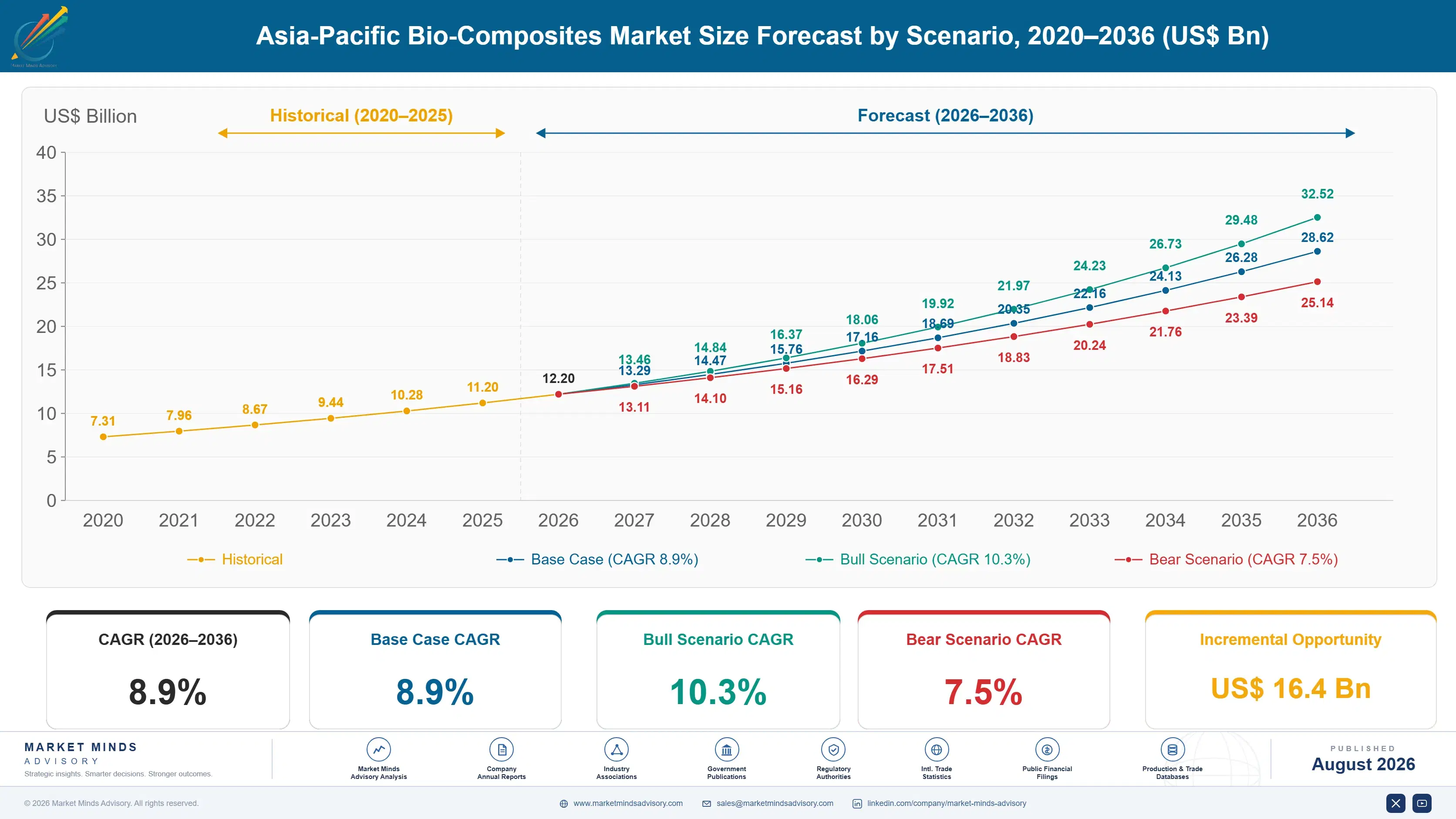
The Asia-Pacific bio-composites market is set to achieve remarkable growth, with its market value projected to rise from USD 8.7 billion in 2024 to USD 28.8 billion by 2034, reflecting a robust CAGR of 14.4%. This growth is driven by increasing industrialization, expanding construction activities, and a rising focus on sustainability.

Market Trends and Drivers

  1. Growing Adoption in Automotive and Construction Sectors
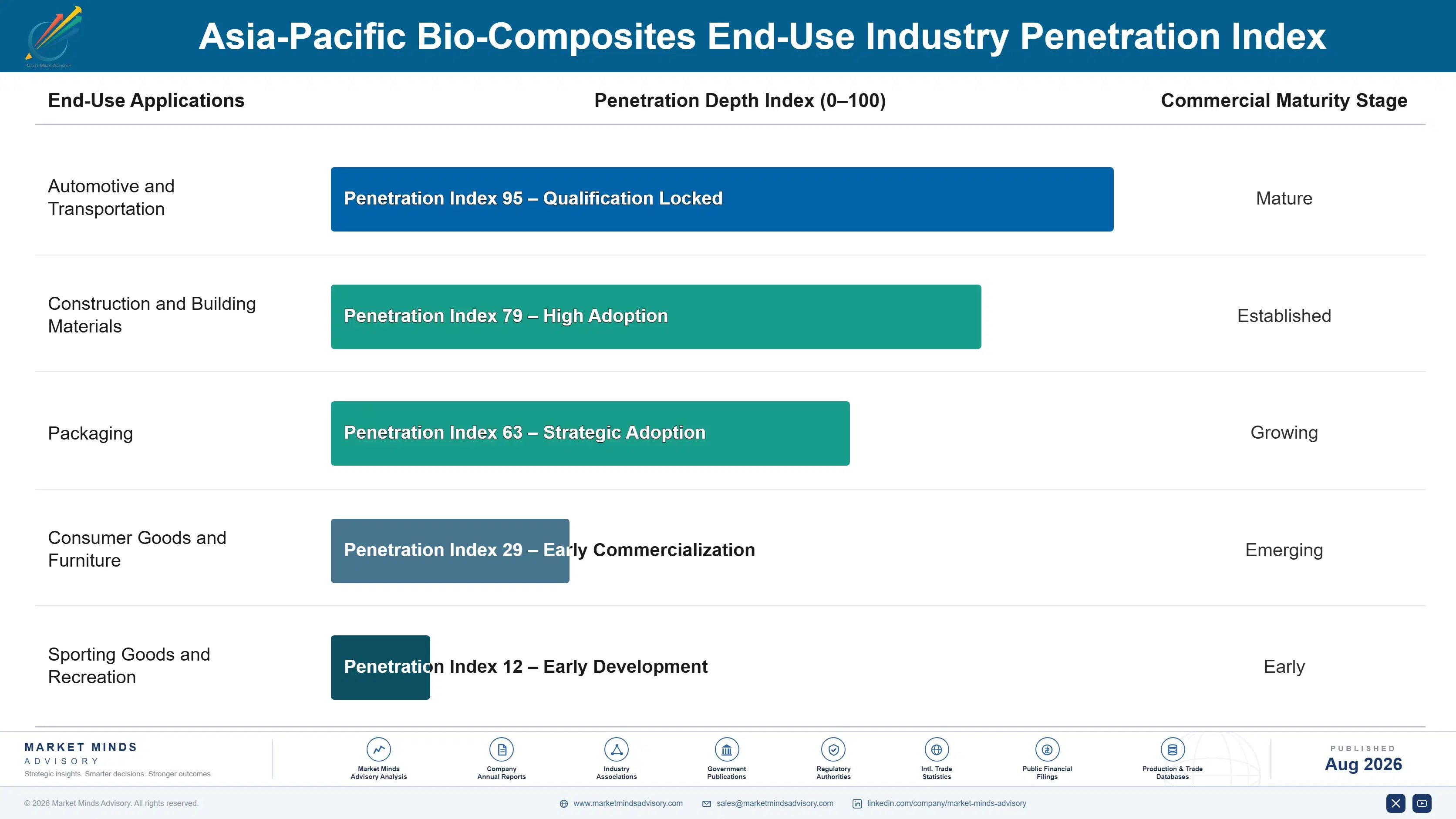
    • Automotive manufacturers are increasingly using bio-composites, such as natural fiber-reinforced polypropylene, for lightweight, cost-effective, and eco-friendly components.
    • In the construction industry, bio-composites are favored for their durability, ease of molding, and reduced carbon footprint.
  2. Surge in Demand for Sustainable Materials
    • Rising environmental concerns and depletion of non-renewable resources have accelerated the demand for green composites.
    • Biopolymers combined with natural fibers like jute, hemp, and sugarcane bagasse offer sustainable alternatives to petroleum-based materials.
  3. Expanding Applications Across Consumer Goods
    • Bio-composites are gaining traction in consumer goods for their lightweight, aesthetic appeal, and recyclability.
    • Their usage in maritime applications further demonstrates their versatility and resilience.

Market Segmentation

CategorySegmentCAGR (2024-2034)
Fiber TypeWood Fiber, Non-Wood Fiber14.1%
Polymer TypeSynthetic, Natural14.6%
End-Use IndustryAutomotive, Construction, Consumer Goods14.3%

Leading Fiber Type: Wood Fiber

Wood fiber dominates the market due to its superior strength and wide availability, making it a preferred choice for automotive and construction applications.

Top End-Use Industry: Automotive

The automotive industry leads the market, leveraging bio-composites for lightweight and high-strength components, essential for fuel efficiency and sustainability.

Regional Insights

Country/RegionMarket Value (2034)CAGR (2024-2034)
ChinaUSD 12.5 billion15.2%
IndiaUSD 7.5 billion14.8%
ASEANUSD 5.3 billion14.0%
  • China: The largest market, driven by rapid industrialization and the flourishing automotive sector.
  • India: Fastest-growing market due to government initiatives promoting green building materials and sustainable infrastructure.
  • ASEAN: Steady growth fueled by increasing adoption in consumer goods and maritime industries.

Challenges and Opportunities

  1. Challenges
    • Mechanical limitations, such as low thermal stability and strength compared to synthetic composites.
    • Compatibility issues between natural fibers and polymer matrices.
  2. Opportunities
    • Advancements in fiber pre-treatment technologies to enhance mechanical properties.
    • Development of hybrid bio-composites with improved strength and durability.

Competitive Landscape

Key players, including Flexform Technologies, Technaro GmbH, Procotex Corporation, and Greengran B.V., are focusing on strategic collaborations and R&D to expand their product portfolios and market reach.

Competitive Insights

  • Revenue and market share analysis.
  • Innovations in bio-composite formulations and eco-friendly solutions.

Contact our advisory to explore opportunities among leading and emerging players in the bio-composites market.

Conclusion and Call to Action

The Asia-Pacific bio-composites market is poised for exponential growth, driven by sustainability trends and advancements in material science. Stakeholders can capitalize on this momentum by investing in innovative and eco-friendly solutions.

Take action now! Contact us today to access the full report and propel your business forward.