Artificial Urinary Sphincter Market

Artificial Urinary Sphincter Market

Artificial Urinary Sphincter Market Outlook from 2026 to 2033

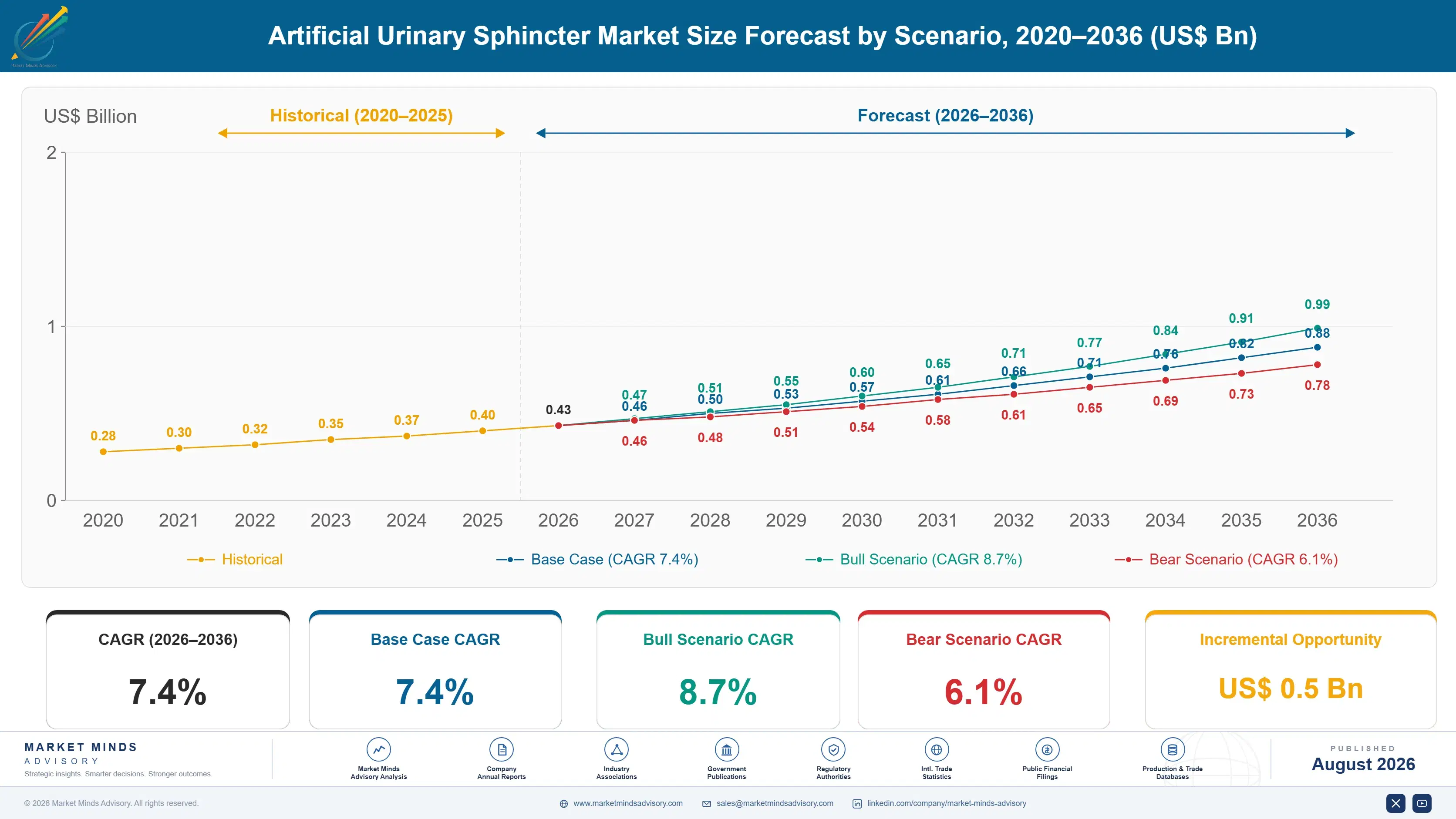
The artificial urinary sphincter market is poised for significant expansion from 2026 to 2033, driven by rising incidences of urinary incontinence, particularly among aging populations and post-prostatectomy patients. The global market size is projected to reach USD 1.12 billion by 2033, up from an estimated USD 720 million in 2026, reflecting a robust CAGR of 6.5% over the forecast period. Technological advancements, increased awareness, and improved reimbursement policies are further catalyzing market growth, making artificial urinary sphincters a preferred solution for severe incontinence cases.

The market is characterized by a competitive landscape with established medical device manufacturers and emerging players focusing on product innovation and minimally invasive implantation techniques. North America currently leads the market, but Asia-Pacific is expected to witness the fastest growth due to improving healthcare infrastructure and rising patient awareness. The artificial urinary sphincter market is also benefiting from strategic collaborations, clinical trials, and regulatory approvals, which are expanding the adoption of these devices globally.

Artificial Urinary Sphincter Market

Artificial Urinary Sphincter Market Scenario & Strategic Insights

The artificial urinary sphincter market is experiencing a paradigm shift, with increasing demand for effective long-term solutions to male and female urinary incontinence. The prevalence of stress urinary incontinence, particularly after prostate surgery, is a key driver, as traditional therapies often fail to provide satisfactory results. The market is also witnessing a surge in research and development activities, leading to the introduction of advanced devices with improved efficacy, safety, and patient comfort. These innovations are reducing the risk of complications and device failures, thereby enhancing patient outcomes and satisfaction.

Strategically, market participants are focusing on expanding their geographical footprint, especially in emerging economies where the burden of incontinence is rising. Partnerships with urology clinics, hospitals, and academic institutions are facilitating greater access to artificial urinary sphincters. Additionally, favorable reimbursement frameworks in developed markets are encouraging more patients to opt for surgical interventions. However, the high cost of devices and procedures, coupled with limited awareness in certain regions, remains a challenge for widespread adoption.

Attribute2026 (USD Million)2033 (USD Million)CAGR (2026 – 2033)
Market Size7201,1206.5%

Artificial Urinary Sphincter Market Trends

  • Technological Advancements in Device Design and Materials

The artificial urinary sphincter market is witnessing significant technological advancements, particularly in device design and biomaterials. Manufacturers are focusing on developing devices with enhanced durability, biocompatibility, and ease of implantation. Innovations such as antibiotic-coated devices, improved pressure-regulating balloons, and minimally invasive surgical techniques are reducing infection rates and mechanical failures. These advancements are not only improving patient outcomes but also expanding the eligible patient pool by making the procedure safer and more accessible.

  • Rising Adoption Among Female Patients

Traditionally, artificial urinary sphincters have been predominantly used in male patients, especially those with post-prostatectomy incontinence. However, there is a growing trend of adoption among female patients suffering from severe intrinsic sphincter deficiency. Clinical studies and regulatory approvals are paving the way for broader indications, and device modifications tailored for female anatomy are being introduced. This trend is expected to significantly expand the market size and diversify the patient demographic over the forecast period.

  • Increasing Focus on Outpatient and Ambulatory Surgical Settings

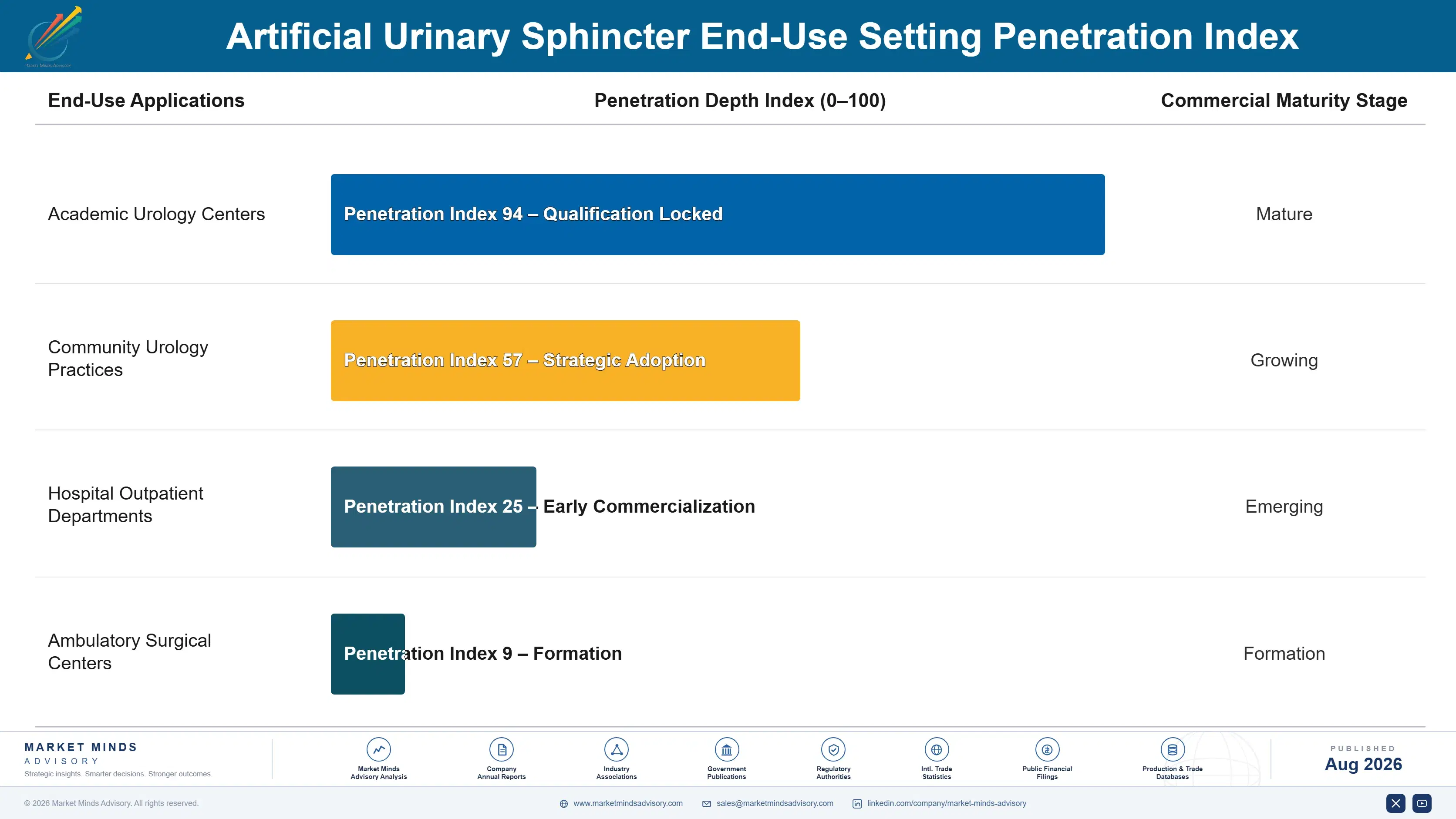
The shift towards outpatient and ambulatory surgical centers for artificial urinary sphincter implantation is gaining momentum. This trend is driven by advancements in surgical techniques, shorter recovery times, and cost-effectiveness. Hospitals and clinics are investing in training and infrastructure to support these procedures outside traditional inpatient settings. As a result, patient throughput is increasing, and the overall cost burden on healthcare systems is being reduced, further supporting market growth.

Segment & Category Analysis for Artificial Urinary Sphincter Market

By Component

  • Cuff
    • Pump
    • Balloon

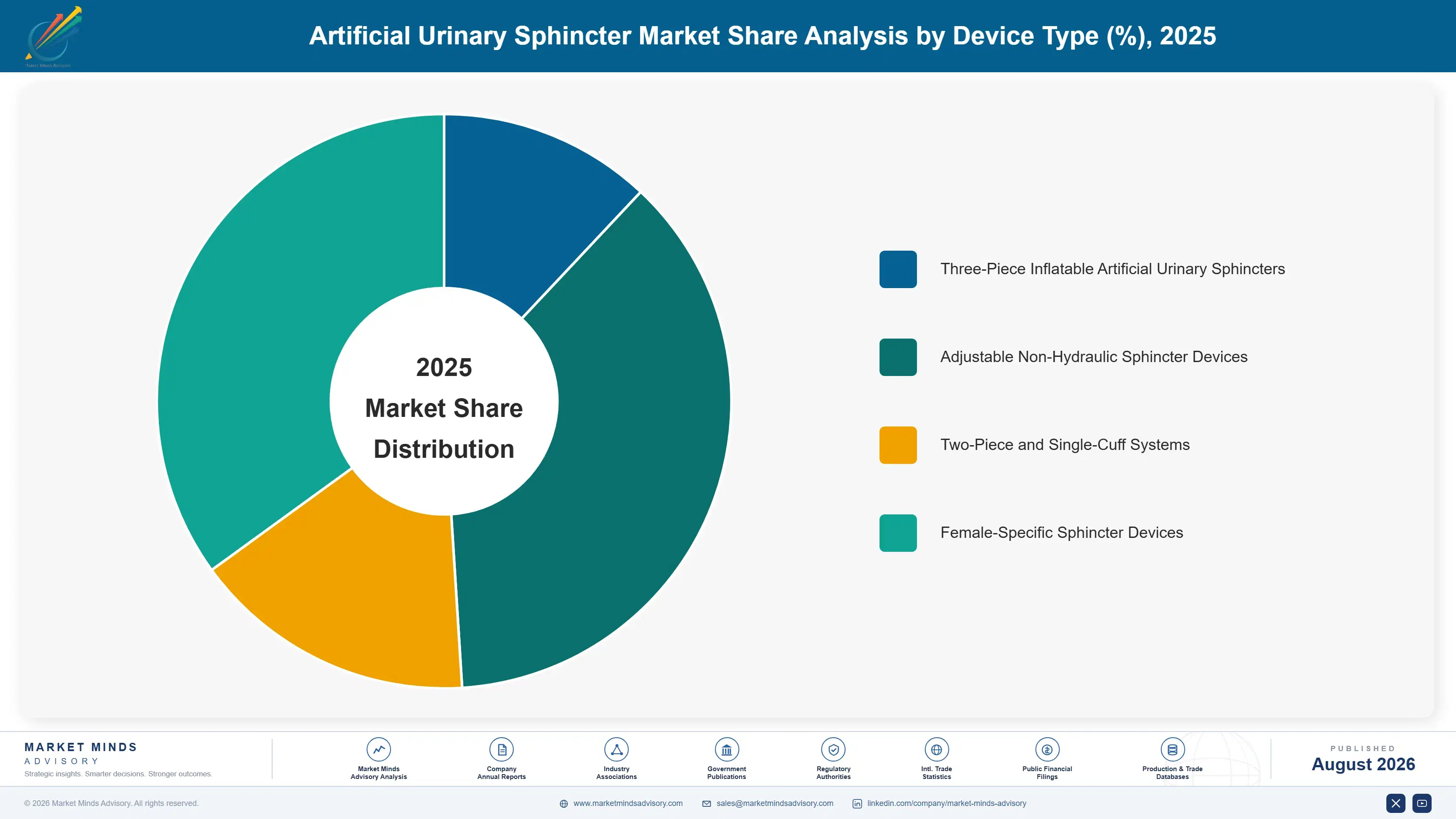
The artificial urinary sphincter system comprises three main components: the cuff, pump, and balloon. The cuff, which encircles the urethra, is the critical component responsible for maintaining continence. The pump, typically implanted in the scrotum or labia, allows patients to control urination, while the balloon regulates pressure within the system. Innovations in component materials and design are aimed at enhancing durability and reducing the risk of mechanical failure. The cuff segment holds the largest market share due to its central role in device functionality, but advancements in pump ergonomics and balloon reliability are also contributing to overall market growth.

Artificial Urinary Sphincter Market Component

By Patient Gender

  • Male
    • Female

While male patients, particularly those with post-prostatectomy incontinence, constitute the majority of artificial urinary sphincter recipients, the female segment is witnessing accelerated growth. This is attributed to increasing awareness, improved device designs for female anatomy, and expanding clinical indications. The male segment continues to dominate due to higher prevalence rates and established clinical protocols, but the female segment is expected to gain significant traction, especially in developed markets with advanced healthcare infrastructure.

By End User

Hospitals remain the primary end users of artificial urinary sphincter devices, given their access to specialized urology departments and surgical expertise. However, ambulatory surgical centers are rapidly gaining market share due to the trend towards minimally invasive procedures and shorter hospital stays. Specialty clinics, particularly those focused on urology and pelvic health, are also emerging as important end users, offering personalized care and follow-up services. The diversification of end users is enhancing patient access and driving market expansion.

By Indication

  • Stress Urinary Incontinence
    • Neurogenic Bladder
    • Others

Stress urinary incontinence is the leading indication for artificial urinary sphincter implantation, especially among men post-prostatectomy. Neurogenic bladder, resulting from spinal cord injuries or neurological disorders, represents another significant segment. The “others” category includes rare indications such as congenital anomalies and trauma-related incontinence. The dominance of stress urinary incontinence is expected to continue, but the neurogenic bladder segment is projected to grow steadily as awareness and diagnosis rates improve.

By Distribution Channel

  • Direct Sales
    • Distributors
    • Online Platforms

Direct sales channels, involving direct engagement between manufacturers and healthcare providers, account for the largest share of the artificial urinary sphincter market. Distributors play a crucial role in expanding market reach, particularly in emerging economies. Online platforms are gradually gaining importance, offering educational resources and facilitating procurement for healthcare facilities. The evolving distribution landscape is enhancing market penetration and ensuring timely access to advanced devices.

Artificial Urinary Sphincter Market Distribution Channel

Growth Drivers and Opportunities in Artificial Urinary Sphincter Market

  • Rising Prevalence of Urinary Incontinence and Aging Population

The global increase in urinary incontinence cases, particularly among the elderly, is a primary growth driver for the artificial urinary sphincter market. As populations age, the incidence of conditions such as benign prostatic hyperplasia, prostate cancer, and neurological disorders rises, leading to higher rates of incontinence. This demographic trend is especially pronounced in developed regions, where life expectancy is higher and healthcare systems are equipped to diagnose and treat incontinence effectively. The growing patient pool is creating sustained demand for advanced treatment options like artificial urinary sphincters.

  • Technological Innovation and Product Development

Continuous innovation in device design, materials, and surgical techniques is opening new opportunities for market growth. Manufacturers are investing in research and development to introduce devices with improved safety profiles, longer lifespans, and enhanced patient comfort. The development of minimally invasive implantation procedures is reducing recovery times and complication rates, making artificial urinary sphincters a more attractive option for both patients and healthcare providers. These advancements are expected to drive adoption rates and expand the market over the forecast period.

Emerging Opportunities for Artificial Urinary Sphincter Market

  • Expansion into Emerging Markets

Emerging economies in Asia-Pacific, Latin America, and the Middle East & Africa present significant untapped opportunities for the artificial urinary sphincter market. Improving healthcare infrastructure, rising disposable incomes, and increasing awareness of urinary incontinence treatments are facilitating market entry and expansion. Strategic partnerships with local healthcare providers and government initiatives to improve urological care are further supporting market growth in these regions.

  • Personalized and Patient-Centric Solutions

The trend towards personalized medicine is creating opportunities for the development of customized artificial urinary sphincter devices tailored to individual patient needs. Advances in imaging, diagnostics, and 3D printing are enabling manufacturers to design devices that offer optimal fit and function for diverse patient anatomies. This approach is expected to improve patient outcomes, reduce complication rates, and enhance overall satisfaction, thereby driving market growth.

Growth Restrain Factors and Challenges in Artificial Urinary Sphincter Market

  • High Cost of Devices and Procedures

The high cost associated with artificial urinary sphincter devices and implantation procedures remains a significant barrier to market growth, particularly in low- and middle-income countries. Many patients are unable to afford the out-of-pocket expenses, and reimbursement policies may not fully cover the costs in certain regions. This financial barrier limits access to advanced treatments and restricts market penetration. Additionally, the cost of managing complications or device revisions can further increase the economic burden on patients and healthcare systems.

The challenge is compounded by the need for specialized surgical expertise and post-operative care, which may not be readily available in all healthcare settings. Efforts to reduce manufacturing costs, streamline surgical procedures, and expand insurance coverage are essential to overcoming this barrier and ensuring broader access to artificial urinary sphincters.

  • Limited Awareness and Social Stigma

Despite the availability of effective treatments, limited awareness about urinary incontinence and the benefits of artificial urinary sphincters persists, especially in developing regions. Social stigma associated with incontinence often discourages patients from seeking medical help, leading to underdiagnosis and undertreatment. Healthcare providers may also lack adequate training or familiarity with the latest devices and techniques, further hindering adoption.

Addressing this challenge requires concerted efforts to educate both patients and healthcare professionals about the causes, consequences, and treatment options for urinary incontinence. Public awareness campaigns, professional training programs, and patient support groups can play a vital role in reducing stigma and promoting early intervention, thereby supporting market growth.

Artificial Urinary Sphincter Market Regional Analysis

RegionMarket Share (2025)Key Market Highlight
Asia-Pacific21%Fastest-growing region due to rising healthcare investments and increasing awareness.
North America38%Largest market, driven by high prevalence and advanced healthcare infrastructure.
Europe27%Strong adoption supported by favorable reimbursement and aging population.
South America8%Emerging market with growing healthcare access and awareness.
Middle East & Africa6%Gradual growth, hindered by limited access but improving with healthcare reforms.

Asia-Pacific

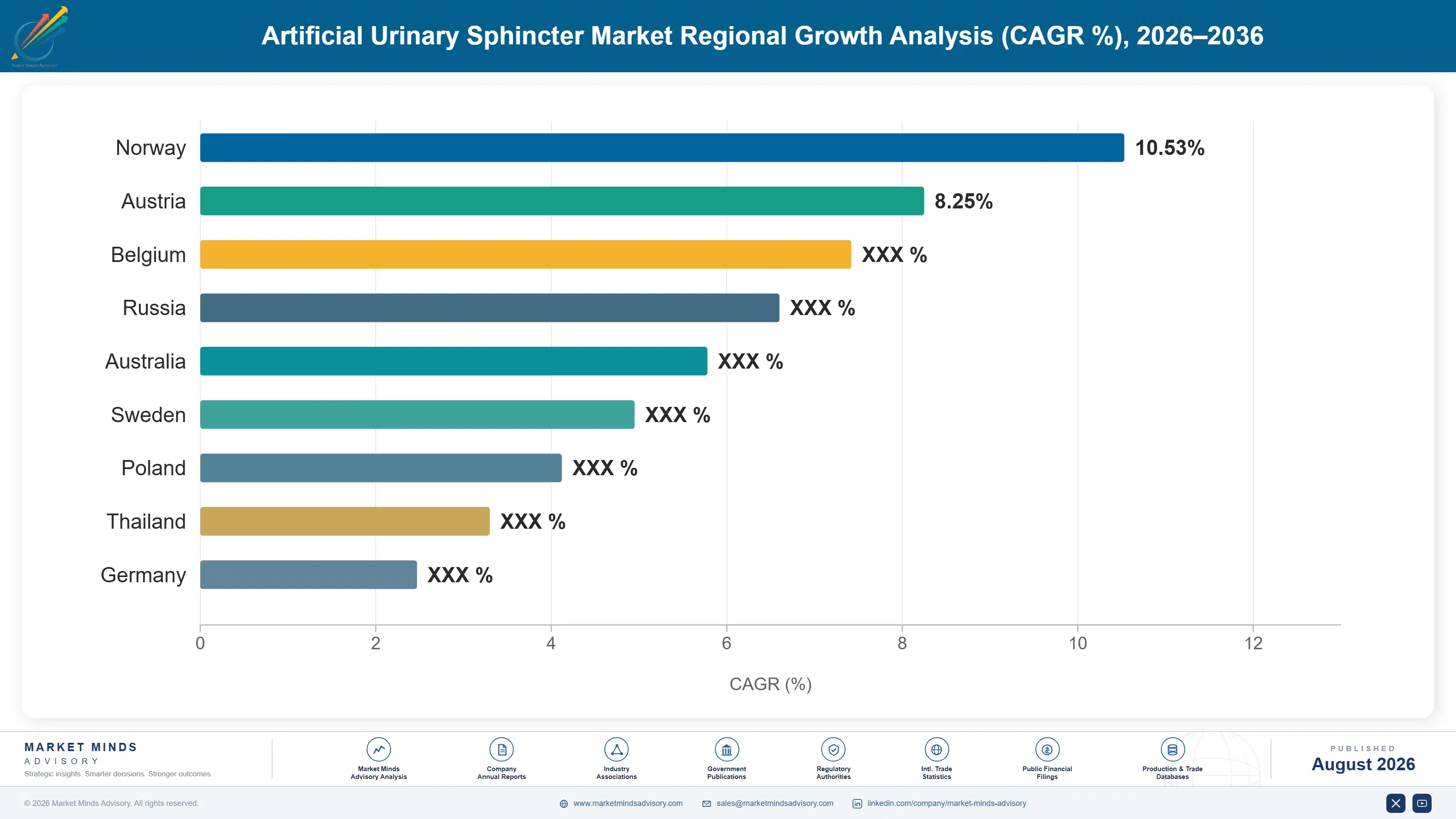
Asia-Pacific is expected to witness the highest CAGR in the artificial urinary sphincter market during the forecast period. Factors such as increasing healthcare expenditure, rising awareness about urinary incontinence, and improving access to advanced medical devices are driving market growth. Countries like China, India, and Japan are investing in healthcare infrastructure and training, making advanced urological treatments more accessible. Strategic collaborations with local healthcare providers and government initiatives are further supporting market expansion in the region.

North America

North America currently dominates the artificial urinary sphincter market, accounting for the largest share in 2025. The region benefits from a high prevalence of urinary incontinence, well-established healthcare systems, and favorable reimbursement policies. The presence of leading medical device manufacturers and ongoing clinical research activities are fostering innovation and adoption. The United States, in particular, is a major contributor to market growth, with a large patient pool and advanced surgical expertise.

Europe

Europe holds a significant share of the artificial urinary sphincter market, supported by an aging population and strong healthcare infrastructure. Favorable reimbursement frameworks and widespread awareness of urinary incontinence treatments are driving adoption rates. Countries such as Germany, France, and the United Kingdom are leading the market, with ongoing investments in research and development. The region is also witnessing increased adoption among female patients, contributing to market diversification.

South America

South America represents an emerging market for artificial urinary sphincters, with growing healthcare access and rising awareness of incontinence treatments. Brazil and Argentina are key markets, benefiting from improving healthcare infrastructure and government initiatives to enhance urological care. However, limited reimbursement coverage and high device costs remain challenges to widespread adoption. Efforts to increase awareness and expand insurance coverage are expected to support market growth in the region.

Middle East & Africa

The Middle East & Africa region is experiencing gradual growth in the artificial urinary sphincter market, driven by healthcare reforms and increasing investments in medical infrastructure. Access to advanced urological treatments is improving, particularly in urban centers. However, limited awareness, social stigma, and economic constraints continue to hinder market expansion. Strategic partnerships and educational initiatives are essential to unlocking the region’s growth potential.

Artificial Urinary Sphincter Market Regional

Competition Landscape in Artificial Urinary Sphincter Market

The artificial urinary sphincter market is characterized by the presence of established multinational medical device companies and a growing number of regional players. The competitive landscape is shaped by ongoing product innovation, strategic collaborations, and efforts to expand geographical reach. Companies are investing in research and development to introduce devices with improved safety, durability, and patient comfort. Mergers, acquisitions, and partnerships are common strategies to strengthen market position and access new patient segments. Regulatory approvals and clinical trial outcomes play a crucial role in shaping competitive dynamics, as companies seek to differentiate their offerings and address unmet clinical needs.

Major Players in Artificial Urinary Sphincter Market

  • Boston Scientific Corporation
  • Coloplast Group
  • ZSI Surgical Implants S.R.L.
  • Promedon Group
  • Rigicon, Inc.
  • Medtronic plc
  • Cook Medical
  • UroMems
  • Zephyr Surgical Implants
  • B. Braun Melsungen AG
  • Teleflex Incorporated
  • Stryker Corporation
  • Johnson & Johnson (Ethicon)
  • Olympus Corporation
  • ConvaTec Group PLC
  • Hollister Incorporated
  • LABORIE Medical Technologies
  • Medica S.p.A.
  • UroTech Inc.
  • MicroPort Scientific Corporation

Recent Developments in Artificial Urinary Sphincter Market

  • In March 2024, Boston Scientific Corporation announced the launch of a next-generation artificial urinary sphincter with enhanced infection resistance and improved patient ergonomics.
  • In January 2024, Coloplast Group received CE Mark approval for its new female-specific artificial urinary sphincter, expanding its product portfolio and market reach in Europe.
  • In November 2023, ZSI Surgical Implants S.R.L. entered into a strategic partnership with leading urology clinics in Asia-Pacific to enhance device accessibility and training.
  • In September 2023, Rigicon, Inc. initiated a multicenter clinical trial to evaluate the long-term safety and efficacy of its latest artificial urinary sphincter model.
  • In July 2023, Promedon Group expanded its manufacturing facility in Latin America to meet rising demand and improve supply chain efficiency.
  • In May 2023, UroMems announced successful first-in-human implantation of its smart artificial urinary sphincter, integrating digital monitoring capabilities.

FAQ for Artificial Urinary Sphincter Market

  1. What is the projected market size of the artificial urinary sphincter market by 2033?

The artificial urinary sphincter market is projected to reach approximately USD 1.12 billion by 2033, growing from an estimated USD 720 million in 2026, at a CAGR of 6.5% during the forecast period.

  1. Which regions are expected to witness the fastest growth in the artificial urinary sphincter market?

Asia-Pacific is expected to experience the fastest growth due to rising healthcare investments, increasing awareness, and improving access to advanced urological treatments. North America remains the largest market, while Europe also holds a significant share.

  1. What are the key factors driving the growth of the artificial urinary sphincter market?

Key growth drivers include the rising prevalence of urinary incontinence, especially among aging populations, technological advancements in device design, and expanding indications for both male and female patients. Improved reimbursement policies and increased awareness are also contributing factors.

  1. What challenges are faced by the artificial urinary sphincter market?

Major challenges include the high cost of devices and procedures, limited awareness and social stigma associated with urinary incontinence, and the need for specialized surgical expertise. These factors can limit market penetration, particularly in developing regions.

  1. Who are the major players in the artificial urinary sphincter market?

Leading companies in the market include Boston Scientific Corporation, Coloplast Group, ZSI Surgical Implants S.R.L., Promedon Group, Rigicon, Inc., Medtronic plc, Cook Medical, UroMems, Zephyr Surgical Implants, and B. Braun Melsungen AG, among others. These players are actively engaged in product innovation, strategic partnerships, and market expansion initiatives.

Contact us today to access the full report and propel your business forward with in-depth insights into the artificial urinary sphincter market.