Market Minds Advisory
Antimicrobial Car Care Products Market

Antimicrobial Car Care Products Market: Cabin Hygiene Standards Move From Aftermarket Add-On to OEM Specification

Rental fleets, ride-share platforms, and electric vehicle makers are pulling antimicrobial cabin treatment out of the accessory aisle into original equipment specification, forcing requalification against automotive-grade durability standards nobody demanded a decade ago.

Lead Analyst

Bilal Shaikh

Published

September 2026

Make Smarter Decisions with Customized Research Insights

Request a free sample report and evaluate market opportunities, growth trends, and competitive dynamics relevant to your business needs.

2025 MARKET VALUE$2.9BMarket Size 2025
2036 FORECAST VALUE$5.9BBase Case , 2026 to 2036
CAGR 2026 TO 20366.6 %Bull 7.8% / Bear 5.3%
INCREMENTAL OPPORTUNITY$2.8BNet 10- year value creation
EXPANSION MULTIPLE1.89x2036 value over 2026 base
Strategic Levers
M&A Pipeline
Regional Outlook
Country Rankings
Competitive Intelligence
Segmental Deep-dive
Call-Us : 91 93563 13602

Executive Snapshot and Market Trajectory

Antimicrobial car care demand is shifting from a discretionary aftermarket purchase toward an original equipment specification item as automakers, rental fleets, and ride-share platforms all compete on cabin hygiene as a differentiated buyer expectation rather than a seasonal add-on service.
OEM material additives are pulling engineering investment fastest as automakers embed antimicrobial masterbatch directly into injection-molded interior components rather than relying on aftermarket sprays applied after the vehicle leaves the factory floor. Cabin air filters follow closely, driven by rising in-cabin air quality awareness and expanding electric vehicle production. East Asia carries the largest and fastest-growing demand pool, anchored by China's vehicle scale and rapidly expanding electric vehicle output.
Five manufacturers hold barely a third of category revenue, leaving substantial share open to specialists who move fastest on OEM supplier qualification and antimicrobial efficacy certification testing. A technology transition toward embedded material additives, combined with tightening cabin air quality expectations, is reshaping which suppliers win the largest automaker and fleet contracts over the coming decade of category growth.
Market Definition
The market comprises antimicrobial-treated products and formulations designed specifically for automotive interior hygiene, including interior sprays and cleaners, surface coatings, cabin air filters, upholstery and fabric treatments, OEM material additives, and UV-C or ozone sanitization devices marketed for vehicle interiors. It excludes general household antimicrobial cleaning products and exterior car wash chemicals not formulated for cabin surface or air treatment specifically.
Base Year Value
$2.9B in 2025 (MMA Primary Research Dataset, August 2026)
Forecast Period
2026 to 2036, eleven discrete annual values
CAGR
6.6% base case. Bull 7.8%. Bear 5.3%.
Fastest Growth Segment
Antimicrobial OEM Material Additives: 12.5% CAGR
Fastest Growth Country
China: 10.5% CAGR
Fastest Growth Region
South Asia and Pacific: 8.8% CAGR
Largest Region
East Asia: 28% of 2025 global value
Market Leaders
3M, Armor All, Microban International, BASF, MANN+HUMMEL. Source: MMA Analysis based on company annual reports.
Primary Survey
n=3,800 procurement and R&D decision-makers, Q4 2025, six countries
Methodology
Demand-side build-up, cross-validated against public data, 47 expert interviews

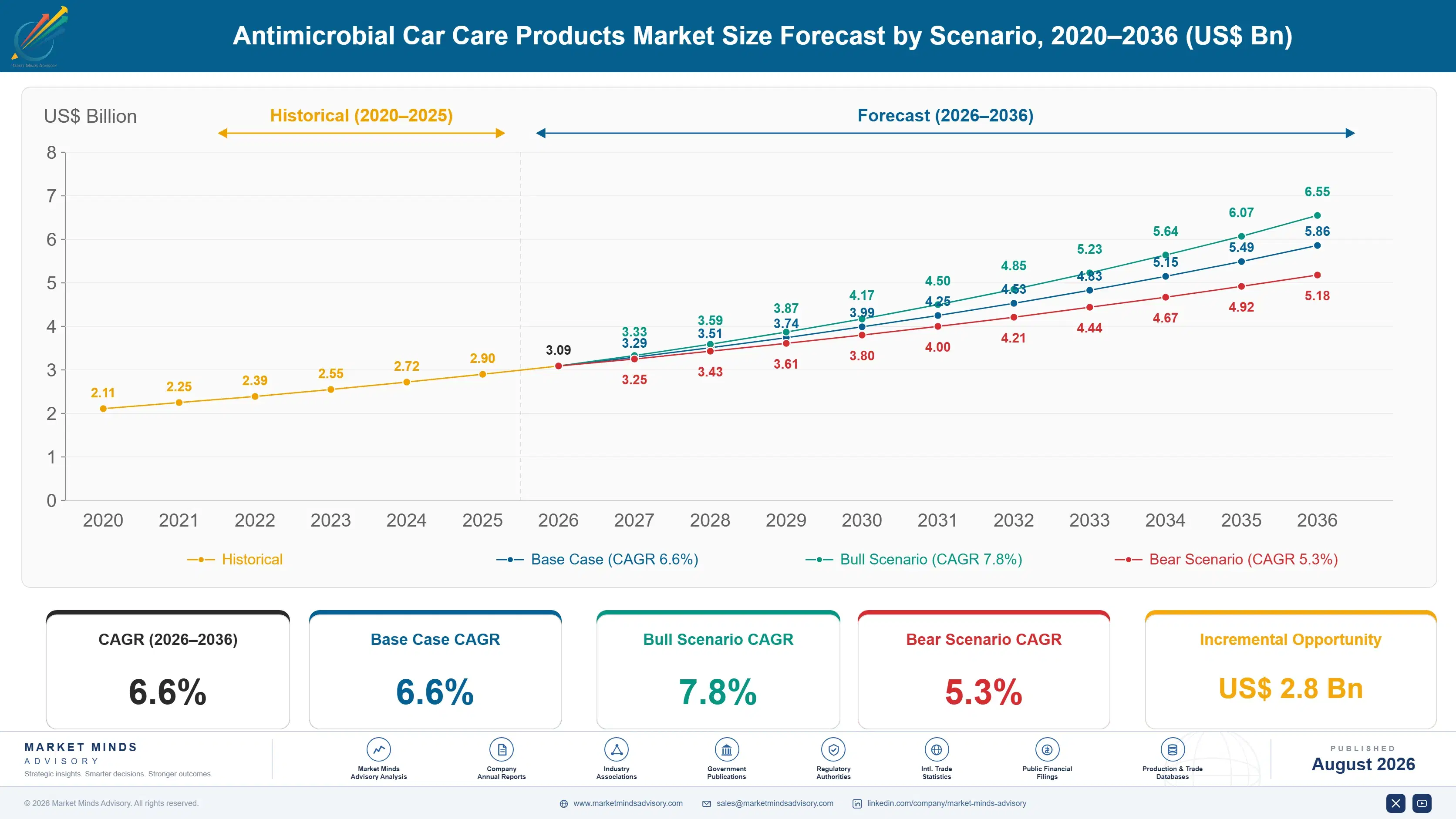
Antimicrobial Car Care Products Market Forecast Scenarios

antimicrobial-car-care-products-market-size-forecast-scenario-1787300073558
Between 2020 and 2025 the market grew at a historical pace of 5.6 percent as pandemic-driven hygiene awareness created an initial surge in aftermarket sanitization purchases, a wave that partially receded once acute health concerns eased but left behind durably higher baseline consumer expectations around cabin cleanliness that the category has continued building on since.
The base case rests on three commercial mechanisms holding together over the decade: automakers increasingly specifying antimicrobial material additives directly into new vehicle production rather than leaving cabin hygiene entirely to aftermarket purchase decisions, rental and ride-share fleet operators standardizing sanitization protocols as a competitive service differentiator across their platforms, and rising consumer awareness of in-cabin air quality driving premium cabin air filter adoption across both new and aftermarket vehicle segments.
A bull scenario hinges on a majority of global automakers adopting antimicrobial material specifications as standard equipment ahead of current industry timelines, pulling forward OEM additive demand considerably. The bear case centers on aftermarket consumer spending reverting closer to pre-pandemic hygiene awareness levels faster than OEM adoption can offset the resulting revenue gap across the broader category.

From Seasonal Detailing Add-On to Cabin Specification

Three forces are converging on this category at once: a broad aftermarket detailing base that still anchors the largest unit volume, a fast-scaling OEM specification channel that pays materially higher prices per treated component, and a rental and ride-share fleet segment that has turned cabin hygiene into a visible competitive service differentiator rather than a background maintenance task.
MARKET CONCENTRATIONCR5 35%top five manufacturers hold barely a third of total revenue
AVERAGE UNIT PRICE$14/unitblended average selling price across all product formats sold
LEADING PRODUCING COUNTRYChina, 24% sharelargest single-country demand base by vehicle production volume
OEM ADOPTION SHARE23% of revenueproportion of category revenue tied to original equipment specification
ANTIMICROBIAL EFFICACY LIFE6 to 24 monthstypical rated protection duration before treatment reapplication needed
ACTIVE INGREDIENT COST SHARE26% of COGSsilver ion and quaternary compound proportion of goods sold
Commercially, the market increasingly splits along buyer sophistication rather than pure product-class lines. Individual consumers still purchase largely on brand recognition and price point at retail, while automakers and fleet operators evaluate suppliers on certified antimicrobial efficacy data, material durability testing, and documented compliance with automotive interior air quality standards far more heavily than brand history alone.
Over the next decade, certification speed against evolving automotive interior standards will matter as much as raw manufacturing scale. Suppliers who move fastest through OEM supplier qualification and efficacy certification testing will capture a disproportionate share of the fastest-growing embedded additive and cabin filter order categories before the broader aftermarket-only supplier base can catch up.
"This category used to live in the detailing aisle next to the wax. The fastest-growing piece of it now lives inside the injection mold, which is a completely different sales conversation with a completely different buyer."
Director, Automotive Aftermarket and OEM Practice · MMA Automotive Aftermarket a

Market Trends

Automakers Embed Antimicrobial Additives Into Interior Parts

Automakers are increasingly specifying antimicrobial masterbatch additives directly into the resin used for injection-molded interior components such as door handles, steering wheels, and dashboard touchpoints, rather than relying on aftermarket surface sprays applied after vehicle delivery. This shift is most pronounced among electric vehicle manufacturers positioning cabin hygiene and air quality as headline comfort features distinguishing their vehicles from internal combustion competitors. Suppliers report OEM qualification testing cycles of twelve to eighteen months per material formulation, a qualification bottleneck that increasingly favors manufacturers with dedicated automotive-grade testing capability over consumer-products suppliers attempting to enter the category without automotive experience.
Market Impact: Grows OEM demand 1.5x faster
Ride-Share and Rental Fleets Standardize Sanitization Protocols

Major ride-share platforms and rental car companies have formalized cabin sanitization protocols as part of their standard vehicle turnaround procedures, a shift that began during the pandemic period but has persisted as a competitive service standard rather than reverting to prior practice once acute health concerns eased. These fleet operators increasingly specify certified antimicrobial products with documented efficacy data rather than accepting generic cleaning chemicals, creating a distinct institutional demand channel separate from consumer purchasing behavior. Fleet contracts typically run three to five years once awarded, rewarding suppliers who invest early in fleet-specific formulations over competitors focused solely on individual retail consumers.
Market Impact: 45% now seek antimicrobial labels

Market Opportunities and Growth Drivers

Electric Vehicle Growth Elevates Cabin Air Quality Standards

Electric vehicle manufacturers are increasingly marketing cabin air filtration and antimicrobial treatment as premium comfort features, a positioning strategy that differs meaningfully from how internal combustion vehicle makers historically treated cabin air quality as a secondary specification. Global electric vehicle production has continued climbing across major manufacturing regions, and each new electric vehicle platform represents an incremental opportunity for suppliers to win embedded antimicrobial specification during the vehicle's initial design phase rather than retrofitting an existing platform. This dynamic is expanding the addressable OEM market roughly 1.5 times faster than overall vehicle production growth alone would suggest.
Market Impact: Adds costs across 100% of claims

Rising Consumer Health Awareness Sustains Retail Demand

Consumer awareness of in-cabin air quality and surface hygiene has remained durably elevated since the pandemic period, sustaining aftermarket retail demand for antimicrobial sprays, wipes, and cabin air filter upgrades well above pre-pandemic baseline purchasing levels across most major markets tracked. Roughly 45 percent of consumers surveyed in developed automotive markets now report actively seeking antimicrobial-labeled products when purchasing car care items, according to industry consumer research, a meaningfully higher share than before the pandemic reshaped hygiene expectations broadly. This sustained awareness is also lifting willingness to pay a price premium for certified antimicrobial claims over unverified generic alternatives.
Market Impact: Swings active ingredient costs over 20%

Market Restraints and Challenges

Efficacy Claim Scrutiny Raises Regulatory Compliance Costs

Regulatory agencies across major markets have increased scrutiny of antimicrobial efficacy claims following a wave of pandemic-era products making unsubstantiated protection claims, requiring manufacturers to support marketing language with documented laboratory testing data rather than general assertions. The root cause is a legitimate consumer protection response to widespread overclaiming that emerged when hygiene product demand spiked rapidly during the pandemic period. The commercial impact is materially higher compliance and testing costs for manufacturers seeking to make efficacy claims, a burden disproportionately affecting smaller suppliers lacking dedicated regulatory affairs capability. Manufacturers mitigate this through third-party certification partnerships and more conservative marketing language.
Market Impact: Ties 23% of revenue to OEM

Active Ingredient Price Volatility Squeezes Margins

Silver ion and quaternary ammonium compound prices, the primary active ingredients underlying most antimicrobial car care formulations, have swung noticeably over the past several years amid raw material supply disruptions and rising demand from adjacent antimicrobial categories competing for the same specialty chemical supply base. The root cause is a relatively concentrated global supplier base for these specialty actives, which cannot flex capacity quickly when demand spikes simultaneously across multiple end-use industries beyond automotive. The commercial impact shows up in periodic cost pass-through and compressed margins during the tightest supply quarters. Manufacturers mitigate exposure through longer-term supply agreements and formulation diversification.
Market Impact: Locks in 3 to 5 year contracts
3 additional market trends, 3 additional growth drivers, and 4 additional restraints and challenges are covered in the full report. Contact sales@marketmindsadvisory.com to access the complete intelligence.

Segment CAGR and Growth Architecture

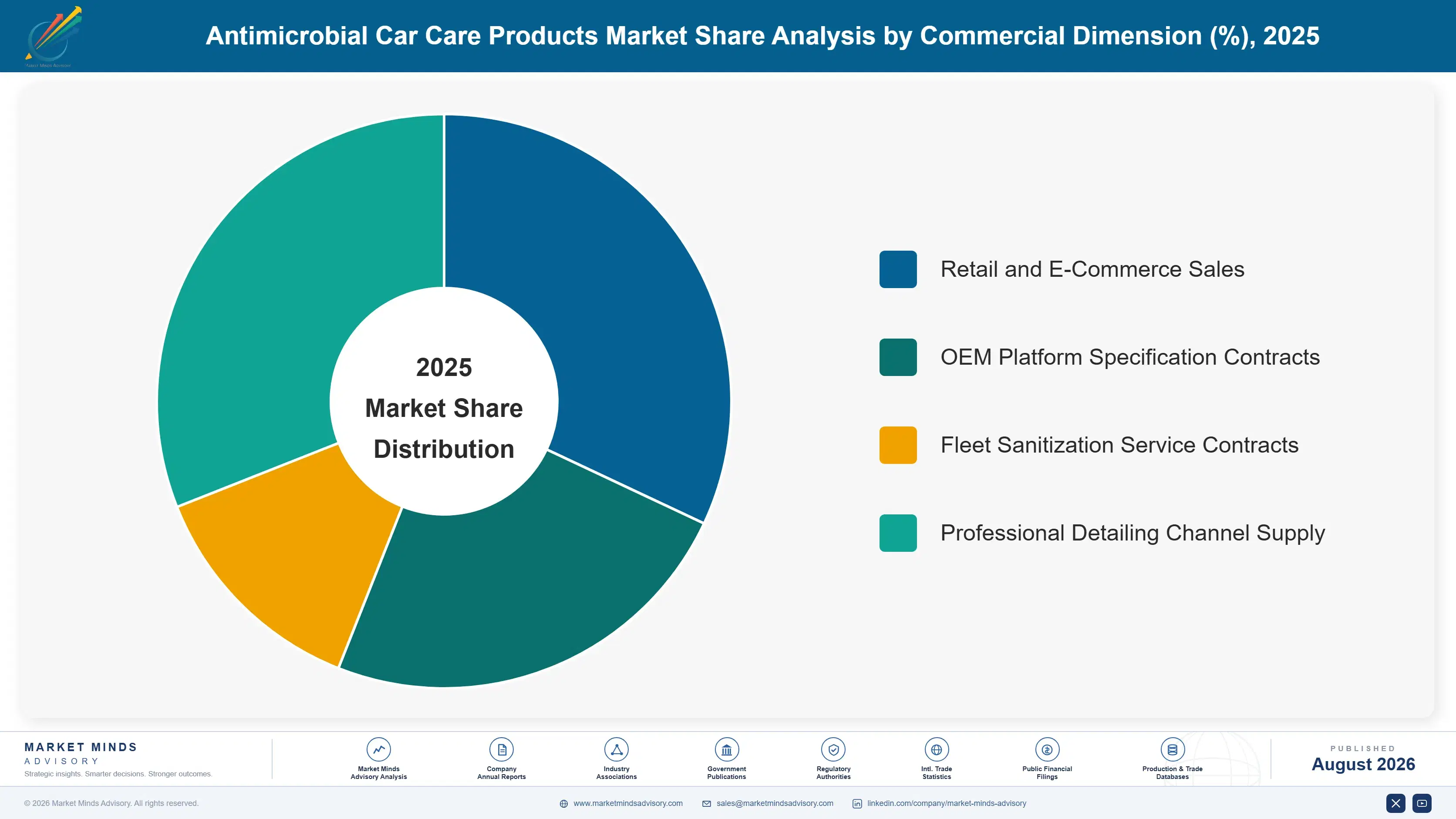
Segmentation follows product format and application method, the dimension automakers, fleet operators, and consumers use to select antimicrobial treatment for a given cabin surface or air quality requirement across this market. OEM material additives are treated as a distinct category given their embedded manufacturing integration relative to aftermarket-applied formats sold separately at retail.
antimicrobial-car-care-products-market-market-share-analysis-1787300074089

Antimicrobial OEM Material Additives

OEM material additives are the fastest-growing product category, consisting of antimicrobial masterbatch compounds blended directly into the resin used for injection-molded interior components during vehicle manufacturing rather than applied afterward as a surface treatment. This embedded approach delivers protection that lasts the vehicle's full service life rather than requiring periodic reapplication, a durability advantage automakers increasingly value as cabin hygiene becomes a marketed comfort feature. Demand concentrates among automakers and their tier-one interior component suppliers rather than individual consumers, who have no direct purchasing relationship with this segment. Suppliers with automotive-grade material testing capability are winning a disproportionate share of new platform specifications, since qualification cycles of twelve to eighteen months create meaningful switching costs once locked in.
CAGR 12.5%

Antimicrobial Cabin Air Filters

Cabin air filters treated with antimicrobial coatings form the second-fastest-growing category, capturing rising consumer and automaker interest in in-cabin air quality as a marketed vehicle feature rather than a purely functional component. Electric vehicle manufacturers in particular have positioned advanced cabin air filtration as a premium comfort differentiator, often marketing filtration and antimicrobial protection together as a combined system rather than separate specifications sold independently. Growth tracks both new vehicle production, where filters increasingly ship as OEM-specified components, and a growing aftermarket replacement cycle as consumers seek antimicrobial-rated upgrades over standard filters. Suppliers with automotive filtration engineering heritage hold a meaningful advantage over general antimicrobial companies entering this more technically demanding segment.
CAGR 9.8%
Full segment breakdown across 6 segments available in the complete report.

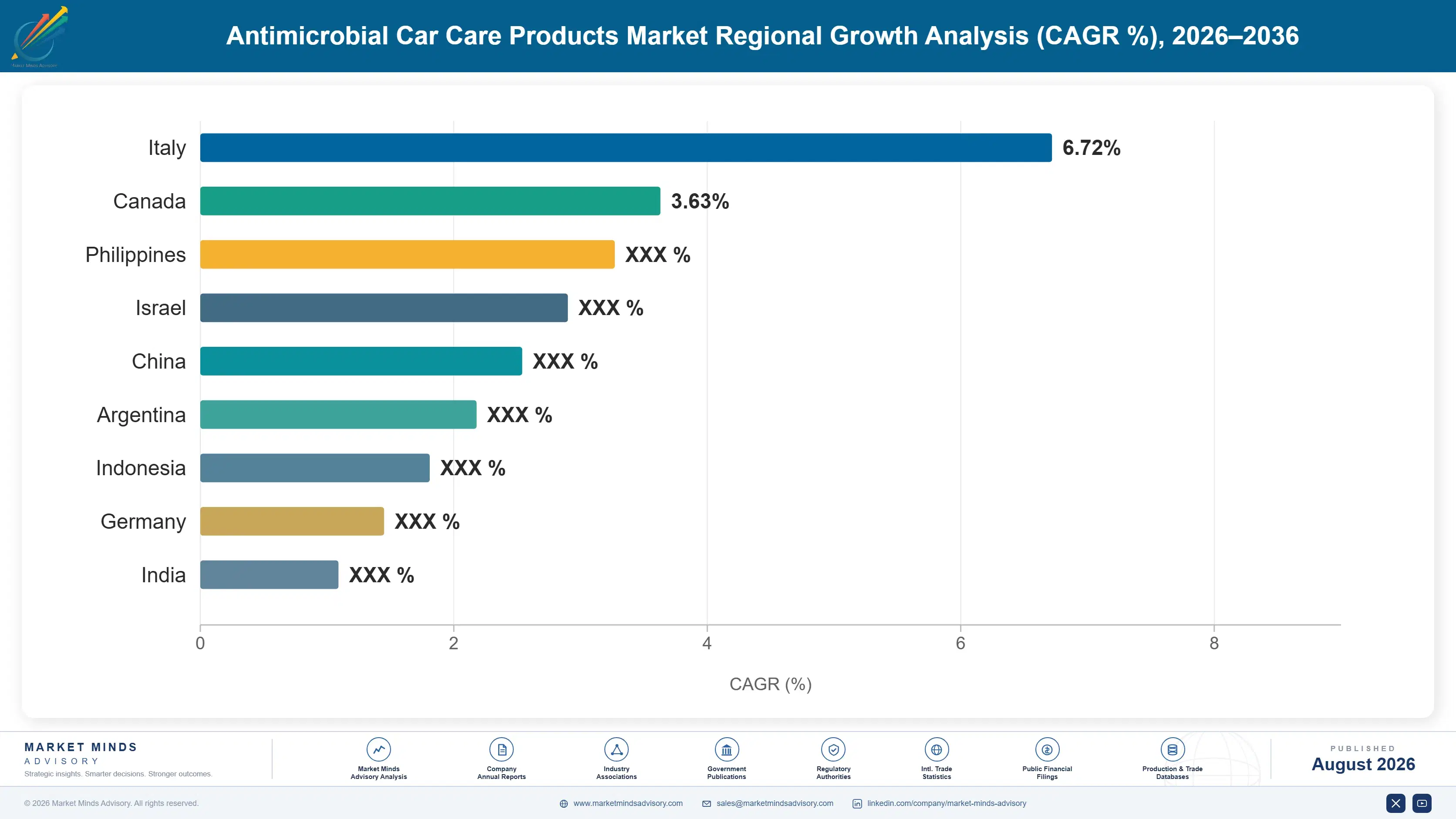
Regional Architecture and Country Demand Map

East Asia leads on vehicle production scale and rapidly expanding electric vehicle output, North America follows closely on established aftermarket retail culture and fleet hygiene standards, and South Asia and Pacific is the fastest-growing region on rising vehicle ownership rates.

North America

The United States carries the region's largest demand base, sustained by an established aftermarket detailing culture alongside a rapidly growing OEM channel as domestic and foreign automakers embed antimicrobial additives into new vehicle interiors sold nationwide. Major ride-share and rental fleet operators headquartered in the country have formalized cabin sanitization standards specifying certified antimicrobial products over generic cleaning chemicals across their fleets. Canada's market mirrors similar trends at smaller scale given its smaller vehicle parc. Mexico's growing manufacturing base, supported by nearshoring investment, is attracting OEM component supply relationships tied to export vehicles.
Share: 24% | CAGR: 6.0% (2026 to 2036)

Western Europe

Germany anchors the region's OEM demand, home to several major automakers who have moved earliest among global manufacturers to specify antimicrobial material additives across premium vehicle interior components sold across their extensive dealer networks. France and the United Kingdom both sustain meaningful aftermarket retail demand tied to established car care culture, though OEM adoption trails Germany's premium manufacturer base somewhat. The Netherlands and broader Benelux region show comparatively high per-capita ride-share penetration, sustaining fleet-driven institutional demand for certified sanitization products distinct from individual consumer retail purchases. Nordic countries demonstrate strong consumer awareness of air quality and hygiene product claims, supporting premium positioning for certified antimicrobial products over unverified generic alternatives across retail channels.
Share: 19% | CAGR: 5.1% (2026 to 2036)
Regional intelligence for 5 additional markets available in the complete report: East Asia, South Asia and Pacific, Latin America, Middle East and Africa, Eastern Europe. Contact sales@marketmindsadvisory.com.
antimicrobial-car-care-products-market-country-cagr-analysis-1787300074596

Where Suppliers Can Defend Category Margin

As generic aftermarket pricing compresses under private-label competition, suppliers are shifting commercial strategy toward OEM qualification investment, fleet contract relationships, and certified efficacy positioning to defend margin across the category's fastest-growing customer segments over time.

Pursue OEM Material Qualification Ahead of Competitors

Manufacturers who complete automotive-grade material testing and OEM supplier qualification ahead of competitors are winning a disproportionate share of new vehicle platform specifications, since automakers strongly prefer already-qualified suppliers over unproven formulations given the safety and durability stakes of interior components. Suppliers with completed OEM qualification report platform win rates roughly 3x higher than unqualified competitors bidding the same opportunities across manufacturers. This lever requires meaningful upfront investment in automotive-grade testing infrastructure but converts into a durable, multi-year revenue relationship considerably more predictable than aftermarket retail demand tied to discretionary consumer spending patterns.
Market Impact: Triples OEM platform win rate to 3x

Build Dedicated Fleet Sanitization Contract Programs

Suppliers offering fleet-specific product formulations, volume pricing structures, and documented efficacy data tailored to rental and ride-share operator requirements are winning multi-year fleet contracts that guarantee order volume well beyond what individual consumer retail sales ever reliably delivered on their own. Manufacturers with dedicated fleet sales teams report contract renewal rates exceeding 80 percent once an initial fleet relationship is established and performance data accumulates over time. This lever converts a historically transactional retail category into a more predictable institutional revenue relationship that smaller undifferentiated competitors struggle to match without comparable fleet-specific investment.
Market Impact: Lifts fleet contract renewal above 80 percent

Invest In Third-Party Antimicrobial Certification

Manufacturers who secure independent third-party antimicrobial efficacy certification are differentiating their products from a crowded field of unverified competitors, particularly important given increased regulatory scrutiny of unsubstantiated hygiene claims following the pandemic era's wave of overclaiming across the broader industry. Certified products command retail price premiums of roughly 25 to 35 percent over uncertified generic alternatives making similar but unverified antimicrobial claims. This lever requires meaningful upfront testing investment but builds durable consumer and institutional buyer trust that unverified competitors cannot easily replicate without matching certification investment of their own.
Market Impact: Commands a 25 to 35 percent price premium

Expand Electric Vehicle OEM Design Partnerships Early

Suppliers who establish design-stage partnerships with electric vehicle manufacturers, rather than waiting until a platform's interior specifications are finalized, are positioning themselves to win embedded antimicrobial specification as a marketed comfort feature from a vehicle's initial concept phase forward. Suppliers with early electric vehicle design partnerships have won meaningfully larger shares of new platform contracts, in several cases exceeding 40 percent of a given manufacturer's total antimicrobial component specification. This lever requires patient multi-year investment ahead of confirmed production volume but delivers outsized returns once platforms reach full manufacturing scale across global markets.
Market Impact: Wins over 40% of new EV platform specs

Who Controls the Margin Pool

The top five manufacturers hold roughly 35 percent of revenue on a company-revenue basis, among the more fragmented structures in this report, reflecting how many regional detailing brands and private-label retailers still compete successfully for aftermarket retail share even as OEM specification concentrates among a narrower set of qualified suppliers. The gap between 3M and Microban International, the two largest players, and the broader field remains meaningful but not overwhelming.
Current competitive activity centers on three fronts: OEM material qualification races to secure embedded specification on new vehicle platforms, fleet contract relationships designed to build recurring institutional revenue, and third-party efficacy certification programs intended to differentiate products from unverified competitors in a crowded retail field.

Pressure is building from Asian specialty chemical manufacturers, particularly in China and South Korea, who are moving up the value chain from generic active ingredient supply into branded finished antimicrobial products sold directly to both automakers and retail consumers. Several have already won domestic OEM reference qualifications, evidence that could accelerate their move into higher-margin certified segments faster than Western incumbents currently expect.
antimicrobial-car-care-products-market-company-positioning-matrix-1787300075118

Competitive Moat and Risk Dimensions

3M COMPANY

Moat: Materials Science and OEM Relationships

3M's broad materials science capability and existing automotive OEM relationships across other product categories give it a qualification advantage and cross-selling opportunity that narrower antimicrobial-only competitors cannot easily match across as many automaker accounts and platforms simultaneously.
3M COMPANY

Risk: Small Portfolio Piece

Antimicrobial car care represents a comparatively small piece of 3M's overall diversified portfolio, meaning it may receive less dedicated management attention and capital priority than it would within a company more singularly focused on this category's fastest-growing advanced opportunities.
MICROBAN INTERNATIONAL

Moat: Deepest Antimicrobial Technology Licensing

Microban International's core business is licensing antimicrobial technology across many industries, giving it deeper formulation expertise and a broader base of efficacy testing data than automotive-focused competitors who treat antimicrobial chemistry as a secondary specialization within a much larger product portfolio overall.
MICROBAN INTERNATIONAL

Risk: Limited Direct Automotive Manufacturing Scale

Microban International licenses its technology to manufacturing partners rather than producing finished automotive products directly, leaving it more dependent on partner execution quality and less able to capture full margin compared with vertically integrated automotive materials competitors selling direct.

Players Tracked

Prominent Players

3M Company
Armor All (Energizer Holdings)
Microban International
BASF SE
MANN+HUMMEL

Other Key Players

Turtle Wax Inc.
Chemical Guys
Rain-X (Illinois Tool Works)
Mothers Polish Inc.
Griot's Garage
Sanitized AG
PPG Industries Inc.
Akzo Nobel N.V.
Milliken & Company
Clariant AG
Lanxess AG
DuPont de Nemours Inc.
Honeywell International Inc.
Mahle GmbH
Freudenberg Group

Recent Developments

FEBRUARY 2025

3M Launches Next-Generation Antimicrobial Cabin Air Filter Technology

3M introduced an updated antimicrobial cabin air filter media technology, an organic product launch rather than an acquisition or partnership, designed to extend protection duration and improve filtration efficiency for both OEM and aftermarket replacement channels across multiple global vehicle platforms.
Signal: Diversified materials manufacturers are increasingly investing organic research spending directly into cabin air quality technology.
JUNE 2025

Microban International Signs Licensing Agreement With Tier-One Interior Supplier

Microban International signed a technology licensing agreement, not an acquisition or joint venture, with a major tier-one automotive interior component supplier to embed its antimicrobial technology across multiple upcoming vehicle interior programs spanning several automaker customers globally.
Signal: Antimicrobial technology licensing is increasingly becoming the preferred route to scale across multiple automaker platforms.
NOVEMBER 2025

MANN+HUMMEL Acquires Specialty Antimicrobial Filtration Technology Company

MANN+HUMMEL completed the acquisition of a specialty antimicrobial filtration technology company, adding proprietary coating capability rather than continuing to license antimicrobial treatment technology from third-party suppliers for its global cabin air filter product lines going forward.
Signal: Established filtration manufacturers are increasingly acquiring antimicrobial technology to reduce third-party licensing dependence.

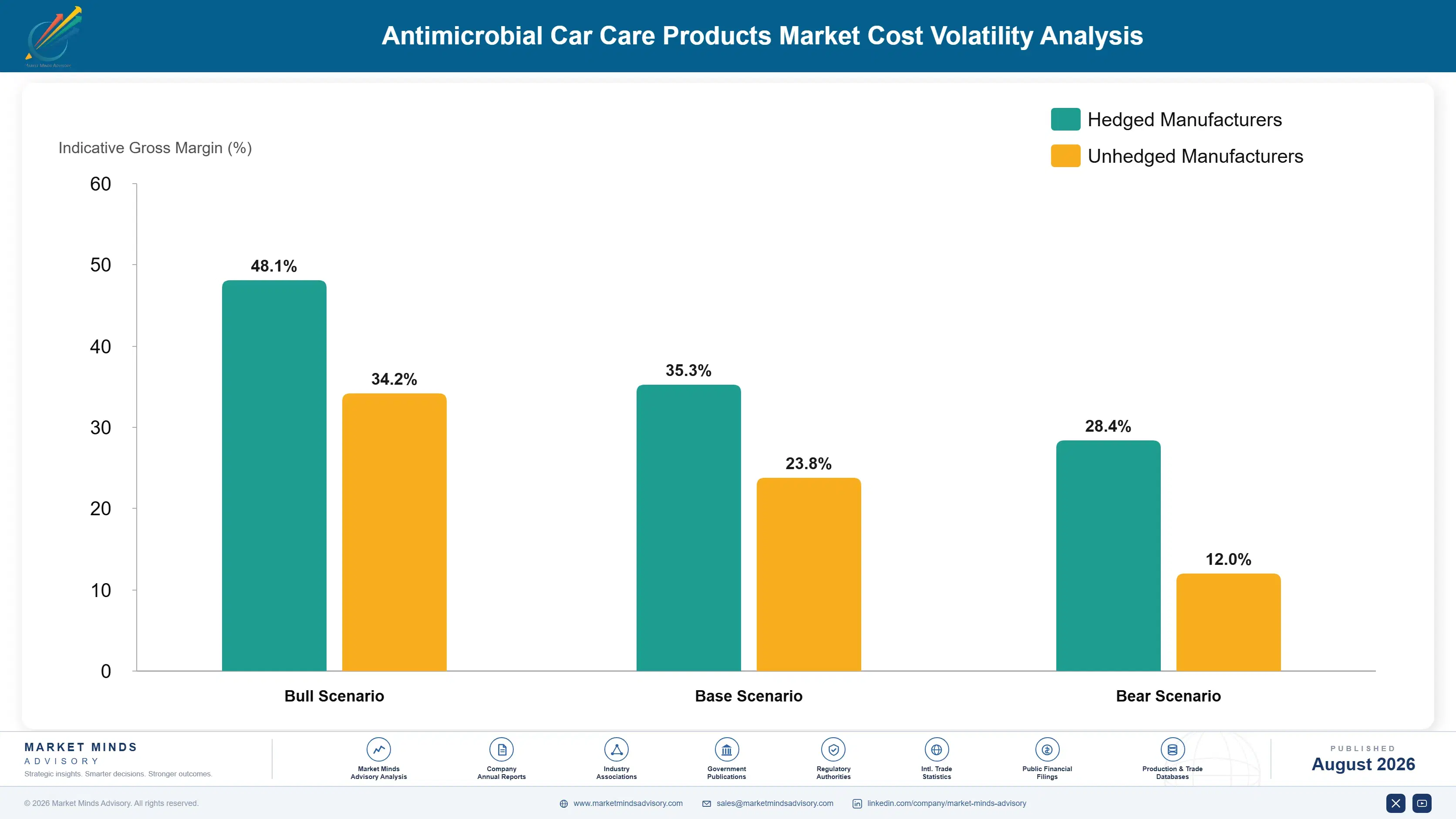
Silver Ion and Specialty Active Exposure

Silver ion and quaternary ammonium compound active ingredients together account for roughly 26 percent of cost of goods sold across the category, with carrier formulation chemicals, packaging, and manufacturing labor making up most of the remainder. Silver ion supply concentrates among a relatively small number of specialty chemical producers serving antimicrobial applications across multiple industries beyond automotive alone.
Silver commodity prices rose sharply during 2023 and 2024 amid investment demand and industrial supply tightness, a period the United States Energy Information Administration's broader industrial materials commentary flagged alongside other metals experiencing unusual volatility during the same window across sectors. Several smaller antimicrobial product manufacturers disclosed margin compression in the period directly attributable to rising silver ion input costs relative to prior years.

Exposure varies by company scale and formulation approach. Larger diversified manufacturers with long-term active ingredient supply agreements or formulations using lower silver-content alternatives absorbed the volatility with comparatively limited disruption, while smaller specialists reliant entirely on spot-market silver ion purchasing faced sharper cost swings that occasionally opened share for better-hedged or alternative-chemistry competitors during the tightest supply quarters.
antimicrobial-car-care-products-market-cost-volatility-analysis-1787300075312

Diversify Toward Quaternary and Copper-Based Actives

Manufacturers are increasingly formulating with quaternary ammonium compounds and copper-based antimicrobial actives as partial substitutes for silver ion technology, reducing dependence on a single volatile commodity input while maintaining comparable efficacy performance across most cabin surface applications tested.

Secure Long-Term Active Ingredient Supply Agreements

Several of the largest suppliers have signed multi-year fixed-volume agreements directly with specialty chemical producers, trading some pricing flexibility for meaningfully greater supply certainty during periods of tight global silver and quaternary compound production capacity across the industry.

Optimize Formulation Concentration Without Losing Efficacy

Manufacturers are investing in formulation research to reduce active ingredient concentration per unit while maintaining certified efficacy performance, lowering per-unit material cost exposure without compromising the antimicrobial protection claims customers and regulators require across markets.

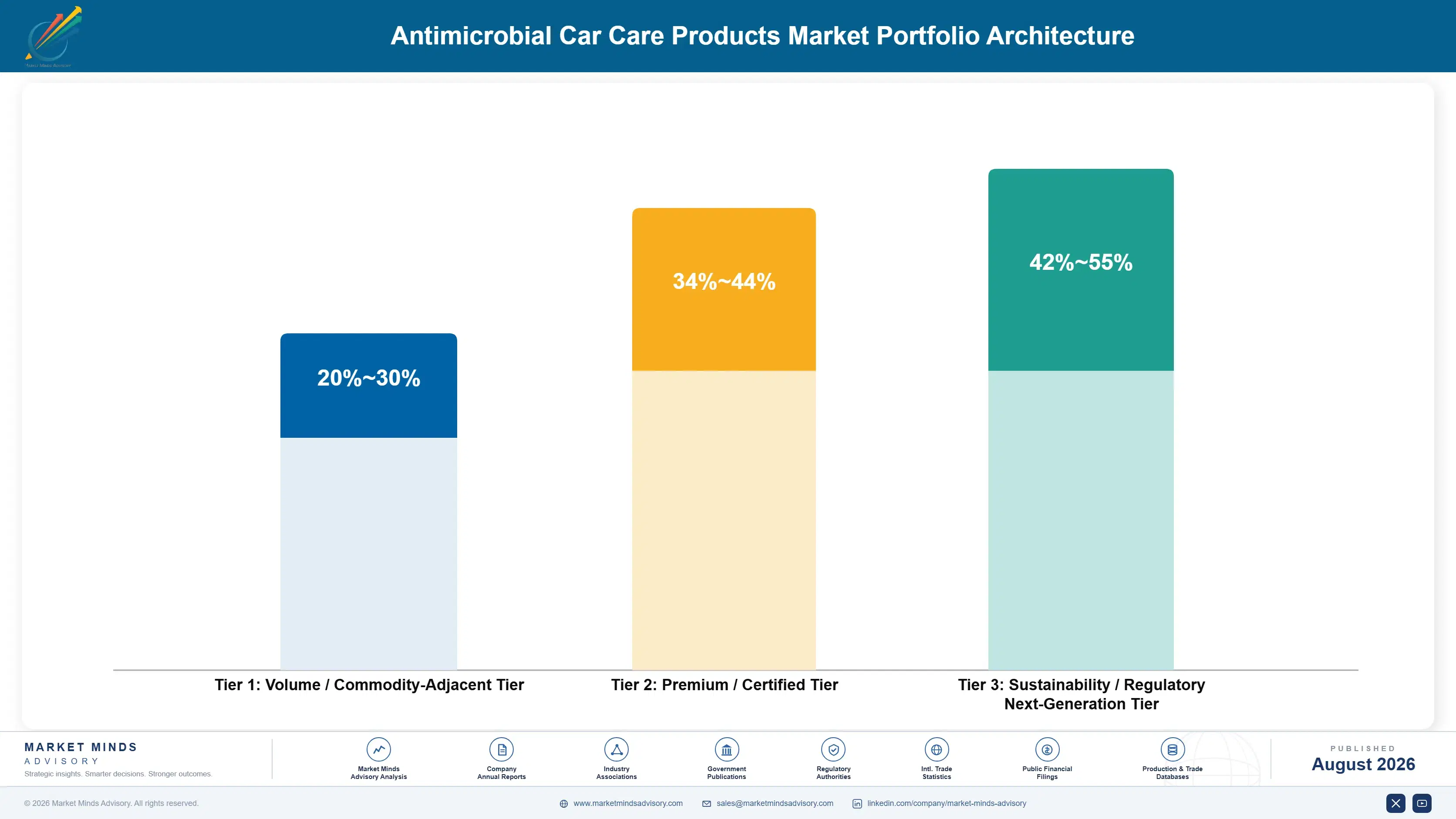
Portfolio Architecture for Margin Defence

The market splits into three commercial tiers with distinct margin economics. Generic aftermarket sprays and wipes compete largely on price and retail shelf presence, certified efficacy-tested products carry meaningfully higher margin on documented antimicrobial performance, and embedded OEM material additives command the highest margin given their narrow qualified supplier base and multi-year platform relationships.
The tension between volume and premium positioning shapes how manufacturers allocate certification and qualification investment: generic aftermarket products still represent the largest unit volume by a wide margin, but nearly all incremental profit growth over the forecast period concentrates in OEM additives and certified premium formats, which is where the leading suppliers increasingly direct research and qualification spending.

High-value margin pools concentrate specifically in OEM material additives during their current qualification-advantage window and in fleet-contracted sanitization products with documented efficacy data. Both pools reward manufacturers who invest ahead of demand in certification and qualification rather than those who wait for institutional and OEM channels to mature before committing capital.

Volume / Commodity-Adjacent Tier

Generic aftermarket sprays, wipes, and private-label cleaning products sold largely on price and retail shelf placement across mass-market automotive channels worldwide today.
Gross Margin: 20-30%

Premium / Certified Tier

Third-party efficacy-certified sprays, coatings, and fleet-contracted sanitization products commanding meaningful premiums tied directly to documented antimicrobial performance data and testing.
Gross Margin: 34-44%

Sustainability / Regulatory / Next-Generation Tier

Embedded OEM material additives and premium cabin air filtration systems, carrying the category's highest margins given the narrow qualified supplier base serving automakers directly today.
Gross Margin: 42-55%
antimicrobial-car-care-products-market-portfolio-architecture-1787300075808

High-value Sub-segments and Strategic Watch-out

Antimicrobial OEM Material Additives

Highest current margin and fastest volume growth in the category, constrained mainly by lengthy OEM qualification cycles and the small number of suppliers with automotive-grade testing capability today across the industry.
Gross Margin: 44-55%

Antimicrobial Cabin Air Filters

Steady high-value growth tracking electric vehicle production and rising consumer air quality awareness closely, increasingly favoring suppliers with automotive filtration engineering heritage over newer entrants lacking it.
Gross Margin: 34-44%

Generic Aftermarket Sprays and Wipes

The volume core of the market by unit count, competing primarily on price and retail shelf presence rather than deep technical differentiation between competing product formulations sold.
Gross Margin: 20-28%

Unverified Marketplace Antimicrobial Claims

A strategic watch-out segment as regulatory scrutiny and consumer skepticism toward unsubstantiated efficacy claims threaten a substantial share of currently marketed generic antimicrobial products across retail channels.
Gross Margin: 14-24%

Retail Purchase Meets OEM Platform Lock-In

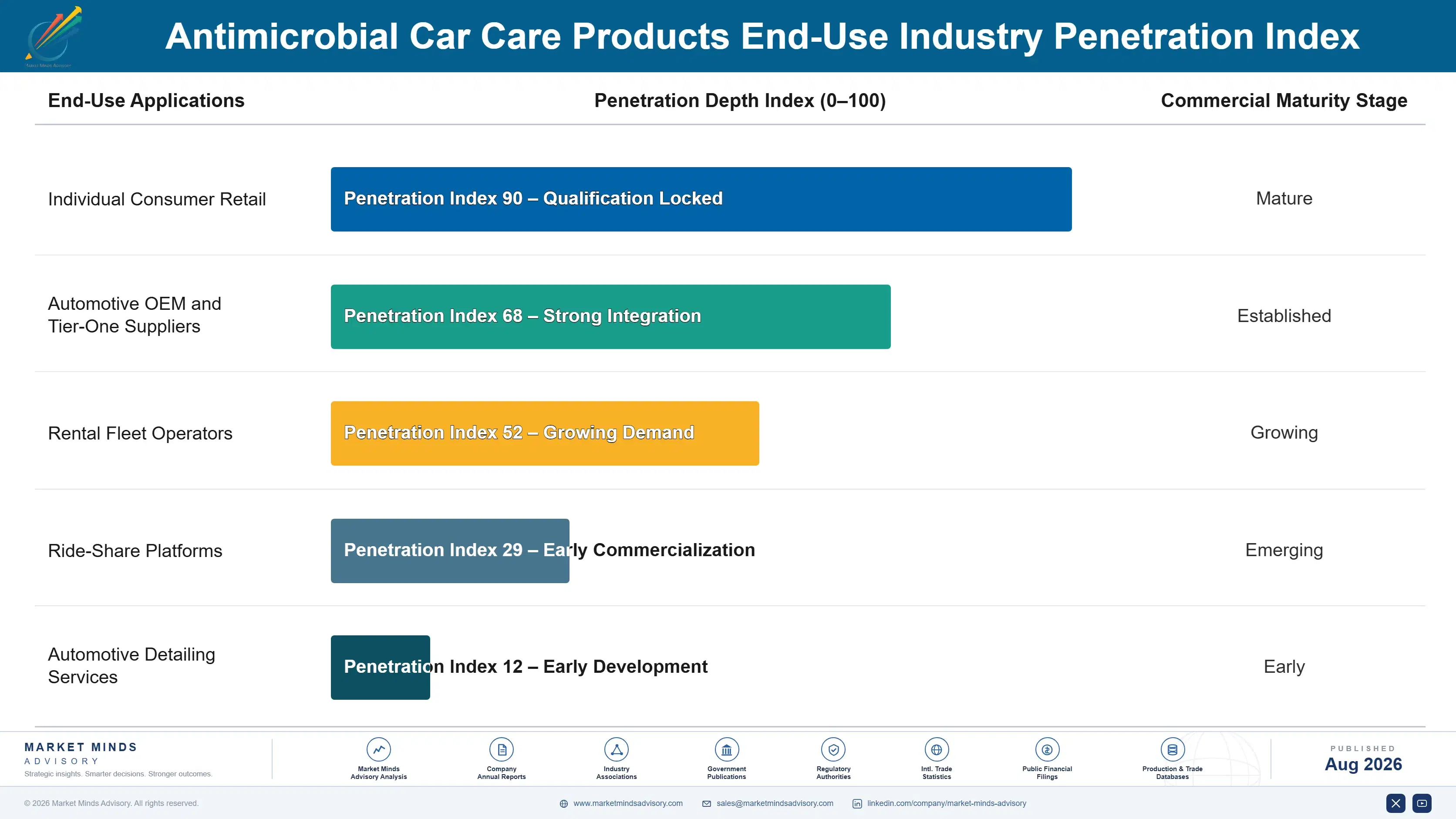
Aftermarket antimicrobial car care has historically behaved as a transactional, price-sensitive retail purchase with essentially no switching costs, but the OEM specification segment is shifting toward a far stickier model as automakers require lengthy material qualification processes that create durable, multi-year purchasing relationships once a supplier's additive formulation is locked into an approved vehicle platform materials list.
Adoption depth varies sharply by end-use vertical. Automakers and their tier-one suppliers show the deepest qualification lock-in given the cost and complexity of requalifying a new material formulation mid-program, individual retail consumers remain far more transactional and price-driven at point of purchase, and fleet operators sit between the two, constrained by contract renewal cycles but showing meaningfully higher retention once an initial relationship proves reliable.

A generational shift in buyer profile is underway as automotive interior design teams increasingly include dedicated material science and hygiene specialists rather than pure cost-focused purchasing agents trained under an older sourcing model. Fleet procurement teams are also increasingly staffed by operations specialists who evaluate total sanitization program value rather than simply comparing per-unit product pricing between competing suppliers.
antimicrobial-car-care-products-market-end-use-penetration-index-1787300076297

Where This Market Goes Next

These are among the four positions where our research anticipates prominent divergence between winners and laggards over the coming forecast period. Each is grounded in the demand model, the regulatory perimeter, and the announced capacity pipeline.
01 / OEM QUALIFICATION SPEED

Early-qualified suppliers will lock in a durable platform lead

OEM material qualification increasingly determines which suppliers win embedded antimicrobial specification, because automakers strongly prefer already-qualified formulations over unproven alternatives given the durability and safety stakes involved in interior components. Manufacturers still pursuing qualification are already missing early electric vehicle platform design cycles at several major automakers actively finalizing their material specifications. This gap should widen rather than narrow as qualified suppliers accumulate reference platforms that unqualified competitors cannot replicate quickly regardless of how much capital they eventually commit to catching up.
02 / FLEET CONTRACT RETENTION

Fleet relationships are becoming the category's stickiest revenue

Rental and ride-share fleet operators increasingly standardize sanitization protocols around certified suppliers rather than sourcing opportunistically, because consistent product performance across a large vehicle fleet reduces operational complexity and customer complaint risk considerably. Suppliers with dedicated fleet sales programs are already reporting renewal rates well above what individual consumer retail relationships ever reliably delivered on their own. Manufacturers who delay building dedicated fleet capability risk losing this increasingly important institutional channel to competitors who invested earlier in fleet-specific formulations and pricing structures.
03 / EFFICACY CERTIFICATION INVESTMENT

Certified claims are becoming a prerequisite, not a differentiator

Regulatory scrutiny of antimicrobial efficacy claims has risen sharply since the pandemic era's wave of unsubstantiated marketing, making third-party certification an increasingly necessary cost of doing business rather than a purely optional premium positioning choice for ambitious suppliers. Manufacturers without certified efficacy data risk losing retail shelf space and institutional contract eligibility as buyers grow more skeptical of unverified claims across the broader category. This dynamic should continue compressing margins for uncertified competitors while certified suppliers maintain meaningfully stronger pricing power across most channels.
04 / ELECTRIC VEHICLE DESIGN PARTNERSHIPS

Early EV design-stage partnerships are winning outsized specification share

Electric vehicle manufacturers are treating antimicrobial cabin treatment as a marketed comfort feature from a platform's initial concept phase, rewarding suppliers who establish design-stage partnerships well before interior specifications are finalized and locked into production tooling. Suppliers with early partnerships are already winning meaningfully larger shares of new platform contracts than competitors waiting for formal request-for-proposal processes to begin. Manufacturers weighing this investment against nearer-term aftermarket retail spending should recognize that OEM contracts, once won, typically deliver multi-year revenue visibility retail demand simply cannot match.

Engagement Snapshot From the Field

A live engagement with an industry participant carrying material or product regulatory and market exposure ahead of a defining policy shift, showing how our research translates into a defensible multi-year portfolio strategy.
MARKET MINDS ADVISORY · CLIENT ENGAGEMENT SUMMARY
Antimicrobial Car Care Products Producer Strategic Portfolio Review and Transition Roadmap 2026·Investment Scenario on Antimicrobial Car Care Products Exposure Evaluation 2025-26
CLIENT PROFILE
The client is a regional ride-share platform operating a managed fleet of several thousand vehicles across multiple metropolitan markets, processing millions of passenger trips annually (client-reported, unverified by MMA) across its full service area. The platform historically left cabin sanitization largely to individual driver discretion, resulting in inconsistent hygiene standards across its fleet and periodic passenger complaints filed through the app.
STRATEGIC CHALLENGE
Passenger satisfaction survey data showed cabin cleanliness as a recurring complaint category, and leadership suspected inconsistent sanitization practices were undermining the platform's broader premium service positioning relative to competing ride-share operators active in the same regional markets today.
MMA APPROACH
MMA benchmarked the platform's sanitization practices against leading competitors, evaluated certified antimicrobial product options against fleet-specific durability and cost requirements, and modeled the passenger satisfaction and cost impact of standardizing around a mandatory certified sanitization protocol across the entire managed vehicle fleet.
KEY FINDINGS
  1. Cabin cleanliness complaints represented roughly 18 percent of all passenger service complaints, the single largest complaint category identified across the platform's survey data.
  2. Standardizing around certified antimicrobial products was modeled to reduce complaint volume by an estimated 35 percent based on comparable fleet operator benchmarks reviewed during the engagement.
  3. Mandatory protocol compliance required driver incentive restructuring, since voluntary compliance under the platform's prior policy had reached only an estimated 40 percent of the total managed fleet.
  4. Fleet-wide certified product costs were modeled at roughly 2 dollars per vehicle turnaround, a modest incremental cost relative to the projected satisfaction and retention improvement (client-reported, unverified by MMA).
CLIENT PROFILE
The client is a regional ride-share platform operating a managed fleet of several thousand vehicles across multiple metropolitan markets, processing millions of passenger trips annually (client-reported, unverified by MMA) across its full service area. The platform historically left cabin sanitization largely to individual driver discretion, resulting in inconsistent hygiene standards across its fleet and periodic passenger complaints filed through the app.
STRATEGIC CHALLENGE
Passenger satisfaction survey data showed cabin cleanliness as a recurring complaint category, and leadership suspected inconsistent sanitization practices were undermining the platform's broader premium service positioning relative to competing ride-share operators active in the same regional markets today.
MMA APPROACH
MMA benchmarked the platform's sanitization practices against leading competitors, evaluated certified antimicrobial product options against fleet-specific durability and cost requirements, and modeled the passenger satisfaction and cost impact of standardizing around a mandatory certified sanitization protocol across the entire managed vehicle fleet.
KEY FINDINGS
  1. Cabin cleanliness complaints represented roughly 18 percent of all passenger service complaints, the single largest complaint category identified across the platform's survey data.
  2. Standardizing around certified antimicrobial products was modeled to reduce complaint volume by an estimated 35 percent based on comparable fleet operator benchmarks reviewed during the engagement.
  3. Mandatory protocol compliance required driver incentive restructuring, since voluntary compliance under the platform's prior policy had reached only an estimated 40 percent of the total managed fleet.
  4. Fleet-wide certified product costs were modeled at roughly 2 dollars per vehicle turnaround, a modest incremental cost relative to the projected satisfaction and retention improvement (client-reported, unverified by MMA).
RECOMMENDED STRATEGY
Phase 1: Phase 1 (Months 1-3): Select certified antimicrobial products and finalize a mandatory sanitization protocol across the entire managed fleet. Phase 2: Phase 2 (Months 4-8): Restructure driver incentives and roll out compliance tracking technology across all metropolitan markets currently served. Phase 3: Phase 3 (Months 9-15): Monitor complaint trends and expand the protocol to any newly added metropolitan markets going forward continuously.
OUTCOME
Twelve months into the program, the platform reported cabin cleanliness complaints down an estimated 32 percent and driver protocol compliance up to roughly 85 percent of the managed fleet (client-reported, unverified by MMA), tracking closely to MMA's original modeled projections across markets.

Frequently Asked Questions

Foundational context covering the market sizes, CAGR, scope, country, region and competition that inform every finding below. This section is provided to cover basics and most often pre-purchase conversations, answered from the MMA Primary Research Dataset.

What is the current size of the Antimicrobial Car Care Products Market?

The market is valued at approximately 2.9 billion dollars in 2025, expanding to roughly 3.09 billion dollars in 2026 as OEM specification and fleet sanitization demand continue building alongside steady aftermarket retail sales.

How large will the Antimicrobial Car Care Products Market be by 2036?

MMA forecasts the market reaching approximately 5.86 billion dollars by 2036, roughly 1.89 times its 2026 value, driven primarily by OEM material additive adoption and expanding electric vehicle production.

What is the CAGR for the Antimicrobial Car Care Products Market 2026 to 2036?

The base-case compound annual growth rate is 6.6 percent, with a bull scenario of 7.8 percent and a bear scenario of 5.3 percent depending on OEM adoption pace and consumer spending trends.

Which segment is growing fastest?

Antimicrobial OEM material additives are growing fastest at a 12.5 percent CAGR, roughly 1.89 times the overall market rate, driven by automakers embedding treatment directly into interior components.

Who are the major companies in the Antimicrobial Car Care Products Market?

3M, Armor All, Microban International, BASF, and MANN+HUMMEL lead the market, together holding roughly 35 percent of revenue on a company-revenue basis across all channels.

Which country is growing fastest?

China is the fastest-growing country at a 10.5 percent CAGR, driven by its large vehicle production base and rapidly expanding electric vehicle output adopting antimicrobial specifications.

Report Segmentation Architecture

The full report scope spans multiple orthogonal segmentation dimensions, with cross-tabulated demand data provided for each dimension pair. Coverage extends further to regional breakdowns, trend trajectories, and the competitive detail needed to support segment-level decision-making.

By Product Format

  • Interior Sprays and Cleaners
  • Antimicrobial Surface Coatings
  • Cabin Air Filters
  • Upholstery and Fabric Treatments
  • OEM Material Additives
  • UV-C and Ozone Sanitization Devices

By End-Use Industry

  • Individual Consumer Retail
  • Automotive OEM and Tier-One Suppliers
  • Rental Fleet Operators
  • Ride-Share Platforms
  • Automotive Detailing Services

By Commercial Dimension

  • Retail and E-Commerce Sales
  • OEM Platform Specification Contracts
  • Fleet Sanitization Service Contracts
  • Professional Detailing Channel Supply

By Region

  • North America
  • Western Europe
  • East Asia
  • South Asia and Pacific
  • Latin America
  • Middle East and Africa
  • Eastern Europe

Scope, Methodology, and Coverage

Every figure in this report is reproducible from documented input assumptions. The scope below maps the historical period, the forecast horizon, the segmentation dimensions, and the countries covered, alongside the underlying primary and qualitative methodology.
Historical Period
2020 to 2025
Forecast Period
2026 to 2036
Base Year
2025 (USD billions; MMA Primary Research Dataset, August 2026)
Market Definition
The market covers antimicrobial-treated products and formulations designed specifically for automotive interior hygiene, including interior sprays and cleaners, surface coatings, cabin air filters, upholstery and fabric treatments, OEM material additives, and UV-C or ozone sanitization devices marketed for vehicle interiors. General household antimicrobial cleaning products and exterior car wash chemicals are excluded.
Quantitative Units
USD billions (current prices); unit shipments where cited
Segmentation Dimensions
By Product Format; By End-Use Industry; By Commercial Dimension; By Region
Regions Covered
North America, Western Europe, East Asia, South Asia and Pacific, Latin America, Middle East and Africa, Eastern Europe
Countries Covered
USA, China, Germany, France, UK, Japan, South Korea, India, Australia, Canada, Brazil, Mexico, Indonesia, Vietnam, Thailand, Malaysia, UAE, Saudi Arabia, South Africa, Nigeria, Turkey, Poland, Netherlands, Italy, Spain, Sweden, Switzerland, Argentina, Colombia, Singapore, and additional markets relevant to this sector
Key Companies Profiled
3M Company, Armor All (Energizer Holdings), Microban International, BASF SE, MANN+HUMMEL, Turtle Wax Inc., Chemical Guys, Rain-X (Illinois Tool Works), Mothers Polish Inc., Griot's Garage, Sanitized AG, PPG Industries Inc., Akzo Nobel N.V., Milliken & Company, Clariant AG, Lanxess AG, DuPont de Nemours Inc., Honeywell International Inc., Mahle GmbH, Freudenberg Group
Quantitative Methodology
Primary survey, n=3,800 respondents, Q4 2025, six countries; demand-side model with trade association cross-validation
Qualitative Methodology
47 expert interviews, Q4 2025; applied to validate demand model assumptions, identify emerging dynamics, and assess competitive positioning
Report Format
PDF and XLSX data workbook (Word format preview document)
Publisher
Market Minds Advisory
Report Code
MMA-2026-AUT-129
Published
August 2026
Contact
sales@marketmindsadvisory.com | www.marketmindsadvisory.com

Purchase the full Antimicrobial Car Care Products Market Report (2026 to 2036).

The full report delivers a complete quantitative and strategic assessment of the antimicrobial car care products market across all seven regions and more than thirty countries covered in this study. It includes detailed segment-level forecasts through 2036, competitive benchmarking across twenty profiled manufacturers, and primary research drawn from 3,800 survey respondents and 47 expert interviews conducted in Q4 2025. Buyers receive editable data tables and full regional narrative detail beyond the two regions previewed in this summary document. A dedicated appendix covers OEM qualification timelines and fleet sanitization program economics by country.
Fully editable Excel data tables included
All seven full regional narratives included
Twenty-company competitive profiles included
OEM qualification timelines appendix provided
Segment-level 2026-2036 detailed forecasts
Primary survey and interview data included

Built For The People Who Decide

From boardroom strategy to bench-side execution, this report is read cover-to-cover by leaders shaping the next decade of their industry, turning demand scenarios, market dynamics and valuation benchmarks into decisions.
CXOs/ Presidents/ VPs/ Managers
M&A and Corporate Development
Strategy Teams and R&D Heads
Procurement and Product Directors
Regulatory and Compliance Leaders
Investor Relations and Equity Analysts