Market Minds Advisory
Anti Osteoporosis Therapy and Fracture Healing Market

Anti Osteoporosis Therapy and Fracture Healing Market: Anabolic Sequencing and Biosimilar Entry Reshape a Maturing Franchise

Aging populations and delayed diagnosis are colliding with costly sclerostin inhibitor and biosimilar denosumab launches, forcing payers to ration reimbursement even as fragility fractures climb toward nine million annual global incidents.

Lead Analyst

Alice Ballenger

Published

September 2026

Make Smarter Decisions with Customized Research Insights

Request a free sample report and evaluate market opportunities, growth trends, and competitive dynamics relevant to your business needs.

2025 MARKET VALUE$12.4BMarket Size 2025
2036 FORECAST VALUE$28.3BBase Case , 2026 to 2036
CAGR 2026 TO 20367.8 %Bull 9.0% / Bear 6.5%
INCREMENTAL OPPORTUNITY$15.0BNet 10- year value creation
EXPANSION MULTIPLE2.12x2036 value over 2026 base
Strategic Levers
M&A Pipeline
Regional Outlook
Country Rankings
Competitive Intelligence
Segmental Deep-dive
Call-Us : 91 93563 13602

Executive Snapshot and Market Trajectory

Osteoporosis therapy is shifting from lifelong bisphosphonate maintenance toward short, high-intensity anabolic courses that rebuild bone before switching to antiresorptive therapy. Physicians increasingly sequence sclerostin inhibitors ahead of denosumab in high-fracture-risk patients, a treat-to-target approach reshaping prescribing patterns across major markets faster than manufacturers forecast.
Commercial momentum concentrates in sclerostin inhibitors, where expanded reimbursement for postmenopausal women with prior fragility fracture is pulling volume away from older antiresorptive classes. Bone graft substitutes used in trauma and revision surgery are growing nearly as fast on rising orthopedic caseloads. East Asia now anchors the largest patient volume, led by Japan's fracture incidence and China's expanding elderly cohort, even as United States payers still command the highest average selling prices per treated patient.
Five manufacturers hold more than half of branded revenue, but biosimilar denosumab entrants are compressing that lead faster than prior bisphosphonate patent cliffs did. Regulators are simultaneously tightening fracture liaison service mandates across national health systems, pushing earlier diagnosis, while manufacturers race to defend anabolic exclusivity windows before the next wave of biosimilar competition reaches sclerostin and RANKL inhibitor classes.
Market Definition
The market comprises pharmacological therapeutics for osteoporosis prevention and treatment, including bisphosphonates, RANKL inhibitors, PTH analogs, sclerostin inhibitors, and SERMs, together with biologic bone graft substitutes and orthobiologics used specifically in fracture healing and repair. It excludes orthopedic fixation hardware such as plates, screws, and rods, and excludes general wound-care dressings unrelated to bone regeneration.
Base Year Value
$12.4B in 2025 (MMA Primary Research Dataset, August 2026)
Forecast Period
2026 to 2036, eleven discrete annual values
CAGR
7.8% base case. Bull 9.0%. Bear 6.5%.
Fastest Growth Segment
Sclerostin Inhibitors: 13.5% CAGR
Fastest Growth Country
India: 11.4% CAGR
Fastest Growth Region
South Asia and Pacific: 9.8% CAGR
Largest Region
North America: 31% of 2025 global value
Market Leaders
Amgen, UCB, Eli Lilly and Company, Medtronic, Stryker. Source: MMA Analysis based on company annual reports.
Primary Survey
n=3,800 procurement and R&D decision-makers, Q4 2025, six countries
Methodology
Demand-side build-up, cross-validated against public data, 47 expert interviews

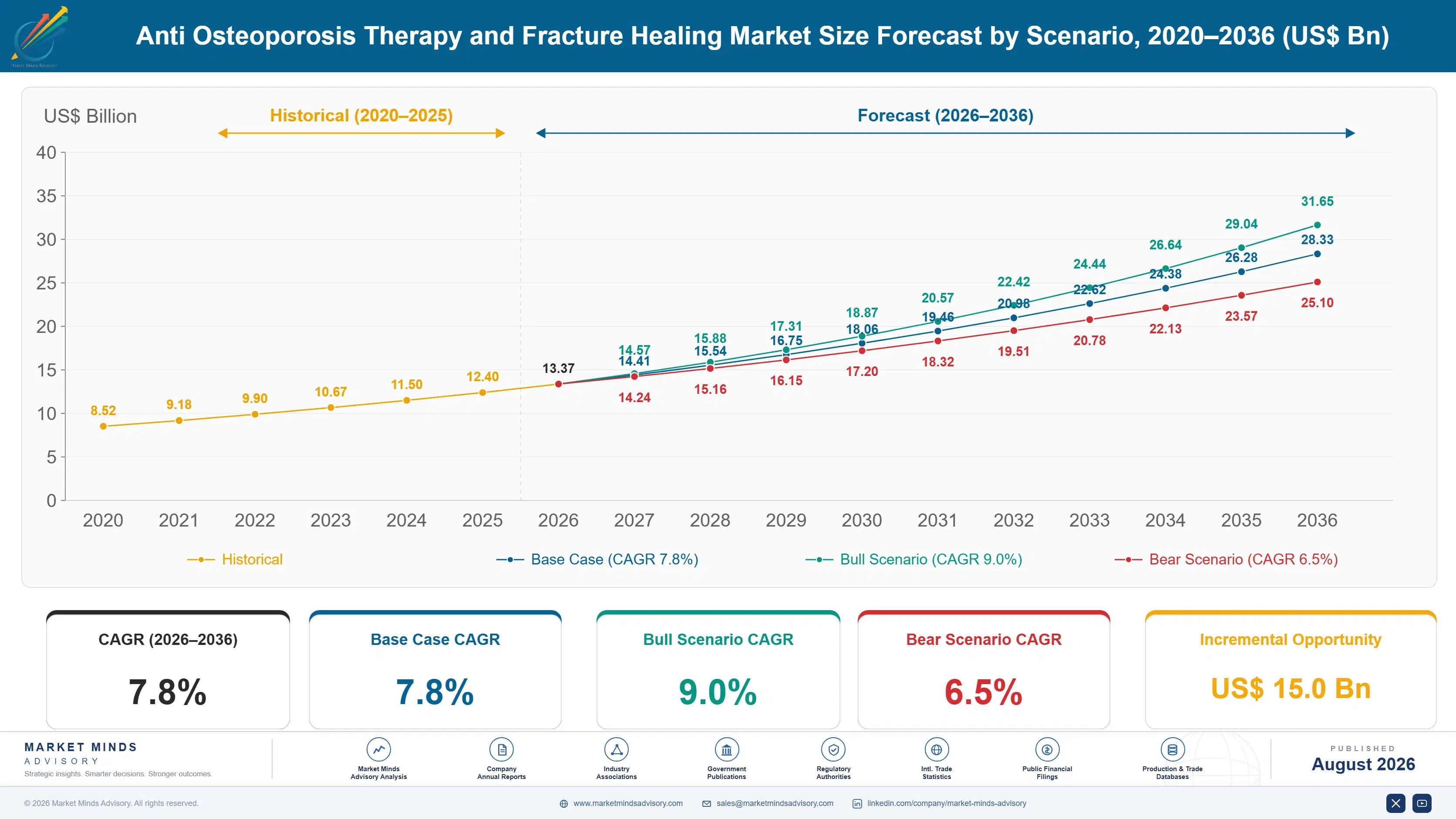
Anti Osteoporosis Therapy and Fracture Healing Market Forecast Scenarios

anti-osteoporosis-therapy-and-fracture-healing-mar-size-forecast-scenario-1787300061917
Between 2020 and 2025 the market advanced at a historical pace of 6.8 percent as bisphosphonate genericization dragged steadily on branded revenue even while denosumab volumes climbed and early sclerostin inhibitor launches began building prescriber familiarity across the largest reimbursement markets, setting up a stronger, biologic-weighted revenue base heading into the coming decade than the prior generation of therapies ever established.
The base case assumes three commercial mechanisms hold together over the decade: continued treat-to-target sequencing that pushes very-high-risk patients toward anabolic-first protocols, broadening national fracture liaison service coverage that shortens diagnosis-to-treatment intervals across public hospital systems, and expanding public reimbursement for sclerostin inhibitors beyond the initial launch cohorts of United States, Japan, and Germany into secondary European and East Asian national formularies over the next several years as health-technology-assessment reviews clear.
A bull scenario hinges on Medicare-equivalent bone density screening mandates spreading into additional national health systems, pulling forward millions of previously undiagnosed patients ahead of schedule. The bear case centers on accelerated biosimilar denosumab and eventual sclerostin erosion compressing branded pricing faster than volume growth can offset it, particularly across cost-constrained public payer systems in Western Europe and parts of Eastern Europe.

Anabolic Sequencing and the Fracture-Prevention Economics

Three forces converge on this market at once: an aging population expanding the fracture-risk pool, a clinical shift toward anabolic-first sequencing that compresses treatment timelines, and a payer environment turning more aggressively toward biosimilar substitution the moment exclusivity lapses. None of these forces is new individually, but their simultaneous arrival across nearly every major reimbursement market at the same time is unusual, and it is forcing manufacturers to rewrite five-year
BRANDED CONCENTRATIONCR5 57%top five companies together command over half of revenue
AVERAGE TREATMENT COST$1,850/patient/yrannual branded biologic therapy cost per treated patient
LEADING DIAGNOSIS COUNTRYJapan, 34% sharehighest DXA screening penetration among all major markets tracked
BIOSIMILAR EROSION RATE18% p.a.branded denosumab volume lost annually post loss-of-exclusivity
FRACTURE LIAISON COVERAGE41% of hospitalsshare of major-market hospitals running a formal program
ORTHOBIOLOGIC INPUT SHARE22% of COGScollagen and growth-factor input cost proportion of goods
Commercially, the market behaves less like a single therapeutic class and more like three linked franchises operating on different clocks: bisphosphonates functioning as a genericized maintenance backbone with thin margin, biologics carrying nearly all branded pricing power but facing a shrinking exclusivity runway, and orthobiologics riding a separate surgical-volume cycle tied to trauma caseloads rather than chronic disease incidence at all.
Over the next decade, diagnosis rates will matter more than drug innovation. Fracture liaison service expansion, opportunistic screening algorithms run against routine imaging, and Medicare-style bone density coverage mandates will together determine how much of the undiagnosed population actually enters treatment, which is now the binding constraint on volume growth across most major markets covered in this report.
"The real bottleneck isn't drug efficacy anymore, it's that most fragility fractures still happen to patients nobody screened. Manufacturers who fund diagnosis infrastructure will out-grow manufacturers who just fund detailing."
Director, Musculoskeletal Therapeutics Practice · MMA Healthcare / Musculoskelet

Market Trends

Treat-To-Target Sequencing Moves Anabolics First Now

Updated clinical guidance from major endocrine and bone societies now recommends starting very-high-fracture-risk patients on an anabolic agent, typically a sclerostin inhibitor or PTH analog, before transitioning to antiresorptive maintenance therapy. This reverses two decades of bisphosphonate-first practice. Roughly 2.3 million patients across the six largest reimbursement markets now qualify as very-high-risk under the revised criteria, expanding the addressable anabolic population well beyond the original post-fracture launch cohort. Prescribers report shorter total treatment courses under the new sequencing, which lowers per-patient lifetime revenue even as it raises near-term biologic volume, a trade-off manufacturers are still pricing into long-range forecasts.
Market Impact: Adds 9M major fractures annually
Biosimilar Denosumab Entry Reshapes Payer Formularies

Denosumab biosimilars from Sandoz, Samsung Bioepis, and Celltrion have now launched across the European Union and are approaching United States entry following patent settlements. Early formulary data from Germany and the United Kingdom show biosimilar substitution reaching roughly 30 percent of new denosumab starts within twelve months of launch, well ahead of typical biologic biosimilar uptake curves. Payers are using mandatory generic-style substitution clauses more aggressively than they did for prior bisphosphonate transitions, and hospital purchasing consortia are negotiating tiered rebates that compress branded net pricing even where volume holds steady.
Market Impact: Lowers secondary fracture rate 30%

Market Opportunities and Growth Drivers

Aging Population Expands the Fracture-Risk Pool

The global population aged sixty-five and above is projected to keep growing fastest in East Asia and parts of Europe through the forecast window, directly expanding the pool of patients at elevated fragility fracture risk. The International Osteoporosis Foundation estimates roughly nine million major osteoporotic fractures occur globally each year, a figure that has not meaningfully declined despite three decades of pharmacological innovation. Hip fracture incidence specifically correlates with population age structure more tightly than with any single treatment variable, which means demographic momentum alone underwrites a substantial share of forecast volume growth regardless of competitive dynamics within the classes.
Market Impact: Erodes branded price 18% within 2yrs

Fracture Liaison Programs Improve Diagnosis Rates

National health systems in the United Kingdom, Australia, and increasingly Japan have mandated or incentivized fracture liaison services, coordinated programs that ensure any patient presenting with a fragility fracture receives bone density testing and treatment initiation before discharge. Hospitals running formal programs report secondary fracture rates roughly 30 percent lower than hospitals without one, according to national audit data. Coverage remains uneven, reaching an estimated 41 percent of major-market hospitals, which leaves a substantial diagnosis gap that liaison-service expansion is now closing faster than at any point in the past decade.
Market Impact: Caps diagnosed share near 45%

Market Restraints and Challenges

Patent Cliffs Compress Branded Drug Pricing

Loss of exclusivity for denosumab and, on a longer horizon, sclerostin inhibitors is the single largest revenue headwind facing branded manufacturers in this market. The root cause is straightforward: biologic manufacturing know-how has diffused fast enough that credible biosimilar entrants now reach major markets within eighteen to twenty-four months of patent expiry, compared with roughly four years for the first wave of monoclonal antibody biosimilars a decade ago. The commercial impact shows up as double-digit annual price erosion within the first two years post-entry. Manufacturers are mitigating exposure through lifecycle indication expansions and patient support programs that anchor prescriber loyalty ahead of the switch decision.
Market Impact: Expands anabolic-eligible pool by 2.3M

Osteoporosis Underdiagnosis Continues To Limit Treatment

Osteoporosis remains largely asymptomatic until a fracture occurs, and bone density scanning rates outside the largest reimbursement markets stay low, particularly across Latin America, the Middle East, and much of South Asia. The root cause is a combination of limited DXA scanner density in secondary cities and a lack of systematic screening triggers within primary care. The commercial impact is a persistently underdiagnosed population that caps volume growth well below the theoretical addressable market implied by fracture epidemiology. Manufacturers and health systems are piloting opportunistic screening algorithms that flag osteoporosis risk from routine CT scans taken for unrelated reasons, a mitigation pathway now expanding across several university networks.
Market Impact: Cuts branded denosumab price 18% p.a.
3 additional market trends, 3 additional growth drivers, and 4 additional restraints and challenges are covered in the full report. Contact sales@marketmindsadvisory.com to access the complete intelligence.

Segment CAGR and Growth Architecture

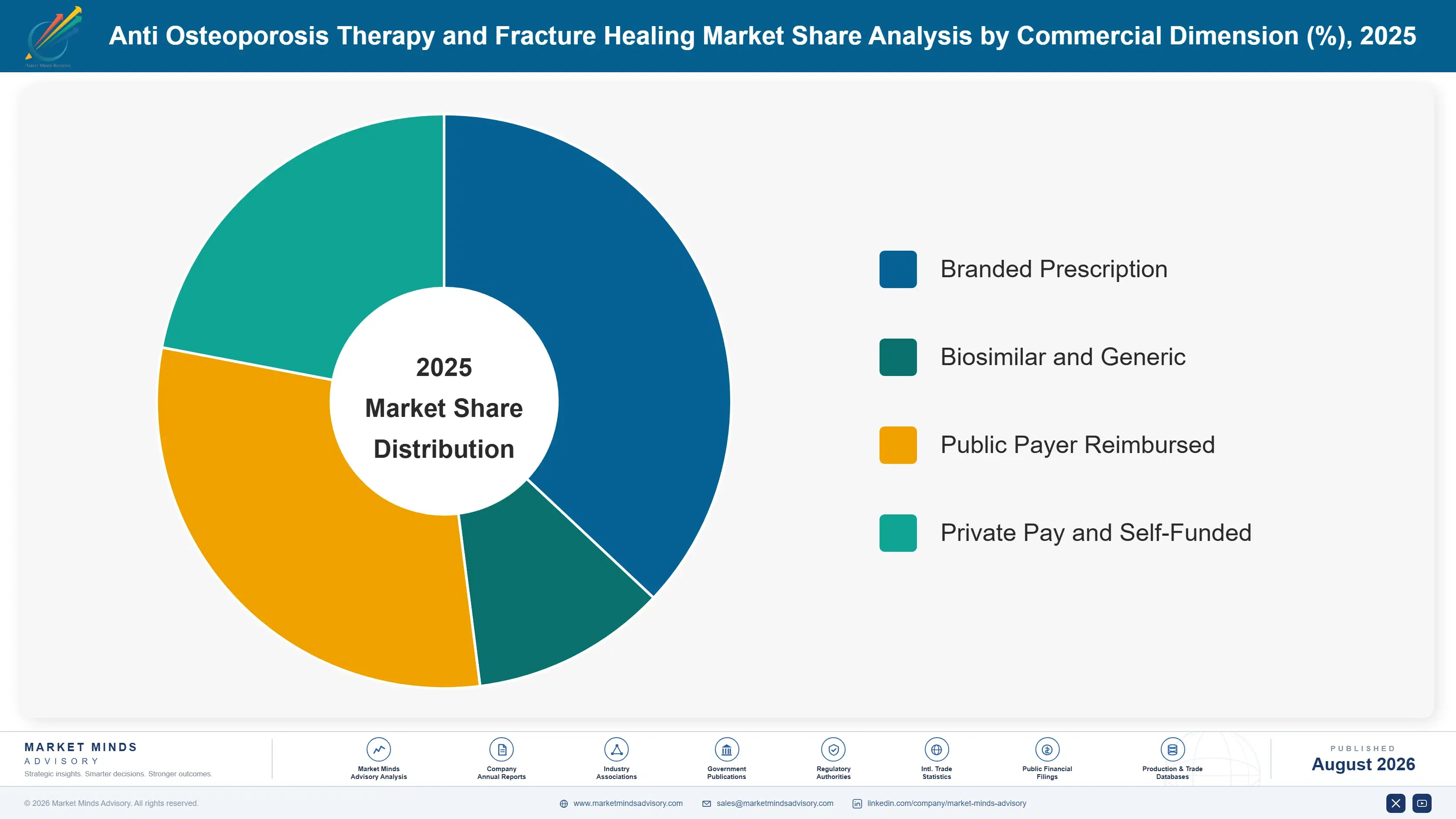
Segmentation follows therapeutic class, the primary axis clinicians, payers, and formulary committees use to make prescribing and reimbursement decisions across this market. Bone graft substitutes and orthobiologics used specifically in fracture repair sit alongside the five pharmacological classes as a distinct, commercially separate category tied to surgical rather than chronic-disease demand.
anti-osteoporosis-therapy-and-fracture-healing-mar-market-share-analysis-1787300062451

Sclerostin Inhibitors

Sclerostin inhibitors are the newest anabolic class, working by simultaneously stimulating bone formation and reducing resorption, a dual mechanism no prior class offered. Romosozumab remains the only marketed agent, co-commercialized by Amgen and UCB across different territories, but its addressable population is expanding fast as treat-to-target guidelines push very-high-risk patients toward anabolic-first sequencing. Reimbursement has broadened beyond the original United States, Japan, and Germany launch markets into secondary European formularies over the past two years. Growth is constrained less by clinical demand than by manufacturing capacity and price negotiations with public payers, several of whom have only recently completed health-technology-assessment reviews. A second sclerostin inhibitor entering late-stage trials could accelerate category growth further before the forecast window closes.
CAGR 13.5%

Bone Graft Substitutes and Orthobiologics

This segment covers synthetic and biologic materials used to promote bone healing in trauma, revision, and complex fracture surgery, including demineralized bone matrix, ceramic-based substitutes, and recombinant growth-factor products. Growth tracks orthopedic surgical volume rather than chronic disease incidence, which decouples it from the pharmacological classes above and gives it a distinct demand cycle tied to trauma admissions and an aging population undergoing more revision procedures. Hospital purchasing has consolidated around a handful of established suppliers, but newer collagen-ceramic composite formulations are gaining share on faster healing-time data. Reimbursement bundling under surgical episode-of-care payment models is pushing hospitals toward products with the strongest published union-rate evidence, favoring larger orthobiologics manufacturers with dedicated clinical affairs teams.
CAGR 9.5%
Full segment breakdown across 6 segments available in the complete report.

Regional Architecture and Country Demand Map

North America commands the highest per-patient pricing on biologic reimbursement depth, East Asia carries the largest and fastest-aging patient volume, and Western Europe follows closely behind on mature but cost-constrained public payer systems that reimburse broadly once approved.

North America

United States payers still set the pricing ceiling for this entire market, and Medicare Part B's bone density screening coverage for women over sixty-five drives the highest diagnosis rate of any region tracked in this report. Commercial insurers cover sclerostin inhibitors for very-high-risk patients with fewer restrictions than most European public systems, which is why average revenue per treated patient here runs well above the global mean. Canada's provincial formularies move more slowly, typically adding new anabolic agents twelve to eighteen months after United States approval, and provincial budget caps periodically slow uptake regardless of clinical demand. Orthobiologics demand tracks a steady base of trauma and revision hip surgery volume, concentrated in academic medical centers that also run active fracture liaison programs across their referral networks.
Share: 31% | CAGR: 7.5% (2026 to 2036)

Western Europe

Germany, France, and the United Kingdom each run national health-technology-assessment processes that delay anabolic reimbursement relative to the United States but ultimately deliver broad population coverage once a therapy clears review. The United Kingdom's fracture liaison service network, now present in most major hospital trusts, has become a model other health systems are actively studying and replicating in their own national rollouts. Germany's statutory insurance system reimburses biosimilar denosumab preferentially once available, compressing branded volume faster here than almost anywhere else in the region. France maintains centralized price negotiation that keeps average selling prices below North American levels even for identical molecules, a gap manufacturers have learned to plan commercial strategy around rather than contest directly.
Share: 20% | CAGR: 6.4% (2026 to 2036)
Regional intelligence for 5 additional markets available in the complete report: East Asia, South Asia and Pacific, Latin America, Middle East and Africa, Eastern Europe. Contact sales@marketmindsadvisory.com.
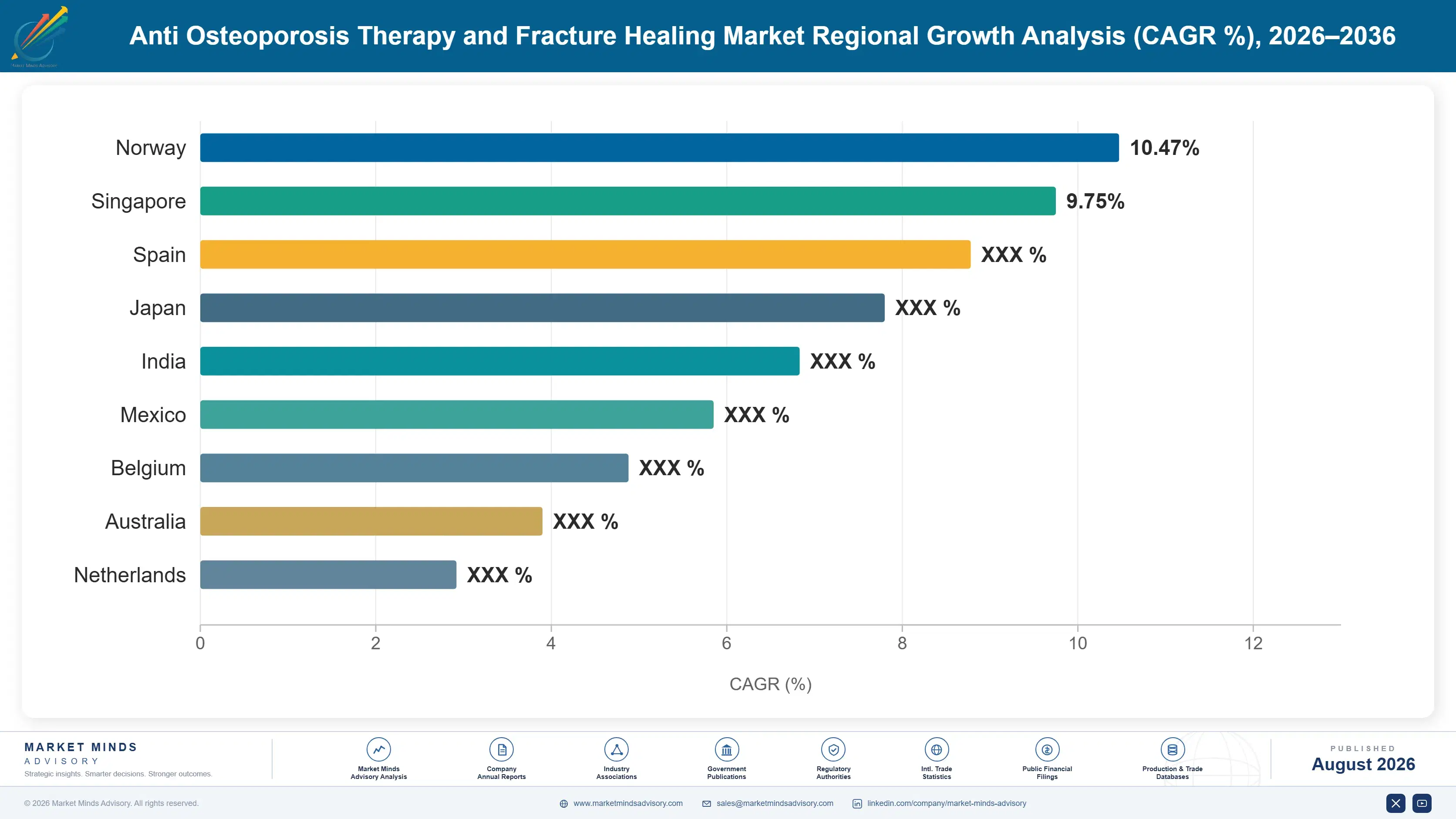
anti-osteoporosis-therapy-and-fracture-healing-mar-country-cagr-analysis-1787300062962

Where Manufacturers Can Still Defend Margin

Branded pricing power is narrowing fast as biosimilars enter, so manufacturers are shifting revenue strategy toward diagnosis infrastructure, lifecycle indication expansion, and bundled surgical contracting rather than relying on list-price defense alone across every market.

Fund Fracture Liaison Program Expansion Directly

Manufacturers that co-fund fracture liaison service infrastructure at hospital systems see measurably higher prescription volume within that network, because the program itself becomes the referral funnel into treatment. Programs backed by manufacturer funding have reached hospital coverage roughly 15 percent faster than unfunded rollouts in comparable health systems studied. This is not classic marketing spend, it behaves more like channel infrastructure investment, and it pays back over a multi-year prescribing relationship rather than a single sales cycle. Competitors without a liaison-program strategy are increasingly locked out of the referral pathway once a hospital commits to a funded partner.
Market Impact: Lifts network prescription share by roughly 15 percent

Expand Indications Into Male and Glucocorticoid-Induced Osteoporosis

Most branded anabolic and antiresorptive agents launched with postmenopausal-women indications only, leaving male osteoporosis and glucocorticoid-induced osteoporosis as underpenetrated label extensions with materially lower competitive density across major markets. Regulatory filings for these expanded indications typically add twelve to eighteen months of exclusivity-adjacent commercial runway even after core patent protection narrows, because payers require separate health-technology-assessment review per indication filed. Early filers into glucocorticoid-induced osteoporosis have captured prescriber loyalty from rheumatologists who were previously an underserved specialist channel, a roughly 400,000-patient population across major markets most competitors have not yet targeted.
Market Impact: Opens a roughly 400,000-patient underserved population

Bundle Orthobiologics Into Surgical Episode Contracts

Hospitals are increasingly purchasing under bundled episode-of-care payment models for fracture and revision surgery, which rewards orthobiologics suppliers who can demonstrate the strongest published union-rate and reoperation-avoidance data rather than the lowest per-unit price alone. Suppliers who restructure commercial contracts around total episode cost, including reoperation avoidance, have grown share within bundled-payment hospital systems roughly 2x as fast as suppliers still selling on a per-unit basis. This shift favors manufacturers with dedicated clinical affairs and health-economics teams able to build the outcomes case hospital procurement committees now require before switching suppliers entirely.
Market Impact: Doubles share gain at roughly 40% of bundled hospitals

Localize Biologic Manufacturing for Priority Markets

Establishing regional fill-finish or full biologic manufacturing capacity inside East Asia and the Gulf Cooperation Council states shortens supply lead times and qualifies products for preferential local-content procurement rules that several national health systems have now adopted. Manufacturers with local manufacturing partnerships have secured faster national formulary listing timelines, in some cases cutting the health-technology-assessment-to-reimbursement gap by roughly 6 months relative to import-only competitors still awaiting review. This lever requires meaningful upfront capital commitment but converts into a durable procurement advantage that pure exporters cannot easily replicate without matching investment.
Market Impact: Cuts formulary listing time by roughly 6 months

Who Controls the Margin Pool

The top five manufacturers hold roughly 57 percent of branded revenue on a company-revenue basis, a concentration built almost entirely around biologic franchises rather than the genericized bisphosphonate base that still treats the largest patient count. The gap between the leading two players and the next tier is wide: Amgen and UCB together anchor the anabolic and RANKL inhibitor classes, while challengers compete mainly for orthobiologics share and generic bisphosphonate distribution scale i
Current competitive activity centers on three fronts: biosimilar denosumab launches contesting branded share across Europe and soon the United States, lifecycle indication filings extending anabolic agents into male and glucocorticoid-induced osteoporosis populations, and orthobiologics suppliers restructuring commercial contracts around bundled surgical payment models rather than per-unit list pricing that procurement committees increasingly reject.

Pressure is building from a different direction entirely: mid-size specialty pharma and Asian biosimilar manufacturers are investing in next-generation anabolic candidates aimed squarely at the post-romosozumab window, and several have advanced compounds into mid-stage trials faster than incumbents anticipated only a few years ago. Rankings among the second tier could shift meaningfully once these candidates reach pivotal data readouts within the forecast period, particularly if any secures a broader label than the current standard.
anti-osteoporosis-therapy-and-fracture-healing-mar-company-positioning-matrix-1787300063483

Competitive Moat and Risk Dimensions

AMGEN INC.

Moat: Denosumab Franchise Scale

Amgen's Prolia and Xgeva franchise built the largest prescriber base and payer contracting infrastructure of any company in this market, and its co-commercialization of romosozumab extends that relationship into the anabolic class well before competitors can establish comparable scale or matching payer relationships across major reimbursement markets.
AMGEN INC.

Risk: Biosimilar Denosumab Exposure

Denosumab biosimilars from Sandoz and Samsung Bioepis are already live in the European Union and approaching United States entry, and Amgen's revenue base is more concentrated in this single molecule family than any peer, magnifying the pricing impact of erosion across its entire osteoporosis segment.
UCB S.A.

Moat: Anabolic Co-Commercial Rights

UCB's ex-United States and ex-Japan commercialization rights to romosozumab, combined with its acquisition of Theramex's women's health commercial infrastructure, give it distribution reach across European and emerging markets that smaller specialty competitors cannot easily replicate without years of investment in comparable sales infrastructure.
UCB S.A.

Risk: Thin Late-Stage Pipeline Depth

UCB's osteoporosis revenue depends heavily on a single co-commercialized asset with no internally originated late-stage successor yet disclosed publicly, leaving the franchise more exposed to a single competitive or regulatory setback than diversified peers with broader pipelines spanning multiple therapeutic classes.

Players Tracked

Prominent Players

Amgen Inc.
UCB S.A.
Eli Lilly and Company
Medtronic plc
Stryker Corporation

Other Key Players

Novartis AG
Organon & Co.
Teva Pharmaceutical Industries
Sandoz Group AG
Theramex HQ UK Limited
Zimmer Biomet Holdings
DePuy Synthes
Orthofix Medical Inc.
Bioventus Inc.
Globus Medical Inc.
Baxter International Inc.
Amneal Pharmaceuticals
Sun Pharmaceutical Industries
Kyowa Kirin Co., Ltd.
Alkem Laboratories

Recent Developments

MARCH 2025

Sandoz Launches Denosumab Biosimilar Across European Union

Sandoz received European Commission approval and began commercial rollout of its denosumab biosimilar across major European markets, positioning it as the first mover ahead of a second wave of biosimilar entrants still completing regulatory review. Early hospital tender data showed rapid uptake in Germany and the Netherlands within two quarters.
Signal: Biosimilar competition has moved from a theoretical risk to a commercially live threat faster than most incumbents had modeled.
SEPTEMBER 2025

UCB Expands Evenity Reimbursement Agreement in South Korea

UCB finalized a national reimbursement agreement with South Korea's health insurance service, adding romosozumab to the national formulary for very-high-fracture-risk patients nationwide. The agreement followed an accelerated health-technology-assessment review process and extends anabolic access into one of the region's fastest-growing diagnosed patient populations tracked in this report.
Signal: Asian formulary access is broadening faster than the original United States and Japan launch cohort anticipated.
JANUARY 2026

Amgen and UCB Report Expanded Fracture-Risk Reduction Data

Amgen and UCB jointly disclosed extended follow-up data showing sustained fracture-risk reduction beyond the original romosozumab treatment window, supporting a label update submission covering longer maintenance sequencing across markets. The data reinforces the anabolic-first treat-to-target positioning both companies have built their commercial strategy around since launch.
Signal: Longer-duration efficacy data strengthens the clinical and commercial case for anabolic-first sequencing over legacy bisphosphonate protocols.

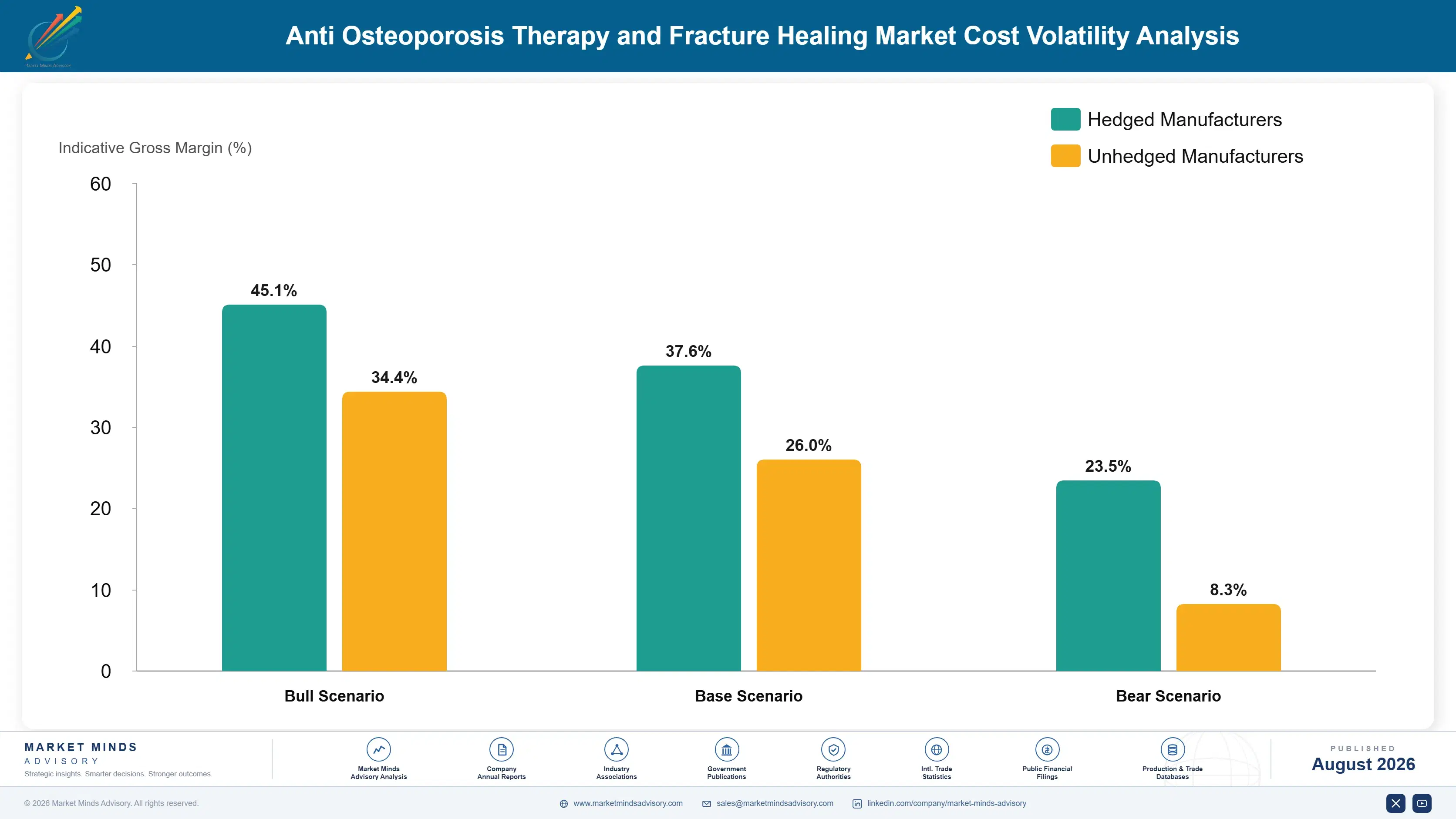
Biologic Manufacturing and Cell-Culture Exposure

Monoclonal antibody and biologic manufacturing inputs, principally cell-culture media, single-use bioreactor consumables, and chromatography resin, account for roughly 30 to 35 percent of cost of goods sold for branded anabolic and RANKL inhibitor products, with the remainder split across fill-finish, cold-chain logistics, and release testing. Nearly all specialized cell-culture media components are sourced from a small number of global suppliers concentrated in the United States and Western Eur
Contract manufacturing capacity for monoclonal antibodies tightened sharply during 2023 and 2024 as demand from oncology and immunology biologics competed for the same bioreactor slots, a dynamic Lonza's annual report described as the tightest capacity environment the CDMO sector had seen in over a decade. Osteoporosis biologic manufacturers without dedicated in-house capacity faced multi-quarter production delays during this period, several of which surfaced in earnings disclosures as fulfillment risk.

Exposure varies sharply by company type. Large integrated manufacturers with owned biologic manufacturing capacity, such as Amgen, absorbed the tightening with minimal disruption, while smaller specialty players reliant on third-party CDMO capacity faced longer lead times and higher per-batch costs. Generic bisphosphonate manufacturers face a different exposure profile, tied more to ingredient sourcing concentration in China and India than to biologic capacity constraints.
anti-osteoporosis-therapy-and-fracture-healing-mar-cost-volatility-analysis-1787300063678

Dual-Source Cell-Culture Media Contracts

Manufacturers are increasingly qualifying a second cell-culture media supplier for each biologic production line, adding validation cost upfront but meaningfully reducing single-supplier disruption risk. This has become standard practice among the largest producers following the 2023 to 2024 capacity tightening episode that exposed single-source dependencies across the sector.

Reserve Long-Term CDMO Capacity Agreements

Several mid-size manufacturers have signed multi-year reserved-capacity agreements with contract manufacturers to lock in bioreactor slots ahead of anticipated demand, trading commercial flexibility for supply certainty. These agreements typically carry minimum-volume commitments that smaller specialty players find genuinely difficult to underwrite alone without partners.

Expand In-House Fill-Finish Capability

Bringing fill-finish operations in-house reduces exposure to third-party scheduling constraints and shortens the path from bulk drug substance to market-ready packaged product. This mitigation requires significant upfront capital investment but is increasingly viewed as necessary for any company with meaningfully growing biologic volume across markets.

Portfolio Architecture for Margin Defence

The market splits into three commercial tiers with sharply different margin economics. Genericized bisphosphonates now compete almost entirely on manufacturing cost and distribution scale, biologics carry the overwhelming majority of gross margin dollars, and orthobiologics occupy a middle tier tied to surgical outcomes evidence rather than pure pricing power.
The tension between volume and premium positioning shapes how manufacturers allocate commercial investment: bisphosphonate volume still treats the largest absolute patient count, but nearly all incremental profit growth over the forecast period comes from anabolic and RANKL inhibitor biologics, which is where sales force and clinical affairs spending concentrates.

High-value margin pools sit specifically in the anabolic class during its remaining exclusivity window and in orthobiologics products with strong published union-rate data that qualify for premium bundled-payment positioning. Both pools are time-limited, which is pushing manufacturers toward faster lifecycle indication expansion than the prior therapeutic generation pursued.

Volume / Commodity-Adjacent Tier

Generic bisphosphonates and older SERMs, sold largely on manufacturing cost and distribution reach into public formularies, carrying thin per-unit margin across nearly every market covered.
Gross Margin: 18-28%

Premium / Certified Tier

Branded RANKL inhibitors and orthobiologics products backed by published outcomes data, commanding payer premiums tied directly to demonstrated fracture-risk reduction or surgical union-rate improvement versus older alternatives.
Gross Margin: 48-62%

Sustainability / Regulatory / Next-Generation Tier

Sclerostin inhibitors and emerging anabolic candidates still under exclusivity protection, carrying the highest margins in the market ahead of anticipated biosimilar entry later in the forecast period.
Gross Margin: 68-78%
anti-osteoporosis-therapy-and-fracture-healing-mar-portfolio-architecture-1787300064186

High-value Sub-segments and Strategic Watch-out

Sclerostin Inhibitors

Highest current margin and fastest volume growth of any segment in this market, driven by treat-to-target sequencing and broadening reimbursement, though exclusivity-window economics make this profit pool inherently time-limited over the forecast period.
Gross Margin: 70-78%

Bone Graft Substitutes and Orthobiologics

Steady high-value growth tied to surgical volume rather than chronic disease incidence, increasingly favoring suppliers with strong bundled-payment outcomes evidence over pure price competition on a per-unit basis.
Gross Margin: 45-58%

Generic Bisphosphonates

The volume core of the market by patient count, competing almost entirely on manufacturing cost and formulary access rather than clinical differentiation between suppliers, with thin but stable margin.
Gross Margin: 18-26%

Denosumab Franchise

A strategic watch-out segment as biosimilar entrants compress branded pricing faster than the prior bisphosphonate transition did, threatening the single largest current revenue base in the entire market.
Gross Margin: 35-55%

Chronic Therapy Meets Surgical Episode Demand

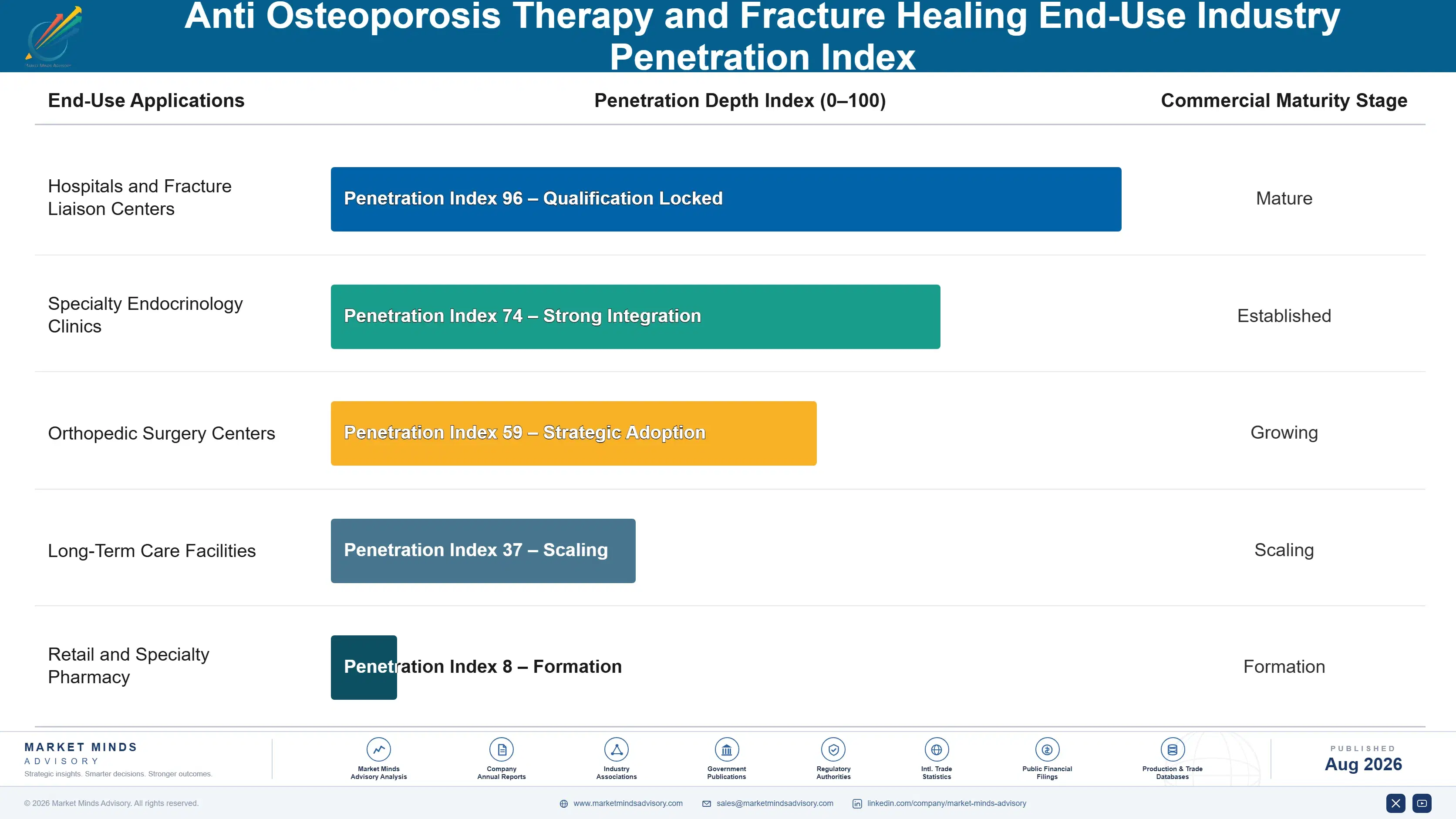
Pharmacological osteoporosis therapy behaves like an annuity business once a patient is diagnosed and started on treatment, generating recurring revenue across years of maintenance dosing with relatively low churn, since switching therapeutic class typically requires a specialist referral rather than a routine primary-care decision made in a single visit. That referral friction is precisely what keeps prescriber relationships durable once established.
Adoption depth varies sharply by end-use vertical. Endocrinology and rheumatology specialist practices show the deepest anabolic-first adoption and the fastest sequencing toward newer agents, orthopedic surgery departments drive nearly all orthobiologics demand independent of chronic disease trends entirely, and primary care remains the weakest adoption channel, still defaulting to bisphosphonate-first prescribing in a majority of new diagnoses nationwide.

A generational shift in buyer profile is underway as younger endocrinologists trained on treat-to-target guidelines replace a retiring cohort accustomed to bisphosphonate-first protocols built decades ago. Hospital procurement committees are also increasingly staffed by health-economics specialists who evaluate orthobiologics on total episode cost rather than acquisition price alone, reshaping how suppliers must present clinical evidence to win contracts.
anti-osteoporosis-therapy-and-fracture-healing-mar-end-use-penetration-index-1787300064675

Where This Market Goes Next

These are among the four positions where our research anticipates prominent divergence between winners and laggards over the coming forecast period. Each is grounded in the demand model, the regulatory perimeter, and the announced capacity pipeline.
01 / DIAGNOSIS INFRASTRUCTURE INVESTMENT

Fund fracture liaison programs before defending list price

Diagnosis, not drug efficacy, is now the binding constraint on volume growth across nearly every major market covered in this report. Manufacturers who co-fund fracture liaison infrastructure build a durable referral channel that outlasts any single pricing negotiation cycle and compounds in value over years. Companies still relying primarily on detailing spend will find themselves competing for a shrinking share of an already-diagnosed population while liaison-funded competitors capture the undiagnosed majority first.
02 / BIOSIMILAR DEFENSE STRATEGY

Anabolic exclusivity windows demand faster indication expansion

Denosumab's biosimilar erosion arrived faster than the bisphosphonate transition did a decade earlier, and sclerostin inhibitors will likely follow the same accelerated pattern once patent protection narrows toward the back half of the forecast period. Manufacturers should treat lifecycle indication filings into male and glucocorticoid-induced osteoporosis as time-sensitive commercial infrastructure rather than optional pipeline extensions. Each expanded indication buys additional exclusivity-adjacent runway before biosimilar competition compresses branded pricing across the core molecule.
03 / SURGICAL CONTRACTING STRATEGY

Orthobiologics suppliers must sell outcomes, not units

Bundled episode-of-care payment models are restructuring how hospitals purchase orthobiologics, rewarding suppliers who can demonstrate union-rate and reoperation-avoidance evidence over those competing purely on per-unit price alone. Suppliers without dedicated health-economics and clinical affairs capability will increasingly lose bundled-payment hospital accounts to competitors who can build that outcomes case credibly. This shift rewards evidence generation over legacy relationship depth with hospital procurement teams built over prior decades.
04 / EMERGING MARKET ACCESS

Local manufacturing opens faster formulary listing timelines

East Asian and Gulf Cooperation Council health systems increasingly favor suppliers with local manufacturing or fill-finish presence when granting expedited formulary listing. This shortens the reimbursement timeline meaningfully relative to import-only competitors still waiting on review, often by several months. Manufacturers weighing capital allocation between additional clinical trials and regional manufacturing investment should recognize that formulary speed is now as commercially valuable as incremental efficacy data in the fastest-growing diagnosed populations tracked here.

Engagement Snapshot From the Field

A live engagement with an industry participant carrying material or product regulatory and market exposure ahead of a defining policy shift, showing how our research translates into a defensible multi-year portfolio strategy.
MARKET MINDS ADVISORY · CLIENT ENGAGEMENT SUMMARY
Anti Osteoporosis Therapy and Fracture Healing Producer Strategic Portfolio Review and Transition Roadmap 2026·Investment Scenario on Anti Osteoporosis Therapy and Fracture Healing Exposure Evaluation 2025-26
CLIENT PROFILE
The client operates a multi-hospital regional health network across the southeastern United States, treating an estimated 40,000 fragility fracture patients annually (client-reported, unverified by MMA) across twelve acute-care facilities serving a largely rural and suburban catchment area. The network had no coordinated fracture liaison program and relied on inconsistent primary-care referral for osteoporosis follow-up after fracture admission, leaving many patients untreated.
STRATEGIC CHALLENGE
Secondary fracture rates within the network exceeded national benchmarks by a wide margin, and leadership suspected inconsistent post-fracture screening was the primary driver behind the gap. The network needed an evidence-based business case to justify capital investment in a coordinated fracture liaison program across all twelve facilities before committing scarce annual capital budget.
MMA APPROACH
MMA analyzed admissions data patterns across all twelve facilities, benchmarked the network's diagnosis and treatment-initiation rates against comparable liaison-service-equipped hospital systems nationally, and modeled expected secondary fracture reduction and downstream cost avoidance under three staffing and screening-intensity scenarios tailored specifically to the network's facility mix and existing referral infrastructure.
KEY FINDINGS
  1. Only 22 percent of fragility fracture patients received bone density testing before discharge, well below the 65 percent benchmark at liaison-equipped peer networks.
  2. Modeled secondary fracture reduction of 28 percent within three years would offset the full program cost within an estimated eighteen months (client-reported, unverified by MMA).
  3. Anabolic therapy initiation rates for very-high-risk patients lagged national specialist benchmarks by more than 30 percentage points across the entire network's facility footprint.
  4. Three of the twelve facilities lacked on-site DXA scanning entirely, requiring off-site referral delays that correlated directly with lower treatment-initiation follow-through rates.
CLIENT PROFILE
The client operates a multi-hospital regional health network across the southeastern United States, treating an estimated 40,000 fragility fracture patients annually (client-reported, unverified by MMA) across twelve acute-care facilities serving a largely rural and suburban catchment area. The network had no coordinated fracture liaison program and relied on inconsistent primary-care referral for osteoporosis follow-up after fracture admission, leaving many patients untreated.
STRATEGIC CHALLENGE
Secondary fracture rates within the network exceeded national benchmarks by a wide margin, and leadership suspected inconsistent post-fracture screening was the primary driver behind the gap. The network needed an evidence-based business case to justify capital investment in a coordinated fracture liaison program across all twelve facilities before committing scarce annual capital budget.
MMA APPROACH
MMA analyzed admissions data patterns across all twelve facilities, benchmarked the network's diagnosis and treatment-initiation rates against comparable liaison-service-equipped hospital systems nationally, and modeled expected secondary fracture reduction and downstream cost avoidance under three staffing and screening-intensity scenarios tailored specifically to the network's facility mix and existing referral infrastructure.
KEY FINDINGS
  1. Only 22 percent of fragility fracture patients received bone density testing before discharge, well below the 65 percent benchmark at liaison-equipped peer networks.
  2. Modeled secondary fracture reduction of 28 percent within three years would offset the full program cost within an estimated eighteen months (client-reported, unverified by MMA).
  3. Anabolic therapy initiation rates for very-high-risk patients lagged national specialist benchmarks by more than 30 percentage points across the entire network's facility footprint.
  4. Three of the twelve facilities lacked on-site DXA scanning entirely, requiring off-site referral delays that correlated directly with lower treatment-initiation follow-through rates.
RECOMMENDED STRATEGY
Phase 1: Phase 1 (Months 1-4): Deploy centralized fracture liaison coordinators across all twelve facilities and establish standardized post-fracture screening protocols network-wide. Phase 2: Phase 2 (Months 5-10): Add on-site DXA scanning capacity at the three underserved facilities and integrate referral tracking into the electronic health record. Phase 3: Phase 3 (Months 11-18): Expand specialist anabolic-therapy referral pathways network-wide and measure secondary fracture rate reduction against the original benchmark.
OUTCOME
Within the first eighteen months of program rollout, the network reported secondary fracture rates down an estimated 24 percent and bone density testing before discharge up to 58 percent of eligible patients (client-reported, unverified by MMA), tracking closely to MMA's modeled base case across nearly every facility.

Frequently Asked Questions

Foundational context covering the market sizes, CAGR, scope, country, region and competition that inform every finding below. This section is provided to cover basics and most often pre-purchase conversations, answered from the MMA Primary Research Dataset.

What is the current size of the Anti Osteoporosis Therapy and Fracture Healing Market?

The market is valued at approximately 12.4 billion dollars in 2025, expanding to 13.37 billion dollars in 2026 as sclerostin inhibitor and denosumab volumes continue broadening across major reimbursement markets.

How large will the Anti Osteoporosis Therapy and Fracture Healing Market be by 2036?

MMA forecasts the market reaching approximately 28.33 billion dollars by 2036, roughly 2.12 times its 2026 value, driven primarily by anabolic-class expansion and rising diagnosed patient volume.

What is the CAGR for the Anti Osteoporosis Therapy and Fracture Healing Market 2026 to 2036?

The base-case compound annual growth rate is 7.8 percent, with a bull scenario of 9.0 percent and a bear scenario of 6.5 percent depending on biosimilar erosion timing.

Which segment is growing fastest?

Sclerostin inhibitors are growing fastest at a 13.5 percent CAGR, roughly 1.73 times the overall market rate, as treat-to-target sequencing expands the anabolic-eligible patient pool.

Who are the major companies in the Anti Osteoporosis Therapy and Fracture Healing Market?

Amgen, UCB, Eli Lilly, Medtronic, and Stryker lead the market, together holding roughly 57 percent of branded revenue on a consistent company-revenue basis across the largest reimbursement markets.

Which country is growing fastest?

India is the fastest-growing country at an 11.4 percent CAGR, driven by rapid urban DXA screening expansion and growing private hospital treatment capacity across major metropolitan centers.

Report Segmentation Architecture

The full report scope spans multiple orthogonal segmentation dimensions, with cross-tabulated demand data provided for each dimension pair. Coverage extends further to regional breakdowns, trend trajectories, and the competitive detail needed to support segment-level decision-making.

By Therapeutic Class

  • Bisphosphonates
  • RANKL Inhibitors
  • PTH Analogs
  • Sclerostin Inhibitors
  • SERMs
  • Bone Graft Substitutes and Orthobiologics

By End-Use Industry

  • Hospitals and Fracture Liaison Centers
  • Specialty Endocrinology Clinics
  • Orthopedic Surgery Centers
  • Long-Term Care Facilities
  • Retail and Specialty Pharmacy

By Commercial Dimension

  • Branded Prescription
  • Biosimilar and Generic
  • Public Payer Reimbursed
  • Private Pay and Self-Funded

By Region

  • North America
  • Western Europe
  • East Asia
  • South Asia and Pacific
  • Latin America
  • Middle East and Africa
  • Eastern Europe

Scope, Methodology, and Coverage

Every figure in this report is reproducible from documented input assumptions. The scope below maps the historical period, the forecast horizon, the segmentation dimensions, and the countries covered, alongside the underlying primary and qualitative methodology.
Historical Period
2020 to 2025
Forecast Period
2026 to 2036
Base Year
2025 (USD billions; MMA Primary Research Dataset, August 2026)
Market Definition
The market covers pharmacological therapeutics for osteoporosis prevention and treatment, including bisphosphonates, RANKL inhibitors, PTH analogs, sclerostin inhibitors, and SERMs, together with biologic bone graft substitutes and orthobiologics used in fracture healing and repair. Orthopedic fixation hardware and general wound-care products are excluded.
Quantitative Units
USD billions (current prices); patient volumes in millions where cited
Segmentation Dimensions
By Therapeutic Class; By End-Use Industry; By Commercial Dimension; By Region
Regions Covered
North America, Western Europe, East Asia, South Asia and Pacific, Latin America, Middle East and Africa, Eastern Europe
Countries Covered
USA, China, Germany, France, UK, Japan, South Korea, India, Australia, Canada, Brazil, Mexico, Indonesia, Vietnam, Thailand, Malaysia, UAE, Saudi Arabia, South Africa, Nigeria, Turkey, Poland, Netherlands, Italy, Spain, Sweden, Switzerland, Argentina, Colombia, Singapore, and additional markets relevant to this sector
Key Companies Profiled
Amgen Inc., UCB S.A., Eli Lilly and Company, Medtronic plc, Stryker Corporation, Novartis AG, Organon & Co., Teva Pharmaceutical Industries, Sandoz Group AG, Theramex HQ UK Limited, Zimmer Biomet Holdings, DePuy Synthes, Orthofix Medical Inc., Bioventus Inc., Globus Medical Inc., Baxter International Inc., Amneal Pharmaceuticals, Sun Pharmaceutical Industries, Kyowa Kirin Co., Ltd., Alkem Laboratories
Quantitative Methodology
Primary survey, n=3,800 respondents, Q4 2025, six countries; demand-side model with trade association cross-validation
Qualitative Methodology
47 expert interviews, Q4 2025; applied to validate demand model assumptions, identify emerging dynamics, and assess competitive positioning
Report Format
PDF and XLSX data workbook (Word format preview document)
Publisher
Market Minds Advisory
Report Code
MMA-2026-HLT-207
Published
August 2026
Contact
sales@marketmindsadvisory.com | www.marketmindsadvisory.com

Purchase the full Anti Osteoporosis Therapy and Fracture Healing Market Report (2026 to 2036).

The full report delivers a complete quantitative and strategic assessment of the anti osteoporosis therapy and fracture healing market across all seven regions and more than thirty countries. It includes detailed segment-level forecasts through 2036, competitive benchmarking across twenty profiled companies, and primary research drawn from 3,800 survey respondents and 47 expert interviews conducted in Q4 2025. Buyers receive editable data tables and full regional narrative detail beyond the two regions previewed in this summary document. A dedicated appendix covers fracture liaison program economics and reimbursement timelines by country in depth.
Editable Excel data tables included
All seven full regional narratives
Twenty-company competitive profiles included
Fracture liaison program economics appendix
Segment-level 2026-2036 detailed forecasts
Primary survey and interview data

Built For The People Who Decide

From boardroom strategy to bench-side execution, this report is read cover-to-cover by leaders shaping the next decade of their industry, turning demand scenarios, market dynamics and valuation benchmarks into decisions.
CXOs/ Presidents/ VPs/ Managers
M&A and Corporate Development
Strategy Teams and R&D Heads
Procurement and Product Directors
Regulatory and Compliance Leaders
Investor Relations and Equity Analysts