Market Minds Advisory
Anti-Aging Product, Service, and Device Market

Anti-Aging Product, Service, and Device Market: Retreatment Economics, Korean Toxin Pricing, and the Longevity Clinic

Botulinum toxin wears off in four months, which makes it the most dependable repeat purchase in consumer health, and Korean manufacturers have spent five years dismantling the pricing that discovery once supported.

Lead Analyst

Alice Ballenger

Published

September 2026

Make Smarter Decisions with Customized Research Insights

Request a free sample report and evaluate market opportunities, growth trends, and competitive dynamics relevant to your business needs.

2025 MARKET VALUE$68.5BMarket Size 2025
2036 FORECAST VALUE$166.3BBase Case , 2026 to 2036
CAGR 2026 TO 20368.4 %Bull 9.7% / Bear 7.2%
INCREMENTAL OPPORTUNITY$92.1BNet 10- year value creation
EXPANSION MULTIPLE2.24x2036 value over 2026 base
Strategic Levers
M&A Pipeline
Regional Outlook
Country Rankings
Competitive Intelligence
Segmental Deep-dive
Call-Us : 91 93563 13602

Executive Snapshot and Market Trajectory

Nothing in consumer health repeats as reliably as botulinum toxin. The effect fades in about four months, patients rebook without being asked, and adherence runs for decades. That single biological fact underwrites most of the profitable activity in this market. No consumer goods company engineered retention that good.
Clinical longevity services and diagnostics compound at 12.6%, a full 1.50x the market rate, selling biological age testing and hormone optimisation into a category with almost no regulatory definition. East Asia holds the largest share at 30%: South Korea performs more aesthetic procedures per head than anywhere on earth, Chinese demand has scaled fast, and Japanese topical formulation runs deeper than any Western equivalent. Growth there compounds at 14.2%.
Concentration is very low at 19% because the market spans cosmetics houses, pharmaceutical injectables, device manufacturers and independent clinics that share no common competitive ground. L'Oréal and AbbVie lead in categories that never meet. Korean toxin manufacturers have meanwhile taken the price umbrella that funded Western aesthetic marketing budgets for two decades and quietly removed it. Clinics kept part of the difference and patients kept the rest. The treated population grew and manufacturer margin thinned.
Market Definition
This market covers products, devices and clinical services purchased primarily to slow, mask or reverse visible and biological signs of ageing. Coverage spans topical cosmeceutical formulations, injectable aesthetic treatments, energy-based aesthetic devices, oral longevity supplements, hair restoration treatments and devices, and clinical longevity services including biological age diagnostics. Reconstructive and medically indicated plastic surgery, dermatological treatment of diagnosed disease, prescription hormone replacement for endocrine indications, and general cosmetics without an anti-ageing claim are excluded.
Base Year Value
$68.5B in 2025 (MMA Primary Research Dataset, August 2026)
Forecast Period
2026 to 2036, eleven discrete annual values
CAGR
8.4% base case. Bull 9.7%. Bear 7.2%.
Fastest Growth Segment
Clinical Longevity Services and Diagnostics: 12.6% CAGR
Fastest Growth Country
South Korea: 14.2% CAGR
Fastest Growth Region
South Asia and Pacific: 10.6% CAGR
Largest Region
East Asia: 30% of 2025 global value
Market Leaders
L'Oréal, AbbVie, Galderma, Estée Lauder Companies, and Beiersdorf. Source: MMA Primary Research Dataset, July 2026.
Primary Survey
n=3,800 procurement and R&D decision-makers, Q4 2025, six countries
Methodology
Demand-side build-up, cross-validated against public data, 47 expert interviews

Anti-Aging Product, Service, and Device Market Forecast Scenarios

anti-aging-product-service-and-device-market-size-forecast-scenario-1787303445840
The market grew at roughly 7.1% between 2020 and 2025, and the pandemic shaped that figure in an unexpected direction. Clinics closed through 2020, then reopened into demand that video calling had sharpened considerably, since people spent two years looking at their own faces on screen. Injectable volumes recovered faster than any forecast anticipated. Topical sales held up throughout as a substitute.
Base case growth of 8.4% rests on three mechanisms. Preventative treatment among patients under thirty-five extends the treatment lifetime by roughly fifteen years per person, which compounds through the whole forecast period rather than adding a single cohort. Korean toxin pricing has widened the addressable population by bringing treatment cost down substantially in Asian and emerging markets. And GLP-1 weight loss has created genuine incremental demand for volume restoration among patients who lost facial fat rapidly.
The bull case at 9.7% assumes longevity diagnostics gain enough clinical credibility to move from wellness spending into insured or employer-funded budgets. The bear case at 7.2% is a regulatory one: an adverse event cluster in the loosely governed longevity clinic segment, or a restrictive ruling on biological age claims, would slow the fastest-growing part of this market considerably.

Anti-Aging: Retreatment Economics and Price Umbrella Collapse

The commercial engine here is biological rather than clinical. Botulinum toxin wears off in about four months, filler resorbs over a year or two, and laser results fade with continued sun exposure. Every one of those produces a scheduled return visit that nobody had to negotiate. Roughly 68% of patients rebook within a year, which is retention that subscription businesses spend fortunes trying to manufacture.
TOP FIVE CONCENTRATION19%Cosmetics, injectables, devices and clinics share no competitive ground
REPEAT TREATMENT RATE68%Patients returning for a further treatment within a year
AVERAGE INJECTABLE PRICEUSD 480Blended patient price per injectable aesthetic treatment session globally
TOXIN RETREATMENT INTERVAL4 monthsTypical duration before botulinum toxin effect fades noticeably
CLINIC CHANNEL SHARE41%Value delivered through clinics rather than retail or online
UNDER-35 PATIENT SHARE34%Injectable patients beginning treatment before visible ageing appears
Pricing has changed more than the treatments have. Hugel, Medytox and other Korean manufacturers built botulinum toxin capacity at costs Western producers never contemplated, and their entry into international markets removed a price umbrella that had funded elaborate aesthetic marketing for two decades. Clinics captured part of the difference and patients captured the rest, which enlarged the treated population considerably while compressing manufacturer margin.
The newest and least defined part of the market is also the fastest. Longevity clinics selling biological age testing, hormone optimisation and intravenous therapies occupy space between medicine and wellness, with little regulatory definition either way. Evidence quality varies enormously across providers. That ambiguity is precisely what allows premium pricing, and it is also the single largest risk sitting in this forecast.
"Aesthetics discovered the perfect business model by accident: a treatment that stops working on a predictable schedule. No consumer goods company has ever engineered retention that good, and the industry still talks about it as though the clinical outcome were the product."
Director, Aesthetic Medicine and Consumer Health Practice · MMA Healthcare Pract

Market Trends

Preventative treatment under thirty-five extends patient lifetime value

Patients now begin injectable treatment before visible lines appear, on the reasoning that preventing formation beats correcting it later. Roughly 34% of injectable patients are under thirty-five, against a small fraction a decade ago. Commercially this is the most consequential shift in the category, because starting treatment at twenty-eight rather than forty-three adds around fifteen years of retreatment to a single patient relationship. Clinics that build their marketing around prevention rather than correction acquire patients whose lifetime value is several times higher, at lower acquisition cost. The cohort arrives already informed by social platforms.
Market Impact: Filler consultations up 28%
Korean toxin manufacturers dismantle Western aesthetic price positioning

Hugel, Medytox and Daewoong built botulinum toxin production at cost structures Western manufacturers never faced, then took those products into Asian, Latin American and increasingly European and North American markets. The price umbrella that funded elaborate physician marketing programmes has narrowed sharply. Clinics gained margin, patients gained access, and manufacturers lost the pricing that justified their commercial spending. Volume growth has partly compensated, since lower prices genuinely enlarged the treated population, but the profit pool has shifted decisively toward clinics. Volume growth has partly compensated, but the profit pool has moved decisively toward clinics.
Market Impact: Enquiry rates up 45% since 2021

Market Opportunities and Growth Drivers

GLP-1 weight loss creates genuine incremental facial volume demand

Rapid weight loss on semaglutide and tirzepatide removes facial fat alongside everything else, producing a hollowed appearance that patients notice quickly and dislike intensely. Aesthetic clinics report substantial increases in filler and biostimulator consultations directly attributable to it. This is demand that did not exist three years ago and that nobody in aesthetics created. It also arrives with a favourable patient profile: people already spending on appearance, already engaged with a clinical provider, and already accustomed to ongoing treatment. Few demand sources arrive this well qualified, and none of it was created by anyone working in aesthetics.
Market Impact: Exactly 0 approved anti-ageing indi

Social platforms normalise treatment disclosure and reduce entry friction

Aesthetic treatment was concealed for decades and is now discussed openly across social platforms, with practitioners posting procedures and patients documenting results. That transparency removes the largest single barrier to first treatment, which was never cost but embarrassment. Consultation enquiry rates rise sharply in markets where disclosure has normalised. It also shifts practitioner selection toward visible personal brand rather than institutional credential, which advantages independent clinics over larger groups and complicates quality regulation considerably. That shift advantages independent practitioners over larger clinic groups, and it makes quality regulation considerably harder to enforce than it was when treatment stayed private.
Market Impact: Only 6 countries license injectors

Market Restraints and Challenges

Longevity claims sit outside any settled regulatory definition

Biological age tests, senolytic supplements and hormone optimisation protocols are sold on claims that no regulator has properly evaluated, because they fall between cosmetics, food supplements and medical practice. The root cause is definitional: ageing is not classified as a disease, so treatments for it cannot be assessed as medicines. Commercial impact cuts both ways, allowing premium pricing while leaving the whole segment exposed to a single adverse ruling. Serious providers are responding by commissioning peer-reviewed validation and by adopting laboratory accreditation standards voluntarily. None of that resolves the underlying definitional problem.
Market Impact: Adds roughly 15 treatment years

Practitioner regulation lags rapid growth in non-medical injecting

In several major markets, injectable treatments can legally be administered by practitioners with limited medical training, and enforcement is thin where rules do exist. The root cause is that aesthetics grew far faster than the licensing frameworks written for it. Commercial impact is reputational: adverse events attract disproportionate coverage and depress enquiry rates across entire markets, not merely at the clinic responsible. Manufacturers have responded with training certification, restricted distribution to qualified injectors, and support for licensing legislation that raises entry standards. Licensing consultation in the United Kingdom signals the direction of travel.
Market Impact: Toxin pricing down roughly 35%
4 additional market trends, 3 additional growth drivers, and 2 additional restraints and challenges are covered in the full report. Contact sales@marketmindsadvisory.com to access the complete intelligence.

Segment CAGR and Growth Architecture

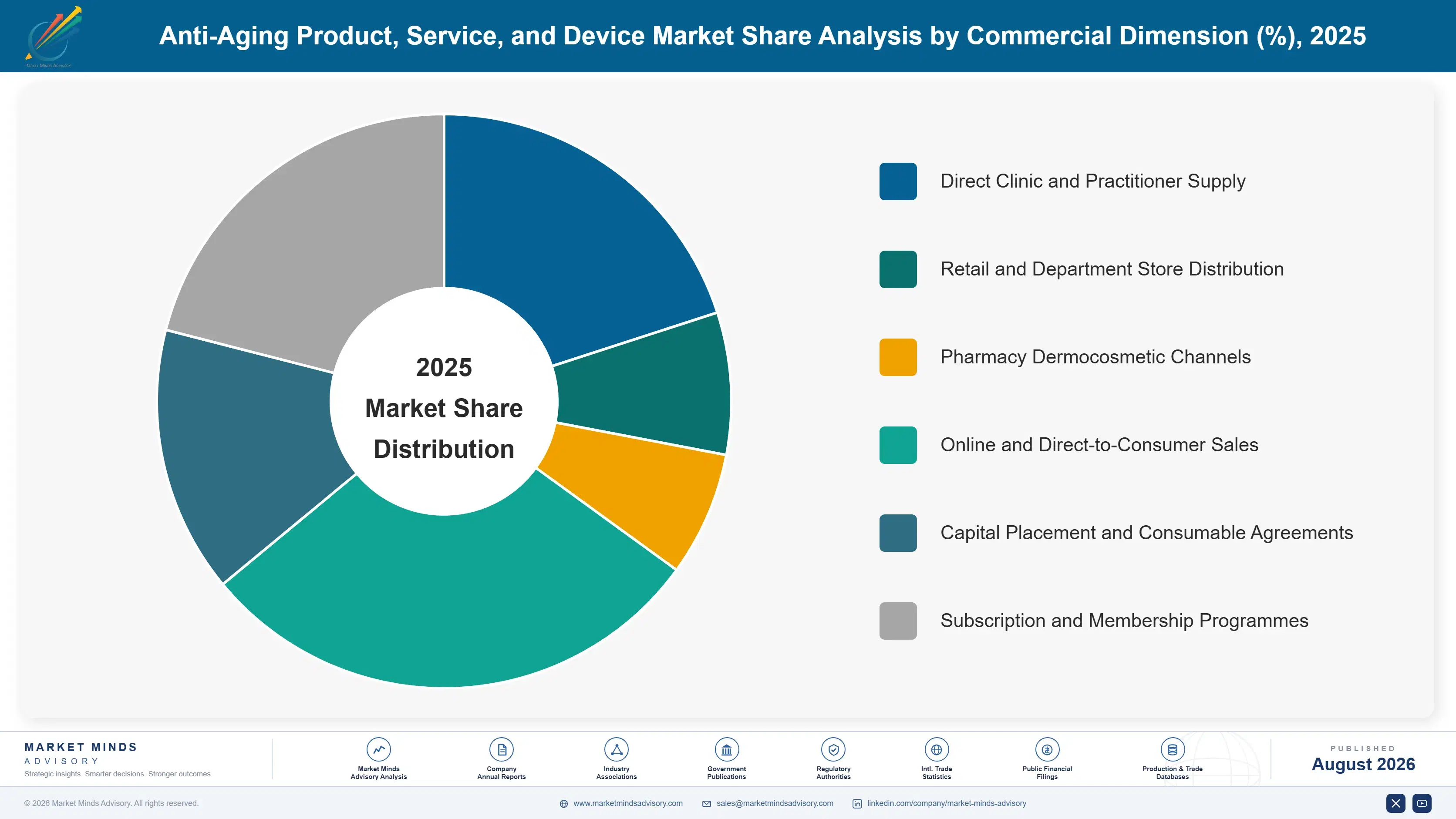
Segmentation follows the type of intervention a consumer receives, because this market spans products, devices and clinical services, and intervention type is the only dimension that classifies all three consistently. Six intervention types cover the market without overlap. Delivery channel varies within each type and is treated as a commercial attribute here. Intervention type sets the commercial rules here.
anti-aging-product-service-and-device-market-market-share-analysis-1787303446379

Clinical Longevity Services and Diagnostics

Growing at 12.6%, a full 1.50x the market rate, this covers biological age testing, epigenetic clock panels, hormone optimisation protocols and intravenous therapy programmes sold through dedicated longevity clinics. Pricing is premium and repeat engagement is high, because the model is built on subscription-style monitoring rather than single treatments. Evidence quality varies enormously between providers, and the segment sits in regulatory space that belongs to neither medicine nor wellness cleanly. That ambiguity supports current pricing and represents the largest single risk in this forecast, since one restrictive ruling on biological age claims would reprice the whole category overnight. Gulf and North American high-net-worth customers have proved unusually willing to pay for interventions whose evidence base remains thin.
CAGR 12.6%

Injectable Aesthetic Treatments

Injectables grow at 10.5% and generate the most dependable repeat revenue in the market. Botulinum toxin fades in roughly four months, hyaluronic acid filler resorbs over one to two years, and collagen biostimulators require a treatment series followed by maintenance. Each produces a scheduled return that requires no commercial effort to trigger. Korean manufacturers have compressed toxin pricing substantially while enlarging the treated population, moving profit toward clinics and away from manufacturers. Preventative treatment among patients under thirty-five has extended typical patient lifetimes by around fifteen years, which compounds throughout the forecast period. Male patients have also grown from a small niche into a meaningful part of the treated population across most developed markets.
CAGR 10.5%
Full segment breakdown across 6 segments available in the complete report.

Regional Architecture and Country Demand Map

Regional value tracks cultural acceptance and clinic density far more closely than income or ageing profile. East Asia leads because aesthetic treatment carries no stigma there and practitioner supply is dense. Latin America outperforms its income level for much the same cultural reason. Income explains surprisingly little here.

East Asia

East Asia holds the largest share at 30%, and no other region comes close on cultural acceptance. South Korea performs more aesthetic procedures per head of population than anywhere measured, supports a dense clinic network in Seoul's Gangnam district, and exports both practitioners and product globally. Korean toxin manufacturers Hugel and Medytox have reshaped world pricing from that base. Chinese demand scaled extremely fast after 2018 and now faces tighter advertising and practitioner regulation. Japanese consumers buy the deepest topical formulations anywhere and treat skincare as daily maintenance rather than intervention. Growth at 9.7% combines all three quite different national patterns. Regulatory tightening in China is the main variable to watch across the forecast period.
Share: 30% | CAGR: 9.7% (2026 to 2036)

North America

Twenty-six per cent of value sits in North America, where injectable pricing is the highest globally and the medical spa format industrialised aesthetic delivery. The United States supports roughly a third of world injectable revenue on a considerably smaller share of procedures, which is entirely a pricing effect. Korean toxin entry is compressing that gap now. Longevity clinics have expanded fastest here, funded by consumer wellness spending rather than insurance, and practitioner regulation varies enormously between states. Canadian pricing sits lower with tighter advertising rules. Growth at 7.6% reflects a mature injectable base absorbing genuine price compression. Medical spa consolidation has meanwhile created buying groups with genuine negotiating weight against manufacturers for the first time.
Share: 26% | CAGR: 7.6% (2026 to 2036)
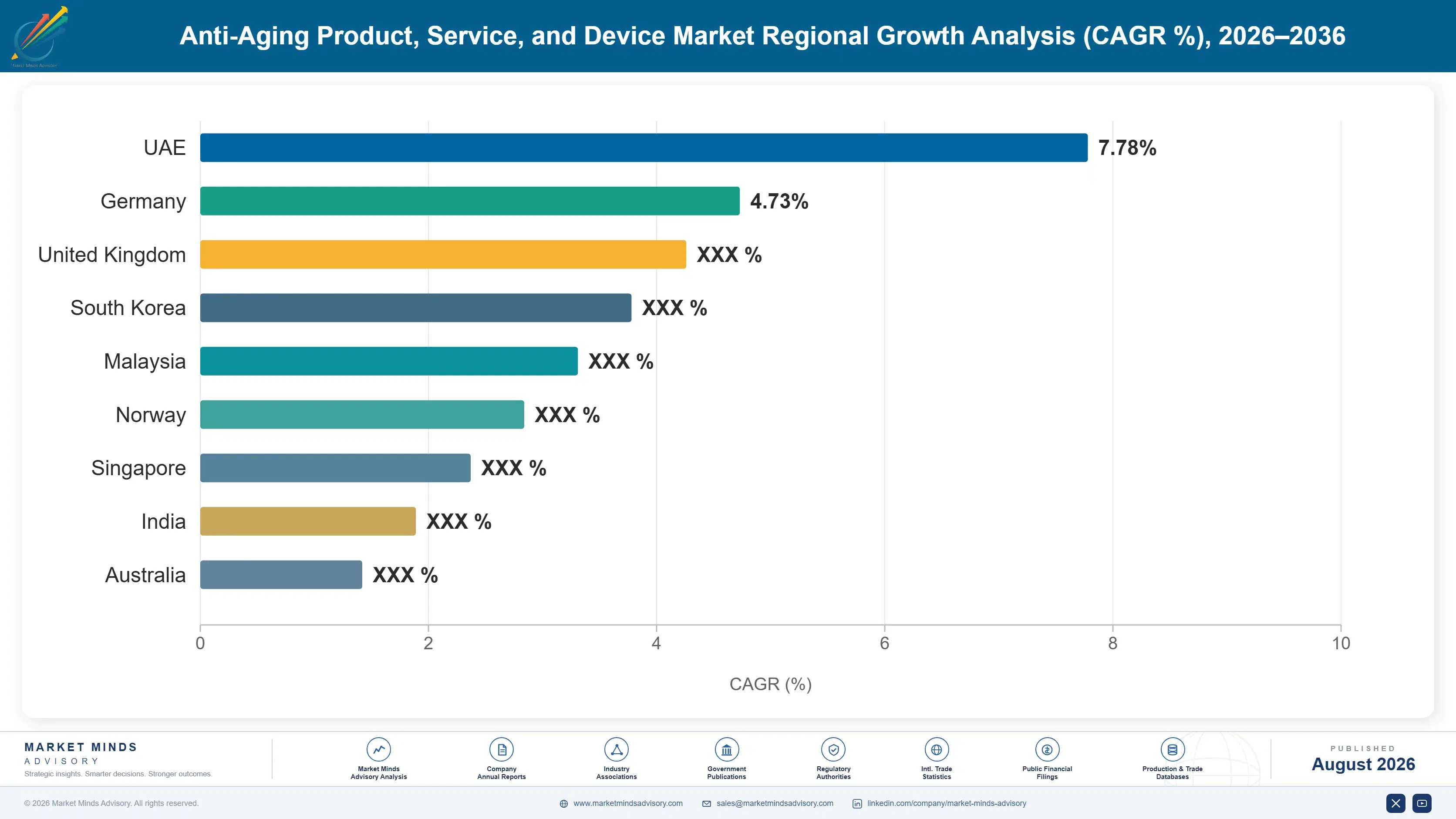
Regional intelligence for 5 additional markets available in the complete report: Western Europe, South Asia and Pacific, Latin America, Middle East and Africa, Eastern Europe. Contact sales@marketmindsadvisory.com.
anti-aging-product-service-and-device-market-country-cagr-analysis-1787303446908

Where Anti-Aging Margin Actually Accumulates

Treatments in this market stop working on a schedule, which means retention is given rather than earned and the commercial contest is about acquisition, price positioning and how much of the profit pool a manufacturer keeps against the clinic delivering treatment. Everything durable is built on one of those three. Retention comes free here.

Acquire patients before visible ageing rather than after

A patient starting injectable treatment at twenty-eight rather than forty-three delivers roughly fifteen additional years of retreatment, and acquisition cost at that age is lower because the decision carries less weight. Clinics marketing prevention rather than correction build patient bases whose lifetime value runs several times higher. The message has to change accordingly: prevention framing works on social platforms where correction framing does not, and the practitioners who understood this early now hold the most valuable patient lists in their markets. Roughly 34% of injectable patients are now under thirty-five, against a small fraction a decade ago.
Market Impact: Adds roughly 15 further years of re

Defend manufacturer margin through clinic loyalty programmes

Korean toxin entry has cut manufacturer pricing by roughly 35% in contested markets, and no product argument reverses that because the molecules perform comparably. What holds share is the commercial relationship: volume rebate structures, practitioner training, patient loyalty programmes that run across a manufacturer's whole portfolio, and marketing support clinics cannot fund themselves. Manufacturers running integrated programmes retain clinic accounts through price competition that pure product selling loses immediately. The investment is substantial and it is now the main thing separating the leaders. Product selling alone loses these accounts immediately.
Market Impact: Defends against roughly 35% of manu

Place energy devices cheaply to capture consumable revenue

Energy-based aesthetic devices follow the same economics as any capital and consumable business. The laser or radiofrequency platform generates perhaps 20% of lifetime revenue and the treatment tips, cartridges and handpieces generate the rest across seven or eight years. Placing capital at aggressive discount, or on usage-based leasing, buys that annuity outright. The discipline required is contractual: placement agreements need minimum consumable commitments, because clinics that take discounted capital and then buy grey-market tips destroy the model entirely. Clinics taking discounted capital and then buying grey-market tips destroy the arrangement entirely.
Market Impact: Consumables supply about 80% of tot

Build evidence in longevity before regulators define the category

Biological age testing and hormone optimisation currently sell on claims nobody has evaluated, and that will not last indefinitely. Providers commissioning peer-reviewed validation and adopting laboratory accreditation voluntarily are buying an option worth far more than the roughly 5% of revenue it costs. When definition arrives, and it will, credentialled providers absorb the demand that uncredentialled ones lose. This is the cheapest insurance available in the fastest-growing part of the market, and remarkably few providers are currently buying it. Credibility bought early is considerably cheaper than credibility rebuilt after a restrictive ruling lands on the whole segment.
Market Impact: Costs about 5% of current annual se

Who Controls the Margin Pool

Concentration is very low at 19% across the top five, measured on annual revenue attributable to anti-ageing products, devices and services, the single basis used throughout this assessment. The market spans cosmetics houses, injectable manufacturers, device makers and independent clinics, groups that compete for the same consumer without ever meeting. L'Oréal and AbbVie lead comfortably in categories that do not overlap at any point.
Competition therefore runs inside categories on quite different terms. Topical cosmeceuticals compete on brand, ingredient story and retail distribution, since regulation prevents any drug-level efficacy claim. Injectables compete on price and clinic relationship now that Korean products have proven clinically comparable. Energy devices compete on capital placement economics and consumable lock-in. Longevity clinics compete on practitioner reputation and marketing reach, with almost no objective basis for a consumer to compare providers.

Pressure is arriving from two directions at once. Korean manufacturers keep taking injectable share and pricing across an expanding set of geographies, and Western producers have no cost answer. Separately, retail and direct-to-consumer channels are moving into territory clinics held, with at-home energy devices and prescription-strength topicals sold through telehealth. Rankings shift most where clinical delivery turns out not to be necessary after all.
anti-aging-product-service-and-device-market-company-positioning-matrix-1787303447436

Competitive Moat and Risk Dimensions

L'ORÉAL

Moat: Unmatched retail distribution depth

L'Oréal reaches consumers through mass retail, pharmacy dermocosmetics, luxury counters and professional channels simultaneously, in more countries than any competitor operates. That spread means a new anti-ageing formulation can be placed globally within one selling season. Research scale in cosmetic science supports a claims pipeline smaller houses cannot fund or defend against regulatory challenge.
L'ORÉAL

Risk: Cosmetic claim ceiling

Topical products cannot legally claim drug-level efficacy in any major market, which caps how far formulation improvement translates into pricing power. Consumers increasingly shift spending toward injectables and clinical procedures that visibly outperform creams. The company's clinical and device positions are thin relative to its retail dominance, leaving it exposed as the category moves toward procedures.
ABBVIE

Moat: Injector relationship and training depth

Allergan Aesthetics built the practitioner training infrastructure, patient loyalty programme and portfolio breadth that make Botox and Juvederm the default choice in a clinic's treatment room. Injectors trained on a technique and a product tend to keep using both. That relationship, rather than any molecular advantage, is what has slowed Korean competitors in the largest markets.
ABBVIE

Risk: Toxin price umbrella collapse

Korean manufacturers supply clinically comparable toxin at substantially lower cost, and the pricing that funded Allergan's commercial infrastructure is narrowing across every contested market. Volume growth partly offsets it, but the profit pool is moving toward clinics. Loyalty programmes defend share at rising cost, and there is no product answer to a cheaper equivalent molecule.

Players Tracked

Prominent Players

L'Oréal
AbbVie
Galderma
Estée Lauder Companies
Beiersdorf

Other Key Players

Shiseido
Amorepacific
Merz Aesthetics
Ipsen
Hugel
Medytox
InMode
Cutera
Candela Medical
Lutronic
Bausch Health Companies
Unilever
Procter & Gamble
Nestlé Health Science
Revance Therapeutics

Recent Developments

APRIL 2025

Hugel expands European commercial distribution for botulinum toxin portfolio

Hugel widened commercial distribution of its botulinum toxin range across additional European markets following regulatory clearances, extending a pricing position built in Asian and Latin American markets into territory that Western manufacturers had held at premium levels for two decades. No acquisition or joint venture was involved.
Signal: Korean pricing is now reaching the markets
OCTOBER 2025

Galderma reports sharp rise in filler demand linked to weight loss medication

Galderma disclosed substantial growth in dermal filler and biostimulator volumes attributed to patients experiencing rapid facial volume loss on GLP-1 receptor agonists, a demand source that did not exist before those medicines reached broad prescribing three years earlier. The company had not forecast that demand source at all.
Signal: Metabolic medicine has created new aesthet
FEBRUARY 2026

United Kingdom consults on mandatory licensing for aesthetic injectors

The United Kingdom government opened consultation on a mandatory licensing scheme for non-surgical cosmetic procedures, addressing a regulatory gap that has allowed injectable treatments to be administered by practitioners without any medical qualification requirement at all. Consultation closes during the coming year, with legislation expected to follow.
Signal: Practitioner licensing raises entry standa

Formulation, Toxin and Device Cost Exposure

Cost structures diverge so widely across this market that a single figure would mislead badly. Topical formulations carry active ingredient and packaging at roughly 28% of cost of goods, with premium packaging often costing more than the contents. Botulinum toxin manufacturing is dominated by sterile biologics facility overhead rather than materials, at around 40%. Energy devices sit on precision optics, laser diodes and electronics from a narrow specialist supplier set.
Laser diode supply illustrated the device exposure during 2022 and 2023. Semiconductor allocation pushed lead times for high-power diodes from weeks to many months, and Cutera and InMode both disclosed supply constraints affecting system shipments in their annual reporting for those years. Clinics waiting on delayed platforms deferred consumable purchasing alongside, so the revenue effect ran considerably deeper than the capital shortfall alone would suggest.

The disadvantage falls unevenly by business model. Manufacturers holding their own sterile fill-finish capacity for injectables can protect supply and cost; those relying on contract biologics capacity compete for slots against pharmaceutical customers paying more. Device makers without diode supply agreements face allocation last. Geography compounds it: European cosmetics manufacturers carry testing and energy costs that Korean and Chinese producers do not.
anti-aging-product-service-and-device-market-cost-volatility-analysis-1787303447632

Secure dedicated sterile fill-finish capacity for injectable production

Contract biologics capacity is allocated to whoever pays most, and aesthetic injectables rarely outbid pharmaceutical customers when capacity tightens. Owning or reserving dedicated fill-finish lines costs considerably more per unit in normal conditions and it removes an allocation risk that has stopped competitors supplying markets entirely during shortages. Few competitors carry that cost willingly.

Contract laser diode supply ahead of forecast device demand

High-power diode lead times moved from weeks to months during semiconductor allocation, and device makers without standing agreements were served last. Multi-year supply contracts tie up working capital and they protect both system shipments and the far larger consumable revenue that follows each placement into a clinic. Placement shortfalls cost far more than the contracts do.

Shift topical premium toward formulation rather than packaging spend

Premium packaging frequently costs more than the formulation inside it, which is defensible while consumers buy presentation and increasingly awkward as ingredient literacy improves. Moving cost from packaging into demonstrable active concentration protects margin and answers a consumer shift that online ingredient discussion has accelerated considerably across every developed market. Ingredient literacy is not going to reverse.

Portfolio Architecture for Margin Defence

Margin architecture follows how easily a claim can be defended and how often a treatment must be repeated. Mass topical products earn ordinary consumer goods margins on formulations competitors can approximate within a season. Injectables and energy device consumables earn considerably more, protected by regulatory approval, practitioner relationships and predictable retreatment. Longevity services earn the most of all, because pricing rests on claims nobody has yet been required to substantiate
The volume versus premium tension runs along the retail and clinic boundary. Retail reaches enormous numbers of consumers at low margin and no retention obligation. Clinical delivery reaches far fewer people, charges considerably more, and captures a patient who returns on a biological schedule. Companies attempting both find the capabilities barely transfer at all.

High-value pools sit where treatment must be repeated and cannot be self-administered. Botulinum toxin, biostimulator series, energy device treatment courses and monitored longevity protocols all require a clinical visit that generates further consultation and further sales. Topical products bought once and applied at home sit at the opposite end, where repeat purchase depends entirely on habit and where private label and direct-to-consumer brands compete hardest.

Volume / Commodity-Adjacent Tier

Mass-market topical anti-ageing creams, serums and supplements sold through retail and online channels, where formulations are widely approximated and claims are constrained to cosmetic language. Private label and direct-to-consumer brands compete hardest here on price and ingredient transparency.
Gross Margin: 45-58%

Premium / Certified Tier

Injectable toxins and fillers plus energy device consumables, protected by regulatory approval, practitioner training relationships and predictable retreatment intervals. Korean toxin entry is compressing this tier's pricing while enlarging the treated population considerably.
Gross Margin: 62-76%

Sustainability / Regulatory / Next-Generation Tier

Clinical longevity services, biological age diagnostics and monitored optimisation protocols, priced on claims that no regulator has yet evaluated. Best margins in the market and the least contested, and also the position most exposed to a single regulatory ruling.
Gross Margin: 70-85%
anti-aging-product-service-and-device-market-portfolio-architecture-1787303448130

Retreatment Cycles Across Patient Lifetimes

This market has the cleanest recurring revenue in consumer health and rarely describes it that way. Botulinum toxin fades in roughly four months, so a treated patient returns around three times a year for as long as they continue, and roughly 68% rebook within twelve months. Filler and biostimulator courses generate longer cycles. None of that retention requires marketing, because biology schedules the return visit rather than a commercial team.
Stickiness varies sharply by intervention and by who delivers it. Injectable patients bond to a specific injector rather than a clinic or brand, and they follow that practitioner when they move. Energy device patients are more loyal to the clinic because the platform stays put. Topical purchasers show the weakest loyalty of all, switching readily on price, packaging or an online recommendation.

Buyer profiles have changed more in five years than in the previous twenty. The under-thirty-five cohort now supplies roughly 34% of injectable patients and arrives already informed by social platforms, comparing practitioners on visible portfolio rather than credential. Male patients have grown from a small niche to a meaningful segment across most developed markets. Longevity clinic customers skew older, wealthier and more interested in measurement than appearance.
anti-aging-product-service-and-device-market-end-use-penetration-index-1787303448628

Where Anti-Aging Strategy Must Land

These are among the four positions where our research anticipates prominent divergence between winners and laggards over the coming forecast period. Each is grounded in the demand model, the regulatory perimeter, and the announced capacity pipeline.
01 / PATIENT ACQUISITION TIMING

Acquire patients before ageing becomes visible to them

A patient beginning injectable treatment at twenty-eight rather than forty-three delivers roughly fifteen additional years of scheduled retreatment, and acquisition cost at that age is genuinely lower because the decision carries far less weight. Prevention framing works on the social platforms where this younger cohort actually decides, while correction framing does not reach those people at all. The practitioners and clinic groups who understood that shift early now hold by far the most valuable patient lists anywhere in their markets.
02 / INJECTABLE MARGIN DEFENCE

No product argument answers a comparable cheaper molecule

Korean manufacturers supply clinically comparable botulinum toxin at prices that have cut Western manufacturer realisation by roughly 35% across contested markets, and no clinical data closes a gap that the molecules themselves do not create. What defends share is the commercial relationship: volume rebates, practitioner training, cross-portfolio patient loyalty programmes and marketing support that individual clinics cannot fund themselves. That commercial infrastructure is expensive to build and expensive to run, and it is now the only real differentiator left in the category.
03 / LONGEVITY EVIDENCE INVESTMENT

Buy credibility before regulators define the category for you

Biological age testing and hormone optimisation protocols currently sell on claims that no regulator anywhere has properly evaluated, and that regulatory silence is unlikely to hold indefinitely as the segment continues to scale. Commissioning peer-reviewed validation and adopting laboratory accreditation voluntarily costs around 5% of current segment revenue and buys an option worth considerably more than the outlay. When regulatory definition eventually arrives, and it will, credentialled providers absorb precisely the demand that uncredentialled competitors are then forced to give up.
04 / CLINICAL DELIVERY DEPENDENCE

Watch which treatments stop needing a clinic at all

Consumer radiofrequency and light devices keep improving steadily, and telehealth now delivers prescription-strength topical actives directly to patients without requiring any clinical visit at all. Every treatment that proves deliverable at home moves its entire margin pool permanently from clinics across to retail, and that transfer has never once reversed in any category. Companies whose economics depend on clinical delivery should be identifying right now which of their own treatments are genuinely the most vulnerable to that kind of substitution.

Engagement Snapshot From the Field

A live engagement with an industry participant carrying material or product regulatory and market exposure ahead of a defining policy shift, showing how our research translates into a defensible multi-year portfolio strategy.
MARKET MINDS ADVISORY · CLIENT ENGAGEMENT SUMMARY
Anti-Aging Product, Service, and Device Producer Strategic Portfolio Review and Transition Roadmap 2026·Investment Scenario on Anti-Aging Product, Service, and Device Exposure Evaluation 2025-26
CLIENT PROFILE
A mid-sized aesthetic injectables manufacturer with botulinum toxin and hyaluronic acid filler ranges sold across Western European and Latin American markets through direct clinic relationships. Annual aesthetic revenue was approximately USD 520 million (client-reported, unverified by MMA), with roughly 60% from toxin products. The company held no energy device portfolio and no presence in longevity services or diagnostics.
STRATEGIC CHALLENGE
Korean toxin competitors had entered the client's two largest European markets and taken share on price within eighteen months, and clinic accounts were openly using competing quotes in negotiation. The board wanted to know whether to defend price, match it and accept substantially lower margin, or redirect capital toward adjacent categories where cost competition from Korean manufacturers had not yet arrived.
MMA APPROACH
MMA conducted 47 expert interviews across aesthetic practitioners, clinic group purchasing managers, distributors and regulatory specialists in six countries. A quantitative survey of 3,800 consumers established treatment decision drivers, practitioner loyalty and price sensitivity by patient age cohort. We then modelled share and margin outcomes for price defence, price matching and category diversification under continued Korean expansion at observed rates.
KEY FINDINGS
  1. Practitioners reported patient loyalty attached to the injector rather than to the product brand in five of six markets, meaning brand switching carried almost no patient attrition risk for the clinic.
  2. Clinic purchasing managers valued cross-portfolio loyalty programmes and training support above unit price, but only where the price gap stayed below roughly fifteen per cent of the competing quote.
  3. Patients under thirty-five showed markedly lower brand awareness and higher practitioner trust than older cohorts, and that cohort now supplied a third of the client's treated volume.
  4. Energy device consumable margins in the client's markets held considerably steadier than injectable margins, with no comparable low-cost competitive entry visible in the pipeline.
CLIENT PROFILE
A mid-sized aesthetic injectables manufacturer with botulinum toxin and hyaluronic acid filler ranges sold across Western European and Latin American markets through direct clinic relationships. Annual aesthetic revenue was approximately USD 520 million (client-reported, unverified by MMA), with roughly 60% from toxin products. The company held no energy device portfolio and no presence in longevity services or diagnostics.
STRATEGIC CHALLENGE
Korean toxin competitors had entered the client's two largest European markets and taken share on price within eighteen months, and clinic accounts were openly using competing quotes in negotiation. The board wanted to know whether to defend price, match it and accept substantially lower margin, or redirect capital toward adjacent categories where cost competition from Korean manufacturers had not yet arrived.
MMA APPROACH
MMA conducted 47 expert interviews across aesthetic practitioners, clinic group purchasing managers, distributors and regulatory specialists in six countries. A quantitative survey of 3,800 consumers established treatment decision drivers, practitioner loyalty and price sensitivity by patient age cohort. We then modelled share and margin outcomes for price defence, price matching and category diversification under continued Korean expansion at observed rates.
KEY FINDINGS
  1. Practitioners reported patient loyalty attached to the injector rather than to the product brand in five of six markets, meaning brand switching carried almost no patient attrition risk for the clinic.
  2. Clinic purchasing managers valued cross-portfolio loyalty programmes and training support above unit price, but only where the price gap stayed below roughly fifteen per cent of the competing quote.
  3. Patients under thirty-five showed markedly lower brand awareness and higher practitioner trust than older cohorts, and that cohort now supplied a third of the client's treated volume.
  4. Energy device consumable margins in the client's markets held considerably steadier than injectable margins, with no comparable low-cost competitive entry visible in the pipeline.
RECOMMENDED STRATEGY
Phase 1: Phase one: hold list pricing but fund an expanded clinic loyalty and training programme, keeping the effective gap inside the fifteen per cent threshold identified. Phase 2: Phase two: acquire or license an energy device platform to add consumable revenue that Korean injectable competition does not reach at all. Phase 3: Phase three: build practitioner-level relationships directly rather than through clinic group purchasing, since patient loyalty demonstrably follows the individual injector.
OUTCOME
The client held list pricing while expanding practitioner programmes, and share loss slowed to roughly a third of the prior rate within four quarters. It subsequently licensed a radiofrequency device platform for approximately USD 140 million (client-reported, unverified by MMA), adding a consumable revenue line insulated from injectable price competition.

Frequently Asked Questions

Foundational context covering the market sizes, CAGR, scope, country, region and competition that inform every finding below. This section is provided to cover basics and most often pre-purchase conversations, answered from the MMA Primary Research Dataset.

What is the current size of the Anti-Aging Product, Service, and Device Market?

The global anti-ageing market was valued at USD 68.5 billion in 2025, spanning topical cosmeceuticals, injectables, energy devices, supplements, hair restoration and clinical longevity services. Injectable treatments generate the most dependable repeat revenue.

How large will the Anti-Aging Product, Service, and Device Market be by 2036?

MMA forecasts the market at USD 166.34 billion by 2036, expanding 2.24 times from the 2026 base of USD 74.25 billion. That represents roughly USD 92.09 billion of incremental value across the forecast decade.

What is the CAGR for the Anti-Aging Product, Service, and Device Market 2026 to 2036?

The base case compound annual growth rate is 8.4%, with a bull case of 9.7% and a bear case of 7.2%. The bear case reflects regulatory risk in the loosely governed longevity clinic segment.

Which segment is growing fastest?

Clinical longevity services and diagnostics grow at 12.6%, a full 1.50x the overall market rate. The segment sells biological age testing and optimisation protocols on claims no regulator has yet evaluated.

Who are the major companies in the Anti-Aging Product, Service, and Device Market?

L'Oréal, AbbVie, Galderma, Estée Lauder Companies and Beiersdorf together hold only 19% of revenue. Concentration is low because cosmetics houses, injectable manufacturers, device makers and clinics never compete directly.

Which country is growing fastest?

South Korea grows fastest at 14.2%, supported by the highest per-capita procedure rate measured anywhere and a domestic toxin manufacturing base. East Asia is the largest region at 30% of value.

Report Segmentation Architecture

The full report scope spans multiple orthogonal segmentation dimensions, with cross-tabulated demand data provided for each dimension pair. Coverage extends further to regional breakdowns, trend trajectories, and the competitive detail needed to support segment-level decision-making.

By Intervention Type

  • Topical Cosmeceutical Formulations
  • Injectable Aesthetic Treatments
  • Energy-Based Aesthetic Devices
  • Oral Longevity Supplements
  • Hair Restoration Treatments and Devices
  • Clinical Longevity Services and Diagnostics

By End-Use Industry

  • Dermatology and Plastic Surgery Practices
  • Medical Spas and Aesthetic Clinics
  • Dedicated Longevity and Wellness Clinics
  • Retail Beauty and Pharmacy Channels
  • Hotel, Resort and Destination Spas
  • Home and Consumer Self-Treatment

By Commercial Dimension

  • Direct Clinic and Practitioner Supply
  • Retail and Department Store Distribution
  • Pharmacy Dermocosmetic Channels
  • Online and Direct-to-Consumer Sales
  • Capital Placement and Consumable Agreements
  • Subscription and Membership Programmes

By Region

  • East Asia
  • North America
  • Western Europe
  • South Asia and Pacific
  • Latin America
  • Middle East and Africa
  • Eastern Europe

Scope, Methodology, and Coverage

Every figure in this report is reproducible from documented input assumptions. The scope below maps the historical period, the forecast horizon, the segmentation dimensions, and the countries covered, alongside the underlying primary and qualitative methodology.
Historical Period
2020 to 2025
Forecast Period
2026 to 2036
Base Year
2025 (USD billions; MMA Primary Research Dataset, August 2026)
Market Definition
This market comprises products, devices and clinical services purchased primarily to slow, mask or reverse visible and biological signs of ageing, measured at manufacturer or provider revenue across clinic, retail, pharmacy, online and spa channels. Coverage spans topical cosmeceutical formulations including retinoids, peptides and growth factor preparations, injectable aesthetic treatments including botulinum toxins, hyaluronic acid fillers and collagen biostimulators, energy-based aesthetic devices including laser, radiofrequency, ultrasound and microneedling platforms with their consumables, oral longevity supplements including NAD precursors and senolytic preparations, hair restoration treatments and devices, and clinical longevity services including biological age diagnostics and monitored optimisation protocols. Reconstructive and medically indicated plastic surgery, dermatological treatment of diagnosed disease, prescription hormone replacement for endocrine indications, general cosmetics carrying no anti-ageing claim, and fitness or nutrition services fall outside scope.
Quantitative Units
USD billions (current prices); treatment volumes by intervention type; average patient price per treatment; installed clinic device base; retreatment interval in months
Segmentation Dimensions
By Intervention Type; By End-Use Industry; By Commercial Dimension; By Region
Regions Covered
East Asia, North America, Western Europe, South Asia and Pacific, Latin America, Middle East and Africa, Eastern Europe
Countries Covered
South Korea, China, Japan, Taiwan, United States, Canada, Mexico, Brazil, Argentina, Colombia, Chile, United Kingdom, Germany, France, Italy, Spain, Switzerland, India, Australia, Thailand, Singapore, Indonesia, Vietnam, United Arab Emirates, Saudi Arabia, Israel, South Africa, Poland, Czechia, Hungary, Turkey, and additional markets relevant to aesthetic treatment analysis
Key Companies Profiled
L'Oréal, AbbVie, Galderma, Estée Lauder Companies, Beiersdorf, Shiseido, Amorepacific, Merz Aesthetics, Ipsen, Hugel, Medytox, InMode, Cutera, Candela Medical, Lutronic, Bausch Health Companies, Unilever, Procter & Gamble, Nestlé Health Science, Revance Therapeutics
Quantitative Methodology
Primary survey, n=3,800 respondents, Q4 2025, six countries; demand-side model with trade association cross-validation
Qualitative Methodology
47 expert interviews, Q4 2025; applied to validate demand model assumptions, identify emerging dynamics, and assess competitive positioning
Report Format
PDF and XLSX data workbook (Word format preview document)
Publisher
Market Minds Advisory
Report Code
MMA-2026-HLT-987
Published
August 2026
Contact
sales@marketmindsadvisory.com | www.marketmindsadvisory.com

Purchase the full Anti-Aging Product, Service, and Device Market Report (2026 to 2036).

The full MMA report treats anti-ageing as a retreatment business rather than a product one, quantifying patient lifetime value by entry age, retreatment interval economics and how much of the profit pool manufacturers retain against the clinics delivering treatment. It sizes six intervention types and seven regions to 2036, modelling treatment volume, patient pricing and channel structure separately. Competitive assessment covers twenty companies on one consistent revenue basis across products, devices and services. Cost exposure is traced through sterile biologics capacity, laser diode supply and topical formulation economics. Four commercial levers and a strategic verdict close the report, grounded in 47 expert interviews and a 3,800-respondent survey.
Six intervention types sized separately to 2036
Patient lifetime value modelled by treatment entry age
Korean toxin price erosion quantified by market
Twenty companies assessed on one consistent basis
Longevity clinic regulatory risk scenarios modelled fully
Anonymised client engagement with tested strategic recommendations

Built For The People Who Decide

From boardroom strategy to bench-side execution, this report is read cover-to-cover by leaders shaping the next decade of their industry, turning demand scenarios, market dynamics and valuation benchmarks into decisions.
CXOs/ Presidents/ VPs/ Managers
M&A and Corporate Development
Strategy Teams and R&D Heads
Procurement and Product Directors
Regulatory and Compliance Leaders
Investor Relations and Equity Analysts