Market Minds Advisory
Anorexiant Market

Anorexiant Market: Persistence Economics, Oral Small Molecules, and Indication Escape

Only about a third of patients are still taking these drugs a year after starting, and weight returns when they stop, which makes persistence the largest unpriced variable in every forecast written about this category.

Lead Analyst

Alice Ballenger

Published

September 2026

Make Smarter Decisions with Customized Research Insights

Request a free sample report and evaluate market opportunities, growth trends, and competitive dynamics relevant to your business needs.

2025 MARKET VALUE$38.0BMarket Size 2025
2036 FORECAST VALUE$166.9BBase Case , 2026 to 2036
CAGR 2026 TO 203614.4 %Bull 15.8% / Bear 13.1%
INCREMENTAL OPPORTUNITY$123.4BNet 10- year value creation
EXPANSION MULTIPLE3.84x2036 value over 2026 base
Strategic Levers
M&A Pipeline
Regional Outlook
Country Rankings
Competitive Intelligence
Segmental Deep-dive
Call-Us : 91 93563 13602

Executive Snapshot and Market Trajectory

Roughly a third of patients are still taking these medicines twelve months after starting, and the weight comes back when they stop. Persistence, not efficacy or supply, is the variable that will decide whether this market reaches the numbers people keep writing about it. Nobody has priced that.
Oral small molecule incretin agents compound at 21.6%, a full 1.50x the market rate, because they remove the peptide manufacturing bottleneck and the cold chain in one step. North America holds 46% of value, far above any normal band, because United States list pricing near a thousand dollars a month has no equivalent anywhere and the treated population there is larger than every other market combined.
Concentration is extreme at 92%, effectively a two-company market with a long tail of legacy stimulant anorectics nobody prescribes much any more. Novo Nordisk and Eli Lilly compete head to head on efficacy, supply and indication breadth simultaneously. Indication expansion beyond weight itself is the central commercial strategy, because it converts a lifestyle exclusion into a covered medical benefit. Payers have not yet asked the obvious question about a course of treatment that mostly ends.
Market Definition
This market covers pharmacological agents indicated for chronic weight management that act by suppressing appetite or increasing satiety, spanning injectable GLP-1 receptor agonists, dual and triple incretin agonists, oral GLP-1 and small molecule incretin agents, sympathomimetic amine anorectics, centrally acting combination agents, and amylin analogues. Measurement is at manufacturer revenue net of rebates. Lipase inhibitors acting on fat absorption rather than appetite, bariatric surgery and devices, diabetes-indicated use of the same molecules, and non-prescription weight loss supplements are excluded.
Base Year Value
$38.0B in 2025 (MMA Primary Research Dataset, August 2026)
Forecast Period
2026 to 2036, eleven discrete annual values
CAGR
14.4% base case. Bull 15.8%. Bear 13.1%.
Fastest Growth Segment
Oral GLP-1 and Small Molecule Incretin Agents: 21.6% CAGR
Fastest Growth Country
China: 23.8% CAGR
Fastest Growth Region
South Asia and Pacific: 16.6% CAGR
Largest Region
North America: 46% of 2025 global value
Market Leaders
Novo Nordisk, Eli Lilly, Currax Pharmaceuticals, VIVUS, and Teva Pharmaceutical Industries. Source: MMA Primary Research Dataset, July 2026.
Primary Survey
n=3,800 procurement and R&D decision-makers, Q4 2025, six countries
Methodology
Demand-side build-up, cross-validated against public data, 47 expert interviews

Anorexiant Market Forecast Scenarios

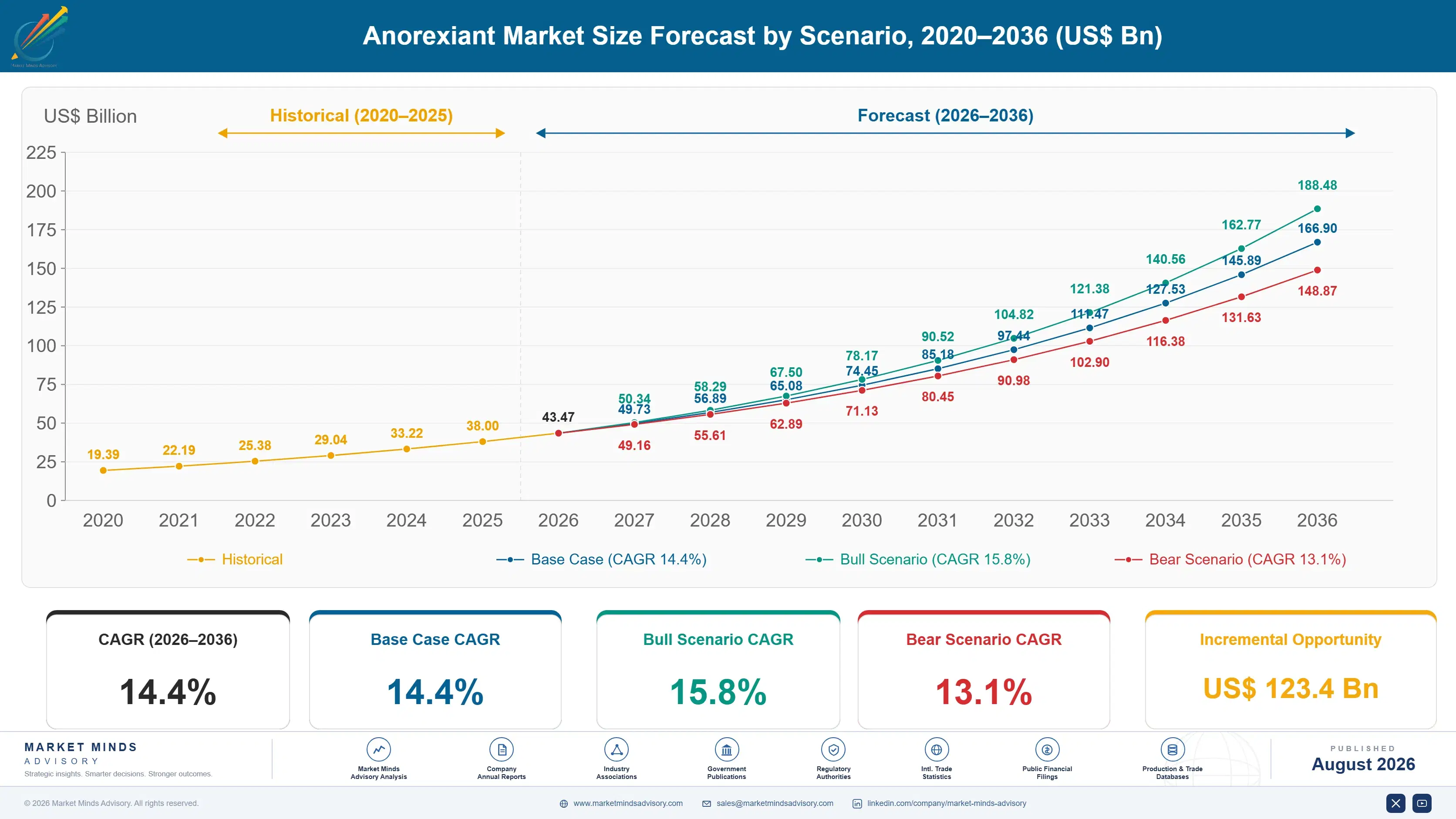
anorexiant-market-2-size-forecast-scenario-1787303439884
Growth ran at roughly 13.2% between 2020 and 2025 measured across the whole category, though that figure buries an extraordinary divergence. Legacy stimulant anorectics and older combination agents declined throughout, while semaglutide and tirzepatide went from launch to the largest pharmaceutical products in the world inside four years. Manufacturing capacity, not demand, limited the whole period, and compounded supply filled part of the gap until regulators closed it.
Base case growth of 14.4% rests on three mechanisms. Oral small molecule agents remove the peptide synthesis constraint and the cold chain, which opens emerging markets that injectable pricing and logistics had closed entirely. Indication expansion into cardiovascular risk, sleep apnoea and liver disease converts a lifestyle exclusion into a covered medical benefit. And treated penetration remains near 6% of the clinically eligible population, so the runway is an access question.
The bull case at 15.8% assumes persistence improves materially as oral dosing, better tolerability and lower prices reduce discontinuation. The bear case at 13.1% is the mirror image: if a third of patients keep stopping within a year and payers respond by restricting coverage to documented responders, revenue per patient falls even as prescriptions rise, a pattern nobody here has modelled.

Anorexiants: Access Constraints and Persistence Reality

Two numbers describe this market better than any forecast. Roughly 6% of the clinically eligible population is on treatment, which sounds like enormous headroom. And only about 33% of patients who start are still taking the drug a year later, which means a substantial share of that headroom is being filled and emptied continuously. Both facts are true and the industry discusses only the first.
TOP FIVE CONCENTRATION92%Effectively a two-company market with a long legacy tail
ANNUAL PERSISTENCE RATE33%Patients still taking therapy twelve months after their first prescription
AVERAGE MONTHLY PRICEUSD 480Blended global net price per patient month after rebates
INSURED COVERAGE SHARE42%Prescriptions reimbursed rather than paid entirely out of pocket
ELIGIBLE POPULATION TREATED6%Share of clinically eligible adults currently receiving any pharmacotherapy
PEPTIDE CAPACITY UTILISATION94%Global injectable peptide manufacturing running near practical maximum output
Access, not demand, has been the binding constraint throughout. Injectable peptide manufacturing has run near practical capacity since 2023, and compounded supply filled part of the shortfall in the United States until regulators declared the shortage resolved and closed that channel. Coverage is the other half of the problem: roughly 42% of prescriptions are reimbursed, and employers have been dropping obesity coverage as spending outran what they budgeted.
The commercial answer to a coverage exclusion is a different indication. Cardiovascular risk reduction, obstructive sleep apnoea, metabolic liver disease and knee osteoarthritis all carry established medical benefit status where weight management alone frequently does not. Every approval in an adjacent indication converts patients from a discretionary lifestyle category into a covered one, which is worth considerably more than the incremental prescribing the indication itself generates.
"The whole industry is modelling a chronic therapy and prescribing behaviour looks nothing like one. Two thirds of patients are gone within a year and the weight comes back, and nobody has properly priced what happens when payers start asking why they funded a course of treatment that ended."
Principal Analyst, Metabolic Disease and Specialty Pharmaceuticals Practice · MM

Market Trends

Oral small molecules remove peptide manufacturing and cold chain constraints

Small molecule incretin agonists taken as a daily tablet sidestep the peptide synthesis capacity that has limited injectable supply since 2023, and they need no refrigeration, no device and no injection training. Manufacturing scales through conventional chemical synthesis rather than through fermentation and purification trains that take years to build. The commercial consequence reaches furthest in markets where injectable pricing and cold chain logistics excluded the category entirely, and it changes who can be treated far more than it changes how well treatment works. That distinction changes competitive position rather than merely product convenience.
Market Impact: Only 6% of eligible treated
Indication expansion converts lifestyle exclusions into medical coverage

Weight management alone sits outside covered benefit design in many payer systems, including United States Medicare Part D by statute. Approvals in cardiovascular risk reduction, obstructive sleep apnoea, metabolic liver disease and knee osteoarthritis change that classification entirely, because each is an established medical condition with its own coverage pathway. Manufacturers are running indication programmes primarily for that reason rather than for the incremental prescribing volume, and the strategy has already moved substantial patient numbers from cash-pay into reimbursed channels across several major markets. Indication programmes are therefore being selected on coverage architecture rather than on epidemiology or trial feasibility.
Market Impact: Reduced events by 20%

Market Opportunities and Growth Drivers

Treated penetration remains near six per cent of eligible adults

Clinical eligibility for weight pharmacotherapy covers a very large share of adults across every developed market and a rapidly growing share of middle income ones, and roughly 6% of that population is currently receiving any treatment at all. The gap is not a demand problem, since prescriber interest and patient demand have both exceeded supply since launch. It is an access problem built from manufacturing capacity, pricing and coverage design, and each of those three is now easing at a different rate. Each of those three constraints is now easing, though at very different rates and in different geographies.
Market Impact: Only 33% persist past 12 months

Cardiovascular outcome evidence reframes obesity as treatable disease

Randomised outcome data showing reduced cardiovascular events in patients with obesity and established heart disease changed the clinical conversation more than any weight loss result had. Guidelines followed, and payers who had classified these agents as lifestyle products found that position harder to defend once mortality and hospitalisation benefits were published. That evidence base is what unlocked Medicare coverage for the cardiovascular indication in the United States despite the statutory exclusion on weight management drugs remaining fully in force. Payers who had classified these agents as lifestyle products found that position much harder to defend afterwards.
Market Impact: Roughly 58% paid out of pocket

Market Restraints and Challenges

Two thirds of patients discontinue within the first year

Persistence at twelve months sits near 33%, driven by gastrointestinal tolerability, cost once coverage lapses, and patients who reach a target weight and assume they can stop. The root cause is that the therapy is chronic and the condition returns when treatment ends, which neither patients nor benefit design have fully absorbed. Commercial impact is that revenue per treated patient falls well below what continuous-use models assume. Manufacturers are responding with slower titration schedules, lower maintenance doses, adherence support programmes and oral formats that remove injection burden. None of it has yet moved the twelve-month figure materially.
Market Impact: Removes constraint on 94% utilisati

Payer coverage design excludes weight management from medical benefit

United States Medicare Part D is barred by statute from covering drugs indicated for weight loss, and many commercial employers have dropped obesity coverage after spending exceeded budget forecasts by wide margins. The root cause is benefit design written decades ago when weight drugs were both ineffective and unsafe. Commercial impact is that roughly 58% of prescriptions are paid out of pocket, which caps volume and worsens persistence together. Manufacturers pursue adjacent indications precisely because those carry coverage pathways that weight management does not. Adjacent indications are pursued precisely because they carry pathways weight management does not.
Market Impact: Moves 42% coverage share upward
4 additional market trends, 3 additional growth drivers, and 2 additional restraints and challenges are covered in the full report. Contact sales@marketmindsadvisory.com to access the complete intelligence.

Segment CAGR and Growth Architecture

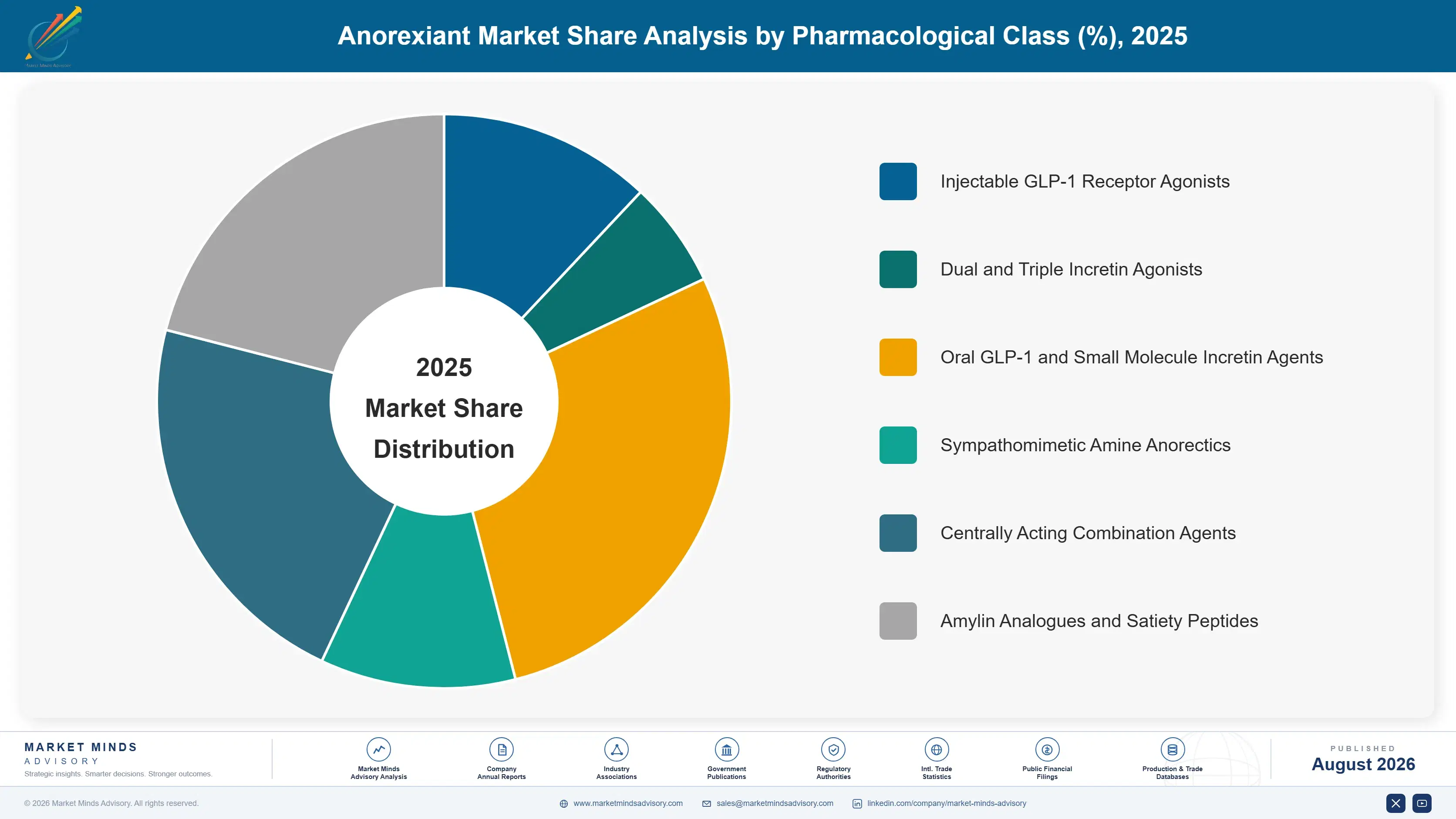
Segmentation follows pharmacological class, because class determines the manufacturing route, the delivery format, the regulatory pathway, the tolerability profile and the price a payer will accept. Six classes cover appetite-acting weight pharmacotherapy without overlap. Indication, whether weight management, cardiovascular risk or sleep apnoea, cuts across several classes and is treated as an application attribute here.
anorexiant-market-2-market-share-analysis-1787303440420

Oral GLP-1 and Small Molecule Incretin Agents

Growing at 21.6%, a full 1.50x the market rate, oral small molecule incretin agonists are the most consequential development in this category since injectable semaglutide. Conventional chemical synthesis replaces peptide fermentation and purification, removing the capacity constraint that has held injectable supply near 94% utilisation since 2023. No refrigeration, no device and no injection training means distribution reaches ordinary retail pharmacy anywhere. Efficacy sits somewhat below the best injectables and tolerability is comparable, which matters far less commercially than the fact that these products can be manufactured at scale and priced for markets injectables never reached. Tiered pricing built at launch rather than discounted downward afterwards is what determines whether the format actually reaches those populations.
CAGR 21.6%

Dual and Triple Incretin Agonists

Dual and triple incretin agonists grow at 18.2% by combining GLP-1 activity with GIP and, in development candidates, glucagon receptor agonism, producing weight reduction beyond what single-target agents achieve. Tirzepatide established the class commercially and several triple agonists are in late-stage development. Clinical differentiation here is genuine rather than marginal, which is unusual in a crowded therapeutic area and supports pricing accordingly. Manufacturing faces the same peptide capacity constraint as single-agonist injectables, so growth depends on capital expenditure programmes committed years ahead of the demand they are intended to serve. Clinical differentiation here is genuine rather than marginal, which is unusual in a crowded therapeutic area and supports the pricing accordingly.
CAGR 18.2%
Full segment breakdown across 6 segments available in the complete report.

Regional Architecture and Country Demand Map

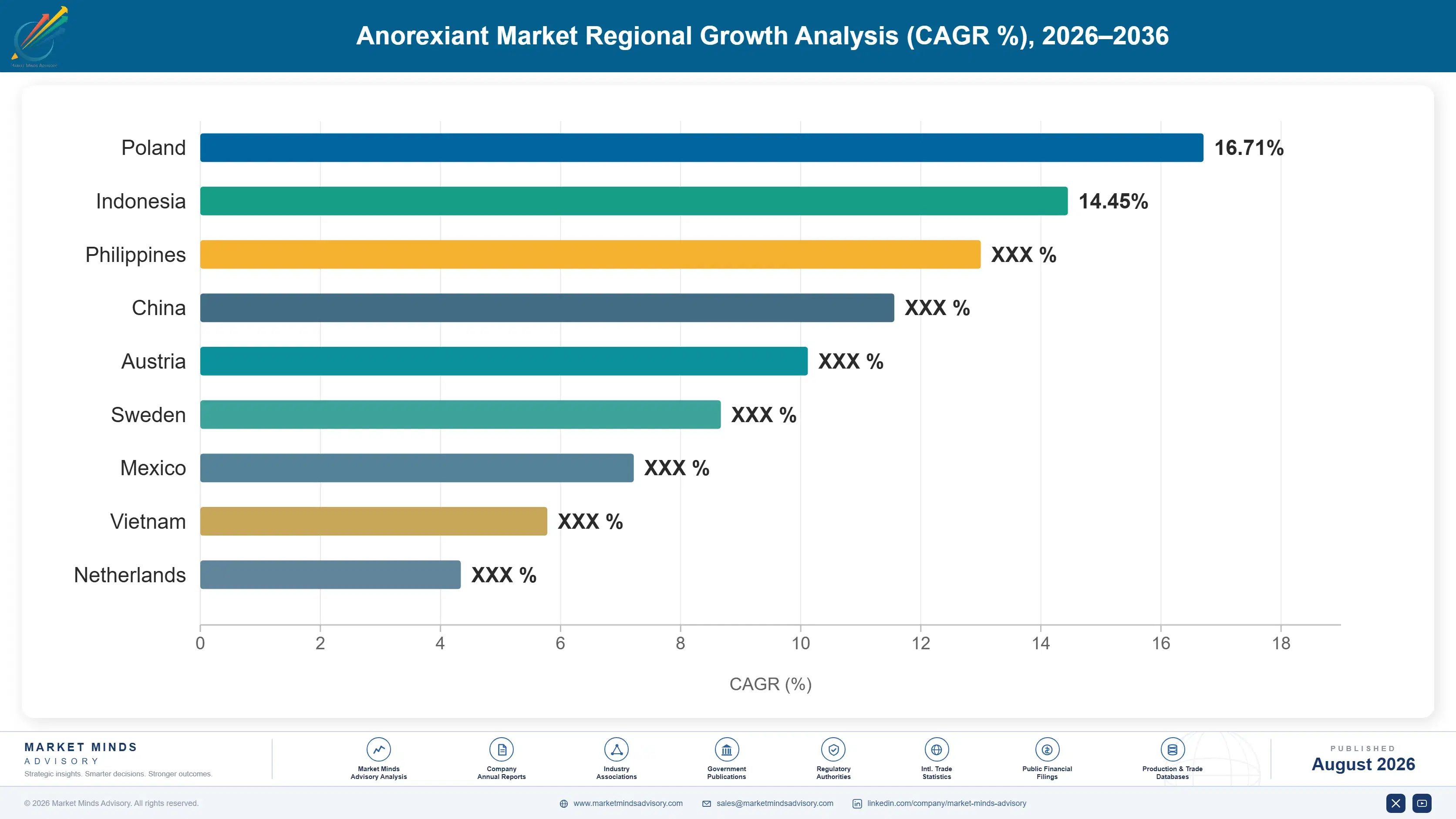
Regional value distribution in this market is more extreme than in any other therapeutic area MMA tracks, because United States pricing and treated volume together dwarf every other geography. Access design rather than obesity prevalence explains almost all of the variation between regions. Prevalence explains remarkably little of it.

North America

North America holds 46% of value, far outside the band MMA normally applies, and the concentration is real rather than an artefact. United States list pricing near a thousand dollars a month has no equivalent in any other health system, the treated population exceeds every other market combined, and cash-pay demand persists at prices that would eliminate the category elsewhere. Note: this share is stated out of band because a single country genuinely dominates global revenue in this therapeutic area. Canadian pricing sits at a fraction of United States levels under patented medicine price review. Growth at 13.2% is the slowest here as net pricing erodes and employer coverage tightens.
Share: 46% | CAGR: 13.2% (2026 to 2036)

Western Europe

Twenty per cent of value, growing at 13.0%. Health technology assessment bodies have restricted reimbursement tightly, generally to patients with high body mass index plus an established comorbidity, and prices negotiated nationally sit well below United States levels. The United Kingdom limits supply through specialist weight management services with long waiting lists. Germany excludes weight management drugs from statutory coverage entirely, leaving a substantial private-pay market. Denmark benefits commercially from hosting Novo Nordisk manufacturing without funding proportionate access domestically. Cardiovascular and sleep apnoea indications are the route through which reimbursement is gradually widening across most national systems. Reimbursement widens through adjacent indications rather than through any change in weight management coverage policy itself.
Share: 20% | CAGR: 13.0% (2026 to 2036)
Regional intelligence for 5 additional markets available in the complete report: East Asia, South Asia and Pacific, Latin America, Middle East and Africa, Eastern Europe. Contact sales@marketmindsadvisory.com.
anorexiant-market-2-country-cagr-analysis-1787303440935

Where Anorexiant Value Is Actually Won

Demand has exceeded supply since launch, so nothing in this category is won through promotion. Value accrues to whoever can manufacture at scale, whoever can move patients from cash-pay into covered benefit through indication breadth, and whoever can keep those patients on therapy past the first year. Promotion decides very little here at all.

Pursue adjacent indications to escape lifestyle coverage exclusions

Weight management sits outside covered benefit design across many payer systems, including United States Medicare Part D by statute, while cardiovascular risk, sleep apnoea and metabolic liver disease all carry established coverage pathways. Each adjacent approval reclassifies patients from discretionary cash-pay into reimbursed benefit, and roughly 58% of prescriptions currently sit outside coverage. The incremental prescribing an indication generates matters far less than the reclassification it enables. Indication programmes should therefore be selected on coverage architecture rather than on epidemiology or trial feasibility. Epidemiology and trial feasibility are the wrong selection criteria entirely.
Market Impact: Addresses roughly 58% of the uncove

Commit peptide manufacturing capital years ahead of demonstrated demand

Injectable peptide capacity has run near 94% utilisation since 2023 and takes three to four years to build, so the constraint binding today was set by decisions taken well before the market existed. Manufacturers who committed capital early captured the demand; those who waited for evidence watched competitors take it. That asymmetry has not gone away for the injectable classes, and the triple agonists now in development will face exactly the same wall. Oral small molecules escape it entirely, which is the strongest argument for the format. That is the strongest argument available for the oral format.
Market Impact: Peptide capacity takes about 4 year

Own persistence as a commercial programme

Only about 33% of patients remain on therapy at twelve months, which means every model built on chronic continuous use overstates revenue per patient substantially. Slower titration, lower maintenance doses, oral formats and structured adherence support all measurably reduce discontinuation, and improving persistence by ten percentage points is worth more than any share gain available through promotion. Very few commercial organisations own persistence as a metric, because it sits between medical affairs and market access and belongs formally to neither of them. It sits between medical affairs and market access and belongs formally to neither of them.
Market Impact: Improving persistence beyond the cu

Build oral distribution for markets injectables could never reach

Tablets need no cold chain, no device, no injection training and no specialist channel, which opens retail pharmacy distribution across India, Southeast Asia, Latin America and Africa where injectable logistics and pricing excluded the category entirely. Those markets contain the majority of the untreated eligible population against a global treated penetration near 6%. Pricing has to be built for those geographies from the outset rather than adapted downward from United States levels, and that requires accepting tiered pricing that finance teams instinctively resist. Finance organisations resist tiered structures instinctively, and the alternative is leaving that demand permanently unserved.
Market Impact: Reaches well beyond the current 6%

Who Controls the Margin Pool

Concentration is extreme at 92% across the top five, measured on annual revenue from products indicated for chronic weight management, the single basis applied throughout. In practice this is a two-company market: Novo Nordisk and Eli Lilly hold almost all of it, with Currax, VIVUS and generic suppliers of phentermine and legacy combinations sharing a small and shrinking remainder that prescribing has largely moved past.
Competition runs on three dimensions simultaneously, which is unusual. Efficacy is genuinely differentiating here rather than marginal, since dual and triple agonists produce weight reduction that single-target agents do not match. Manufacturing capacity is the second and has decided commercial outcomes more than any promotional activity. Indication breadth is the third, because each adjacent approval moves patients from cash-pay into covered benefit.

Pressure is building from three directions at once. Oral small molecule programmes at Eli Lilly, Structure Therapeutics and others threaten the injectable manufacturing advantage that currently protects the incumbents. Chinese manufacturers are preparing for semaglutide patent expiry with compounds already through late-stage trials. Amylin analogues may reset the efficacy ceiling again. Rankings shift most where oral manufacturing scale arrives before injectable capacity does.
anorexiant-market-2-company-positioning-matrix-1787303441454

Competitive Moat and Risk Dimensions

NOVO NORDISK

Moat: Peptide manufacturing scale advantage

Novo Nordisk built peptide production capacity over decades of insulin manufacturing and expanded it aggressively ahead of demand, including through the Catalent site acquisition. That physical capacity is the binding constraint in this category and it takes competitors three to four years to replicate, which converts an industrial asset into a genuine commercial moat.
NOVO NORDISK

Risk: Oral small molecule displacement

The manufacturing advantage protects injectables specifically, and oral small molecules manufactured by conventional chemical synthesis bypass it entirely. Competitor efficacy in dual and triple agonists has already exceeded semaglutide in comparative data. Semaglutide patent expiry in China during 2026 opens a large market to domestic generic manufacturers who are already prepared.
ELI LILLY

Moat: Incretin efficacy leadership position

Tirzepatide demonstrated weight reduction beyond single-target GLP-1 agonists and established dual incretin agonism commercially, and the company's oral small molecule and triple agonist programmes are the most advanced in the industry. Clinical differentiation is genuine rather than promotional in this category, and prescribers and payers both respond to it directly.
ELI LILLY

Risk: Capacity and concentration exposure

Growth depends on peptide manufacturing capacity being built at extraordinary capital cost against demand that persistence data may not sustain. A very large share of company value now rests on a single therapeutic area. Payer restriction to documented responders, if it spreads, would reduce revenue per patient across the entire portfolio simultaneously.

Players Tracked

Prominent Players

Novo Nordisk
Eli Lilly
Currax Pharmaceuticals
VIVUS
Teva Pharmaceutical Industries

Other Key Players

Amgen
Boehringer Ingelheim
Zealand Pharma
Structure Therapeutics
Viking Therapeutics
AstraZeneca
Pfizer
Roche
Jiangsu Hengrui Pharmaceuticals
Innovent Biologics
Sun Pharmaceutical Industries
Hikma Pharmaceuticals
Viatris
Sandoz Group
Gan & Lee Pharmaceuticals

Recent Developments

FEBRUARY 2025

United States regulator confirms resolution of semaglutide shortage

The Food and Drug Administration confirmed that the semaglutide shortage had been resolved, ending the regulatory basis on which compounding pharmacies had been permitted to supply copies and removing a channel that had been serving a substantial share of United States cash-paying patients. Enforcement followed within months.
Signal: Compounded supply had been filling real de
SEPTEMBER 2025

Eli Lilly reports late-stage results for oral small molecule incretin agonist

Eli Lilly reported late-stage clinical results for an orally administered small molecule incretin agonist, a compound manufactured through conventional chemical synthesis rather than peptide production, addressing the capacity constraint that has limited injectable supply since the category began scaling. No cold chain or injection device is required.
Signal: Chemical synthesis removes the manufacturi
MARCH 2026

Chinese manufacturers prepare domestic launches ahead of semaglutide expiry

Several Chinese pharmaceutical manufacturers including Hengrui and Gan & Lee advanced domestic semaglutide programmes toward launch ahead of Chinese patent expiry, an organic development effort rather than any licensing arrangement, targeting a market where pricing has excluded most patients to date. Pricing is expected to sit far below imported levels.
Signal: Patent expiry in China opens up the larges

Peptide Synthesis and Device Cost Exposure

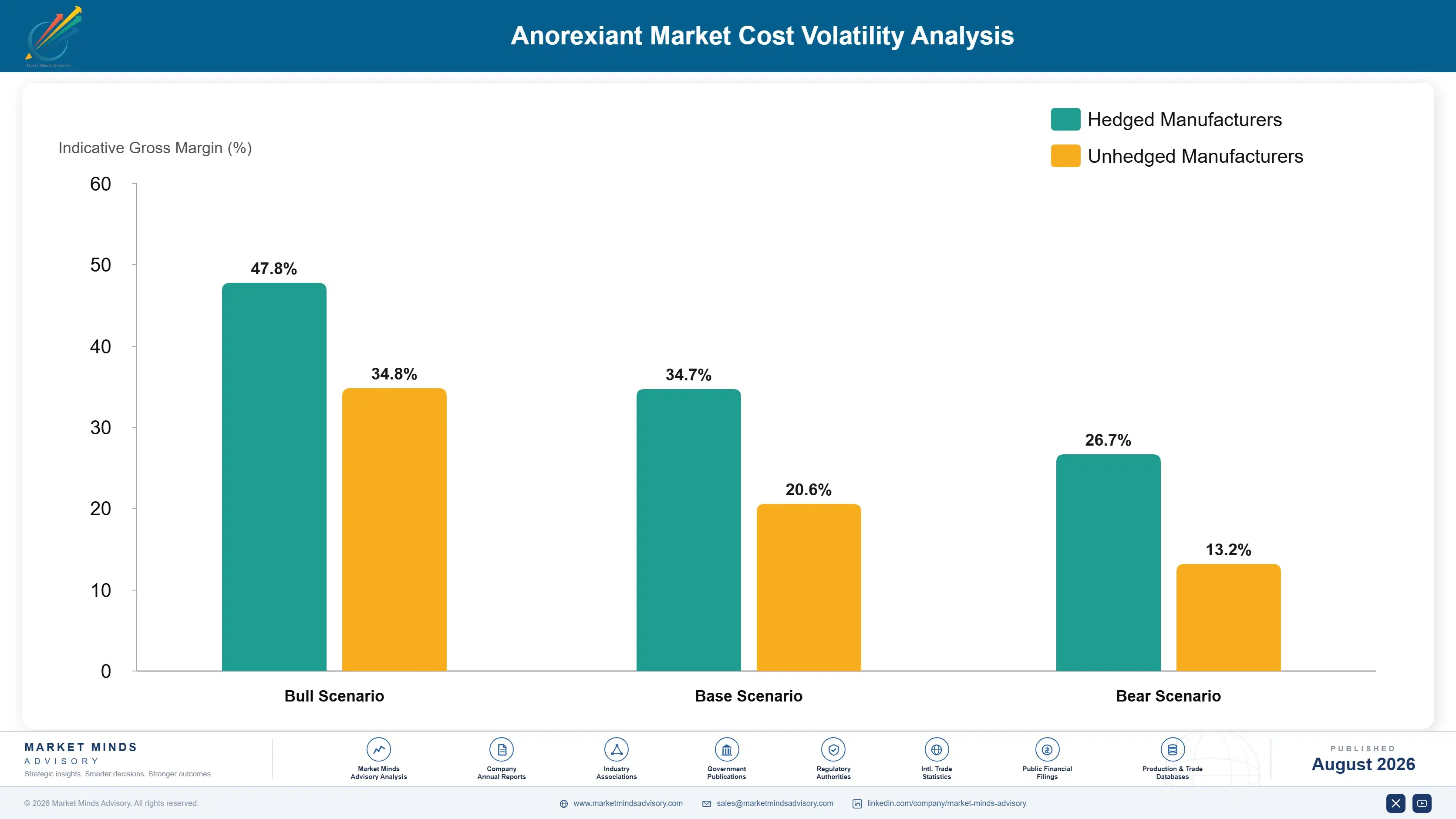
Cost structures differ fundamentally between injectable peptides and oral small molecules, and that difference is the central industrial fact of this market. Peptide active ingredient manufacture through solid phase or recombinant synthesis accounts for roughly 38% of injectable cost of goods, with capacity concentrated among very few qualified producers. Injection device and prefilled pen assembly contributes a further 21%, and cold chain distribution carries most of the remainder.
The 2023 to 2025 capacity squeeze demonstrated what that concentration means. Peptide synthesis capacity worldwide could not meet demand at any price, and both Novo Nordisk and Eli Lilly disclosed multi-billion dollar capital programmes and acquisition of contract manufacturing sites in their annual reporting for those years. Novo Nordisk's acquisition of Catalent fill-finish facilities was explicitly a capacity transaction. Nothing about that constraint was solvable through procurement or pricing.

The disadvantage falls decisively on companies without owned peptide capacity. A manufacturer depending on contract synthesis competes for slots against every other peptide programme and cannot secure allocation at any price when demand exceeds supply. Oral small molecules escape the problem entirely through conventional chemical synthesis, which is why that format changes competitive position rather than merely product convenience.
anorexiant-market-2-cost-volatility-analysis-1787303441650

Own peptide synthesis and fill-finish capacity rather than contracting it

Contract peptide capacity is allocated to whoever holds the largest standing commitment, and in a category where demand exceeded supply for three consecutive years no amount of money secured additional slots. Owned capacity converts a hard constraint into a scheduling question. The capital requirement is enormous and it has been the single clearest determinant of commercial position in this market.

Develop oral small molecule programmes to bypass peptide constraints entirely

Conventional chemical synthesis scales through existing pharmaceutical manufacturing infrastructure rather than through purpose-built peptide trains that take years to commission. That removes the capacity wall, the cold chain and the device assembly cost simultaneously. It is the only genuine escape from a constraint that no procurement strategy has been able to address since the category began scaling.

Design tiered pricing for oral formats from initial launch planning

Oral products can reach markets that injectable pricing and logistics excluded, but only where pricing is built for those geographies rather than discounted downward from United States levels afterwards. Establishing tiered structures at launch avoids reference pricing damage later. Finance organisations resist this instinctively, and the alternative is leaving the majority of the eligible population untreated indefinitely.

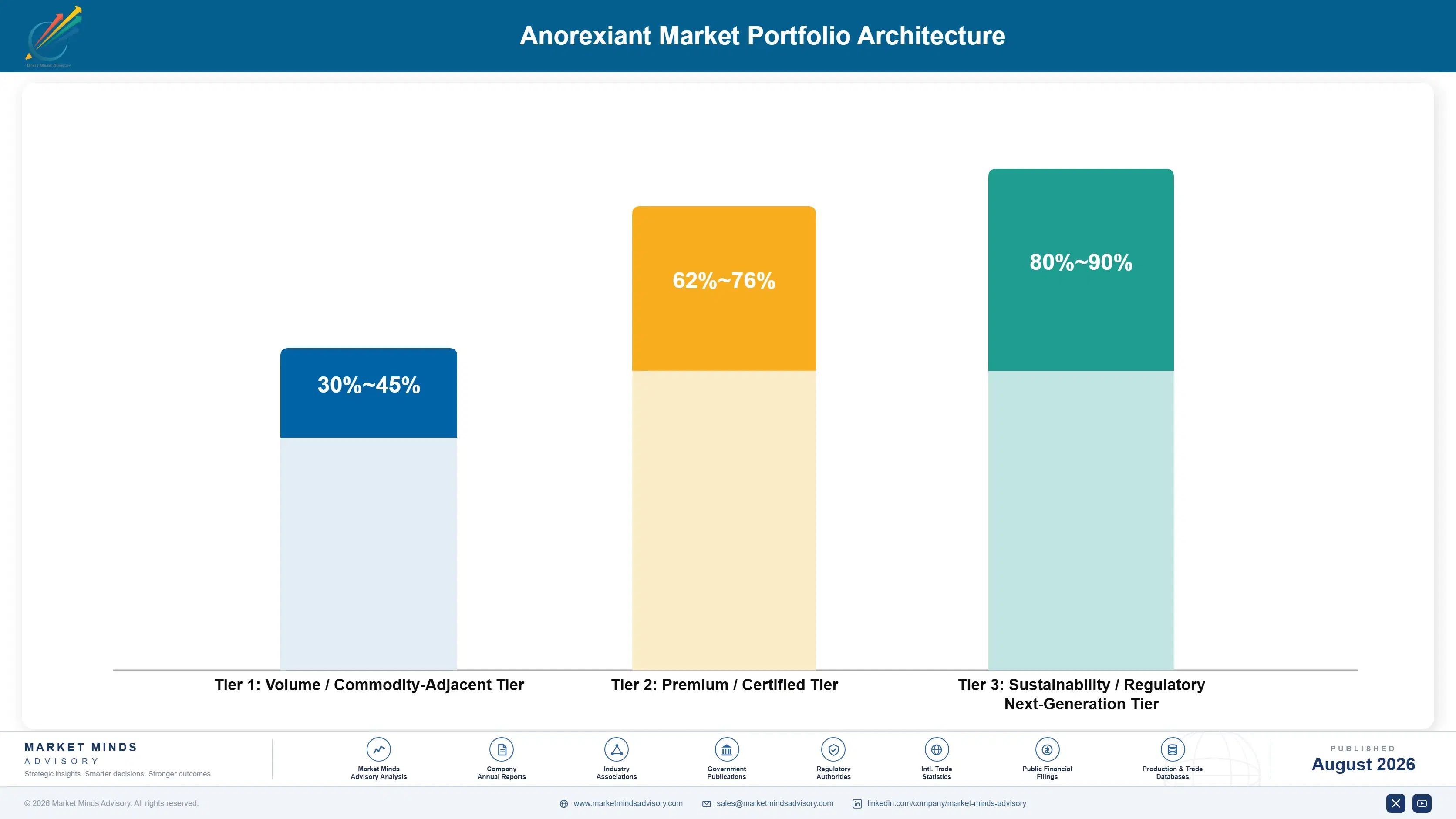
Portfolio Architecture for Margin Defence

Margin architecture here has almost nothing to do with cost and everything to do with pricing power. Legacy stimulant anorectics are cheap generics that prescribers have largely abandoned, earning commodity returns on declining volume. Injectable incretin agonists earn extraordinary margins because demand exceeds supply and patents remain in force. Oral small molecules will earn well at lower unit prices, because their purpose is reaching populations current pricing excludes.
The volume versus premium tension runs along a geographic line and it is stark. Almost half of global value sits in one country paying prices no other health system will accept, while the majority of the eligible untreated population lives in markets where those prices are irrelevant. Serving both requires tiered pricing that invites reference pricing damage, and every manufacturer in this category is managing that tension rather than resolving it.

High-value pools concentrate where an indication carries covered benefit status. Cardiovascular risk reduction, obstructive sleep apnoea and metabolic liver disease all reach reimbursed channels that weight management alone does not, and patients treated under those indications persist longer because cost is not their own. Cash-pay weight management sits at the other extreme entirely.

Volume / Commodity-Adjacent Tier

Sympathomimetic amine anorectics and older centrally acting combinations, long generic and largely abandoned by prescribers now that incretin agents exist. Pricing is minimal and declining volume comes mostly from cost-constrained patients and markets.
Gross Margin: 30-45%

Premium / Certified Tier

Oral small molecule incretin agents and emerging amylin analogues, priced below injectables deliberately because their commercial purpose is reaching populations that injectable pricing and cold chain logistics have excluded entirely.
Gross Margin: 62-76%

Sustainability / Regulatory / Next-Generation Tier

Injectable GLP-1, dual and triple incretin agonists under patent, where demand exceeds manufacturing capacity and clinical differentiation is genuine. Highest margins in the pharmaceutical industry and protected by capacity as much as by patents.
Gross Margin: 80-90%
anorexiant-market-2-portfolio-architecture-1787303442160

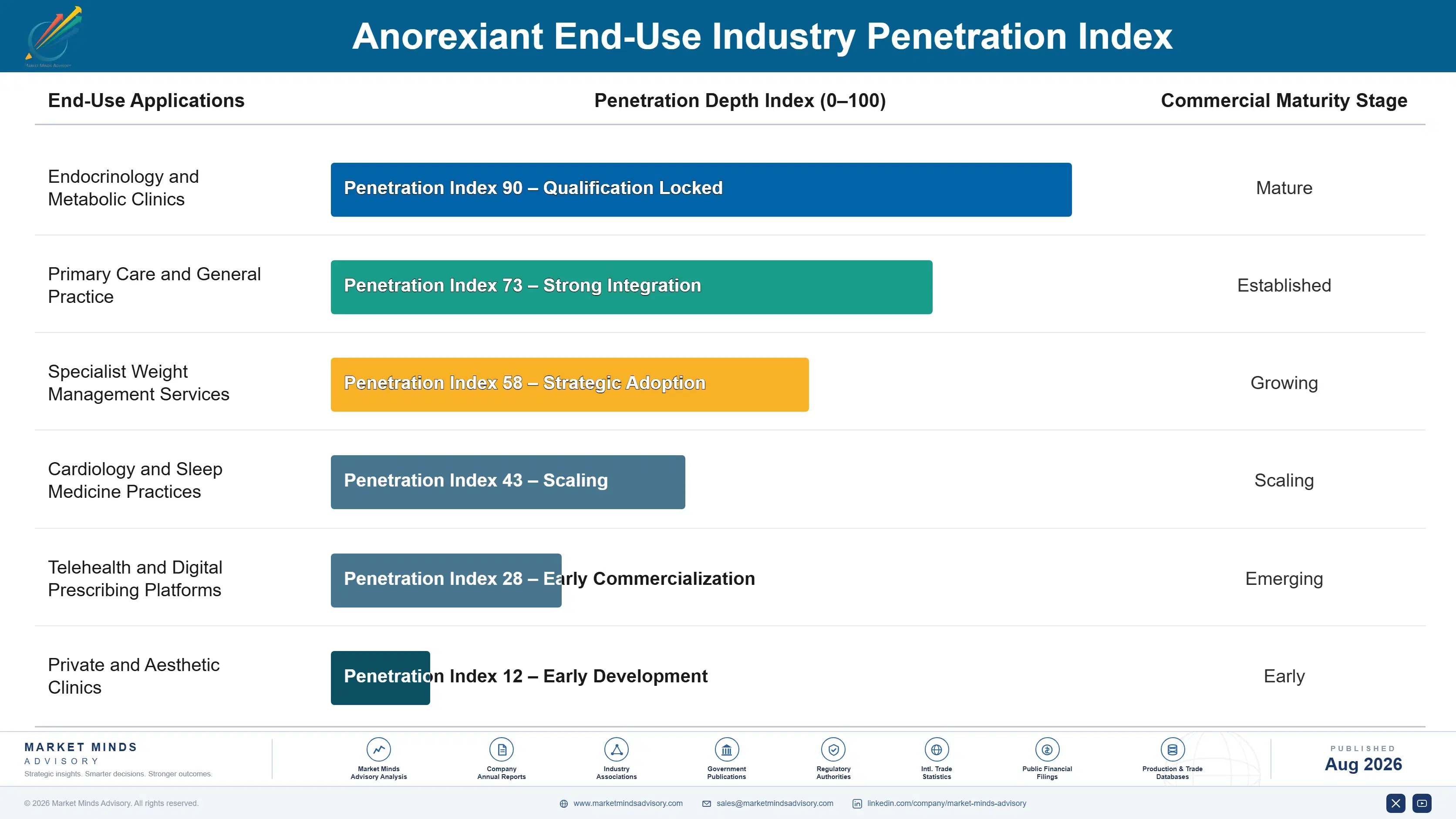
Chronic Therapy Behaving Like Acute Treatment

The industry models this as chronic therapy and patients treat it as a course. Persistence at twelve months sits near 33%, and the weight returns after discontinuation because the underlying physiology does not change. That gap between the commercial model and observed behaviour is the single largest source of forecast error in this category, and correcting it reduces lifetime patient value by considerably more than any pricing scenario does.
Stickiness varies sharply by who is paying and why. Patients treated under a cardiovascular or sleep apnoea indication persist longest, because coverage removes the cost decision and the indication frames treatment as ongoing disease management. Employer-covered weight management patients persist moderately until coverage changes. Cash-paying patients show the weakest persistence anywhere in the category, discontinuing at the first budget pressure or once a target weight is reached.

Buyer profiles have shifted from prescriber to payer decisively. Five years ago a physician decided whether a patient received weight pharmacotherapy. Today formulary committees, employer benefit consultants and prior authorisation criteria decide it, and prescriber intent frequently fails to convert into a filled prescription at all. Manufacturers have responded by building market access organisations that dwarf their promotional ones.
anorexiant-market-2-end-use-penetration-index-1787303442649

Where Anorexiant Strategy Must Land

These are among the four positions where our research anticipates prominent divergence between winners and laggards over the coming forecast period. Each is grounded in the demand model, the regulatory perimeter, and the announced capacity pipeline.
01 / PERSISTENCE PROGRAMME OWNERSHIP

Two thirds of patients leave and nobody owns that number

Persistence at twelve months sits near 33%, which means every forecast built on chronic continuous use overstates revenue per treated patient by a considerable margin that has not yet been priced. Slower titration, lower maintenance dosing, oral formats and structured adherence support all measurably reduce discontinuation across every cohort MMA has examined. Improving persistence by ten percentage points is worth considerably more than any share gain promotion could deliver, and yet almost no commercial organisation formally owns the metric at all.
02 / COVERAGE RECLASSIFICATION STRATEGY

Indications are bought for coverage, not for prescribing volume

Weight management sits outside covered benefit design across many payer systems including United States Medicare Part D by statute, while cardiovascular risk, sleep apnoea and metabolic liver disease each carry established reimbursement pathways of their own. Roughly 58% of prescriptions currently sit outside any coverage at all, paid directly by patients. Every adjacent approval reclassifies patients from discretionary cash-pay into funded benefit, and that reclassification is worth considerably more than whatever incremental prescribing the new indication itself happens to generate.
03 / MANUFACTURING CAPITAL TIMING

Capacity decisions taken four years ago decided this market

Injectable peptide manufacturing has run near 94% utilisation since 2023 and takes three to four years to commission, so the constraint binding commercial outcomes today reflects capital committed well before the category existed at scale. Manufacturers who built capacity ahead of demonstrated demand captured the volume, while those awaiting evidence could only watch it happen. Oral small molecules manufactured through conventional chemical synthesis are the only genuine escape from that constraint, which remains the strongest available argument for the format.
04 / TIERED ACCESS DESIGN

The untreated majority lives where current pricing is irrelevant

Roughly 6% of the clinically eligible adult population currently receives any pharmacotherapy, and almost all of that untreated majority lives in markets where United States pricing has no relevance whatsoever to what patients or systems can pay. Oral formats remove the cold chain and device barriers, but only tiered pricing built at launch rather than discounted downward afterwards actually reaches those populations. Finance organisations resist tiered pricing structures instinctively, and the alternative is simply leaving that very large demand permanently unserved.

Engagement Snapshot From the Field

A live engagement with an industry participant carrying material or product regulatory and market exposure ahead of a defining policy shift, showing how our research translates into a defensible multi-year portfolio strategy.
MARKET MINDS ADVISORY · CLIENT ENGAGEMENT SUMMARY
Anorexiant Producer Strategic Portfolio Review and Transition Roadmap 2026·Investment Scenario on Anorexiant Exposure Evaluation 2025-26
CLIENT PROFILE
A mid-capitalisation pharmaceutical company with an established diabetes portfolio and an early-stage incretin agonist programme, operating principally across European and selected emerging markets. Annual revenue was approximately USD 2.1 billion (client-reported, unverified by MMA), with no marketed product indicated for weight management. The company held no owned peptide manufacturing capacity and relied entirely on contract synthesis for its existing biologic products.
STRATEGIC CHALLENGE
The board had approved early development funding for an injectable incretin agonist and needed to decide whether to commit the capital required for owned peptide manufacturing capacity, or to redirect the programme toward an oral small molecule candidate at an earlier stage. Contract peptide capacity had been unobtainable at any price for two consecutive years, and competitor capital programmes were already committed.
MMA APPROACH
MMA conducted 47 expert interviews across endocrinologists, payer medical directors, employer benefit consultants, contract peptide manufacturers and market access specialists in six countries. A quantitative survey of 3,800 respondents established treatment-seeking behaviour, persistence drivers and willingness to pay across covered and cash-pay populations. We then modelled both development options against observed capacity allocation, persistence data and coverage trajectories in each target market.
KEY FINDINGS
  1. Contract peptide manufacturers reported allocation committed several years forward to existing large customers, and none could offer meaningful capacity to a new entrant at any price discussed.
  2. Payer medical directors in five of six markets expected to restrict weight management coverage further while widening it for cardiovascular and sleep apnoea indications carrying established benefit pathways.
  3. Twelve-month persistence among cash-paying patients ran roughly half that of covered patients, and the gap widened further wherever monthly cost exceeded a defined share of household income.
  4. Emerging market prescribers identified cold chain and injection training as the primary barriers to prescribing, ranking both above monthly cost in three of the four markets surveyed.
CLIENT PROFILE
A mid-capitalisation pharmaceutical company with an established diabetes portfolio and an early-stage incretin agonist programme, operating principally across European and selected emerging markets. Annual revenue was approximately USD 2.1 billion (client-reported, unverified by MMA), with no marketed product indicated for weight management. The company held no owned peptide manufacturing capacity and relied entirely on contract synthesis for its existing biologic products.
STRATEGIC CHALLENGE
The board had approved early development funding for an injectable incretin agonist and needed to decide whether to commit the capital required for owned peptide manufacturing capacity, or to redirect the programme toward an oral small molecule candidate at an earlier stage. Contract peptide capacity had been unobtainable at any price for two consecutive years, and competitor capital programmes were already committed.
MMA APPROACH
MMA conducted 47 expert interviews across endocrinologists, payer medical directors, employer benefit consultants, contract peptide manufacturers and market access specialists in six countries. A quantitative survey of 3,800 respondents established treatment-seeking behaviour, persistence drivers and willingness to pay across covered and cash-pay populations. We then modelled both development options against observed capacity allocation, persistence data and coverage trajectories in each target market.
KEY FINDINGS
  1. Contract peptide manufacturers reported allocation committed several years forward to existing large customers, and none could offer meaningful capacity to a new entrant at any price discussed.
  2. Payer medical directors in five of six markets expected to restrict weight management coverage further while widening it for cardiovascular and sleep apnoea indications carrying established benefit pathways.
  3. Twelve-month persistence among cash-paying patients ran roughly half that of covered patients, and the gap widened further wherever monthly cost exceeded a defined share of household income.
  4. Emerging market prescribers identified cold chain and injection training as the primary barriers to prescribing, ranking both above monthly cost in three of the four markets surveyed.
RECOMMENDED STRATEGY
Phase 1: Phase one: halt the injectable programme at the current development gate rather than committing peptide manufacturing capital that would arrive years behind established competitors. Phase 2: Phase two: redirect development funding toward the oral small molecule candidate, which scales through existing chemical synthesis infrastructure the company already owns and operates. Phase 3: Phase three: build tiered pricing and emerging market access planning into the oral programme from the outset rather than adapting European pricing downward later.
OUTCOME
The client halted the injectable programme and redirected approximately USD 310 million into oral small molecule development (client-reported, unverified by MMA), avoiding a peptide capital programme that would have reached commissioning years behind competitors. The oral candidate entered late-stage development with tiered pricing built into its target product profile from the beginning.

Frequently Asked Questions

Foundational context covering the market sizes, CAGR, scope, country, region and competition that inform every finding below. This section is provided to cover basics and most often pre-purchase conversations, answered from the MMA Primary Research Dataset.

What is the current size of the Anorexiant Market?

The global anorexiant market was valued at USD 38.0 billion in 2025, covering injectable and oral incretin agonists, sympathomimetic amines, centrally acting combinations and amylin analogues. Lipase inhibitors and diabetes-indicated use of the same molecules fall outside this definition.

How large will the Anorexiant Market be by 2036?

MMA forecasts the market at USD 166.9 billion by 2036, expanding 3.84 times from the 2026 base of USD 43.47 billion. That represents roughly USD 123.43 billion of incremental value across the forecast decade.

What is the CAGR for the Anorexiant Market 2026 to 2036?

The base case compound annual growth rate is 14.4%, with a bull case of 15.8% and a bear case of 13.1%. The bear case reflects persistent discontinuation combined with payer restriction to documented responders.

Which segment is growing fastest?

Oral GLP-1 and small molecule incretin agents grow at 21.6%, a full 1.50x the overall market rate. Conventional chemical synthesis removes the peptide capacity constraint, the cold chain and the injection device simultaneously.

Who are the major companies in the Anorexiant Market?

Novo Nordisk and Eli Lilly hold almost the entire market, with the top five reaching 92% of revenue. Currax, VIVUS and generic suppliers share a small and shrinking remainder of legacy products.

Which country is growing fastest?

China grows fastest at 23.8%, as domestic manufacturers prepare for semaglutide patent expiry with compounds already through late-stage trials. South Asia and Pacific is the fastest region overall at 16.6%.

Report Segmentation Architecture

The full report scope spans multiple orthogonal segmentation dimensions, with cross-tabulated demand data provided for each dimension pair. Coverage extends further to regional breakdowns, trend trajectories, and the competitive detail needed to support segment-level decision-making.

By Pharmacological Class

  • Injectable GLP-1 Receptor Agonists
  • Dual and Triple Incretin Agonists
  • Oral GLP-1 and Small Molecule Incretin Agents
  • Sympathomimetic Amine Anorectics
  • Centrally Acting Combination Agents
  • Amylin Analogues and Satiety Peptides

By End-Use Industry

  • Endocrinology and Metabolic Clinics
  • Primary Care and General Practice
  • Specialist Weight Management Services
  • Cardiology and Sleep Medicine Practices
  • Telehealth and Digital Prescribing Platforms
  • Private and Aesthetic Clinics

By Commercial Dimension

  • Reimbursed Prescription Coverage
  • Employer Benefit Formulary Inclusion
  • Cash-Pay and Out-of-Pocket Purchase
  • Specialty Pharmacy Distribution
  • Telehealth Direct-to-Patient Channels
  • National Tender and Public Procurement

By Region

  • North America
  • Western Europe
  • East Asia
  • South Asia and Pacific
  • Latin America
  • Middle East and Africa
  • Eastern Europe

Scope, Methodology, and Coverage

Every figure in this report is reproducible from documented input assumptions. The scope below maps the historical period, the forecast horizon, the segmentation dimensions, and the countries covered, alongside the underlying primary and qualitative methodology.
Historical Period
2020 to 2025
Forecast Period
2026 to 2036
Base Year
2025 (USD billions; MMA Primary Research Dataset, August 2026)
Market Definition
This market comprises pharmacological agents indicated for chronic weight management that act by suppressing appetite or increasing satiety, measured at manufacturer revenue net of rebates across reimbursed, employer-covered, cash-pay and public procurement channels. Coverage spans injectable GLP-1 receptor agonists including semaglutide and liraglutide, dual and triple incretin agonists including tirzepatide, oral GLP-1 and small molecule incretin agents, sympathomimetic amine anorectics including phentermine and diethylpropion, centrally acting combination agents including phentermine with topiramate and naltrexone with bupropion, and amylin analogues and emerging satiety peptides. Lipase inhibitors acting on fat absorption rather than appetite, bariatric surgery and implanted weight loss devices, use of the same molecules under diabetes indications, non-prescription weight loss supplements and herbal preparations, meal replacement and nutritional products, and compounded copies supplied outside approved regulatory pathways fall outside scope.
Quantitative Units
USD billions (current prices, net of rebates); treated patient counts by class; average net price per patient month; twelve-month persistence rates; eligible population penetration
Segmentation Dimensions
By Pharmacological Class; By End-Use Industry; By Commercial Dimension; By Region
Regions Covered
North America, Western Europe, East Asia, South Asia and Pacific, Latin America, Middle East and Africa, Eastern Europe
Countries Covered
United States, Canada, Mexico, Germany, United Kingdom, France, Italy, Spain, Denmark, Netherlands, Switzerland, China, Japan, South Korea, Taiwan, India, Australia, Singapore, Malaysia, Thailand, Brazil, Argentina, Chile, Colombia, Saudi Arabia, United Arab Emirates, Israel, South Africa, Poland, Czechia, Hungary, Russia, and additional markets relevant to weight pharmacotherapy access analysis
Key Companies Profiled
Novo Nordisk, Eli Lilly, Currax Pharmaceuticals, VIVUS, Teva Pharmaceutical Industries, Amgen, Boehringer Ingelheim, Zealand Pharma, Structure Therapeutics, Viking Therapeutics, AstraZeneca, Pfizer, Roche, Jiangsu Hengrui Pharmaceuticals, Innovent Biologics, Sun Pharmaceutical Industries, Hikma Pharmaceuticals, Viatris, Sandoz Group, Gan & Lee Pharmaceuticals
Quantitative Methodology
Primary survey, n=3,800 respondents, Q4 2025, six countries; demand-side model with trade association cross-validation
Qualitative Methodology
47 expert interviews, Q4 2025; applied to validate demand model assumptions, identify emerging dynamics, and assess competitive positioning
Report Format
PDF and XLSX data workbook (Word format preview document)
Publisher
Market Minds Advisory
Report Code
MMA-2026-HLT-136
Published
August 2026
Contact
sales@marketmindsadvisory.com | www.marketmindsadvisory.com

Purchase the full Anorexiant Market Report (2026 to 2036).

The full MMA report treats persistence as the central variable rather than a clinical footnote, modelling how twelve-month discontinuation near two thirds reshapes revenue per treated patient across every scenario. It sizes six pharmacological classes and seven regions to 2036, modelling treated penetration, net pricing, coverage share and persistence separately so that prescription growth can be distinguished from revenue growth. Competitive assessment covers twenty companies on one consistent net revenue basis. Manufacturing exposure is traced through peptide synthesis capacity, device assembly and the oral small molecule escape route. Four commercial levers and a strategic verdict close the report, grounded in 47 expert interviews and a 3,800-respondent survey.
Six pharmacological classes sized separately to 2036
Twelve-month persistence modelled against chronic use assumptions
Coverage reclassification through adjacent indications quantified fully
Twenty companies assessed on one consistent basis
Peptide capacity constraints mapped against oral synthesis alternatives
Anonymised client engagement with tested strategic recommendations

Built For The People Who Decide

From boardroom strategy to bench-side execution, this report is read cover-to-cover by leaders shaping the next decade of their industry, turning demand scenarios, market dynamics and valuation benchmarks into decisions.
CXOs/ Presidents/ VPs/ Managers
M&A and Corporate Development
Strategy Teams and R&D Heads
Procurement and Product Directors
Regulatory and Compliance Leaders
Investor Relations and Equity Analysts