Market Minds Advisory
Animal Feed Sweetener Market

Animal Feed Sweetener Market: Palatability Science Meets Clean Label Pressure

Animal feed sweetener manufacturers are shifting toward heat-stable and natural sweetening systems as piglet weaning feed intake optimization, premium pet food palatability, and clean label pressure reshape formulation strategy across livestock and companion animal nutrition.

Lead Analyst

Lisa Gevelber

Published

September 2026

Make Smarter Decisions with Customized Research Insights

Request a free sample report and evaluate market opportunities, growth trends, and competitive dynamics relevant to your business needs.

2025 MARKET VALUE$0.9BMarket Size 2025
2036 FORECAST VALUE$2.0BBase Case , 2026 to 2036
CAGR 2026 TO 20366.8 %Bull 8.0% / Bear 5.5%
INCREMENTAL OPPORTUNITY$0.9BNet 10- year value creation
EXPANSION MULTIPLE1.93x2036 value over 2026 base
Strategic Levers
M&A Pipeline
Regional Outlook
Country Rankings
Competitive Intelligence
Segmental Deep-dive
Call-Us : 91 93563 13602

Executive Snapshot and Market Trajectory

Animal feed sweetener demand is splitting between cost-effective saccharin-based systems for mainstream livestock feed and premium sucralose, neotame, and stevia-based sweeteners for piglet weaning diets and pet food. Feed intake optimization during early-life nutrition stages is driving formulation investment considerably across the industry.
Swine and poultry feed anchor volume demand, but stevia-based natural sweeteners are the fastest-expanding segment as premium pet food brands chase clean label positioning and piglet weaning diets require palatability enhancement to sustain feed intake during stressful early-life transitions. East Asia hosts the largest share of global consumption, driven by China's dominant swine production base, while North American and European pet food manufacturers pay substantial premiums for documented natural sweetening systems sold into premium channels.
Competition splits between diversified global feed additive houses with proprietary sweetener blending capability and numerous smaller regional formulators competing mainly on price for commodity saccharin-based products. Regulatory scrutiny around synthetic sweetener residue limits is tightening in the European Union and China, while research investment into natural and heat-stable sweetening systems is accelerating as feed conversion economics and palatability become the primary competitive battleground across major livestock markets.
Market Definition
The Animal Feed Sweetener Market comprises synthetic and natural sweetening compounds, including saccharin, sucralose, neotame, and stevia-based systems, used to enhance palatability and feed intake in livestock, aquafeed, and pet food formulations. It excludes bulk caloric sweeteners used as energy sources and human food-grade sweetener products.
Base Year Value
$0.9B in 2025 (MMA Primary Research Dataset, August 2026)
Forecast Period
2026 to 2036, eleven discrete annual values
CAGR
6.8% base case. Bull 8.0%. Bear 5.5%.
Fastest Growth Segment
Stevia-Based Natural Sweeteners: 10.5% CAGR
Fastest Growth Country
China: 8.9% CAGR
Fastest Growth Region
South Asia and Pacific: 8.8% CAGR
Largest Region
East Asia: 28% of 2025 global value
Market Leaders
Kerry Group, Adisseo, Novus International, Kemin Industries, and Pancosma lead by global sweetener production volume and formulation research depth. Source: MMA Analysis based on company annual reports.
Primary Survey
n=3,800 procurement and R&D decision-makers, Q4 2025, six countries
Methodology
Demand-side build-up, cross-validated against public data, 47 expert interviews

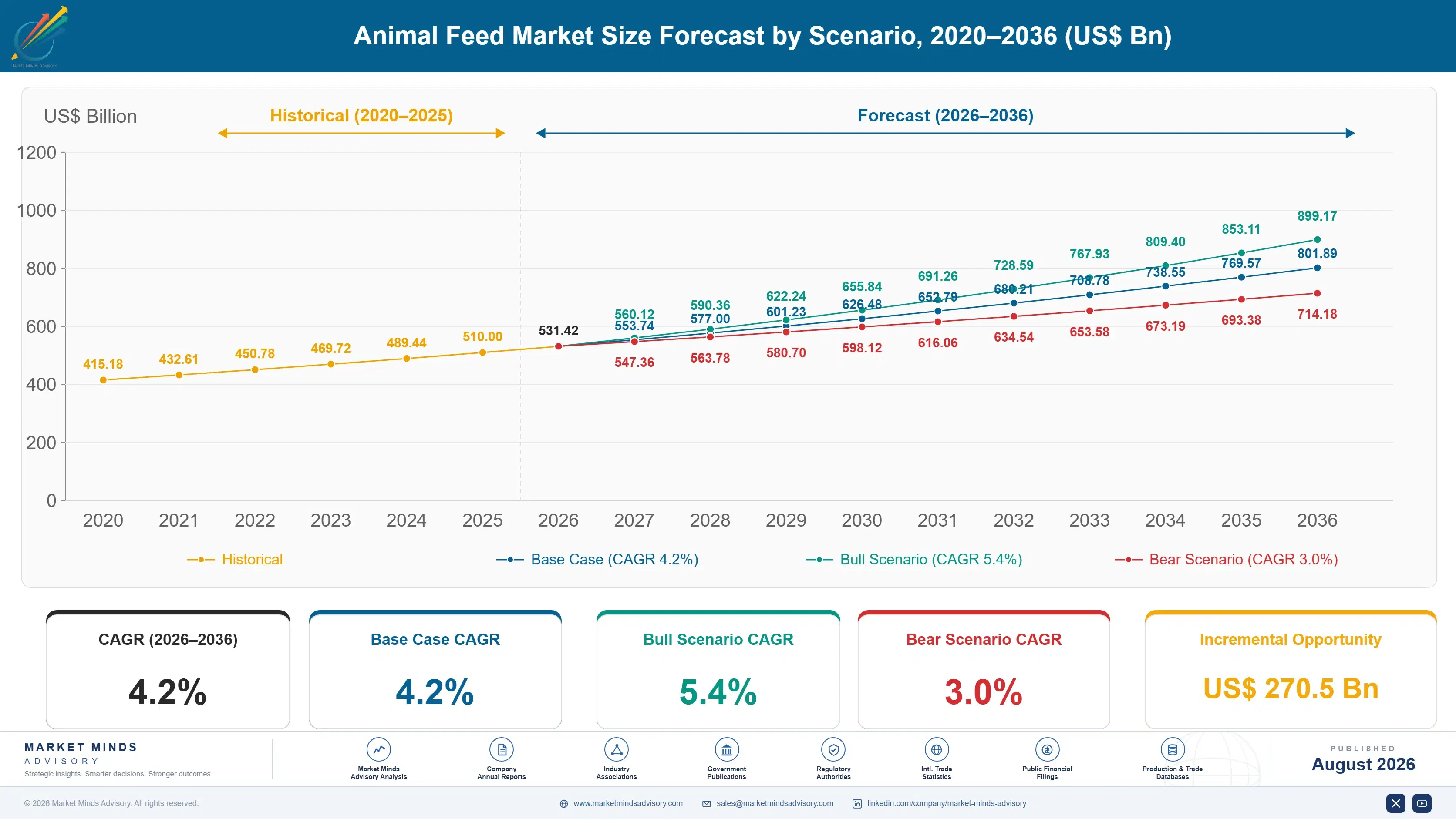
Animal Feed Market Forecast Scenarios

animal-feed-sweetener-market-size-forecast-scenario-1787461743084
Between 2020 and 2025 the market grew at a historical pace of roughly 4.2 percent annually, as global livestock and aquaculture production expanded steadily despite periodic feed grain price volatility tied to weather disruption and geopolitical supply shocks affecting major corn and wheat exporting regions during parts of the period. Domestic feed producers in most regions absorbed much of this volatility internally.
The base case assumes growth near 4.2 percent annually through 2036, anchored in three commercial mechanisms: rising global poultry and aquaculture protein consumption outpacing red meat consumption growth in most developing markets, continued feed conversion efficiency investment that lowers per-unit feed requirements even as total production volume expands, and integrated protein producers expanding in-house compound feed capacity to secure supply continuity. These mechanisms reinforce each other as producers and compounders coordinate around shared efficiency benchmarks more closely.
A bull scenario builds on faster alternative protein adoption easing fishmeal and soybean meal cost pressure across aquaculture and poultry rations, while a bear scenario centers on recurring corn and soybean price spikes tied to weather disruption compressing milling margins and slowing planned capacity expansion among independent feed compounders, a scenario several are already preparing contingency plans to address.

Palatability Science and the Clean Label Reformulation Race

Animal feed sweetener sits at the intersection of two converging forces: enduring demand for feed intake optimization during stressful life stages like weaning and an emerging clean label mandate pushing premium pet food and livestock brands toward natural sweetening systems. Feed additive houses that once treated sweeteners as a minor formulation afterthought are now investing in heat-stable and natural sweetener research, betting that palatability science will command durable premiums over commodity saccharin within the next decade.
MARKET CONCENTRATIONCR5 40%Leading five suppliers hold under half global supply
AVERAGE SELLING PRICE$12 per kgNatural sweetening systems command substantial price above saccharin
TOP PRODUCING COUNTRY SHAREChina 27%Concentrated swine production anchors regional consumption dominance heavily
CAPACITY UTILIZATION76%Blending plants run near full rates amid rising demand
FEEDSTOCK SHARE OF COGS44%Sweetener and carrier costs dominate total formulation expense heavily
EXPORT TRADE INTENSITY33%Meaningful cross border shipment volume links producers to distant buyers
Commercially, the market still behaves partly like a mature specialty additive category: saccharin-based sweeteners trade on delivered price and consistent sweetening intensity, with thin margins and long-standing supplier relationships across mainstream livestock feed manufacturing. Sucralose, neotame, and stevia-based systems command a distinctly different economics, priced on heat stability and natural label positioning rather than commodity cost, giving suppliers who master these formulations a genuinely differentiated margin position across premium pet food and piglet nutrition channels.
Looking ahead, the decade's defining forces are regulatory and behavioral: how quickly premium pet food and livestock brands adopt natural sweetening systems will determine the pace of formulation transition, while feed conversion research and palatability science determine which suppliers capture the fastest-growing piglet weaning and pet food segments worldwide.
"Nobody thinks about feed sweeteners until a piglet won't eat. That's exactly why the suppliers who can prove their sweetener works are starting to out-price the ones who just say it does."
Director, Animal Nutrition and Feed Additives Practice · MMA Agriculture and Animal Nutrition Practice · August 2026

Market Trends

Premium Pet Food Brands Adopt Natural Sweeteners

Premium pet food brands across North America and Western Europe are reformulating recipes to replace synthetic sweeteners with stevia and monk fruit-derived natural alternatives, responding to retailer clean label scorecards and consumer scrutiny of ingredient lists similar to human food trends. Several leading pet food manufacturers have disclosed full natural sweetener reformulation completions during 2024 and 2025, targeting premium and super-premium product lines specifically. This shift is compressing the addressable market available to suppliers selling standardized synthetic sweetener systems, pushing feed additive houses toward deeper natural ingredient sourcing relationships and documentation capability.
Market Impact: Global swine herds recover past 90%
Piglet Weaning Diets Standardize Sweetener Inclusion

Piglet weaning diets increasingly incorporate palatability-enhancing sweeteners to sustain feed intake during the stressful transition from sow milk to solid feed, a period when reduced intake directly correlates with slower growth rates and higher mortality risk. Swine nutrition research from major feed additive houses shows sweetened weaning diets improving feed intake meaningfully during the critical first week post-weaning compared to unsweetened formulations. This research is driving standardization of sweetener inclusion across commercial piglet starter feed formulations, rewarding suppliers who can document measurable feed intake and growth performance improvements through controlled trials.
Market Impact: Premium pet food grows 2x faster

Market Opportunities and Growth Drivers

Swine Herd Recovery Drives Weaning Feed Demand

Global swine production is recovering steadily following African swine fever disruptions in major pig-producing countries, restoring herd sizes and driving renewed investment in feed formulation optimization including palatability enhancement for piglet starter diets across every major producing region. Every incremental sow bred back into production requires corresponding weaning feed volume, and feed intake during the weaning transition directly determines subsequent growth performance and farm profitability. This directly expands addressable demand for feed sweeteners beyond what herd recovery alone would suggest, benefiting suppliers across both commodity and premium sweetener segments simultaneously.
Market Impact: Regulatory delays can span 12 months

Premium Pet Food Growth Expands Sweetener Demand

Premium and super-premium pet food categories are expanding faster than mainstream pet food overall as pet owners increasingly treat companion animal nutrition with the same scrutiny applied to their own diets, driving demand for natural, clean label sweetening systems across every major retail channel. Every incremental premium pet food product launch requires documented natural ingredient sourcing and palatability testing that commodity synthetic sweeteners cannot support credibly. This expands addressable demand for natural sweetener technology beyond what pet food category growth alone would suggest, rewarding suppliers with dedicated natural ingredient formulation expertise.
Market Impact: Natural sweeteners cost 30% more currently

Market Restraints and Challenges

Synthetic Sweetener Regulatory Scrutiny Creates Planning Uncertainty

Synthetic sweeteners including saccharin face periodic regulatory scrutiny in select markets over residue limits and consumer perception concerns, even though approved usage levels remain well within established safety margins according to regulatory bodies. This scrutiny is rooted in broader public sensitivity toward synthetic additives carried over from human food and beverage debates, rather than specific new toxicological findings about feed-grade saccharin itself. Regulatory uncertainty in any single major market can disrupt formulation planning for feed manufacturers who rely on saccharin as a cost-effective palatability solution, pushing some toward earlier-than-planned natural sweetener transition.
Market Impact: Reformulation completes within roughly 2 years

Natural Sweetener Costs Exceed Synthetic Parity

Natural sweetening systems including stevia and monk fruit extract carry meaningfully higher production costs than synthetic alternatives like saccharin and sucralose in most current supply chains, a gap rooted in the relative immaturity of large-scale natural sweetener cultivation and extraction infrastructure compared to established synthetic chemical manufacturing operations. This cost gap slows adoption among price-sensitive commodity livestock feed producers competing on thin margins, risking continued synthetic sweetener dependence despite clean label pressure from premium retail channels. Suppliers are investing in expanded cultivation partnerships to narrow this cost gap over time.
Market Impact: Weaning feed intake improves 15%+
2 additional market trends, 4 additional growth drivers, and 3 additional restraints and challenges are covered in the full report. Contact sales@marketmindsadvisory.com to access the complete intelligence.

Segment CAGR and Growth Architecture

Animal Feed Sweetener Market segments by sweetener chemistry rather than species application, since the specific compound determines cost structure, heat stability, and natural label positioning across livestock and companion animal feed channels. Six chemistries span established synthetic systems and newer natural alternatives, each carrying distinct margin profiles and demand growth across manufacturers and customer segments.
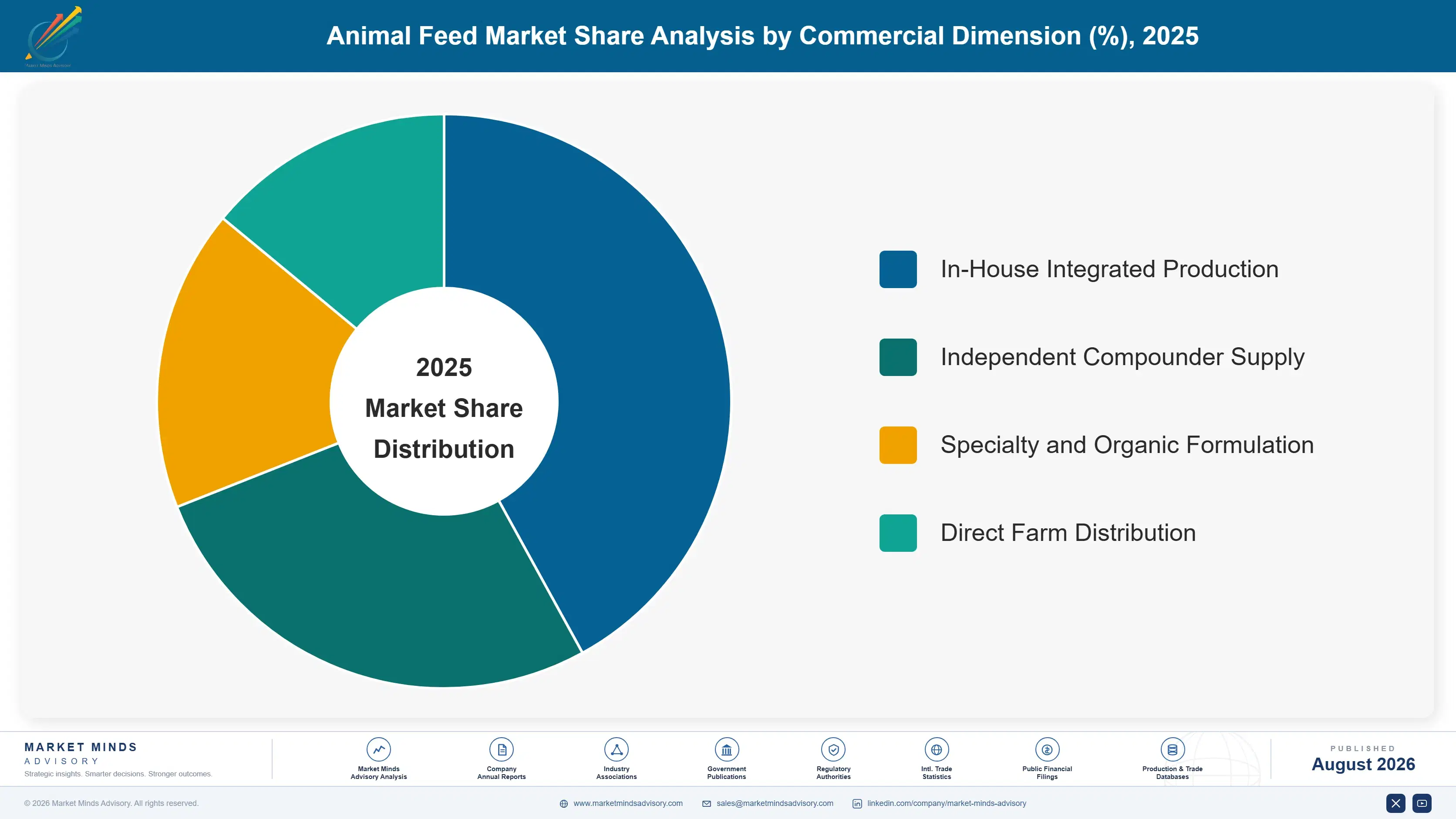
animal-feed-sweetener-market-market-share-analysis-1787461743689

Stevia-Based Natural Sweeteners

Stevia-based natural sweeteners derive intensely sweet steviol glycosides from the stevia plant, offering a clean label alternative to synthetic sweeteners increasingly demanded by premium pet food and specialty livestock feed brands across major retail markets worldwide today. This is the fastest-growing chemistry, expanding at an estimated 10.5 percent annually as pet food manufacturers reformulate premium and super-premium lines to remove synthetic additive names from ingredient declarations entirely and permanently. Suppliers with established stevia cultivation partnerships and extraction capability are capturing outsized share of this category's growth, while smaller regional formulators without natural ingredient sourcing relationships struggle to access premium pet food and specialty livestock contracts requiring documented natural claims nationwide.
CAGR 10.5%

Neotame-Based Sweeteners

Neotame-based sweeteners offer extremely high sweetening intensity at very low inclusion rates, making them cost-effective for palatability enhancement in pet food and aquafeed applications despite their synthetic origin and regulatory classification across most consuming markets worldwide today. This is the second-fastest chemistry, expanding at an estimated 9.0 percent annually as manufacturers seek potent, heat-stable sweetening solutions that survive extrusion and pelleting processing without losing sweetness intensity or performance. Suppliers with proprietary neotame blending and stability technology are winning formulation contracts fastest, since feed manufacturers increasingly prefer proven, pre-validated sweetening systems over custom formulation development for every individual product line across their expanding portfolios and growing customer bases worldwide today still.
CAGR 9.0%
Full segment breakdown across 6 segments available in the complete report.

Regional Architecture and Country Demand Map

Animal feed sweetener demand spans all major regions, with East Asia leading given China's massive swine production base, North America driving premium pet food natural sweetener adoption, and Western Europe advancing clean label reformulation ahead of most other consuming regions worldwide today and well beyond.

North America

US premium pet food manufacturers increasingly demand natural, clean label sweetening systems as retailers and consumers scrutinize ingredient declarations with the same intensity applied to human food products across the country and much further beyond that entirely still and completely. The region's large swine and poultry feed manufacturing base also drives substantial commodity sweetener demand, particularly for piglet weaning diets requiring palatability enhancement during stressful early-life transitions common across the industry nationwide and beyond. Canada's pet food and livestock feed manufacturers follow similar reformulation timelines on a smaller scale. Demand concentrates in premium pet food, piglet starter feed, and poultry heat-stress applications where documented palatability performance supports price positioning nationwide.
Share: 26% | CAGR: 6.2% (2026 to 2036)

Western Europe

Germany and France anchor European feed sweetener demand given their large swine and pet food manufacturing sectors, both increasingly favoring natural sweetening systems ahead of most other global markets given strict national clean label expectations and quite consistent standards throughout. The United Kingdom follows closely, where premium pet food brands have expanded natural sweetener adoption faster than the broader feed additive category overall this cycle across most retail channels nationwide. The European Union's ongoing feed additive regulation review is expected to further scrutinize synthetic sweetener usage, reinforcing the region's preference for natural and heat-stable alternatives across formulations. Growth trails East Asia given the region's comparatively mature, slower-expanding livestock production base.
Share: 20% | CAGR: 5.3% (2026 to 2036)
Regional intelligence for 5 additional markets available in the complete report: East Asia, South Asia and Pacific, Latin America, Middle East and Africa, Eastern Europe. Contact sales@marketmindsadvisory.com.
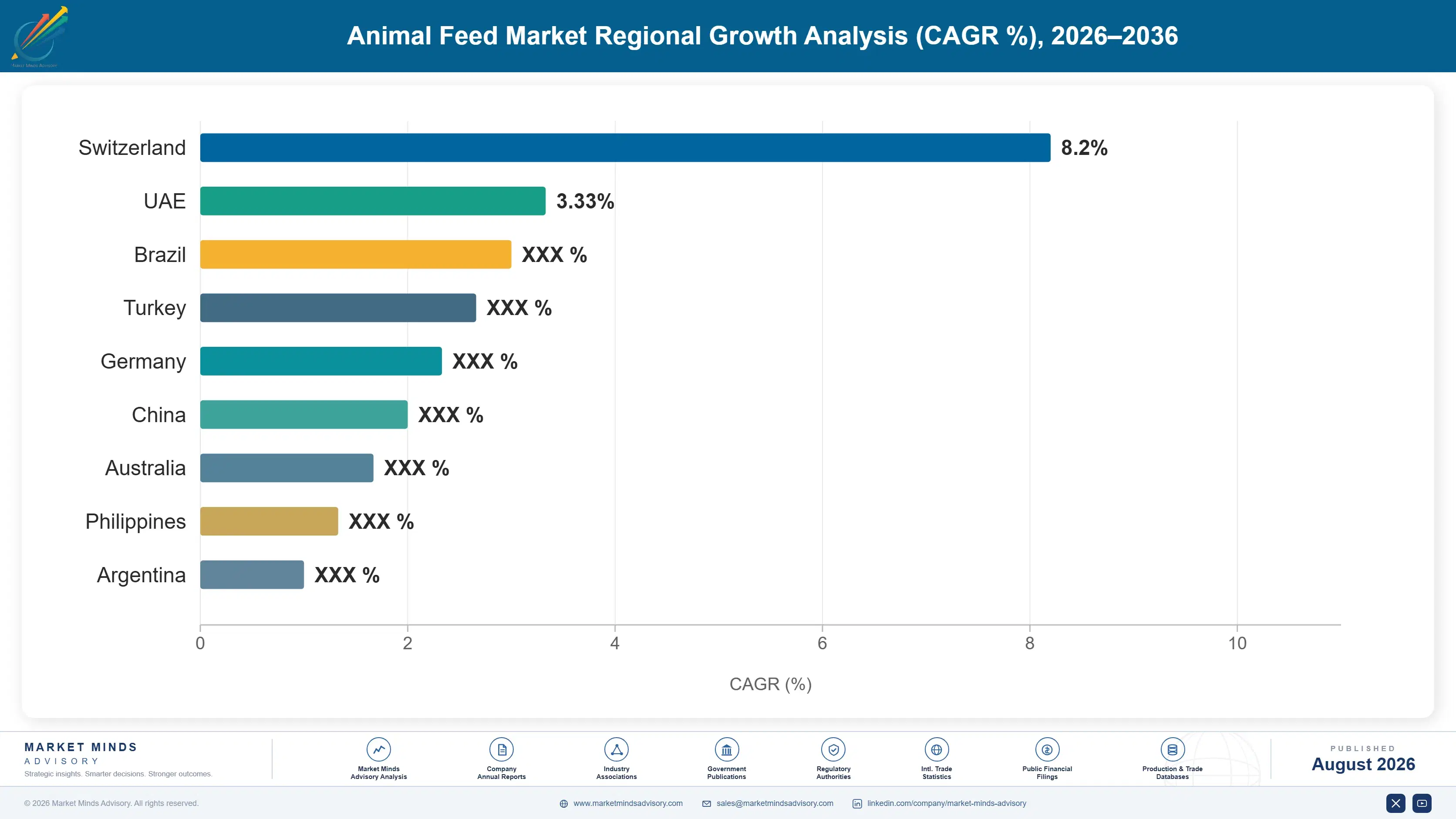
animal-feed-sweetener-market-country-cagr-analysis-1787461744644

Where Feed Sweetener Margins Concentrate

Margin expansion in feed sweeteners flows through four distinct commercial levers: natural sweetener premiums over synthetic alternatives, heat-stable formulation technology for processing durability, palatability research partnerships with major livestock and pet food brands, and documented performance data that justifies premium pricing over commodity sweetening systems sold across the entire industry worldwide today and beyond.

Natural Sweetener Premium Over Synthetic Alternatives

Natural stevia and monk fruit-based sweeteners command a price premium of roughly 2 to 3 times synthetic saccharin and sucralose alternatives, reflecting both cultivation and extraction costs and the clean label credibility documented natural sourcing provides to premium pet food brand customers. Suppliers who develop reliable natural sweetener supply chains capture pricing power that synthetic sweetener producers competing purely on delivered cost cannot access. This premium has proven durable because natural ingredient sourcing relationships take years to establish, giving early movers a multi-year head start over competitors still building comparable supply chain capability from scratch.
Market Impact: Natural sweeteners price 2 to 3 times synthetic

Heat-Stable Formulation Technology For Processing Durability

Feed additive houses developing heat-stable sweetener formulations that survive extrusion and pelleting processing at temperatures exceeding 150 degrees Celsius without losing sweetness intensity capture premium pricing from customers whose manufacturing processes would otherwise degrade standard sweetener compounds significantly across every product line. Suppliers who master heat-stable formulation technology secure long-term supply positions with premium pet food and livestock feed manufacturers whose processing conditions demand this specific performance characteristic consistently. This lever favors suppliers with dedicated formulation chemistry expertise and requires significant research investment that smaller regional additive houses often cannot commit at comparable scale.
Market Impact: Heat-stable systems survive extrusion past 150 degrees Celsius

Palatability Research Partnerships Build Scientific Credibility

Feed additive houses that fund or co-sponsor palatability research documenting measurable feed intake and growth performance improvements gain credibility and marketing rights to cite trial data, a scientific moat that unstandardized sweetener competitors cannot access regardless of the price point offered. This research investment typically costs roughly 50,000 dollars per trial but returns durable premium positioning once results are published or shared directly with major livestock and pet food brand customers across every channel. Building this capability requires patience and capital that smaller regional additive houses typically cannot commit given limited resources.
Market Impact: Palatability trials typically cost roughly 50,000 dollars each

Documented Performance Data Builds Customer Trust

Feed additive houses offering documented performance data from controlled feeding trials, typically costing 20,000 to 30,000 dollars per study, capture additional value from livestock and pet food brand customers who require evidence-based formulation decisions rather than anecdotal palatability claims from suppliers lacking rigorous testing capability. This documentation capability has become a genuine competitive differentiator for premium customers who cannot risk formulation decisions based on unverified performance claims from suppliers lacking rigorous testing infrastructure and proven track records. Building this capability requires sustained investment in trial infrastructure that smaller regional additive houses typically cannot commit at comparable scale.
Market Impact: Documented feeding trials cost roughly 30,000 dollars each

Who Controls the Margin Pool

Animal Feed Sweetener Market concentration sits at a CR5 of 40 percent, evaluated on global sweetener production volume, with Kerry Group and Adisseo holding the largest positions built on diversified sweetener chemistry portfolios spanning synthetic and natural systems. The gap between these established leaders and numerous smaller regional formulators remains wide on natural sourcing and research capability, though narrower on delivered cost position for basic saccharin categories.
Current competitive activity concentrates in three areas: natural sweetener sourcing investment to meet clean label reformulation demand from premium pet food brands, heat-stable formulation research for piglet weaning and poultry heat-stress applications, and palatability trial documentation to support evidence-based formulation decisions for livestock and pet food customers.

Rankings are most likely to shift as clean label reformulation becomes standard practice across premium pet food and specialty livestock feed, a dynamic that could let feed additive houses with the strongest natural sourcing relationships pull meaningfully ahead of synthetic-focused regional competitors. Smaller formulators without dedicated natural ingredient sourcing capability face the greatest pressure, and several are pursuing supply partnership arrangements with larger additive houses rather than building sourcing relationships internally, a defensive posture that could reshape the competitive leaderboard within the next five years.
animal-feed-sweetener-market-company-positioning-matrix-1787461745561

Competitive Moat and Risk Dimensions

KERRY GROUP

Moat: Integrated Palatability Solutions

Kerry Group operates diversified sweetener and flavor formulation capability across livestock and pet food applications, supported by dedicated application centers serving major feed manufacturers globally. This breadth lets Kerry offer integrated palatability solutions that narrower competitors focused solely on sweetener compounds cannot match at comparable technical depth and geographic reach.
KERRY GROUP

Risk: Diluted Category Strategic Priority

Kerry's broad ingredient portfolio means feed sweeteners represent a smaller strategic priority relative to competitors more narrowly focused on palatability chemistry specifically, potentially slowing dedicated investment pace. Intensifying competition from sweetener-focused specialists targeting premium pet food brands directly could erode Kerry's share in this specific high-growth category over time.
ADISSEO

Moat: Established Scientific Credibility

Adisseo's decades of feed additive research across a broad portfolio of nutritional and functional compounds gives it distinctive credibility with livestock feed customers seeking documented, science-backed sweetening solutions. This established reputation and existing brand relationships give Adisseo a durable position in the premium formulation segment specifically.
ADISSEO

Risk: Diluted Category Strategic Priority

Adisseo's broad feed additive portfolio means sweeteners represent a smaller strategic priority relative to competitors more narrowly focused on this one specific category, potentially slowing dedicated investment pace considerably. Intensifying competition from sweetener-focused specialists could erode Adisseo's share in this particular high-growth category over time.

Players Tracked

Prominent Players

Kerry Group
Adisseo
Novus International
Kemin Industries
Pancosma (Innovad)

Other Key Players

Cargill Animal Nutrition
DSM Animal Nutrition and Health
BASF Animal Nutrition
Trouw Nutrition (Nutreco)
Alltech
Biomin
Delacon Biotechnik
Anpario plc
Impextraco
Jefo Nutrition
AB Vista
Vetagro
Selko (Trouw)
Huvepharma
Norel S.A.

Recent Developments

JANUARY 2025

Kerry Group Launches Heat-Stable Sucralose Feed Sweetener

Kerry Group launched a new heat-stable sucralose feed sweetener formulation designed to survive extrusion and pelleting processing without losing sweetness intensity, targeting premium pet food and piglet starter feed manufacturers. The launch includes documented stability testing data benchmarked against conventional sweetener systems currently in wide commercial use.
Signal: Signals established feed additive houses are prioritizing processing durability as a distinct competitive differentiator for premium formulation customers.
AUGUST 2024

Adisseo Expands Stevia-Based Feed Additive Production

Adisseo expanded its stevia-based feed additive production capacity to meet sustained demand from premium pet food manufacturers reformulating recipes toward natural, clean label sweetening systems across multiple product categories. The expansion adds meaningful annual production volume at an existing facility rather than building an entirely new site.
Signal: Signals feed additive houses are prioritizing natural sweetener capacity ahead of anticipated premium pet food reformulation demand growth.
APRIL 2025

Novus International Opens New Piglet Palatability Research Center

Novus International opened a new piglet palatability research center dedicated to documenting feed intake and growth performance improvements from sweetener inclusion in weaning diets across multiple production systems nationwide. The facility includes dedicated controlled feeding trial infrastructure supporting evidence-based formulation claims for livestock customers worldwide.
Signal: Signals feed additive houses are investing in dedicated research infrastructure to support evidence-based palatability marketing claims.

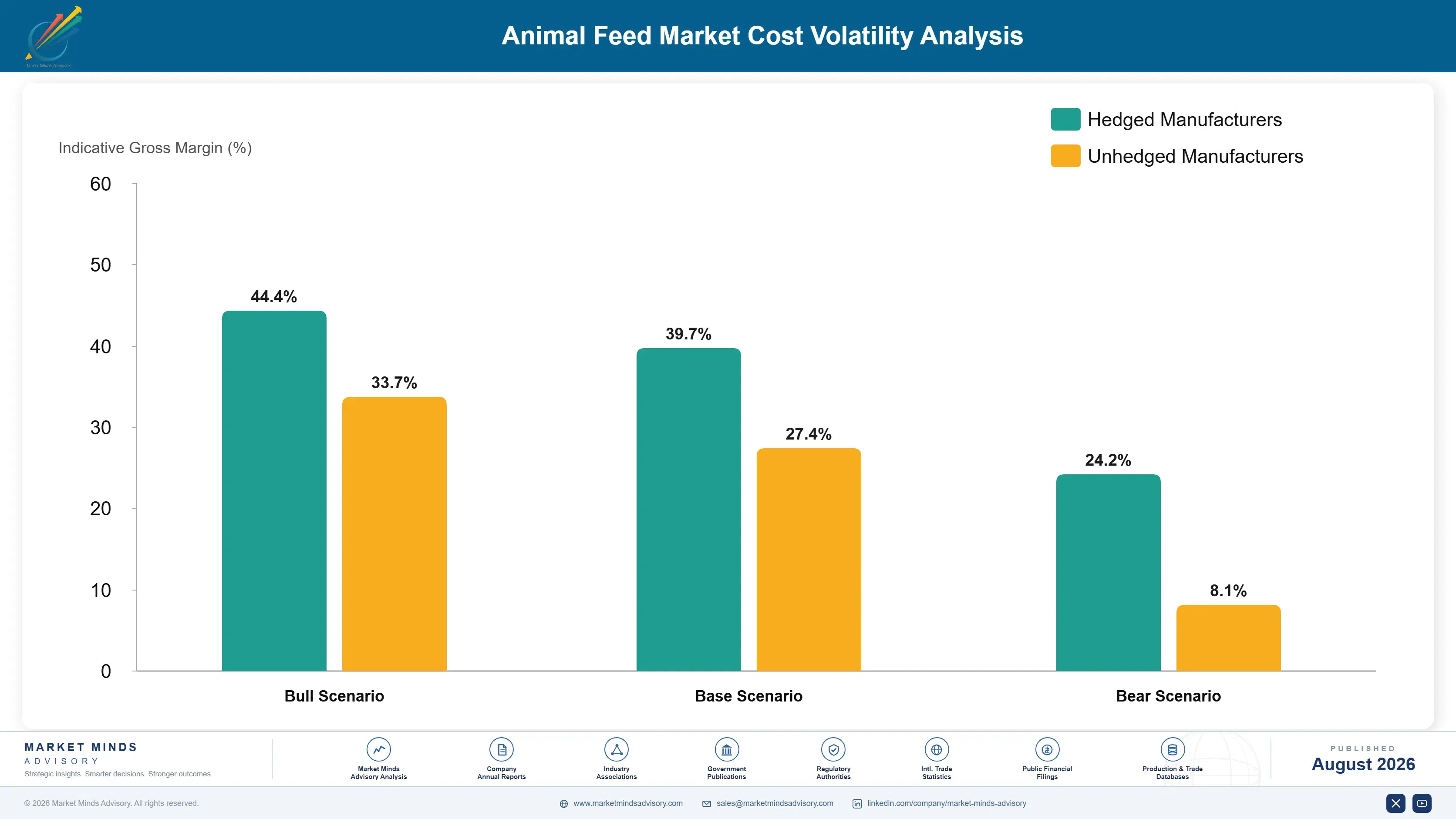
Sweetener Raw Material And Sourcing Costs

Sweetener raw materials, including saccharin precursors and natural stevia extract, account for an estimated 40 to 48 percent of cost of goods sold across feed sweetener production, with carrier and blending materials representing the remaining formulation cost across most major product lines. Saccharin precursor feedstock originates mainly from chemical manufacturing operations in China and India.
Stevia leaf prices rose sharply during 2023 following reduced planted acreage in key growing regions of China and Paraguay, according to industry reporting cited by major additive houses, pushing natural sweetener costs up substantially and squeezing margins for producers who could not pass costs through mid-contract. Several feed additive houses disclosed natural ingredient cost inflation as a specific pressure on segment margins in recent reporting periods, prompting wider adoption of indexed pricing clauses.

Producers without diversified natural sweetener sourcing relationships face a persistent cost disadvantage during price spikes, since formulations dependent on stevia or monk fruit extract cannot easily substitute synthetic alternatives on short notice without triggering clean label concerns among premium customers. Exposure concentrates most heavily among smaller regional formulators who lack the balance sheet to hold buffer inventory that larger diversified competitors maintain across multiple sourcing geographies and technology platforms.
animal-feed-sweetener-market-cost-volatility-analysis-1787461745882

Diversify Natural Sweetener Cultivation Sourcing Regions

Producers are qualifying additional stevia and monk fruit cultivation partnerships across multiple growing regions in China, Paraguay, and emerging cultivation areas, reducing single-region dependence across the natural sweetener supply base. This diversification adds logistics complexity but meaningfully lowers the probability that a single regional harvest disruption disrupts total production volume across a producer's portfolio.

Accelerate Synthetic Substitution To Reduce Natural Dependence

Capital allocation is shifting toward synthetic sweetener production capacity precisely because saccharin and sucralose inputs trade as globally available commodity chemicals with far more supply depth than natural stevia and monk fruit extract tied to agricultural harvest cycles. Producers pursuing this path reduce long-run exposure to natural ingredient price volatility, even though synthetic systems face separate regulatory scrutiny risk.

Negotiate Indexed Cost Pass-Through Clauses In Contracts

Producers are increasingly building indexed cost pass-through mechanisms into multi-year supply agreements, tying pricing to published natural ingredient cost benchmarks rather than fixed unit prices negotiated years in advance. This protects margins during volatility events but requires buyers accustomed to fixed pricing to accept periodic adjustment clauses, a negotiation that favors suppliers with strong bargaining position and natural sourcing credentials.

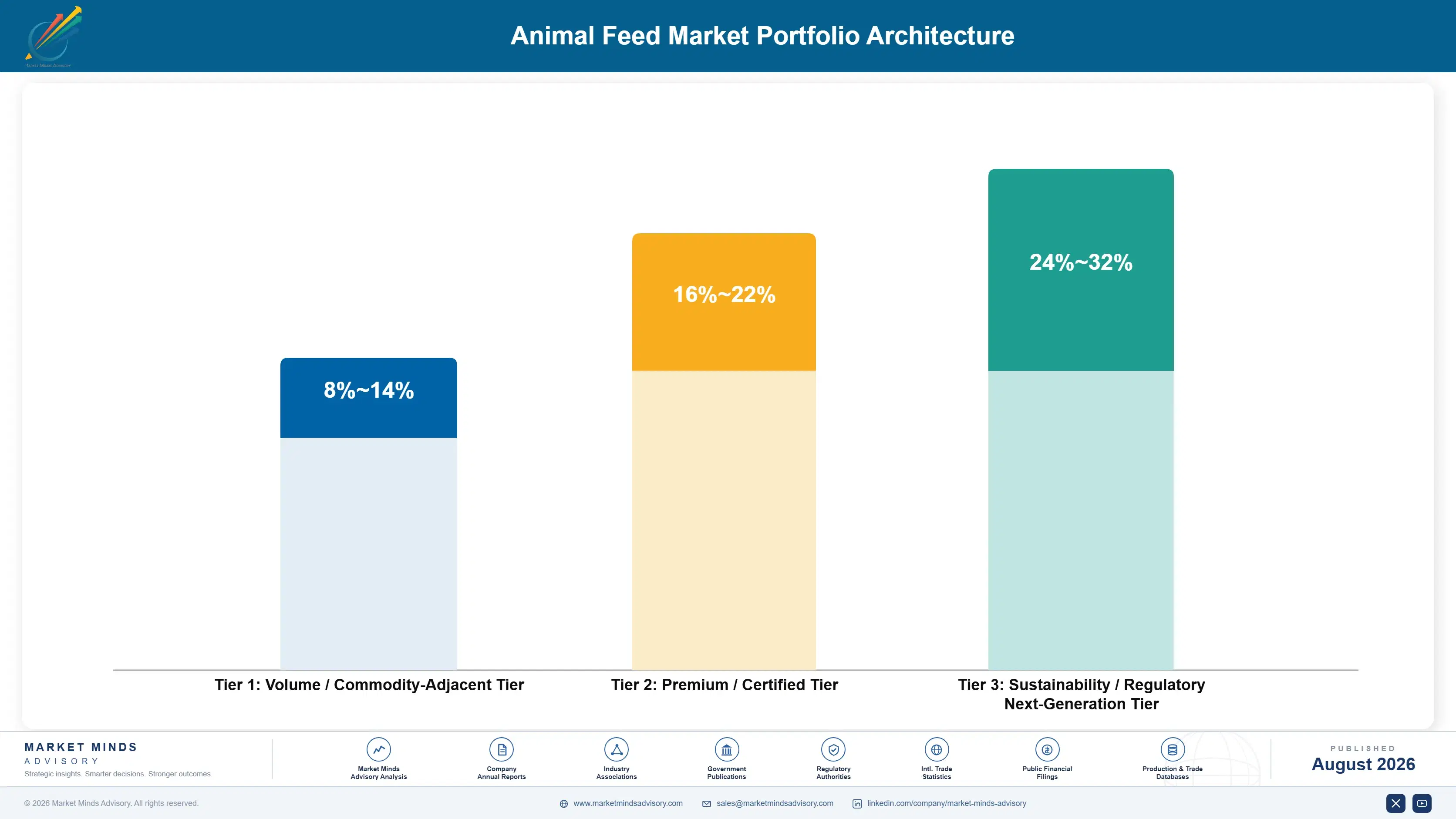
Portfolio Architecture for Margin Defence

Animal Feed Sweetener Market splits into three commercial tiers with different margin economics: a volume tier built on commodity saccharin sold into mainstream livestock feed, a premium tier built on sucralose and neotame formulations commanding heat-stability premiums, and a next-generation tier built on natural stevia chemistry still scaling toward full commercial economics. Gross margins range from roughly 16 percent at the volume end to over 36 percent for differentiated natural systems sold under exclusive agreements.
Volume-tier producers compete primarily on price and reliable delivery into commodity saccharin formulations, where natural label positioning matters less than consistent sweetening performance at the lowest deliverable cost. Premium-tier producers instead compete on heat stability and documented palatability credentials for brand owners unwilling to compromise on processing performance, accepting materially higher research costs in exchange for pricing power volume-tier competitors cannot access.

High-value margin pools concentrate in natural stevia and monk fruit co-development contracts sold under exclusive multi-year agreements to premium pet food and specialty livestock brands, where buyers pay for both clean label credentials and palatability performance simultaneously. Commodity saccharin remains the volume backbone of the market, but its margin ceiling is capped by an increasingly competitive set of regional formulators entering the segment.

Volume / Commodity-Adjacent Tier

Commodity saccharin sweeteners sold into mainstream livestock feed manufacturing at competitive pricing, prioritizing reliable volume delivery over natural label positioning, serving private label and mid-tier branded feed manufacturers across mature commodity livestock feed categories.
Gross Margin: 15-18%

Premium / Certified Tier

Sucralose and neotame formulations with documented heat-stability and processing durability credentials sold to premium pet food and piglet starter feed manufacturers requiring verified sweetness retention, commanding higher unit prices than commodity saccharin equivalents under multi-year contracts.
Gross Margin: 25-28%

Sustainability / Regulatory / Next-Generation Tier

Natural stevia and monk fruit chemistry marketed on clean label positioning and documented palatability performance, targeting premium pet food and specialty livestock brands pursuing product differentiation, commanding the highest margins as natural extraction technology continues improving cost competitiveness.
Gross Margin: 34-37%
animal-feed-sweetener-market-portfolio-architecture-1787461746655

High-value Sub-segments and Strategic Watch-out

Natural Stevia And Monk Fruit Co-Development

Natural stevia and monk fruit sweetening systems are both the highest-margin and fastest-growing segment as premium pet food and specialty livestock brands fund exclusive formulations to meet clean label and palatability demands, attracting the bulk of new research investment from leading global feed additive houses worldwide.
Gross Margin: 34-37%

Heat-Stable Sucralose And Neotame Formulation

Heat-stable sucralose and neotame formulations for conventional premium feed applications continue generating strong margins even as growth moderates relative to natural sweetener co-development, supported by established customer relationships and formulation capability newer entrants still need years to replicate credibly with major feed buyers globally today.
Gross Margin: 25-28%

Commodity Saccharin Core Volume

Commodity saccharin sweeteners sold at competitive volume pricing into mainstream livestock feed manufacturing remain the market's core revenue base even as margins compress under rising competition from lower-cost regional formulators entering the segment at a very meaningful scale across many quite different geographies worldwide still.
Gross Margin: 15-18%

Natural Sweetener Feedstock Price Risk

Natural sweetener feedstock supply tied to weather-dependent harvest cycles in major growing regions represents the segment producers and investors should watch most closely, since a sustained multi-year price spike could compress natural formulation margins and force very costly reformulation across the entire global industry still.
Gross Margin: 9-12%

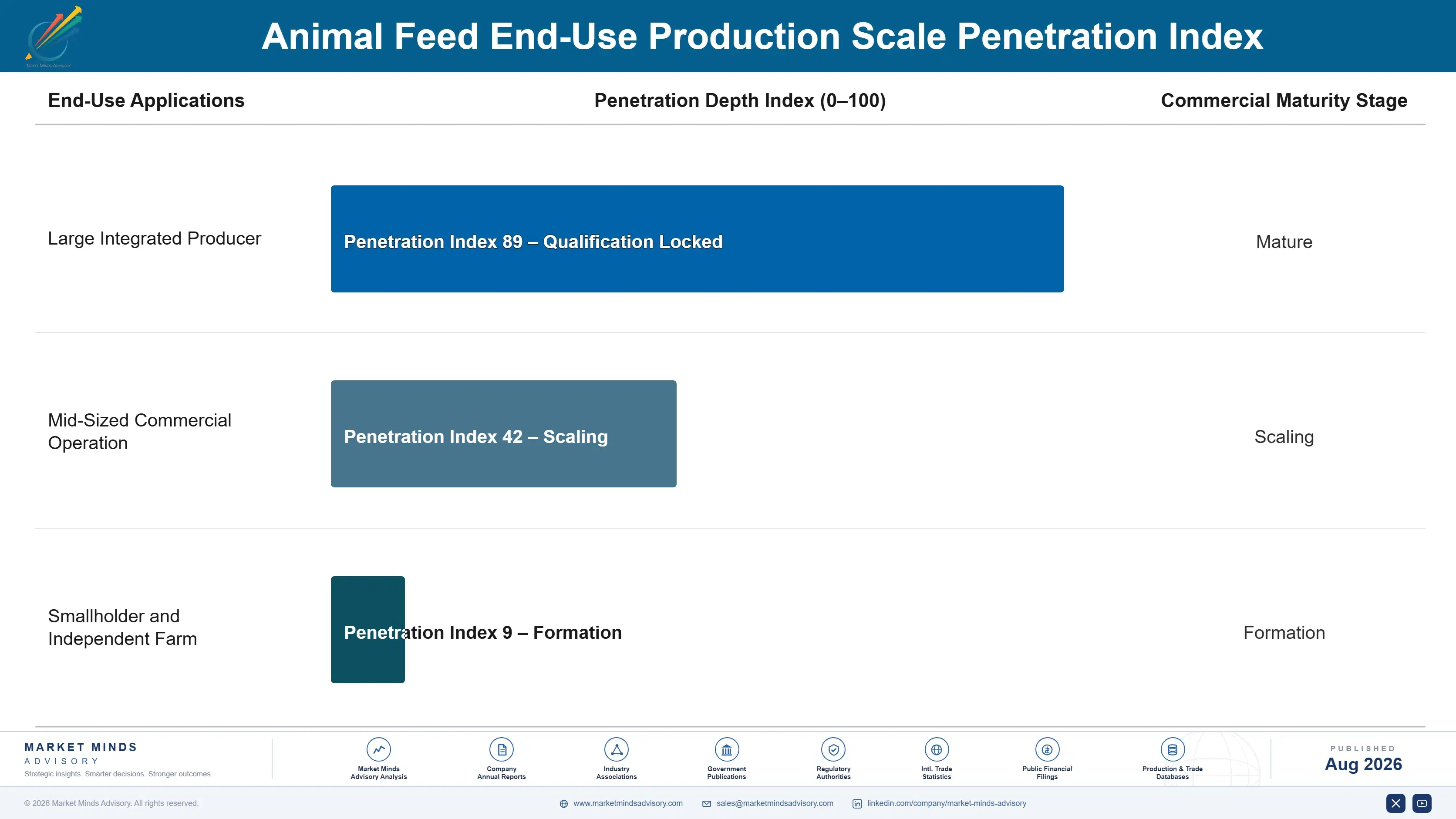
Why Feed Sweetener Contracts Renew Reliably

Once a livestock or pet food manufacturer qualifies a sweetener supplier against its palatability and cost benchmarks, the relationship tends to persist for years rather than being re-tendered annually, since re-qualification carries real cost and reformulation risk for the buyer. This qualification stickiness gives incumbent suppliers reliable, repeat revenue once a contract is won, a dynamic that rewards established formulation relationships more than aggressive price competition alone.
Adoption runs deepest in premium pet food and piglet starter feed, where documented palatability performance is a defining determinant of product success that manufacturers cannot easily substitute without risking consumer or animal rejection, and shallowest in commodity ruminant feed, where sweeteners play a smaller formulation role. Poultry and aquafeed sit between these extremes, adopting sweetening systems selectively across heat-stress and premium product lines while retaining simpler formulations for value-tier products within the same portfolio.

A younger cohort of product development managers at pet food and livestock feed brands, now negotiating sweetener supply contracts, treats natural sourcing and documented palatability data as baseline requirements rather than differentiators their predecessors debated case by case. This generational shift is compressing the reformulation timeline for legacy synthetic sweetener systems at manufacturers that previously moved more cautiously.
animal-feed-sweetener-market-end-use-penetration-index-1787461747477

Where To Place Feed Sweetener Bets

These are among the four positions where our research anticipates prominent divergence between winners and laggards over the coming forecast period. Each is grounded in the demand model, the regulatory perimeter, and the announced capacity pipeline.
01 / NATURAL SWEETENER SOURCING

Back Natural Stevia Sourcing Before Rivals Do

Natural stevia-based sweeteners are growing faster than any other feed sweetener segment as premium pet food brands demand documented clean label positioning that regulators and consumers increasingly expect from every supplier. Feed additive houses that invest in reliable natural sourcing relationships now will lock in preferential access to premium reformulation contracts before mainstream competitors complete their own natural ingredient supply chain build-out. Waiting for natural sweetener costs to fall before investing risks ceding the most defensible long-term position to competitors who moved earlier and already control the strongest sourcing relationships.
02 / HEAT-STABLE FORMULATION TECHNOLOGY

Invest In Heat-Stable Sweetener Technology Now

Feed formulators without heat-stable sweetener technology cannot serve premium pet food and piglet starter feed manufacturers whose extrusion and pelleting processes degrade standard sweetener compounds significantly during processing across most production lines. Suppliers that invest in heat-stable formulation research now capture preferential access to these processing-intensive premium contracts that standard sweetener competitors increasingly cannot fulfill under tightening customer performance requirements. This capability requires sustained research investment but offers a genuine differentiation path relative to competitors selling standardized products without documented processing durability data.
03 / PALATABILITY RESEARCH INVESTMENT

Fund Palatability Trials Ahead Of Competitors

Documented palatability research is becoming a prerequisite for premium livestock and pet food contracts as brand owners increasingly demand evidence-based formulation decisions rather than anecdotal supplier claims about sweetener performance. Feed additive houses that fund or co-sponsor controlled feeding trials now capture first-mover credibility that undocumented competitors cannot access regardless of price point offered across the category. Early movers in this specific capability will likely retain preferred-supplier status as documentation requirements continue tightening across major livestock and pet food markets.
04 / DOCUMENTED PERFORMANCE DATA

Build Documented Performance Data Capability Now

Vertical integration into natural sweetener sourcing offers a durable cost and supply advantage that becomes more valuable precisely when harvest disruption cycles squeeze industry-wide natural ingredient availability and pricing power across the market. Feed additive houses without direct sourcing relationships remain exposed to intermediary trader markups and allocation risk during tight supply periods that integrated competitors can largely avoid entirely across their operations. Building these relationships takes years, making this a strategic priority best pursued well before the next inevitable supply disruption arrives.

Engagement Snapshot From the Field

A live engagement with an industry participant carrying material or product regulatory and market exposure ahead of a defining policy shift, showing how our research translates into a defensible multi-year portfolio strategy.
MARKET MINDS ADVISORY · CLIENT ENGAGEMENT SUMMARY
Animal Feed Sweetener Producer Strategic Portfolio Review and Transition Roadmap 2026·Investment Scenario on Animal Feed Sweetener Exposure Evaluation 2025-26
CLIENT PROFILE
The client is a multinational premium pet food manufacturer generating approximately 740 million dollars (client-reported, unverified by MMA) in annual branded product revenue across North America and Western Europe. The company had committed publicly to removing synthetic sweeteners from its entire premium product range within an eighteen-month retailer-driven clean label compliance deadline tied to a major retail relaunch.
STRATEGIC CHALLENGE
The client's existing formulations relied on synthetic sucralose and neotame sweeteners without natural label alternatives, risking loss of premium retail shelf space to competitors already reformulating toward natural sweetening systems. Management needed an independent assessment of natural sweetener suppliers to determine which could realistically deliver comparable palatability without compromising product cost or manufacturing efficiency.
MMA APPROACH
MMA conducted primary interviews with formulation and quality leadership across five natural sweetener suppliers, benchmarking natural sourcing reliability, documented palatability performance data, and prior premium pet food reformulation experience against the client's compliance timeline. The analysis included palatability panel data review and stress-tested each candidate's supply scale-up timeline against the client's retail launch schedule.
KEY FINDINGS
  1. Two of five evaluated suppliers had prior commercial experience supplying natural stevia-based sweeteners to comparably sized premium pet food manufacturers within an eighteen-month timeline.
  2. Palatability panel data showed one candidate's natural sweetener formulation matching synthetic sweetener palatability performance within 93 percent on comparable consumption preference benchmarks.
  3. Natural ingredient supply scale-up timelines across candidates ranged from six to sixteen months, with the fastest candidate requiring meaningfully less lead time before commercial readiness.
  4. Natural sourcing reliability varied significantly across candidates, with supply chain resilience ranging from single-region dependence to fully diversified multi-country cultivation partnerships across several continents.
CLIENT PROFILE
The client is a multinational premium pet food manufacturer generating approximately 740 million dollars (client-reported, unverified by MMA) in annual branded product revenue across North America and Western Europe. The company had committed publicly to removing synthetic sweeteners from its entire premium product range within an eighteen-month retailer-driven clean label compliance deadline tied to a major retail relaunch.
STRATEGIC CHALLENGE
The client's existing formulations relied on synthetic sucralose and neotame sweeteners without natural label alternatives, risking loss of premium retail shelf space to competitors already reformulating toward natural sweetening systems. Management needed an independent assessment of natural sweetener suppliers to determine which could realistically deliver comparable palatability without compromising product cost or manufacturing efficiency.
MMA APPROACH
MMA conducted primary interviews with formulation and quality leadership across five natural sweetener suppliers, benchmarking natural sourcing reliability, documented palatability performance data, and prior premium pet food reformulation experience against the client's compliance timeline. The analysis included palatability panel data review and stress-tested each candidate's supply scale-up timeline against the client's retail launch schedule.
KEY FINDINGS
  1. Two of five evaluated suppliers had prior commercial experience supplying natural stevia-based sweeteners to comparably sized premium pet food manufacturers within an eighteen-month timeline.
  2. Palatability panel data showed one candidate's natural sweetener formulation matching synthetic sweetener palatability performance within 93 percent on comparable consumption preference benchmarks.
  3. Natural ingredient supply scale-up timelines across candidates ranged from six to sixteen months, with the fastest candidate requiring meaningfully less lead time before commercial readiness.
  4. Natural sourcing reliability varied significantly across candidates, with supply chain resilience ranging from single-region dependence to fully diversified multi-country cultivation partnerships across several continents.
RECOMMENDED STRATEGY
Phase 1: Phase 1 (0 to 3 months): Complete palatability panel testing across shortlisted suppliers and select a natural sweetener partner based on performance and timeline fit. Phase 2: Phase 2 (3 to 12 months): Reformulate the premium product range around natural sweeteners, running consumer preference and palatability validation panels throughout. Phase 3: Phase 3 (12 to 18 months): Launch the reformulated product range with documented natural sweetener claims, finalizing long-term exclusive supply pricing terms.
OUTCOME
Within sixteen months, the client completed full synthetic sweetener removal across its premium product range, achieving 91 percent (client-reported, unverified by MMA) consumer palatability preference parity with prior formulations. The retailer compliance deadline was met on schedule, with natural sweeteners now sourced under a long-term exclusive supply agreement.

Frequently Asked Questions

Foundational context covering the market sizes, CAGR, scope, country, region and competition that inform every finding below. This section is provided to cover basics and most often pre-purchase conversations, answered from the MMA Primary Research Dataset.

What is the current size of the Animal Feed Sweetener Market?

The Animal Feed Sweetener Market was valued at approximately 0.95 billion dollars in 2025. Growth is driven by piglet weaning palatability optimization and rising premium pet food natural sweetener adoption.

How large will the Animal Feed Sweetener Market be by 2036?

The market is projected to reach approximately 1.96 billion dollars by 2036, up from 1.02 billion dollars in 2026. That represents roughly a 1.93 times expansion over the ten-year forecast window.

What is the CAGR for the Animal Feed Sweetener Market 2026 to 2036?

The market is forecast to expand at a compound annual growth rate of 6.8 percent between 2026 and 2036. Bull and bear scenarios range from 8.0 percent to 5.5 percent depending on natural sweetener adoption pace.

Which segment is growing fastest?

Stevia-based natural sweeteners are the fastest-growing segment, expanding at an estimated 10.5 percent annually, roughly 1.5 times the overall market rate. Neotame-based sweeteners follow as the second-fastest segment at 9.0 percent.

Who are the major companies in the Animal Feed Sweetener Market?

Kerry Group, Adisseo, Novus International, Kemin Industries, and Pancosma lead the market by global sweetener production volume. Combined, the top five suppliers hold a CR5 of approximately 40 percent.

Which country is growing fastest?

China is the fastest-growing single country, expanding at an estimated 8.9 percent annually as its massive swine production base drives rising piglet weaning feed sweetener consumption. The United States remains a major pet food market.

Report Segmentation Architecture

The full report scope spans multiple orthogonal segmentation dimensions, with cross-tabulated demand data provided for each dimension pair. Coverage extends further to regional breakdowns, trend trajectories, and the competitive detail needed to support segment-level decision-making.

By Sweetener Chemistry

  • Saccharin-Based Sweeteners
  • Sucralose-Based Sweeteners
  • Neotame-Based Sweeteners
  • Stevia-Based Natural Sweeteners
  • Sorbitol and Polyol Bulk Sweeteners
  • Blended Flavor-Sweetener Systems

By End-Use Species

  • Swine
  • Poultry
  • Aquafeed
  • Pet Food
  • Ruminant and Other Livestock

By Commercial Dimension

  • Direct Feed Manufacturer Contracts
  • Distributor Supply
  • Private Label Co-Development
  • Export Trade

By Region

  • North America
  • Western Europe
  • East Asia
  • South Asia and Pacific
  • Latin America
  • Middle East and Africa
  • Eastern Europe

Scope, Methodology, and Coverage

Every figure in this report is reproducible from documented input assumptions. The scope below maps the historical period, the forecast horizon, the segmentation dimensions, and the countries covered, alongside the underlying primary and qualitative methodology.
Historical Period
2020 to 2025
Forecast Period
2026 to 2036
Base Year
2025 (USD billions; MMA Primary Research Dataset, August 2026)
Market Definition
The Animal Feed Sweetener Market comprises synthetic and natural sweetening compounds, including saccharin, sucralose, neotame, and stevia-based systems, used to enhance palatability and feed intake in livestock, aquafeed, and pet food formulations. It excludes bulk caloric sweeteners used as energy sources and human food-grade sweetener products.
Quantitative Units
USD billions (current prices); metric tons of production volume where disclosed
Segmentation Dimensions
Sweetener Chemistry; End-Use Species; Commercial Dimension; By Region
Regions Covered
North America, Western Europe, East Asia, South Asia and Pacific, Latin America, Middle East and Africa, Eastern Europe
Countries Covered
USA, China, Germany, France, UK, Japan, South Korea, India, Australia, Canada, Brazil, Mexico, Indonesia, Vietnam, Thailand, Malaysia, UAE, Saudi Arabia, South Africa, Nigeria, Turkey, Poland, Netherlands, Italy, Spain, Sweden, Switzerland, Argentina, Colombia, Singapore, and additional markets relevant to this sector
Key Companies Profiled
Kerry Group, Adisseo, Novus International, Kemin Industries, Pancosma (Innovad), Cargill Animal Nutrition, DSM Animal Nutrition and Health, BASF Animal Nutrition, Trouw Nutrition (Nutreco), Alltech, Biomin, Delacon Biotechnik, Anpario plc, Impextraco, Jefo Nutrition, AB Vista, Vetagro, Selko (Trouw), Huvepharma, Norel S.A.
Quantitative Methodology
Primary survey, n=3,800 respondents, Q4 2025, six countries; demand-side model with trade association cross-validation
Qualitative Methodology
47 expert interviews, Q4 2025; applied to validate demand model assumptions, identify emerging dynamics, and assess competitive positioning
Report Format
PDF and XLSX data workbook (Word format preview document)
Publisher
Market Minds Advisory
Report Code
MMA-2026-AGR-106
Published
August 2026
Contact
sales@marketmindsadvisory.com | www.marketmindsadvisory.com

Purchase the full Animal Feed Sweetener Market Report (2026 to 2036).

The full Animal Feed Sweetener Market report delivers a complete chemistry segmentation model spanning saccharin, sucralose, neotame, stevia, sorbitol, and blended sweetener systems. It includes detailed regional demand and feedstock data across all seven world regions. The report profiles twenty producers, including detailed capacity, chemistry positioning, and moat and risk assessment for the top five, supported by primary interviews with formulation and procurement leadership. It also includes ten-year forecast scenarios under base, bull, and bear cases, natural ingredient cost exposure analysis by region and player type, and a strategic verdict framework for product development decisions.
Ten-Year Base, Bull, and Bear Forecasts
Sweetener Chemistry Segmentation Across Six Categories
Full Seven-Region Demand and Feedstock Breakdown
Twenty-Company Competitive Profiles With Moat Analysis
Natural Ingredient Cost Exposure and Mitigation Playbook
Primary Interview Data From Formulation Leadership Teams

Built For The People Who Decide

From boardroom strategy to bench-side execution, this report is read cover-to-cover by leaders shaping the next decade of their industry, turning demand scenarios, market dynamics and valuation benchmarks into decisions.
CXOs/ Presidents/ VPs/ Managers
M&A and Corporate Development
Strategy Teams and R&D Heads
Procurement and Product Directors
Regulatory and Compliance Leaders
Investor Relations and Equity Analysts