Market Minds Advisory
Ammonium Thiosulfate Market

Ammonium Thiosulfate Market: Mostly Water, Which Decides Everything

The solution is roughly three quarters water, so freight overwhelms product value beyond a few hundred kilometres. That single fact turned a commodity chemical into a set of regional monopolies around production points.

Lead Analyst

Published

September 2026

Make Smarter Decisions with Customized Research Insights

Request a free sample report and evaluate market opportunities, growth trends, and competitive dynamics relevant to your business needs.

2025 MARKET VALUE$0.6BMarket Size 2025
2036 FORECAST VALUE$1.2BBase Case , 2026 to 2036
CAGR 2026 TO 20366.2 %Bull 7.4% / Bear 5.0%
INCREMENTAL OPPORTUNITY$0.5BNet 10- year value creation
EXPANSION MULTIPLE1.82x2036 value over 2026 base
Strategic Levers
M&A Pipeline
Regional Outlook
Country Rankings
Competitive Intelligence
Segmental Deep-dive
Call-Us : 91 93563 13602

Executive Snapshot and Market Trajectory

Ammonium thiosulfate solution is about three quarters water, and that single fact decides the entire commercial structure of the market. Freight overwhelms product value past a few hundred kilometres. What looks like a commodity chemical is really a set of regional monopolies. The market reaches USD 0.62 billion in 2025.
Gold and precious metal leaching grows fastest at 9.3%, exactly 1.50 times the market rate, because thiosulfate is the only cyanide alternative proven at production scale and permitting pressure on cyanide keeps rising steadily. North America holds 32% of value, since liquid sulphur nutrition is a Corn Belt and Great Plains practice far more than a global one. Latin America takes 9% on Brazilian sulphur-deficient soils.
Concentration reaches 71% across the top five, and one producer holds most of the western agricultural supply through a network of plants built next to demand rather than anywhere near the feedstock. Competition turns on delivered cost inside a given radius, on blend compatibility with the existing liquid fertiliser programmes, and on winter handling. A solution that crystallises in a cold storage tank is a customer complaint that nobody ever forgets.
Market Definition
The ammonium thiosulfate market covers production and sale of aqueous ammonium thiosulfate solution, typically supplied at around 60% concentration carrying 12% nitrogen and 26% sulphur, across agricultural sulphur nutrition, precious metal leaching, flue gas and emissions treatment, water treatment, and industrial processing applications. Elemental sulphur, ammonium sulphate, sodium and calcium thiosulfate, sulphuric acid, gypsum, and dry sulphur fertiliser products are excluded.
Base Year Value
$0.6B in 2025 (MMA Primary Research Dataset, August 2026)
Forecast Period
2026 to 2036, eleven discrete annual values
CAGR
6.2% base case. Bull 7.4%. Bear 5.0%.
Fastest Growth Segment
Gold and Precious Metal Leaching: 9.3% CAGR
Fastest Growth Country
India: 9.4% CAGR
Fastest Growth Region
South Asia and Pacific: 8.2% CAGR
Largest Region
North America: 32% of 2025 global value
Market Leaders
Tessenderlo Kerley, Koch Agronomic Services, Martin Midstream Partners, Hydrite Chemical, Chemtrade Logistics. Source: MMA Primary Research Dataset, July 2026.
Primary Survey
n=3,800 procurement and R&D decision-makers, Q4 2025, six countries
Methodology
Demand-side build-up, cross-validated against public data, 47 expert interviews

Ammonium Thiosulfate Market Forecast Scenarios

ammonium-thiosulfate-market-size-forecast-scenario-1786463165327
Between 2020 and 2025 demand grew steadily while pricing swung hard. Agricultural sulphur application expanded as deficiency spread through soils that once received sulphur free from industrial air emissions. Ammonia costs then spiked through 2022 and dragged solution pricing with them, before easing again. A 5.1% historical CAGR describes volume growth considerably steadier than the revenue line ever looked.
Three mechanisms carry the 6.2% base case. Soil sulphur deficiency is the largest, since atmospheric deposition has collapsed across every industrialised region and crops that never needed applied sulphur now do. Cyanide-free gold leaching is the second, small in tonnage and growing quickly as permitting pressure builds. And flue gas treatment demand continues where thiosulfate suppresses mercury and controls sulphur trioxide in coal and waste combustion. None of the three depends on the product getting any cheaper.
The 7.4% bull case turns on thiosulfate gold leaching moving beyond the handful of operations running it today, which would add tonnage in places with no agricultural demand to support a plant. The 5.0% bear case is ammonia cost volatility of the kind seen in 2022, which pushes growers toward cheaper dry sulphur sources whenever the liquid premium widens enough to notice.

Shipping Water With Something Dissolved In It

Every commercial question in this market comes back to the water. A standard solution carries 12% nitrogen and 26% sulphur, which means roughly three quarters of every tonne shipped is water that the buyer does not want and the seller cannot remove. Past about 500 kilometres freight exceeds the value of what is dissolved in it, and the economics stop working entirely.
TOP FIVE CONCENTRATION71%One producer holds most of the western agricultural supply base
SULPHUR CONTENT26%Elemental sulphur carried within a standard clear solution
SOLUTION FREEZING POINTMinus 2 CelsiusTemperature below which the standard solution begins crystallising out
DELIVERED RADIUS500 kilometresEconomic shipping distance from plant before freight dominates value
BULK PRICE PER TONNEUSD 240Delivered solution price at agricultural distribution terminals in season
BLEND COMPATIBILITY SHARE84%Liquid fertiliser blends accepting the product without any precipitation
That turns a chemically simple product into a geography business. Tessenderlo Kerley built its position by putting plants next to demand rather than next to feedstock, which is the opposite of how most commodity chemicals are organised anywhere. Each plant serves a radius, competition inside that radius is limited to whoever else can reach it, and pricing reflects delivered cost rather than any global benchmark at all.
Two things could change it. Sulphur deficiency is spreading into soils that never needed applied sulphur, because industrial emissions no longer deposit it free of charge, which creates demand in regions with no plant nearby. And thiosulfate gold leaching creates tonnage in mining districts that have no agricultural base at all. Both raise the same question: who builds the plant first?
"People describe this as a fertiliser market. It is a logistics market with a chemical attached. Whoever puts the plant in the right place has already won the customers inside the radius, and the chemistry never enters the conversation."
Director, Crop Nutrition Practice · MMA Chemicals and Materials Practice &

Market Trends

Cleaner Air Created A Soil Sulphur Problem

Industrial desulphurisation across North America, Europe, and increasingly Asia removed the atmospheric sulphur deposition that used to fertilise crops incidentally, and soils that never required applied sulphur now show measurable deficiency. Oilseeds, brassicas, alfalfa, and high-yielding cereals respond visibly to sulphur application in regions where nobody applied any thirty years ago. Extension services and agronomists across several countries have revised recommendations upward. The demand created is genuinely new rather than displaced from another product, and it appears in geographies that have never had a thiosulfate plant nearby. Nobody built a plant there because nobody needed one.
Market Impact: Blends accept it 84% of time
Cyanide Pressure Opens Thiosulfate Gold Leaching

Thiosulfate is the only cyanide alternative that has run at production scale for precious metal recovery, and permitting resistance to cyanide has hardened in several jurisdictions following high-profile tailings incidents. Recovery economics remain less favourable than cyanide on most ores, so adoption follows regulatory and social licence pressure rather than metallurgy. Where a project cannot get a cyanide permit at all, the comparison stops mattering. Tonnage per operation is substantial, which means a single mine conversion moves regional demand more than years of agricultural growth would. Agricultural demand takes years to move the same tonnage.
Market Impact: Mercury limits tightened 70 percent

Market Opportunities and Growth Drivers

Liquid Programmes Suit Precision Application Equipment

Growers running variable rate application and fertigation need nutrients in solution, and a clear thiosulfate solution blends with urea ammonium nitrate and most liquid programmes without precipitation across roughly 84% of common tank mixes. Dry sulphur sources cannot be applied through the same equipment and release sulphate on a schedule the plant does not control. As precision equipment spreads across row crop agriculture, the share of nutrition delivered in liquid form rises with it. That shift favours thiosulfate against elemental sulphur and gypsum regardless of relative sulphur cost. Equipment rather than agronomy is doing the deciding here.
Market Impact: Freight exceeds value past 500 kilo

Flue Gas Treatment Demand Persists Beyond Coal

Thiosulfate injection suppresses mercury re-emission in wet scrubbers and controls sulphur trioxide formation, and waste-to-energy, cement, and industrial combustion plants use it alongside the coal generation it was originally developed for. Mercury limits have tightened across several jurisdictions rather than relaxing, and waste incineration capacity is expanding in exactly the regions where coal generation is closing. The chemistry is specified in permits rather than chosen commercially, which makes this demand unusually stable. It also anchors plant utilisation outside the agricultural application season. Permit language rather than purchasing preference sets the volume. That makes it unusually easy to forecast.
Market Impact: Crystallisation starts at minus 2 C

Market Restraints and Challenges

Freight Economics Cap The Addressable Radius

A tonne of solution carries roughly 380 kilograms of useful nutrient and 620 kilograms of water, and past about 500 kilometres the freight on that water exceeds what the nutrient is worth. The root cause is chemistry: thiosulfate is not stable at concentrations high enough to make long-distance shipping economic. Commercially it means demand outside a plant radius simply goes unserved rather than being supplied at a premium. Producers are mitigating with terminal networks, rail and barge movement where waterways allow, and toll production agreements near distant demand centres. Concentrating the solution further is not chemically available.
Market Impact: Deposition fell 80% since 1990

Crystallisation In Cold Storage Damages Confidence

Standard solution begins crystallising around minus two degrees Celsius, and a distributor who finds a solid tank in February has an expensive problem and a long memory. The root cause is that thiosulfate solubility falls steeply with temperature and the product is stored through winter for spring application. Commercially it drives customers toward dry sources in cold regions and constrains northern market development. Mitigation runs toward heated and insulated storage, lower-concentration winter grades, and additive packages that depress the crystallisation point by several degrees. Very few producers have bothered to solve it properly.
Market Impact: Leaching consumes 30,000 tonnes ann
3 additional market trends, 2 additional growth drivers, and 4 additional restraints and challenges are covered in the full report. Contact sales@marketmindsadvisory.com to access the complete intelligence.

Segment CAGR and Growth Architecture

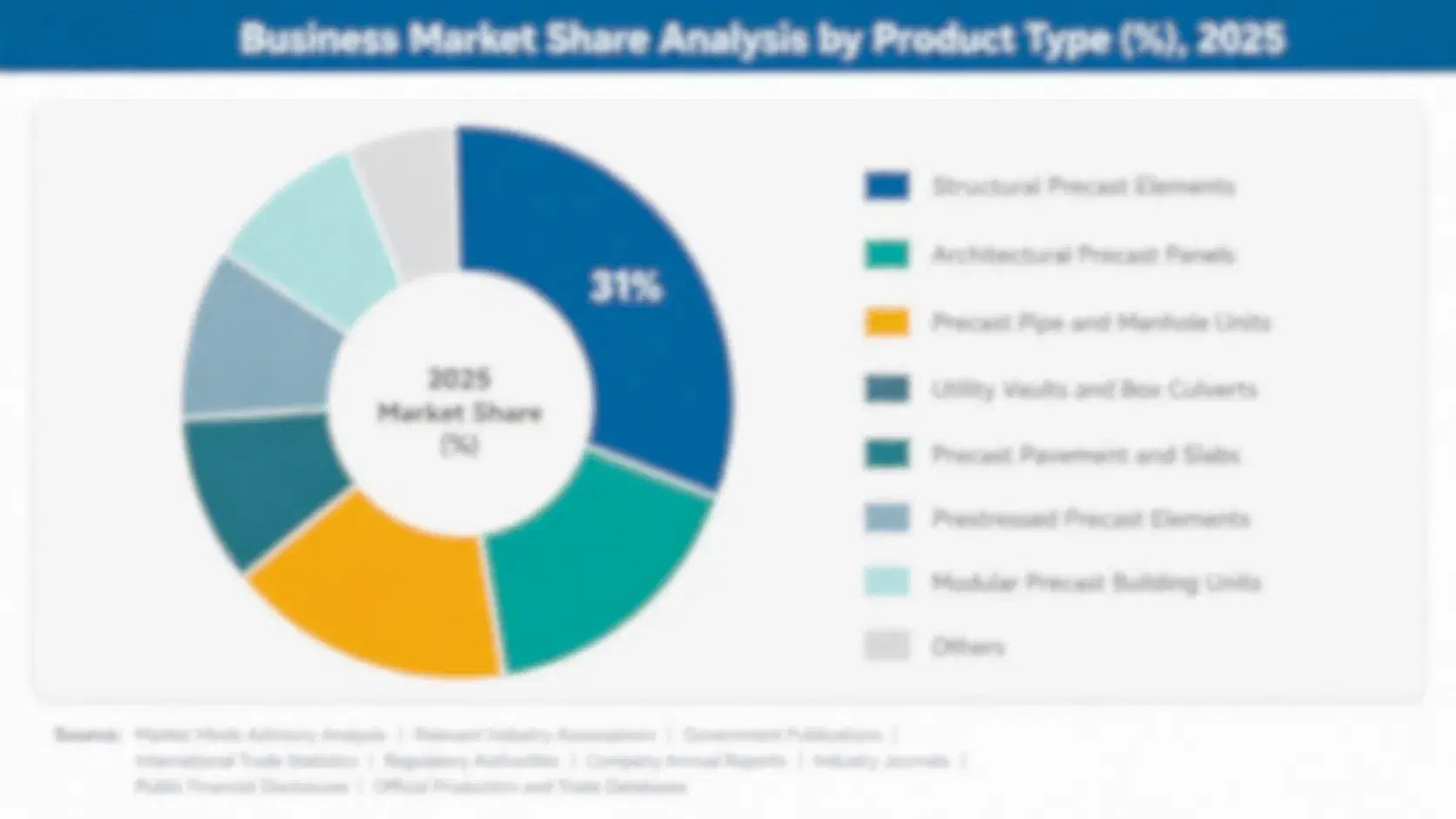
Segmentation follows end use application, because the same solution gets bought for entirely different reasons at entirely different prices, and what the buyer is trying to achieve determines the concentration, the purity, the delivery pattern, and how much freight the value will actually carry. Concentration grade and packaging are handled in the framework instead.
ammonium-thiosulfate-market-market-share-analysis-1786463165489

Gold and Precious Metal Leaching

Gold leaching grows fastest at 9.3%, exactly 1.50 times the market rate, and regulation rather than metallurgy is driving all of it. Thiosulfate is the only cyanide alternative that has ever run at production scale for precious metal recovery, and recovery rates on most ores remain less favourable than cyanide achieves. That comparison stops mattering entirely where a project cannot obtain a cyanide permit. Consumption per operation is large enough that one mine conversion shifts regional demand more than several years of agricultural growth. The complication is that mining districts frequently sit nowhere near a plant, and freight economics do not improve because the buyer is a mine. A mine cannot be moved closer to a plant.
CAGR 9.3%

Flue Gas and Emissions Treatment

Flue gas treatment grows at 7.4%, using thiosulfate injection to suppress mercury re-emission in wet scrubbers and to control sulphur trioxide formation across combustion plant. The chemistry appears in operating permits rather than being selected commercially, which makes demand unusually insensitive to price and unusually stable through economic cycles. Coal generation is closing across several regions, but waste-to-energy, cement, and industrial combustion have all picked up the requirement as mercury limits tightened rather than relaxed. For producers the segment matters disproportionately because it consumes through the winter, anchoring plant utilisation outside the compressed agricultural application season. Coal closures remove plants, and waste combustion capacity has been replacing much of the volume lost.
CAGR 7.4%
Full segment breakdown across 5 segments available in the complete report.

Regional Architecture and Country Demand Map

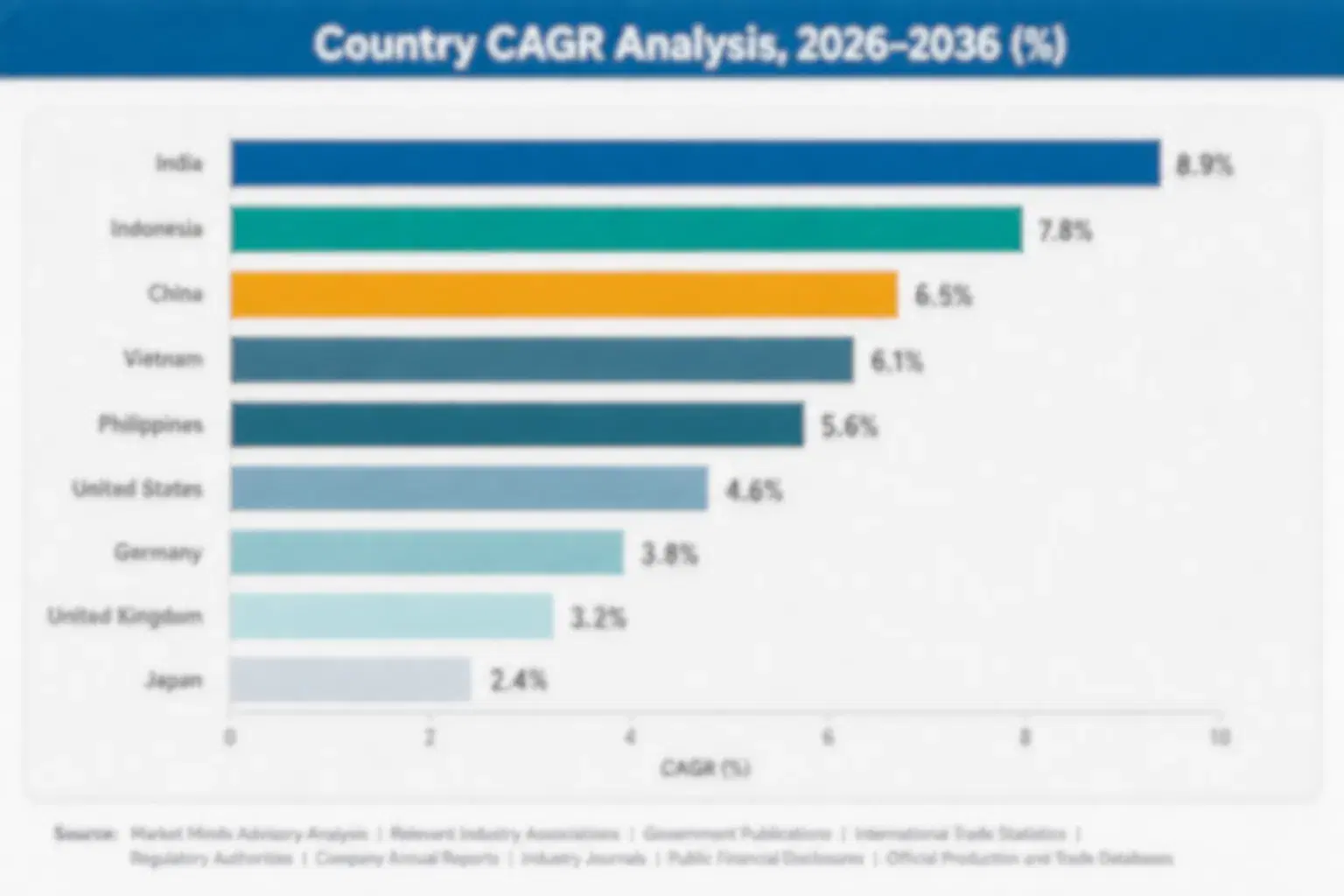
Regional shares here follow plant location as much as they follow demand, because freight economics prevent the solution from moving very far from where it was made. A region without a plant shows low consumption regardless of how sulphur-deficient its soils actually happen to be.

North America

North America holds 32% of value, at the top of the band this framework applies, and it is where the product was commercialised and where the plant network is densest. Liquid sulphur nutrition is standard practice across the Corn Belt, the Great Plains, and the Pacific Northwest, applied through the precision equipment that row crop agriculture here adopted earliest. Tessenderlo Kerley operates production across multiple states specifically to keep every major growing region inside a workable delivery radius. Flue gas treatment and the Nevada gold operations add non-agricultural volume. Growth at 5.4% trails slightly, since this is the most fully developed market anywhere. Radius coverage here is the most complete anywhere in the world.
Share: 32% | CAGR: 5.4% (2026 to 2036)

Latin America

Latin America accounts for 9% of value, at the top of its band, and Brazilian cerrado agriculture explains most of it. Those soils are naturally sulphur poor, cropping intensity is high, and soybean and cotton respond strongly to applied sulphur, which makes the agronomic case straightforward wherever supply exists. The constraint is plant location rather than demand: much of the interior sits well outside any economic delivery radius, and growers there use dry sources by default. Argentine and Chilean demand is smaller. Growth at 7.0% exceeds the global rate, and it would exceed it considerably further if production capacity were positioned differently. Capacity placement is the only thing holding the region back.
Share: 9% | CAGR: 7.0% (2026 to 2036)
Regional intelligence for 5 additional markets available in the complete report: East Asia, Western Europe, South Asia and Pacific, Middle East and Africa, Eastern Europe. Contact sales@marketmindsadvisory.com.
ammonium-thiosulfate-market-country-cagr-analysis-1786463165658

Where Thiosulfate Producers Actually Make Money

Nobody wins this market on chemistry, because the chemistry is a century old and anybody can run it. Money comes from putting production inside a delivery radius competitors cannot reach, from solving the winter crystallisation problem that keeps northern growers on dry sources, and from the industrial demand that keeps a plant running out of season.

Place Capacity Inside Unserved Delivery Radii

Freight overwhelms product value past roughly 500 kilometres, which means every plant owns its radius and every gap between radii is demand that simply goes unserved. Identifying regions with documented sulphur deficiency and no plant within reach is a mapping exercise rather than a market study, and a plant placed there captures 60% to 80% of local demand from the first season. Brazilian interior agriculture and Indian oilseed regions are the obvious examples. Competitors cannot respond without building their own plant, which takes years. Being first into a radius matters more than being larger.
Market Impact: New plants capture 60 to 80 percent

Solve Winter Crystallisation For Northern Markets

Standard solution crystallises around minus two degrees Celsius, and distributors in cold regions keep buying dry sulphur specifically to avoid finding a solid tank in February. Additive packages and adjusted grades that depress the crystallisation point by five to eight degrees open growing regions currently written off as unserviceable, extending a plant's viable radius by up to 200 kilometres northward. The formulation work is modest and the freight radius itself does not change. Very few producers have bothered, which is why northern distribution remains as thin as it does. The economics of doing it are not remotely marginal.
Market Impact: Winter grades extend the radius by

Anchor Plant Utilisation With Industrial Offtake

Agricultural demand arrives in a compressed spring window and leaves a plant idle for much of the year, which is a punishing fixed cost profile for a continuous chemical process. Flue gas treatment, water treatment, and metal leaching consume steadily through every month and can lift annual utilisation from around 55% to above 75%. That utilisation gain flows straight to unit cost and defends the agricultural business on price. Producers chasing only the fertiliser season are competing from a permanently worse cost base. The recipe itself offers no cost improvement at all.
Market Impact: Utilisation rises from 55 to 75 per

Who Controls the Margin Pool

Concentration reaches 71% across the top five measured on ammonium thiosulfate revenue, which is very high and reflects geography rather than technology. Tessenderlo Kerley holds most of the western agricultural supply through a plant network positioned deliberately close to demand, with Koch Agronomic Services the principal challenger in North American agriculture. Martin Midstream, Hydrite, and Chemtrade serve regional and industrial positions. Chinese producers operate almost entirely inside
Competition currently turns on delivered cost inside a radius, which is a different contest in every region and rarely involves more than two credible suppliers. Blend compatibility with a distributor's existing liquid programme is the second dimension, since a precipitate in a tank mix ends the relationship immediately. Reliability of winter supply is the third, and it is where northern markets are won or lost.

Pressure is coming from fertiliser majors distributing thiosulfate alongside their own liquid programmes, which turns a producer's customer into a competitor's channel. Regional producers in India and Brazil are also building capacity inside radii that imports have never served properly. Rankings will shift wherever a new plant lands, because a plant does not take share gradually. It takes the radius.
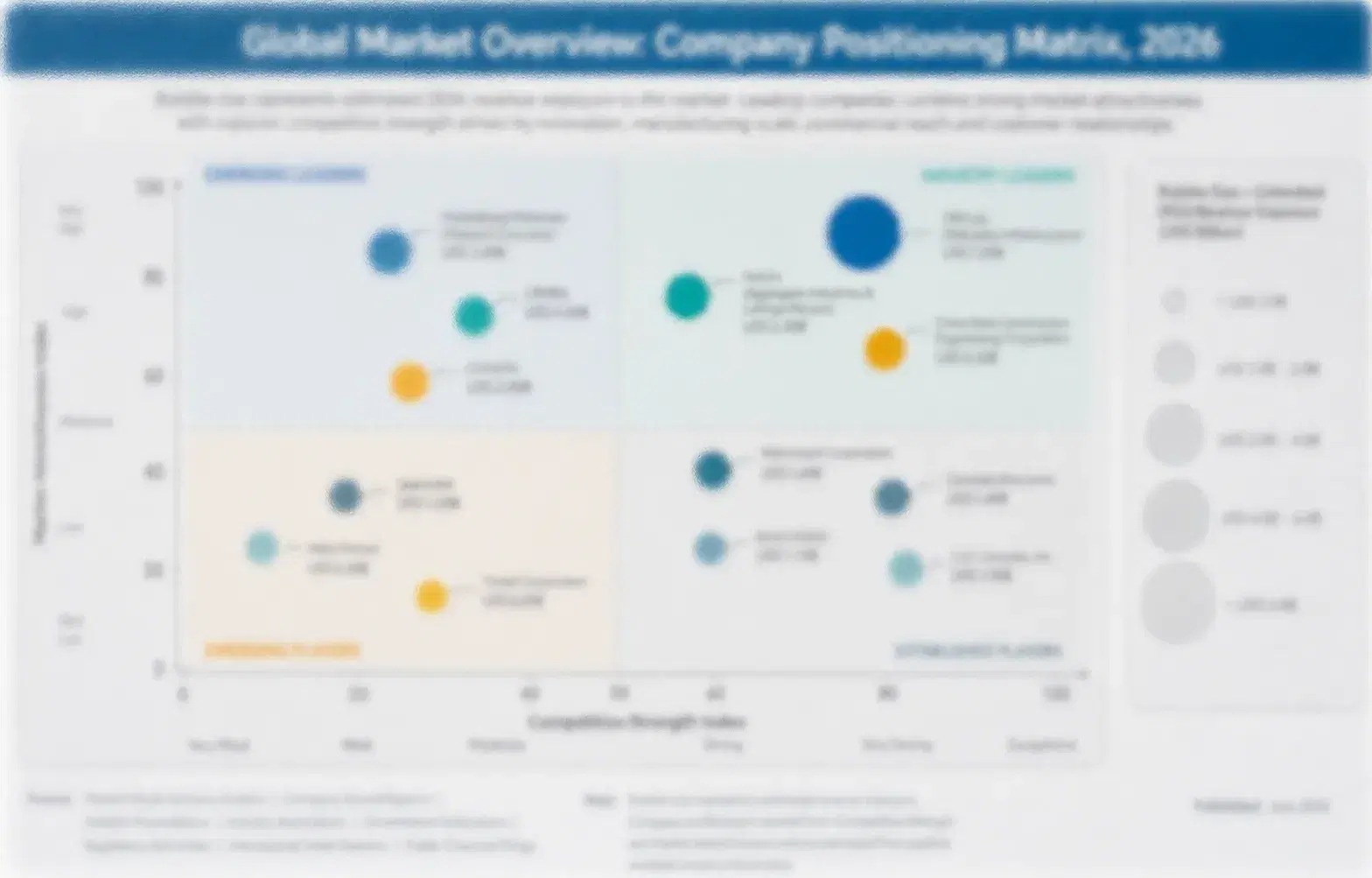
ammonium-thiosulfate-market-company-positioning-matrix-1786463165823

Competitive Moat and Risk Dimensions

TESSENDERLO KERLEY

Moat: Plant network inside demand radii

Tessenderlo Kerley built production close to agricultural demand rather than close to feedstock, which is unusual for a commodity chemical and decisive in a product where freight overwhelms value past a few hundred kilometres. Every plant effectively owns its radius, and a competitor wanting that demand has to build rather than sell, which takes years and a capital committee.
TESSENDERLO KERLEY

Risk: Radius model resists rapid expansion

The same logic that protects existing radii prevents the company entering new ones quickly, since serving Brazilian interior or Indian oilseed demand requires local plants rather than exports. Regional producers building inside those gaps will hold them the same way Tessenderlo Kerley holds its own, and being first matters far more than being larger.
KOCH AGRONOMIC SERVICES

Moat: Distribution and agronomy channel depth

Koch reaches growers through an agronomy and distribution organisation built across a much wider nutrient portfolio, which lets thiosulfate travel alongside nitrogen products the same customer already buys. That channel position turns a single-product conversation into a programme conversation, and it reaches retailers who would never take a call from a specialist producer.
KOCH AGRONOMIC SERVICES

Risk: Thiosulfate is a minor line

Thiosulfate sits inside a nutrient business dominated by nitrogen, and it competes internally for capital against products with far larger volumes and simpler logistics. A specialist can justify a plant in a gap that Koch would struggle to prioritise, and radius economics reward whoever commits first rather than whoever has the larger balance sheet.

Players Tracked

Prominent Players

Tessenderlo Kerley
Koch Agronomic Services
Martin Midstream Partners
Hydrite Chemical
Chemtrade Logistics

Other Key Players

Poole Chem
Kanto Chemical
Nippon Chemical Industrial
Shandong Xinlong Group
Hebei Yaxin Chemical
Plant Food Company
Verdesian Life Sciences
Nutrien
Yara International
ICL Group
Rech Chemical
Jiangsu Kolod Food Ingredients
PCI Nitrogen
AgroLiquid
Deepak Nitrite

Recent Developments

MARCH 2025

Producer commissioned plant serving Brazilian interior agriculture

A thiosulfate producer commissioned capacity positioned to serve Brazilian interior cropping regions that had previously sat outside any economic delivery radius. Cerrado soils are naturally sulphur poor and cropping intensity is high, so agronomic demand had existed for years without any practical way to supply it.
Signal: Plant placement rather than any commercial
AUGUST 2024

Gold operation expanded thiosulfate leaching after permit refusal

A gold operation expanded its thiosulfate leaching capacity after a cyanide permit application was refused, accepting lower recovery in exchange for a project that could proceed at all. Reagent consumption at that scale exceeds several years of regional agricultural demand in a single operating year.
Signal: One mine conversion moves regional volume
DECEMBER 2024

Supplier launched depressed freezing point winter grade

A supplier introduced a winter grade with an additive package depressing the crystallisation point several degrees below that of the standard solution. Northern distributors had consistently chosen dry sulphur sources rather than risk finding a crystallised tank at the start of their spring application season.
Signal: Winter handling rather than agronomy is wh

Ammonia, Sulphur, And Freight

Anhydrous ammonia carries roughly 30% to 38% of cost of goods and comes from regional nitrogen producers, since ammonia itself does not travel cheaply either. Elemental sulphur and sulphur dioxide add 18% to 24%, sourced largely as a by-product of refining and sour gas processing. Process energy, water treatment, and the outbound freight on a solution that is mostly water make up most of the remainder.
European ammonia production shut down extensively through 2022 as gas prices spiked, with European Commission energy statistics recording industrial gas costs several times their historical level at the peak. Yara idled a large share of its European capacity across that period and said so publicly. Thiosulfate producers buying merchant ammonia absorbed the increase or passed it through into a growing season where growers could switch to dry sulphur instead.

Exposure divides by whether a producer sits inside a nitrogen complex. Plants integrated with an ammonia source pay transfer cost and ride the cycle. Merchant buyers pay spot and carry that volatility into a seasonal sales window they cannot reprice. Sulphur exposure is milder, since by-product supply is abundant, though it tightens whenever refinery run rates fall. Freight is the input nobody can hedge.
ammonium-thiosulfate-market-cost-volatility-analysis-1786463165999

Locate plants alongside merchant ammonia supply

Ammonia is the largest input and it does not travel cheaply, so siting production beside a nitrogen complex removes freight on the input as well as securing supply through tight periods. It also gives the producer visibility of ammonia scheduling that no merchant buyer ever has. The constraint is that nitrogen complexes sit near gas and demand sits near farms.

Index seasonal contracts to published ammonia benchmarks

Agricultural supply agreements struck before a season leave the producer carrying ammonia movement across the whole application window, which the 2022 spike showed to be unsurvivable. Index clauses tied to published benchmarks are standard across nitrogen trading and translate directly, though distributors resist them and prefer a fixed number they can quote growers. Distributors resist it consistently.

Build industrial offtake to fill the off-season

Agricultural demand concentrates into a few weeks and leaves fixed costs stranded across the rest of the year. Flue gas, water treatment, and leaching customers consume steadily, and every point of annual utilisation gained lowers unit cost across the agricultural volume too. It is the most reliable cost lever available in a business where the recipe cannot be improved.

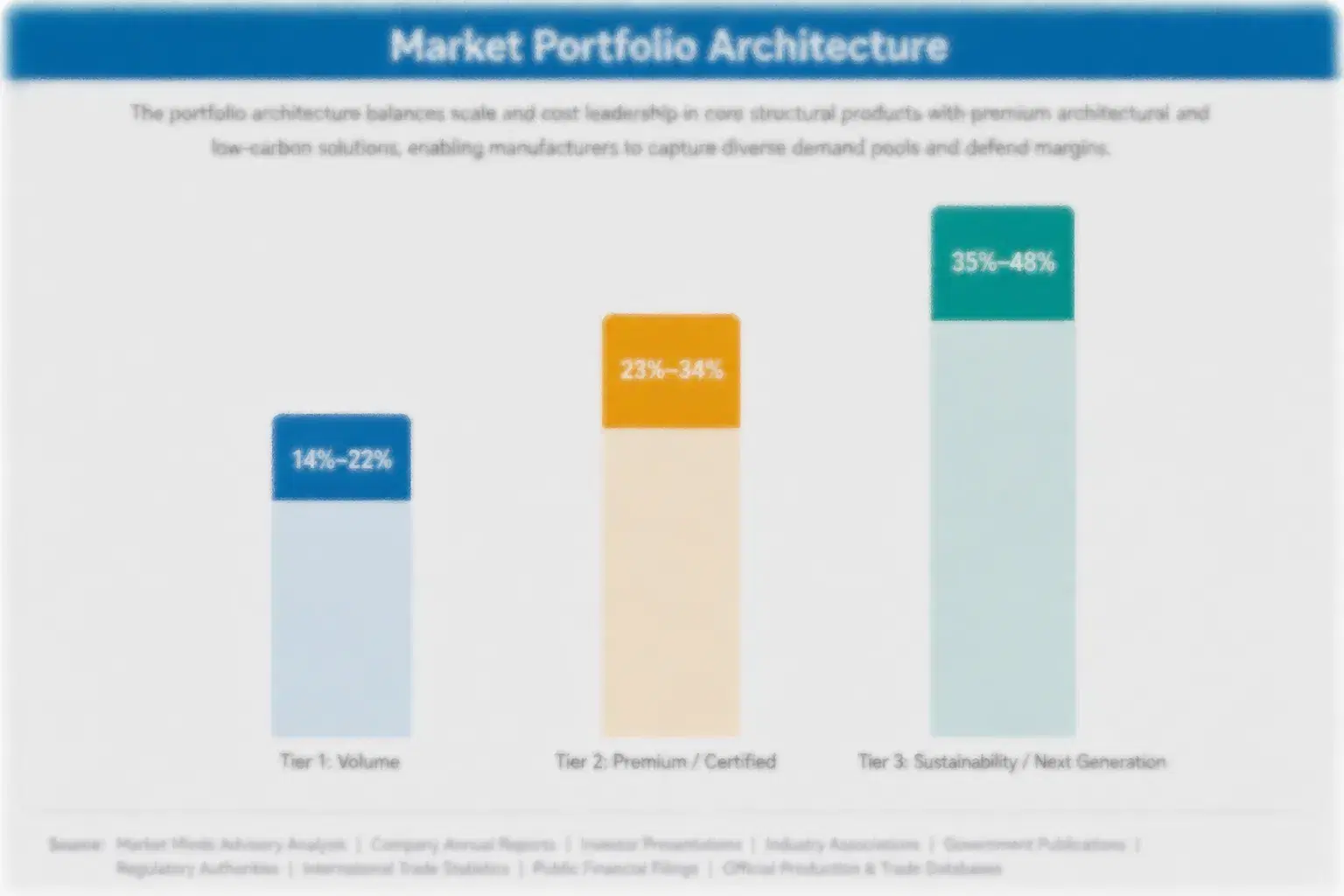
Portfolio Architecture for Margin Defence

Margin here tracks how badly the customer needs a solution rather than a solid. Bulk agricultural supply into a contested radius is priced against dry sulphur alternatives and earns commodity margins accordingly. Industrial applications where the chemistry is written into an operating permit, and mining applications where the alternative reagent cannot be permitted at all, are priced instead against the cost of not having it.
The volume tension is seasonal rather than competitive. Agricultural tonnage fills the plant for a few weeks and pays for the asset, and no producer can decline it without stranding fixed cost across the whole year. Industrial and mining offtake earns more per tonne and consumes steadily, but it is not large enough anywhere to support a plant on its own. Both are needed and neither is sufficient.

High-value pools sit in three places. Plants placed inside unserved delivery radii, where local demand converts almost immediately, winter grades that open cold regions currently written off, and industrial offtake that lifts annual utilisation. All three are decided by capital allocation and formulation work rather than by anything happening in the market itself.

Volume / Commodity-Adjacent Tier

Bulk agricultural solution sold into radii where a competing plant is within reach, priced against dry sulphur alternatives. The range reflects how differently an integrated and a merchant ammonia position carry the same tonne.
Gross Margin: 14-22%

Premium / Certified Tier

Blend-qualified grades supplied into liquid fertiliser programmes with compatibility guarantees, and winter formulations for the coldest regions. Formulation work and distributor confidence rather than production cost are what support the margin here.
Gross Margin: 24-34%

Sustainability / Regulatory / Next-Generation Tier

Flue gas and mercury control supply, water treatment dechlorination, and precious metal leaching reagent. The wide range reflects genuinely different economics between permit-specified industrial volume and mining offtake priced against a reagent that cannot be permitted.
Gross Margin: 30-46%
ammonium-thiosulfate-market-portfolio-architecture-1786463166179

High-value Sub-segments and Strategic Watch-out

Precious Metal Leaching Supply

Growing at 9.3% because thiosulfate is the only cyanide alternative proven at production scale and permitting pressure keeps rising. Tonnage per operation is large enough that one mine conversion reshapes regional demand entirely on its own. Permitting refusals are the leading indicator worth tracking. Volume follows the refusals.
Gross Margin: 32-46%

Unserved Radius Plant Placement

A plant built where documented deficiency exists and no competitor is within reach captures most of the local demand in the first season. Brazilian interior and Indian oilseed regions are the clearest examples of this sitting unexploited today. Competitors cannot respond without building their own plant.
Gross Margin: 28-40%

Bulk Agricultural Solution

The volume base of this market, priced directly against the dry sulphur alternatives inside every single contested radius. It fills the plant right through the application season and pays for the asset, which is exactly why no producer can afford to walk away from it.
Gross Margin: 14-22%

Permit-Specified Industrial Supply

Flue gas mercury control and water treatment where the chemistry appears in an operating permit rather than being chosen commercially. The watch-out is that coal closures remove plants faster than waste-to-energy capacity replaces the volume lost. Permit language rather than commercial preference sets the volume. Forecasting it is unusually straightforward.
Gross Margin: 30-42%

What Keeps The Tank Coming Back

This is an annuity business that behaves like a commodity one, and the difference matters. A grower applying sulphur does so every season on the same acres, a scrubber consumes continuously under a permit, and a leaching circuit runs while the orebody lasts. What producers fail to collect is the pricing power that consistency should confer, because most contracts get renegotiated annually against a dry sulphur benchmark.
Stickiness varies sharply by application. Industrial and mining customers are locked in almost completely, since the chemistry is written into a permit or a metallurgical flowsheet nobody reopens casually. Agricultural distributors switch on delivered price whenever another plant comes into range, which happens rarely but decisively. Growers themselves are loyal to the retailer rather than the producer, and rarely know whose product went into the tank.

Buyer profiles have moved toward agronomy and away from purchasing. Sulphur used to be bought as the cheapest available source of an element. Deficiency mapping, tissue testing, and yield response data have moved the conversation toward placement and timing, where a solution applied through precision equipment has advantages granular product cannot match. Producers selling sulphur units per dollar are answering a question the agronomist stopped asking.
ammonium-thiosulfate-market-end-use-penetration-index-1786463166352

Where To Compete Here

These are among the four positions where our research anticipates prominent divergence between winners and laggards over the coming forecast period. Each is grounded in the demand model, the regulatory perimeter, and the announced capacity pipeline.
01 / RADIUS CAPITAL ALLOCATION

Build where nobody can deliver today

Freight overwhelms product value past roughly 500 kilometres, so every plant owns its radius outright and every gap between radii is documented demand that simply goes unserved year after year. Finding those gaps is a mapping exercise rather than a market study, and a plant placed inside one captures most of the local demand from its very first season. Competitors cannot answer that without building their own plant, which takes years and a capital committee that has usually already said no.
02 / COLD WEATHER FORMULATION

Fix the February tank, open the north

Standard solution crystallises around minus two degrees Celsius, and distributors in cold regions keep buying dry sulphur specifically to avoid finding a solid tank before the spring application window even opens. Additive packages depressing that point by five to eight degrees amount to modest formulation work, and they open up growing regions currently written off as unserviceable altogether. The freight radius itself does not change at all, so the addressable demand inside plants that already exist simply rises without further capital.
03 / OFF-SEASON UTILISATION DISCIPLINE

Fill the plant when the fields are empty

Agricultural tonnage arrives across a few compressed weeks and then leaves a continuous chemical process sitting idle for much of the year, which is a punishing fixed cost profile to carry. Flue gas treatment, water treatment, and leaching customers consume steadily and can lift annual utilisation from around 55% to above 75%. That gain flows straight through into unit cost and defends the agricultural business on price, which is the only real lever available anywhere the recipe itself cannot be improved.
04 / LEACHING REAGENT POSITIONING

Follow the cyanide permits that get refused

Thiosulfate is the only cyanide alternative that has ever run at genuine production scale for precious metal recovery, and its recovery economics remain worse on most ores than cyanide comfortably achieves. That whole comparison becomes entirely irrelevant the moment a given project cannot obtain a cyanide permit at all. Consumption per operation is large enough that a single conversion moves regional demand more than a full decade of agricultural growth ever would, which makes cyanide permitting refusals worth tracking directly.

Engagement Snapshot From the Field

A live engagement with an industry participant carrying material or product regulatory and market exposure ahead of a defining policy shift, showing how our research translates into a defensible multi-year portfolio strategy.
MARKET MINDS ADVISORY · CLIENT ENGAGEMENT SUMMARY
Ammonium Thiosulfate Producer Strategic Portfolio Review and Transition Roadmap 2026·Investment Scenario on Ammonium Thiosulfate Exposure Evaluation 2025-26
CLIENT PROFILE
A speciality nutrient producer operating three ammonium thiosulfate plants across two continents, with annual revenue near USD 190 million (client-reported, unverified by MMA). Volume growth had been entirely flat for three consecutive years despite documented sulphur deficiency spreading steadily across several regions that the company simply could not reach economically from its existing production footprint.
STRATEGIC CHALLENGE
The board had approved capital for one additional plant and the commercial team had proposed expanding an existing site, which was the lowest-risk option and served a radius already well supplied. Management suspected the money would earn considerably more somewhere else but had no systematic way to compare candidate locations against each other.
MMA APPROACH
MMA mapped documented soil sulphur deficiency against existing plant delivery radii across four candidate regions, identifying demand that no producer could currently reach economically. Each gap was then sized on cropped area, sulphur response data, and realistic adoption curves. Ammonia supply availability and freight cost from each candidate site were modelled against the resulting volume.
KEY FINDINGS
  1. Expanding the existing site would have added capacity into a radius already served at roughly 80% of its addressable demand (client-reported, unverified by MMA).
  2. Two of the candidate regions showed documented deficiency across substantial cropped area with no thiosulfate production within 900 kilometres in any direction.
  3. Merchant ammonia availability rather than any shortfall in agricultural demand ruled out the larger of those two candidate regions on input security grounds alone.
  4. A winter grade would extend the viable radius of the surviving candidate northward by an estimated 200 kilometres at negligible formulation cost.
CLIENT PROFILE
A speciality nutrient producer operating three ammonium thiosulfate plants across two continents, with annual revenue near USD 190 million (client-reported, unverified by MMA). Volume growth had been entirely flat for three consecutive years despite documented sulphur deficiency spreading steadily across several regions that the company simply could not reach economically from its existing production footprint.
STRATEGIC CHALLENGE
The board had approved capital for one additional plant and the commercial team had proposed expanding an existing site, which was the lowest-risk option and served a radius already well supplied. Management suspected the money would earn considerably more somewhere else but had no systematic way to compare candidate locations against each other.
MMA APPROACH
MMA mapped documented soil sulphur deficiency against existing plant delivery radii across four candidate regions, identifying demand that no producer could currently reach economically. Each gap was then sized on cropped area, sulphur response data, and realistic adoption curves. Ammonia supply availability and freight cost from each candidate site were modelled against the resulting volume.
KEY FINDINGS
  1. Expanding the existing site would have added capacity into a radius already served at roughly 80% of its addressable demand (client-reported, unverified by MMA).
  2. Two of the candidate regions showed documented deficiency across substantial cropped area with no thiosulfate production within 900 kilometres in any direction.
  3. Merchant ammonia availability rather than any shortfall in agricultural demand ruled out the larger of those two candidate regions on input security grounds alone.
  4. A winter grade would extend the viable radius of the surviving candidate northward by an estimated 200 kilometres at negligible formulation cost.
RECOMMENDED STRATEGY
Phase 1: Phase one: build the new plant in the unserved region with secure merchant ammonia supply rather than expanding the existing site as proposed. Phase 2: Phase two: develop a depressed freezing point grade before commissioning, extending the new plant's viable radius through the colder northern portion. Phase 3: Phase three: secure industrial offtake near the new site well ahead of start-up to hold utilisation through the non-agricultural months.
OUTCOME
The client redirected its approved capital to the unserved region and reported first-season volume roughly 40% above the plan prepared for the expansion option it had originally favoured (client-reported, unverified by MMA). The winter grade was developed before commissioning as recommended, and industrial offtake secured before start-up held first-year utilisation above the company's other sites.

Frequently Asked Questions

Foundational context covering the market sizes, CAGR, scope, country, region and competition that inform every finding below. This section is provided to cover basics and most often pre-purchase conversations, answered from the MMA Primary Research Dataset.

What is the current size of the Ammonium Thiosulfate Market?

The market reached USD 0.62 billion in 2025 and is forecast at USD 0.66 billion for 2026. Demand concentrates around production points, because freight overwhelms product value past a few hundred kilometres.

How large will the Ammonium Thiosulfate Market be by 2036?

MMA forecasts USD 1.20 billion by 2036, an increase of USD 0.54 billion over 2026. That represents an expansion multiple of 1.82 times across the forecast period.

What is the CAGR for the Ammonium Thiosulfate Market 2026 to 2036?

The base case CAGR is 6.2%, with a bull case at 7.4% and a bear case at 5.0%. The bear case reflects ammonia cost volatility pushing growers toward cheaper dry sulphur sources.

Which segment is growing fastest?

Gold and precious metal leaching grows fastest at 9.3%, exactly 1.50 times the market rate. Thiosulfate is the only cyanide alternative proven at production scale, and cyanide permitting keeps getting harder.

Who are the major companies in the Ammonium Thiosulfate Market?

Tessenderlo Kerley, Koch Agronomic Services, Martin Midstream Partners, Hydrite Chemical, and Chemtrade Logistics lead the market. The top five hold roughly 71% of ammonium thiosulfate revenue, and that concentration reflects plant geography rather than technology.

Which country is growing fastest?

India grows fastest at 9.4%, driven by widespread soil sulphur deficiency across oilseeds and pulses alongside nutrient subsidy reform reducing the long-standing nitrogen bias. Domestic production capacity remains well short of the agronomic requirement.

Report Segmentation Architecture

The full report scope spans multiple orthogonal segmentation dimensions, with cross-tabulated demand data provided for each dimension pair. Coverage extends further to regional breakdowns, trend trajectories, and the competitive detail needed to support segment-level decision-making.

By End Use Application

  • Gold and Precious Metal Leaching
  • Flue Gas and Emissions Treatment
  • Water and Wastewater Treatment
  • Liquid Fertiliser Sulphur Supply
  • Industrial and Photographic Processing

By End-Use Industry

  • Row Crop and Oilseed Agriculture
  • Mining and Metal Recovery
  • Power Generation and Waste Combustion
  • Municipal and Industrial Water
  • Speciality Chemicals and Imaging

By Commercial Dimension

  • Bulk Terminal Supply
  • Agricultural Retail Distribution
  • Direct Industrial Contract
  • Blended Liquid Programmes
  • Packaged and Drummed Supply

By Region

  • North America
  • Latin America
  • East Asia
  • Western Europe
  • South Asia and Pacific
  • Middle East and Africa
  • Eastern Europe

Scope, Methodology, and Coverage

Every figure in this report is reproducible from documented input assumptions. The scope below maps the historical period, the forecast horizon, the segmentation dimensions, and the countries covered, alongside the underlying primary and qualitative methodology.
Historical Period
2020 to 2025
Forecast Period
2026 to 2036
Base Year
2025 (USD billions; MMA Primary Research Dataset, August 2026)
Market Definition
The ammonium thiosulfate market comprises production and sale of aqueous ammonium thiosulfate solution, typically supplied at around 60% concentration carrying 12% nitrogen and 26% sulphur by weight, valued at producer selling prices to agricultural retailers and distributors, industrial end users, mining operators, and water treatment utilities. It spans standard bulk agricultural grades, blend-qualified and depressed freezing point formulations, and higher-purity industrial grades, together with the terminal storage and delivery arrangements attached to them. Elemental sulphur and sulphur dioxide feedstocks, ammonium sulphate and other dry sulphur fertilisers, sodium, calcium, and potassium thiosulfate, sulphuric acid, gypsum, liquid nitrogen products supplied without thiosulfate content, and cyanide-based leaching reagents are excluded.
Quantitative Units
USD billions (current prices); volume in thousands of tonnes of solution
Segmentation Dimensions
By End Use Application; By End-Use Industry; By Commercial Dimension; By Region
Regions Covered
North America, Latin America, East Asia, Western Europe, South Asia and Pacific, Middle East and Africa, Eastern Europe
Countries Covered
USA, Canada, Mexico, Brazil, Argentina, Chile, Colombia, Peru, China, Japan, South Korea, Taiwan, India, Australia, Indonesia, Malaysia, Thailand, Vietnam, Germany, France, UK, Netherlands, Belgium, Spain, Italy, Denmark, Sweden, Poland, Hungary, Romania, Czechia, Ukraine, Saudi Arabia, United Arab Emirates, Egypt, Morocco, Ghana, South Africa, and additional markets relevant to this sector
Key Companies Profiled
Tessenderlo Kerley, Koch Agronomic Services, Martin Midstream Partners, Hydrite Chemical, Chemtrade Logistics, Poole Chem, Kanto Chemical, Nippon Chemical Industrial, Shandong Xinlong Group, Hebei Yaxin Chemical, Plant Food Company, Verdesian Life Sciences, Nutrien, Yara International, ICL Group, Rech Chemical, Jiangsu Kolod Food Ingredients, PCI Nitrogen, AgroLiquid, Deepak Nitrite
Quantitative Methodology
Primary survey, n=3,800 respondents, Q4 2025, six countries; demand-side model with trade association cross-validation
Qualitative Methodology
47 expert interviews, Q4 2025; applied to validate demand model assumptions, identify emerging dynamics, and assess competitive positioning
Report Format
PDF and XLSX data workbook (Word format preview document)
Publisher
Market Minds Advisory
Report Code
MMA-2026-CHM-645
Published
August 2026
Contact
sales@marketmindsadvisory.com | www.marketmindsadvisory.com

Purchase the full Ammonium Thiosulfate Market Report (2026 to 2036).

The full report examines ammonium thiosulfate demand across seven regions and five applications, with particular attention to how freight economics turn a simple chemical into a set of regional monopolies around production points. It maps documented soil sulphur deficiency against existing plant delivery radii to identify demand that currently goes unserved. Competitive analysis covers twenty participants assessed on thiosulfate revenue, including where fertiliser majors are turning producers into suppliers of their own channel. Regional chapters trace deficiency, application infrastructure, and production capacity separately, because the three rarely coincide.
Seven-region deficiency and delivery radius mapping
Five application segmentation with growth rates
Twenty participant competitive assessment and siting positioning
Unserved radius sizing against documented soil deficiency
Precious metal leaching demand under cyanide permitting pressure
Plant utilisation economics across agricultural and industrial offtake

Built For The People Who Decide

From boardroom strategy to bench-side execution, this report is read cover-to-cover by leaders shaping the next decade of their industry, turning demand scenarios, market dynamics and valuation benchmarks into decisions.
CXOs/ Presidents/ VPs/ Managers
M&A and Corporate Development
Strategy Teams and R&D Heads
Procurement and Product Directors
Regulatory and Compliance Leaders
Investor Relations and Equity Analysts