Market Minds Advisory
Americas COVID-19 Testing Market

Americas COVID-19 Testing Market: Endemic Baseline, Multiplex Conversion, and Installed Platform Value

The emergency ended and left behind an enormous molecular analyser fleet with nothing urgent to run, so the commercial contest is now about what else those instruments can be given to do.

Lead Analyst

Alice Ballenger

Published

September 2026

Make Smarter Decisions with Customized Research Insights

Request a free sample report and evaluate market opportunities, growth trends, and competitive dynamics relevant to your business needs.

2025 MARKET VALUE$3.2BMarket Size 2025
2036 FORECAST VALUE$4.7BBase Case , 2026 to 2036
CAGR 2026 TO 20363.6 %Bull 4.9% / Bear 2.4%
INCREMENTAL OPPORTUNITY$1.4BNet 10- year value creation
EXPANSION MULTIPLE1.42x2036 value over 2026 base
Strategic Levers
M&A Pipeline
Regional Outlook
Country Rankings
Competitive Intelligence
Segmental Deep-dive
Call-Us : 91 93563 13602

Executive Snapshot and Market Trajectory

The instruments outlived the emergency. Molecular analysers placed across the Americas during 2020 and 2021 are still installed, still supported, and now running whatever panels a laboratory can justify. That fleet is the asset this market actually turns on, not any COVID assay. Nobody planned it that way.
Multiplex respiratory panels compound at 5.4%, a full 1.50x the market rate, because a single swab returning COVID, influenza A and B and RSV results is worth ordering when a COVID-only result increasingly is not. Test supply into the Americas originates predominantly in North America at 32%, reflecting domestic molecular and antigen manufacturing built under emergency funding and largely retained. Public purchasers still pay a security premium for domestic manufacture.
Concentration is high at 62%, with Roche Diagnostics and Abbott Laboratories leading a group that added COVID assays to platforms they already owned. Companies that built dedicated COVID-only capacity wrote most of it off. United States emergency coverage of self-tests ended in 2023, turning a reimbursed public health product into an ordinary retail purchase overnight. Consumer volume has not recovered. Combination influenza kits are now the only growing consumer line anywhere left in this category.
Market Definition
This market covers diagnostic tests for SARS-CoV-2 infection and prior exposure supplied into North American, Central American, South American and Caribbean markets, spanning laboratory molecular assays, point-of-care molecular tests, professional rapid antigen tests, over-the-counter self-test kits, multiplex respiratory panels that include a SARS-CoV-2 target, and serology assays. Measurement covers assay and kit revenue plus laboratory testing service revenue. Analyser hardware sold independently, sample collection swabs sold separately, vaccines, therapeutics, and wastewater surveillance programmes are excluded.
Base Year Value
$3.2B in 2025 (MMA Primary Research Dataset, August 2026)
Forecast Period
2026 to 2036, eleven discrete annual values
CAGR
3.6% base case. Bull 4.9%. Bear 2.4%.
Fastest Growth Segment
Multiplex Respiratory Panel Assays: 5.4% CAGR
Fastest Growth Country
Brazil: 6.4% CAGR
Fastest Growth Region
South Asia and Pacific: 5.8% CAGR
Largest Region
North America: 32% of 2025 global value
Market Leaders
Roche Diagnostics, Abbott Laboratories, Hologic, QuidelOrtho, and Danaher. Source: MMA Primary Research Dataset, July 2026.
Primary Survey
n=3,800 procurement and R&D decision-makers, Q4 2025, six countries
Methodology
Demand-side build-up, cross-validated against public data, 47 expert interviews

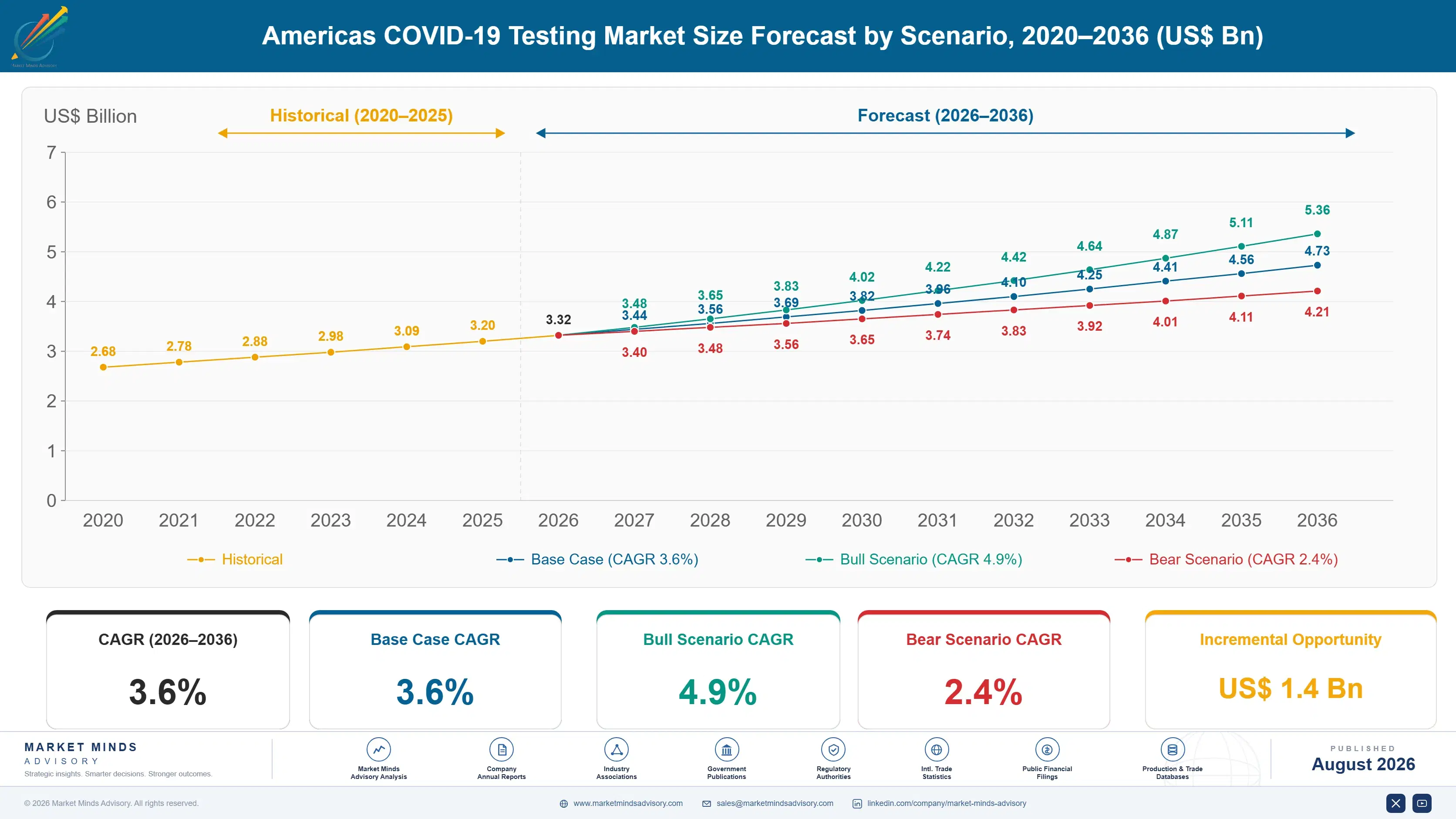
Americas COVID-19 Testing Market Forecast Scenarios

americas-covid-19-testing-market-size-size-forecast-scenario-1787303425087
The 2020 to 2025 period contained a boom and a collapse rather than a trend. Volumes and pricing peaked through 2021 and early 2022, then fell steeply as emergency funding ended, reimbursement lapsed and public testing sites closed across the Americas. MMA measures the historical rate of 2.4% from the endemic baseline established during 2023, because a peak-to-trough figure describes nothing useful.
Base case growth of 3.6% rests on three mechanisms. Multiplex respiratory panels keep converting COVID-only orders into combined assays that clinicians will actually request during a winter season. Point-of-care molecular testing keeps taking share from send-out laboratory work in urgent care and physician office settings where a same-visit result changes management. And the installed analyser base placed under emergency funding keeps generating consumable revenue as laboratories fill those instruments with adjacent panel menus.
The bull case at 4.9% assumes a severe variant or a serious influenza season restores institutional testing protocols temporarily, which historically lifts volumes sharply for two or three quarters. The bear case at 2.4% is a straightforward attrition case: self-test retail volumes keep declining as consumers stop testing for a respiratory illness that no longer changes what they do about it.

Americas COVID Testing: Endemic Demand and Platform Reuse

This market is defined by what it used to be. Volumes and pricing peaked in 2021 and 2022 at levels no diagnostic category had ever reached, then fell away as emergency funding stopped and public testing sites closed. Anyone modelling forward from that period rather than from the endemic baseline established in 2023 is describing a market that no longer exists in the Americas or anywhere else.
TOP FIVE CONCENTRATION62%Platform diagnostics companies that added assays to existing analysers
MULTIPLEX PANEL SHARE41%Molecular orders combining coronavirus with influenza and respiratory targets
AVERAGE TEST PRICEUSD 11.40Blended price across laboratory, point-of-care and retail formats
SELF-TEST VOLUME SHARE54%Unit volume purchased directly by consumers rather than through providers
REIMBURSED VOLUME SHARE38%Testing volume covered by insurance rather than paid privately
LABORATORY TURNAROUND TIME22 hoursTypical interval from sample collection to reported laboratory molecular result
What survived is the hardware. Molecular analysers were placed across hospital laboratories, reference laboratories and urgent care clinics at extraordinary scale under emergency funding, and those instruments remain installed and supported. They now run influenza, RSV, sexually transmitted infection and gastrointestinal panels alongside whatever COVID testing continues. The pandemic effectively rebuilt molecular diagnostic infrastructure across the region, and the companies whose platforms were placed keep earning from it.
Consumer behaviour changed decisively when reimbursement ended. United States emergency coverage of over-the-counter self-tests lapsed in 2023, moving those kits from free to roughly ten dollars a pair at retail. Volume fell sharply and the remaining purchases concentrate around travel, family events and symptomatic households. Roughly 54% of unit volume is now consumer self-testing paid entirely out of pocket.
"The most valuable thing the pandemic left behind in the Americas is not a test. It is several thousand molecular analysers sitting in laboratories that had never owned one, and every diagnostics company with a panel menu has been quietly working out what else to put on them."
Director, Infectious Disease Diagnostics Practice · MMA Healthcare Practice

Market Trends

Multiplex respiratory panels replace standalone coronavirus testing orders

Clinicians increasingly decline to order a COVID-only test because a positive result rarely changes management on its own, while a panel distinguishing COVID, influenza A and B and RSV from a single swab does change antiviral decisions and isolation practice. Roughly 41% of molecular respiratory orders across the Americas now use a multiplex panel, and that share keeps rising through each winter season. Manufacturers who converted COVID assays into panel menu items retained the volume, while those who kept selling single-target assays watched ordering behaviour move away from them. Ordering behaviour has moved past single-target assays permanently.
Market Impact: Cuts turnaround from 22 hours
Emergency-funded analyser fleets find new panel menus

Molecular instruments were installed across the Americas at a pace no commercial cycle would ever have supported, funded by emergency appropriations rather than by laboratory capital budgets. Those analysers remain in place and their owners now need utilisation, so manufacturers have been extending panel menus into influenza, RSV, sexually transmitted infection, gastrointestinal and respiratory bacterial testing. The instrument placement has become considerably more valuable than the COVID assays that justified it, and it locks each laboratory to one supplier's consumable format for years to come. The placement has become considerably more valuable than the assays that originally justified it.
Market Impact: Two demand peaks across 12 months

Market Opportunities and Growth Drivers

Point-of-care molecular testing displaces send-out laboratory work

Urgent care clinics, physician offices and emergency departments across North America increasingly run molecular respiratory testing on site rather than sending samples to a reference laboratory, because a result available during the visit changes antiviral prescribing while one arriving the next day generally does not. Laboratory turnaround averages roughly 22 hours against minutes at the point of care. That shift raises cost per test and reduces total laboratory volume, which suits manufacturers holding point-of-care platforms considerably better than it suits reference laboratories. Urgent care operators rather than laboratory directors now make these purchasing decisions, and they apply quite different criteria.
Market Impact: Coverage ended during 2023

Seasonal respiratory circulation sustains a predictable endemic baseline

SARS-CoV-2 now circulates with recognisable seasonality across both hemispheres of the Americas, producing winter demand peaks in North America and offsetting mid-year peaks across the southern cone. That counter-seasonality smooths manufacturing and distribution planning in a way single-hemisphere markets cannot offer. Testing demand during those peaks concentrates in hospital admissions, immunocompromised patients and congregate care settings where a confirmed result still changes clinical management, and that clinical demand has proved considerably more durable than consumer testing. Hospital admissions, immunocompromised patients and congregate care settings supply demand that has proved far more durable than consumer testing ever was.
Market Impact: Roughly 70% of capacity idled

Market Restraints and Challenges

Reimbursement withdrawal converted testing into discretionary retail spending

United States emergency coverage requiring insurers to pay for over-the-counter self-tests lapsed in 2023, and public distribution programmes ended alongside it. The root cause is that the coverage was tied to a declared public health emergency rather than written into permanent benefit design. Commercial impact was immediate: kits moving from free to roughly ten dollars a pair cut consumer volume sharply. Manufacturers responded by combining COVID and influenza targets into single retail kits, which restores a purchase reason that a COVID-only test no longer supplies. Influenza carries a treatment window that rewards knowing early, which coronavirus alone no longer does.
Market Impact: Multiplex now at 41% of orders

Dedicated pandemic capacity has proved impossible to repurpose

Manufacturers who built single-purpose COVID assay lines and swab facilities under emergency demand hold assets with no alternative use, and most has been written down or closed. The root cause is that pandemic procurement rewarded speed over flexibility, so capacity was configured for one assay rather than for a platform. Commercial impact fell on newer entrants hardest, since established diagnostics companies simply added COVID to existing menus. Survivors are converting what capacity they can toward influenza, RSV and sexually transmitted infection assay production instead. Flexible configuration looked expensive during the surge and has paid for itself since.
Market Impact: Utilisation across 8,000 placed ana
3 additional market trends, 2 additional growth drivers, and 4 additional restraints and challenges are covered in the full report. Contact sales@marketmindsadvisory.com to access the complete intelligence.

Segment CAGR and Growth Architecture

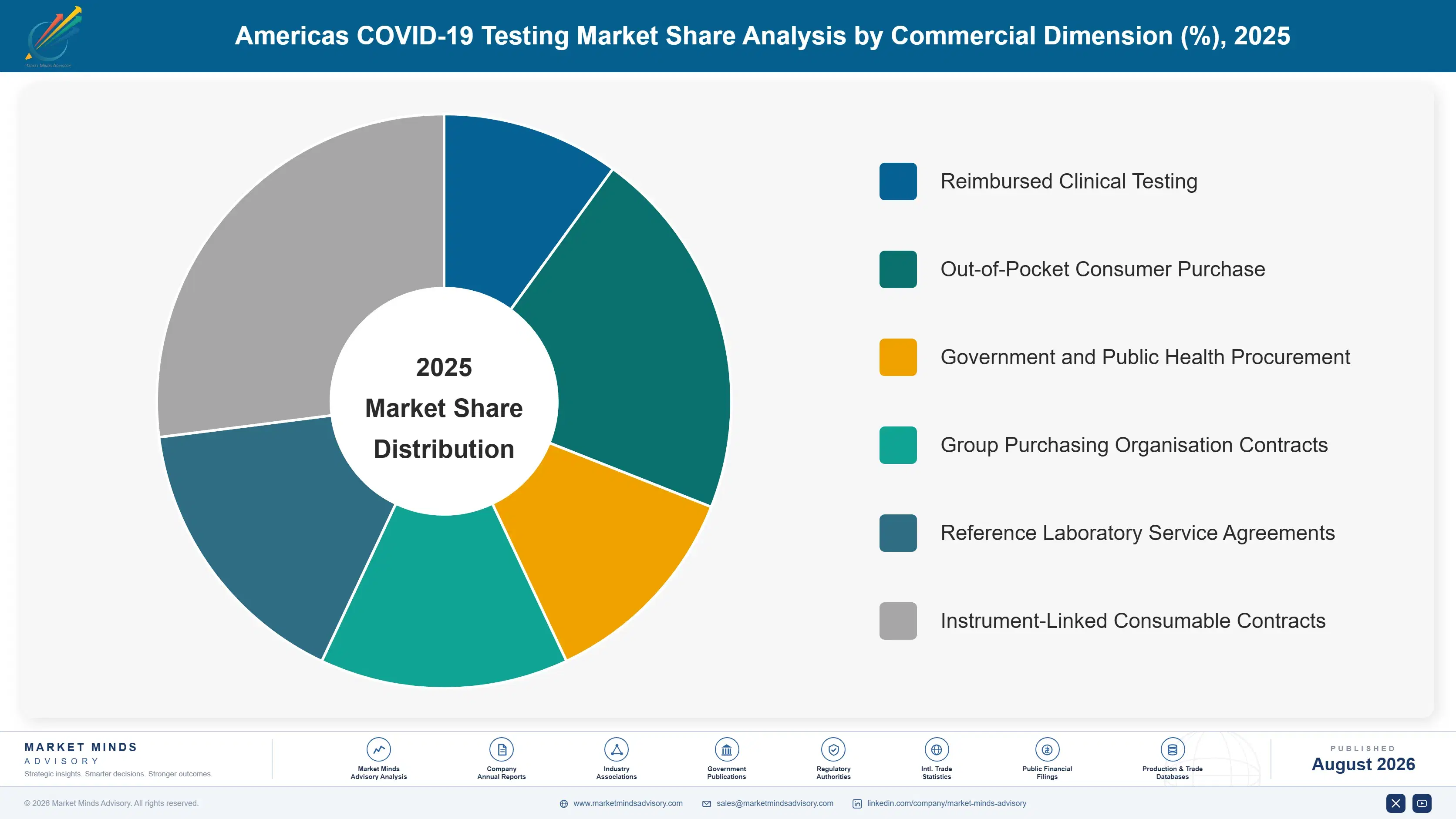
Segmentation follows assay format and testing technology, because format determines the regulatory pathway, the setting in which testing happens, the reimbursement mechanism and the price a payer or consumer will accept. Six formats cover coronavirus testing across the Americas without overlap. Care setting cuts across several formats and is treated as an application attribute rather than a segment here.
americas-covid-19-testing-market-size-market-share-analysis-1787303425637

Multiplex Respiratory Panel Assays

Growing at 5.4%, a full 1.50x the market rate, multiplex panels return COVID, influenza A and B and RSV results from a single swab and increasingly add human metapneumovirus and other respiratory targets alongside. The clinical argument is straightforward: a panel result changes antiviral choice and isolation practice, while a COVID-only positive frequently changes neither. Roughly 41% of molecular respiratory orders across the Americas now use one. Pricing sits well above single-target assays and payers have accepted it because the alternative is several separate orders. Manufacturers who failed to convert their COVID assay into a panel menu item lost the volume entirely. Panel breadth now decides which analyser a laboratory keeps rather than which assay it buys.
CAGR 5.4%

Point-of-Care Molecular Assays

Point-of-care molecular testing grows at 4.6% by delivering a result during the patient visit rather than roughly 22 hours later. Urgent care clinics, physician offices and emergency departments across North America have adopted cartridge-based systems that require no laboratory training, and antiviral prescribing decisions genuinely depend on having the answer immediately. Cost per test runs several times a laboratory assay and payers have largely accepted that, because the avoided follow-up contact and the earlier treatment decision carry their own value. The instrument placement locks each site to one manufacturer's cartridge format for the working life of the analyser. Capital cycles here are shorter than laboratory ones, which makes the position easier to win and easier to lose.
CAGR 4.6%
Full segment breakdown across 6 segments available in the complete report.

Regional Architecture and Country Demand Map

This market covers demand across the Americas only, so the seven-region table maps the origin of test supply into that demand rather than demand itself. Each share represents the proportion of Americas testing value supplied from manufacturing and laboratory capacity based in that region. Demand geography is fixed here.

North America

North American manufacturing supplies 32% of Americas testing value, the largest origin share, and emergency-era industrial policy explains it. Abbott, QuidelOrtho, Cepheid, Hologic and OraSure all expanded domestic assay production under federal funding, and much of that capacity was retained rather than closed once demand normalised. Domestic molecular assay and cartridge manufacture carries a security-of-supply premium that public health purchasers still pay. Mexican assembly operations serve both North American and Latin American demand from within the same trade area. Growth at 3.0% is slow because this origin base is mature and because Asian antigen manufacturing continues taking retail volume on price. Security-of-supply preference in public purchasing is what sustains the position rather than any cost advantage.
Share: 32% | CAGR: 3.0% (2026 to 2036)

East Asia

Twenty-eight per cent of Americas testing value originates in East Asia, almost entirely from Chinese and South Korean manufacturing that supplies the retail antigen self-test segment. Chinese producers built lateral flow capacity at a scale nobody else attempted and can supply a retail kit at costs North American manufacturers cannot approach, which is why consumer shelves across the Americas carry so much Asian-origin product. South Korean firms including SD Biosensor hold a strong position in both antigen and molecular formats. Growth at 4.4% reflects continued retail share capture, though tariff exposure and procurement preference for domestic supply constrain how far that can extend. Retail shelves across the region carry a great deal of Asian-origin product for exactly that reason.
Share: 28% | CAGR: 4.4% (2026 to 2036)
Regional intelligence for 5 additional markets available in the complete report: Western Europe, South Asia and Pacific, Latin America, Middle East and Africa, Eastern Europe. Contact sales@marketmindsadvisory.com.
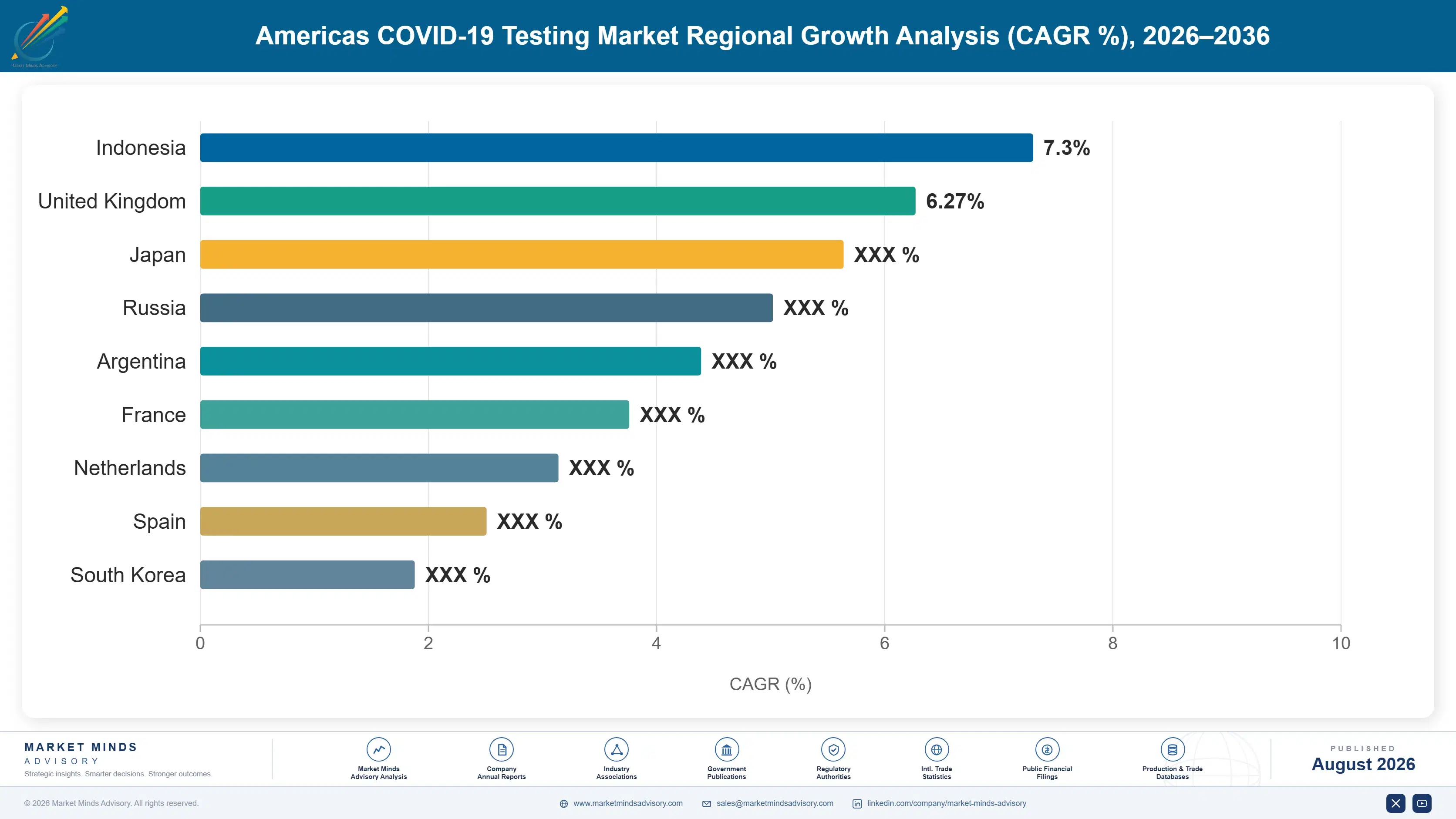
americas-covid-19-testing-market-size-country-cagr-analysis-1787303426186

Where Testing Value Survives The Decline

This is a market managing decline rather than pursuing growth, so nothing is won by defending COVID-only volume. Value now accrues to the installed analyser base, to panel menus that give clinicians a reason to order, and to retail formats that answer a question consumers still care about. Defending COVID-only volume achieves nothing at all.

Convert placed analysers into full respiratory panel menus

Instruments placed across the Americas under emergency funding remain installed and their owners need utilisation to justify service contracts. Extending panel menus into influenza, RSV, sexually transmitted infection and gastrointestinal testing converts a stranded COVID platform into a working laboratory asset, and each converted analyser generates consumable revenue for the remaining seven or eight years of its life. Roughly 8,000 molecular analysers were placed across the region during the emergency period. Manufacturers who moved menu development quickly retained those laboratories; those who waited watched competitors place a second instrument alongside.
Market Impact: Covers roughly 8,000 placed molecul

Sell panels to clinicians and single tests to nobody

A COVID-only positive result rarely changes clinical management now, and clinicians have responded by ordering fewer of them. A multiplex panel distinguishing COVID, influenza and RSV does change antiviral choice and isolation practice, which is why roughly 41% of molecular respiratory orders already use one and the share keeps climbing each season. Panel pricing sits well above single-target assays and payers accept it because the alternative is several separate orders. Manufacturers still selling standalone COVID assays are defending a product that ordering behaviour has already moved past. Ordering behaviour has already moved past them.
Market Impact: Multiplex already covers 41% of all

Rebuild the retail purchase reason around combination kits

Self-test volume collapsed when United States reimbursement ended in 2023 and kits moved from free to roughly ten dollars a pair, and consumers stopped testing for an illness that no longer changed their behaviour. Combination COVID and influenza retail kits restore a reason to buy, because influenza carries an antiviral treatment window that rewards early knowledge. That format is the only genuinely growing consumer line in the category. Pricing latitude is modest and shelf placement is decided by drug chain category managers rather than by any clinical argument. Clinical argument carries no weight in that decision at all.
Market Impact: Retail pricing has moved to about 1

Repurpose surviving capacity toward adjacent respiratory assays

Dedicated COVID assay lines built under emergency demand have no alternative use, and roughly 70% of that purpose-built capacity now sits idle or has been written down. Facilities configured around a platform rather than a single assay can be redirected toward influenza, RSV and sexually transmitted infection production with modest requalification cost. The decision is unglamorous and it is the difference between a write-off and a working plant. Manufacturers who configured flexibly during the emergency are now the ones with usable capacity and lower fixed cost. Requalification cost is modest against carrying an idle plant.
Market Impact: Roughly 70% of purpose-built capaci

Who Controls the Margin Pool

Concentration is high at 62% across the top five, measured on annual revenue from COVID-19 testing products and services supplied into Americas markets, the single basis applied throughout. Roche Diagnostics and Abbott Laboratories lead, followed by Hologic, QuidelOrtho and Danaher through Cepheid. All five added COVID assays to platforms they already owned, which is why their installed bases survived the collapse.
Competition now runs on panel menu breadth rather than on any COVID assay characteristic. A laboratory chooses a platform on how many tests it can run and how few instruments it needs, so manufacturers compete by extending menus into influenza, RSV, sexually transmitted infection and gastrointestinal testing. Point-of-care cartridge systems compete separately on time to result and on operator simplicity, since the buyer is an urgent care clinic rather than a laboratory director.

Pressure builds from two directions. Chinese and Indian antigen manufacturers keep taking retail volume on cost North American producers cannot match, constrained mainly by tariffs and procurement preference. Separately, pure-play pandemic entrants have mostly failed or been absorbed. Rankings shift most where a platform company builds panel breadth faster than a competitor can place a second analyser in the same laboratory.
americas-covid-19-testing-market-size-company-positioning-matrix-1787303426724

Competitive Moat and Risk Dimensions

ROCHE DIAGNOSTICS

Moat: Installed laboratory platform breadth

Roche holds one of the largest installed molecular analyser fleets across American hospital and reference laboratories, and each instrument commits its laboratory to proprietary reagent formats for the working life of the platform. Menu breadth across infectious disease, oncology and blood screening means a laboratory buying one Roche system usually finds several reasons to keep it fully occupied.
ROCHE DIAGNOSTICS

Risk: Laboratory volume erosion

The position rests on centralised laboratory testing, which is precisely the setting losing volume to point-of-care systems in urgent care and physician offices. COVID-only ordering has fallen furthest in exactly that channel. Reference laboratory consolidation across the United States also concentrates purchasing power against instrument suppliers year by year.
ABBOTT LABORATORIES

Moat: Point-of-care and retail reach

Abbott spans laboratory molecular systems, point-of-care cartridge platforms and retail self-tests through a single portfolio, which very few competitors match. The BinaxNOW retail position and ID NOW point-of-care placements give it access to consumer and ambulatory channels that laboratory-focused competitors reach only through partners, if at all.
ABBOTT LABORATORIES

Risk: Retail volume exposure

Consumer self-test volumes fell sharply once United States reimbursement ended in 2023 and continue declining, and Asian manufacturers undercut retail pricing substantially. Combination influenza kits restore some purchase reason but not the volumes of the reimbursed period. Drug chain category managers rather than clinicians now decide shelf placement and promotional support.

Players Tracked

Prominent Players

Roche Diagnostics
Abbott Laboratories
Hologic
QuidelOrtho
Danaher

Other Key Players

Thermo Fisher Scientific
bioMérieux
Becton Dickinson
Siemens Healthineers
Labcorp
Quest Diagnostics
OraSure Technologies
SD Biosensor
iHealth Labs
ACON Laboratories
Meridian Bioscience
Bio-Rad Laboratories
InBios International
Access Bio
Grifols

Recent Developments

FEBRUARY 2025

QuidelOrtho expands combination respiratory retail test distribution

QuidelOrtho widened retail distribution of combination coronavirus and influenza self-test kits across United States drug chains, an organic commercial expansion aimed at restoring a purchase reason that standalone coronavirus tests had lost once emergency reimbursement coverage ended two years earlier. No acquisition or partner brand was involved.
Signal: Influenza antiviral timing gives consumers
JULY 2025

Hologic extends molecular panel menu across installed analyser base

Hologic added respiratory and sexually transmitted infection assays to its installed molecular analyser platform across American laboratories, an organic menu expansion designed to raise utilisation on instruments placed during the emergency period that had lost their original testing volume. Instrument hardware itself was unchanged throughout.
Signal: Instrument placements made during the emer
JANUARY 2026

Brazilian health ministry renews domestic diagnostic manufacturing preference

Brazil's health ministry extended local content preference provisions in public diagnostic procurement, maintaining an advantage for domestically manufactured assays that had been introduced during the pandemic and had been expected to lapse as emergency purchasing arrangements ended. Asian suppliers had been regaining tender share beforehand.
Signal: Latin American local content policy is now

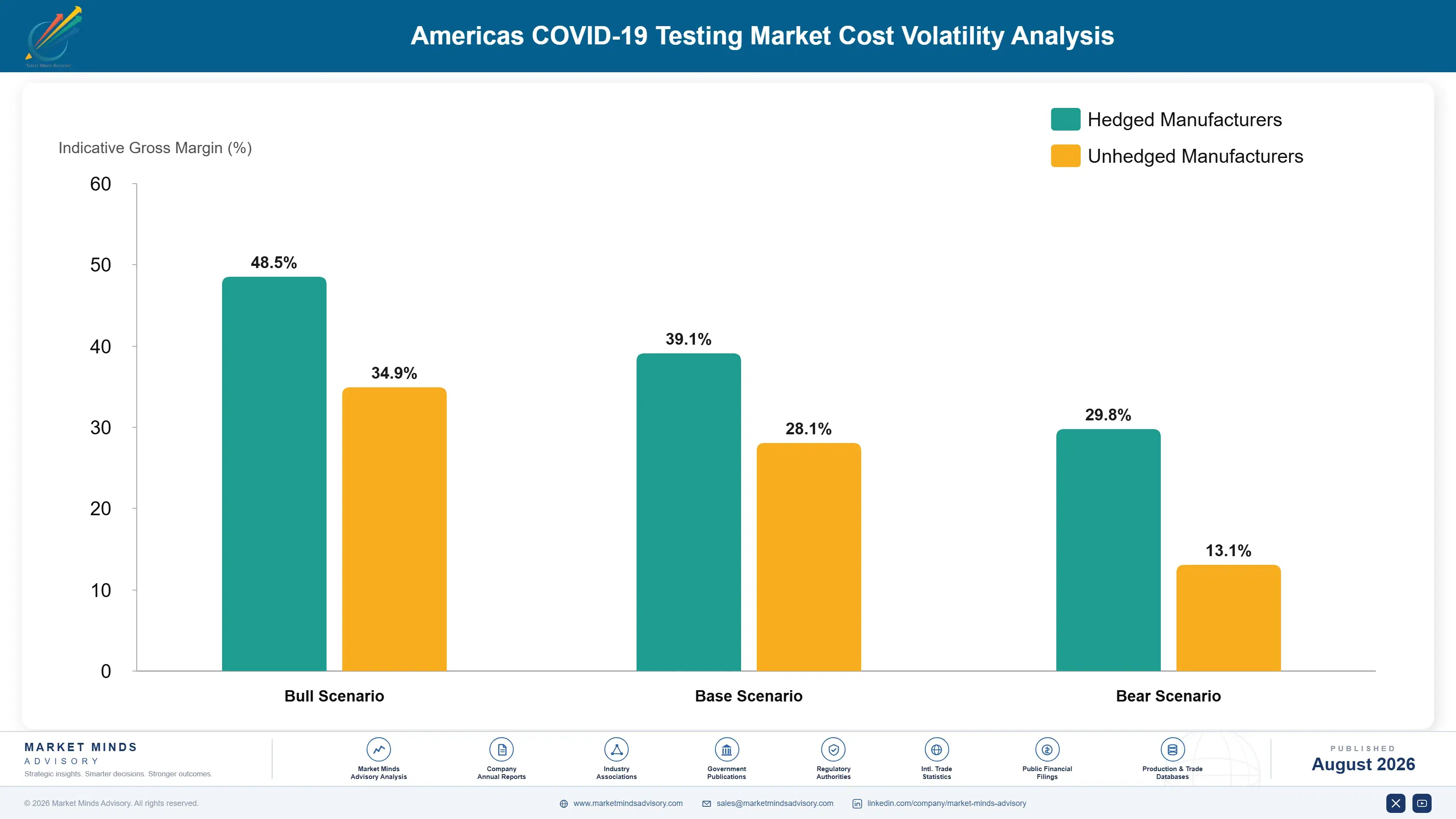
Reagent, Nitrocellulose and Capacity Cost Exposure

Cost structures differ sharply between molecular and antigen formats. Molecular assays carry enzyme, primer and probe reagent cost at roughly 29% of cost of goods, sourced from a narrow set of specialist biotechnology suppliers, plus cartridge injection moulding and precision assembly. Antigen lateral flow tests sit on nitrocellulose membrane, colloidal gold conjugate and antibody pairs at around 34%, with membrane supply concentrated among very few global manufacturers.
The 2020 to 2022 nitrocellulose shortage remains the clearest illustration. Global membrane capacity could not meet lateral flow demand at pandemic scale, and allocation rather than price determined who could manufacture, with Cytiva and Merck both documenting capacity constraint and expansion programmes in their reporting for those years. Manufacturers without standing supply agreements simply could not produce, regardless of what they were willing to pay for material.

The disadvantage now falls on manufacturers carrying dedicated pandemic-era capacity. A plant configured for one assay has fixed cost with no revenue to carry it, and roughly 70% of purpose-built COVID capacity sits idle or written down. Geography compounds it: Chinese and Indian producers hold labour and regulatory cost positions that North American antigen manufacturing cannot approach at all.
americas-covid-19-testing-market-size-cost-volatility-analysis-1787303426928

Hold standing nitrocellulose membrane supply agreements across suppliers

Membrane capacity is concentrated among very few global manufacturers and allocation rather than price decided production during the last shortage. Standing multi-supplier agreements cost more per roll in normal conditions and they are the difference between manufacturing and not manufacturing when demand spikes. Very few lateral flow producers carry that commitment through quiet periods.

Configure assay capacity around platforms rather than single targets

Lines built for one assay have no alternative use when demand for that assay ends, which is why so much emergency-era capacity was written off. Platform-configured facilities redirect toward influenza, RSV or sexually transmitted infection production at modest requalification cost. The flexibility premium looks expensive during a demand surge and pays for itself completely afterwards.

Qualify secondary enzyme and antibody pair suppliers across the menu

Molecular enzymes and antigen antibody pairs come from narrow specialist supplier bases, and regulatory change control makes substitution slow. Qualifying alternatives once across a whole assay menu spreads the cost thinly enough to justify holding them permanently, which removes an availability risk that halted production entirely at several manufacturers during the emergency. Production stopped entirely at several manufacturers.

Portfolio Architecture for Margin Defence

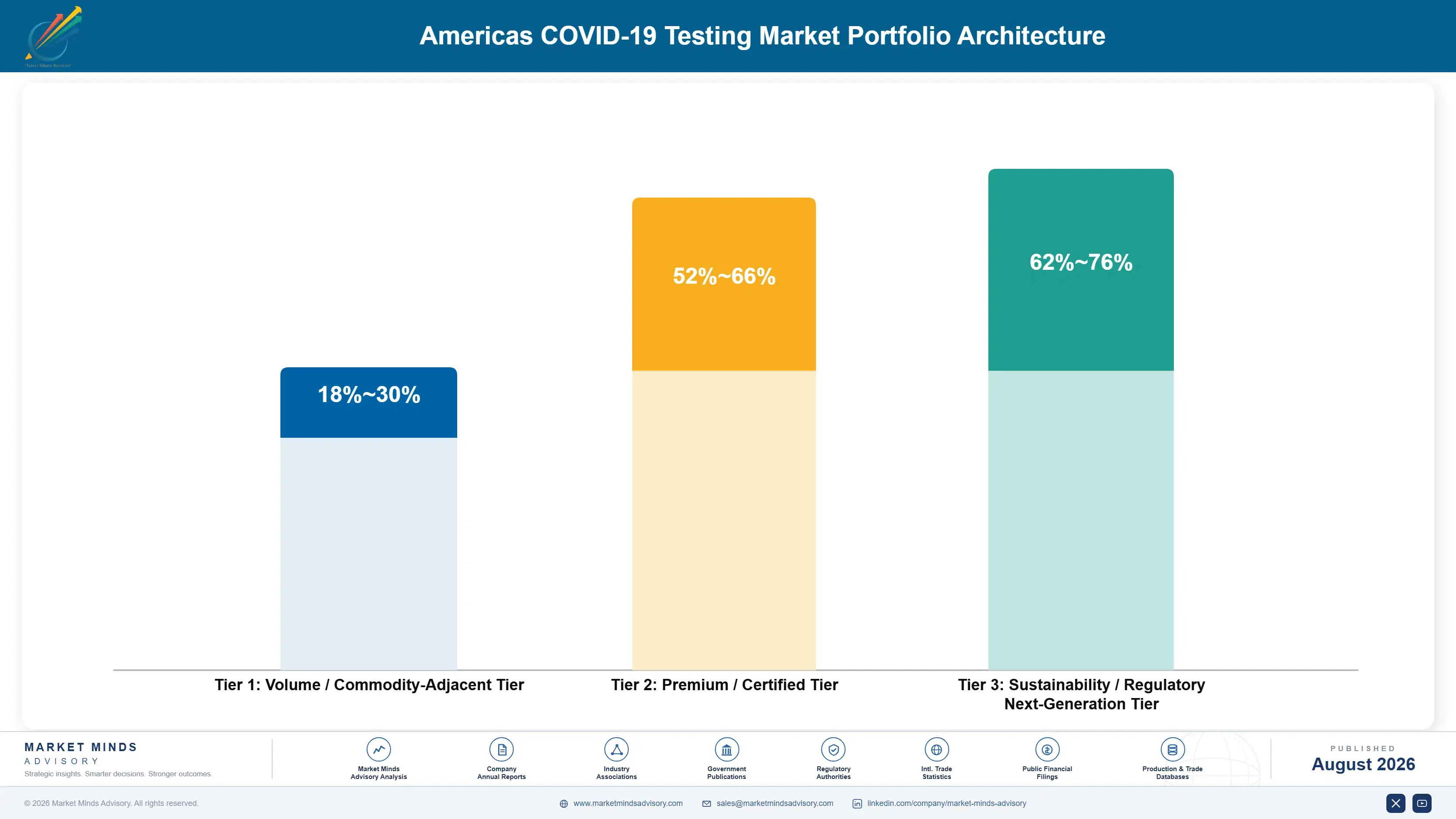
Margin architecture divides on whether a product is tied to an instrument. Retail antigen self-tests compete on shelf price against Asian manufacturing and earn consumer goods margins at best. Laboratory and point-of-care molecular assays earn considerably more, because the analyser sitting in the laboratory accepts only one manufacturer's cartridge or reagent format. Multiplex panels earn the most, since payers accept panel pricing that several separate single-target orders would not.
The volume versus premium tension has resolved itself unusually clearly here. Retail self-tests supply roughly 54% of unit volume and a small fraction of profit, and that volume keeps declining as consumers stop testing. Instrument-tied molecular assays supply fewer units and most of the margin, and they are protected by placements made under emergency funding that no competitor can replicate now that the funding has gone.

High-value pools concentrate where a clinical decision depends on the result. Multiplex panels guiding antiviral choice, point-of-care testing during an urgent care visit, and testing in immunocompromised or hospitalised patients all support pricing that reflects the decision being made. Asymptomatic screening, travel testing and routine consumer self-testing sit at the other extreme, where the result changes nothing and the price reflects that precisely.

Volume / Commodity-Adjacent Tier

Retail antigen self-test kits and professional rapid antigen tests, competing on delivered shelf price against Chinese and Indian manufacturing that North American producers cannot match on cost in any retail channel.
Gross Margin: 18-30%

Premium / Certified Tier

Laboratory and point-of-care molecular assays tied to installed analyser platforms, protected by proprietary cartridge and reagent formats that commit a laboratory or clinic for the working life of the instrument.
Gross Margin: 52-66%

Sustainability / Regulatory / Next-Generation Tier

Multiplex respiratory panels and emerging syndromic assay menus, protected by regulatory validation across multiple targets and by payer acceptance of panel pricing. Best margins available and the only genuinely growing part of the market.
Gross Margin: 62-76%
americas-covid-19-testing-market-size-portfolio-architecture-1787303427434

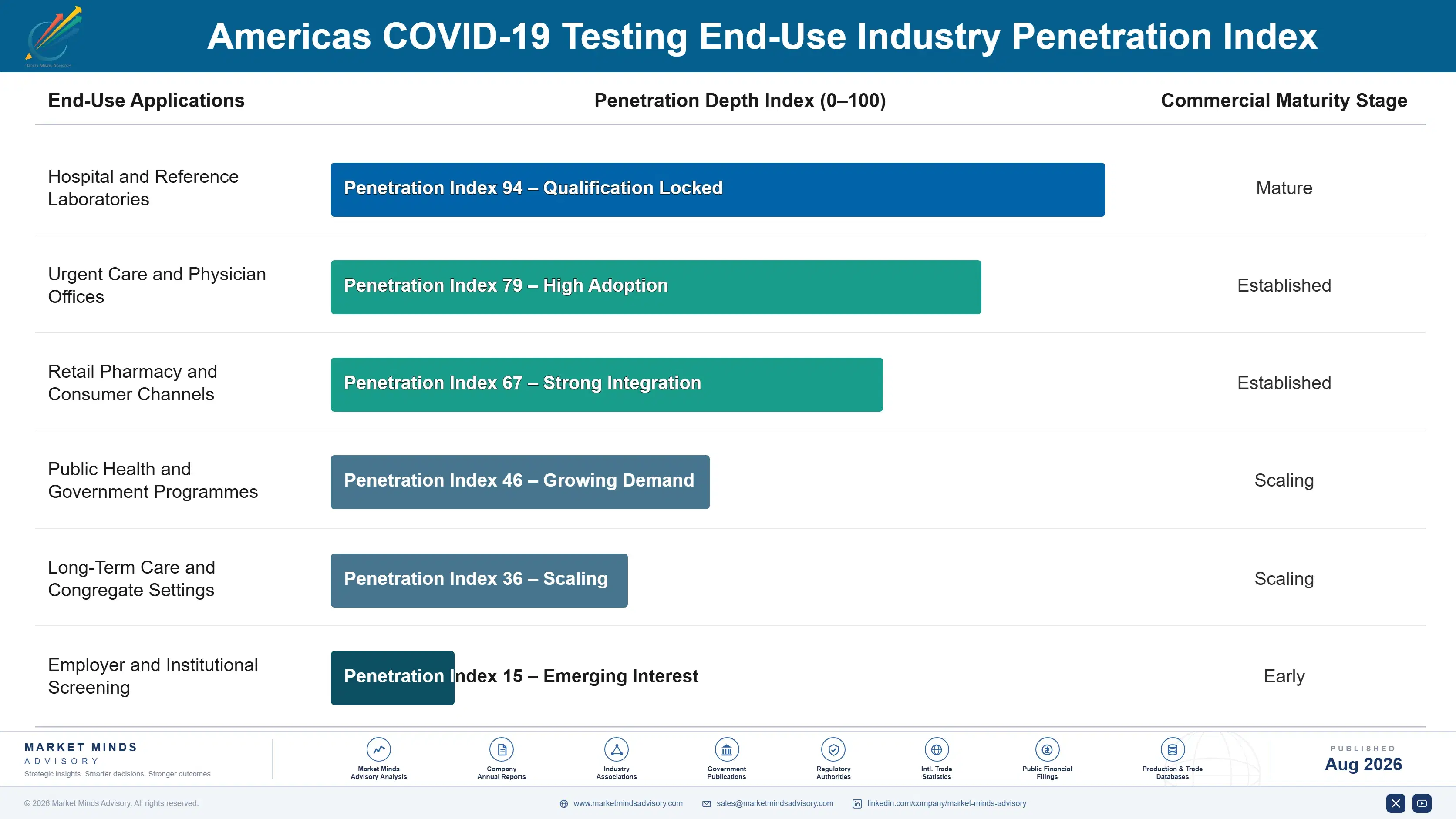
Consumable Streams After The Emergency

The durable revenue here is instrument-tied. Roughly 8,000 molecular analysers were placed across the Americas under emergency funding, and each one commits its laboratory or clinic to a single manufacturer's cartridge or reagent format for seven or eight years. That is a consumable annuity created by public money and inherited by whichever companies had platforms ready to place.
Stickiness varies enormously by setting. Laboratory molecular platforms are the stickiest, because changing them means recapitalising, revalidating assays and retraining staff across an entire department. Point-of-care cartridge systems are similar at smaller scale and shorter capital cycles. Retail self-tests show no stickiness whatever: consumers buy whichever combination kit sits at eye level at an acceptable price, and drug chain category managers decide which one that is.

Buyer profiles have reverted decisively since the emergency. Federal and national procurement agencies bought enormous volumes during 2020 and 2021 and have essentially exited. Laboratory directors, urgent care operators and retail category managers now make the decisions, applying ordinary commercial criteria. Manufacturers whose commercial organisations were built around emergency government contracting during those years have had to rebuild conventional selling capability from a standing start.
americas-covid-19-testing-market-size-end-use-penetration-index-1787303427954

Where Testing Strategy Must Land

These are among the four positions where our research anticipates prominent divergence between winners and laggards over the coming forecast period. Each is grounded in the demand model, the regulatory perimeter, and the announced capacity pipeline.
01 / INSTALLED BASE UTILISATION

The analysers matter far more than the assay ever did

Roughly 8,000 molecular instruments were placed across laboratories in the Americas under emergency funding, and each one commits its laboratory to a single manufacturer's consumable format for seven or eight years of remaining working life. Extending panel menus into influenza, RSV, sexually transmitted infection and gastrointestinal testing converts an otherwise stranded platform into a genuinely productive laboratory asset. Manufacturers who moved menu development quickly retained those laboratory accounts, while those who hesitated watched competitors place a second instrument alongside their own.
02 / PANEL CONVERSION URGENCY

Clinicians have stopped ordering single-target coronavirus tests

A coronavirus-only positive result rarely changes clinical management now, and ordering behaviour across the Americas has moved accordingly, with roughly 41% of molecular respiratory orders already using a multiplex panel and the share climbing each winter season. Panels change antiviral choice and isolation practice, which is precisely why payers accept pricing well above single-target assays. Manufacturers still selling standalone coronavirus assays are defending a product that clinical ordering practice has already moved past entirely, and no pricing action reverses that.
03 / RETAIL REASON RECONSTRUCTION

Consumers stopped testing when the result stopped mattering

Self-test volumes collapsed once United States reimbursement lapsed in 2023 and kits moved from free to roughly ten dollars a pair, because people will not pay for information that does not change what they do next. Combination coronavirus and influenza kits restore a genuine purchase reason, since influenza carries an antiviral treatment window that rewards knowing early. That combination format is now the only growing consumer line in the category, and shelf placement is decided by drug chain category managers rather than by any clinician.
04 / CAPACITY FLEXIBILITY DISCIPLINE

Single-assay plants became write-offs and platform plants did not

Roughly 70% of purpose-built coronavirus assay capacity across the region now sits idle or has been written down, because pandemic procurement rewarded speed over configuration flexibility and production lines were built around a single target. Facilities configured around a platform rather than an assay redirect toward influenza, RSV and sexually transmitted infection production at modest requalification cost instead. The flexibility premium looked expensive during the demand surge itself and has since paid for itself several times over in avoided write-downs.

Engagement Snapshot From the Field

A live engagement with an industry participant carrying material or product regulatory and market exposure ahead of a defining policy shift, showing how our research translates into a defensible multi-year portfolio strategy.
MARKET MINDS ADVISORY · CLIENT ENGAGEMENT SUMMARY
Americas COVID-19 Testing Producer Strategic Portfolio Review and Transition Roadmap 2026·Investment Scenario on Americas COVID-19 Testing Exposure Evaluation 2025-26
CLIENT PROFILE
A North American diagnostics manufacturer that expanded rapidly during the pandemic, supplying rapid antigen tests and a point-of-care molecular platform across United States and Latin American markets. Annual revenue had fallen to approximately USD 290 million (client-reported, unverified by MMA) from a peak several times higher. Roughly 55% of remaining revenue came from retail and professional antigen products, with the balance from a modest installed molecular analyser base.
STRATEGIC CHALLENGE
Retail antigen volumes had declined for three consecutive years since reimbursement ended, Asian manufacturers were undercutting shelf pricing, and two dedicated antigen production lines were running well below capacity. The board wanted to know whether to defend retail share through cost reduction and combination kit launches, or to redirect investment toward panel menu development on the installed molecular platform instead.
MMA APPROACH
MMA conducted 47 expert interviews across hospital laboratory directors, urgent care operators, retail category managers, public health procurement officials and infectious disease clinicians in six countries. A quantitative survey of 3,800 respondents established consumer testing behaviour, purchase triggers and price sensitivity. We then modelled revenue and contribution under both options against observed volume decline and panel conversion rates in each channel.
KEY FINDINGS
  1. Clinicians in five of six surveyed settings reported ordering standalone coronavirus molecular tests only where a panel was unavailable, and none expected that preference to reverse in any future season.
  2. Retail pharmacy category managers allocated shelf space on delivered cost and combination format, and none regarded manufacturer origin or brand heritage as a meaningful selection factor at all.
  3. Laboratories holding the client's molecular platform reported using it well below capacity and identified narrow panel menu as the sole reason, with several already evaluating competing instruments.
  4. Consumers reported testing only when a result would change a specific decision, most commonly influenza antiviral timing, travel requirements or contact with a vulnerable family member.
CLIENT PROFILE
A North American diagnostics manufacturer that expanded rapidly during the pandemic, supplying rapid antigen tests and a point-of-care molecular platform across United States and Latin American markets. Annual revenue had fallen to approximately USD 290 million (client-reported, unverified by MMA) from a peak several times higher. Roughly 55% of remaining revenue came from retail and professional antigen products, with the balance from a modest installed molecular analyser base.
STRATEGIC CHALLENGE
Retail antigen volumes had declined for three consecutive years since reimbursement ended, Asian manufacturers were undercutting shelf pricing, and two dedicated antigen production lines were running well below capacity. The board wanted to know whether to defend retail share through cost reduction and combination kit launches, or to redirect investment toward panel menu development on the installed molecular platform instead.
MMA APPROACH
MMA conducted 47 expert interviews across hospital laboratory directors, urgent care operators, retail category managers, public health procurement officials and infectious disease clinicians in six countries. A quantitative survey of 3,800 respondents established consumer testing behaviour, purchase triggers and price sensitivity. We then modelled revenue and contribution under both options against observed volume decline and panel conversion rates in each channel.
KEY FINDINGS
  1. Clinicians in five of six surveyed settings reported ordering standalone coronavirus molecular tests only where a panel was unavailable, and none expected that preference to reverse in any future season.
  2. Retail pharmacy category managers allocated shelf space on delivered cost and combination format, and none regarded manufacturer origin or brand heritage as a meaningful selection factor at all.
  3. Laboratories holding the client's molecular platform reported using it well below capacity and identified narrow panel menu as the sole reason, with several already evaluating competing instruments.
  4. Consumers reported testing only when a result would change a specific decision, most commonly influenza antiviral timing, travel requirements or contact with a vulnerable family member.
RECOMMENDED STRATEGY
Phase 1: Phase one: accelerate respiratory and sexually transmitted infection panel development for the installed molecular platform before competing instruments displace it from those laboratories. Phase 2: Phase two: consolidate antigen manufacturing onto a single flexible line and convert the second facility toward influenza and RSV assay production instead. Phase 3: Phase three: maintain a retail presence only through combination coronavirus and influenza kits, and withdraw entirely from single-target retail formats.
OUTCOME
The client redirected approximately USD 40 million from antigen manufacturing into molecular panel development (client-reported, unverified by MMA) and converted its second production line to influenza assay output. Eighteen months on, molecular consumable revenue had grown roughly a third, panel menu had doubled, and no installed platform account had been lost to a competing instrument.

Frequently Asked Questions

Foundational context covering the market sizes, CAGR, scope, country, region and competition that inform every finding below. This section is provided to cover basics and most often pre-purchase conversations, answered from the MMA Primary Research Dataset.

What is the current size of the Americas COVID-19 Testing Market?

The Americas coronavirus testing market was valued at USD 3.2 billion in 2025, covering laboratory and point-of-care molecular assays, professional and retail antigen tests, multiplex respiratory panels and serology. Analyser hardware sold separately falls outside this definition.

How large will the Americas COVID-19 Testing Market be by 2036?

MMA forecasts the market at USD 4.72 billion by 2036, expanding 1.42 times from the 2026 base of USD 3.32 billion. That represents roughly USD 1.4 billion of incremental value across the forecast decade.

What is the CAGR for the Americas COVID-19 Testing Market 2026 to 2036?

The base case compound annual growth rate is 3.6%, with a bull case of 4.9% and a bear case of 2.4%. Growth is measured from the endemic baseline established in 2023 rather than from the pandemic peak.

Which segment is growing fastest?

Multiplex respiratory panels grow at 5.4%, a full 1.50x the overall market rate, and already cover roughly 41% of molecular respiratory orders. A panel result changes antiviral choice where a single-target result frequently does not.

Who are the major companies in the Americas COVID-19 Testing Market?

Roche Diagnostics, Abbott Laboratories, Hologic, QuidelOrtho and Danaher together hold 62% of revenue. All five added coronavirus assays to analyser platforms they already owned, which is why their installed bases survived the collapse.

Which country is growing fastest?

Brazil grows fastest at 6.4%, supported by sustained local content preference in public diagnostic procurement and by private laboratory expansion. Supply into the Americas originates predominantly in North America at 32% of value.

Report Segmentation Architecture

The full report scope spans multiple orthogonal segmentation dimensions, with cross-tabulated demand data provided for each dimension pair. Coverage extends further to regional breakdowns, trend trajectories, and the competitive detail needed to support segment-level decision-making.

By Assay Format

  • Laboratory Molecular Assays
  • Point-of-Care Molecular Assays
  • Professional Rapid Antigen Tests
  • Over-the-Counter Self-Test Kits
  • Multiplex Respiratory Panel Assays
  • Serology and Antibody Assays

By End-Use Industry

  • Hospital and Reference Laboratories
  • Urgent Care and Physician Offices
  • Retail Pharmacy and Consumer Channels
  • Public Health and Government Programmes
  • Long-Term Care and Congregate Settings
  • Employer and Institutional Screening

By Commercial Dimension

  • Reimbursed Clinical Testing
  • Out-of-Pocket Consumer Purchase
  • Government and Public Health Procurement
  • Group Purchasing Organisation Contracts
  • Reference Laboratory Service Agreements
  • Instrument-Linked Consumable Contracts

By Region

  • North America
  • East Asia
  • Western Europe
  • South Asia and Pacific
  • Latin America
  • Middle East and Africa
  • Eastern Europe

Scope, Methodology, and Coverage

Every figure in this report is reproducible from documented input assumptions. The scope below maps the historical period, the forecast horizon, the segmentation dimensions, and the countries covered, alongside the underlying primary and qualitative methodology.
Historical Period
2020 to 2025
Forecast Period
2026 to 2036
Base Year
2025 (USD billions; MMA Primary Research Dataset, August 2026)
Market Definition
This market comprises diagnostic tests for SARS-CoV-2 infection and prior exposure supplied into North American, Central American, South American and Caribbean markets, measured at assay and kit revenue plus laboratory testing service revenue across reimbursed clinical, consumer retail, public health and institutional channels. Coverage spans laboratory reverse transcription polymerase chain reaction assays, point-of-care cartridge molecular tests, professional rapid antigen lateral flow tests, over-the-counter antigen self-test kits including combination respiratory formats, multiplex respiratory panel assays incorporating a coronavirus target alongside influenza and respiratory syncytial virus, and serology and antibody assays. Molecular analyser and instrument hardware sold independently of assays, sample collection swabs and transport media sold separately, vaccines and therapeutics, wastewater and environmental surveillance programmes, genomic sequencing for variant surveillance, and testing supplied outside the Americas fall outside scope.
Quantitative Units
USD billions (current prices); test volumes by assay format; average price per test; installed molecular analyser base; multiplex panel share of molecular orders
Segmentation Dimensions
By Assay Format; By End-Use Industry; By Commercial Dimension; By Region
Regions Covered
North America, East Asia, Western Europe, South Asia and Pacific, Latin America, Middle East and Africa, Eastern Europe
Countries Covered
United States, Canada, Mexico, Brazil, Argentina, Chile, Colombia, Peru, Ecuador, Venezuela, Bolivia, Uruguay, Paraguay, Costa Rica, Panama, Guatemala, Dominican Republic, Jamaica, Trinidad and Tobago, and additional Central American and Caribbean markets relevant to testing supply analysis
Key Companies Profiled
Roche Diagnostics, Abbott Laboratories, Hologic, QuidelOrtho, Danaher, Thermo Fisher Scientific, bioMérieux, Becton Dickinson, Siemens Healthineers, Labcorp, Quest Diagnostics, OraSure Technologies, SD Biosensor, iHealth Labs, ACON Laboratories, Meridian Bioscience, Bio-Rad Laboratories, InBios International, Access Bio, Grifols
Quantitative Methodology
Primary survey, n=3,800 respondents, Q4 2025, six countries; demand-side model with trade association cross-validation
Qualitative Methodology
47 expert interviews, Q4 2025; applied to validate demand model assumptions, identify emerging dynamics, and assess competitive positioning
Report Format
PDF and XLSX data workbook (Word format preview document)
Publisher
Market Minds Advisory
Report Code
MMA-2026-HLT-129
Published
August 2026
Contact
sales@marketmindsadvisory.com | www.marketmindsadvisory.com

Purchase the full Americas COVID-19 Testing Market Report (2026 to 2036).

The full MMA report treats Americas coronavirus testing as a market managing decline rather than pursuing growth, measuring from the endemic baseline established in 2023 rather than from a pandemic peak that describes nothing useful. It sizes six assay formats and seven supply origin regions to 2036, modelling test volumes, pricing and installed analyser utilisation separately. Competitive assessment covers twenty suppliers on one consistent revenue basis across the region. Input cost exposure is traced through nitrocellulose membrane supply, molecular reagent sourcing and stranded pandemic capacity. Four commercial levers and a strategic verdict close the report, grounded in 47 expert interviews and a 3,800-respondent survey.
Six assay formats sized separately to 2036
Installed analyser base utilisation modelled across the region
Multiplex panel conversion tracked by clinical setting
Twenty suppliers assessed on one consistent basis
Supply origin mapped across seven manufacturing regions
Anonymised client engagement with tested strategic recommendations

Built For The People Who Decide

From boardroom strategy to bench-side execution, this report is read cover-to-cover by leaders shaping the next decade of their industry, turning demand scenarios, market dynamics and valuation benchmarks into decisions.
CXOs/ Presidents/ VPs/ Managers
M&A and Corporate Development
Strategy Teams and R&D Heads
Procurement and Product Directors
Regulatory and Compliance Leaders
Investor Relations and Equity Analysts