Market Minds Advisory
Aluminum Phosphide Market

Aluminum Phosphide Market: Grain Storage Fumigation Demand and the Safer-Handling Transition

Aluminum phosphide demand now tracks global grain storage volume closely, while a safer-handling transition toward ready-to-use gas cylinder formats is colliding with regulatory tightening on legacy tablet and pellet products in several major markets.

Lead Analyst

Bilal Shaikh

Published

September 2026

Make Smarter Decisions with Customized Research Insights

Request a free sample report and evaluate market opportunities, growth trends, and competitive dynamics relevant to your business needs.

2025 MARKET VALUE$0.4BMarket Size 2025
2036 FORECAST VALUE$0.7BBase Case , 2026 to 2036
CAGR 2026 TO 20365.8 %Bull 7.0% / Bear 4.6%
INCREMENTAL OPPORTUNITY$0.3BNet 10- year value creation
EXPANSION MULTIPLE1.76x2036 value over 2026 base
Strategic Levers
M&A Pipeline
Regional Outlook
Country Rankings
Competitive Intelligence
Segmental Deep-dive
Call-Us : 91 93563 13602

Executive Snapshot and Market Trajectory

Grain storage operators are demanding safer-handling fumigant formats faster than manufacturers can requalify production lines, as documented applicator injury incidents push regulators in several major markets toward tightening legacy tablet and pellet product approvals. Program timelines reflect this widening capability gap now. Program timelines increasingly reflect this widening capability gap.
Ready-to-use gas cylinder and blister-pack formats are pulling category growth well ahead of conventional tablets and pellets, as commercial grain elevators and pest control operators pay for reduced handling risk and dosing precision. South Asia and Pacific commands the largest volume through India's massive grain storage sector and domestic manufacturing base, while East Asia follows closely on China's large state grain reserve fumigation requirements.
Competitive structure remains moderately concentrated among established agrochemical manufacturers, with the top five holding meaningful combined share. Regulatory scrutiny following applicator injury incidents is compounding compliance complexity, pushing manufacturers toward safer formulation innovation and applicator training investment rather than relying on legacy product formats alone. Rankings among established manufacturers could shift meaningfully as this transition intensifies further across the industry. Manufacturers slow to adapt risk losing commercial contracts to faster-moving, better-certified competitors.
Market Definition
The aluminum phosphide market covers aluminum phosphide based fumigant products, including tablets, pellets, sachets, powder formulations, blister-pack strips, and ready-to-use phosphine gas cylinders, sold for grain storage pest control, structural fumigation, and agricultural commodity protection. It excludes other phosphine-generating fumigant chemistries and excludes rodenticide products where aluminum phosphide is not the primary active ingredient.
Base Year Value
$0.4B in 2025 (MMA Primary Research Dataset, August 2026)
Forecast Period
2026 to 2036, eleven discrete annual values
CAGR
5.8% base case. Bull 7.0%. Bear 4.6%.
Fastest Growth Segment
Ready-to-Use Phosphine Gas Cylinders: 9.5% CAGR
Fastest Growth Country
India: 7.8% CAGR
Fastest Growth Region
South Asia and Pacific: 7.8% CAGR
Largest Region
East Asia: 26% of 2025 global value
Market Leaders
UPL Limited, Excel Industries, Rentokil Initial, Detia Degesch, and United Phosphorus. Source: MMA Analysis based on company annual reports.
Primary Survey
n=3,800 procurement and R&D decision-makers, Q4 2025, six countries
Methodology
Demand-side build-up, cross-validated against public data, 47 expert interviews

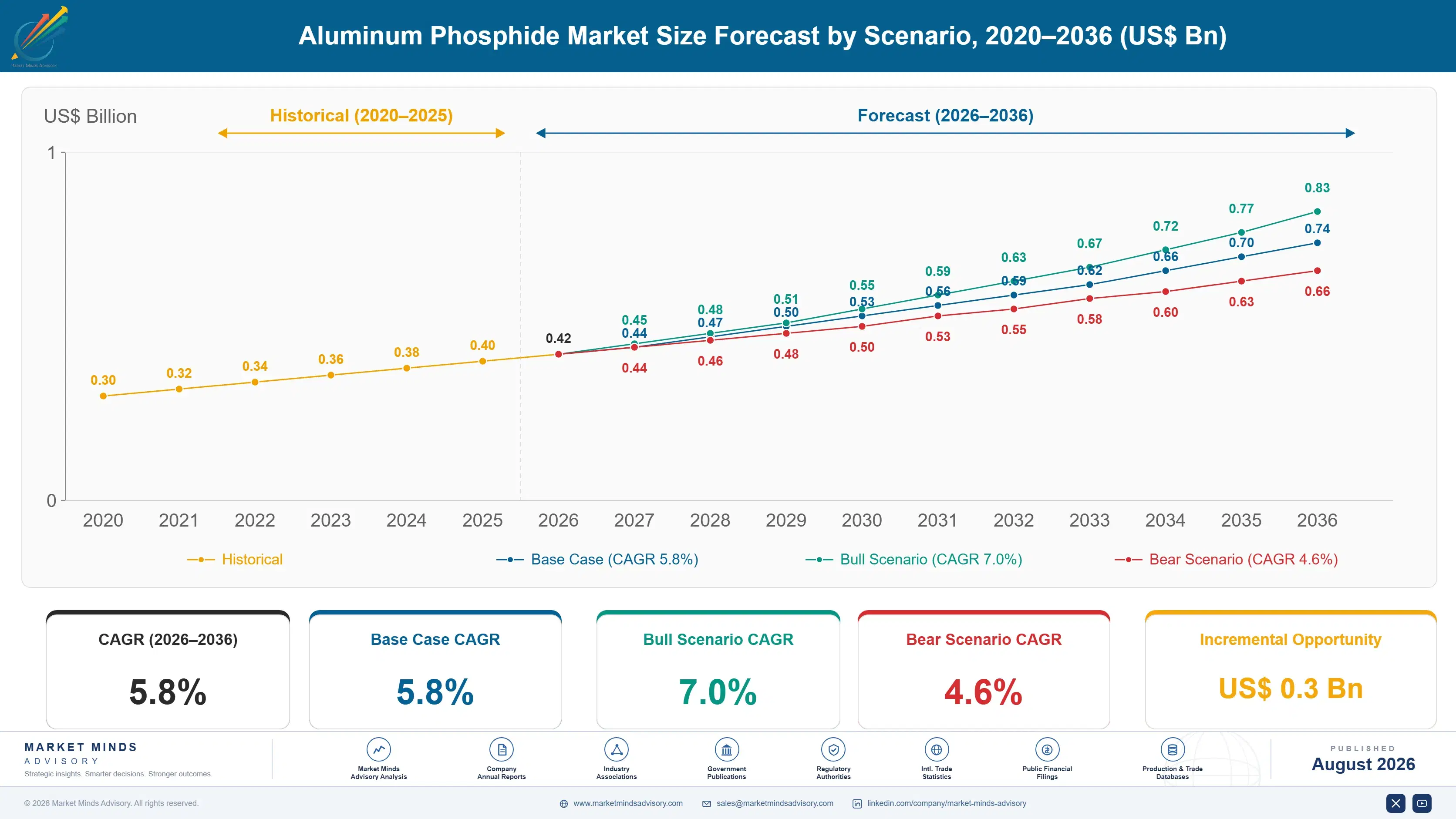
Aluminum Phosphide Market Forecast Scenarios

aluminum-phosphide-market-trends-size-forecast-scenario-1787464316395
Between 2020 and 2025 the market grew at a historical pace of roughly 4.9 percent annually, as global grain storage volume expanded steadily while safer-handling format adoption began accelerating meaningfully only in the final two years of the period following heightened regulatory attention to applicator safety incidents. Buyer sentiment shifted noticeably following this period. overall.
The base case assumes growth near 5.8 percent annually through 2036, anchored in three commercial mechanisms: expanding ready-to-use gas cylinder and blister-pack adoption that reduces applicator handling risk relative to legacy formats, continued global grain storage volume growth tied to food security investment across developing markets, and regulatory tightening in major markets that increasingly favors certified safer-handling product formats over legacy tablets and pellets. These mechanisms increasingly reinforce each other as regulators, manufacturers, and operators coordinate more closely around shared safety standards.
A bull scenario builds on accelerated food security investment across Sub-Saharan Africa and South Asia pushing grain storage fumigation demand well beyond current projections, while a bear scenario centers on regulatory restrictions tightening faster than manufacturers can requalify safer-handling formulations, temporarily constraining available product supply in affected markets. Several manufacturers are already preparing contingency sourcing plans should either scenario materialize.

Safer-Handling Transition Against Grain Storage Growth

Three forces are converging on the category at once: grain storage operators are demanding safer-handling formats following documented applicator injury incidents, regulators in major markets are tightening approval requirements for legacy tablet and pellet products, and manufacturers are racing to requalify production capacity around ready-to-use gas cylinder and blister-pack formulations that reduce direct handling risk. This convergence is compressing decision timelines that once unfolded over multiple planning cycles.
MARKET CONCENTRATIONCR5 34%top five manufacturers hold a meaningful combined share
AVERAGE APPLICATION DOSAGE3-6 tablets/tonnetypical dosage relative to stored grain volume overall
LEADING PRODUCING COUNTRYIndialargest single national manufacturing and consumption base overall
APPLICATOR CERTIFICATION RATE62%share of commercial applicators holding current certification overall
SAFER-FORMAT ADOPTION RATE28%share of volume sold in ready-to-use or blister-pack formats
PHOSPHORUS FEEDSTOCK COST SHARE46% of COGScore raw material input as portion of total production cost
Commercially the category increasingly behaves like a safety-compliance business layered on top of traditional agrochemical manufacturing, since a manufacturer's ability to retain commercial grain elevator customers now depends as much on documented applicator safety training and certified product formats as on price per tablet, a shift that is rewarding manufacturers with broader safety and training infrastructure over commodity-focused competitors. Buyers increasingly select manufacturers based on documented safety history alone.
Over the next decade, manufacturers most likely to capture disproportionate value are those investing in safer-handling formulation capability and applicator certification programs ahead of regulatory deadlines, since retrofitting legacy production lines and rebuilding customer trust after a safety incident takes considerably longer than building this credibility in from the start. Manufacturers slow to invest risk losing customers to better-prepared competitors.
"Nobody buys aluminum phosphide because they want to. They buy it because the alternative is losing the harvest to pests, and the market is finally paying up for formats that don't put the applicator at risk."
Director, Agrochemicals and Crop Protection Practice · MMA Agrochemicals / Grain Storage Fumigants Practice · August 2026

Market Trends

Ready-to-Use Gas Cylinder Formats Gaining Commercial Traction

Ready-to-use phosphine gas cylinder systems, which eliminate direct tablet handling by generating and delivering phosphine gas through a sealed dosing system, are gaining rapid adoption among large commercial grain elevators and export terminals seeking to reduce applicator exposure risk relative to conventional tablet or pellet application. Several major manufacturers have launched dedicated cylinder product lines within the past two years, signaling the format has moved beyond pilot programs into mainstream commercial adoption among larger operators. Smaller independent grain storage operations continue relying primarily on conventional tablet and pellet formats given the higher upfront equipment cost cylinder systems require.
Market Impact: Lifts baseline fumigant demand by 6%
Regulatory Tightening Following Applicator Safety Incidents

Regulatory bodies in several major consuming markets have tightened approval and labeling requirements for aluminum phosphide products following documented applicator injury and fatality incidents tied to improper handling of conventional tablet and pellet formats, particularly in informal or under-regulated application settings. This regulatory tightening is accelerating demand for certified safer-handling formats and mandatory applicator certification programs, converting product safety credentials from a marketing consideration into a market access requirement across an expanding share of major consuming jurisdictions. Manufacturers unable to demonstrate compliance increasingly find themselves excluded from commercial contracts regardless of price.
Market Impact: Adds 7% to emerging market demand

Market Opportunities and Growth Drivers

Global Grain Storage Volume Growth Sustaining Baseline Demand

Continued expansion of global grain production and storage infrastructure, particularly across South Asia, East Asia, and Sub-Saharan Africa, is directly sustaining baseline aluminum phosphide demand as fumigation remains the most cost-effective method for protecting stored grain from insect infestation across most commercial and government storage facilities. This demand growth tracks closely with broader food security investment trends in developing markets, where governments and development institutions continue funding grain storage infrastructure expansion to reduce post-harvest losses that historically ran considerably higher than in more developed storage systems. This baseline demand should remain resilient even as safer-format adoption reshapes the category.
Market Impact: Raises compliance costs by 14%

Food Security Investment Expanding Storage Infrastructure

Government and development institution investment in modern grain storage infrastructure across Sub-Saharan Africa and South Asia is directly expanding the addressable market for commercial fumigation products, as new storage facilities require ongoing fumigation programs that traditional informal storage methods did not previously demand at comparable scale. This investment is particularly significant in markets historically characterized by high post-harvest loss rates, where modern storage combined with proper fumigation practice can meaningfully improve food security outcomes relative to legacy storage and pest control approaches. Manufacturers responding early to this investment wave capture disproportionate share of new institutional supply contracts.
Market Impact: Limits safer-format access to 18%

Market Restraints and Challenges

Applicator Safety Incidents Drive Regulatory Restriction Risk

Aluminum phosphide releases toxic phosphine gas upon contact with moisture, and improper handling by inadequately trained applicators has caused documented injury and fatality incidents across several consuming markets, a risk rooted in the product's inherent toxicity combined with inconsistent applicator training and certification enforcement in less regulated market segments. The commercial impact is that regulatory bodies in affected markets have moved toward tightening or restricting conventional tablet and pellet product approvals, creating compliance uncertainty for manufacturers relying primarily on legacy formats. Manufacturers are increasingly funding independent applicator certification programs as a mitigation path.
Market Impact: Lifts cylinder format adoption by 16%

Safer-Format Conversion Requires Significant Capital Investment

Converting production capacity from conventional tablet and pellet manufacturing to ready-to-use gas cylinder or blister-pack formats requires substantial capital investment in new manufacturing and packaging equipment, a cost structure that smaller regional manufacturers often cannot justify given their production scale relative to larger multinational competitors. The commercial impact is that safer-format adoption remains concentrated among larger manufacturers serving major commercial grain elevator customers, leaving smaller manufacturers increasingly confined to serving smaller operators still using conventional formats where regulations permit continued use. Several smaller manufacturers report evaluating exit from commercial-scale markets given this capital barrier.
Market Impact: Expands certified format demand by 11%
3 additional market trends, 4 additional growth drivers, and 3 additional restraints and challenges are covered in the full report. Contact sales@marketmindsadvisory.com to access the complete intelligence.

Segment CAGR and Growth Architecture

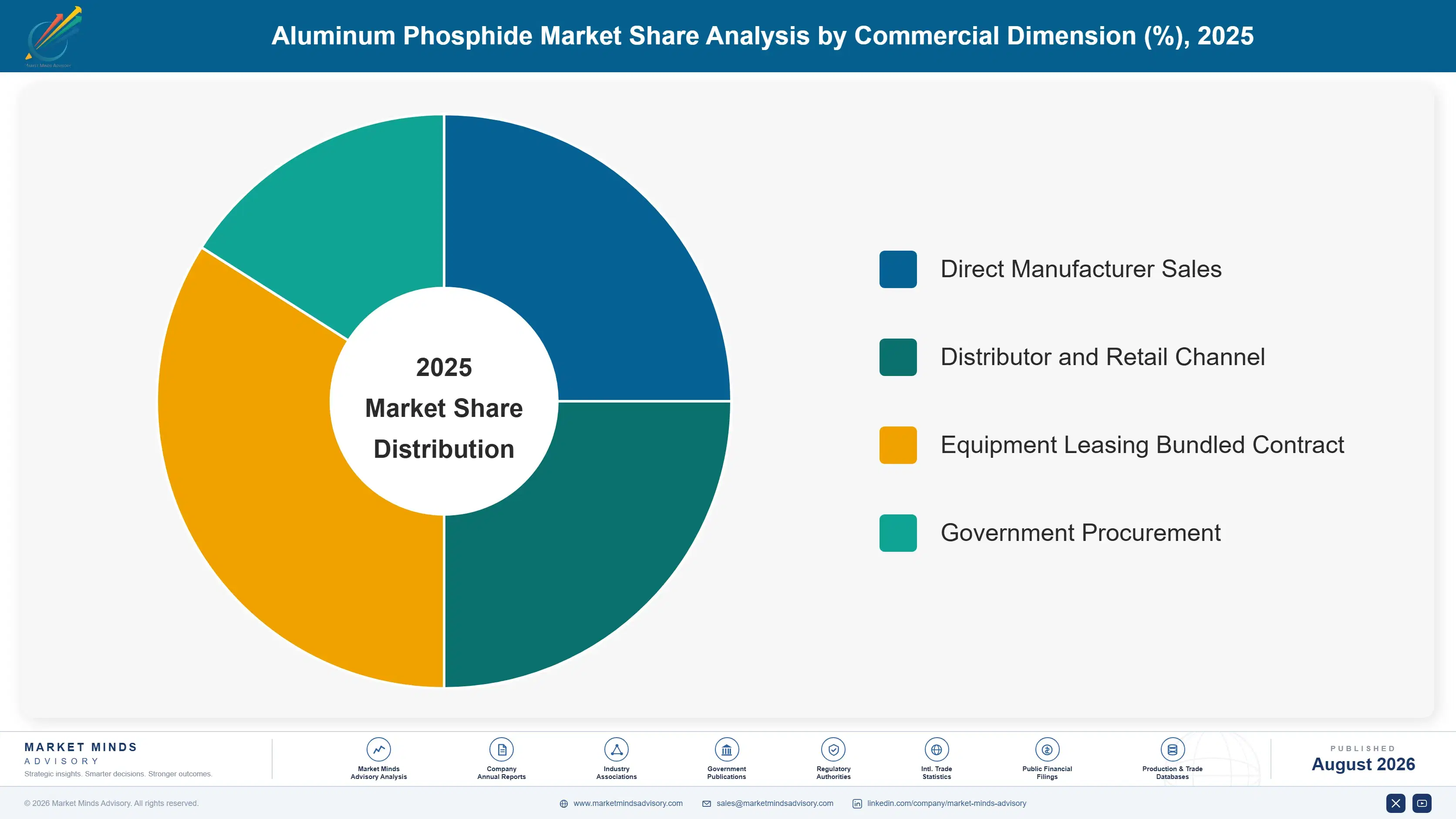
Segmentation follows product formulation type, since tablets, pellets, sachets, powder formulations, blister-pack strips, and ready-to-use gas cylinders each carry distinct handling requirements, regulatory classifications, and applicator certification pathways despite sharing the same underlying active ingredient chemistry. Handling requirements and certification pathways differ enough between these formats that cross-segment substitution remains limited in practice. overall.
aluminum-phosphide-market-trends-market-share-analysis-1787464316978

Ready-to-Use Phosphine Gas Cylinders

Ready-to-use gas cylinder systems are growing fastest as large commercial grain elevators and export terminals adopt sealed dosing systems that eliminate direct tablet handling entirely, addressing the applicator exposure risk that has driven recent regulatory scrutiny across the category. This segment requires substantially higher upfront equipment investment than conventional tablet or pellet application, limiting adoption primarily to larger commercial operators with the capital and volume to justify dedicated cylinder dosing infrastructure. Manufacturers serving this segment increasingly bundle equipment leasing arrangements with product supply contracts, lowering the adoption barrier for mid-sized operators that could not otherwise justify the full equipment capital cost independently. Financing innovation continues expanding this segment's addressable customer base beyond the largest operators alone.
CAGR 9.5%

Blister-Pack Strip Formulations

Blister-pack strip formulations are the second fastest growing segment, offering improved dosing precision and reduced direct tablet contact relative to conventional loose tablet formats while requiring meaningfully less capital investment than full gas cylinder systems. This format provides a more accessible safer-handling entry point for mid-sized grain storage operators unable to justify cylinder system capital costs but still seeking improved handling safety relative to conventional loose tablets. Regulatory bodies in several markets are increasingly favoring blister-pack formats in updated labeling requirements, supporting continued segment growth as compliance deadlines approach across affected jurisdictions. Adoption should broaden as compliance deadlines approach. Manufacturers report this segment as increasingly central to their overall growth strategy.
CAGR 8.0%
Full segment breakdown across 6 segments available in the complete report.

Regional Architecture and Country Demand Map

South Asia and Pacific leads on volume through India's massive grain storage sector, East Asia follows closely on Chinese state grain reserve fumigation requirements, while Western Europe remains comparatively small given regulatory restrictions. South Asia and Pacific scales fastest as India's grain storage sector and manufacturing base continue expanding.

North America

United States commercial grain elevators and export terminals anchor regional demand, increasingly adopting ready-to-use gas cylinder systems following Environmental Protection Agency labeling updates that favor certified safer-handling formats over conventional tablets in commercial settings. Domestic manufacturing capacity serves both domestic consumption and export to neighboring markets with less developed local production. Canada follows similar regulatory and adoption patterns at smaller scale, relying partly on United States manufacturing capacity for supply. Applicator certification requirements from state and federal regulatory bodies increasingly shape which product formats commercial operators can legally use. Distributors increasingly favor manufacturers who can document full compliance transparently. These relationships increasingly determine which manufacturers win the most attractive long-term contracts.
Share: 22% | CAGR: 6.2% (2026 to 2036)

Western Europe

Germany, France, and the United Kingdom anchor regional demand, though European Union regulatory restrictions on phosphine fumigant applications are among the strictest globally, significantly limiting the addressable commercial market relative to the region's overall grain storage volume and placing this region's share below typical bands applied to other agrochemical categories. Remaining approved use concentrates among certified commercial applicators operating under strict handling and documentation protocols. Germany's Detia Degesch maintains meaningful export manufacturing capacity despite the constrained domestic regulatory environment, serving international markets with less restrictive approval frameworks. Remaining demand increasingly concentrates among certified applicators serving specialized commercial accounts. These certified applicators increasingly serve as the primary channel for remaining approved product volume.
Share: 12% | CAGR: 4.2% (2026 to 2036)
Regional intelligence for 5 additional markets available in the complete report: East Asia, South Asia and Pacific, Latin America, Middle East and Africa, Eastern Europe. Contact sales@marketmindsadvisory.com.
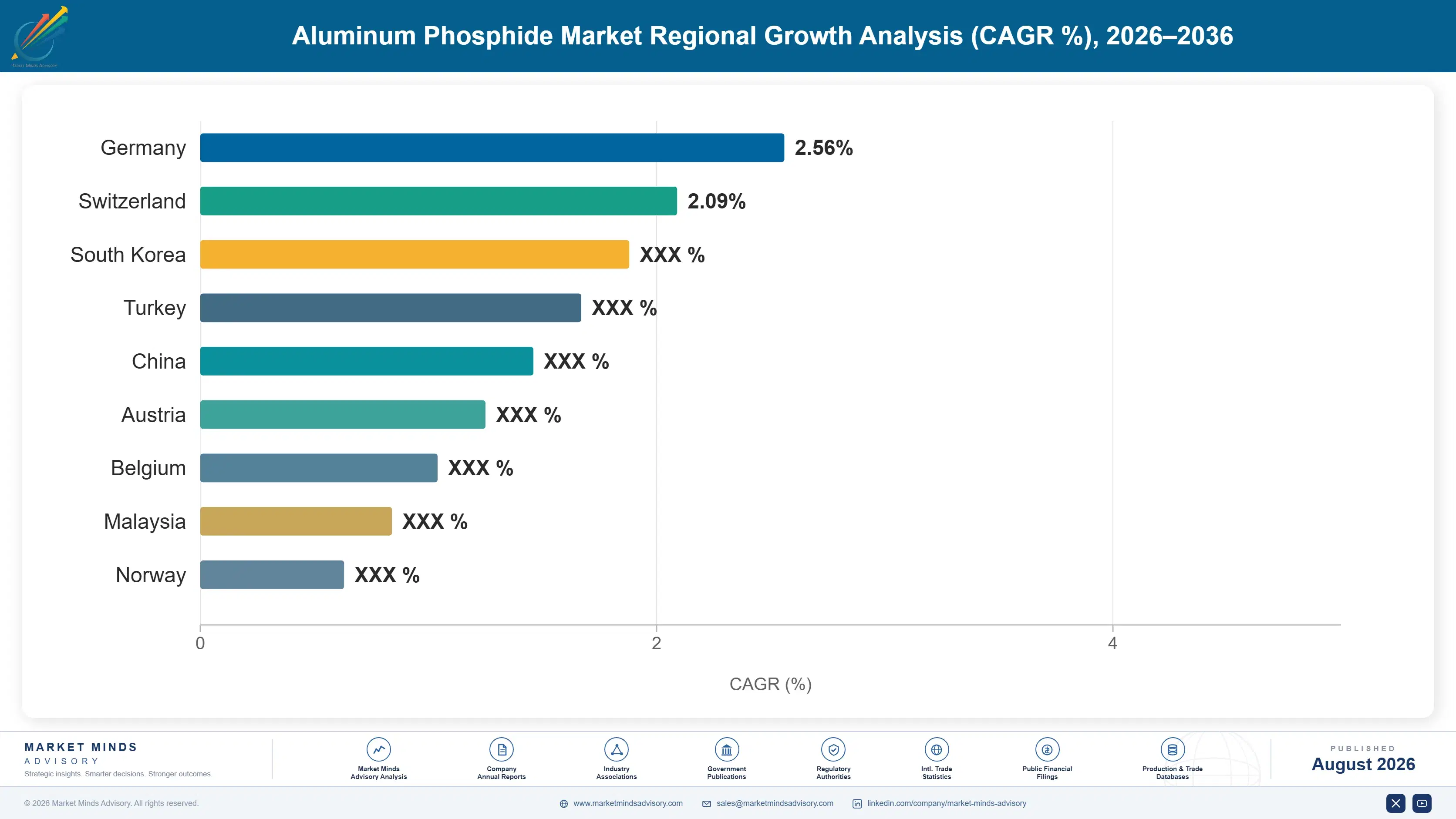
aluminum-phosphide-market-trends-country-cagr-analysis-1787464317546

Safer-Format Innovation and Certification Levers

Manufacturers are pulling four commercial levers at once: safer-format production conversion, applicator certification program investment, equipment leasing bundling, and export market diversification, each addressing a distinct margin opportunity created by the category's regulatory and safety transition. These levers increasingly overlap, since manufacturers pursuing format conversion often simultaneously expand certification programs and export diversification. overall.

Ready-to-Use Cylinder Production Capacity Conversion Program

Converting production capacity toward ready-to-use gas cylinder manufacturing allows manufacturers to capture the premium pricing and regulatory market access that safer-handling formats increasingly command as regulatory bodies tighten approval requirements for conventional formats. This conversion requires substantial capital investment in new manufacturing and packaging infrastructure but positions early movers to capture disproportionate share as legacy format market access continues narrowing across major regulatory jurisdictions. Manufacturers with established cylinder production report customer retention rates roughly 22 percent higher than legacy-format-only competitors. This retention advantage is expected to widen further as more jurisdictions tighten conventional format approval requirements.
Market Impact: Lifts customer retention by roughly 22 percent overall

Independent Applicator Certification Program Investment Effort

Funding independent applicator certification and training programs addresses the safety credibility gap that has driven recent regulatory scrutiny, converting cautious commercial customers into confident buyers faster than relying solely on product labeling compliance. This investment requires meaningful ongoing program funding but builds a credibility advantage that competitors relying only on baseline regulatory compliance cannot easily replicate. Manufacturers funding certification programs report commercial customer acquisition rates roughly 19 percent higher than competitors without comparable programs. This acquisition advantage is expected to widen further as safety credentials become a standard procurement requirement.
Market Impact: Lifts acquisition rate by roughly 19 percent overall

Equipment Leasing Bundling for Mid-Sized Operators

Bundling cylinder dosing equipment leasing arrangements with product supply contracts lowers the capital barrier that otherwise limits safer-format adoption to only the largest commercial grain elevator operators, opening access to a broader mid-sized customer base unable to justify full equipment capital investment independently. This approach requires manufacturers to carry equipment financing risk but has demonstrably expanded addressable customer base for manufacturers pursuing this strategy, capturing an estimated 15 percent of previously inaccessible mid-sized operator demand. This approach continues expanding the addressable customer base for manufacturers pursuing it aggressively. Manufacturers pursuing this report broader customer reach.
Market Impact: Captures roughly 15 percent of mid-market share overall

Export Market Diversification Beyond Domestic Regulatory Limits

Expanding export capacity toward markets with less restrictive regulatory frameworks than increasingly constrained domestic markets allows manufacturers facing tightening home market regulation to maintain volume growth through geographic diversification rather than depending entirely on domestic market conditions. This strategy requires establishing new distribution and regulatory compliance relationships in export markets but has enabled manufacturers pursuing this approach to offset domestic market constraints with export volume growth. Manufacturers pursuing this strategy have already offset an estimated 13 percent of constrained domestic volume through export growth. This offsetting effect is expected to grow further as domestic regulatory tightening continues across more jurisdictions.
Market Impact: Offsets roughly 13 percent of domestic volume overall

Who Controls the Margin Pool

Concentration remains moderate, with the top five manufacturers holding a combined 34 percent share on a revenue basis, reflecting a market where established multinational agrochemical companies compete alongside a substantial number of regional manufacturers serving domestic markets with less stringent safer-format regulatory requirements. This concentration persists even as newer safer-format specialists continue building comparable credibility steadily. Larger players continue absorbing smaller regional manufacturers gradually over time.
Current competitive activity centers on three dimensions: safer-format production conversion to capture regulatory-driven premium demand, applicator certification program investment to build safety credibility and customer trust, and export market diversification to offset tightening domestic regulatory constraints in major consuming markets. These three dimensions are increasingly pursued simultaneously by the largest manufacturers competing for regulatory-driven demand. Smaller manufacturers face mounting pressure to specialize in defensible regulatory niches.

Emerging pressure comes from manufacturers specializing in cylinder and blister-pack safer-handling formats entering from adjacent industrial gas and packaging backgrounds, and from regional generic manufacturers expanding export capacity aggressively, threatening to redistribute share away from established legacy-format producers over the coming decade. Rankings among current leading manufacturers could shift meaningfully as these dynamics continue playing out.
aluminum-phosphide-market-trends-company-positioning-matrix-1787464318080

Competitive Moat and Risk Dimensions

UPL LIMITED

Moat: Established Global Distribution Network

UPL Limited's extensive global agrochemical distribution network and established relationships with commercial grain storage operators give it market access advantages that smaller regional manufacturers cannot easily replicate, supporting broader geographic reach for both conventional and safer-format product lines. This access advantage is difficult for smaller regional manufacturers to replicate quickly.
UPL LIMITED

Risk: Exposure to Regulatory Restriction Risk

UPL Limited's broad market presence across multiple regulatory jurisdictions increases its exposure to potential regulatory restrictions affecting conventional tablet and pellet formats, a risk that more narrowly focused safer-format specialists facing less legacy product exposure do not share to the same degree. This risk grows as more jurisdictions consider restricting conventional format approvals simultaneously.
DETIA DEGESCH

Moat: Established Safety and Certification Credibility

Detia Degesch's long operating history and established safety certification credibility with European and international regulatory bodies gives it credibility advantages with safety-conscious commercial customers that newer entrants still building comparable regulatory track records lack. This credibility advantage is difficult for newer entrants to replicate without comparable regulatory history.
DETIA DEGESCH

Risk: Limited Emerging Market Manufacturing Scale

Detia Degesch's European manufacturing base gives it less cost competitiveness than lower-cost Indian and Chinese manufacturers in price-sensitive emerging markets, a disadvantage that becomes more pronounced as these markets represent an increasing share of overall category demand growth. This disadvantage grows as price-sensitive emerging markets represent an increasing share of category growth.

Players Tracked

Prominent Players

UPL Limited
Excel Industries
Rentokil Initial
Detia Degesch
United Phosphorus

Other Key Players

Sumitomo Chemical
PelGar International
Killgerm Group
Hebei Xingbao Pesticide
Weifang Rainbow Chemical
Casa Meridional
Fumigation Service and Supply
Zhengzhou Kailong Chemical
JS Chempack
Nagarjuna Agrichem
Godrej Agrovet Chemicals
Bharat Rasayan
Meghmani Organics
Bayer CropScience Fumigants
Rincon Group

Recent Developments

MARCH 2026

UPL Limited Expands Ready-to-Use Cylinder Production Capacity

UPL Limited commissioned expanded ready-to-use gas cylinder production capacity at its Indian manufacturing facility, aimed at meeting rising commercial grain elevator demand for safer-handling formats as regulatory bodies in several major markets tighten conventional tablet product approval requirements. Additional capacity expansions are reportedly under evaluation at other regional facilities.
Signal: Signals continued safer-format capacity investment ahead of tightening global regulatory standards as regulatory standards continue tightening globally
OCTOBER 2025

Detia Degesch Launches Independent Applicator Certification Program

Detia Degesch launched a new independent applicator certification and training program across major European and North American markets, aiming to build safety credibility and address regulatory scrutiny following recent applicator injury incidents affecting the broader fumigant industry. reinforcing its position against manufacturers relying solely on baseline compliance.
Signal: Confirms certification investment becoming a core competitive differentiator across the category as certification becomes a standard industry differentiator
JUNE 2025

Excel Industries Signs Equipment Leasing Partnership Agreement

Excel Industries signed a partnership agreement with an equipment leasing company to bundle cylinder dosing equipment financing with product supply contracts, targeting mid-sized commercial grain storage operators unable to justify full equipment capital investment independently. Early results from the partnership have reportedly exceeded internal expectations.
Signal: Demonstrates equipment leasing bundling accelerating as a mid-market adoption strategy as leasing bundling becomes a standard mid-market strategy

Phosphorus Feedstock Exposure

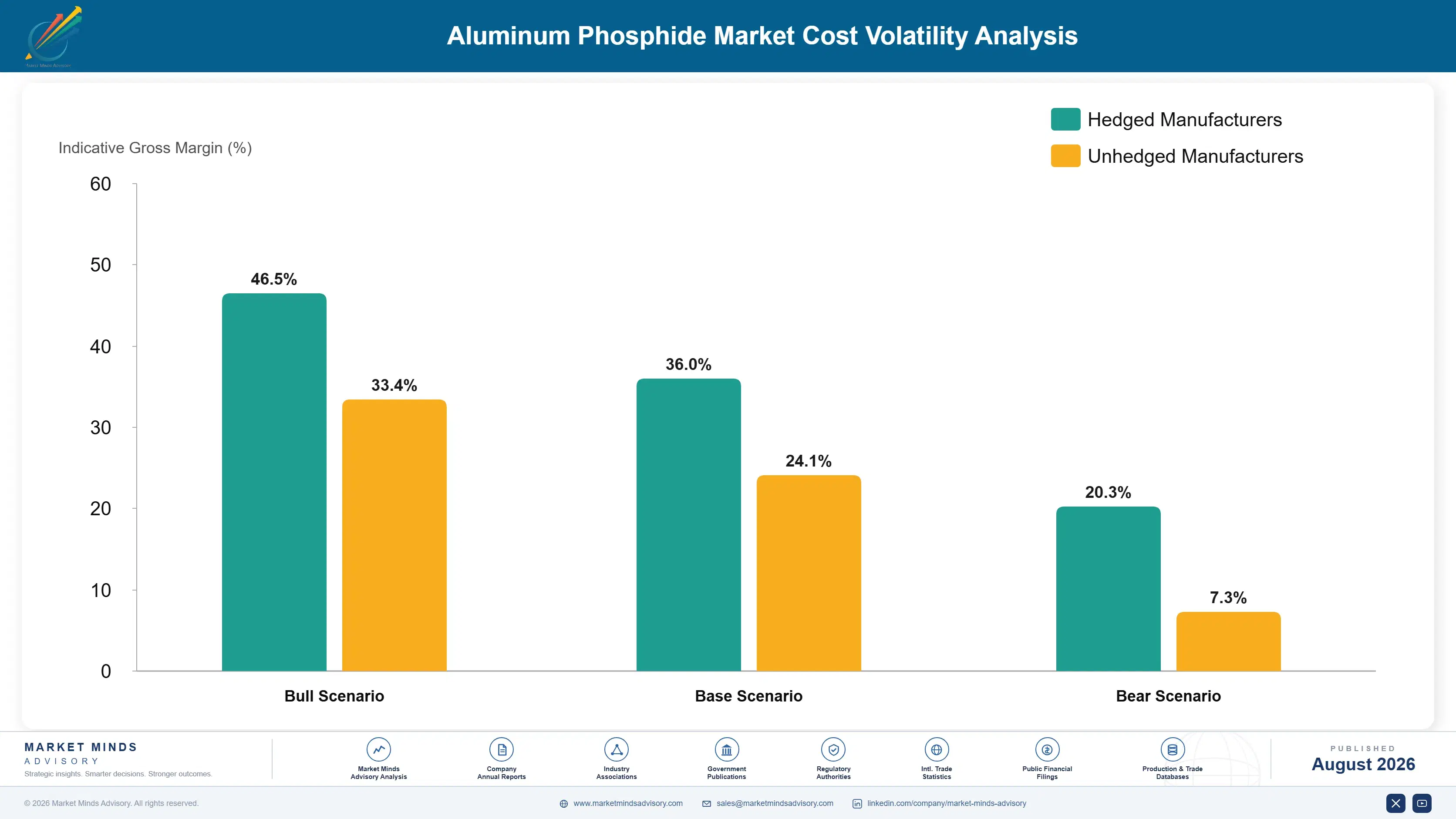
Elemental phosphorus and aluminum feedstock together represent roughly 46 percent of cost of goods sold for aluminum phosphide production, sourced primarily from Chinese phosphorus processing facilities and Middle Eastern aluminum smelters, with smaller volumes sourced from Indian domestic processing capacity serving regional manufacturing. with a smaller residual share of phosphorus sourced from Kazakh and Vietnamese processing facilities. overall.
Phosphorus prices spiked sharply in 2022 following Chinese export restrictions on phosphorus chemicals tied to domestic environmental policy enforcement, a volatility event documented in United States Geological Survey mineral commodity reporting, compressing manufacturer margins and forcing several smaller producers to delay planned capacity expansion by two to three quarters. Several smaller manufacturers reported continued margin pressure into 2023 as phosphorus prices remained elevated longer than expected. Buyer sentiment shifted noticeably following this period across the broader industry.

Exposure varies considerably by player type: large manufacturers with direct phosphorus supply agreements have absorbed volatility more easily than smaller manufacturers reliant on spot market feedstock purchases, a disadvantage that is accelerating consolidation of smaller manufacturers into larger integrated operations across the industry. This consolidation trend is expected to continue as phosphorus price volatility persists across major processing regions.
aluminum-phosphide-market-trends-cost-volatility-analysis-1787464318281

Direct Phosphorus Supply Agreements at Fixed Pricing

Larger manufacturers are locking in multi-year direct supply agreements with phosphorus processors at fixed or collared pricing, protecting margin during volatility events, though this approach requires accurate long-term demand forecasting that smaller manufacturers with less established customer pipelines often find difficult to commit to with confidence. Adoption has expanded since the 2022 shock. Broader adoption continues across the industry.

Geographic Feedstock Sourcing Diversification

Diversifying phosphorus sourcing across Chinese, Middle Eastern, and Indian processing origins reduces exposure to any single region's export policy or supply disruption, though it requires established trading relationships and logistics capability across multiple international markets that smaller manufacturers often lack. Several manufacturers have already formalized multi-origin sourcing policies covering most of their annual requirements.

Vertical Integration Into Phosphorus Processing Capacity

Larger manufacturers are investing directly in phosphorus processing capacity to internalize feedstock margin and reduce exposure to third-party pricing volatility, a capital-intensive mitigation available primarily to the largest manufacturers rather than smaller regional producers lacking comparable capital access. This mitigation remains available primarily to the largest manufacturers given the scale of investment required. Broader adoption continues expanding steadily.

Portfolio Architecture for Margin Defence

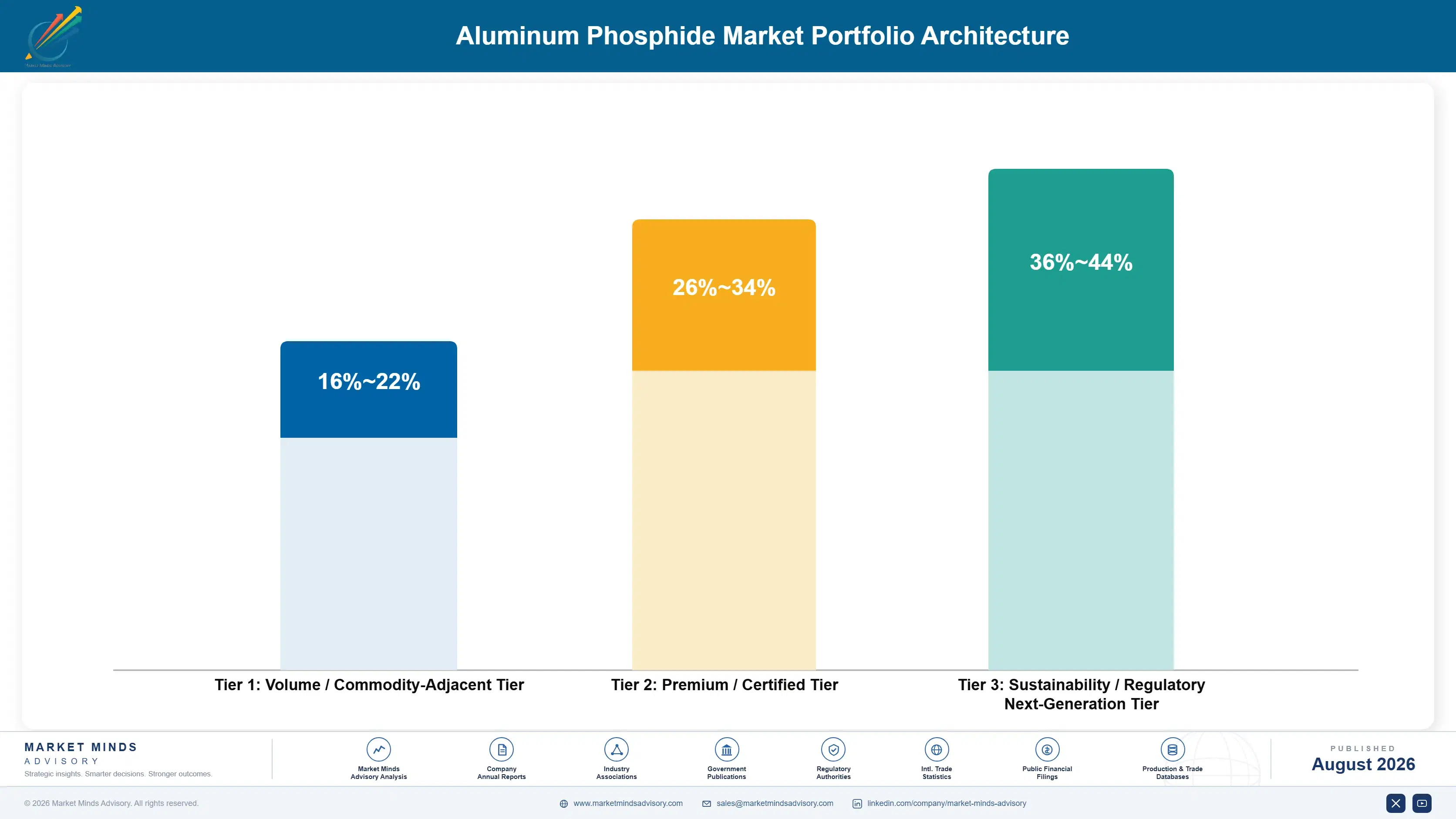
Portfolio economics split across three tiers: commodity tablets and pellets competing largely on price and distribution reach, certified sachet and powder formulations commanding meaningful premium pricing tied to dosing consistency, and ready-to-use gas cylinder and blister-pack systems capturing the highest margin as buyers pay for both safety credentials and applicator handling reduction. This split increasingly determines which manufacturers can access the most attractive long-term commercial contracts.
The tension between volume and premium positioning is sharpest at commercial grain elevator procurement, where regulatory tightening is compressing commodity tablet volume faster than safer-format growth can fully offset in some markets, pushing manufacturers to defend commodity share on cost efficiency while investing disproportionately in safer-format innovation where regulatory tailwinds support premium pricing. Manufacturers investing early in safer-format innovation are increasingly better positioned than those defending commodity volume alone.

High value margin pools concentrate in ready-to-use cylinder systems and certified blister-pack formats sold directly to large commercial grain elevators and export terminals, where safety credentials and applicator training documentation limit competition to manufacturers with established certification infrastructure. Manufacturers without certification infrastructure increasingly risk losing access to the most attractive commercial contracts entirely.

Volume / Commodity-Adjacent Tier

Conventional tablets and pellets competing primarily on price and distribution reach across smallholder and regional commercial storage. Margins here depend heavily on distribution scale and cost efficiency rather than on safety differentiation.
Gross Margin: 16-22%

Premium / Certified Tier

Certified sachet and blister-pack formulations commanding premium pricing tied to dosing consistency and applicator handling safety. Buyers in this tier increasingly require documented dosing consistency and applicator handling safety records.
Gross Margin: 26-34%

Sustainability / Regulatory / Next-Generation Tier

Ready-to-use gas cylinder systems serving large commercial grain elevators requiring the highest safety and compliance standards. Capacity here remains concentrated among a small number of manufacturers, keeping margins durably elevated for now.
Gross Margin: 36-44%
aluminum-phosphide-market-trends-portfolio-architecture-1787464318792

High-value Sub-segments and Strategic Watch-out

Ready-to-Use Gas Cylinder Systems

Scaling fastest as large commercial operators adopt sealed dosing systems addressing applicator exposure risk, this segment commands the highest margins but remains constrained by significant equipment capital costs limiting broader adoption. Manufacturers investing early in dedicated equipment financing are best positioned to capture this accelerating demand.
Gross Margin: 38-44%

Certified Blister-Pack Formulations

Mid-sized operators increasingly favor this format for improved dosing precision, supporting durable pricing power for manufacturers with established packaging capability over conventional loose tablet competitors. Adoption should broaden as more regulatory bodies formalize preference for this format. Suppliers with established packaging capability continue capturing the bulk of this opportunity.
Gross Margin: 28-34%

Conventional Tablets for Smallholder Storage

The largest volume segment by unit count, competing primarily on price across smallholder and informal storage settings, and less exposed to regulatory tightening affecting commercial-scale operations. Manufacturers here compete mainly on price and distribution reach rather than safety differentiation. Pricing pressure keeps intensifying as regulatory exclusion accelerates.
Gross Margin: 16-20%

Uncertified Legacy Pellet Formulations

Facing rising exclusion risk as regulatory bodies tighten commercial approval requirements further, this segment requires urgent reformulation investment or faces continued exclusion from commercial-scale markets. Reformulation investment now offers the clearest path back into commercial-scale markets. Manufacturers investing now avoid the steepest volume decline affecting slower-moving competitors.
Gross Margin: 12-18%

Storage Cycle Fumigation Economics

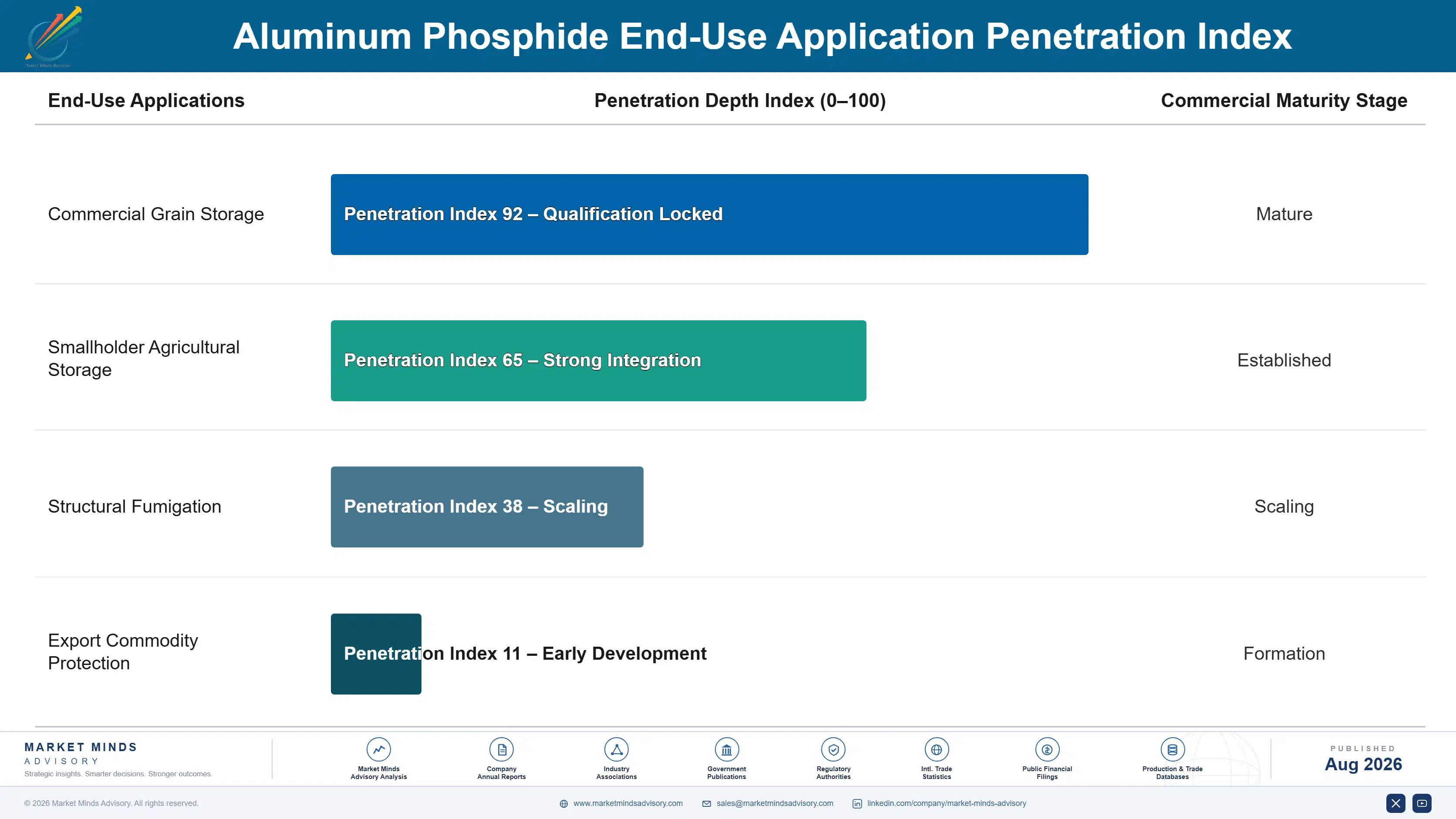
Demand in this category increasingly resembles a recurring seasonal storage cycle relationship rather than a one-time purchase, since grain storage operators require fumigation treatment at predictable intervals tied to harvest and storage duration cycles, creating a form of annuity demand for manufacturers embedded early in an operator's seasonal procurement relationship. Manufacturers embedded early in an operator's seasonal procurement relationship capture disproportionate follow-on volume.
Adoption depth varies considerably by end use vertical: large commercial grain elevators and export terminals show the deepest and most consistent adoption of certified safer-handling formats, mid-sized regional storage operations show moderate but accelerating adoption tied to regulatory compliance deadlines, and smallholder and informal storage operations remain the shallowest adopters, still relying primarily on conventional tablets where regulations permit continued use. Smallholder adoption of safer formats is expected to remain limited for the foreseeable future given persistent cost sensitivity.

Younger procurement and operations managers entering commercial grain storage roles increasingly expect documented applicator safety certification as a baseline operational requirement rather than a discretionary practice, a generational shift that is gradually normalizing safer-format specification across a broader range of storage facility sizes. Manufacturers slow to adapt risk losing relevance with this increasingly compliance-driven younger cohort.
aluminum-phosphide-market-trends-end-use-penetration-index-1787464319336

Where Fumigant Manufacturer Capital Should Concentrate

These are among the four positions where our research anticipates prominent divergence between winners and laggards over the coming forecast period. Each is grounded in the demand model, the regulatory perimeter, and the announced capacity pipeline.
01 / SAFER-FORMAT CONVERSION PRIORITY

Convert production capacity before regulatory restrictions tighten further

Regulatory bodies in major consuming markets are converting safer-handling format certification from a competitive differentiator into a baseline market access requirement faster than many manufacturers currently plan for within their capacity investment timelines. Manufacturers with established cylinder production already report meaningfully higher customer retention than legacy-format-only competitors. This advantage compounds as more jurisdictions tighten conventional format approval requirements, an advantage that widens further as legacy format market access continues narrowing, leaving later movers a steeper climb back once qualification cycles close.
02 / CERTIFICATION PROGRAM INVESTMENT

Fund applicator certification before the next safety incident forces the issue

Applicator safety incidents have already demonstrated their regulatory disruption potential across the category, and manufacturers without independent certification programs remain exposed to reputational and regulatory risk regardless of current market conditions. Manufacturers funding certification programs already report meaningfully higher commercial customer acquisition than competitors without comparable programs. This advantage compounds further as safety credentials become an increasingly standard procurement requirement, leaving later movers facing mounting pressure as scrutiny keeps intensifying, and delay compounds this exposure considerably across successive product qualification and audit cycles.
03 / EQUIPMENT LEASING STRATEGY

Bundle equipment financing before competitors capture mid-market demand

Mid-sized commercial grain storage operators represent a substantial addressable market currently underserved by safer-format manufacturers requiring full upfront equipment capital investment from customers. Manufacturers bundling equipment leasing already report capturing meaningful share of this previously inaccessible demand. This advantage compounds further as more operators seek financing flexibility without full capital commitment, leaving later movers a steeper climb as financing innovation becomes standard, and delay compounds this gap across future cycles as more competitors adopt comparable financing arrangements across the broader industry landscape.
04 / EXPORT DIVERSIFICATION TIMING

Diversify export markets before domestic regulatory constraints tighten further

Manufacturers concentrated in markets facing tightening regulatory restrictions remain exposed to constrained domestic volume growth unless they proactively diversify toward markets with more accommodating regulatory frameworks. Manufacturers pursuing export diversification already report meaningfully offsetting domestic market constraints with export volume growth. This advantage compounds further as domestic tightening affects an expanding share of major markets, leaving later movers a steeper climb once export relationships solidify elsewhere, and delay compounds this exposure across future planning cycles as domestic constraints continue tightening further.

Engagement Snapshot From the Field

A live engagement with an industry participant carrying material or product regulatory and market exposure ahead of a defining policy shift, showing how our research translates into a defensible multi-year portfolio strategy.
MARKET MINDS ADVISORY · CLIENT ENGAGEMENT SUMMARY
Aluminum Phosphide Producer Strategic Portfolio Review and Transition Roadmap 2026·Investment Scenario on Aluminum Phosphide Exposure Evaluation 2025-26
CLIENT PROFILE
The client is a mid-sized Indian aluminum phosphide manufacturer generating approximately 34 million dollars in annual revenue (client-reported, unverified by MMA), historically manufacturing conventional tablet and pellet products for domestic and export markets without ready-to-use cylinder capability of its own. The client operates a single production facility in the state of Gujarat. Its leadership team has extensive prior experience in agrochemical manufacturing operations.
STRATEGIC CHALLENGE
Facing declining conventional format orders as major commercial customers increasingly specified safer-handling formats, the client needed to evaluate whether to invest in cylinder production capability, certification programs, or both, without sufficient capital to fund every option simultaneously within its available investment timeline. Board approval was required before committing meaningful capital toward either path.
MMA APPROACH
MMA conducted a comparative feasibility assessment of cylinder production investment versus certification program investment, incorporating commercial customer interviews, capital cost modeling, and competitive benchmarking against established safer-format manufacturers, then developed a phased three year investment roadmap sequenced to the client's available capital. Recommendations were validated against two major commercial customer requirements directly.
KEY FINDINGS
  1. Certification program investment offered a faster path to customer retention than cylinder production given lower required capital investment per unit of impact.
  2. Two major commercial customers expressed preliminary interest in continued business contingent on documented applicator certification within twelve months. pending final documentation review being completed.
  3. Cylinder production investment remained attractive as a second-phase investment once certification program revenue established stronger cash reserves. once certification revenue reached sufficient scale.
  4. Equipment leasing partnerships could extend cylinder market access to mid-sized customers without requiring the client to carry full financing risk independently. without requiring the client to assume full financing exposure.
CLIENT PROFILE
The client is a mid-sized Indian aluminum phosphide manufacturer generating approximately 34 million dollars in annual revenue (client-reported, unverified by MMA), historically manufacturing conventional tablet and pellet products for domestic and export markets without ready-to-use cylinder capability of its own. The client operates a single production facility in the state of Gujarat. Its leadership team has extensive prior experience in agrochemical manufacturing operations.
STRATEGIC CHALLENGE
Facing declining conventional format orders as major commercial customers increasingly specified safer-handling formats, the client needed to evaluate whether to invest in cylinder production capability, certification programs, or both, without sufficient capital to fund every option simultaneously within its available investment timeline. Board approval was required before committing meaningful capital toward either path.
MMA APPROACH
MMA conducted a comparative feasibility assessment of cylinder production investment versus certification program investment, incorporating commercial customer interviews, capital cost modeling, and competitive benchmarking against established safer-format manufacturers, then developed a phased three year investment roadmap sequenced to the client's available capital. Recommendations were validated against two major commercial customer requirements directly.
KEY FINDINGS
  1. Certification program investment offered a faster path to customer retention than cylinder production given lower required capital investment per unit of impact.
  2. Two major commercial customers expressed preliminary interest in continued business contingent on documented applicator certification within twelve months. pending final documentation review being completed.
  3. Cylinder production investment remained attractive as a second-phase investment once certification program revenue established stronger cash reserves. once certification revenue reached sufficient scale.
  4. Equipment leasing partnerships could extend cylinder market access to mid-sized customers without requiring the client to carry full financing risk independently. without requiring the client to assume full financing exposure.
RECOMMENDED STRATEGY
Phase 1: Phase 1 (Months 1 to 8): Launch independent applicator certification program and secure customer commitments. with dedicated customer outreach support provided. Phase 2: Phase 2 (Months 9 to 20): Invest in cylinder production capacity using certification-driven revenue base. while maintaining existing conventional product volume. Phase 3: Phase 3 (Months 21 to 36): Establish equipment leasing partnerships to extend cylinder access to mid-sized customers. to formalize long-term mid-market volume agreements.
OUTCOME
Within eighteen months of implementation, the client reported retaining 91 percent of at-risk commercial customer volume through certification credibility and securing a premium pricing agreement worth an estimated 8 percent uplift on certified product volume (client-reported, unverified by MMA). Manufacturing utilization also improved measurably during the same reporting period.

Frequently Asked Questions

Foundational context covering the market sizes, CAGR, scope, country, region and competition that inform every finding below. This section is provided to cover basics and most often pre-purchase conversations, answered from the MMA Primary Research Dataset.

What is the current size of the Aluminum Phosphide Market?

The Aluminum Phosphide Market is valued at approximately 380 million dollars in 2025, spanning tablets, pellets, sachets, and ready-to-use gas cylinder formats used in global grain storage fumigation.

How large will the Aluminum Phosphide Market be by 2036?

The market is projected to reach roughly 0.706 billion dollars by 2036, driven by expanding grain storage infrastructure and rising safer-format adoption globally. across all product formulation types combined.

What is the CAGR for the Aluminum Phosphide Market 2026 to 2036?

The market is expected to grow at a compound annual growth rate of approximately 5.8 percent between 2026 and 2036, supported by food security investment and format innovation.

Which segment is growing fastest?

Ready-to-use phosphine gas cylinders are the fastest growing segment, expanding at roughly 1.6 times the overall market rate as commercial grain elevators seek reduced applicator handling risk.

Who are the major companies in the Aluminum Phosphide Market?

Leading companies include UPL Limited, Excel Industries, Rentokil Initial, Detia Degesch, and United Phosphorus, each investing in safer-format and certification capability. each pursuing certification and safer-format strategies actively.

Which country is growing fastest?

India is the fastest growing single country, as its massive grain storage sector and domestic manufacturing base continue expanding to meet rising food security investment.

Report Segmentation Architecture

The full report scope spans multiple orthogonal segmentation dimensions, with cross-tabulated demand data provided for each dimension pair. Coverage extends further to regional breakdowns, trend trajectories, and the competitive detail needed to support segment-level decision-making.

By Product Formulation Type

  • Tablets
  • Pellets
  • Sachets
  • Powder Formulations
  • Blister-Pack Strips
  • Ready-to-Use Gas Cylinders

By End-Use Application

  • Commercial Grain Storage
  • Smallholder Agricultural Storage
  • Structural Fumigation
  • Export Commodity Protection

By Commercial Dimension

  • Direct Manufacturer Sales
  • Distributor and Retail Channel
  • Equipment Leasing Bundled Contract
  • Government Procurement

By Region

  • North America
  • Western Europe
  • East Asia
  • South Asia and Pacific
  • Latin America
  • Middle East and Africa
  • Eastern Europe

Scope, Methodology, and Coverage

Every figure in this report is reproducible from documented input assumptions. The scope below maps the historical period, the forecast horizon, the segmentation dimensions, and the countries covered, alongside the underlying primary and qualitative methodology.
Historical Period
2020 to 2025
Forecast Period
2026 to 2036
Base Year
2025 (USD billions; MMA Primary Research Dataset, August 2026)
Market Definition
The aluminum phosphide market covers aluminum phosphide based fumigant products, including tablets, pellets, sachets, powder formulations, blister-pack strips, and ready-to-use phosphine gas cylinders, sold for grain storage pest control, structural fumigation, and agricultural commodity protection. It excludes other phosphine-generating fumigant chemistries and excludes rodenticide products where aluminum phosphide is not the primary active ingredient.
Quantitative Units
USD millions (current prices); metric tons for select volume metrics
Segmentation Dimensions
By Product Formulation Type; By End-Use Application; By Commercial Dimension; By Region
Regions Covered
North America, Western Europe, East Asia, South Asia and Pacific, Latin America, Middle East and Africa, Eastern Europe
Countries Covered
USA, China, Germany, France, UK, Japan, South Korea, India, Australia, Canada, Brazil, Mexico, Indonesia, Vietnam, Thailand, Malaysia, UAE, Saudi Arabia, South Africa, Nigeria, Turkey, Poland, Netherlands, Italy, Spain, Sweden, Switzerland, Argentina, Colombia, Singapore, and additional markets relevant to this sector
Key Companies Profiled
UPL Limited, Excel Industries, Rentokil Initial, Detia Degesch, United Phosphorus, Sumitomo Chemical, PelGar International, Killgerm Group, Hebei Xingbao Pesticide, Weifang Rainbow Chemical, Casa Meridional, Fumigation Service and Supply, Zhengzhou Kailong Chemical, JS Chempack, Nagarjuna Agrichem, Godrej Agrovet Chemicals, Bharat Rasayan, Meghmani Organics, Bayer CropScience Fumigants, Rincon Group
Quantitative Methodology
Primary survey, n=3,800 respondents, Q4 2025, six countries; demand-side model with trade association cross-validation
Qualitative Methodology
47 expert interviews, Q4 2025; applied to validate demand model assumptions, identify emerging dynamics, and assess competitive positioning
Report Format
PDF and XLSX data workbook (Word format preview document)
Publisher
Market Minds Advisory
Report Code
MMA-2026-AGR-210
Published
August 2026
Contact
sales@marketmindsadvisory.com | www.marketmindsadvisory.com

Purchase the full Aluminum Phosphide Market Report (2026 to 2036).

The full report delivers a complete quantitative and qualitative assessment of the aluminum phosphide market, including detailed segment level forecasts through 2036, regional analyses across all seven covered geographies, and profiles of twenty leading manufacturers. It incorporates primary survey data from 3,800 respondents and 47 expert interviews conducted in the fourth quarter of 2025. Buyers receive editable data tables, a customizable Excel forecast model, and access to MMA analysts for follow up questions during a defined post purchase support window. The report also includes detailed phosphorus feedstock cost sensitivity analysis calibrated to current mineral commodity benchmarks.
Detailed segment-level market forecasts through 2036
All seven regional market analyses included
Twenty profiled leading fumigant manufacturers overall
Editable Excel based forecast data model
Primary survey and expert interview data
Extended post-purchase analyst support access included

Built For The People Who Decide

From boardroom strategy to bench-side execution, this report is read cover-to-cover by leaders shaping the next decade of their industry, turning demand scenarios, market dynamics and valuation benchmarks into decisions.
CXOs/ Presidents/ VPs/ Managers
M&A and Corporate Development
Strategy Teams and R&D Heads
Procurement and Product Directors
Regulatory and Compliance Leaders
Investor Relations and Equity Analysts