Market Minds Advisory
Aircraft Tube and Duct Assemblies Market

Aircraft Tube and Duct Assemblies Market: Titanium Substitution, Composite Ducting and the Economics of Qualified Fabrication

Higher hydraulic system pressures are forcing titanium into positions aluminium held for decades, while composite ducting takes weight out of environmental control systems and qualified fabrication capacity stays stubbornly hard to add.

Lead Analyst

David Horsley

Published

September 2026

Make Smarter Decisions with Customized Research Insights

Request a free sample report and evaluate market opportunities, growth trends, and competitive dynamics relevant to your business needs.

2025 MARKET VALUE$2.3BMarket Size 2025
2036 FORECAST VALUE$4.6BBase Case , 2026 to 2036
CAGR 2026 TO 20366.6 %Bull 7.8% / Bear 5.4%
INCREMENTAL OPPORTUNITY$2.2BNet 10- year value creation
EXPANSION MULTIPLE1.89x2036 value over 2026 base
Strategic Levers
M&A Pipeline
Regional Outlook
Country Rankings
Competitive Intelligence
Segmental Deep-dive
Call-Us : 91 93563 13602

Executive Snapshot and Market Trajectory

This is a fabrication business wearing an aerospace badge. A typical widebody carries around 1,400 tube and duct assemblies, almost every one of them bent, welded and pressure tested by hand to a drawing, and the qualified capacity to do that work is what actually constrains delivery rates.
Titanium tube assemblies grow at 9.9%, a full 1.50 times the market rate, because hydraulic system pressures on newer platforms have moved past what aluminium carries at acceptable wall thickness, and titanium buys weight back on every metre of run. North America holds 37% of global value, outside the standard regional band, because Boeing assembly, the largest military fleet and the deepest fabrication cluster sit in one place.
Concentration is low at 34% for the top five, unusually so for an aerospace category, and the reason is that tube fabrication resists scale. Bending, welding and inspection remain manual operations, and a specialist shop with the right approvals competes credibly against a large group anywhere. Repeated consolidation attempts have failed to produce the cost advantage their acquirers expected, and the shape of this supply base has barely moved in twenty years.
Market Definition
This report covers rigid and flexible tube and duct assemblies qualified for aircraft installation, spanning hydraulic, fuel, pneumatic, bleed air, environmental control, water and waste systems across commercial aircraft, military platforms, rotorcraft and business aviation. Loose tube stock, raw fittings, valves, pumps, heat exchangers and complete system integration packages are excluded. Repair and overhaul revenue is included where performed by an approved repair station.
Base Year Value
$2.3B in 2025 (MMA Primary Research Dataset, August 2026)
Forecast Period
2026 to 2036, eleven discrete annual values
CAGR
6.6% base case. Bull 7.8%. Bear 5.4%.
Fastest Growth Segment
Titanium Tube Assemblies: 9.9% CAGR
Fastest Growth Country
India: 9.6% CAGR
Fastest Growth Region
South Asia and Pacific: 8.8% CAGR
Largest Region
North America: 37% of 2025 global value
Market Leaders
Senior plc, Parker Hannifin, PFW Aerospace, Ducommun and Eaton lead on qualified assembly shipment volume. Source: MMA Analysis, July 2026.
Primary Survey
n=3,800 procurement and R&D decision-makers, Q4 2025, six countries
Methodology
Demand-side build-up, cross-validated against public data, 47 expert interviews

Aircraft Tube and Duct Assemblies Market Forecast Scenarios

aircraft-tube-duct-assemblies-market-size-forecast-scenario-1787313470040
Between 2020 and 2025 the market compounded at 5.4%, and the period split sharply in two. Commercial fabrication demand collapsed through 2020 and 2021, and a meaningful number of specialist shops closed or were absorbed rather than waiting for recovery. That capacity did not come back when orders did, which is a large part of why lead times remain extended even now.
The base case at 6.6% rests on three mechanisms. Narrowbody build rate recovery lifts assembly volume directly, and every airframe carries hundreds of individual part numbers that must be fabricated to schedule. Higher system operating pressures on newer platforms shift material mix toward titanium and nickel alloys, which raises realised value per assembly well ahead of unit growth. Defence procurement across Europe and Asia adds a third stream carrying decades of sustainment demand behind each delivery.
The bull case at 7.8% turns on qualified fabrication capacity expanding fast enough to meet airframer rate ambitions, which would convert a supply constraint into delivered revenue. The bear case at 5.4% is the same constraint biting harder: skilled welders and certified inspectors are genuinely scarce, and no amount of order intake produces assemblies that nobody is available to build.

What Governs Tube And Duct Assembly Value

Tube and duct assemblies are the plumbing of an aircraft, and like plumbing they are invisible until they leak. A widebody carries roughly 1,400 of them across hydraulic, fuel, bleed air, environmental control and waste systems, and each one is a distinct part number with its own drawing, material specification and qualification file.
TOP FIVE CONCENTRATION34%Share held by the five largest qualified assembly suppliers
AVERAGE ASSEMBLY PRICE$1,850Typical realised price for a qualified flight assembly
ASSEMBLIES PER AIRFRAME1,400 unitsTube and duct assemblies fitted on a typical widebody
AFTERMARKET REVENUE SHARE31%Portion of supplier revenue from spares and repair work
ALLOY COST SHARE38% of COGSTube stock and forged fittings as portion of cost
QUALIFICATION LEAD TIME18 to 30 monthsTime from drawing release to certified production approval
The economics are unusual for aerospace. Fabrication resists automation because runs are short, geometries are complex and each assembly must be bent, welded, pressure tested and dimensionally verified against a fixture. A shop holding the right approvals and the right people competes perfectly well against a much larger group, which is why concentration stays low and why repeated consolidation attempts have not produced the cost advantage acquirers expected. What does scale is qualification breadth and the ability to hold inventory against airframer pull schedules.
Material mix is where value is moving. Aluminium carried most hydraulic runs for decades, but system pressures on newer platforms have pushed past what aluminium sustains at sensible wall thickness, so titanium takes those positions and brings a weight saving with it. Composite and thermoplastic ducting is doing the same thing in environmental control, where the driver is weight rather than pressure.
"Everybody wants to talk about composites and additive manufacturing, and meanwhile the thing actually limiting aircraft deliveries is whether enough people can weld thin-wall titanium to aerospace standard. That skill takes years to build and the industry spent a decade not building it."
Practice Director, Aerospace Components and Systems, Market Minds Advisory · MMA

Market Trends

Rising System Pressures Push Titanium Into Aluminium Positions

Hydraulic architecture on newer platforms operates at 5,000 pounds per square inch and above, against the 3,000 that dominated earlier generations. Aluminium tube handles the higher pressure only at wall thicknesses that surrender the weight advantage entirely, so titanium takes those runs by default. The material costs several times as much per metre and demands purge welding with far tighter process control, but it delivers a weight saving across the full length of a hydraulic run. Airframers now specify titanium on new hydraulic designs almost as a matter of course rather than as an option.
Market Impact: Multiplies across 1,400 part number
Composite Ducting Replaces Metal In Environmental Control Systems

Environmental control and low-pressure air distribution ducting has been moving from aluminium to thermoplastic and composite construction, and the driver is weight rather than any pressure requirement. A composite duct weighs roughly half its metal equivalent and resists the corrosion that condensation causes in cabin air systems over decades of service. Qualification is slower because flammability, smoke and toxicity testing all apply to cabin materials, and repair procedures differ from anything a metal shop already knows. Adoption is nonetheless accelerating across both narrowbody and widebody programmes now entering production and flight test.
Market Impact: Sustains 40 years replacement deman

Market Opportunities and Growth Drivers

Narrowbody Rate Recovery Multiplies Across Hundreds Of Part Numbers

Every airframe delivered carries several hundred to well over a thousand individual tube and duct part numbers, so an airframer rate increase multiplies through this supply base far more sharply than through single-component suppliers. Both major manufacturers are targeting single-aisle build rates neither has previously sustained, and release schedules run months ahead of delivery. Rotorcraft and business jet programmes add further volume on top of that. The genuine constraint is qualified fabrication capacity rather than order intake, since certified welding and inspection capability simply cannot be expanded on airframer timescales at all.
Market Impact: Lead times exceed 40 weeks

Defence Programme Expansion Sustains High-Temperature Duct Demand

European defence spending has risen steeply since 2022 and Asian procurement has followed. Military platforms consume nickel alloy and high-temperature ducting at intensities commercial aviation does not approach, particularly around engine bleed air, exhaust and thermal management systems on fighters. The more valuable consequence is sustainment: a military airframe generates duct repair and replacement demand for thirty to forty years, and the qualification is locked to the platform so pricing faces little competitive pressure. Fleet life extension programmes add a second stream, and those typically replace ducting outright rather than repairing it.
Market Impact: Runs average 90 units annually

Market Restraints and Challenges

Qualified Welding And Inspection Labour Constrains Delivered Output

Aerospace tube fabrication depends on certified welders and inspectors, and the qualified population shrank materially when shops closed through 2020 and 2021. The root cause is training duration: a welder reaching aerospace thin-wall titanium standard needs several years of supervised work, and no shortcut exists that certification authorities will accept. Commercially this caps delivered output regardless of order intake and has pushed lead times past what airframers plan around. Participants are responding with in-house apprenticeship programmes, automated orbital welding for suitable geometries, and pay structures that have moved sharply upward.
Market Impact: Cuts hydraulic run weight 40%

Short Production Runs Prevent Automation Reaching Meaningful Scale

Most tube assembly part numbers ship in quantities of tens or low hundreds per year, which defeats the fixed cost of automated bending and welding cells. The root cause is design: every run is routed around a specific airframe structure, so geometries do not repeat between part numbers or between platforms. Commercially this keeps unit costs high and margins thin at the fabrication end of the business. Participants are responding by standardising fittings and end connections across part numbers, by grouping similar geometries onto flexible cells, and by pushing design-for-manufacture input earlier into airframer programmes.
Market Impact: Removes 180 kilograms per widebody
3 additional market trends, 4 additional growth drivers, and 2 additional restraints and challenges are covered in the full report. Contact sales@marketmindsadvisory.com to access the complete intelligence.

Segment CAGR and Growth Architecture

Segmentation follows assembly material and construction, because that one choice alone determines the operating pressure and temperature ceiling, weight, fabrication method, qualification path and realised price per assembly. Everything else in this market, whether system application, platform type, repair procedure or aftermarket pricing, sits downstream of the material decision taken during airframe design definition.
aircraft-tube-duct-assemblies-market-market-share-analysis-1787313470574

Titanium Tube Assemblies

The fastest segment at 9.9%, a full 1.50 times the market rate, covering hydraulic, fuel and high-pressure pneumatic assemblies fabricated from titanium alloy tube rather than aluminium or corrosion-resistant steel. The commercial driver is system pressure. Hydraulic architecture on newer platforms runs at 5,000 pounds per square inch and above, and aluminium only handles that at wall thicknesses which give the weight advantage straight back. Titanium carries the pressure and saves mass across every metre of run. Material cost runs several times aluminium and purge welding demands far tighter process control, which is exactly why qualified titanium fabrication capacity remains the scarcest thing in this market and commands pricing to match.
CAGR 9.9%

Composite and Thermoplastic Duct Assemblies

Growing at 8.5% on environmental control, cabin air and low-pressure distribution ducting fabricated from thermoplastic or composite laminate rather than formed aluminium. Weight is the whole argument. A composite duct weighs roughly half its metal equivalent, and a widebody carries enough ducting that the saving reaches into the hundreds of kilograms across a complete aircraft. Corrosion resistance is the second benefit, since condensation in cabin air systems attacks aluminium steadily over a service life. What slows adoption is qualification: flammability, smoke and toxicity testing all apply to cabin materials, and repair procedures differ enough from metalwork that operators need new approvals and retrained technicians before they will specify composite ducting at all.
CAGR 8.5%
Full segment breakdown across 6 segments available in the complete report.

Regional Architecture and Country Demand Map

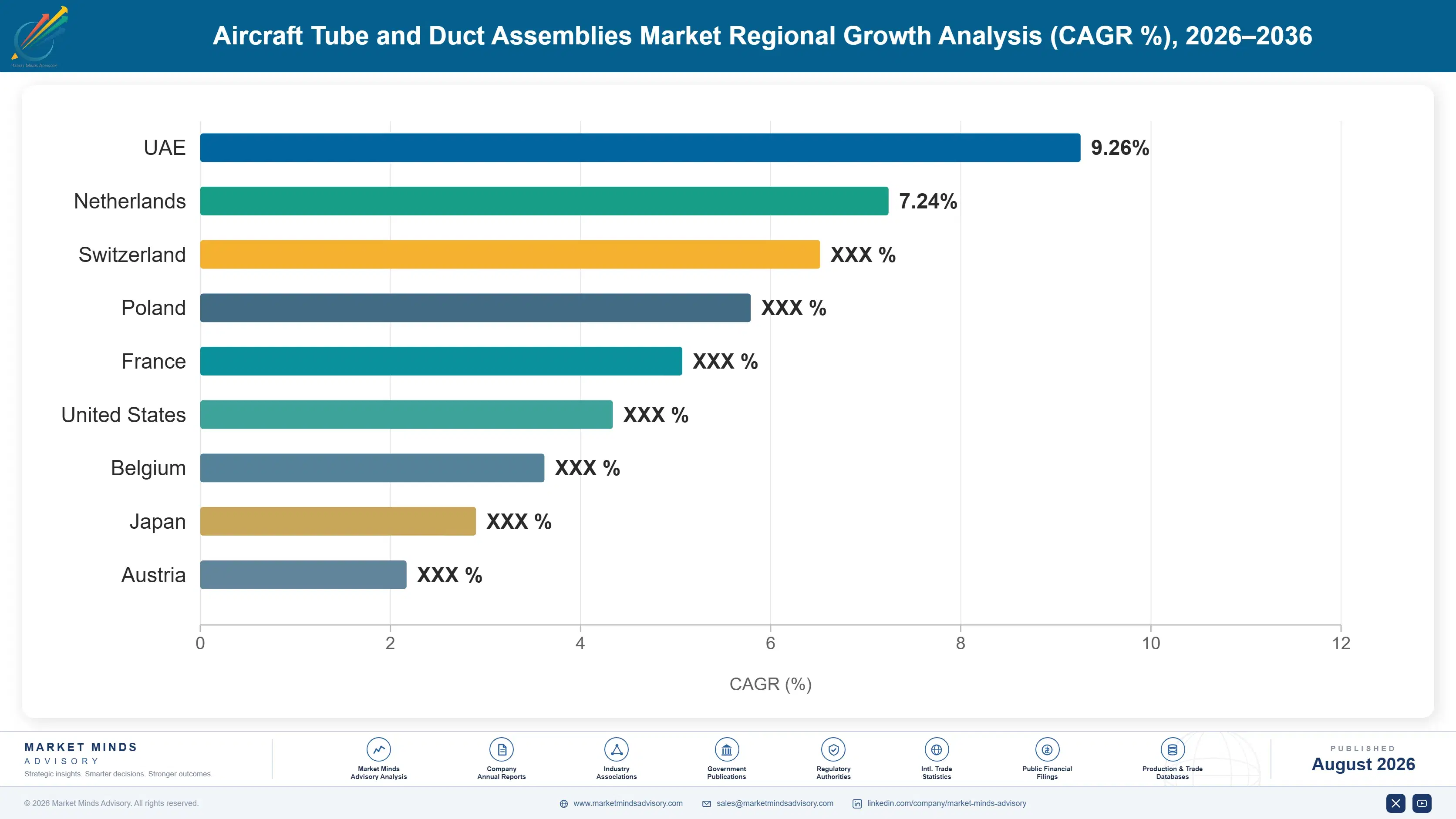
North America holds 37% of value on airframer assembly, military fleet size and qualified fabrication clustering combined, with Western Europe close behind on Airbus and a consolidated tier structure. Growth runs fastest across South Asia and Pacific, where defence offset policy is building qualified capability.

North America

Note: North America holds 37% against a 22 to 32% band because Boeing final assembly, the world's largest military fleet and the deepest qualified tube fabrication base all sit here together. Wichita, Southern California and the Pacific Northwest carry clusters of specialist bending and welding shops that grew up alongside airframer programmes and have no equivalent elsewhere. Defence work is the steadier half: fighter, transport and rotorcraft programmes consume high-temperature nickel alloy ducting at volumes commercial aviation does not approach. The aftermarket adds a third stream, since Federal Aviation Administration repair approvals keep ducting overhaul inside a qualified shop network rather than allowing general fabrication. Capacity here remains the industry's practical ceiling.
Share: 37% | CAGR: 6.1% (2026 to 2036)

Western Europe

Airbus drives this region, and the supply structure beneath it is more consolidated than the American equivalent. PFW Aerospace at Speyer supplies pipe and duct assemblies across the entire Airbus range, and Senior Aerospace operates plants in the United Kingdom serving both airframers. Rolls-Royce and Safran engine programmes pull separate demand for high-temperature bleed air ducting, which is a different qualification path and a different supplier set. Defence spending has risen sharply since 2022, and Eurofighter, Rafale and A400M all carry substantial titanium and nickel alloy duct content. European Union Aviation Safety Agency approval rules mirror American practice closely, so qualified suppliers ship both ways without redesign. Consolidation has gone further here than anywhere.
Share: 26% | CAGR: 5.1% (2026 to 2036)
Regional intelligence for 5 additional markets available in the complete report: East Asia, South Asia and Pacific, Latin America, Middle East and Africa, Eastern Europe. Contact sales@marketmindsadvisory.com.
aircraft-tube-duct-assemblies-market-country-cagr-analysis-1787313471140

Where Fabrication Margin Is Actually Won

Four positions separate suppliers earning genuine aerospace margins from those running qualified job shops at commodity fabrication rates: holding titanium welding capability, controlling the repair station channel behind installed hardware, getting design-for-manufacture input in before the drawings freeze, and building the certified welder pipeline internally while everybody else is bidding for the same scarce people.

Hold Certified Titanium Thin-Wall Welding Capability

Titanium assemblies grow at 9.9% and demand purge welding under process control that most qualified shops simply do not hold. Suppliers with the capability realise 45% to 60% higher price per assembly than the aluminium equivalent they replace, on material that costs several times as much but carries proportionally better margin. Building the capability means equipment, process qualification and welders trained to a standard that takes years to reach. Those who already have it are winning the hydraulic runs on every new platform while competitors quote work they cannot actually deliver.
Market Impact: Realises 60% higher price on each f

Control The Approved Repair Station Channel

Aftermarket already supplies 31% of revenue in this market and earns considerably better margins than original equipment fabrication, because a damaged duct on a grounded aircraft is a schedule problem for the operator rather than a price negotiation. Suppliers operating their own approved repair stations capture 20 to 26 points of additional margin on returned assemblies and they hold the customer relationship right through the platform's entire service life. Without that channel the work drifts to independent shops, and with it goes the field data that informs the next design generation entirely.
Market Impact: Adds 26 margin points across all re

Secure Design-For-Manufacture Input Before Drawings Freeze

Routing decisions taken by airframer engineers determine bend radii, weld counts and fixture complexity, and a supplier consulted during design definition can remove 15% to 25% of fabrication cost simply by proposing geometries that build cleanly on existing setups. Once the drawings freeze, that cost is locked in for the platform's entire production life and no amount of shop floor effort ever recovers it. Suppliers holding early engineering relationships therefore earn permanently better margins on identical scope, and airframers increasingly welcome the input because it directly protects their own delivery schedules.
Market Impact: Removes up to 25% of assembly fabri

Build The Certified Welder Pipeline Internally

Qualified aerospace welders take several years to train and the available population shrank when shops closed through 2020 and 2021, which is why lead times now exceed 40 weeks across much of this market. Suppliers running internal apprenticeship programmes add capacity at roughly 40% of the cost of recruiting from competitors, and they hold the people longer because the training carries an obligation with it. Everybody else is bidding for the same scarce workers, and pay rates across qualified fabrication have moved sharply upward as a direct result of that competition.
Market Impact: Adds capacity at 40% of external re

Who Controls the Margin Pool

Concentration sits at 34% for the top five measured on qualified assembly shipment volume, the basis used throughout this section, and that is low for aerospace. Senior plc and Parker Hannifin hold the broadest qualification portfolios across commercial and military platforms, with PFW Aerospace, Ducommun and Eaton following on strong but more programme-specific positions. The gap to the next tier is narrow, because a specialist shop with the right approvals competes credibly on part numbers.
Competitive activity runs on three fronts. Titanium welding capability is the first and the most valuable, since qualified thin-wall capacity is genuinely scarce. Composite duct qualification is the second, and it favours suppliers with materials expertise rather than metal fabrication heritage. The third is repair station coverage, where participants are acquiring approved capacity to keep aftermarket work from drifting to independents.

Pressure is arriving from two directions at once. Indian and Eastern European fabricators are qualifying under offset and cost pressure, and they compete on labour rates in work that stays substantially manual. Separately, airframers frustrated by lead times are qualifying second sources far more aggressively than historical practice allowed. Rankings will shift on who holds titanium capacity when the next platform awards are decided.
aircraft-tube-duct-assemblies-market-company-positioning-matrix-1787313471652

Competitive Moat and Risk Dimensions

SENIOR PLC

Moat: Breadth of qualified fabrication

Qualification across a very wide range of commercial, military and rotorcraft platforms means no single programme loss materially damages the position, and airframers defining new aircraft find an existing approved supplier already holding comparable scope. Multi-site fabrication across several countries also gives the group routing flexibility that single-plant competitors cannot offer when schedules tighten.
SENIOR PLC

Risk: Thin fabrication margin structure

Short production runs and manual processes hold gross margins well below what component suppliers earn on qualified hardware, and the business carries fixed cost across multiple sites that must stay loaded. Any airframer rate reduction flows quickly to unabsorbed overhead, and the group has limited pricing power on part numbers where a specialist shop can quote competitively.
PARKER HANNIFIN

Moat: System-level specification influence

Supplying hydraulic and fuel system content alongside the tube assemblies that connect it puts routing and material decisions inside the company rather than out at an airframer procurement desk. That architectural position carries assembly scope along with the system win, and it is considerably harder to displace than any individual fabricated part number would be.
PARKER HANNIFIN

Risk: Industrial capital allocation competition

Aerospace fabrication competes internally for investment against a much larger industrial motion and control business, and qualified welding capacity is a low-return use of capital on any conventional measure. That makes it exactly the kind of investment that loses internal competitions, even while the shortage of such capacity is what currently caps industry deliveries.

Players Tracked

Prominent Players

Senior plc
Parker Hannifin
PFW Aerospace
Ducommun
Eaton

Other Key Players

Triumph Group
GKN Aerospace
Arrowhead Products
Safran
TransDigm Group
AMETEK
Meggitt
Hutchinson
Unison Industries
Kreisler Manufacturing
Doncasters Group
Sitec Aerospace
Hindustan Aeronautics Limited
Nabtesco
Liebherr-Aerospace

Recent Developments

JANUARY 2025

Titanium tube fabrication capacity expanded at United Kingdom site

A leading supplier commissioned additional purge welding cells and inspection capacity dedicated to thin-wall titanium hydraulic assemblies, responding to airframer pressure on lead times that had extended past forty weeks across much of the qualified fabrication base, and which airframers had escalated repeatedly through 2024.
Signal: Titanium welding capacity rather than orde
APRIL 2025

Composite duct qualification completed for narrowbody environmental control

A European participant completed the full flammability, smoke and toxicity qualification programme for thermoplastic environmental control ducting on a narrowbody platform, which clears the path for volume production of duct assemblies weighing roughly half what the aluminium equivalent they replace weighs on the same aircraft.
Signal: Composite duct adoption is now gated by ca
AUGUST 2025

Airframer qualifies additional Indian fabrication source

A major airframer approved a second Indian supplier for hydraulic tube assembly fabrication under existing offset obligations, transferring the full drawing package and process documentation across in an arrangement that also gives the airframer genuine capacity insurance against the lead time problems affecting its existing supply base.
Signal: Airframers are now second-sourcing fabrica

What Drives Assembly Input Cost

Tube stock and forged fittings account for roughly 38% of manufactured cost, and the mix varies sharply by material. Aerospace-grade titanium tube comes from a small qualified mill base in the United States, Japan and Western Europe. Corrosion-resistant steel and aluminium tube are more widely available. Certified welding, forming, inspection and pressure testing labour add around 34%, the highest labour content of any comparable aerospace component category.
Sanctions on Russian titanium after 2022 removed a substantial share of Western programme supply, and aerospace tube stock lead times extended past sixty weeks while pricing rose steeply. Fabricators holding long-term mill agreements shipped to schedule throughout; those buying on shorter annual terms found themselves allocated and missed committed airframer dates. Safran Annual Report 2025 identifies raw material availability as a continuing constraint on component output.

The disadvantage mechanism here is labour rather than material. A shop paying to recruit certified welders from competitors carries permanently higher cost than one training internally, and where labour is a third of delivered cost that gap decides who quotes profitably. Exposure varies by geography too: Indian and Eastern European fabricators hold a labour advantage that matters far more here than in machined components.
aircraft-tube-duct-assemblies-market-cost-volatility-analysis-1787313471847

Secure multi-year tube stock agreements at qualified mills

Long-term commitments at approved mills convert allocation risk into contractual entitlement, which matters far more than headline price when titanium stock is short. The cost is take-or-pay exposure if airframer rates fall below plan. Fabricators holding such agreements through the post-2022 squeeze shipped on schedule while shorter-term buyers repeatedly missed the delivery dates they had committed to.

Train certified welders internally rather than recruiting

Internal apprenticeship adds qualified welding capacity at roughly 40% of the cost of recruiting from competitors, and retention runs considerably better because the training carries an obligation. The programme takes several years to produce output, which is precisely why so few participants started one, and why those who did now hold a cost position nobody can quickly match.

Standardise fittings and end connections across part numbers

Common fittings and end connections across many part numbers concentrate purchasing volume, cut inventory holding and let fabricators group similar work onto shared setups. The saving is modest per assembly but applies across thousands of part numbers annually. It requires airframer engineering agreement at design stage, which is why suppliers push for early involvement on new programmes.

Portfolio Architecture for Margin Defence

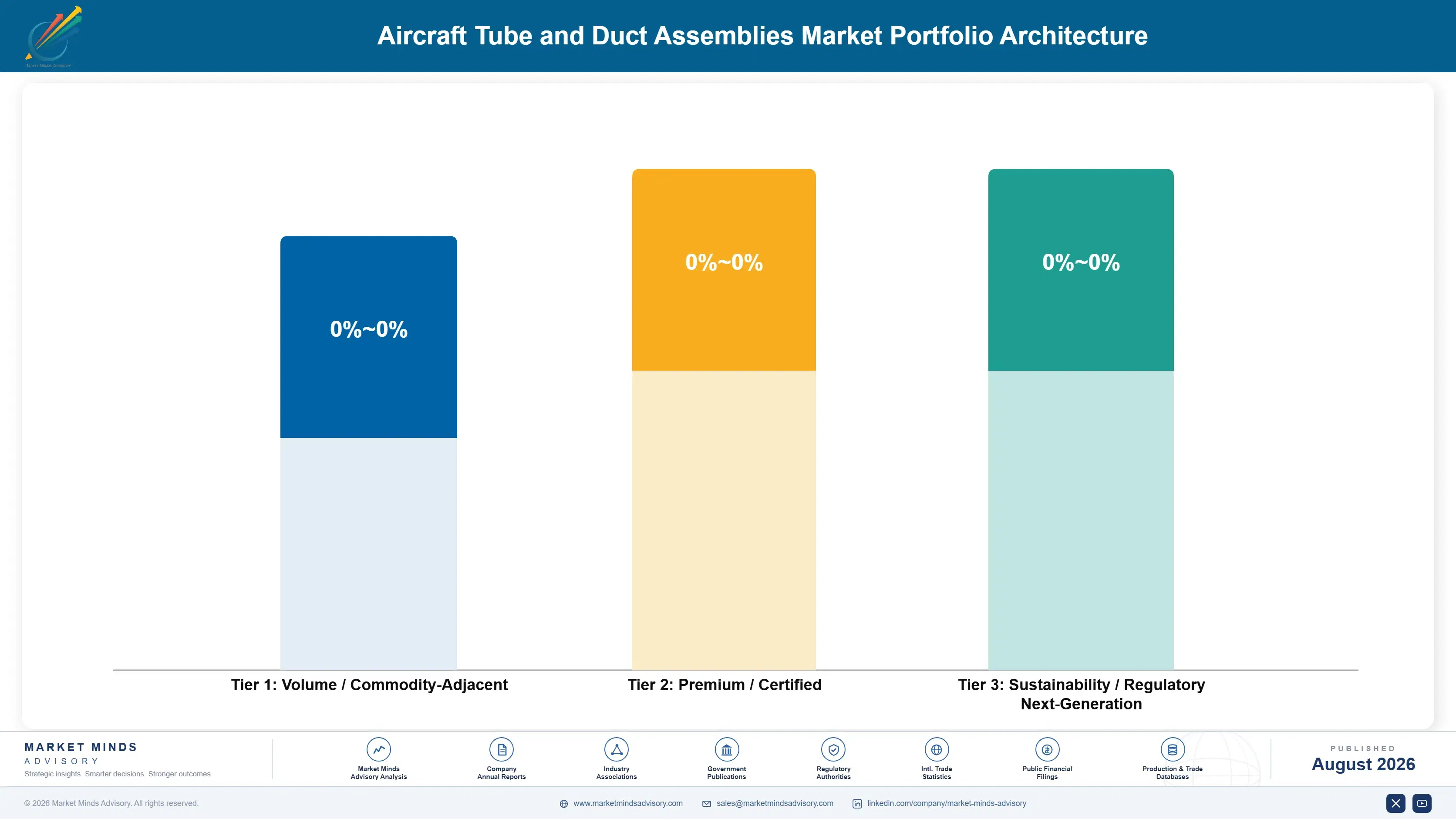
Portfolio economics divide on material and channel rather than on any product distinction. Standard aluminium and corrosion-resistant steel assemblies built to airframer drawings on competitively awarded scope earn gross margins in the low to mid teens, because short runs defeat automation, labour content is high and a dozen qualified shops can quote the same part number credibly against each other.
The premium tier is titanium and high-temperature nickel alloy fabrication. Qualified thin-wall titanium welding capacity is genuinely scarce, the material is expensive and the process control demanding, and pricing reflects all three. Margins run in the high twenties to mid thirties, and the competitive set on any given titanium part number is small enough to name from memory.

Above both sits repair station work and composite duct assembly. A damaged duct on a grounded aircraft is a schedule problem rather than a price negotiation, and repair margins reflect that reality plainly. Composite ducting carries qualification barriers that metal fabricators cannot clear quickly, and both categories hold margins in the high thirties to low forties with far less competitive pressure than anything at the fabrication end of this business.

Volume / Commodity-Adjacent

Standard aluminium and corrosion-resistant steel assemblies built to airframer drawings. Short production runs defeat automation and labour content stays high, while numerous qualified shops can quote the same part numbers, which holds margin near the floor.
Gross Margin: 13 to 19%

Premium / Certified

Titanium and high-temperature nickel alloy assemblies requiring purge welding under tight process control. The range reflects the difference between established production part numbers and newly qualified geometries where yield is still improving.
Gross Margin: 27 to 35%

Sustainability / Regulatory / Next-Generation

Approved repair station work and composite duct assemblies. The range is wide because aircraft-on-ground repair prices very differently from scheduled overhaul, and composite qualification barriers vary considerably between one programme and the next.
Gross Margin: 36 to 44%
aircraft-tube-duct-assemblies-market-portfolio-architecture-1787313472349

High-value Sub-segments and Strategic Watch-out

Titanium Hydraulic Assembly Fabrication

High value and high growth sitting together. Rising hydraulic system pressures push titanium into the positions aluminium held for decades, qualified thin-wall welding capacity is scarce enough to constrain industry deliveries, and pricing reflects that scarcity plainly across every new platform award currently being decided.
Gross Margin: 30 to 38%

Approved Repair Station Duct Work

High value running on moderate growth. A damaged duct on a grounded aircraft is a schedule problem rather than a price negotiation, and repair pricing plainly reflects that reality, while the installed base generates dependable annual volume regardless of what current production rates are doing.
Gross Margin: 37 to 45%

Standard Aluminium Assembly Production

The volume core that keeps qualified shops loaded and certified welders occupied between spells of higher-value work. Margins sit near the floor because a dozen suppliers quote the same part numbers, but the scope secures the airframer relationship that carries premium titanium work later on.
Gross Margin: 13 to 19%

Legacy Platform Spares Fabrication

The strategic watch-out sitting in this portfolio. Older platforms generate steady annual replacement demand at reasonable margins with almost no competition at all, but the installed base shrinks every year as aircraft retire, and dedicated tooling holds its value only for as long as that fleet still flies.
Gross Margin: 22 to 29%

How Assembly Demand Repeats

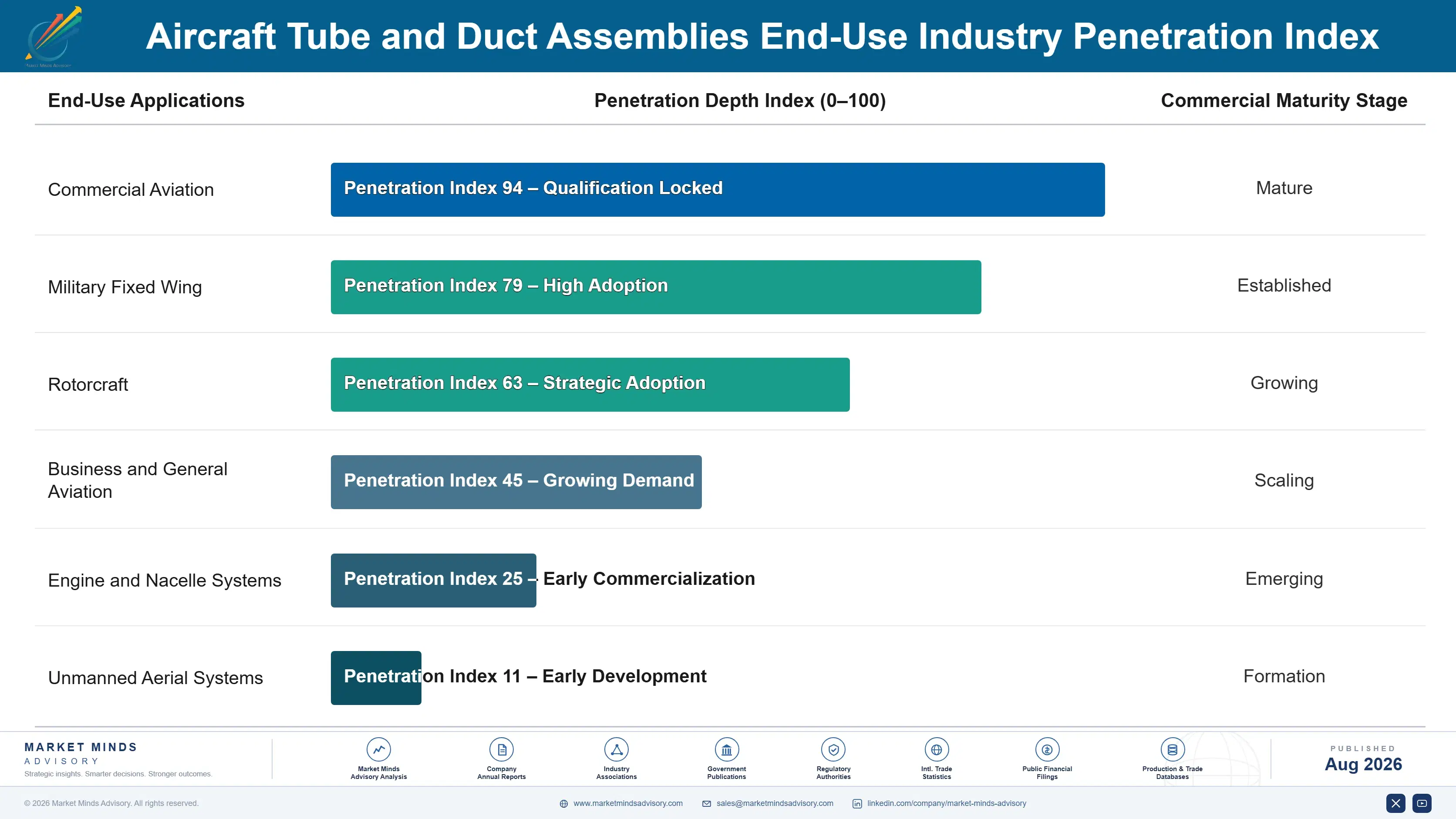
The repeat business here is fabrication scope rather than any single part number. An assembly qualified onto a platform ships for the entire production run, which can mean two decades of steady release schedules, and then generates spares and repair demand for the service life beyond it. Original equipment work is thin-margin, but it secures the far better aftermarket position sitting behind the installed hardware.
Stickiness varies by end-use more than the qualification logic suggests. Military sustainment is deepest, since programme offices contract spares for decades and rarely requalify a fabricated assembly. Commercial airline demand is sticky but leaks steadily to independent repair stations, which take duct repair work that original fabricators would otherwise capture. Rotorcraft operators sit between the two, and business aviation customers switch most readily because their fleets are small and schedule pressure is lower.

The buyer profile has shifted generationally. Fabrication scope was once awarded by airframer manufacturing engineers who understood routing and weld sequence intimately. Today procurement organisations award packages on delivered cost and schedule performance, which rewards suppliers who can demonstrate capacity and on-time delivery data over those arguing technical merit.
aircraft-tube-duct-assemblies-market-end-use-penetration-index-1787313472839

Where To Compete And Why

These are among the four positions where our research anticipates prominent divergence between winners and laggards over the coming forecast period. Each is grounded in the demand model, the regulatory perimeter, and the announced capacity pipeline.
01 / TITANIUM WELDING CAPABILITY

Scarce capacity is the whole competitive position

Titanium assemblies grow at 9.9% as system pressures push past what aluminium sustains, and qualified thin-wall purge welding capacity is scarce enough to constrain industry deliveries outright. Suppliers holding it realise 45% to 60% higher price per assembly than the aluminium work it replaces, on better proportional margin. Building the capability takes equipment, process qualification and welders trained across several years, which means suppliers starting the work now will arrive well after the current round of platform awards has already been decided.
02 / REPAIR CHANNEL OWNERSHIP

Aftermarket carries the margin the fabrication cannot

Aftermarket supplies 31% of revenue and earns far better margins than original equipment fabrication, because a damaged duct on a grounded aircraft is a schedule problem rather than a price negotiation for the operator. Suppliers running approved repair stations capture 20 to 26 points of additional margin on returned assemblies and hold the customer through the platform's life. Without that channel the work drifts steadily to independent repair shops, and it takes the accumulated field data along with it permanently.
03 / EARLY ENGINEERING INVOLVEMENT

Cost is decided before the drawing freezes

Routing decisions taken by airframer engineers fix bend radii, weld counts and fixture complexity for the whole of a platform's production life, and no shop floor effort recovers what those choices lock in. A supplier consulted during design can remove 15% to 25% of fabrication cost simply by proposing geometries that build cleanly on existing shop setups. Airframers increasingly welcome the input because it protects their own delivery schedules, which makes this the cheapest margin available anywhere in the whole business.
04 / WELDER PIPELINE DEVELOPMENT

Train the people nobody else is training

Certified aerospace welders take several years to qualify and the population shrank badly when shops closed through 2020 and 2021, which is precisely why lead times now exceed 40 weeks across much of this market. Internal apprenticeship programmes add capacity at roughly 40% of the cost of recruiting from competitors, and they retain those people considerably longer. Everybody else is bidding for the same scarce workers, and pay rates in qualified fabrication have moved sharply upward as a direct consequence.

Engagement Snapshot From the Field

A live engagement with an industry participant carrying material or product regulatory and market exposure ahead of a defining policy shift, showing how our research translates into a defensible multi-year portfolio strategy.
MARKET MINDS ADVISORY · CLIENT ENGAGEMENT SUMMARY
Aircraft Tube and Duct Assemblies Producer Strategic Portfolio Review and Transition Roadmap 2026·Investment Scenario on Aircraft Tube and Duct Assemblies Exposure Evaluation 2025-26
CLIENT PROFILE
A North American fabricator of tube and duct assemblies operating four qualified plants, with annual revenue around $310 million (client-reported, unverified by MMA), roughly 78% of it from commercial original equipment scope. The business held broad aluminium and corrosion-resistant steel qualification but only limited titanium capability at one site, and it had been quoting hydraulic work it could not reliably deliver on schedule.
STRATEGIC CHALLENGE
Gross margin had compressed to the low teens as short-run fabrication costs rose faster than contracted pricing allowed, and the two largest airframer customers had both begun qualifying alternative sources on lead time grounds. The board needed to decide between investing in titanium welding capacity, acquiring an approved repair station, or consolidating from four plants to three and taking the cost out.
MMA APPROACH
MMA mapped titanium content across 34 active and announced platforms, modelled fabrication cost by material and run length against the client's actual shop data, and assessed the capital and timeline requirements for each option. Twenty-six expert interviews with airframer manufacturing engineers, procurement leads and repair station operators tested where scope would be awarded over the next five years.
KEY FINDINGS
  1. Titanium content across the platforms studied would roughly double as a share of hydraulic assembly value before 2033, and the client's single-site capability could not support that volume at any realistic utilisation.
  2. Plant consolidation would have removed around $9 million of annual fixed cost but also surrendered two airframer relationships tied to site-specific approvals, which the interviews confirmed would not transfer.
  3. Repair station acquisition offered the fastest payback of the three options, capturing overhaul work on installed hardware the client had fabricated but never serviced itself.
  4. Airframer procurement leads consistently ranked on-time delivery data above unit price when awarding new fabrication scope, which reframed the capacity question as a revenue argument rather than a cost one.
CLIENT PROFILE
A North American fabricator of tube and duct assemblies operating four qualified plants, with annual revenue around $310 million (client-reported, unverified by MMA), roughly 78% of it from commercial original equipment scope. The business held broad aluminium and corrosion-resistant steel qualification but only limited titanium capability at one site, and it had been quoting hydraulic work it could not reliably deliver on schedule.
STRATEGIC CHALLENGE
Gross margin had compressed to the low teens as short-run fabrication costs rose faster than contracted pricing allowed, and the two largest airframer customers had both begun qualifying alternative sources on lead time grounds. The board needed to decide between investing in titanium welding capacity, acquiring an approved repair station, or consolidating from four plants to three and taking the cost out.
MMA APPROACH
MMA mapped titanium content across 34 active and announced platforms, modelled fabrication cost by material and run length against the client's actual shop data, and assessed the capital and timeline requirements for each option. Twenty-six expert interviews with airframer manufacturing engineers, procurement leads and repair station operators tested where scope would be awarded over the next five years.
KEY FINDINGS
  1. Titanium content across the platforms studied would roughly double as a share of hydraulic assembly value before 2033, and the client's single-site capability could not support that volume at any realistic utilisation.
  2. Plant consolidation would have removed around $9 million of annual fixed cost but also surrendered two airframer relationships tied to site-specific approvals, which the interviews confirmed would not transfer.
  3. Repair station acquisition offered the fastest payback of the three options, capturing overhaul work on installed hardware the client had fabricated but never serviced itself.
  4. Airframer procurement leads consistently ranked on-time delivery data above unit price when awarding new fabrication scope, which reframed the capacity question as a revenue argument rather than a cost one.
RECOMMENDED STRATEGY
Phase 1: Phase one: acquire an approved repair station serving the client's own fabricated installed base, generating cash and margin ahead of any capital programme. Phase 2: Phase two: commission titanium purge welding capacity at a second site and launch an internal welder apprenticeship to staff it properly. Phase 3: Phase three: retain all four plants but rebalance scope by material, concentrating titanium and nickel alloy work where the new capability now sits.
OUTCOME
The client completed the repair station acquisition in seven months and reported aftermarket revenue up $24 million in the first full year (client-reported, unverified by MMA). Titanium capacity came online eleven months later, and the business has since been awarded hydraulic assembly scope on two platforms it had previously been unable to quote credibly for.

Frequently Asked Questions

Foundational context covering the market sizes, CAGR, scope, country, region and competition that inform every finding below. This section is provided to cover basics and most often pre-purchase conversations, answered from the MMA Primary Research Dataset.

What is the current size of the Aircraft Tube and Duct Assemblies Market?

The global aircraft tube and duct assemblies market was valued at $2.30 billion in 2025, reaching an estimated $2.45 billion in 2026. That covers qualified rigid and flexible assemblies across hydraulic, fuel, pneumatic and environmental control systems.

How large will the Aircraft Tube and Duct Assemblies Market be by 2036?

MMA forecasts the market reaching $4.64 billion by 2036, an increase of $2.19 billion over the 2026 base. That represents an expansion multiple of 1.89 times across the forecast period.

What is the CAGR for the Aircraft Tube and Duct Assemblies Market 2026 to 2036?

The base case compound annual growth rate is 6.6%, with a bull case of 7.8% and a bear case of 5.4%. Historical growth between 2020 and 2025 ran at 5.4% annually.

Which segment is growing fastest?

Titanium tube assemblies grow at 9.9%, a full 1.50 times the market rate, as hydraulic system pressures move beyond what aluminium sustains. Composite and thermoplastic duct assemblies follow at 8.5% on weight reduction.

Who are the major companies in the Aircraft Tube and Duct Assemblies Market?

Senior plc, Parker Hannifin, PFW Aerospace, Ducommun and Eaton lead on qualified assembly shipment volume. Together they account for roughly 34% of global shipments, which is unusually low for aerospace.

Which country is growing fastest?

India grows fastest at 9.6% annually, driven by defence offset obligations and a labour cost advantage that matters more in manual fabrication than in machined components. China follows on COMAC content localisation.

Report Segmentation Architecture

The full report scope spans multiple orthogonal segmentation dimensions, with cross-tabulated demand data provided for each dimension pair. Coverage extends further to regional breakdowns, trend trajectories, and the competitive detail needed to support segment-level decision-making.

By Assembly Material and Construction

  • Titanium Tube Assemblies
  • Composite and Thermoplastic Duct Assemblies
  • Corrosion-Resistant Steel Assemblies
  • Nickel Alloy High-Temperature Assemblies
  • Aluminium Alloy Tube Assemblies
  • Flexible Hose and Fluoropolymer Assemblies

By End-Use Industry

  • Commercial Aviation
  • Military Fixed Wing
  • Rotorcraft
  • Business and General Aviation
  • Engine and Nacelle Systems
  • Unmanned Aerial Systems

By Commercial Dimension

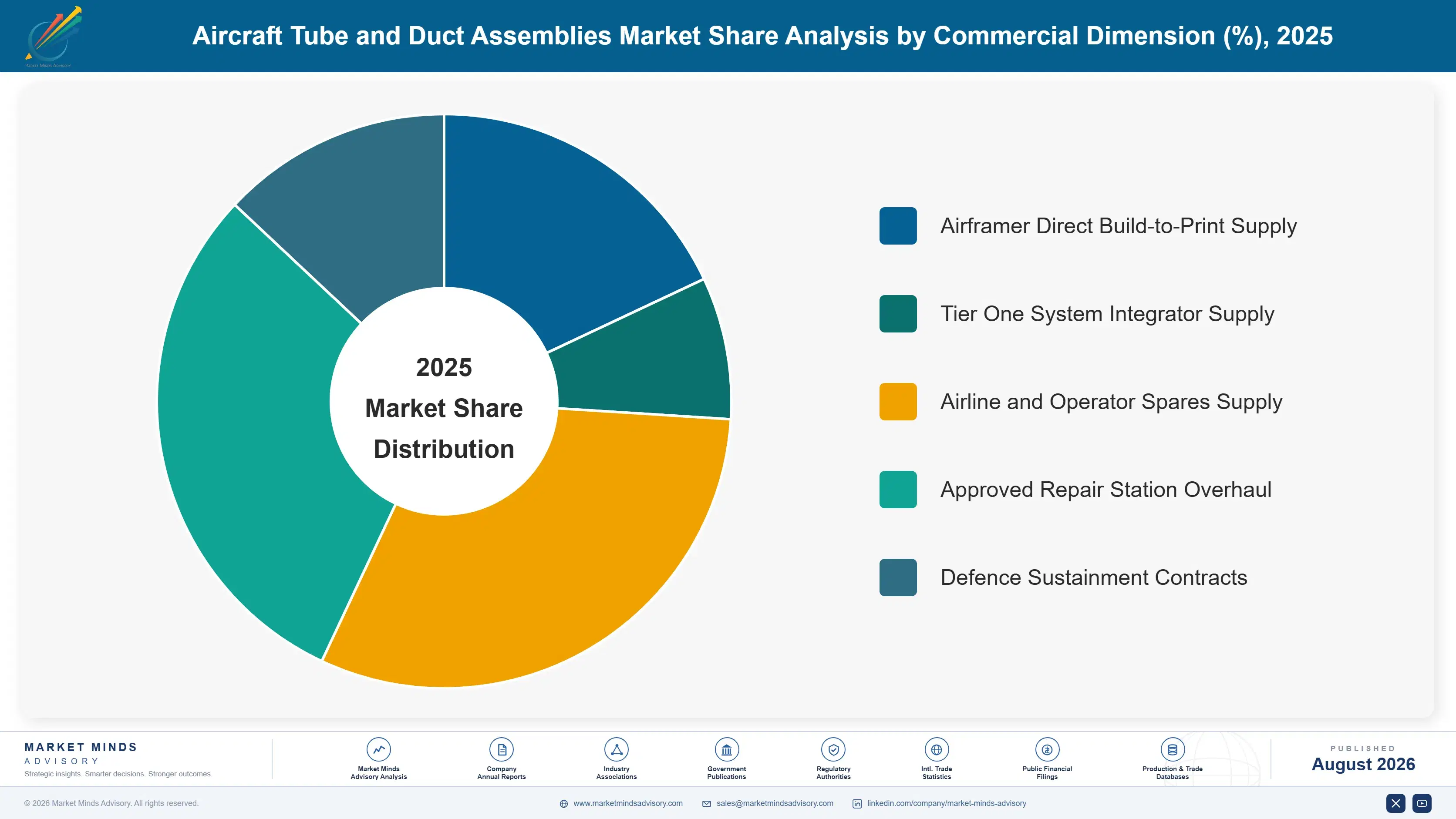
  • Airframer Direct Build-to-Print Supply
  • Tier One System Integrator Supply
  • Airline and Operator Spares Supply
  • Approved Repair Station Overhaul
  • Defence Sustainment Contracts

By Region

  • North America
  • Western Europe
  • East Asia
  • South Asia and Pacific
  • Latin America
  • Middle East and Africa
  • Eastern Europe

Scope, Methodology, and Coverage

Every figure in this report is reproducible from documented input assumptions. The scope below maps the historical period, the forecast horizon, the segmentation dimensions, and the countries covered, alongside the underlying primary and qualitative methodology.
Historical Period
2020 to 2025
Forecast Period
2026 to 2036
Base Year
2025 (USD billions; MMA Primary Research Dataset, August 2026)
Market Definition
This report covers rigid and flexible tube and duct assemblies qualified for aircraft installation, spanning hydraulic, fuel, pneumatic, bleed air, environmental control, water and waste systems across commercial aircraft, military fixed wing platforms, rotorcraft and business aviation. Loose tube stock, raw fittings, valves, pumps, heat exchangers, reservoirs and complete system integration packages are excluded from the sizing. Repair and overhaul revenue is included where performed by an approved repair station on qualified assemblies.
Quantitative Units
USD billions at supplier realised value; assembly shipments in millions of units; average realised price in USD per assembly.
Segmentation Dimensions
By assembly material and construction; by end-use industry; by commercial dimension; by region.
Regions Covered
North America, Western Europe, East Asia, South Asia and Pacific, Latin America, Middle East and Africa, Eastern Europe
Countries Covered
United States, Canada, Mexico, United Kingdom, France, Germany, Italy, Spain, Japan, South Korea, China, Australia, India, Singapore, Brazil, United Arab Emirates, Saudi Arabia, South Africa, Poland, Czech Republic.
Key Companies Profiled
Senior plc, Parker Hannifin, PFW Aerospace, Ducommun, Eaton, Triumph Group, GKN Aerospace, Arrowhead Products, Safran, TransDigm Group, AMETEK, Meggitt, Hutchinson, Kreisler Manufacturing and others.
Quantitative Methodology
Primary survey, n=3,800 respondents, Q4 2025, six countries; demand-side model with trade association cross-validation
Qualitative Methodology
47 expert interviews, Q4 2025; applied to validate demand model assumptions, identify emerging dynamics, and assess competitive positioning
Report Format
PDF and XLSX data workbook (Word format preview document)
Publisher
Market Minds Advisory
Report Code
MMA-2026-CON-879
Published
August 2026
Contact
sales@marketmindsadvisory.com | www.marketmindsadvisory.com

Purchase the full Aircraft Tube and Duct Assemblies Market Report (2026 to 2036).

The full report sizes the aircraft tube and duct assemblies market across six material and construction segments, six end-use industries and seven regions, with assembly count and realised pricing detail behind every value estimate. It profiles twenty global suppliers on qualification breadth, titanium welding capability and repair station coverage. Regional chapters cover fabrication clustering, offset policy and the qualified mill supply base for aerospace tube stock. Capacity analysis quantifies the certified welding labour constraint against announced airframer build rates. Aftermarket analysis compares repair economics with original equipment fabrication margins.
Assembly count and pricing detail by material
Titanium welding capacity mapping across qualified suppliers
Composite duct adoption forecasts through 2036
Certified welding labour availability and lead time tracking
Competitive position assessments across twenty global suppliers
Repair station coverage and aftermarket margin analysis

Built For The People Who Decide

From boardroom strategy to bench-side execution, this report is read cover-to-cover by leaders shaping the next decade of their industry, turning demand scenarios, market dynamics and valuation benchmarks into decisions.
CXOs/ Presidents/ VPs/ Managers
M&A and Corporate Development
Strategy Teams and R&D Heads
Procurement and Product Directors
Regulatory and Compliance Leaders
Investor Relations and Equity Analysts