

Market Minds Advisory
AIDS-Related Primary CNS Lymphoma Market

AIDS-Related Primary CNS Lymphoma Market: Diagnostics, Targeted Therapy, and Reimbursement Dynamics

Antiretroviral therapy has cut AIDS-related primary CNS lymphoma incidence sharply across wealthy markets, yet expanding diagnostic capacity and premium BTK-inhibitor adoption in high HIV-burden regions is reshaping where treatment revenue concentrates through 2036.

Lead Analyst

Alice Ballenger

Published

September 2026

Make Smarter Decisions with Customized Research Insights

Request a free sample report and evaluate market opportunities, growth trends, and competitive dynamics relevant to your business needs.

2025 MARKET VALUE$0.2BMarket Size 2025
2036 FORECAST VALUE$0.7BBase Case , 2026 to 2036
CAGR 2026 TO 203611.6 %Bull 12.8% / Bear 10.3%
INCREMENTAL OPPORTUNITY$0.4BNet 10- year value creation
EXPANSION MULTIPLE3.00x2036 value over 2026 base
Strategic Levers
M&A Pipeline
Regional Outlook
Country Rankings
Competitive Intelligence
Segmental Deep-dive
Call-Us : 91 93563 13602

Executive Snapshot and Market Trajectory

AIDS-related primary CNS lymphoma incidence is falling steadily wherever antiretroviral therapy reaches patients early, yet clinicians are simultaneously replacing decades-old high-dose methotrexate regimens with CNS-penetrant BTK inhibitors that cost far more per treated patient than legacy chemotherapy protocols, particularly across major academic transplant and oncology referral centers worldwide each year.
CNS-penetrant targeted therapy is the fastest-growing segment as academic oncology centers replace high-dose methotrexate induction with ibrutinib and acalabrutinib-based regimens that shorten treatment duration and improve blood-brain barrier penetration. North America anchors the deepest commercial concentration, reflecting dense reimbursement infrastructure, established stem-cell transplant networks, and premium orphan-indication pricing that developing markets with higher raw disease incidence still cannot match at comparable adoption rates, especially across major academic transplant and referral networks nationwide.
Roche and AbbVie set the therapeutic benchmark through rituximab-based induction and BTK inhibitor adoption, while a fragmented tail of generic methotrexate manufacturers and regional radiotherapy providers competes mainly on cost and access. Expanding molecular subtyping capability and biosimilar rituximab erosion are both reshaping which vendors capture treatment revenue as diagnostic precision improves faster than pricing power holds, particularly across smaller regional oncology networks with limited reimbursement leverage.
Market Definition
The AIDS-related primary CNS lymphoma market covers diagnostic imaging, molecular subtyping, and therapeutic products used to identify and treat central nervous system lymphoma arising in patients with HIV-associated immunosuppression. It spans high-dose methotrexate chemotherapy, whole-brain radiotherapy, CNS-penetrant targeted agents, stem-cell transplant consolidation, and antiretroviral co-management services delivered alongside oncology treatment. General antiretroviral therapy sold independent of oncology care, and non-AIDS-related primary CNS lymphoma in immunocompetent patients, are excluded.
Base Year Value
$0.2B in 2025 (MMA Primary Research Dataset, August 2026)
Forecast Period
2026 to 2036, eleven discrete annual values
CAGR
11.6% base case. Bull 12.8%. Bear 10.3%.
Fastest Growth Segment
CNS-Penetrant Targeted Therapy (BTK Inhibitors and Novel Agents): 16.4% CAGR
Fastest Growth Country
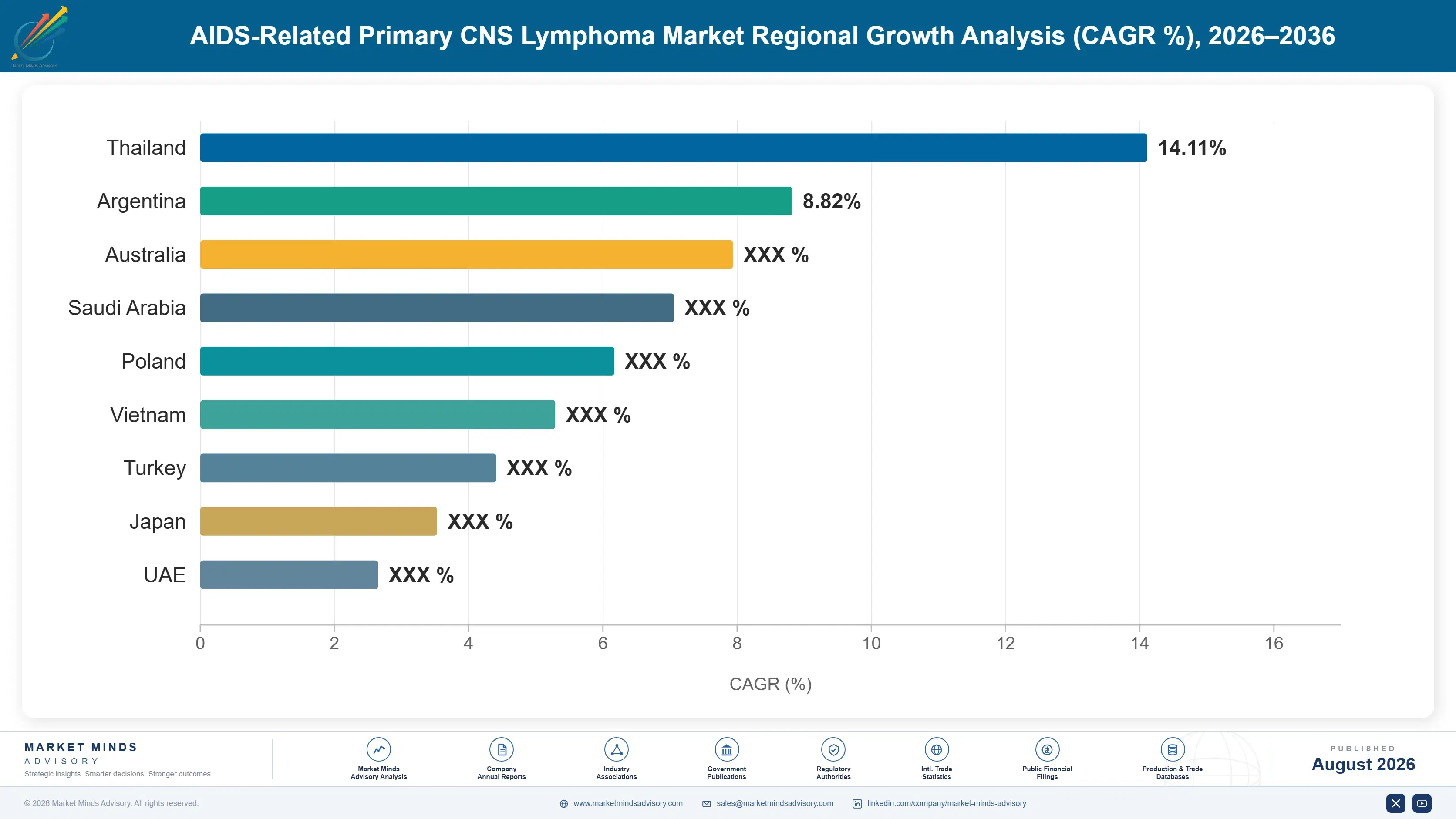
South Africa: 15.2% CAGR
Fastest Growth Region
South Asia and Pacific: 13.6% CAGR
Largest Region
North America: 29% of 2025 global value
Market Leaders
AbbVie, F. Hoffmann-La Roche, AstraZeneca, Siemens Healthineers, Elekta. Source: MMA Analysis based on company annual reports.
Primary Survey
n=3,800 procurement and R&D decision-makers, Q4 2025, six countries
Methodology
Demand-side build-up, cross-validated against public data, 47 expert interviews

AIDS-Related Primary CNS Lymphoma Market Forecast Scenarios

aids-related-primary-cns-lymphoma-market-size-forecast-scenario-1787303634648
Diagnosed AIDS-related primary CNS lymphoma cases declined across 2020 to 2025 in high-income markets as antiretroviral therapy coverage expanded, even as diagnostic capacity and molecular subtyping adoption grew steadily across academic oncology centers worldwide. The market grew at an estimated 10.8% historical CAGR across the period, reflecting rising per-patient treatment intensity offsetting a shrinking raw diagnosed population in wealthier regions.
The base case assumes BTK inhibitor adoption continues displacing high-dose methotrexate as the preferred induction approach through 2030, molecular subtyping diagnostics spread from academic centers into broader community oncology networks, and antiretroviral treatment expansion in high-burden regions steadily grows the diagnosed and treated patient pool. Together these three commercial mechanisms support an 11.6% forecast CAGR, with legacy chemotherapy remaining the volume anchor even as targeted therapy captures a growing share of treatment value each year across every major region.
The bull case centers on accelerated regulatory approval of next-generation CNS-penetrant agents reaching frontline use well ahead of current 2029 timelines. The bear case centers on reimbursement tightening for high-cost orphan-indication therapies, which would slow targeted therapy adoption and push treatment back toward lower-cost legacy chemotherapy protocols across cost-constrained health systems worldwide for several years to come.

Access, Adoption, and Reimbursement Divergence

AIDS-related primary CNS lymphoma sits at the intersection of HIV oncology and rare-disease therapeutics, since the diagnostic side depends on stereotactic biopsy and molecular subtyping capability while the therapeutic side spans decades-old methotrexate chemotherapy and newly adopted CNS-penetrant targeted agents. That split has kept the vendor base divided between imaging and diagnostics companies and oncology drugmakers competing on regimen efficacy.
TOP 5 CONCENTRATION38%share held by leading five therapeutic and diagnostic vendors
AVERAGE TREATMENT COST$28,000 per patientaverage cost per completed induction and consolidation regimen
LEADING COUNTRY SHAREUnited States, 24%share of global diagnosed and treated patient volume overall
DIAGNOSTIC IMAGING UTILIZATION68% of diagnosed casesshare of cases receiving stereotactic or MRI-guided biopsy
BIOSIMILAR PENETRATION31% of rituximab volumeshare of rituximab volume served by biosimilar competitors
TREATMENT CYCLE LENGTH16 to 20 weekstypical duration of induction through consolidation treatment phases
Commercially, the market splits between a legacy chemotherapy and radiotherapy base sold through established academic oncology and transplant center channels, and a smaller but faster-growing targeted therapy tier sold on blood-brain barrier penetration and shortened treatment duration rather than cost alone. Stem-cell transplant consolidation and antiretroviral co-management services round out demand with application-specific purchasing tied to relapsed and treatment-resistant disease.
Over the next decade, diagnostic speed and molecular precision will matter more than raw treatment volume alone, since delayed subtyping frequently leads to suboptimal induction regimen selection that faster diagnostics could avoid. Vendors that can expand targeted therapy access into mid-tier academic and community oncology networks fastest stand to capture a widening share of a market that reimbursement policy is reshaping as much as HIV epidemiology is.
"The real growth story here isn't disease incidence, which is falling in every wealthy market. It's how fast BTK inhibitors displace methotrexate once payers stop treating them as experimental."
Director, Oncology and Rare Disease Practice · MMA Healthcare / Oncology Diagnos

Market Trends

BTK Inhibitor Adoption Accelerates Frontline Induction Use

Ibrutinib and acalabrutinib-based regimens are moving from salvage therapy into frontline induction protocols at major academic oncology centers, following clinical trial data showing improved blood-brain barrier penetration and shorter treatment duration compared with high-dose methotrexate. Multiple comprehensive cancer centers have updated internal treatment guidelines since 2024 to favor BTK inhibitor-based induction for eligible AIDS-related primary CNS lymphoma patients, particularly those with relapsed or treatment-resistant disease. Community oncology networks are following more slowly, constrained by reimbursement uncertainty and the smaller patient volumes typical of this rare indication, but adoption is broadening steadily each year across major referral centers nationwide.
Market Impact: Sustains base of 30 million patient

Molecular Subtyping Diagnostics Reach Community Oncology Networks

Molecular subtyping and next-generation sequencing capability is expanding beyond academic reference laboratories into regional community oncology networks, driven by falling sequencing costs and growing recognition that subtype-specific regimen selection improves outcomes. Diagnostic vendors including Roche Diagnostics and Siemens Healthineers have expanded assay menus to cover CNS lymphoma-specific molecular markers since 2023, targeting laboratories that serve mid-sized hospital systems without dedicated neuro-oncology programs. This diagnostic expansion is shortening the interval between initial imaging and confirmed molecular subtype, letting oncologists select CNS-penetrant targeted therapy earlier in the treatment pathway rather than defaulting to legacy chemotherapy protocols by default.
Market Impact: Cuts prior-authorization delay by 3

Market Opportunities and Growth Drivers

Expanding Antiretroviral Coverage Grows Diagnosed Patient Pool

Global antiretroviral therapy coverage has expanded to cover an estimated 30 million people living with HIV, up meaningfully from prior years, yet incomplete coverage and delayed diagnosis in high-burden regions still produces a steady stream of advanced HIV cases that progress to AIDS-related primary CNS lymphoma before treatment begins. Sub-Saharan Africa and South Asia continue reporting new AIDS-defining illness diagnoses even as overall regional antiretroviral coverage improves, since treatment initiation often occurs too late to prevent opportunistic CNS malignancy in immunocompromised patients. This dynamic sustains diagnosed patient volume where diagnostic infrastructure still trails epidemiological need.
Market Impact: Limits enrollment to under 500 pati

Academic Cancer Centers Standardize Targeted Therapy Protocols

Comprehensive cancer centers accredited by national oncology bodies are formalizing CNS-penetrant targeted therapy into standard treatment pathways, replacing case-by-case off-label use with protocol-driven prescribing that insurers increasingly recognize as standard of care rather than experimental treatment. This standardization is reducing prior-authorization friction that previously delayed treatment initiation by weeks in many health systems, and it is giving oncology drugmakers clearer visibility into addressable patient volume for pricing and capacity planning purposes. Academic centers in the United States, Germany, and Japan have led this standardization since 2023, with community networks following roughly a year behind.
Market Impact: Delays treatment start by 4 weeks

Market Restraints and Challenges

Small Patient Population Limits Trial Enrollment Speed

AIDS-related primary CNS lymphoma affects a small enough patient population that randomized controlled trials struggle to enroll sufficient participants within reasonable timeframes, since eligible patients are scattered across hundreds of academic and community oncology centers rather than concentrated at a handful of large-volume sites. This scarcity slows the evidence generation that would let CNS-penetrant targeted therapies move from off-label salvage use into fully reimbursed frontline protocols, keeping many payers cautious about broad coverage. Several drugmakers are pursuing multi-country trial networks to accelerate regulatory decisions despite the small addressable population available for enrollment worldwide.
Market Impact: Adds $28,000 per treated patient

Reimbursement Uncertainty Slows Targeted Therapy Coverage Decisions

Payers in many health systems still classify CNS-penetrant BTK inhibitor use in AIDS-related primary CNS lymphoma as off-label, since formal regulatory approval for this specific indication lags behind the broader lymphoma indications these drugs were originally approved to treat. That classification forces oncologists to pursue case-by-case prior authorization, a process that can delay treatment initiation by several weeks for a rapidly progressing malignancy where delay materially worsens patient outcomes. Drugmakers are responding by funding investigator-initiated trials and submitting real-world evidence to regulators, seeking label expansion that removes the prior-authorization burden.
Market Impact: Cuts diagnostic interval by 12 days
3 additional market trends, 2 additional growth drivers, and 4 additional restraints and challenges are covered in the full report. Contact sales@marketmindsadvisory.com to access the complete intelligence.

Segment CAGR and Growth Architecture

AIDS-related primary CNS lymphoma products segment by treatment and diagnostic modality, the classification oncologists and diagnostic vendors use to set regimen selection, cost structure, and reimbursement pathway, since chemotherapy, targeted therapy, radiotherapy, and diagnostic imaging buyers each negotiate under distinct commercial and clinical terms. Vendors price each category differently depending on treatment complexity and evidence maturity across the region.
aids-related-primary-cns-lymphoma-market-market-share-analysis-1787303635189

CNS-Penetrant Targeted Therapy (BTK Inhibitors and Novel Agents)

CNS-penetrant targeted therapy is the fastest-growing segment as academic oncology centers increasingly favor ibrutinib and acalabrutinib-based induction over legacy high-dose methotrexate, particularly for relapsed and treatment-resistant disease where blood-brain barrier penetration and shortened treatment duration matter most. AbbVie and AstraZeneca have expanded clinical evidence generation specific to this indication since 2023, targeting academic centers that want regulatory-grade outcomes data to support broader payer coverage. Centers that adopt targeted therapy early are capturing referral volume from smaller institutions that lack access to updated protocols, an advantage that compounds as more oncology networks standardize around BTK inhibitor-based induction. If targeted therapy adoption continues at the current pace, this segment could approach a meaningful share of total category value within the next decade.
CAGR 16.4%

MRI and Stereotactic Biopsy Diagnostic Imaging

MRI and stereotactic biopsy diagnostic imaging is the second-fastest segment as academic and community oncology centers expand molecular subtyping capability to guide regimen selection more precisely than imaging alone previously allowed. Siemens Healthineers and GE HealthCare have both expanded neuro-oncology imaging platform capability since 2023, targeting hospital systems that want faster, more precise biopsy guidance for a malignancy where delayed diagnosis worsens outcomes meaningfully. Hospitals that invest in updated stereotactic imaging capability are capturing referral volume from smaller centers that still rely on older platforms, an advantage that compounds as molecular subtyping becomes standard practice across the network. Diagnostic precision is increasingly the gating factor for which centers can offer the full range of modern treatment pathways.
CAGR 14.1%
Full segment breakdown across 6 segments available in the complete report.

Regional Architecture and Country Demand Map

AIDS-related primary CNS lymphoma commercial activity concentrates where reimbursement infrastructure and targeted therapy adoption are most advanced, even though raw disease incidence often runs highest in regions with the least diagnostic and treatment capacity to capture that value commercially, particularly across major metropolitan referral networks worldwide.

North America

The United States accounts for the overwhelming majority of North America's AIDS-related primary CNS lymphoma commercial value, driven by dense academic oncology and stem-cell transplant center networks, comprehensive reimbursement coverage, and rapid BTK inhibitor adoption at leading comprehensive cancer centers. Canada contributes a smaller but growing share as provincial health systems expand molecular subtyping access and follow United States treatment guideline updates with a lag of twelve to eighteen months. Raw diagnosed incidence has fallen steadily as antiretroviral therapy coverage expands, yet per-patient treatment value keeps rising as targeted therapy adoption broadens across major metropolitan referral centers. Community oncology networks are adopting updated protocols more slowly, but the gap is narrowing each year.
Share: 29% | CAGR: 12.2% (2026 to 2036)

Western Europe

Germany, France, and the United Kingdom together anchor Western Europe's AIDS-related primary CNS lymphoma demand, reflecting well-established national oncology reimbursement systems and academic transplant center networks comparable to leading United States institutions. Regulatory approval timelines for CNS-penetrant targeted therapy typically lag United States approval by twelve to eighteen months, slowing early-stage adoption relative to North America despite comparable underlying diagnostic capability. Smaller Western European markets rely more heavily on regional referral centers rather than distributed community oncology networks, concentrating treatment volume at a smaller number of high-volume academic sites. Antiretroviral coverage across the region remains near-universal, keeping raw diagnosed incidence comparatively low and stable year over year, even as per-patient treatment value keeps climbing steadily.
Share: 22% | CAGR: 10.1% (2026 to 2036)
Regional intelligence for 5 additional markets available in the complete report: East Asia, South Asia and Pacific, Latin America, Middle East and Africa, Eastern Europe. Contact sales@marketmindsadvisory.com.
aids-related-primary-cns-lymphoma-market-country-cagr-analysis-1787303635704

Where Treatment Value Concentrates Next

Revenue growth in AIDS-related primary CNS lymphoma increasingly depends on capturing targeted therapy adoption, diagnostic precision, and reimbursement pathway expansion rather than raw patient volume alone, since a shrinking diagnosed population in wealthy markets is offset by rising per-patient treatment value. The levers below outline where that value is concentrating fastest across the treatment pathway today.

Expanding BTK Inhibitor Label Indications Further

Drugmakers pursuing formal regulatory label expansion specific to AIDS-related primary CNS lymphoma are capturing frontline reimbursement that off-label prescribing cannot reliably access, since payers increasingly require indication-specific approval before covering treatment without extensive prior authorization. Securing that label expansion typically costs $80 million to $150 million in trial and regulatory submission investment given the small patient population available for enrollment. Drugmakers without dedicated indication-specific trials increasingly lose frontline prescribing share to competitors offering payers cleaner regulatory justification for coverage. Companies without such investment risk remaining permanently confined to smaller off-label prescribing volume industry-wide.
Market Impact: Costs $80 to $150 million per full

Building Deeper Molecular Subtyping Diagnostic Partnerships

Diagnostic vendors partnering directly with academic oncology centers to embed molecular subtyping into standard biopsy workflow are capturing recurring assay revenue that standalone imaging sales cannot match over a patient's full treatment course. Building that partnership infrastructure typically costs $15 million to $35 million in assay development, laboratory certification, and clinical validation investment per major academic network relationship. Vendors without subtyping partnerships increasingly lose diagnostic volume to competitors offering oncologists a more complete regimen-selection workflow from a single vendor relationship. Vendors without such partnerships risk losing academic center relationships to better-integrated competitors permanently over time.
Market Impact: Costs $15 to $35 million per new pa

Securing Broader Community Oncology Network Access

Drugmakers securing formulary access and prior-authorization agreements across community oncology networks, beyond the academic centers where targeted therapy already dominates, are capturing patient volume that remains largely untapped outside major metropolitan referral systems. These agreements typically carry a 15 to 25% price premium over academic center contracting given the smaller volume and higher administrative cost of serving distributed community networks. Drugmakers able to demonstrate real-world outcomes data increasingly win formulary placement over competitors lacking comparable community-level evidence. Drugmakers without such access compete purely on academic center volume when community networks remain closed.
Market Impact: Commands a 15 to 25% pricing premiu

Investing Steadily In Real-World Evidence Generation

Drugmakers investing in real-world evidence collection across treated patient registries are capturing payer trust that clinical trial data alone, generated from a necessarily small enrolled population, cannot fully establish for a rare indication like this one. Building a multi-country real-world evidence registry typically costs $10 million to $25 million in data infrastructure, patient consent, and longitudinal follow-up investment across participating academic centers. Drugmakers with mature real-world evidence programs increasingly win faster reimbursement decisions from payers still cautious about off-label indication expansion. Drugmakers without such registries face longer reimbursement delays and slower prescribing growth industry-wide.
Market Impact: Costs $10 to $25 million to build f

Who Controls the Margin Pool

The top five vendors hold an estimated 38% of global AIDS-related primary CNS lymphoma commercial revenue, a fragmented plurality reflecting the wide range of specialized diagnostic and therapeutic niches spanning legacy chemotherapy, radiotherapy, and newer targeted agents. Roche and AbbVie lead on clinical evidence depth, while a second tier of generic manufacturers and regional diagnostic vendors competes mainly on price and access.
Current competitive activity centers on three fronts. Label expansion is opening a new front for targeted therapy drugmakers willing to fund indication-specific trials ahead of broader regulatory approval. Molecular subtyping partnership is becoming increasingly important as diagnostic vendors embed assay capability directly into academic oncology workflows. And several generic manufacturers are pursuing supply reliability investment to differentiate on continuity within an otherwise commoditized methotrexate and radiotherapy category.

Emerging pressure comes from mid-sized oncology drugmakers moving into CNS-penetrant agent development as they partner with academic trial networks, though matching Roche or AbbVie's clinical evidence depth remains years away for most. If these challengers close that evidence gap, expect share to shift within specific academic referral networks first, before any material pressure reaches the largest incumbents given how embedded existing relationships are.
aids-related-primary-cns-lymphoma-market-company-positioning-matrix-1787303636229

Competitive Moat and Risk Dimensions

ABBVIE INC.

Moat: BTK Inhibitor Evidence Leadership

AbbVie's ibrutinib carries the deepest clinical evidence base for CNS-penetrant BTK inhibitor use in this indication, built through years of investigator-initiated trials and real-world evidence collection at leading academic oncology centers. That evidence depth gives AbbVie a durable prescribing advantage that newer entrants without comparable trial history cannot quickly replicate, even as competing BTK inhibitors reach the market.
ABBVIE INC.

Risk: Patent Cliff Exposure Approaching

Ibrutinib faces mounting biosimilar and generic competition as core patents expire across major markets through the late 2020s, threatening the premium pricing that has funded AbbVie's indication-specific trial investment in this rare disease. Without that pricing power, AbbVie may struggle to justify continued trial funding for a small patient population against competing internal priorities.
F. HOFFMANN-LA ROCHE LTD

Moat: Established Rituximab Regimen Standard

Rituximab-based induction has anchored standard AIDS-related primary CNS lymphoma treatment protocols for over a decade, giving Roche deep embedding across academic oncology guideline committees and treatment pathway development worldwide. That guideline embedding makes rituximab difficult to displace from standard regimens even as newer targeted agents gain adoption alongside it rather than replacing it outright.
F. HOFFMANN-LA ROCHE LTD

Risk: Biosimilar Erosion Of Rituximab

Biosimilar rituximab competitors including Truxima and Riabni have captured a meaningful share of rituximab volume since their approval, compressing Roche's pricing power in a product that still anchors most treatment regimens. That erosion pressures Roche to find new revenue sources within this indication as its core rituximab franchise faces sustained margin pressure industry-wide.

Players Tracked

Prominent Players

AbbVie Inc.
F. Hoffmann-La Roche Ltd
AstraZeneca plc
Siemens Healthineers AG
Elekta AB

Other Key Players

GE HealthCare Technologies Inc.
Bristol Myers Squibb Company
Novartis AG
Pfizer Inc.
Teva Pharmaceutical Industries Ltd.
Viatris Inc.
Fresenius Kabi AG
Hikma Pharmaceuticals PLC
Sun Pharmaceutical Industries Ltd.
Cipla Limited
Koninklijke Philips N.V.
Canon Medical Systems Corporation
Brainlab AG
Gilead Sciences Inc.
Accord Healthcare Limited

Recent Developments

MARCH 2025

AbbVie Funds Investigator-Initiated CNS Lymphoma Trial Network

AbbVie committed funding for a multi-country investigator-initiated trial network studying ibrutinib-based induction specifically in AIDS-related primary CNS lymphoma patients, building the indication-specific evidence base regulators increasingly require. The commitment followed sustained academic pressure for dedicated trial infrastructure given the small patient population available at any single site.
Signal: Confirms drugmakers are pre-committing tri
NOVEMBER 2024

Roche Diagnostics Expands CNS Lymphoma Molecular Panel

Roche Diagnostics expanded its molecular subtyping panel to include markers specific to CNS lymphoma subtype classification, meeting rising demand from academic oncology centers pursuing more precise regimen selection. The expansion followed distributor commitments signed as more community oncology networks adopted subtyping protocols across their affiliated laboratories nationwide.
Signal: Shows diagnostic vendors prioritizing indi
JUNE 2025

Siemens Healthineers Signs Academic Imaging Network Agreement

Siemens Healthineers secured a multi-year stereotactic imaging platform agreement with a major academic oncology network, guaranteeing installation and service volume through 2029 across several affiliated hospital sites. The agreement reflects academic centers' push to lock in updated diagnostic capability ahead of broader molecular subtyping adoption.
Signal: Signals long-term platform agreements are

Trial Evidence and Manufacturing Cost Pressure

Clinical trial and regulatory evidence generation account for roughly 35% of effective cost of goods for targeted therapy vendors in this indication, given the disproportionate trial cost per enrolled patient in a rare disease population. Active pharmaceutical ingredient costs for legacy methotrexate and rituximab manufacturing add a further meaningful share, concentrated among a handful of established biologics and generic drug manufacturers.
Rituximab biosimilar manufacturing capacity expanded rapidly following 2019 patent expiration, with several manufacturers reporting production cost reductions exceeding 20% in their annual reports as manufacturing scale increased through 2023. Industry supply chain reviews have flagged targeted therapy trial cost as this indication's single most concentrated input, more than manufacturing or diagnostic reagent costs combined. Several drugmakers have publicly flagged small-population trial economics as a leading barrier to faster label expansion heading into 2027.

Smaller drugmakers without dedicated rare-disease trial infrastructure absorb evidence generation costs hardest, losing indication-specific label expansion races to larger competitors including AbbVie and Roche that maintain standing investigator networks. Manufacturers with established academic trial relationships pursue label expansion far more efficiently than those building trial infrastructure from scratch, a cost advantage that persists most sharply across smaller specialty drugmakers today.
aids-related-primary-cns-lymphoma-market-cost-volatility-analysis-1787303636424

Multi-Country Investigator Networks Cut Per-Trial Enrollment Cost

Drugmakers increasingly pool trial infrastructure across multiple countries and academic centers to reach adequate enrollment faster for this rare indication, spreading fixed trial cost across a broader participating network. This approach cuts per-patient trial cost meaningfully compared with single-country enrollment while also generating more diverse real-world evidence that strengthens eventual regulatory submissions across multiple jurisdictions simultaneously.

Real-World Evidence Registries Supplement Trial Data

Several drugmakers are building longitudinal patient registries alongside formal clinical trials, generating supplementary real-world evidence that regulators and payers increasingly accept alongside traditional randomized trial data. This registry approach reduces the pressure to enroll impractically large randomized cohorts for a naturally small patient population base, while still satisfying most payer evidence expectations reliably each year.

Shared Manufacturing Capacity Lowers Biosimilar Production Cost

Rituximab biosimilar manufacturers increasingly share fermentation and purification capacity across multiple product lines, spreading fixed manufacturing cost across broader production volume than any single biosimilar product could support alone. This shared capacity model has helped several manufacturers sustain competitive pricing despite thin per-unit margins across a fully commoditized product category worldwide each year consistently.

Portfolio Architecture for Margin Defence

AIDS-related primary CNS lymphoma portfolios span three margin tiers, from commodity-adjacent generic methotrexate chemotherapy and standard radiotherapy sold largely on price, through certified rituximab-based regimens and stereotactic diagnostic imaging carrying platform-driven premiums, toward an emerging next-generation tier built around CNS-penetrant targeted therapy still gaining share. Gross margin widens meaningfully at each tier as treatment precision and clinical evidence depth increas
The volume versus premium tension centers on trial and evidence investment allocation. Drugmakers must choose between dedicating capital to high-margin targeted therapy label expansion with growing but still-smaller patient volume, or serving reliable legacy chemotherapy and radiotherapy demand that fills out most treatment volume across a typical year. Drugmakers without spare trial capital increasingly favor higher-margin next-generation programs where competition remains thin.

High-value margin pools concentrate in CNS-penetrant targeted therapy and advanced molecular subtyping diagnostics, where clinical evidence investment and regulatory complexity keep competition thin and payers pay a premium for treatment precision. Legacy chemotherapy and radiotherapy remain the volume anchor but carry the thinnest margins across the entire portfolio, leaving smaller manufacturers with fewer diversification options than larger integrated competitors.

Volume / Commodity-Adjacent Tier

Generic methotrexate chemotherapy and standard whole-brain radiotherapy sold largely on price and access without platform-driven premiums, across most academic and community oncology buyer segments worldwide each year consistently and predictably.
Gross Margin: 18-26%

Premium / Certified Tier

Rituximab-based induction regimens and stereotactic diagnostic imaging sold under academic center contracts carrying platform-driven pricing power built through years of proven clinical outcomes across major referral networks worldwide, today and going forward.
Gross Margin: 32-42%

Sustainability / Regulatory / Next-Generation Tier

CNS-penetrant targeted therapy and molecular subtyping diagnostics in active academic adoption, commanding premium pricing against limited proven alternatives as evidence depth and regulatory approval expand across major referral markets each year.
Gross Margin: 48-58%
aids-related-primary-cns-lymphoma-market-portfolio-architecture-1787303636927

Annuity Care, Not Repeat Purchase

Treatment relationships in AIDS-related primary CNS lymphoma function closer to a single intensive episode than an annuity, since most patients complete induction, consolidation, and follow-up within a defined eighteen-to-twenty-four month treatment window rather than requiring indefinite ongoing purchasing. Diagnostic and imaging relationships persist longer, since academic centers that adopt a given platform typically retain it across many subsequent patients over the platform's operating life
Adoption depth varies sharply by end-use vertical. Academic comprehensive cancer centers and transplant networks show the deepest engagement with CNS-penetrant targeted therapy and advanced diagnostics, given dedicated neuro-oncology programs and established trial relationships, while smaller community oncology networks adopt more slowly since patient volume rarely justifies dedicated program investment. That divide shapes where drugmakers concentrate commercial and trial infrastructure investment.

A generational shift is underway as younger oncologists, trained during the era of routine molecular subtyping and targeted therapy, evaluate treatment protocols on evidence depth and outcomes data rather than decades-long familiarity with methotrexate-based regimens. That openness gives targeted therapy drugmakers a rare opening to win frontline prescribing share in an indication where legacy chemotherapy has otherwise been difficult to dislodge, across several major academic markets today.
aids-related-primary-cns-lymphoma-market-end-use-penetration-index-1787303637422

Where MMA Sees The Opportunity

These are among the four positions where our research anticipates prominent divergence between winners and laggards over the coming forecast period. Each is grounded in the demand model, the regulatory perimeter, and the announced capacity pipeline.
01 / TRIAL EVIDENCE INVESTMENT

Fund Indication-Specific Trials Before Competitors Lock In Academic Relationships

Academic oncology centers are increasingly requiring indication-specific trial data before adopting CNS-penetrant targeted therapy as frontline treatment, and drugmakers without that evidence are losing prescribing share to better-documented competitors as this shift accelerates. Trial investment requires meaningful upfront capital but opens durable prescribing relationships that off-label positioning cannot match once formal label expansion arrives. Drugmakers waiting until competitors complete label expansion will find themselves racing to catch up against incumbents who invested years earlier, a gap that widens each quarter trial investment lags behind rivals already underway across the industry.
02 / DIAGNOSTIC PARTNERSHIP ACCESS

Embed Molecular Subtyping Before Academic Centers Standardize Vendors

Academic and community oncology centers have not universally committed to a single molecular subtyping vendor, leaving a genuine opportunity for diagnostic companies willing to fund assay development ahead of confirmed standardization trends. Waiting for centers to formally standardize risks missing the partnership window entirely once a preferred vendor relationship forms across the network. The investment required is meaningful but positions early movers to capture a diagnostic category growing faster than legacy imaging today, a window that will not stay open indefinitely once centers settle on their preferred vendors.
03 / COMMUNITY NETWORK EXPANSION

Expand Beyond Academic Centers Into Community Oncology Networks

Targeted therapy adoption has repeatedly concentrated at academic centers first, and drugmakers without dedicated community network strategies risk ceding that broader prescribing base to competitors who invest in formulary access earlier. Community oncology networks represent the larger long-term patient volume even though academic centers currently drive most targeted therapy revenue. Drugmakers pursuing community formulary access now, while competitive density remains low, protect prescribing share against the next wave of targeted therapy competitors entering this indication, a pattern likely to repeat as more agents gain approval.
04 / REGIONAL ACCESS INVESTMENT

Prioritize South Asia and Middle East and Africa Access Investment

South Asia and Pacific and Middle East and Africa carry disproportionate raw AIDS-related primary CNS lymphoma disease burden relative to their current commercial value, as diagnostic and treatment infrastructure investment accelerates across India, South Africa, and neighboring markets. Drugmakers concentrating capacity expansion solely around legacy Western academic relationships risk ceding share in the regions where diagnosed patient volume growth will be steepest through 2036. Early investment in regional diagnostic and treatment partnerships offers a head start over competitors still anchored to legacy Western customer bases.

Engagement Snapshot From the Field

A live engagement with an industry participant carrying material or product regulatory and market exposure ahead of a defining policy shift, showing how our research translates into a defensible multi-year portfolio strategy.
MARKET MINDS ADVISORY · CLIENT ENGAGEMENT SUMMARY
AIDS-Related Primary CNS Lymphoma Producer Strategic Portfolio Review and Transition Roadmap 2026·Investment Scenario on AIDS-Related Primary CNS Lymphoma Exposure Evaluation 2025-26
CLIENT PROFILE
The client is a mid-sized academic health system operating a comprehensive cancer center and stem-cell transplant program across a metropolitan referral network in a Western European market. The system reported annual oncology service revenue of approximately $340 million (client-reported, unverified by MMA) and was evaluating whether to build dedicated CNS-penetrant targeted therapy prescribing capability or continue referring complex AIDS-related primary CNS lymphoma cases to a national reference center instead.
STRATEGIC CHALLENGE
Leadership needed to decide whether building in-house targeted therapy prescribing and molecular subtyping capability would justify the capital investment given the system's comparatively small annual AIDS-related primary CNS lymphoma patient volume. Referring cases to the national reference center preserved capital but risked losing broader oncology referral relationships and reputation as a comprehensive regional cancer care provider.
MMA APPROACH
MMA benchmarked the client's projected patient volume against comparable academic health systems that had already built targeted therapy capability, modeling break-even patient volume against trial participation revenue and referral retention value across adjacent oncology service lines. The analysis incorporated primary survey data from oncology administrators at fourteen comparable institutions across three countries.
KEY FINDINGS
  1. Break-even patient volume for in-house targeted therapy capability was lower than management initially assumed once referral retention value across adjacent oncology service lines was included in the model.
  2. Peer institutions that built in-house capability reported measurable increases in broader oncology referral volume within eighteen months, driven by reputational gains from offering comprehensive treatment pathways locally.
  3. Trial participation revenue from investigator-initiated studies offset a meaningful share of the capital investment required, though timing depended heavily on securing academic partnership agreements early in the process.
  4. Referring cases to the national reference center carried a quantifiable reputational cost among referring physicians who increasingly viewed comprehensive treatment capability as a marker of overall oncology program quality.
CLIENT PROFILE
The client is a mid-sized academic health system operating a comprehensive cancer center and stem-cell transplant program across a metropolitan referral network in a Western European market. The system reported annual oncology service revenue of approximately $340 million (client-reported, unverified by MMA) and was evaluating whether to build dedicated CNS-penetrant targeted therapy prescribing capability or continue referring complex AIDS-related primary CNS lymphoma cases to a national reference center instead.
STRATEGIC CHALLENGE
Leadership needed to decide whether building in-house targeted therapy prescribing and molecular subtyping capability would justify the capital investment given the system's comparatively small annual AIDS-related primary CNS lymphoma patient volume. Referring cases to the national reference center preserved capital but risked losing broader oncology referral relationships and reputation as a comprehensive regional cancer care provider.
MMA APPROACH
MMA benchmarked the client's projected patient volume against comparable academic health systems that had already built targeted therapy capability, modeling break-even patient volume against trial participation revenue and referral retention value across adjacent oncology service lines. The analysis incorporated primary survey data from oncology administrators at fourteen comparable institutions across three countries.
KEY FINDINGS
  1. Break-even patient volume for in-house targeted therapy capability was lower than management initially assumed once referral retention value across adjacent oncology service lines was included in the model.
  2. Peer institutions that built in-house capability reported measurable increases in broader oncology referral volume within eighteen months, driven by reputational gains from offering comprehensive treatment pathways locally.
  3. Trial participation revenue from investigator-initiated studies offset a meaningful share of the capital investment required, though timing depended heavily on securing academic partnership agreements early in the process.
  4. Referring cases to the national reference center carried a quantifiable reputational cost among referring physicians who increasingly viewed comprehensive treatment capability as a marker of overall oncology program quality.
RECOMMENDED STRATEGY
Phase 1: Phase 1 (Months 1 to 6): Secure academic trial partnership agreements and begin molecular subtyping assay validation ahead of formal targeted therapy prescribing program launch. Phase 2: Phase 2 (Months 7 to 14): Launch in-house CNS-penetrant targeted therapy prescribing capability while tracking referral retention and trial participation revenue against the modeled break-even benchmark. Phase 3: Phase 3 (Months 15 to 24): Expand community oncology network partnerships to capture broader regional referral volume once in-house capability demonstrates measurable outcomes and revenue performance.
OUTCOME
Within eighteen months of launch, the client reported oncology referral volume growth of approximately 12% (client-reported, unverified by MMA), attributed primarily to expanded comprehensive treatment capability. Trial participation revenue offset roughly a third of the initial capital investment (client-reported, unverified by MMA), and the system now serves as a regional reference site for smaller community oncology networks.

Frequently Asked Questions

Foundational context covering the market sizes, CAGR, scope, country, region and competition that inform every finding below. This section is provided to cover basics and most often pre-purchase conversations, answered from the MMA Primary Research Dataset.

What is the current size of the AIDS-Related Primary CNS Lymphoma Market?

The global AIDS-related primary CNS lymphoma market was valued at approximately $0.2 billion in 2025. Growth is driven by rising treatment intensity even as raw diagnosed incidence falls in wealthier markets.

How large will the AIDS-Related Primary CNS Lymphoma Market be by 2036?

The market is forecast to reach approximately $0.66 billion by 2036. That represents roughly three times its 2026 value as targeted therapy adoption broadens across academic and community oncology networks.

What is the CAGR for the AIDS-Related Primary CNS Lymphoma Market 2026 to 2036?

The market is forecast to grow at an 11.6% CAGR between 2026 and 2036. Bull and bear scenarios range from roughly 10.3% to 12.8% depending on reimbursement and regulatory timelines.

Which segment is growing fastest?

CNS-penetrant targeted therapy, including BTK inhibitors like ibrutinib and acalabrutinib, is the fastest-growing segment at approximately 16.4% CAGR. That is roughly 1.4 times the overall market growth rate.

Who are the major companies in the AIDS-Related Primary CNS Lymphoma Market?

Leading companies include AbbVie, Roche, AstraZeneca, Siemens Healthineers, and Elekta, each anchoring a distinct segment of the treatment pathway. Together the top five hold an estimated 38% of global commercial revenue.

Which country is growing fastest?

South Africa is the fastest-growing country at approximately 15.2% CAGR, driven by expanding HIV treatment and diagnostic infrastructure. Raw disease burden there remains among the highest globally relative to current commercial capacity.

Report Segmentation Architecture

The full report scope spans multiple orthogonal segmentation dimensions, with cross-tabulated demand data provided for each dimension pair. Coverage extends further to regional breakdowns, trend trajectories, and the competitive detail needed to support segment-level decision-making.

By Treatment and Diagnostic Modality

  • High-Dose Methotrexate-Based Induction Chemotherapy
  • Whole-Brain Radiotherapy and Consolidation Radiation
  • CNS-Penetrant Targeted Therapy (BTK Inhibitors and Novel Agents)
  • MRI and Stereotactic Biopsy Diagnostic Imaging
  • Autologous Stem Cell Transplant Consolidation
  • Antiretroviral Co-Management and Supportive Care Services

By End-Use Care Setting

  • Academic Comprehensive Cancer Centers
  • Community Oncology Networks
  • Stem Cell Transplant Centers
  • HIV Specialty Treatment Clinics
  • Government and Donor-Funded Treatment Programs

By Commercial Dimension

  • Reimbursed Frontline Treatment
  • Off-Label and Prior-Authorization Pathways
  • Clinical Trial and Investigator-Initiated Access
  • Diagnostic Assay and Imaging Services

By Region

  • North America
  • Western Europe
  • East Asia
  • South Asia and Pacific
  • Latin America
  • Middle East and Africa
  • Eastern Europe

Scope, Methodology, and Coverage

Every figure in this report is reproducible from documented input assumptions. The scope below maps the historical period, the forecast horizon, the segmentation dimensions, and the countries covered, alongside the underlying primary and qualitative methodology.
Historical Period
2020 to 2025
Forecast Period
2026 to 2036
Base Year
2025 (USD billions; MMA Primary Research Dataset, August 2026)
Market Definition
The AIDS-related primary CNS lymphoma market covers diagnostic imaging, molecular subtyping, and therapeutic products used to identify and treat central nervous system lymphoma arising in patients with HIV-associated immunosuppression. It spans high-dose methotrexate chemotherapy, whole-brain radiotherapy, CNS-penetrant targeted agents, stem-cell transplant consolidation, and antiretroviral co-management services delivered alongside oncology treatment. General antiretroviral therapy sold independent of oncology care, and non-AIDS-related primary CNS lymphoma in immunocompetent patients, are excluded.
Quantitative Units
USD billions (current prices); patient volume in thousands where applicable
Segmentation Dimensions
By Treatment and Diagnostic Modality; By End-Use Care Setting; By Commercial Dimension; By Region
Regions Covered
North America, Western Europe, East Asia, South Asia and Pacific, Latin America, Middle East and Africa, Eastern Europe
Countries Covered
USA, China, Germany, France, UK, Japan, South Korea, India, Australia, Canada, Brazil, Mexico, Indonesia, Vietnam, Thailand, Malaysia, UAE, Saudi Arabia, South Africa, Nigeria, Turkey, Poland, Netherlands, Italy, Spain, Sweden, Switzerland, Argentina, Colombia, Singapore, and additional markets relevant to this sector
Key Companies Profiled
AbbVie Inc., F. Hoffmann-La Roche Ltd, AstraZeneca plc, Siemens Healthineers AG, Elekta AB, GE HealthCare Technologies Inc., Bristol Myers Squibb Company, Novartis AG, Pfizer Inc., Teva Pharmaceutical Industries Ltd., Viatris Inc., Fresenius Kabi AG, Hikma Pharmaceuticals PLC, Sun Pharmaceutical Industries Ltd., Cipla Limited, Koninklijke Philips N.V., Canon Medical Systems Corporation, Brainlab AG, Gilead Sciences Inc., Accord Healthcare Limited
Quantitative Methodology
Primary survey, n=3,800 respondents, Q4 2025, six countries; demand-side model with trade association cross-validation
Qualitative Methodology
47 expert interviews, Q4 2025; applied to validate demand model assumptions, identify emerging dynamics, and assess competitive positioning
Report Format
PDF and XLSX data workbook (Word format preview document)
Publisher
Market Minds Advisory
Report Code
MMA-2026-HLT-138
Published
August 2026
Contact
sales@marketmindsadvisory.com | www.marketmindsadvisory.com

Purchase the full AIDS-Related Primary CNS Lymphoma Market Report (2026 to 2036).

This report provides a comprehensive analysis of the global AIDS-related primary CNS lymphoma market, covering diagnostic, therapeutic, and supportive care segments across all seven MMA-tracked global regions. It includes detailed market sizing and forecasts through 2036, competitive benchmarking of the top twenty vendors across diagnostics, targeted therapy, and legacy chemotherapy, and segment-level analysis of treatment modality adoption. The report draws on MMA's primary survey of 3,800 respondents and 47 expert interviews conducted in the fourth quarter of 2025, supplemented by company disclosures and government health agency data. Buyers receive full access to regional data tables, competitive profiles, and strategic recommendations tailored to drugmakers, diagnostic vendors, and healthcare investors worldwide.
Full seven-region market sizing and forecast data
Competitive benchmarking of twenty profiled industry vendors
Segment-level analysis of treatment modality adoption trends
Primary survey data from 3,800 global respondents
Expert interview insights from 47 oncology specialists
Strategic recommendations for drugmakers and diagnostic vendors

Built For The People Who Decide

From boardroom strategy to bench-side execution, this report is read cover-to-cover by leaders shaping the next decade of their industry, turning demand scenarios, market dynamics and valuation benchmarks into decisions.
CXOs/ Presidents/ VPs/ Managers
M&A and Corporate Development
Strategy Teams and R&D Heads
Procurement and Product Directors
Regulatory and Compliance Leaders
Investor Relations and Equity Analysts