Market Minds Advisory
AI Infrastructure Functional Commissioning Services Market

AI Infrastructure Functional Commissioning Services Market: AI Infrastructure Functional Commissioning Services Market: Load Transients, Liquid Cooling and Scarce Authorities, 2026 to 2036

A training cluster swings from idle to full rack power in seconds, which breaks every commissioning script written for a colocation hall and puts integrated testing onto the construction critical path.

Lead Analyst

Published

September 2026

Make Smarter Decisions with Customized Research Insights

Request a free sample report and evaluate market opportunities, growth trends, and competitive dynamics relevant to your business needs.

2025 MARKET VALUE$1.1BMarket Size 2025
2036 FORECAST VALUE$5.7BBase Case , 2026 to 2036
CAGR 2026 TO 203616.0 %Bull 17.4% / Bear 14.6%
INCREMENTAL OPPORTUNITY$4.4BNet 10- year value creation
EXPANSION MULTIPLE4.41x2036 value over 2026 base
Strategic Levers
M&A Pipeline
Regional Outlook
Country Rankings
Competitive Intelligence
Segmental Deep-dive
Call-Us : 91 93563 13602

Executive Snapshot and Market Trajectory.

An AI training hall does not behave like a data centre. A colocation facility fills gradually as tenants move in; a training cluster goes from near-idle to full rack power in seconds when a job launches, and collapses just as fast when it ends. The difference is not incremental.
That single behaviour invalidated the test scripts this industry had used for twenty years. Load banks now have to reproduce step transients of around 0.8 megawatts per second rather than hold steady load, and integrated systems testing has stretched to roughly nine weeks on a liquid-cooled hall. Integrated systems testing grows at 24.0%, half again the market rate of 16.0%, because it is where every one of these new failure modes actually surfaces.
Five firms hold 34% of measured billed hours, and the binding constraint is people rather than demand. A commissioning authority for a liquid-cooled hall needs electrical, mechanical, controls and fluid systems competence at once, and day rates have risen around 34% as firms turn work away. Operators now retain the authority directly rather than through the contractor building the facility. Independence is the point now. Rates follow scarcity.
Market Definition
The AI infrastructure functional commissioning services market covers independent verification and performance testing of electrical, mechanical, cooling and control systems in data centre facilities built for artificial intelligence training and inference workloads, spanning design and submittal review, factory witness testing, electrical and mechanical functional performance testing, integrated systems testing and liquid cooling fluid validation. Sizing is measured at service provider billed revenue. Design engineering, construction management, equipment supply, ongoing operations and information technology stack testing are excluded.
Base Year Value
$1.1B in 2025 (MMA Primary Research Dataset, September 2026)
Forecast Period
2026 to 2036, eleven discrete annual values
CAGR
16.0% base case. Bull 17.4%. Bear 14.6%.
Fastest Growth Segment
Integrated Systems Testing: 24.0% CAGR
Fastest Growth Country
Malaysia: 24.8% CAGR
Fastest Growth Region
South Asia and Pacific: 18.4% CAGR
Largest Region
North America: 42% of 2025 global value
Market Leaders
Legence, Jacobs, Bureau Veritas, Burns and McDonnell, Commissioning Agents Inc. Source: MMA Analysis based on company disclosures and measured billed service hours.
Primary Survey
n=3,800 procurement and R&D decision-makers, Q4 2025, six countries
Methodology
Demand-side build-up, cross-validated against public data, 47 expert interviews

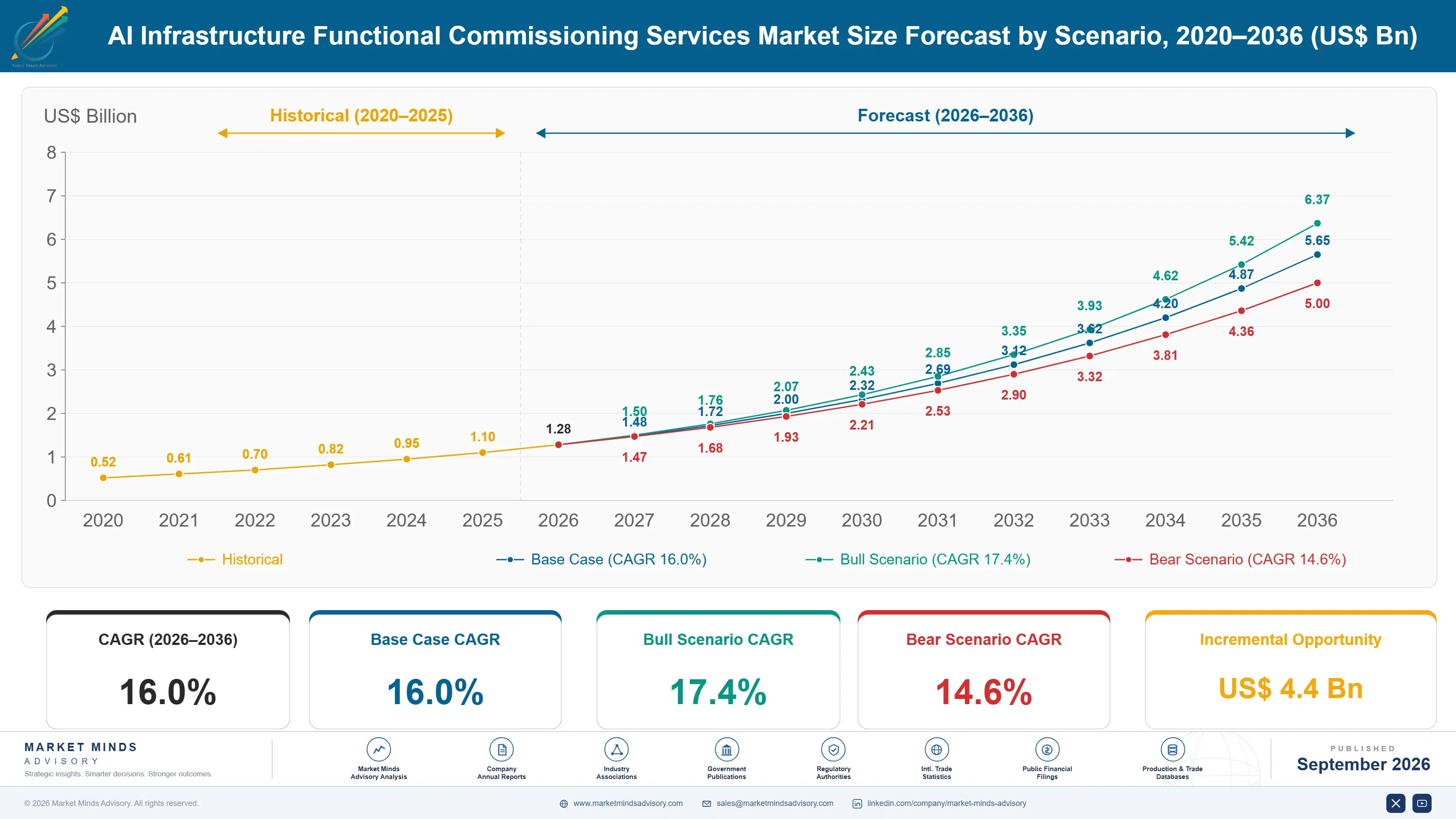
AI Infrastructure Functional Commissioning Services Market Forecast Scenarios

ai-infrastructure-functional-commissioning-service-size-forecast-scenario-1788414332291
Between 2020 and 2025 the market compounded at 14.6%, and the composition changed entirely inside that figure. Early growth came from conventional hyperscale halls where commissioning was a well-understood sequence performed in the final weeks of a project. From 2023 the work changed character as accelerator density rose, liquid cooling appeared and load profiles stopped resembling anything the existing test procedures had been written for.
The 16.0% base case rests on three commercial mechanisms. Committed AI capacity under construction is substantial and largely funded, so the pipeline is visible rather than speculative for several years ahead. Commissioning scope per megawatt has expanded because liquid cooling adds fluid chemistry, leak detection and rack interlock testing that air-cooled halls never required. And operators retaining the commissioning authority directly, rather than through the contractor, has raised both scope and billed rates.
The bull case is grid connection timelines improving in the markets where projects are queued rather than cancelled, which would release construction faster than commissioning capacity can currently absorb. The bear case is a pause in AI capital spending, which would strand firms that hired aggressively into a pipeline everyone assumed was permanent. Neither case is remote.

Why Old Test Scripts Fail On Training Halls

Commissioning proves a facility does what the design promised, and the proof is only as good as the load tested against. Colocation halls were tested against steady load banks because tenant load arrives slowly. An AI cluster does the opposite: thousands of accelerators start and stop together, producing step changes near 0.8 megawatts per second that uninterruptible supplies, generators and chillers were never proven against.
TOP FIVE CONCENTRATION34%Share of measured billed hours held by leading providers
COMMISSIONING COST SHARE1.9%Share of total facility capital cost spent on commissioning
INTEGRATED TEST DURATION9 weeksElapsed weeks for integrated systems testing per hall
LOAD STEP RATE0.8 MW/sRate a training cluster changes electrical load during jobs
AUTHORITY COVERAGE1 per 40 MWQualified authorities available against the capacity under construction now
DAY RATE INFLATION34%Increase in billed day rates over recent years
Liquid cooling changed the mechanical scope beyond recognition. Coolant distribution units, secondary fluid loops, dielectric or water chemistry, leak detection and rack-level interlocks all have to be validated together, and a fault in any of them can destroy hardware worth more than the building. Integrated systems testing has stretched to around nine weeks, which moved commissioning from the final fortnight of a project onto the critical path months earlier.
The constraint is not demand and never has been. A commissioning authority who can run a liquid-cooled integrated test needs electrical, mechanical, controls and fluid systems competence simultaneously, and there are roughly enough qualified people for one authority per 40 megawatts under construction. Day rates have risen about 34%, firms decline work routinely, and the scarce resource is a person rather than an instrument.
"The uncomfortable truth is that a good deal of AI capacity has been energised on test evidence that would not survive scrutiny, because the schedule would not wait. The failures showing up now in year-two operation are almost all traceable to integrated tests that were shortened."
Director, Critical Facilities and Commissioning Practice · MMA Technology and Digital Infrastructure Practice · September 2026

Market Trends

Transient Load Testing Replaces Steady State Scripts

Traditional commissioning applied load banks in fixed steps and held them, because a colocation tenant's load arrives gradually and behaves predictably. Training clusters synchronise thousands of accelerators, so power draw moves at around 0.8 megawatts per second in both directions when a job starts or checkpoints. Uninterruptible supplies, generator governors, chiller staging and switchgear all behave differently under that ramp, and several failure modes only appear on the falling edge. Firms have had to build programmable load bank profiles that reproduce job behaviour rather than hold steady load, and the equipment fleet is now a constraint alongside the people.
Market Impact: Covers 3 years of pipeline
Liquid Cooling Adds An Entirely New Test Discipline

Direct-to-chip and immersion cooling introduce coolant distribution units, secondary fluid loops, fluid chemistry, filtration, leak detection and rack interlocks that air-cooled facilities simply never contained. Each has to be validated individually and then together, because a leak detection failure during operation can destroy accelerator hardware worth more than the hall around it. Commissioning firms have had to acquire fluid systems competence that sits outside the traditional electrical and mechanical disciplines entirely. This segment grows at 22.4% and is where the skills shortage bites hardest, since almost nobody trained for it before 2023.
Market Impact: Protects assets worth 5 times

Market Opportunities and Growth Drivers

Committed AI Capacity Gives Unusual Pipeline Visibility

Announced and funded AI training capacity runs to many gigawatts across the next several years, and unlike speculative colocation the projects are backed by operators who already hold the accelerator allocation and the power interconnection. That produces a construction pipeline visible years ahead, which is rare in any construction-linked service. Commissioning firms can therefore hire and train against known demand rather than against hope. The risk sits in concentration: a handful of operators account for most of it, so a single capital decision moves the whole market. Concentration is the real risk here.
Market Impact: Supports 1 authority per 40 MW

Hardware Value Justifies Testing Nobody Previously Funded

A populated accelerator rack can cost more than the electrical infrastructure feeding it, which inverts the traditional relationship between building and contents completely. Operators will therefore fund test scope that a colocation developer would have refused on cost, including extended integrated testing, failure mode simulation and repeat validation after any change. Commissioning at roughly 1.9% of facility capital cost looks expensive against construction convention and trivial against the hardware it protects. That arithmetic is why scope keeps expanding rather than being value-engineered away. Nobody value-engineers a test that protects the racks.
Market Impact: Compresses 9 weeks routinely

Market Restraints and Challenges

Qualified Authorities Are The Binding Constraint

There are roughly enough experienced commissioning authorities for one per 40 megawatts under construction, and a liquid-cooled hall needs someone competent across electrical, mechanical, controls and fluid systems at the same time. The root cause is that this competence takes eight to ten years to build and the industry stopped recruiting into it during the years when data centre construction was flat. Commercial impact is firms declining work and day rates rising around 34%. Mitigation runs through structured apprenticeship, remote witness testing that lets one authority cover several sites, and detailed procedure libraries that let less experienced staff execute reliably.
Market Impact: Ramps 0.8 megawatts per second

Schedule Pressure Compresses The Testing That Matters

Commissioning sits at the end of a construction programme, so every delay upstream lands on the test window, and integrated testing is the first thing shortened when an operator wants capacity energised. The root cause is that commissioning is scheduled as a duration rather than protected as a gate. Commercial impact appears eighteen months later as operational failures traceable to tests that were curtailed. Participants are mitigating by contracting integrated testing as a defined milestone with the owner rather than the contractor, by starting factory witness testing far earlier, and by writing energisation criteria into the construction contract itself.
Market Impact: Adds 4 new test disciplines
4 additional market trends, 3 additional growth drivers, and 2 additional restraints and challenges are covered in the full report. Contact sales@marketmindsadvisory.com to access the complete intelligence.

Segment CAGR and Growth Architecture

Segmentation follows the commissioning discipline performed, which is how the work is scoped, priced and staffed, and which maps onto the standard verification levels the industry already uses. Review, factory witness, electrical functional, mechanical functional, integrated systems and fluid validation each demand different competence and carry very different growth. Growth differs sharply between them.
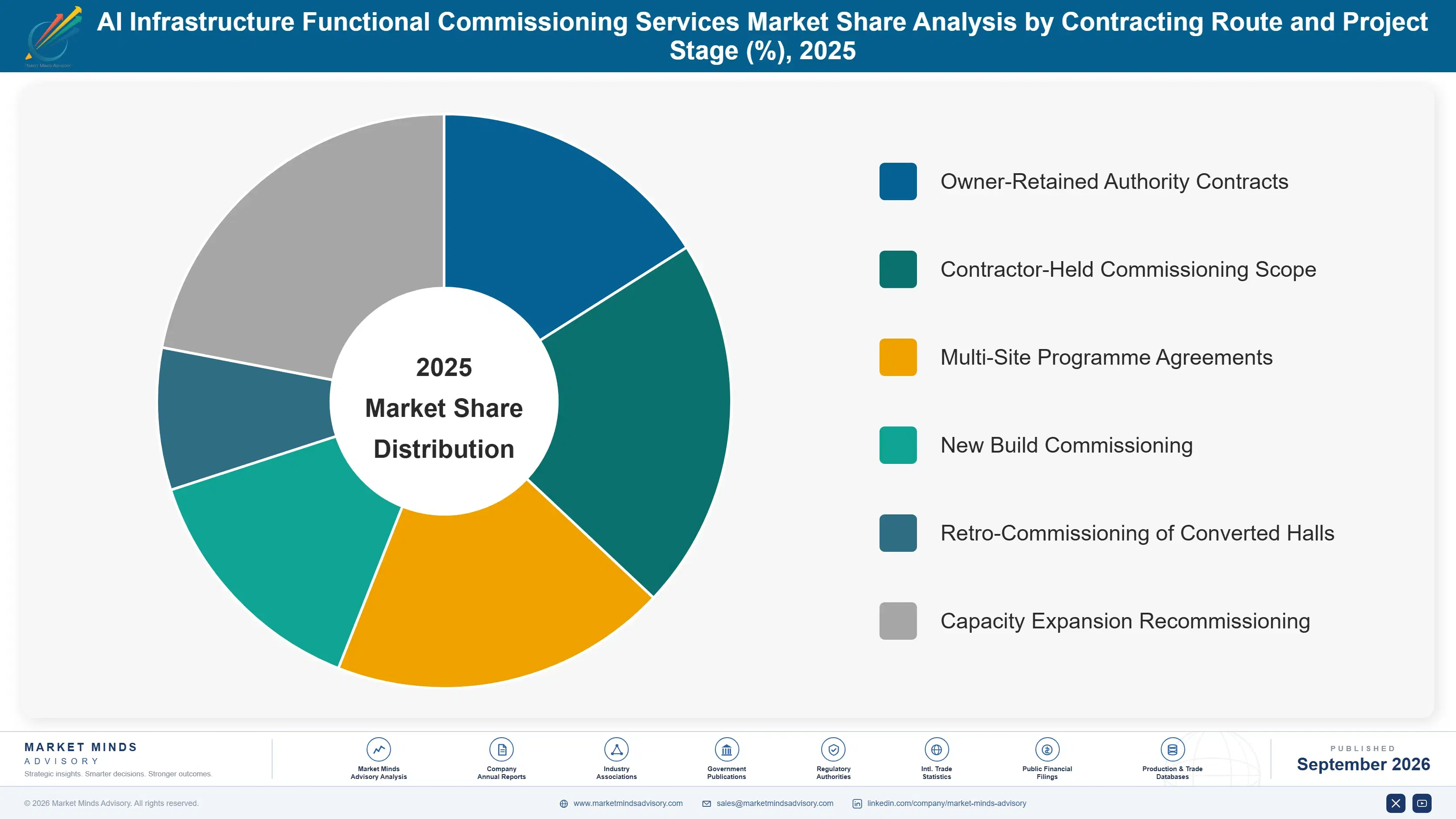
ai-infrastructure-functional-commissioning-service-market-share-analysis-1788414332824

Integrated Systems Testing

Integrated systems testing proves that electrical, mechanical, cooling and control systems behave correctly together under fault and transient conditions, which is precisely where AI halls fail and conventional halls did not. Duration has roughly doubled to around nine weeks because the failure combinations multiplied: a generator transfer during a coolant pump fault while accelerators drop load is a scenario nobody previously scripted. Growth at 24.0% is half again the market rate of 16.0%. It is also the hardest work to staff, requiring an authority who genuinely understands all four disciplines rather than coordinating four specialists who each understand one. Coordinating four specialists who each understand one discipline is not the same thing at all.
CAGR 24.0%

Liquid Cooling Fluid and Leak Validation

Fluid validation covers coolant chemistry, filtration, flow balancing, pressure testing, leak detection response and rack-level interlock behaviour, none of which existed as a commissioning discipline before direct-to-chip cooling arrived at scale. The consequence of getting it wrong is immediate hardware destruction rather than a service interruption, which is why operators fund it generously. Growth at 22.4% reflects liquid cooling becoming standard rather than exceptional on new construction. Skills here are the scarcest in the market, since the discipline sits between mechanical engineering and process chemistry and very few commissioning professionals trained in either before 2023. Recruiting from process industries rather than building services is the route that actually works. Very few trained for either discipline.
CAGR 22.4%
Full segment breakdown across 6 segments available in the complete report.

Regional Architecture and Country Demand Map

Demand follows where AI training capacity is actually being constructed, which depends on power availability, accelerator allocation and grid connection rather than on economic size. North America dominates because that is where committed capacity and interconnection both sit. Economic size explains nothing here. Capital follows the power.

North America

The overwhelming majority of committed AI training capacity is being built in the United States, where operators hold the accelerator allocation, the power interconnection and the capital, so North America at 42% sits far above the 32% ceiling of the standard band and the concentration is genuine rather than an artefact of how the market is measured. Texas, Virginia, Arizona and the Ohio valley carry most construction. Commissioning capability is deepest here and still inadequate against the megawatts in progress. Owner-retained commissioning contracts became standard practice here first and are now spreading outward from these projects. Authority scarcity here sets the ceiling on how fast committed capacity can actually be energised, which is a constraint no amount of capital resolves.
Share: 42% | CAGR: 15.4% (2026 to 2036)

South Asia and Pacific

Johor in Malaysia has become one of the fastest growing AI clusters anywhere, absorbing capacity that Singapore's power constraints pushed across the border, and Malaysia grows at 24.8% as a result; the region at 18% sits above the standard band ceiling of 12% for that reason. Indian construction is accelerating on sovereign and hyperscaler programmes alike. Japanese and Australian projects add smaller but technically demanding volumes. Local commissioning capability is thin against the pipeline, so firms fly authorities in at considerable cost while attempting to build regional teams behind them. Regional teams are being built behind the imported expertise, but the competence takes years to develop and the pipeline will not wait for it.
Share: 18% | CAGR: 18.4% (2026 to 2036)
Regional intelligence for 5 additional markets available in the complete report: East Asia, Western Europe, Middle East and Africa, Latin America, Eastern Europe. Contact sales@marketmindsadvisory.com.
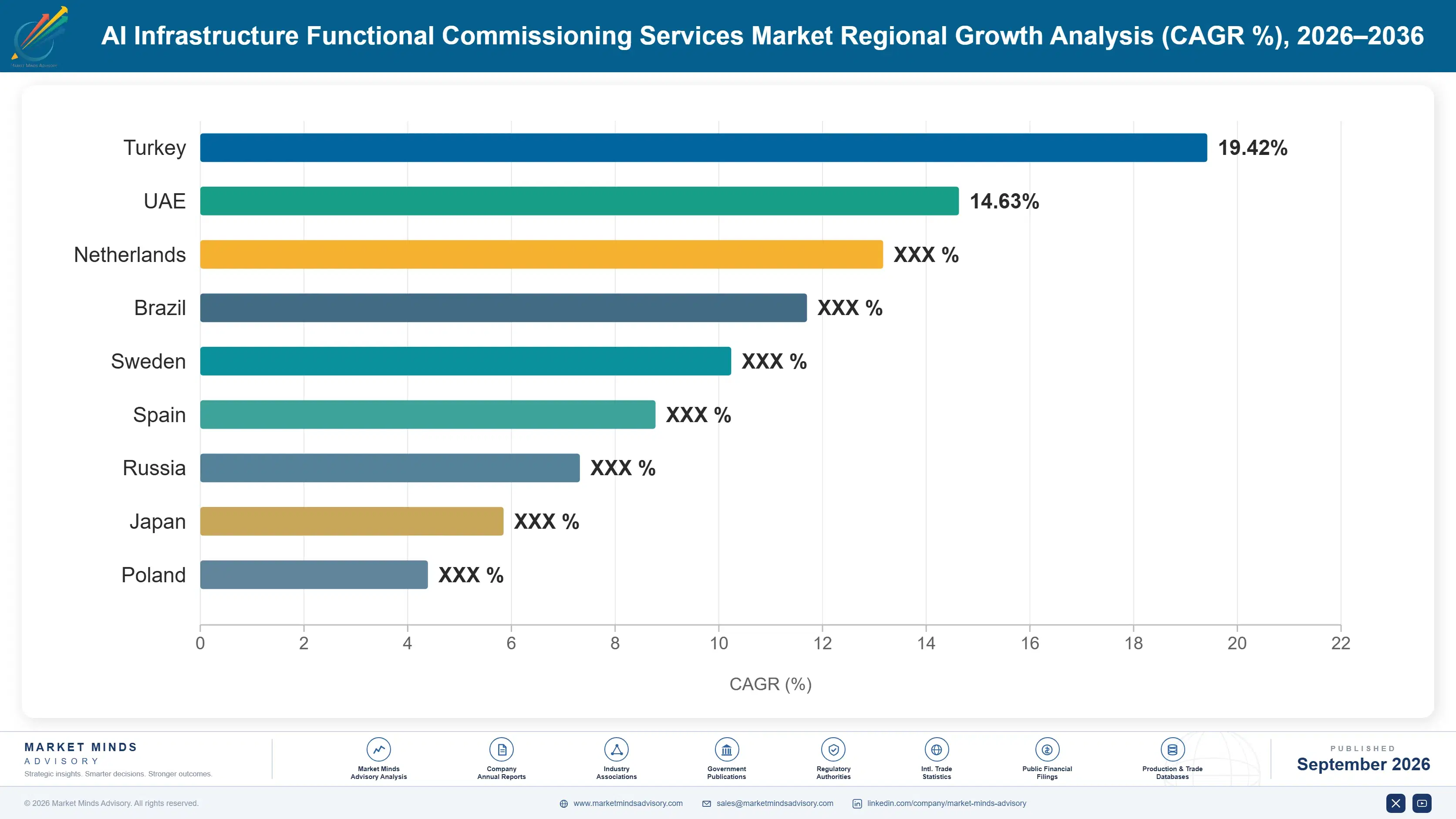
ai-infrastructure-functional-commissioning-service-country-cagr-analysis-1788414333352

Where Commissioning Margin Actually Sits

Four positions carry margin in a service constrained by people rather than by demand. Each depends on capability built years before the work arrives, because a commissioning authority cannot be recruited against a project that starts next quarter and the qualified population is not growing quickly. Hiring is not a route out of this.

Contract Directly With Owners Not Contractors

An owner-retained commissioning authority reports to the party whose accelerator hardware is at risk rather than to the party building the facility, which raises scope, protects independence and gives the firm standing to stop energisation. Billed rates under owner contracts run materially above contractor-held work, and day rates across the market have already risen around 34%. The shift began with the largest American operators and is spreading outward. Firms still selling through general contractors are competing on price for narrower scope and cannot escape that position from inside it. Independence is the product.
Market Impact: Supports the full 34% rate increase already achieved

Build Fluid Systems Competence Before Competitors

Liquid cooling validation grows at 22.4% and sits between mechanical engineering and process chemistry, which means almost nobody in commissioning trained for it before 2023. A firm that has genuinely built the competence can bid work that others must decline, and the discipline is not learnable inside a project timeline. The scarcity is severe enough that capability rather than price decides these awards. Recruiting from process industries rather than from building services is the route most firms have not yet seriously attempted. Recruiting from process industries rather than from building services is the route most firms have not tried.
Market Impact: Bids the 22.4% growth segment competitors must decline

Own Programmable Transient Load Bank Capability

Proving a hall against training cluster behaviour requires load banks programmed to step at around 0.8 megawatts per second in both directions, not the fixed-step equipment most rental fleets hold. Firms that developed their own profiles and secured equipment can test what others physically cannot, and the rental fleet has become a constraint alongside the people. It is a capital commitment against an assumption that transient testing becomes standard, which the evidence increasingly supports. Very few firms have made it yet. The evidence from year-two operational failures supports the assumption strongly.
Market Impact: Tests the 0.8 megawatt per second load steps

Industrialise Procedures To Extend Scarce Authorities

With roughly one qualified authority per 40 megawatts under construction, the firms that grow are those that let one authority cover more work rather than those that try to hire faster than the market allows. Detailed procedure libraries, remote witness testing and structured apprenticeship all extend scarce capacity. This is unglamorous internal investment that produces no visible differentiation and decides which firms can actually accept the work in front of them. Most firms are still staffing project-by-project against a shortage they describe as temporary. It produces no visible differentiation and decides everything.
Market Impact: Extends 1 authority across a full 40 MW

Who Controls the Margin Pool

Measured on billed service hours, the basis used throughout this section, the top five hold 34%. That is fragmented, as professional services markets usually are, but concentration is rising because the technical requirements now exclude firms that could bid conventional data centre work comfortably. The gap between leaders and the rest is qualified authority headcount and liquid cooling competence rather than any methodology difference.
Competition runs on availability, demonstrated liquid cooling experience and willingness to contract directly with owners rather than on price, which almost no operator optimises when accelerator hardware is waiting. Large engineering firms compete on balance sheet and geographic reach. Specialist commissioning practices compete on depth and on authorities the market knows by name. Regional providers hold conventional work and are largely excluded from AI halls.

Pressure comes from two directions. Operators building internal commissioning teams reduce the addressable scope for external firms on their largest programmes, which several are actively doing. And the qualified population is growing far more slowly than construction, which caps how fast any firm can grow regardless of demand. Rankings shift where firms industrialised procedures and recruited fluid competence rather than bidding aggressively for work they cannot staff.
ai-infrastructure-functional-commissioning-service-company-positioning-matrix-1788414333877

Competitive Moat and Risk Dimensions

LEGENCE

Moat: Deepest mission critical commissioning bench

A large concentration of experienced data centre commissioning authorities gives the firm capacity to accept work competitors must decline, which matters far more than price in a market constrained by people. Long relationships with the largest American operators support the owner-retained contracting model directly. Accumulated procedure libraries let less experienced staff execute reliably under an authority's supervision.
LEGENCE

Risk: Concentration in American operators

Revenue depends heavily on a small number of very large American operators whose capital decisions move together, so a pause in AI spending would arrive across the whole client base at once. International expansion requires building authority headcount in regions where the competence does not exist locally. Operators building internal commissioning teams reduce addressable scope on exactly the largest programmes.
JACOBS

Moat: Global delivery and technical breadth

Engineering capability across process, mechanical and electrical disciplines gives access to fluid systems competence that pure building services firms lack, which matters as liquid cooling validation becomes the scarce skill. Global delivery lets the firm staff projects in Malaysia, the Gulf and Europe where local capability is thin. Balance sheet strength supports the professional indemnity exposure that owner-retained commissioning carries.
JACOBS

Risk: Commissioning within larger portfolio

Commissioning is a small line within a very large engineering business, which means it competes internally for the senior technical people who make it valuable and rarely wins that argument. Specialist practices staffed entirely by commissioning authorities can move faster on individual opportunities. Conflicts arise where the firm also holds design or programme management scope on the same facility.

Players Tracked

Prominent Players

Legence
Jacobs
Bureau Veritas
Burns and McDonnell
Commissioning Agents Inc

Other Key Players

AECOM
Stantec
WSP
Arup
Ramboll
DNV
SGS
TUV SUD
Turner and Townsend
Salute Mission Critical
Environmental Systems Design
Syska Hennessy Group
Kirby Group Engineering
Mercury Engineering
Dornan Engineering

Recent Developments

JUNE 2025

Hyperscale operator retains commissioning authority independently of contractor

A large operator appointed its commissioning authority directly rather than through the general contractor across a multi-site programme, an appointment decision rather than any acquisition or joint venture. Independence from the party building the facility and authority to withhold energisation were both cited as the reasoning.
Signal: When the verifier reports to the owner rather than the builder, scope and rates both rise substantially.
FEBRUARY 2025

Commissioning firm expands liquid cooling test capability

A commissioning services provider announced expanded fluid systems testing capability including coolant chemistry and leak detection validation, an organic capability expansion rather than any acquisition. Recruitment from process industries rather than from building services was described as the route taken to staff it. Existing authorities were paired with them.
Signal: The scarce competence is now being recruited from process engineering, because building services never taught it.
OCTOBER 2024

Industry body publishes liquid cooling commissioning guidance

A recognised technical body issued guidance covering commissioning procedures for direct-to-chip and immersion cooling systems, addressing fluid chemistry, leak detection response and interlock verification. The publication filled a gap that had left firms writing individual procedures without any common reference. Owners began citing it in scope documents almost immediately afterwards.
Signal: Published guidance converts scattered private practice into an auditable standard that owners can then insist upon.

Skilled Labour And Test Equipment

Direct labour accounts for roughly 68% of delivered cost, load bank and instrumentation rental around 12%, travel and site accommodation near 9%, and professional indemnity insurance and overhead the balance. The labour is not general engineering labour: it is a small population of commissioning authorities whose supply United States Bureau of Labor Statistics occupational data shows growing far more slowly than construction activity requires.
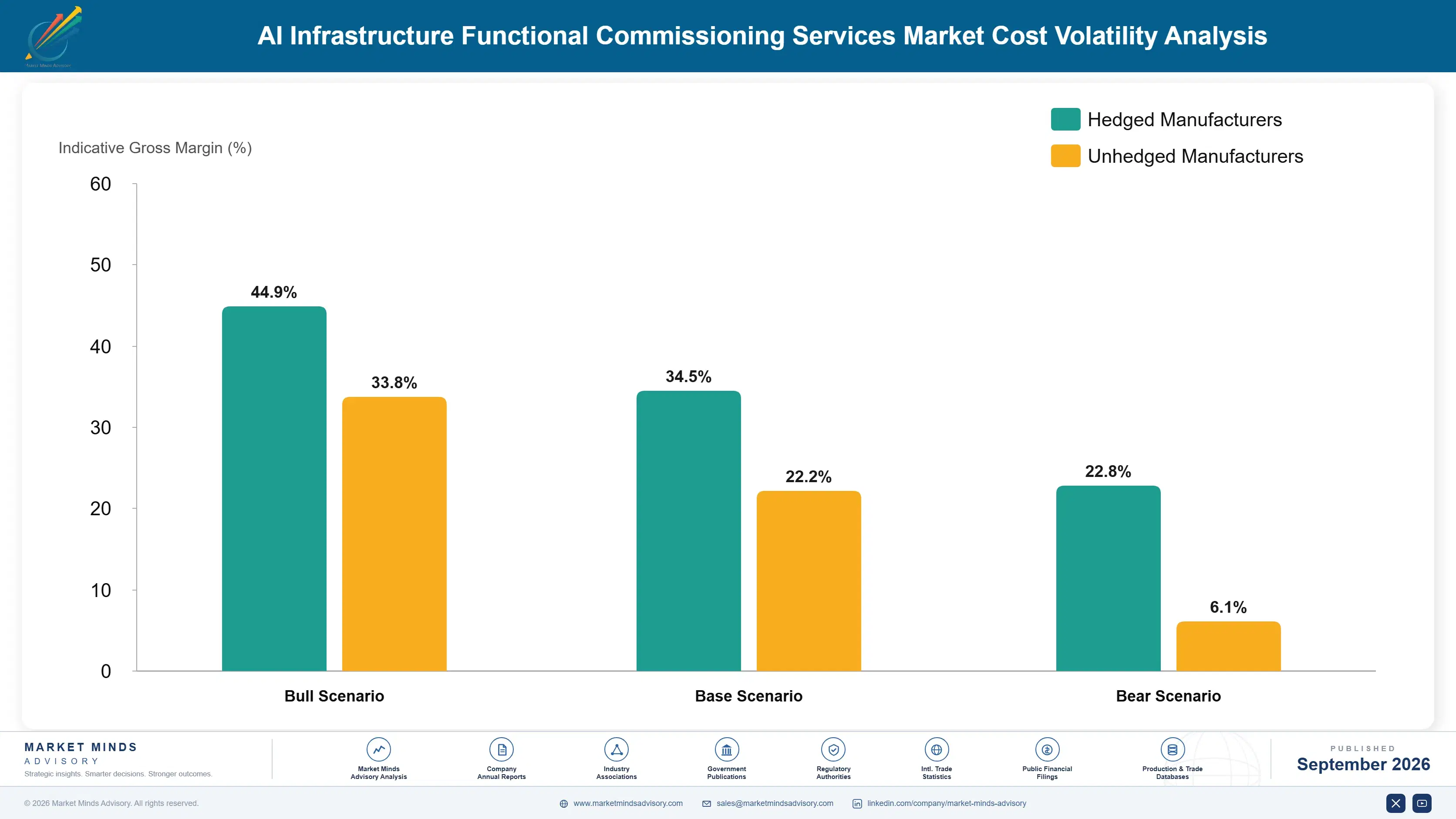
Day rates for experienced commissioning authorities rose approximately 34% across recent years as data centre construction outran the qualified population, and firms disclosed margin pressure where fixed-price contracts had been signed before that movement. Load bank rental tightened alongside it, with programmable transient capable equipment particularly scarce. Travel and accommodation costs in constrained construction markets compounded both effects considerably. Firms without owned equipment competed poorly on availability.

The disadvantage mechanism is contract structure combined with bench depth. A firm with fixed-price scope signed a year ahead absorbs rate inflation entirely, while one working on time and materials passes it through. A firm with a deep bench spreads senior people across more work using procedure libraries; one staffing project by project pays spot rates. The two diverge sharply when the market is tight, as it is.
ai-infrastructure-functional-commissioning-service-cost-volatility-analysis-1788414334071

Time and materials contracting on long programmes

Shifting long-duration commissioning programmes onto time and materials rather than fixed price moves rate inflation to the owner, who is generally better able to absorb it than a services firm with no hedge. Owners accept it more readily when they hold the contract directly, because they can see the constraint in their own recruitment attempts.

Procedure libraries extending senior authority coverage

Detailed written procedures let less experienced engineers execute testing reliably under an authority's supervision rather than requiring the authority present throughout. That extends the scarcest resource across considerably more work, and it is the single most effective response available to a firm that cannot hire its way out of the shortage. Nothing else works at this scale.

Remote witness testing to reduce travel exposure

Instrumented remote witnessing lets an authority observe and sign off factory and site testing without travelling, cutting both cost and the calendar time lost to movement between sites. Owners were initially resistant and have largely accepted it, particularly for factory witness testing where the alternative is weeks of international travel. Factory witnessing benefits most.

Portfolio Architecture for Margin Defence

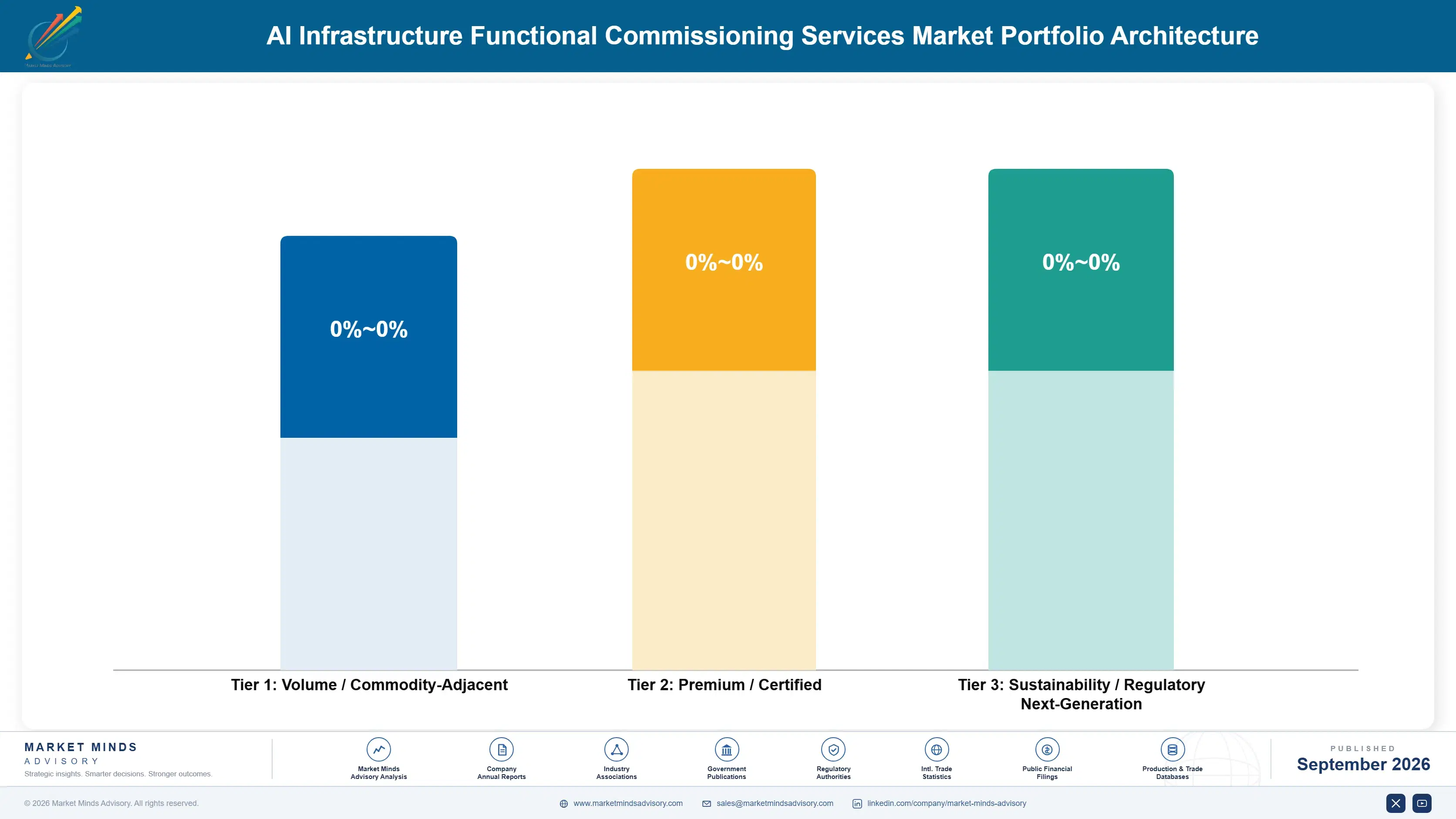
Margin separates by whether the firm can staff work others cannot. Conventional electrical and mechanical functional testing is performed adequately by many providers and priced accordingly, with the outcome decided by utilisation and travel efficiency. Integrated systems testing on a liquid-cooled hall can be delivered by very few firms, and the price reflects scarcity rather than effort, because the alternative for the owner is not a cheaper provider but a delayed energisation.
The volume against premium tension runs through the authority bench rather than through product mix. Routine functional testing keeps junior engineers employed, develops the people who eventually become authorities and maintains client relationships through which the valuable work arrives. But every senior authority assigned to routine work is unavailable for integrated testing at several times the rate. Deployment discipline decides profitability far more than pricing does.

High-value pools sit where competence rather than availability is the barrier: integrated systems testing, liquid cooling validation and owner-retained programme authority roles. Each requires people who take the better part of a decade to develop, which is what makes the position defensible. The pools are small in billed hours and carry a disproportionate share of the industry's profit.

Volume / Commodity-Adjacent

Design review, submittal review and routine electrical or mechanical functional testing performed under contractor-held contracts. Many providers can deliver it, and returns depend on engineer utilisation and travel efficiency rather than on any scarce competence.
Gross Margin: 18 to 25%

Premium / Certified

Factory witness testing and transient load functional testing requiring programmable equipment and experienced authorities. The 8 point range reflects whether the firm owns its test equipment and whether the contract runs on time and materials or fixed price.
Gross Margin: 28 to 36%

Sustainability / Regulatory / Next-Generation

Integrated systems testing, liquid cooling fluid validation and owner-retained programme authority roles. The 12 point range reflects how completely scarcity rather than effort sets pricing on work that very few firms can staff at all.
Gross Margin: 36 to 48%
ai-infrastructure-functional-commissioning-service-portfolio-architecture-1788414334570

High-value Sub-segments and Strategic Watch-out

Owner-Retained Programme Authority

Highest value position available, reporting to the owner rather than the contractor with authority to withhold energisation and scope set by the party whose hardware is at risk. Rates run materially above contractor-held equivalents everywhere. Scope is set by the party whose hardware is actually at risk.
Gross Margin: 38 to 48%

Liquid Cooling Fluid Validation

Growing at 22.4% with a competence base that barely existed before 2023 and cannot be learned inside a project timeline. Recruiting from process industries rather than building services is the route almost nobody has taken seriously yet. Capability rather than price decides these awards outright.
Gross Margin: 34 to 44%

Routine Functional Performance Testing

The volume core that keeps junior engineers employed and develops the authorities of the next decade, which is the only genuine reason to hold it. Necessary for the talent pipeline rather than attractive on its own returns. Deployment discipline decides whether it costs the firm money.
Gross Margin: 18 to 25%

Contractor-Held Commissioning Scope

Priced competitively against other providers by a party with no exposure to the hardware being protected, and narrowing as owners move to retaining authorities directly. Revenue continues but the position is being closed by the clients themselves. The clients themselves are closing this position quite deliberately.
Gross Margin: 15 to 22%

How Commissioning Work Is Awarded

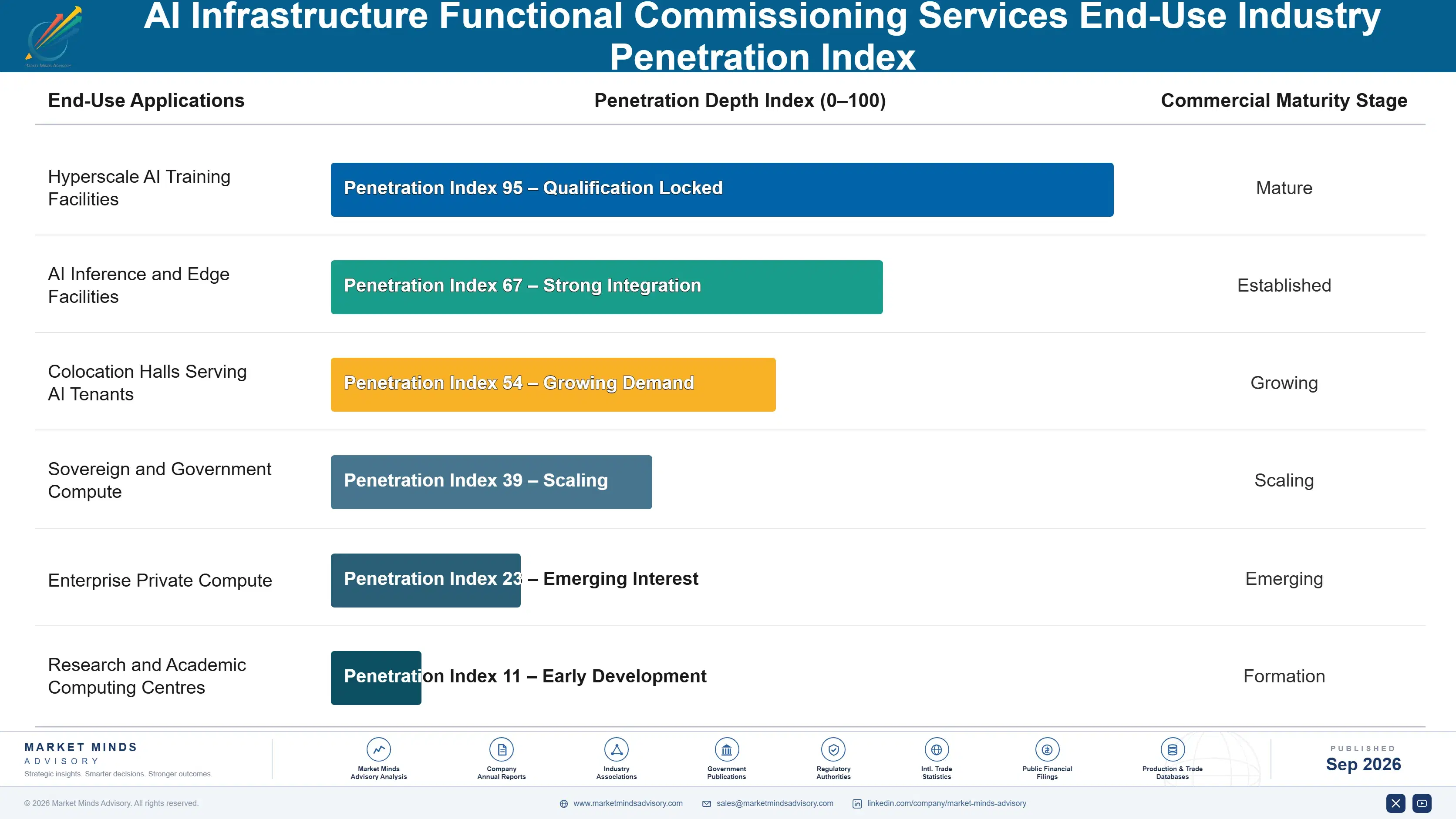
Annuity economics come from the multi-site programme agreement not from recurring need, since a facility is commissioned once. An operator building many halls to a repeating design appoints an authority across the programme, and that firm then commissions each site without rebidding. Those agreements renew on demonstrated schedule performance rather than on price, and they separate firms with predictable revenue from those chasing projects.
Adoption depth varies sharply by operator type. The largest AI operators specify deeply, define energisation criteria contractually and increasingly retain the authority themselves, and switching mid-programme is genuinely disruptive for them. Colocation developers building for AI tenants buy narrower scope through the general contractor. Enterprise and sovereign buyers frequently rely on the commissioning firm to define its own scope, which is uncomfortable but common.

The buyer profile has changed decisively. Commissioning was procured by construction managers treating it as a schedule item to be compressed. It now sits with operations and reliability leaders inside the operator, who have seen year-two failures traceable to curtailed testing and who own the consequence. That shift is why scope has expanded rather than been value-engineered away, and it favours firms that can articulate risk rather than hours.
ai-infrastructure-functional-commissioning-service-end-use-penetration-index-1788414335058

Where Firms Should Compete

These are among the four positions where our research anticipates prominent divergence between winners and laggards over the coming forecast period. Each is grounded in the demand model, the regulatory perimeter, and the announced capacity pipeline.
01 / OWNER CONTRACT POSITIONING

Report to the owner, never to the builder

An owner-retained authority reports to the party whose accelerator hardware is at risk rather than to the party constructing the facility, which raises scope, protects genuine independence and confers standing to withhold energisation when the test evidence is inadequate. Billed rates under owner contracts run materially above contractor-held work, and market day rates have already risen by around 34%. A firm selling through general contractors is competing on price for narrower scope and cannot escape that position from inside it at all.
02 / FLUID COMPETENCE RECRUITING

Hire process engineers, not more building services staff

Liquid cooling validation grows at 22.4% and sits between mechanical engineering and process chemistry, so almost nobody in commissioning trained for it before liquid cooling arrived at scale across new construction in 2023. The competence cannot be acquired inside a project timeline, which means capability rather than price decides these awards outright, before pricing is ever discussed. Recruiting from process industries rather than from building services is the obvious route and remarkably few firms in this industry have seriously attempted it yet.
03 / AUTHORITY COVERAGE SYSTEMS

Extend scarce authorities instead of trying to hire

With only around one qualified authority per 40 megawatts under construction, the firms that grow are those letting one authority cover more work rather than those attempting to hire faster than the qualified population is actually expanding. Procedure libraries, remote witness testing and structured apprenticeship all achieve that, and none of them produces any visible differentiation to any client at all. Most firms here are still staffing project by project against a shortage they insist on describing as a temporary condition.
04 / TRANSIENT TESTING INVESTMENT

Buy load banks that reproduce actual job behaviour

Training clusters move electrical load at around 0.8 megawatts per second in both directions, and most rental load bank fleets step in fixed increments that prove nothing about how the plant actually responds to a real job. Firms that developed transient profiles and secured capable equipment can test what most competitors physically cannot do at all. It is a capital commitment against the assumption that transient testing becomes standard, and the operational failure evidence increasingly supports exactly that conclusion already.

Engagement Snapshot From the Field

A live engagement with an industry participant carrying material or product regulatory and market exposure ahead of a defining policy shift, showing how our research translates into a defensible multi-year portfolio strategy.
MARKET MINDS ADVISORY · CLIENT ENGAGEMENT SUMMARY
AI Infrastructure Functional Commissioning Services Producer Strategic Portfolio Review and Transition Roadmap 2026·Investment Scenario on AI Infrastructure Functional Commissioning Services Exposure Evaluation 2025-26
CLIENT PROFILE
A commissioning services firm operating across North America with annual revenue reported at approximately USD 145 million (client-reported, unverified by MMA). The business had grown on conventional data centre and healthcare commissioning work, held contracts predominantly through general contractors, and had built no fluid systems capability of its own anywhere in the organisation at all.
STRATEGIC CHALLENGE
The firm was losing AI hall work it believed it was technically capable of performing, and could not identify why from the feedback it received. Utilisation was high but margin was flat despite market day rates rising sharply. A proposal to hire aggressively into the shortage had been rejected twice on the grounds that qualified people simply were not available.
MMA APPROACH
MMA interviewed operators and general contractors across nine AI programmes on how commissioning authorities were actually selected, benchmarked the client's authority bench depth and utilisation against competitors winning the work, and modelled the margin difference between owner-retained and contractor-held contracts across comparable scope. Local labour market availability was assessed separately as well.
KEY FINDINGS
  1. Work was being lost at prequalification on liquid cooling validation capability rather than on price or availability, and the client never learned this because contractors reported it as a commercial decision.
  2. Owner-retained contracts carried roughly 11 percentage points more margin than contractor-held scope of comparable size, and the client held almost none of the former across its entire portfolio.
  3. Senior authorities were spending around 40% of their time on routine functional testing that supervised junior engineers could have executed against proper written procedures.
  4. Process industry engineers with fluid systems backgrounds were available in the client's labour markets at rates below what commissioning authorities commanded, and nobody was recruiting them.
CLIENT PROFILE
A commissioning services firm operating across North America with annual revenue reported at approximately USD 145 million (client-reported, unverified by MMA). The business had grown on conventional data centre and healthcare commissioning work, held contracts predominantly through general contractors, and had built no fluid systems capability of its own anywhere in the organisation at all.
STRATEGIC CHALLENGE
The firm was losing AI hall work it believed it was technically capable of performing, and could not identify why from the feedback it received. Utilisation was high but margin was flat despite market day rates rising sharply. A proposal to hire aggressively into the shortage had been rejected twice on the grounds that qualified people simply were not available.
MMA APPROACH
MMA interviewed operators and general contractors across nine AI programmes on how commissioning authorities were actually selected, benchmarked the client's authority bench depth and utilisation against competitors winning the work, and modelled the margin difference between owner-retained and contractor-held contracts across comparable scope. Local labour market availability was assessed separately as well.
KEY FINDINGS
  1. Work was being lost at prequalification on liquid cooling validation capability rather than on price or availability, and the client never learned this because contractors reported it as a commercial decision.
  2. Owner-retained contracts carried roughly 11 percentage points more margin than contractor-held scope of comparable size, and the client held almost none of the former across its entire portfolio.
  3. Senior authorities were spending around 40% of their time on routine functional testing that supervised junior engineers could have executed against proper written procedures.
  4. Process industry engineers with fluid systems backgrounds were available in the client's labour markets at rates below what commissioning authorities commanded, and nobody was recruiting them.
RECOMMENDED STRATEGY
Phase 1: Phase one: build written procedure libraries so junior engineers execute routine functional testing under supervision rather than consuming senior authority time. Phase 2: Phase two: recruit fluid systems engineers from process industries and pair them with existing authorities to build liquid cooling validation capability deliberately. Phase 3: Phase three: pursue owner-retained contracts directly with two named operators rather than continuing to bid exclusively through the general contractors.
OUTCOME
Within fourteen months the client had released substantial senior authority time through procedure libraries, recruited a fluid systems team, and reported blended gross margin up 6.8 percentage points (client-reported, unverified by MMA). A first owner-retained programme agreement was signed, and further discussions with a second operator continue.

Frequently Asked Questions

Foundational context covering the market sizes, CAGR, scope, country, region and competition that inform every finding below. This section is provided to cover basics and most often pre-purchase conversations, answered from the MMA Primary Research Dataset.

What is the current size of the AI Infrastructure Functional Commissioning Services Market?

The market was valued at USD 1.1 billion in 2025 and reaches USD 1.28 billion in 2026. Growth follows committed AI training capacity rather than general data centre construction.

How large will the AI Infrastructure Functional Commissioning Services Market be by 2036?

MMA forecasts USD 5.65 billion by 2036, an increase of USD 4.37 billion over the 2026 base. That represents an expansion multiple of 4.41 times.

What is the CAGR for the AI Infrastructure Functional Commissioning Services Market 2026 to 2036?

The base case CAGR is 16.0%, with a bull case of 17.4% and a bear case of 14.6%. The historical rate between 2020 and 2025 was 14.6%.

Which segment is growing fastest?

Integrated systems testing grows at 24.0%, half again the market rate of 16.0%. It is where transient load and liquid cooling failure modes actually surface together.

Who are the major companies in the AI Infrastructure Functional Commissioning Services Market?

Legence, Jacobs, Bureau Veritas, Burns and McDonnell and Commissioning Agents Inc lead on measured billed hours. Together they account for roughly 34% of the market.

Which country is growing fastest?

Malaysia grows fastest at 24.8%, as the Johor cluster absorbs capacity that Singapore power constraints pushed across the border into available land and power supply.

Report Segmentation Architecture

The full report scope spans multiple orthogonal segmentation dimensions, with cross-tabulated demand data provided for each dimension pair. Coverage extends further to regional breakdowns, trend trajectories, and the competitive detail needed to support segment-level decision-making.

By Commissioning Discipline

  • Design and Submittal Review
  • Factory Witness Testing
  • Electrical Functional Performance Testing
  • Mechanical and Cooling Functional Testing
  • Integrated Systems Testing
  • Liquid Cooling Fluid and Leak Validation

By End-Use Industry

  • Hyperscale AI Training Facilities
  • AI Inference and Edge Facilities
  • Colocation Halls Serving AI Tenants
  • Sovereign and Government Compute
  • Enterprise Private Compute
  • Research and Academic Computing Centres

By Contracting Route and Project Stage

  • Owner-Retained Authority Contracts
  • Contractor-Held Commissioning Scope
  • Multi-Site Programme Agreements
  • New Build Commissioning
  • Retro-Commissioning of Converted Halls
  • Capacity Expansion Recommissioning

By Region

  • North America
  • South Asia and Pacific
  • East Asia
  • Western Europe
  • Middle East and Africa
  • Latin America
  • Eastern Europe

Scope, Methodology, and Coverage

Every figure in this report is reproducible from documented input assumptions. The scope below maps the historical period, the forecast horizon, the segmentation dimensions, and the countries covered, alongside the underlying primary and qualitative methodology.
Historical Period
2020 to 2025
Forecast Period
2026 to 2036
Base Year
2025 (USD billions; MMA Primary Research Dataset, September 2026)
Market Definition
The AI infrastructure functional commissioning services market covers independent verification and performance testing of electrical, mechanical, cooling and control systems in data centre facilities built for artificial intelligence training and inference workloads, spanning design and submittal review, factory witness testing, electrical and mechanical functional performance testing, integrated systems testing and liquid cooling fluid validation. Sizing is measured at service provider billed revenue. Design engineering, construction management, equipment supply, ongoing operations and information technology stack testing are excluded.
Quantitative Units
USD billions at service provider billed revenue, with supporting commissioned capacity in megawatts and billed authority hours by region
Segmentation Dimensions
Commissioning discipline, end-use industry, contracting route and project stage, region
Regions Covered
North America, South Asia and Pacific, East Asia, Western Europe, Middle East and Africa, Latin America, Eastern Europe
Countries Covered
United States, Canada, Mexico, Malaysia, Singapore, India, Japan, Australia, China, South Korea, Taiwan, Ireland, Netherlands, Germany, Sweden, Poland, Saudi Arabia, United Arab Emirates
Key Companies Profiled
Legence, Jacobs, Bureau Veritas, Burns and McDonnell, Commissioning Agents Inc, AECOM, Stantec, WSP, Arup, Ramboll, DNV, SGS, TUV SUD, Turner and Townsend, Salute Mission Critical, Environmental Systems Design, Syska Hennessy Group, Kirby Group Engineering, Mercury Engineering, Dornan Engineering
Quantitative Methodology
Primary survey, n=3,800 respondents, Q4 2025, six countries; demand-side model with trade association cross-validation
Qualitative Methodology
47 expert interviews, Q4 2025; applied to validate demand model assumptions, identify emerging dynamics, and assess competitive positioning
Report Format
PDF and XLSX data workbook (Word format preview document)
Publisher
Market Minds Advisory
Report Code
MMA-2026-TEC-601
Published
September 2026
Contact
sales@marketmindsadvisory.com | www.marketmindsadvisory.com

Purchase the full AI Infrastructure Functional Commissioning Services Market Report (2026 to 2036).

The full report sizes commissioning demand from committed AI capacity and commissioning scope per megawatt rather than from general construction spend, which is the sizing error that makes the scope expansion invisible. It covers six commissioning disciplines with individual growth rates, seven regions built from where capacity is actually under construction, and the qualified authority supply that caps how fast any firm can grow. Competitive analysis covers twenty providers on a consistent billed hour basis, with authority bench depth and liquid cooling competence treated as the decisive variables. Input cost modelling breaks out labour, test equipment and travel exposure by contract structure.
Six commissioning disciplines with individual growth rates
Commissioning scope per megawatt across facility types
Qualified authority supply mapped against construction pipeline
Owner-retained against contractor-held contract economics compared
Twenty providers on consistent billed hour basis
Labour and test equipment cost exposure modelling

Built For The People Who Decide

From boardroom strategy to bench-side execution, this report is read cover-to-cover by leaders shaping the next decade of their industry, turning demand scenarios, market dynamics and valuation benchmarks into decisions.
CXOs/ Presidents/ VPs/ Managers
M&A and Corporate Development
Strategy Teams and R&D Heads
Procurement and Product Directors
Regulatory and Compliance Leaders
Investor Relations and Equity Analysts