Market Minds Advisory
AI Grain Harvest S7 Combine Logistics Market

AI Grain Harvest S7 Combine Logistics Market: AI Grain Harvest S7 Combine Logistics Market. Trends and Forecast 2026 to 2036

Large-scale grain operations running fleets of high-capacity combines are adopting AI routing software that coordinates grain carts and trucks in real time, cutting the idle time that once quietly ate into harvest margins.

Lead Analyst

Published

September 2026

Make Smarter Decisions with Customized Research Insights

Request a free sample report and evaluate market opportunities, growth trends, and competitive dynamics relevant to your business needs.

2025 MARKET VALUE$0.4BMarket Size 2025
2036 FORECAST VALUE$1.9BBase Case , 2026 to 2036
CAGR 2026 TO 203616.0 %Bull 17.3% / Bear 14.7%
INCREMENTAL OPPORTUNITY$1.5BNet 10- year value creation
EXPANSION MULTIPLE4.41x2036 value over 2026 base
Strategic Levers
M&A Pipeline
Regional Outlook
Country Rankings
Competitive Intelligence
Segmental Deep-dive
Call-Us : 91 93563 13602

Executive Snapshot and Market Trajectory.

Large-scale grain operations running high-capacity combine fleets increasingly adopt AI-driven logistics coordination because narrow harvest windows and steadily rising labor costs make idle combine time during grain cart transfers an expense operations can no longer tolerate silently across their entire fleet, workforce, and budget.
AI grain cart and combine fleet routing software is expanding fastest as operations demand real-time coordination between harvesting and transport equipment across sprawling field boundaries and multiple simultaneous harvest zones, while yield mapping captures substantial current platform spending nationwide. North America and East Asia together account for most deployment activity, reflecting concentrated large-farm mechanization scale and precision agriculture technology adoption in both regions respectively, a pattern MMA expects to persist through the coming decade.
Competitive intensity remains high as established equipment manufacturers, dedicated agtech software vendors, and telematics providers all compete across overlapping platform functions, keeping differentiation focused on integration depth rather than price alone across most tracked deployments, fleet configurations, and operator budgets. Regulatory attention remains minimal currently, though data ownership questions around farm operational data collected by combine telematics systems are drawing increasing grower and industry association scrutiny nationwide.
Market Definition
The AI Grain Harvest S7 Combine Logistics Market covers software and telematics platforms coordinating combine harvester, grain cart, and transport truck operations during grain harvest using artificial intelligence routing and scheduling, measured by software and platform subscription revenue. It excludes the combine harvester hardware itself and general farm management software unrelated to real-time harvest logistics coordination.
Base Year Value
$0.4B in 2025 (MMA Primary Research Dataset, September 2026)
Forecast Period
2026 to 2036, eleven discrete annual values
CAGR
16.0% base case. Bull 17.3%. Bear 14.7%.
Fastest Growth Segment
AI Grain Cart and Combine Fleet Routing Software: 20.0% CAGR
Fastest Growth Country
Brazil: 19.0% CAGR
Fastest Growth Region
South Asia and Pacific: 18.0% CAGR
Largest Region
North America: 30% of 2025 global value
Market Leaders
Leading participants include Deere & Company, CNH Industrial, AGCO Corporation, Trimble Agriculture, and Climate LLC. Source: MMA Primary Research Dataset, July 2026.
Primary Survey
n=3,800 procurement and R&D decision-makers, Q4 2025, six countries
Methodology
Demand-side build-up, cross-validated against public data, 47 expert interviews

AI Grain Harvest S7 Combine Logistics Market Forecast Scenarios

ai-grain-harvest-s7-combine-logistics-market-size-forecast-scenario-1788427113581
Between 2020 and 2025, AI harvest logistics adoption grew from pilot deployments on the largest grain operations to a recognized precision agriculture category as combine telematics hardware became standard equipment across most new machine purchases. Historical growth ran near 14.5% annually through this period as adoption broadened considerably across most grain-producing regions and farm size categories.
The base case assumes continued large-farm consolidation, expanding telematics hardware penetration across combine fleets, and improving routing algorithm sophistication addressing multi-machine coordination complexity, sustaining growth near 16.0% annually through 2036. Software vendors increasingly bundle fleet routing with yield mapping and predictive maintenance into unified harvest management platforms, broadening addressable operator budgets beyond simple logistics coordination into comprehensive harvest operation optimization and decision support services covering an entire growing season and off-season planning cycle.
A bull scenario near 17.3% depends on faster telematics hardware penetration among mid-sized grain operations currently priced out of comprehensive fleet coordination platforms and their associated subscription costs. The bear case near 14.7% reflects the risk that persistent connectivity gaps across rural farming regions limit real-time coordination capability, slowing adoption until rural broadband and cellular infrastructure improves considerably across affected areas.

Solving the Full Hopper, Empty Truck Problem

AI harvest logistics platforms exist because grain cart and truck coordination remained largely manual for decades, relying on radio calls and driver intuition even as combine capacity grew far beyond what informal coordination could efficiently support across sprawling modern field operations and multi-machine harvest crews nationwide.
MARKET CONCENTRATION42% CR5Share held by the five largest tracked platform vendors
AVERAGE SUBSCRIPTION PRICE$8,500 per combine annuallyTypical yearly software cost per equipped harvest machine
TOP DEPLOYING COUNTRY28% United StatesShare of global platform deployment concentrated in this market
TELEMATICS PENETRATION RATE55% of large combinesShare of large-fleet combines equipped with connectivity hardware
IDLE TIME REDUCTION18 to 25% improvementTypical decrease in combine downtime after platform adoption
AVERAGE FLEET SIZE4 to 8 combinesTypical number of coordinated machines per large grain operation
Platform vendors compete on integration depth with existing equipment telematics systems rather than standalone functionality alone, since operations running mixed equipment fleets from multiple manufacturers value platforms that coordinate machines regardless of original equipment brand rather than locking operators into single-manufacturer platforms exclusively across their entire harvest operation and equipment inventory. This integration-first competitive dynamic favors platforms with broad equipment compatibility over manufacturer-specific solutions limiting coordination to a single brand's machines only.
Fleet routing sophistication is reshaping platform economics as vendors add predictive maintenance and yield mapping capability directly into coordination workflows, commanding meaningfully higher subscription fees than basic routing services lacking comparable analytical depth and predictive capability across the entire operation. Vendors increasingly position comprehensive harvest optimization as a hedge against commodity software pricing pressure facing persistent competition from equipment manufacturers bundling basic routing free with hardware purchases.
"A combine sitting full and waiting for a truck is the most expensive parked vehicle on the farm. This software exists to make sure that never happens twice."
Senior Analyst, Precision Agriculture and Farm Technology Practice · MMA Agriculture Practice · September 2026

Market Trends

Multi-Machine Coordination Replaces Radio-Based Fleet Management

Large grain operations running multiple combines simultaneously increasingly replace radio-based coordination with AI routing software that automatically directs grain carts and trucks based on real-time combine hopper capacity and field position rather than relying on operator radio calls prone to delay and miscommunication during peak harvest activity. This automated coordination approach meaningfully reduces the idle time combines spend waiting for available transport capacity, directly improving daily harvested acreage and overall fleet utilization during narrow weather-dependent harvest windows. Operations adopting automated routing report meaningfully improved daily harvest throughput compared to radio-coordinated fleets managing comparable machine counts this season.
Market Impact: Labor cost per acre fell 15%
Predictive Maintenance Analytics Reduce Unplanned Combine Downtime

Platform vendors increasingly integrate predictive maintenance analytics that monitor combine engine, header, and threshing system performance data to flag likely component failures before they cause unplanned downtime during critical harvest windows when repair delays carry outsized yield and quality risk. This predictive capability lets operations schedule preventive maintenance during natural harvest pauses rather than experiencing unexpected breakdowns requiring emergency repair calls that can idle expensive machinery for days during peak season. Operations using predictive maintenance report meaningfully reduced unplanned downtime incidents compared to fleets relying on traditional scheduled maintenance intervals alone this harvest season.
Market Impact: Daily harvested acreage grew roughly 18%

Market Opportunities and Growth Drivers

Rising Farm Labor Costs Justify Software Investment

Skilled combine and truck driver labor has become increasingly expensive and difficult to source during narrow harvest windows, pushing large grain operations to invest in AI coordination software that reduces the number of drivers needed to efficiently manage a given fleet size during peak harvest periods. This labor cost pressure justifies software subscription investment that would have been difficult to economically defend when driver labor remained comparatively abundant and affordable during previous harvest seasons across most grain-producing regions. Operations report meaningfully reduced total labor cost per harvested acre after adopting coordination software that optimizes driver and equipment utilization this season.
Market Impact: Connectivity gaps reduced platform effectiveness 20%

Narrowing Harvest Windows Increase Coordination Urgency

Weather variability continues narrowing the practical harvest window during which grain moisture content and field conditions permit efficient combine operation, increasing the commercial value of every hour combines spend actively harvesting rather than idle waiting for transport coordination across the operation. This narrowing window dynamic makes AI-driven coordination software increasingly valuable, since even modest efficiency improvements translate into meaningfully more harvested acreage within the same constrained weather window each season. Operations report meaningfully increased daily harvested acreage during comparable weather windows after adopting coordination software across their fleet this year.
Market Impact: Deployments were delayed by 6 weeks

Market Restraints and Challenges

Rural Connectivity Gaps Limit Real-Time Coordination

Many grain-producing regions lack reliable cellular or broadband connectivity across the full extent of large field operations, preventing AI coordination platforms from receiving the continuous real-time position and status data that effective multi-machine routing algorithms require to function properly. The root cause traces to rural telecommunications infrastructure investment historically prioritizing population density over agricultural land coverage, leaving connectivity gaps precisely where large combine fleets most need reliable data transmission during active harvest operations. Some platform vendors are developing offline-capable coordination modes that cache routing decisions locally and sync data once connectivity resumes intermittently.
Market Impact: Automated routing improved throughput by 20%

Mixed Equipment Fleets Complicate Software Integration

Many large grain operations run combine and support vehicle fleets combining equipment from multiple manufacturers acquired over different purchase cycles, creating integration complexity for coordination software that must interface with varying telematics standards and data formats across equipment brands. The root cause is that individual equipment manufacturers historically developed proprietary telematics systems optimized for their own machines rather than industry-wide interoperability standards enabling smooth cross-brand data sharing. Some software vendors are investing heavily in universal telematics adapter development to bridge this compatibility gap across major equipment manufacturer platforms and standards.
Market Impact: Unplanned downtime incidents fell nearly 30%
3 additional market trends, 4 additional growth drivers, and 2 additional restraints and challenges are covered in the full report. Contact sales@marketmindsadvisory.com to access the complete intelligence.

Segment CAGR and Growth Architecture

The AI Grain Harvest S7 Combine Logistics Market splits into six function-defined segments spanning routing, analytics, and telematics. AI grain cart and combine fleet routing software leads growth as multi-machine coordination becomes standard practice, followed closely by yield mapping and harvest analytics, since both command premium subscription pricing. Telematics hardware rounds out the mix.
ai-grain-harvest-s7-combine-logistics-market-market-share-analysis-1788427114111

AI Grain Cart and Combine Fleet Routing Software

AI grain cart and combine fleet routing software leads all segments because it addresses the single biggest operational inefficiency in large-scale grain harvest: idle combine time waiting for available grain cart or truck capacity during peak harvest activity when every hour of weather-permitted operation carries meaningful commercial value. Operations standardizing on routing software increasingly treat multi-machine coordination capability as their primary equipment purchasing and technology investment criterion, valuing routing sophistication over raw combine horsepower specifications alone. This coordination-first shift is reshaping vendor competitive positioning industry wide as fleet sizes continue growing across consolidating grain operations. MMA estimates this segment will represent well over a third of total category revenue by 2036.
CAGR 20.0%

Real-Time Yield Mapping and Harvest Analytics

Real-time yield mapping and harvest analytics represent the second fastest-growing segment as operations increasingly demand granular field productivity data that informs both current-season harvest prioritization and next-season planting and input application decisions across their entire operation, land base, and crop rotation planning cycle. Platform vendors increasingly bundle yield mapping directly into routing coordination workflows, letting operations simultaneously optimize logistics efficiency and capture agronomic data without running separate disconnected systems for each function independently across their equipment fleet. This bundled analytics approach is expanding the addressable high-margin segment considerably faster than basic routing revenue growth would suggest on its own, reflecting genuine operator preference for integrated platforms over standalone point solutions.
CAGR 18.0%
Full segment breakdown across 6 segments available in the complete report.

Regional Architecture and Country Demand Map

North America leads on large-scale grain operation mechanization and precision agriculture technology adoption, while East Asia follows on expanding mechanized farming scale and government support. South Asia and Pacific grows fastest as combine fleet coordination platforms expand through previously underserved emerging agricultural markets and regions rapidly.

North America

The United States drives most North American demand through continued large-farm consolidation across the Midwest grain belt, where operations running multiple combines increasingly view AI coordination software as standard equipment rather than an optional upgrade for their harvest fleet, operation, long-term capital investment planning cycle, annual budget allocation, and equipment purchasing strategy across successive planting and harvest years. Canada contributes smaller but steady volume through similar large-scale grain operation consolidation trends across its prairie provinces and agricultural regions from coast to coast and well beyond every border and territory. Domestic software development remains concentrated among established equipment manufacturers and dedicated agtech startups headquartered primarily in major agricultural technology hubs across the region.
Share: 30% | CAGR: 16.5% (2026 to 2036)

Western Europe

Germany, France, and the United Kingdom anchor Western European demand, driven by continued large-farm consolidation and precision agriculture technology adoption across major grain-producing regions throughout the continent and surrounding agricultural corridors, rural districts, farming communities, cooperative networks, export hubs, processing centers, logistics facilities, warehousing operations, and grain elevator networks nationwide and across neighboring territories. Regional data privacy rules shape platform deployment more visibly here than in less regulated markets elsewhere, particularly regarding farm operational data collected by combine telematics systems and shared across cloud platforms and third-party services. Platform vendors serving this region increasingly invest in compliance infrastructure to navigate evolving national and pan-European agricultural data governance standards currently in force.
Share: 19% | CAGR: 14.5% (2026 to 2036)
Regional intelligence for 5 additional markets available in the complete report: East Asia, South Asia and Pacific, Latin America, Middle East and Africa, Eastern Europe. Contact sales@marketmindsadvisory.com.
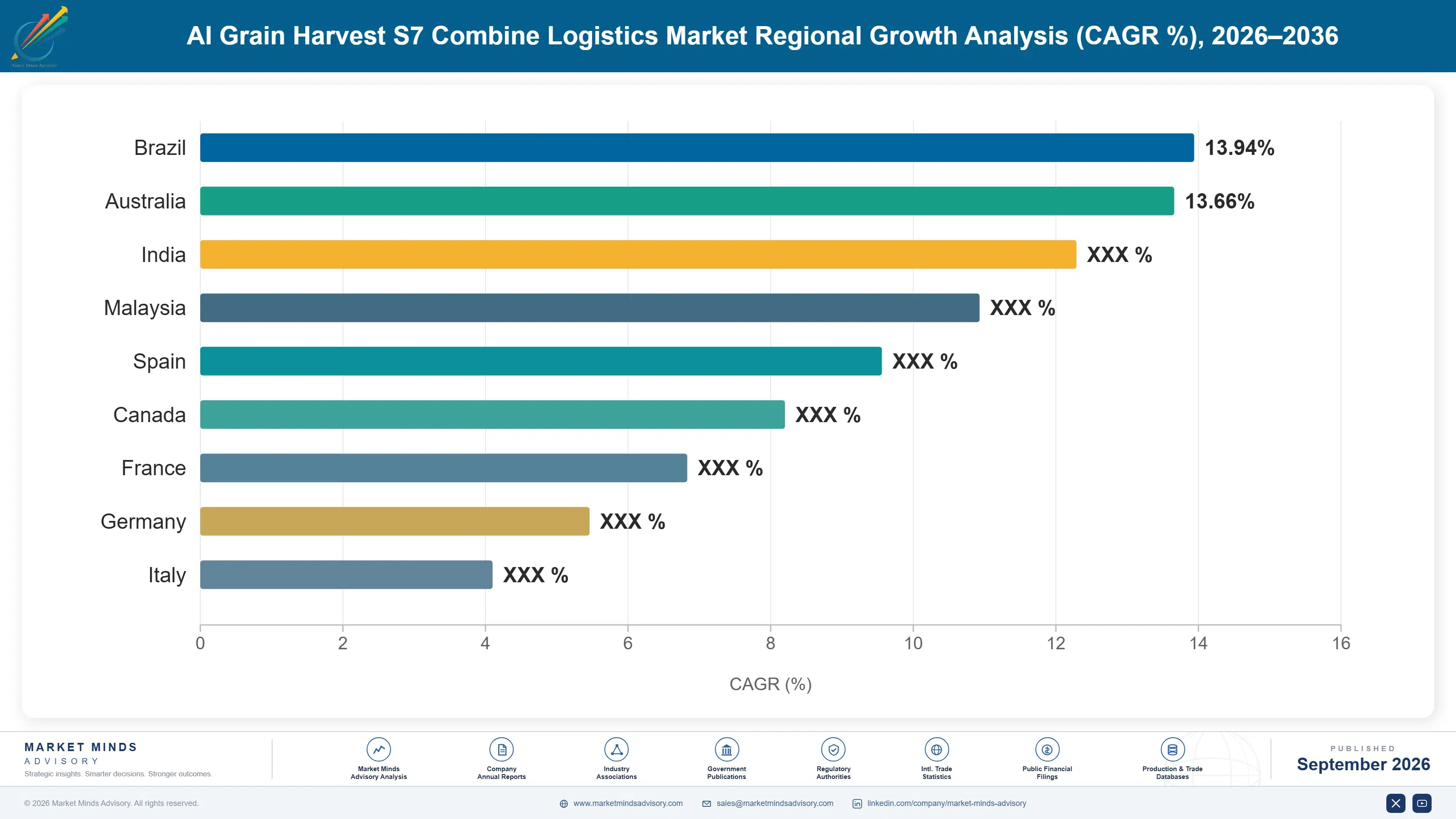
ai-grain-harvest-s7-combine-logistics-market-country-cagr-analysis-1788427114622

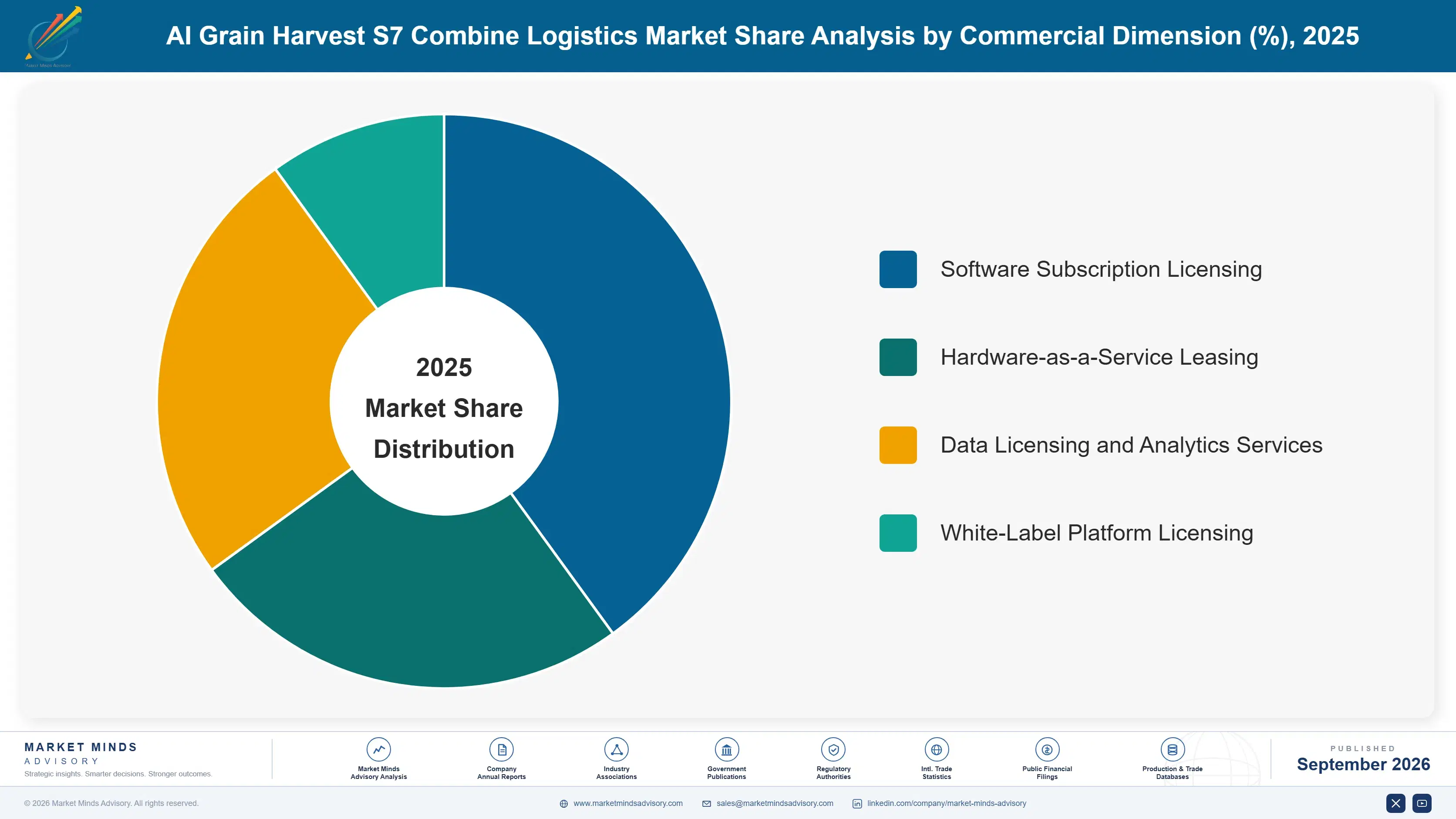
How Vendors Monetize Fleet Coordination Data

Harvest logistics platform vendors increasingly capture value beyond basic routing subscriptions through predictive maintenance analytics, yield mapping data licensing, equipment leasing partnerships, and white-label platform licensing that grain operations increasingly view as essential rather than optional additions to their core fleet coordination software purchase and ongoing long-term annual technology investment strategy and yearly budget.

Predictive Maintenance Analytics and Alert Services

Vendors sell predictive maintenance analytics that monitor combine component performance and flag likely failures before they cause unplanned downtime, capturing recurring subscription revenue beyond basic routing coordination fees charged for standard fleet management across the entire farm operation. This maintenance analytics revenue often generates comparable value to the original routing subscription itself, since operations facing narrow weather-dependent harvest windows place substantial value on avoiding unplanned equipment failures during critical operating periods. Vendors report predictive maintenance subscription revenue running roughly 40% higher than basic routing-only subscriptions among their largest fleet customers.
Market Impact: Predictive maintenance subscriptions add roughly 40% more revenue

Aggregated Yield Data Licensing to Agronomic Advisors

Vendors aggregate anonymized yield and field productivity data across many customer operations, licensing this aggregated dataset to agronomic advisory services, seed companies, and input suppliers seeking regional crop performance insight beyond what any single operation's data alone could reveal or independently provide on its own accord. This data licensing revenue stream generates income entirely separate from the underlying routing software subscription, effectively monetizing data that operations already generate during normal harvest operations. Vendors report data licensing revenue adding roughly 20% to total platform revenue among their largest data-generating fleet customers.
Market Impact: Data licensing adds roughly 20% overall platform revenue

Equipment Financing and Leasing Partnership Commissions

Vendors partner with equipment financing companies to offer combined software subscription and telematics hardware leasing packages, capturing referral commission revenue on financing arrangements that make platform adoption more accessible to operations reluctant to make large upfront hardware capital investments each new planting and harvest season each year. This financing partnership approach reduces the adoption barrier for mid-sized operations while generating commission income for the software vendor beyond its core subscription revenue model. Vendors report financing partnership commissions adding roughly 15% to total customer acquisition value across newly onboarded fleet accounts.
Market Impact: Financing partnerships add roughly 15% acquisition value overall

White-Label Platform Licensing to Equipment Manufacturers

Vendors license their entire routing and coordination platform to equipment manufacturers on a white-label basis, letting manufacturers offer branded fleet coordination software as part of their own product lineup while the underlying vendor retains ownership of the routing engine and continues collecting recurring licensing fees. This arrangement suits manufacturers wanting to offer software capability without the multi-year engineering investment required to build comparable technology internally from the ground up. White-label licensing deals typically generate contract values running roughly 2 times higher than standard direct-to-operation software subscriptions given the exclusivity terms involved.
Market Impact: White-label licensing deals run roughly 2 times higher

Who Controls the Margin Pool

Five participants, evaluated on annual combine logistics software and telematics platform revenue across all major equipment brands, together account for an estimated 42% of tracked market revenue, reflecting a moderately concentrated industry structure where equipment manufacturers bundle proprietary software with hardware sales. Deere & Company leads through integrated telematics hardware and software platform scale, while CNH Industrial and AGCO Corporation compete closely for multi-brand fleet coordination contracts that neither has fully secured.
Current competitive activity centers on cross-brand equipment compatibility, as software vendors race to support mixed-manufacturer fleets before competitors capture the same multi-brand operation contracts requiring universal telematics integration. Predictive maintenance partnership announcements between software vendors and equipment component suppliers have become increasingly common over the past two years, as vendors seek deeper diagnostic data access rather than competing purely on routing algorithm sophistication alone.

Emerging pressure comes from independent agtech software startups offering hardware-agnostic coordination platforms that could commoditize manufacturer-bundled software, potentially disintermediating established equipment brands still favoring proprietary single-manufacturer solutions over open cross-brand alternatives. Rankings could shift meaningfully if a major technology company acquires a leading independent routing software vendor outright, consolidating cross-brand integration capability and customer relationships that currently remain distributed across separate specialized companies.
ai-grain-harvest-s7-combine-logistics-market-company-positioning-matrix-1788427115144

Competitive Moat and Risk Dimensions

DEERE & COMPANY

Moat: Integrated Hardware and Software Platform

Deere's combination of dominant combine market share and its own proprietary telematics and coordination software platform gives it a bundled offering that competitors lacking comparable equipment manufacturing scale cannot easily replicate independently. This integration lets Deere offer unified single-vendor accountability for both machine performance and fleet coordination, a genuine convenience advantage for operations running predominantly Deere equipment.
DEERE & COMPANY

Risk: Proprietary System Limits Cross-Brand Appeal

Deere's proprietary software approach can limit appeal among operations running mixed equipment fleets from multiple manufacturers who prefer hardware-agnostic coordination platforms that avoid vendor lock-in concerns tied to a single equipment brand. Competitors offering cross-brand software solutions could capture share among customers specifically avoiding single-manufacturer dependency for their fleet coordination needs.
TRIMBLE AGRICULTURE

Moat: Hardware-Agnostic Cross-Brand Platform

Trimble's positioning as a hardware-agnostic software provider gives it a persistent advantage among operations running mixed equipment fleets from multiple manufacturers who value cross-brand coordination capability over locking into a single equipment vendor's proprietary platform. This flexibility appeals particularly to larger operations that have accumulated diverse equipment fleets across multiple purchase cycles and manufacturer relationships.
TRIMBLE AGRICULTURE

Risk: Lacks Direct Equipment Manufacturing Scale

Trimble lacks its own combine manufacturing operations, depending entirely on partnership and integration agreements with equipment manufacturers to access telematics data streams that vertically integrated competitors like Deere control directly and completely. This dependency could limit Trimble's feature development pace relative to manufacturers with direct hardware engineering control.

Players Tracked

Prominent Players

Deere & Company
CNH Industrial
AGCO Corporation
Trimble Agriculture
Climate LLC

Other Key Players

Topcon Positioning Systems
Raven Industries
Ag Leader Technology
Farmers Business Network
Granular
Bushel Inc.
Taranis
Sabanto
Precision Planting
EOS Data Analytics
Xarvio
Farmobile
AgJunction
Kubota Corporation
CLAAS

Recent Developments

FEBRUARY 2025

Deere launched an expanded fleet coordination software update integrating predictive maintenance analytics directly into its existing combine telematics platform, targeting large grain operations seeking unified equipment performance and logistics coordination capability across their entire harvest fleet, equipment inventory, and multi-season planning horizon nationwide and internationally.
Signal: Signals equipment manufacturers are bundling predictive maintenance directly into core coordination software platforms and product offerings.
JUNE 2025

Trimble announced a strategic partnership with a major grain cooperative to deploy cross-brand fleet coordination software across the cooperative's mixed equipment fleet, demonstrating hardware-agnostic platform capability at meaningful commercial scale across multiple regions, states, cooperative member operations, export territories, growth markets, and future expansion plans.
Signal: Signals hardware-agnostic vendors are securing flagship cooperative partnerships to validate cross-brand platform credibility much more broadly.
OCTOBER 2025

AGCO acquired a smaller independent yield mapping analytics startup, adding advanced agronomic data capability to its existing combine telematics and fleet coordination software portfolio and considerably expanding its overall precision agriculture technology offering across markets, regions, customer segments, export territories, and new future product lines.
Signal: Signals established equipment manufacturers are acquiring specialized analytics capability rather than building it entirely internally themselves.

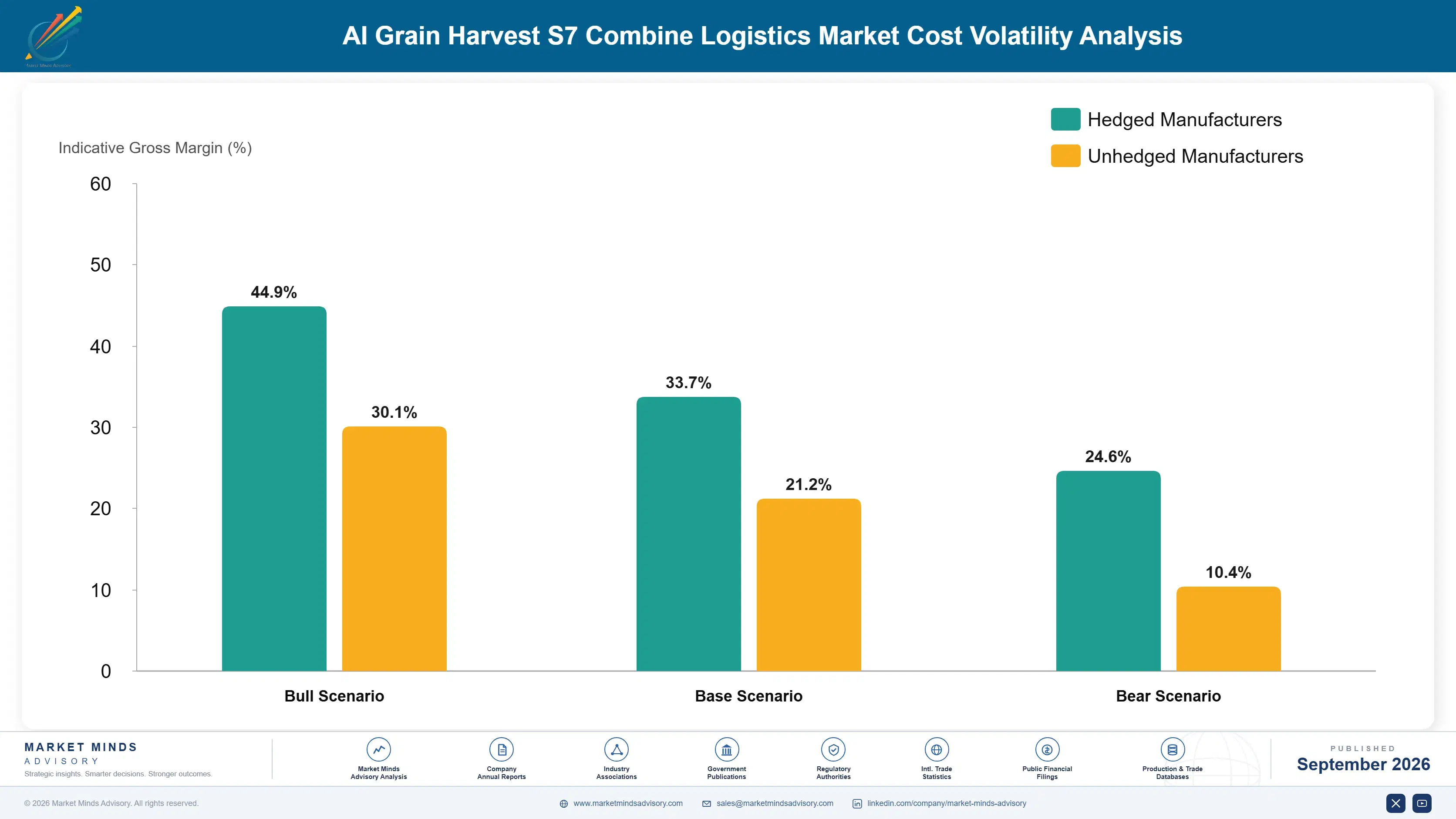
Telematics Hardware and Connectivity Cost Exposure

Telematics hardware, including GPS receivers and cellular modems, accounts for roughly 30% of platform vendor cost of goods sold, with the large majority sourced from semiconductor and communications component manufacturers concentrated in East Asia and North America. Satellite and cellular connectivity service fees supporting real-time data transmission add another 18%, sourced from major telecommunications infrastructure providers.
Semiconductor component shortages documented in several equipment manufacturers' annual investor disclosures extended telematics hardware production lead times considerably during the 2021 to 2022 global chip shortage period, delaying new equipment telematics installation across the industry. Manufacturers absorbed component cost increases during this period rather than passing full costs onto grain operations already committed to multi-year equipment purchase and financing agreements, compressing hardware margins industry wide temporarily.

Smaller independent software vendors carry meaningfully higher connectivity cost exposure per customer than large equipment manufacturers who can negotiate favorable bulk telecommunications service agreements across their much larger installed hardware base. This creates a durable cost disadvantage concentrated among vendors lacking manufacturing scale, effectively pushing many smaller software providers toward partnership arrangements with equipment manufacturers rather than building independent hardware and connectivity infrastructure.
ai-grain-harvest-s7-combine-logistics-market-cost-volatility-analysis-1788427115338

Multi-Source Component Procurement Strategies

Leading equipment manufacturers now qualify telematics components from at least two independent chip suppliers per product line, reducing single-source dependency that amplified the 2021 shortage's impact across the industry. This dual-sourcing approach adds upfront qualification cost but meaningfully shortens recovery time during future supply disruptions, a tradeoff most large manufacturers now consider worthwhile given recent volatility.

Bulk Connectivity Service Agreements

Several manufacturers have negotiated bulk cellular and satellite connectivity agreements covering their entire installed telematics hardware base, reducing per-unit connectivity cost considerably compared to individual service contracts negotiated separately for each customer account. This bulk purchasing approach requires substantial installed base scale but provides meaningful cost advantages over smaller competitors negotiating comparable agreements independently.

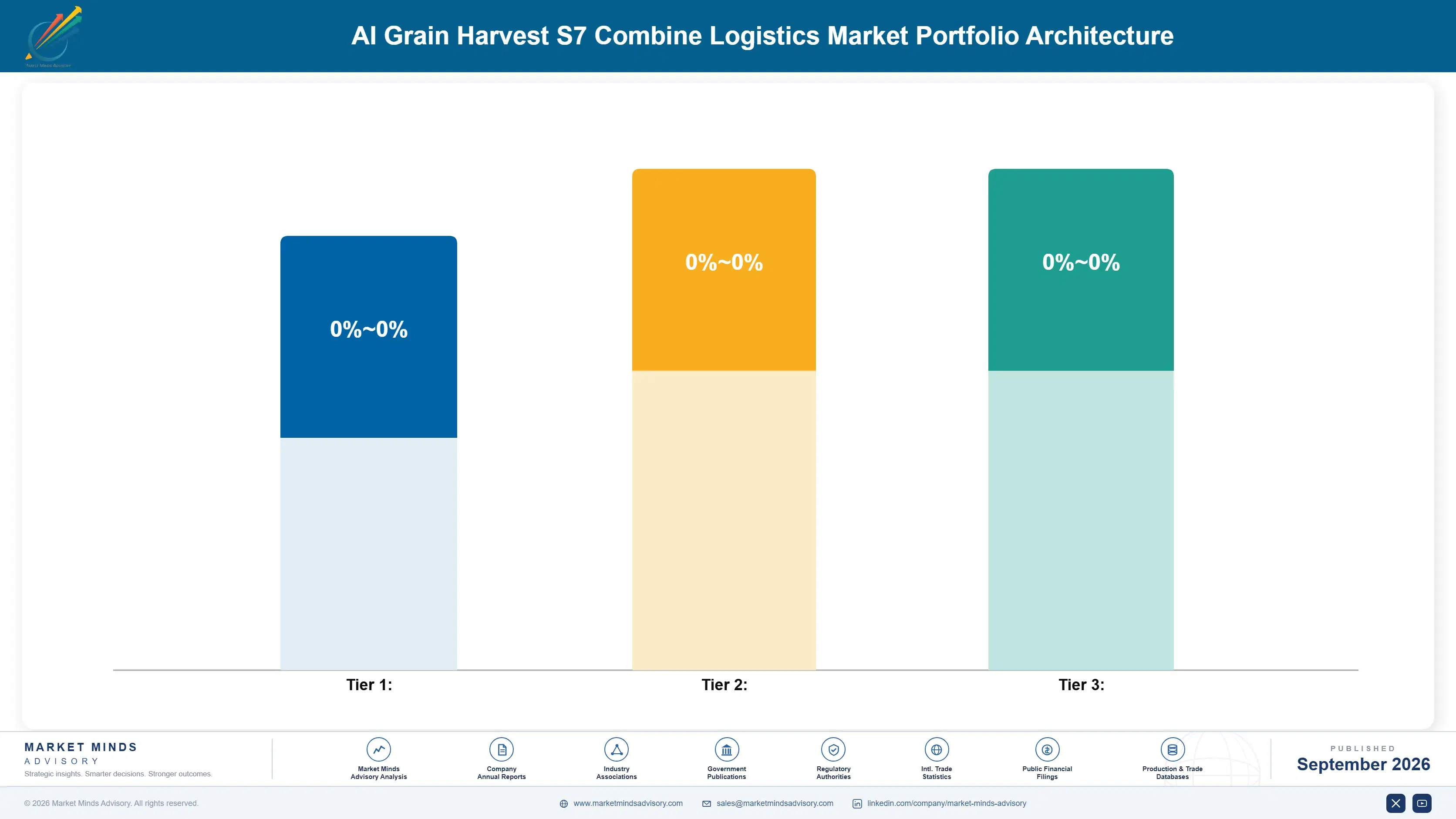
Portfolio Architecture for Margin Defence

Harvest logistics vendors run a three-tier margin structure spanning basic single-brand routing coordination, certified cross-brand fleet coordination platforms with predictive maintenance capability, and next-generation integrated harvest optimization suites bundling routing, analytics, and financing services. Gross margins range from roughly 20% on basic single-brand routing software to over 50% on certified cross-brand platforms carrying meaningfully higher integration engineering and support investment requirements.
Volume economics still matter for basic routing coordination, since most tracked deployments still prioritize core fleet management functionality over premium analytics features, but the tension between volume and premium positioning has sharpened as predictive maintenance and yield mapping increasingly determine which vendors win large multi-year fleet coordination contracts. Vendors increasingly favor the certified cross-brand tier, where integration depth and analytical sophistication provide more durable margin protection than basic routing coordination alone.

High-value margin pools concentrate specifically in predictive maintenance analytics and aggregated yield data licensing rather than in basic routing software sales, reflecting the broader industry shift toward comprehensive harvest optimization as fleet coordination becomes table-stakes functionality. Vendors capturing this premium analytics and data licensing revenue early tend to retain large fleet customer relationships longer than those competing purely on basic routing software subscription pricing.

Basic single-brand routing coordination software sold primarily on price to smaller operations prioritizing core fleet management functionality over premium analytics and cross-brand integration capability across their entire operation and fleet.
Gross Margin

Certified cross-brand fleet coordination platforms with predictive maintenance capability, bundled with technical support that large multi-equipment-brand operations increasingly require for comprehensive harvest logistics management each growing and harvest season nationwide.
Gross Margin

Next-generation integrated harvest optimization suites bundling routing, yield analytics, and equipment financing services, positioning vendors for recurring subscription revenue from operations facing complex multi-machine coordination needs, challenges, and requirements today.
Gross Margin
ai-grain-harvest-s7-combine-logistics-market-portfolio-architecture-1788427115846

High-value Sub-segments and Strategic Watch-out

AI Grain Cart and Combine Fleet Routing Software

AI grain cart and combine fleet routing software combines the fastest segment growth in the entire portfolio with the strongest margin expansion, as operations pay premium subscription pricing for multi-machine coordination sophistication across their entire operation, fleet, workforce, technology budget, and long-term strategic planning cycle.

Real-Time Yield Mapping and Harvest Analytics

Real-time yield mapping and harvest analytics carry the second fastest growth and strongest bundling potential, generating strong margin performance as vendors increasingly package agronomic data insight directly into routing coordination workflows, platforms, dashboards, reporting tools, mobile applications, analytics suites, and integrated decision support systems overall.

Predictive Maintenance and Downtime Analytics

Predictive maintenance and downtime analytics remain a steady mid-tier category as operations increasingly recognize the commercial value of avoiding unplanned combine failures during narrow weather-dependent harvest windows each growing and harvest season across their entire equipment fleet, workforce, operating budget, staffing plan, and maintenance schedule.

Combine Telematics and Connectivity Hardware

Combine telematics and connectivity hardware warrant close monitoring, since continued hardware commoditization and standardization across equipment manufacturers could compress margins in this foundational but increasingly undifferentiated product category, segment, offering, market, revenue stream, business line, pricing structure, and overall long-term strategic competitive value proposition entirely.

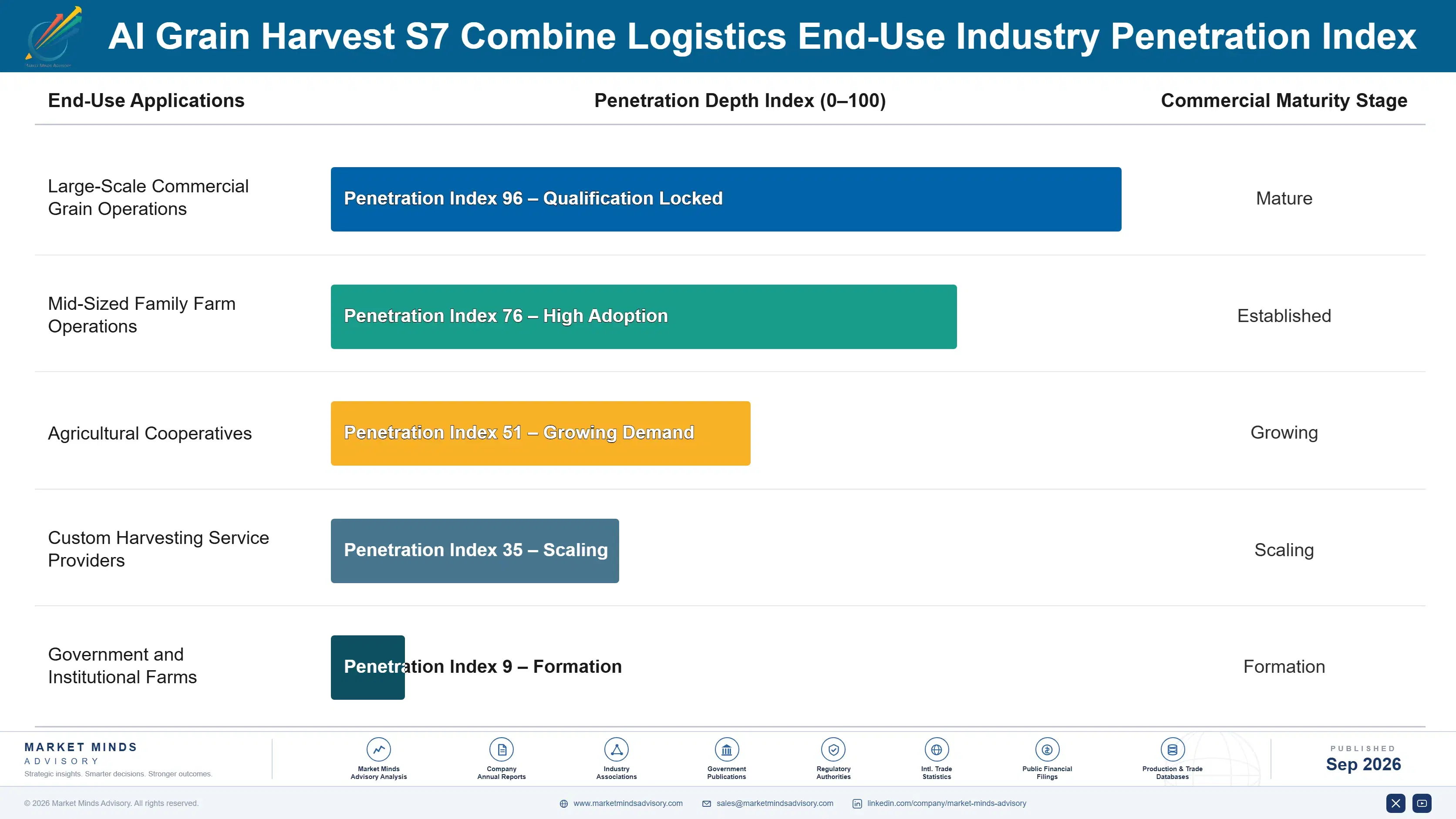
The Multi-Season Coordination Contract

Roughly 40% of tracked vendor revenue now comes from recurring subscription and predictive maintenance contracts rather than one-time software installation fees, reflecting the annuity-style economics that increasingly define successful harvest logistics vendors once operations establish multi-season platform dependency for coordinating equipment fleets across their entire operation, workforce, and multi-year technology investment roadmap and strategy.
Adoption depth varies meaningfully by end-use vertical: large grain operations running multi-combine fleets show the deepest platform stickiness given complex multi-machine coordination requirements that manual radio-based methods simply cannot efficiently replicate at scale during narrow weather-dependent harvest windows spanning thousands of cultivated acres, while smaller single-combine operations show comparatively shallower commitment since basic coordination needs remain manageable through simpler communication methods and informal arrangements.

A generational shift in buyer profiles is underway as fleet management responsibility moves from veteran equipment operators relying on experience-based coordination toward younger farm managers who prioritize data-driven decision support and quantifiable efficiency metrics over intuition-based coordination approaches built over decades of hands-on operational experience and institutional knowledge, changing how vendors position new platform features toward procurement decision makers increasingly focused on measurable return on technology investment.
ai-grain-harvest-s7-combine-logistics-market-end-use-penetration-index-1788427116330

Where Combine Logistics Value Concentrates

These are among the four positions where our research anticipates prominent divergence between winners and laggards over the coming forecast period. Each is grounded in the demand model, the regulatory perimeter, and the announced capacity pipeline.
01 / CROSS-BRAND INTEGRATION PRIORITY

Build hardware-agnostic coordination ahead of manufacturer lock-in

Operations running mixed equipment fleets from multiple manufacturers increasingly prefer coordination platforms that work regardless of original equipment brand rather than accepting single-manufacturer proprietary systems that limit future equipment purchasing flexibility and negotiating leverage considerably. Vendors building genuinely hardware-agnostic platforms capture disproportionate share among large operations with diverse multi-brand equipment inventories accumulated over successive purchase cycles and manufacturer relationships. This cross-brand positioning becomes increasingly valuable as equipment manufacturers continue consolidating and operations diversify supplier relationships to reduce single-vendor dependency risk.
02 / PREDICTIVE MAINTENANCE INVESTMENT

Prioritize downtime prevention over basic routing coordination alone

Basic routing coordination alone increasingly commoditizes as the underlying technology matures and multiple vendors achieve comparable coordination sophistication across the entire industry and broader competitive landscape overall. Vendors investing in predictive maintenance analytics that prevent costly unplanned downtime during narrow harvest windows capture meaningfully higher subscription value than competitors offering routing coordination without corresponding equipment health monitoring capability. This maintenance-focused differentiation strategy will become increasingly important as routing coordination itself becomes table-stakes functionality across the competitive landscape and broader market.
03 / RURAL CONNECTIVITY INFRASTRUCTURE PARTNERSHIP

Partner with telecommunications providers to close coverage gaps

Persistent rural connectivity gaps across major grain-producing regions represent a genuine constraint that pure software platforms cannot resolve without corresponding telecommunications infrastructure improvements reaching remote agricultural areas, rural communities, and many outlying farming districts. Vendors partnering directly with telecommunications providers or developing reliable offline-capable coordination modes secure meaningful competitive advantage in regions where competitors' cloud-dependent platforms simply fail to function reliably. This connectivity resilience advantage compounds as real-time coordination demand continues outpacing rural infrastructure investment across most tracked agricultural regions.
04 / EMERGING MARKET EXPANSION TIMING

Enter Brazil and India before mechanization scale peaks locally

Rising mechanization and precision agriculture adoption across Brazil and India represent the market's fastest-growing regional demand pools, yet most current vendor presence remains concentrated in North America and Western Europe serving comparatively mature markets. Vendors establishing local sales and support infrastructure now, ahead of mechanization scale reaching North American maturity levels, position themselves to capture disproportionate share as these markets continue their rapid agricultural modernization trajectory. This expansion window will narrow considerably as domestic and international competitors recognize the same growth opportunity.

Engagement Snapshot From the Field

A live engagement with an industry participant carrying material or product regulatory and market exposure ahead of a defining policy shift, showing how our research translates into a defensible multi-year portfolio strategy.
MARKET MINDS ADVISORY · CLIENT ENGAGEMENT SUMMARY
AI Grain Harvest S7 Combine Logistics Producer Strategic Portfolio Review and Transition Roadmap 2026·Investment Scenario on AI Grain Harvest S7 Combine Logistics Exposure Evaluation 2025-26
CLIENT PROFILE
The client is a large-scale grain operation cultivating approximately 45,000 acres of corn and soybeans across the Midwest, running a fleet of eight combines from three different equipment manufacturers acquired over successive equipment purchase cycles. The operation reported approximately $85 million (client-reported, unverified by MMA) in annual revenue, with labor costs and harvest window pressure driving interest in AI-based fleet coordination software.
STRATEGIC CHALLENGE
The operation needed to select a coordination platform capable of managing its mixed-manufacturer combine fleet, given that most available software solutions were originally designed around single equipment brand compatibility rather than genuinely cross-brand fleet coordination capability the operation actually required for its multi-manufacturer harvest equipment across its entire land base.
MMA APPROACH
MMA benchmarked available cross-brand coordination platforms against integration depth, routing algorithm sophistication, and total cost of ownership, while carefully interviewing the operation's farm management and equipment procurement teams to assess realistic deployment timelines given the operation's own mixed equipment fleet composition, existing infrastructure, staffing capacity, and available annual technology budget.
KEY FINDINGS
  1. Cross-brand compatible platforms represented only roughly 25% (client-reported, unverified by MMA) of evaluated coordination software options meeting the operation's mixed-fleet requirements and specifications.
  2. Radio-based coordination previously consumed an estimated 12% (client-reported, unverified by MMA) of total harvest labor hours across the operation's driver and combine operator workforce.
  3. Platform deployment across the mixed-manufacturer fleet required roughly eight weeks of integration testing before achieving reliable real-time coordination performance, accuracy, and consistency.
  4. Post-deployment surveys showed combine operators reported meaningfully reduced radio communication frustration and improved confidence in transport availability throughout the entire harvest season.
CLIENT PROFILE
The client is a large-scale grain operation cultivating approximately 45,000 acres of corn and soybeans across the Midwest, running a fleet of eight combines from three different equipment manufacturers acquired over successive equipment purchase cycles. The operation reported approximately $85 million (client-reported, unverified by MMA) in annual revenue, with labor costs and harvest window pressure driving interest in AI-based fleet coordination software.
STRATEGIC CHALLENGE
The operation needed to select a coordination platform capable of managing its mixed-manufacturer combine fleet, given that most available software solutions were originally designed around single equipment brand compatibility rather than genuinely cross-brand fleet coordination capability the operation actually required for its multi-manufacturer harvest equipment across its entire land base.
MMA APPROACH
MMA benchmarked available cross-brand coordination platforms against integration depth, routing algorithm sophistication, and total cost of ownership, while carefully interviewing the operation's farm management and equipment procurement teams to assess realistic deployment timelines given the operation's own mixed equipment fleet composition, existing infrastructure, staffing capacity, and available annual technology budget.
KEY FINDINGS
  1. Cross-brand compatible platforms represented only roughly 25% (client-reported, unverified by MMA) of evaluated coordination software options meeting the operation's mixed-fleet requirements and specifications.
  2. Radio-based coordination previously consumed an estimated 12% (client-reported, unverified by MMA) of total harvest labor hours across the operation's driver and combine operator workforce.
  3. Platform deployment across the mixed-manufacturer fleet required roughly eight weeks of integration testing before achieving reliable real-time coordination performance, accuracy, and consistency.
  4. Post-deployment surveys showed combine operators reported meaningfully reduced radio communication frustration and improved confidence in transport availability throughout the entire harvest season.
RECOMMENDED STRATEGY
Phase 1: Phase one: select and deploy a hardware-agnostic coordination platform compatible with all three equipment manufacturer brands present in the fleet. Phase 2: Phase two: conduct thorough integration testing across the mixed-manufacturer fleet before full deployment during the following planting and harvest season. Phase 3: Phase three: train combine operators and transport drivers on the new coordination system well ahead of the next harvest window.
OUTCOME
The operation reported a 19% (client-reported, unverified by MMA) improvement in daily harvested acreage during the first full harvest season using cross-brand coordination software, alongside meaningfully reduced driver frustration and improved harvest labor efficiency across its entire equipment fleet, operating workforce, and overall management structure.

Frequently Asked Questions

Foundational context covering the market sizes, CAGR, scope, country, region and competition that inform every finding below. This section is provided to cover basics and most often pre-purchase conversations, answered from the MMA Primary Research Dataset.

What is the current size of the AI Grain Harvest S7 Combine Logistics Market?

The global AI grain harvest combine logistics market reached an estimated $0.38 billion in 2025. Growth reflects rising labor costs and narrowing harvest windows driving fleet coordination software adoption.

How large will the AI Grain Harvest S7 Combine Logistics Market be by 2036?

MMA projects the market will reach approximately $1.95 billion by 2036, up from current levels. This growth is driven by expanding telematics penetration and large-farm consolidation trends worldwide.

What is the CAGR for the AI Grain Harvest S7 Combine Logistics Market 2026 to 2036?

The market is projected to grow at a compound annual growth rate of 16.0% between 2026 and 2036. This reflects a nascent but rapidly maturing agtech category.

Which segment is growing fastest?

AI grain cart and combine fleet routing software is the fastest-growing segment, expanding at roughly 20.0% annually. This significantly outpaces the overall market's projected growth rate.

Who are the major companies in the AI Grain Harvest S7 Combine Logistics Market?

Leading companies include Deere & Company, CNH Industrial, AGCO Corporation, Trimble Agriculture, and Climate LLC. These five participants together account for an estimated 42% of tracked revenue.

Which country is growing fastest?

Brazil is the fastest-growing country market, expanding at approximately 19.0% annually. Massive soybean and corn grain operations running large combine fleets drive this sustained growth.

Report Segmentation Architecture

The full report scope spans multiple orthogonal segmentation dimensions, with cross-tabulated demand data provided for each dimension pair. Coverage extends further to regional breakdowns, trend trajectories, and the competitive detail needed to support segment-level decision-making.

By Primary Market Dimension

  • AI Grain Cart and Fleet Routing Software
  • Real-Time Yield Mapping and Harvest Analytics
  • Predictive Maintenance and Downtime Analytics
  • Harvest Scheduling and Weather Optimization Software
  • Grain Moisture and Quality Sensing Integration
  • Combine Telematics and Connectivity Hardware

By End-Use Industry

  • Large-Scale Commercial Grain Operations
  • Mid-Sized Family Farm Operations
  • Agricultural Cooperatives
  • Custom Harvesting Service Providers
  • Government and Institutional Farms

By Commercial Dimension

  • Software Subscription Licensing
  • Hardware-as-a-Service Leasing
  • Data Licensing and Analytics Services
  • White-Label Platform Licensing

By Region

  • North America
  • Western Europe
  • East Asia
  • South Asia and Pacific
  • Latin America
  • Middle East and Africa
  • Eastern Europe

Scope, Methodology, and Coverage

Every figure in this report is reproducible from documented input assumptions. The scope below maps the historical period, the forecast horizon, the segmentation dimensions, and the countries covered, alongside the underlying primary and qualitative methodology.
Historical Period
2020 to 2025
Forecast Period
2026 to 2036
Base Year
2025 (USD billions; MMA Primary Research Dataset, September 2026)
Market Definition
The AI Grain Harvest S7 Combine Logistics Market covers software and telematics platforms coordinating combine harvester, grain cart, and transport truck operations during grain harvest using artificial intelligence routing and scheduling, measured by software and platform subscription revenue. It excludes the combine harvester hardware itself and general farm management software unrelated to real-time harvest logistics coordination.
Quantitative Units
USD Billion, CAGR (%), Share (%), 2020 to 2036
Segmentation Dimensions
By Primary Market Dimension; By End-Use Industry; By Commercial Dimension; By Region
Regions Covered
North America, Western Europe, East Asia, South Asia and Pacific, Latin America, Middle East and Africa, Eastern Europe
Countries Covered
United States, Canada, United Kingdom, Germany, France, China, Japan, South Korea, India, Brazil, Argentina, Australia, Mexico, United Arab Emirates, Saudi Arabia, South Africa, Poland, Ukraine
Key Companies Profiled
Deere & Company, CNH Industrial, AGCO Corporation, Trimble Agriculture, Climate LLC, Topcon Positioning Systems, Raven Industries, Ag Leader Technology, Farmers Business Network, Granular, Bushel Inc., Taranis, Sabanto, Precision Planting, EOS Data Analytics, Xarvio, Farmobile, AgJunction, Kubota Corporation, CLAAS
Quantitative Methodology
Primary survey, n=3,800 respondents, Q4 2025, six countries; demand-side model with trade association cross-validation
Qualitative Methodology
47 expert interviews, Q4 2025; applied to validate demand model assumptions, identify emerging dynamics, and assess competitive positioning
Report Format
PDF and XLSX data workbook (Word format preview document)
Publisher
Market Minds Advisory
Report Code
MMA-2026-AGR-638
Published
September 2026
Contact
sales@marketmindsadvisory.com | www.marketmindsadvisory.com

Purchase the full AI Grain Harvest S7 Combine Logistics Market Report (2026 to 2036).

This report provides comprehensive coverage of the global AI grain harvest combine logistics market, including detailed sizing, segmentation, and regional analysis through 2036. It profiles the leading equipment manufacturers and agtech software vendors shaping competitive dynamics as cross-brand compatibility and predictive maintenance increasingly determine where industry margin concentrates. The analysis draws on primary survey data from 3,800 respondents and 47 expert interviews conducted in the fourth quarter of 2025. Readers gain actionable insight into where routing, analytics, and data licensing revenue concentrate over the coming decade.
Ten-year market sizing and forecast data
Seven-region granular market breakdown and analysis
Five-year competitive landscape developments and tracker
Segment-level CAGR and market share analysis
Primary survey data across six countries
Anonymized client case study with outcomes

Built For The People Who Decide

From boardroom strategy to bench-side execution, this report is read cover-to-cover by leaders shaping the next decade of their industry, turning demand scenarios, market dynamics and valuation benchmarks into decisions.
CXOs/ Presidents/ VPs/ Managers
M&A and Corporate Development
Strategy Teams and R&D Heads
Procurement and Product Directors
Regulatory and Compliance Leaders
Investor Relations and Equity Analysts