Market Minds Advisory
Advanced Cancer Pain Management Market

Advanced Cancer Pain Management Market: Opioid Restriction, Interventional Substitution, and Radiopharmaceutical Growth

Opioid prescribing restrictions written for addiction control now sit between cancer patients and adequate analgesia, pushing spending toward implantable delivery, nerve ablation, and bone-targeted radiopharmaceuticals that regulators treat quite differently.

Lead Analyst

Alice Ballenger

Published

September 2026

Make Smarter Decisions with Customized Research Insights

Request a free sample report and evaluate market opportunities, growth trends, and competitive dynamics relevant to your business needs.

2025 MARKET VALUE$7.6BMarket Size 2025
2036 FORECAST VALUE$15.0BBase Case , 2026 to 2036
CAGR 2026 TO 20366.4 %Bull 7.6% / Bear 5.2%
INCREMENTAL OPPORTUNITY$7.0BNet 10- year value creation
EXPANSION MULTIPLE1.86x2036 value over 2026 base
Strategic Levers
M&A Pipeline
Regional Outlook
Country Rankings
Competitive Intelligence
Segmental Deep-dive
Call-Us : 91 93563 13602

Executive Snapshot and Market Trajectory

Regulation written to curb addiction is now the largest single obstacle to treating cancer pain. Prescribers who face audit for opioid volume have grown cautious with oncology patients too, and that caution is quietly redirecting spending toward interventional and radiopharmaceutical options. That was nobody's intention.
Bone-targeted radiopharmaceuticals grow at 9.6%, a full 1.50x the market rate, because painful skeletal metastases are common, and radium-223 and its successors sit outside controlled-substance regulation entirely. North America holds 30% of value: the United States consumes the majority of the world's prescription opioid analgesia in morphine-equivalent terms and places almost every implantable intrathecal pump. Access elsewhere is the binding constraint. Volume sits elsewhere entirely. Nobody intended that outcome.
Concentration is low at 41% because the market spans generic opioid manufacturing, implantable device engineering, and radioisotope supply, and almost nobody competes across all three. Bayer and Medtronic lead in their respective corners without meeting each other. Regulatory pressure runs in two directions at once: tighter on opioids, considerably looser on the interventional and nuclear alternatives that replace them. Almost nobody has built a portfolio spanning both directions, and the few attempts have gone badly.
Market Definition
This market covers pharmacological and interventional products indicated for moderate-to-severe pain in cancer patients, spanning systemic and transmucosal opioid formulations, non-opioid adjuvant analgesics, implantable intrathecal drug delivery systems, neurolytic and ablative interventional products, and bone-targeted radiopharmaceuticals. Measurement is at manufacturer revenue attributable to oncology pain indications. Non-cancer chronic pain therapy, anti-tumour treatment intended to extend survival, hospice and palliative care services, and general anaesthesia products are excluded.
Base Year Value
$7.6B in 2025 (MMA Primary Research Dataset, August 2026)
Forecast Period
2026 to 2036, eleven discrete annual values
CAGR
6.4% base case. Bull 7.6%. Bear 5.2%.
Fastest Growth Segment
Bone-Targeted Radiopharmaceuticals: 9.6% CAGR
Fastest Growth Country
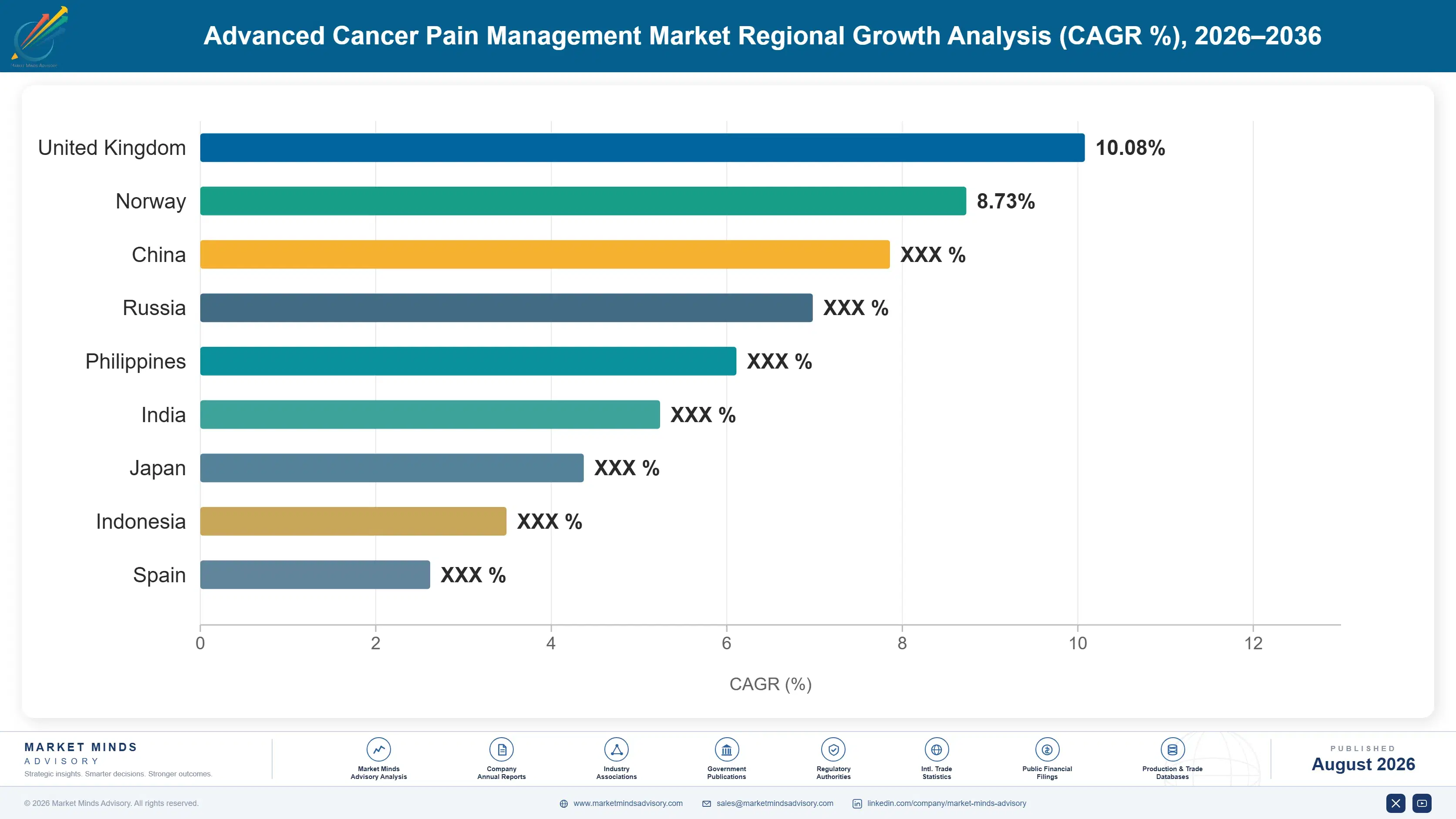
China: 9.8% CAGR
Fastest Growth Region
South Asia and Pacific: 8.6% CAGR
Largest Region
North America: 30% of 2025 global value
Market Leaders
Medtronic, Bayer, Teva Pharmaceutical Industries, Viatris, and GrĂ¼nenthal. Source: MMA Primary Research Dataset, July 2026.
Primary Survey
n=3,800 procurement and R&D decision-makers, Q4 2025, six countries
Methodology
Demand-side build-up, cross-validated against public data, 47 expert interviews

Advanced Cancer Pain Management Market Forecast Scenarios

advanced-cancer-pain-management-market-size-forecast-scenario-1787303406073
Between 2020 and 2025 the market grew at roughly 5.2%, and that modest figure hides two opposing movements. Branded opioid revenue fell as prescribing restrictions tightened and generic entry eroded pricing on transdermal fentanyl and extended-release oxycodone. Meanwhile intrathecal pump placements, nerve ablation procedures and radium-223 volumes all climbed steadily. The net result looked flat from outside while the composition changed underneath it substantially.
Base case growth of 6.4% depends on three mechanisms. Cancer prevalence rises with population ageing and with survival gains that leave more patients living longer with metastatic disease and the pain it produces. Interventional substitution continues as oncology centres build the procedural capacity to place pumps and perform coeliac plexus neurolysis. And bone-targeted radiopharmaceutical supply expands as new reactor and cyclotron capacity comes online, removing the isotope constraint that has limited volumes.
The bull case at 7.6% assumes national cancer pain guidelines successfully carve oncology out of general opioid prescribing limits, which several oncology societies are actively pursuing. The bear case at 5.2% reflects the opposite: further restriction without an oncology exemption, combined with radioisotope supply interruption from ageing reactors, would hold the market close to its historical rate for another decade.

Cancer Pain: Regulatory Displacement and Interventional Substitution

The economics here are stranger than the clinical picture suggests. Oral morphine costs almost nothing and works for most cancer pain, yet it is the hardest product to get to patients because of scheduling and prescriber liability. An implantable pump costs several thousand dollars plus a surgical procedure, and it reaches patients more easily. Regulation, not clinical benefit, produced that inversion. Nobody designed this.
TOP FIVE CONCENTRATION41%Leading suppliers rarely compete across drug and device categories
UNDERTREATED PATIENT SHARE52%Cancer patients receiving analgesia below their assessed clinical need
ANNUAL THERAPY COSTUSD 4,800Blended per-patient spend across pharmacological and interventional pathways
PUMP REFILL INTERVAL90 daysTypical clinic visit cadence for implanted intrathecal delivery systems
GENERIC VOLUME SHARE84%Share of opioid analgesic units supplied by generic manufacturers
RESTRICTED ACCESS POPULATION80%World population living where strong opioid availability remains severely limited
Revenue therefore concentrates in the expensive tail. Roughly 15% of cancer pain patients account for the majority of market value, because they are the ones whose pain resists oral therapy and who progress to intrathecal delivery, neurolytic blocks or radiopharmaceutical treatment. The much larger group managed on generic oral opioids contributes volume without contributing much revenue at all. Volume and value barely relate here.
Supply constraints bind on the nuclear side rather than the pharmaceutical one. Radium-223 and strontium-89 depend on a small number of ageing reactors and specialist processing facilities, and any one of them going offline for maintenance moves global availability noticeably. Manufacturers have been contracting isotope supply years ahead as a result, which is unusual behaviour for an oncology supportive care product. Pharmaceutical supply chains rarely behave that way.
"Cancer pain is the only therapeutic area I cover where the cheapest effective treatment is the hardest one to obtain. Every commercial opportunity in this market exists because morphine has become administratively difficult rather than because morphine stopped working."
Principal Analyst, Oncology and Supportive Care Practice · MMA Healthcare Practi

Market Trends

Opioid restriction pushes spending toward interventional pain procedures

Prescription monitoring programmes, dose ceilings and prescriber audit have all been extended to oncology practice in most developed markets, even where cancer patients were nominally exempt. Oncologists report reducing opioid doses defensively rather than clinically. The commercial consequence is substitution: coeliac plexus neurolysis for pancreatic cancer, intercostal and paravertebral blocks, and intrathecal pump placement all grow faster than the pharmacological options they displace. Procedures carry no prescribing liability and no monitoring obligation, which makes them administratively easier even when they cost more and require specialist capacity. Nobody planned that substitution, and it is now the dominant commercial movement here.
Market Impact: Median survival up 22 months
Radiopharmaceutical supply expansion removes a long-standing volume ceiling

Radium-223 and other bone-seeking radionuclides have been supply-limited rather than demand-limited for most of the last decade, because production depends on a handful of research reactors and specialist processing sites. New cyclotron and generator capacity commissioned across Europe, Canada and Australia is loosening that constraint. Manufacturers who previously rationed allocation between markets can now supply them properly. Because painful bone metastases affect a large share of advanced prostate, breast and lung cancer patients, the addressable population was always considerably larger than the volumes actually delivered. Demand was never the limiting factor, and the industry knew it throughout.
Market Impact: Carve-outs adopted in 11 countries

Market Opportunities and Growth Drivers

Longer survival with metastatic disease enlarges the treated population

Immunotherapy and targeted agents have converted several metastatic cancers into conditions patients live with for years rather than months. That is straightforwardly good clinically and it enlarges this market mechanically, because pain from bone metastases and nerve involvement persists across the whole extended survival period. A prostate cancer patient surviving five years with skeletal disease consumes far more analgesia, more radiopharmaceutical treatment and more interventional procedures than one surviving eighteen months did a decade ago. Supportive care demand steepens exactly where oncology succeeds most, and the relationship holds across every tumour type carrying skeletal or neural involvement.
Market Impact: Only 20% of population reached

Oncology societies push formal exemption from opioid prescribing limits

The major oncology and palliative medicine societies have been lobbying since 2022 for cancer and end-of-life care to sit outside general opioid dose ceilings, and several national guidelines have begun to reflect it. Where an explicit carve-out exists, prescriber behaviour normalises within roughly two years and appropriate dosing recovers. That regulatory clarity is worth more to the pharmacological segment than any new molecule currently in development, because the barrier was never efficacy in the first place. Regulatory clarity is worth considerably more to this market than any molecule currently sitting in clinical development, and it costs nothing to supply.
Market Impact: Fewer than 400 qualified centres

Market Restraints and Challenges

Controlled substance regulation blocks access across most of the world

Roughly 80% of the world's population lives where strong opioids are effectively unavailable, and the root cause is treaty implementation rather than drug supply. National narcotics laws written to satisfy international conventions typically require special licences, duplicate prescription forms and short dispensing windows that ordinary pharmacies cannot manage. Morphine costs pennies, so this is not an affordability problem. Progress is coming through model legislation work by the World Health Organization and through Indian and Ugandan reforms that simplified licensing without loosening diversion control, both of which raised consumption sharply. Neither reform loosened diversion control.
Market Impact: Roughly 30% fewer opioid prescripti

Interventional capacity concentrates in a small number of centres

Intrathecal pump placement and neurolytic block procedures require an interventional pain specialist, imaging guidance and a facility willing to manage the follow-up. Most cancer centres have none of that. The root cause is training and reimbursement together: interventional pain fellowships are few, and procedure reimbursement often fails to cover the ongoing refill and titration burden that follows implantation. Manufacturers are responding with centre-of-excellence programmes, remote titration support, and refill service partnerships that shift the follow-up load away from the implanting physician entirely. None of that solves the training shortage, which remains the binding constraint on new centres.
Market Impact: Supply capacity up 45% by 2028
3 additional market trends, 4 additional growth drivers, and 2 additional restraints and challenges are covered in the full report. Contact sales@marketmindsadvisory.com to access the complete intelligence.

Segment CAGR and Growth Architecture

Segmentation follows the route by which analgesia reaches the patient, because delivery route determines the regulatory pathway, the buying centre, the reimbursement mechanism and the specialist required. Six modalities cover the treated population without overlap. Anti-tumour therapy that relieves pain by shrinking disease sits outside this hierarchy and is treated as adjacent rather than included. The distinction matters commercially.
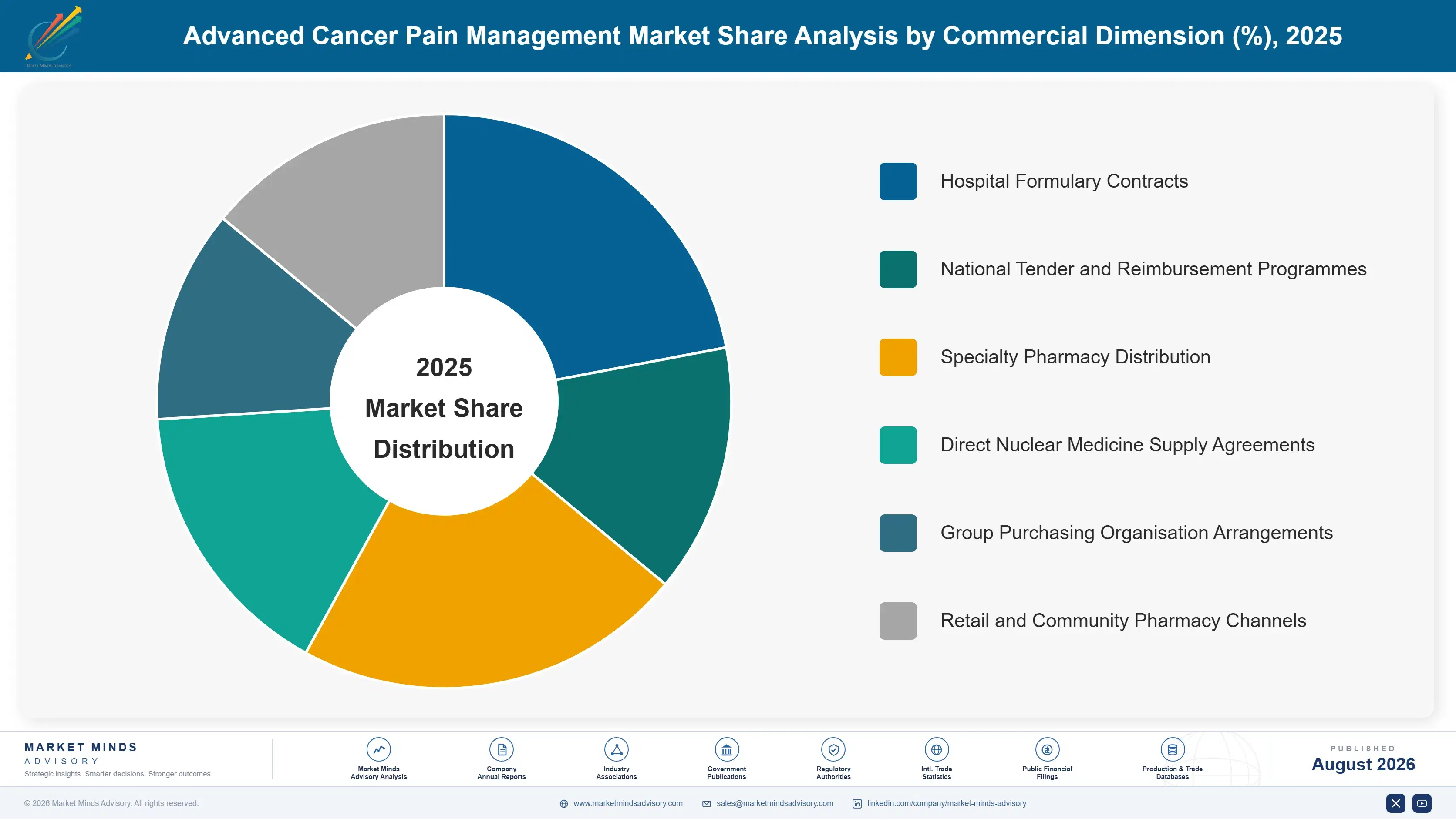
advanced-cancer-pain-management-market-market-share-analysis-1787303406626

Bone-Targeted Radiopharmaceuticals

Growing at 9.6%, a full 1.50x the market rate, this is the fastest modality and the least constrained by controlled-substance regulation. Radium-223, strontium-89 and samarium-153 deliver alpha or beta radiation selectively to osteoblastic metastases, relieving pain for months from a single administration. Painful skeletal disease affects a large majority of advanced prostate cancer patients and a substantial share of breast and lung cancer patients, so the addressable population is wide. Growth has been limited by isotope production rather than demand, and new reactor and cyclotron capacity is now removing that ceiling. That single fact changes the entire commercial approach, because the buying centre and the distribution logistics both differ from pharmacy channels.
CAGR 9.6%

Implantable Intrathecal Drug Delivery Systems

Intrathecal delivery grows at 8.1% by placing drug directly into cerebrospinal fluid, achieving analgesia at roughly one three-hundredth of the equivalent oral morphine dose and avoiding most systemic side effects. For patients whose pain resists oral therapy, or who cannot tolerate the sedation and constipation that come with it, there is no real alternative. Revenue divides between the implanted pump, the refill service and the drug itself, which makes it the only modality here that generates an ongoing annuity. Placement remains concentrated in a few hundred centres worldwide, and expanding that base is the principal commercial task facing manufacturers. Training capacity and reimbursement for follow-up are the two barriers, and neither yields to sales effort alone.
CAGR 8.1%
Full segment breakdown across 6 segments available in the complete report.

Regional Architecture and Country Demand Map

Regional value tracks regulatory permissiveness and interventional capacity far more closely than it tracks cancer incidence. North America leads on both counts. East Asia carries the largest patient population but converts it into value slowly, because access rules and procedural capacity lag the disease burden considerably.

North America

North America holds the largest share at 30%, and the reason is measurable rather than assumed: the United States accounts for the majority of global prescription opioid consumption in morphine-equivalent terms and places the overwhelming majority of implantable intrathecal pumps worldwide. Radium-223 uptake has also been strongest here. That said, growth at 5.8% is among the slowest of the seven regions, because prescription monitoring programmes and dose ceilings have cut opioid volumes hard since 2018 and the interventional substitution only partly compensates. Canadian practice mirrors the United States with tighter drug pricing. Mexican access remains limited by narcotics licensing that most community pharmacies decline to handle. Value per treated patient nonetheless remains the highest anywhere.
Share: 30% | CAGR: 5.8% (2026 to 2036)

East Asia

China records over four million new cancer diagnoses annually, and its 26% share understates that burden badly. Opioid consumption per capita remains a small fraction of Western levels, held down by prescriber caution and licensing rules rather than by cost. What has changed is the National Reimbursement Drug List, which has brought several analgesic and radiopharmaceutical products into coverage since 2023, and a rapid build-out of nuclear medicine departments. Japan has strong palliative medicine infrastructure and conservative opioid dosing. South Korea and Taiwan adopt interventional techniques readily. Growth at 7.7% reflects access improving from a low starting point rather than incidence rising. Value follows access reform rather than disease burden throughout the region.
Share: 26% | CAGR: 7.7% (2026 to 2036)
Regional intelligence for 5 additional markets available in the complete report: Western Europe, South Asia and Pacific, Latin America, Middle East and Africa, Eastern Europe. Contact sales@marketmindsadvisory.com.
advanced-cancer-pain-management-market-country-cagr-analysis-1787303407202

Where Cancer Pain Revenue Concentrates

Value in this market sits with the minority of patients whose pain resists oral therapy, and reaching them means solving access problems rather than efficacy problems. Every commercial lever here works through regulatory positioning, procedural capacity building, or the service infrastructure that keeps an implanted patient supported over years of treatment. None of it is a pricing exercise.

Position products outside controlled substance scheduling wherever clinically defensible

Products that avoid narcotics scheduling reach patients through ordinary hospital procurement rather than through licensed pharmacy channels, and that difference is worth more than any efficacy advantage. Radiopharmaceuticals, neurolytic agents and non-opioid adjuvants all benefit. The commercial effect is measurable: unscheduled products reach roughly 3 times as many prescribing sites in emerging markets as scheduled equivalents do. Development portfolios should weight this heavily at candidate selection, not discover it at launch. The regulatory pathway is longer for a radiopharmaceutical, but the commercial runway afterwards is considerably wider and far less politically exposed.
Market Impact: Reaches around 3 times more prescri

Build the refill and titration service around implanted patients

An intrathecal pump generates revenue for years after implantation through refills, dose titration and eventual replacement, but only if the follow-up actually happens. Centres abandon the technique when refill burden overwhelms clinic capacity. Manufacturers that supply refill services, remote titration support and trained nursing coverage keep roughly 25% more implanting centres active than those selling hardware alone. The service costs real money and it protects the entire annuity. Treating it as a cost line rather than as the mechanism that preserves the installed base is the single most common commercial error here.
Market Impact: Retains about 25% more active impla

Contract isotope supply years ahead of forecast demand

Radiopharmaceutical volumes have been production-limited rather than demand-limited, and the reactors and processing facilities involved are few, old and prone to unplanned maintenance. Companies holding multi-year isotope supply agreements have been able to grow while competitors rationed allocation between countries. Supply security is worth roughly 20% on realised volume in any year with a reactor outage. The contracts are expensive and they tie up working capital, which is exactly why fewer competitors hold them. This is a supply chain lever masquerading as a commercial one. It is also the least glamorous investment on any board agenda.
Market Impact: Protects roughly 20% of annual dose

Fund national licensing reform work in restricted access markets

Where narcotics licensing blocks morphine access, no amount of sales effort helps, and roughly 80% of the world's population lives under such rules. Indian and Ugandan reform showed that simplified licensing raises consumption sharply without increasing diversion. Manufacturers who fund the model legislation work, prescriber training and pharmacy licensing support create markets that did not previously exist, and they do it years before competitors arrive. The timescale is long and the return is uncertain in any single country. Across a portfolio of ten markets it has consistently justified itself. Nobody else is doing it.
Market Impact: Opens markets covering 80% of the w

Who Controls the Margin Pool

Concentration is unusually low for healthcare at 41% across the top five, measured on annual revenue attributable to cancer pain indications, the single basis applied throughout this assessment. The market spans three unrelated capabilities: generic pharmaceutical manufacturing, implantable device engineering, and radioisotope production. Almost nobody competes in more than one. Bayer leads in radiopharmaceuticals and Medtronic in intrathecal delivery, with essentially no commercial contact betw
Competition therefore runs inside modalities rather than across them. In systemic opioids it is a generic manufacturing contest where Teva, Viatris, Hikma and Sandoz compete on price against near-identical products. In intrathecal delivery it turns on pump reliability, refill service coverage and implanting centre relationships. In radiopharmaceuticals the contest is over isotope supply security and nuclear medicine access, a logistics problem more than a clinical one.

Pressure is emerging from adjacent directions. Neuromodulation companies are positioning spinal cord stimulation into cancer pain indications previously served by intrathecal pumps. Radioligand developers building anti-tumour capability acquire isotope infrastructure that makes bone-targeted pain products a natural extension. Rankings are most likely to shift where a company with existing nuclear supply chains decides that supportive care is worth entering properly rather than treating as a by-product.
advanced-cancer-pain-management-market-company-positioning-matrix-1787303407737

Competitive Moat and Risk Dimensions

MEDTRONIC

Moat: Entrenched implanting centre relationships

SynchroMed sits in the great majority of centres worldwide that place intrathecal pumps, and each implanted patient represents years of refill, titration and eventual replacement revenue. Switching platforms means retraining staff, revalidating protocols and managing existing patients on legacy hardware, which very few centres will contemplate without a compelling reason.
MEDTRONIC

Risk: Narrow implanting centre base

Fewer than 400 centres worldwide place these devices regularly, so growth depends on expanding a base that has proved stubborn to enlarge. Interventional pain training capacity and reimbursement for follow-up both constrain it. A neuromodulation competitor offering a simpler procedure with lighter follow-up would attack precisely that weakness.
BAYER

Moat: Secured radioisotope supply position

Xofigo established radium-223 in painful skeletal metastases and Bayer holds the isotope supply agreements and nuclear medicine relationships that go with it. Alpha emitter production capacity is genuinely scarce, and any competitor entering the indication must first solve a supply problem that takes years and considerable capital to address properly.
BAYER

Risk: Single product indication exposure

The position rests substantially on one product in one indication, and radioligand therapy developers entering with newer alpha emitters carry both better tumour activity and pain relief. Reactor outages also hit Bayer's realised volumes directly. Health technology assessment pressure on radiopharmaceutical pricing across Europe compounds the exposure meaningfully.

Players Tracked

Prominent Players

Medtronic
Bayer
Teva Pharmaceutical Industries
Viatris
GrĂ¼nenthal

Other Key Players

Kyowa Kirin
Mundipharma
Hikma Pharmaceuticals
Sandoz Group
Amneal Pharmaceuticals
Flowonix Medical
Tricumed Medizintechnik
Curium Pharma
Lantheus Holdings
Hisamitsu Pharmaceutical
Cipla
Rusan Pharma
Jiangsu Hengrui Pharmaceutical
Humanwell Healthcare
Piramal Pharma

Recent Developments

FEBRUARY 2025

Curium commissions expanded radioisotope processing capacity in the Netherlands

Curium Pharma brought additional radioisotope processing capacity online at its Dutch facility, an organic expansion rather than an acquisition, addressing allocation constraints that had limited bone-targeted radiopharmaceutical supply into European and Middle Eastern nuclear medicine departments through the previous two years of operation. Allocation constraints eased immediately afterwards.
Signal: Supply rather than clinical demand has bee
SEPTEMBER 2025

Indian health ministry extends simplified morphine licensing to district hospitals

India's health ministry widened the simplified narcotics licensing framework introduced in 2014 to cover district-level hospitals directly, removing a state authorisation step that had confined legal oral morphine supply to a limited number of tertiary institutions across most of the country. District hospitals may now hold stock directly.
Signal: Licensing reform, not pricing or supply, i
APRIL 2026

Medtronic launches remote intrathecal titration support programme in Europe

Medtronic began offering remote dose titration support and refill scheduling services to European implanting centres, an organic service expansion designed to reduce the clinic burden that has caused centres to abandon intrathecal therapy despite good clinical outcomes among their implanted patients. Refill scheduling moves off the clinic.
Signal: Follow-up burden rather than device perfor

Isotope, API and Implant Cost Exposure

Cost structures differ so sharply by modality that a single figure would mislead. Generic opioid manufacturing sits on active ingredient cost at roughly 35% of COGS, with opiate raw material drawn from licensed poppy cultivation in Australia, Turkey and India under treaty quota. Implantable pumps are driven by titanium housings, precision pumping mechanisms and electronics at around 45%. Radiopharmaceuticals sit almost entirely on isotope acquisition and rapid distribution.
The 2022 to 2024 reactor maintenance cycle showed what isotope exposure means commercially. Overlapping shutdowns across ageing European research reactors cut medical isotope availability sharply, and the International Atomic Energy Agency documented the concentration of global supply across a handful of facilities. Manufacturers rationed allocation between countries and realised volumes fell below demand. Curium and Lantheus both disclosed supply-related revenue effects in their annual reporting.

The disadvantage falls hardest on single-modality players without supply alternatives. A radiopharmaceutical company holding one isotope contract has no fallback when that reactor goes offline, while a diversified oncology supplier can hold revenue elsewhere. Geography compounds it: half-lives measured in days mean a manufacturer without regional processing cannot serve distant markets at any price. Generic opioid producers face the opposite exposure entirely.
advanced-cancer-pain-management-market-cost-volatility-analysis-1787303407939

Contract isotope supply across multiple reactors and geographies

Single-source isotope agreements leave realised volume entirely at the mercy of one maintenance schedule. Splitting contracted supply across reactors in different countries costs more per unit and ties up working capital, but it converts an outage from a revenue event into an inconvenience. Very few competitors carry that cost, which is precisely why it works.

Site radiopharmaceutical processing regionally to match isotope half-life

Short half-lives make distance a hard physical constraint rather than a freight cost question. Regional processing and dispensing facilities are the only way to serve markets beyond a day or two of transit. The capital requirement is real, and it also creates a barrier that later entrants must replicate before they can compete on service at all.

Secure treaty-quota opiate raw material through multi-year cultivation agreements

Licensed poppy cultivation operates under international quota, so raw material availability responds to regulatory allocation rather than to price signals. Manufacturers holding multi-year agreements with licensed growers in Australia, Turkey and India avoid the spot market entirely. Those without them face both cost volatility and, in tight years, straightforward inability to secure volume at any price.

Portfolio Architecture for Margin Defence

Margin architecture divides along regulatory rather than technical lines. Generic oral and transdermal opioids compete openly on cost against products that are chemically identical, and returns reflect that. Implantable delivery systems earn device-like margins protected by the implanting relationship and the service infrastructure around it. Radiopharmaceuticals earn the most, because isotope supply is scarce, the regulatory pathway is demanding, and very few competitors can handle the logistic
The volume versus premium tension plays out geographically rather than within a single portfolio. The patients with the greatest unmet need live where only the cheapest products are available, and the products with the best margins reach the markets where pain is already reasonably well managed. That mismatch is uncomfortable to state plainly, but any honest commercial plan for this market has to acknowledge it.

High-value pools sit where oral therapy has failed and the alternative is inadequate analgesia. Refractory pancreatic and head-and-neck cancer pain, widespread painful skeletal metastases, and neuropathic pain from tumour nerve involvement all support premium pricing because nothing cheaper works. Routine cancer pain managed on generic oral morphine represents most of the patient population and a small fraction of the revenue.

Volume / Commodity-Adjacent Tier

Generic oral, transdermal and injectable opioid formulations plus non-opioid adjuvants, competing on manufacturing cost and regulatory compliance against chemically identical products. Indian and Chinese producers set the cost floor, and tender pricing follows it closely everywhere.
Gross Margin: 18-28%

Premium / Certified Tier

Implantable intrathecal delivery systems, refill services and rapid-onset transmucosal opioid formulations, where device engineering, implanting centre relationships and service infrastructure protect pricing. Switching costs are genuine and the follow-up annuity is what actually holds the position.
Gross Margin: 55-68%

Sustainability / Regulatory / Next-Generation Tier

Bone-targeted radiopharmaceuticals and emerging alpha emitter products, protected by scarce isotope supply, demanding regulatory pathways and distribution logistics that few competitors can replicate. Best margins in the market and the least contested competitive position.
Gross Margin: 65-78%
advanced-cancer-pain-management-market-portfolio-architecture-1787303408460

Annuity Economics Behind Refractory Pain

The annuity in this market belongs to implanted patients. A pump placement generates refills every 90 days, periodic dose titration and a device replacement roughly every seven years, so a single implantation is worth many multiples of the hardware price over its life. Radiopharmaceuticals behave differently, delivering a course of treatment rather than an ongoing relationship, and generic opioids generate volume without generating any relationship at all.
Stickiness varies enormously by treating setting. Interventional pain centres that have built refill capacity and trained nursing staff rarely change platform, because the operational investment is larger than the device cost. Nuclear medicine departments switch radiopharmaceutical suppliers readily when supply is short, since availability matters more than brand. Community oncology and hospice settings, where most cancer pain is managed, buy whatever the formulary lists.

Buyer profiles have shifted markedly. A decade ago the treating oncologist decided analgesia and the pharmacy supplied it. Today prescription monitoring systems, formulary committees and, in the United States, state medical boards all sit in the decision, and palliative medicine specialists have taken over much of the prescribing. Younger oncologists trained under opioid restriction reach for interventional referral considerably earlier than their predecessors did.
advanced-cancer-pain-management-market-end-use-penetration-index-1787303408965

Where Cancer Pain Strategy Lands

These are among the four positions where our research anticipates prominent divergence between winners and laggards over the coming forecast period. Each is grounded in the demand model, the regulatory perimeter, and the announced capacity pipeline.
01 / REGULATORY POSITIONING DISCIPLINE

Scheduling status matters more than efficacy in this market

A product sitting outside controlled substance scheduling reaches ordinary hospital procurement channels rather than licensed pharmacy ones, and across restricted markets that single difference decides whether it reaches any patients at all in practice. Unscheduled products reach roughly three times as many prescribing sites across emerging markets as scheduled equivalents ever manage to reach. Development portfolios should weight scheduling exposure heavily at candidate selection rather than discovering it painfully during a launch that then stalls across half of its intended geographies.
02 / ISOTOPE SUPPLY SECURITY

Radiopharmaceutical volumes are decided by reactors, not by demand

Bone-targeted radiopharmaceutical growth has been limited by production capacity across a handful of ageing research reactors rather than by any shortage of clinical need among the many patients carrying painful skeletal metastases. Companies holding multi-year supply contracts across several separate facilities have grown while single-source competitors rationed allocation between countries during outage years. That supply security is worth roughly 20% of realised annual volume, and remarkably few competitors have so far proved willing to tie up the working capital it requires.
03 / IMPLANT SERVICE INFRASTRUCTURE

The refill service protects the annuity, not the hardware

Intrathecal pumps generate revenue for years through refills, dose titration and eventual replacement, but only where the implanting centre can actually sustain the considerable follow-up burden that implantation creates. Centres abandon the technique when refill demand overwhelms their limited clinic capacity, and the installed base then quietly erodes underneath the manufacturer. Manufacturers funding refill services, remote titration support and trained nursing coverage keep roughly 25% more centres active, which makes that spending the mechanism protecting the annuity rather than a cost line.
04 / ACCESS MARKET DEVELOPMENT

Licensing reform creates markets that sales effort cannot

Roughly 80% of the world's population lives under narcotics licensing rules that make strong opioids practically unavailable, and no amount of commercial effort overcomes a rule that stops ordinary pharmacies dispensing at all. Indian and Ugandan reform demonstrated clearly that simplified licensing raises consumption sharply without producing any measurable increase in diversion. Manufacturers funding model legislation work, prescriber training and pharmacy licensing support build genuine markets years ahead of competitors who simply wait for conditions to improve on their own.

Engagement Snapshot From the Field

A live engagement with an industry participant carrying material or product regulatory and market exposure ahead of a defining policy shift, showing how our research translates into a defensible multi-year portfolio strategy.
MARKET MINDS ADVISORY · CLIENT ENGAGEMENT SUMMARY
Advanced Cancer Pain Management Producer Strategic Portfolio Review and Transition Roadmap 2026·Investment Scenario on Advanced Cancer Pain Management Exposure Evaluation 2025-26
CLIENT PROFILE
A European specialty pharmaceutical company with an established portfolio of generic and branded opioid analgesic formulations sold principally into Western European hospital and community channels. Annual revenue was approximately USD 810 million (client-reported, unverified by MMA), with roughly 70% derived from products subject to controlled substance scheduling. The company held no radiopharmaceutical capability and no device or interventional product line at all.
STRATEGIC CHALLENGE
Prescribing restrictions had cut European opioid volumes for three consecutive years and the board wanted a growth route that did not depend on regulatory conditions loosening again. Two options sat on the table: acquire a rapid-onset transmucosal opioid asset to defend the existing channel position, or enter bone-targeted radiopharmaceuticals, a category the company had never operated in and knew comparatively little about.
MMA APPROACH
MMA conducted 47 expert interviews spanning oncologists, palliative medicine specialists, nuclear medicine directors, hospital formulary chairs and narcotics licensing authorities across six countries. A quantitative survey of 3,800 respondents established prescribing intent and referral behaviour under varying restriction scenarios. We then modelled both options against isotope supply availability, nuclear medicine department capacity, and the realistic trajectory of European opioid prescribing policy.
KEY FINDINGS
  1. Prescribers reported reducing oncology opioid doses defensively rather than clinically in four of the six countries surveyed, and none expected that behaviour to reverse without an explicit regulatory carve-out.
  2. Rapid-onset transmucosal opioid volumes were declining faster than the broader category, because the products carried the same scheduling burden while serving a narrower breakthrough pain indication.
  3. Nuclear medicine department capacity across the client's core European markets was sufficient to absorb roughly double current bone-targeted radiopharmaceutical volumes without any new capital investment required.
  4. Isotope supply, not clinical demand or reimbursement, had constrained radiopharmaceutical growth in every year since 2021, and contracted supply was available to a buyer willing to commit early.
CLIENT PROFILE
A European specialty pharmaceutical company with an established portfolio of generic and branded opioid analgesic formulations sold principally into Western European hospital and community channels. Annual revenue was approximately USD 810 million (client-reported, unverified by MMA), with roughly 70% derived from products subject to controlled substance scheduling. The company held no radiopharmaceutical capability and no device or interventional product line at all.
STRATEGIC CHALLENGE
Prescribing restrictions had cut European opioid volumes for three consecutive years and the board wanted a growth route that did not depend on regulatory conditions loosening again. Two options sat on the table: acquire a rapid-onset transmucosal opioid asset to defend the existing channel position, or enter bone-targeted radiopharmaceuticals, a category the company had never operated in and knew comparatively little about.
MMA APPROACH
MMA conducted 47 expert interviews spanning oncologists, palliative medicine specialists, nuclear medicine directors, hospital formulary chairs and narcotics licensing authorities across six countries. A quantitative survey of 3,800 respondents established prescribing intent and referral behaviour under varying restriction scenarios. We then modelled both options against isotope supply availability, nuclear medicine department capacity, and the realistic trajectory of European opioid prescribing policy.
KEY FINDINGS
  1. Prescribers reported reducing oncology opioid doses defensively rather than clinically in four of the six countries surveyed, and none expected that behaviour to reverse without an explicit regulatory carve-out.
  2. Rapid-onset transmucosal opioid volumes were declining faster than the broader category, because the products carried the same scheduling burden while serving a narrower breakthrough pain indication.
  3. Nuclear medicine department capacity across the client's core European markets was sufficient to absorb roughly double current bone-targeted radiopharmaceutical volumes without any new capital investment required.
  4. Isotope supply, not clinical demand or reimbursement, had constrained radiopharmaceutical growth in every year since 2021, and contracted supply was available to a buyer willing to commit early.
RECOMMENDED STRATEGY
Phase 1: Phase one: decline the transmucosal opioid acquisition and redirect the capital, since the asset carried the same regulatory exposure the company was trying to escape. Phase 2: Phase two: secure multi-year isotope supply agreements across two reactor sources before pursuing any product or licensing transaction in the radiopharmaceutical category. Phase 3: Phase three: build regional dispensing capability matched to isotope half-life, then license or acquire a bone-targeted product into that established distribution position.
OUTCOME
The client abandoned the transmucosal acquisition and signed isotope supply agreements with two European facilities within nine months. It subsequently in-licensed a bone-targeted radiopharmaceutical asset at approximately USD 120 million upfront (client-reported, unverified by MMA), entering a category with none of the scheduling exposure that had been eroding its existing portfolio.

Frequently Asked Questions

Foundational context covering the market sizes, CAGR, scope, country, region and competition that inform every finding below. This section is provided to cover basics and most often pre-purchase conversations, answered from the MMA Primary Research Dataset.

What is the current size of the Advanced Cancer Pain Management Market?

The global advanced cancer pain management market was valued at USD 7.6 billion in 2025, spanning systemic and transmucosal opioids, adjuvant analgesics, intrathecal delivery systems, interventional products and bone-targeted radiopharmaceuticals. Revenue concentrates heavily in refractory pain cases.

How large will the Advanced Cancer Pain Management Market be by 2036?

MMA forecasts the market at USD 15.04 billion by 2036, expanding 1.86 times from the 2026 base of USD 8.09 billion. That represents roughly USD 6.95 billion of incremental value across the forecast decade.

What is the CAGR for the Advanced Cancer Pain Management Market 2026 to 2036?

The base case compound annual growth rate is 6.4%, with a bull case of 7.6% and a bear case of 5.2%. The bull case depends on oncology being formally exempted from general opioid prescribing limits.

Which segment is growing fastest?

Bone-targeted radiopharmaceuticals grow at 9.6%, a full 1.50x the overall market rate. Growth has been limited by isotope production capacity rather than by clinical demand, and new capacity is now lifting that ceiling.

Who are the major companies in the Advanced Cancer Pain Management Market?

Medtronic, Bayer, Teva Pharmaceutical Industries, Viatris and GrĂ¼nenthal together hold 41% of revenue attributable to cancer pain indications. Concentration is low because the market spans generic pharmaceuticals, implantable devices and radioisotope supply.

Which country is growing fastest?

China grows fastest at 9.8%, driven by National Reimbursement Drug List inclusions and rapid nuclear medicine department expansion. South Asia and Pacific is the fastest region at 8.6%, led by Indian narcotics licensing reform.

Report Segmentation Architecture

The full report scope spans multiple orthogonal segmentation dimensions, with cross-tabulated demand data provided for each dimension pair. Coverage extends further to regional breakdowns, trend trajectories, and the competitive detail needed to support segment-level decision-making.

By Intervention Modality

  • Systemic Opioid Formulations
  • Rapid-Onset Transmucosal Opioids
  • Non-Opioid and Adjuvant Analgesics
  • Implantable Intrathecal Drug Delivery Systems
  • Neurolytic Block and Interventional Ablation Products
  • Bone-Targeted Radiopharmaceuticals

By End-Use Industry

  • Hospital Oncology Departments
  • Interventional Pain Management Centres
  • Nuclear Medicine Departments
  • Hospice and Palliative Care Providers
  • Community Oncology Clinics
  • Home Care and Ambulatory Settings

By Commercial Dimension

  • Hospital Formulary Contracts
  • National Tender and Reimbursement Programmes
  • Specialty Pharmacy Distribution
  • Direct Nuclear Medicine Supply Agreements
  • Group Purchasing Organisation Arrangements
  • Retail and Community Pharmacy Channels

By Region

  • North America
  • East Asia
  • Western Europe
  • South Asia and Pacific
  • Latin America
  • Middle East and Africa
  • Eastern Europe

Scope, Methodology, and Coverage

Every figure in this report is reproducible from documented input assumptions. The scope below maps the historical period, the forecast horizon, the segmentation dimensions, and the countries covered, alongside the underlying primary and qualitative methodology.
Historical Period
2020 to 2025
Forecast Period
2026 to 2036
Base Year
2025 (USD billions; MMA Primary Research Dataset, August 2026)
Market Definition
This market comprises pharmacological and interventional products indicated for the management of moderate-to-severe pain in cancer patients, measured at manufacturer revenue attributable to oncology pain indications across hospital, hospice, community and home care settings. Coverage spans oral, transdermal and injectable systemic opioid formulations, rapid-onset transmucosal opioids for breakthrough cancer pain, non-opioid and adjuvant analgesics including gabapentinoids and corticosteroids, implantable intrathecal drug delivery pumps and their refill services, neurolytic block and interventional ablation products, and bone-targeted radiopharmaceuticals including radium-223, strontium-89 and samarium-153. Anti-tumour therapy intended to extend survival, non-cancer chronic pain products, hospice and palliative care service delivery, general anaesthesia agents, spinal cord stimulation hardware, and over-the-counter analgesics fall outside scope.
Quantitative Units
USD billions (current prices); treated patient numbers by modality; implanted device base; radiopharmaceutical administered doses; morphine-equivalent consumption
Segmentation Dimensions
By Intervention Modality; By End-Use Industry; By Commercial Dimension; By Region
Regions Covered
North America, East Asia, Western Europe, South Asia and Pacific, Latin America, Middle East and Africa, Eastern Europe
Countries Covered
United States, Canada, Mexico, Germany, United Kingdom, France, Italy, Spain, Netherlands, Belgium, China, Japan, South Korea, Taiwan, India, Australia, Singapore, Malaysia, Indonesia, Vietnam, Brazil, Argentina, Mexico, Colombia, Chile, Saudi Arabia, United Arab Emirates, South Africa, Uganda, Poland, Czechia, Romania, Hungary, and additional markets relevant to controlled substance access analysis
Key Companies Profiled
Medtronic, Bayer, Teva Pharmaceutical Industries, Viatris, GrĂ¼nenthal, Kyowa Kirin, Mundipharma, Hikma Pharmaceuticals, Sandoz Group, Amneal Pharmaceuticals, Flowonix Medical, Tricumed Medizintechnik, Curium Pharma, Lantheus Holdings, Hisamitsu Pharmaceutical, Cipla, Rusan Pharma, Jiangsu Hengrui Pharmaceutical, Humanwell Healthcare, Piramal Pharma
Quantitative Methodology
Primary survey, n=3,800 respondents, Q4 2025, six countries; demand-side model with trade association cross-validation
Qualitative Methodology
47 expert interviews, Q4 2025; applied to validate demand model assumptions, identify emerging dynamics, and assess competitive positioning
Report Format
PDF and XLSX data workbook (Word format preview document)
Publisher
Market Minds Advisory
Report Code
MMA-2026-HLT-966
Published
August 2026
Contact
sales@marketmindsadvisory.com | www.marketmindsadvisory.com

Purchase the full Advanced Cancer Pain Management Market Report (2026 to 2036).

The full MMA report traces how opioid prescribing restriction has redirected cancer pain spending toward interventional and nuclear medicine alternatives, and quantifies where that substitution creates commercial value. It sizes six intervention modalities and seven regions to 2036, modelling treated patient numbers, access restriction and procedural capacity separately so that volume growth can be distinguished from price effects. Competitive assessment covers twenty suppliers on one consistent revenue basis. Input cost exposure is traced through radioisotope supply, treaty-quota opiate raw material and implant componentry. Four commercial levers and a strategic verdict close the report, grounded in 47 expert interviews and a 3,800-respondent survey.
Six intervention modalities sized separately to 2036
Opioid access restriction quantified across seven regions
Radioisotope supply constraint modelled against forecast demand
Twenty suppliers assessed on one consistent revenue basis
Intrathecal refill annuity economics modelled in detail
Anonymised client engagement with tested strategic recommendations

Built For The People Who Decide

From boardroom strategy to bench-side execution, this report is read cover-to-cover by leaders shaping the next decade of their industry, turning demand scenarios, market dynamics and valuation benchmarks into decisions.
CXOs/ Presidents/ VPs/ Managers
M&A and Corporate Development
Strategy Teams and R&D Heads
Procurement and Product Directors
Regulatory and Compliance Leaders
Investor Relations and Equity Analysts