Advanced At-Home Biomarker Testing Market
Advanced At-Home Biomarker Testing Market:The Longevity Panel Boom and the Clinical Credibility Gap
Consumer demand for longevity and wellness biomarker panels is pulling at-home testing upmarket toward comprehensive, physician-reviewed panels, forcing budget test makers to add clinical interpretation or cede share to platforms bundling lab results with coaching.
2025 MARKET VALUE$2.8BMarket Size 2025
2036 FORECAST VALUE$11.3BBase Case , 2026 to 2036
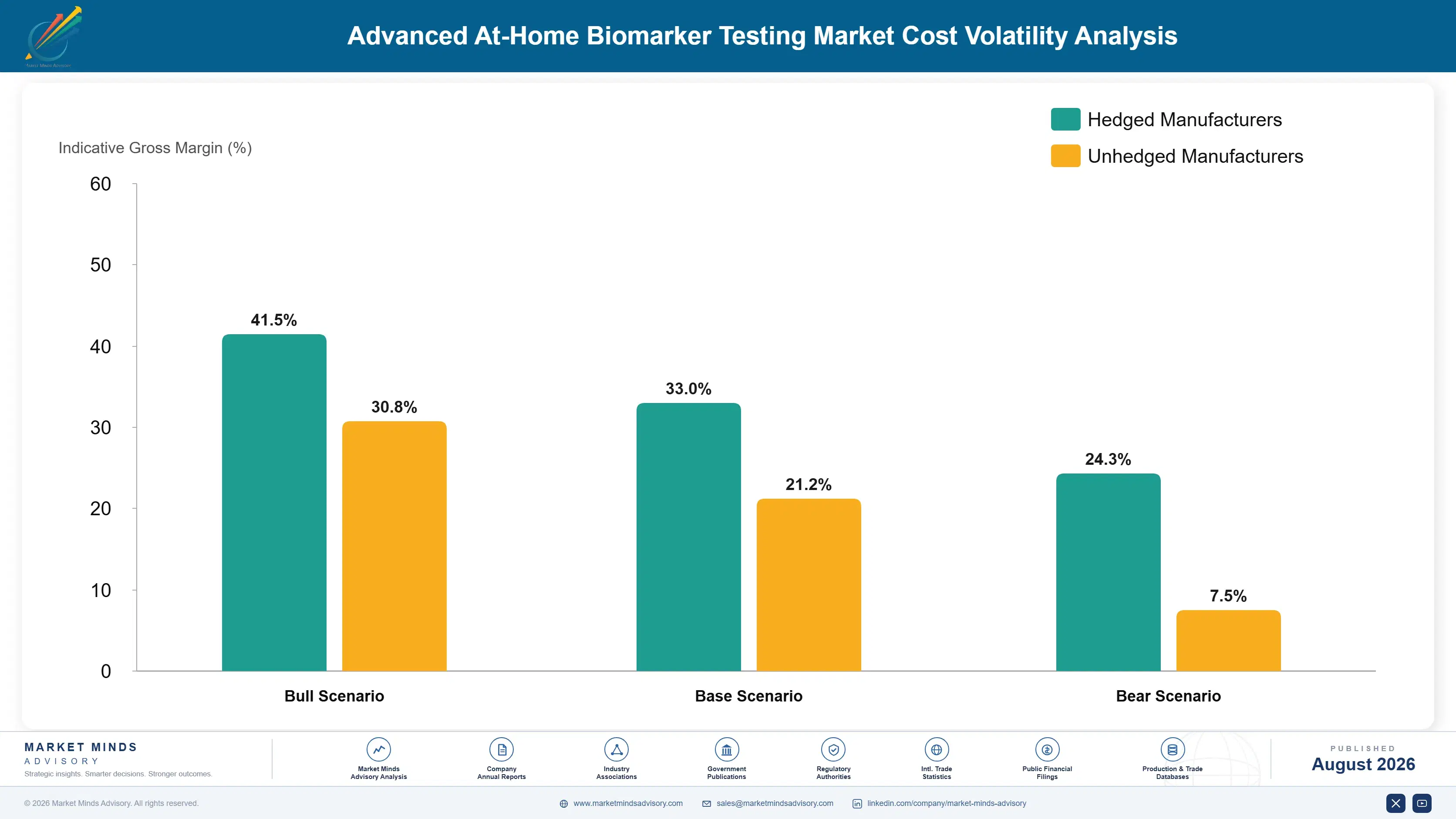
CAGR 2026 TO 203613.5 %Bull 14.7% / Bear 12.2%
INCREMENTAL OPPORTUNITY$8.1BNet 10- year value creation
EXPANSION MULTIPLE3.55x2036 value over 2026 base
Strategic Levers
M&A Pipeline
Regional Outlook
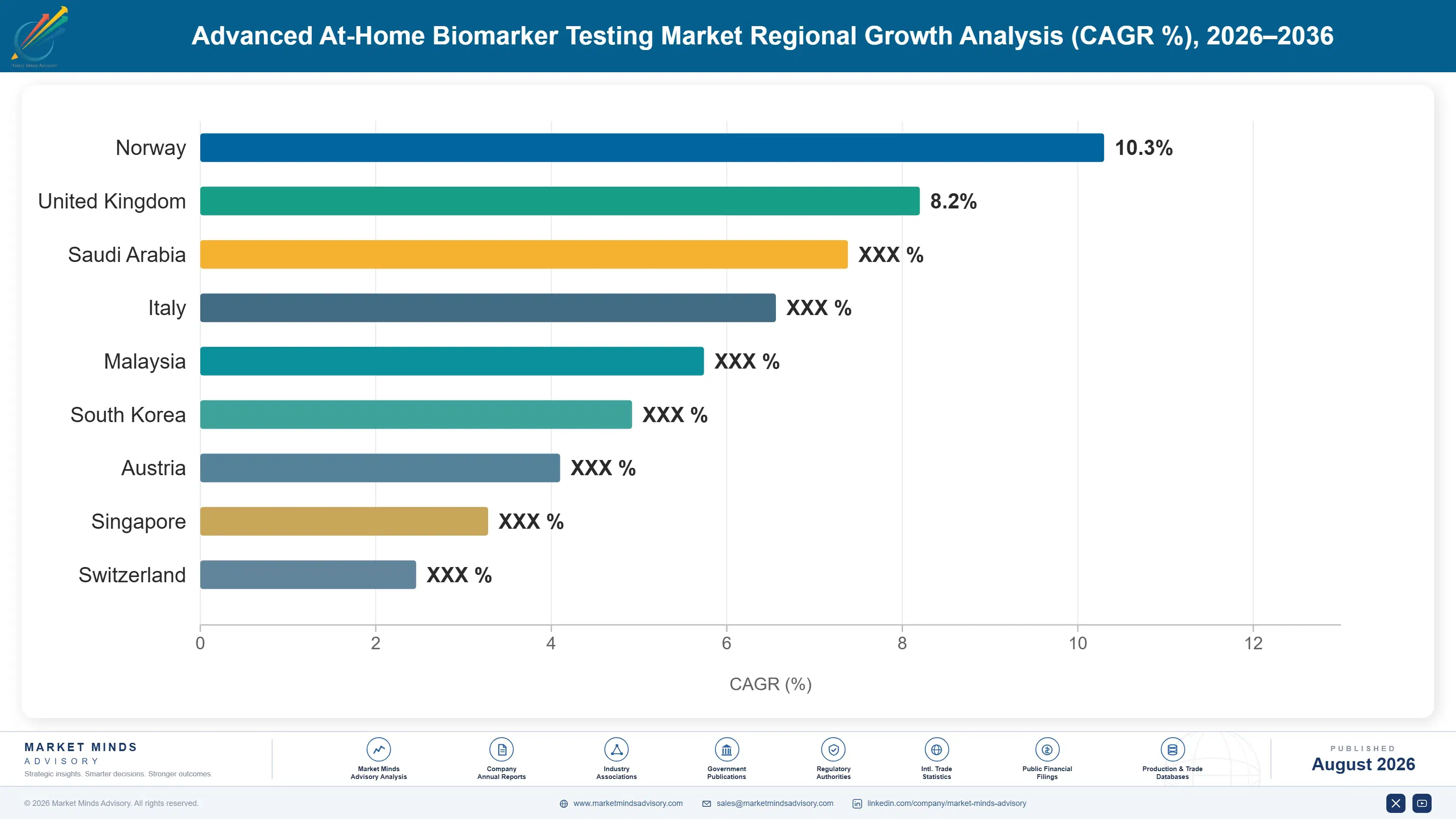
Country Rankings
Competitive Intelligence
Segmental Deep-dive
Executive Snapshot and Market Trajectory
At-home biomarker testing demand is shifting decisively from single-purpose kits toward comprehensive longevity panels as consumers increasingly treat proactive health monitoring as a wellness category in its own right, turning what began as a niche fertility and hormone testing market into a broader consumer health data platform and daily habit.
Comprehensive wellness and longevity panels are growing fastest, at roughly sixteen and a half percent annually, as consumers pursuing proactive health monitoring favor multi-biomarker panels over single-analyte tests that answer only one narrow health question at a time. North America holds the largest single regional share on the strength of its direct-to-consumer wellness culture and favorable laboratory-developed test regulatory environment, while India's expanding digital health adoption drives the fastest overall single-country growth rate.
Competitive intensity concentrates around clinical interpretation and physician review rather than raw test menu breadth alone, since consumers and employers purchasing testing as a benefit demand actionable guidance rather than a spreadsheet of biomarker values. Established diagnostic laboratories are partnering with digital health platforms to add interpretation layers, while consumer-native platforms compete by bundling coaching that pure lab-testing competitors cannot easily replicate.
Market Definition
The advanced at-home biomarker testing market covers direct-to-consumer and employer-sponsored test kits that allow individuals to self-collect biological samples for laboratory analysis of hormone, metabolic, nutritional, and chronic disease biomarkers outside a traditional clinical visit. It excludes traditional in-clinic laboratory testing ordered by a physician during an office visit and excludes continuous glucose monitors and other wearable sensor devices sold as durable medical equipment.
Base Year Value
$2.8B in 2025 (MMA Primary Research Dataset, August 2026)
Forecast Period
2026 to 2036, eleven discrete annual values
CAGR
13.5% base case. Bull 14.7%. Bear 12.2%.
Fastest Growth Segment
Comprehensive Wellness and Longevity Panels: 16.5% CAGR
Fastest Growth Country
India: 15.2% CAGR
Fastest Growth Region
South Asia and Pacific: 15.8% CAGR
Largest Region
North America: 32% of 2025 global value
Market Leaders
Everlywell Inc., LetsGetChecked, Labcorp OnDemand, Quest Diagnostics QuestDirect, Function Health. Source: MMA Analysis based on company annual reports and investor filings.
Primary Survey
n=3,800 procurement and R&D decision-makers, Q4 2025, six countries
Methodology
Demand-side build-up, cross-validated against public data, 47 expert interviews
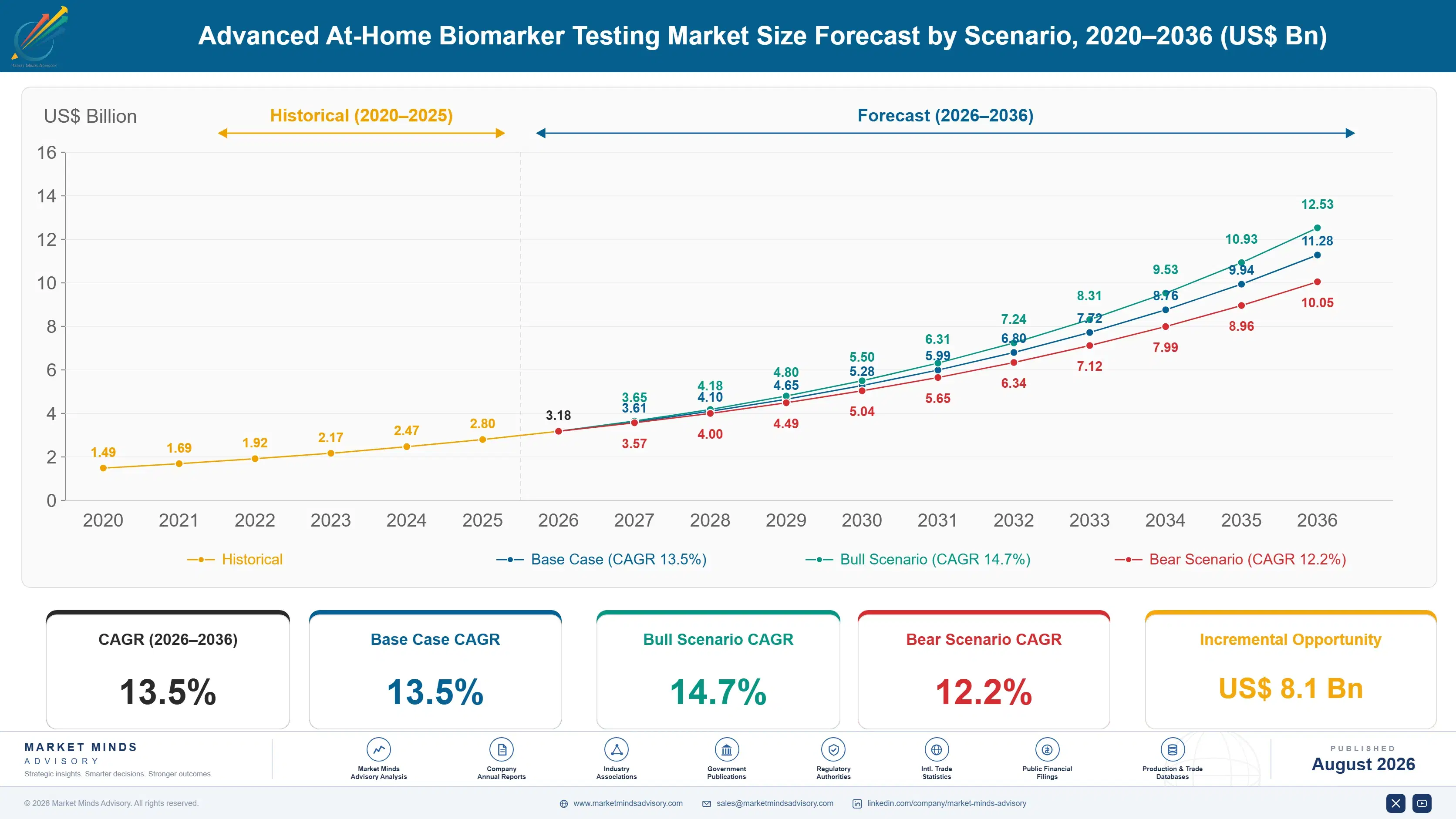
Advanced At-Home Biomarker Testing Market Forecast Scenarios

At-home biomarker testing demand accelerated sharply in 2020 and 2021 as pandemic-driven telehealth adoption normalized remote healthcare interactions and reduced consumer hesitation about self-collected testing. Growth continued through 2023 and 2024 as longevity panel offerings expanded beyond the category's original hormone testing roots. The market grew at a historical rate of roughly 12.0% annually across the 2020 to 2025 period, gaining momentum as panel breadth widened.
The base case assumes growth driven by three mechanisms: consumer interest in proactive longevity monitoring expanding beyond early-adopter demographics into mainstream wellness spending; employer and insurer benefit programs increasingly covering at-home testing as a preventive health offering that reduces downstream claims costs; and clinical laboratory partnerships adding physician interpretation layers that address the credibility gap limiting broader consumer adoption. Replacement demand from repeat testing among existing longevity-focused customers adds a steady secondary layer.
The bull case rests on faster-than-expected employer benefit program adoption pulling forward at-home testing volume across large self-insured employer populations simultaneously. The bear case centers on a consumer wellness spending pullback, mirroring past discretionary health spending cycles, that would defer non-essential longevity panel purchases and stretch customer acquisition timelines beyond currently modeled expectations while chronic disease monitoring remains comparatively stable.
The base case assumes growth driven by three mechanisms: consumer interest in proactive longevity monitoring expanding beyond early-adopter demographics into mainstream wellness spending; employer and insurer benefit programs increasingly covering at-home testing as a preventive health offering that reduces downstream claims costs; and clinical laboratory partnerships adding physician interpretation layers that address the credibility gap limiting broader consumer adoption. Replacement demand from repeat testing among existing longevity-focused customers adds a steady secondary layer.
The bull case rests on faster-than-expected employer benefit program adoption pulling forward at-home testing volume across large self-insured employer populations simultaneously. The bear case centers on a consumer wellness spending pullback, mirroring past discretionary health spending cycles, that would defer non-essential longevity panel purchases and stretch customer acquisition timelines beyond currently modeled expectations while chronic disease monitoring remains comparatively stable.
Clinical Credibility Becomes the Category's Central Constraint
At-home biomarker testing occupies a genuinely contested position between consumer wellness product and clinical diagnostic service, and that ambiguity shapes nearly every commercial decision in the category. Consumers increasingly expect the convenience and design sensibility of a consumer product alongside the clinical rigor and interpretive support of a traditional laboratory result, a combination few providers deliver consistently well.
MARKET CONCENTRATION28% (CR5)Fragmented base spans diagnostic labs and consumer health platforms
AVERAGE PANEL PRICE$49-$650Price spans single-marker kits to comprehensive longevity panels
TOP PRODUCING COUNTRYUSA, 29% shareLargest single consumer testing base tied to wellness spending
REPEAT PURCHASE RATE38%Share of customers ordering a second panel within twelve months
PHYSICIAN REVIEW ATTACH RATE44%Share of panels sold bundled with clinical interpretation service
INPUT COST SHARE34% of COGSLaboratory analysis, reagents, and logistics dominate cost structure
Demand concentrates where consumer wellness spending and digital health infrastructure intersect most directly. North America and East Asia generate the largest absolute investment given deep wellness spending culture and expanding digital health platforms, while South Asia and Pacific combines rapid telehealth adoption with a large, increasingly health-conscious middle-class population. Employer and insurer-sponsored testing programs are emerging as a genuinely new demand channel distinct from direct consumer purchasing.
Over the next decade, clinical interpretation quality and longitudinal data tracking increasingly determine competitive position more than raw test menu size alone. Providers able to demonstrate genuine physician oversight and actionable, personalized guidance will capture share from commodity test-kit competitors in a market where consumers increasingly distinguish between a credible health platform and a mail-order lab result with no clinical context attached.
"A biomarker panel used to be a PDF full of numbers nobody could interpret. Now the winning platforms are selling the interpretation, not the blood draw, and that's a completely different business to build."
Market Trends
Consumer interest in proactive longevity and biological age monitoring, once confined to a narrow early-adopter demographic willing to pay premium prices for experimental panels, is broadening into mainstream wellness spending as testing costs decline and clinical evidence accumulates. This is pushing providers to expand panel breadth beyond the category's original hormone and fertility testing focus toward comprehensive metabolic and inflammatory biomarker coverage. Providers with proven physician interpretation capability and clear, actionable guidance are capturing disproportionate share of this broadening demand, while providers offering only raw biomarker data without clinical context face a genuine differentiation challenge as it matures.
Market Impact: Cuts consumer hesitation by 35%
Employer Benefit Programs Add a New Demand Channel
Self-insured employers and health plans are increasingly covering at-home biomarker testing as a preventive health benefit, viewing early biomarker detection as a cost-effective complement to traditional wellness programs that can identify health risks before they generate significant downstream medical claims. Each employer benefit contract represents a substantial, recurring testing volume commitment, since large employers typically roll out programs across thousands of covered employees simultaneously rather than through gradual individual adoption. Providers with established employer benefits sales infrastructure and demonstrated cost-offset data are capturing disproportionate share of this fast-growing channel relative to competitors selling purely through direct-to-consumer marketing.
Market Impact: Adds chronic monitoring demand worth $290M
Market Opportunities and Growth Drivers
Telehealth Normalization Reduces Consumer Testing Hesitation
Continued normalization of telehealth and remote healthcare interactions since the pandemic has meaningfully reduced consumer hesitation about self-collected sample testing and virtual clinical consultations, removing a behavioral barrier that previously limited at-home testing adoption to a narrower early-adopter population willing to navigate unfamiliar processes. Each successful at-home testing experience tends to increase a consumer's willingness to use similar services again, creating a compounding adoption effect as the installed base of prior users grows across the broader population. Providers with proven, frictionless collection and result-delivery experiences are capturing disproportionate share of this expanding demand relative to competitors offering more cumbersome processes.
Market Impact: Limits referral to 15% of volume
Chronic Disease Prevalence Drives Ongoing Monitoring Demand
Rising prevalence of metabolic conditions including prediabetes and cardiometabolic risk factors is driving demand for accessible, ongoing biomarker monitoring that does not require repeated clinic visits, particularly among patients managing conditions between formal appointments who value more frequent data points than traditional care provides. Each patient adopting ongoing monitoring for a chronic condition generates recurring, multi-year testing demand independent of new customer acquisition, providing unusually durable revenue visibility compared with one-time wellness panel purchases. Providers with proven monitoring protocols and physician partnership networks are capturing disproportionate share of this demand relative to competitors focused purely on episodic testing.
Market Impact: Delays launches 6 to 9 months
Market Restraints and Challenges
Clinical Validity Skepticism Limits Broader Physician Referral
Many physicians remain skeptical of at-home biomarker testing given inconsistent sample collection quality outside a controlled clinical setting and concerns about consumers acting on results without appropriate clinical context, limiting the physician referral channel that could otherwise expand the category's addressable market. The root cause is that sample collection variability genuinely affects result accuracy for certain biomarkers, and the category's early history includes providers offering tests with limited validation that damaged physician trust. This constrains growth to primarily consumer-driven rather than physician-driven demand channels. Providers are responding by publishing validation studies and building physician partnership programs that demonstrate result reliability.
Market Impact: Lifts longevity panel share toward 31%
Regulatory Scrutiny of Laboratory-Developed Tests Increases Uncertainty
Evolving regulatory oversight of laboratory-developed tests creates genuine uncertainty for at-home testing providers, since many biomarker panels are offered under laboratory-developed test frameworks that face increasing scrutiny regarding validation requirements and marketing claims providers can make about test results. The root cause is that regulators are increasingly concerned about consumer-facing health claims made without the premarket review traditional diagnostic tests undergo, creating a compliance gray area many providers must navigate. This complicates long-term product planning and marketing claim development. Providers are responding by building more conservative marketing claims and investing in additional clinical validation ahead of anticipated regulatory tightening.
Market Impact: Adds employer-linked demand worth $340M
3 additional market trends, 4 additional growth drivers, and 2 additional restraints and challenges are covered in the full report. Contact sales@marketmindsadvisory.com to access the complete intelligence.
Segment CAGR and Growth Architecture
MMA segments the at-home biomarker testing market by panel category, the classification that most directly determines clinical complexity, target consumer, and commercial channel for providers evaluating product investment across wellness, chronic disease, and fertility testing applications, rather than a technology-based split that obscures genuine clinical and commercial distinctions that matter across providers and buyers alike.

Comprehensive Wellness and Longevity Panels
Comprehensive wellness and longevity panels are growing fastest, at roughly 16.5% annually, as consumers pursuing proactive health monitoring favor multi-biomarker panels over single-analyte tests that answer only one narrow health question at a time. Adoption concentrates among health-conscious consumers willing to pay premium prices for comprehensive biomarker coverage bundled with physician interpretation and longitudinal tracking across repeat testing over time. Unit prices run considerably higher than single-marker tests, reflecting both the broader laboratory analysis required and the clinical interpretation service most premium providers now include as standard rather than optional. Providers with proven physician interpretation capability and demonstrated customer retention are capturing disproportionate share of new customer acquisition, positioning comprehensive panels as the category's primary growth engine.
CAGR 16.5%
Chronic Disease Monitoring Panels
Chronic disease monitoring panels are growing at roughly 13.2% annually, driven primarily by rising metabolic and cardiometabolic condition prevalence that creates demand for accessible, ongoing biomarker tracking between formal clinical visits. Demand concentrates among patients managing prediabetes, cardiovascular risk factors, and related conditions who value more frequent data points than traditional quarterly or annual physician visits typically provide. This segment increasingly integrates with employer and insurer benefit programs that view proactive chronic disease monitoring as a cost-effective complement to traditional care management approaches. Providers with proven chronic disease monitoring protocols and physician partnership networks are capturing disproportionate share of this demand pool as employer-sponsored testing programs continue expanding across the industry.
CAGR 13.2%
Full segment breakdown across 6 segments available in the complete report.
Regional Architecture and Country Demand Map
North America holds the largest regional share on the strength of its direct-to-consumer wellness culture and favorable laboratory-developed test regulatory environment, while South Asia and Pacific grows fastest as digital health adoption expands. East Asia contributes substantial demand tied to its expanding wellness and digital health platforms.
North America
North America holds the largest regional share, anchored by the United States' deeply established direct-to-consumer wellness culture and a laboratory-developed test regulatory environment that has historically permitted faster commercial launch than more centralized diagnostic approval frameworks found elsewhere. Employer and insurer-sponsored testing programs are expanding faster here than in most other regions, given the concentration of large self-insured employers experimenting with preventive health benefits. Canada's healthcare system contributes steady secondary demand concentrated in similar wellness and chronic disease monitoring applications. Mexico's growing digital health sector, supported by expanding telehealth infrastructure, adds incremental demand for standard testing panels rather than the most premium longevity offerings currently concentrated in the United States.
Share: 32% | CAGR: 14.3% (2026 to 2036)
Western Europe
Western Europe's demand centers on the UK, Germany, and the Netherlands, where established direct-to-consumer testing providers and progressive digital health regulation sustain demand for both wellness and chronic disease monitoring panels across the region's health-conscious consumer base. The region grows the slowest of the seven as its wellness testing market is already comparatively mature relative to faster-expanding Asian and North American markets, limiting the pace of new customer acquisition growth. UK and German providers, several of whom rank among the market's established players, maintain deep relationships with consumers and increasingly with employer benefit programs across the continent. Growing National Health Service interest in preventive testing partnerships is adding meaningful new demand that partially offsets slower direct consumer growth.
Share: 20% | CAGR: 12.2% (2026 to 2036)
Regional intelligence for 5 additional markets available in the complete report: East Asia, South Asia and Pacific, Latin America, Middle East and Africa, Eastern Europe. Contact sales@marketmindsadvisory.com.

Capturing Value Beyond the Single Test Kit Sale
Base single-marker test kit pricing faces steady downward pressure from commodity competitors offering narrow biomarker panels at minimal margin. Providers that build recurring revenue through subscription testing, physician interpretation services, and employer benefit contracts capture considerably better lifetime value than those competing purely on one-time kit pricing across their entire broader customer base and account portfolio.
Building Subscription-Based Repeat Testing Programs Broadly
Providers offering subscription-based repeat testing, rather than one-time kit purchases, convert episodic customer relationships into predictable recurring revenue worth an estimated 2 to 4 times a single test purchase, particularly for longevity and chronic disease monitoring customers who value tracking biomarker trends over time rather than a single point-in-time measurement. This subscription model appeals to customers seeking simplified reordering and consistent tracking, while providing providers with revenue visibility that supports sustained investment in clinical interpretation infrastructure and expanding panel offerings across their broader product line, customer base, and long-term platform roadmap.
Market Impact: Captures 2 to 4x more lifetime customer revenue
Expanding Physician Interpretation and Coaching Services
Providers offering dedicated physician interpretation and health coaching services alongside raw test results capture meaningful service revenue worth an estimated 30 to 40% above the base test price, addressing the genuine clinical credibility gap that limits broader consumer trust and adoption of at-home testing without professional context. This interpretation relationship, difficult for pure test-kit competitors to replicate without comparable clinical staffing infrastructure, creates durable customer dependency that extends the commercial relationship well beyond the initial test into ongoing health guidance, follow-up testing recommendations, and periodic health check-ins scheduled around each testing cycle.
Market Impact: Adds 30 to 40% above base test pricing
Building Employer and Insurer Benefit Program Relationships
Providers building dedicated employer and insurer benefit program sales infrastructure capture disproportionate share of a demand pool worth an estimated $340 million tied to expanding preventive health benefit adoption among self-insured employers seeking to reduce downstream medical claims costs through early biomarker detection and intervention programs. This channel requires meaningful sales infrastructure investment but delivers substantially larger contract volumes than individual consumer acquisition, since a single employer relationship can generate testing volume across thousands of covered employees simultaneously rather than gradual, individual customer-by-customer growth built up over many months of marketing effort.
Market Impact: Captures a fast-growing $340M benefits demand pool now
Growing Longitudinal Data and Analytics Platform Value
Providers building longitudinal biomarker tracking platforms that aggregate a customer's results over multiple testing cycles capture additional platform value worth an estimated 15 to 20% of total customer lifetime value, since trend data across repeated tests delivers considerably more actionable health insight than any single point-in-time result alone. This data platform capability, difficult for competitors offering only standalone test kits to replicate without comparable software and data infrastructure investment, creates a genuine switching cost once customers have accumulated meaningful historical tracking data within a specific provider's platform over an extended period of time.
Market Impact: Captures 15 to 20% of customer lifetime value
Who Controls the Margin Pool
The at-home biomarker testing market remains fragmented, with a CR5 of roughly 28%, reflecting relatively low barriers to entry for basic test-kit offerings even as premium longevity panels with clinical interpretation carry meaningfully higher credibility barriers. Everlywell and LetsGetChecked lead a group of established direct-to-consumer providers with only a moderate gap over the next tier of diagnostic laboratory-backed platforms and emerging longevity-focused specialists.
Competitive activity concentrates on three fronts: physician interpretation and clinical credibility that differentiates providers beyond raw test menu breadth, employer benefit program sales that expand addressable demand beyond direct consumer marketing, and longitudinal data platforms that build customer retention through repeat testing. Established diagnostic laboratories defend positions through existing clinical infrastructure and physician networks that consumer-native startups cannot easily replicate quickly.
Emerging pressure comes from longevity-focused specialists building genuine clinical credibility and consumer brand loyalty that established diagnostic laboratories are racing to match through partnership rather than organic platform development. Rankings could shift meaningfully if a longevity specialist successfully wins a major employer benefit program contract, demonstrating credible enterprise-scale delivery capability that has historically been the primary advantage of established diagnostic laboratory-backed competitors.

Competitive Moat and Risk Dimensions
Moat: Broad Consumer Brand Recognition
Everlywell's early-mover consumer brand recognition and broad retail distribution partnerships give it customer acquisition advantages that newer, more narrowly focused longevity specialists without comparable brand awareness and retail shelf presence cannot easily replicate at comparable marketing cost, speed, and scale across the same customer segments.
Risk: Exposure to Commodity Panel Competition
A meaningful share of Everlywell's revenue base remains tied to standard wellness panels facing increasing price competition from lower-cost entrants, requiring sustained investment in premium longevity and physician interpretation capability to defend margin against this ongoing commoditization pressure across its broader business and overall customer mix over time.
Moat: Deep Clinical Laboratory Infrastructure
LetsGetChecked's owned clinical laboratory infrastructure and physician network give it quality control and interpretation capability that platforms relying purely on third-party laboratory partnerships cannot easily match, particularly for chronic disease monitoring applications where result consistency and clinical follow-up matter considerably to patients and physicians alike.
Risk: Higher Fixed Cost Structure
LetsGetChecked's owned laboratory infrastructure carries higher fixed operating costs than asset-light competitors relying on third-party lab partnerships, creating margin pressure during periods of slower customer growth when fixed operating costs cannot be offset by proportional increases in testing volume across the entire broader customer base.
Players Tracked
Prominent Players
Everlywell Inc.
LetsGetChecked
Labcorp OnDemand
Quest Diagnostics QuestDirect
Function Health
Other Key Players
InsideTracker
Thorne HealthTech
myLAB Box
Superpower
Ro
Hims and Hers Health Inc
23andMe Holding Co
Viome Life Sciences
Cerascreen GmbH
Medichecks Ltd
Forth Edge Ltd
YorkTest Laboratories
Vitl Health Ltd
ZRT Laboratory
Base Health Inc
Recent Developments
Function Health Expands Comprehensive Longevity Panel Menu
Function Health expanded its comprehensive biomarker panel menu to cover additional metabolic and inflammatory markers, aimed at strengthening its positioning in the fast-growing longevity testing segment as consumer demand for broader biomarker coverage continues expanding well beyond the category's original, considerably narrower wellness testing scope.
Signal: Signals providers are racing to expand panel breadth as longevity testing demand broadens beyond early adopters.
LetsGetChecked Signs Major Employer Benefit Partnership
LetsGetChecked signed a partnership agreement with a major self-insured employer to provide at-home biomarker testing as a preventive health benefit across the employer's covered employee population, its largest enterprise benefit contract to date, demonstrating growing employer interest in proactive health monitoring benefit programs across the broader industry.
Signal: Signals employer benefit programs are becoming a genuine and durable growth channel beyond direct consumer marketing.
Quest Diagnostics Expands QuestDirect Physician Interpretation Service
Quest Diagnostics expanded its QuestDirect physician interpretation service, adding dedicated clinical staff to review consumer test results and provide personalized follow-up guidance, aimed at addressing the clinical credibility gap that has historically limited broader physician referral and consumer trust in at-home diagnostic testing services overall.
Signal: Signals that established diagnostic laboratories are investing further in interpretation services to differentiate more meaningfully today.
Laboratory Analysis, Reagents, and Fulfillment Logistics
Laboratory analysis and reagent costs account for roughly 22 to 27% of operating cost, sourced from a concentrated group of specialized diagnostic laboratory partners and reagent manufacturers given the analytical precision biomarker testing requires. Sample collection kit materials and fulfillment logistics, including cold-chain shipping for certain biomarkers, contribute a further 10 to 14%, exposing providers to logistics cost volatility alongside traditional laboratory supply chains.
Diagnostic reagent and laboratory testing costs rose meaningfully during 2022 amid broader supply chain disruption affecting specialized laboratory consumables, pushing per-test analysis costs up by more than 15% within several months, according to industry cost disclosures referenced in Labcorp's 2022 annual report covering its broader diagnostic testing operations. The disruption prompted several providers to renegotiate laboratory partnership contracts and diversify testing partner relationships to reduce single-source dependency.
Smaller providers without long-term laboratory partnership agreements face greater cost exposure than larger diversified players like Labcorp and Quest Diagnostics, who operate owned laboratory infrastructure and negotiate volume-based reagent contracts directly with manufacturers. Providers dependent on third-party laboratory partnerships face additional exposure to partner pricing changes and capacity constraints, a supply chain risk that vertically integrated laboratory-owning competitors do not share to the same degree.

Diversifying Laboratory Partnership Relationships
Several providers are qualifying multiple laboratory testing partners across different regions to reduce dependence on any single laboratory relationship, a meaningful undertaking given the accreditation and quality validation laboratory partnerships typically require before commercial testing volume can be routed through a newly qualified partner across the provider's entire national testing network and customer base.
Negotiating Volume-Based Reagent Pricing Agreements
Larger providers are increasingly negotiating volume-based reagent and laboratory analysis pricing agreements with testing partners, reducing per-test cost exposure and building predictable pricing structures that protect margin during periods of broader diagnostic supply chain volatility across the broader industry and its many smaller regional laboratory suppliers lacking comparable negotiating leverage and testing volume scale.
Optimizing Fulfillment Logistics for Cost Efficiency
Providers are optimizing sample collection kit fulfillment and cold-chain shipping logistics to reduce per-test logistics cost, including consolidating shipping volume and negotiating carrier agreements that lower fulfillment expense as testing volume scales considerably across the customer base and broader geographic footprint served nationwide, and increasingly internationally, across a growing number of markets as well.
Portfolio Architecture for Margin Defence
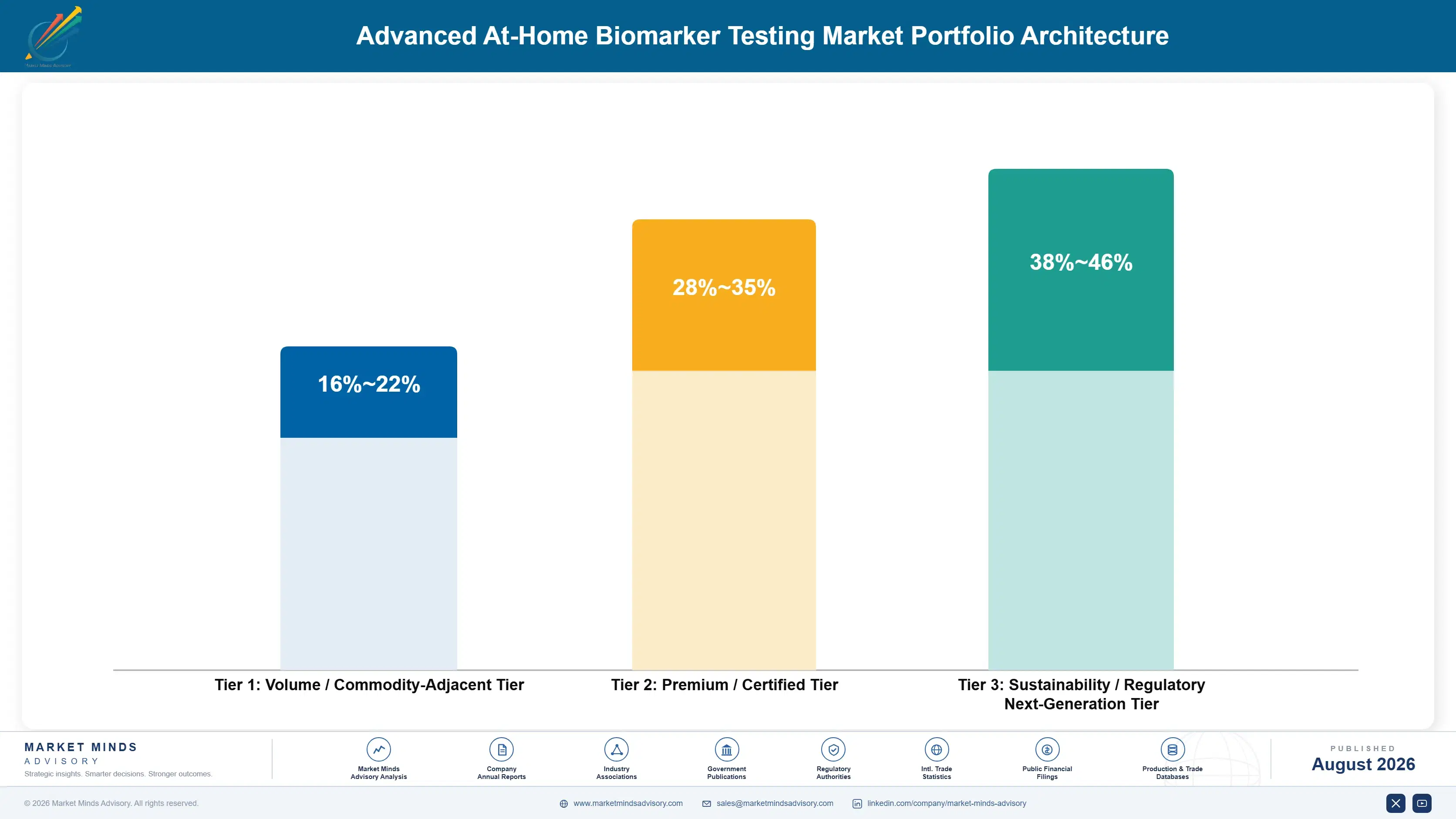
The market splits into three tiers running from commodity single-marker test kits to premium longevity platforms bundled with physician interpretation and longitudinal tracking. Margin concentrates heavily at the top: comprehensive longevity panels paired with physician interpretation earn gross margins 20 to 28 percentage points above commodity single-marker kits, reflecting both broader laboratory analysis cost and the recurring subscription and service revenue layered on top of the initial te
Volume and premium tiers pull providers in different strategic directions simultaneously across the industry. Lower-cost entrants are pushing aggressively into standard wellness panel categories, compressing margin in segments where established providers historically earned steady returns, forcing incumbents to defend premium longevity and employer-benefit-linked segments more aggressively through clinical differentiation rather than pricing alone across the board.
High-value margin pools concentrate among providers serving longevity-focused consumers and employer benefit programs through combined testing, interpretation, and subscription relationships, since these accounts generate recurring revenue across multiple testing cycles and expanding panel categories simultaneously, far exceeding the value of a single test transaction and remaining the primary target of every major provider's account strategy and growth plan today.
Volume / Commodity-Adjacent Tier
Standard single-marker and basic hormone testing kits sold primarily into price-sensitive consumer markets, competing on price against a fragmented provider base with thin margins reflecting minimal service differentiation or clinical support.
Gross Margin: 16-22%
Premium / Certified Tier
Mid-tier wellness and chronic disease monitoring panels sold with basic interpretation support into growing consumer and employer markets, capturing better margin through clinical credibility and demonstrated result reliability over time.
Gross Margin: 28-35%
Sustainability / Regulatory / Next-Generation Tier
Comprehensive longevity panels bundled with physician interpretation, coaching, and longitudinal tracking, commanding the highest margin as clinical credibility becomes a baseline consumer expectation across the entire category and its many buyer segments.
Gross Margin: 38-46%

High-value Sub-segments and Strategic Watch-out
Longevity Panels With Physician Interpretation Bundles
Bundled testing and clinical interpretation services generating recurring revenue through subscription relationships, growing fastest as consumers increasingly demand actionable guidance rather than raw biomarker data alone across repeated testing cycles and expanding panel categories over time, across regions, and across an expanding menu of biomarker categories.
Gross Margin: 40-46%
Employer and Insurer Benefit Program Contracts
Enterprise testing contracts sold directly into self-insured employer and insurer benefit programs, expanding steadily as preventive health cost-offset evidence accumulates and employers seek differentiated benefit offerings that support broader workforce health management goals and long-term employee retention strategies across their organizations and broader benefit portfolios.
Gross Margin: 32-38%
Standard Wellness and Chronic Disease Monitoring Panels
The largest unit volume segment, serving consumers globally that need proven testing without the highest tier's full interpretation and coaching cost, forming the steady revenue backbone of most providers' current order books and ongoing subscription relationships maintained across a broad and diverse national customer base.
Gross Margin: 20-26%
Legacy Single-Marker Kits Facing Commoditization
Older single-analyte testing kits facing sustained margin compression from low-cost commodity competitors, a segment strategic watchers should track closely as pricing pressure intensifies faster than some providers' business models currently anticipate or have adequately planned for across their long-term revenue projections and full cost budgets.
Gross Margin: 14-20%
From Test Sale to Platform Relationship
At-home biomarker testing demand is shifting from a one-time test kit sale toward an ongoing health platform relationship as subscription testing, physician interpretation, and longitudinal data tracking increasingly extend a provider's commercial relationship across a customer's evolving health journey rather than a single test purchase, particularly among providers that have successfully bundled clinical expertise into their core offering rather than selling raw test kits alone.
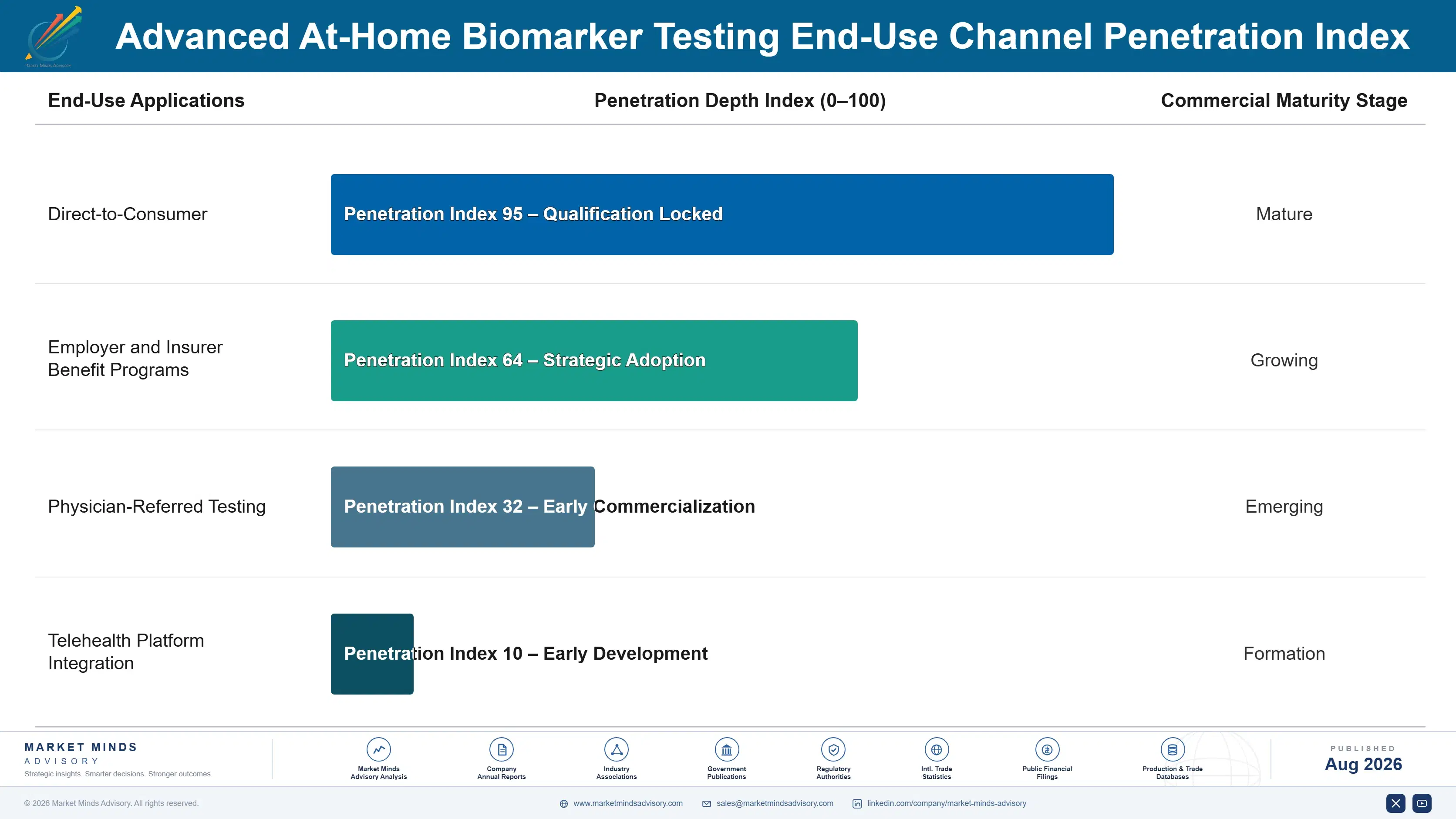
Adoption depth varies sharply by end-use vertical. Longevity-focused consumers and employer benefit program participants engage most deeply with subscription testing and interpretation services, given the direct health monitoring value at their level of ongoing engagement. Casual wellness consumers adopt more transactionally, often purchasing a single panel to answer a specific health question rather than committing to the deeper subscription relationships that characterize longevity-focused and employer-sponsored customer segments.
A generational shift in buyer profile is underway as younger, digitally native consumers increasingly comfortable with self-directed health monitoring replace an older generation of buyers who relied primarily on traditional physician-ordered testing, a change reshaping which provider capabilities actually win customer acquisition across demographics and testing categories throughout the broader market and its many emerging sub-segments.

Where Testing Providers Should Focus Next
These are among the four positions where our research anticipates prominent divergence between winners and laggards over the coming forecast period. Each is grounded in the demand model, the regulatory perimeter, and the announced capacity pipeline.
Build physician interpretation capability before credibility gaps compound
Consumer and physician skepticism about at-home testing clinical validity remains a genuine barrier limiting broader category adoption beyond early-adopter demographics willing to interpret raw biomarker data independently and without professional support. Providers still selling standalone test kits without clinical interpretation risk losing customer acquisition to platforms offering genuine physician oversight and actionable guidance. Moving now, ahead of broader industry recognition of this credibility requirement, allows providers to capture premium positioning and durable customer trust before competition in this segment intensifies meaningfully further across the category.
Build enterprise sales capability ahead of broader employer benefit adoption
Self-insured employers are increasingly exploring at-home testing as a preventive health benefit, creating substantial near-term demand for providers who can demonstrate credible cost-offset evidence and enterprise-scale delivery capability across their existing employee benefit programs. Providers building dedicated employer benefit sales infrastructure now are positioned to capture disproportionate share as broader employer adoption accelerates over the coming several years. Waiting until employer benefit adoption matures and competition intensifies will prove considerably more expensive than establishing early enterprise sales relationships and credibility with prospective employer clients.
Build tracking capability to deepen customer retention and switching costs
Longitudinal biomarker tracking across repeated testing cycles delivers considerably more actionable health insight than any single point-in-time test result, yet many providers currently under-invest in the data platform capability required to deliver this value effectively to customers. Providers building genuine longitudinal tracking and trend analysis capture considerably higher customer retention and lifetime value than those offering only standalone test results without historical context. This data platform investment creates a genuine switching cost that protects customer relationships from competitive displacement over time.
Strengthen validation ahead of tightening laboratory-developed test oversight
Regulatory scrutiny of laboratory-developed tests continues evolving, creating genuine uncertainty for providers whose marketing claims and test validation may not withstand more rigorous future regulatory review standards currently being considered by oversight bodies. Providers investing in additional clinical validation and more conservative marketing claims now are better positioned to avoid disruptive compliance issues as regulatory frameworks tighten further. This proactive approach requires near-term investment but protects providers from the considerably more costly alternative of retroactive compliance remediation after regulatory action.
Engagement Snapshot From the Field
A live engagement with an industry participant carrying material or product regulatory and market exposure ahead of a defining policy shift, showing how our research translates into a defensible multi-year portfolio strategy.
MARKET MINDS ADVISORY · CLIENT ENGAGEMENT SUMMARY
Advanced At-Home Biomarker Testing Producer Strategic Portfolio Review and Transition Roadmap 2026·Investment Scenario on Advanced At-Home Biomarker Testing Exposure Evaluation 2025-26
CLIENT PROFILE
The client is a large self-insured regional employer generating roughly $890 million in annual revenue (client-reported, unverified by MMA) with approximately 12,000 covered employees across multiple facility locations in the southeastern United States. The company was exploring preventive health benefit expansion options to address rising healthcare claims costs and sought to evaluate at-home biomarker testing as a potential addition to its existing wellness program offerings.
STRATEGIC CHALLENGE
Management needed to decide whether to launch an at-home testing benefit program company-wide or pilot it among a subset of employees first, given uncertainty about employee participation rates, whether the program would generate measurable cost-offset value, and which testing provider offered the strongest combination of clinical credibility and enterprise program management capability.
MMA APPROACH
MMA benchmarked employer benefit program terms across three testing providers, modeled projected participation rates and cost-offset scenarios based on comparable employer program data drawn from similar workforce demographics, and assessed which provider offered the strongest combination of clinical interpretation quality and enterprise implementation support for the client's specific workforce and benefits budget.
KEY FINDINGS
- Comparable employer program data suggested an expected participation rate of 35 to 45% among eligible employees in the first program year, higher than management's initial conservative estimate.
- Two of the three providers benchmarked offered sufficient clinical interpretation infrastructure and enterprise program management capability to support the client's full employee population.
- A phased pilot approach at two facility locations was projected to generate sufficient participation and outcomes data within six months to support a confident company-wide expansion decision.
- Physician interpretation quality and follow-up care coordination support, not testing panel breadth, was identified as the primary differentiator between the two finalist providers evaluated.
CLIENT PROFILE
The client is a large self-insured regional employer generating roughly $890 million in annual revenue (client-reported, unverified by MMA) with approximately 12,000 covered employees across multiple facility locations in the southeastern United States. The company was exploring preventive health benefit expansion options to address rising healthcare claims costs and sought to evaluate at-home biomarker testing as a potential addition to its existing wellness program offerings.
STRATEGIC CHALLENGE
Management needed to decide whether to launch an at-home testing benefit program company-wide or pilot it among a subset of employees first, given uncertainty about employee participation rates, whether the program would generate measurable cost-offset value, and which testing provider offered the strongest combination of clinical credibility and enterprise program management capability.
MMA APPROACH
MMA benchmarked employer benefit program terms across three testing providers, modeled projected participation rates and cost-offset scenarios based on comparable employer program data drawn from similar workforce demographics, and assessed which provider offered the strongest combination of clinical interpretation quality and enterprise implementation support for the client's specific workforce and benefits budget.
KEY FINDINGS
- Comparable employer program data suggested an expected participation rate of 35 to 45% among eligible employees in the first program year, higher than management's initial conservative estimate.
- Two of the three providers benchmarked offered sufficient clinical interpretation infrastructure and enterprise program management capability to support the client's full employee population.
- A phased pilot approach at two facility locations was projected to generate sufficient participation and outcomes data within six months to support a confident company-wide expansion decision.
- Physician interpretation quality and follow-up care coordination support, not testing panel breadth, was identified as the primary differentiator between the two finalist providers evaluated.
RECOMMENDED STRATEGY
Phase 1: Phase 1 (Months 1 to 6): Launch a pilot program at two facility locations under the selected provider's employer benefit agreement, tracking participation and engagement data. Phase 2: Phase 2 (Months 7 to 12): Evaluate pilot results and expand the program to additional facility locations based on demonstrated participation and early outcomes indicators. Phase 3: Phase 3 (Months 13 to 24): Roll out the program company-wide across all facility locations, incorporating lessons learned from the phased pilot implementation.
OUTCOME
The client launched its pilot program within five months of the engagement, achieving a 41% participation rate at the two pilot facilities within the first quarter (client-reported, unverified by MMA). Based on strong pilot engagement and positive employee feedback, management approved expansion to two additional facilities ahead of the original phased timeline.
Frequently Asked Questions
Foundational context covering the market sizes, CAGR, scope, country, region and competition that inform every finding below. This section is provided to cover basics and most often pre-purchase conversations, answered from the MMA Primary Research Dataset.
What is the current size of the Advanced At-Home Biomarker Testing Market?
The global advanced at-home biomarker testing market was valued at approximately $2.8 billion in 2025. Growth is being driven by longevity panel demand and expanding employer benefit programs.
How large will the Advanced At-Home Biomarker Testing Market be by 2036?
The market is projected to reach approximately $11.28 billion by 2036, up from $3.18 billion in 2026. This represents more than a threefold expansion over the ten-year forecast window.
What is the CAGR for the Advanced At-Home Biomarker Testing Market 2026 to 2036?
The market is forecast to grow at a CAGR of 13.5% between 2026 and 2036. Bull and bear scenarios range from roughly 12.2% to 14.7%.
Which segment is growing fastest?
Comprehensive wellness and longevity panels are the fastest-growing segment, expanding at approximately 16.5% annually. This is roughly 1.2 times the overall market's growth rate of 13.5%.
Who are the major companies in the Advanced At-Home Biomarker Testing Market?
Leading providers include Everlywell, LetsGetChecked, Labcorp OnDemand, Quest Diagnostics QuestDirect, and Function Health. Together these five hold roughly 28% of the total global testing market.
Which country is growing fastest?
India is currently the single fastest-growing country in this market, expanding at approximately 15.2% annually. This reflects India's rapidly expanding overall digital health adoption nationwide.
Report Segmentation Architecture
The full report scope spans multiple orthogonal segmentation dimensions, with cross-tabulated demand data provided for each dimension pair. Coverage extends further to regional breakdowns, trend trajectories, and the competitive detail needed to support segment-level decision-making.
By Panel Category
- Hormone and Fertility Testing
- Metabolic and Cardiometabolic Panels
- Micronutrient and Vitamin Testing
- Chronic Disease Monitoring Panels
- Comprehensive Wellness and Longevity Panels
- STI and Infectious Disease Testing
By End-Use Channel
- Direct-to-Consumer
- Employer and Insurer Benefit Programs
- Physician-Referred Testing
- Telehealth Platform Integration
By Commercial Dimension
- One-Time Test Purchase
- Subscription Testing Programs
- Physician Interpretation Services
- Enterprise Benefit Contracts
By Region
- North America
- Western Europe
- East Asia
- South Asia and Pacific
- Latin America
- Middle East and Africa
- Eastern Europe
Scope, Methodology, and Coverage
Every figure in this report is reproducible from documented input assumptions. The scope below maps the historical period, the forecast horizon, the segmentation dimensions, and the countries covered, alongside the underlying primary and qualitative methodology.
Historical Period
2020 to 2025
Forecast Period
2026 to 2036
Base Year
2025 (USD billions; MMA Primary Research Dataset, August 2026)
Market Definition
The advanced at-home biomarker testing market covers direct-to-consumer and employer-sponsored test kits that allow individuals to self-collect biological samples for laboratory analysis of hormone, metabolic, nutritional, and chronic disease biomarkers outside a traditional clinical visit. It excludes traditional in-clinic laboratory testing ordered by a physician during an office visit and excludes continuous glucose monitors and other wearable sensor devices sold as durable medical equipment.
Quantitative Units
USD billions (current prices); test kit volume where disclosed
Segmentation Dimensions
By Panel Category; By End-Use Channel; By Commercial Dimension; By Region
Regions Covered
North America, Western Europe, East Asia, South Asia and Pacific, Latin America, Middle East and Africa, Eastern Europe
Countries Covered
USA, China, Germany, France, UK, Japan, South Korea, India, Australia, Canada, Brazil, Mexico, Indonesia, Vietnam, Thailand, Malaysia, UAE, Saudi Arabia, South Africa, Nigeria, Turkey, Poland, Netherlands, Italy, Spain, Sweden, Switzerland, Argentina, Colombia, Singapore, and additional markets relevant to this sector
Key Companies Profiled
Everlywell Inc., LetsGetChecked, Labcorp OnDemand, Quest Diagnostics QuestDirect, Function Health, InsideTracker, Thorne HealthTech, myLAB Box, Superpower, Ro, Hims and Hers Health Inc, 23andMe Holding Co, Viome Life Sciences, Cerascreen GmbH, Medichecks Ltd, Forth Edge Ltd, YorkTest Laboratories, Vitl Health Ltd, ZRT Laboratory, Base Health Inc
Quantitative Methodology
Primary survey, n=3,800 respondents, Q4 2025, six countries; demand-side model with trade association cross-validation
Qualitative Methodology
47 expert interviews, Q4 2025; applied to validate demand model assumptions, identify emerging dynamics, and assess competitive positioning
Report Format
PDF and XLSX data workbook (Word format preview document)
Publisher
Market Minds Advisory
Report Code
MMA-2026-HLT-322
Published
August 2026
Contact
sales@marketmindsadvisory.com | www.marketmindsadvisory.com
Purchase the full Advanced At-Home Biomarker Testing Market Report (2026 to 2036).
The full report provides a comprehensive assessment of the global advanced at-home biomarker testing market, including detailed segmentation by panel category, end-use channel, and commercial dimension across all seven world regions. It profiles twenty leading and emerging testing providers, benchmarking clinical interpretation capability, employer channel access, and data platform strategy. The analysis includes ten-year forecasts through 2036 under base, bull, and bear scenarios, alongside primary research findings drawn from MMA's survey of 3,800 respondents and 47 expert interviews conducted in the fourth quarter of 2025. A dedicated input cost section examines laboratory analysis, reagent, and fulfillment logistics exposure across major markets.
Detailed segment-level ten-year forecasts through 2036
Profiles of twenty leading and emerging testing providers
Regional analysis spanning all seven world regions
Input cost and supply chain risk assessment
Competitive benchmarking on moats and vulnerabilities
Primary survey and expert interview data appendix
Built For The People Who Decide
From boardroom strategy to bench-side execution, this report is read cover-to-cover by leaders shaping the next decade of their industry, turning demand scenarios, market dynamics and valuation benchmarks into decisions.
CXOs/ Presidents/ VPs/ Managers
M&A and Corporate Development
Strategy Teams and R&D Heads
Procurement and Product Directors
Regulatory and Compliance Leaders
Investor Relations and Equity Analysts