Acetaminophen API Market: Compliance, Integration, and the Injectable Grade Shift
Executive Snapshot and Market Trajectory
Injectable and sterile grade acetaminophen are growing at roughly 1.68x the market average as hospitals expand opioid-sparing pain management protocols following major surgery. East Asia retains the largest revenue base on China's integrated paracetamol intermediate manufacturing capacity, while South Asia has emerged as the second largest producing region given India's extensive USFDA and EU-GMP approved export manufacturing base serving generic drug makers worldwide.
Acetaminophen API Market Forecast Scenarios

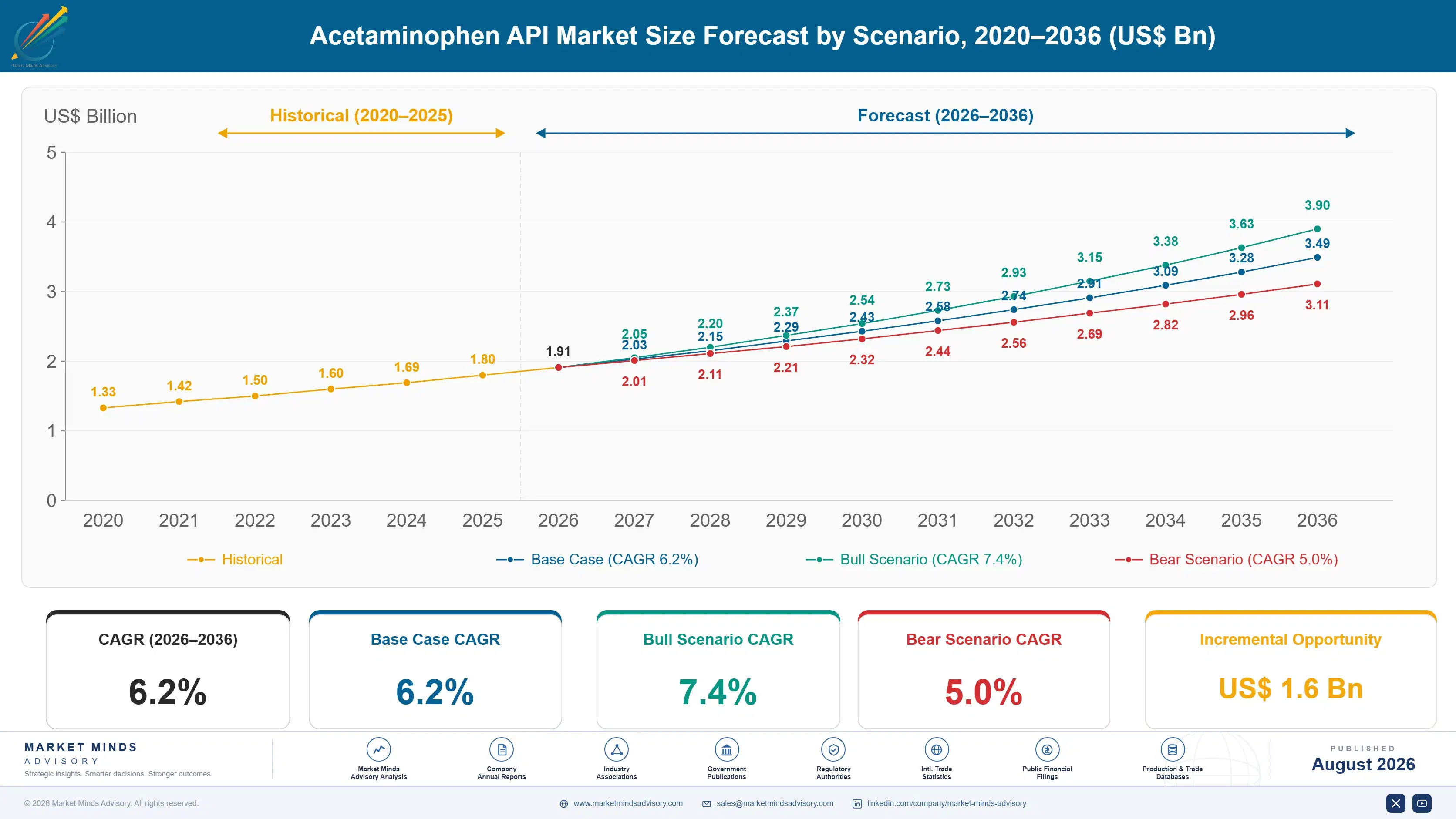
The base case assumes 6.2% CAGR through 2036, anchored in three mechanisms: rising injectable and sterile grade demand as hospitals expand opioid-sparing pain management protocols, generic drug volume growth across price-sensitive emerging markets requiring reliable low-cost bulk supply, and tightening regulatory inspection standards consolidating purchasing toward fewer large-scale, fully compliant manufacturers. Extended-release grade demand adds a reinforcing tailwind as formulators increasingly specify modified-release acetaminophen for combination analgesic products requiring longer duration pain control across a single dose.
A bull scenario, near 7.4% CAGR, assumes faster hospital adoption of injectable paracetamol and accelerated generic volume growth across emerging markets pull bulk API orders forward. The bear case, near 5.0% CAGR, assumes continued price competition among Chinese and Indian manufacturers compresses margins further and some formulators delay qualifying additional suppliers beyond their existing contracted base.
Manufacturing Compliance Reshapes Bulk API Sourcing Decisions
"Buyers used to ask what price per kilogram a supplier could offer. Now the first question is whether that supplier's facility has a clean inspection history, because a single warning letter can knock a plant out of a formulator's approved supplier list overnight."
Market Trends
Regulatory Inspection Scrutiny Consolidates Supplier Qualification
Market Opportunities and Growth Drivers
Rising Generic Drug Volumes Sustain Base Demand Growth
Hospital Opioid-Sparing Protocols Drive Injectable Grade Demand
Market Restraints and Challenges
Price Competition From Chinese Producers Compresses Margins
Regulatory Inspection Failures Disrupt Supply Continuity
Segment CAGR and Growth Architecture

Injectable and Sterile Grade Acetaminophen API
Extended-Release and Modified-Release Grade Acetaminophen API
Regional Architecture and Country Demand Map
North America
Western Europe

Monetizing Compliance Assurance and Dual-Sourcing Contracts
Offering Multi-Year Supply Continuity Contracts Directly
Bundling Regulatory Compliance Documentation Services Together
Structuring Dual-Site Backup Manufacturing Agreements Broadly
Offering Injectable Grade Co-Development Partnership Programs
Who Controls the Margin Pool
Emerging pressure comes from additional Indian and Southeast Asian producers moving up the value chain from standard grade commodity material into injectable and extended-release specialty grades sold initially to domestic formulators but increasingly targeting export markets as facility approvals accumulate. Rankings among the top five could shift if a leader fails to maintain its compliance record, since formulators increasingly evaluate continuity risk ahead of price during large contract decisions.

Competitive Moat and Risk Dimensions
Moat: Injectable grade manufacturing depth
Risk: Higher cost structure exposure
Moat: European regulatory compliance depth
Risk: Persistently higher production costs
Players Tracked
Prominent Players
Other Key Players
Recent Developments
Granules India Expands Sterile Injectable Grade Manufacturing Capacity
Mallinckrodt Signs Multi-Year Supply Continuity Agreement With Major Generic Formulator
Shandong Xinhua Acquires Regional Paraaminophenol Intermediate Producer
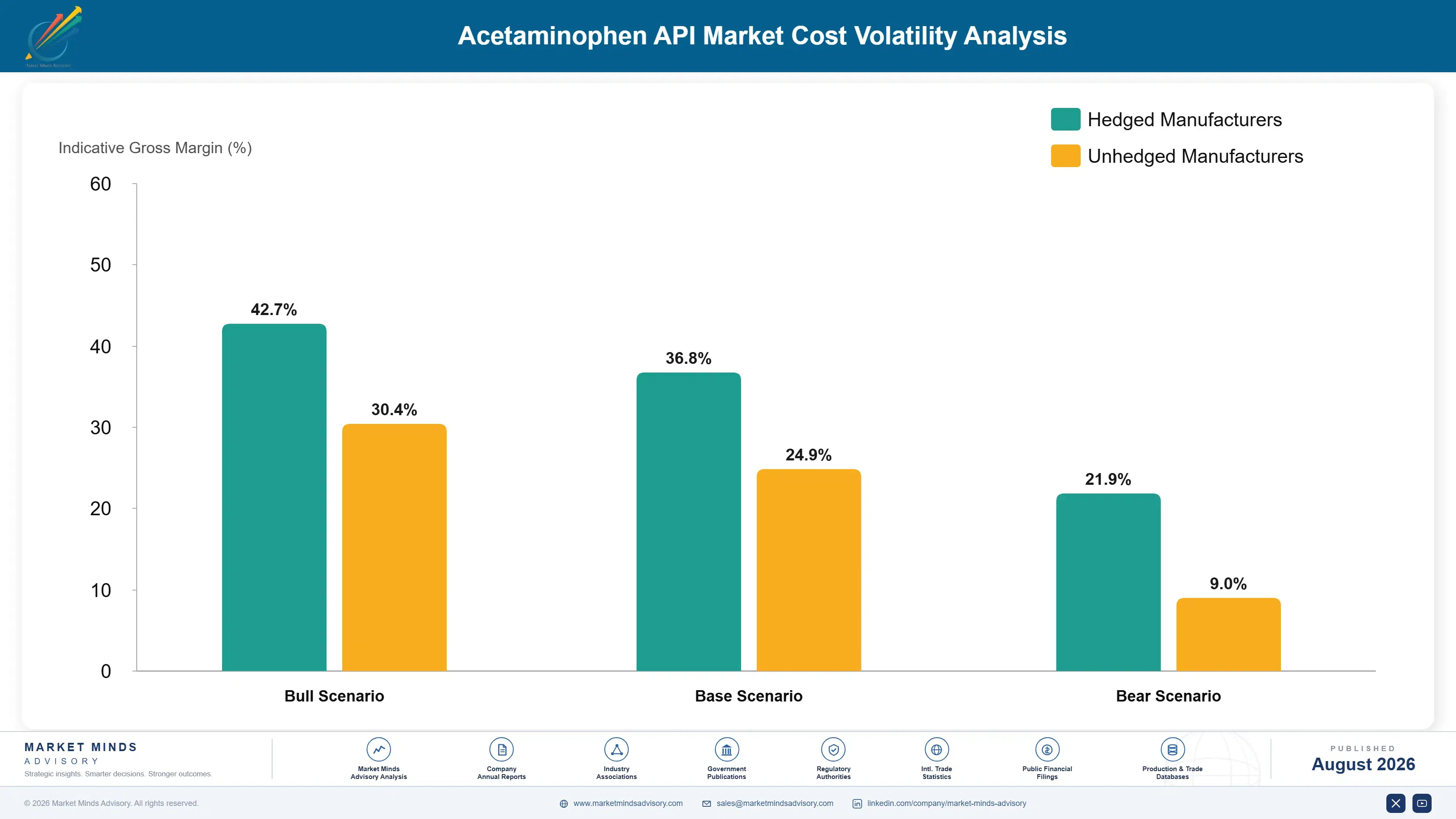
Paraaminophenol Intermediate and Energy Cost Exposure
Standalone API producers without backward integration into intermediate chemistry carry disproportionate exposure to these input swings since they lack the purchasing scale to negotiate multi-year fixed pricing directly with intermediate suppliers that integrated producers avoid entirely through internal production. This gap is widest for smaller regional manufacturers dependent entirely on merchant intermediate purchases.

Backward Integration Into Intermediate Chemistry Production
Long-Term Energy Supply and Pricing Contracts
Diversified Intermediate Sourcing Across Multiple Suppliers
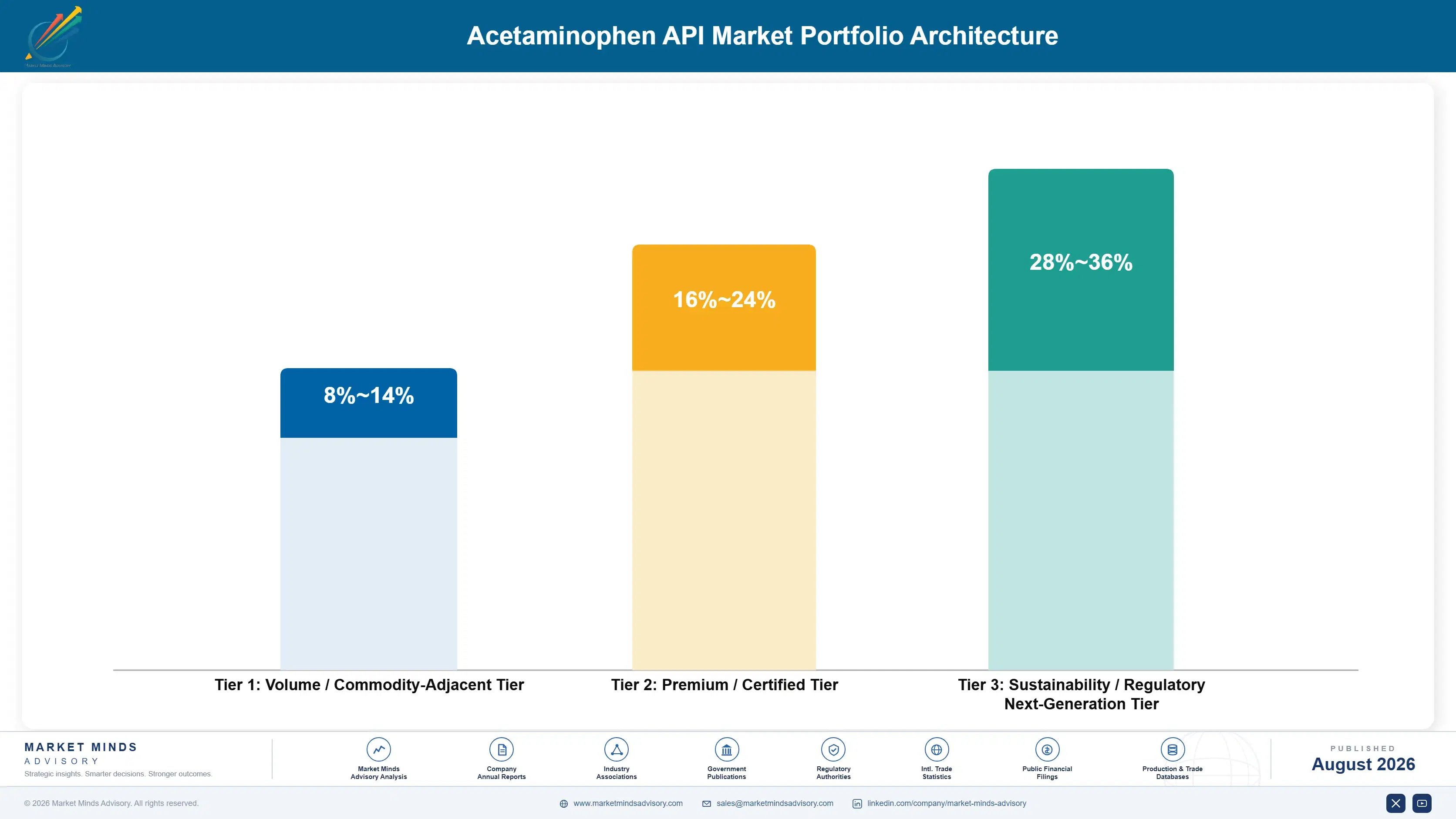
Portfolio Architecture for Margin Defence
High value margin pools concentrate in injectable grade material paired with continuous supply continuity contracts, where recurring revenue and high switching costs together support gross margins well above the portfolio average. Producers are consequently prioritizing capital toward this tier even though it remains a minority of total volume shipped across the broader portfolio today, betting the mix shifts decisively within the decade.
Volume / Commodity-Adjacent Tier
Premium / Certified Tier
Sustainability / Regulatory / Next-Generation Tier

Supply Contracts Anchor Recurring Volume Revenue
Buyer profiles are shifting generationally as regulatory affairs professionals who trained primarily on modern quality-by-design compliance frameworks increasingly influence supplier qualification decisions alongside veteran procurement staff who remember when price was nearly the only qualification criterion. This is accelerating demand for suppliers with strong compliance documentation capability even among buyers who historically evaluated bulk API purely on landed cost and delivery reliability alone.

Where Sourcing Strategy Should Focus
Prioritize injectable grade compliance credentials over standard grade price
Shift commercial models toward continuity and documentation service revenue
Weight investment toward South Asia and East Asia over mature markets
Pursue backward integration into paraaminophenol intermediate production
Engagement Snapshot From the Field
- Three of five suppliers evaluated could not demonstrate consistent inspection compliance across all relevant regulatory jurisdictions simultaneously, limiting their eligibility for the qualification shortlist.
- Dual-sourcing qualification reduced projected supply disruption risk by 52% versus continued single-source dependence across comparable product lines, based on modeling completed during evaluation (client-reported, unverified by MMA).
- Geographic diversification across two continents was projected to cut worst-case disruption recovery time by roughly two thirds, according to internal supply chain modeling.
- The lowest-cost candidate supplier carried the weakest inspection compliance history, reprioritizing the client's original supplier ranking considerably ahead of the final qualification decision.
- Three of five suppliers evaluated could not demonstrate consistent inspection compliance across all relevant regulatory jurisdictions simultaneously, limiting their eligibility for the qualification shortlist.
- Dual-sourcing qualification reduced projected supply disruption risk by 52% versus continued single-source dependence across comparable product lines, based on modeling completed during evaluation (client-reported, unverified by MMA).
- Geographic diversification across two continents was projected to cut worst-case disruption recovery time by roughly two thirds, according to internal supply chain modeling.
- The lowest-cost candidate supplier carried the weakest inspection compliance history, reprioritizing the client's original supplier ranking considerably ahead of the final qualification decision.
Frequently Asked Questions
What is the current size of the Acetaminophen API Market?
How large will the Acetaminophen API Market be by 2036?
What is the CAGR for the Acetaminophen API Market 2026 to 2036?
Which segment is growing fastest?
Who are the major companies in the Acetaminophen API Market?
Which country is growing fastest?
Report Segmentation Architecture
By Grade and Formulation Type
- Standard Grade API
- Micronized Grade API
- Extended-Release Grade API
- Combination-Ready Grade API
- Injectable and Sterile Grade API
- Pediatric and Liquid Grade API
By End-Use Application
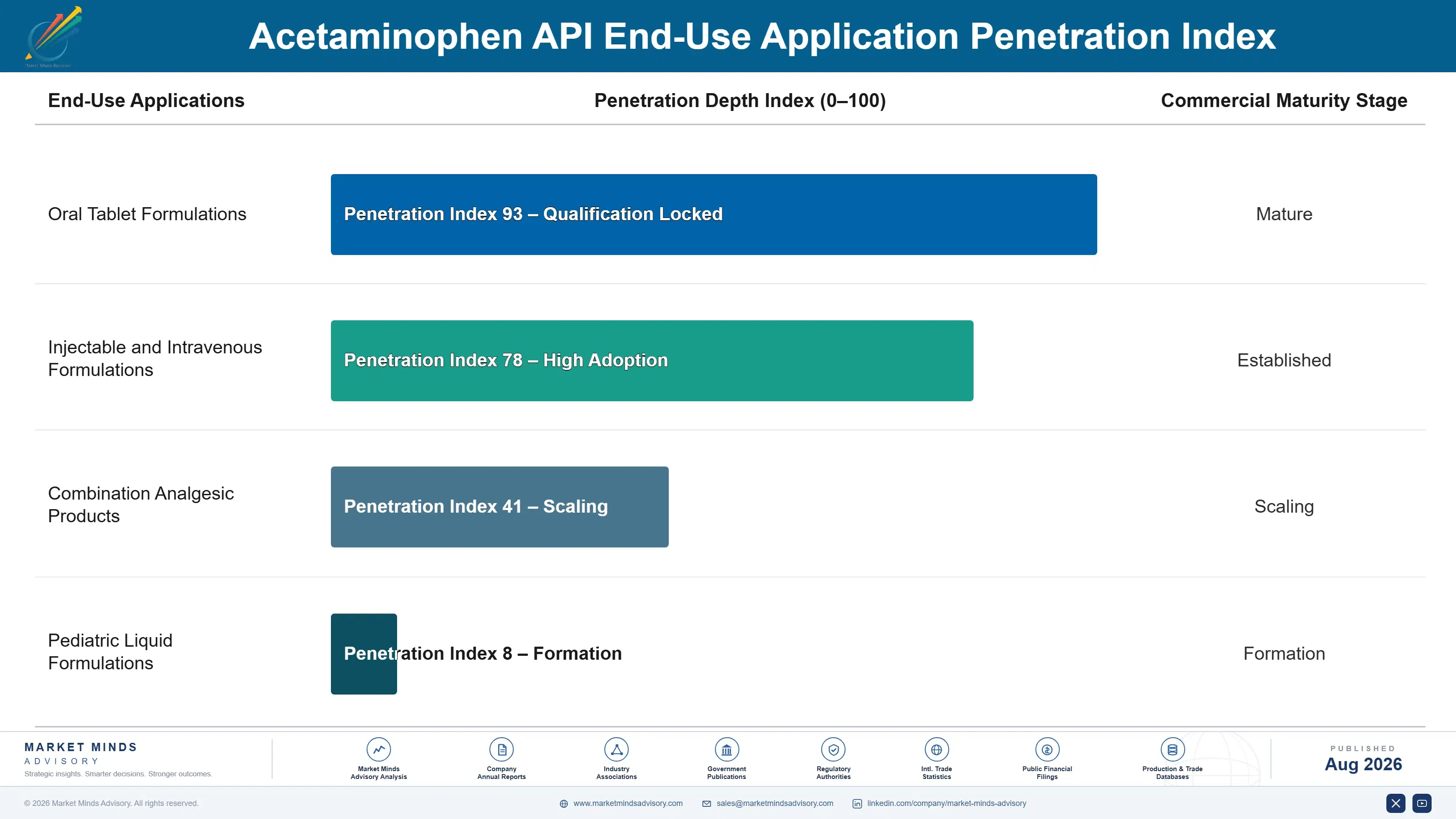
- Oral Tablet Formulations
- Injectable and Intravenous Formulations
- Combination Analgesic Products
- Pediatric Liquid Formulations
By Commercial Dimension
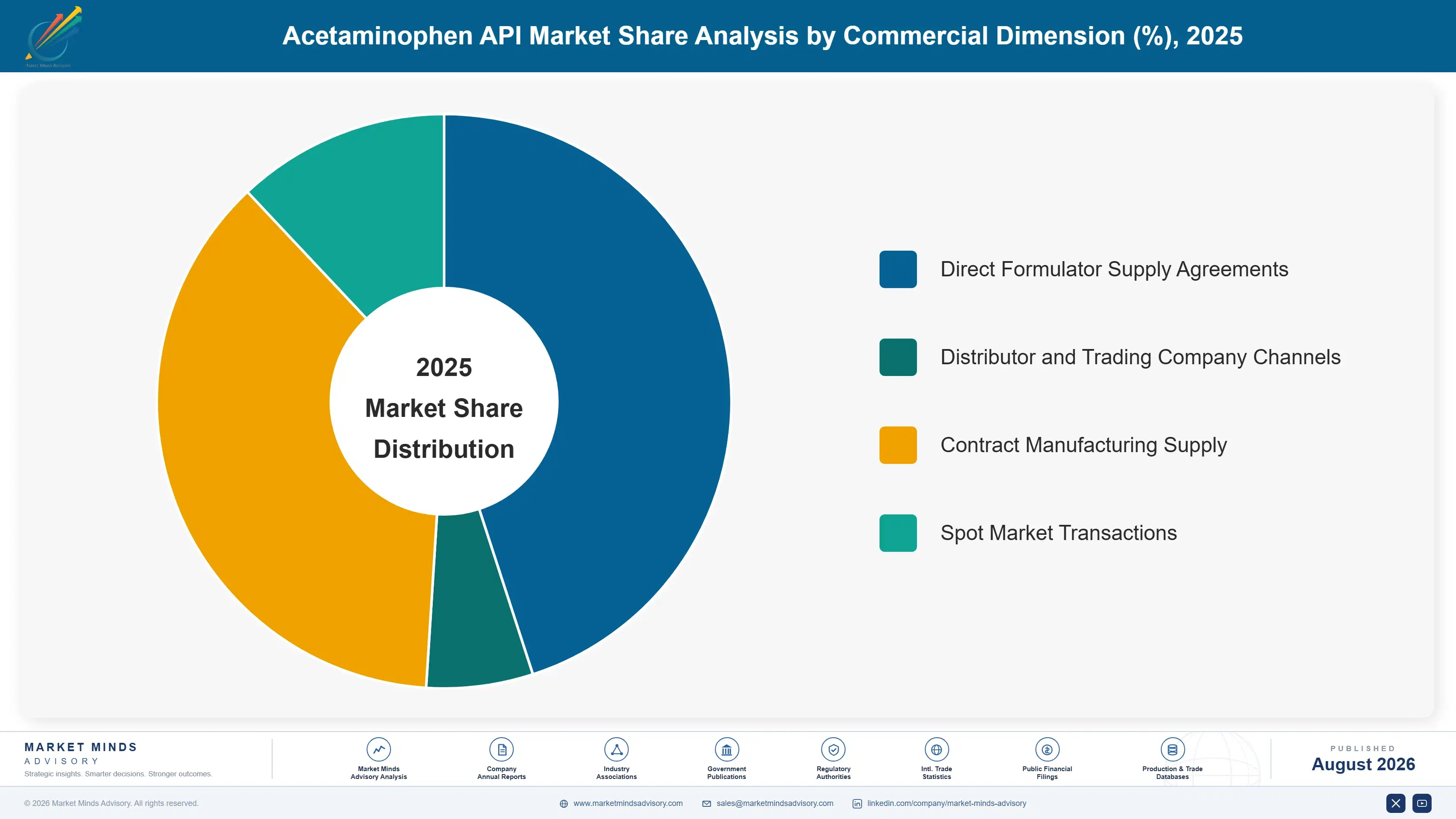
- Direct Formulator Supply Agreements
- Distributor and Trading Company Channels
- Contract Manufacturing Supply
- Spot Market Transactions
By Region
- North America
- Western Europe
- East Asia
- South Asia and Pacific
- Latin America
- Middle East and Africa
- Eastern Europe